Your One-Stop Wire Mesh Fence Supplier | POLYMETAL
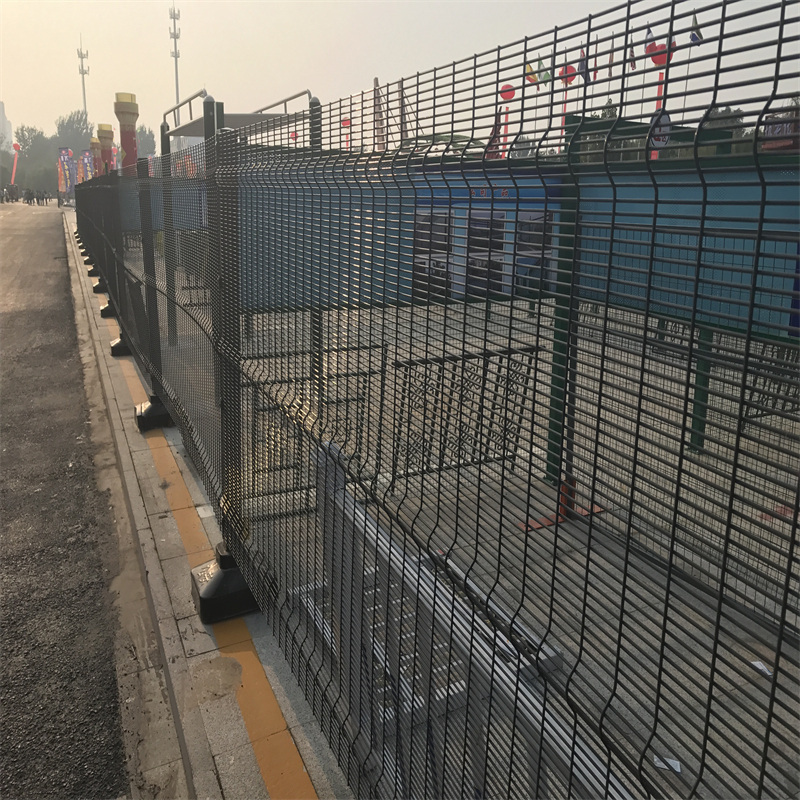
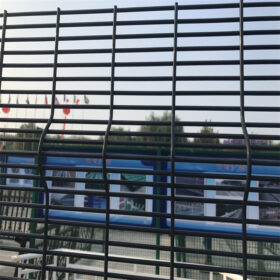
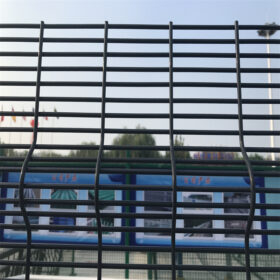
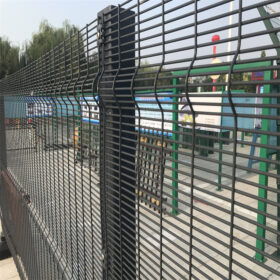
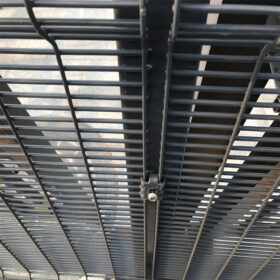
358 security wire fencing panels from POLYMETAL deliver high-security performance while still looking clean and professional around critical sites. Each anti climb mesh panel is built from close-aperture welded wire in Q195 steel, matched with heavy steel posts and secure clamp systems, then coated with heavy zinc or RAL colour powder to survive demanding environments. When 358 security wire fencing panels are specified correctly, they create a strong anti-climb, anti-cut barrier that protects people, assets and operations; when they are under-specified, they become a silent weakness in your perimeter.
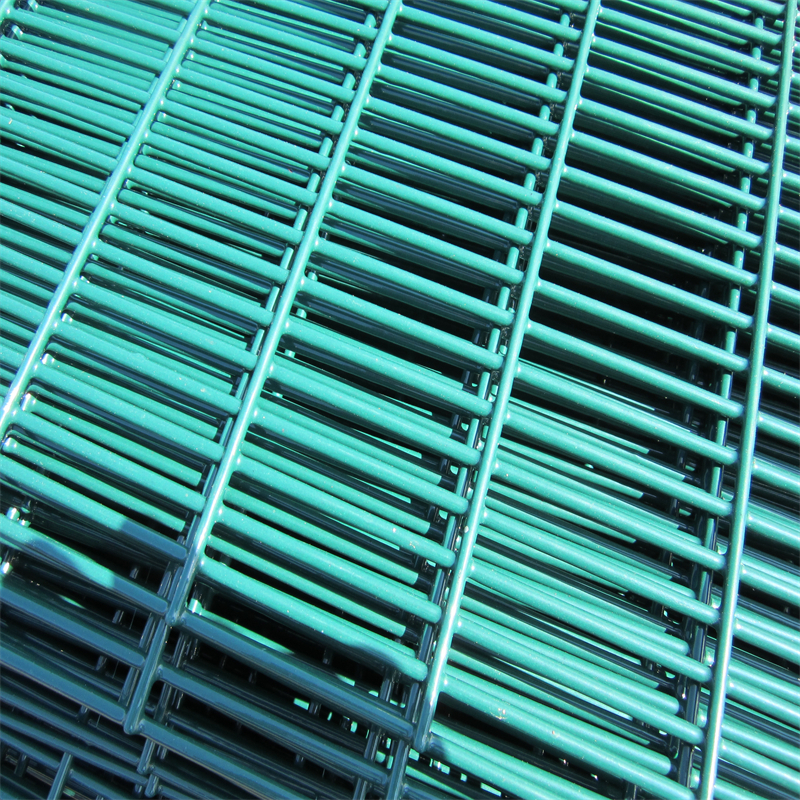
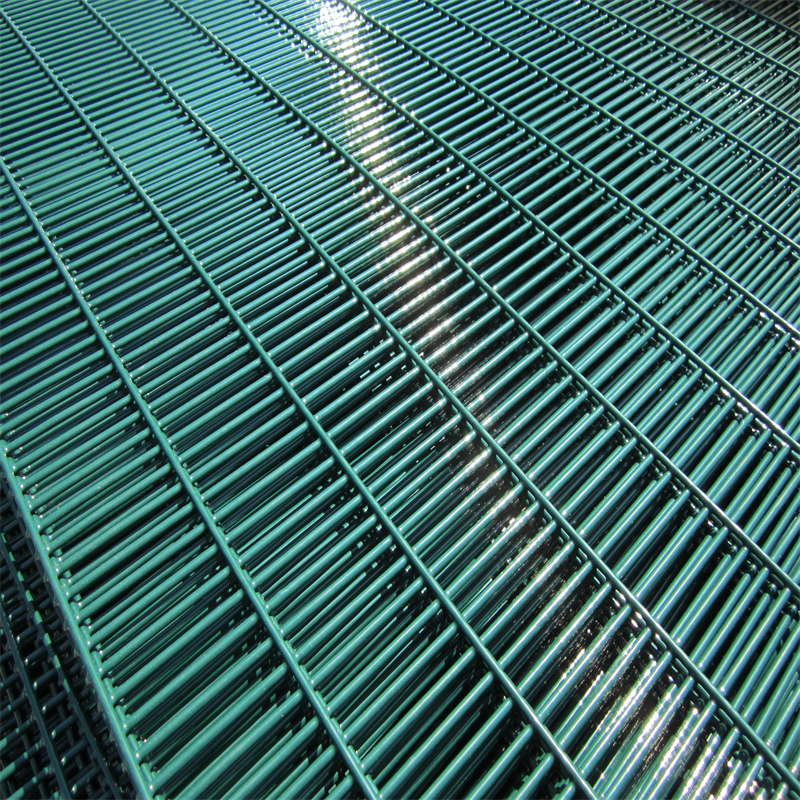
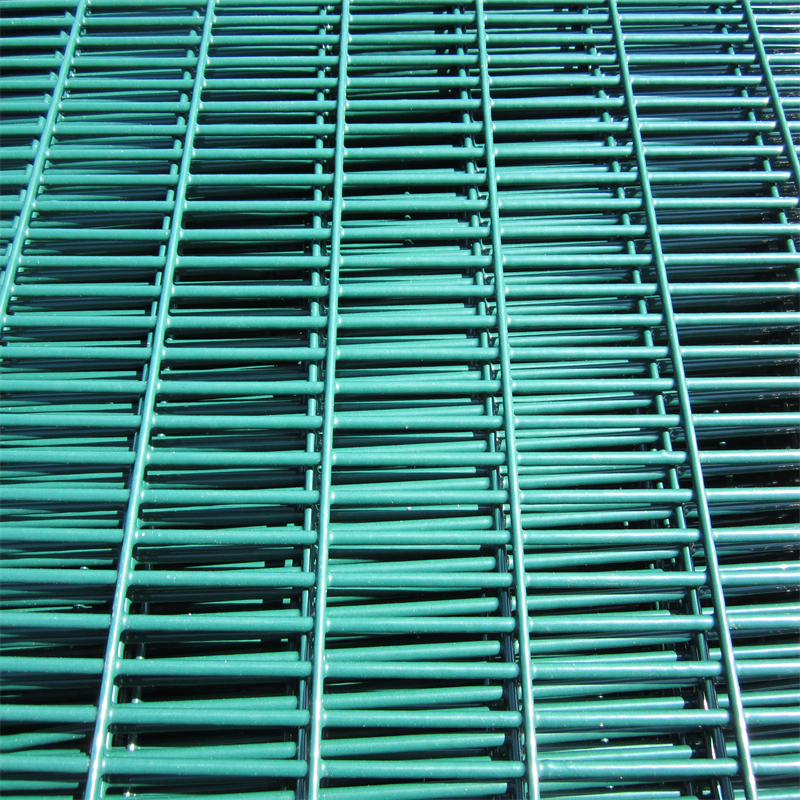
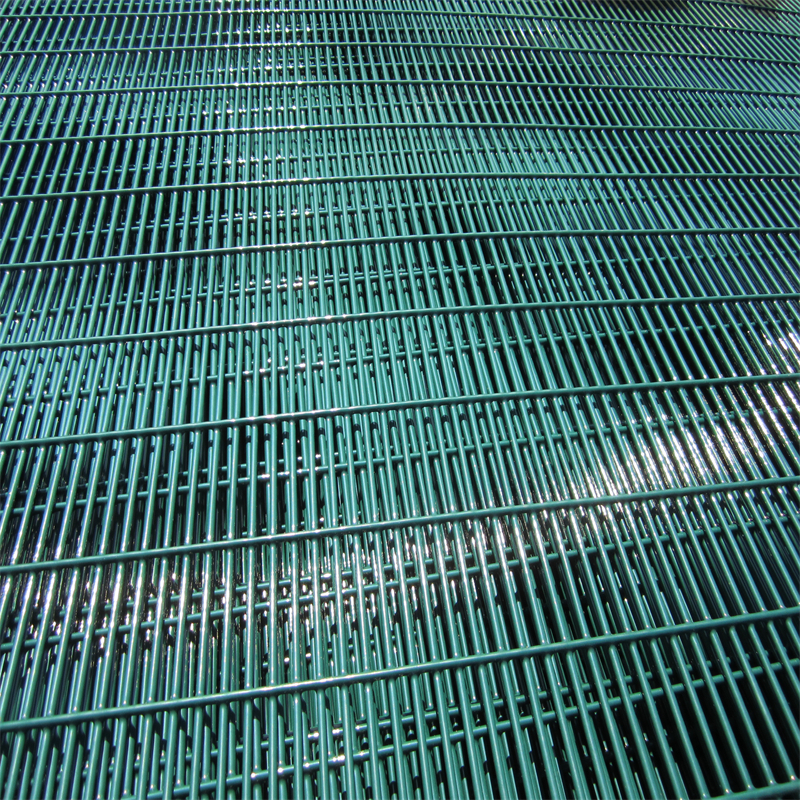
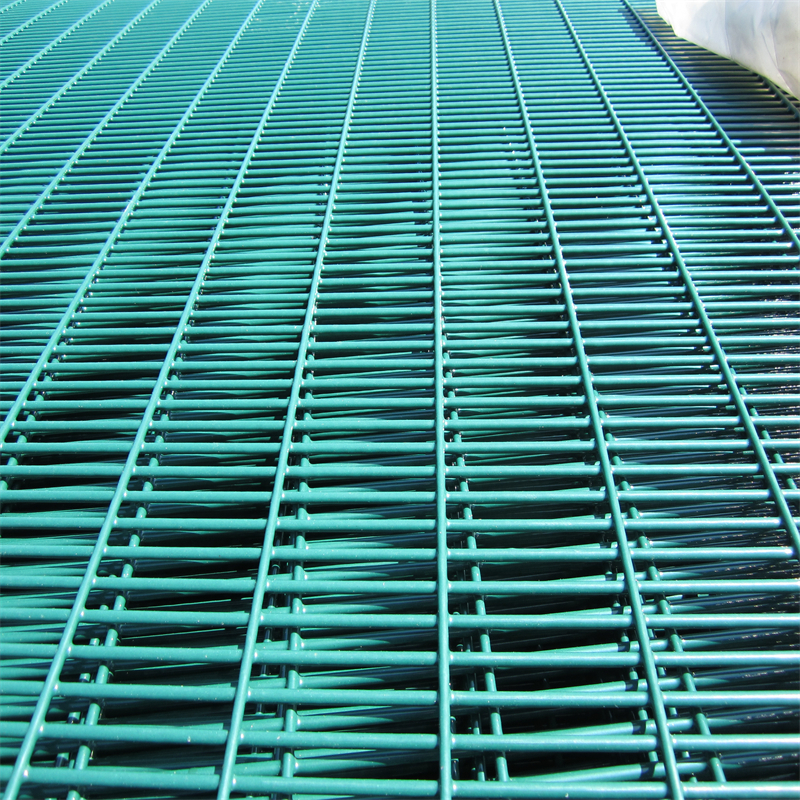
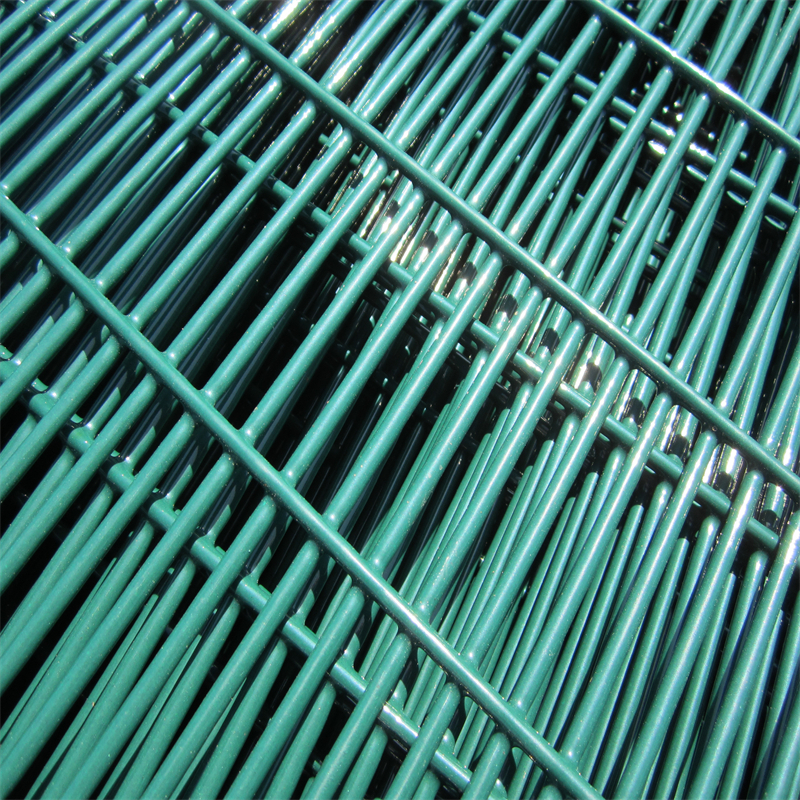
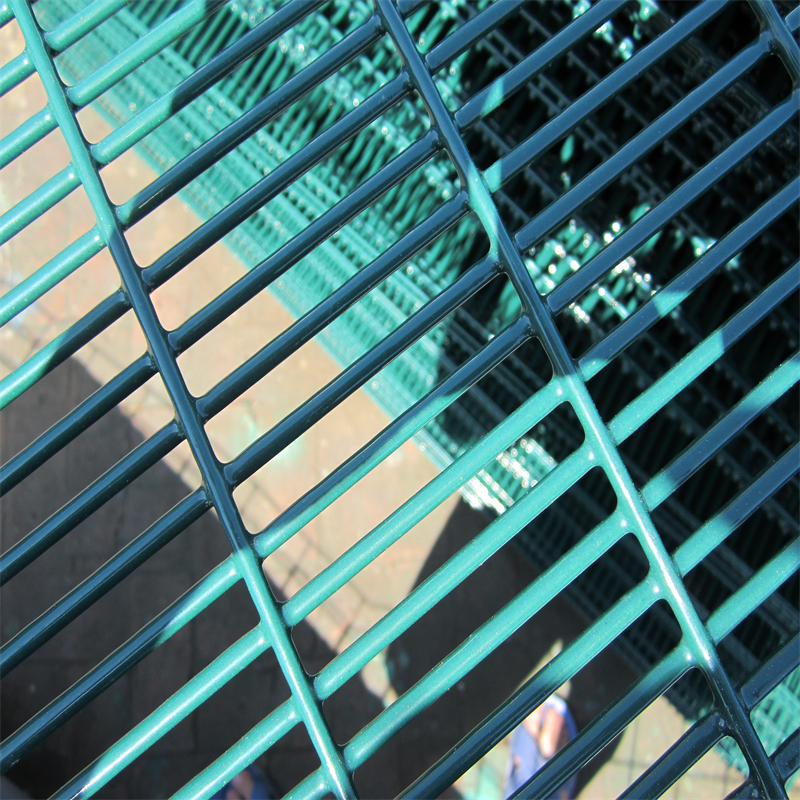
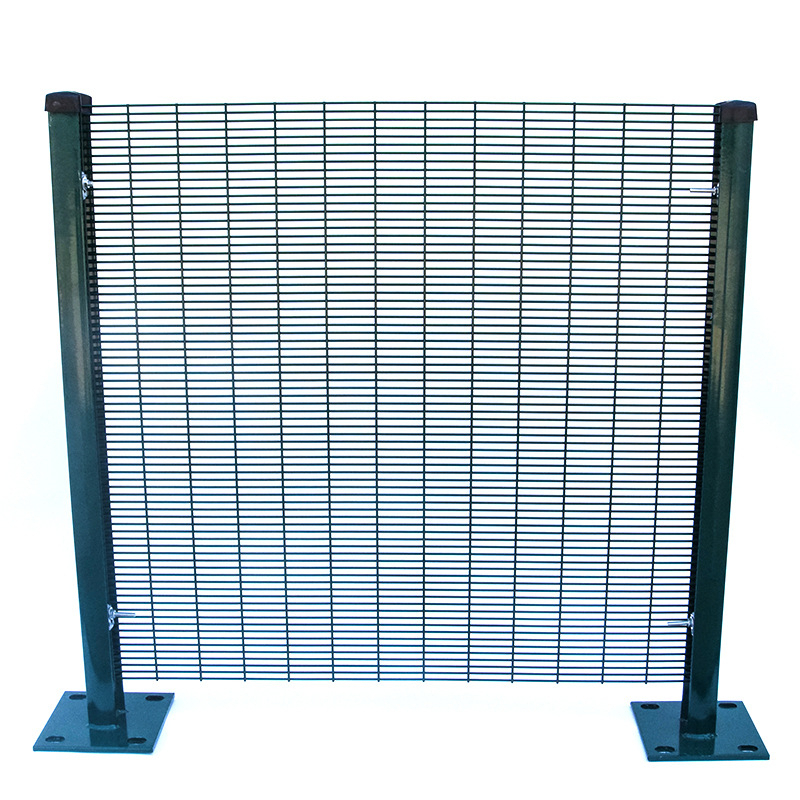
Anti climb mesh fence is also called 358 fence (3″ × 0.5″ × 8 gauge), also known as “prison mesh” or anti-climb fence. It is a special fencing panel we can make in our city. This production offers excellent value for performance, durability and appearance. “358” comes from its measurements 3″ × 0.5″ × 8 gauge, which equates to approximately 76.2 mm × 12.7 mm × 4 mm in metric. 358 wire mesh fence is a professional structure designed for high security environments, combined with a steel framework, coated with heavy zinc or RAL colour powder coating to give both protection and a smart, uniform profile.
The product description, specifications, application ideas, feature overview, process outline and packing profile below give you a complete view of how POLYMETAL 358 security wire fencing panels really perform on demanding sites. If you miss the wrong detail, a fence that looks “secure” in photos can turn into a real-world hazard, a compliance problem or an expensive failure.
22 Critical Insights About 358 Security Wire Fencing Panels You Must Understand
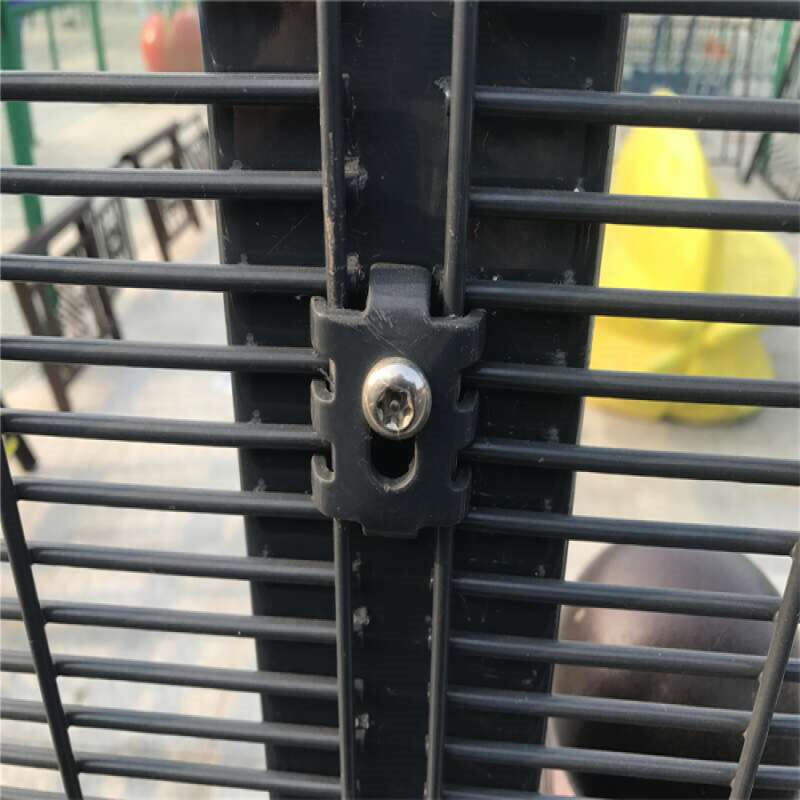
1. First detail – mesh aperture as the core anti-climb feature
The 76.2 mm × 12.7 mm mesh aperture is the critical detail that makes 358 security wire fencing panels so hard to climb. Fingers and the tip of a shoe simply do not fit through the openings, removing the ladder effect you see on standard weldmesh. If the aperture drifts larger, that invisible gap becomes a real climbing aid and a serious security flaw.
2. Second fact – 4.0 mm wire diameter and cutting resistance
A 4.0 mm wire diameter is the essential fact behind the cutting resistance of 358 security wire fencing panels. Thin wire can be cut quickly with small bolt cutters; 4.0 mm welded wire dramatically slows the attack, buying vital minutes for response teams and making opportunistic breaches far less attractive.
3. Third truth – panel height versus real threat levels
The truth is that a 2.0 m high fence and a 4.5 m high 358 security wire fencing system do not manage risk in the same way. Higher panels in the 3.6 m, 4.2 m, 4.5 m or even 5.2 m range raise the difficulty curve for intruders, especially when combined with toppings. Under-estimating required height is a dangerous mistake around prisons, substations or data centres.
4. Fourth point – post profile as a structural backbone
Post sizes like 60 × 60 × 2.5 mm, 80 × 80 × 2.5 mm, 100 × 100 × 3–5 mm and 120 × 120 × 5 mm are not cosmetic choices; they are a structural point that controls how well 358 security wire fencing panels resist wind loads, impacts and leverage attacks. Undersized posts turn the whole system into a flexible target that can be pushed, jacked or slowly bent open.
5. Fifth note – coating system and long-term corrosion risk
A heavy zinc coating and quality RAL colour powder finish are a vital note in the long-term performance profile of 358 security wire fencing panels. Thin or poorly cured coatings create a hidden weakness at welds and cut ends; once corrosion begins, it travels along wires and posts, quietly attacking the structure until visible damage and failures appear.
6. Sixth tip – clamp count and fixing pattern
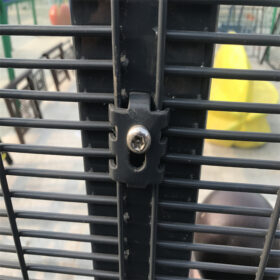
The total number of fixings per bay is not a minor assembly detail; it is a security tip that shows how firmly each panel is held. On higher fences, the pattern of inter posts (one clamp) and corner posts (two clamps) must be respected. Skipping fixings to save time or cost can create a loosening pattern that intruders quickly learn to exploit.
7. Seventh hint – visibility and CCTV integration
The slim wire profile and tight aperture allow 358 security wire fencing panels to maintain excellent visibility for CCTV and patrols. The hint here is that poor alignment, bad lighting or cheap powder colours can still obscure views, compromising video analytics and line-of-sight surveillance. Good integration maximises the security advantage instead of wasting it.
8. Eighth idea – anti-climb surface and handhold elimination
The key idea behind 358 security wire fencing panels is the removal of meaningful handholds and footholds. When combined with flush fixing clamps and smooth post lines, this design aspect eliminates the usual climbing pattern most intruders rely on. Adding protruding fixtures or poorly placed accessories can recreate climb points and undermine the concept.
9. Ninth angle – fence line as a psychological barrier
From the angle of deterrence, a tall, rigid 358 mesh fence sends a clear signal: the site is monitored, defended and hard to breach quietly. Weak, patchworked or visibly rusty fences send the opposite message. The visual trait of the perimeter directly shapes the behaviour of potential intruders and trespassers.
10. Tenth aspect – foundation depth and soil conditions
Post height above ground is only one aspect; the unseen footing depth in real soil conditions is another. If 358 security wire fencing panels are installed in shallow, undersized foundations, wind and crowd loading can create movement and cracks. In reactive clays, this installation error leads to leaning lines and open gaps under panels.
11. Eleventh element – line, level and stepped sections
On sloping ground, stepped or raked 358 security wire fencing panels must be carefully designed. The element of neat stepping with correct overlaps prevents the formation of large under-panel gaps that people or animals can exploit. Poorly planned steps create an obvious perimeter gap that undermines the whole system.
12. Twelfth feature – welded joints and structural integrity
Every intersection in 358 security wire fencing panels is a welded feature that carries load and resists impact. Inconsistent welds, porosity or incomplete fusion create a fault pattern that may only show up under attack or after years of expansion and contraction. Strong weld quality is a non-negotiable rule for true high-security performance.
13. Thirteenth trait – rigidity under crowd pressure
A solid, properly fixed 358 system has the trait of staying tight and rigid even when people lean, push or crowd against it. If the panels flex excessively or fixings creak and move, that is a sign that the installation or components are too light for crowd-control work, creating a potential hazard in emergency situations.
14. Fourteenth view – long-run deflection and wind loading
From a structural view, long uninterrupted runs of 358 security wire fencing panels must be designed against deflection and wind loading. Spacing between posts, post size and mesh tension all affect the trend of long-term movement. Under-specifying here is a serious risk, especially on exposed boundaries where storms can generate high lateral forces.
15. Fifteenth insight – topping options and escalation control
Razor wire, barbed wire or rotating spikes can be added as a further security insight on top of 358 security wire fencing panels. However, these add-ons must be correctly profiled and fixed to avoid creating new leverage points or damaging the main mesh. Poorly applied toppings can become both a safety hazard and a liability.
16. Sixteenth finding – early rust spots as warning signs
Small rust marks around welds, clamps or cut ends are a crucial finding and should be treated as a warning signal. They indicate a coating defect or damage point where corrosion can spread. Ignoring these small signs allows a limited defect to grow into structural loss of cross-section and, ultimately, system failure.
17. Seventeenth discovery – installation oversights and missteps
Real projects show the same discovery again and again: most problems with 358 security wire fencing panels are not in the product, but in installation oversights. Misaligned posts, missing clamps, poorly filled foundations and rushed panel cutting all create avoidable gaps, loopholes and weak points for intruders and vandals.
18. Eighteenth lesson – matching fence to actual risk profile
The core lesson is that the fence specification must match the risk profile of the site. Using a light configuration of 358 security wire fencing panels for a high-risk prison, airport or defence facility is a costly mistake; using ultra-heavy systems for low-risk boundaries can waste budget and reduce overall project payoff.
19. Nineteenth rule – consistent standards across the perimeter
The rule is simple: every bay, corner, gate and transition must meet the same standard. Mixing different mesh types, post sizes or fixing patterns creates a patchwork perimeter where intruders quickly identify the weakest side. High-security sites demand a consistent checklist of materials and methods.
20. Twentieth principle – life-cycle cost versus purchase price
The principle behind POLYMETAL 358 security wire fencing panels is total cost of ownership, not just the initial invoice. A slightly higher purchase cost often buys thicker posts, better coatings and more reliable fixings, preventing repeated maintenance, unplanned shutdowns and replacement projects that silently increase the real cost.
21. Twenty-first pattern – human error in specification
A common pattern in security failures is human error at the specification stage: wrong height, wrong post, wrong coating, wrong fixing layout. Once installed, those errors are literally locked into the ground. Taking time to review data, site info and risk scenarios before ordering prevents expensive changes later.
22. Twenty-second overview – the real payoff of doing it right
The final overview is clear: well-designed, correctly installed POLYMETAL 358 security wire fencing panels turn a vulnerable boundary into a strong, stable, long-term defensive line. The payoff is fewer incidents, less damage and a secure environment that protects operations, staff and reputation year after year.
Product Description – 358 Security Wire Fencing Panels (POLYMETAL)
358 security wire fencing panels from POLYMETAL are high-security welded mesh systems designed for environments where intrusion, escape and vandalism must be rigorously controlled. Often called anti climb mesh fence or “prison mesh”, 358 fence takes its name from its aperture and wire specification: 3″ × 0.5″ × 8 gauge, which converts to approximately 76.2 mm × 12.7 mm × 4 mm. This tight aperture prevents climbing while still maintaining excellent visibility for guards and CCTV.
Anti climb mesh fence is also called 358 fence (3″ × 0.5″ × 8 guage) also known as “prison mesh” or anti-climb fence, is a special fencing panel, we can make in our city, this production offers the best value for performance, durability and appearance, “358” comes from its measurements 3″ x 0.5″ x 8 gauge which equates to approx. 76.2mm x 12.7mm x 4mm in metric. 358 wire mesh fence is a professional structure designed for high security environments, combined with an steel framework, coated with heavy zinc or RAL color powder coating.
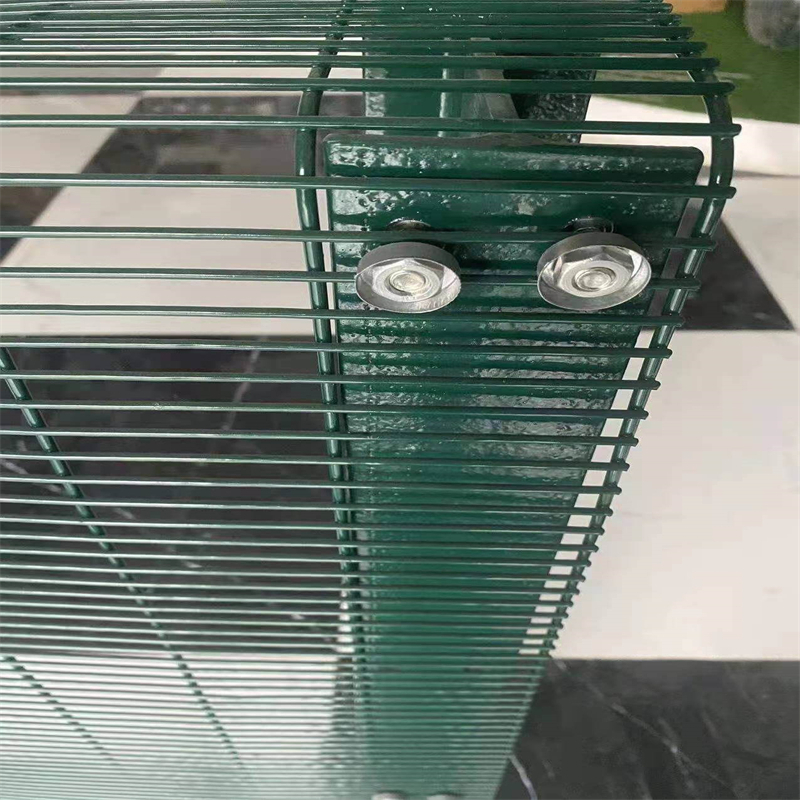
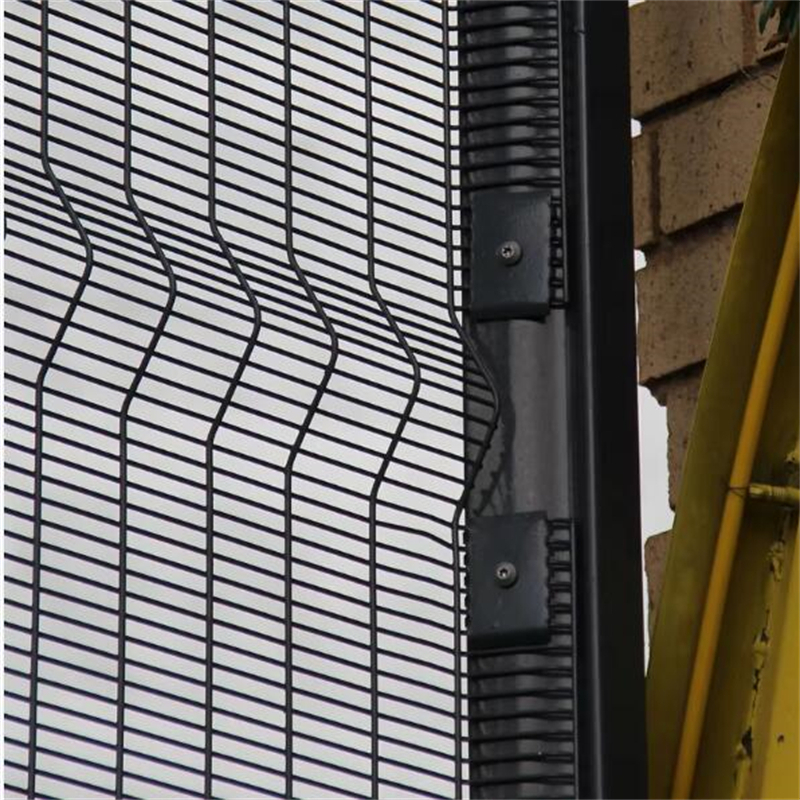
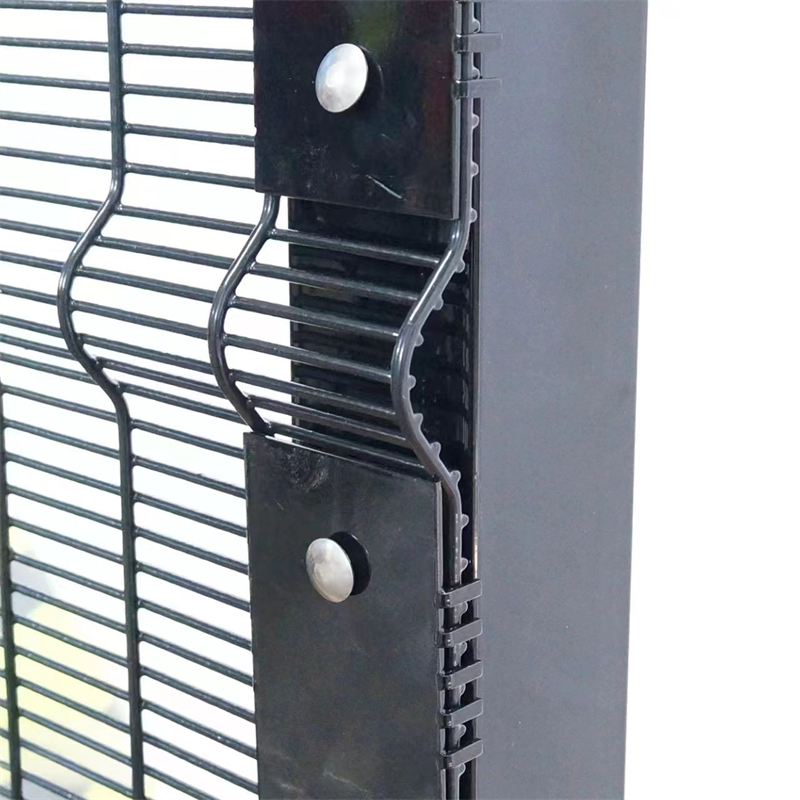
Each panel is welded from low-carbon steel wire and combined with square or rectangular hollow section posts sized according to fence height and threat level. Post options include 60 × 60 × 2.5 mm, 80 × 80 × 2.5 mm, 100 × 60 × 3 mm, 100 × 100 × 3–5 mm and 120 × 120 × 5 mm. Mesh panels are fixed to posts using a robust clamp bar system and high-security fixings, making it extremely difficult to lever or remove panels without tools and time. Finished in hot-dip galvanizing and optional RAL powder coat colours, POLYMETAL 358 security wire fencing panels combine a refined, professional look with serious protection.
Technical Specifications – 358 Security Wire Fencing Panels
Standard Panel and Post Profile
The table below shows typical combinations of panel height, panel size, post size, post height and number of required fixings for POLYMETAL 358 security wire fencing panels in a range of common security heights.
Panels | post | ||||
Fence | Panel Size | Post Size | Post Height | Total Number of Fixings | |
Height | Height/Width | Lenght/Width/Thickness | mm | Inters- 1 clemp | Corners-2 clamp |
m | mm | mm | mm | ||
2.0 | 2007 x 2515 | 60x60x2.5mm | 2700 | 7 | 14 |
2.4 | 2400 x 2515 | 60x60x2.5mm | 3100 | 9 | 18 |
3.0 | 2400 x 2515 | 80x80x2.5mm | 3800 | 11 | 22 |
3.3 | 2997 x 2515 | 80x80x2.5mm | 4200 | 12 | 24 |
3.6 | 3302 x 2515 | 100x60x3mm | 4500 | 13 | 26 |
3.6 | 3607 x 2515 | 100x100x3mm | 4500 | 13 | 26 |
4.2 | 4204 x 2515 | 100x100x4mm | 5200 | 15 | 30 |
4.5 | 4496 x 2515 | 100x100x5mm | 5500 | 16 | 32 |
5.2 | 5207 x 2515 | 120x120x5mm | 6200 | 18 | 36 |
Production Process
POLYMETAL follows a rigorously controlled production process for 358 security wire fencing panels to minimise defects, errors and hidden weaknesses. High-quality low-carbon steel wire is straightened and welded on precision mesh welding lines to create the 76.2 mm × 12.7 mm aperture. Panels are cut and squared, and the edges are trimmed to achieve a clean outline and accurate profile for clamps and posts. Steel posts in sizes such as 60 × 60 × 2.5 mm, 80 × 80 × 2.5 mm, 100 × 100 × 3–5 mm and 120 × 120 × 5 mm are cut, punched and prepared for fixings. All components are then hot-dip galvanised or heavily zinc coated and optionally finished with RAL powder coating in the specified colour.
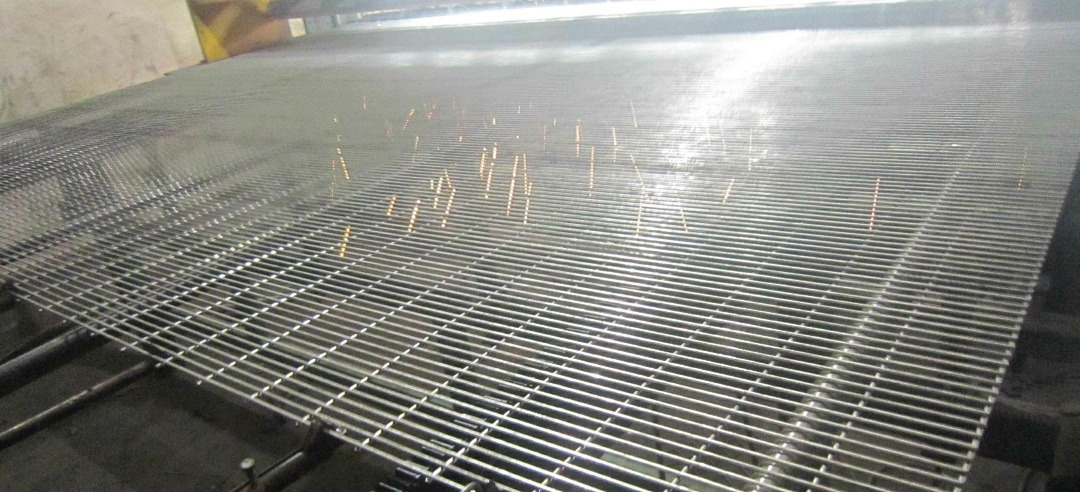
Throughout this manual-guided process, coating thickness, weld integrity and dimensional tolerances are checked using standard gauges and measuring tools. This structured checklist approach reduces the chance of flaws, gaps or missteps that might otherwise lead to weak joints, poor coating adhesion or misaligned panels on site. The result is a consistent, repeatable quality of 358 security wire fencing panels suitable for demanding high-security installations.
Packing
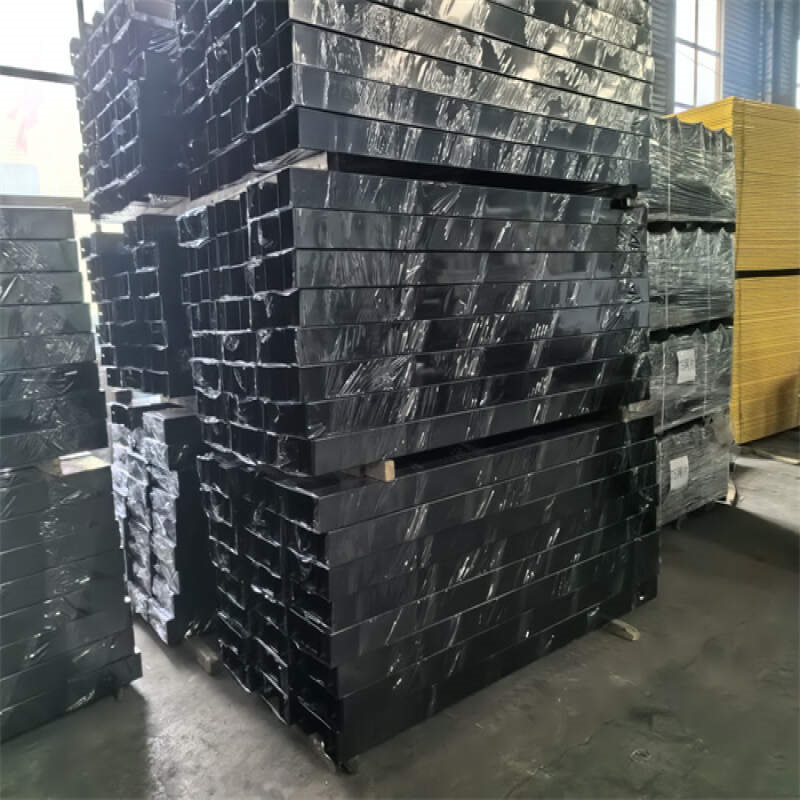
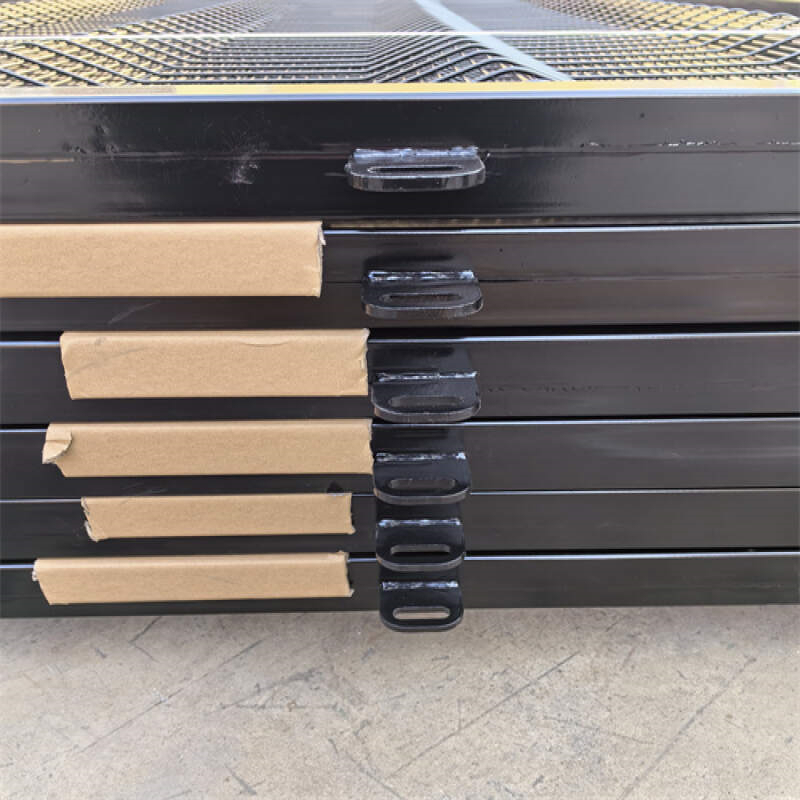
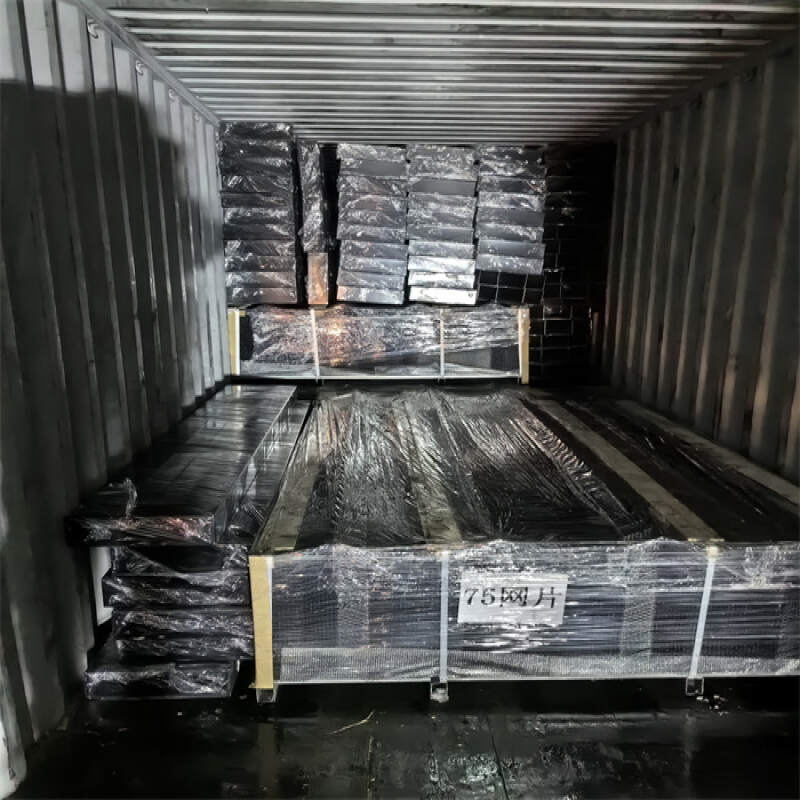
To protect the investment in 358 security wire fencing panels during handling, transport and storage, POLYMETAL uses sturdy packing methods. Mesh panels are stacked in neat bundles on steel or wooden pallets, with timber or plastic spacers between layers to prevent rubbing and coating damage. Bundles are strapped with steel or heavy plastic bands and wrapped in stretch film where required. Posts are grouped separately, wrapped with bubble film and tied or palletised so they cannot shift in the container. All clamps, bolts, nuts and accessory parts are packed in labelled carton boxes to keep small components together and streamline installation on site. This careful packing reduces transit damage, prevents waste and ensures that each section of the fence arrives ready to be installed.
Standards and Quality Approach
POLYMETAL treats 358 security wire fencing panels as an engineered high-security system, not just a commodity mesh. Panel dimensions, wire diameter, aperture size, post profiles and fixing layouts follow a consistent outline so that each installation behaves predictably under load. Internal quality rules and principles cover weld strength, coating thickness, straightness and squareness, helping ensure that every batch meets the same high standard.
Although specific project requirements and national regulations can vary, POLYMETAL 358 security wire fencing panels are designed to align with typical expectations for prison perimeters, substations, airports, defence sites, data centres and other sensitive facilities. By paying attention to the details, insights and lessons highlighted above, you can use POLYMETAL 358 security wire fencing panels to build a perimeter that is not only visually controlled and professional, but also a robust, long-term barrier against threat, intrusion, loss and damage. For inner safety zones around water or residential areas, you can also combine these systems with flat top pool fencing to create a secure, compliant layered protection strategy.