Your One-Stop Wire Mesh Fence Supplier | POLYMETAL


A 35mm tubing crowd control barrier is bought for one reason: to create instant order that stays tight and straight when crowds push, forklifts roll past, trucks vibrate the pavement, and crews keep relocating lines all day. On real projects, a barrier is judged by what happens after repeated deployment—hinges still line up, feet still sit flat, rails don’t buckle, and the finish doesn’t shred at contact points.
The hidden danger is assuming “a barrier is a barrier.” It is not. One wrong tube wall thickness, the wrong upright tube, bad spacing, weak feet design, or a sloppy finish can trigger wobble, bent frames, rattles, hook failures, and early corrosion—then you pay twice to replace what should have been locked in the purchase order.
Top 10 High-Risk Buying Traps for 35mm Tubing Crowd Control Barrier Orders
Each item below looks minor on a purchase order—but becomes a jobsite crisis after barriers are already deployed. Pay special attention to #7, because that is where many buyers suffer the biggest loss.

Trap #1: Choosing 35mm tubing but “saving” the wall thickness
A 35mm bottom tube with a thin wall can still look fine in photos, then feel soft and “springy” under real crowd pressure. For commercial events and repeated daily deployment, wall thickness is stiffness. Common frame tube wall options include 1.5mm, 1.6mm, and 2.0mm, and that choice decides how quickly rails deform and hinge points drift.
Risk #2: Mixing height and length without controlling stability
Higher barriers (1.1m to 1.2m) create more leverage when people lean, push, or climb. Longer barriers (2.5m to 2.6m) span further and amplify twist if feet are not matched. If you mix heights and lengths without a stability plan, the line becomes uneven and “walks” under vibration.
Danger #3: Ordering upright tubes too light for the duty cycle
Upright tubes are the first components to bend when barriers are dragged, dropped, or stacked incorrectly. Typical upright tube options include 12mm / 16mm / 19mm OD with 0.7mm / 0.8mm / 1.0mm / 1.2mm walls. If you choose thin uprights for high-abuse sites, you get permanent bends that make every barrier look “repaired.”
Cost #4: Spacing specified without matching the visual-control goal
Spacing changes both crowd-control performance and perceived security. Common spacing options include 90mm, 100mm, 150mm, and 200mm. Tighter spacing increases visual control and reduces squeeze-through behavior, while wider spacing reduces steel cost but often increases incident risk in dense queues.
Pitfall #5: Ignoring interlock geometry and hinge durability
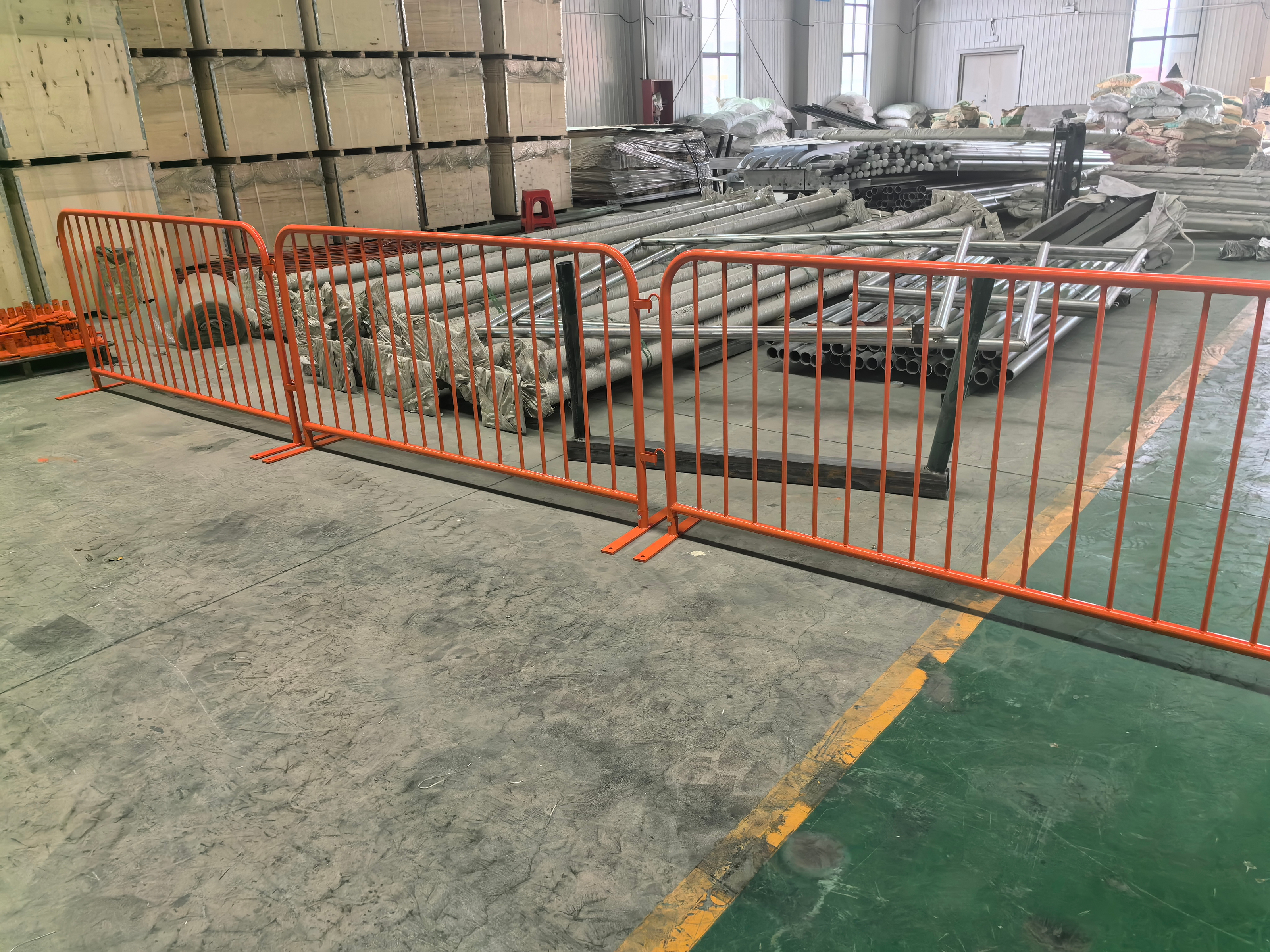
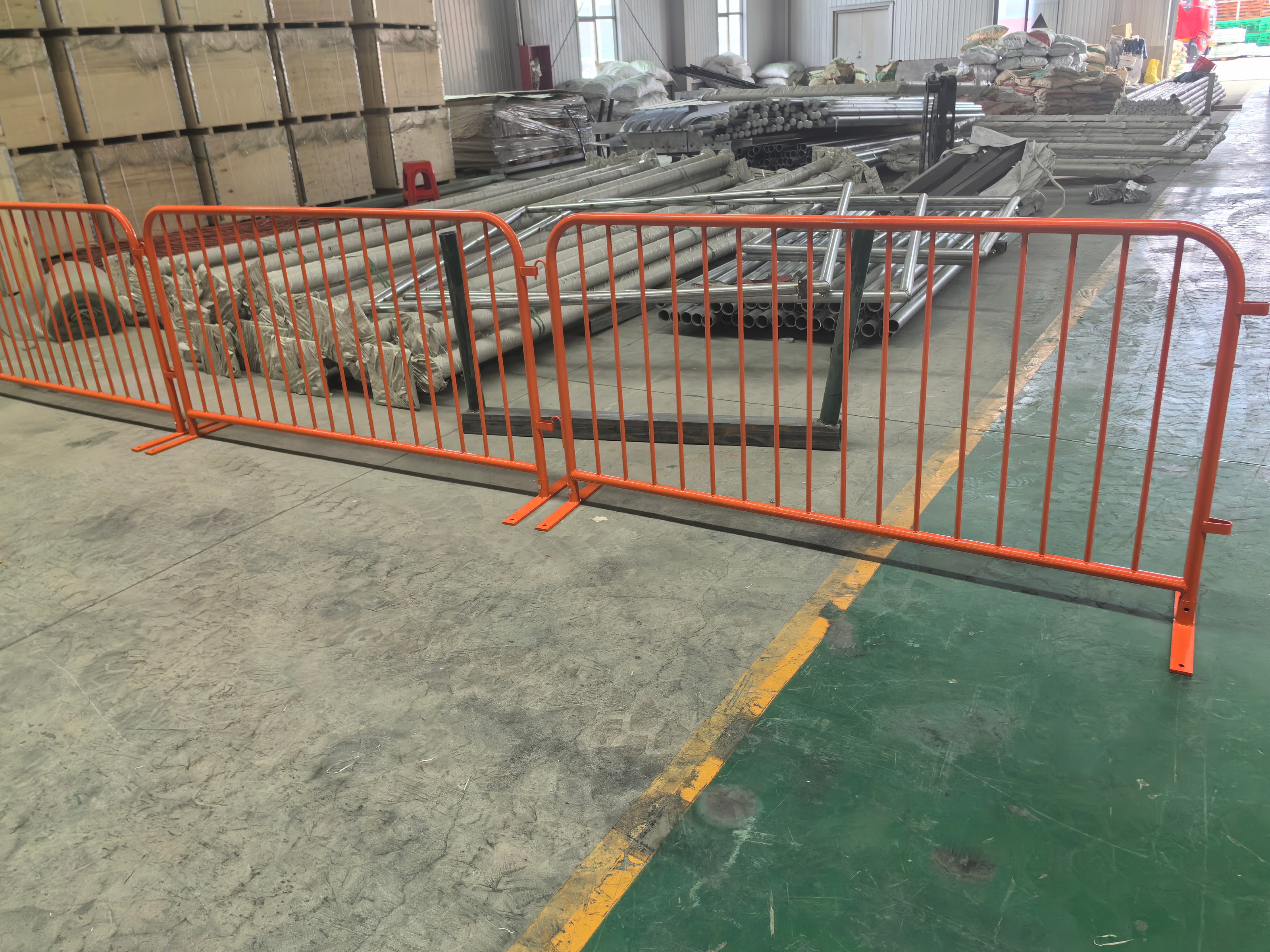
Double interlocking hinge points are not a slogan—they determine whether lines stay connected after repeated repositioning. Weak hook geometry, thin hinge plates, or inconsistent welding causes misalignment, rattles, and dangerous gaps that appear when the crowd load shifts sideways.
Warning #6: Feet type chosen for “price” instead of site surface
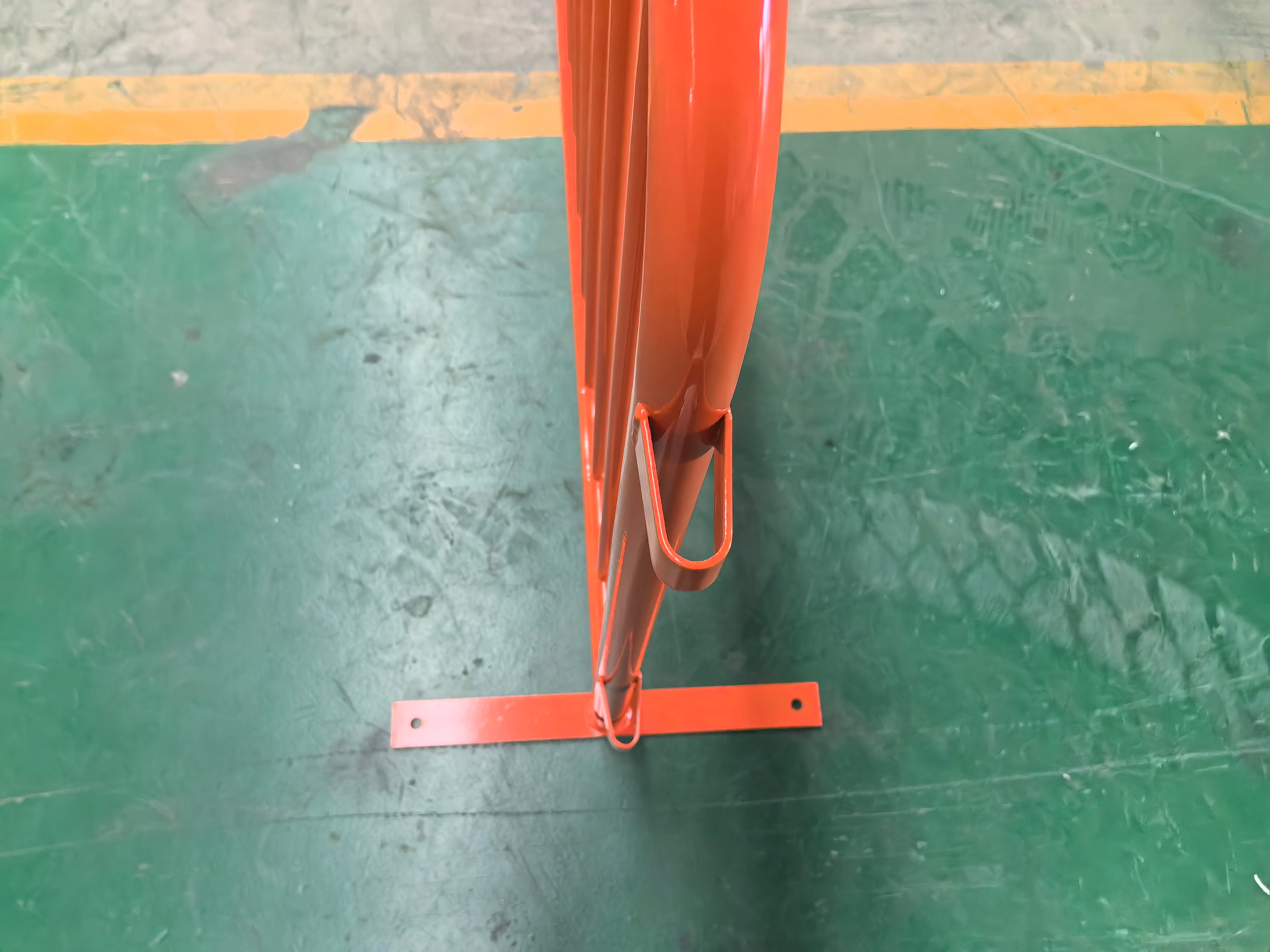
A barrier that sits flat on smooth pavement may rock on uneven ground and become a trip hazard. Flat steel feet (commonly 580×50×10mm) are stable and stack well, bridge feet improve stability across uneven surfaces, V feet can reduce rocking in certain layouts, and wheel feet improve mobility but must be engineered to stop “roll-away” behavior in sloped zones.
Loss #7: Buying “35mm tubing” but missing the real failure point—base stability and stacking damage
This is the biggest money mistake. Barriers fail in the base zone first: feet deform in transport, welds crack from repeated drop impacts, and frames twist when stacked without removable feet discipline. If your purchase order does not lock the feet type, foot steel size (such as 580×50×10mm), removable-foot method, and stacking/packing protection, you will replace barriers faster than you expect—especially on high-frequency event rental cycles.
Problem #8: Finish specified vaguely, causing early rust and ugly rub-through
“Galvanized” and “hot dip galvanized” do not perform the same if process control is poor. Powder coating looks premium but fails fast if pretreatment is weak or if barriers are stacked without separation protection. Define finish clearly: hot dip galvanized for outdoor abuse, or galvanized plus powder coating where colour and brand appearance are mandatory.
Defect #9: Welding inconsistency that turns into crooked lines
Even small welding distortion causes barriers to sit unevenly, interlock poorly, and create visible wave-lines across a long queue. Commercial sites notice crooked barrier lines immediately; inspectors and event managers blame “quality” even if only a few pieces are off.
Drawback #10: Ordering barriers without a receiving-ready kit plan
Loss often comes from logistics: mixed heights in one bundle, missing feet, no labeling, and scratch damage during unloading. If your delivery plan is not engineered for fast counting and safe stacking, the first day of deployment already creates damage—especially when crews are running multiple perimeter products at once, such as a matching system like Hercules spear top fencing, where mislabeled bundles and swapped components can turn a “straight install” into instant rework.
Product Description: POLYMETAL 35mm Tubing Crowd Control Barrier
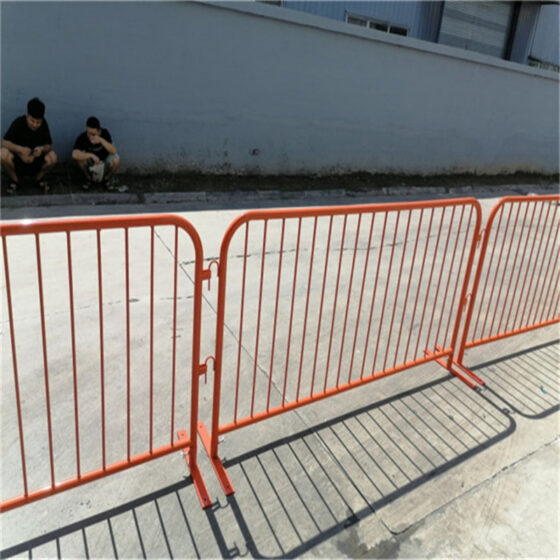
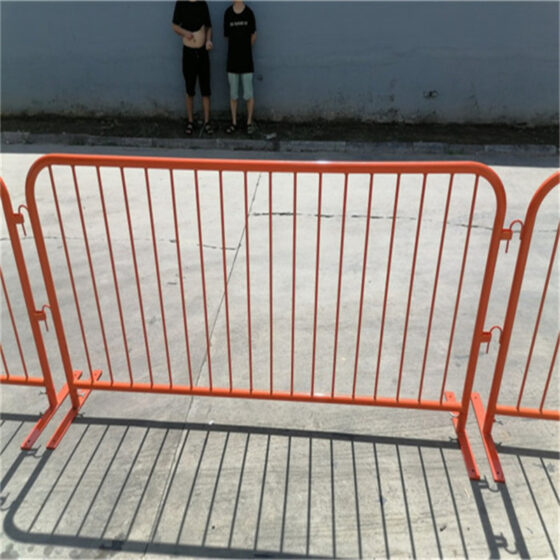
POLYMETAL manufactures 35mm tubing crowd control barrier systems as repeatable modules designed for rapid deployment, clean line control, and high cycle durability. The frame uses tubular steel with selectable outer/frame tube sizes (25mm, 32mm, 35mm, 38mm) and wall thickness options (1.5mm, 1.6mm, 2.0mm) so buyers can match stiffness to real crowd pressure and handling abuse. Upright tubes can be configured in 12mm, 16mm, or 19mm OD with 0.7mm, 0.8mm, 1.0mm, or 1.2mm thickness depending on the required security feel and impact tolerance. Spacing options such as 90mm, 100mm, 150mm, and 200mm allow the barrier to match event density and risk profile.
For outdoor performance, POLYMETAL supplies hot dip galvanized finishes for strong weather resistance and long-life corrosion protection. Where appearance and colour stability matter, systems can be supplied with powder coating options to reduce visible marking and support brand presentation. The interlocking hinge design is engineered for fast connection and stable lines, and removable feet allow safer stacking, easier storage, and reduced trip hazard when deployed correctly. Feet options include flat steel feet (such as 580×50×10mm), bridge feet, V feet, and wheel feet to match the site surface and deployment style.
Product Photo and Baseline Reference
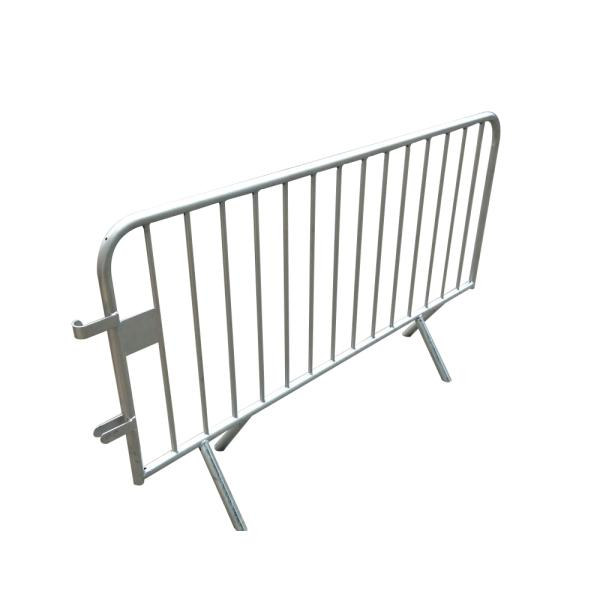
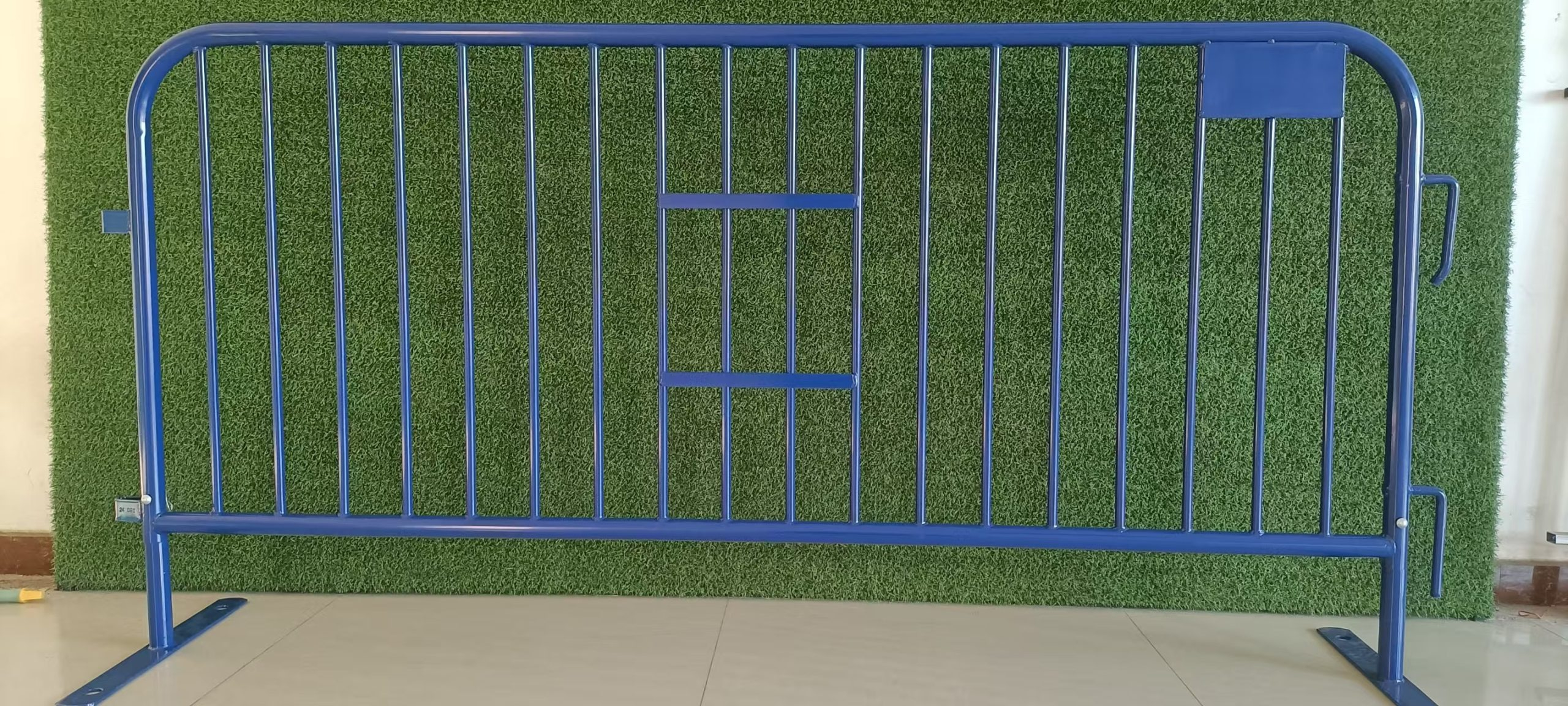
35mm tubing crowd control barrier
| Model No. | Length | Bottom tube | Small tubes | Finish | Loaded in 1x40HQ |
| HML-TB1910 | 2 m | Ø35 x 1.2 mm | Ø16 x 0.8 mm | Hot dip galvanized | 690 PCS |
| Barrier size | 1.1×2.1m, 1.1×2.2m, 1.2×2.5m, 1.3×2.3m, etc | ||||
| Outer tube | 38mm, 36mm, 32mm, etc | ||||
| Inner tube | 25mm, 16mm, 12mm, etc | ||||
| Spacing | 100mm, 150mm, 190mm & 200mm | ||||
| Application | Secure construction sites, private, major public, events ,etc. | ||||
| Feature | √ Strong & excellent stability √ Weather resistance finish – galvanized, powder coating & zinc √ Double interlocking hinge points – excellent stability – quick and easy installation √ Removable feet – can be taken off during stacking and storing. | ||||
Specifications: 35mm Tubing Crowd Control Barrier (3 Tables, 10+ Configurations Each)
All configurations below follow your required selectable options: heights 1.0m / 1.06m / 1.1m / 1.2m, widths 2.0m / 2.2m / 2.5m / 2.6m, frame tube options 25mm / 32mm / 35mm / 38mm with wall thickness 1.5mm / 1.6mm / 2.0mm, upright tube OD 12mm / 16mm / 19mm with thickness 0.7mm / 0.8mm / 1.0mm / 1.2mm, spacing 90mm / 100mm / 150mm / 200mm, and feet options including flat steel (580×50×10mm), wheel feet, bridge feet, and V feet.
Table 1: 35mm Frame Crowd Control Barrier (Hot Dip Galvanized, Standard Duty)
| Model | Height | Width | Frame Tube | Frame Wall | Upright Tube | Upright Thk | Spacing | Feet | Finish | Load 40HQ |
| PM-CCB35-1000-2000G | 1.0m | 2.0m | 35mm | 1.5mm | 16mm OD | 0.8mm | 100mm | Flat 580×50×10 | Hot dip galvanized | 720 pcs |
| PM-CCB35-1000-2200G | 1.0m | 2.2m | 35mm | 1.6mm | 16mm OD | 0.8mm | 150mm | Flat 580×50×10 | Hot dip galvanized | 700 pcs |
| PM-CCB35-1060-2000G | 1.06m | 2.0m | 35mm | 1.6mm | 19mm OD | 0.8mm | 100mm | Bridge feet | Hot dip galvanized | 700 pcs |
| PM-CCB35-1060-2200G | 1.06m | 2.2m | 35mm | 1.5mm | 16mm OD | 1.0mm | 90mm | Bridge feet | Hot dip galvanized | 680 pcs |
| PM-CCB35-1100-2000G | 1.1m | 2.0m | 35mm | 1.6mm | 16mm OD | 0.8mm | 200mm | V feet | Hot dip galvanized | 690 pcs |
| PM-CCB35-1100-2200G | 1.1m | 2.2m | 35mm | 2.0mm | 19mm OD | 0.8mm | 150mm | V feet | Hot dip galvanized | 660 pcs |
| PM-CCB35-1100-2500G | 1.1m | 2.5m | 35mm | 1.6mm | 16mm OD | 1.0mm | 100mm | Flat 580×50×10 | Hot dip galvanized | 600 pcs |
| PM-CCB35-1100-2600G | 1.1m | 2.6m | 35mm | 1.5mm | 12mm OD | 1.0mm | 150mm | Flat 580×50×10 | Hot dip galvanized | 580 pcs |
| PM-CCB35-1200-2500G | 1.2m | 2.5m | 35mm | 2.0mm | 19mm OD | 1.0mm | 100mm | Bridge feet | Hot dip galvanized | 560 pcs |
| PM-CCB35-1200-2600G | 1.2m | 2.6m | 35mm | 1.6mm | 16mm OD | 1.2mm | 90mm | Bridge feet | Hot dip galvanized | 540 pcs |
Table 2: Heavy-Duty Crowd Control Barrier (Reinforced Frame Options for High Abuse)
| Model | Height | Width | Frame Tube | Frame Wall | Upright Tube | Upright Thk | Spacing | Feet | Finish | Load 40HQ |
| PM-CCB38-1000-2000HD | 1.0m | 2.0m | 38mm | 2.0mm | 19mm OD | 1.0mm | 100mm | Flat 580×50×10 | Hot dip galvanized | 650 pcs |
| PM-CCB38-1000-2200HD | 1.0m | 2.2m | 38mm | 2.0mm | 19mm OD | 1.0mm | 90mm | Bridge feet | Hot dip galvanized | 630 pcs |
| PM-CCB35-1060-2000HD | 1.06m | 2.0m | 35mm | 2.0mm | 19mm OD | 1.2mm | 100mm | Bridge feet | Hot dip galvanized | 640 pcs |
| PM-CCB35-1060-2200HD | 1.06m | 2.2m | 35mm | 2.0mm | 16mm OD | 1.2mm | 150mm | V feet | Hot dip galvanized | 620 pcs |
| PM-CCB38-1100-2000HD | 1.1m | 2.0m | 38mm | 2.0mm | 19mm OD | 1.0mm | 200mm | V feet | Hot dip galvanized | 620 pcs |
| PM-CCB38-1100-2200HD | 1.1m | 2.2m | 38mm | 2.0mm | 19mm OD | 1.2mm | 150mm | Flat 580×50×10 | Hot dip galvanized | 600 pcs |
| PM-CCB35-1100-2500HD | 1.1m | 2.5m | 35mm | 2.0mm | 19mm OD | 1.2mm | 100mm | Bridge feet | Hot dip galvanized | 520 pcs |
| PM-CCB35-1100-2600HD | 1.1m | 2.6m | 35mm | 2.0mm | 16mm OD | 1.2mm | 90mm | Bridge feet | Hot dip galvanized | 500 pcs |
| PM-CCB38-1200-2500HD | 1.2m | 2.5m | 38mm | 2.0mm | 19mm OD | 1.2mm | 100mm | Flat 580×50×10 | Hot dip galvanized | 480 pcs |
| PM-CCB38-1200-2600HD | 1.2m | 2.6m | 38mm | 2.0mm | 19mm OD | 1.2mm | 150mm | V feet | Hot dip galvanized | 460 pcs |
Table 3: Event & Venue Crowd Control Barrier (Powder Coated Options + Mobility Feet)
| Model | Height | Width | Frame Tube | Frame Wall | Upright Tube | Upright Thk | Spacing | Feet | Finish | Load 40HQ |
| PM-CCB32-1000-2000PC | 1.0m | 2.0m | 32mm | 1.6mm | 16mm OD | 0.8mm | 150mm | Wheel feet | Powder coated | 750 pcs |
| PM-CCB35-1000-2200PC | 1.0m | 2.2m | 35mm | 1.6mm | 16mm OD | 0.8mm | 100mm | Wheel feet | Powder coated | 720 pcs |
| PM-CCB32-1060-2000PC | 1.06m | 2.0m | 32mm | 1.5mm | 12mm OD | 1.0mm | 200mm | Flat 580×50×10 | Powder coated | 760 pcs |
| PM-CCB35-1060-2200PC | 1.06m | 2.2m | 35mm | 1.5mm | 16mm OD | 1.0mm | 150mm | Flat 580×50×10 | Powder coated | 710 pcs |
| PM-CCB25-1100-2000PC | 1.1m | 2.0m | 25mm | 1.6mm | 12mm OD | 1.0mm | 150mm | Bridge feet | Powder coated | 820 pcs |
| PM-CCB32-1100-2200PC | 1.1m | 2.2m | 32mm | 1.6mm | 16mm OD | 1.0mm | 90mm | Bridge feet | Powder coated | 740 pcs |
| PM-CCB35-1100-2500PC | 1.1m | 2.5m | 35mm | 1.6mm | 16mm OD | 1.0mm | 100mm | V feet | Powder coated | 640 pcs |
| PM-CCB35-1100-2600PC | 1.1m | 2.6m | 35mm | 1.6mm | 19mm OD | 0.8mm | 150mm | V feet | Powder coated | 610 pcs |
| PM-CCB35-1200-2500PC | 1.2m | 2.5m | 35mm | 2.0mm | 19mm OD | 1.0mm | 90mm | Wheel feet | Powder coated | 560 pcs |
| PM-CCB38-1200-2600PC | 1.2m | 2.6m | 38mm | 1.6mm | 19mm OD | 1.0mm | 100mm | Wheel feet | Powder coated | 520 pcs |
Applications
A 35mm tubing crowd control barrier is widely used to guide pedestrian flow and protect controlled zones in construction perimeters, civil work sites, concerts, festivals, stadium queues, retail openings, transport hubs, marathons, public events, emergency response routing, and any location where rapid “set and reset” deployment is required. The correct height, spacing, and feet choice reduces line movement and helps keep access lanes, entry points, and VIP/service corridors disciplined.
Benefits 35mm tubing crowd control barrier
A properly specified barrier system delivers stable lines that interlock fast, resist wobble, and maintain a consistent professional appearance across long runs. Correct tube wall thickness reduces flex and hinge drift, tighter spacing increases visual control, removable feet improve stacking efficiency, and finish discipline reduces early corrosion and visible rub-through. When the barrier is engineered as a repeatable system, crews spend less time “fighting the line” and more time controlling movement safely.
Detailed 35mm tubing crowd control barrier
Detailed images
Uses & Packaging
Uses & packaging
Traffic barriers should be first and foremost on and around civil projects, work sites, events, concerts and festivals, where access lanes must remain open and pedestrian flow must remain controlled even under sudden pressure changes.
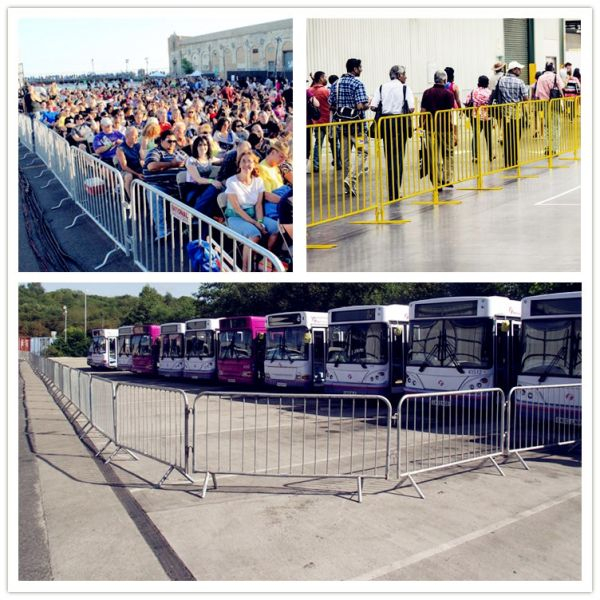
Packing 35mm tubing crowd control barrier
POLYMETAL typically packs crowd control barriers in stack-optimized bundles to reduce transport damage and speed up site receiving. Removable feet are handled as counted sets so stacking remains tight and stable. Barriers are stacked with separation protection to reduce zinc-on-zinc scuffing and coating rub-through, then banded and palletized for forklift handling. Feet types (flat, bridge, V, wheel) are packed and labeled separately to prevent mix-ups. For mixed-height projects, bundles are labeled by height, width, frame tube size, spacing group, and feet type so crews do not deploy mismatched barriers that create uneven lines.

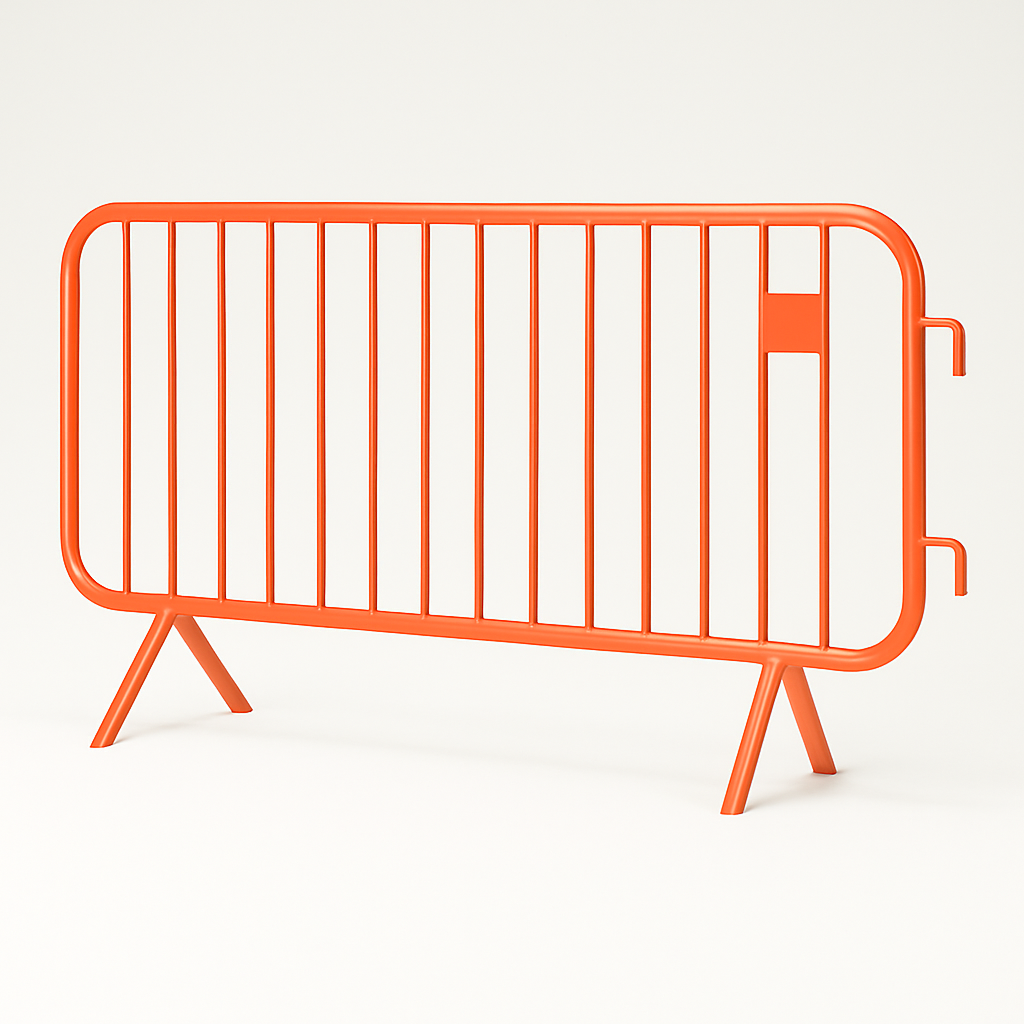

Standards and FAQs 35mm tubing crowd control barrier
Standards
Because compliance depends on your deployment environment, the safest approach is to define finish expectations, corrosion resistance targets, tube thickness requirements, and stacking/handling method directly in the purchase specification. For outdoor duty cycles, hot dip galvanized barriers are commonly selected for long-life performance, while powder coated finishes are commonly selected where appearance and brand presentation are critical. The correct approach is to treat the barrier as a system: frame tube + upright tube + spacing + hinge geometry + feet type + packing method.
FAQs 35mm tubing crowd control barrier
Q: Why do buyers specify “35mm tubing crowd control barrier” instead of smaller frames?
A: 35mm bottom tubing is a common stiffness step-up that helps the barrier stay straighter under crowd pressure and repeated handling, especially when paired with the correct wall thickness.
Q: Which feet are best for events with constant repositioning?
A: Wheel feet improve mobility for rapid resets, while flat steel feet improve stable runs; bridge feet help on uneven surfaces. The best choice depends on whether the priority is mobility, stability, or uneven-ground tolerance.
Q: What spacing is safest for dense queues?
A: Tighter spacing such as 90mm or 100mm increases visual control and reduces squeeze-through behavior; wider spacing reduces steel but can increase risk in high-density lines.
Q: What is the most common hidden failure point?
A: Base stability and stacking damage. If feet type, removable-foot discipline, and packing protection are not locked, barriers deform faster and interlocks drift, causing replacement cycles to accelerate.
Final Buying Reminder
If you want a 35mm tubing crowd control barrier line to deploy fast, stay stable, and keep its finish, do not buy “a cheap barrier.” Buy a matched POLYMETAL system: lock height and width, define frame tube size and wall thickness, match upright OD and thickness to abuse level, choose spacing to suit crowd density, and select the correct feet type (flat steel, bridge, V, wheel) with packing that protects stacking points. That is how you avoid rework, early replacement, and the loss that hits when the schedule is already locked.