Your One-Stop Wire Mesh Fence Supplier | POLYMETAL

42×96 crowd control barriers look simple on the surface, but behind the frames, uprights and feet there are 7 danger facts that decide whether your barrier line becomes reliable protection or an expensive weakness. Many buyers only compare price and photos and overlook structural data, tube size, powder coating quality and packing standards. That mistake can create safety gaps, bent frames, corrosion damage and unexpected replacement cost. This article gives you a powerful, fear-driven guide so you understand these critical risk facts before you commit your event or project budget.
 |  |
42×96 Crowd control barriers overview
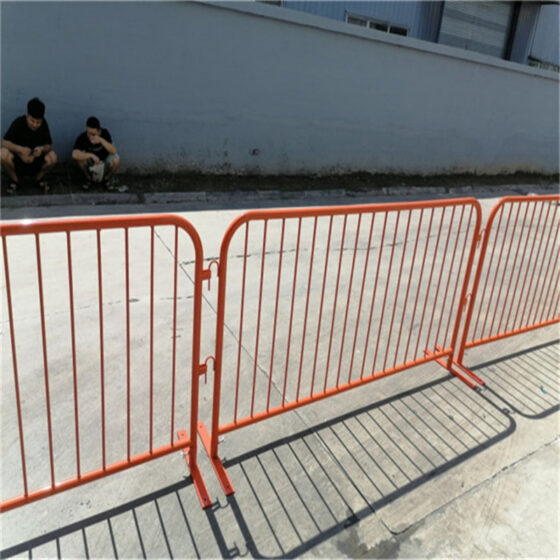
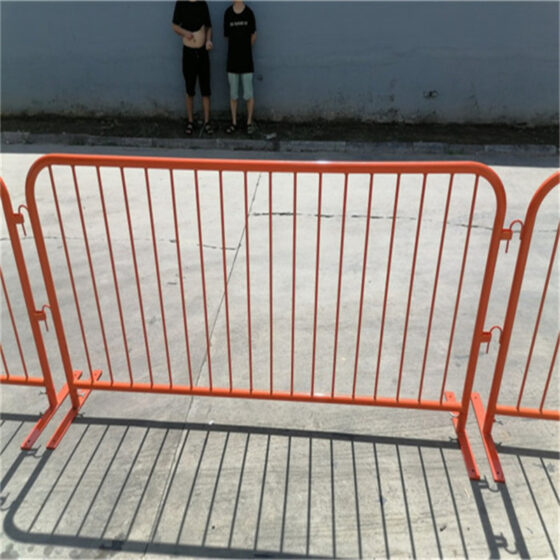
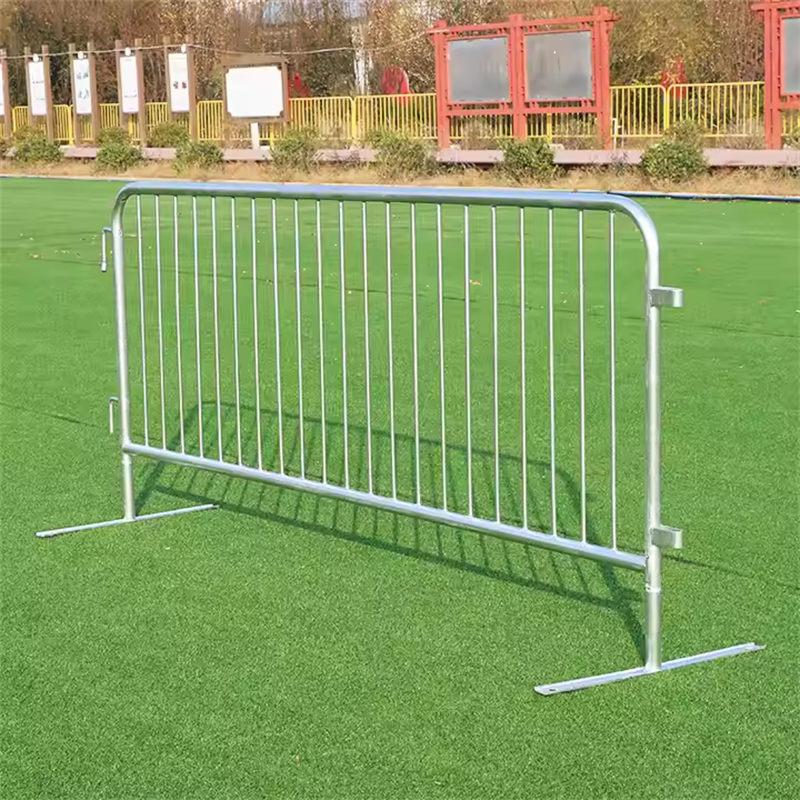
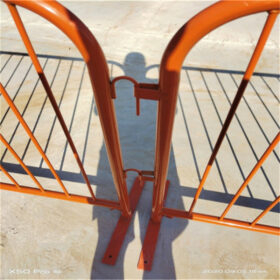
42×96 crowd control barriers are welded portable fences designed to manage crowds, guide pedestrian flow and create secure event perimeters. Each panel is 42 inches (about 1.07 m) high and 96 inches (about 2.44 m) long, with a tubular steel frame and vertical uprights, supported by removable bridge or flat steel feet. When the frame tube, upright tube and feet are correctly specified, these barriers deliver both visual control and real safety performance.
- 42″ height provides a visible but approachable barrier that is hard to step over in a crowd.
- 96″ length reduces the number of panels and connections, creating a cleaner, straighter barrier line.
- Strong tubular frame and tight upright spacing help prevent pushing through, lifting or collapsing under pressure.
- Removable bridge and flat feet allow rapid installation, stacking and transport for repeated event use.

7 powerful danger facts about 42x96crowd control barriers
Ignoring the following 7 danger facts is how operators fall into structural failures, injury incidents and high lifetime cost. Understanding how 42×96 crowd control barriers are engineered against these threats helps you protect your project from loss and crisis.



1. Frame tube weakness: wrong diameter or wall thickness
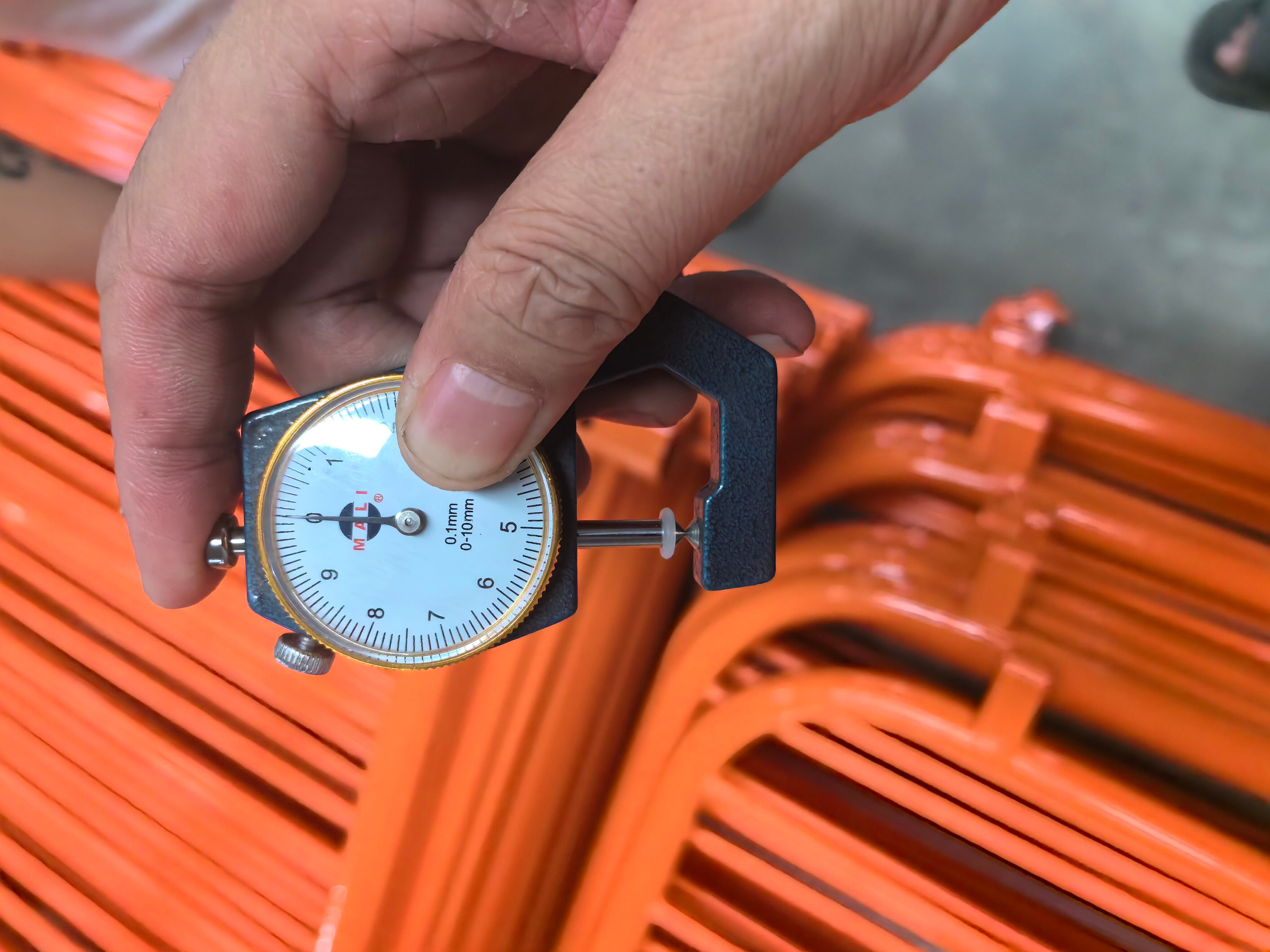
Under-sized frame tube is the first hidden flaw. A 42×96 barrier frame must carry crowd pressure and impacts without twisting. Using 25 mm, 32 mm or 38 mm round tube with 1.5–2.0 mm wall thickness gives a rigid skeleton; dropping to thinner walls or smaller diameters creates a gap between appearance and real strength and leads to bending and permanent deformation after only a few events.
2. Upright tube flaw: thin infill that buckles under pressure
Vertical uprights take direct pressure from people leaning and pushing. 19 mm, 16 mm or 12 mm uprights with 0.7–1.2 mm wall thickness and tight spacing are essential. If the tube is too thin or too far apart, uprights can bow, twist or even snap, turning the barrier into a safety hazard and exposing you to injury claims and damage to reputation.
3. Foot design danger: unstable or weak connection
Bridge and flat feet carry all the load into the ground. Poorly designed feet with thin steel, weak welds or loose sockets can tilt or tear off under crowd movement. A solid bridge foot gives superior stability on uneven ground, while a thick flat steel foot is ideal for indoor or flat surfaces. When the foot connection is weak, the entire barrier line becomes a continuous trip hazard and tipping risk.
4. Welding and joint defect: cracked corners and loose uprights
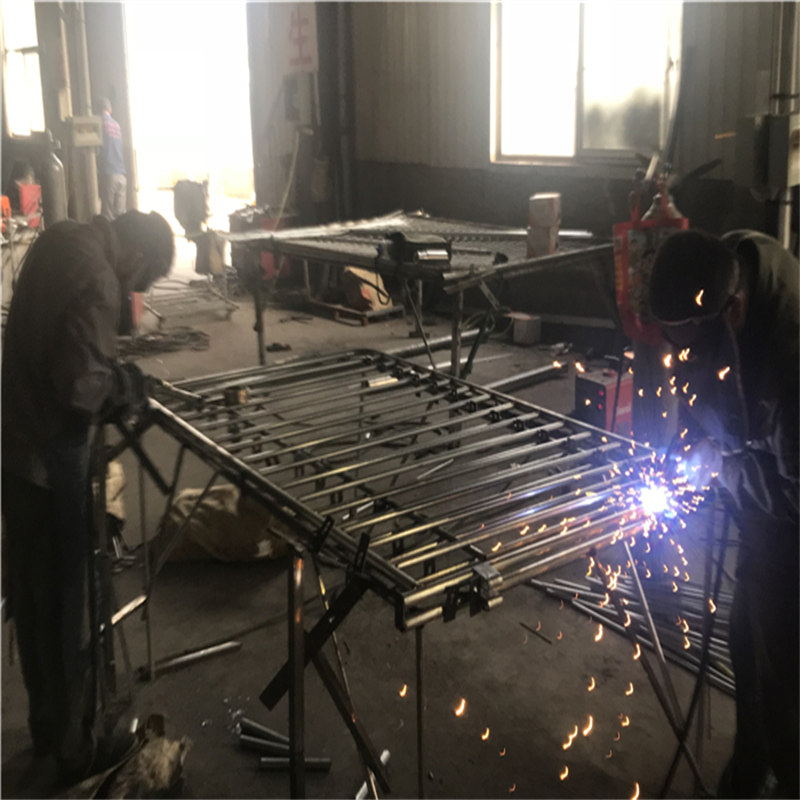
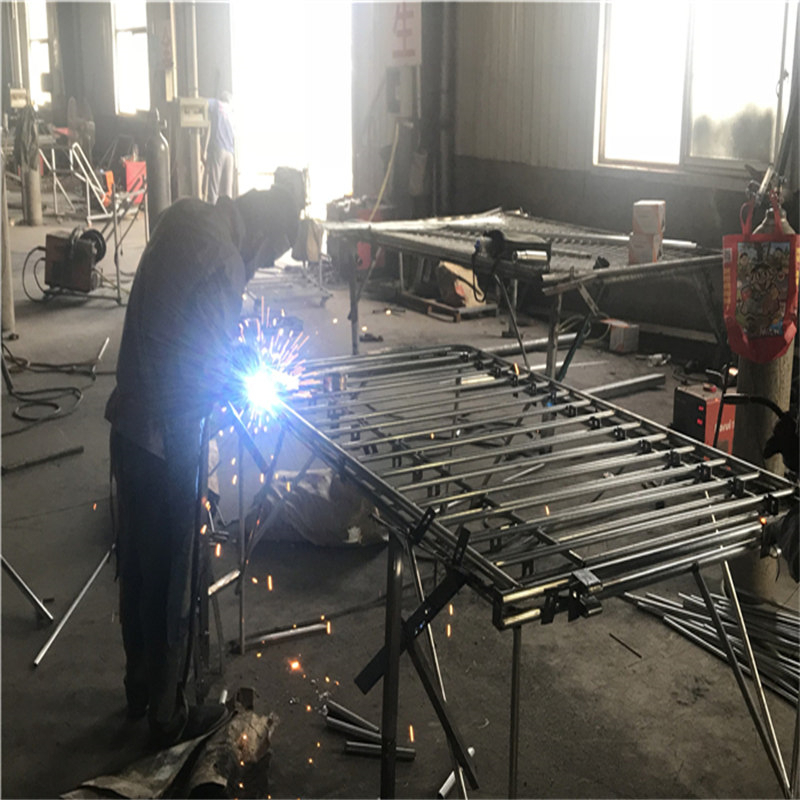
Every joint in a 42×96 crowd control barrier is a potential failure point. Full perimeter welding around the frame and upright joints with smooth, continuous beads eliminates the defect of cracked corners and rattling uprights. Spot welding or short, unfinished welds may save minutes in production but create a long-term error that shows up as noisy, unstable and unsafe panels.
5. Coating quality threat: early rust and structural damage
Without proper zinc and paint protection, crowd control barriers quickly lose strength. Pre-galvanized tube with extra hot-dip zinc or full hot-dip galvanizing after fabrication, followed by high-build powder coating, seals the steel against corrosion. Thin or uneven coatings, unsealed welds and uncoated ends are a silent hazard that later become visible rust, section loss and structural failure.
6. Connection and interlock oversight: weak links between panels
Even strong panels can fail if the interlocks are weak. Dog-bone hooks, male–female hooks or specially shaped pins must hold panels together under lateral loads. Poorly shaped hooks or oversized gaps let panels lift apart, opening sudden access points that crowds can exploit. This misstep destroys the continuity of the barrier line and can trigger loss of control in high-density situations.
7. Packing and standard pattern: damage in transit and hidden non-compliance
Bad packing and unclear standards are the final danger fact. Without rigid pallets, tight strapping and film wrapping, barriers arrive bent, scratched and out of square, forcing you into last-minute fixes or replacement. Ignoring steel grades, tube tolerances and galvanizing standards creates a dangerous mismatch between what you promised and what you deliver. Correct packing and strict standards are the rule that keeps your barrier investment performing across many seasons.
Key specifications of 42x96crowd control barriers
The following specification tables give detailed data for a professional 42x96crowd control barrier range, including different frame tube sizes, upright tube options, foot styles, coating systems, packing and standards.
| Model | Height | Width | Frame tube | Upright tube | Upright spacing | Surface treatment |
|---|---|---|---|---|---|---|
| 42x96Light Duty A | 42″ (1067 mm) | 96″ (2438 mm) | 25 mm OD × 1.50 mm wall round steel tube | 16 mm OD × 0.80 mm wall round steel tube | Approx. 120 mm centre to centre | Pre-galvanized tube, zinc coating ≥ 60 g/m² |
| 42x96Light Duty B | 42″ (1067 mm) | 96″ (2438 mm) | 25 mm OD × 1.50 mm wall round steel tube | 12 mm OD × 0.70 mm wall round steel tube | Approx. 120–130 mm centre to centre | Pre-galvanized tube + lacquer sealing on welds |
| 42x96Standard Duty A | 42″ (1067 mm) | 96″ (2438 mm) | 32 mm OD × 1.60 mm wall round steel tube | 16 mm OD × 1.00 mm wall round steel tube | Approx. 100 mm centre to centre | Hot-dip galvanized after welding, silver finish |
| 42x96Standard Duty B | 42″ (1067 mm) | 96″ (2438 mm) | 32 mm OD × 1.60 mm wall round steel tube | 19 mm OD × 1.00 mm wall round steel tube | Approx. 95–105 mm centre to centre | Hot-dip galvanized after welding, bright silver |
| 42x96Rental Series | 42″ (1067 mm) | 96″ (2438 mm) | 32 mm OD × 1.60 mm wall round steel tube | 16 mm OD × 1.00 mm wall round steel tube | Approx. 100–110 mm centre to centre | Hot-dip galvanized after welding + clear topcoat |
| 42x96Heavy Duty A | 42″ (1067 mm) | 96″ (2438 mm) | 38 mm OD × 2.00 mm wall round steel tube | 19 mm OD × 1.20 mm wall round steel tube | Approx. 80–90 mm centre to centre | Hot-dip galvanized after welding + yellow powder coating |
| 42x96Heavy Duty B | 42″ (1067 mm) | 96″ (2438 mm) | 38 mm OD × 2.00 mm wall round steel tube | 16 mm OD × 1.20 mm wall round steel tube | Approx. 85–95 mm centre to centre | Hot-dip galvanized after welding + black powder coating |
| 42x96High Security | 42″ (1067 mm) | 96″ (2438 mm) | 38 mm OD × 2.00 mm wall round steel tube | 19 mm OD × 1.20 mm wall round steel tube | Approx. 70–80 mm centre to centre | Full hot-dip galvanizing + duplex powder coating |
| 42x96Indoor Coated | 42″ (1067 mm) | 96″ (2438 mm) | 32 mm OD × 1.60 mm wall round steel tube | 16 mm OD × 1.00 mm wall round steel tube | Approx. 100 mm centre to centre | Phosphate pre-treatment + epoxy powder coating |
| 42x96Construction Grade | 42″ (1067 mm) | 96″ (2438 mm) | 38 mm OD × 2.00 mm wall round steel tube | 19 mm OD × 1.20 mm wall round steel tube | Approx. 90–100 mm centre to centre | Hot-dip galvanized after welding, heavy zinc layer |
Where 42×96 crowd control barriers perform best
42×96 crowd control barriers are suitable for venues and projects that demand fast installation, repeated use and a clear safety profile. Their standard height and length make them easy to combine into long lines, curves and enclosures without complex tools or specialist training.


Event and entertainment use
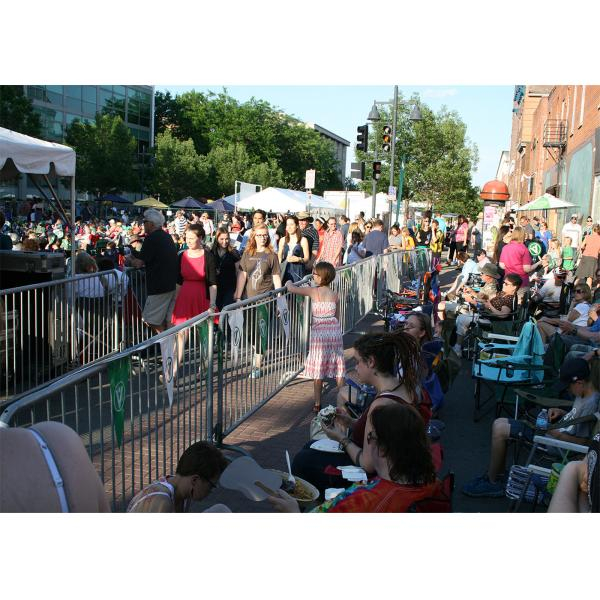
Concerts, festivals, parades, sports events and fan zones rely on 42×96 crowd control barriers to define VIP areas, protect stages and create safe walkways. When frame tubes, uprights and feet are correctly chosen, the barrier system resists pushing, leans and sudden surges without collapsing or opening dangerous gaps.
Construction, roadwork and public safety 42×96 crowd control barriers
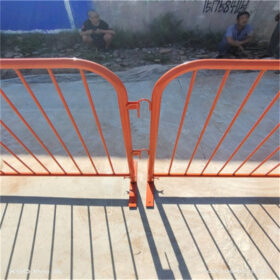
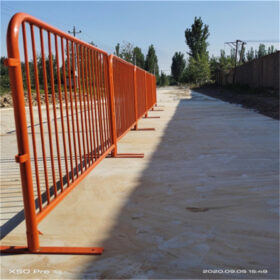
On construction sites and roadworks, these barriers provide a visible, rigid edge that directs pedestrians away from hazards and controls access to restricted areas. Powder-coated high-visibility colours and clear signage positions make the risk zones obvious, reducing accidents and claims.
Temporary queuing and crowd guidance
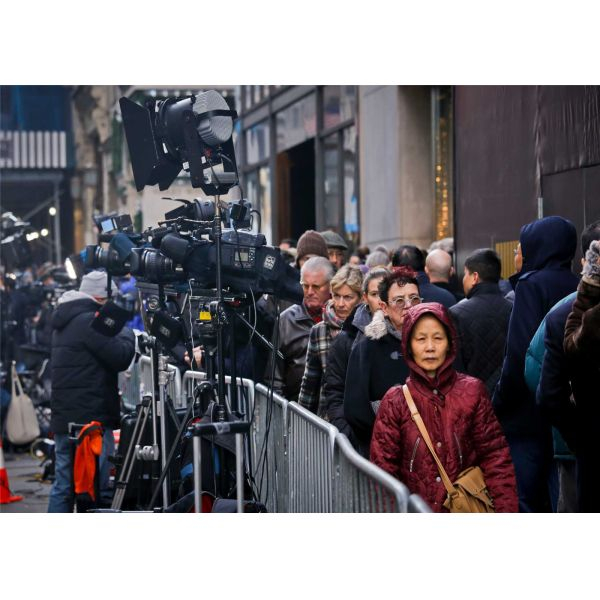
Airports, stadiums, shopping centres and government offices use 42×96 crowd control barriers to form temporary queuing lanes and waiting zones. The combination of bridge or flat feet and predictable sizing makes it easy to reconfigure layouts in minutes as crowd patterns change.
Benefits you gain and dangers you avoid
By specifying 42×96 crowd control barriers with the right frame, upright and foot configuration, you lock in several key benefits and shut down the most common danger patterns that destroy barrier performance.
- Strong frame tubes and full welding deliver stiff panels that do not twist or rattle under load.
- Appropriate upright tube diameter and spacing prevent pushing through, climbing and squeezing.
- Stable bridge and flat steel feet maintain line integrity on different surfaces and weather conditions.
- High-quality galvanizing and powder coating protect against rust, chipping and structural damage.
- Efficient packing and container loading ensure panels arrive straight, clean and ready to deploy.
- Clear standards and quality control reduce field failures and protect your brand’s safety reputation.
Packing, loading and standard practice for 42×96 barriers
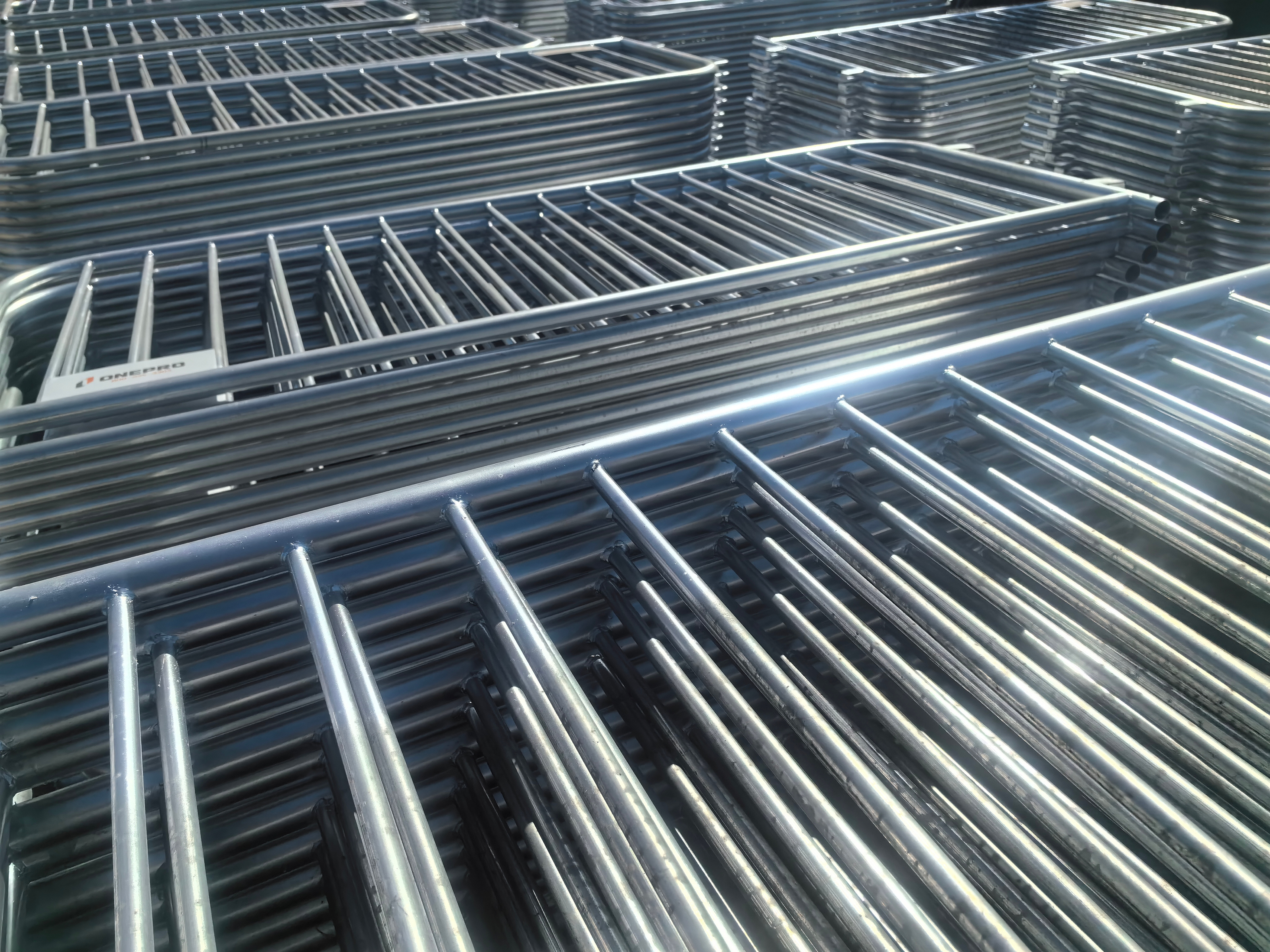
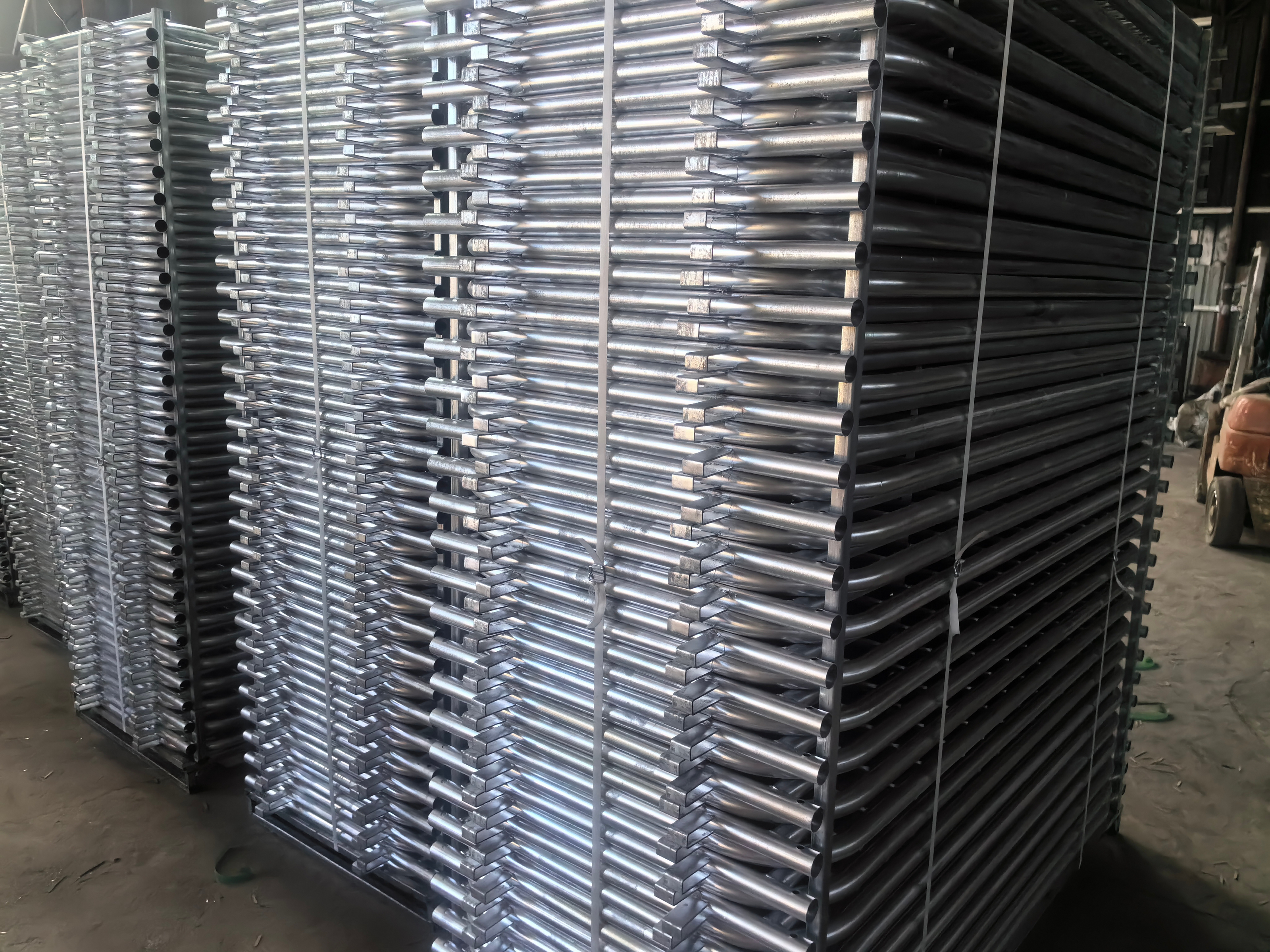
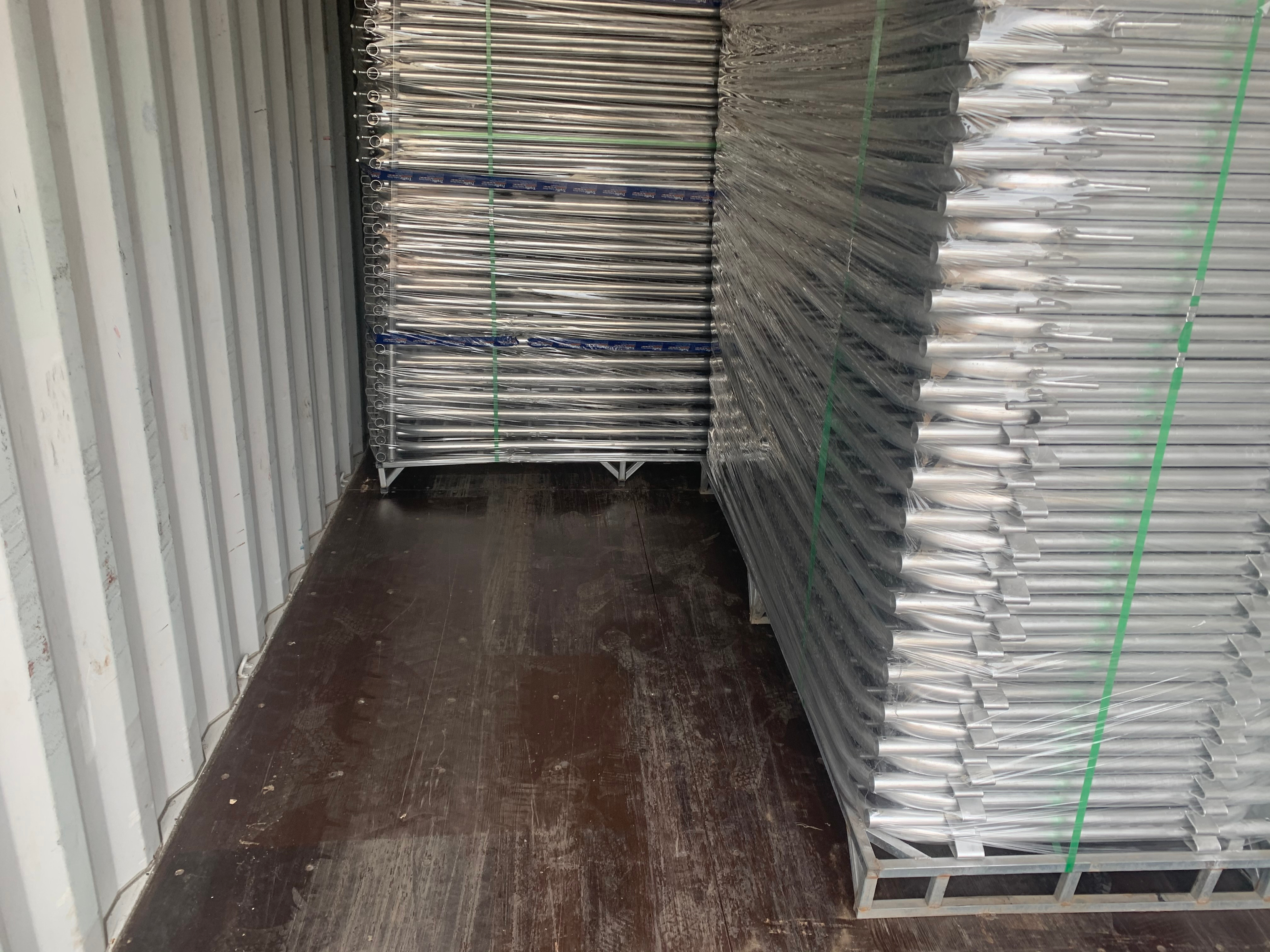
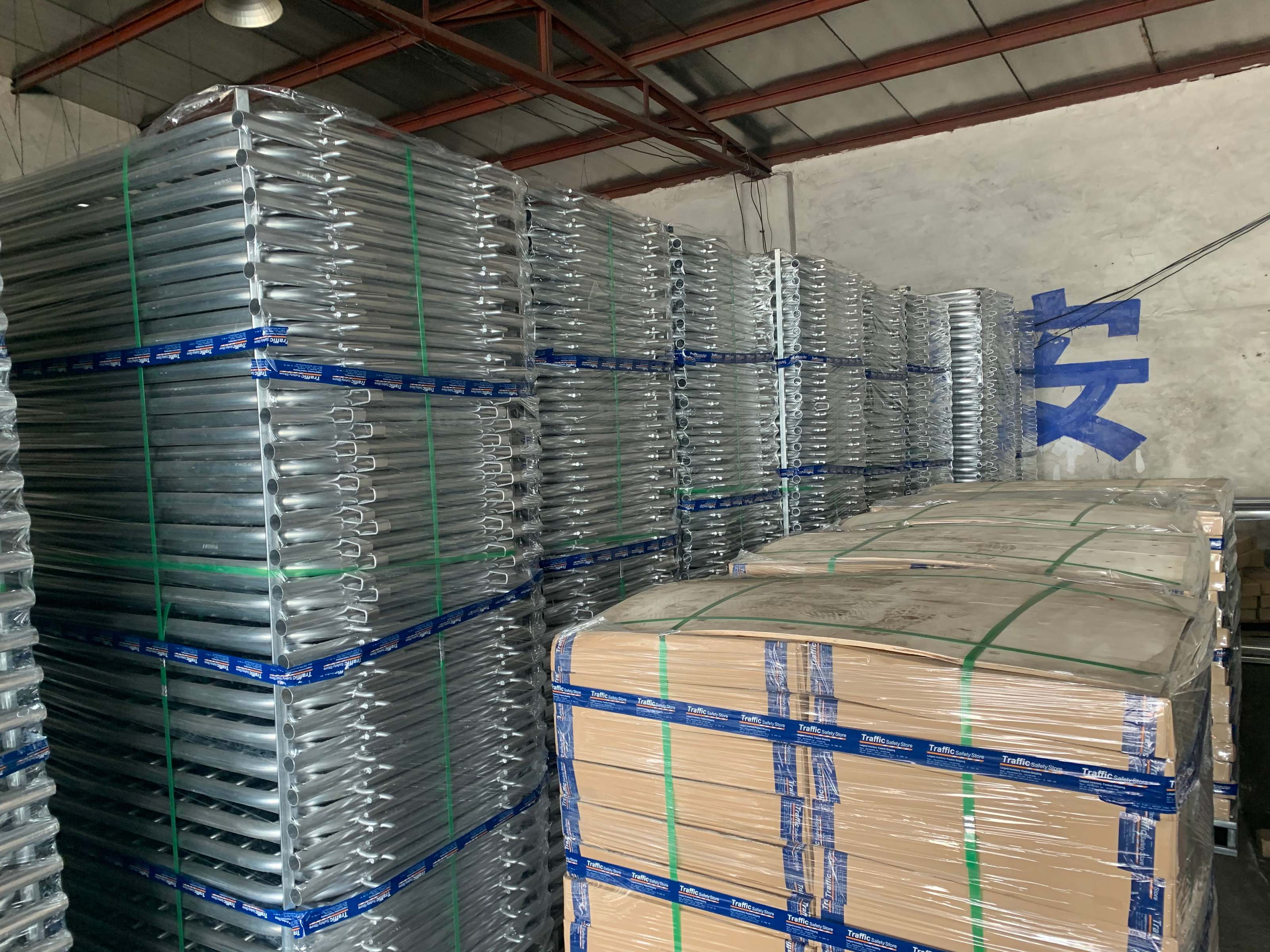
Correct packing and adherence to standards are as important as tube size and welding. 42×96 crowd control barriers are stacked on steel pallets with protective spacers, strapping and stretch film so they arrive straight and damage-free. Feet are caged or palletized separately to keep handling simple on site. Each load is labeled with product data and batch numbers to support traceability and consistent quality checks. Steel grades, tube dimensions, welding methods and galvanizing thickness follow defined internal standards so every shipment performs the same from the first event to the last.


Final warning: do not ignore these 42x96crowd control barrier danger facts
42×96 crowd control barriers and tubular steel fence panels can be a powerful, long-lasting safety solution when you respect the 7 danger facts outlined in this guide. Ignoring frame tube size, upright tube thickness, foot design, welding, coating, interlock detail and packing standards turns your barrier line into a structural defect, a trip hazard and a source of ongoing loss. By using this article as your clear checklist, you avoid those traps, protect your budget and build a barrier system that stays strong, safe and impressive across every event and project.