Your One-Stop Wire Mesh Fence Supplier | POLYMETAL
Aluminium garrison fencing is often treated as a simple metal outline around a property: a few rails, a row of uprights and another line on the project cost sheet. That casual view is a dangerous illusion. A poorly specified aluminium garrison fence can create hidden gaps, loopholes and weaknesses along your perimeter, turning the idea of “security” into an expensive myth. Even when people read general guides or browse garrison fencing specifications, the focus is too often on basic dimensions instead of real risk per metre. One unnoticed defect, design error or installation misstep is enough to trigger real risk, danger, loss and long-term damage for your site and your brand.
POLYMETAL aluminium garrison fencing is engineered to turn that threat into a clear advantage. Once you see each panel as a complete security system rather than a generic barrier, every dimension becomes critical data, every upright becomes a strategic feature, and every small flaw turns into an immediate warning sign instead of a nasty surprise. This article is a compact guide, outline and checklist in one, revealing seven key facts, patterns and warning signals that separate a safe aluminium garrison fence from a deadly illusion.
Chemical Composition of Aluminium Alloy 6063 (T6 Temper)
| Element | Symbol | Content (wt. %) | Typical Role in Garrison Fencing |
|---|---|---|---|
| Aluminium | Al | Balance (≈ 97.5–99%) | Base metal providing low density, good corrosion resistance and extrudability. |
| Silicon | Si | 0.20 – 0.60 | Improves fluidity and strength; helps form Mg2Si for age hardening. |
| Magnesium | Mg | 0.45 – 0.90 | Key strengthening element; increases hardness and tensile strength of rails and uprights. |
| Iron | Fe | ≤ 0.35 | Unavoidable impurity; controlled to maintain surface quality and toughness. |
| Copper | Cu | ≤ 0.10 | Kept low to preserve corrosion resistance in outdoor & pool environments. |
| Manganese | Mn | ≤ 0.10 | Refines grain structure, supporting consistent mechanical properties. |
| Chromium | Cr | ≤ 0.10 | Helps control grain structure and improves corrosion resistance. |
| Zinc | Zn | ≤ 0.10 | Minor impurity; limited to avoid adverse effects on corrosion behaviour. |
| Others (each) | – | ≤ 0.05 | Trace elements kept low under alloy standard control. |
| Others (total) | – | ≤ 0.15 | Total of all minor impurities; ensures stable, predictable performance. |
Physical & Mechanical Properties of Aluminium 6063 T6 for Garrison Fencing
| Property | Typical Value | Unit | Relevance for Aluminium Garrison Fencing |
|---|---|---|---|
| Temper | T6 (solution heat-treated & artificially aged) | – | Gives a strong, stable condition ideal for rails, uprights and posts. |
| Density | ≈ 2.70 | g/cm³ | Lightweight panels that are easier to handle and install than steel. |
| Ultimate Tensile Strength | ≈ 205 – 240 | MPa | Provides sufficient strength for anti-climb garrison panels under wind and impact loads. |
| 0.2% Proof / Yield Strength | ≈ 160 – 190 | MPa | Controls permanent bending; keeps rails and pickets straight in service. |
| Elongation (A50) | ≈ 8 – 12 | % | Allows limited ductility so profiles absorb impact instead of snapping. |
| Elastic Modulus | ≈ 69 | GPa | Defines stiffness; used for deflection checks on tall garrison panels and posts. |
| Melting Range | ≈ 615 – 655 | °C | Indicates high-temperature behaviour during fabrication and any on-site hot work. |
| Thermal Conductivity | ≈ 200 – 210 | W/m·K | Helps dissipate heat from sun exposure, reducing thermal stress in outdoor fences. |
| Coefficient of Thermal Expansion | ≈ 23.5 × 10⁻⁶ | /K | Used when designing long panel runs and post spacing in hot climates. |
| Corrosion Resistance | High in atmospheric & marine environments | – | Excellent for powder-coated aluminium garrison fencing in coastal or pool-side locations. |
| Surface Finish Compatibility | Excellent for powder coating & anodizing | – | Ensures strong adhesion and long life of architectural powder-coated garrison profiles. |
Product Overview of POLYMETAL Aluminium Garrison Fencing
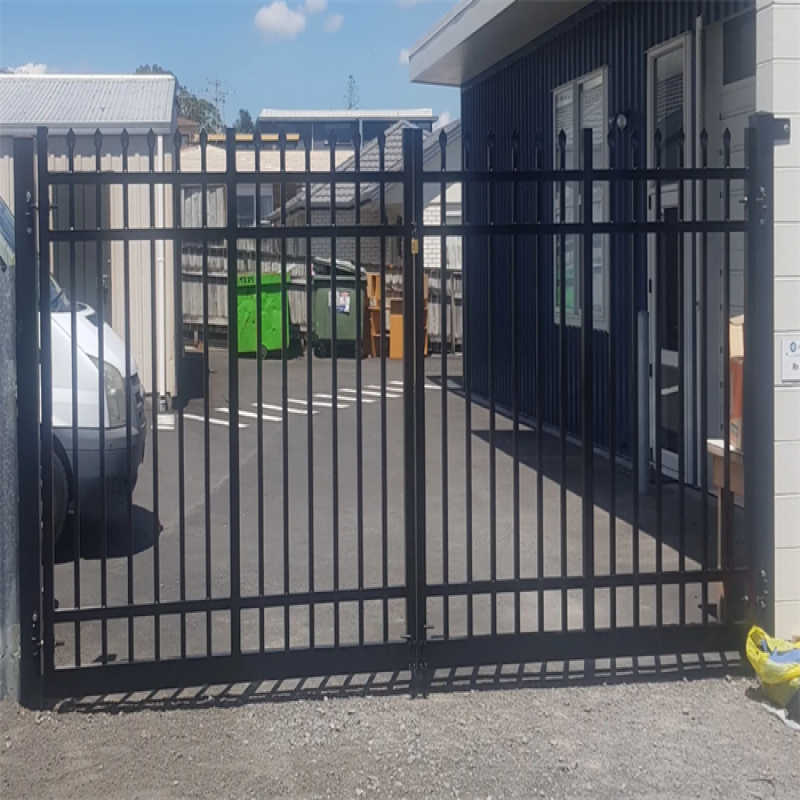
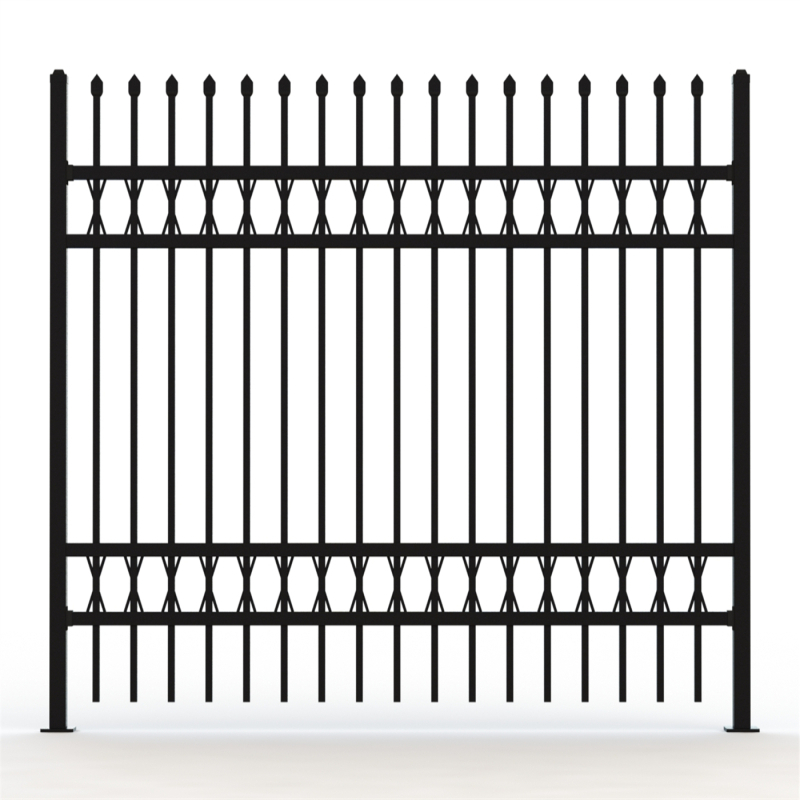
POLYMETAL aluminium garrison fencing is a rigid, corrosion-resistant perimeter system developed for industrial estates, warehouses, schools, logistics hubs, government facilities and premium commercial frontages. Instead of using mild steel that can rust and stain, the system relies on structural aluminium alloy profiles designed for long service life in coastal, industrial and high-moisture environments.
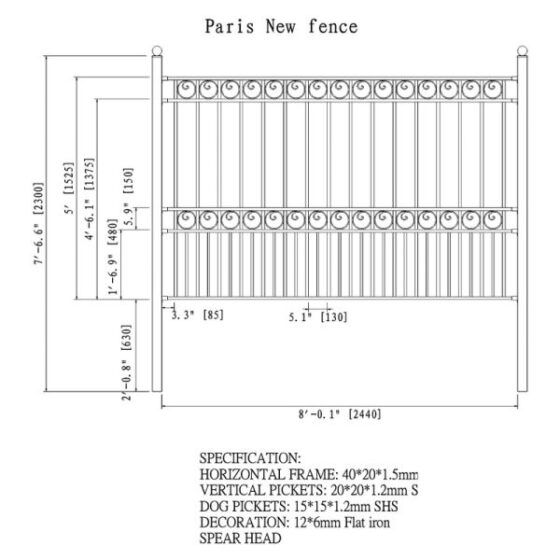
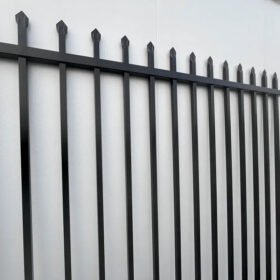
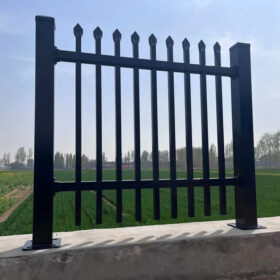
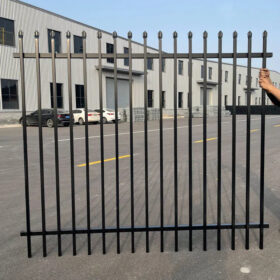
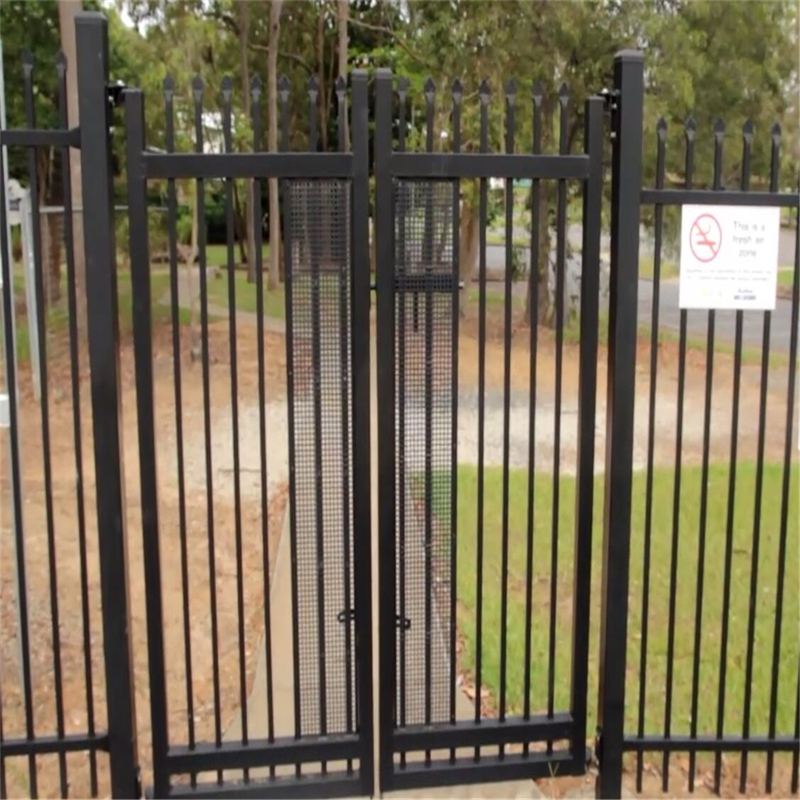
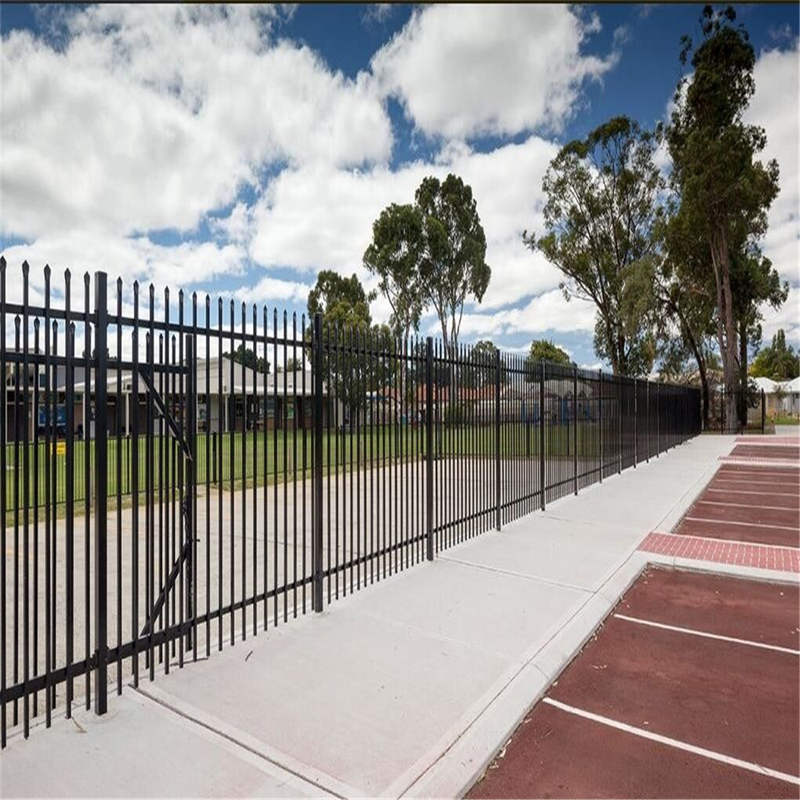
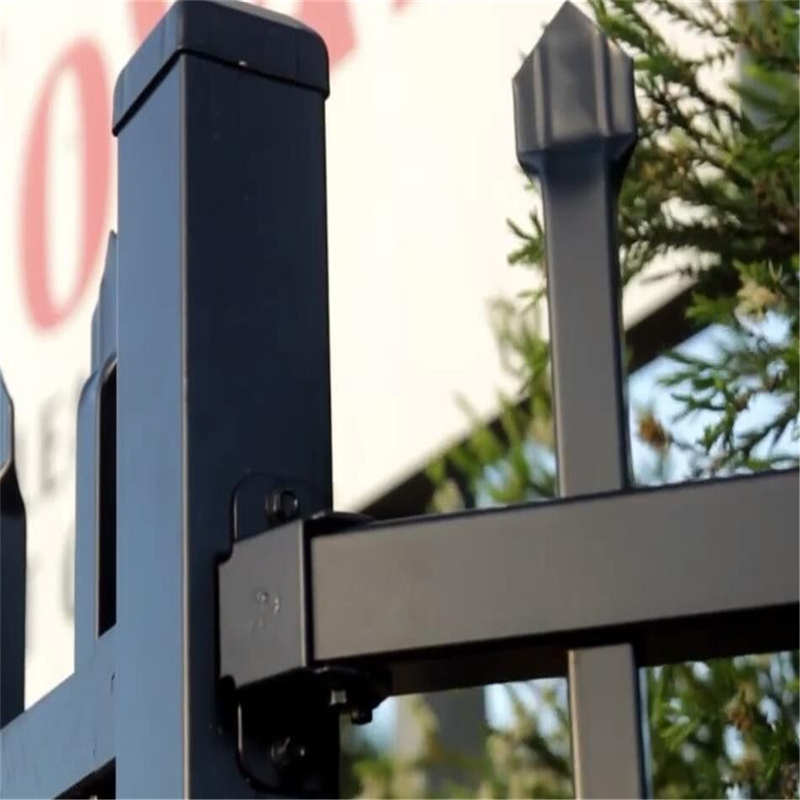
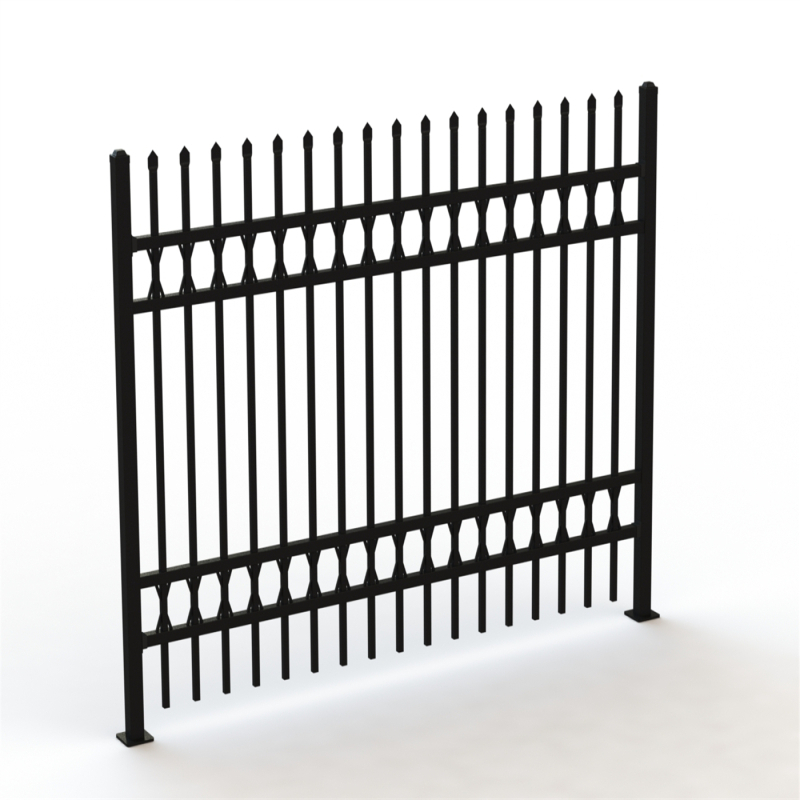
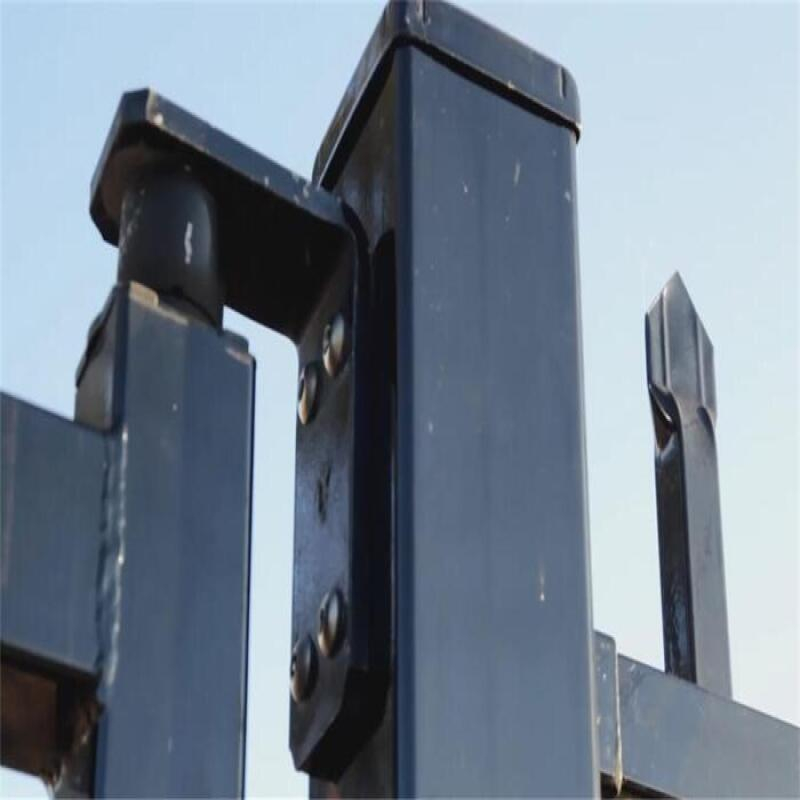
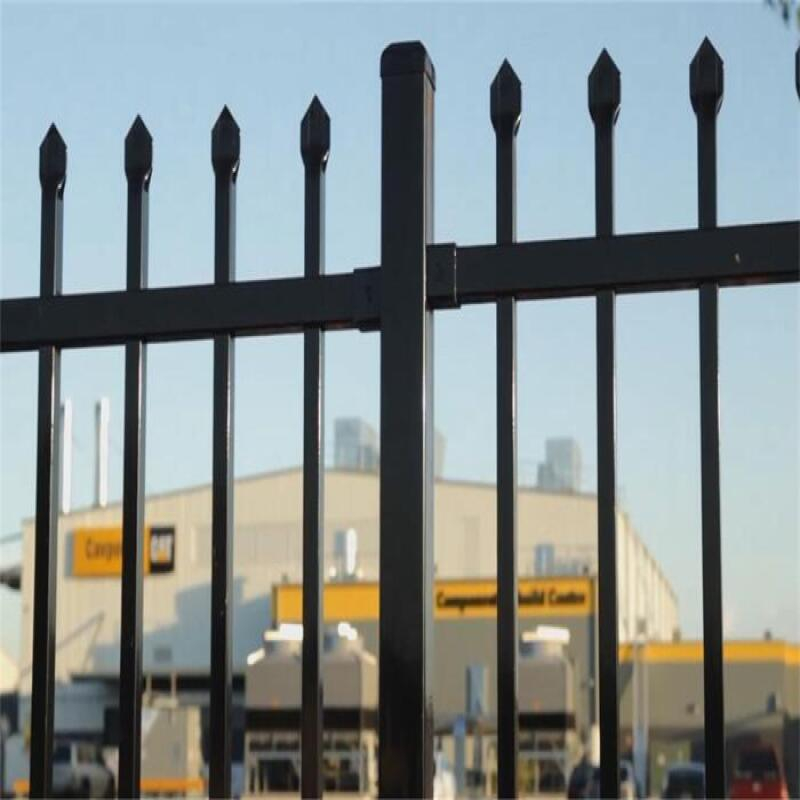
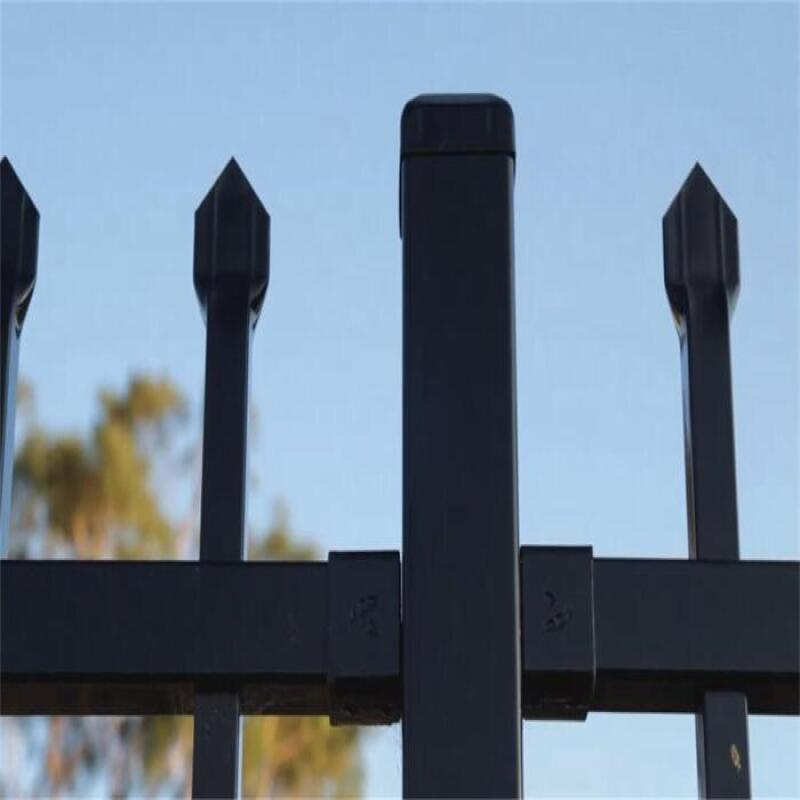
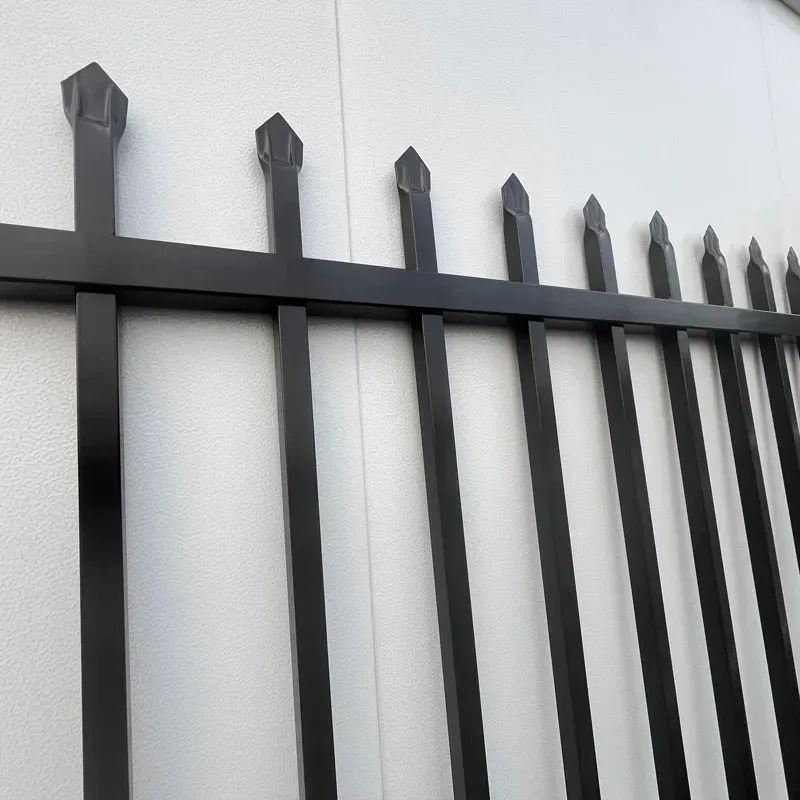
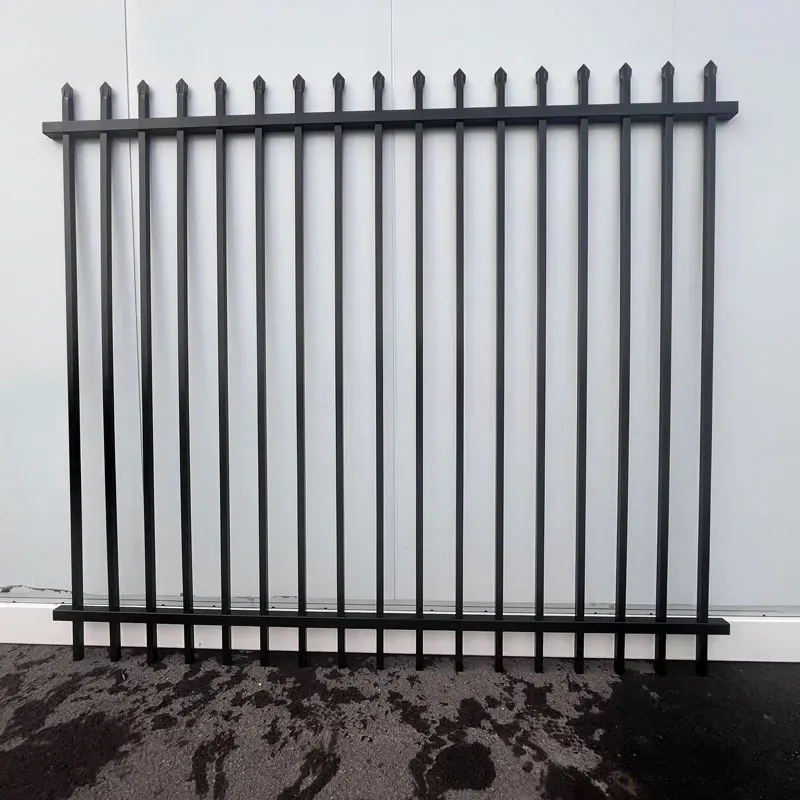
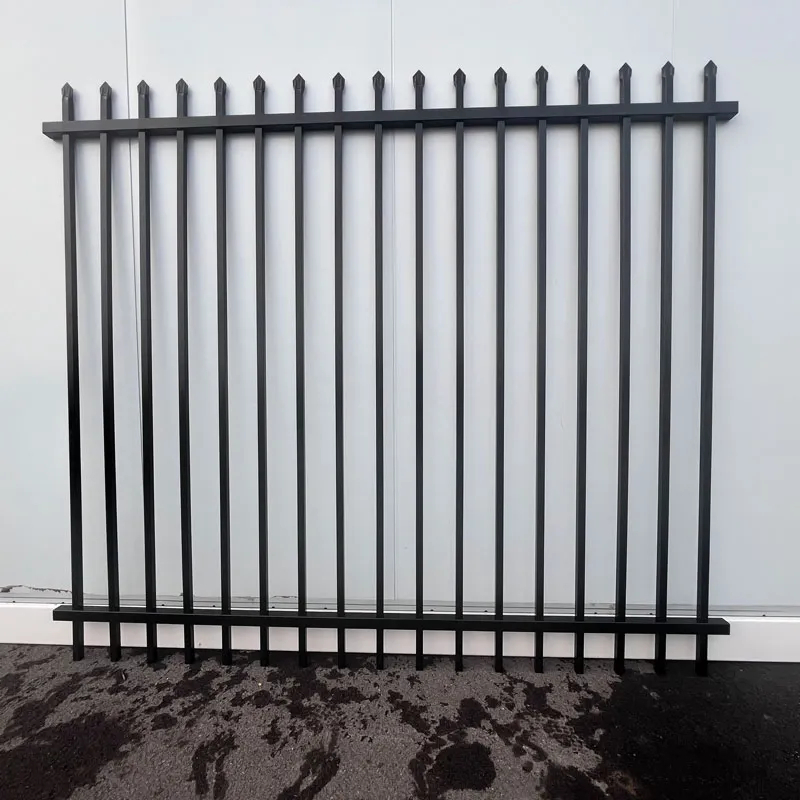
The main frame is built from square hollow section rails in 40 × 40 mm, 45 × 45 mm or 50 × 50 mm sizes. These rails form the upper and lower chords of each panel, creating a stable rectangular profile that resists twisting and bending under wind or crowd loading. Vertical uprights in 16 × 16 mm, 25 × 25 mm or 30 × 30 mm pass through or sit against the rails and are fully welded to lock the geometry. Uprights are typically set at 100 mm centres, generating a strong anti-climb pattern while maintaining clear sightlines for CCTV and patrols.
Standard fence heights include 1200 mm, 1500 mm, 1800 mm, 2100 mm and 2400 mm, with panel widths usually around 2400–2450 mm to balance rigidity, transport efficiency and installation speed. Matching aluminium posts are available in 60 × 60 mm, 65 × 65 mm, 75 × 75 mm, 80 × 80 mm and 100 × 100 mm sections, with post height selected according to the installed fence height and footing depth so that the support structure is never the weak side of the system.
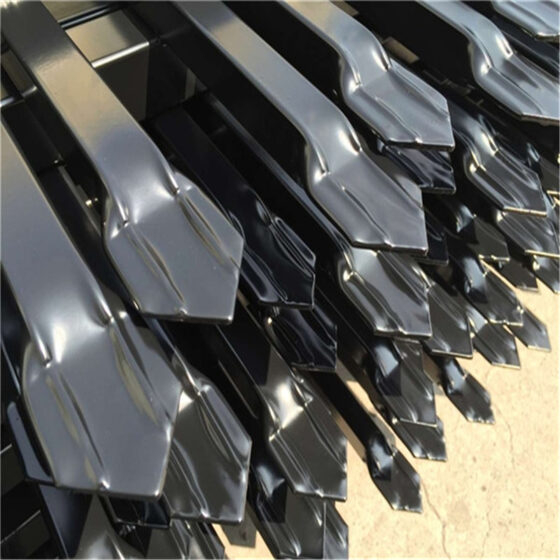
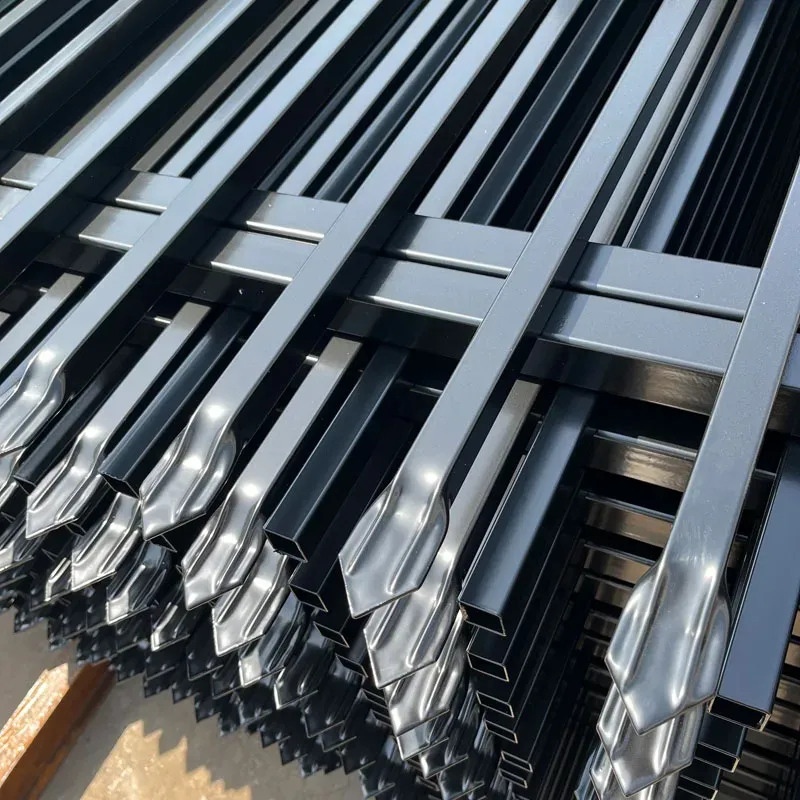
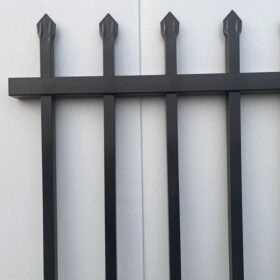
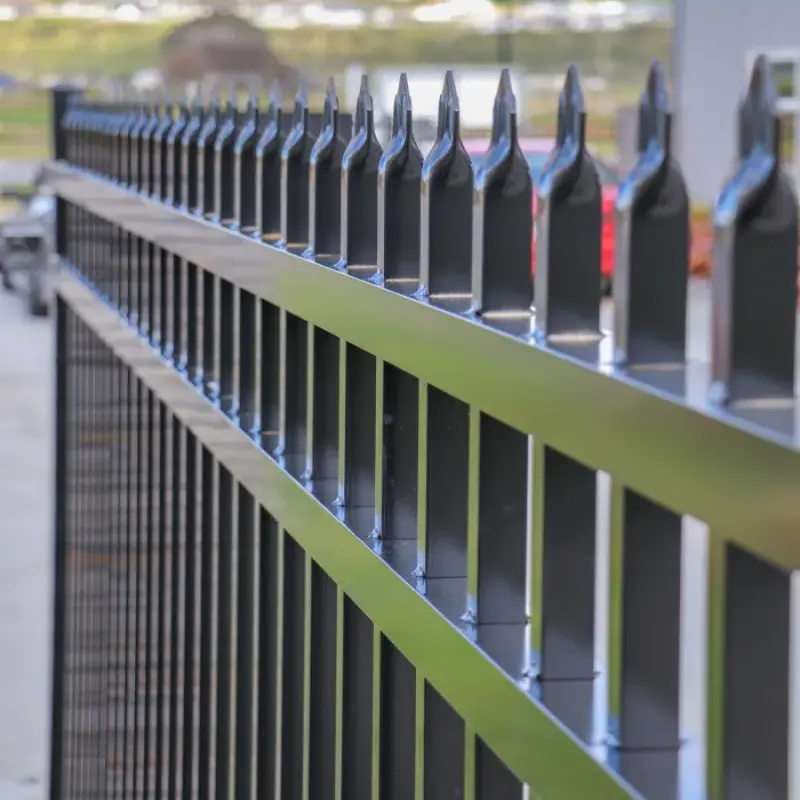
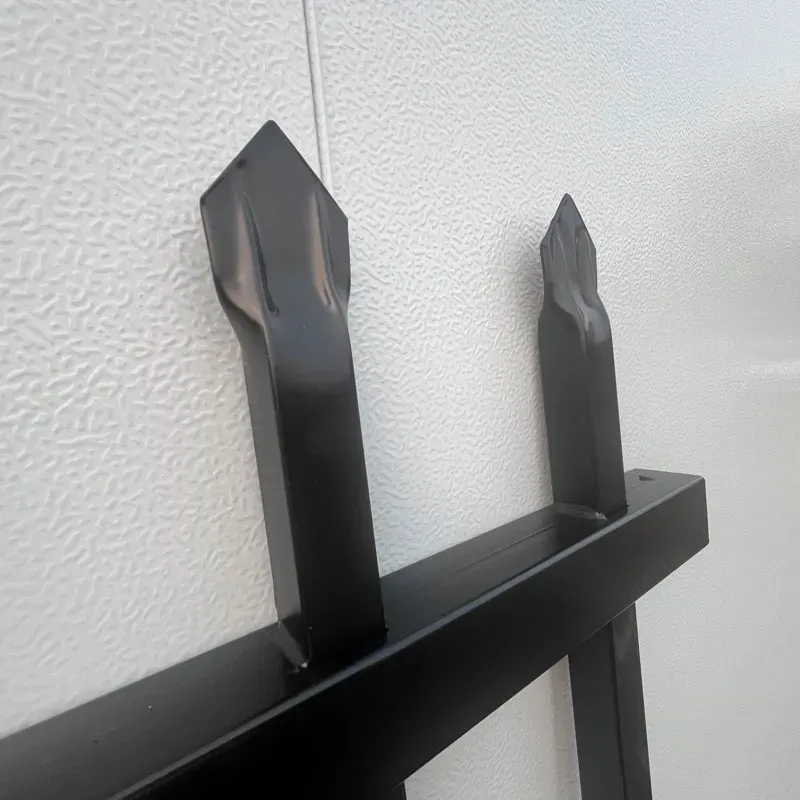
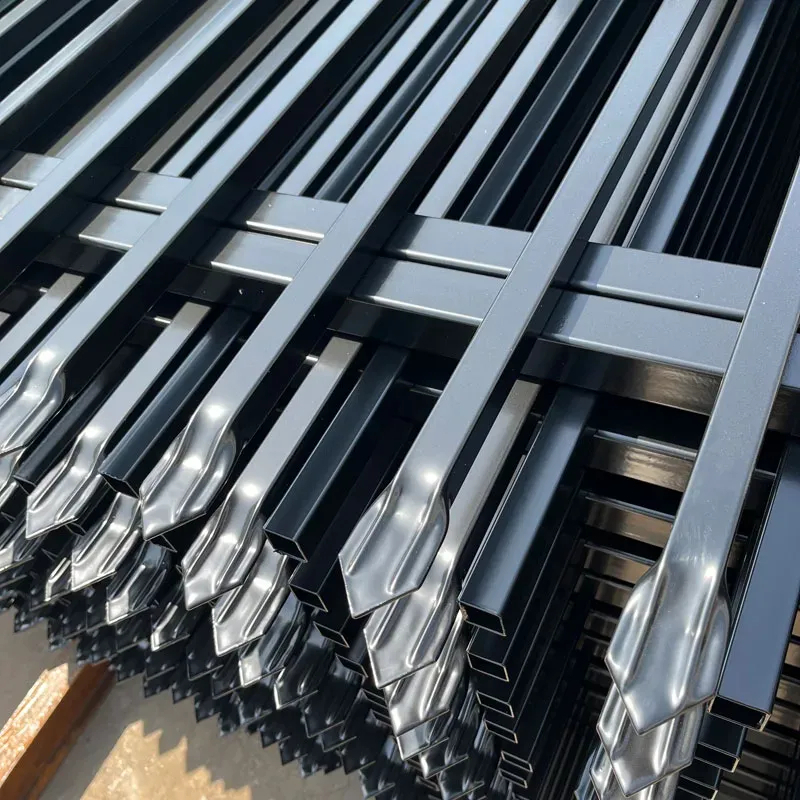
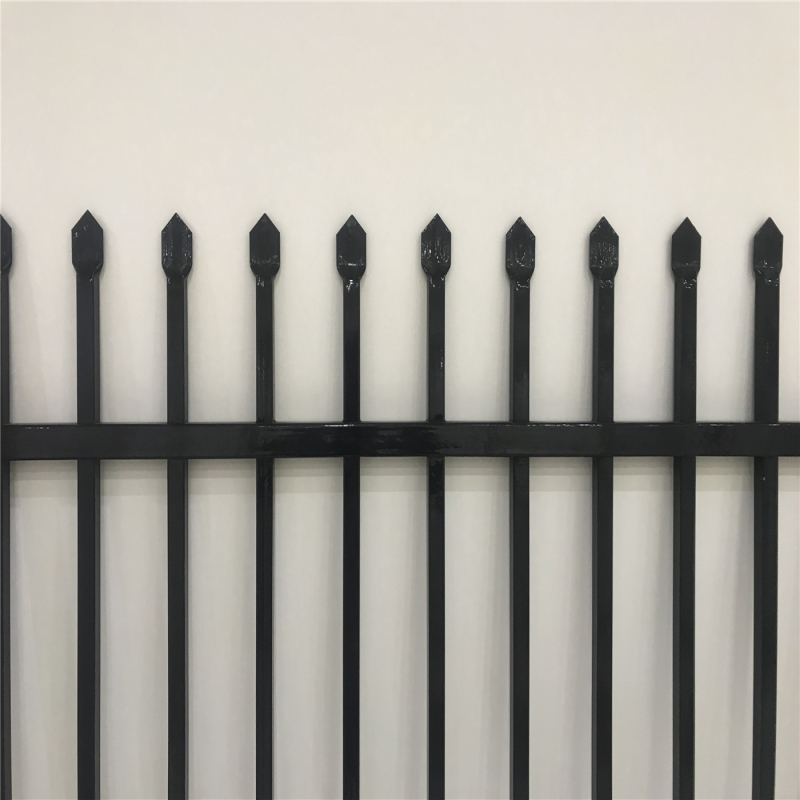
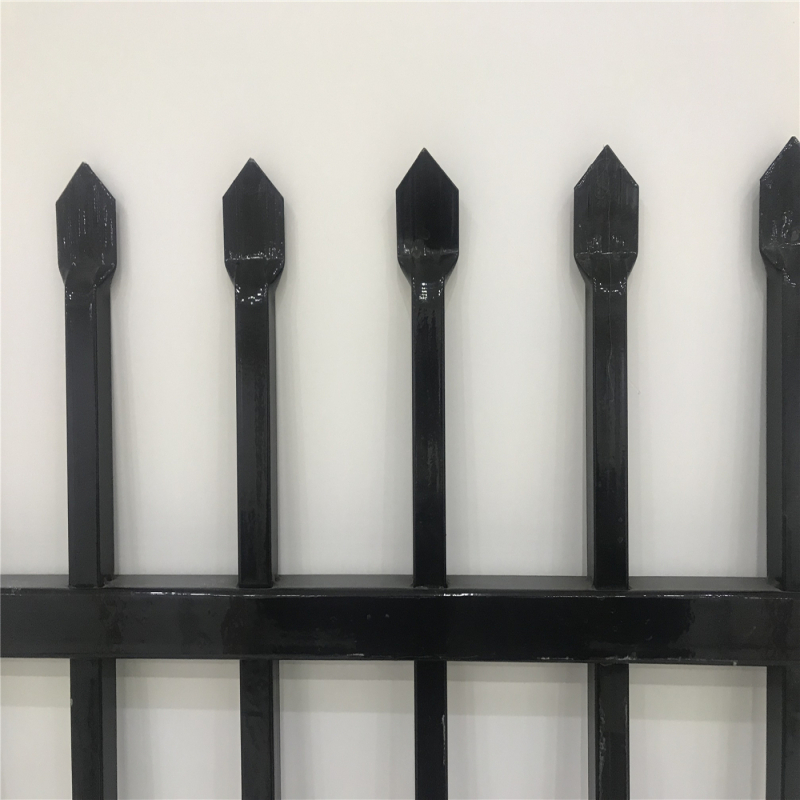
Top profiles can be configured as flat top for architectural sites, or with crimped or pressed spear heads where higher deterrence is required. All exposed surfaces are powder-coated over corrosion-resistant aluminium in colours such as satin black or project-specific tones, creating a clean, modern view that matches contemporary architecture while still signalling a serious security boundary.
Specifications for POLYMETAL Aluminium Garrison Fencing
Table 1 – Light Commercial POLYMETAL Aluminium Garrison Fencing
| Model Code | Fence Height (mm) | Fence Width (mm) | Rail Frame (mm) | Upright Size (mm) | Upright Spacing (mm) | Post Height (mm) | Post Section (mm) |
|---|---|---|---|---|---|---|---|
| AGF-LC1200-11 | 1200 | 2400 | 40 × 40 | 16 × 16 | 100 | 2100 | 60 × 60 |
| AGF-LC1200-12 | 1200 | 2450 | 40 × 40 | 16 × 16 | 100 | 2100 | 60 × 60 |
| AGF-LC1200-13 | 1200 | 2400 | 40 × 40 | 25 × 25 | 100 | 2200 | 65 × 65 |
| AGF-LC1200-14 | 1200 | 2450 | 40 × 40 | 25 × 25 | 100 | 2200 | 65 × 65 |
| AGF-LC1500-15 | 1500 | 2400 | 40 × 40 | 16 × 16 | 100 | 2400 | 60 × 60 |
| AGF-LC1500-16 | 1500 | 2450 | 40 × 40 | 25 × 25 | 100 | 2400 | 65 × 65 |
| AGF-LC1500-17 | 1500 | 2400 | 40 × 40 | 25 × 25 | 100 | 2500 | 75 × 75 |
| AGF-LC1800-18 | 1800 | 2400 | 40 × 40 | 16 × 16 | 100 | 2600 | 65 × 65 |
| AGF-LC1800-19 | 1800 | 2450 | 40 × 40 | 25 × 25 | 100 | 2600 | 75 × 75 |
| AGF-LC1800-20 | 1800 | 2400 | 40 × 40 | 25 × 25 | 100 | 2600 | 75 × 75 |
Table 2 – Standard Commercial POLYMETAL Aluminium Garrison Fencing
| Model Code | Fence Height (mm) | Fence Width (mm) | Rail Frame (mm) | Upright Size (mm) | Upright Spacing (mm) | Post Height (mm) | Post Section (mm) |
|---|---|---|---|---|---|---|---|
| AGF-SC1500-11 | 1500 | 2400 | 45 × 45 | 16 × 16 | 100 | 2500 | 65 × 65 |
| AGF-SC1500-12 | 1500 | 2450 | 45 × 45 | 25 × 25 | 100 | 2500 | 65 × 65 |
| AGF-SC1800-13 | 1800 | 2400 | 45 × 45 | 16 × 16 | 100 | 2700 | 65 × 65 |
| AGF-SC1800-14 | 1800 | 2450 | 45 × 45 | 25 × 25 | 100 | 2700 | 75 × 75 |
| AGF-SC1800-15 | 1800 | 2400 | 45 × 45 | 25 × 25 | 100 | 2700 | 75 × 75 |
| AGF-SC2100-16 | 2100 | 2450 | 45 × 45 | 25 × 25 | 100 | 3000 | 75 × 75 |
| AGF-SC2100-17 | 2100 | 2450 | 45 × 45 | 30 × 30 | 100 | 3000 | 80 × 80 |
| AGF-SC2400-18 | 2400 | 2450 | 45 × 45 | 25 × 25 | 100 | 3300 | 80 × 80 |
| AGF-SC2400-19 | 2400 | 2450 | 45 × 45 | 30 × 30 | 100 | 3300 | 100 × 100 |
| AGF-SC2100-20 | 2100 | 2400 | 45 × 45 | 25 × 25 | 100 | 3000 | 80 × 80 |
Table 3 – Heavy-Duty Security POLYMETAL Aluminium Garrison Fencing
| Model Code | Fence Height (mm) | Fence Width (mm) | Rail Frame (mm) | Upright Size (mm) | Upright Spacing (mm) | Post Height (mm) | Post Section (mm) |
|---|---|---|---|---|---|---|---|
| AGF-HD1800-11 | 1800 | 2400 | 50 × 50 | 25 × 25 | 100 | 2800 | 75 × 75 |
| AGF-HD1800-12 | 1800 | 2450 | 50 × 50 | 30 × 30 | 100 | 2800 | 80 × 80 |
| AGF-HD2000-13 | 2000 | 2450 | 50 × 50 | 25 × 25 | 100 | 3000 | 80 × 80 |
| AGF-HD2000-14 | 2000 | 2450 | 50 × 50 | 30 × 30 | 100 | 3000 | 100 × 100 |
| AGF-HD2100-15 | 2100 | 2450 | 50 × 50 | 25 × 25 | 100 | 3100 | 80 × 80 |
| AGF-HD2100-16 | 2100 | 2450 | 50 × 50 | 30 × 30 | 100 | 3100 | 100 × 100 |
| AGF-HD2400-17 | 2400 | 2450 | 50 × 50 | 25 × 25 | 100 | 3400 | 100 × 100 |
| AGF-HD2400-18 | 2400 | 2450 | 50 × 50 | 30 × 30 | 100 | 3400 | 100 × 100 |
| AGF-HD1800-19 | 1800 | 2400 | 50 × 50 | 30 × 30 | 100 | 2800 | 80 × 80 |
| AGF-HD2000-20 | 2000 | 2400 | 50 × 50 | 30 × 30 | 100 | 3000 | 100 × 100 |
Table 4 – Mixed Application POLYMETAL Aluminium Garrison Fencing
| Model Code | Fence Height (mm) | Fence Width (mm) | Rail Frame (mm) | Upright Size (mm) | Upright Spacing (mm) | Post Height (mm) | Post Section (mm) |
|---|---|---|---|---|---|---|---|
| AGF-MX1200-11 | 1200 | 2400 | 40 × 40 | 16 × 16 | 100 | 2100 | 60 × 60 |
| AGF-MX1500-12 | 1500 | 2450 | 40 × 40 | 25 × 25 | 100 | 2400 | 65 × 65 |
| AGF-MX1800-13 | 1800 | 2450 | 45 × 45 | 25 × 25 | 100 | 2600 | 75 × 75 |
| AGF-MX2100-14 | 2100 | 2450 | 45 × 45 | 30 × 30 | 100 | 2900 | 80 × 80 |
| AGF-MX2400-15 | 2400 | 2450 | 50 × 50 | 25 × 25 | 100 | 3300 | 80 × 80 |
| AGF-MX1800-16 | 1800 | 2400 | 40 × 40 | 30 × 30 | 100 | 2600 | 75 × 75 |
| AGF-MX2000-17 | 2000 | 2400 | 45 × 45 | 25 × 25 | 100 | 3000 | 80 × 80 |
| AGF-MX2000-18 | 2000 | 2450 | 50 × 50 | 30 × 30 | 100 | 3000 | 100 × 100 |
| AGF-MX2100-19 | 2100 | 2400 | 50 × 50 | 25 × 25 | 100 | 3000 | 100 × 100 |
| AGF-MX2400-20 | 2400 | 2400 | 45 × 45 | 30 × 30 | 100 | 3300 | 100 × 100 |
Seven Critical Facts and Risks in Aluminium Garrison Fencing Design
Fact 1: Dimensional Detail – Small Height and Width Errors That Escalate Risk
Many aluminium garrison fences do not fail because the metal is weak, but because the dimensions drift from the original rule set. If the installed fence height falls just below the intended level, or if panel width is cut down without recalculating post centres, small but dangerous gaps appear. These gaps are not minor details; they are loopholes and defects in your security outline that invite intrusion and accident.
Danger 2: Rail Frame Weakness – When the Main Structural Element Hides a Flaw
A fence can look robust while concealing a thin-wall rail frame. Under wind, crowd pressure or impact, undersized 40 × 40 mm or 45 × 45 mm rails may bow and twist. Once rails move, uprights drift, fasteners work loose and gates stop lining up. This pattern is a classic pitfall: chasing a lower material cost at the start and paying with repairs, damage and downtime later.
Trap 3: Upright Size and Spacing – How Anti-Climb Turns into a Ladder
Uprights in 16 × 16, 25 × 25 or 30 × 30 mm at 100 mm centres are chosen to break foot and hand patterns. If uprights are reduced in section or spacing is quietly widened, the anti-climb trait disappears and a rigid aluminium ladder appears in its place. The fence still looks like garrison, but the real behaviour has shifted from protection to risk, a dangerous illusion hidden in plain view.
Warning 4: Finish System – Coating Damage as a Silent Hazard
Aluminium does not rust like steel, but poor surface preparation and low-quality powder coating create a different threat. Peeling, chalking and blistering powder are warning signals that the protective layer has failed. Once this happens, corrosion, staining and structural weakening follow, turning a neat architectural feature into an expensive maintenance problem and reputational drawback.
Problem 5: Post and Footing Misfit – Strong Panels on Weak Foundations
Even a perfectly built panel becomes a liability if it is fixed to an under-sized or poorly installed post. Using 60 × 60 mm posts where 75 × 75 mm or 80 × 80 mm sections are required, or setting posts in shallow or inconsistent footings, creates a hidden weakness. Over time this pattern shows as leaning lines, cracked concrete and rattling rails – clear signs that the foundation data was wrong from the start.
Misstep 6: Installation Errors – Human Oversight That Opens Loopholes
Misaligned post centres, over-drilled fixings, loose brackets and missing caps are not cosmetic mistakes; they are real security gaps. Without a strict installation guide, summary and checklist, crews may improvise to save time, leaving tiny offsets and faults that add up to serious loopholes in the barrier. The visual view may look straight, but the underlying pattern is failure waiting for the first storm or incident.
Crisis 7: Compliance Myth – “Looks Good” but Fails Standards and Liability Tests
The most dangerous element is the compliance myth: the belief that if aluminium garrison fencing looks strong, it must be compliant. In an incident, investigators and insurers do not care about appearance; they ask for test data, design info, material certificates and installation records. If that evidence is missing, the fence becomes the centre of a legal threat, financial loss and long-term damage to your brand. POLYMETAL designs aluminium garrison fencing so that the documentation profile is as strong as the metal, converting a potential crisis into a defensible edge.
Packing of POLYMETAL Aluminium Garrison Fencing
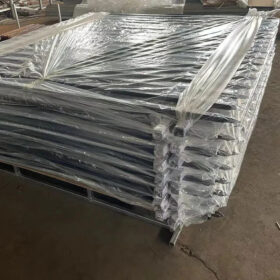
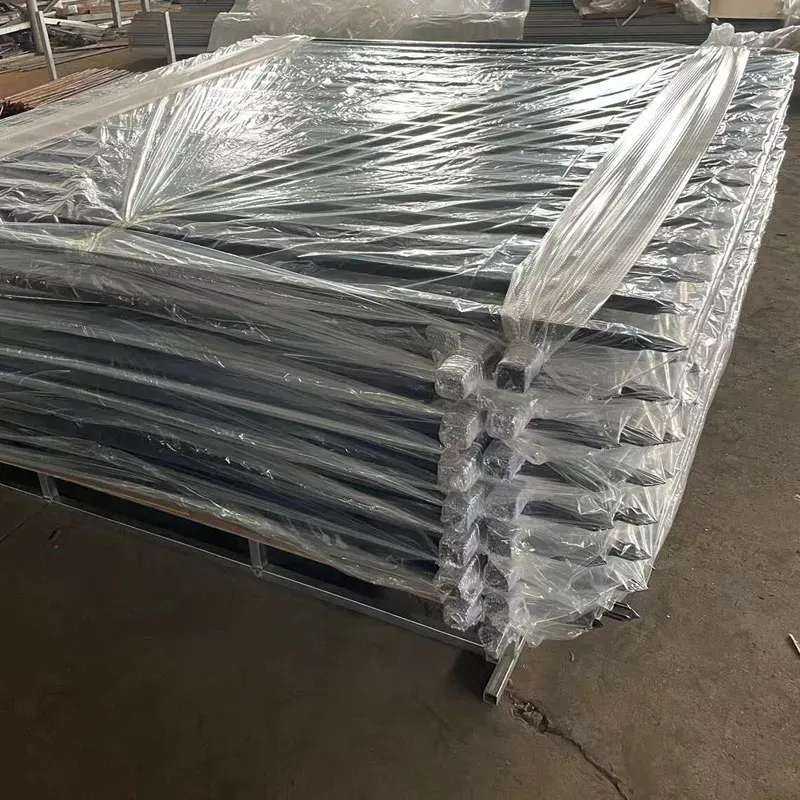
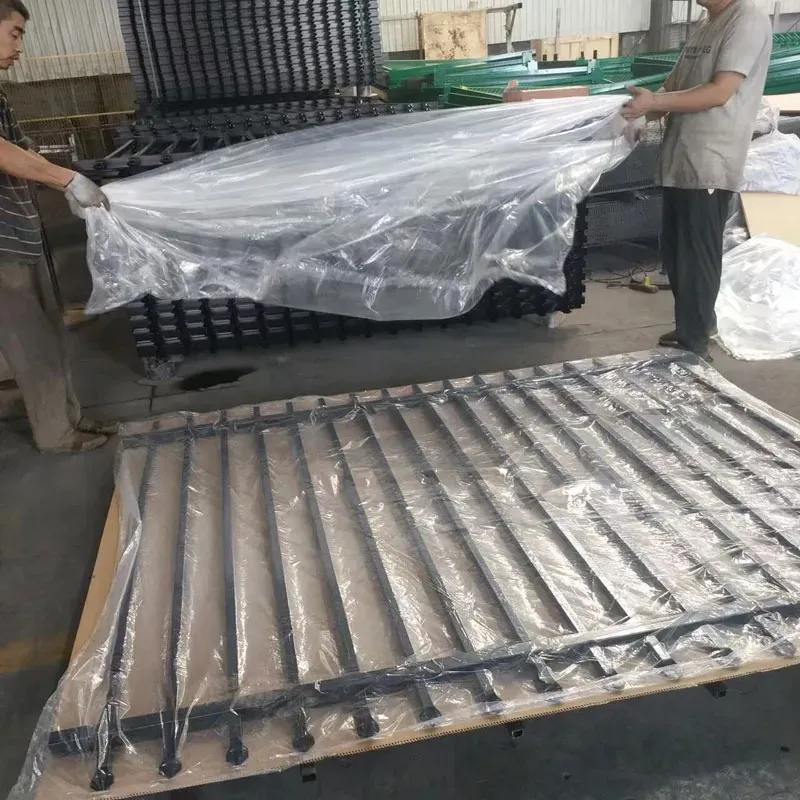
POLYMETAL packs aluminium garrison fencing with the same discipline used in design and manufacture. Panels are stacked in straight, uniform bundles on heavy-duty wooden or steel pallets. Rails rest on structural bearers so that weight transfers through the 40 × 40, 45 × 45 or 50 × 50 frames instead of the uprights, avoiding hidden bending and surface damage during transport.
Soft separators and protective film are placed between coated faces to prevent scratching, abrasion and impact marks. Posts in 60 × 60, 65 × 65, 75 × 75, 80 × 80 and 100 × 100 mm sections are grouped by size and length, wrapped and labelled clearly so installers can identify the correct item at a glance. Accessories such as brackets, caps and fasteners are supplied in robust, coded cartons that keep small parts organised and clean. This careful packing pattern reduces waste, eliminates transport defects and turns unloading into a controlled, low-risk step instead of a messy hazard.
Production Process of POLYMETAL Aluminium Garrison Fencing
The production of POLYMETAL aluminium garrison fencing begins with certified aluminium alloy profiles selected for strength, straightness and weldability. Rail and post sections are cut to length for standard heights from 1200 mm to 2400 mm and panel widths around 2400–2450 mm. Uprights in 16 × 16, 25 × 25 or 30 × 30 mm are cut, deburred and prepared for welding.
Frames and uprights are assembled in jigs that lock rail positions and upright spacing to the defined pattern. Welding procedures are standardised to control penetration, heat input and distortion. Welds are visually inspected and sampled according to an internal guide so that bugs, errors and defects are removed long before coating. Dimensional checks confirm that each panel matches the design profile and that no hidden gap, twist or misalignment has been introduced.
After fabrication, panels and posts move through cleaning and chemical pretreatment stages that remove oil, dust and oxides. Powder coating is applied electrostatically and then oven-cured to produce a hard, UV-resistant finish that adheres tightly to the aluminium substrate. Final inspection verifies coating thickness, colour consistency, surface quality and geometry. Only panels that pass this rule-based inspection are released to packing, ensuring that the finished fence behaves as a complete, traceable system on site.
Standards and Compliance for POLYMETAL Aluminium Garrison Fencing
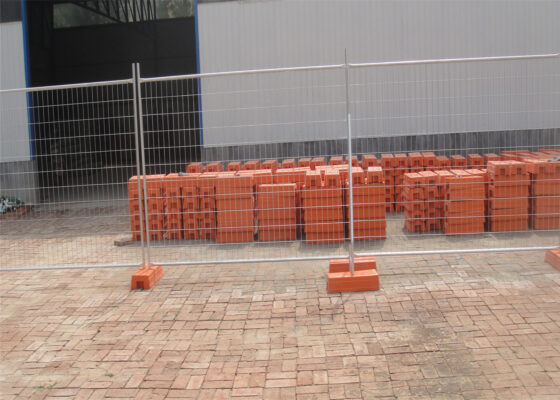
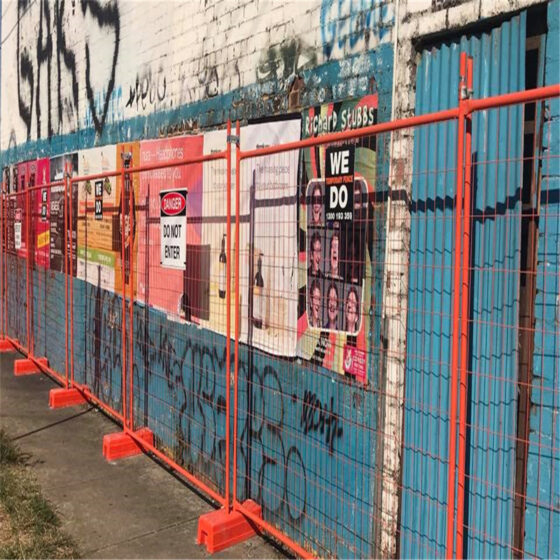
POLYMETAL aluminium garrison fencing is developed around recognised principles for boundary, security and barrier systems used in demanding markets. Fence height, panel width, upright spacing, rail size and post section are all selected to follow these principles, not random fashion trends. The aim is to create a barrier that offers a clear security signal, reliable anti-climb behaviour and stable long-term performance under real site conditions, working in the same serious risk-control category as high-performance perimeter products such as dedicated Sydney temporary fencing panels on construction and infrastructure sites.
Internal quality systems generate a full information trail, including design drawings, material data, weld procedures, coating specifications, inspection records and packing details. This transforms compliance from a marketing phrase into a practical manual, guide and checklist that can be produced during audits, approvals and insurance reviews. For specifiers, contractors and owners, POLYMETAL aluminium garrison fencing provides not just a neat visual outline, but a documented safety, compliance and profit boost that reduces risk, prevents waste and protects long-term investment.