Your One-Stop Wire Mesh Fence Supplier | POLYMETAL


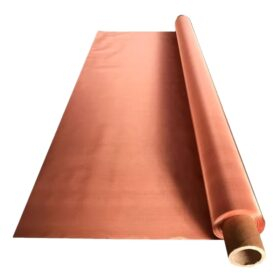

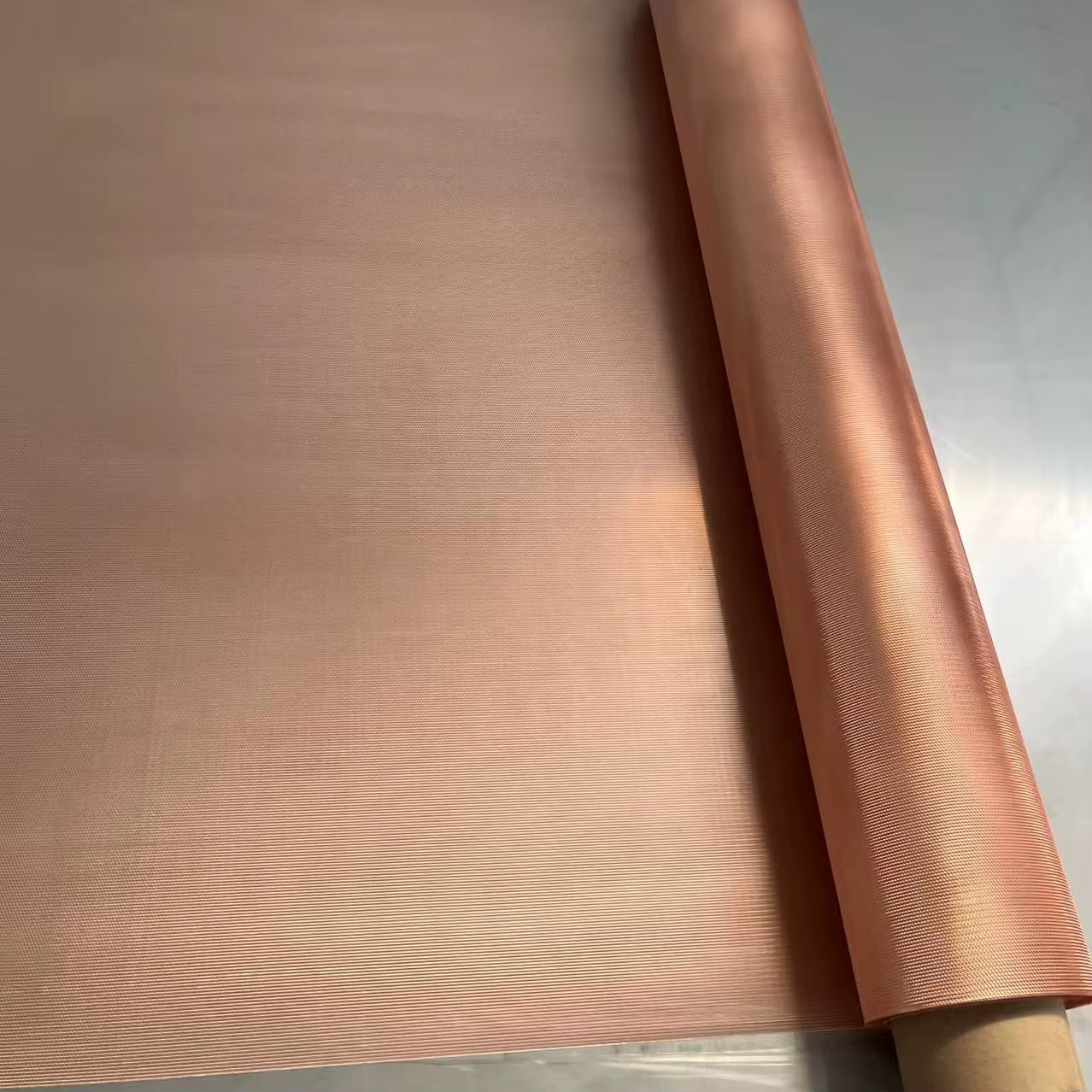
Copper wire mesh—also called red copper mesh, pure copper mesh, or copper filter mesh—is a soft, highly conductive, non-magnetic screening medium that pairs excellent EMI/RFI shielding with good formability and corrosion resistance in many atmospheres. It can be supplied in rolls or cut/formed into discs, strips, sleeves, and custom shapes.
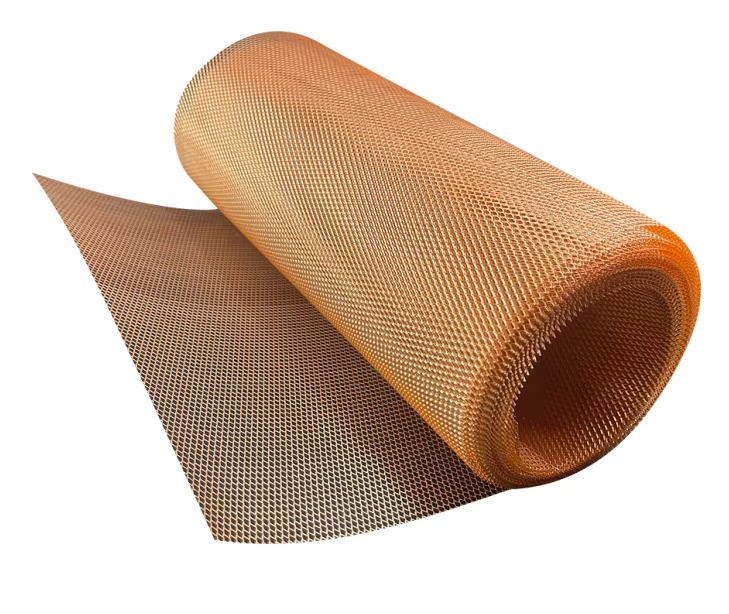 | 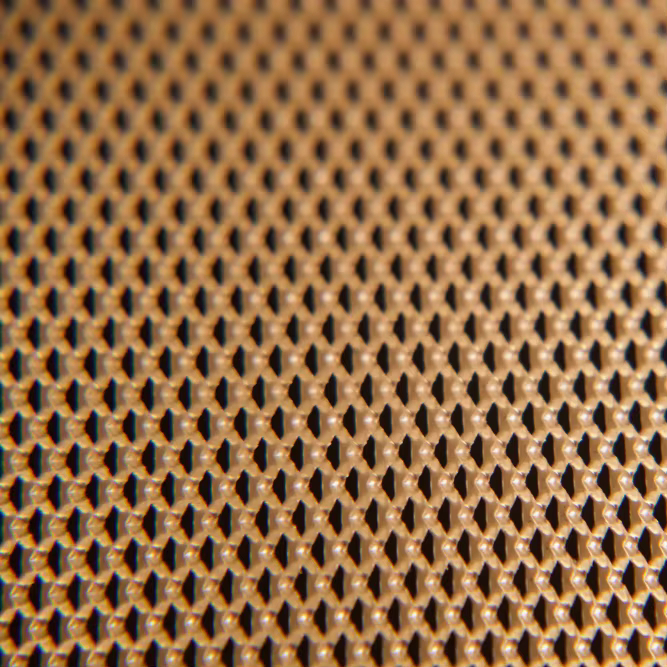 |
- Material: Red copper wire, Cu ≥99.9% (C11000-class purity)
- Mesh count range: 1–200 mesh (other fine sizes on request)
- Wire diameter range: 0.05–2.03 mm (mesh-dependent)
- Weaves: Plain weave (standard), Twill weave
- Common roll size: 1.0 m × 30 m (others: 1.2 × 30 m, 1.5 × 30 m, 2.0 × 30 m)
- Available widths: 0.60–1.80 m (typical)
- Features: Non-magnetic; wear-resistant; acid/alkali resistant (moderate); high electrical & thermal conductivity; good ductility; EMI/EMF shielding
- Shapes: Round, oval, square, rectangular, triangular, trapezoidal; can be cropped to 30 mm minimum pieces (strips, discs, pads)
Applications Copper Wire Mesh
- EMI/RFI/EMF shielding: Faraday cages, room/building shielding, electronic enclosures, cable joints
- Acoustic & noise mitigation (with shielding)
- Screening & filtration: powders, grains, porcelain clay, glass; gas & liquid pre-filters
- Architectural & decorative: ventilation screens, façade inserts, restoration
- Laboratory & craft use: insect screens for research, chemical test sieves
- Grounding & static control: bonding straps, gasketing, conductive tapes
Shielding note: Actual attenuation depends on frequency & field type, mesh count, wire diameter, and continuity/grounding. Finer meshes and larger wire diameters generally improve shielding at higher frequencies; ensure good electrical bonding around seams and edges.
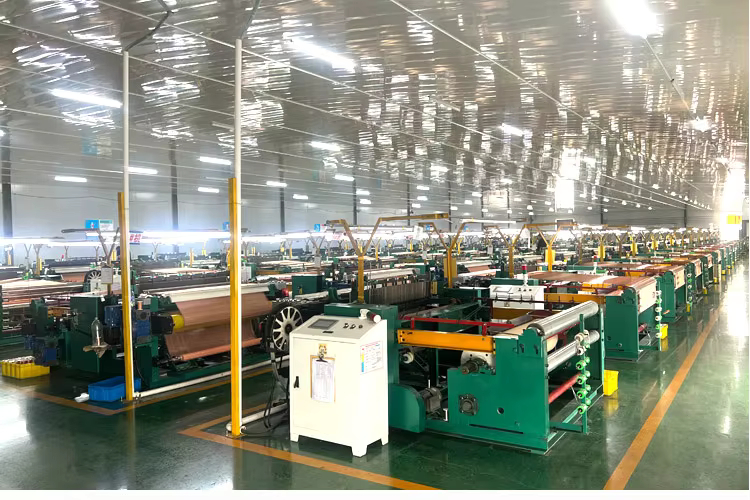
Our equipments
 |  |
Specifications
A. General Mesh Envelope
| Item | Specification |
|---|---|
| Material (purity) | Red copper (pure copper), Cu ≥99.9% |
| Mesh count | 1–200 mesh |
| Wire diameter | 0.05–2.03 mm (mesh-dependent) |
| Weave technology | Plain weave, Twill weave |
| Standard roll | 1.0 m × 30 m |
| Other rolls | 1.2 × 30 m, 1.5 × 30 m, 2.0 × 30 m |
| Typical widths | 0.60–1.80 m |
| Shapes | Discs, rings, strips, sleeves; round/oval/square/rectangular/triangular/trapezoid; custom per drawing |
| Processing | Shear, slit, stamp, laser/water-jet cut; form, fold, hem; edge wrap |
B. Shielding-Oriented Size Table (as provided)
| Mesh/inch | Wire Dia. (mm) | Aperture (mm) | Mesh/inch | Wire Dia. (mm) | Aperture (mm) | Mesh/inch | Wire Dia. (mm) | Aperture (mm) |
|---|---|---|---|---|---|---|---|---|
| 2 | 1.60 | 11.10 | 20 | 0.25 | 1.02 | 110 | 0.09 | 0.141 |
| 4 | 0.91 | 5.44 | 30 | 0.21 | 0.64 | 120 | 0.09 | 0.122 |
| 6 | 0.71 | 3.52 | 40 | 0.19 | 0.45 | 130 | 0.07 | 0.125 |
| 8 | 0.50 | 2.67 | 50 | 0.15 | 0.36 | 140 | 0.07 | 0.111 |
| 10 | 0.50 | 2.04 | 60 | 0.15 | 0.27 | 150 | 0.06 | 0.109 |
| 12 | 0.45 | 1.66 | 70 | 0.13 | 0.232 | 160 | 0.06 | 0.098 |
| 14 | 0.40 | 1.41 | 80 | 0.12 | 0.197 | 180 | 0.053 | 0.088 |
| 16 | 0.30 | 1.28 | 90 | 0.11 | 0.172 | 200 | 0.053 | 0.074 |
| 18 | 0.25 | 1.16 | 100 | 0.10 | 0.154 | 220 | 0.05 | 0.065 |
Interpretation:
• Mesh/inch = openings per linear inch.
• Aperture (opening) and wire diameter together determine open area and resistance.
• For shielding, pick higher mesh for higher frequencies and ensure continuous electrical bonding.
Copper Wire Mesh vs. Brass vs. Phosphor Bronze
| Item | Red Copper Mesh | Brass Wire Mesh | Phosphor Bronze Mesh |
|---|---|---|---|
| Material | Pure copper (Cu 99.9%) | H65 (Cu 65%, Zn 35%) or H80 (Cu 80%, Zn 20%) | Cu 85–90%, Sn 5–15% (with P) |
| Typical mesh range | 10–200 | 1–250 | 2–400 |
| Magnetic? | Non-magnetic | Non-magnetic | Non-magnetic |
| Mechanical | Very ductile, soft | Stronger than pure Cu; springier | Good spring, wear & fatigue resistance |
| Corrosion | Good in many atmospheres | Good general; susceptible to dezincification in some media | Good, improved fatigue & wear |
| Color | Reddish | Yellow/gold | Reddish-brown |
| Typical uses | EMI/RFI shielding, Faraday cages, building anti-noise/EMF, fine screening | General screening, sieving powders/particles | Precision sieving, springs, contacts, fine filters |
 |
Features & Handling
- Non-magnetic: Diamagnetic; safe for magnet-sensitive applications
- Conductive: Excellent electrical & thermal conductivity → superior EMI shielding and heat spreading
- Formable: Easy to cut, bend, fold, and hem; suitable for shaped screens and gaskets
- Durable: Good wear resistance and ductility; can be soldered/brazed; spot welding possible with care
- Chemical resistance: Good in many atmospheres; avoid strong oxidizers (e.g., nitric acid, ferric chloride, ammonia complexes)
Fabrication & Finishing Options Copper Wire Mesh
- Cutting: shear, slitting, stamping, laser/water-jet
- Forming: fold, roll, cylindrical sleeves, cones
- Edges: raw cut, hemmed, edge-wrapped, framed in copper or brass strip
- Joining: soldering, brazing, mechanical crimping; conductive adhesives/gaskets for EMI seams
- Surface: degreased, bright, tinned (on request) for improved solderability
Quality, Standards & Documentation
- Standards reference: Industrial woven wire cloth practices (e.g., ASTM E2016; ISO 9044 terminology)
- Inspection (on request): dimensional check (mesh, wire dia., width/length), visual finish, conductivity verification
- Traceability: batch/lot labels; COA on request
Packing & Logistics
- Rolls: moisture-proof film → kraft/woven wrap → labeled carton
- Cut parts: bagged by batch, corner/edge protection for framed pieces
- Export: wooden cases; palletization for bulk shipments

Selection Tips (Shielding)
- Frequency: Higher frequencies → higher mesh count; ensure continuous, conductive seams.
- Attenuation target: Thicker wire and tighter mesh often increase shielding; model or test for your band.
- Grounding: Bond mesh to ground at multiple points to eliminate leakage paths.
- Environment: For outdoor or corrosive settings, consider protective coatings or periodic maintenance.
RFQ Checklist Copper Wire Mesh
Copper wire mesh (red copper, 99.9% Cu) combines excellent conductivity, non-magnetic behavior, and easy formability with reliable EMI/EMF shielding and versatile screening performance. With mesh counts from 1–200, wire diameters from 0.05–2.03 mm, and roll sizes up to 2.0 × 30 m, it can be tailored for enclosures, Faraday rooms, filters, and architectural screens—cut, formed, and finished exactly to your specification.