Your One-Stop Wire Mesh Fence Supplier | POLYMETAL
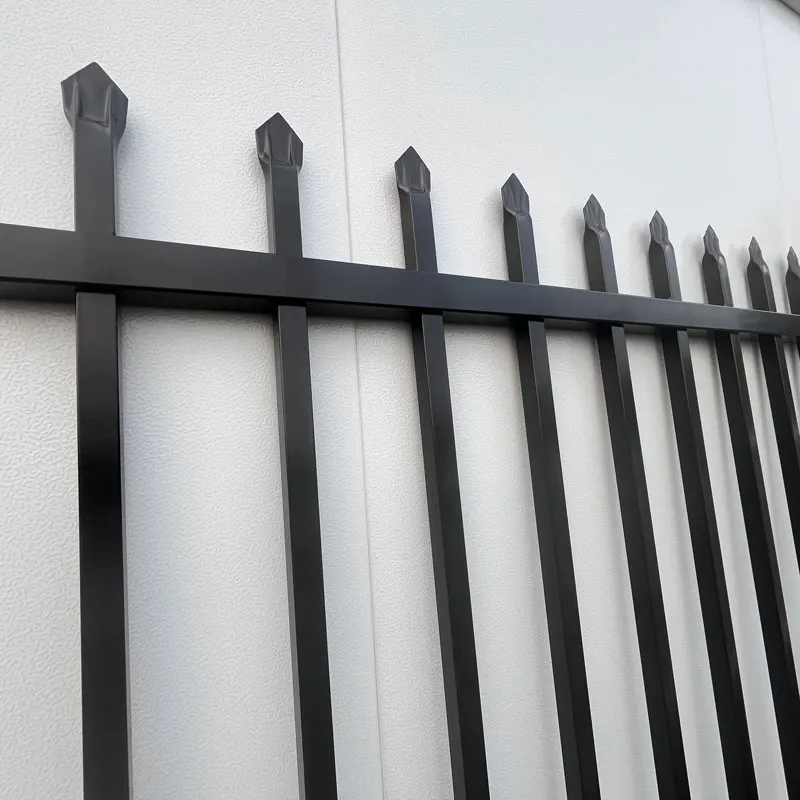
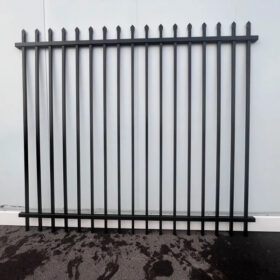
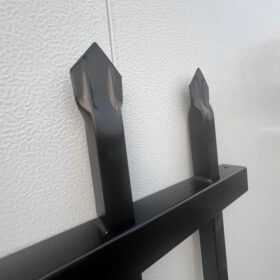
Crimped Spear Steel Picket Fence is chosen because it looks architectural, feels secure, and visually “disappears” compared with bright zinc finishes. The expensive failure pattern is that many suppliers sell Crimped Spear Steel Picket Fence as a color and a photo, not as a controlled system. The real difference appears after delivery: crimped spear lines drift bay-to-bay, panels twist in long runs, powder chips at weld zones, pickets feel under-sized, and posts feel soft—turning a simple fence purchase into damage, rework, and wasted labor.
POLYMETAL Crimped Spear Steel Picket Fence is built as a measurable specification. Buyers lock fence height, fence width, rail frame size, rail thickness, upright size, upright thickness, upright number, spacing schedule, post option, post wall thickness, and finishing discipline so the delivered batch installs straight, aligns cleanly, and holds its black appearance through handling and weather exposure.
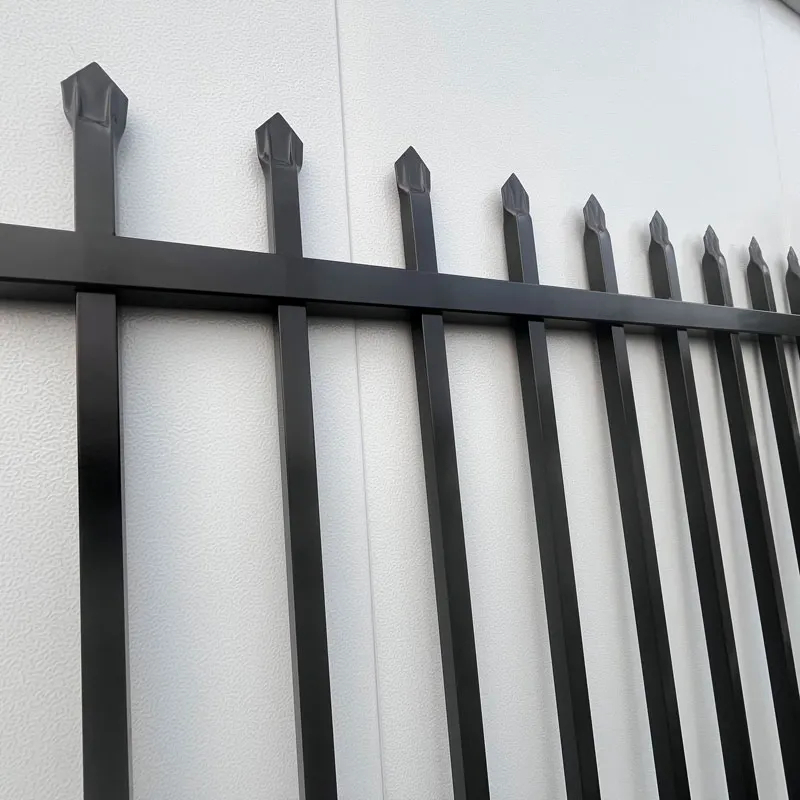
What “Crimped Spear” Really Means in Practice
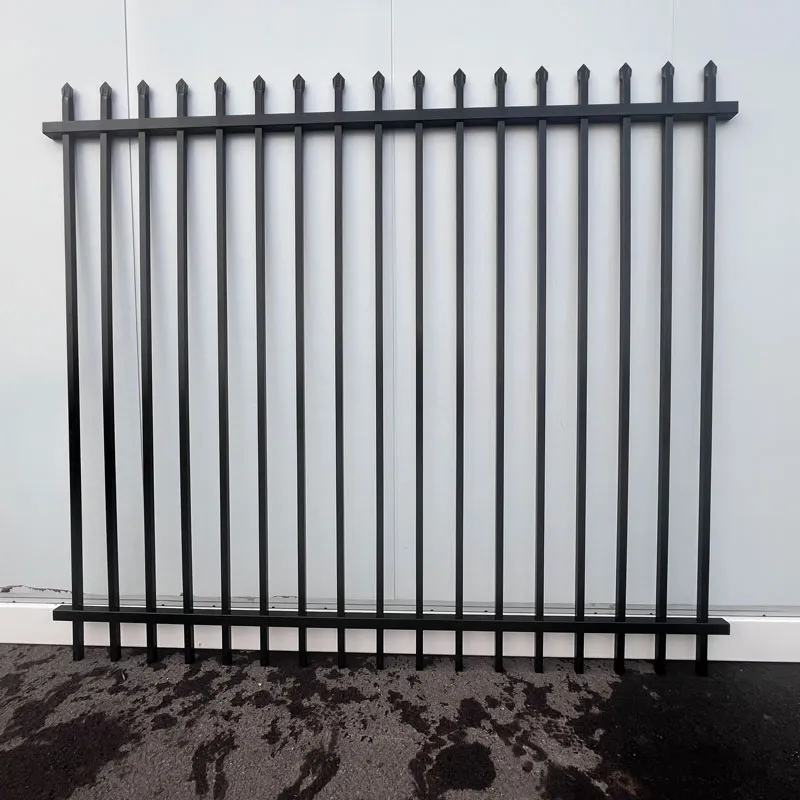
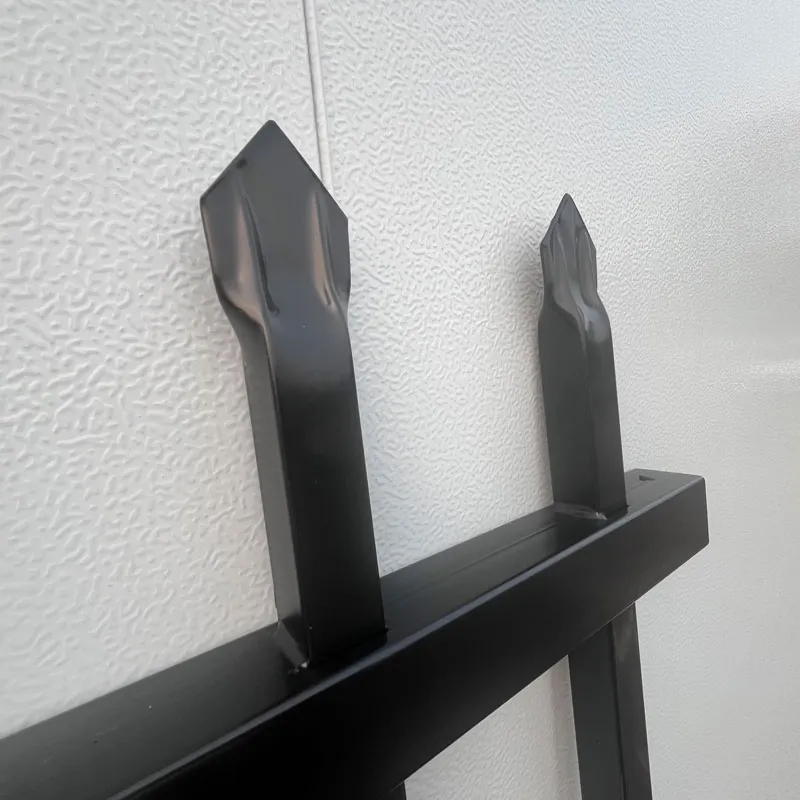
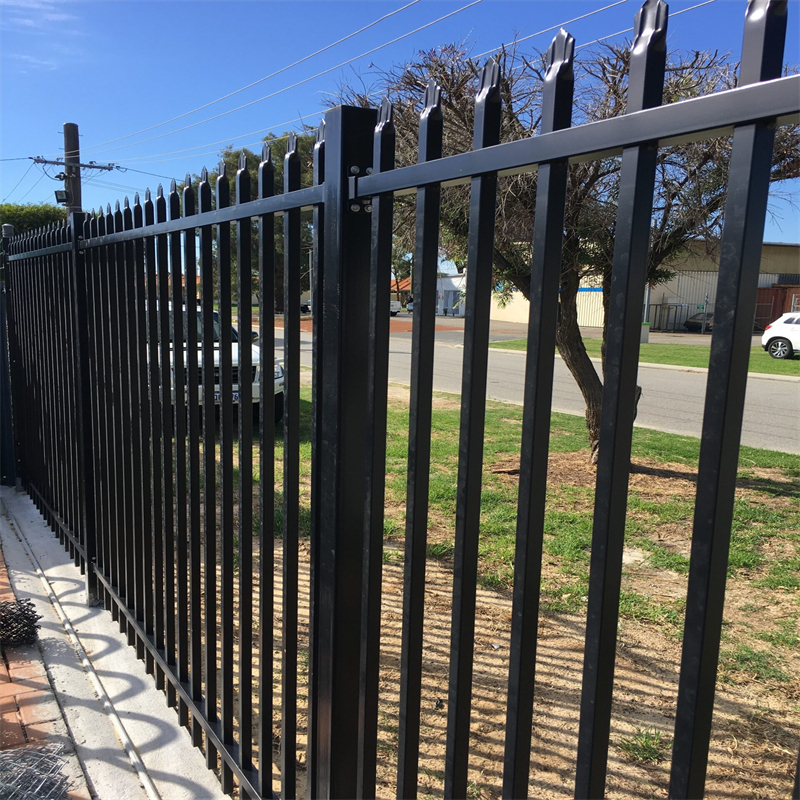
In the market, Crimped Spear Steel Picket Fence usually refers to a steel tubular picket fence panel where each upright terminates in a consistent crimped spear profile, then receives a black powder coat over a corrosion strategy (pre-galvanized tube fabrication or hot dip galvanizing after welding). A Crimped Spear Steel Picket Fence line is judged not only by color, but by discipline: whether spear tips align across a 50–200 meter run, whether rails remain straight, whether pickets stay evenly spaced, and whether posts hold alignment without drift. For base plate selection that controls post stiffness and long-run straightness, review types of steel plate: 5 proven choice
A controlled Crimped Spear Steel Picket Fence schedule prevents the most common on-site losses: uneven panel geometry, chipped finish, inconsistent picket spacing, and post drift that turns crisp lines into waves.
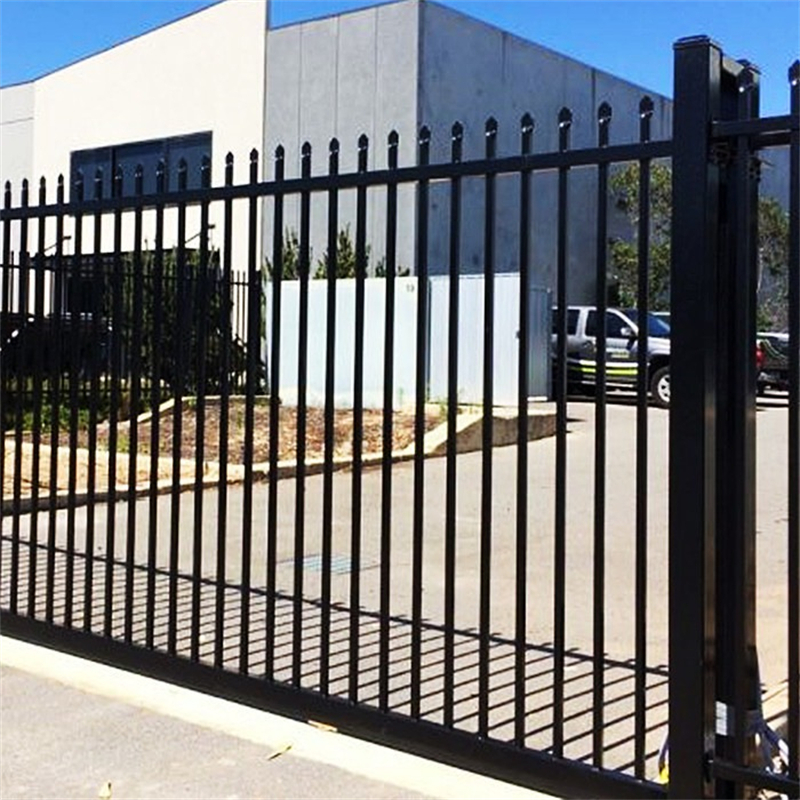
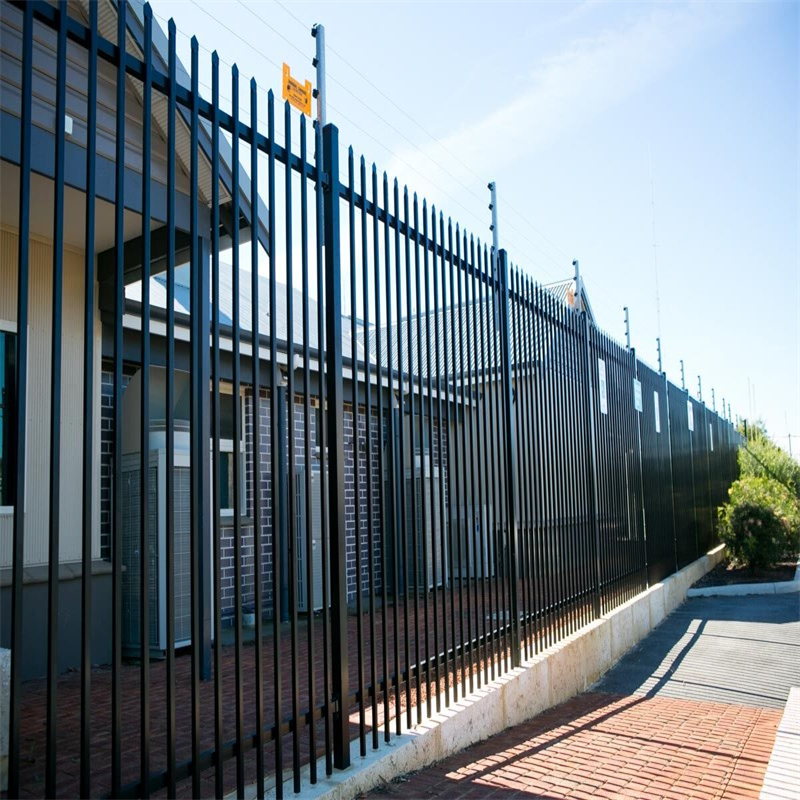
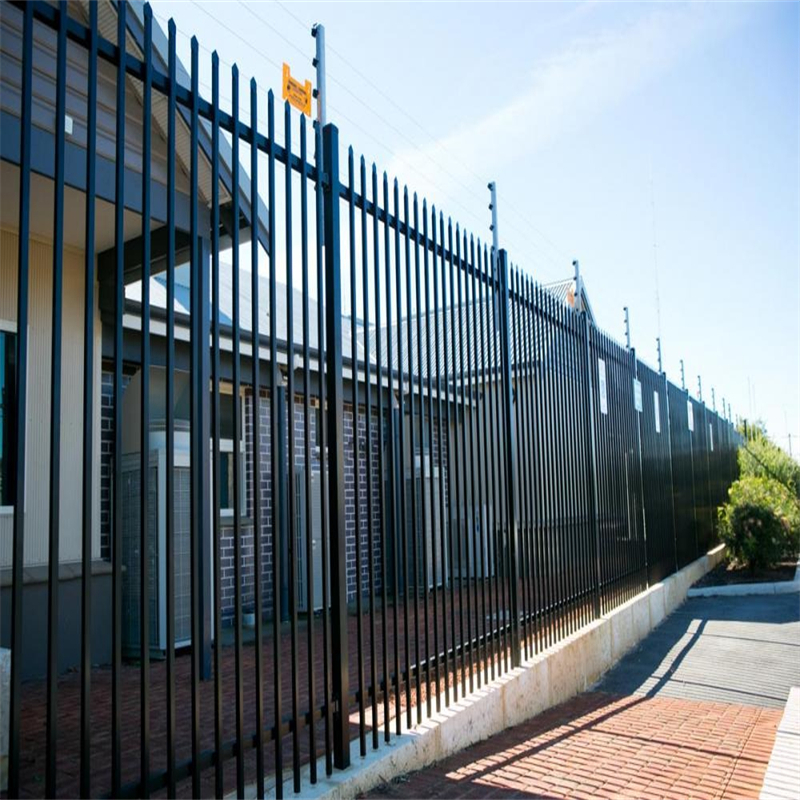
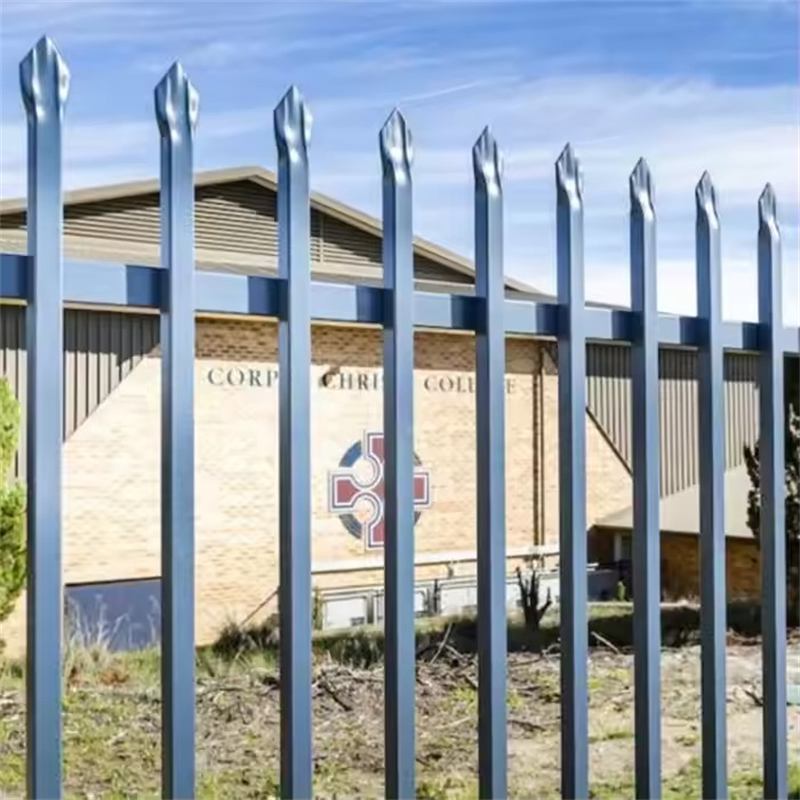
Top 19 Procurement Pitfalls for Crimped Spear Steel Picket Fence (Especially #12)
Pitfall #1: Buying a “premium look” instead of locking a measurable schedule
Two quotes can both say Crimped Spear Steel Picket Fence, but behave totally differently in service. If the purchase order does not lock height, width, rail frame, upright size, and spacing, the supplier can silently downgrade to meet price.
Pitfall #2: Treating rail frame as decoration, not the stiffness backbone
Rail frame options like 40×40, 45×45, and 50×50 control straightness and handling stiffness. A crisp Crimped Spear Steel Picket Fence line comes from rail size matched to fence height, span behavior, and site handling.
Pitfall #3: Allowing rail thickness to float (the most common hidden downgrade)
Rails at 1.60mm do not behave like 2.50mm or 3.00mm under handling and wind. If rail thickness is not fixed, Crimped Spear Steel Picket Fence often arrives lighter than expected and becomes wavy after a few installs.
Pitfall #4: Picking upright size without a rigidity and spear alignment plan
Upright options such as 25×25, 30×30, and 16×16 change panel feel and long-run line discipline. If upright size is not locked, Crimped Spear Steel Picket Fence can arrive with softer pickets and inconsistent spear alignment.
Pitfall #5: Forgetting upright thickness is separate from upright size
A 25×25 upright at 0.80mm dents and flexes far more than 1.20mm or 2.00mm. Thin uprights are the fastest way for Crimped Spear Steel Picket Fence to look “cheap” after handling.
Pitfall #6: Not specifying upright number per panel
If you need 16 pcs, 17 pcs, or 18 pcs per panel, state it. Upright number controls spacing discipline and the visual density of Crimped Spear Steel Picket Fence across long runs.
Pitfall #7: Treating spacing as a vague claim instead of a measurable schedule
Spacing drift is how climb points and visual inconsistency sneak in. Crimped Spear Steel Picket Fence should use a locked spacing schedule (100mm / 108mm / 115mm) so every panel matches.
Pitfall #8: Buying “crimped spear” without controlling spear profile consistency
Crimped spear looks premium only when consistent. Inconsistent crimp geometry makes spear lines wander and creates instant brand damage on public-facing Crimped Spear Steel Picket Fence boundaries.
Pitfall #9: Ignoring panel squareness tolerances
A panel can be black and still be wrong. If squareness is off, installation becomes a fight, gaps appear, and Crimped Spear Steel Picket Fence lines look sloppy.
Pitfall #10: Assuming “black powder” automatically equals exterior durability
Powder performance depends on surface prep and coating build. If finishing is not controlled, Crimped Spear Steel Picket Fence chips first at weld zones and contact points.
Pitfall #11: Treating welding as a checkbox instead of a quality driver
Weld discipline controls squareness, strength, and how powder behaves at weld zones. Poor welding is a primary cause of early cosmetic failure on Crimped Spear Steel Picket Fence.
Pitfall #12 (Most Costly): Under-sizing posts or letting post wall thickness drift
Posts control the entire fence line. If post option and wall thickness are not locked, posts drift, panels rack, and straight runs become waves—turning Crimped Spear Steel Picket Fence into rework, callbacks, and wasted labor.
Pitfall #13: Not matching post size to fence height and loading
Tall panels need appropriate post section size. If fence height increases but post size does not, stiffness drops and drift increases on Crimped Spear Steel Picket Fence runs.
Pitfall #14: Relying on “galvanized steel” claims without defining corrosion strategy
Some fences use pre-galvanized tube; others require hot dip galvanizing after fabrication. The corrosion strategy must match environment and expected service life for Crimped Spear Steel Picket Fence.
Pitfall #15: Ignoring color consistency across batches
Even “black” varies. If multiple lots are mixed without a controlled color standard, Crimped Spear Steel Picket Fence can show visible shade differences after installation.
Pitfall #16: Shipping without packing protection for black surfaces
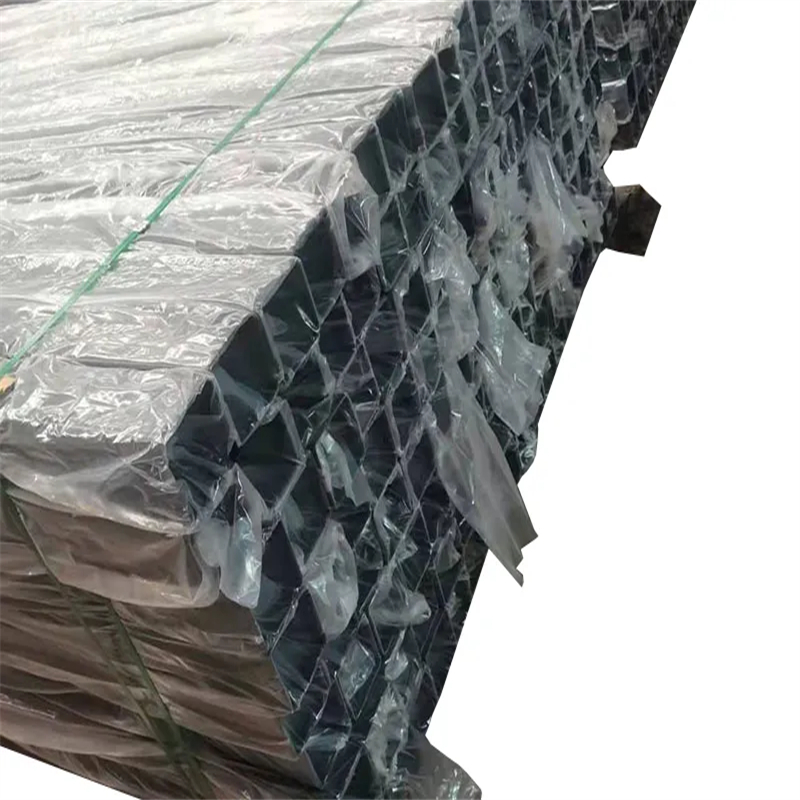
Black finishes show rub marks and edge chips. If Crimped Spear Steel Picket Fence is not separated and strapped correctly, freight damage appears before installation starts.
Pitfall #17: Skipping a measurable acceptance checklist before balance payment
If you don’t define what “pass” means—straightness, squareness, upright count, spacing, post match, and coating condition—you absorb the loss and the site fight on Crimped Spear Steel Picket Fence projects.
Pitfall #18: Mixing panel schedules in one run without labeling discipline
If the site receives mixed heights or mixed spacing schedules with weak labels, installers lose time sorting and the Crimped Spear Steel Picket Fence run becomes visually inconsistent.
Pitfall #19: Buying “value” specs that erase the architectural intent
A Crimped Spear Steel Picket Fence boundary can still be black and still be wrong if rails are too light, pickets too thin, and posts too soft. Value only works when the schedule is still stiff enough to stay straight.
Product Description (POLYMETAL)
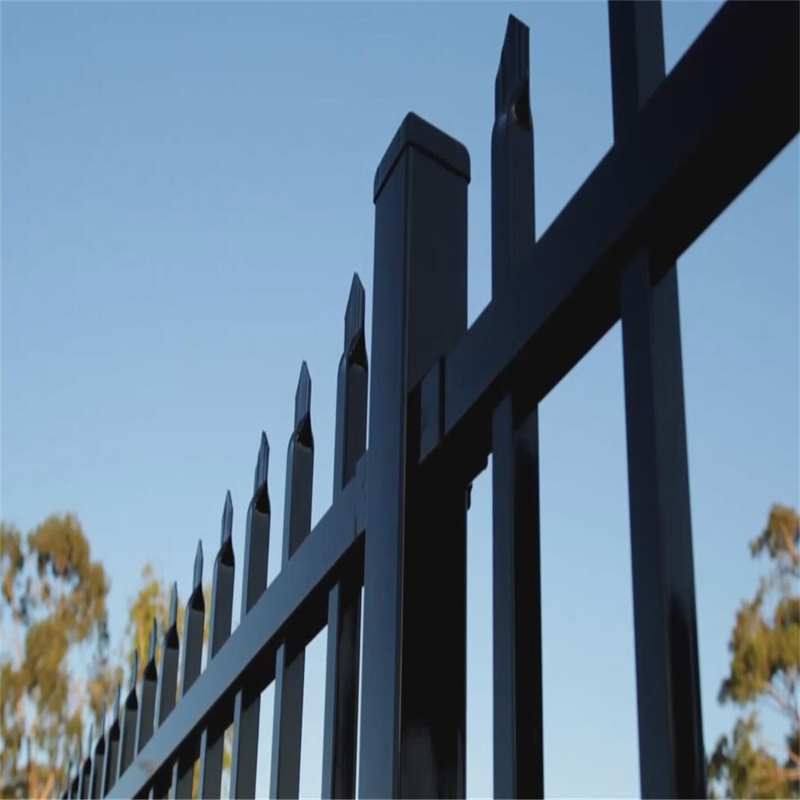
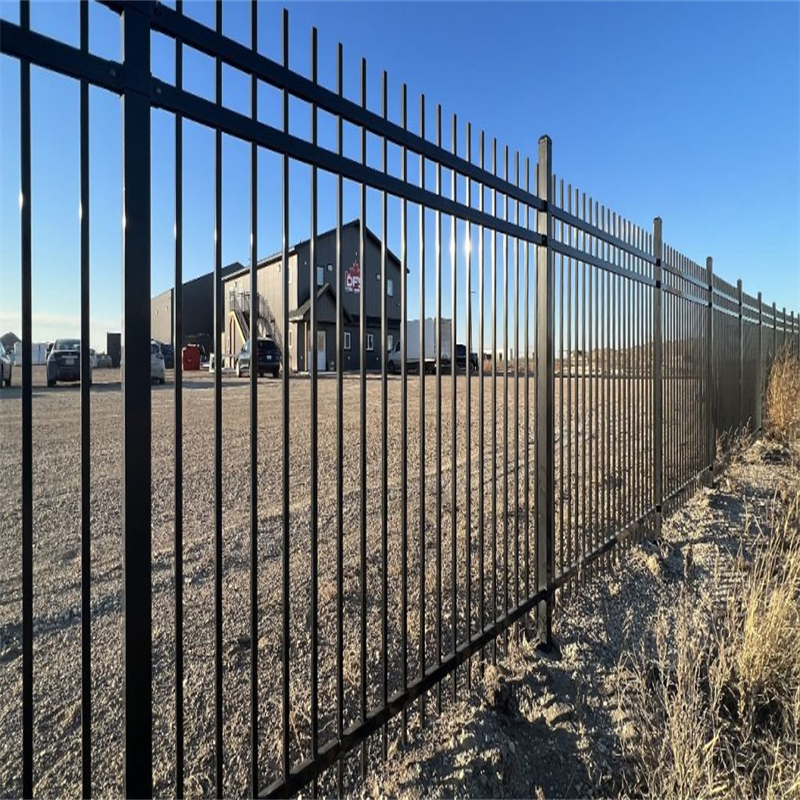
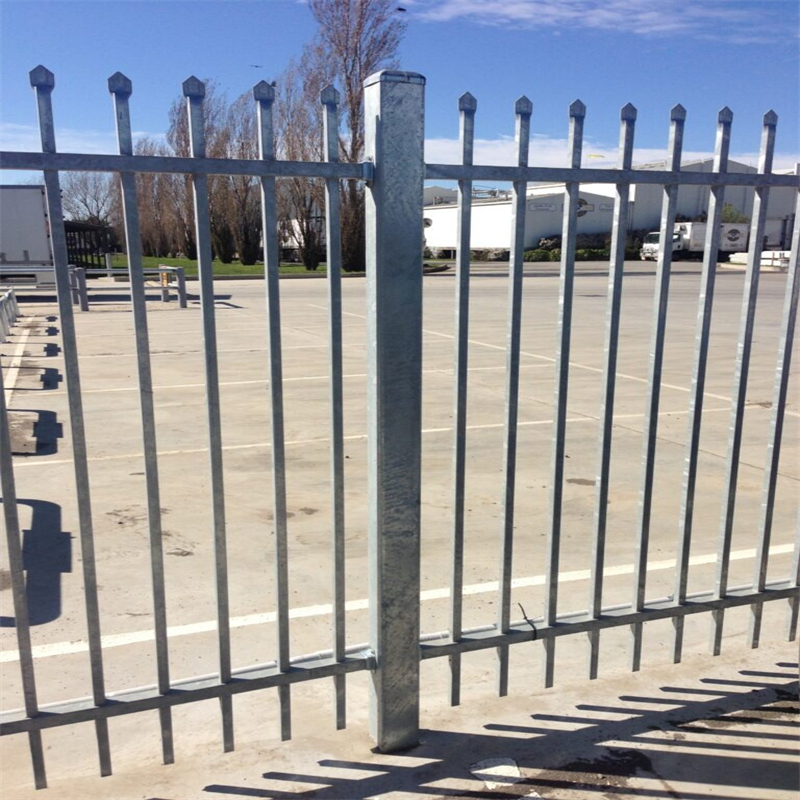
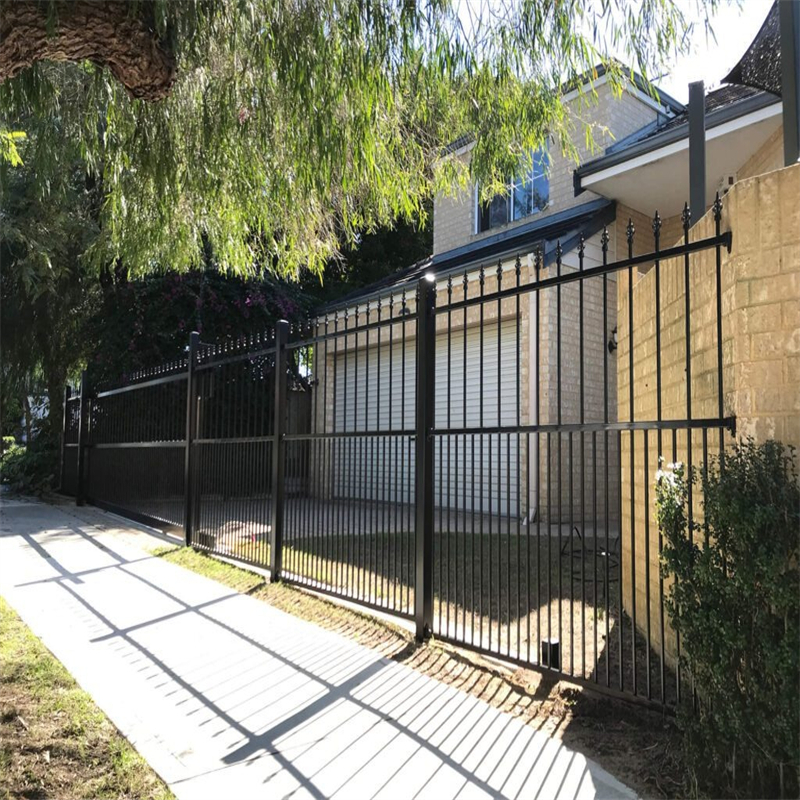
POLYMETAL Crimped Spear Steel Picket Fence is a black powder coated steel picket panel system designed for security boundaries where the finish must look architectural while the structure remains rigid and difficult to climb. The crimped spear profile delivers a premium top line when produced consistently, and the black appearance helps the perimeter visually blend into modern residential, commercial, and infrastructure environments.
The panels are built around controlled rail frames, controlled rail thickness, controlled upright sizes and quantities, and repeatable welding discipline so the Crimped Spear Steel Picket Fence stays square during transport, installation, and service. For corrosion resistance, the fence can be manufactured using pre-galvanized tube fabrication or produced as fully hot dip galvanized panels after welding, then finished in a controlled black powder system for outdoor exposure.
Specifications
Upright number + spacing rule used in tables: 18 pcs = 100mm spacing; 17 pcs = 108mm spacing; 16 pcs = 115mm spacing. Rail thickness options: 1.60 / 2.00 / 2.50 / 3.00 mm. Upright thickness options: 0.80 / 1.00 / 1.20 / 2.00 mm. Post wall options: 1.60 / 2.00 / 2.50 mm.
Table 1: In-Ground Post Schedule
| Spec ID | Fence Height (mm) | Fence Width (mm) | Rail Frame | Rail Thick (mm) | Upright | Upright Thick (mm) | Upright No. | Upright Spacing | Post Option | Post Wall (mm) | Fence Post Height (mm) | Post Type | Base Plate |
|---|---|---|---|---|---|---|---|---|---|---|---|---|---|
| IG-01 | 1200 | 2400 | 40×40 | 1.60 | 25×25 | 1.00 | 18 pcs | 100mm | 60×60 | 1.60 | 1800 | In-Ground | N/A |
| IG-02 | 1200 | 2450 | 40×40 | 2.00 | 25×25 | 1.20 | 17 pcs | 108mm | 60×60 | 2.00 | 1800 | In-Ground | N/A |
| IG-03 | 1500 | 2400 | 40×40 | 2.00 | 25×25 | 1.20 | 18 pcs | 100mm | 65×65 | 2.00 | 2100 | In-Ground | N/A |
| IG-04 | 1500 | 2450 | 45×45 | 2.00 | 16×16 | 1.20 | 18 pcs | 100mm | 65×65 | 1.60 | 2100 | In-Ground | N/A |
| IG-05 | 1800 | 2400 | 45×45 | 2.00 | 25×25 | 1.20 | 17 pcs | 108mm | 75×75 | 2.00 | 2400 | In-Ground | N/A |
| IG-06 | 1800 | 2450 | 45×45 | 2.50 | 30×30 | 1.20 | 17 pcs | 108mm | 75×75 | 2.50 | 2400 | In-Ground | N/A |
| IG-07 | 2100 | 2400 | 45×45 | 2.50 | 30×30 | 2.00 | 17 pcs | 108mm | 80×80 | 2.50 | 2700 | In-Ground | N/A |
| IG-08 | 2100 | 2450 | 50×50 | 2.00 | 25×25 | 1.20 | 16 pcs | 115mm | 80×80 | 2.00 | 2700 | In-Ground | N/A |
| IG-09 | 2400 | 2400 | 50×50 | 2.50 | 30×30 | 2.00 | 18 pcs | 100mm | 100×100 | 2.50 | 3000 | In-Ground | N/A |
| IG-10 | 2400 | 2450 | 50×50 | 3.00 | 30×30 | 2.00 | 17 pcs | 108mm | 100×100 | 2.50 | 3000 | In-Ground | N/A |
Table 2: Base Plate Post Schedule (Base Plate 130×130mm, 4 Pin Holes)
| Spec ID | Fence Height (mm) | Fence Width (mm) | Rail Frame | Rail Thick (mm) | Upright | Upright Thick (mm) | Upright No. | Upright Spacing | Post Option | Post Wall (mm) | Fence Post Height (mm) | Post Type | Base Plate |
|---|---|---|---|---|---|---|---|---|---|---|---|---|---|
| BP-01 | 1200 | 2400 | 40×40 | 2.00 | 25×25 | 1.20 | 18 pcs | 100mm | 60×60 | 2.00 | 1200 | Base Plate | 130×130, 4 holes |
| BP-02 | 1200 | 2450 | 45×45 | 2.00 | 16×16 | 1.20 | 17 pcs | 108mm | 60×60 | 1.60 | 1200 | Base Plate | 130×130, 4 holes |
| BP-03 | 1500 | 2400 | 40×40 | 2.00 | 25×25 | 1.20 | 18 pcs | 100mm | 65×65 | 2.00 | 1500 | Base Plate | 130×130, 4 holes |
| BP-04 | 1500 | 2450 | 45×45 | 2.50 | 25×25 | 1.20 | 17 pcs | 108mm | 65×65 | 2.00 | 1500 | Base Plate | 130×130, 4 holes |
| BP-05 | 1800 | 2400 | 45×45 | 2.50 | 30×30 | 2.00 | 18 pcs | 100mm | 75×75 | 2.50 | 1800 | Base Plate | 130×130, 4 holes |
| BP-06 | 1800 | 2450 | 50×50 | 2.00 | 25×25 | 1.20 | 16 pcs | 115mm | 75×75 | 2.00 | 1800 | Base Plate | 130×130, 4 holes |
| BP-07 | 2100 | 2400 | 45×45 | 3.00 | 30×30 | 2.00 | 17 pcs | 108mm | 80×80 | 2.50 | 2100 | Base Plate | 130×130, 4 holes |
| BP-08 | 2100 | 2450 | 50×50 | 2.50 | 30×30 | 2.00 | 18 pcs | 100mm | 80×80 | 2.50 | 2100 | Base Plate | 130×130, 4 holes |
| BP-09 | 2400 | 2400 | 50×50 | 3.00 | 30×30 | 2.00 | 17 pcs | 108mm | 100×100 | 2.50 | 2400 | Base Plate | 130×130, 4 holes |
| BP-10 | 2400 | 2450 | 50×50 | 2.50 | 25×25 | 1.20 | 16 pcs | 115mm | 100×100 | 2.50 | 2400 | Base Plate | 130×130, 4 holes |
Table 3: Value Schedule (Cost-Controlled but Still Straight)
| Spec ID | Fence Height (mm) | Fence Width (mm) | Rail Frame | Rail Thick (mm) | Upright | Upright Thick (mm) | Upright No. | Upright Spacing | Post Option | Post Wall (mm) | Fence Post Height (mm) | Post Type | Base Plate |
|---|---|---|---|---|---|---|---|---|---|---|---|---|---|
| VS-01 | 1200 | 2400 | 40×40 | 1.60 | 25×25 | 0.80 | 17 pcs | 108mm | 60×60 | 1.60 | 1800 | In-Ground | N/A |
| VS-02 | 1200 | 2450 | 40×40 | 1.60 | 16×16 | 1.00 | 16 pcs | 115mm | 60×60 | 1.60 | 1200 | Base Plate | 130×130, 4 holes |
| VS-03 | 1500 | 2400 | 40×40 | 1.60 | 25×25 | 1.00 | 16 pcs | 115mm | 65×65 | 1.60 | 2100 | In-Ground | N/A |
| VS-04 | 1500 | 2450 | 45×45 | 2.00 | 16×16 | 1.20 | 18 pcs | 100mm | 65×65 | 1.60 | 1500 | Base Plate | 130×130, 4 holes |
| VS-05 | 1800 | 2400 | 45×45 | 1.60 | 25×25 | 1.00 | 17 pcs | 108mm | 75×75 | 2.00 | 2400 | In-Ground | N/A |
| VS-06 | 1800 | 2450 | 45×45 | 2.00 | 16×16 | 1.00 | 16 pcs | 115mm | 75×75 | 2.00 | 1800 | Base Plate | 130×130, 4 holes |
| VS-07 | 2100 | 2400 | 50×50 | 2.00 | 25×25 | 1.00 | 17 pcs | 108mm | 80×80 | 2.00 | 2700 | In-Ground | N/A |
| VS-08 | 2100 | 2450 | 45×45 | 2.00 | 25×25 | 1.20 | 16 pcs | 115mm | 80×80 | 2.00 | 2100 | Base Plate | 130×130, 4 holes |
| VS-09 | 2400 | 2400 | 50×50 | 2.00 | 30×30 | 1.00 | 16 pcs | 115mm | 100×100 | 2.00 | 3000 | In-Ground | N/A |
| VS-10 | 2400 | 2450 | 50×50 | 2.50 | 30×30 | 1.20 | 17 pcs | 108mm | 100×100 | 2.00 | 2400 | Base Plate | 130×130, 4 holes |
Applications (Crimped Spear Steel Picket Fence)
Crimped Spear Steel Picket Fence is widely applied for residential boundary lines that need an architectural black finish, schools and campuses where straight spear alignment improves safety perception, industrial and warehouse frontage where durable finishes reduce repainting, infrastructure corridors where long straight runs must remain visually disciplined, and public-facing sites where a clean perimeter look prevents complaints and brand damage. Crimped Spear Steel Picket Fence is also selected for estates and commercial frontage where a premium top line is needed without heavy visual blockage.
Benefits (POLYMETAL)
The key benefit of Crimped Spear Steel Picket Fence is controlled appearance with real security. When rails, uprights, spacing, and posts are locked, the fence installs faster, stays straighter, and resists handling damage better. A controlled black powder system reduces early chipping at weld zones, and the correct post option reduces drift and wave formation—so buyers gain a clean Crimped Spear Steel Picket Fence boundary that stays clean, instead of paying for repairs, rework, and wasted labor.
Packing (Finish-Protect + Straightness-Protect)
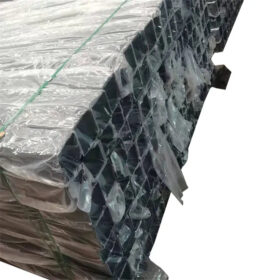
POLYMETAL packs Crimped Spear Steel Picket Fence to protect the black finish and preserve straightness. Panels are separated at contact points to prevent rub marks, edges are protected to reduce chips at corners, bundles are strapped square to reduce twist, and labels are applied by height schedule to prevent mixed installation runs. Posts and accessories are grouped to match the panel schedule so the site can stage runs without sorting losses or mixing post options that cause alignment drift.
Standard and FAQs
Standard (Common Control Targets)
Crimped Spear Steel Picket Fence projects commonly control corrosion and finish expectations by specifying galvanizing strategy (pre-galvanized tube fabrication or hot dip galvanizing after fabrication) and powder coating discipline for exterior exposure, supported by repeatable supplier quality controls such as ISO-based manufacturing systems. Field performance still depends on measurable controls: straightness, squareness, spacing discipline, weld discipline, and post match to fence height.
FAQ 1: What is the safest way to avoid wavy fence lines?
Lock rail frame + rail thickness, lock upright size + upright thickness, and match the post option and post wall thickness to fence height so the Crimped Spear Steel Picket Fence line stays straight across long runs.
FAQ 2: Why do upright number and spacing (16/17/18 pcs) matter?
Upright number controls spacing discipline and visual density. If the count drifts, the entire Crimped Spear Steel Picket Fence boundary looks inconsistent even if the color matches.
FAQ 3: What coating system is common for Crimped Spear Steel Picket Fence?
A controlled black powder coat over a corrosion protection strategy (pre-galvanized tube fabrication or hot dip galvanized after welding) is commonly used to deliver both appearance and durability for Crimped Spear Steel Picket Fence.
FAQ 4: Which post sizes are common and how do I choose wall thickness?
Common post options include 60×60, 65×65, 75×75, 80×80, and 100×100. Wall thickness (1.60 / 2.00 / 2.50 mm) should be matched to fence height and site loading so posts do not drift and panels do not rack.
FAQ 5: Can the size and specification be customized?
Yes. POLYMETAL can customize Crimped Spear Steel Picket Fence by fence height, fence width, rail frame, rail thickness, upright size, upright thickness, upright number, spacing schedule, post option, post wall thickness, and finish requirements, and for a practical reference on how specification language is commonly structured on security fence schedules, you can also see ClearVu fencing specifications South Africa explained.