Your One-Stop Wire Mesh Fence Supplier | POLYMETAL

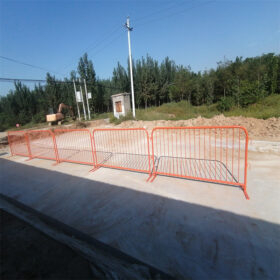
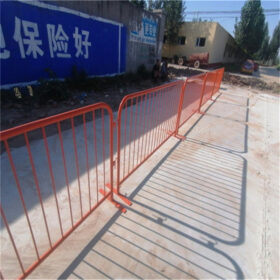
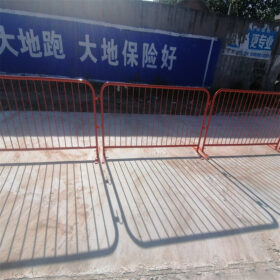
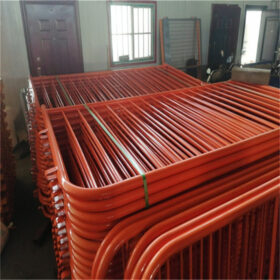
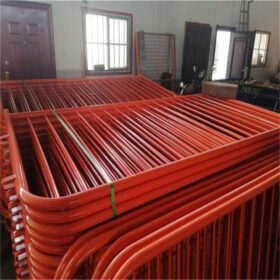
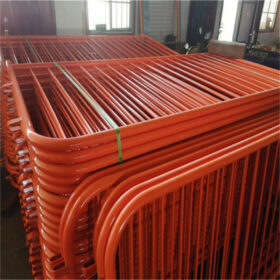
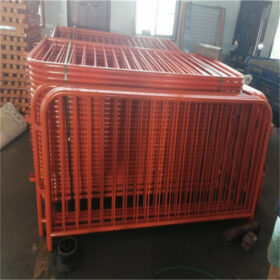
Event crowd control barriers are often purchased as “simple steel barriers” that should line up fast, lock securely, and survive real pushing loads, but the real danger is that many event crowd control barriers look identical in photos while performing completely differently once forklift handling, transport stacking, uneven ground, and crowd pressure start testing the line—especially on mixed-risk sites where perimeter control may sit alongside other safety systems like GPS2 rockfall netting benefits.
Supervisors judge event crowd control barriers after delivery rather than at quotation stage, so weak specs show up when the venue is already live.
POLYMETAL produces event crowd control barriers as commercial-class steel tube systems that meet ASTM and AS/NZS expectations, with corrosion treatment options such as hot dipped galvanized, pre-galvanized, and Interpon powder coating—so you don’t discover hidden weakness when the event is live.


Top 15 Costly Traps You Must Lock in Before You Buy Event Crowd Control Barriers (Especially #11)



Trap #1: The “Commercial Grade” Myth That Hides Weak Tube Selection
Event crowd control barriers can be sold as “commercial grade” without defining frame tube OD and wall thickness, and if your purchase order does not lock the frame tube size and thickness, the same event crowd control barriers can arrive with lighter steel that dents, flexes, and looks unstable when the line is under pressure.
Trap #2: The Detail You Skip on Frame Wall Thickness That Turns Rigid Into Wobble
Frame tube wall thickness is the stiffness engine of event crowd control barriers, and when thickness is downgraded from 2.00mm to 1.5mm without being stated, barriers can feel soft at connection points and begin to rack sideways, creating a visible hazard that costs more to fix than the original savings.
Trap #3: The Fact About Upright Tube OD That Controls Real Impact Survival
Upright tube OD is not cosmetic, it decides whether event crowd control barriers stay straight after being dragged, stacked, and pushed, and when upright OD is reduced or mixed without control, the barrier line starts to bend at the pickets and looks damaged even if the frames are still standing.
Trap #4: The Point About Upright Thickness That Determines Long-Term Straightness
Upright thickness controls buckling resistance in event crowd control barriers, and if the vertical pipe drops from 1.2mm to 0.7mm in production, panels can arrive straight but deform after one rough handling cycle, creating a replacement cost that shows up after your event schedule is already locked.
Trap #5: The Tip You Miss on Vertical Spacing That Changes Crowd Control Behavior
Vertical spacing changes the “feel” of event crowd control barriers because it affects reach-through, foot placement, and perceived control, and if spacing is not specified (90mm, 100mm, 150mm, or 200mm), you may receive barriers that do not match security expectations or safety rules for the venue.
Trap #6: The Insight About Feet Style That Decides Stability on Real Ground
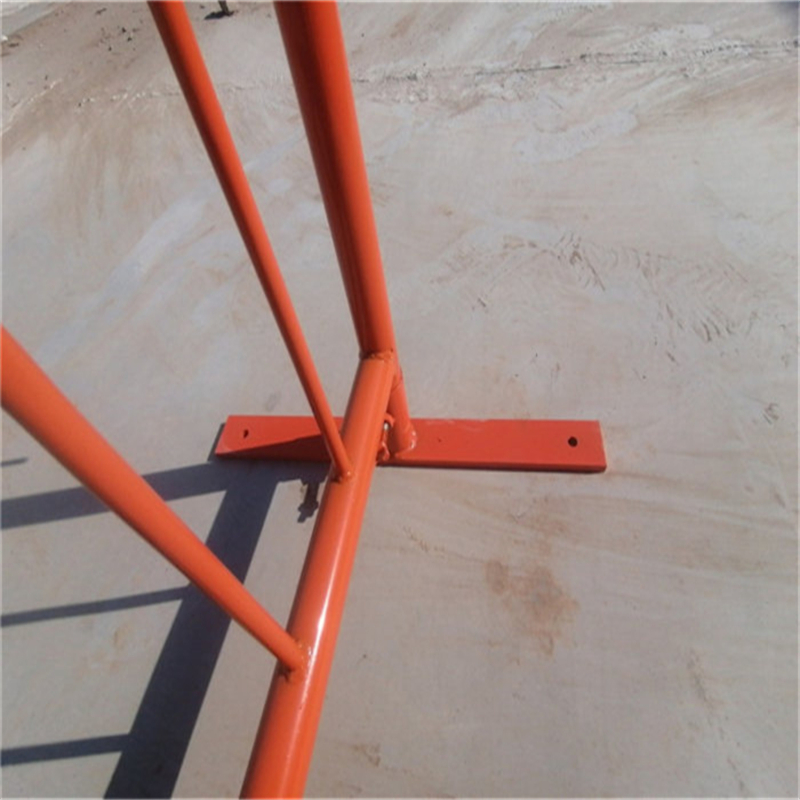
Feet are not an accessory, they decide whether event crowd control barriers resist tipping on uneven surfaces, and if you do not choose the correct feet type such as flat feet, wheel feet, bridge feet, or V feet, the barrier line can drift, lift, or rock during crowd surges and become a safety problem.
Trap #7: The Discovery That “Detachable” Feet Can Create Hidden Losses
Detachable feet can be a major advantage for packing and rapid deployment of event crowd control barriers, but if locking connections and tolerances are not controlled, detachable feet can loosen over time, causing wobble, lost parts, and slow installs that destroy event labor efficiency.
Trap #8: The Lesson About Flat Steel Feet Dimensions That Prevents Sink and Twist
Flat steel feet dimensions and thickness decide how event crowd control barriers sit on soft ground and how they resist twisting under lateral load, and when the flat steel is under-sized or too thin, the feet can dig in, rock, or deform, breaking line alignment and creating an ugly perimeter.
Trap #9: The Rule About Interlock Hooks That Controls “No-Gaps” Performance
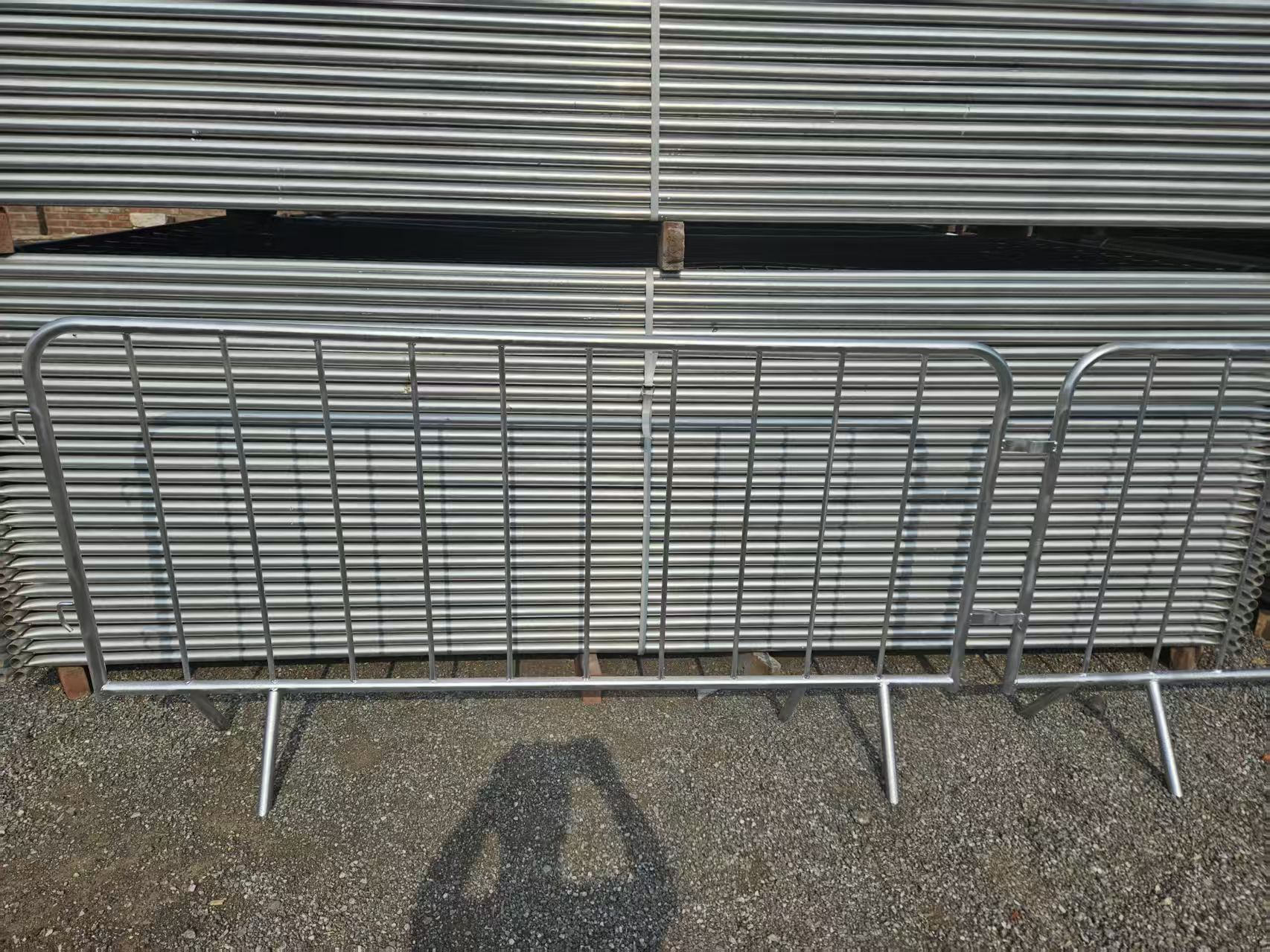
Event crowd control barriers rely on hooks and interlocking ends to eliminate gaps and prevent line separation, and if hook geometry and weld quality are not specified, barriers can separate under pressure, creating a security gap that turns into a cost crisis during active crowd flow.
Trap #10: The Pattern of Poor Galvanizing That Starts Rust Where Everyone Looks
Event crowd control barriers can be hot dipped galvanized, pre-galvanized, or powder coated, but if zinc level, coating method, and surface preparation are not stated, corrosion often begins at weld zones and contact points, creating visible rust exactly where cameras and supervisors focus.
Trap #11: The Oversight That Triggers the Biggest Loss—Mixed Specs in One Shipment
The most expensive failure is not a scratch, it is receiving a shipment of event crowd control barriers where frame OD, upright OD, spacing, and feet type vary within the same order because the spec was not locked to one approved build, and this creates instant on-site sorting, rejected bundles, mismatched interlock behavior, safety complaints, and rework costs that destroy the whole savings plan.
Trap #12: The Warning About Logo Plate Welding That Creates Stress Cracks
Logo plates are common on event crowd control barriers, but if plate thickness and weld layout are not controlled, stress cracks can form at corners after repeated handling, and the barrier becomes a cosmetic failure that looks cheap even when the rest of the line is acceptable.
Trap #13: The Hazard of Missing Reinforcement Plates on High-Load Models
High-load event crowd control barriers often use reinforcement details such as triangle steel plates at feet or key joints, and if reinforcement is omitted, the barrier line can fail at the same predictable stress points under pushing loads, creating a safety hazard and replacement cost at the worst time.
Trap #14: The Problem of Packing Damage That Bends Panels Before You Install
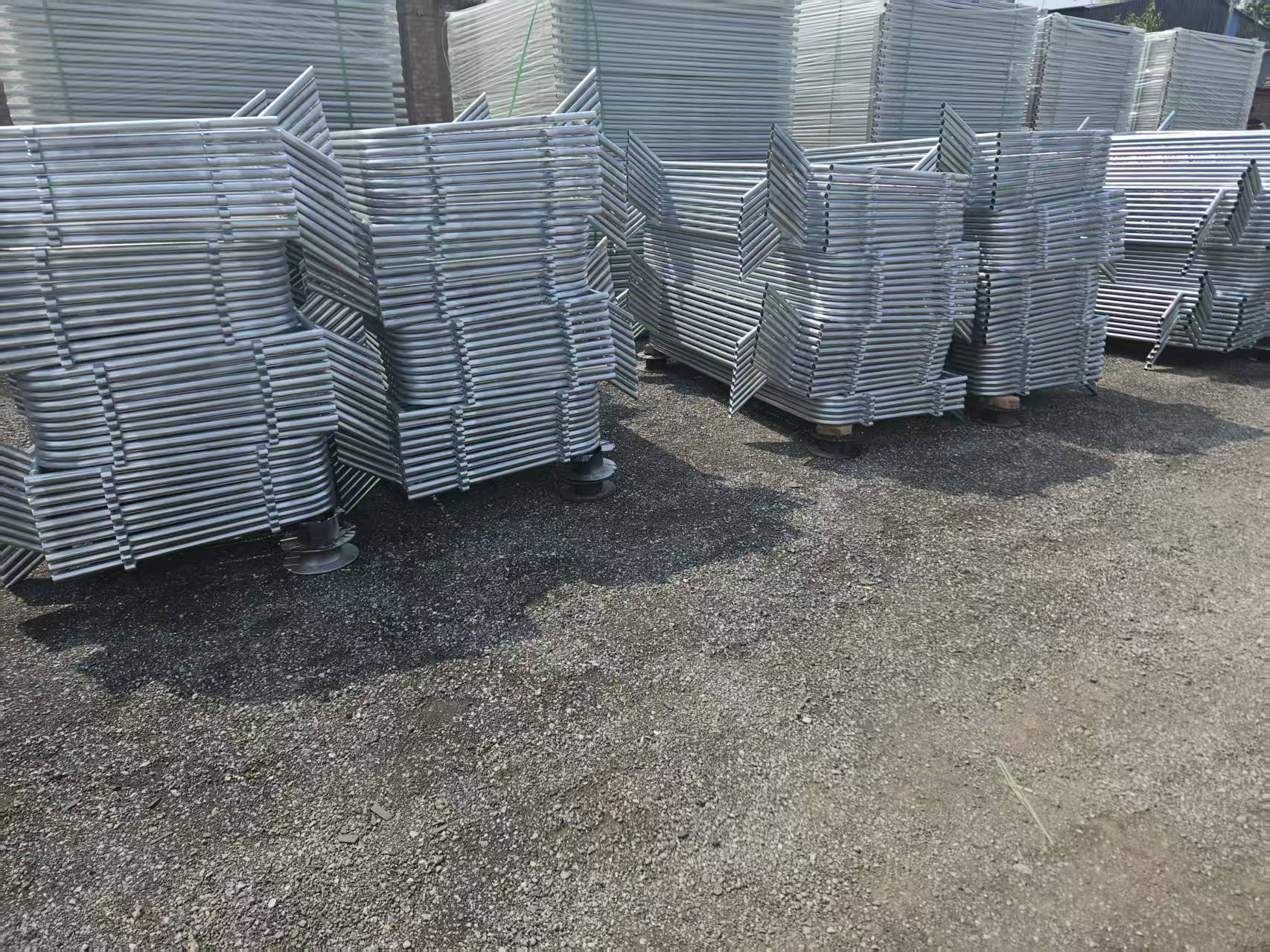
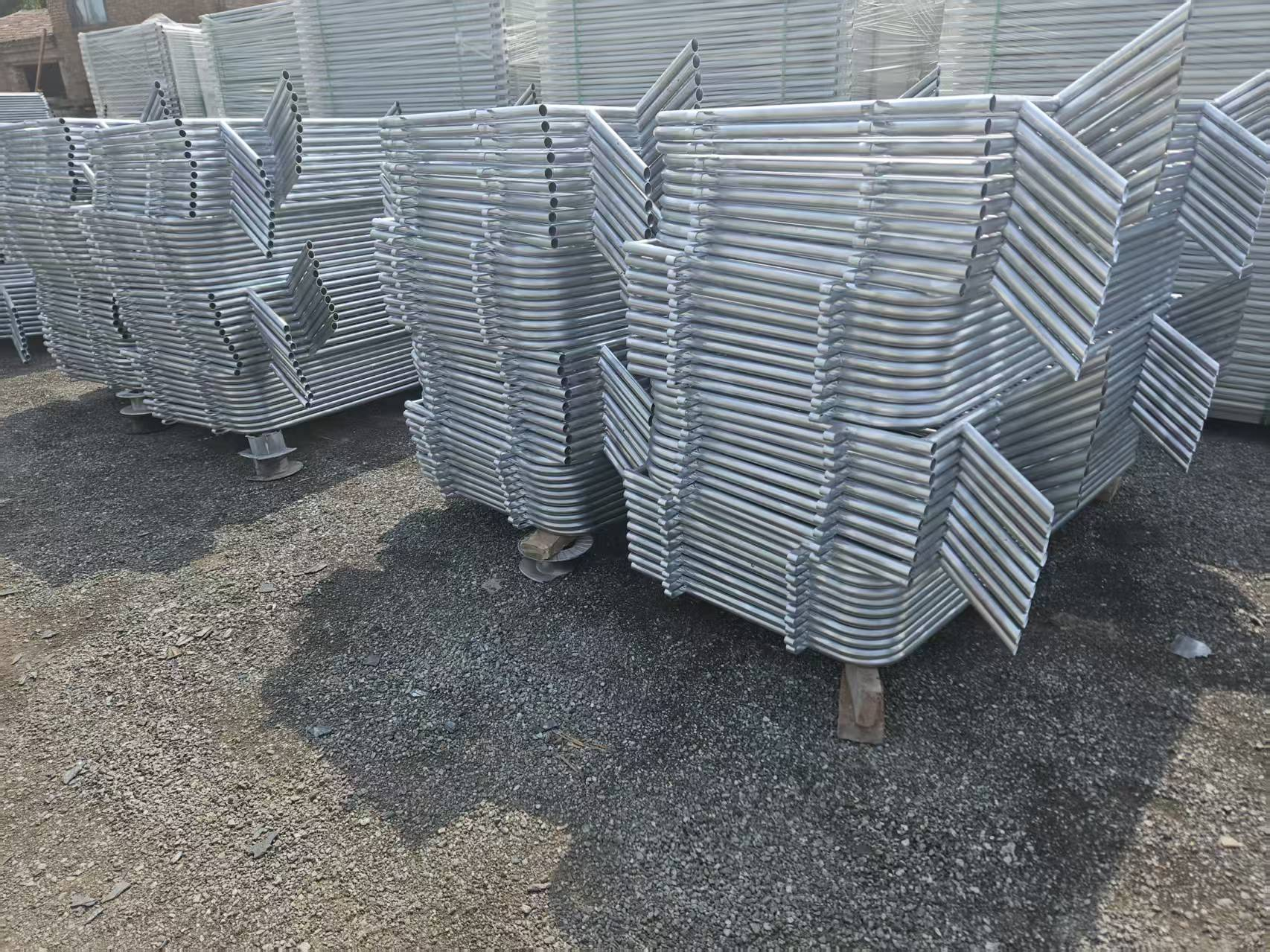
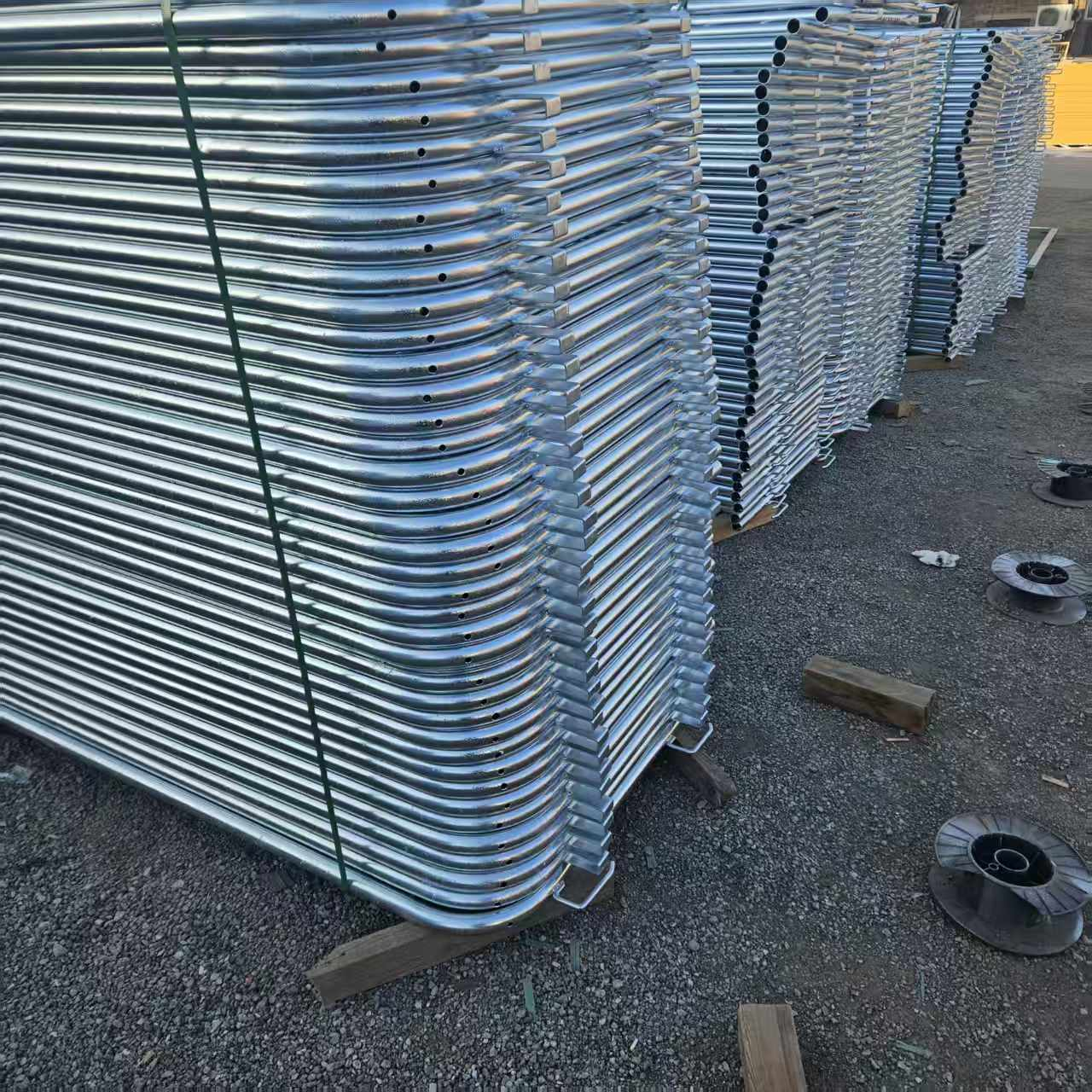
Event crowd control barriers can arrive damaged if packing allows metal-to-metal abrasion and uncontrolled stacking, because hooks, uprights, and feet are impact points, so without disciplined palletizing and separators, you can lose straightness before the barrier touches the site.
Trap #15: The Myth That Any Barrier Meets ASTM and AS/NZS Without Documentation
Event crowd control barriers can be described as ASTM or AS/NZS “compliant” without evidence, and if you do not lock material grade, thickness, finish requirements, and inspection criteria in writing, you risk receiving a barrier that cannot pass client checks, creating a last-minute replacement emergency.
Product Description (POLYMETAL)
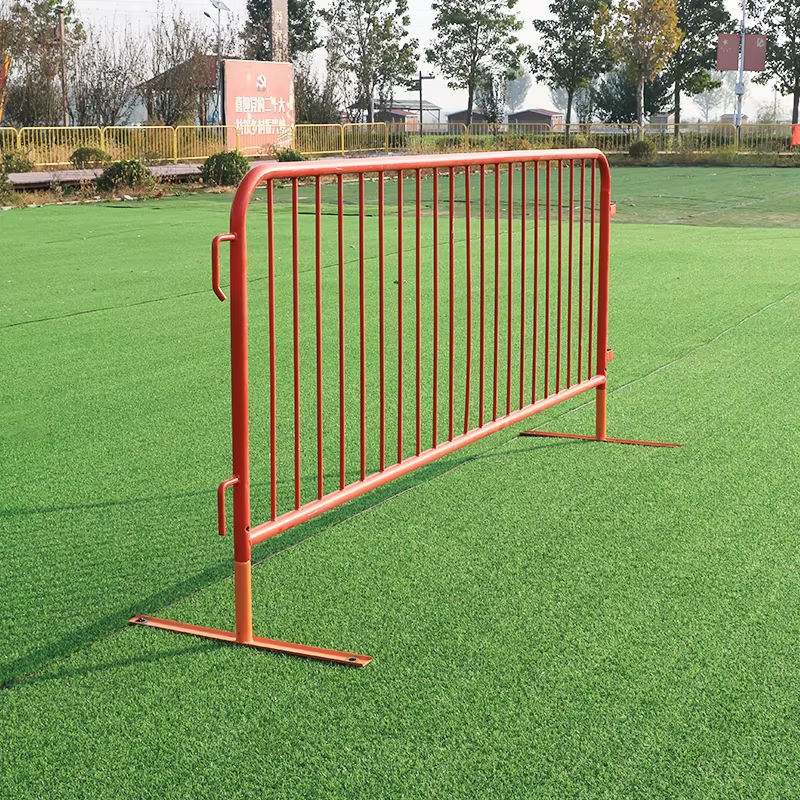
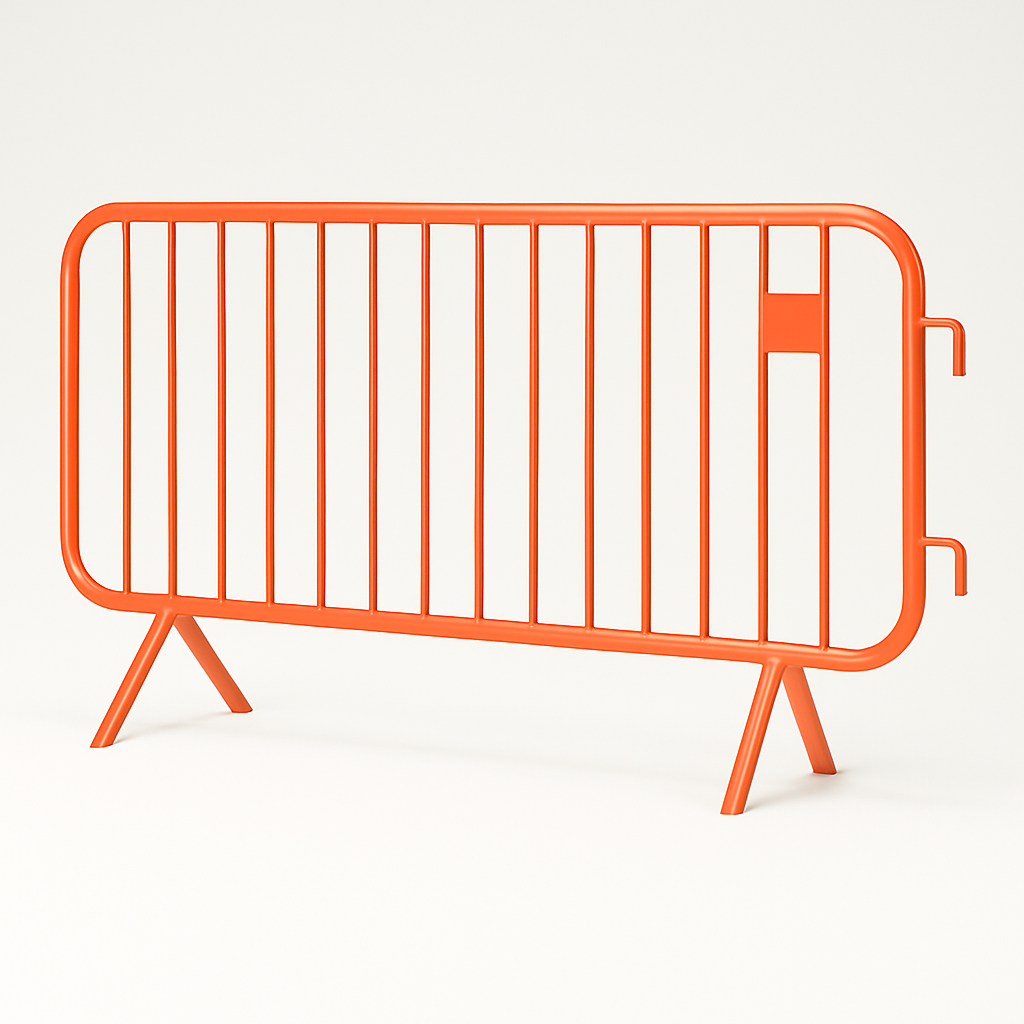
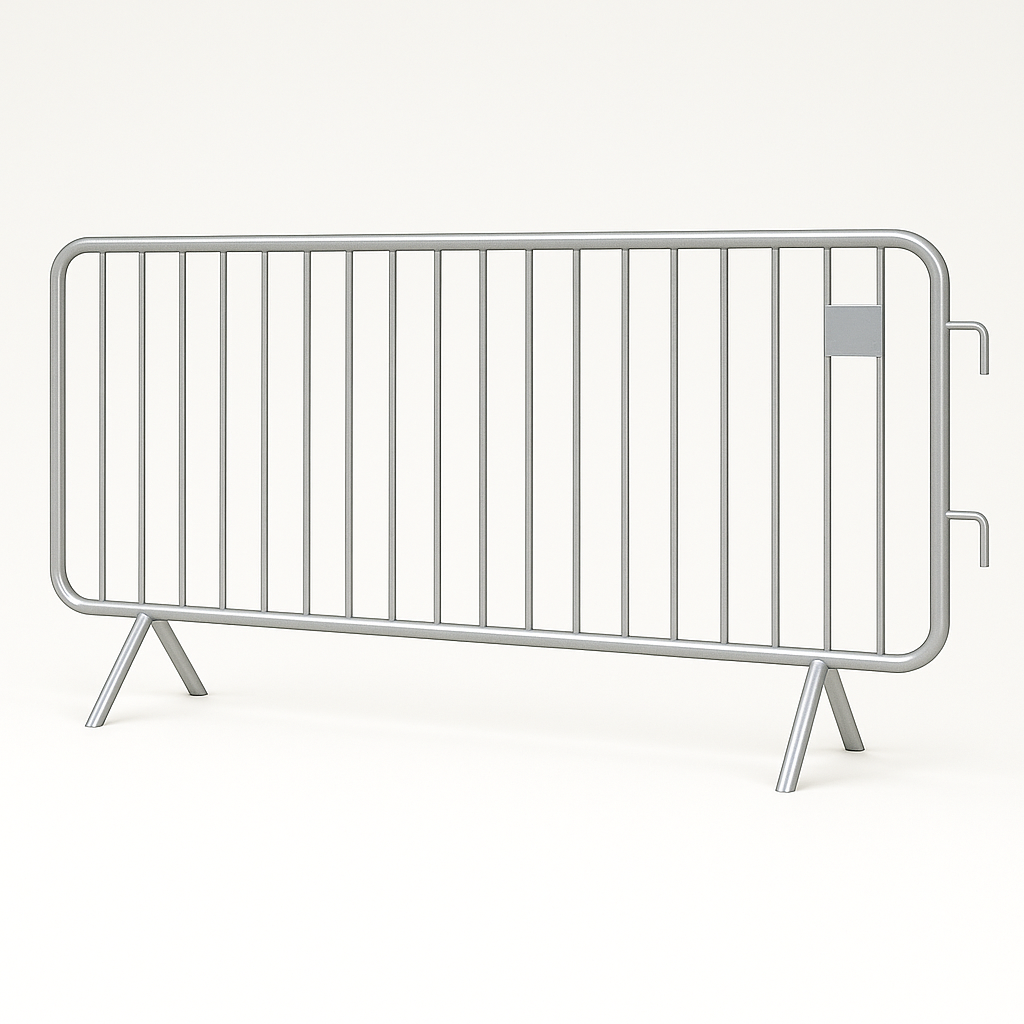
POLYMETAL event crowd control barriers for overseas markets are produced from commercial-class steel tube and engineered to meet both ASTM and AS/NZS expectations while supporting multiple corrosion treatment options including hot dipped galvanized, pre-galvanized, and Interpon powder coated finishes, and the system is designed for fast deployment, reliable interlock alignment, and repeatable straightness so event crowd control barriers hold their line under real crowd pressure, repeated handling, and transport cycles without turning the venue into a rework site.
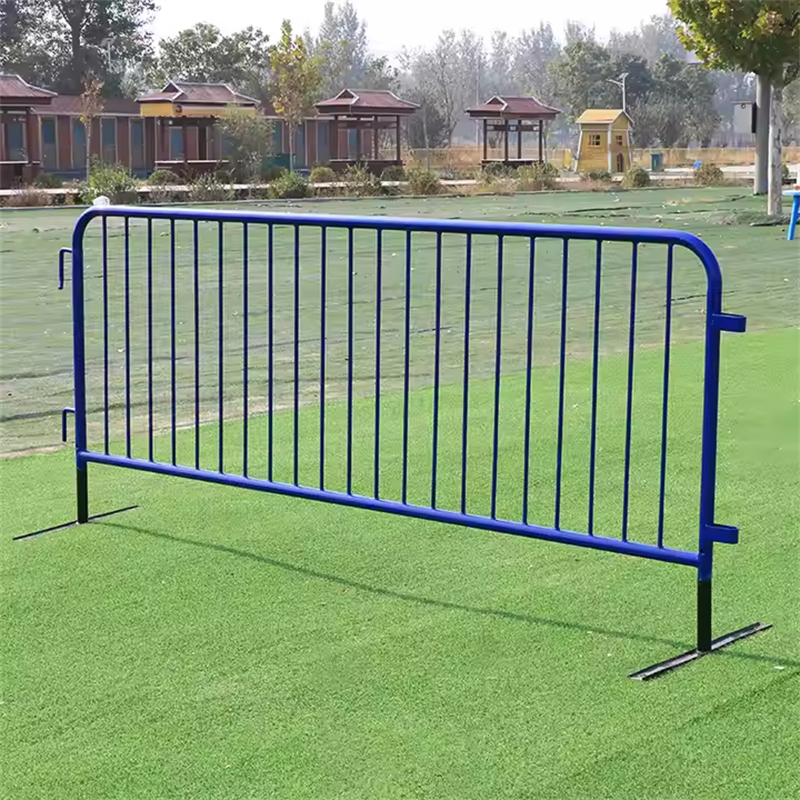
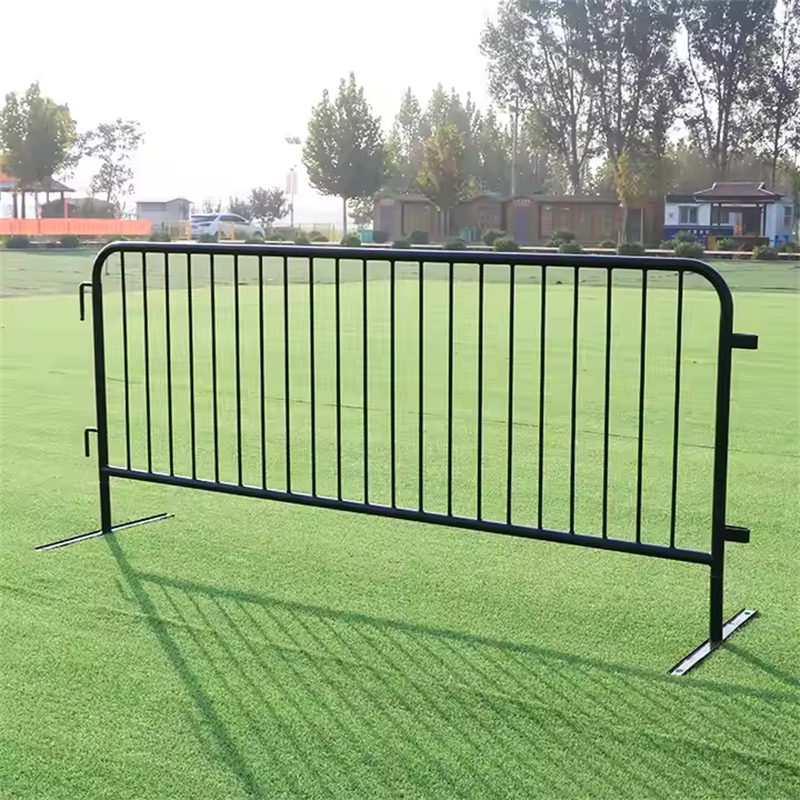
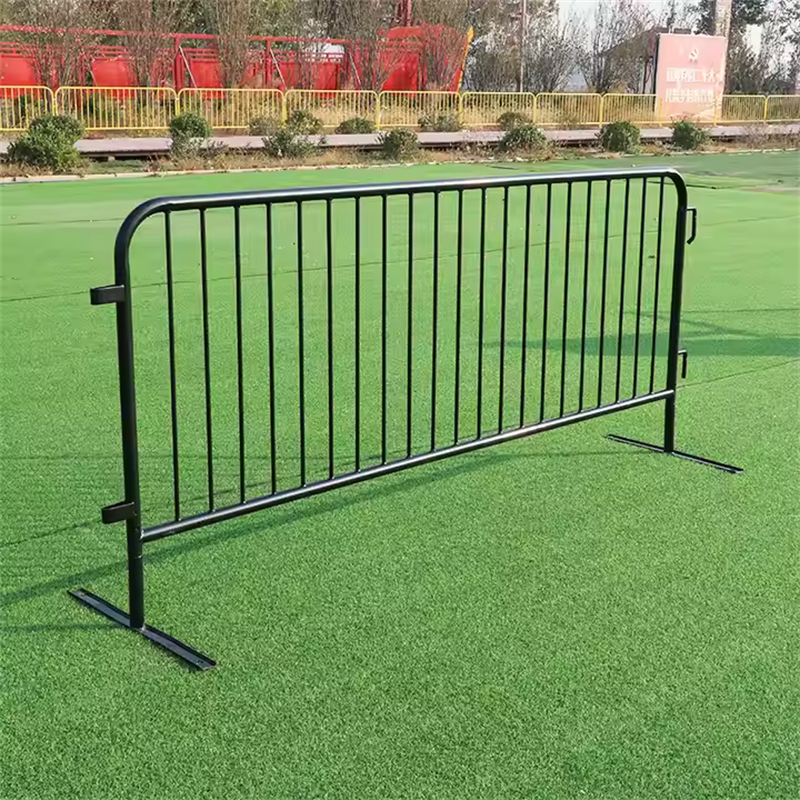
Specifications
Table 1: Export Market Models (10+ Common Builds)
| Market / Model | Barrier Height | Barrier Width | Frame Tube (OD) | Frame Wall | Upright Tube (OD) | Upright Thickness | Spacing | Feet Type | Finish |
|---|---|---|---|---|---|---|---|---|---|
| Classical Crowd Control Barrier | 1.10 m | 2.40 m | OD38 | 1.6 mm | OD16 | 0.8 mm | 100 mm | Welded permanently | Hot dipped galvanized |
| United Kingdom Crowd Control Barrier | 1.10 m | 2.015 m | OD38 | 1.2 mm | OD12 | 0.7 mm | 90 mm | Welded permanently | Hot dipped galvanized |
| New Zealand Crowd Control Barrier | 1.20 m | 2.40 m | OD40 | 2.0 mm | OD20 | 1.0 mm | 100 mm | Detachable (OD35 connectors + flat feet) | HDG 42 microns |
| Australia Crowd Control Barrier | 1.10 m | 2.20 m | OD25 | 1.6 mm | OD20 | 1.0 mm | 200 mm | Flat feet (removable) | HDG 42 microns |
| Heavy Duty Barrier (Logo Plate + Triangle Plate) | 1.10 m | 2.50 m | OD26 | 2.5 mm | OD15 | 1.5 mm | 200 mm | Welded permanently (500×70×8) + triangle plate | Min zinc 42 microns |
| Norway Crowd Control Barrier | 1.50 m | 2.00 m | OD38 | 2.0 mm | OD16 | 1.5 mm | 150 mm | Detachable | HDG or electro-galvanized |
| Belgium Crowd Control Barrier | 1.15 m | 2.50 m | OD35 | 1.0 mm | OD16 | 1.0 mm | 125 mm | Welded permanently | Hot dipped galvanized |
| Belgium Crowd Control Barrier (Tall) | 1.50 m | 2.50 m | OD35 | 1.0 mm | OD16 | 1.0 mm | 125 mm | Welded permanently | Hot dipped galvanized |
| UAE Crowd Control Barrier | 1.10 m | 2.50 m | OD38 | 2.0 mm | OD16 | 1.0 mm | 150 mm | Removable | Hot dipped galvanized |
| Event VIP Line Barrier (Dense Pickets) | 1.06 m | 2.60 m | OD38 | 2.0 mm | OD19 | 1.2 mm | 90 mm | Bridge feet | Interpon powder coated |
Table 2: Core Dimension Series (10 Detailed Configurations)
| Barrier Height | Barrier Width | Frame Tube OD | Frame Wall | Upright OD | Upright Thickness | Spacing | Feet Option | Flat Steel Foot Option | Finish Option |
|---|---|---|---|---|---|---|---|---|---|
| 1.00 m | 2.00 m | OD25 | 1.5 mm | OD12 | 0.7 mm | 150 mm | V feet | 580×50×10 mm | Pre-galvanized |
| 1.00 m | 2.20 m | OD32 | 1.6 mm | OD16 | 0.8 mm | 100 mm | Flat feet | 580×50×10 mm | Hot dipped galvanized |
| 1.00 m | 2.50 m | OD35 | 2.0 mm | OD19 | 1.0 mm | 200 mm | Wheel feet | 580×50×10 mm | Interpon powder coated |
| 1.06 m | 2.00 m | OD38 | 1.5 mm | OD16 | 0.8 mm | 90 mm | Bridge feet | 580×50×10 mm | Pre-galvanized |
| 1.06 m | 2.20 m | OD25 | 1.6 mm | OD12 | 0.7 mm | 150 mm | Flat feet | 580×50×10 mm | Hot dipped galvanized |
| 1.06 m | 2.60 m | OD32 | 2.0 mm | OD19 | 1.2 mm | 100 mm | V feet | 580×50×10 mm | Interpon powder coated |
| 1.10 m | 2.40 m | OD35 | 1.5 mm | OD16 | 1.0 mm | 200 mm | Wheel feet | 580×50×10 mm | Hot dipped galvanized |
| 1.10 m | 2.50 m | OD38 | 1.6 mm | OD19 | 1.0 mm | 150 mm | Bridge feet | 580×50×10 mm | Pre-galvanized |
| 1.20 m | 2.50 m | OD25 | 2.0 mm | OD16 | 1.2 mm | 100 mm | Flat feet | 580×50×10 mm | HDG 42 microns |
| 1.20 m | 2.60 m | OD38 | 2.0 mm | OD19 | 1.2 mm | 90 mm | V feet | 580×50×10 mm | Interpon powder coated |
Table 3: Feet, Accessories, and Reinforcement Options (10+ Build Details)
| Option Name | Feet Type | Connection Type | Flat Steel / Base Detail | Reinforcement | Logo Plate | Recommended Height Range | Recommended Width Range | Finish Options | Use Case Snapshot |
|---|---|---|---|---|---|---|---|---|---|
| Permanent Foot Standard | Welded permanently | Fixed | Flat foot (typical) | Standard gusset | Optional | 1.0–1.1 m | 2.0–2.5 m | HDG / Pre-galv | Fast deploy, low parts loss |
| Detachable Flat Foot | Detachable | OD35 connectors | 100×650×8 mm (example) | Optional gusset | Optional | 1.1–1.2 m | 2.2–2.6 m | HDG 42 microns | Packing efficiency + stable base |
| Flat Steel Heavy Base | Flat feet | Removable | 580×50×10 mm | Triangle plate optional | Optional | 1.0–1.2 m | 2.0–2.6 m | HDG / Powder | Hard ground stability |
| Wheel Feet Set | Wheel feet | Removable | Wheel bracket assembly | Reinforced bracket | Optional | 1.0–1.1 m | 2.0–2.5 m | HDG / Powder | Rapid reposition for venues |
| Bridge Feet | Bridge feet | Removable | Bridge base profile | Gusset recommended | Optional | 1.06–1.2 m | 2.0–2.6 m | HDG / Powder | Improved anti-tip on uneven ground |
| V Feet | V feet | Removable | V base profile | Gusset recommended | Optional | 1.0–1.2 m | 2.0–2.6 m | HDG / Pre-galv | Directional stability for long runs |
| Logo Plate Standard | Any | Any | 200×100×2.5 mm (example) | Controlled weld layout | Yes | 1.0–1.2 m | 2.2–2.6 m | HDG / Powder | Branding + site identification |
| Triangle Plate Reinforced | Permanent | Fixed | 500×70×8 mm (example) | Triangle steel plate | Optional | 1.1 m | 2.5 m | Min zinc 42 microns | High-load crowd pressure zones |
| Dense Picket Build | Bridge feet | Removable | 580×50×10 mm | Gusset recommended | Optional | 1.06–1.2 m | 2.4–2.6 m | Powder (Interpon) | VIP lines, close control |
| Wide Spacing Economy | Flat feet | Removable | 580×50×10 mm | Standard gusset | Optional | 1.0–1.1 m | 2.0–2.5 m | Pre-galv | Large events, cost control |
Applications
Event crowd control barriers are used for concerts, festivals, parades, stadium queues, public gatherings, transport hubs, VIP zones, warehouse traffic separation, construction pedestrian routing, emergency response cordons, and any venue where event crowd control barriers must guide people safely while preserving clear sight lines and rapid access control.
Benefits
Event crowd control barriers from POLYMETAL reduce hidden losses by delivering repeatable interlock alignment, stable feet options for real ground conditions, corrosion protection choices for different climates, and measurable tube and spacing specifications that prevent wobble, visible damage, and rejected bundles, while improving setup speed, line straightness, and professional appearance under crowd pressure.
Packing
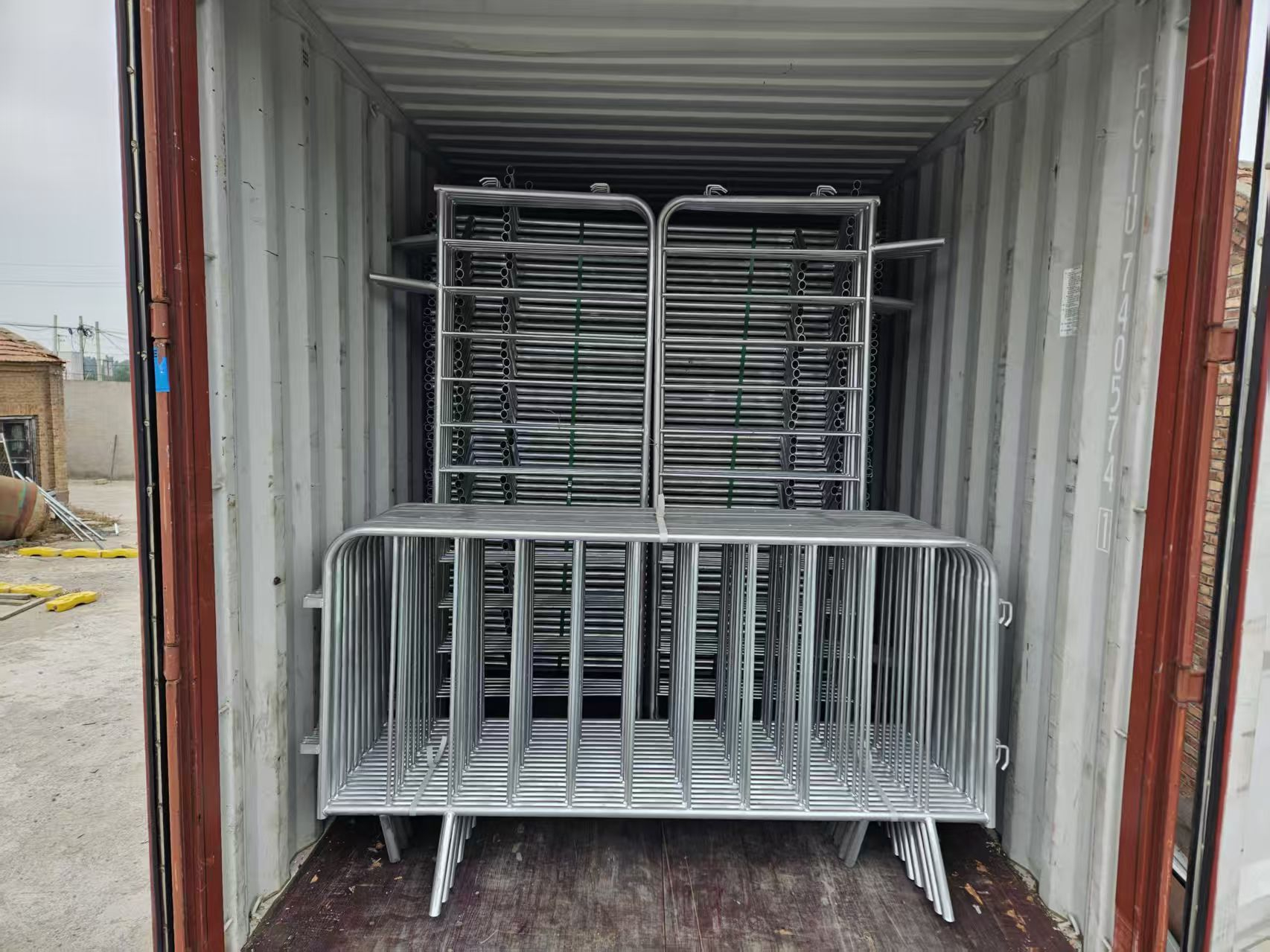
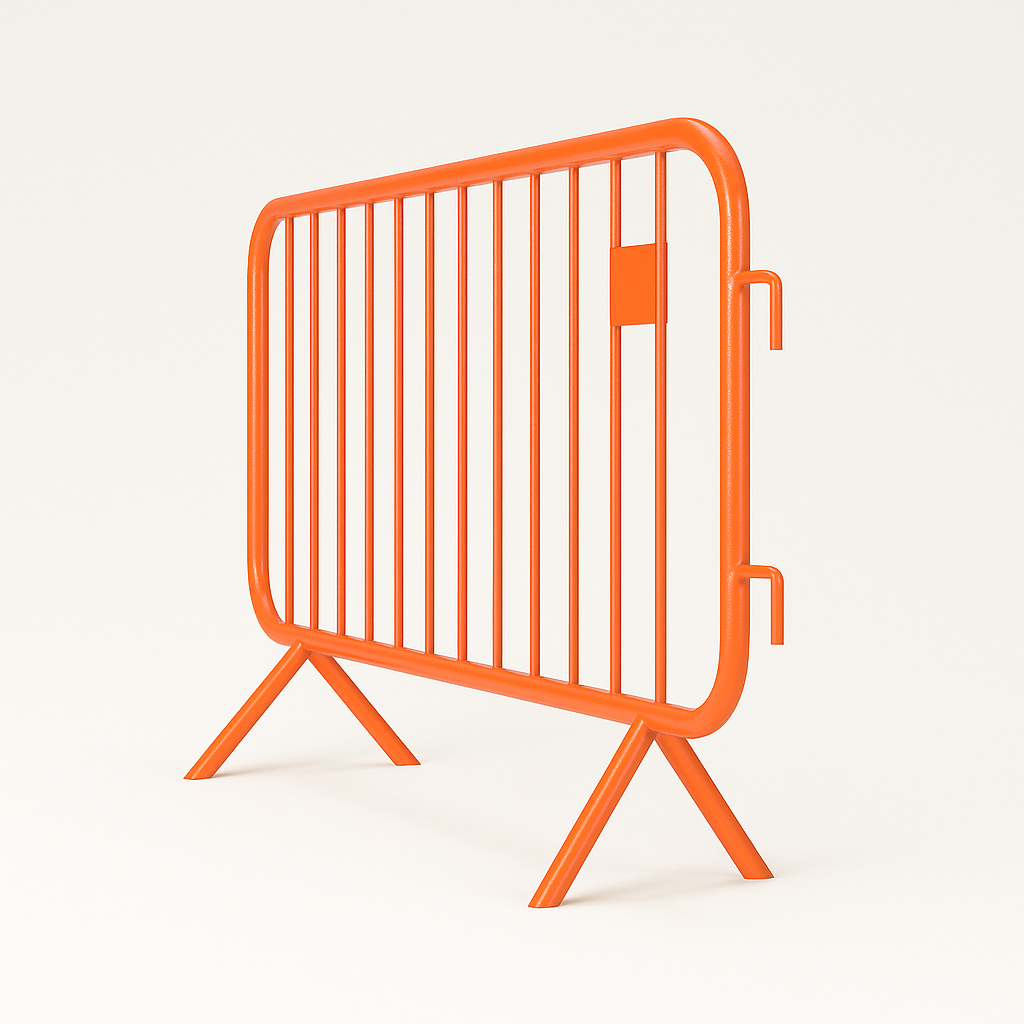
Event crowd control barriers are packed for overseas delivery using controlled stacking, protective separators, and strapping to reduce hook deformation and tube abrasion, with detachable feet and accessories boxed or bundled separately to prevent missing parts, and pallet or stillage packing options are used to protect barrier geometry through loading, sea freight, unloading, and site staging.

Standard
Event crowd control barriers can be produced to meet ASTM and AS/NZS expectations for commercial-class steel tube performance and outdoor corrosion exposure, and the purchase order should state required tube OD and wall thickness, upright OD and thickness, spacing, feet type, finish method, and inspection criteria so the delivered event crowd control barriers match the approved project standard without receiving disputes—especially if your team is also comparing local sourcing options in Australia such as where to buy crowd control barriers.
FAQs
FAQ 1: Are you factory/manufacturer or trader?
POLYMETAL is a direct factory with production lines and workshops, allowing event crowd control barriers to be built as flexible configurations without middle-man mark-ups while keeping the key specifications locked for repeatable performance.
FAQ 2: Which countries do you export to?
POLYMETAL exports event crowd control barriers to Australia, New Zealand, the UK, the USA, and other overseas markets where commercial-class steel tube crowd barriers are required for professional event operations.
FAQ 3: Can I get free samples?
If standard event crowd control barriers samples are available, we can supply them, and for custom specifications we can provide samples based on confirmed drawings and finish requirements.
FAQ 4: What is your minimum order quantity?
There is no fixed MOQ for event crowd control barriers, but we recommend a quantity that optimizes packing efficiency and landed cost, especially when multiple feet options and finish types are included.
FAQ 5: Can you do customized logo or packing?
Yes, event crowd control barriers support customized logo plates, labels, barcodes, and packing marks, and we can align bundle labeling to your receiving workflow for faster counting and deployment.
FAQ 6: Which payment methods can you accept?
Common payment terms for event crowd control barriers include T/T and L/C, and other terms can be arranged depending on order size and project requirements.
FAQ 7: How long can the goods be delivered if order is placed?
If production is required, typical lead time is around 20 working days depending on the event crowd control barriers specification and quantity, and if stock is available, dispatch can be arranged within 3 working days.