Your One-Stop Wire Mesh Fence Supplier | POLYMETAL
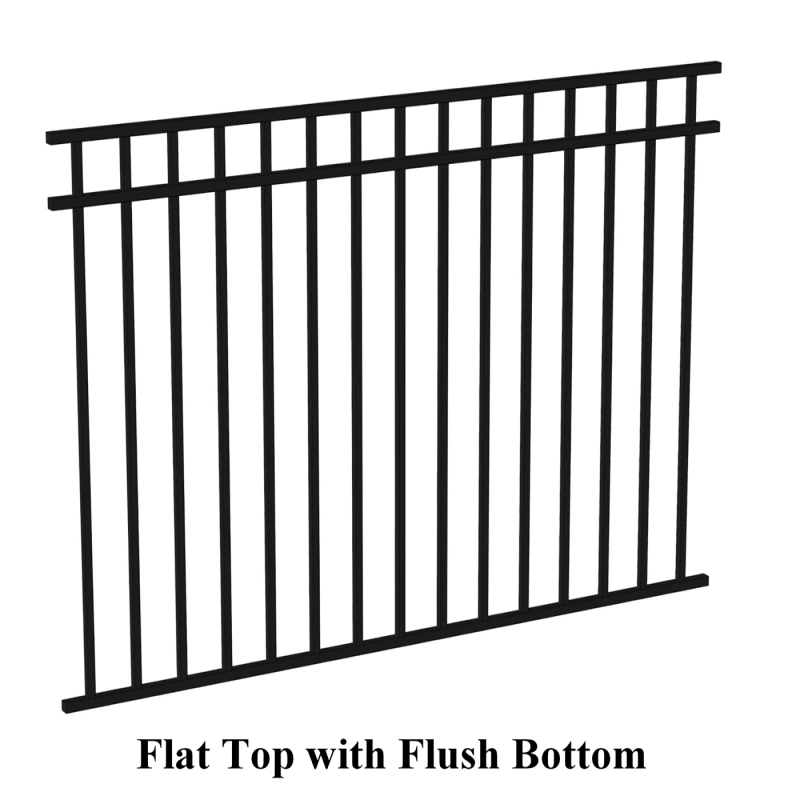
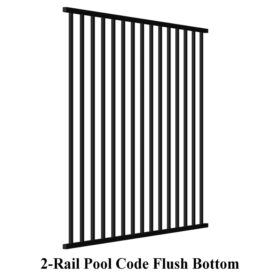
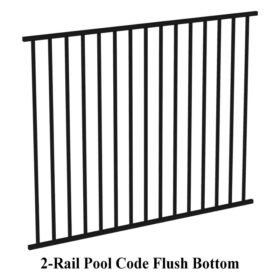
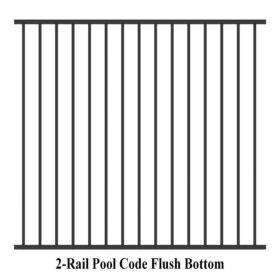
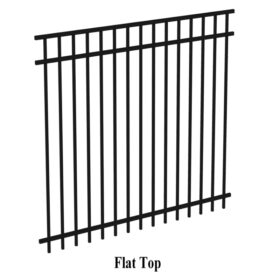
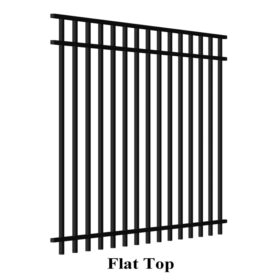
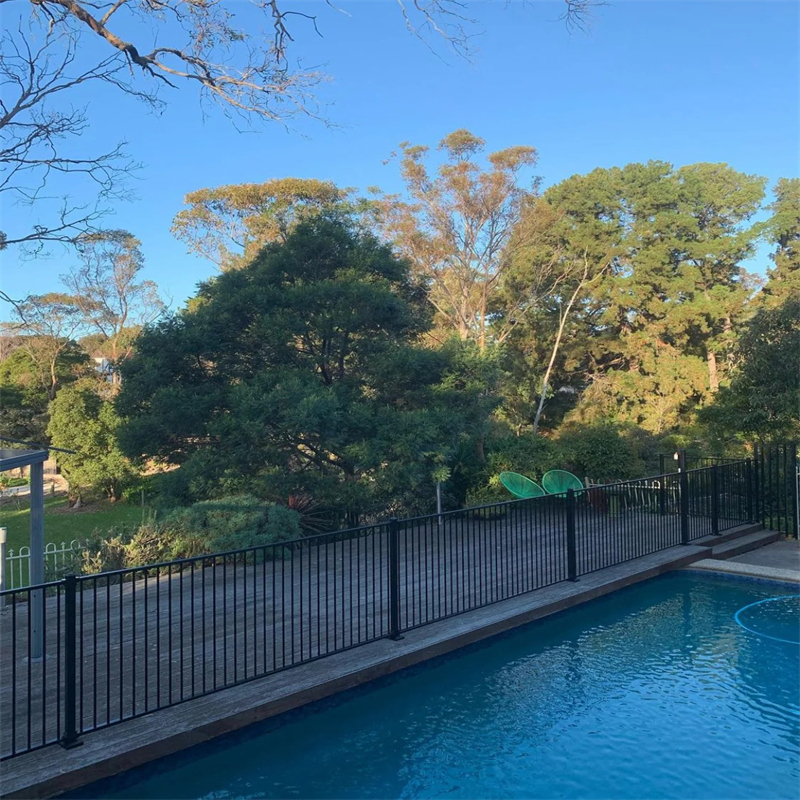
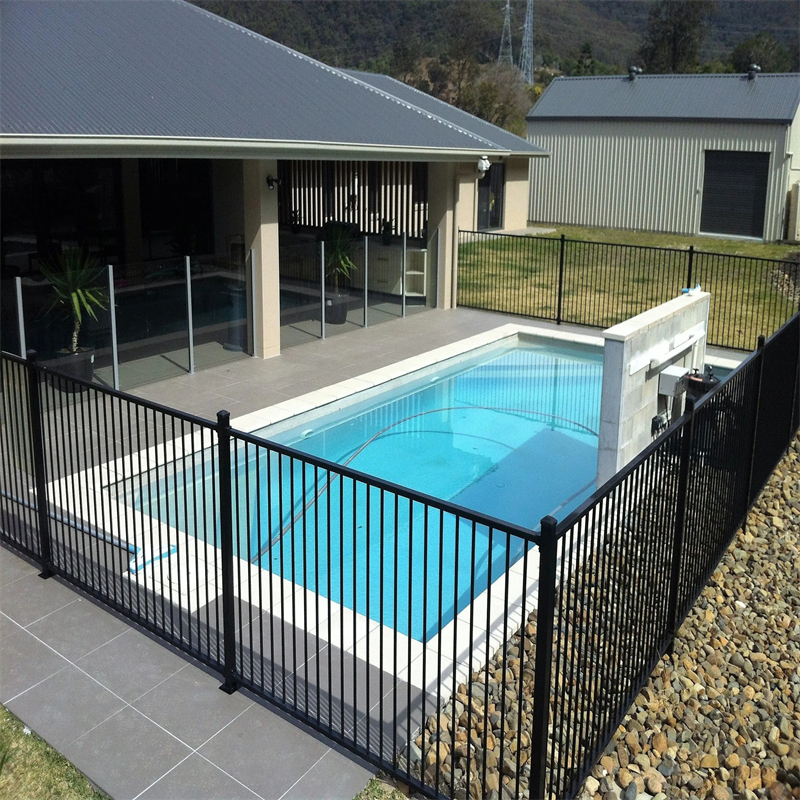
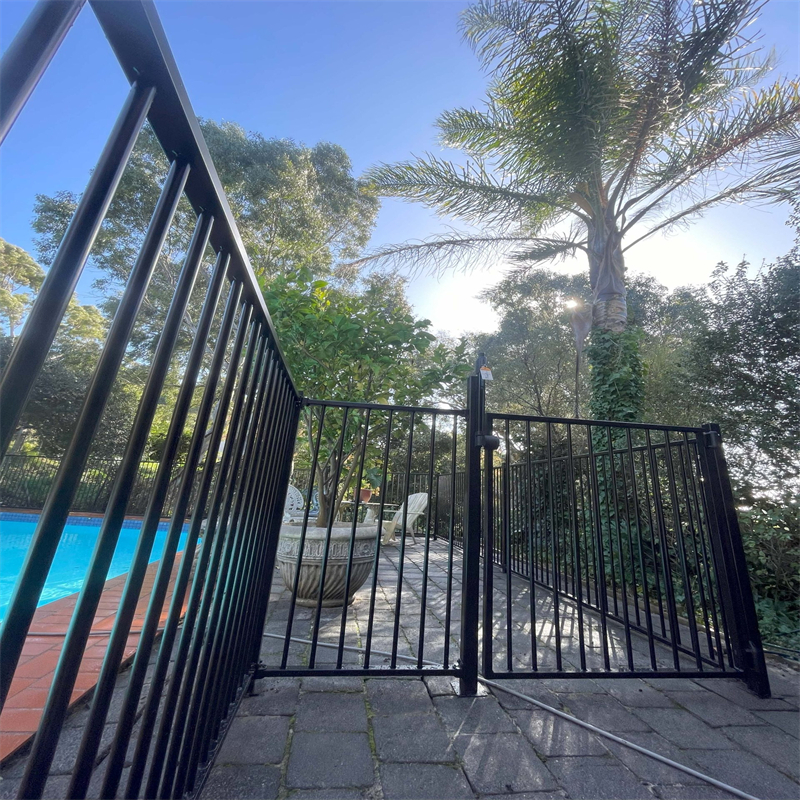
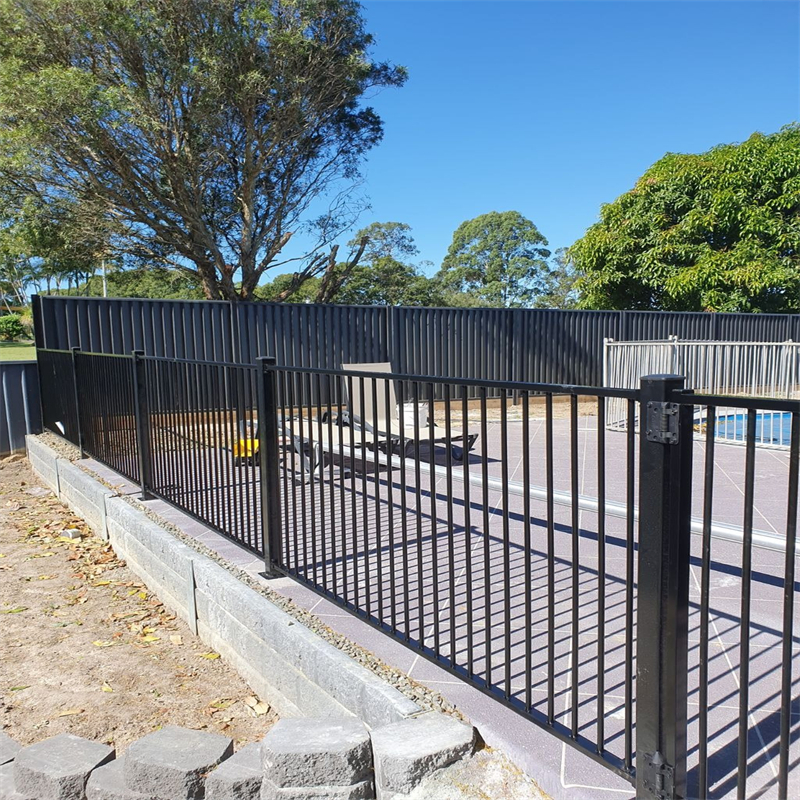
POLYMETAL Flat Top Pool Fencing is an aluminium barrier system engineered specifically for pool surrounds, not just as garden decoration. For perimeter lines beyond the immediate pool zone, complementary galvanized steel picket fencing options can be used to carry the same clean look and security profile around driveways, boundaries and service areas. Panels, gates and posts are manufactured from 6063 T6 aluminium for high strength, rust-free performance and long service life around chlorinated or saltwater pools.
Standard panels are 1200 mm high with widths of 2400 mm and 3000 mm. Each panel uses 38 × 25 mm rectangular rails with 16 mm round pickets passing through the rails and welded in six points, forming a rigid, low-maintenance structure. Typical picket centre spacing is about 87 mm, giving clear visibility while limiting gaps in line with common pool safety rules.
Gates are built to 1200 mm height with a standard width of 970 mm to suit a 1000 mm opening, allowing for self-closing and self-latching hardware. Custom panel and gate sizes can be produced from drawings where site conditions demand special layouts without leaving dangerous gaps or defects.
Standard colour is satin black, providing a clean, modern view that suits most landscapes. Alternative powder-coated colours are available on request so flat top pool fencing integrates smoothly with surrounding architecture and outdoor finishes while still working as a serious safety device.
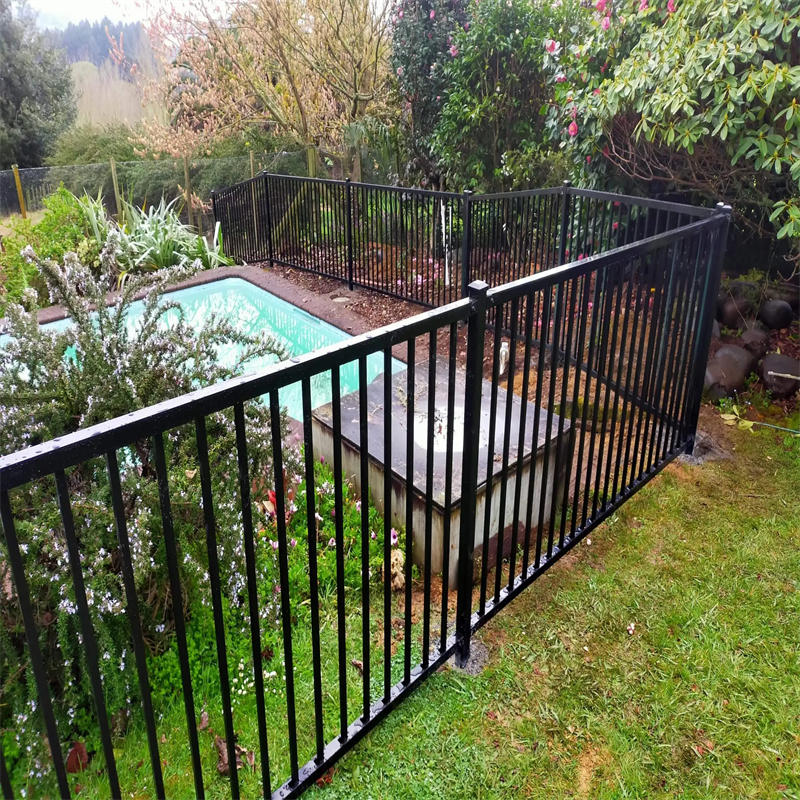

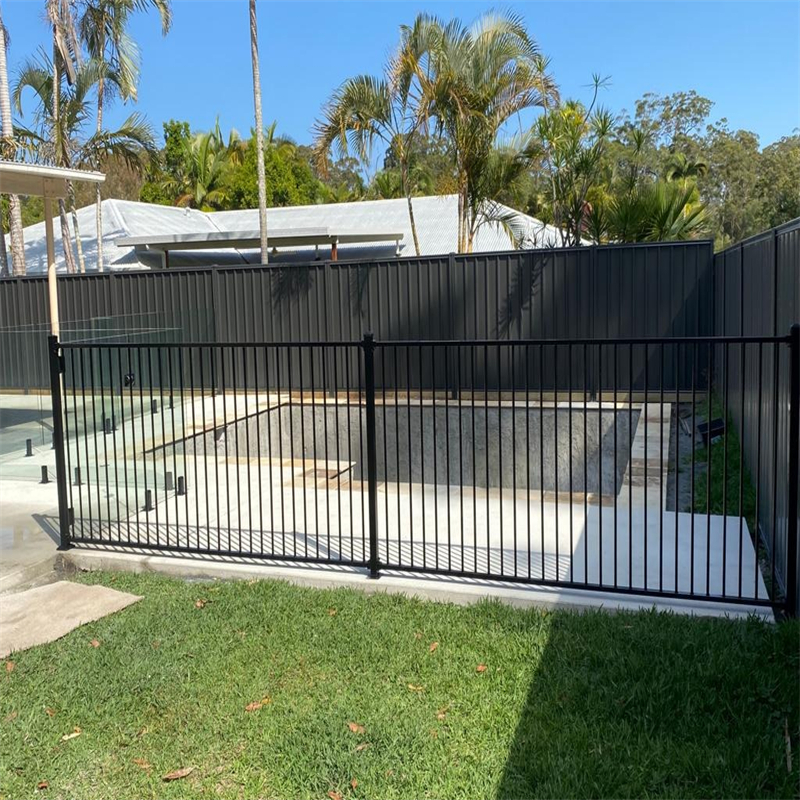
Key Specifications for POLYMETAL Flat Top Pool Fencing
Table 1 – Standard POLYMETAL Flat Top Pool Fence (Residential Pool Use)
| Model Code | Fence Height (mm) | Fence Width (mm) | Top/Bottom Rail (mm) | Rail Wall Thickness (mm) | Upright Tube (mm) | Upright Wall Thickness (mm) | Clear Gap Between Uprights (mm) | Post Section (mm) | Post Height (mm) |
|---|---|---|---|---|---|---|---|---|---|
| PFPF-S1200-01 | 1200 | 2400 | 38 × 25 | 1.2 | Ø16 round | 1.2 | 75 | 50 × 50 | 1800 |
| PFPF-S1200-02 | 1200 | 2450 | 38 × 25 | 1.2 | Ø16 round | 1.2 | 75 | 50 × 50 | 1800 |
| PFPF-S1200-03 | 1200 | 2400 | 38 × 25 | 1.4 | Ø16 round | 1.2 | 75 | 50 × 50 | 2100 |
| PFPF-S1200-04 | 1200 | 2450 | 38 × 25 | 1.4 | Ø16 round | 1.2 | 75 | 65 × 65 | 2100 |
| PFPF-S1200-05 | 1200 | 2400 | 38 × 25 | 1.6 | Ø16 round | 1.2 | 75 | 65 × 65 | 2100 |
| PFPF-S1200-06 | 1200 | 2450 | 38 × 25 | 1.6 | Ø16 round | 1.2 | 75 | 65 × 65 | 2300 |
| PFPF-S1200-07 | 1200 | 2400 | 38 × 25 | 1.6 | Ø16 round | 1.4 | 75 | 65 × 65 | 2300 |
| PFPF-S1200-08 | 1200 | 2450 | 38 × 25 | 1.8 | Ø16 round | 1.4 | 75 | 65 × 65 | 2400 |
| PFPF-S1300-09 | 1300 | 2400 | 38 × 25 | 1.6 | Ø16 round | 1.2 | 80 | 65 × 65 | 2300 |
| PFPF-S1300-10 | 1300 | 2450 | 38 × 25 | 1.6 | Ø16 round | 1.4 | 80 | 65 × 65 | 2400 |
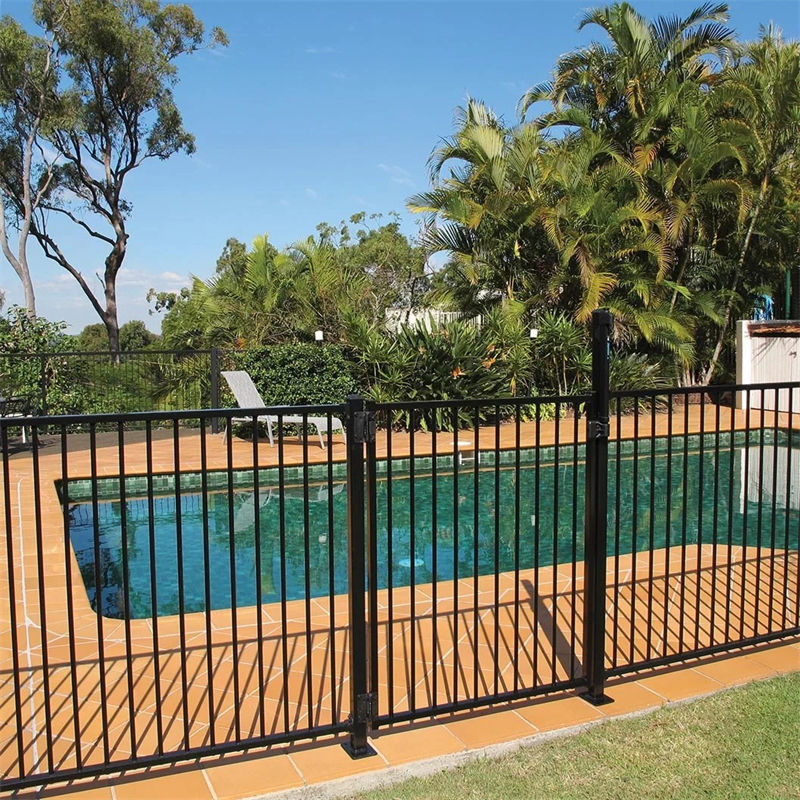
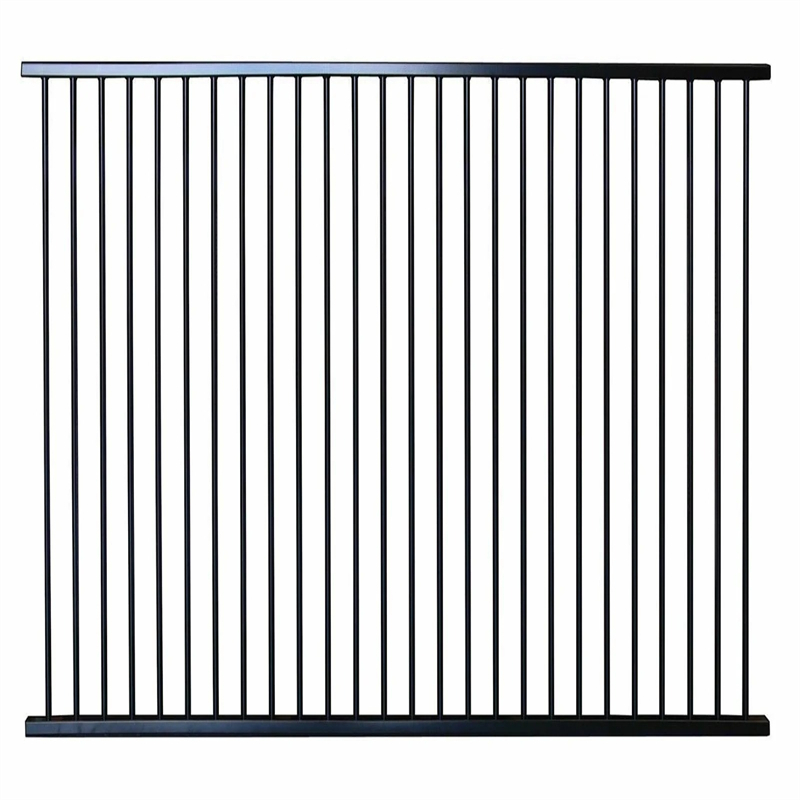

Table 2 – Heavy-Duty / Coastal POLYMETAL Flat Top Pool Fence
| Model Code | Fence Height (mm) | Fence Width (mm) | Top/Bottom Rail (mm) | Rail Wall Thickness (mm) | Upright Tube (mm) | Upright Wall Thickness (mm) | Clear Gap Between Uprights (mm) | Post Section (mm) | Post Height (mm) |
|---|---|---|---|---|---|---|---|---|---|
| PFPF-HD1200-01 | 1200 | 2400 | 40 × 30 | 1.6 | Ø16 round | 1.4 | 75 | 65 × 65 | 2400 |
| PFPF-HD1200-02 | 1200 | 2450 | 40 × 30 | 1.6 | Ø16 round | 1.4 | 75 | 65 × 65 | 2400 |
| PFPF-HD1200-03 | 1200 | 2400 | 40 × 30 | 2.0 | Ø16 round | 1.6 | 75 | 75 × 75 | 2400 |
| PFPF-HD1200-04 | 1200 | 2450 | 40 × 30 | 2.0 | Ø16 round | 1.6 | 75 | 75 × 75 | 2400 |
| PFPF-HD1200-05 | 1200 | 2400 | 50 × 25 | 1.6 | Ø16 round | 1.6 | 75 | 75 × 75 | 2400 |
| PFPF-HD1200-06 | 1200 | 2450 | 50 × 25 | 1.6 | Ø16 round | 1.6 | 75 | 75 × 75 | 2500 |
| PFPF-HD1200-07 | 1200 | 2400 | 50 × 25 | 2.0 | Ø19 round | 1.6 | 80 | 75 × 75 | 2500 |
| PFPF-HD1200-08 | 1200 | 2450 | 50 × 25 | 2.0 | Ø19 round | 1.6 | 80 | 75 × 75 | 2500 |
| PFPF-HD1400-09 | 1400 | 2400 | 50 × 25 | 2.0 | Ø19 round | 1.6 | 80 | 75 × 75 | 2600 |
| PFPF-HD1400-10 | 1400 | 2450 | 50 × 25 | 2.0 | Ø19 round | 1.6 | 80 | 100 × 100 | 2600 |
Seven Dangerous Facts About Flat Top Pool Fencing

Truth 1: Height and Gap – Small Dimensional Errors, Big Safety Risk
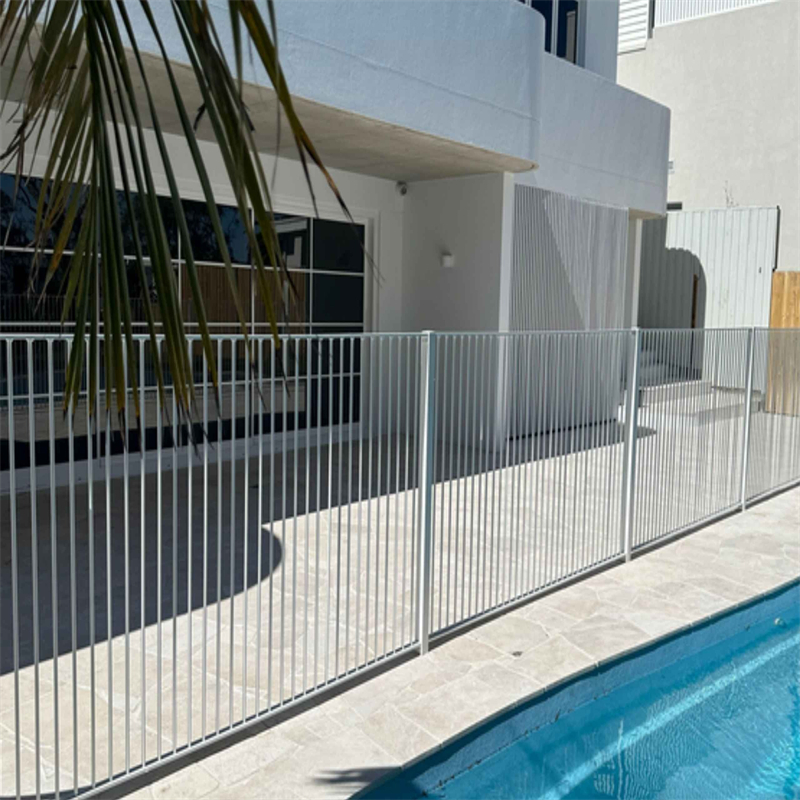
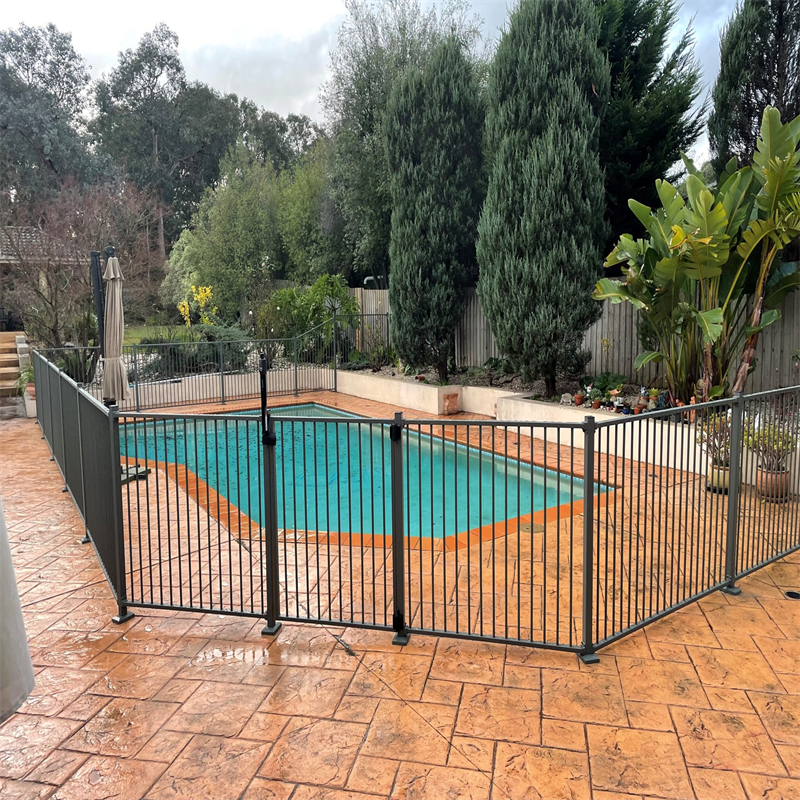
If a flat top pool fence finishes even a little under 1200 mm once installed, or if clear gaps exceed the intended ~87 mm pattern, children suddenly gain footholds and reach points. These are not harmless details – they are dangerous defects and loopholes in your safety outline that can trigger tragedy and legal loss.
Danger 2: Thin Rails and Pickets – Hidden Weakness Behind a Clean Line
Rails of 38 × 25 mm and 16 mm pickets can look strong, but if wall thickness is too light, they bend under impact, crowd load or leaning. The fence then becomes a flexible bug in your safety system instead of a rigid barrier. POLYMETAL uses 6063 T6 and controlled wall thickness to keep this weakness out of the design.
Fact 3: Weld Quality – The Invisible Joint That Fails First
Every picket passes through the rail and is welded at up to six points. Poor weld penetration or porosity creates micro-cracks that grow over time. One failed weld is a clear warning sign that the whole panel may share the same flaw. POLYMETAL treats welds as critical data, not a quick shortcut, and locks them into a strict quality checklist.
Risk 4: Coating Damage – Corrosion, Colour Fade and Structural Loss
Low-grade powder coating or bad surface prep leads to chalking, peeling and pitting, especially in pool environments. Once coating fails, corrosion and staining appear, reducing strength and destroying the clean profile that owners paid for. A failed coating is not just cosmetic; it is a hazard trend and maintenance cost driver.
Pitfall 5: Under-Sized Posts – Strong Panels on Weak Foundations
Even the best panel fails if the post is wrong. A 50 × 50 mm post with poor embedment or thin walls will flex and crack grout or concrete. Over time, the fence leans, rails go out of level and gates misalign. This is a classic oversight that turns a safe design into an unstable structure. POLYMETAL posts are matched to panel loads and fixing methods so the foundation is not the weak side.
Warning 6: Gate Missteps – Small Hardware Errors, Big Compliance Failure
Gate width, hinge position, latch height and self-closing force are strict safety rules, not decorative ideas. A gate that does not fully close and latch every time is a serious bug in the barrier system. POLYMETAL gate frames and profiles are designed to work with compliant hinges and latches so installers are less likely to create a dangerous misfit.
Crisis 7: Compliance Myth – “Looks Good” Is Not “Legally Safe”
Many flat top pool fences look neat but lack documentation, testing and traceability. When an incident happens, regulators and insurers ask for hard data, reports and installation info. If you cannot produce it, you face a real threat of crisis, damage and financial loss. POLYMETAL integrates standards, testing and documentation into the product profile so the fence is not just attractive, but defensible in audits and investigations.
Packing of POLYMETAL Flat Top Pool Fencing
POLYMETAL packs flat top pool fence panels, gates and posts for safe transport and quick, low-risk handling on site. Panels are stacked in aligned bundles with rails resting on supports so load passes through the 38 × 25 mm frames rather than the 16 mm pickets. Protective spacers and wrapping separate coated surfaces to prevent scratching and impact marks.
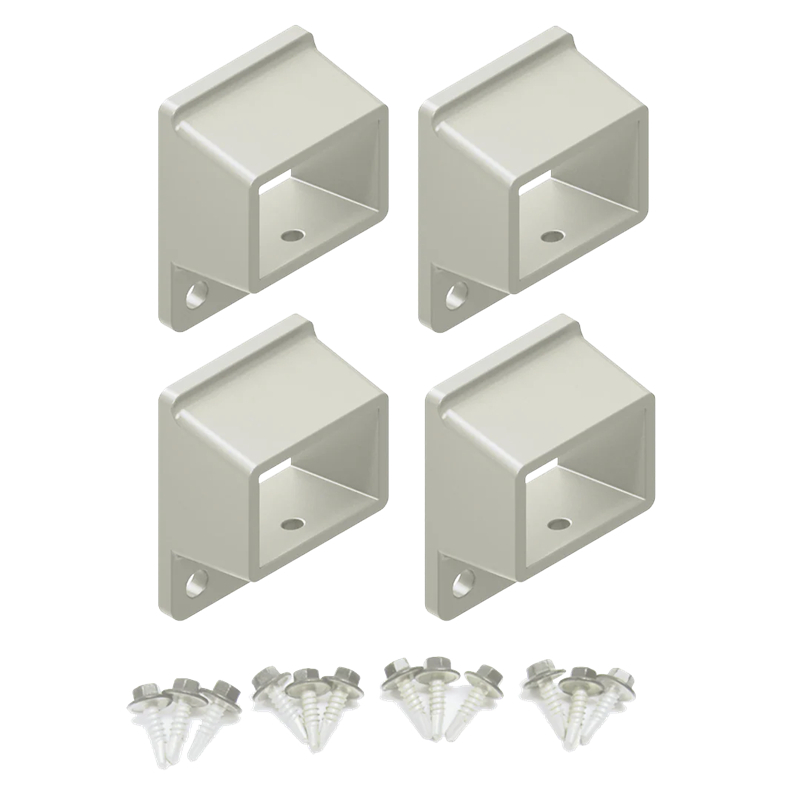
Posts in 50 × 50 mm profiles are bundled by length and type (inground, core-drilled, base-plated) and labelled clearly for fast identification. Fittings such as brackets, caps, hinges and latches are supplied in robust, labelled cartons. This compact, disciplined packing pattern reduces waste, avoids hidden damage and turns unloading into a controlled step instead of a messy, high-risk moment.
Production Process of POLYMETAL Flat Top Pool Fencing
Production starts with certified 6063 T6 aluminium for rails, pickets and posts. Rails are cut to suit 2400 mm and 3000 mm panels; 16 mm pickets are cut, deburred and prepared to pass through precision punched rail holes. Panel assemblies are set in jigs that fix the 87 mm picket spacing, keep rails parallel and ensure panel squareness.
Multi-point welding locks pickets and rails together, following defined procedures for aluminium. Welds are inspected and sampled to catch any fault before coating. After fabrication, components go through cleaning and chemical pretreatment, followed by electrostatic powder application and oven curing to achieve a consistent, durable film.
Finished panels, gates and posts are checked for dimensions, spacing, flatness and coating quality against an internal rule and checklist. Only after passing this inspection are products released to packing, cutting off many common oversight and misstep patterns seen in low-cost pool fencing.
Standards and Compliance for POLYMETAL Flat Top Pool Fencing
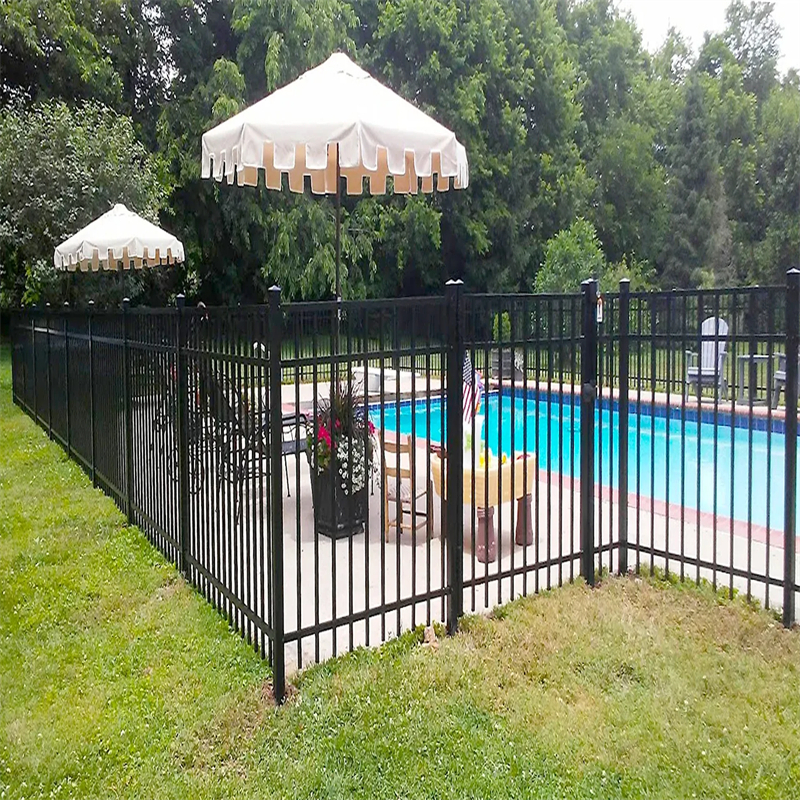
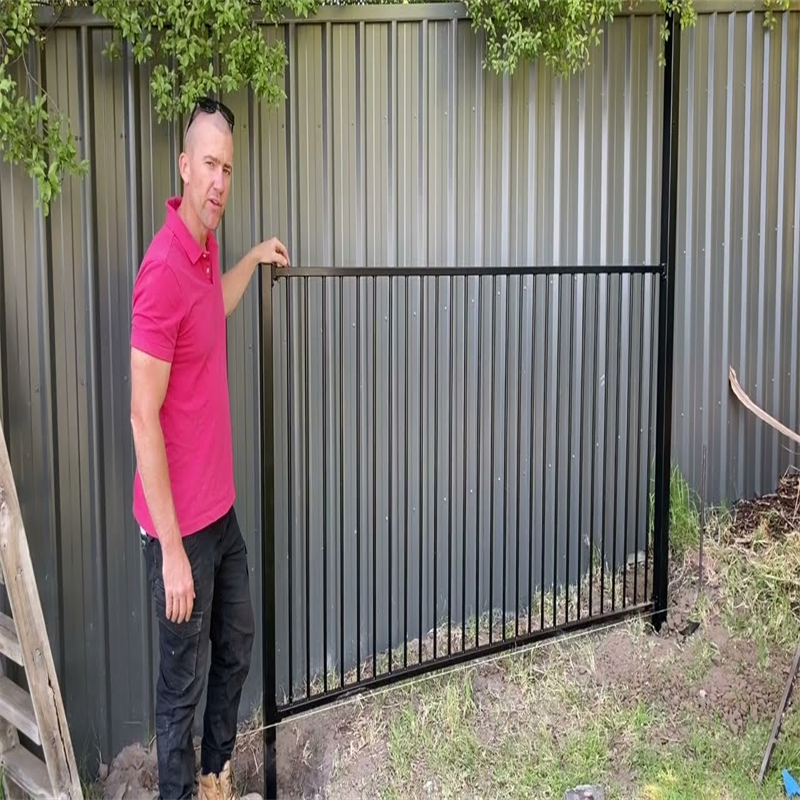
POLYMETAL Flat Top Pool Fencing is designed around recognised pool barrier principles used in strict markets: minimum effective height, controlled picket spacing, non-climbable outlines, reliable gate function and durable, low-maintenance materials. The 1200 mm panel height, approximate 87 mm picket centres and 6063 T6 aluminium profiles are selected to follow these principles rather than random style trends.
Internal quality systems create a clear info trail from raw material to finished product: design drawings, weld procedures, coating specs, inspection records and packing data. This turns compliance from a vague marketing claim into a real, documented advantage. For builders, installers and owners, POLYMETAL flat top pool fencing becomes not just a neat visual feature, but a verified safety edge that helps reduce risk, avoid crises and protect both lives and long-term investment.