Your One-Stop Wire Mesh Fence Supplier | POLYMETAL
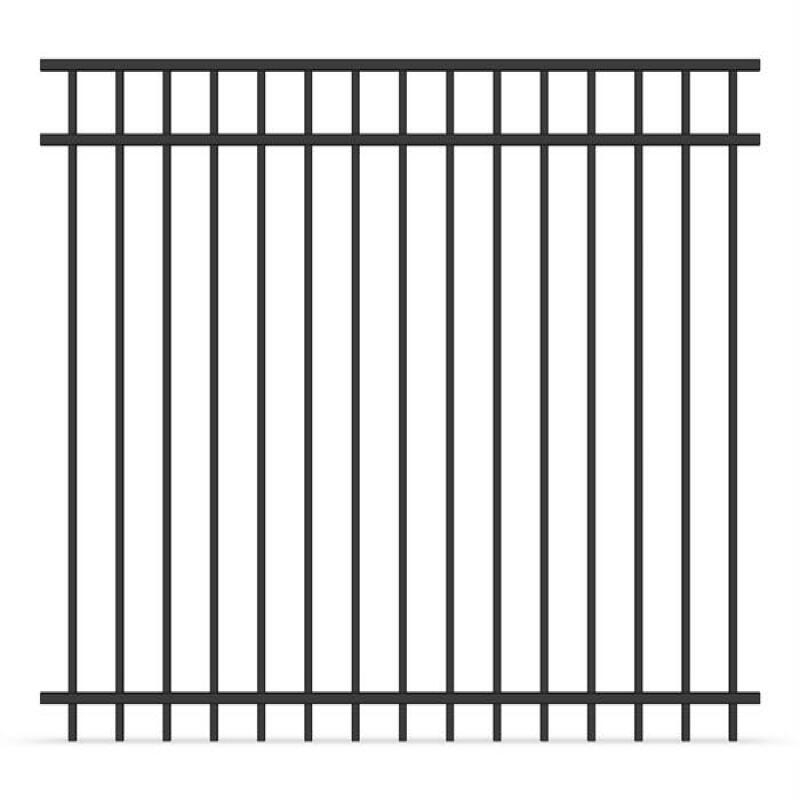
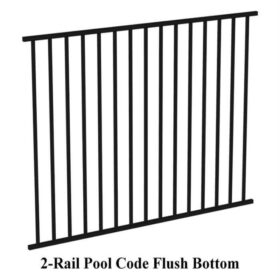
Flat top tubular steel fencing is chosen because it looks clean, modern, and “architectural” while still sending a clear security signal. The expensive surprise is that most failures don’t show up in the brochure photo—they show up after delivery and handling: panels that wave, rails that twist, weld points that start staining, and a fence line that looks “patched” before the job closes out.
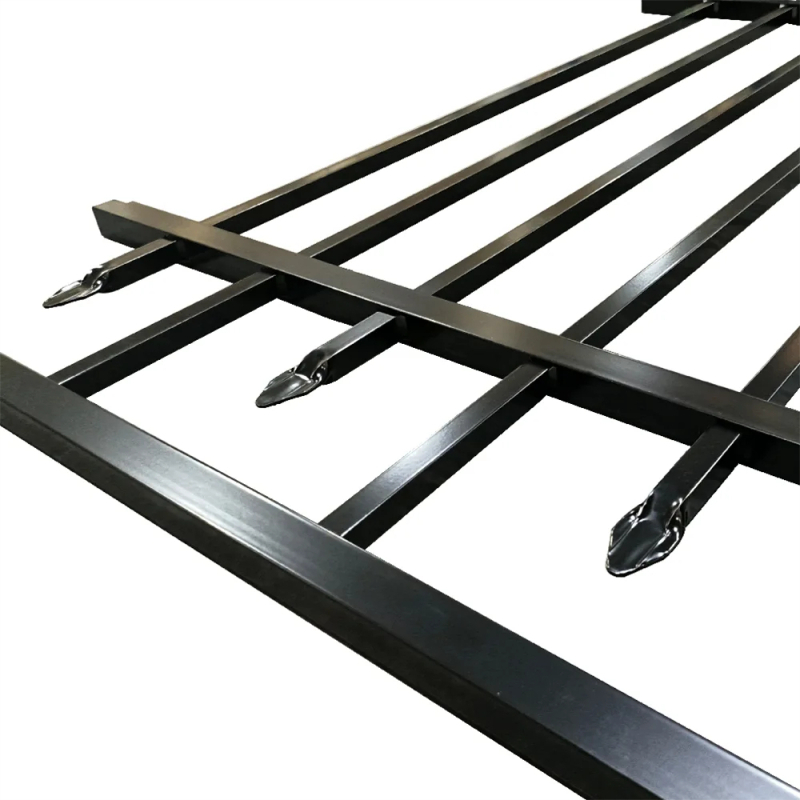
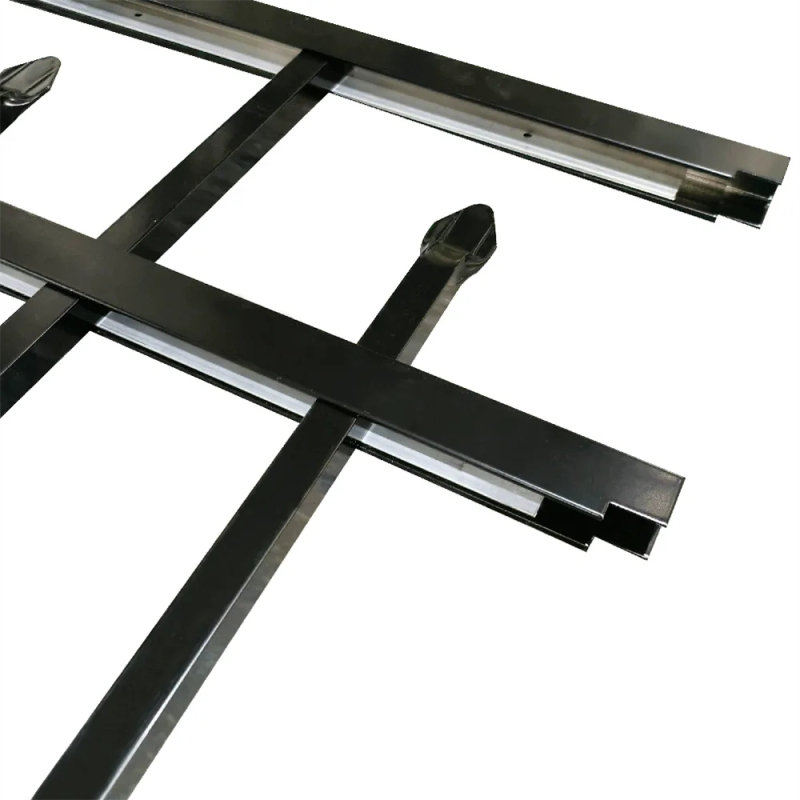
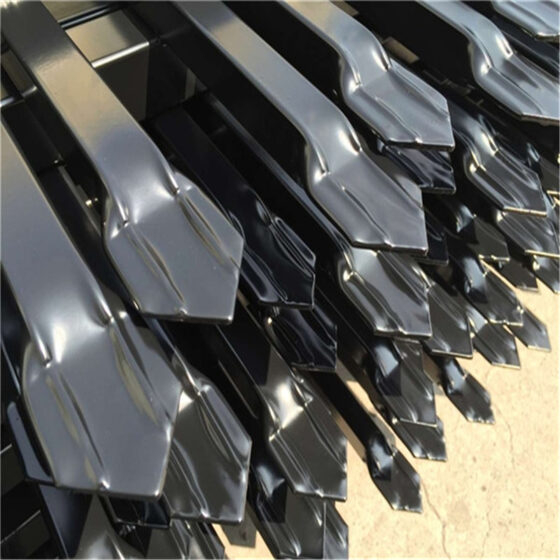
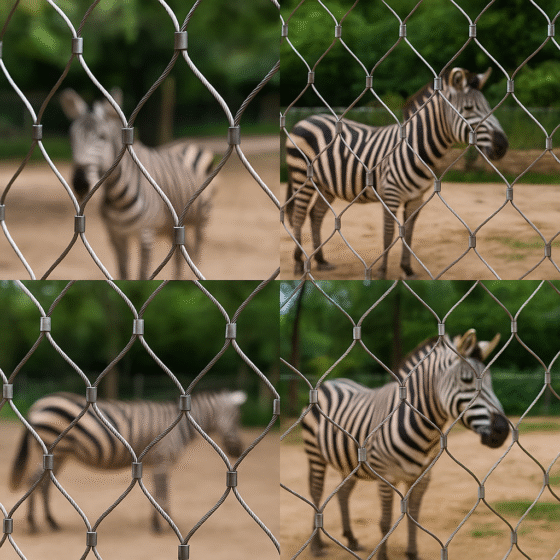
POLYMETAL manufactures flat top tubular steel fencing with repeatable welding geometry and disciplined materials control. We have rich experience on welded garrison fence production, and our garrison-style flat top tubular steel fencing is available with punched and welded rails. Each connection is fully welded at a 25mm length, which is a practical strength upgrade compared with many market panels that rely on short tacks or inconsistent weld lengths. For projects that also need a high-visibility enclosure that still feels premium and secure, you can pair the perimeter concept with stainless steel wire zoo mesh as a complementary containment solution in animal parks, themed venues, and architectural exhibits.
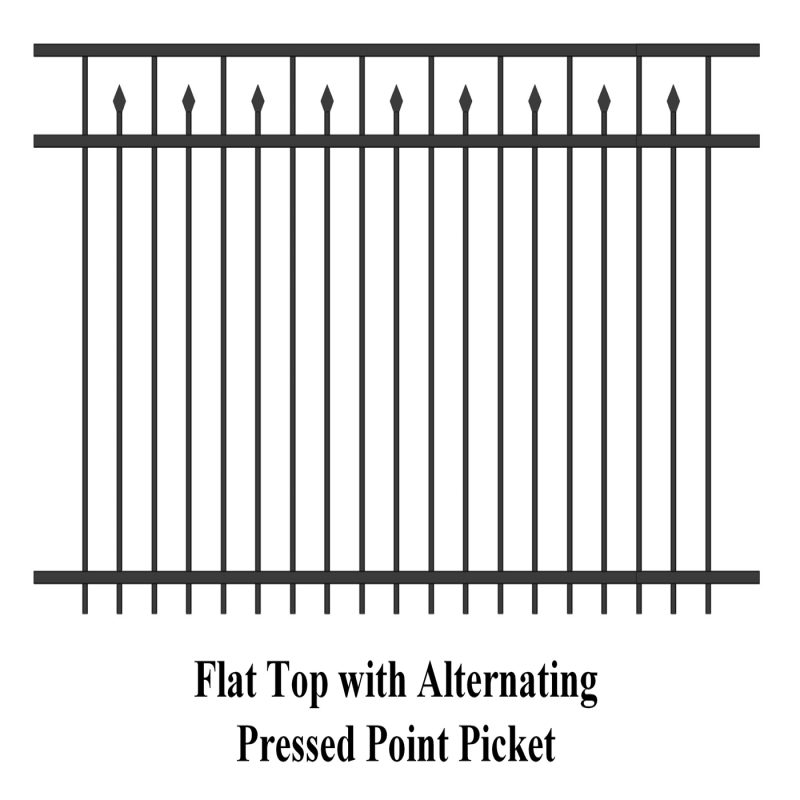
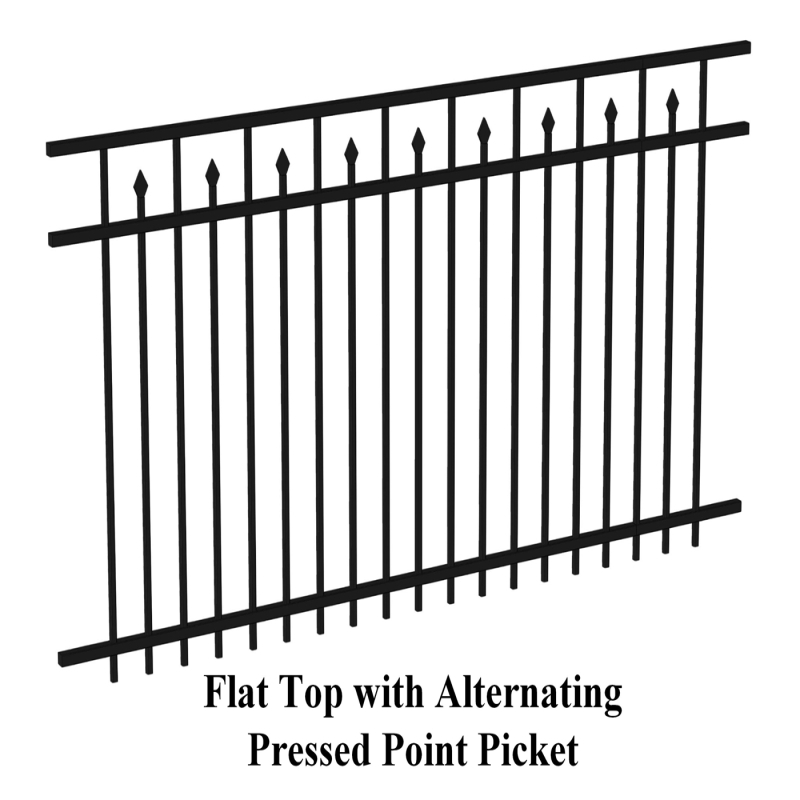
Product Description (POLYMETAL Flat Top Tubular Steel Fencing)
A POLYMETAL flat top tubular steel fencing panel is a welded tubular fence module designed to create a straight, consistent fence line with a flat, non-aggressive top profile. The system uses square tubular uprights (pickets) welded into square tubular rails to form a rigid bay that resists handling damage, daily vibration, and long-run alignment drift. The punched-and-welded rail option improves repeatability by controlling picket position and weld placement. The 25mm full weld length at each picket-to-rail connection increases joint integrity and reduces the “loose picket” feel that buyers often discover only after installation.
For corrosion protection, POLYMETAL flat top tubular steel fencing can be supplied as pre-galvanized or powder coated in any colour, with powder options available from AkzoNobel. Common export practice includes standard durable powders and project-specific colours such as RAL shades (for example, RAL 9001) or black, depending on the specification and site visibility requirements.
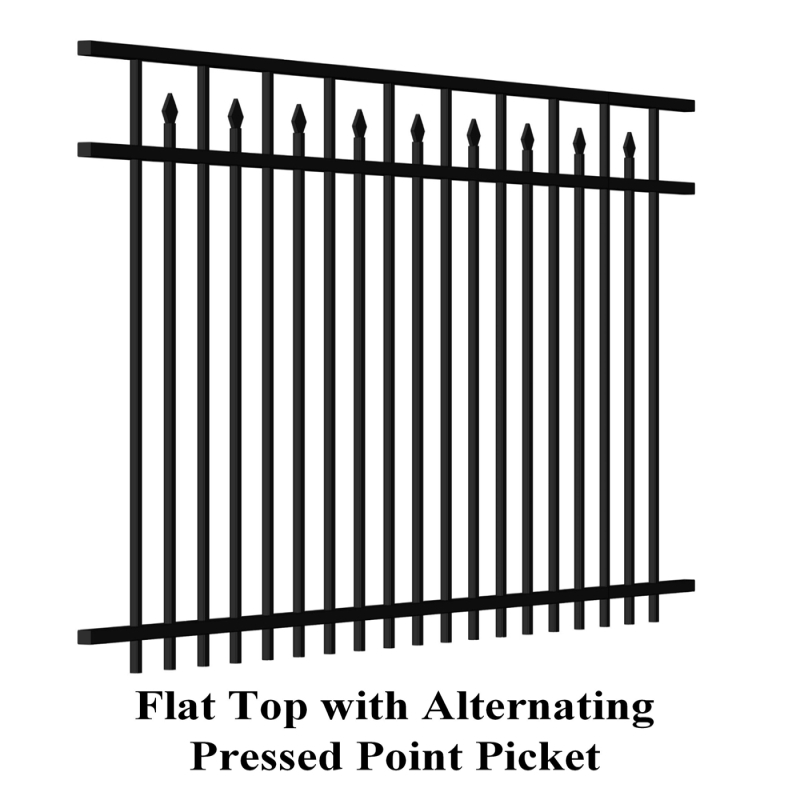
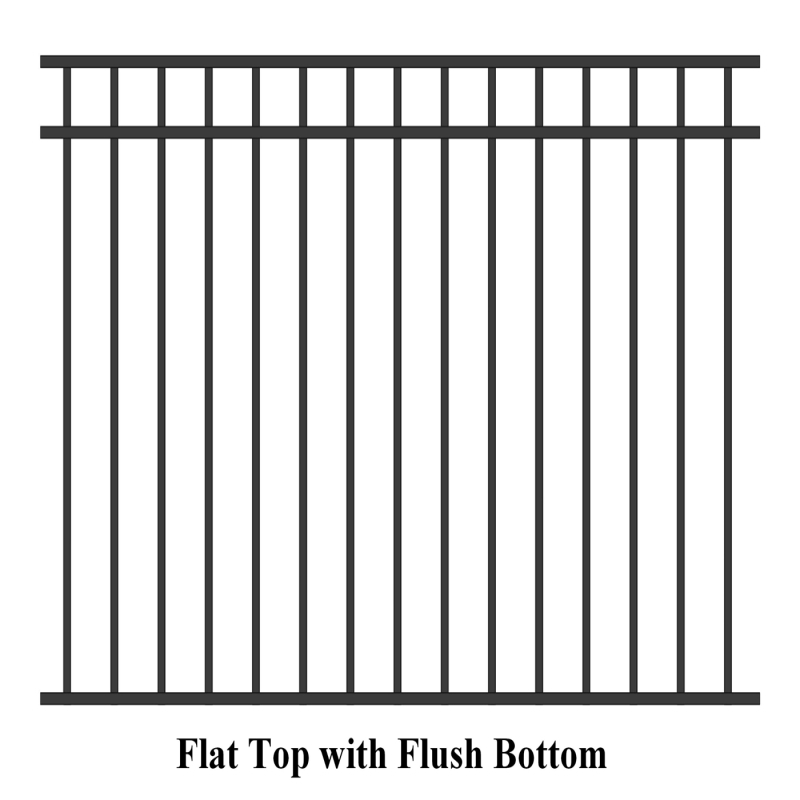
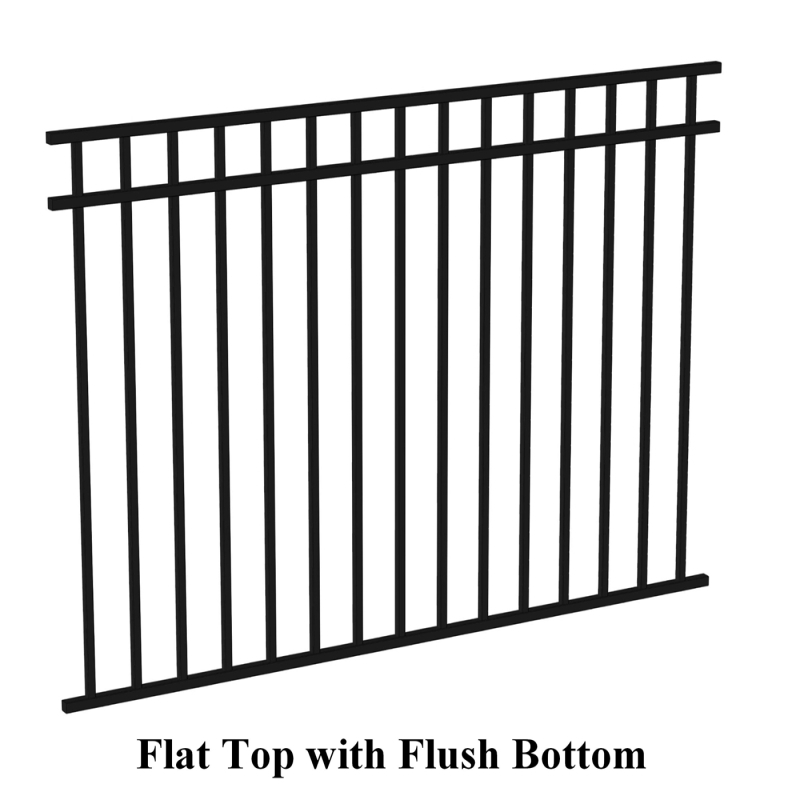
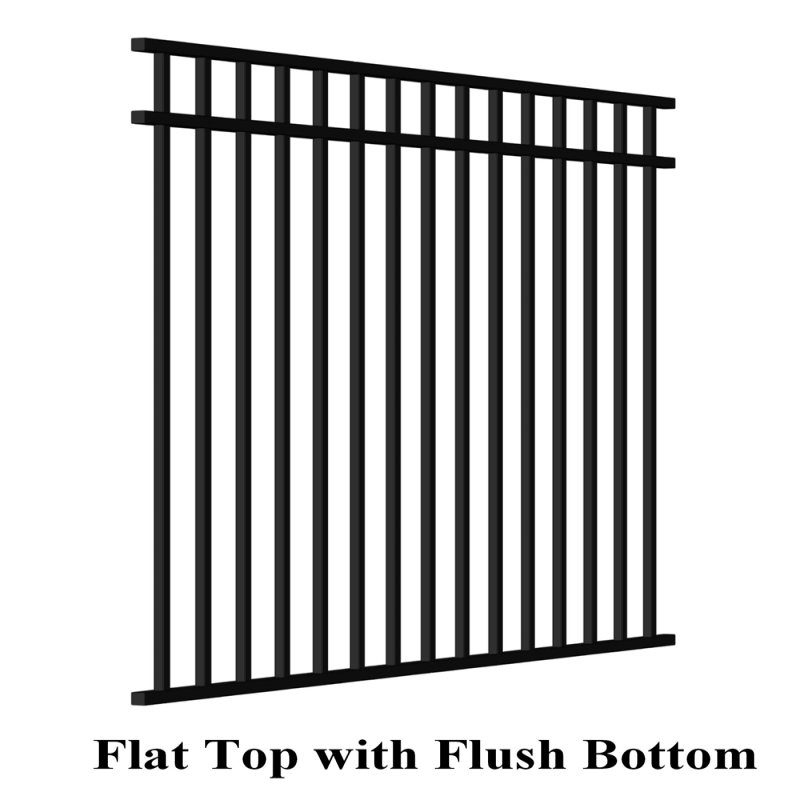
Dimensions of Flat Top Tubular Steel Fencing (Garrison Style)
The following common panel builds are used for procurement takeoff and receiving-ready shipments. If your project needs a different height, width, picket count, or rail size, the purchase order should lock the exact configuration so your site receives consistent bays.
Standard Panel Option A
| 1800mm height x 2400mm width |
| Upright paling 25mm x 25mm x 1.00mm, 1.20mm etc |
| Rails: 40mm x 40mm x 1.50mm |
| Picket number: 17, 18, 19 or more |
Standard Panel Option B
| 2400mm height x 2400mm width |
| Upright paling 25mm x 25mm x 1.00mm, 1.20mm etc |
| Rails: 40mm x 40mm x 1.50mm |
| Picket number: 17, 18, 19 or more |
Flat top tubular steel fencing specifications
Flat top tubular steel fencing becomes “strong” or “weak” based on a few measurable items. If any one item is left “as per standard,” you risk receiving a mix of builds that look similar but perform differently across the run.
| Specification Item | Recommended PO Language | Why It Matters |
| Panel height × width | Confirm exact bay size (e.g., 1800×2400mm or 2400×2400mm) | Controls stiffness, post spacing, and alignment over long runs in flat top tubular steel fencing |
| Upright (picket) tube | 25×25mm, thickness 1.0mm / 1.2mm (or project-defined) | Thin pickets dent and wave; thicker pickets improve straightness and impact resistance |
| Rail tube | 40×40mm × 1.50mm (or project-defined) | Rail stiffness is the backbone of flat top tubular steel fencing bay rigidity |
| Picket quantity / spacing | Define picket count (17/18/19+) or spacing requirement | Controls visual privacy, climb resistance, and overall panel look consistency |
| Welding method | Punched + welded rails (if specified) with consistent picket positioning | Prevents random spacing drift and reduces rework on receiving |
| Weld length at each joint | Fully welded at 25mm length at picket-to-rail connections | Key strength driver; short tacks can crack, loosen, or “ring” under vibration |
| Coating system | Pre-galvanized and/or powder coated; define powder brand and thickness target | Coating clarity prevents early rust claims and site rejection for flat top tubular steel fencing |
| Powder brand / colour | AkzoNobel powder options; specify RAL colour (e.g., RAL 9001) or black as required | Controls colour match across batches and reduces repainting cost |
| Hardware / posts (project-dependent) | Define post size, wall thickness, and fixing method to match panel height | Most “wobble” complaints come from mismatched post systems, not the panel alone |
Top 18 purchase traps for Flat top tubular steel fencing (Especially #17)
The fastest way to lose money on flat top tubular steel fencing is to assume “all garrison-style panels are the same.” The following 18 items are written to help buyers and project managers lock the right specification and avoid hidden cost after delivery.
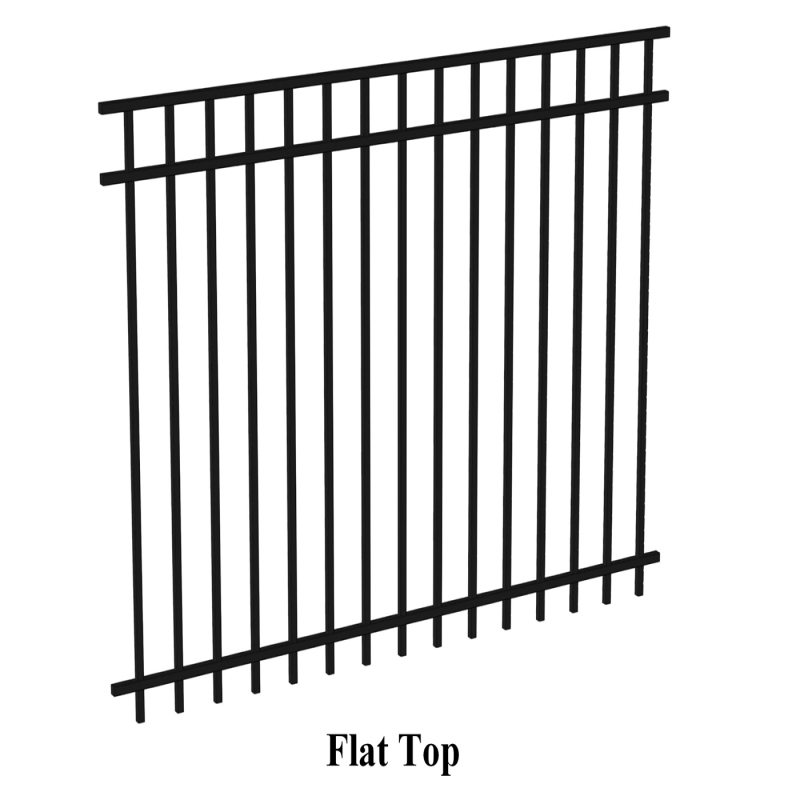
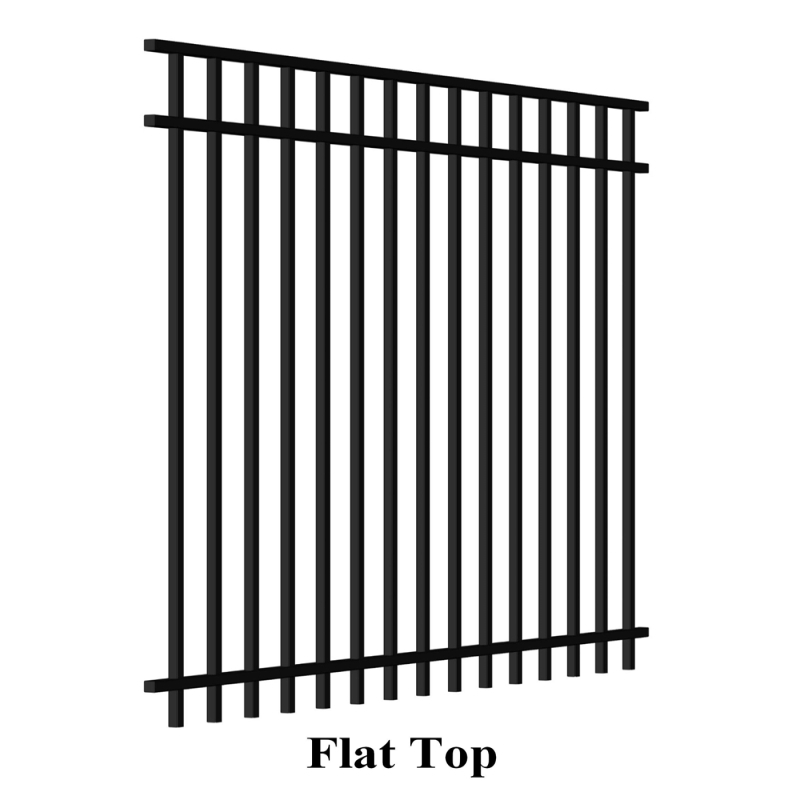
Trap #1: Calling it “flat top tubular steel fencing” without defining the exact panel size
When panel height and width are not fixed, suppliers may substitute a lighter bay that fits their tooling. Flat top tubular steel fencing must be purchased as a dimensioned module, not a generic name.
Risk #2: Letting picket thickness float between 1.0mm and 1.2mm without permission
“1.00mm, 1.20mm etc” is not a specification. If you allow “etc,” you may receive mixed stiffness across the same shipment, creating a fence line that looks uneven.
Danger #3: Choosing a rail size that looks right but behaves wrong
Rails control the bay’s spine. If the rail wall is reduced, flat top tubular steel fencing can feel springy even when pickets are thick.
Problem #4: Ignoring picket quantity because “the photo looks fine”
Picket number (17/18/19+) changes spacing, visual density, and climb behavior. If your project has a security requirement, flat top tubular steel fencing must lock this number.
Pitfall #5: Accepting inconsistent picket spacing across bays
A straight fence line is judged visually first. Punched-and-welded rails help control spacing; if spacing is freehand, small errors multiply across a long run.
Oversight #6: Treating weld quality as “factory standard”
Two panels can look identical until handling begins. Flat top tubular steel fencing should define consistent weld practice, not just “welded.”
Warning #7: Not specifying the 25mm full weld length at each connection
This is where strength becomes real. POLYMETAL uses full 25mm weld length to raise joint integrity; without a weld-length rule, you may get short tacks that loosen under vibration.
Loss #8: Assuming pre-galvanized material alone guarantees corrosion resistance
Corrosion risk depends on processing discipline and handling. Flat top tubular steel fencing needs clear coating expectations and packaging protection to avoid cut-edge exposure and transport damage.
Damage #9: Ordering powder coat without stating brand, colour, and acceptance standard
“Black” is not one colour, and “export powder” is not one performance level. If the project needs AkzoNobel powder options, write it, and lock the exact RAL requirement.
Defect #10: Forgetting to control coating thickness and cure consistency
A panel can pass a quick visual check yet chip easily if cure is weak. Flat top tubular steel fencing should be inspected for consistent finish, especially on weld zones and edges.
Gap #11: Not defining tolerance for straightness and squareness
If panel squareness is not controlled, installers fight the line, and clamps and brackets look misaligned. Flat top tubular steel fencing must arrive as repeatable geometry, not “close enough.”
Hazard #12: Underestimating wind and crowd load on taller bays
A 2400mm height panel amplifies leverage on posts and fixings. Flat top tubular steel fencing at greater height needs matched post design, not just a taller panel.
Mistake #13: Choosing hardware that doesn’t match the rail profile
When brackets are generic, rails can crush or slip. Flat top tubular steel fencing performs best when hardware fits the rail load path.
Failure #14: Mixing batches without colour and gloss control
Small colour shift becomes obvious across long lines. If flat top tubular steel fencing is delivered in phases, require batch control for powder and visual match.
Cost #15: Paying later for “site fixes” that could be prevented with PO language
Re-drilling, re-welding, repainting, and sorting mismatched bays is paid in labour, not in the panel price. Flat top tubular steel fencing must be purchased as a complete system spec.
Myth #16: Believing heavier always means better, without balancing the system
Overbuilding one part while leaving posts or fixings weak causes the same wobble. Flat top tubular steel fencing needs balanced stiffness from panel to post to foundation.
Loophole #17: Not writing the “strength rule” into the purchase order
This is the hidden money leak. If you do not explicitly state “punched and welded rails” (when required) and “fully welded at a 25mm length” at each picket connection, you risk receiving a visually similar product with weaker joints. That weakness shows up as movement, noise, loosening, and rework—exactly where projects lose time and budget after delivery. Flat top tubular steel fencing must have this rule written, not implied.
Checklist #18: Skipping receiving inspection and acceptance criteria
A quick, consistent receiving checklist catches problems before installation. Flat top tubular steel fencing should be checked for bay squareness, weld consistency, coating damage, and batch match on arrival.
Applications of Flat top tubular steel fencing
Flat top tubular steel fencing is commonly used on schools, warehouses, commercial compounds, councils, utilities, public-facing assets, and sites that want a modern boundary without aggressive spear tops. It is also selected where visibility is required but a disciplined, premium look is still expected from the perimeter.
Benefits of POLYMETAL Flat top tubular steel fencing
The core benefit is repeatability: consistent bay geometry, controlled picket placement, and joint integrity that stays stable after handling. With punched-and-welded rail options and 25mm weld length control, POLYMETAL flat top tubular steel fencing is engineered to arrive straight, install cleanly, and remain visually consistent across long runs. Coating options including pre-galvanized and powder coated finishes help buyers match corrosion exposure and project colour requirements without guessing.
Packing for export
Flat top tubular steel fencing is judged after shipping and unloading, so packing must protect the finish and keep bays square. POLYMETAL commonly packs panels in steel stillages or on steel pallets with disciplined stacking and separation to reduce rub marks. Where powder coat is specified, additional protection can be applied at contact points to reduce handling scratches. Hardware is packed separately and labelled to match panel quantities, helping receiving teams avoid missing-fittings delays.
Standards and procurement references
Flat top tubular steel fencing projects typically reference coating and durability expectations, plus basic fabrication discipline. If your project requires specific compliance, state it directly in the purchase order along with measurable acceptance criteria such as coating type, adhesion expectation, and corrosion exposure category. For powder coating, it is common to specify colour via RAL code and require consistent finish across batches; for galvanized requirements, it is common to define the galvanizing process and expected protection level based on environment.
FAQs (Flat top tubular steel fencing)
Is flat top tubular steel fencing the same as garrison fencing?
Many buyers use the terms interchangeably when the build is a welded tubular panel with square rails and square pickets. The safest approach is to specify the exact dimensions, tube sizes, picket count, and welding rules so the product you receive matches your intent.
What makes POLYMETAL flat top tubular steel fencing stronger than typical market panels?
Strength is driven by repeatable geometry and joint integrity. POLYMETAL offers punched-and-welded rails and uses fully welded 25mm length connections at picket-to-rail joints, which helps reduce loosening and movement after handling.
Should I choose pre-galvanized or powder coated?
Pre-galvanized can be a cost-effective base for many environments, while powder coating is often chosen for architectural appearance and colour control. Many projects use a powder coated finish with defined colour and acceptance expectations. Flat top tubular steel fencing should be specified by coating system, not by a vague finish name.
What information must be on my purchase order?
At minimum, your PO should state the panel size, upright and rail tube sizes and thicknesses, picket number or spacing, welding method (including punched-and-welded rails if required), the 25mm weld length rule, and the coating system with colour definition. This is the fastest way to protect budget and schedule for flat top tubular steel fencing.
How do I reduce rework after delivery?
Use receiving inspection: confirm bay squareness, weld consistency, coating damage, and batch colour match before installation begins. If flat top tubular steel fencing is checked early, corrective action is cheaper and faster.
Closing note from POLYMETAL
Flat top tubular steel fencing is a “simple-looking” product that becomes expensive when key rules are missing. If you lock the measurable specification—especially the #17 weld-length and process rule—your fence line installs straighter, stays stronger, and avoids the hidden cost of sorting, repairing, and repainting on site.