Your One-Stop Wire Mesh Fence Supplier | POLYMETAL
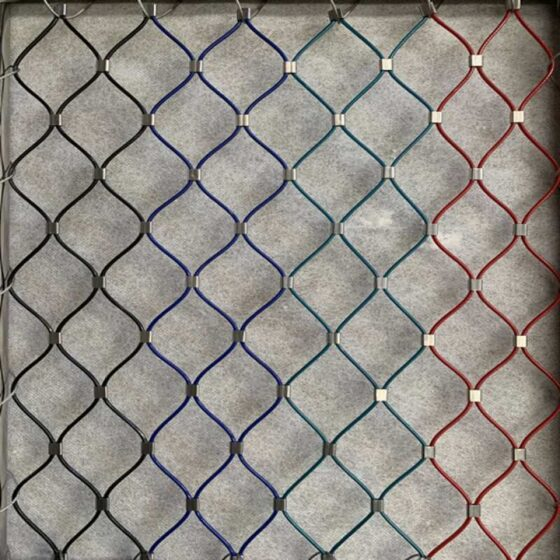
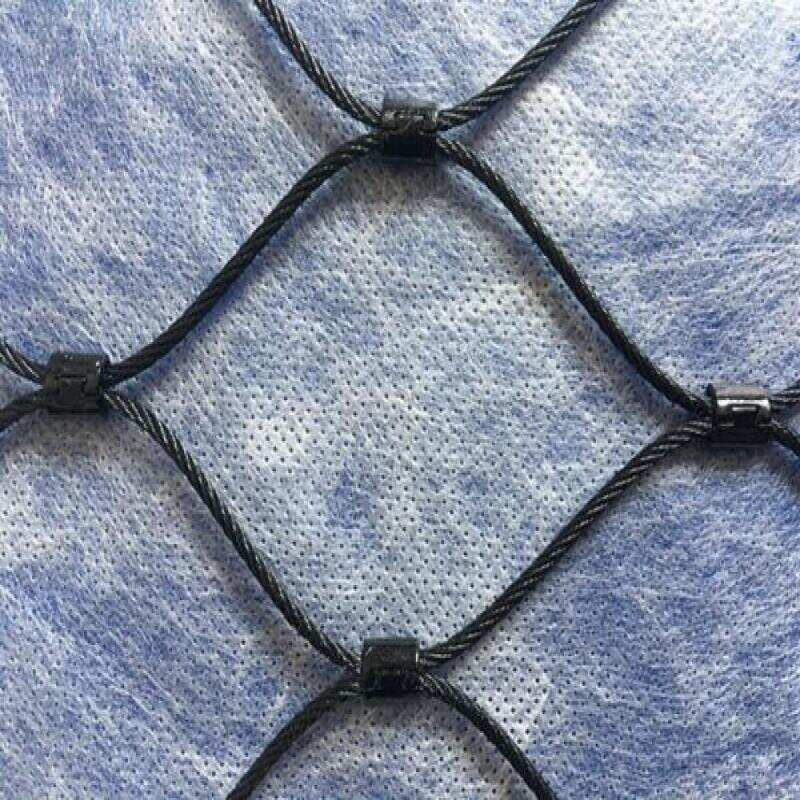
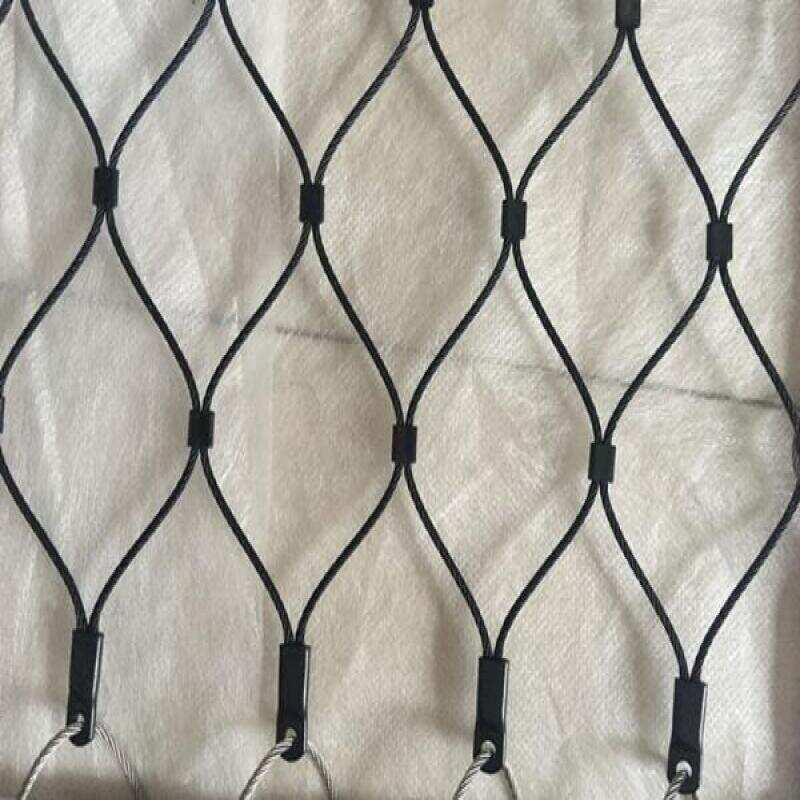
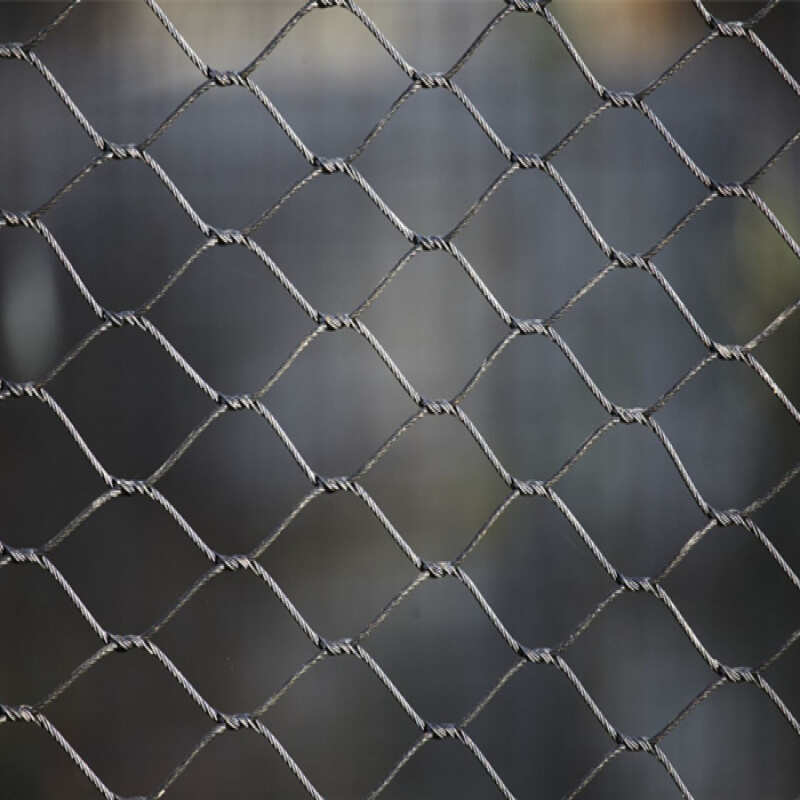
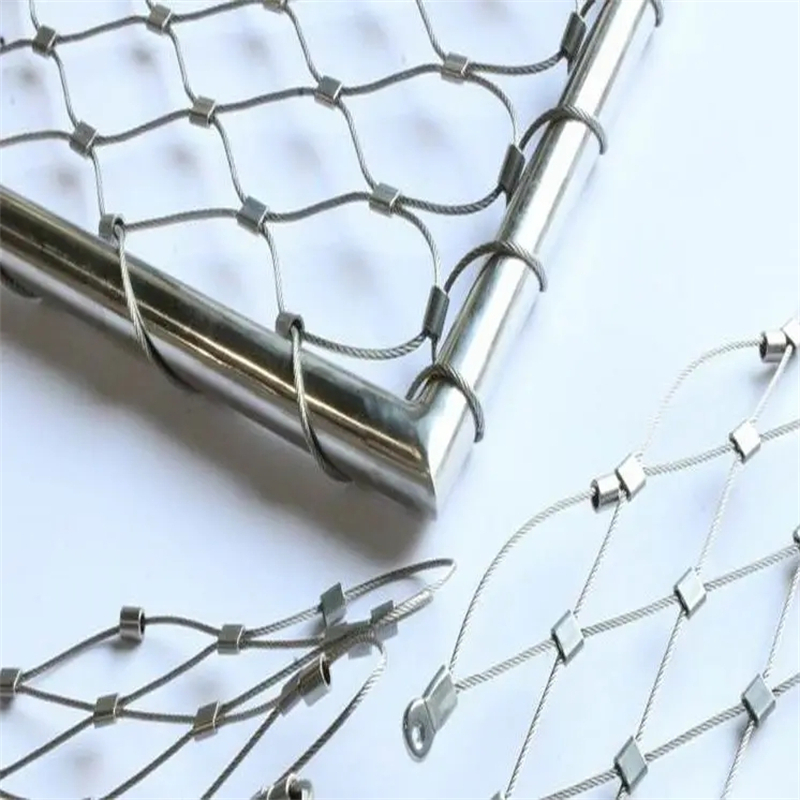
Flexible x-tend cable mesh is a pre-assembled stainless steel wire rope net with elegant diamond-shaped openings, designed for high-performance safety and architectural applications. It is widely used in balustrades, bridges, zoos, green façades and safety nets where you need strength, transparency and long service life in one product.
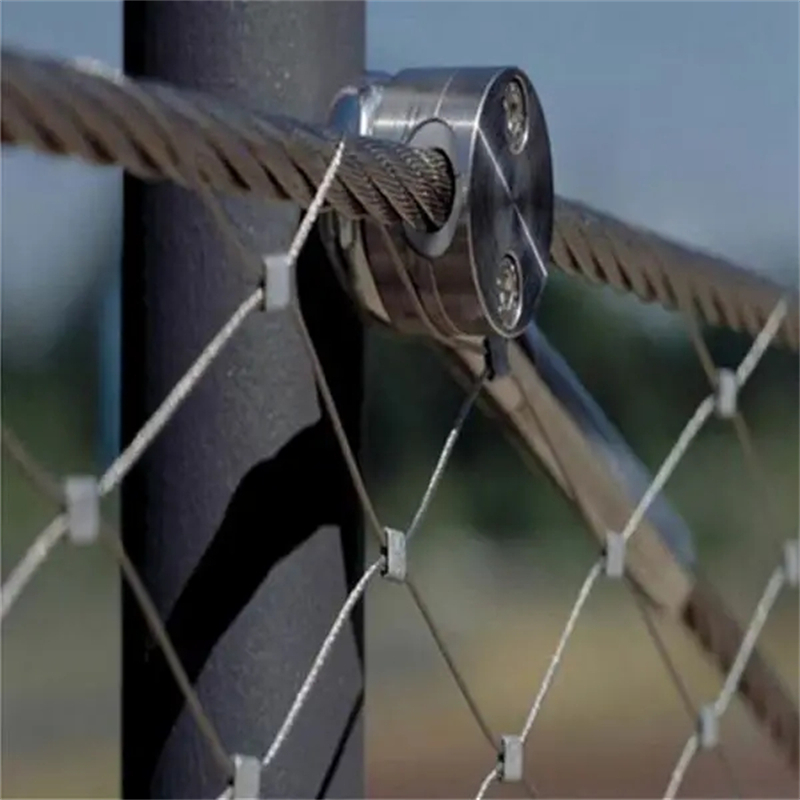
Each panel of flexible x-tend cable mesh is built from:
- High-tensile stainless steel wire ropes
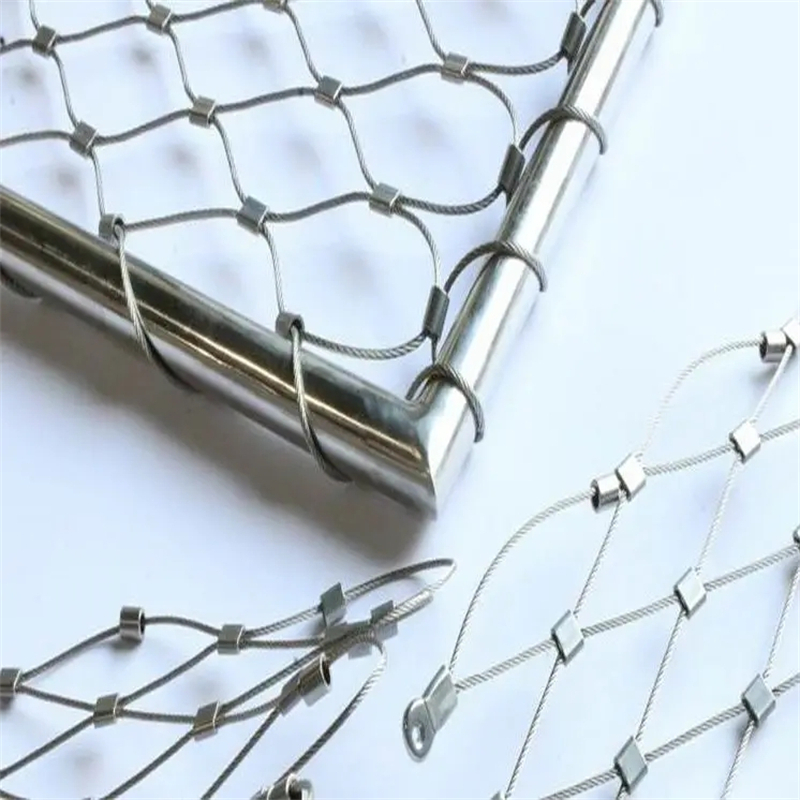
- Precision pressed ferrules or knotted intersections
- A flexible diamond geometry that easily conforms to curves and complex 3D shapes
Typical wire rope diameters range from 1.2 mm to 5.0 mm, with mesh apertures from 25 mm up to 300 mm, so you can choose very fine, medium or large openings from the same product family.
Secret 1: The wrong mesh aperture can quietly turn a “safe” railing into a real fall hazard
Many designers only check the nominal mesh aperture against code limits. They forget that when people lean or fall against flexible x-tend cable mesh, both the mesh and the frame will deflect. If the aperture is already close to the maximum allowed, this deflection can create effective openings much larger than expected.
A design that looks perfect in drawings can fail during real use, forcing expensive rework and even legal issues after an incident.
Key advantages and high-risk applications
Flexible x-tend cable mesh is chosen whenever you need high strength, low weight and maximum transparency together. It replaces bulky bars and plates with a light stainless steel net that almost disappears from a distance.
Typical applications include:
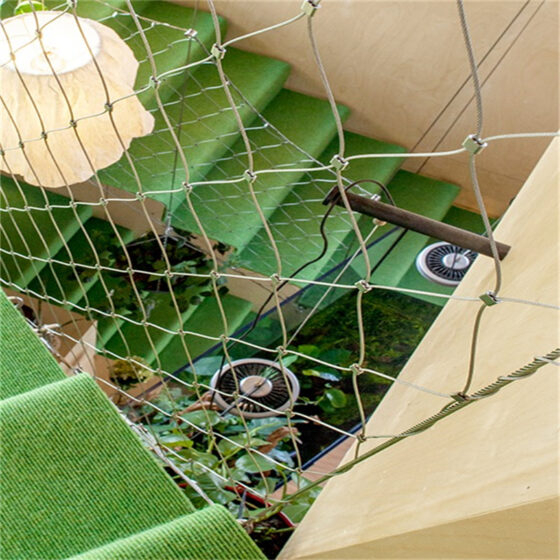
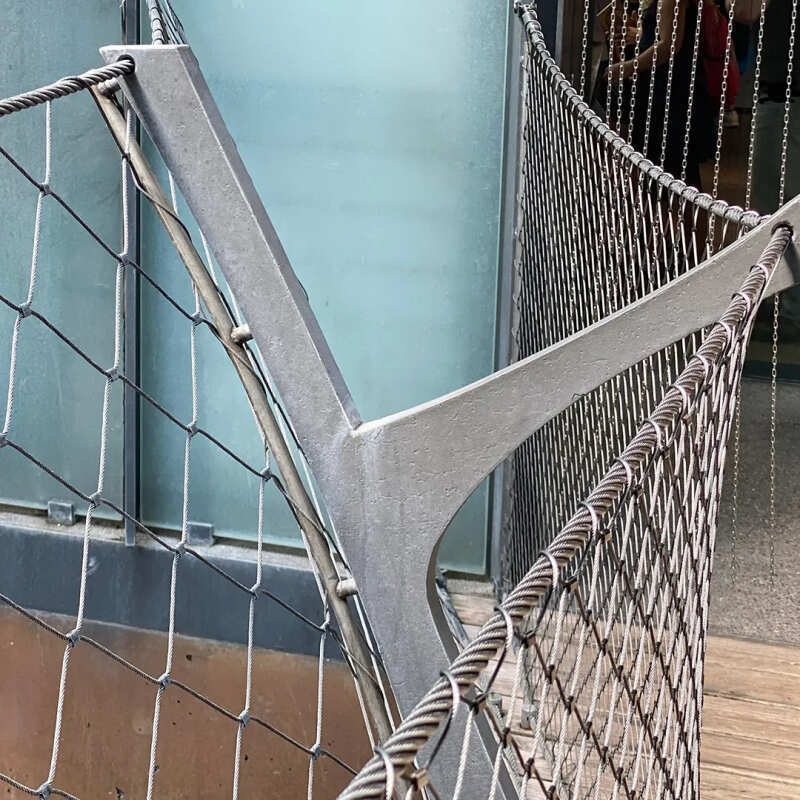
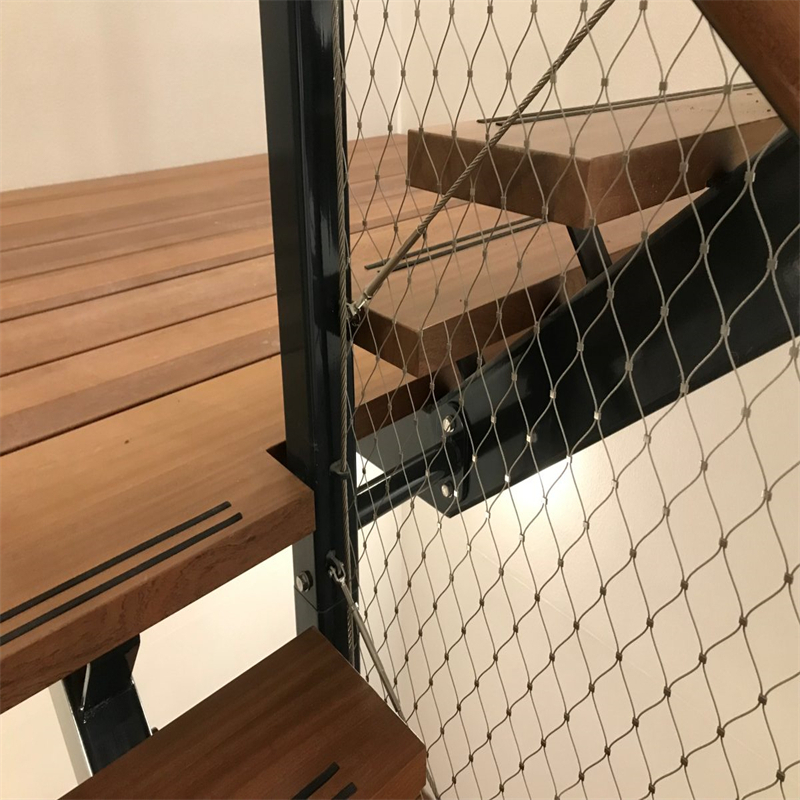
- Balustrades and stair infill panels
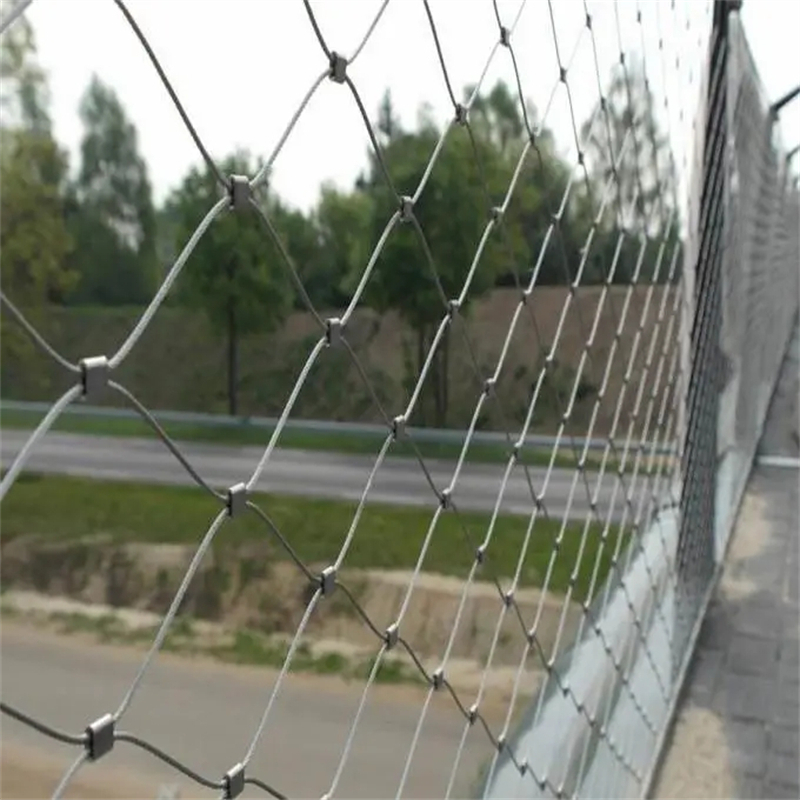
- Bridges and viewing platforms
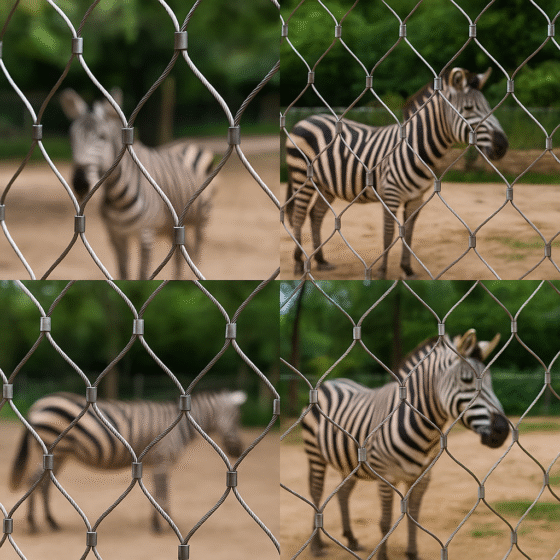
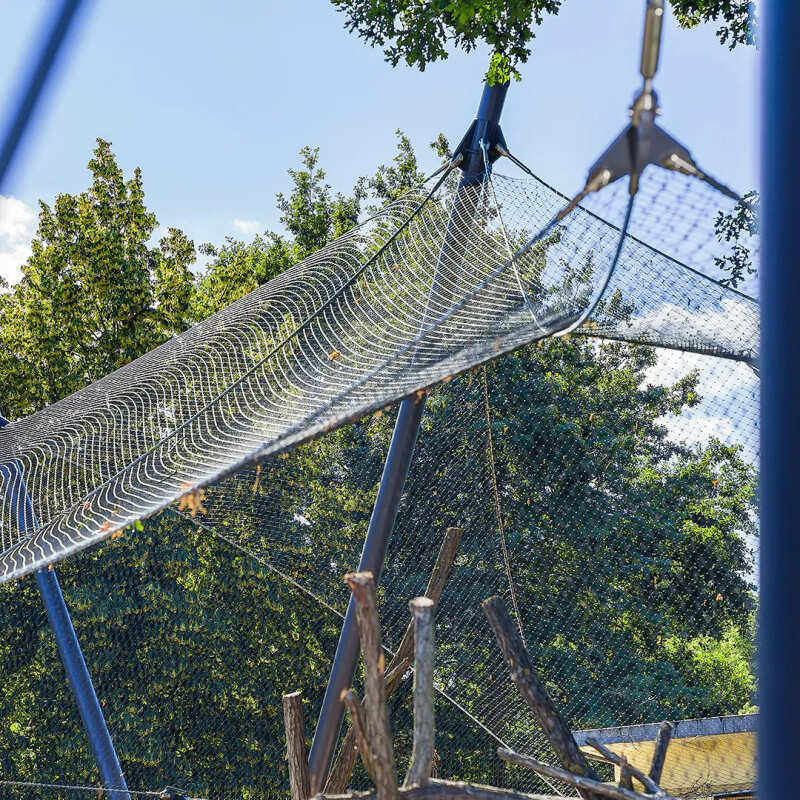
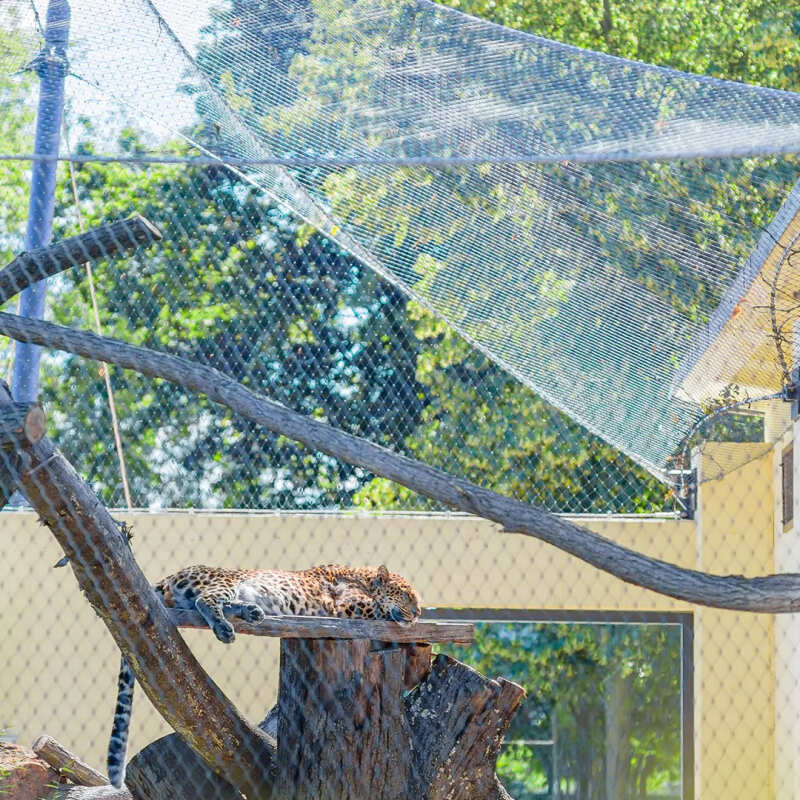
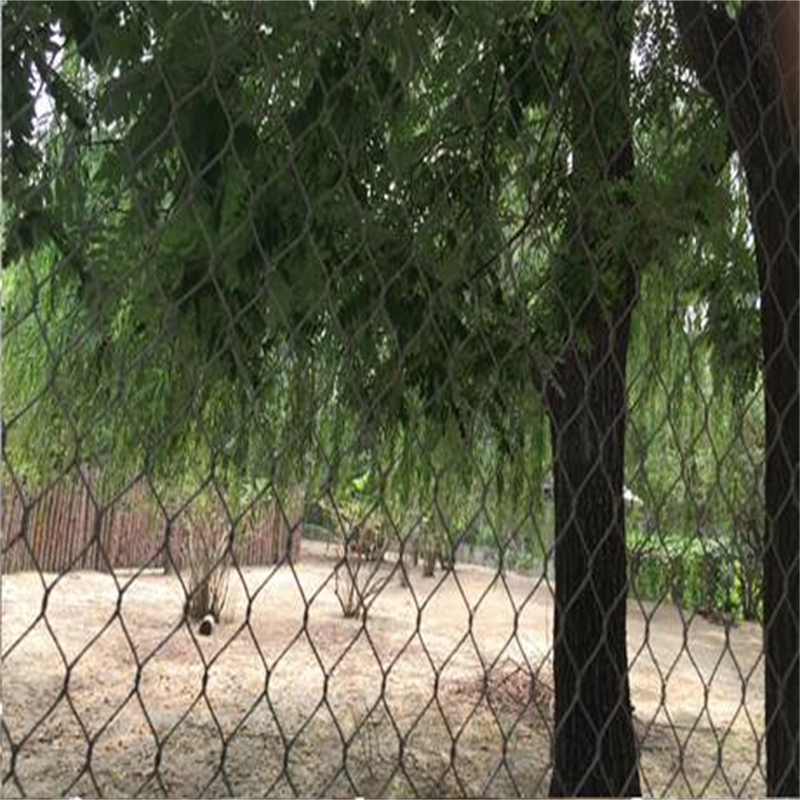
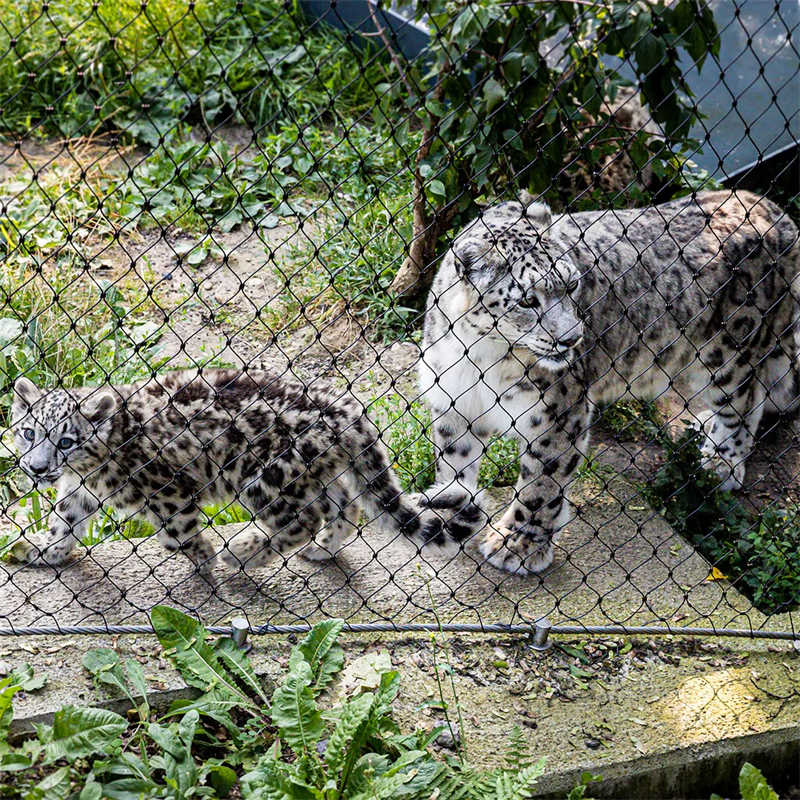
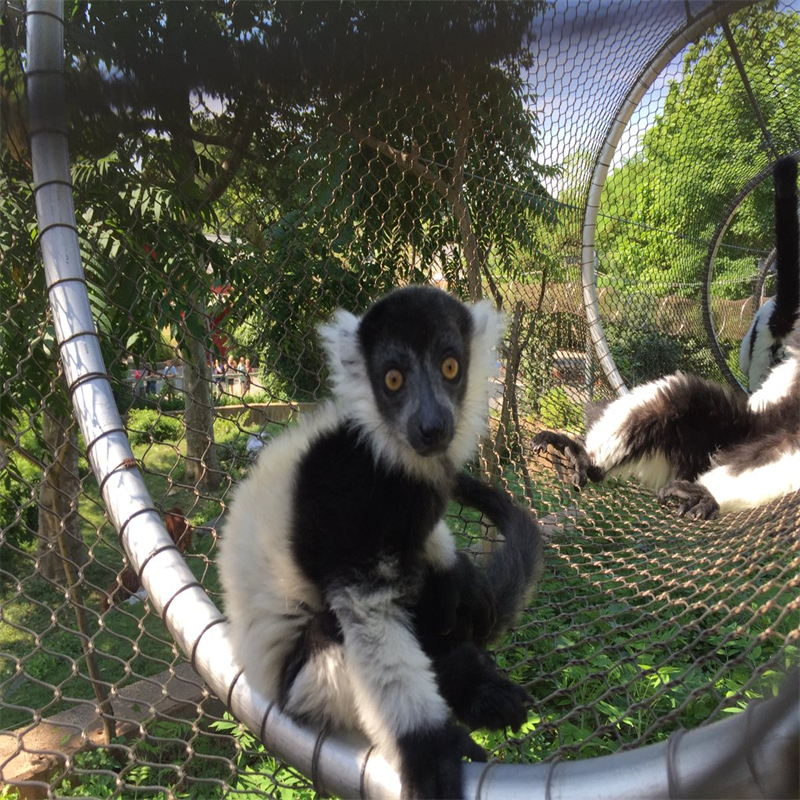
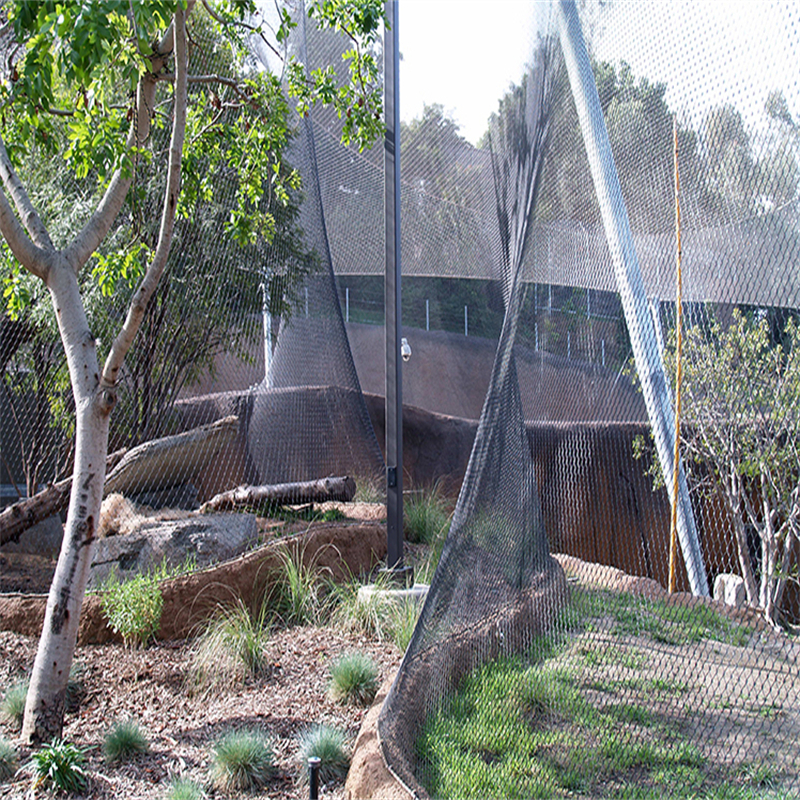
- Zoo and aviary enclosures
- Stadium and arena safety nets
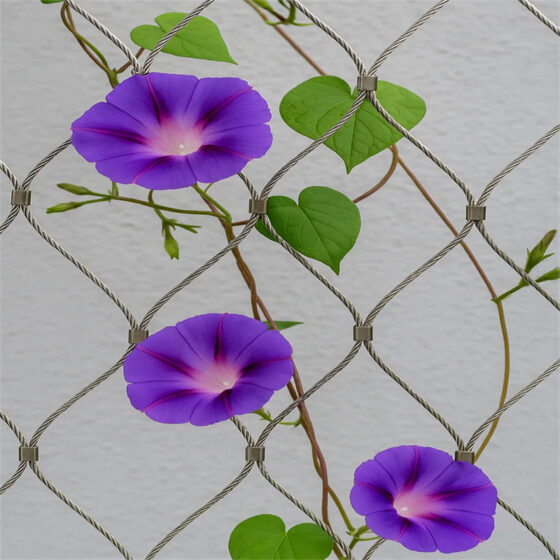
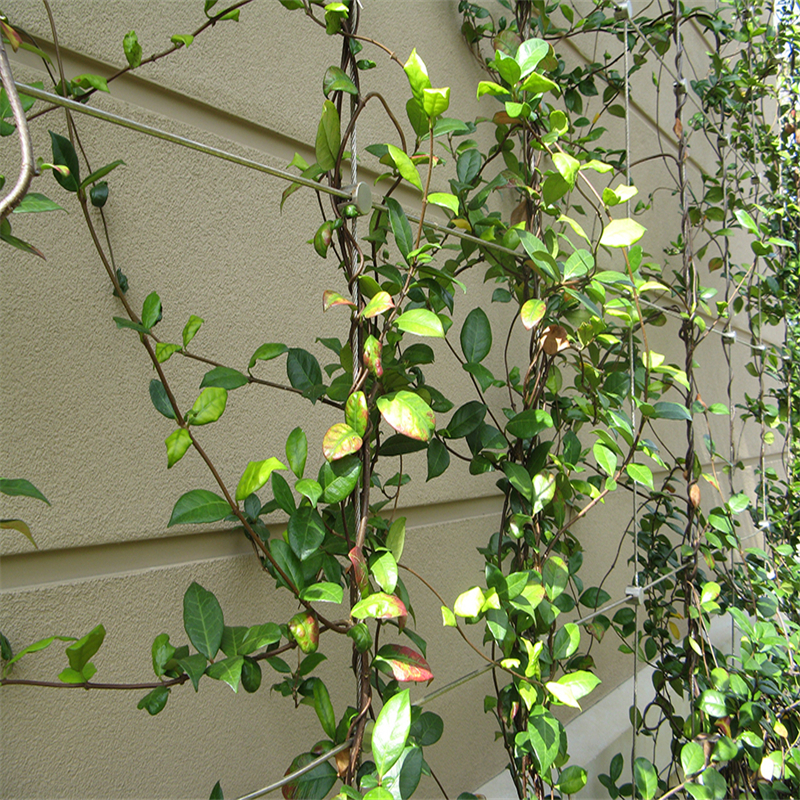
- Green façades and plant supports
- Atrium and mall fall-protection systems
Main performance advantages of flexible x-tend cable mesh:
- Exceptional durability in outdoor and coastal environments
- High tensile capacity with very low self-weight
- Flexible geometry for cylinders, cones, saddles and free-form shapes
- Clean, modern aesthetics that match glass and stainless structures
Secret 2: Mesh orientation can silently cut your safety factor in half
The same panel of flexible x-tend cable mesh can be installed as a 60° diamond or rotated toward a 90° diamond. If the mesh is rotated on site only for appearance, without recalculating the loads, three things change immediately:
The clear opening of each diamond becomes larger
The effective span in the load direction increases
The real safety factor of your design drops
This is one of the most common hidden reasons why a strong system behaves weakly under testing or in real impacts.
Materials and wire rope structures
As a manufacturer, we produce flexible x-tend cable mesh mainly in high-grade stainless steels to guarantee long-term performance:
- AISI 304 – excellent for interior and mild outdoor conditions
- AISI 316 – marine-grade for outdoor, humid or moderately coastal projects
- AISI 316L – low-carbon grade for maximum resistance to pitting and welding effects
Wire rope structures
For flexible x-tend cable mesh we use:
7×7 wire rope – balanced flexibility and strength, ideal for most architectural meshes
7×19 wire rope – extra flexible for large spans, curved layouts and dynamic loading
Secret 3: The wrong rope structure can accelerate fatigue at ferrules and borders
If a rope structure is too stiff for a tight curve or complex shape, the cable constantly tries to straighten itself. Each time the mesh moves under wind or crowd loads, ferrules and border clamps absorb additional bending. Over thousands of cycles, this extra movement increases fatigue at terminations and can shorten the service life of the system long before the cables reach their nominal breaking load.
Design parameters that really control performance
Wire rope diameter and breaking load
Wire rope diameter is the backbone of your safety margin. Depending on construction, a stainless steel cable in flexible x-tend cable mesh can carry from a few hundred to several thousand pounds of minimum breaking load.
Typical selections:
1.2–1.6 mm – light-duty balustrades, aviaries, interior infill panels
2.0–2.4 mm – zoo enclosures, public balustrades, medium-span safety nets
3.0–5.0 mm – façade safety, stadium edges, large spans and high-impact zones
Secret 4: Undersized wire diameter is the fastest way to turn one impact into a total panel failure
When the wire diameter is pushed too low just to reduce cost or increase transparency, a single strong impact can drive cables into permanent deformation. The mesh then loses tension, apertures enlarge, and the panel may no longer meet safety requirements. In many cases, the whole panel has to be replaced after just one serious incident—turning a small “saving” into a big unexpected loss.
Mesh aperture, angle and transparency
Mesh aperture and cable angle determine:
Real open area (transparency)
Stiffness of the net in each direction
Resistance to climbing, penetration or throwing objects
A tighter aperture with moderate wire diameter gives a dense, protective mesh. Larger apertures increase transparency and reduce weight, but also allow more deformation under load.
Secret 5: Extremely transparent mesh can create animal stress and visitor complaints
In zoo and aviary projects, it is tempting to choose large apertures and ultra-high transparency to make the enclosure “almost invisible.” For nervous or territorial species, too little visual separation from visitors can increase stress, pacing and aggressive behaviour. This can trigger complaints about animal welfare and force expensive retrofits with tighter mesh. When you look carefully at zoo mesh cost, a slightly denser specification usually adds only a small amount at the beginning, but it can prevent far higher expenses later for replacement, extra labour and downtime. Aperture and transparency are not only visual decisions; they are also behavioural and economic design tools, directly linked to your long-term zoo mesh cost.
Standard specification ranges for flexible x-tend cable mesh
Below are three core specification series of flexible x-tend cable mesh, covering fine, medium and large apertures. They are organized by wire rope diameter, mesh aperture, angle, transparency, material, nominal breaking load and wire rope structure.
Fine-mesh series – balustrades & infill panels
Ideal for stairs, balconies and locations where small openings are required.
| WIRE ROPE DIAMETER (mm) | MESH APERTURE (mm) | Angle degrees: | Transparency (%) | Material | Nominal Breaking Load (lbs) | WIRE ROPE STRUCTURES |
|---|---|---|---|---|---|---|
| 1.2 | 25×25 | 60 | 62 | AISI 304 | 260 | 7×7 |
| 1.2 | 30×30 | 60 | 64 | AISI 316 | 260 | 7×7 |
| 1.2 | 35×35 | 60 | 66 | AISI 304 | 260 | 7×7 |
| 1.5 | 30×30 | 60 | 65 | AISI 316 | 360 | 7×7 |
| 1.5 | 35×35 | 60 | 67 | AISI 316 | 360 | 7×7 |
| 1.5 | 40×40 | 60 | 69 | AISI 316L | 360 | 7×7 |
| 1.6 | 35×35 | 60 | 68 | AISI 316 | 337 | 7×7 |
| 1.6 | 40×40 | 60 | 70 | AISI 316 | 337 | 7×7 |
| 1.6 | 50×50 | 60 | 72 | AISI 316L | 337 | 7×7 |
| 2.0 | 40×40 | 60 | 71 | AISI 316 | 562 | 7×7 |
| 2.0 | 50×50 | 60 | 73 | AISI 316 | 562 | 7×7 |
| 2.0 | 60×60 | 60 | 75 | AISI 316L | 562 | 7×7 |
| 2.0 | 30×50 | 60 | 70 | AISI 316 | 562 | 7×7 |
| 1.5 | 25×40 | 60 | 64 | AISI 304 | 360 | 7×7 |
| 1.6 | 25×40 | 60 | 65 | AISI 316 | 337 | 7×7 |
Secret 6: Ignoring toe space and climbability can ruin an otherwise perfect balustrade
Even if the mesh aperture appears small enough, you must check toe space and climbability in combination with the frame. If children can use the mesh diamonds and frame lines as steps, or push their feet into a gap at the bottom rail, building authorities can reject the installation. In that case you may have to modify or rebuild an entire balustrade system at your own cost.
Zoo & animal enclosure series
Balanced between strength, flexibility and aperture size for a wide range of animal species.
| WIRE ROPE DIAMETER (mm) | MESH APERTURE (mm) | Angle degrees: | Transparency (%) | Material | Nominal Breaking Load (lbs) | WIRE ROPE STRUCTURES |
|---|---|---|---|---|---|---|
| 1.6 | 38×38 | 60 | 74 | AISI 316 | 337 | 7×7 |
| 1.6 | 45×45 | 60 | 76 | AISI 316L | 337 | 7×7 |
| 1.6 | 50×50 | 60 | 78 | AISI 316 | 337 | 7×7 |
| 2.0 | 38×38 | 60 | 75 | AISI 316 | 562 | 7×7 |
| 2.0 | 45×45 | 60 | 77 | AISI 316 | 562 | 7×7 |
| 2.0 | 50×50 | 60 | 79 | AISI 316L | 562 | 7×7 |
| 2.0 | 60×60 | 60 | 81 | AISI 316 | 562 | 7×7 |
| 2.0 | 76×76 | 60 | 83 | AISI 316L | 562 | 7×7 |
| 2.4 | 50×50 | 60 | 80 | AISI 316 | 764 | 7×7 |
| 2.4 | 60×60 | 60 | 82 | AISI 316 | 764 | 7×7 |
| 2.4 | 76×76 | 60 | 84 | AISI 316L | 764 | 7×7 |
| 2.4 | 90×90 | 60 | 86 | AISI 316 | 764 | 7×7 |
| 3.0 | 76×76 | 60 | 85 | AISI 316 | 1281 | 7×19 |
| 3.0 | 90×90 | 60 | 87 | AISI 316L | 1281 | 7×19 |
| 3.0 | 100×100 | 60 | 88 | AISI 316 | 1281 | 7×19 |
This series offers reliable solutions from small birds and primates up to large predators, simply by moving up in cable diameter and adjusting the aperture.
Large-span façade & safety net series
Engineered for long spans, high loads and maximum transparency in façades, stadiums and bridge protection.
| WIRE ROPE DIAMETER (mm) | MESH APERTURE (mm) | Angle degrees: | Transparency (%) | Material | Nominal Breaking Load (lbs) | WIRE ROPE STRUCTURES |
|---|---|---|---|---|---|---|
| 2.4 | 90×156 | 60 | 86 | AISI 316 | 764 | 7×7 |
| 2.4 | 100×175 | 60 | 87 | AISI 316L | 764 | 7×7 |
| 3.0 | 90×156 | 60 | 88 | AISI 316 | 1281 | 7×19 |
| 3.0 | 100×175 | 60 | 89 | AISI 316 | 1281 | 7×19 |
| 3.0 | 120×210 | 60 | 90 | AISI 316L | 1281 | 7×19 |
| 3.0 | 150×260 | 60 | 91 | AISI 316 | 1281 | 7×19 |
| 3.2 | 90×156 | 60 | 88 | AISI 316 | 1659 | 7×19 |
| 3.2 | 100×173 | 60 | 89 | AISI 316L | 1659 | 7×19 |
| 3.2 | 120×208 | 60 | 90 | AISI 316 | 1659 | 7×19 |
| 3.2 | 150×260 | 60 | 91 | AISI 316 | 1659 | 7×19 |
| 4.0 | 120×210 | 60 | 92 | AISI 316 | 2271 | 7×19 |
| 4.0 | 150×260 | 60 | 93 | AISI 316L | 2271 | 7×19 |
| 4.0 | 180×310 | 60 | 94 | AISI 316 | 2271 | 7×19 |
| 4.0 | 200×345 | 60 | 95 | AISI 316L | 2271 | 7×19 |
| 5.0 | 200×345 | 60 | 95 | AISI 316 | 3575 | 7×19 |
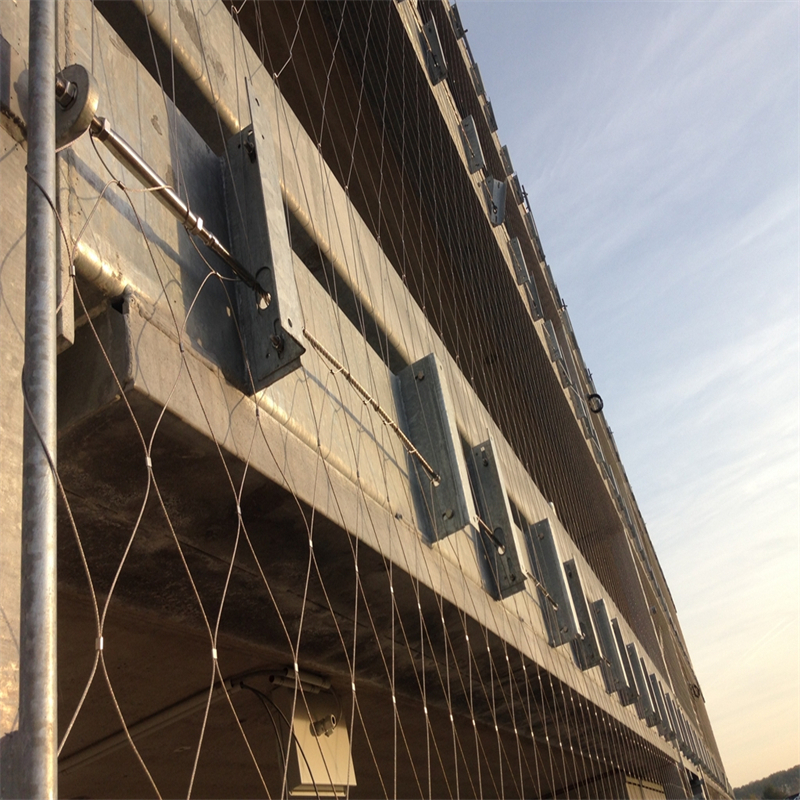
This range is ideal for façade fall-arrest nets, large atriums, stadium perimeters and bridge protection, where both load and span are critical.
Installation, tensioning and long-term reliability
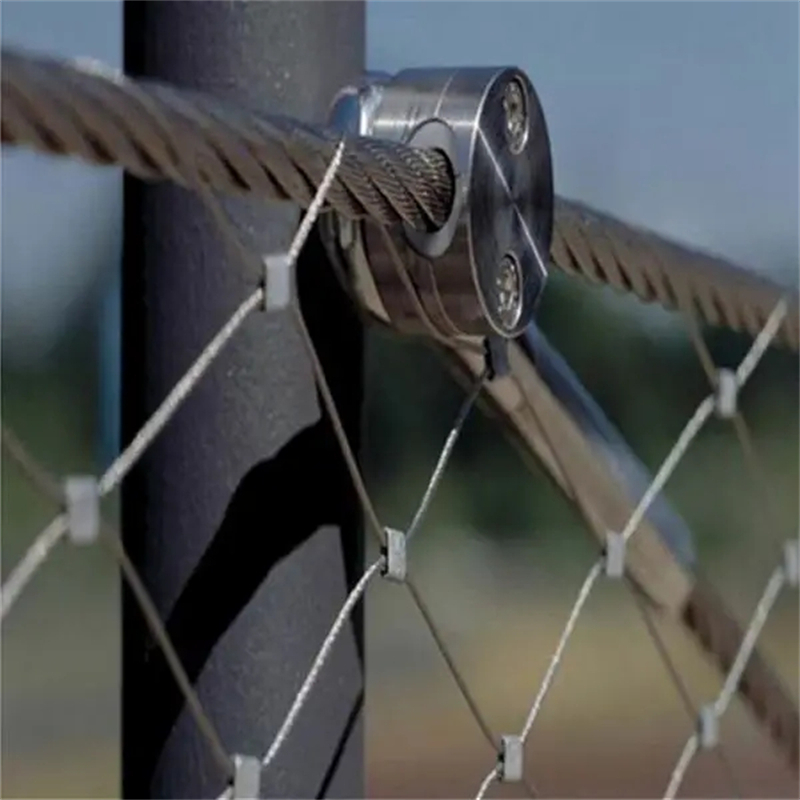
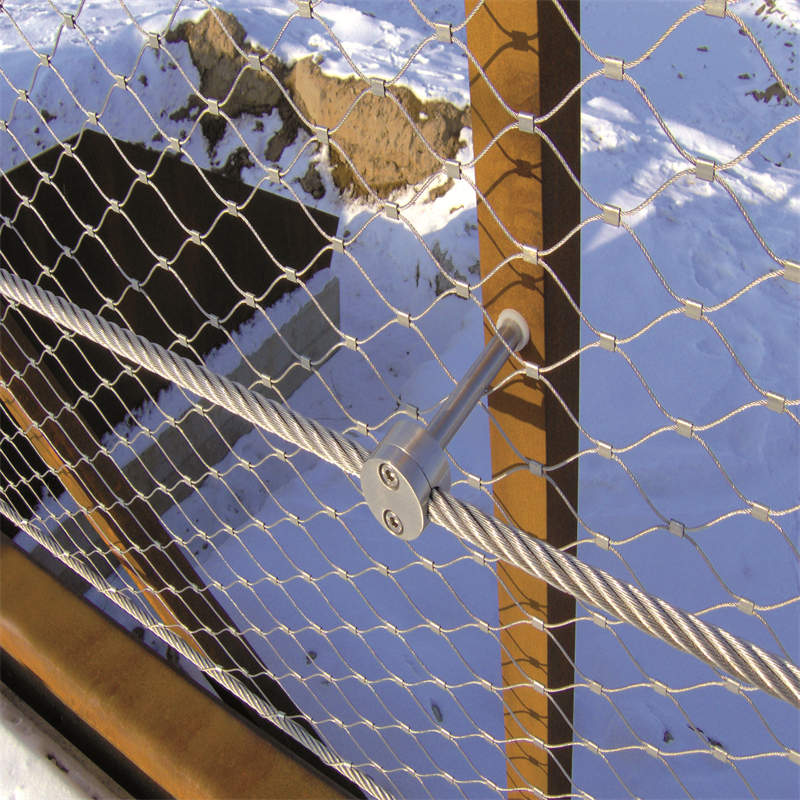
Correct installation is what transforms the theoretical strengths of flexible x-tend cable mesh into real safety on site. Key points include:
Rigid framing designed to carry the full cable tension
Correct pre-tension to limit deflection under design loads
Uniform clamp spacing along all borders
Accurate pressing of ferrules and clean cable terminations
When these conditions are met, flexible x-tend cable mesh maintains tension and visual quality for many years, even in demanding outdoor environments.
Secret 7: Weak anchoring points can quietly destroy your whole investment
Some projects invest in premium flexible x-tend cable mesh, stainless frames and beautiful detailing, but then use undersized anchors or low-grade fasteners. Over time, anchors creep or pull out, pre-tension is lost, mesh starts to sag and panels begin to rattle and deform.
At that moment, the mesh itself is still strong, but the overall system looks old and unsafe. The only solution is an expensive retrofit of every fixing point—turning a small initial compromise into a long-term loss of both money and reputation.