Your One-Stop Wire Mesh Fence Supplier | POLYMETAL
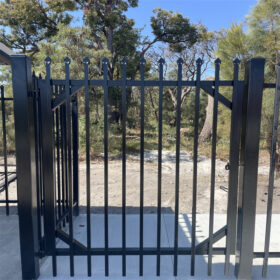
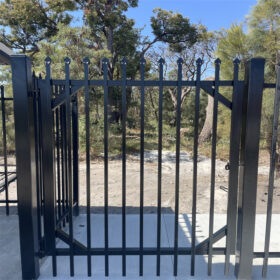
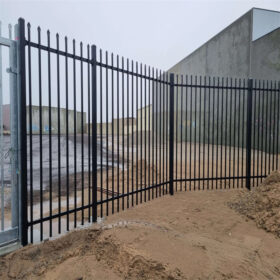
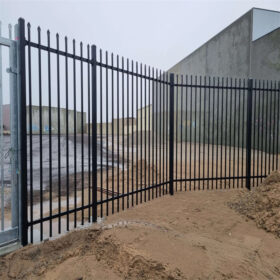
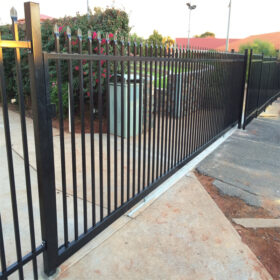
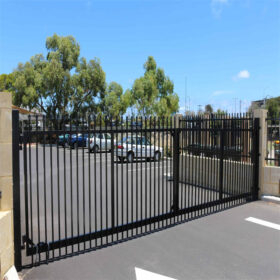
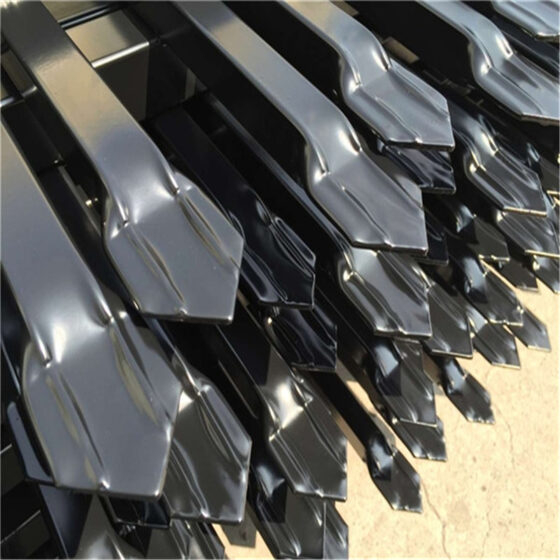
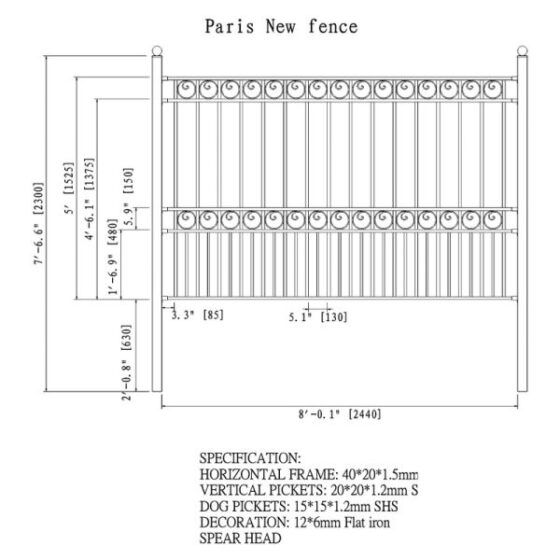
Garrison fencing is a robust metal fence system—typically galvanized steel or aluminum—with vertical pickets welded to horizontal rails and finished in weather-resistant powder coat. Garrison Fencing Gates inherit that strength and corrosion resistance, commonly featuring pointed finials for enhanced security presence. On real sites, a gate is judged by one thing: whether it stays aligned after daily cycling, wind pressure, vehicle vibration, and the constant leverage load that gates put into posts, hinges, tracks, and foundations.
POLYMETAL builds Garrison Fencing Gates as controlled, repeatable modules so frame sections, picket spacing, post sizing, hardware selection, and finish protection remain consistent across the project. That consistency is what prevents the classic failure pattern: gates that look perfect on arrival, then sag, drag, bind, or start rusting at the first high-stress points once the site goes live.
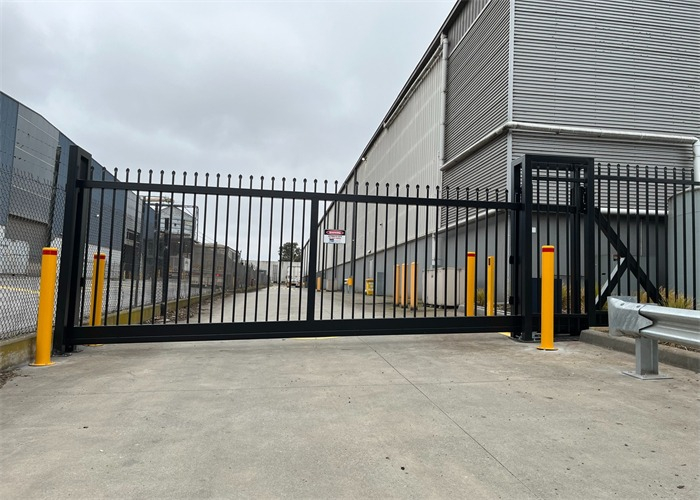
Why Buyers Choose Garrison Fencing Gates (Security, Access Control, Appearance)
Security
A fence line is only as secure as its openings. Gates are the most targeted points on any perimeter, so post strength, hinge quality, latch security, and anti-climb picket geometry matter more here than anywhere else. If the gate looks weak or moves under pressure, it gets tested.
Access Control
Pedestrian, swing, and sliding gates are chosen based on traffic type, frequency, and available space. The best gate selection is not “the cheapest gate,” but the gate that matches duty cycle: daily openings, vehicle type, automation needs, and the maintenance capacity of the site.
Appearance
Public-facing assets—schools, commercial frontages, government facilities, and corporate sites—often need a gate system that presents clean lines while staying structurally serious. A tidy, straight gate line signals control; a sagging, rattling gate signals weakness.
Garrison Fencing Gate Types Overview
Sliding Gates Technical Specifications
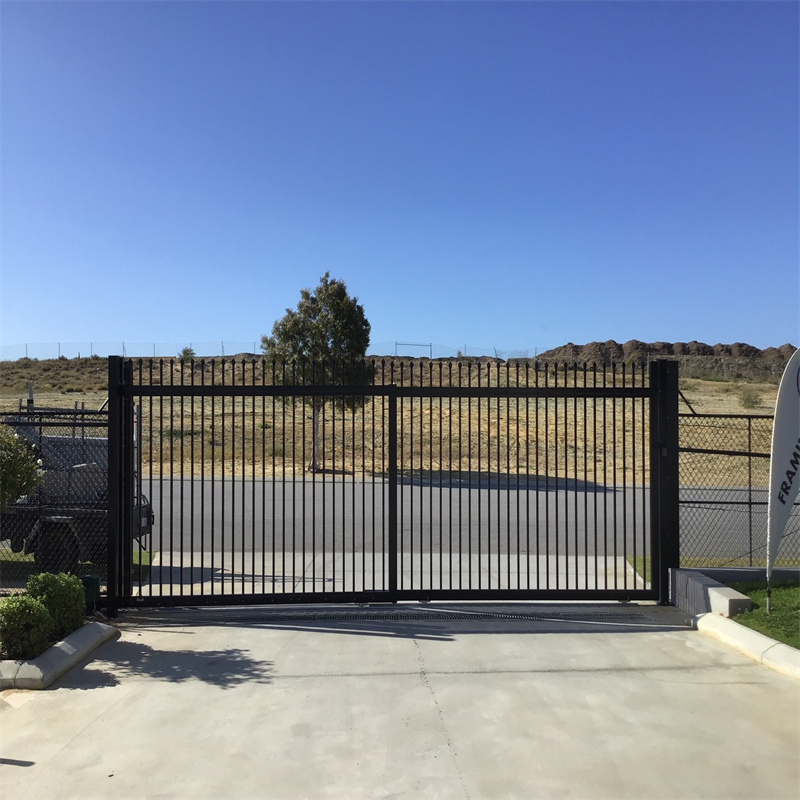
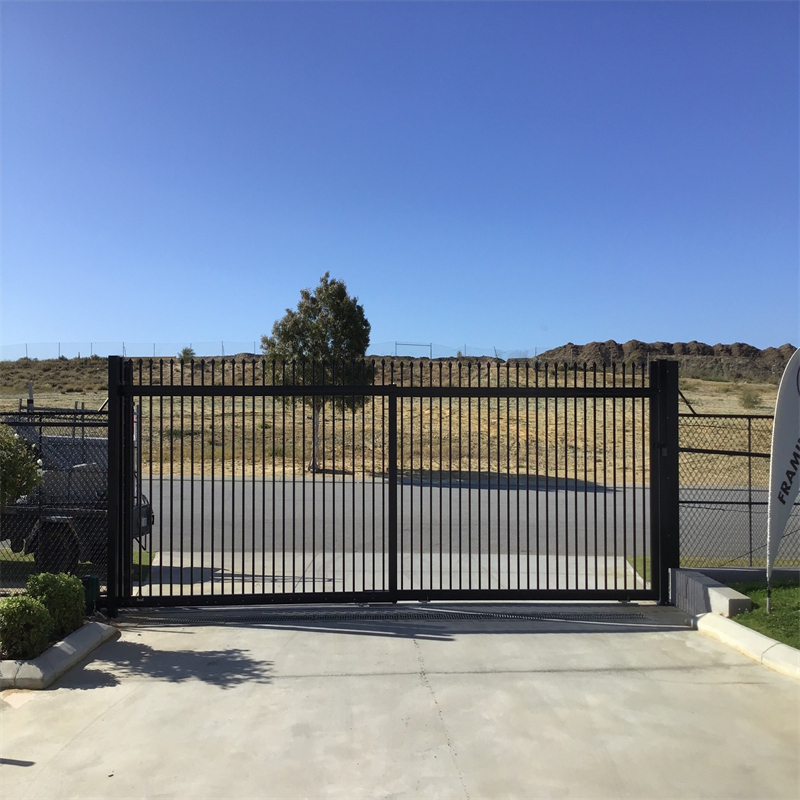
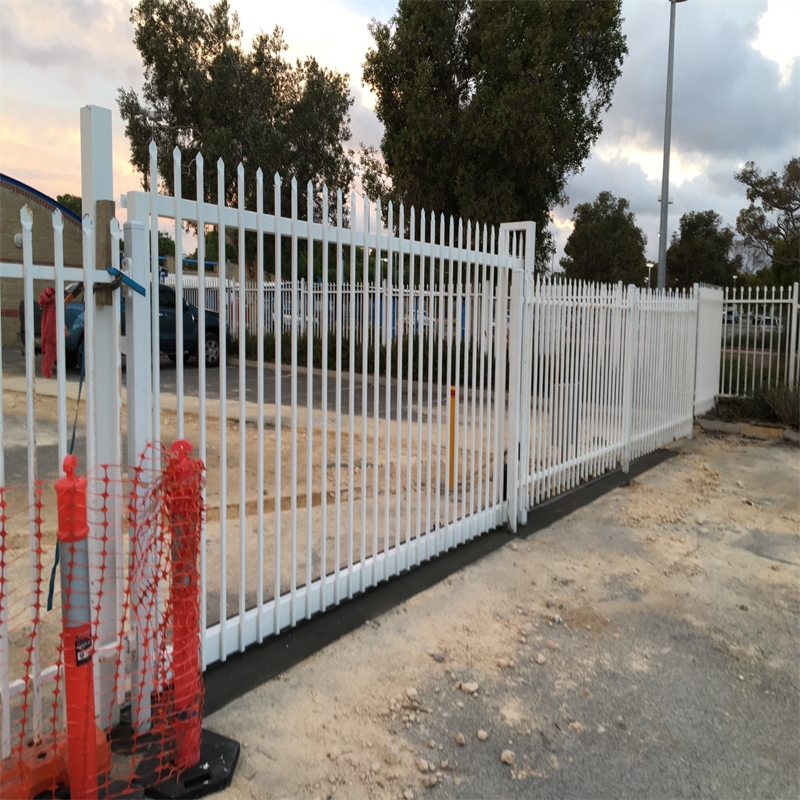
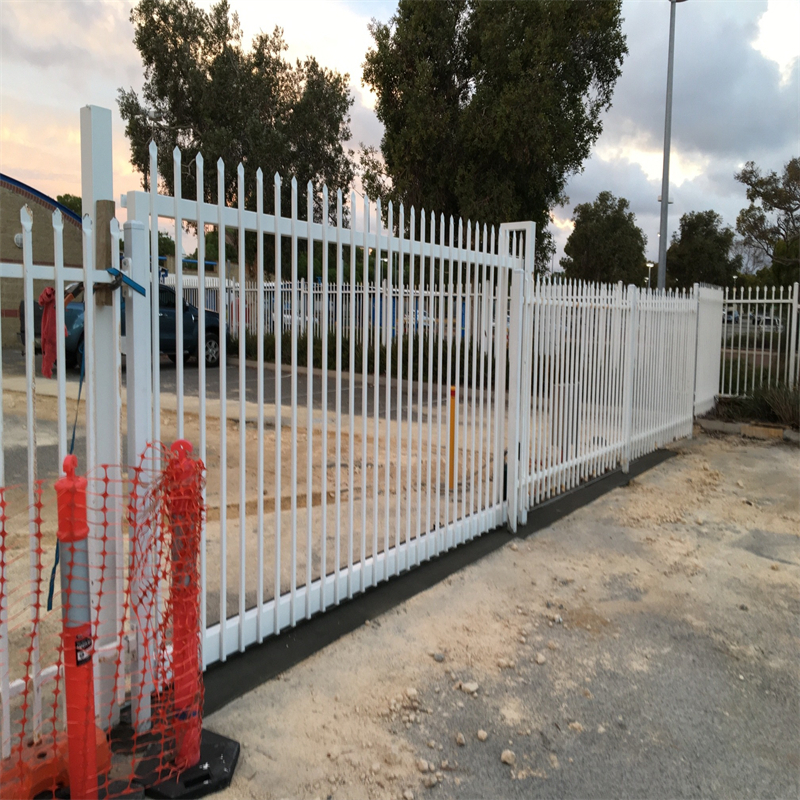
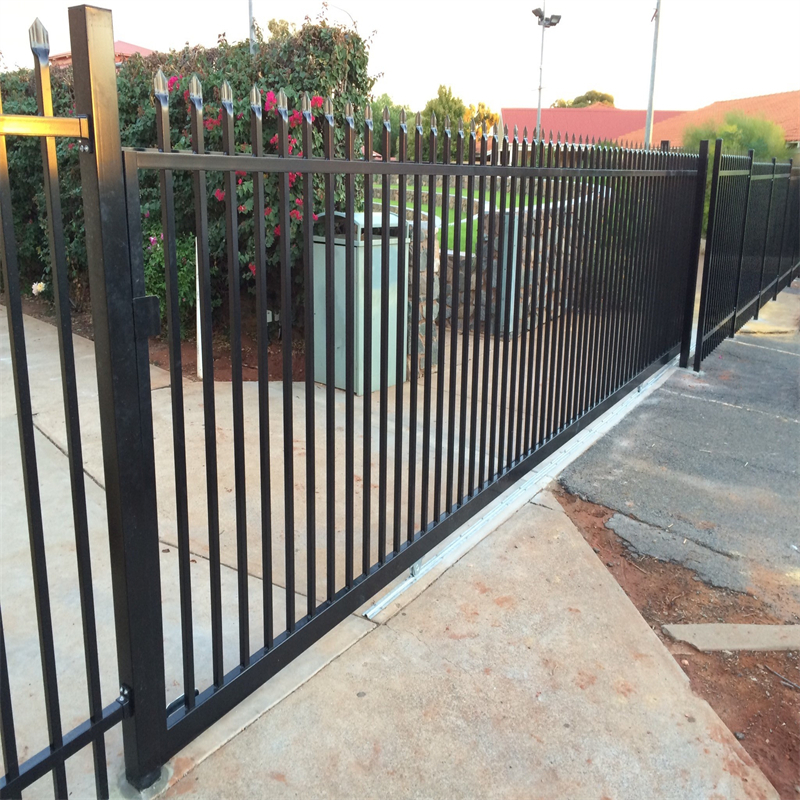
Sliding gates are selected when you need wide openings without consuming swing clearance. They travel parallel to the fence line, making them ideal for tight driveways and high-traffic entries where a swing arc would interfere with vehicles or pedestrian paths.
| Specification | Details |
|---|---|
| Height (options) | 1,800 mm or 2,100 mm / 2,400 mm etc |
| Width (clear span) | 5,000 mm, 6,000 mm, 7,000 mm (custom up to 10,000 mm+) |
| Gate Frame | 150 × 150 × 2.00 mm RHS |
| Upright Tubes | 40 × 40 × 1.60 mm SHS |
| Picket Spacing | 100 mm (centre-to-centre) |
| Hinged Post | 200 × 200 × 2.00 mm RHS |
| Post Lengths | 2,500 mm (for 1,800 mm gate), 2,800 mm (for 2,100 mm gate) |
| Track & Supports | 2 × U-brackets with steel guide track |
| Operation | Manual or motor-driven (IP65-rated gearmotor) |
| Locking System | Latch lock or electric strike |
| Finish | Hot-dip galvanized + powder coat |
| Standard Colours | RAL 9005 (Jet Black), RAL 7016 (Anthracite Grey) |
| Custom Colours | Available on request |
Sliding Gate Advantages
- Space-saving: gate slides parallel to the fence, ideal for tight driveways
- Suitable for very wide spans (up to 10 m+)
- Can be motorised for convenient access (IP65 gearmotors)
- Strong and stable, less wind-prone than large swing leaves
- Heavy-duty frame (150×150 RHS) supports industrial duty cycles
Sliding Gate Downsides
- Requires a straight, level surface along the fence line for the track
- More complex to install (track, rollers, guides)
- Higher cost compared to swing or pedestrian gates
- Track can collect debris and needs routine cleaning
Garrison Fencing Sliding Gates Gallery
| Photo | Caption |
|---|---|
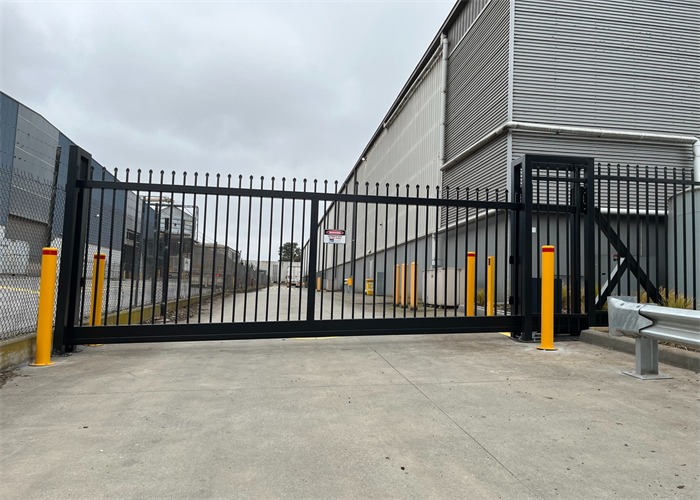 | Sliding gates design 1 |
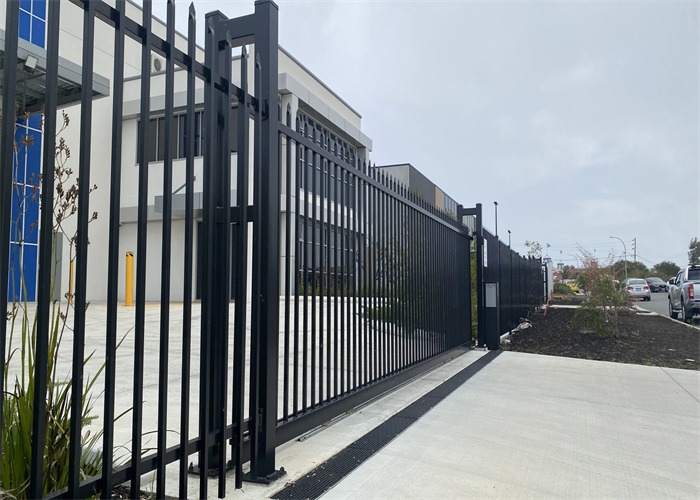 | Sliding gates view 2 |
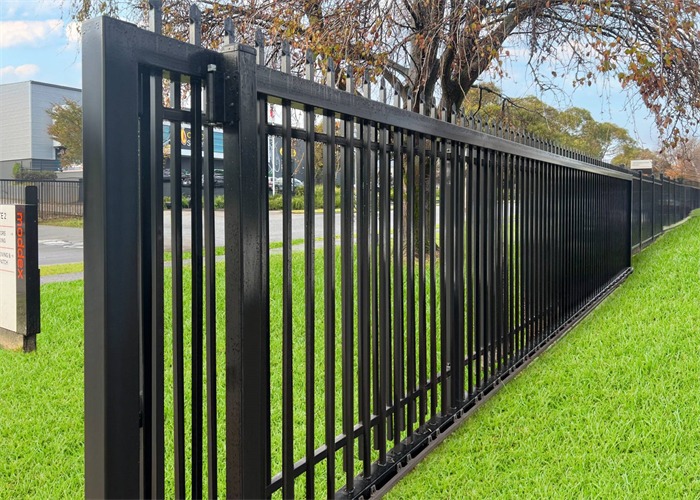 | Sliding gates view 3 |
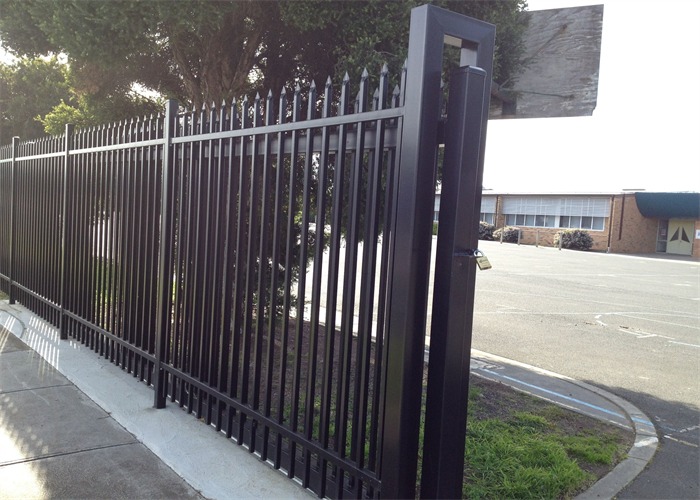 | Sliding gates view 4 |
Sliding Gate Applications
- Warehouses and logistics depots
- Industrial and commercial complexes
- Schools and government facilities needing controlled vehicle access
- Sites with limited depth/driveway space but long frontage
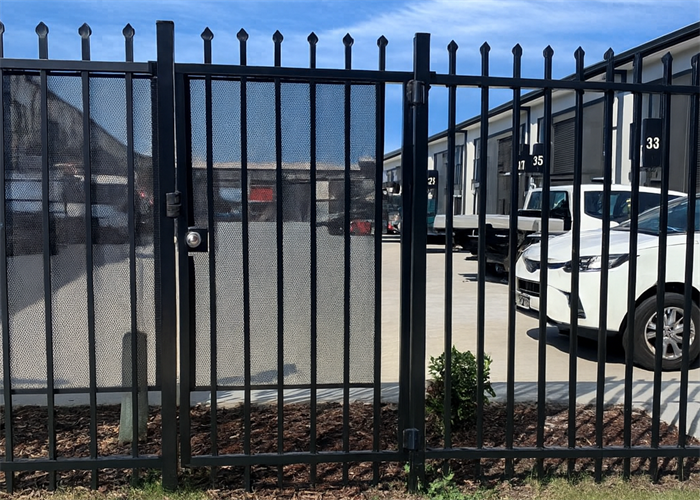
Pedestrian Gates Technical Specifications
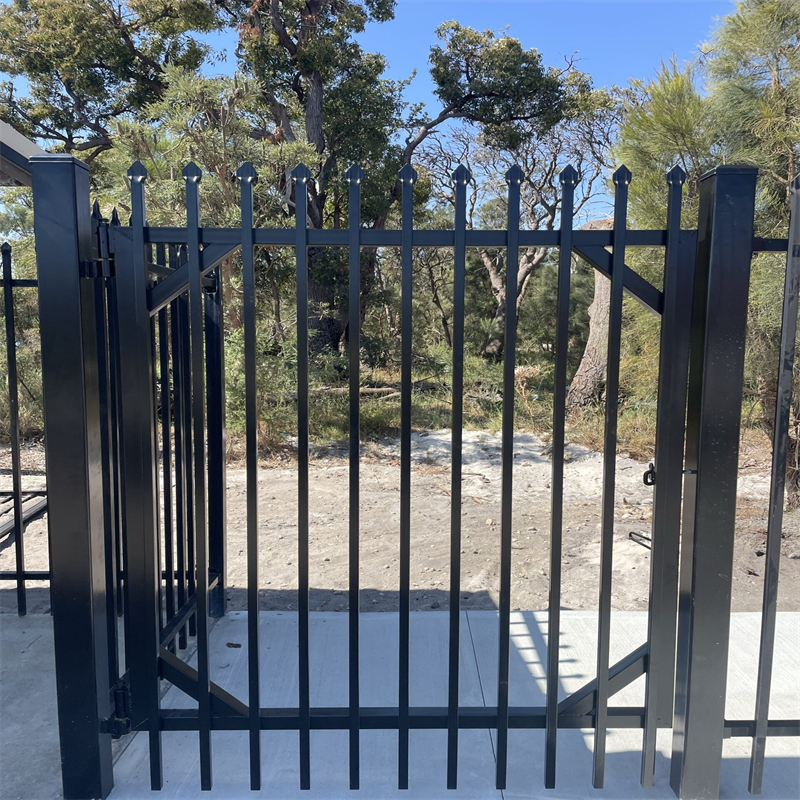
Pedestrian gates are selected for controlled foot traffic access where you want a clean, secure entry point that integrates with the garrison fence line. The key is preventing sag: posts, hinges, and latch alignment must match daily use, not just “light duty” assumptions.
| Parameter | Specification |
|---|---|
| Standard Width | 1200 mm / 3000 mm / 4000 mm |
| Standard Height | 1800 mm / 2100 mm / 2400 mm |
| Frame Material | 40 × 40 × 1.60 mm SHS |
| Picket Material | 25 × 25 × 1.20 mm |
| Picket Spacing | 100–120 mm |
| Post Requirements | 100 × 100 × 3.0 mm |
| Finish | Hot-dip galvanized + powder coat (≥80 μm) |
Pedestrian Gate Advantages
- Cost-effective and easy to install
- Compact access width (1200 mm standard)
- Integrates cleanly with garrison fence lines
- Compatible with latch locks, electric strikes, and access control
- Fast to service: hinge/latch components are easy to replace
Pedestrian Gate Downsides
- Limited width (not suitable for vehicles)
- Can sag if hinges/posts are undersized or footings are shallow
- High-abuse locations may require heavier posts than standard
Pedestrian Gate Applications
- School entrances and playground access
- Walkways in commercial and residential estates
- Staff-only or restricted-access pedestrian entry points
- Side gates for facilities and service corridors
Swing Gates Technical Specifications
Swing gates are chosen when you have enough internal space for leaves to open safely. Their biggest risks are wind load on large leaves and post stress over time. If posts, hinges, and footings are not matched to width and exposure, sag and dragging will appear fast.
| Parameter | Specification |
|---|---|
| Standard Width | 3000 mm / 4000 mm / 6000 mm |
| Standard Height | 1800 mm / 2100 mm / 2400 mm |
| Frame Material | 40 × 40 × 1.60 mm SHS |
| Picket Material | 25 × 25 × 1.20 mm |
| Picket Spacing | 100–120 mm |
| Post Requirements | 100 × 100 × 4.0 mm |
| Finish | Hot-dip galvanized + powder coat (≥80 μm) |
Swing Gate Advantages
- Simple operation and classic design
- Cheaper install than sliding gates (no track)
- Covers larger openings (3–6 m standard spans)
- Can be automated with swing-arm operators
- Strong structure when posts and hinges are specified correctly
Swing Gate Downsides
- Needs clear swing space inside the property
- Large leaves are wind-prone and load posts heavily
- Not ideal for steep driveways or uneven ground
- Higher hinge/post stress than sliding systems
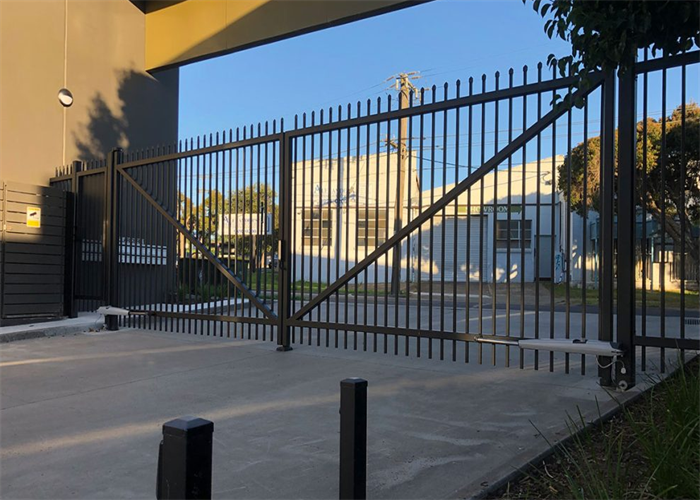
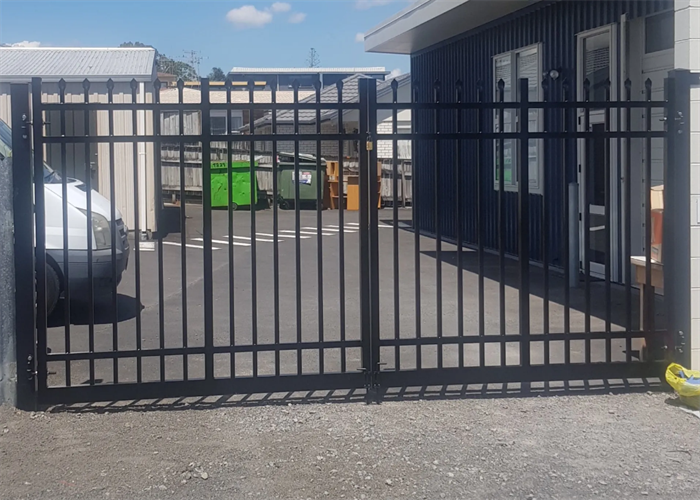
Garrison Fencing Swing Gates Gallery
Swing Gate Applications
- Industrial and warehouse vehicle entrances
- Schools, government buildings, and community facilities
- Commercial driveways with sufficient setback space
- Secure car parks with moderate traffic
Gate Posts Height & Embedment Guide
Gate performance is post performance. If post length and embedment are wrong, gates will move even if the gate leaf is built perfectly. Use conservative embedment for wide leaves, automation, soft soils, or high wind exposure.
| Gate Height (above ground) | Recommended Gate Post Length (in-ground) | Embedment (normal soils) | Soft soil / high wind |
|---|---|---|---|
| 1.5 m gate | 2.4 m | ~800 mm | 900–1000 mm |
| 1.8 m gate | 2.7–3.0 m | ~900 mm | 1000–1100 mm |
| 2.1 m gate | 3.2–3.4 m | ~1000 mm | 1100–1200 mm |
| 2.4 m gate | 3.6–3.8 m | 1000–1100 mm | 1200–1300 mm |
Garrison Fencing Gates Important Notes
- Pedestrian gates (lighter) can follow line-post embedment but still benefit from +100–150 mm deeper footings
- Swing gates with wide leaves or automation require the deeper end of the range
- Sliding gates rely on track/rollers but still need oversized 200×200 posts embedded ~1000–1200 mm for stability
Top 10 High-Risk Traps for Garrison Fencing Gates Orders
Every gate failure costs more than a panel problem because it stops access, triggers safety complaints, and forces emergency fixes. Pay special attention to #7—this is where many buyers suffer the biggest loss.
Trap #1: Ordering gate width without verifying opening clearance and hinge geometry
If clear span and hinge offsets are not confirmed, the gate either cannot open fully or collides with kerbs, fencing returns, or rising ground. The fix is rarely cheap once posts are set.
Trap #2: Choosing frame size that looks strong but is wrong for wind and duty cycle
Wide swing leaves need stiffness; long sliding leaves need torsion control. If the frame is underspecified, movement becomes visible fast and hardware wears out early.
Trap #3: Treating picket spacing as “visual only” and creating reach-through risk
Gate picket spacing controls security feel and hand access near locks. Inconsistent spacing also looks amateur and signals weak perimeter control.
Trap #4: Using standard line posts for gates
Gate posts are load posts. If you use line-post sizing at a gate opening, you will get rotation, lean, and hinge misalignment under repeated cycling.
Trap #5: Ignoring ground conditions and embedment depth
Soft soils, fill, or wet ground need deeper embedment and stronger concrete discipline. Shallow footings create slow post movement that becomes permanent misalignment.
Trap #6: Specifying automation without reinforcing posts and hinges
Automation increases cycle frequency and applies consistent force. If posts, hinges, and anchors are not upgraded, the motor simply accelerates failure.
Trap #7: Cutting corners on corrosion protection—then rust starts at stressed joints and hardware points
This is the biggest loss point. Gates concentrate stress at hinge zones, latch zones, welded corners, and hardware penetrations. If galvanizing and coating discipline are weak, corrosion starts where load is highest, then spreads under the finish. The result is seized hardware, staining, and early replacement—often when the site cannot afford downtime.
Trap #8: Selecting sliding track/rollers without a debris plan
Tracks collect stones and mud. If the track profile, drainage, and cleaning plan are ignored, rollers bind and the gate becomes “heavy,” then damages the drive system.
Trap #9: Choosing locking systems that do not match the site’s security workflow
A latch that is fine for low-traffic sites fails in high-traffic environments. Electric strikes and access control require proper alignment and protection from weather and tampering.
Trap #10: Underestimating packing, handling, and site storage
Gates arrive large and heavy. Poor packing or bad site storage creates bent pickets, twisted frames, and scratched coating before installation. That becomes early corrosion and visible defects on day one.
Product Description: POLYMETAL Garrison Fencing Gates
POLYMETAL Garrison Fencing Gates are manufactured for controlled-access perimeters where security presence, repeatable installation, and long-term alignment matter. Pedestrian gates support safe staff and visitor entry points, swing gates provide a traditional opening method for vehicle driveways with sufficient internal clearance, and sliding gates deliver wide-span access without requiring swing space. Gate frames, picket geometry, post options, and hardware selections are built as coordinated systems so gates hold line, resist sagging, cycle smoothly, and maintain finish performance under real site conditions. Hot-dip galvanizing combined with powder coating delivers a clean architectural appearance while protecting high-stress zones where gates typically fail first.
Specifications
Quick Comparison Table (Common Project Selection)
| Gate Type | Common Heights | Common Widths | Frame | Pickets | Post Requirement | Finish | Operation |
|---|---|---|---|---|---|---|---|
| Pedestrian | 1800 / 2100 / 2400 mm | 1200 mm standard (custom available) | 40×40×1.6 SHS | 25×25×1.2, 100–120 mm spacing | 100×100×3.0 mm | HDG + Powder (≥80 μm) | Manual / access-control ready |
| Swing | 1800 / 2100 / 2400 mm | 3000 / 4000 / 6000 mm | 40×40×1.6 SHS | 25×25×1.2, 100–120 mm spacing | 100×100×4.0 mm | HDG + Powder (≥80 μm) | Manual / automated |
| Sliding | 1800 / 2100 / 2400 mm | 5000 / 6000 / 7000 mm (up to 10,000+) | 150×150×2.0 RHS | 40×40×1.6 SHS, 100 mm c/c | 200×200×2.0 RHS | HDG + Powder | Manual / motor-driven (IP65) |
Applications
- Warehouses, logistics depots, and freight yards
- Factories, utilities, substations, and public works sites
- Schools, campuses, and government facilities
- Commercial complexes, car parks, and controlled-access driveways
- Residential estates requiring strong perimeter presentation
Benefits
Stronger access-point security
Garrison Fencing Gates reinforce the perimeter’s most vulnerable openings with stronger posts, controlled picket geometry, and lock-ready gate structures.
Smoother operation and reduced downtime
Matched frames, posts, hinges, rollers, and tracks reduce binding, dragging, and premature hardware failure—so access stays reliable.
Cleaner line and better project presentation
Straight gate alignment, consistent picket spacing, and durable finishing keep public-facing entrances looking controlled, not improvised.
Finish protection where gates fail first
Hot-dip galvanizing plus powder coating protects high-stress zones around hinges, latches, welded corners, and fixing penetrations.
Packing
POLYMETAL typically packs Garrison Fencing Gates in counted, labeled sets to reduce transit damage and site confusion. Gate leaves are protected with separation materials at contact points, then wrapped and palletized for forklift handling. Posts are packed separately by size and wall thickness to prevent mix-ups. Hardware kits (hinges, rollers, guides, latches, stops, fasteners) are packed as counted cartons so installers can verify components immediately on arrival, and for coastal or chemical-exposure projects that require upgraded corrosion resistance on critical components, some buyers also specify stainless steel enclosure mesh for protected service areas and equipment zones near gate entries.
Standards and FAQs
Standards
A professional Garrison Fencing Gates purchase specification should lock gate type (pedestrian/swing/sliding), clear opening width, gate height, frame and picket sizes, picket spacing, post size and wall thickness, post length and embedment depth, hinge/roller/track hardware grade, locking system, and corrosion protection system (hot-dip galvanized + powder coat thickness).
FAQs
Q: What is the fastest way to create sagging and dragging?
A: Undersized gate posts and shallow footings. Even a strong gate leaf will fail if the posts rotate under load.
Q: Which gate type is best for tight driveways?
A: Sliding gates, because they move parallel to the fence line and do not require swing clearance.
Q: What is the biggest hidden loss point?
A: Corrosion control at high-stress zones (#7). Once rust starts at hinges, latches, corners, and penetrations, operation degrades and replacement costs escalate.
Final Buying Reminder
If you want Garrison Fencing Gates that stay straight, cycle cleanly, and resist long-term damage, do not buy by appearance alone. Lock the real load items: gate post size, embedment depth, frame stiffness, hardware grade, and corrosion protection. That is how you avoid the #7 loss—rust at stressed joints and hardware points—after access is live and downtime becomes expensive.