Your One-Stop Wire Mesh Fence Supplier | POLYMETAL


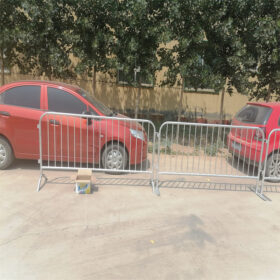

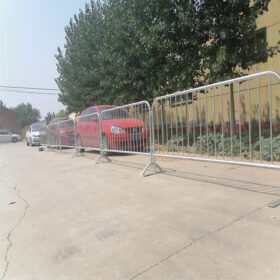
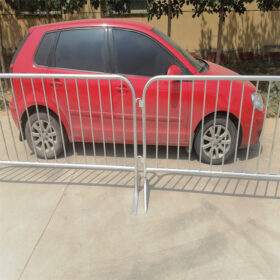
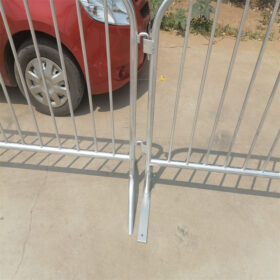
outdoor crowd control barriers are not judged by how they look on arrival—they are judged by how they behave after repeated handling, stacking, forklift moves, wind exposure, rain cycles, and real crowd pressure. On events, worksites, stadium edges, street closures, and public queues, “good enough” quickly becomes expensive when frames twist, feet slip, welds crack, or corrosion starts at stressed joints.
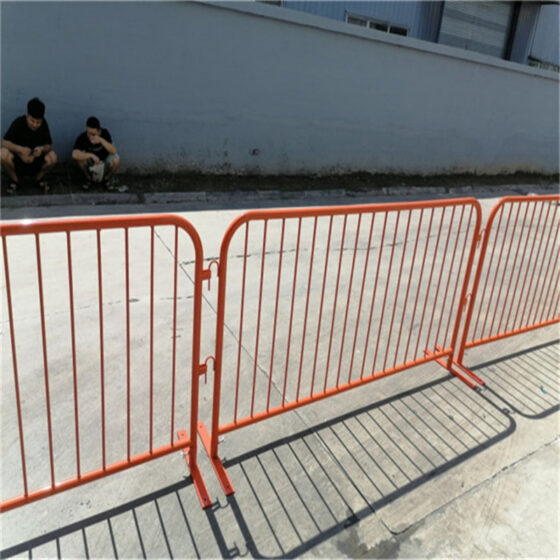
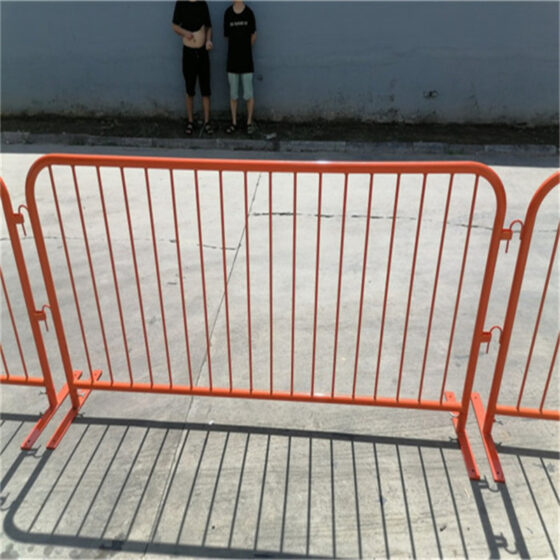
POLYMETAL builds outdoor crowd control barriers as repeatable modules so frame tube selection, upright tube spec, infill spacing discipline, base stability, and packing protection work together as a system. The goal is simple: barriers that stay straight, lock together cleanly, stand stable on uneven ground, and still look professional after heavy use.
Why Buyers Choose outdoor crowd control barriers Instead of Temporary Tape
Outdoor sites demand a visible, physical boundary that stays aligned under movement. Proper barriers create orderly queues, define exclusion zones, protect staff, and reduce conflict by making the boundary obvious. For contractors and event organizers, a stable barrier line lowers operational stress because crews can deploy faster, reconfigure easier, and avoid constant “fixing” of fallen or drifting sections.



Top 20 High-Risk Buyer Traps for outdoor crowd control barriers Orders
Each issue below looks “small” on a quotation, but becomes expensive when barriers are already on-site and the schedule is locked. Pay special attention to #12, because that is where most long-term losses occur.

Trap #1: Buying outdoor crowd control barriers without locking height and width
If the exact height (1.0m / 1.06m / 1.1m / 1.2m) and width (2.0m / 2.2m / 2.5m / 2.6m) are not locked, suppliers can ship mixed sizes that don’t align visually and don’t stack efficiently.
Trap #2: Frame tube OD chosen for price instead of stiffness
Frames in 25mm / 32mm / 35mm / 38mm OD behave very differently. Light frames deform during stacking and transport, then the barrier line looks “repaired” on day one.
Trap #3: Frame wall thickness underspecified (bending becomes normal)
Wall thickness 1.5mm, 1.6mm, and 2.0mm should match usage intensity. Thin walls dent easily at hook zones and foot sockets, then alignment fails faster.
Trap #4: Upright tube OD too small for crowd vibration
Upright tubes (19mm / 16mm / 12mm OD) must match spacing and expected load. Small uprights with wide spacing can rattle and deform at weld points.
Trap #5: Upright thickness not controlled (mixed lots inside one delivery)
Thickness options 0.7mm / 0.8mm / 1.0mm / 1.2mm must be locked. Mixed thickness creates inconsistent stiffness and uneven appearance bay-to-bay.
Trap #6: Infill spacing treated as “approximate”
Spacing such as 90mm / 100mm / 150mm / 200mm affects reach-through risk and the “security signal.” Loose spacing increases climb and squeeze-through risk in high-traffic zones.
Trap #7: Feet style not matched to ground conditions
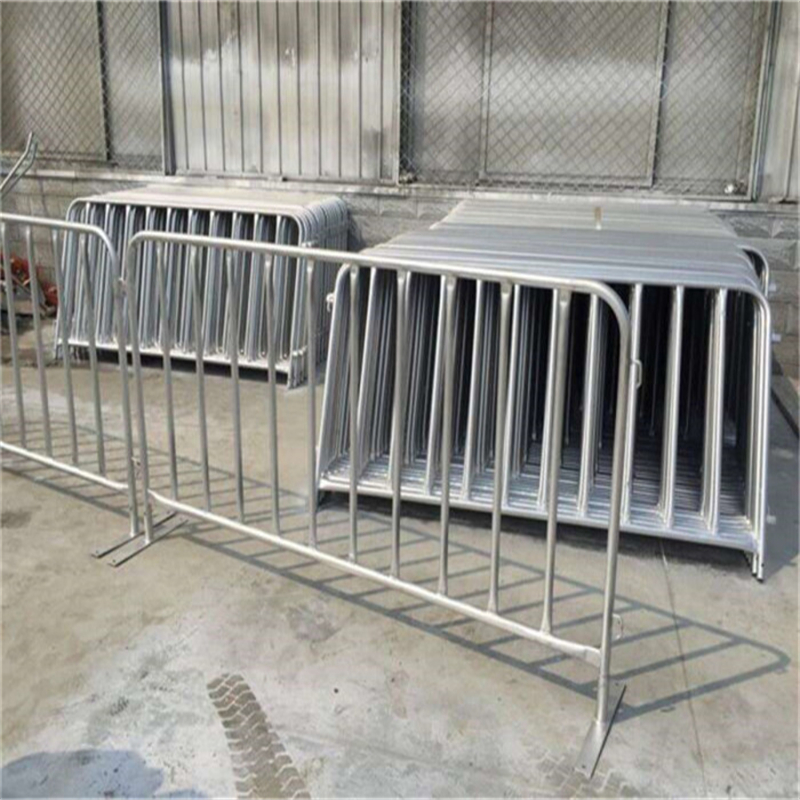
Wheel feet, bridge feet, V feet, and flat steel feet are not interchangeable. The wrong foot style causes rocking, sliding, and trip hazards on uneven asphalt or soft ground.
Trap #8: Flat steel base size not defined (then stability changes)
Flat steel base (580×50×10mm) adds stability. If base dimensions are not locked, you may get a smaller base that drifts under lateral push.
Trap #9: Hook/loop interlock not standardized
Interlock geometry must be consistent across batches so barriers connect quickly. Inconsistent hook spacing creates gaps, then staff “forces” connections and bends frames.
Trap #10: Welding standard not defined (cracks appear later)
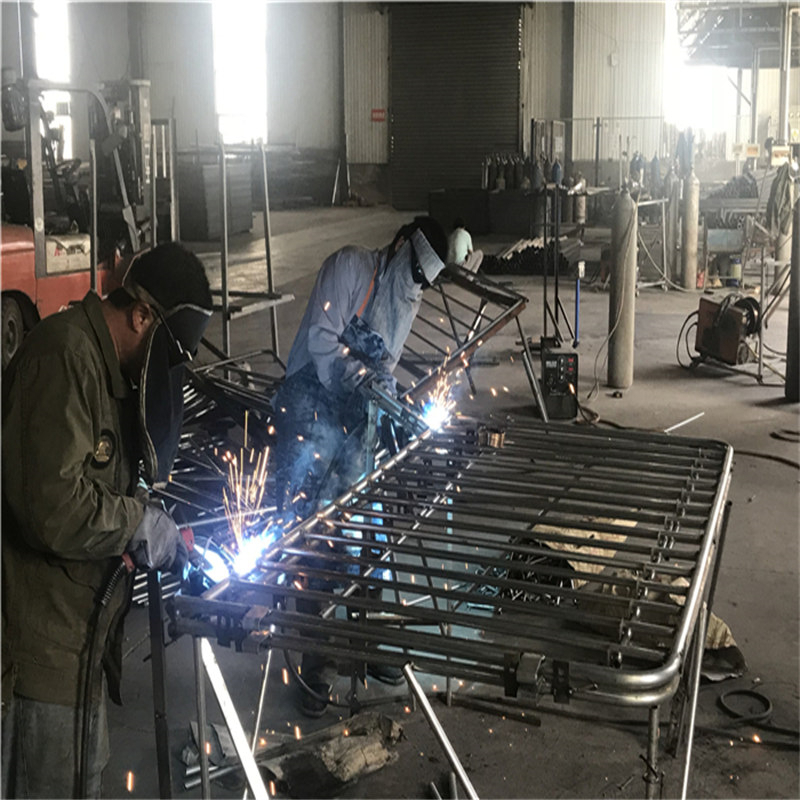
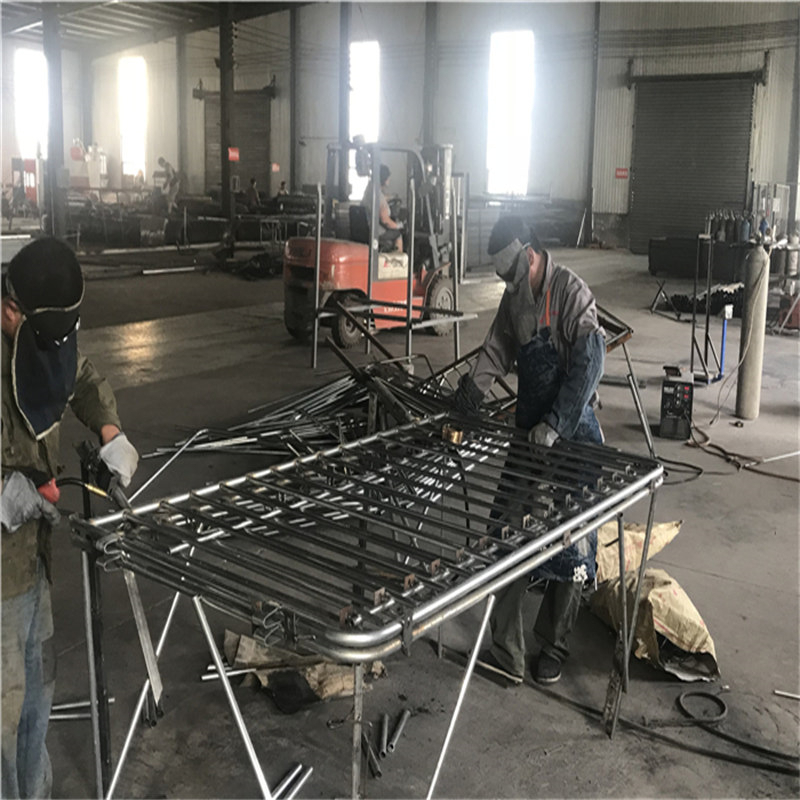
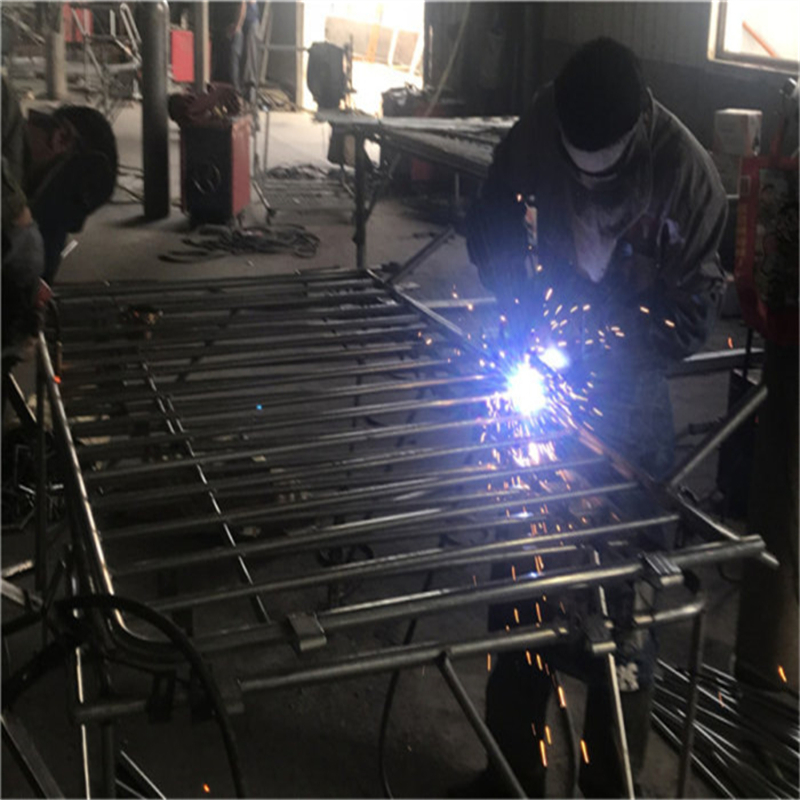
Outdoor vibration and repeated lifting stress welds. Poor weld penetration or weak joint prep leads to cracks at uprights, feet sockets, and top rail join zones.
Trap #11: Coating system not matched to outdoor corrosion reality
Rust starts at welds, cut ends, and rub points. If surface prep and coating discipline are weak, corrosion becomes visible fast—especially after rainy events.
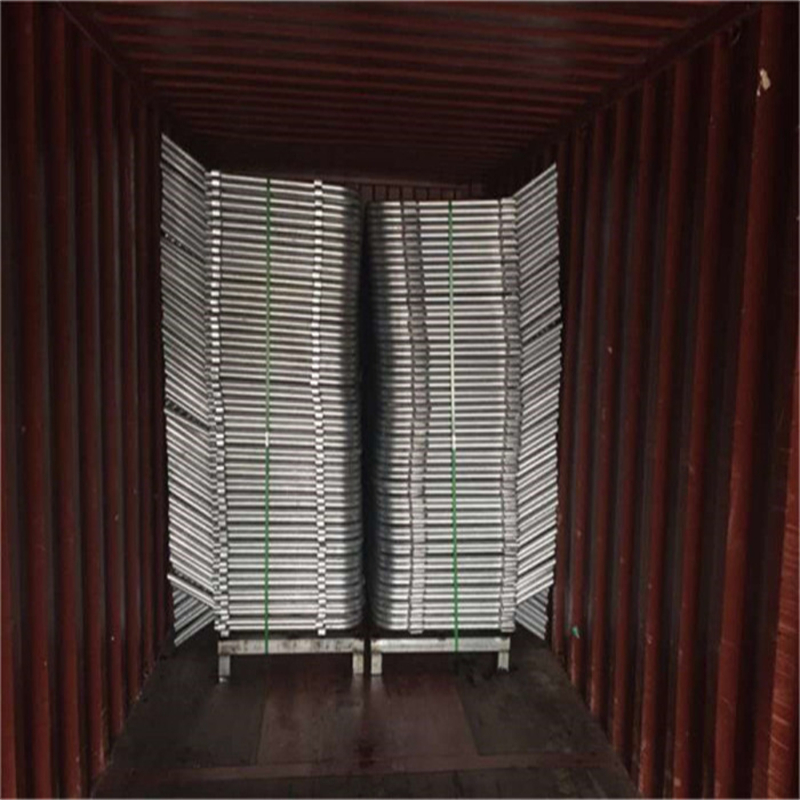
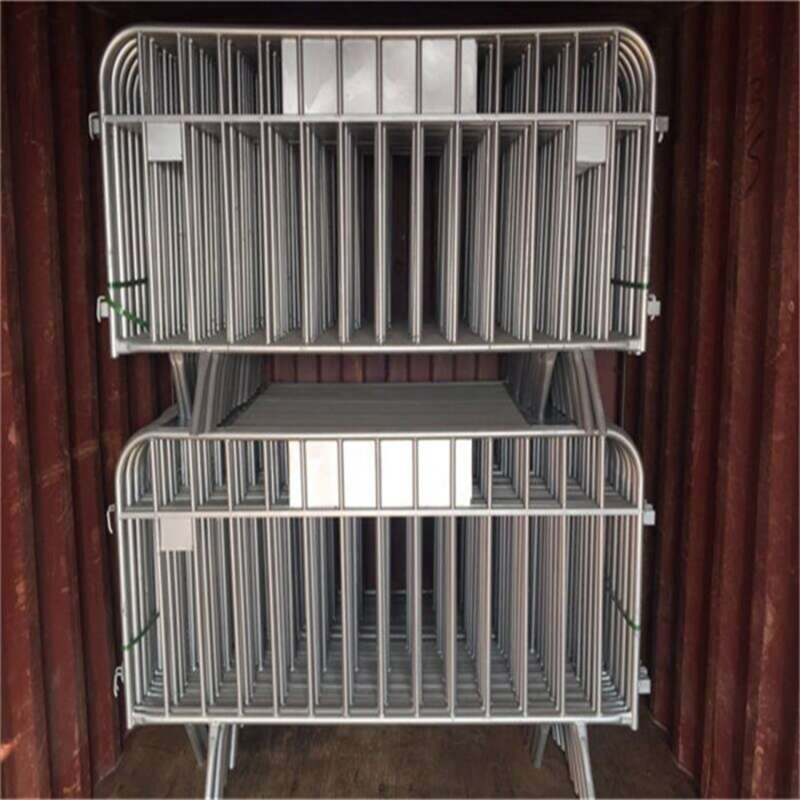
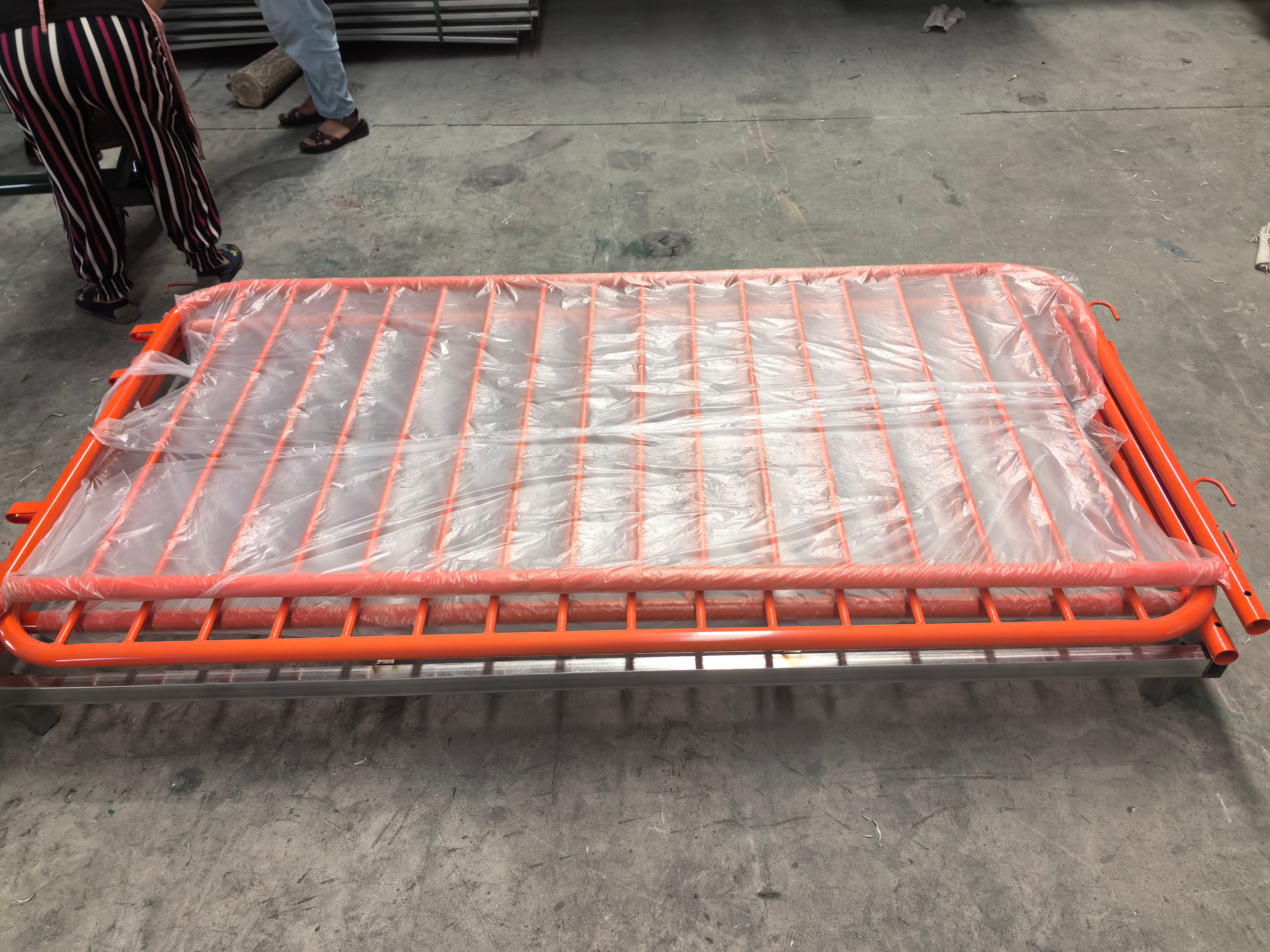
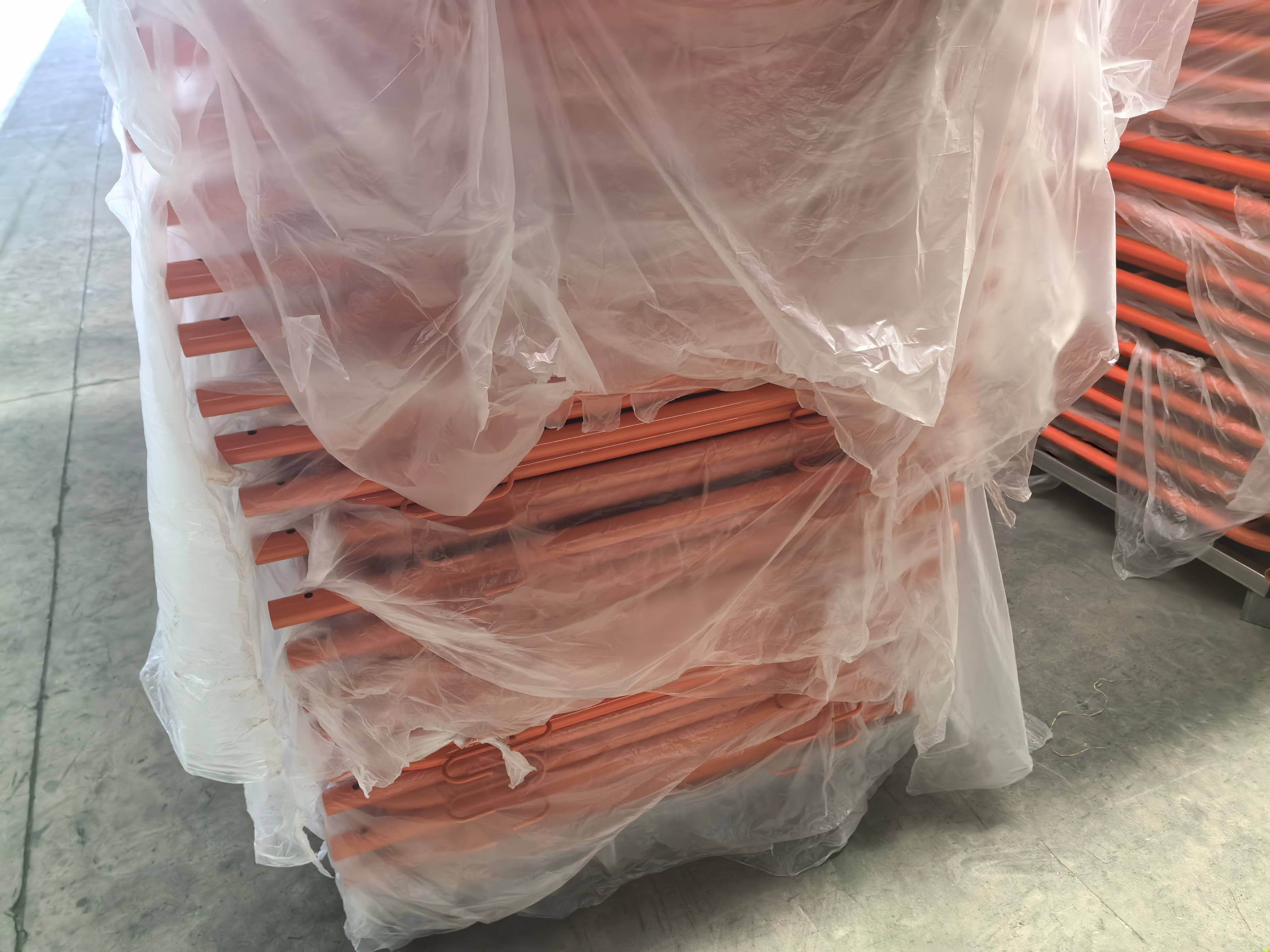
Trap #12: Packing damage at transit rub points (BIGGEST LOSS)
This is where the biggest losses occur. Even a good barrier becomes scrap if packing allows metal-to-metal rubbing. Rub marks remove coating at the exact points that stay wet and stressed. Once rust starts at rubbed weld zones and corners, outdoor crowd control barriers become replacement items, not repair items—especially costly when you need them urgently for events.
Trap #13: Stacking geometry ignored (frames twist in storage)
If barriers stack poorly, storage becomes a bending machine. Twisted frames never align well again and the line looks “wavy.”
Trap #14: No tolerance control on width (then lines don’t close cleanly)
When widths vary inside one lot, the barrier run doesn’t “end cleanly.” Staff then forces the line to fit, creating bent hooks and corner damage.
Trap #15: Ignoring forklift handling realities
Outdoor crowd control barriers are moved fast. If pallet/stillage design isn’t stable, forklift impacts create dents and coating chips before the first use.
Trap #16: Wrong balance of weight vs handling speed
Too light = unstable; too heavy = slow deployment and injuries. A correct spec balances stability with crew efficiency.
Trap #17: Missing accessories and spare parts plan
Wheel feet, bridge feet, V feet, and replacement pins should be planned. Missing parts cause site improvisation and unsafe setups.
Trap #18: No wet-weather performance planning
Outdoor barriers face rain and mud. If feet slip or hooks clog, the barrier line collapses and the crowd pushes through.
Trap #19: Choosing “cheapest unit price” without lifecycle cost
Cheap units become expensive when rust and bends force early replacement. The true cost is downtime and emergency resupply.
Trap #20: Not defining receiving checks and labeling
Without labeling by height, width, tube spec, and foot type, crews mix barriers and feet, then the line becomes uneven and unstable.
Product Description: POLYMETAL outdoor crowd control barriers
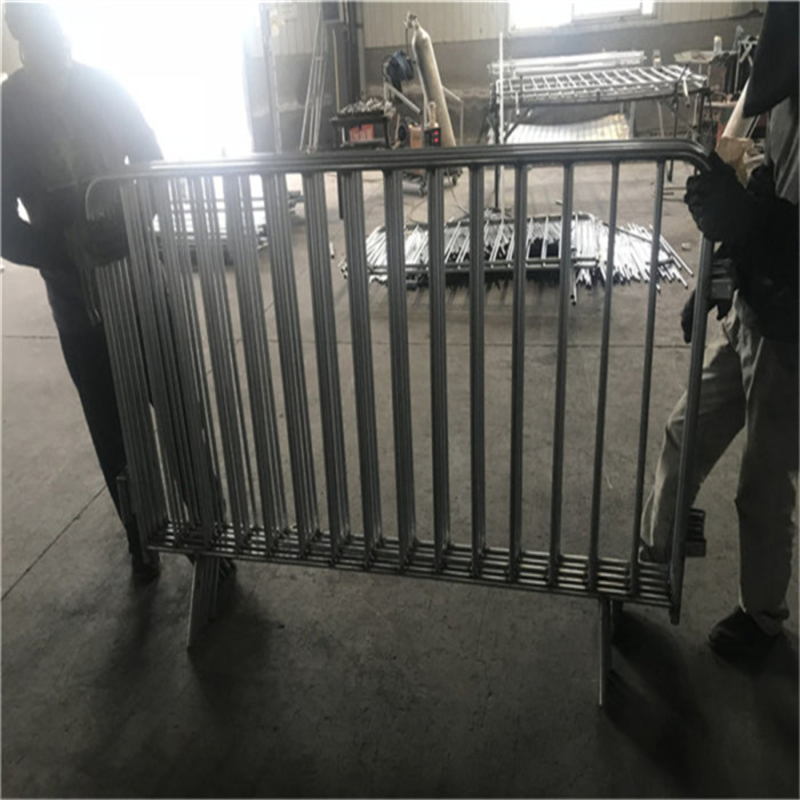
POLYMETAL outdoor crowd control barriers are engineered for repeatable deployment in public-facing environments where stability, durability, and a professional appearance matter. Each barrier is manufactured with controlled frame tube and upright tube options, disciplined infill spacing, and stable base solutions to reduce rocking and drift under crowd pressure. Coating discipline and packing protection are built into the manufacturing process so barriers resist corrosion and deformation during handling, transport, and long-term outdoor exposure. Optional wheel feet, bridge feet, and V feet are available to match different ground conditions and deployment styles—while for projects that also specify corrosion-resistant mesh components, 304 316 stainless steel wire mesh can be selected for screening, ventilation, or secondary perimeter applications.


Specifications (3 Tables)
Table 1: Standard Outdoor Event Duty (10 Specs)
| Model | Height (m) | Width (m) | Frame Tube OD | Frame Wall (mm) | Upright Tube OD | Upright Thick (mm) | Infill Spacing (mm) | Base (Flat Steel) | Feet Options |
|---|---|---|---|---|---|---|---|---|---|
| OCB-01 | 1.00 | 2.00 | 25mm | 1.5 | 16mm | 0.80 | 150 | 580×50×10mm | V / Bridge |
| OCB-02 | 1.00 | 2.20 | 25mm | 1.6 | 16mm | 0.80 | 100 | 580×50×10mm | V / Bridge |
| OCB-03 | 1.00 | 2.50 | 32mm | 1.5 | 16mm | 1.00 | 150 | 580×50×10mm | V / Wheel |
| OCB-04 | 1.00 | 2.60 | 32mm | 1.6 | 19mm | 1.00 | 100 | 580×50×10mm | V / Wheel |
| OCB-05 | 1.06 | 2.00 | 25mm | 1.6 | 16mm | 0.80 | 100 | 580×50×10mm | Bridge / V |
| OCB-06 | 1.06 | 2.20 | 32mm | 1.6 | 19mm | 1.00 | 150 | 580×50×10mm | Bridge / Wheel |
| OCB-07 | 1.06 | 2.50 | 32mm | 1.6 | 16mm | 1.00 | 90 | 580×50×10mm | V / Bridge |
| OCB-08 | 1.06 | 2.60 | 35mm | 1.6 | 19mm | 1.00 | 100 | 580×50×10mm | Wheel / Bridge |
| OCB-09 | 1.10 | 2.20 | 35mm | 1.6 | 16mm | 1.00 | 90 | 580×50×10mm | V / Wheel |
| OCB-10 | 1.10 | 2.50 | 35mm | 2.0 | 19mm | 1.00 | 100 | 580×50×10mm | Bridge / Wheel |
Table 2: Heavy Outdoor Duty (10 Specs)
| Model | Height (m) | Width (m) | Frame Tube OD | Frame Wall (mm) | Upright Tube OD | Upright Thick (mm) | Infill Spacing (mm) | Base (Flat Steel) | Feet Options |
|---|---|---|---|---|---|---|---|---|---|
| OCB-11 | 1.10 | 2.60 | 38mm | 2.0 | 19mm | 1.20 | 100 | 580×50×10mm | Wheel / Bridge |
| OCB-12 | 1.20 | 2.00 | 35mm | 2.0 | 19mm | 1.20 | 150 | 580×50×10mm | V / Bridge |
| OCB-13 | 1.20 | 2.20 | 35mm | 2.0 | 19mm | 1.20 | 100 | 580×50×10mm | V / Wheel |
| OCB-14 | 1.20 | 2.50 | 38mm | 2.0 | 19mm | 1.20 | 90 | 580×50×10mm | Wheel / Bridge |
| OCB-15 | 1.20 | 2.60 | 38mm | 2.0 | 19mm | 1.20 | 100 | 580×50×10mm | Wheel / Bridge |
| OCB-16 | 1.06 | 2.50 | 38mm | 2.0 | 16mm | 1.00 | 90 | 580×50×10mm | V / Bridge |
| OCB-17 | 1.06 | 2.60 | 38mm | 2.0 | 19mm | 1.20 | 100 | 580×50×10mm | Wheel / V |
| OCB-18 | 1.10 | 2.00 | 35mm | 2.0 | 16mm | 1.00 | 100 | 580×50×10mm | Bridge / V |
| OCB-19 | 1.10 | 2.20 | 38mm | 2.0 | 19mm | 1.20 | 150 | 580×50×10mm | Wheel / Bridge |
| OCB-20 | 1.10 | 2.50 | 38mm | 2.0 | 19mm | 1.20 | 100 | 580×50×10mm | Wheel / Bridge |
Table 3: High-Density Infill (Queue Control & Public Safety) (10 Specs)
| Model | Height (m) | Width (m) | Frame Tube OD | Frame Wall (mm) | Upright Tube OD | Upright Thick (mm) | Infill Spacing (mm) | Base (Flat Steel) | Feet Options |
|---|---|---|---|---|---|---|---|---|---|
| OCB-21 | 1.00 | 2.00 | 32mm | 1.6 | 12mm | 0.80 | 90 | 580×50×10mm | V / Bridge |
| OCB-22 | 1.00 | 2.20 | 32mm | 1.6 | 12mm | 0.80 | 90 | 580×50×10mm | V / Bridge |
| OCB-23 | 1.06 | 2.00 | 35mm | 1.6 | 12mm | 1.00 | 90 | 580×50×10mm | Bridge / V |
| OCB-24 | 1.06 | 2.20 | 35mm | 1.6 | 12mm | 1.00 | 90 | 580×50×10mm | Bridge / V |
| OCB-25 | 1.10 | 2.50 | 35mm | 2.0 | 12mm | 1.00 | 90 | 580×50×10mm | Wheel / Bridge |
| OCB-26 | 1.10 | 2.60 | 38mm | 2.0 | 12mm | 1.00 | 90 | 580×50×10mm | Wheel / Bridge |
| OCB-27 | 1.20 | 2.00 | 35mm | 2.0 | 16mm | 1.20 | 90 | 580×50×10mm | V / Bridge |
| OCB-28 | 1.20 | 2.20 | 38mm | 2.0 | 16mm | 1.20 | 90 | 580×50×10mm | V / Bridge |
| OCB-29 | 1.10 | 2.00 | 32mm | 2.0 | 12mm | 1.00 | 100 | 580×50×10mm | Bridge / V |
| OCB-30 | 1.06 | 2.60 | 38mm | 2.0 | 16mm | 1.20 | 90 | 580×50×10mm | Wheel / Bridge |
Applications
outdoor crowd control barriers are used for street events, concerts, stadium queues, parades, construction exclusion zones, road works, shopping center control lines, public facilities, and any environment where a visible, stable boundary is required.
Benefits
Outdoor crowd control barriers create faster deployment and cleaner lines because interlocks connect quickly and stable feet reduce rocking. Controlled tube and spacing specs improve stiffness and reduce bent frames, while protective packing reduces transit damage. With correct coating discipline, barriers last longer outdoors and maintain a professional appearance under repeated use.
Packing
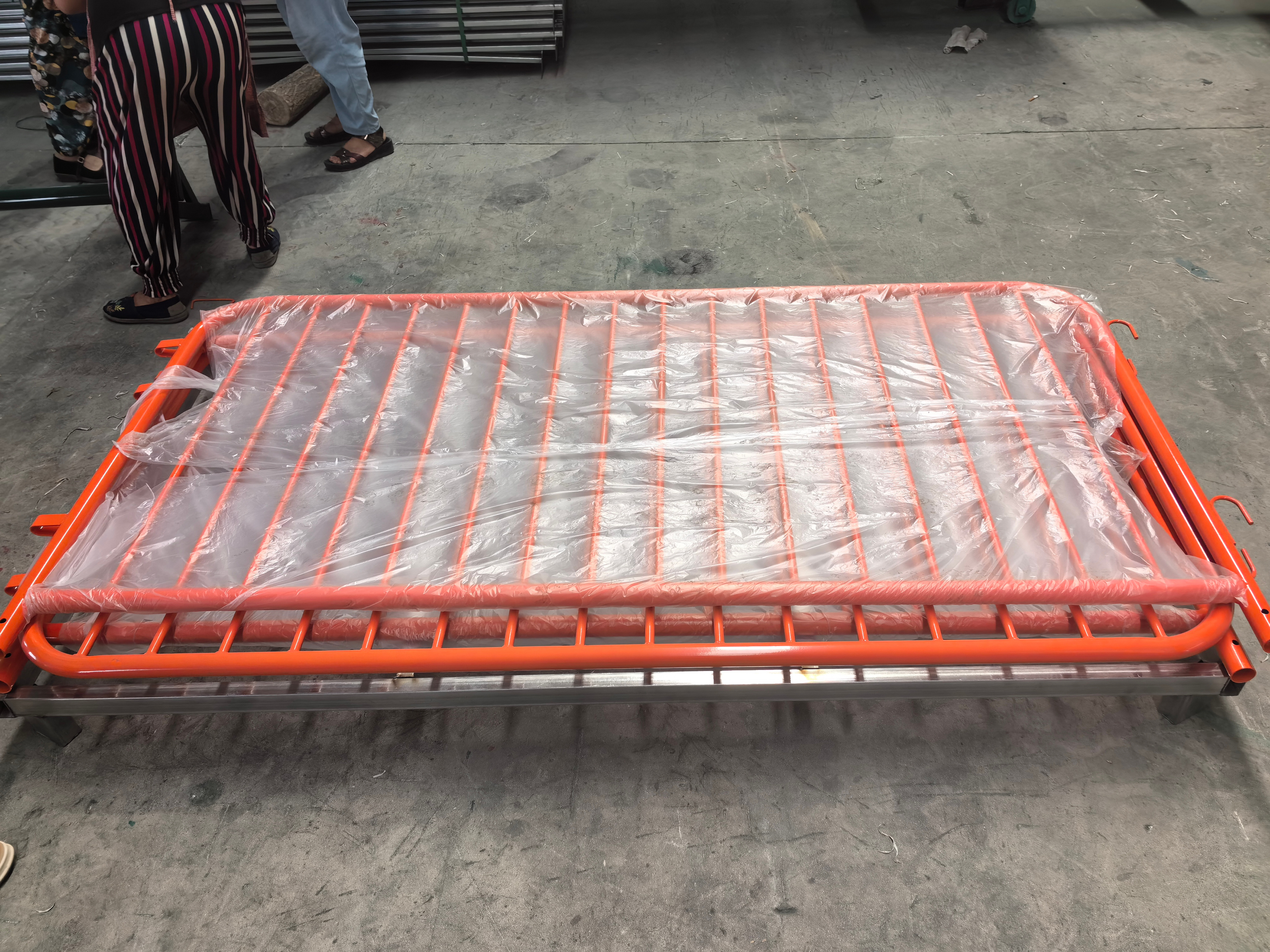
POLYMETAL commonly packs outdoor crowd control barriers in counted bundles or stillages with separation protection to reduce coating rub. Barriers are banded for stability, wrapped for protection, and labeled by size and spec group. Feet and accessories are supplied separately in counted cartons to speed up receiving and prevent missing parts on site.


Standards and FAQs
Standards
A safe outdoor crowd control barriers specification defines barrier height and width, frame tube OD and wall thickness, upright tube OD and thickness, infill spacing, base plate size, foot type options, surface finish, packing protection, and receiving checks—aligned with the same kind of practical procurement breakdown often summarized in garrison fencing details.
FAQ
Q1: Which frame tube OD is most common for outdoor use?
A: 32mm or 35mm OD is a strong balance for most outdoor crowd handling, while 38mm is preferred for heavier duty and higher vibration environments.
Q2: Which infill spacing is safest for public queues?
A: 90mm to 100mm spacing provides a tighter pattern to reduce reach-through and improve the “control line” appearance.
Q3: Which feet should I choose?
A: V feet are stable for general ground contact, bridge feet help crossing points and line continuity, and wheel feet improve rapid redeployment when frequent moving is required.