Your One-Stop Wire Mesh Fence Supplier | POLYMETAL
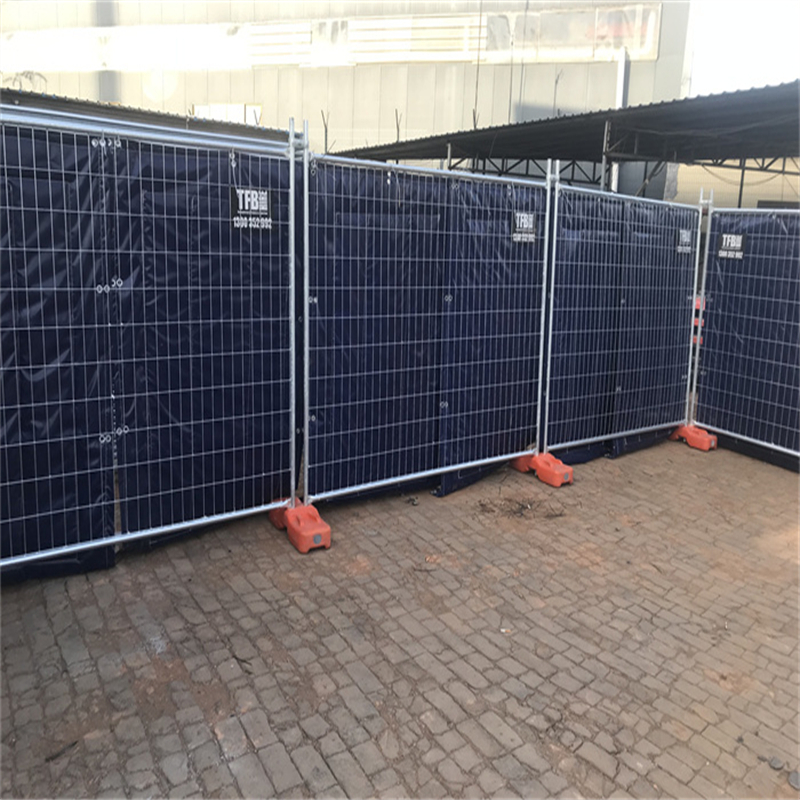
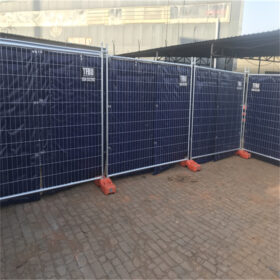
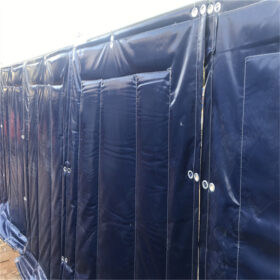
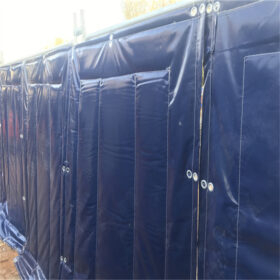
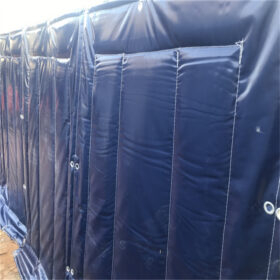
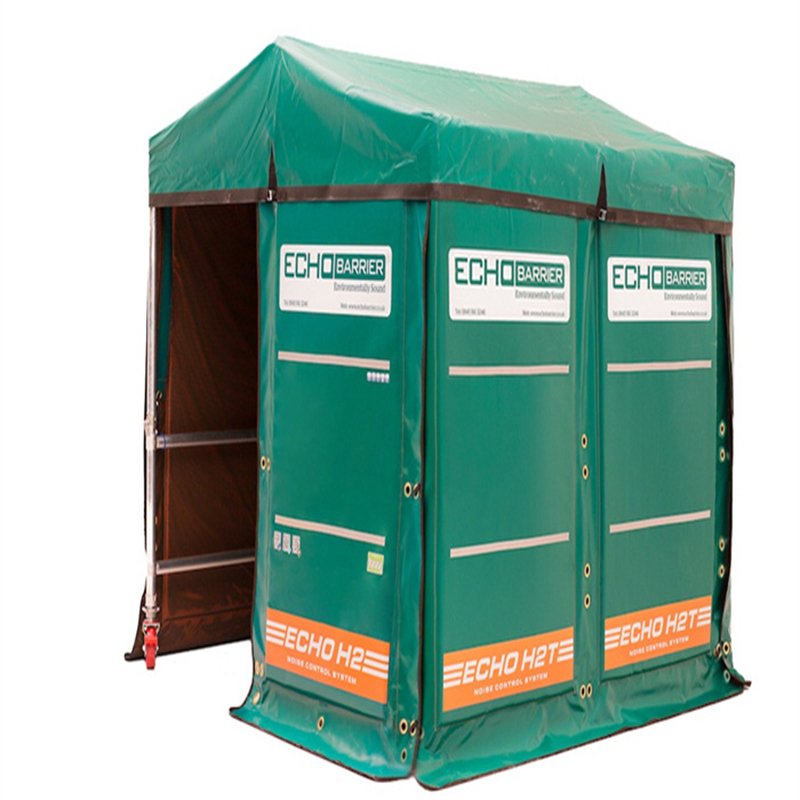
Portable noise barriers are temporary acoustic enclosures designed to reduce noise propagation from construction, demolition, traffic, mining, and outdoor industrial work zones. On real projects, the goal is not “silence”—the goal is to reduce transmitted noise enough to protect schedules, reduce complaints, and keep crews working when the site is close to neighbors, businesses, hospitals, or city-center apartments.
The hidden problem is that many portable acoustic products look similar in photos, but behave very differently after rain cycles, sun exposure, wind load, repeated folding, and daily re-hanging. If the barrier has weak seams, poor grommet pull strength, unstable hanging geometry, or inconsistent acoustic layers, performance degrades quietly—then the project pays twice: once for materials, and again for rework, penalties, and replacement.
Why Portable noise barriers Keep Replacing “Good Enough” Solutions
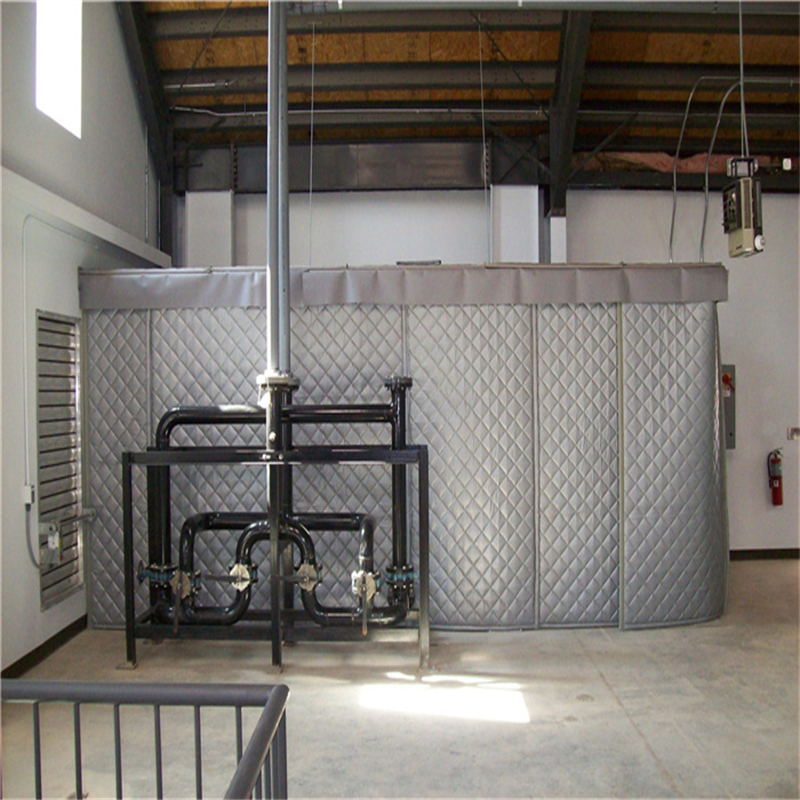
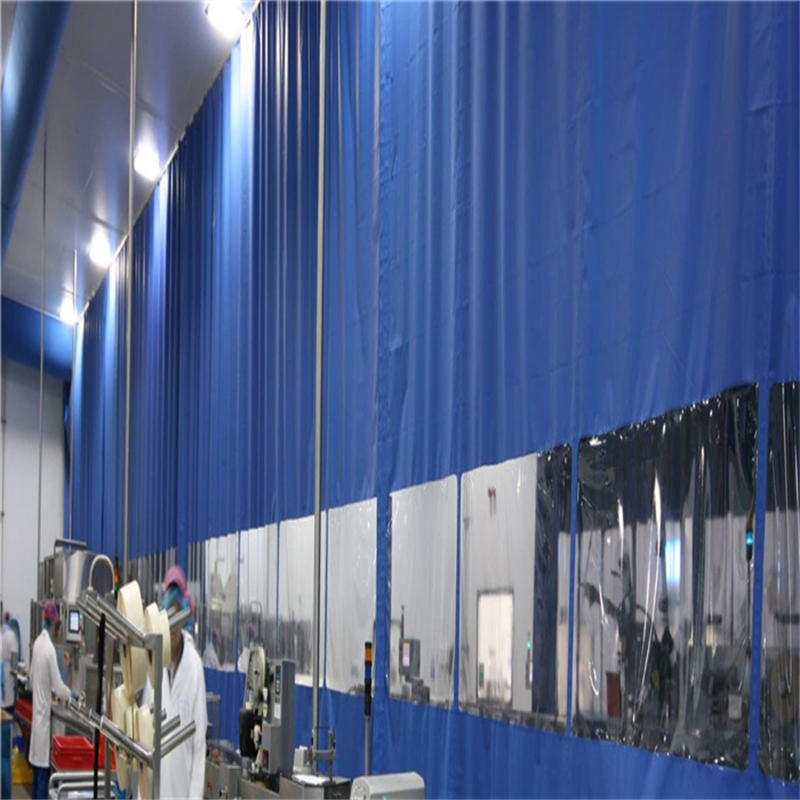
Tape and signage create a boundary, but they do not reduce transmission. When noise becomes the risk, only an engineered barrier system can reduce propagation. Proper Portable noise barriers allow faster deployment than permanent wall systems, fold down for transport, stack in pallets for storage, and can be mounted to hoarding, steel frames, scaffolding, or temporary fence lines. Many sites also specify waterproof and fire-resistant performance so output remains stable under real outdoor exposure.
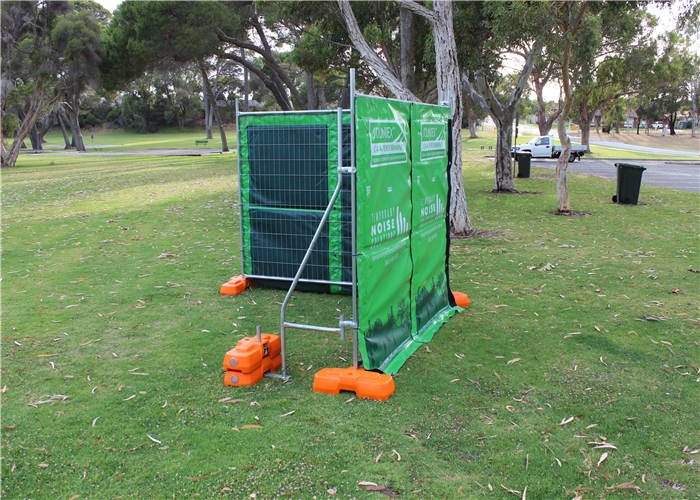
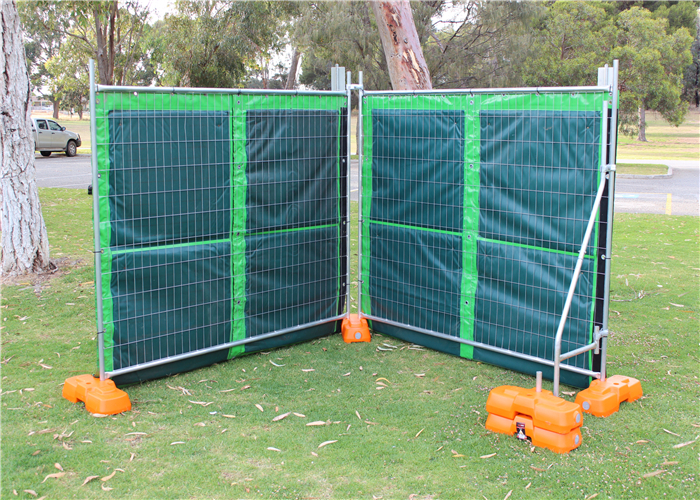
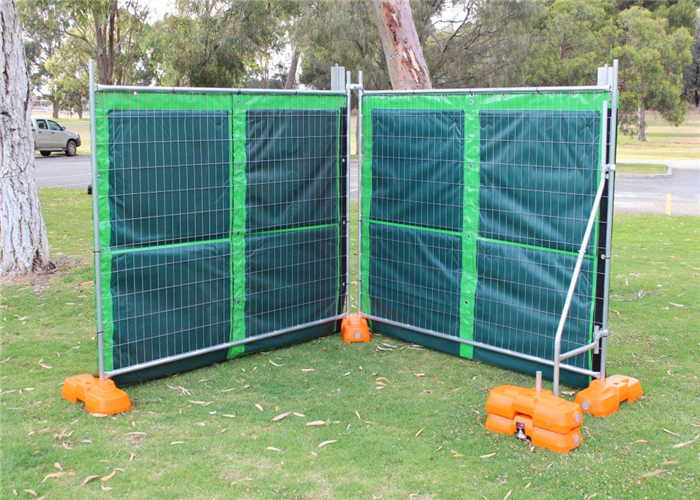
How Portable noise barriers Work
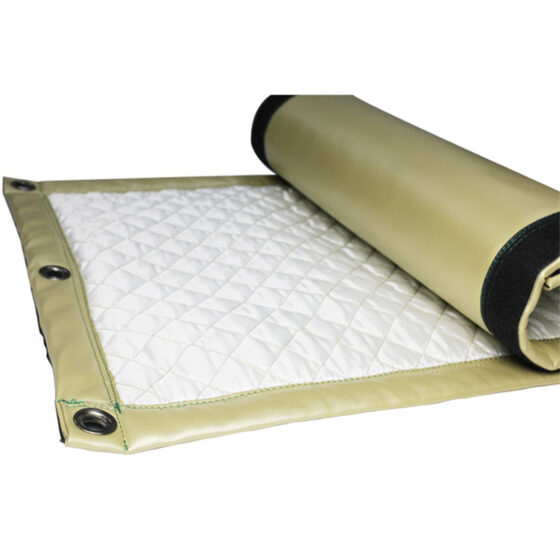
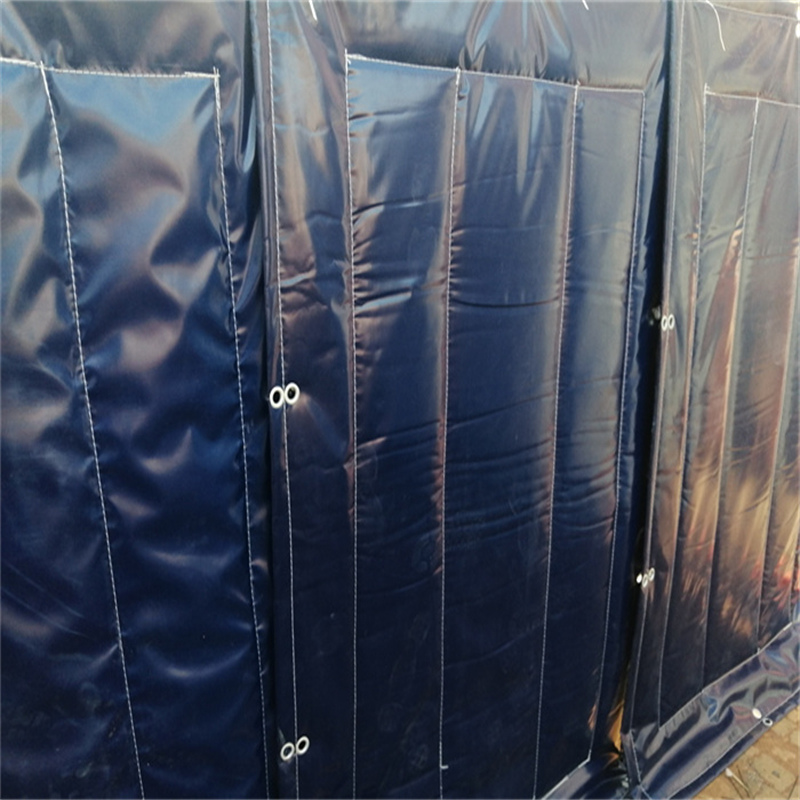
Portable acoustic barriers typically combine sound blocking and sound absorption. Blocking reduces transmitted noise to the neighborhood; absorption reduces reflected noise and “bounce” inside the work zone. A layered composite—often including high-density laminated materials and durable outer PVC film—helps control both. Correct coverage, overlap, and gap control are as important as the blanket itself, because sound escapes through the smallest openings.
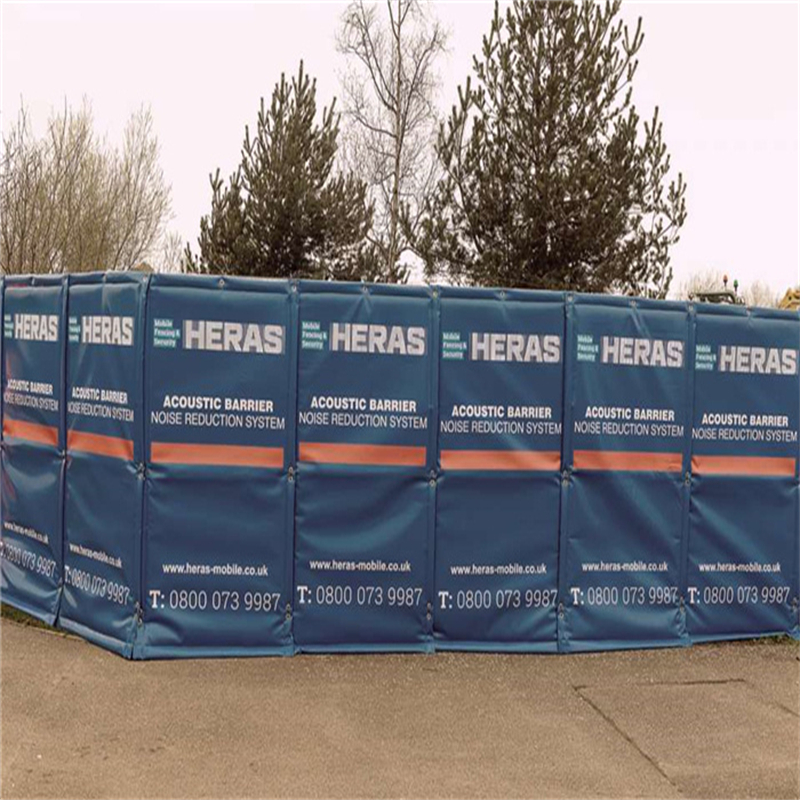
Top 20 High-Risk Buyer Traps for Portable noise barriers Orders
Each issue below looks “small” on a quotation, but becomes expensive once the barrier is installed and the schedule is locked. Pay special attention to #12, because that is where most long-term losses occur.
Trap #1: Buying Portable noise barriers without defining the working dB target
If the project does not lock the reduction range (for example 25dB–40dB), suppliers can deliver a “looks right” blanket that does not block the frequency band your site actually generates.
Trap #2: Confusing absorption with blocking
Absorption reduces reflections; blocking reduces transmission to neighbors. A site near residential areas usually needs both, not one.
Trap #3: Choosing thickness without understanding weight and handling
18mm, 20mm, and 22mm can perform very differently. Thick barriers help acoustics, but weight rises and frames must support it safely.
Trap #4: Underestimating wind behavior
Loose blankets flap, slap frames, and create secondary noise while also opening gaps. Tension and fixing layout matter.
Trap #5: Waterproof claimed but not engineered at seams
Water intrusion starts at seams and hardware points. Wet barriers get heavier, harder to handle, and degrade faster.
Trap #6: Eyelet spacing not matched to your frame
Eyelets “usual 100mm per one” might be fine for some setups, but wrong spacing causes sag lines and leak lines.
Trap #7: Weak grommet pull strength
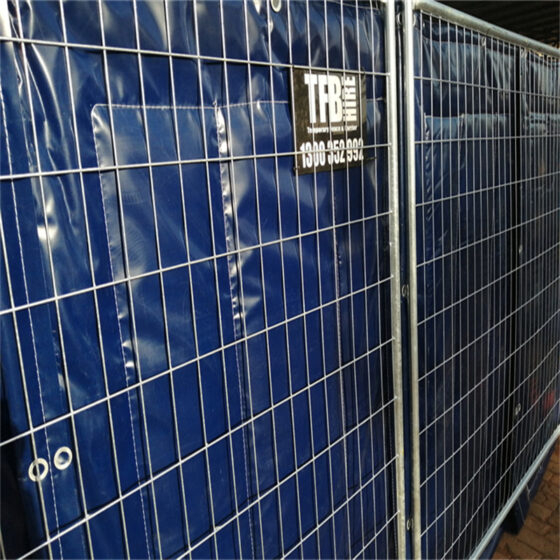
Most failures start at the top corners. If reinforcement patches and stitching are weak, the barrier tears under wind load.
Trap #8: No overlap plan (vertical leak lines)
Edge-to-edge hanging creates leak seams. Overlap planning is the difference between “installed” and “working.”
Trap #9: No ground-line sealing strategy
Sound travels under blankets. Without weighted bottoms, skirt overlap, or controlled clearance, performance collapses.
Trap #10: Outer PVC film not UV treated
Outdoor barriers need UV stability. Low-grade PVC cracks, then water intrusion and fiber damage accelerate.
Trap #11: Fire resistance assumed, not specified
Projects often require water and fire resistance. If fire performance is not defined, compliance risk appears later.
Trap #12: Gap control failure (BIGGEST LOSS)
This is where the biggest losses occur. Even a high-dB blanket fails if installation leaves gaps—at corners, between blankets, at the bottom edge, or around frames. Noise escapes through the smallest openings, complaints rise, and crews spend days re-hanging and patching. The result is costly rework and a barrier line that looks “fixed” instead of finished.
Trap #13: Folding damage during storage
Incorrect folding creases the laminate, weakens layers, and creates early cracking lines in the outer film.
Trap #14: Pallet stacking without separation
Hard rub points and compression deform layers. Poor stacking reduces both appearance and performance before the first use.
Trap #15: Wrong barrier size for your fence line
If H1950×W1200 is used where wider bays are needed, the site builds patchwork layouts with more seams and more leaks.
Trap #16: No accessory plan (hooks, straps, ties, connectors)
Missing hardware causes improvised installation. Improvised installation causes gaps, tears, and performance loss.
Trap #17: Weight per m² ignored
Heavier barriers can be safer acoustically but risk frame overload. Lighter barriers can be easy to install but unstable under wind.
Trap #18: Expecting performance to remain unchanged in rain and sun without specifying materials
Real durability needs defined composite layers, defined PVC film quality, and defined seam reinforcement.
Trap #19: Buying only by “cheap per m²” price
The cheapest barrier becomes the most expensive when it tears, leaks, or requires constant re-hanging.
Trap #20: No receiving checklist and no field acceptance test
Without a simple receiving inspection (dimensions, thickness, seam integrity, eyelets, packing condition), defects are discovered on-site when time is most expensive.
Product Description: POLYMETAL Portable noise barriers
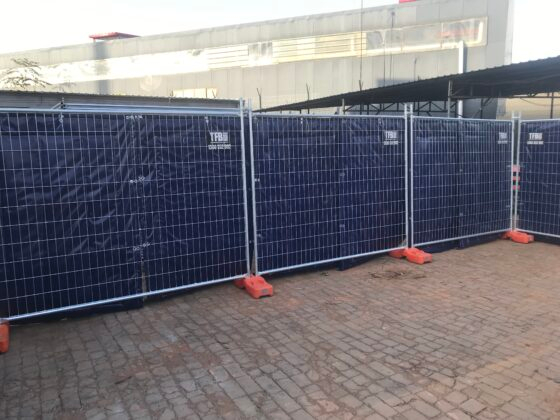
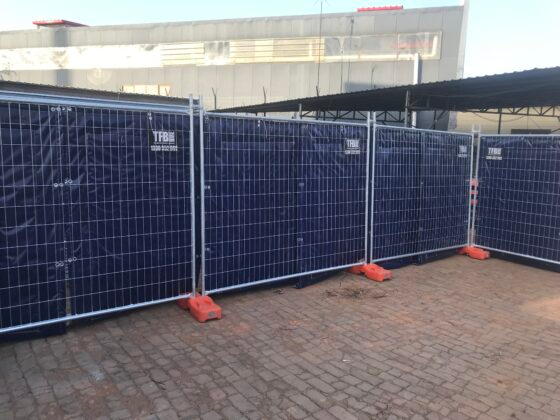
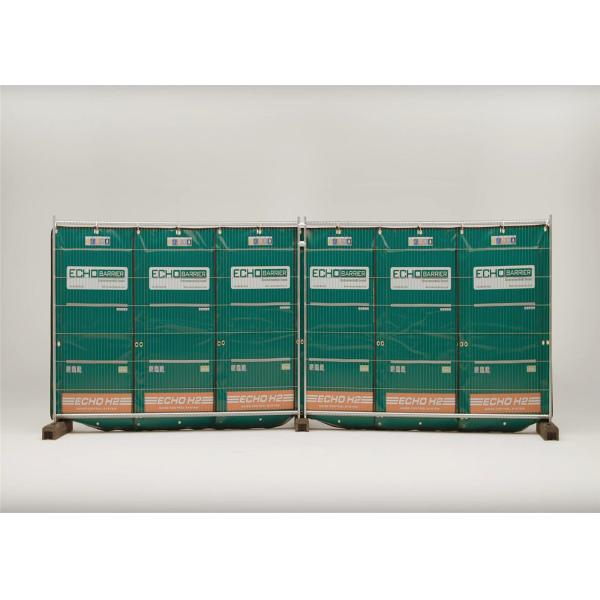
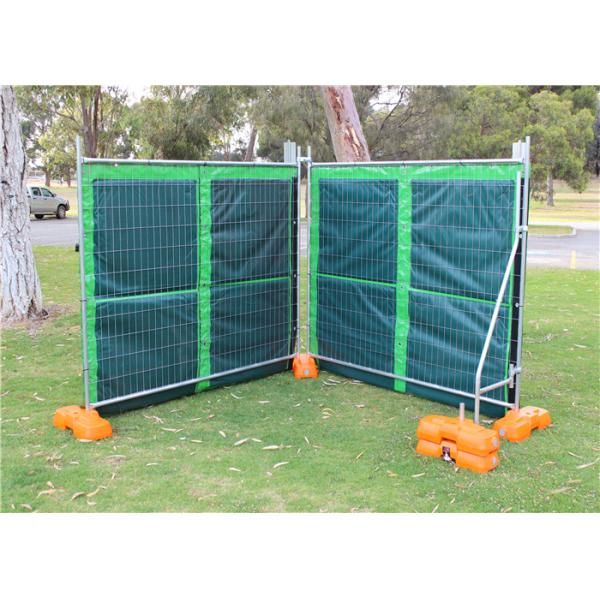
POLYMETAL Portable noise barriers are designed for an economy of transportation and storage, commonly supplied in a height of 1950mm and width of 1200mm, with fold-down construction that stacks efficiently in pallets. The barrier structure is built to resist water and fire and can be deployed across many outdoor equipment and industry scenarios to reduce transmitted noise in the range of approximately 25dB to 40dB. The system focuses on practical site handling: reliable hanging points, durable outer layers for outdoor exposure, and layered acoustic materials engineered for both absorption and blocking so performance stays stable through rain and sun cycles.
 |  |
 |  |
Specification of portable noise barriers
| The thickness of Noise Barriers | Weight of Per M2 Temporary Noise Fence |
| 18.00mm | 4.00kg/M2 20dB Noise Barrier |
| 20.00mm | 5.80kg/M2 30dB Noise Barrier |
| 22.00mm | 7.60kg/M2 40dB Noise Barrier |
| Temporary Noise Fence /barriers /Enclosure | |
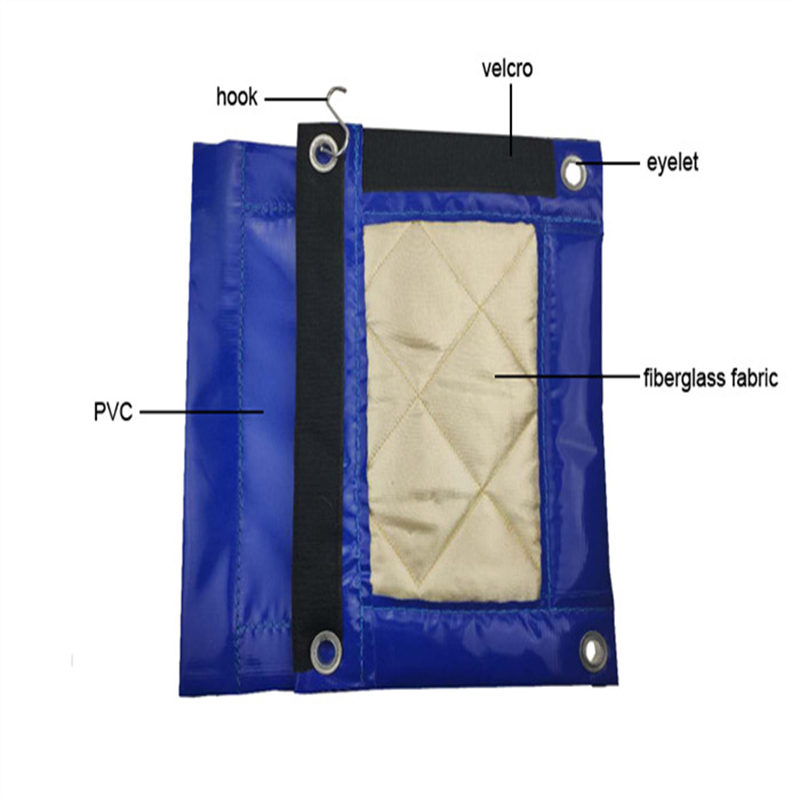
| Inside Materials | Composite Laminated ( Iron Powder, quartz, Rubber) high tenacity polyester |
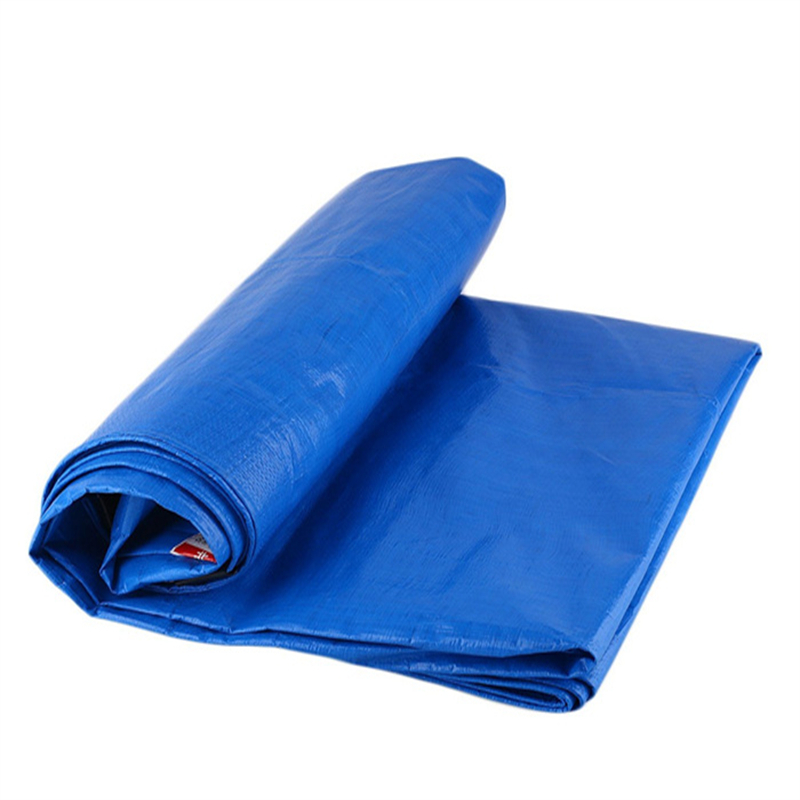
| Outside Materials | PVC film easy to clean UV treated |
| Size | Available customized standard 1950mm*1200mm 1830mm*1500mm etc |
| Temporary Acoustic barrier Eliminate Noise Rate | |
| 25dB per square meter weight 3.4kg laminated thick 1.2mm | |
| 30dB per square meter weight 4.4kg laminated thick 2.0mm | |
| 40dB per square meter weight 6.4kg laminated thick 3.0mm | |
| Eyelets | According to requirements usual 100mm per one |
| |
Additional Specification Checklist (Site-Friendly)
| Standard Panel Size | H1950mm × W1200mm (foldable); also 1830mm × 1500mm |
| Noise Reduction Options | Approx. 25dB / 30dB / 40dB (by laminate structure and thickness) |
| Outer Layer | Durable UV-treated PVC film (easy clean) |
| Inner Core | Composite laminated acoustic layers + high tenacity polyester cloth |
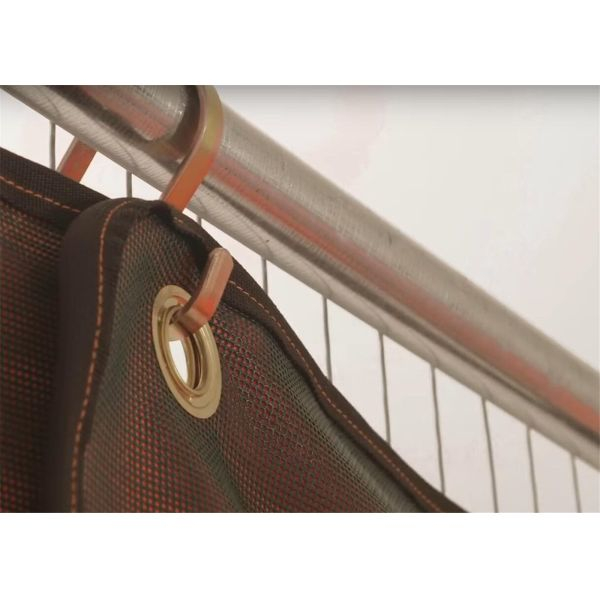
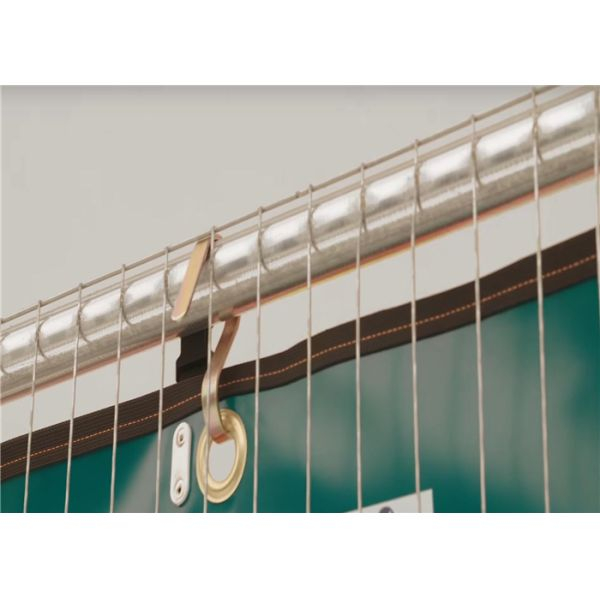
| Hanging Points | Reinforced eyelets + straps/hooks (layout matched to frame) |
| Service Life Target | Minimum 3 outdoor years (typical site use) |
Advantages of Portable Noise Barriers
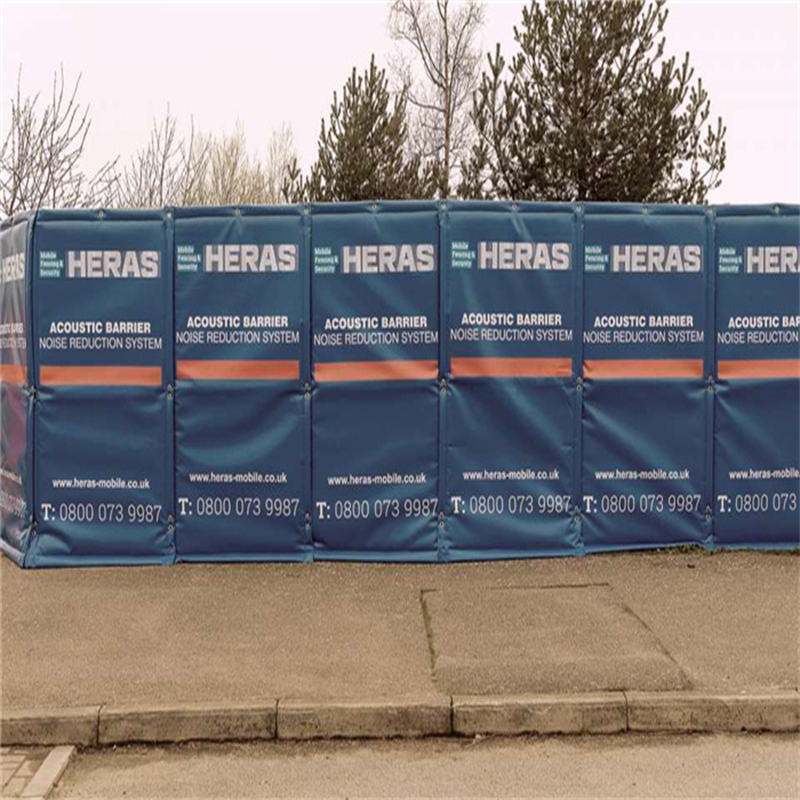
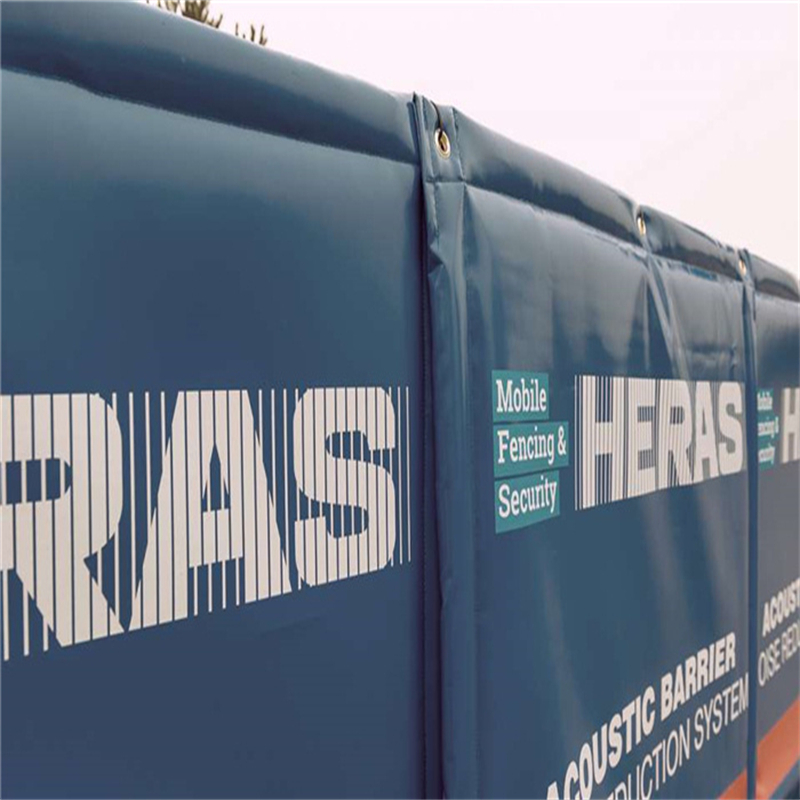
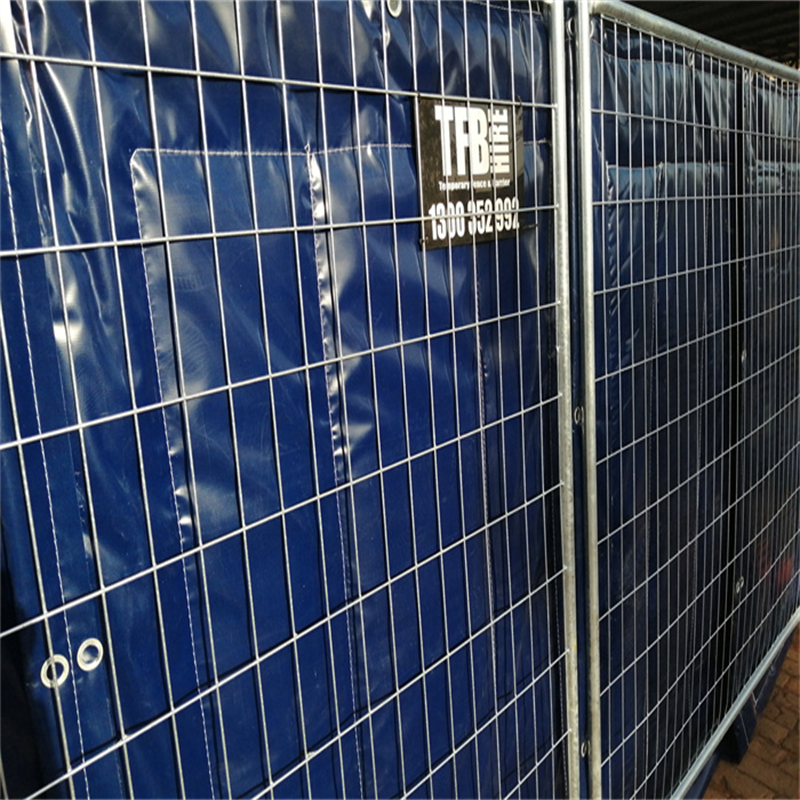
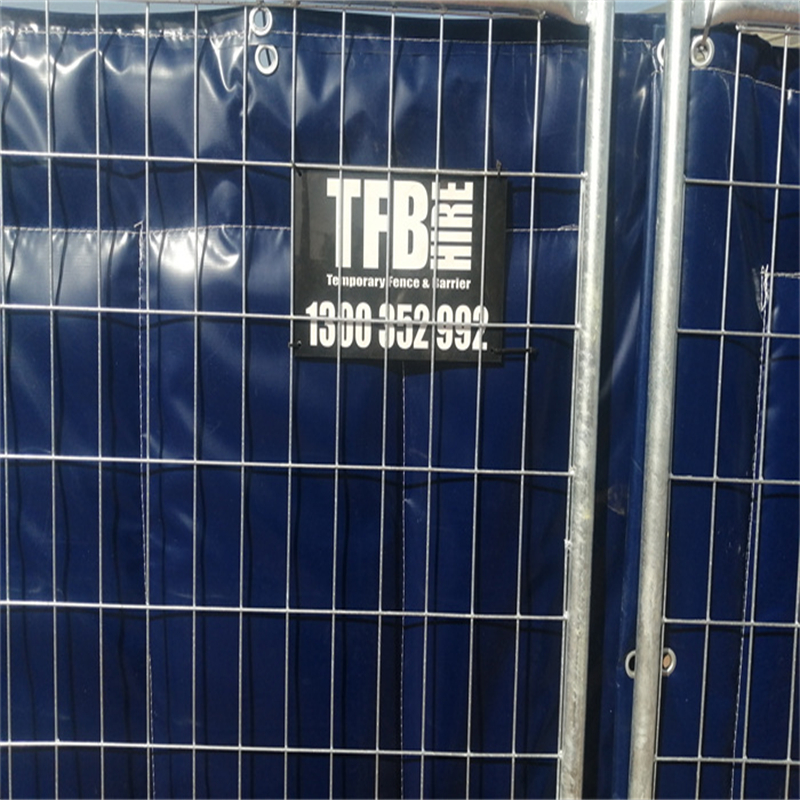
- Print your logo and Phone number to display your brand
- Waterproof design helps block noise while refusing water intrusion
- Nonflammable / Fireproof options for higher compliance environments
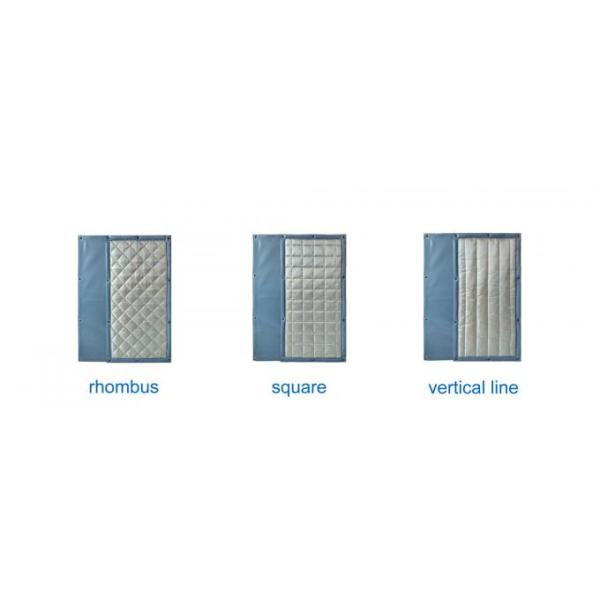
- Noise absorbed and insulation improved through layered structure
- Light duty design for quick installation and pallet stacking
- 20dB / 30dB / 40dB noise reduction optional
- Static-free materials layer optional
- Lower cost than permanent steel noise barriers in many temporary projects
- Designed for minimum 3 outdoor years service life
- Various colours optional
- 100% non-poisonous materials with no irritant composite layers
- Custom size and dimension available; suitable for door-to-door shipping logistics
- External layer covered with durable UV PVC plastic for lower maintenance and cleaning cost
- Composite laminate thickness options 1.2mm / 2.0mm / 3.0mm with acoustic reduction targets
- EPDM laminated outside + PE membrane options to absorb noise and keep water out
- Designed dimensions can suit Australia 2100mm×2400mm fence panels and 6ft x 12ft chain link fence panels and 6ft x 9.5ft construction fence
- Fast setup: two people can erect a barrier line quickly, reducing installation cost
Applications
- Construction Site
- Demolition Project
- Mining Noise Reduction
- Event Soundproof
- Highway Portable Noise Barrier
- Oil & Gas
- Utilities
- Portable noise barriers for Railway
Packing
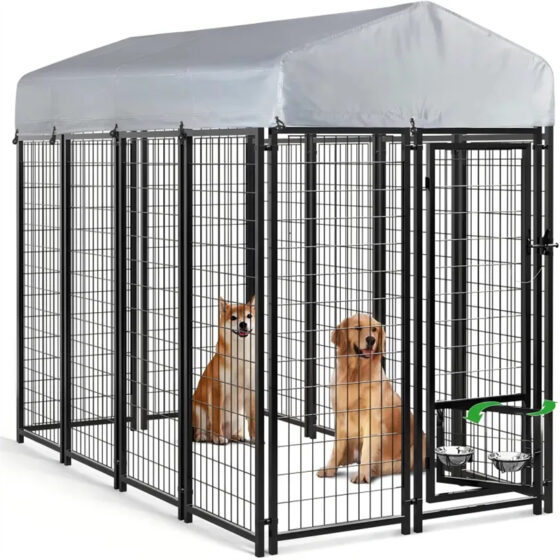
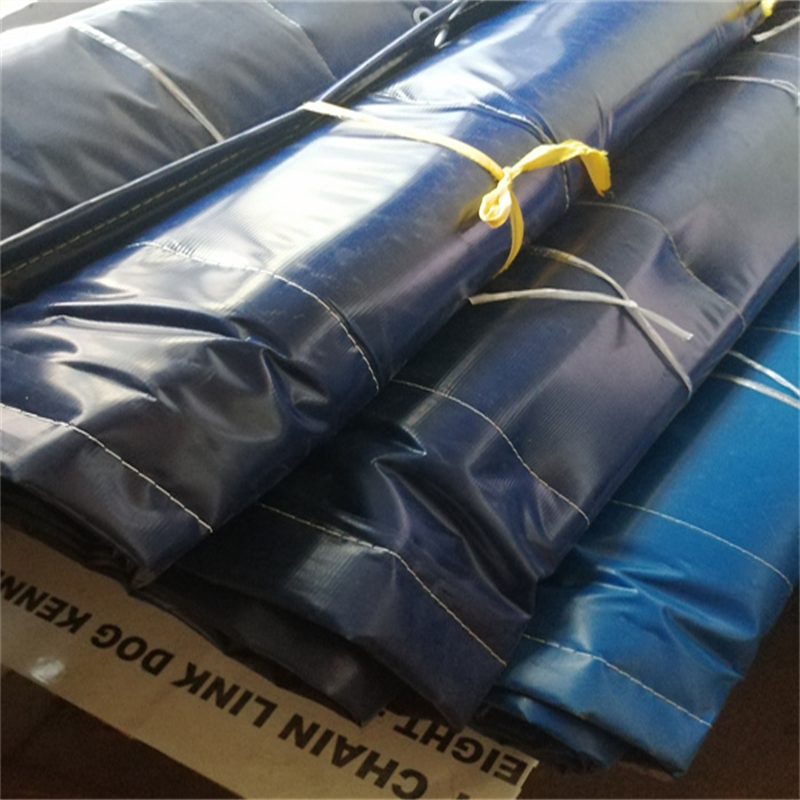
POLYMETAL typically packs portable acoustic panels to protect seam integrity and eyelets during transit. Panels are folded correctly to avoid crease damage, wrapped with protective film, stacked into pallets for storage efficiency, and stabilized for forklift handling. Accessories and hanging hardware are packed in counted cartons to prevent installation delays on site—using the same logistics discipline applied to bulky outdoor products such as outdoor welded wire dog kennels.
Standards and FAQs
Quality Standard
All products go through multiple checks during production and must pass strict inspection before shipment. Quality control verifies laminate consistency, seam integrity, eyelet reinforcement, finished dimensions, waterproof performance, and packing protection so portable noise barriers install cleanly and remain stable under real outdoor exposure.
FAQ
Q1: Which reduction level should I choose: 25dB, 30dB, or 40dB?
A: Select based on the complaint risk and proximity to neighbors. Higher dB options usually require heavier laminate and stronger support framing.
Q2: Why do some portable barriers “work” on day one but fail later?
A: Most failures come from seam weakness, poor eyelet reinforcement, water intrusion, UV cracking, and gap control errors during installation.
Q3: What is the fastest way to lose performance?
A: Leaving gaps at edges, bottoms, corners, and joins—sound escapes through the smallest openings, especially under wind movement.
Q4: Can I brand the barrier line?
A: Yes, logo and phone printing can be added to the outer layer to support event visibility and contractor branding.