Your One-Stop Wire Mesh Fence Supplier | POLYMETAL


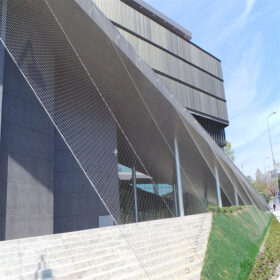
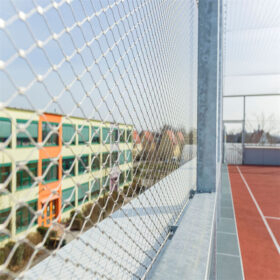


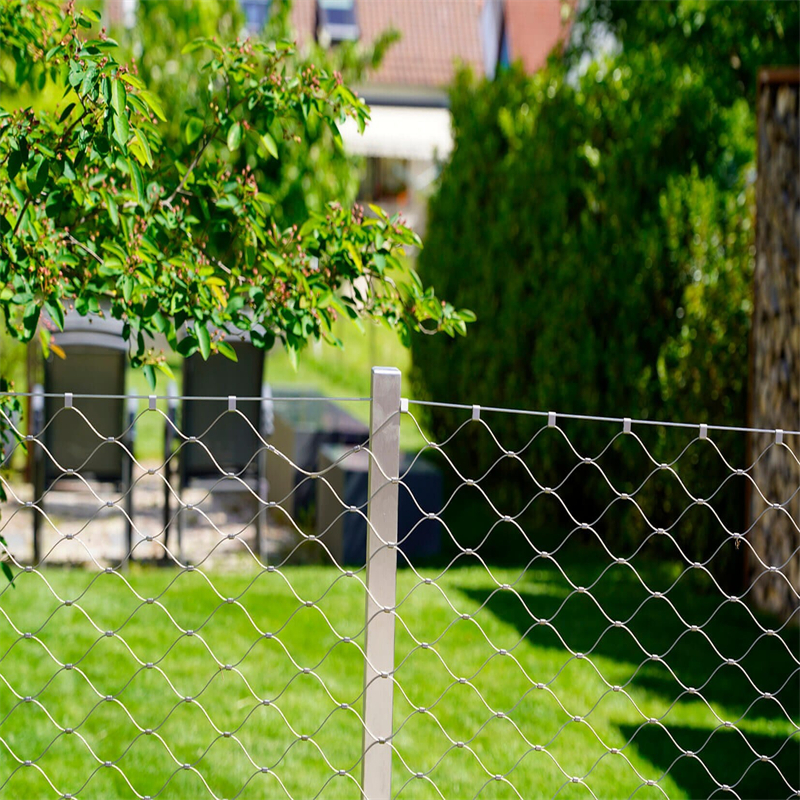
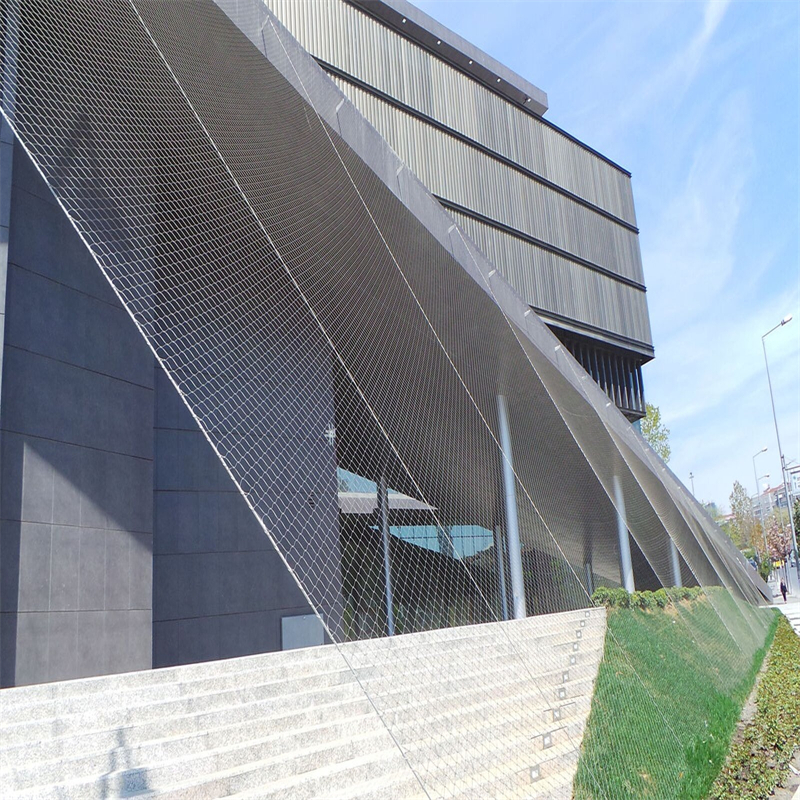
stainless steel cable mesh fencing is a flexible, high-strength stainless steel cable net system designed for demanding architectural and safety applications. Using marine-grade stainless steel wire rope and precision ferrules, stainless steel cable mesh fencing delivers low weight, excellent transparency and long-term corrosion resistance. It is widely installed on façades, bridges, stair balustrades, helidecks, zoo enclosures, walkways and perimeter security zones where designers need an elegant but extremely reliable safety barrier.
In public buildings, offshore platforms, transport hubs and zoological parks, the mesh infill is often the last barrier between a minor incident and a major accident. Correctly specified stainless steel cable mesh fencing works quietly in the background for decades, protecting people, animals and structures. If you overlook a few critical design and installation warnings, however, you can create dangerous weak points and unexpected financial losses.

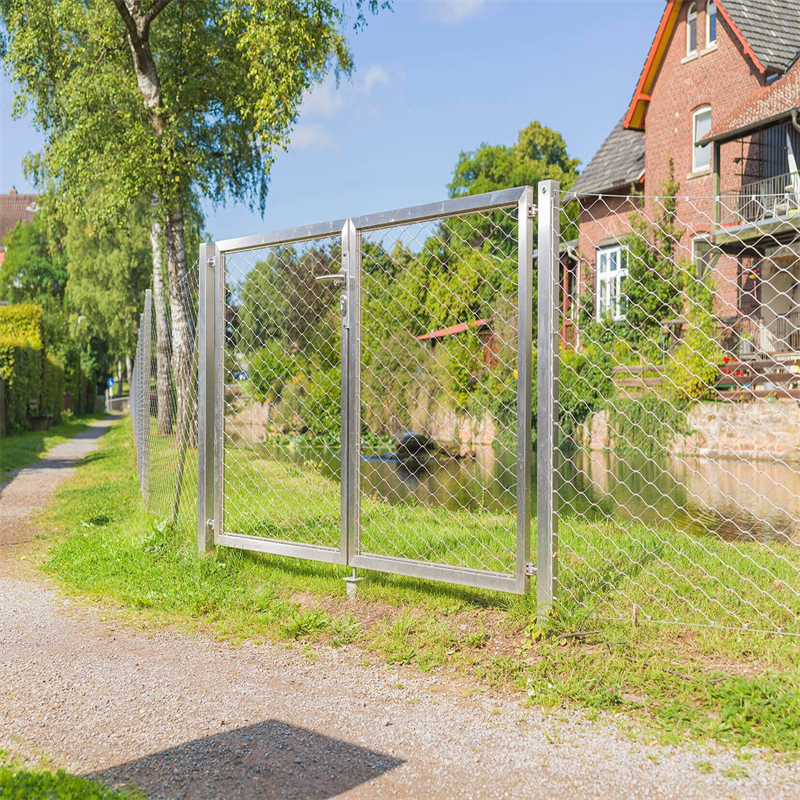

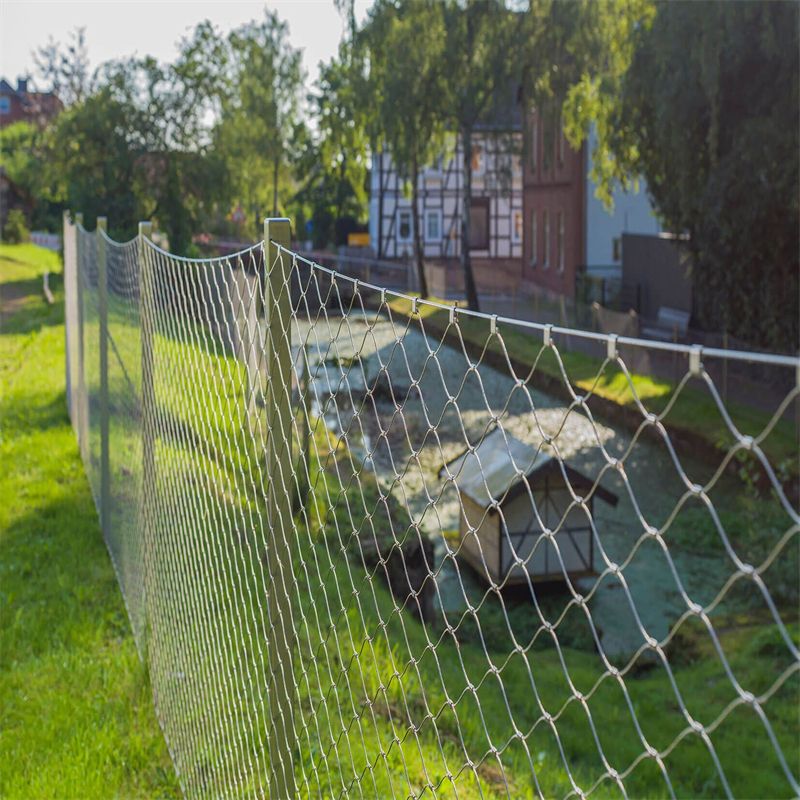
What Is stainless steel cable mesh fencing?
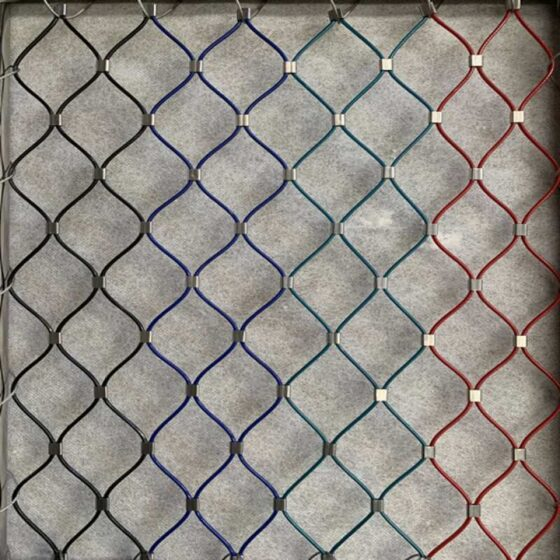
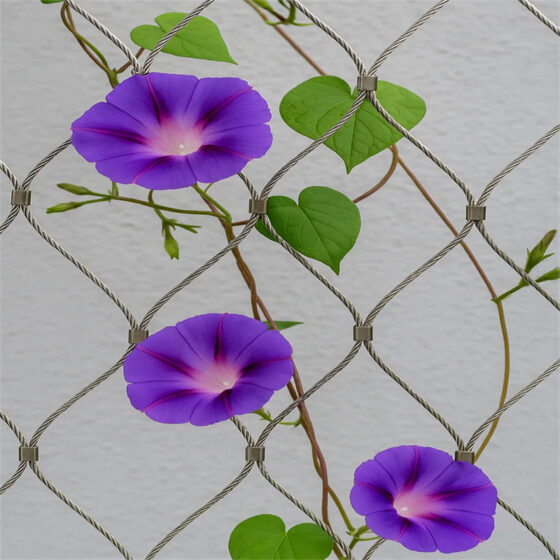
stainless steel cable mesh fencing is composed of high-tensile stainless steel wire rope that is woven or ferrule-pressed into a net with diamond or square apertures. The mesh deforms elastically under load, spreading forces through the rope network and back into the edge frames. This allows the system to absorb impact energy while maintaining a visually light and open appearance, instead of the heavy look of traditional bar or plate systems.
Typical construction details include stainless steel wire rope diameters from 1.2–4.0 mm, mesh apertures from 20 × 20 mm up to 300 × 300 mm, rope structures of 7 × 7 and 7 × 19 for optimal flexibility and strength, and material grades ranging from AISI 304 / 304L for inland projects to AISI 316 / 316L for coastal and marine environments.
Insight #1 – Load path insight that controls real fencing safety
The first critical insight is that mesh aperture, wire rope diameter, mesh angle and support spacing together define the real load path of stainless steel cable mesh fencing. If the aperture is too large for the chosen wire diameter, or if support spacing is too wide, the mesh can deflect excessively under impact. This can create large openings exactly when you most need the barrier to hold. Balancing these parameters correctly gives controlled deflection, high energy absorption and reliable containment of people, tools and animals.


Materials, Wire Rope Structures and Corrosion Resistance
stainless steel cable mesh fencing is produced from cold-drawn stainless steel wire that is stranded into ropes. Two main wire rope structures are commonly used to balance strength and flexibility:
* 7 × 7: compact and relatively stiff, ideal for small apertures, balustrades and façade infill
* 7 × 19: highly flexible, ideal for larger spans, curved layouts and three-dimensional shapes
The primary stainless steel grades are:
* AISI 304 / 304L: suitable for interior and mild exterior climates
* AISI 316 / 316L: with added molybdenum, ideal for aggressive coastal, marine and industrial atmospheres where resistance to pitting and crevice corrosion is critical
Detail #2 – Material selection detail that blocks hidden corrosion
A crucial detail is the choice between AISI 304 and AISI 316 in stainless steel cable mesh fencing. In coastal, industrial or chlorinated environments, underspecifying the grade can allow pitting and crevice corrosion to start inside ferrules or at points where moisture stagnates. Correctly upgrading to AISI 316 / 316L in these zones eliminates this hidden corrosion route and protects the full breaking strength of every wire rope throughout the service life of the fence.
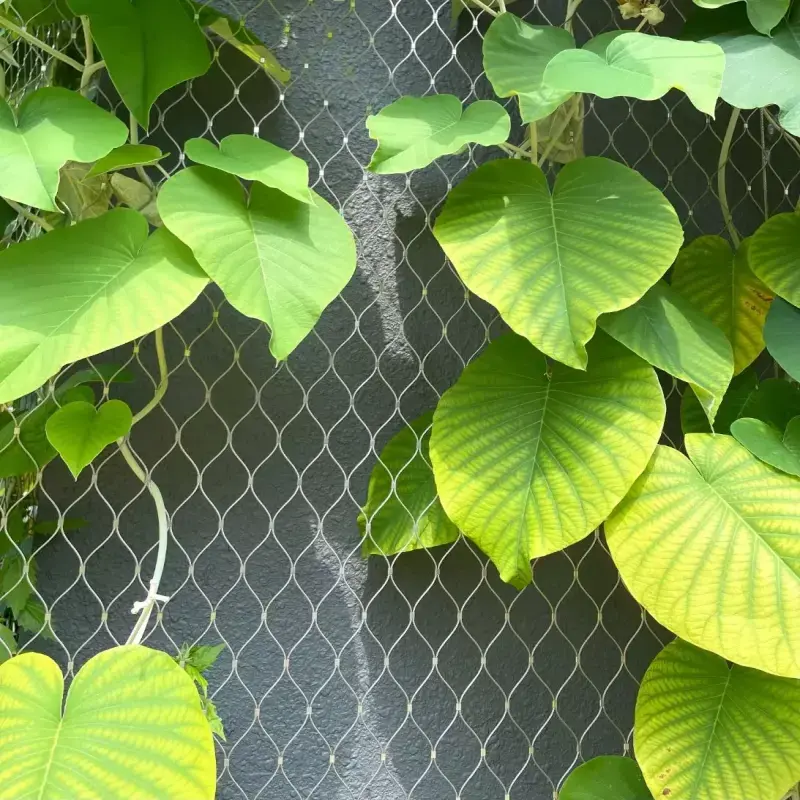
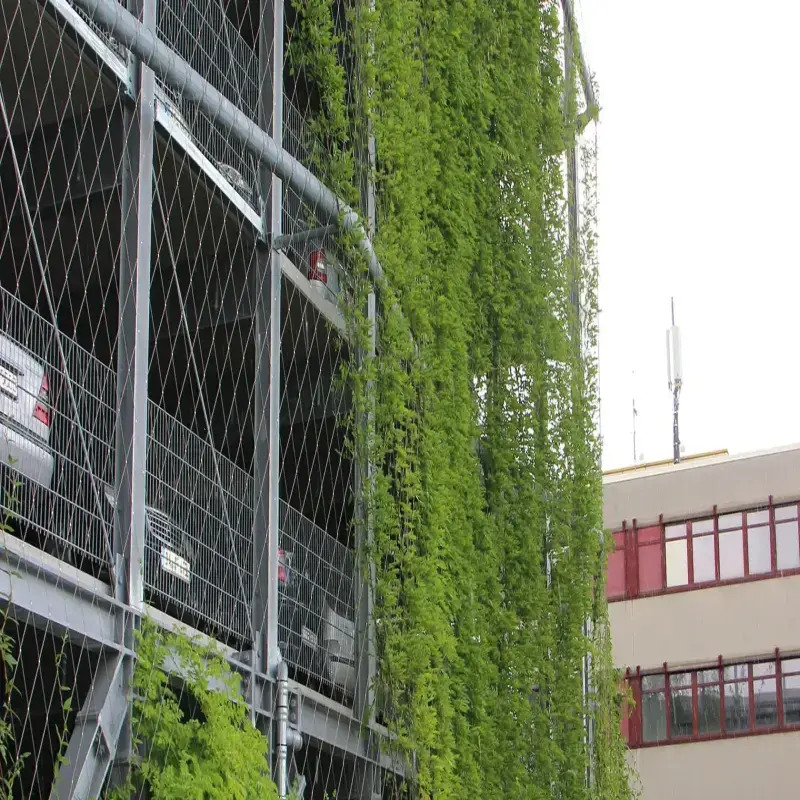
Specification Table 1 – Façade and Balustrade stainless steel cable mesh fencing
This table shows typical configurations used for façades, bridge rails and stair balustrades where transparency and safety must both be high.


| WIRE ROPE DIAMETER | MESH APERTURE | Angle degrees: | Light Transmittance (%) | Material | Nominal Breaking Load (lbs) | WIRE ROPE STRUCTURES |
| 1.5 mm | 30 × 50 mm | 60° | 80% | AISI 316 | 1,150 | 7 × 7 |
| 1.5 mm | 35 × 60 mm | 60° | 82% | AISI 316 | 1,150 | 7 × 7 |
| 1.6 mm | 40 × 70 mm | 60° | 84% | AISI 316 | 1,250 | 7 × 7 |
| 1.6 mm | 50 × 80 mm | 60° | 86% | AISI 316 | 1,250 | 7 × 7 |
| 2.0 mm | 50 × 90 mm | 70° | 87% | AISI 316 | 2,000 | 7 × 7 |
| 2.0 mm | 60 × 100 mm | 70° | 88% | AISI 316 | 2,000 | 7 × 7 |
| 2.0 mm | 60 × 120 mm | 70° | 89% | AISI 316 | 2,000 | 7 × 7 |
| 2.0 mm | 70 × 130 mm | 75° | 90% | AISI 316 | 2,000 | 7 × 7 |
| 2.4 mm | 80 × 140 mm | 75° | 91% | AISI 316 | 3,100 | 7 × 7 |
| 2.4 mm | 90 × 160 mm | 75° | 92% | AISI 316 | 3,100 | 7 × 7 |
| 2.4 mm | 100 × 180 mm | 80° | 93% | AISI 316 | 3,100 | 7 × 7 |
| 3.0 mm | 100 × 200 mm | 80° | 94% | AISI 316 | 4,600 | 7 × 19 |
| 3.0 mm | 120 × 220 mm | 80° | 95% | AISI 316 | 4,600 | 7 × 19 |
| 3.2 mm | 120 × 240 mm | 85° | 96% | AISI 316 | 5,100 | 7 × 19 |
| 3.2 mm | 150 × 260 mm | 85° | 96% | AISI 316 | 5,100 | 7 × 19 |
Risk #3 – Balustrade risk that exposes people to falls
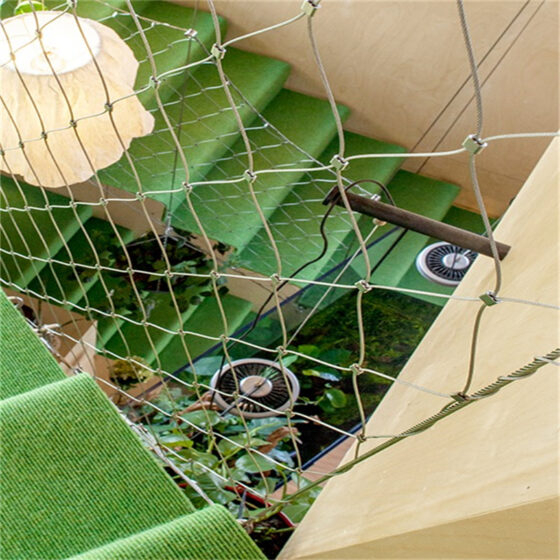
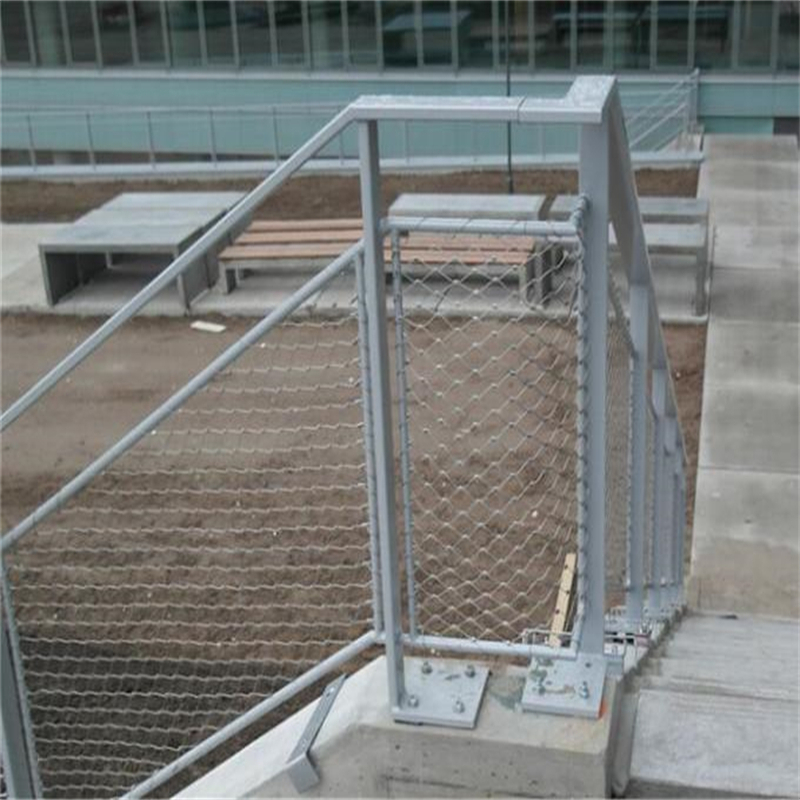
When stainless steel cable mesh fencing is used in stairways, balconies or bridge balustrades, one major risk is leaving openings near the floor, posts or handrails that exceed local code limits. These gaps are often created by incorrect aperture selection, poor terminations or rushed detailing at corners. Eliminating this risk is straightforward: choose apertures that match regulations and design edge connections so the mesh closes fully to the structure with no climbable gaps.
Zoo and Park Use of stainless steel cable mesh fencing
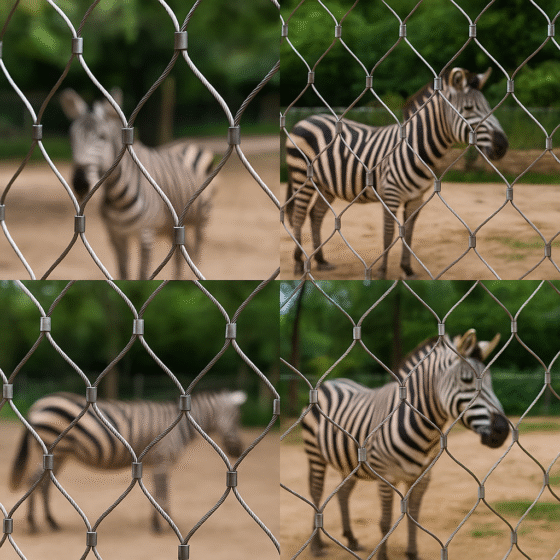
Zoos, aviaries and wildlife parks use stainless steel cable mesh fencing to create light, natural-looking enclosures that keep animals safe while giving visitors unobstructed views. For birds, primates and big cats, the combination of high tensile strength, flexibility and minimal visual obstruction makes the mesh ideal for immersive habitats, overhead tunnels and walk-through exhibits.
Key design points for zoo projects include matching aperture size to species and behavior, using suitable rope diameters in areas where animals may contact the mesh frequently, and combining stainless steel cable mesh fencing with discreet structural frames, tension rings and gates.
Specification Table 2 – Zoo and Aviary stainless steel cable mesh fencing



| WIRE ROPE DIAMETER | MESH APERTURE | Angle degrees: | Light Transmittance (%) | Material | Nominal Breaking Load (lbs) | WIRE ROPE STRUCTURES |
| 1.2 mm | 20 × 20 mm | 60° | 70% | AISI 304 | 800 | 7 × 7 |
| 1.2 mm | 25 × 25 mm | 60° | 72% | AISI 304 | 800 | 7 × 7 |
| 1.5 mm | 30 × 30 mm | 60° | 75% | AISI 304 | 1,150 | 7 × 7 |
| 1.5 mm | 35 × 35 mm | 60° | 77% | AISI 304 | 1,150 | 7 × 7 |
| 1.6 mm | 40 × 40 mm | 70° | 80% | AISI 304 | 1,250 | 7 × 7 |
| 1.6 mm | 50 × 50 mm | 70° | 82% | AISI 304 | 1,250 | 7 × 7 |
| 2.0 mm | 50 × 60 mm | 70° | 84% | AISI 316 | 2,000 | 7 × 7 |
| 2.0 mm | 60 × 80 mm | 70° | 86% | AISI 316 | 2,000 | 7 × 7 |
| 2.0 mm | 70 × 100 mm | 70° | 88% | AISI 316 | 2,000 | 7 × 7 |
| 2.4 mm | 80 × 120 mm | 75° | 90% | AISI 316 | 3,100 | 7 × 7 |
| 2.4 mm | 100 × 150 mm | 75° | 92% | AISI 316 | 3,100 | 7 × 7 |
| 3.0 mm | 120 × 180 mm | 80° | 93% | AISI 316 | 4,600 | 7 × 19 |
| 3.0 mm | 150 × 200 mm | 80° | 94% | AISI 316 | 4,600 | 7 × 19 |
| 3.2 mm | 180 × 220 mm | 80° | 95% | AISI 316 | 5,100 | 7 × 19 |
| 3.2 mm | 200 × 250 mm | 85° | 96% | AISI 316 | 5,100 | 7 × 19 |
Warning #4 – Animal welfare warning inside enclosures
In zoo and aviary projects, one critical warning is animal interaction with stainless steel cable mesh fencing and other types of zoo aviary mesh. If aperture and wire diameter are mismatched to the species, claws, beaks, horns or tails can become trapped, causing injury and stress. Choosing apertures that suit the size and behavior of each animal, and using smooth ferrules in high-contact zones, eliminates this welfare warning while keeping visitor views wide open.
Helidecks, Industrial Platforms and Fall Protection
stainless steel cable mesh fencing is also widely used on helidecks, offshore platforms, industrial walkways and high-rise roofs where fall protection and dropped-object control are essential. The mesh is fixed to steel frames, perimeter rings or guardrail systems to form a continuous, resilient barrier that resists rotor wash, wind and impact from people and equipment.
Here, safety demands heavier wire diameters and robust edge anchoring so that the fence can withstand dynamic loads without permanent deformation or tearing.
Specification Table 3 – Helideck and High-Fall stainless steel cable mesh fencing
| WIRE ROPE DIAMETER | MESH APERTURE | Angle degrees: | Light Transmittance (%) | Material | Nominal Breaking Load (lbs) | WIRE ROPE STRUCTURES |
| 2.0 mm | 60 × 60 mm | 60° | 88% | AISI 316 | 2,000 | 7 × 7 |
| 2.0 mm | 70 × 70 mm | 70° | 89% | AISI 316 | 2,000 | 7 × 7 |
| 2.4 mm | 80 × 80 mm | 70° | 90% | AISI 316 | 3,100 | 7 × 7 |
| 2.4 mm | 90 × 90 mm | 70° | 91% | AISI 316 | 3,100 | 7 × 7 |
| 3.0 mm | 100 × 100 mm | 75° | 92% | AISI 316 | 4,600 | 7 × 19 |
| 3.0 mm | 120 × 120 mm | 75° | 93% | AISI 316 | 4,600 | 7 × 19 |
| 3.2 mm | 130 × 130 mm | 75° | 94% | AISI 316 | 5,100 | 7 × 19 |
| 3.2 mm | 150 × 150 mm | 80° | 95% | AISI 316 | 5,100 | 7 × 19 |
| 4.0 mm | 150 × 200 mm | 80° | 95% | AISI 316 | 7,900 | 7 × 19 |
| 4.0 mm | 150 × 260 mm | 80° | 95% | AISI 316 | 7,900 | 7 × 19 |
| 4.0 mm | 180 × 300 mm | 80° | 96% | AISI 316 | 7,900 | 7 × 19 |
| 4.0 mm | 200 × 300 mm | 85° | 96% | AISI 316 | 7,900 | 7 × 19 |
| 3.2 mm | 180 × 220 mm | 80° | 95% | AISI 316 | 5,100 | 7 × 19 |
| 3.2 mm | 180 × 250 mm | 80° | 95% | AISI 316 | 5,100 | 7 × 19 |
| 3.2 mm | 200 × 280 mm | 85° | 96% | AISI 316 | 5,100 | 7 × 19 |
Trap #5 – Aperture trap for platforms and helidecks
On helidecks and high-level platforms, one dangerous trap is specifying mesh apertures large enough for helmets, radios, tools or PPE to slip through under vibration and rotor wash. If stainless steel cable mesh fencing is treated like simple decorative infill, this trap goes unnoticed until a dropped object causes real damage below. Using heavy-duty combinations of mesh aperture and rope diameter blocks these objects while still allowing airflow and drainage.
Design Detailing, Edge Connections and Structural Integration
The performance of stainless steel cable mesh fencing depends strongly on how it is connected to the supporting structure. Edge cables, clamps, corner plates and posts must be designed as part of one system to carry combined loads from the mesh and any handrails or guardrails they support. Poor detailing at corners, stair starts and changes in direction can create weak points even when the main spans are correctly selected.
Lesson #6 – Design lesson at corners and stair starts
A vital design lesson from real projects is to treat every corner, stair start, platform joint and beam intersection as a special detail. stainless steel cable mesh fencing must either wrap continuously around these points or be anchored with overlapping panels so that no gaps appear. Doing this keeps the safety envelope continuous even on complex geometries and stops children or tools from finding unintended escape routes.
Benefit #7 – Transparency benefit that upgrades architecture
Beyond safety, stainless steel cable mesh fencing provides a clear architectural benefit. Its slender cables and open apertures keep façades, balconies, bridges and elevated walkways visually light, allowing natural light and views to pass through. This transforms stair cores, terraces and skywalks from heavy, closed spaces into open, modern architectural features while still meeting strict safety requirements.


Installation, Tensioning and Maintenance
During installation, stainless steel cable mesh fencing panels are pulled into place and tensioned between structural anchors using stainless steel turnbuckles, eye bolts and clamps. Correct, even tension is essential to prevent sagging and to ensure that every cable strand shares the load. Maintenance is usually limited to occasional cleaning and periodic visual checks of the mesh, clamps and anchors.
Threat #8 – Tensioning threat that can cause sudden loosening
If tensioning is done by eye instead of following clear procedures, some mesh panels remain slack while others are over-tightened. Slack areas can bulge alarmingly under impact, while over-tightened areas concentrate stress into individual wires and ferrules. This tensioning threat can lead to sudden loosening or wire breakage. Following a defined tensioning pattern and torque level removes this threat and locks in the designed performance across the entire fence.
Lesson #9 – Inspection lesson that prevents crisis and loss
Ignoring routine inspection of stainless steel cable mesh fencing is a costly lesson waiting to happen. Simple regular checks for broken wires, deformed apertures, loose clamps and corroded anchor points reveal early warning signs long before failure. Especially Lesson #9 is the one you cannot skip: if you do not read it and act on it, you risk a real safety crisis on site, emergency shutdowns and direct financial loss that far exceed the modest cost of scheduled inspections.
Payoff #10 – Long-term payoff and safety reward
When you specify stainless steel cable mesh fencing correctly – matching wire diameter, aperture, angle, material grade, rope structure and installation details to your real project conditions – the payoff is powerful and long-lasting. You gain a clean, modern and highly transparent fencing system that protects people, animals and assets year after year, reduces maintenance to simple cleaning and inspections, and delivers a clear safety reward: fewer incidents, stronger compliance and protection against the severe losses caused by overlooked design, material and installation mistakes.