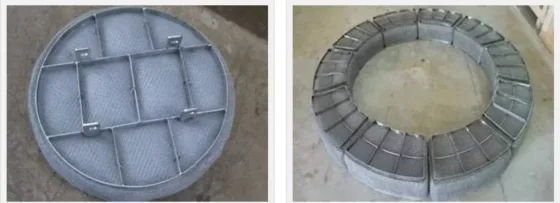
Your One-Stop Wire Mesh Fence Supplier | POLYMETAL
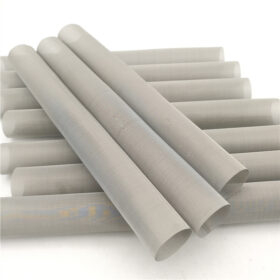
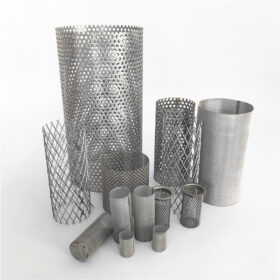
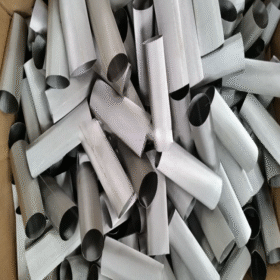
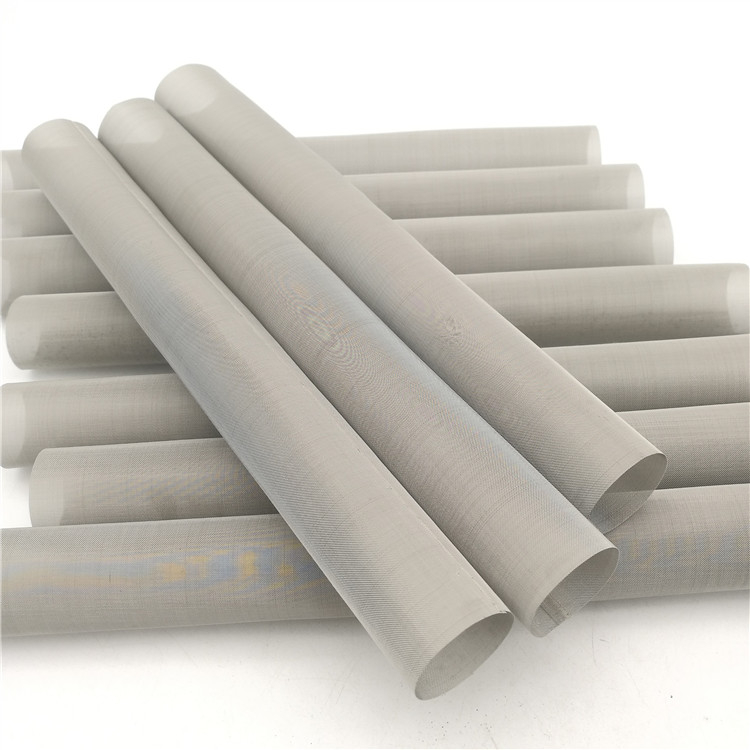
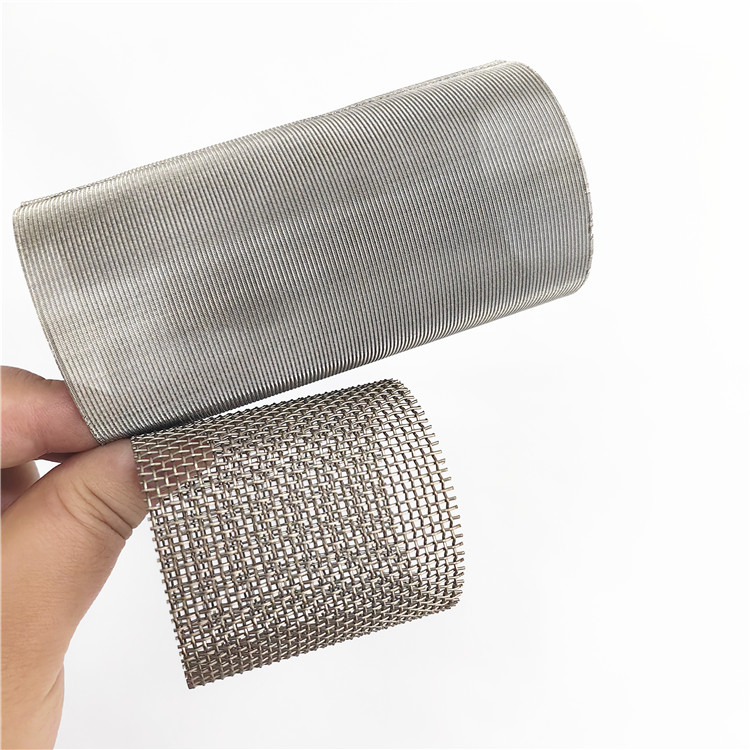
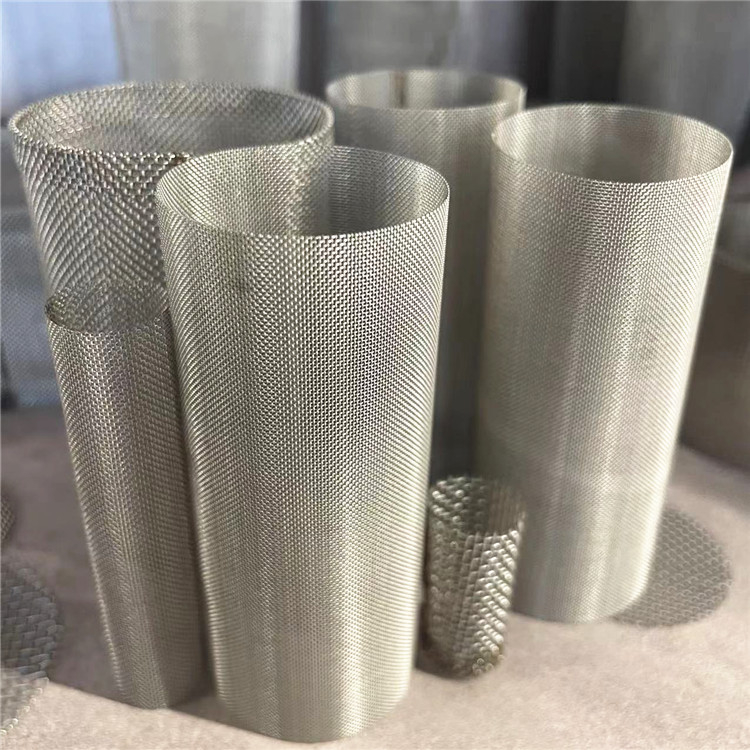
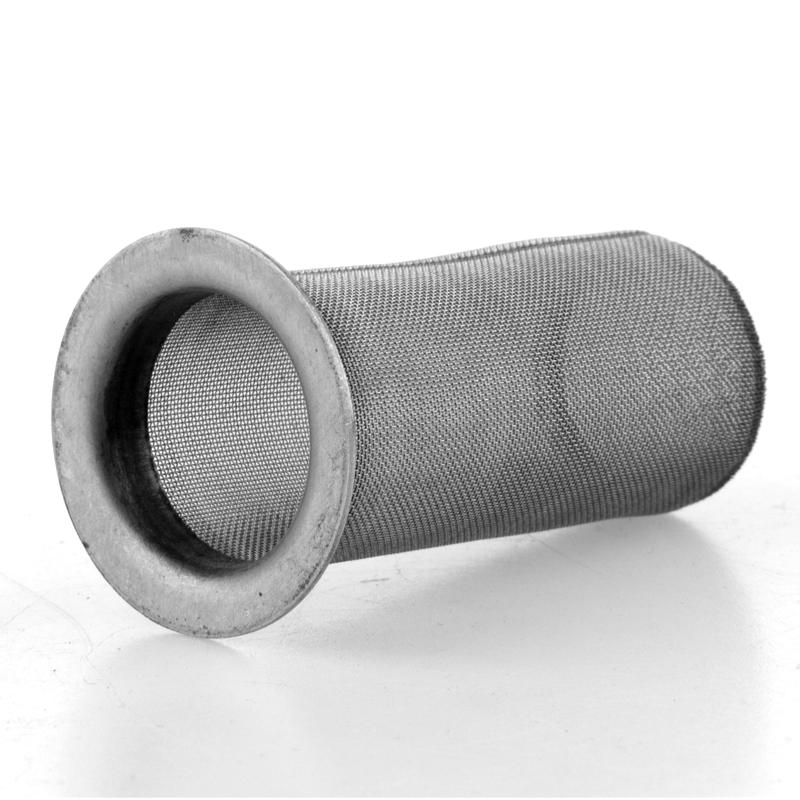
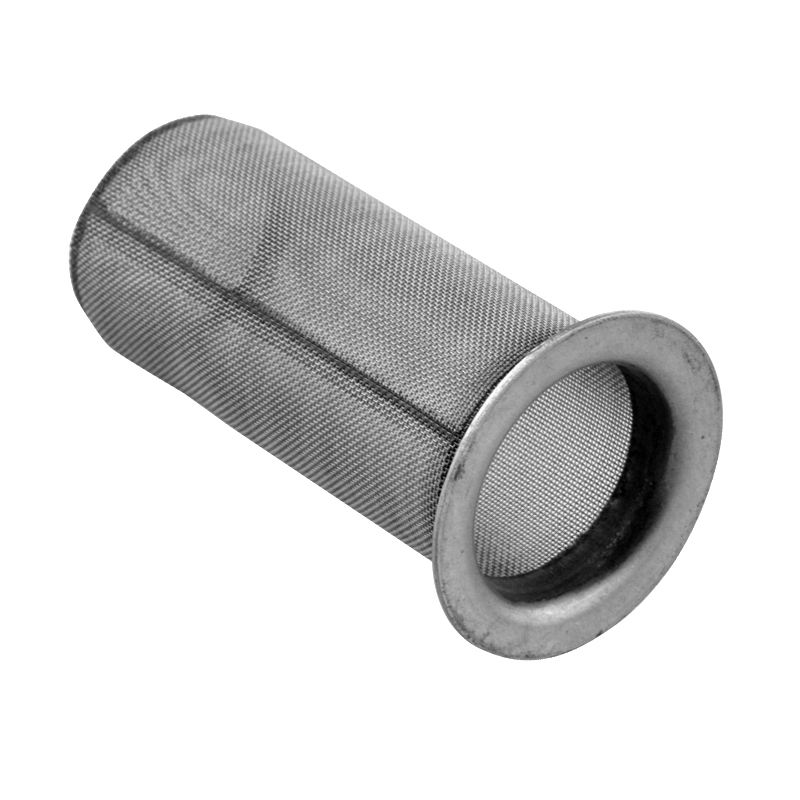
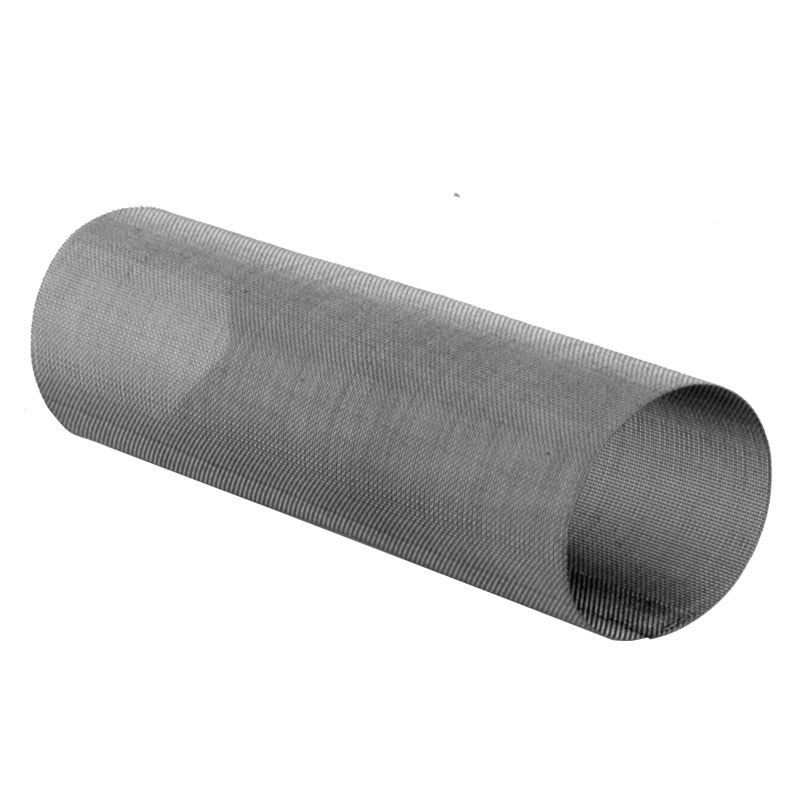
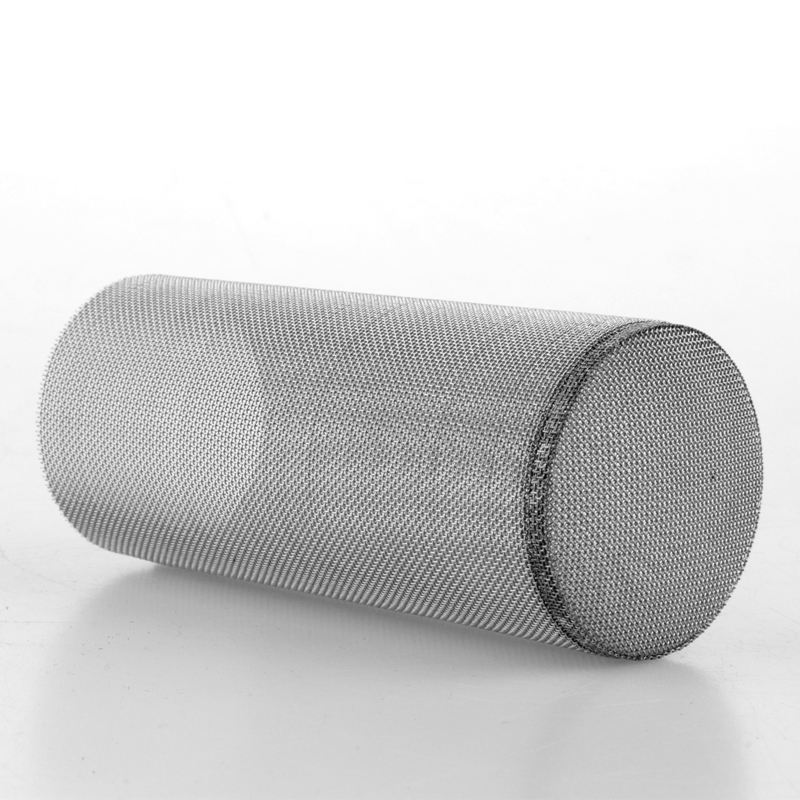
Stainless Steel Cylindrical Ultra Fine Filters are rigid, cleanable all-metal elements that pair a stainless shell (perforated or welded) with precision mesh or sintered layers to deliver stable micron control at elevated temperature, pressure, and flow. They excel in harsh media where polymer or paper cartridges fail.
 |  |
 |  |
1) Performance Stainless Steel Cylindrical Ultra Fine Filters
Filter nozzles / catalyst separation
High-temperature flue-gas filtration in petrochemical service
High-pressure back-wash oil strainers
Polymer-melt filtration for chemical fiber & film
2) Materials & Construction
Primary metals: SS304, SS304L, SS316, SS316L
Optional layers / components: stainless woven mesh, perforated metal, stainless steel welded wire mesh, copper mesh, aluminum net, black wire cloth (or per requirement)
Build formats: single-layer cylinder or multi-layer composite (e.g., perforated guard + control mesh + support mesh)
Seam: longitudinal TIG/laser welded; ends deburred; passivation/electropolish available
Cleanability: designed for back-flush / solvent wash / ultrasonic cleaning (per medium)
3) Hole Styles (Outer Perforation / Guards)
Round, hexagonal, diamond, square, fish-scale, slotted/oval—supplied in different materials, styles, and hole diameters to balance open area, strength, and pressure drop.
4) Industrial Applications Stainless Steel Cylindrical Ultra Fine Filters
Used in absorption, evaporation, and filtration across petroleum, chemical, pharmaceutical, metallurgy, machinery, shipbuilding, and automotive. Functions include:
Mist-drop / liquid-foam removal (demisting)
Air intake filters and crankcase ventilation (cars/trucks)
Process gas/liquid polishing in skids and plant housings
5) Stainless Steel Cylindrical Wire Mesh Filter Tubes
Concept: cartridge-style mesh tubes for removing fine suspended solids and colloids (e.g., drinking-water purification pre-filtration).
Key features:
Acid/alkali resistance, high-temperature capability
Abrasion-resistant, not easy to damage
Reusable after cleaning, low operating cost
Stable geometry; rigid support under differential pressure
6) Available Filtration Ratings (Standard Micron Grades)
0.5, 1, 2, 5, 10, 20, 30, 40, 50, 75, 100, 150, 200 μm
Other microns and absolute/nominal ratings can be produced on request.
7) Technical Data (Control Mesh & Hydraulic Indicators)
The following table reflects the supplied specification values. “Resistance factor” notation is kept as provided.
| Nominal filter rating (μm) | Control layer (mesh) | Permeability (%) | Resistance factor (×10⁵, as provided) | Bubble point pressure (mm H₂O) | Thickness (mm) | Weight (kg/m²) |
|---|---|---|---|---|---|---|
| 2 | 325 × 2400 | 38 | 14×10⁵ | 280–640 | 1.7 | 8.4 |
| 5 | 200 × 1400 | 38 | 12×10⁵ | 250–600 | 1.7 | 8.4 |
| 10 | 165 × 1400 | 38 | 7×10⁵ | 220–550 | 1.7 | 8.4 |
| 20 | 165 × 800 | 38 | 4×10⁵ | 180–450 | 1.7 | 8.4 |
| 40 | 50 × 250 | 38 | 4×10⁵ | 150–400 | 1.7 | 8.4 |
Interpretation notes
Control layer (mesh): the governing (finest) weave that sets the nominal cut-point.
Bubble point: indicative of pore constriction; higher = finer effective pores.
Permeability & resistance factor: used to estimate pressure drop; confirm on the final build (OD/length/layer count).
 |  |
 |  |
8) Options & Customization
Ends: plain, caps, threaded (NPT/BSP), 222/226 bayonet, tri-clamp, flanged
Guards/cores: perforated inner core or outer guard for back-wash duty
Gaskets: EPDM / NBR / FKM (Viton®) / PTFE, matched to fluid & temperature
Surface: pickled & passivated, bead-blasted, electropolished
Documents: material certificates, dimensional reports; cleaning declarations on request
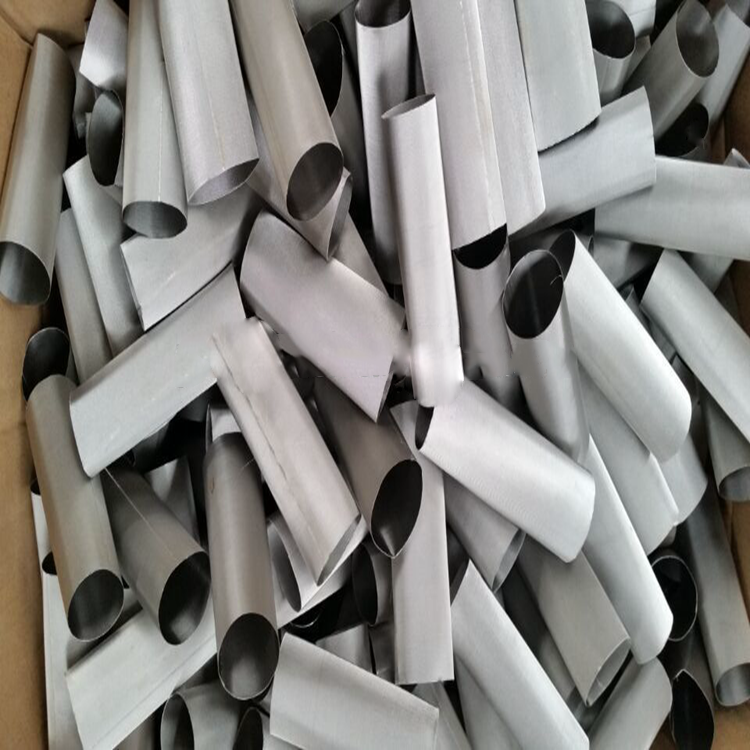
9) Packaging
Tube protection: nylon end caps → PE bag → bubble wrap → labeled export carton / wooden case
Export upgrades: VCI anti-rust wrap, desiccants, vapor-barrier bag; ISPM-15 palletization

10) RFQ Checklist Stainless Steel Cylindrical Ultra Fine Filters
What materials and media are typically used?
304/304L or 316/316L stainless steel are common. Media options include sintered metal fiber/felt, sintered metal powder, and multi-layer sintered mesh.
What micron ratings are available?
Typical nominal/absolute ratings span about 0.1–200 µm. Fiber/felt can reach sub-micron; powder and mesh cover fine to coarse ranges.
What lengths and diameters are standard?
Common cartridge lengths are 5, 10, 20, 30, and 40 inches, with outside diameters around 50–70 mm. Custom envelopes are available.
Which end connections can I specify?
DOE, 222/226 bayonet (flat/fin), threaded, and tri-clamp/sanitary ends are standard. Choose gasket materials such as EPDM, NBR, FKM (Viton), or PTFE.
What operating temperature and differential pressure can they handle?
All-metal elements tolerate high temperatures (often up to several hundred °C, media/alloy dependent) and typical forward differential pressures around 10 bar, depending on build.
Can they be back-flushed and cleaned for reuse?
Yes. Common methods include reverse-flow or reverse-blow, ultrasonic cleaning, and compatible chemical soaks. Follow the media’s cleaning limits.
What hole styles are available for perforated guards/tubes?
Round, hexagonal, diamond, square, and slotted/oval (“fish-scale”) patterns are widely used to balance strength, open area, and pressure drop.
Do I need a perforated guard or an inner core?
Long elements or high-ΔP/back-flush service benefit from an inner support core and/or an outer perforated guard to prevent deformation.
What’s the difference between sintered fiber, powder, and mesh media?
Fiber/felt is a depth medium with high porosity and dirt capacity; powder provides a rigid, precise porous wall; mesh/composites offer multilayer strength with good backwash recovery.
Which stainless grade should I choose—304/304L or 316/316L?
Select 316/316L for chloride-rich or chemically aggressive conditions; 304/304L suits general services with moderate corrosion exposure. The same rule of thumb applies to stainless steel window screens—use 316/316L in coastal or high-salt environments to minimize staining and corrosion, and 304/304L for typical inland installations.
How is flow direction defined?
Most cylindrical cartridges are designed for outside-to-inside flow in operation, with inside-to-outside used briefly for prescribed cleaning cycles.
How do I estimate pressure drop?
Start from porosity/open area and media type: higher porosity lowers ΔP but may reduce retention or wall strength. Use vendor flow-vs-ΔP curves for the chosen micron grade.
What applications fit these filters?
Catalyst separation/filter nozzles, high-temperature flue-gas service, polymer-melt filtration, oil/water prefilters, HVAC/process gas polishing, and protective guards/vents.
What information should I send for a quote?
Material/grade, micron rating (nominal/absolute), OD × length × thickness, end connection and gasket, flow direction, operating temperature and ΔP, quantity, and packing/export requirements.
Why choose Stainless Steel Cylindrical Ultra Fine Filters?
You get stable micron control, reusability, and high dirt-holding capacity in a cartridge that tolerates heat, pressure, and aggressive media—ideal for refinery, polymer, and high-purity plants where downtime is expensive and consistency matters.