Your One-Stop Wire Mesh Fence Supplier | POLYMETAL
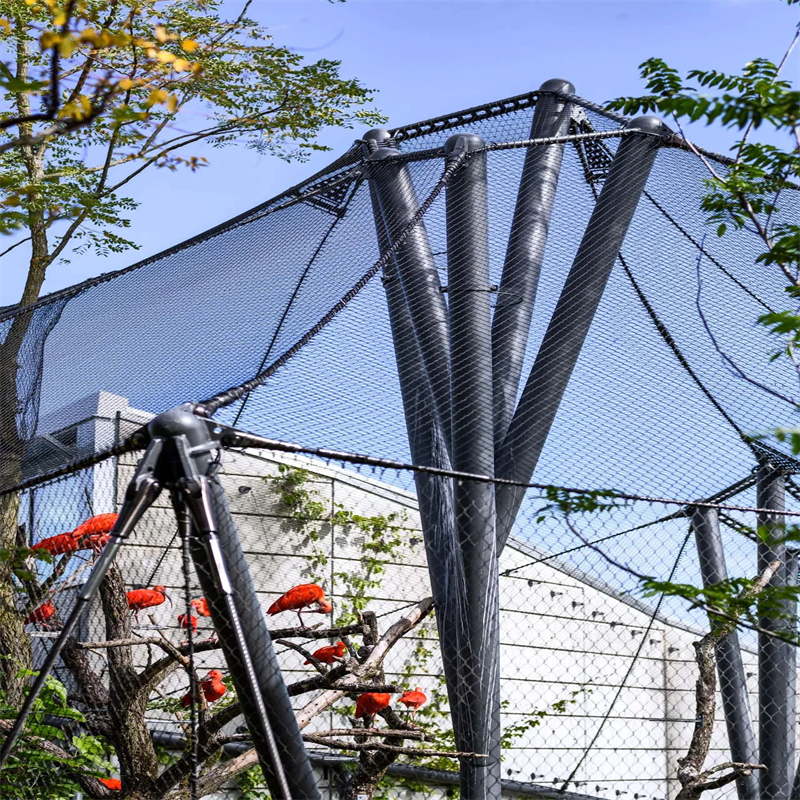

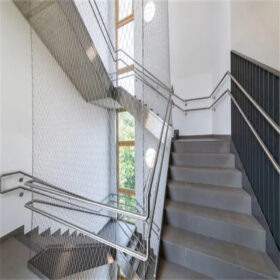
A reliable stainless steel ferrule rope mesh exporter is not just sending metal in crates. Ferruled rope mesh is used on bridges, façades, zoos, balustrades, stadiums and green walls where people, animals and assets must be protected 24/7. If the exporter cuts corners on material grade, ferrules, mesh geometry, documents or packing, you may only discover the problem at the worst possible time: during inspection, installation or after an incident.
Secret 1 – “Cheap & fast” exporters quietly move all technical risk onto you
If an exporter only talks about low price and short delivery but says nothing about codes, certificates, testing or frame design, what they’re really saying is: “If anything goes wrong on site, it’s your problem, not ours.” A professional stainless steel ferrule rope mesh exporter shares responsibility for safety, documents and performance from enquiry to final handover.
1. What is stainless steel ferrule rope mesh?
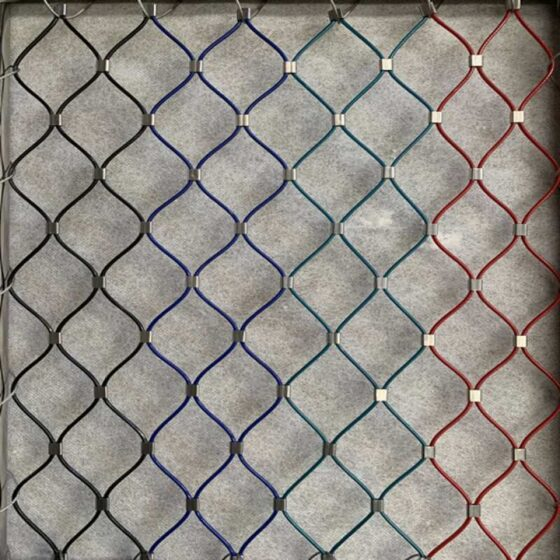
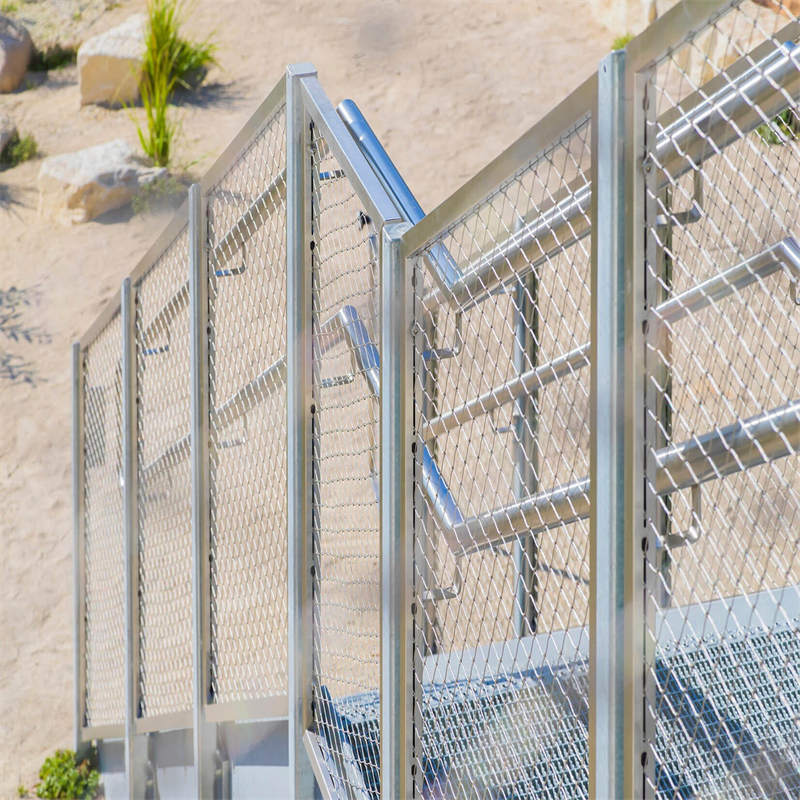
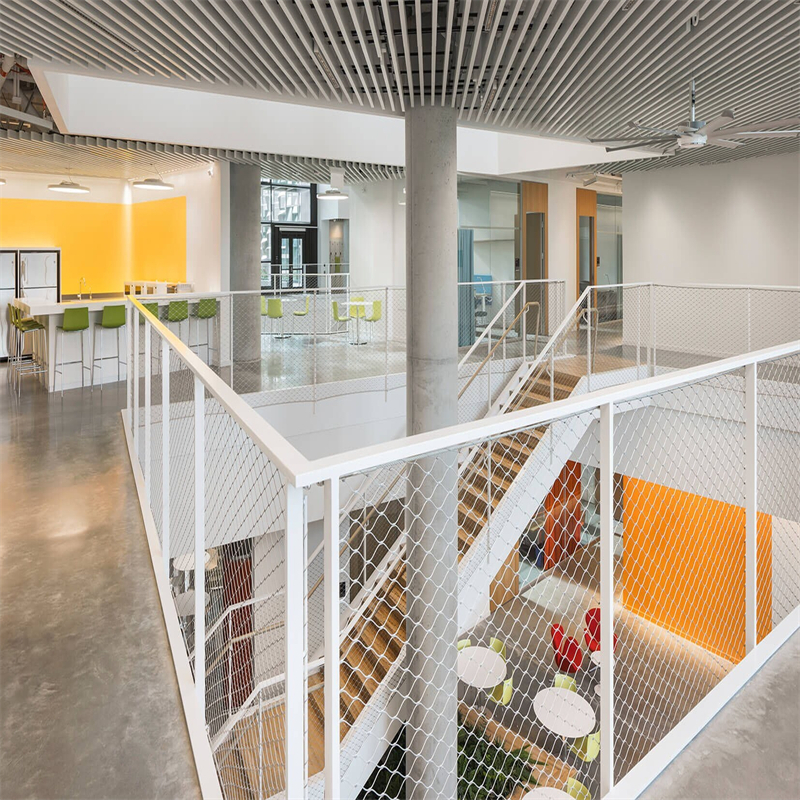
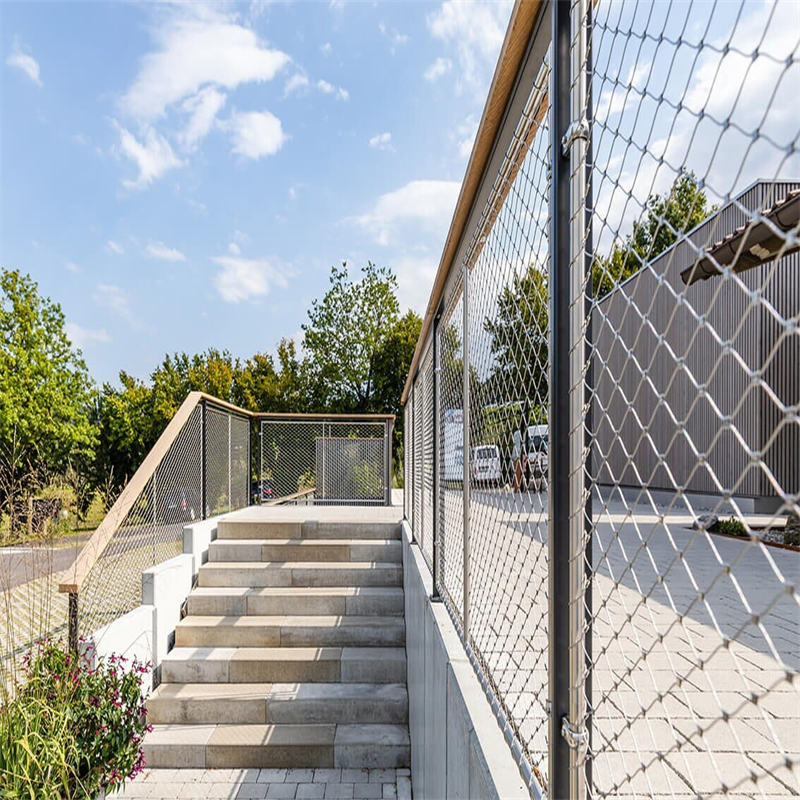
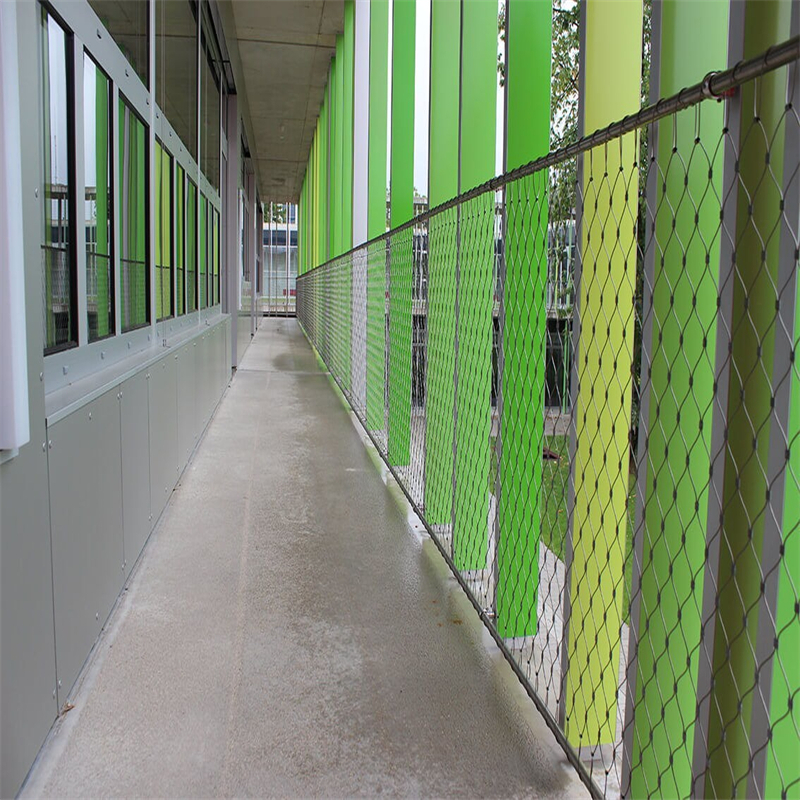
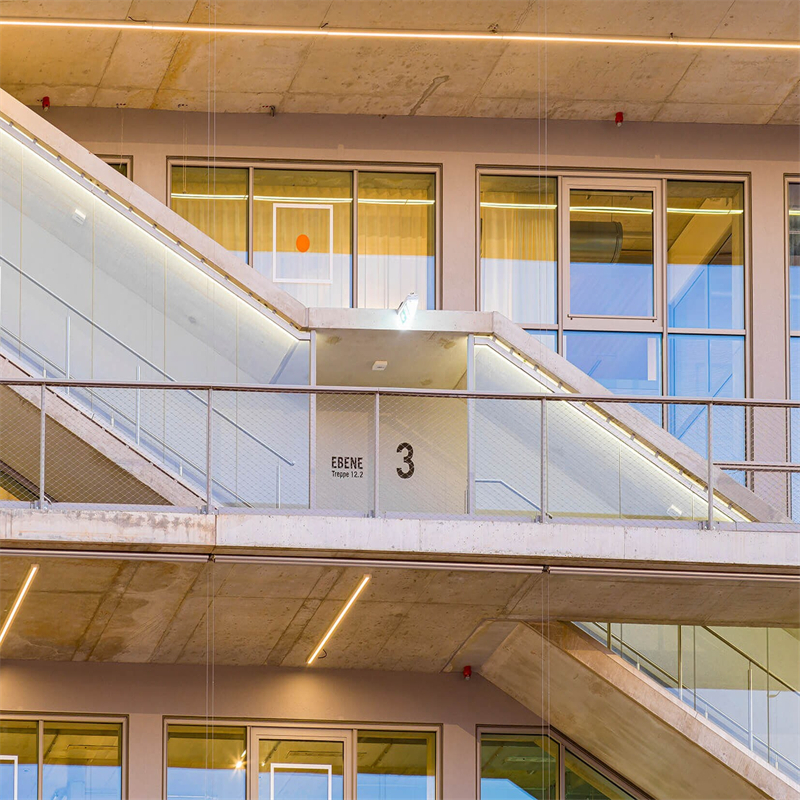
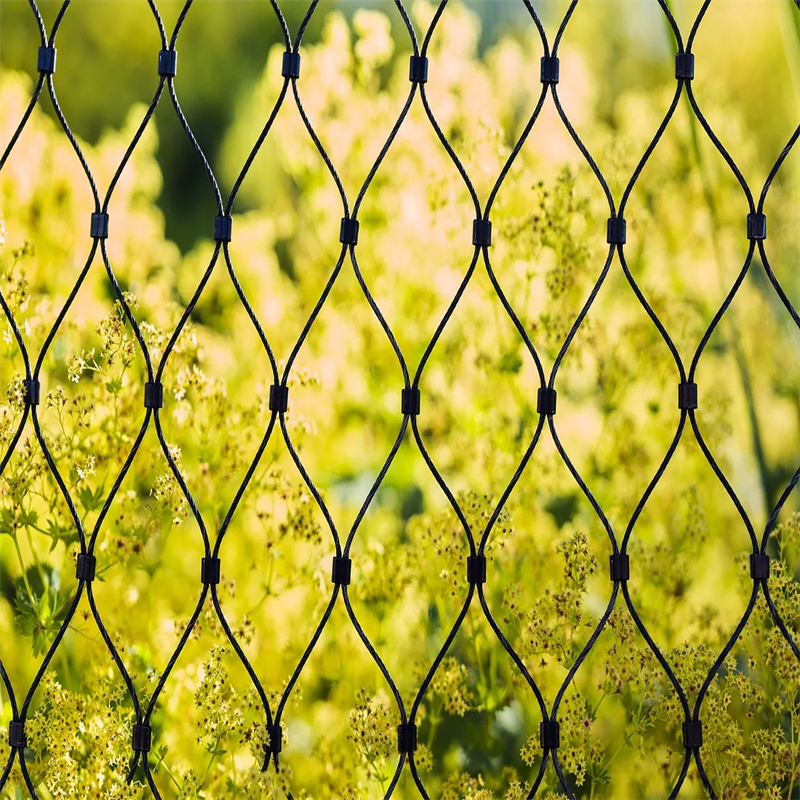
Stainless steel ferrule rope mesh is made from multi-strand stainless steel wire rope (usually 7×7 or 7×19). The cables are arranged in diamonds and connected at each intersection by pressed stainless steel ferrules. Once installed and tensioned between boundary frames or cables, the mesh behaves as a structural membrane: loads are carried by tension across many ropes and ferrules instead of bending in a single bar.
Typical characteristics supplied by a good stainless steel ferrule rope mesh exporter:
* Wire rope diameter: about 1.2–4.0 mm
* Mesh aperture: from ~20×20 mm to ~250×400 mm
* Wire rope structure: 7×7 or 7×19
* Material grades: AISI 304 / 304L / 316 / 316L
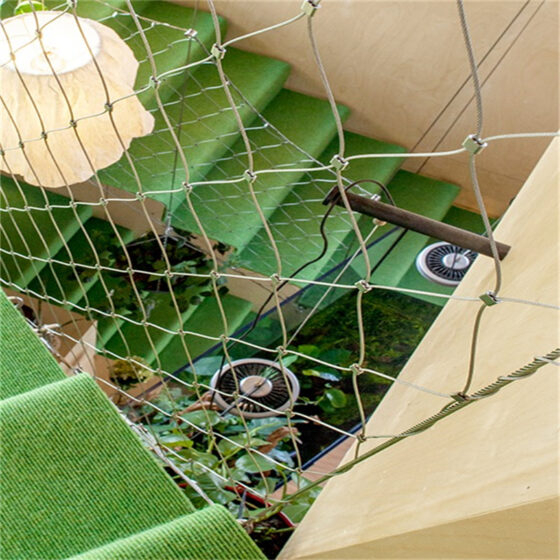
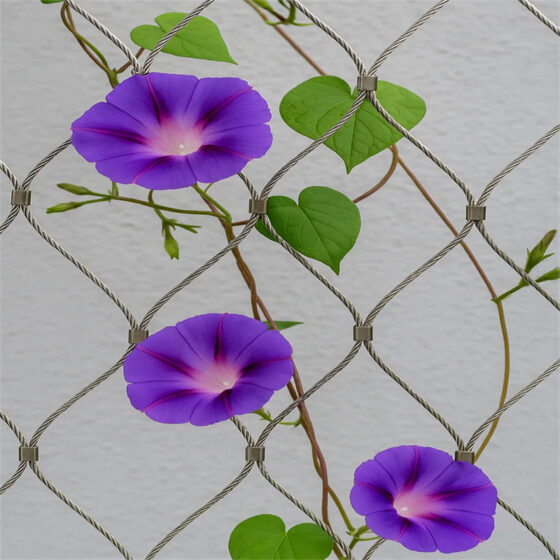
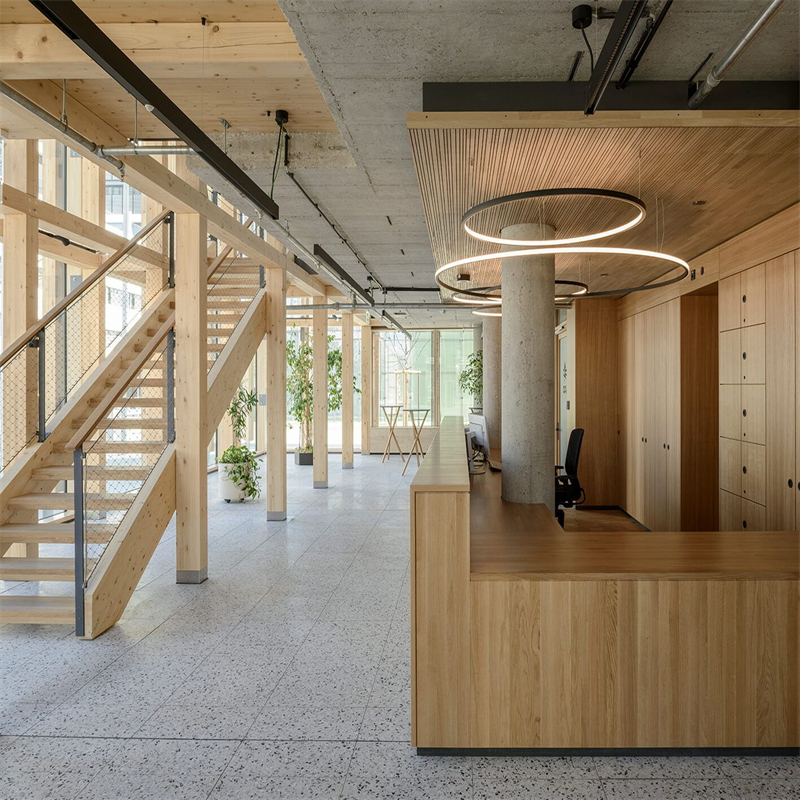
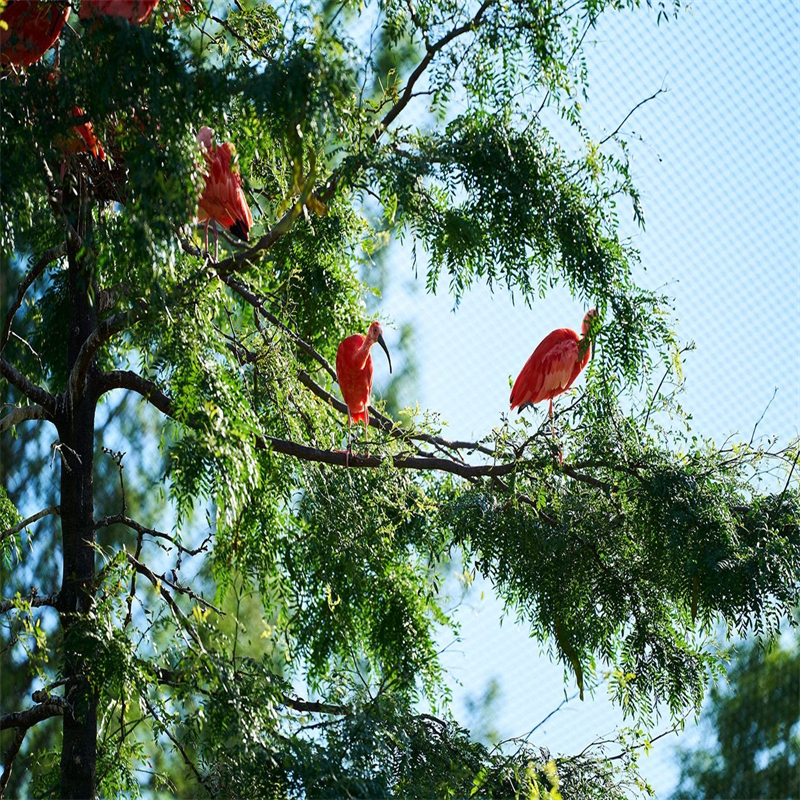
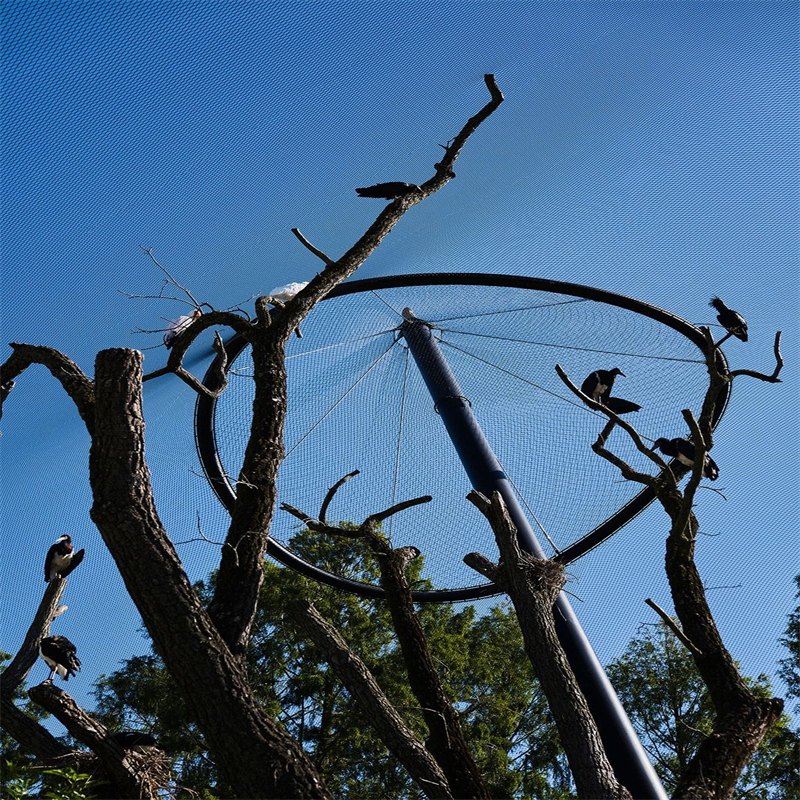
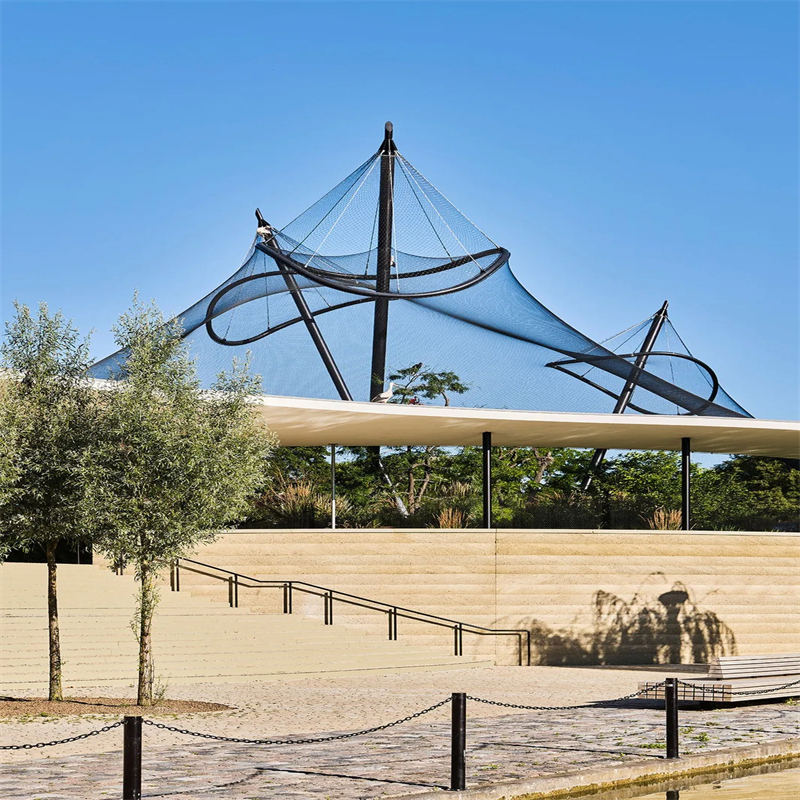
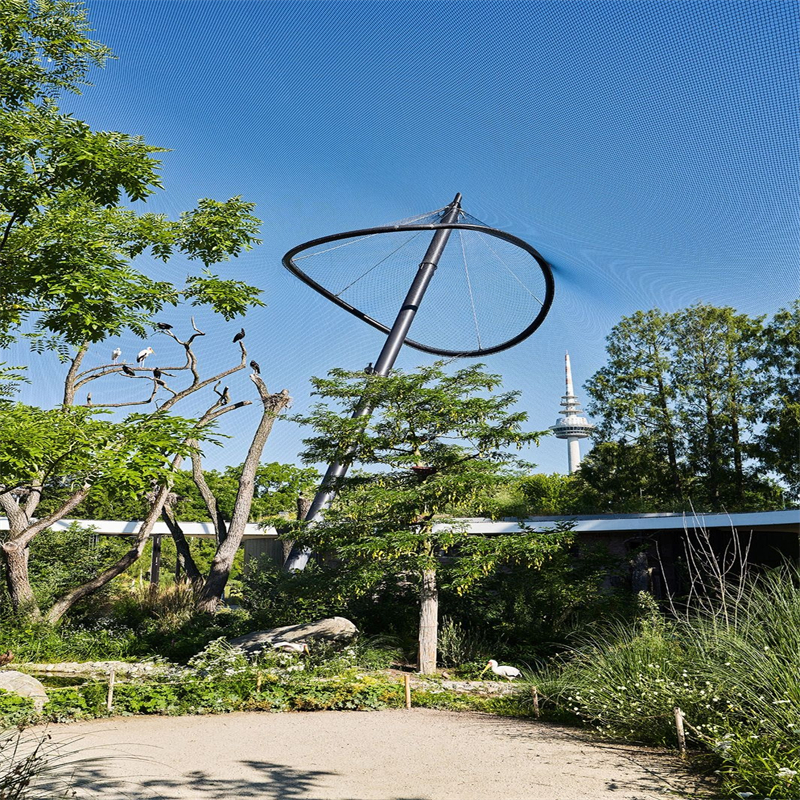
* Applications: balustrades, bridge barriers, zoo mesh, aviaries, façades, plant climbing nets, anti-throw screens
Secret 2 – Mixing cable and ferrule grades accelerates hidden corrosion
Some factories quietly use 316 cable with cheaper 304 ferrules. On drawings it still looks like “stainless steel mesh”, but in real life the lower-grade ferrules become the first corrosion points and stain your concrete, glass and stone. A serious stainless steel ferrule rope mesh exporter clearly states and matches the grade of both cable and ferrule in every quotation and certificate.
2. Material grades and where they really belong
Most exporters offer:
* AISI 304 / 304L – good for dry, clean interiors with low exposure
* AISI 316 / 316L – preferred for exterior, coastal, poolside and industrial atmospheres where chlorides, salt spray or pollutants are present
A professional stainless steel ferrule rope mesh exporter will ask:
* Is the project interior, semi-exposed or fully exterior?
* Is it near the sea, a pool, a chemical plant or a busy road?
* What lifetime and maintenance interval are expected?
Secret 3 – “Looks indoor” does not mean it behaves like indoor
Semi-open parking decks, seaside atria, airport concourses and pool halls look like interior architecture, but humidity and airborne chlorides behave like exterior exposure. If the exporter treats them as “indoor” and sells 304 mesh, you may see tea staining, pitting and client complaints long before the project should need refurbishment.
3. Structural behaviour: why frame stiffness matters as much as mesh strength
Ferrule rope mesh doesn’t work like a rigid bar panel:
* Under load, the diamonds deform slightly and the cables go into tension.
* Forces are shared by many cables and transferred into the perimeter frame.
* With correct pretension and a stiff frame, deflection stays small and the barrier feels solid.
Secret 4 – Over-strong mesh with an under-designed frame still fails inspection
You can specify a very high breaking load, but if posts, edge beams or anchor plates are too flexible, the mesh just pulls the structure inwards. Inspectors don’t care that the cable is “very strong” if the handrail or top chord moves too much under the required test load. A responsible stainless steel ferrule rope mesh exporter warns you about frame stiffness and deflection, not only cable breaking strength.
4. Typical specifications from a stainless steel ferrule rope mesh exporter
Below are typical configurations a professional exporter might supply for different project types. Values are indicative and should be checked against local codes and structural design.
4.1 Table 1 – Ferrule rope mesh for balustrades and architectural façades
| Model | Wire rope diameter (mm) | Mesh aperture (mm) | Open degree (%) | Light transmittance (%) | Material | Nominal breaking load (lbs) | Wire rope structure |
|---|---|---|---|---|---|---|---|
| FRM-A01 | 1.5 | 40 × 70 | 60 | 58 | AISI 304 | 480 | 7×7 |
| FRM-A02 | 1.5 | 50 × 80 | 64 | 62 | AISI 304 | 480 | 7×7 |
| FRM-A03 | 1.6 | 50 × 90 | 66 | 64 | AISI 304 | 520 | 7×7 |
| FRM-A04 | 1.6 | 60 × 100 | 68 | 66 | AISI 304 | 520 | 7×19 |
| FRM-A05 | 1.6 | 60 × 120 | 70 | 68 | AISI 316 | 520 | 7×19 |
| FRM-A06 | 2.0 | 60 × 100 | 65 | 63 | AISI 316 | 676 | 7×7 |
| FRM-A07 | 2.0 | 60 × 120 | 69 | 67 | AISI 316 | 676 | 7×7 |
| FRM-A08 | 2.0 | 70 × 120 | 71 | 69 | AISI 316 | 676 | 7×19 |
| FRM-A09 | 2.0 | 70 × 140 | 73 | 71 | AISI 316 | 676 | 7×19 |
| FRM-A10 | 2.0 | 80 × 140 | 75 | 73 | AISI 316 | 676 | 7×19 |
| FRM-A11 | 2.5 | 80 × 160 | 76 | 74 | AISI 316 | 980 | 7×7 |
| FRM-A12 | 2.5 | 90 × 160 | 78 | 76 | AISI 316 | 980 | 7×7 |
| FRM-A13 | 2.5 | 90 × 180 | 80 | 78 | AISI 316 | 980 | 7×19 |
| FRM-A14 | 2.5 | 100 × 180 | 81 | 79 | AISI 316 | 980 | 7×19 |
| FRM-A15 | 2.5 | 100 × 200 | 83 | 81 | AISI 316 | 980 | 7×19 |
Secret 5 – Open degree changes how “safe” or “scary” the edge feels
Two meshes with similar strength but different open degrees can feel completely different to users. Very open patterns may cause fear of heights on balconies or bridges even when fully compliant. A good stainless steel ferrule rope mesh exporter helps you balance transparency, open degree and perceived safety so occupants feel protected, not exposed.
4.2 Table 2 – Ferrule rope mesh for zoos, aviaries and animal habitats
| Model | Wire rope diameter (mm) | Mesh aperture (mm) | Open degree (%) | Light transmittance (%) | Material | Nominal breaking load (lbs) | Wire rope structure |
|---|---|---|---|---|---|---|---|
| FRM-Z01 | 1.2 | 20 × 20 | 45 | 43 | AISI 316 | 270 | 7×7 |
| FRM-Z02 | 1.2 | 25 × 25 | 50 | 48 | AISI 316 | 270 | 7×7 |
| FRM-Z03 | 1.5 | 30 × 30 | 53 | 51 | AISI 316 | 480 | 7×7 |
| FRM-Z04 | 1.5 | 30 × 50 | 56 | 54 | AISI 316 | 480 | 7×7 |
| FRM-Z05 | 1.6 | 38 × 38 | 58 | 56 | AISI 316 | 520 | 7×7 |
| FRM-Z06 | 1.6 | 40 × 40 | 60 | 58 | AISI 316 | 520 | 7×7 |
| FRM-Z07 | 2.0 | 40 × 60 | 63 | 61 | AISI 316 | 676 | 7×19 |
| FRM-Z08 | 2.0 | 50 × 50 | 65 | 63 | AISI 316 | 676 | 7×19 |
| FRM-Z09 | 2.0 | 50 × 70 | 68 | 66 | AISI 316 | 676 | 7×19 |
| FRM-Z10 | 2.4 | 60 × 80 | 72 | 70 | AISI 316 | 920 | 7×19 |
| FRM-Z11 | 2.4 | 60 × 100 | 74 | 72 | AISI 316 | 920 | 7×19 |
| FRM-Z12 | 3.0 | 76 × 76 | 75 | 73 | AISI 316 | 1600 | 7×19 |
| FRM-Z13 | 3.0 | 80 × 120 | 78 | 76 | AISI 316 | 1600 | 7×19 |
| FRM-Z14 | 3.2 | 100 × 100 | 80 | 78 | AISI 316 | 1800 | 7×19 |
| FRM-Z15 | 3.2 | 102 × 152 | 82 | 80 | AISI 316 | 1800 | 7×19 |
Secret 6 – Species behaviour can kill a “perfect on paper” design
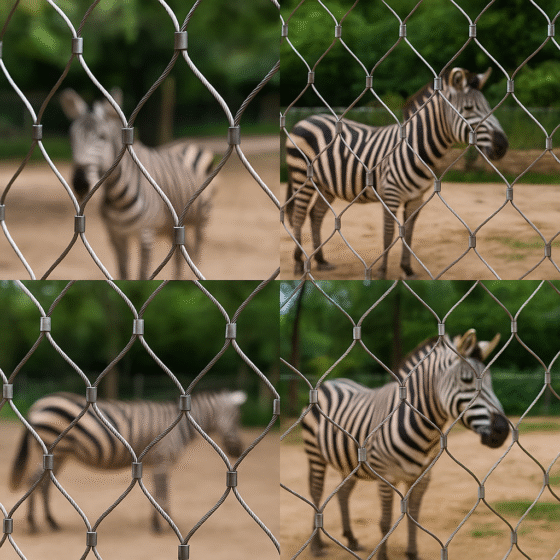
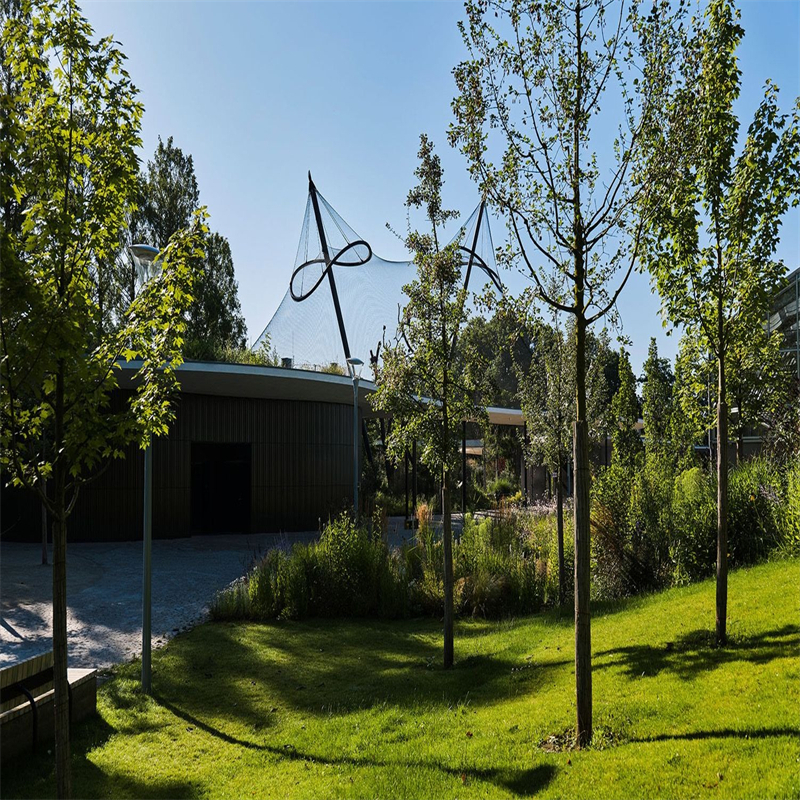
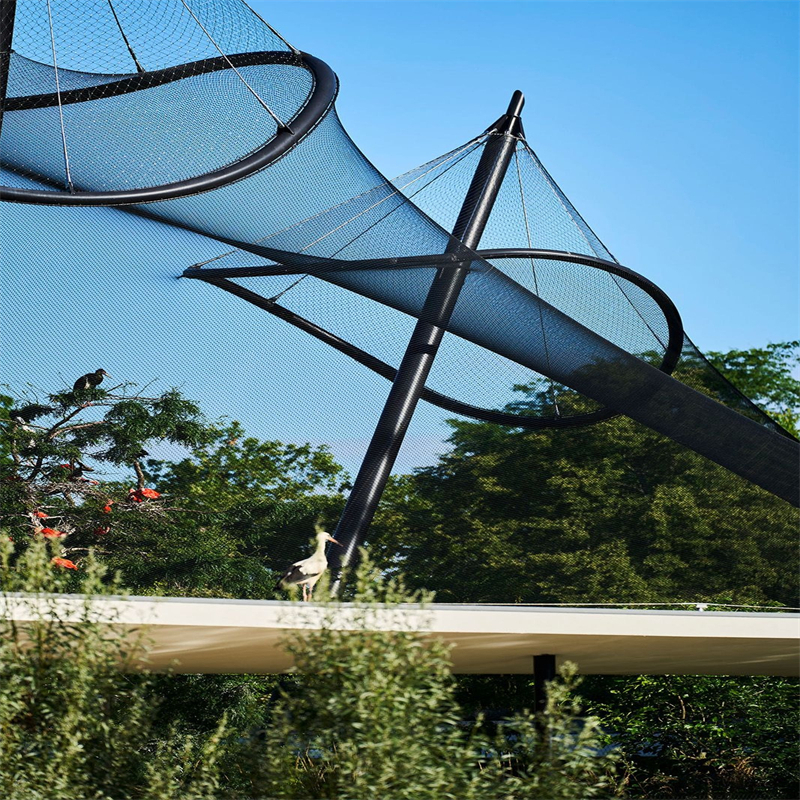
For zoos and aviaries, it’s not enough to meet strength and aperture numbers. Parrots chew, monkeys pull, big cats climb. If your stainless steel ferrule rope mesh exporter never asks which species you’re containing, you may end up with a system that meets the drawing but fails in real life—forcing you into urgent reinforcements while the exhibit is already open.
4.3 Table 3 – Ferrule rope mesh for bridges, stadiums and high-safety zones
| Model | Wire rope diameter (mm) | Mesh aperture (mm) | Open degree (%) | Light transmittance (%) | Material | Nominal breaking load (lbs) | Wire rope structure |
|---|---|---|---|---|---|---|---|
| FRM-H01 | 3.0 | 60 × 100 | 62 | 60 | AISI 316 | 1600 | 7×19 |
| FRM-H02 | 3.0 | 70 × 120 | 65 | 63 | AISI 316 | 1600 | 7×19 |
| FRM-H03 | 3.0 | 80 × 160 | 68 | 66 | AISI 316 | 1600 | 7×19 |
| FRM-H04 | 3.5 | 80 × 160 | 70 | 68 | AISI 316 | 1900 | 7×19 |
| FRM-H05 | 3.5 | 90 × 180 | 72 | 70 | AISI 316 | 1900 | 7×19 |
| FRM-H06 | 3.5 | 100 × 200 | 74 | 72 | AISI 316 | 1900 | 7×19 |
| FRM-H07 | 4.0 | 100 × 200 | 76 | 74 | AISI 316 | 2400 | 7×19 |
| FRM-H08 | 4.0 | 120 × 200 | 78 | 76 | AISI 316 | 2400 | 7×19 |
| FRM-H09 | 4.0 | 120 × 220 | 79 | 77 | AISI 316 | 2400 | 7×19 |
| FRM-H10 | 4.0 | 150 × 260 | 82 | 80 | AISI 316 | 2400 | 7×19 |
| FRM-H11 | 4.0 | 160 × 280 | 83 | 81 | AISI 316 | 2400 | 7×19 |
| FRM-H12 | 4.0 | 180 × 300 | 84 | 82 | AISI 316 | 2400 | 7×19 |
| FRM-H13 | 4.0 | 180 × 320 | 85 | 83 | AISI 316 | 2400 | 7×19 |
| FRM-H14 | 4.0 | 200 × 345 | 86 | 84 | AISI 316 | 2400 | 7×19 |
| FRM-H15 | 4.0 | 220 × 380 | 87 | 85 | AISI 316 | 2400 | 7×19 |
Secret 7 – Public-area load rules are far tougher than many buyers realise
Bridges, stadiums and transport hubs must satisfy crowd loads and strict deflection limits. If your stainless steel ferrule rope mesh exporter quietly reuses a residential specification here, you risk a design that fails testing, forces mid-project redesign and delays opening—exactly where schedule penalties and loss of reputation hurt most.
5. Quality control, testing and documentation
A trustworthy stainless steel ferrule rope mesh exporter should be able to provide:
* Mill certificates for wire rope and ferrule material
* Internal QC reports on mesh geometry and ferrule pressing
* Load test reports or third-party certifications when required
* Traceable batch numbers linked to each shipment and project
Secret 8 – Weak paperwork can freeze your project at handover
Even if the mesh looks perfect on site, inspectors can block completion if certificates, test data and declarations are incomplete or inconsistent. Chasing missing documents from a careless exporter while the client demands handover is a nightmare that burns cash every day it continues.
6. Export logistics, HS code, packing and on-site handling
For international buyers, logistics is part of the risk:
* HS code: rope mesh is usually declared under stainless steel wire cloth/mesh headings (exact code must be confirmed with your customs broker according to local regulations).
* Packing: panels or rolls should be bundled, labelled, protected with edge boards and film-wrapped in strong pallets or wooden crates.
* Marking: each bundle should be clearly marked with model, size, panel ID and project reference to match layout drawings.
Secret 9 – One wrong HS code or poor packing can destroy your margin
If your stainless steel ferrule rope mesh exporter uses the wrong customs code or under-declares value, you can face inspections, fines and weeks of delay at the port. Bad packing leads to bent ferrules, kinked cables and emergency re-fabrication. All your profit on the project can vanish before installation even starts.
7. How to choose the right stainless steel ferrule rope mesh exporter
When you evaluate exporters, don’t just compare unit price. Compare:
* Technical questions: do they ask about environment, codes, span and load, or only price and quantity?
* Project experience: can they show similar jobs (balustrades, bridges, zoos, façades) and talk about lessons learned?
* Specification support: will they help you choose wire diameter, mesh aperture, open degree and material grade instead of pushing a single standard model?
* Documentation: can they provide CE/SGS, mill certificates and test reports when required?
* Service: do they support OEM/branding, custom labelling and installation guidance?
If the answers are vague, you’re not dealing with a long-term partner but with a shipment vendor.
8. Conclusion
The choice of stainless steel ferrule rope mesh exporter is effectively a choice about safety, lifetime cost and project risk. Ferrule rope mesh itself is light, elegant and almost invisible—but the consequences of getting it wrong are very visible: corrosion stains, excessive deflection, failed tests, customs problems, delays and even accidents.
By using the 9 secrets scattered through this article—matching steel grade to real exposure, balancing open degree and safety feel, respecting public load rules, demanding full documentation and insisting on professional packing—you turn stainless steel ferrule rope mesh from a potential liability into a long-term asset for your projects.
Ignore them, especially Secret 7 and Secret 9, and you’re not just saving a few dollars on mesh; you may be gambling with inspections, handover dates, your client’s trust and your own profit.