Your One-Stop Wire Mesh Fence Supplier | POLYMETAL
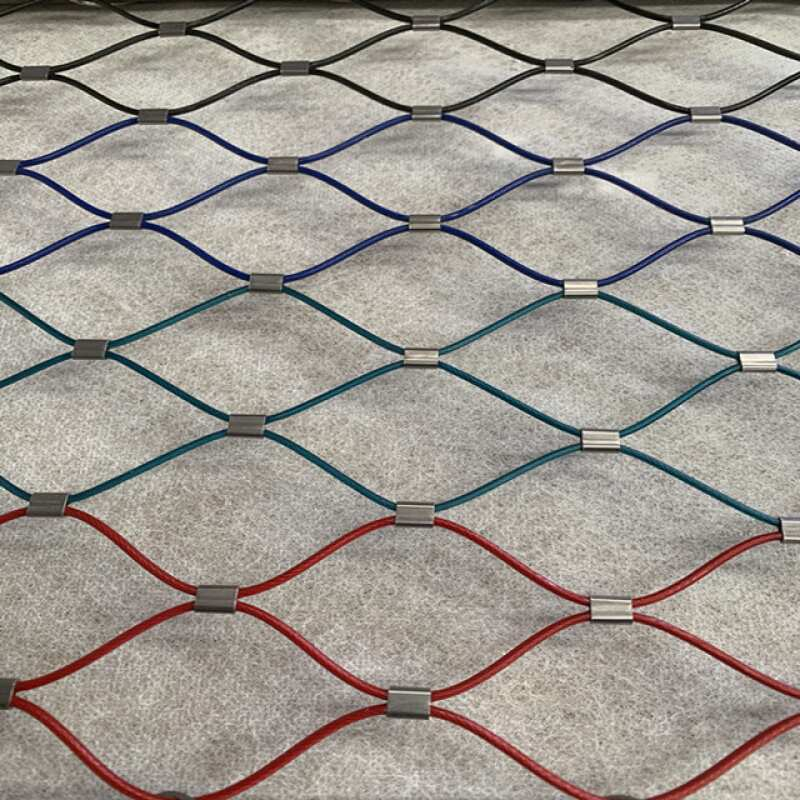


Stainless wire rope mesh (also called stainless steel wire cable net) is widely specified for modern architecture and animal protection because it delivers safety with transparency. The hidden cost is that many suppliers sell stainless wire rope mesh as a “look,” not as a controlled system—so performance differences only show up after tensioning, installation, and weather exposure.
POLYMETAL manufactures stainless wire rope mesh in both Ferrule/Sleeve Type and Woven Type, produced from stainless cable grades 304/316 (AISI) or hot dipped galvanized wire cable options. Every order is built around measurable controls: rope construction, rope diameter, opening size (OW×OH), mesh angle, edge finishing, and piece dimensions—so your net installs clean, holds shape, and stays consistent across the full run.
 | 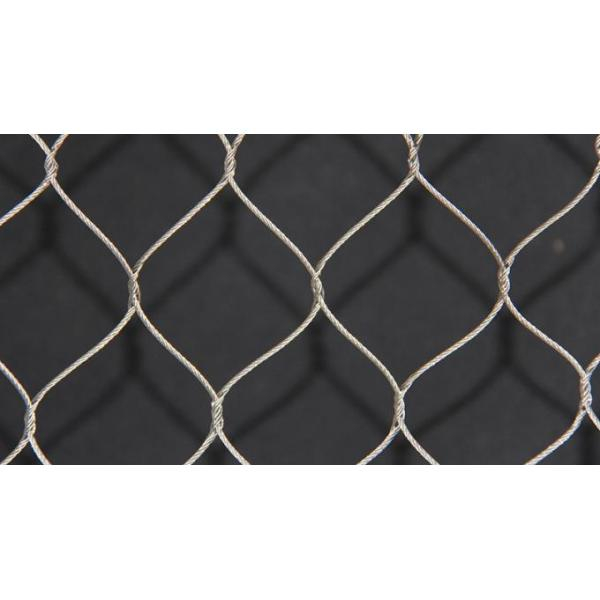 |
| SS Cable Mesh (Ferrule/Sleeve Type) | SS Cable Mesh (Woven Type) |
Top 10 brutal procurement traps for stainless wire rope mesh (Especially #7)


Trap #1 (Problem): Treating “stainless wire rope mesh” as a keyword, not a specification
Many quotes list “316” and a photo, but skip the real controls: rope construction (7×7 or 7×19), single-wire tensile strength, ferrule type, mesh angle, opening tolerance, and edge restraint. When these are not fixed, two “same-looking” stainless wire rope mesh panels behave completely differently once tensioned.
Risk #2 (Mistake): Picking rope diameter without matching the job’s load and touch points
Balustrade infill, animal enclosures, and anti-fall applications load the mesh differently. If rope diameter is under-specified, the mesh can feel “soft,” deflect too much, or show shape memory after handling. POLYMETAL commonly supplies rope diameters from 1.0 mm to 4.0 mm based on the application’s real demand.
Danger #3 (Defect): Choosing the wrong rope construction (7×7 vs 7×19) for flexibility and feel
7×7 is commonly used for lighter, clean architectural lines; 7×19 is typically chosen for higher flexibility and different handling behavior at larger diameters. If the construction is mismatched, the stainless wire rope mesh may not tension smoothly or may display inconsistent diamond geometry.
Pitfall #4 (Gap): Ordering opening size without controlling the final stretched angle
Diamond openings are defined by OW×OH at a specified angle. If the angle is not controlled (or changes on site), the apparent opening changes, and the whole mesh “reads” differently. This is how projects end up with unexpected transparency, anti-climb performance issues, or a visual mismatch from the approved sample.
Warning #5 (Oversight): Ignoring edge finishing, then paying later in fraying, distortion, and rework
Edges are where the mesh either holds a clean line—or fails. Without the right edge option (for example, reinforced borders, cable edges, or specified termination style), your stainless wire rope mesh can distort at corners, lose symmetry, or become difficult to mount cleanly.
Downside #6 (Fault): Assuming “ferrule mesh” is always stronger than woven mesh
Ferrule type and woven type are both valid—when specified correctly. Ferrule mesh is excellent for many architectural and enclosure applications, while woven type can offer a different aesthetic and flexibility profile. The correct choice depends on tensioning method, framing, edge requirements, and the target appearance.
Crisis #7 (Loss): Hidden corrosion starts at terminations, ferrules, and trapped moisture zones
This is the silent money-loss item. When ferrule material, finishing, drainage, and contact design are not controlled, corrosion risk concentrates at joints and termination points—exactly where failures look worst and repairs cost the most. The result can be premature staining, replacement of sections, scaffold/access cost, and reputation damage—long before anyone questions the main field of the stainless wire rope mesh.
Cost #8 (Misstep): Not specifying orientation (H/V), then discovering the mesh “sits wrong” in the frame
Opening orientation changes how diamonds align visually and how loads distribute into the frame. If orientation is not defined, the delivered stainless wire rope mesh can look “off” compared with drawings, especially on balustrades and façade screens.
Myth #9 (Illusion): Relying on “salt spray pass” without defining the test method and acceptance
Salt spray statements only matter when tied to a recognized method and a defined acceptance basis. Otherwise, “pass” becomes marketing language, not a deliverable. For projects that demand documentation, specify the test method and what “pass” means for the finish and assembly.
Checklist #10 (Waste): Under-packing the mesh so it kinks, scratches, or arrives with permanent set
Stainless wire rope mesh is strong, but it can still be damaged by poor packing: tight bends, uncontrolled coil memory, metal-to-metal rub, or crushed edges. Transport damage becomes installation delay, re-order cost, and site downtime.
Product Description (POLYMETAL Stainless Wire Rope Mesh)
POLYMETAL stainless wire rope mesh is a flexible, high-strength cable net designed for architectural infill, animal protection, and safety screening where visibility matters. It is manufactured in ferrule/sleeve type or woven type, using stainless cable (304/316) or hot dipped galvanized wire cable options. The mesh forms a diamond pattern when stretched to a specified angle (standard 60°), producing a clean, modern appearance that can be scaled by rope diameter and opening size to match the project’s load, touch, and aesthetic requirements.


Specifications (Tables)
| Mesh Types | Ferrule/Sleeve Type; Woven Type |
|---|---|
| Material Grades | AISI 304 / AISI 316 / AISI 316L (marine-grade selection for coastal environments) |
| Standard Mesh Angle | 60° (options available: 20°–90°) |
| Rope Diameter | 1.0 mm (7×7), 1.5 mm (7×7), 2.0 mm (7×7), 3.0 mm (7×19), 4.0 mm (7×19) |
| Opening Range (OW × OH) | 20 mm × 35 mm to 200 mm × 346 mm |
| Customization | Piece height/length, opening orientation (H/V), and edge types (L10/L18/L24 etc.) |
Technical Info
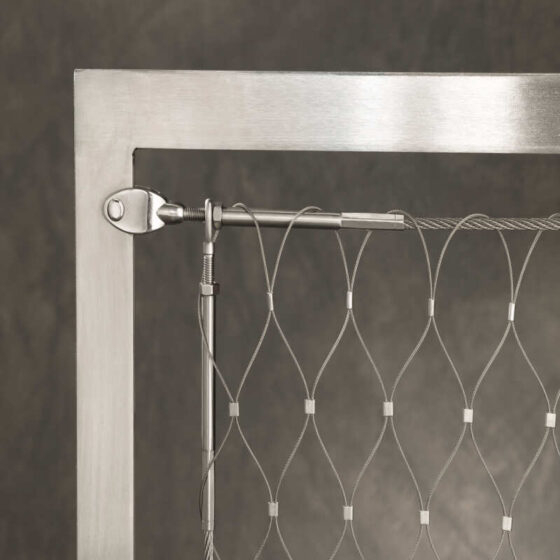
POLYMETAL stainless steel wire rope mesh net is assembled by seamless ferrules and stainless steel wire rope. The diamond mesh is defined at a 60° angle (option: 20°–90° angle) to control the final opening geometry and visual alignment for stainless wire rope mesh installations. For woven-type options, you can also reference stainless steel wire rope woven mesh.
Rope diameter: 1.0 mm (7×7), 1.5 mm (7×7), 2.0 mm (7×7), 3.0 mm (7×19), 4.0 mm (7×19).
Opening (OW × OH): 20 mm × 35 mm to 200 mm × 346 mm.
| Stainless Steel Wire Ropes |  | |||||
| Structure | 1.0 mm | 1.5 mm | 2.0 mm | 3.0mm | 4.0 mm | |
| Structure | 7 x 7 | 7 x 7 | 7 x 7 | 7 x 19 | 7 x 19 | |
| Single Wire TS (N/mm2) | 1770 | 1770 | 1770 | 1570 | 1570 | |
| Mesh Structure | ||||||
| Opening Size | Rope Diameter | |||||
| OW X OH | 1.0 mm | 1.5 mm | 2.0 mm | 3.0 mm | 4.0 mm | |
| 20 x 35 | CD1020 | |||||
| 25 x 43 | CD1025 | CD1525 | ||||
| 35 x 61 | CD1035 | CD1535 | ||||
| 40 x 69 | CD1040 | CD1540 | CD2040 | |||
| 50 x 87 | CD1050 | CD1550 | CD2050 | CD3050 | ||
| 60 x 104 | CD1060 | CD1560 | CD2060 | CD3060 | CD4060 | |
| 70 x 121 | CD1070 | CD1570 | CD2070 | CD3070 | CD4070 | POLYMETAL |
| 80 x 139 | CD1080 | CD1580 | CD2080 | CD3080 | CD4080 | OW : Opening Width |
| 100 x 173 | CD10100 | CD15100 | CD20100 | CD30100 | CD40100 | OH : Opening Height |
| 120 x 242 | CD10120 | CD15120 | CD20120 | CD30120 | CD40120 | OG : Opening Gauge |
| 160 x 277 | CD10160 | CD15160 | CD20160 | CD30160 | CD40160 | α : 60° standard (Angle: 30° – 90°) |
| 180 x 312 | CD10180 | CD15180 | CD20180 | CD30180 | CD40180 | |
| 200 x 346 | CD10200 | CD15200 | CD20200 | CD30200 | CD40200 | |
Stretched
The POLYMETAL stainless wire rope mesh net can be stretched at 20°–90°, with 60° as the standard reference angle for most architectural and enclosure designs.

Opening Orientation
Customized stainless wire rope mesh net height and length can be produced by piece size. Orientation can be defined as H or V to match the project’s drawings and visual intent.

Applications
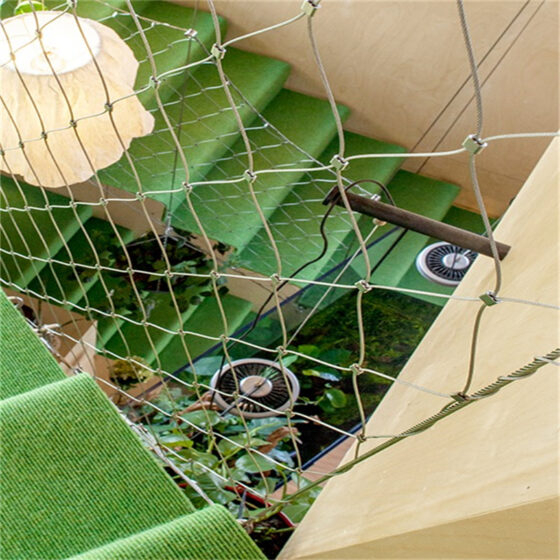
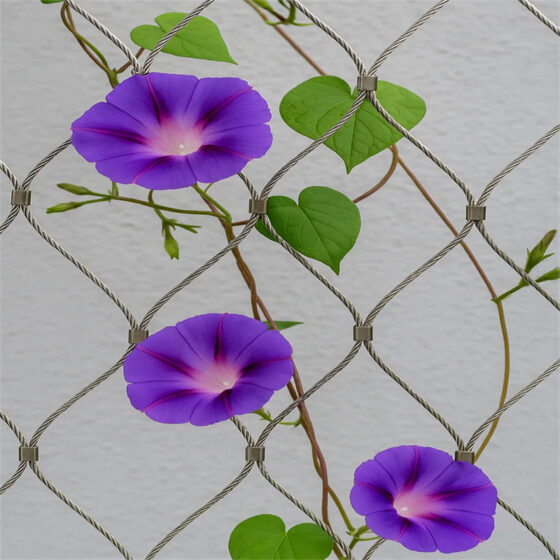
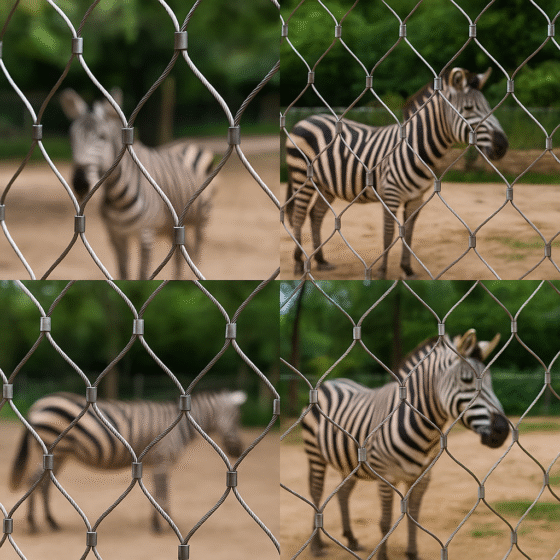
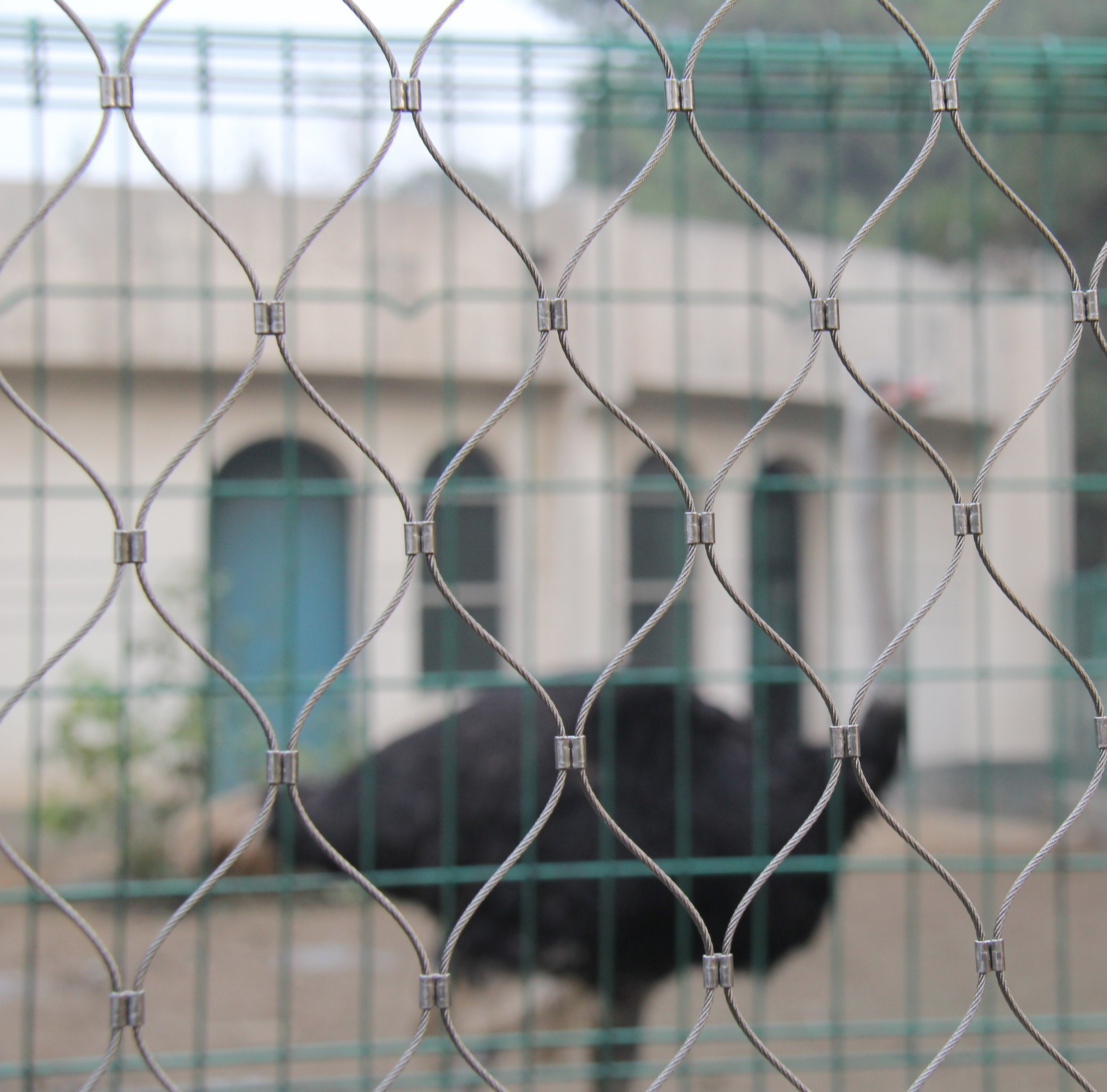
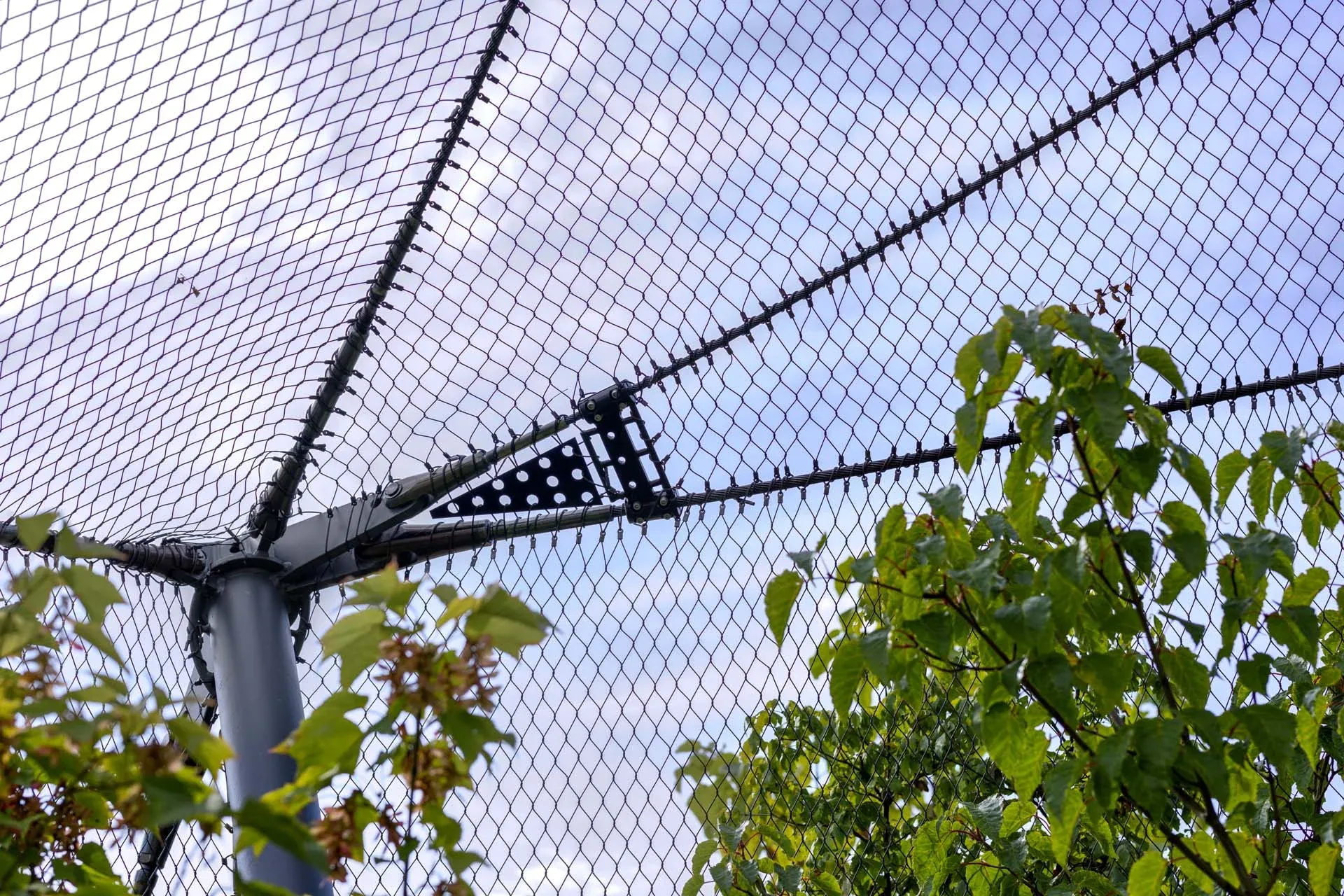
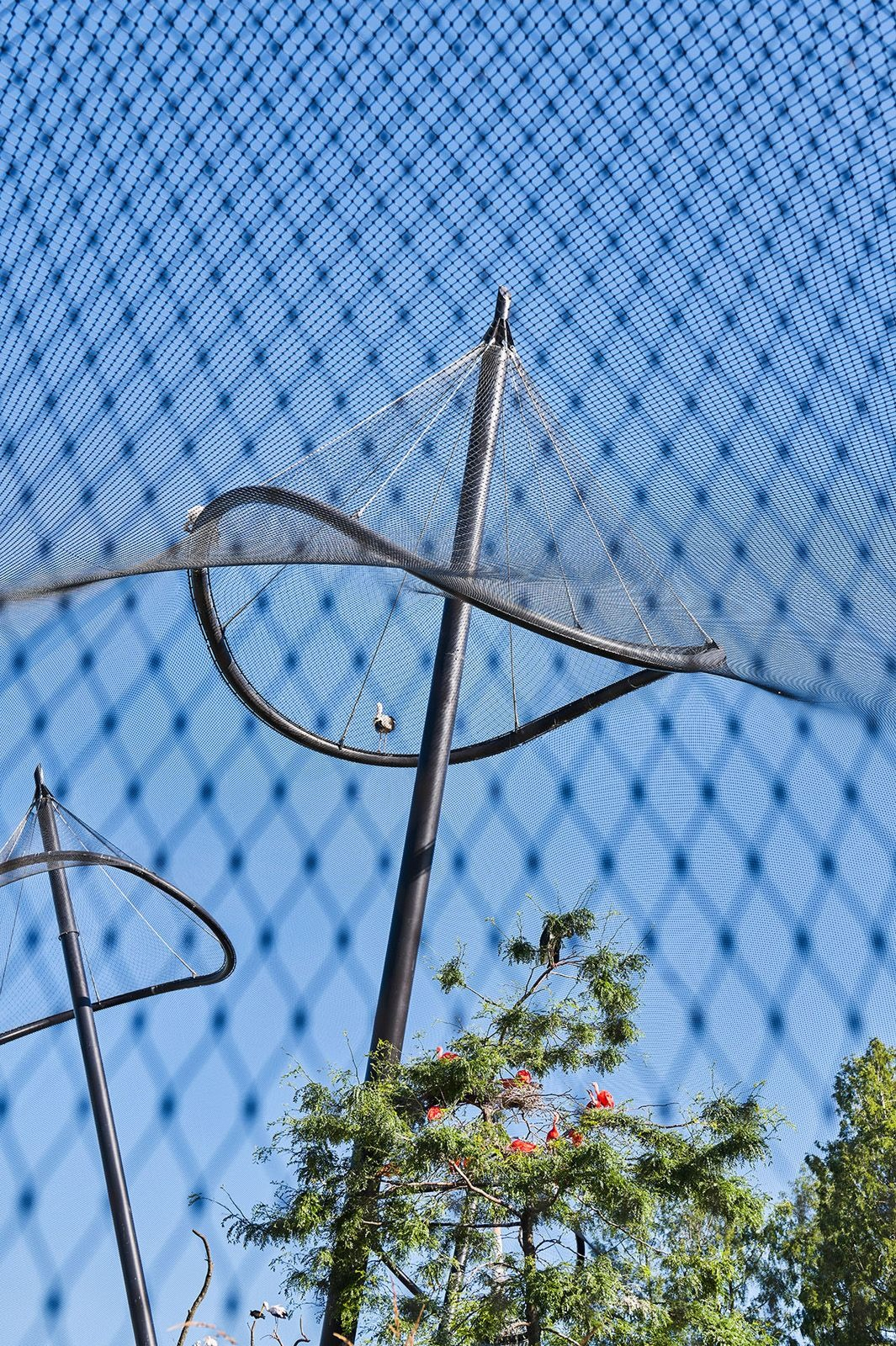
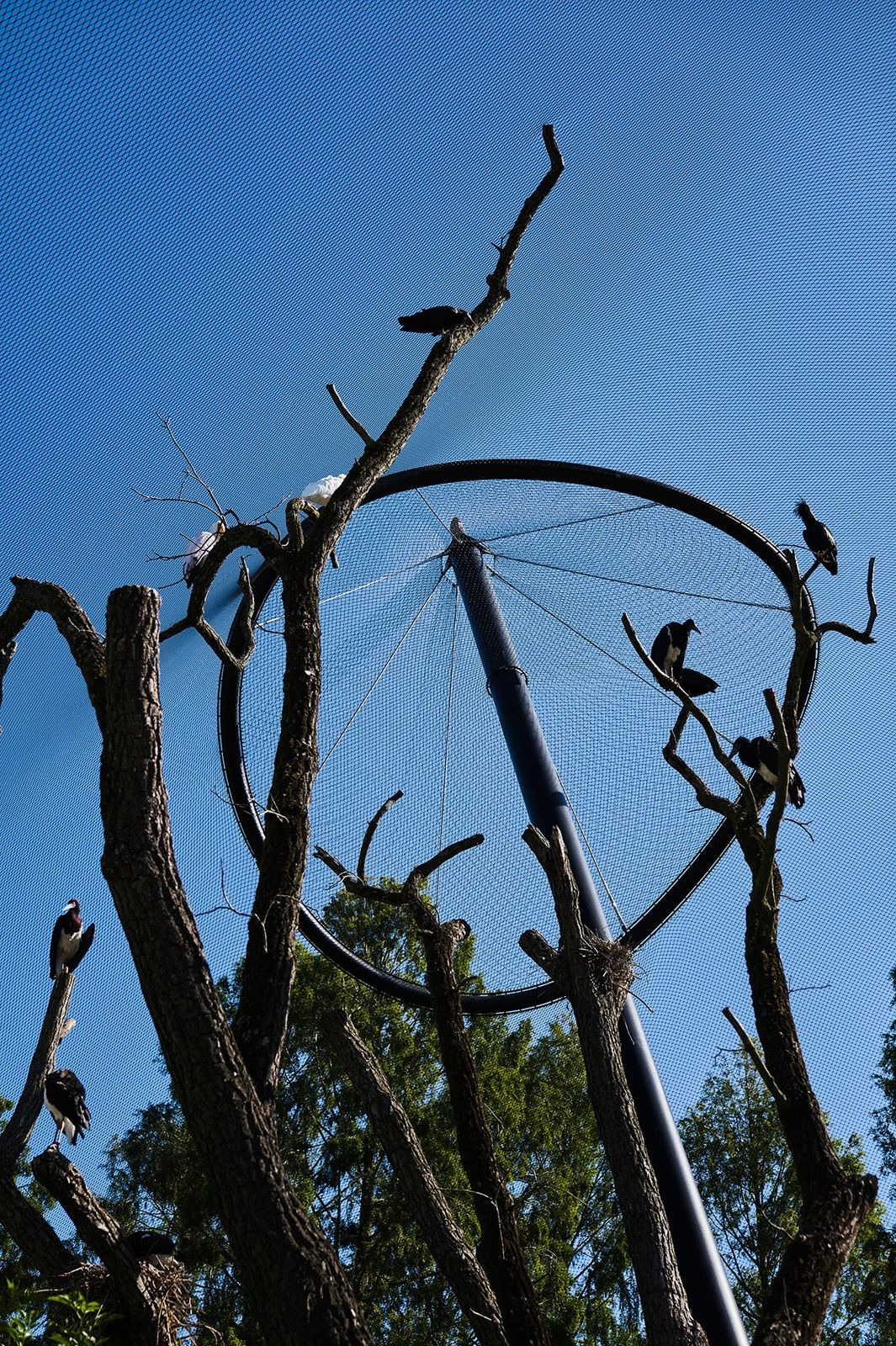
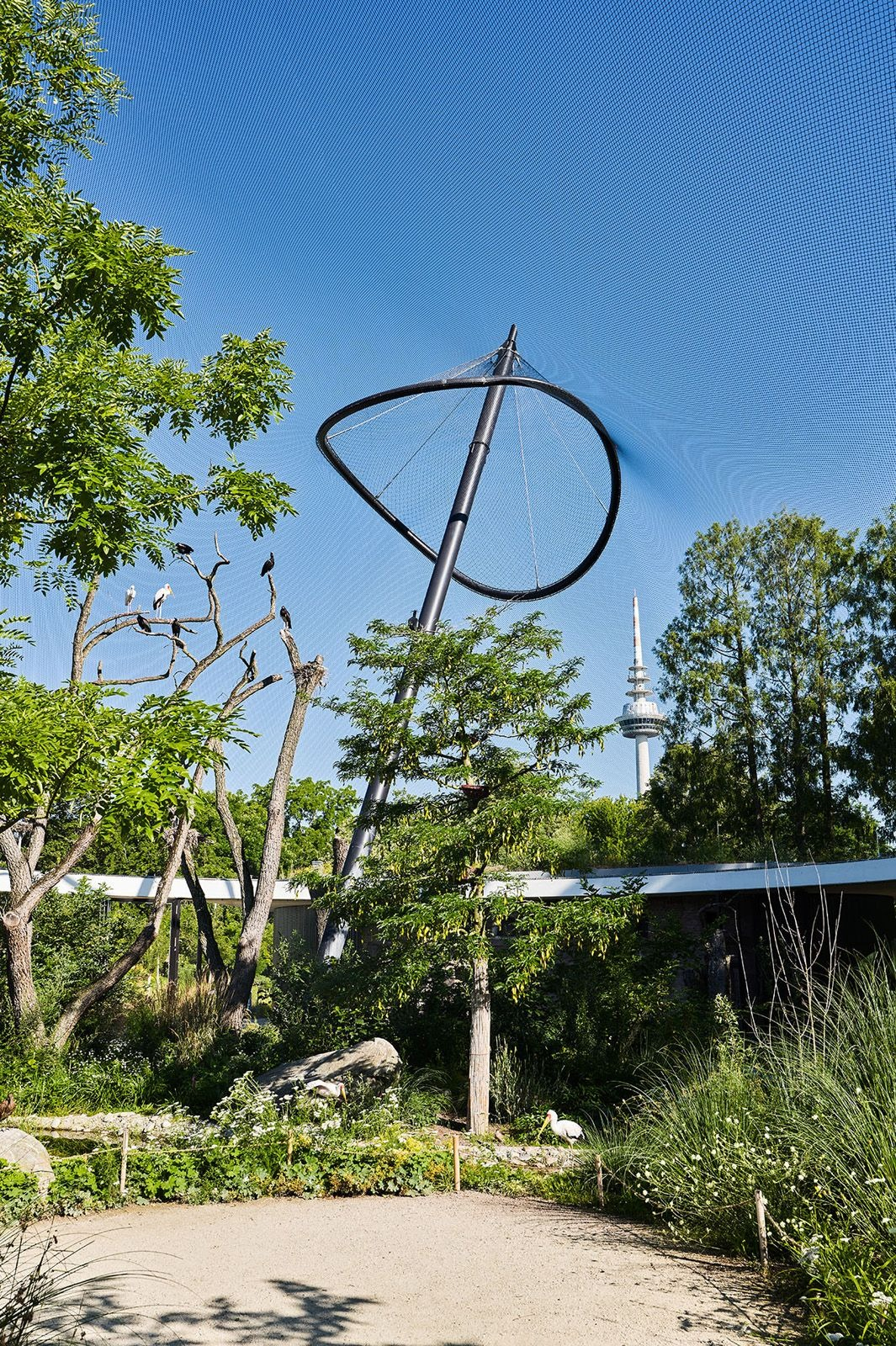
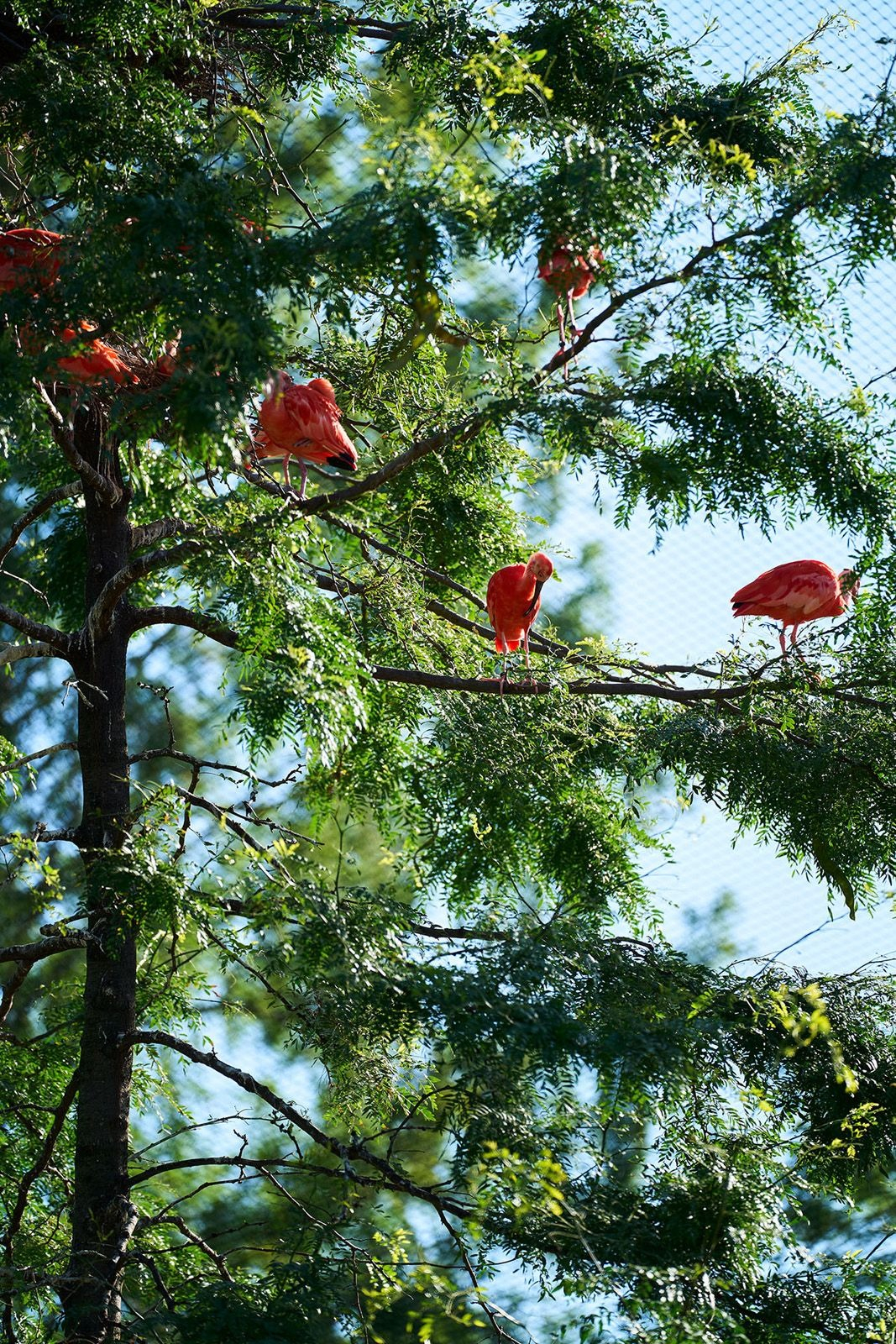
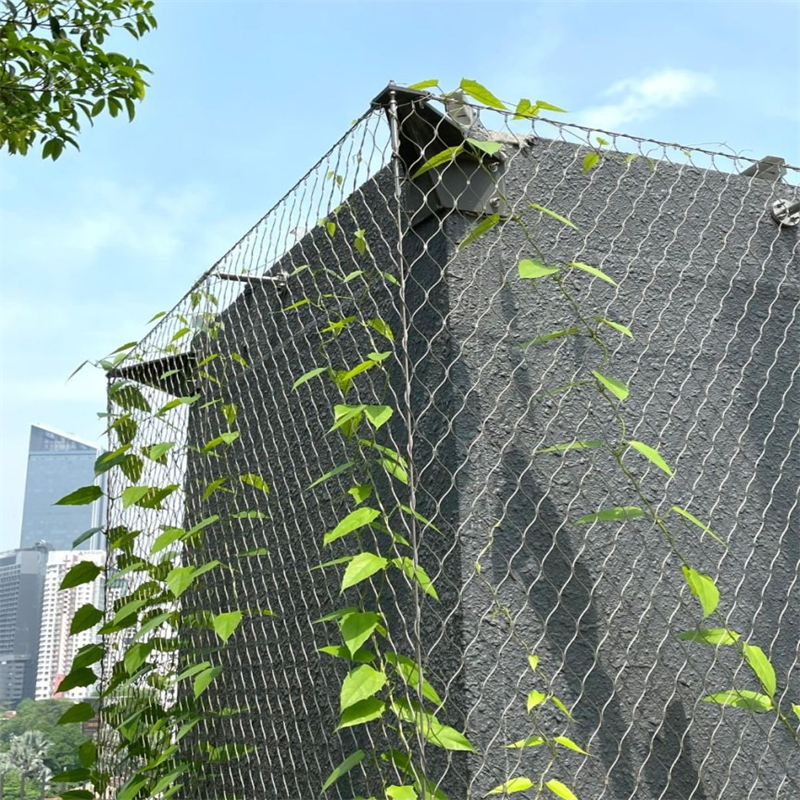
Stainless wire rope mesh is commonly used for balustrade infill, animal enclosures, aviaries, zoo mesh applications, green façade supports, art and sculptural forms, safety nets, fencing screens, bridge protection, stairwell infill, and architectural façades where designers want safety without blocking air flow and visibility.
Benefits
POLYMETAL stainless wire rope mesh delivers a pliable high-strength mesh system that is UV and weather resistant, visually modern, and scalable across many opening sizes and rope diameters. With 316/316L options, it is suitable for harsh outdoor exposure and coastal environments where corrosion resistance and long-term appearance matter.
|
|
Packing
To protect finish and geometry, POLYMETAL stainless wire rope mesh is packed to prevent kinks, crushing, and edge damage. Standard packing options include waterproof wrapping, protective film, reinforced cartons, and wooden cases for export shipments. Labels include code (example: CD1560), orientation (H/V), edge type (L10/L18/L24), and piece size (Height × Length) to reduce site sorting time.


Standard
For projects that require documentation and consistent manufacturing control, POLYMETAL aligns production and inspection around recognized quality and test frameworks. Common references include quality management systems, corrosion test methods (salt spray), and wire rope termination guidance for ferrule-secured assemblies when applicable to the project specification.
FAQS
Q: Ferrule type or woven type—how do I choose?
A: Choose based on tensioning method, frame detail, edge requirement, and target aesthetics. Ferrule type is widely used for architectural infill and enclosures; woven type offers a different visual and flexibility profile. POLYMETAL can recommend the correct stainless wire rope mesh type once opening, load, and edge are defined.
Q: What is the standard mesh angle?
A: 60° is the standard reference angle, with options from 20° to 90° depending on design and opening requirements for the stainless wire rope mesh.
Q: What rope diameters are common?
A: 1.0 mm, 1.5 mm, 2.0 mm, 3.0 mm, and 4.0 mm are common selections. The right choice depends on application load, feel, and opening size.
Q: What opening sizes can you supply?
A: OW×OH ranges from 20×35 mm up to 200×346 mm, with many standard codes shown in the table (CD1020 to CD40200) for stainless wire rope mesh.
Q: Which grade should I choose for coastal projects?
A: 316/316L is typically selected for marine or high-corrosion environments to improve corrosion resistance and long-term appearance.
Q: Can you customize height and length?
A: Yes. Provide Height × Length, opening orientation (H/V), edge type (L10/L18/L24 etc.), and the mesh code (example CD1560) for the stainless wire rope mesh.
How to order ?
- Rope diameter + Opening : such as CD1560, CD3060 etc
- Opening orientation : H or V
- Edge : such as L10, L18, L24 etc
- Piece height and length
- Drawing is necessary if available
- Order e.g. : CD1560 – 60° – H – L10 – Height x Length