Your One-Stop Wire Mesh Fence Supplier | POLYMETAL
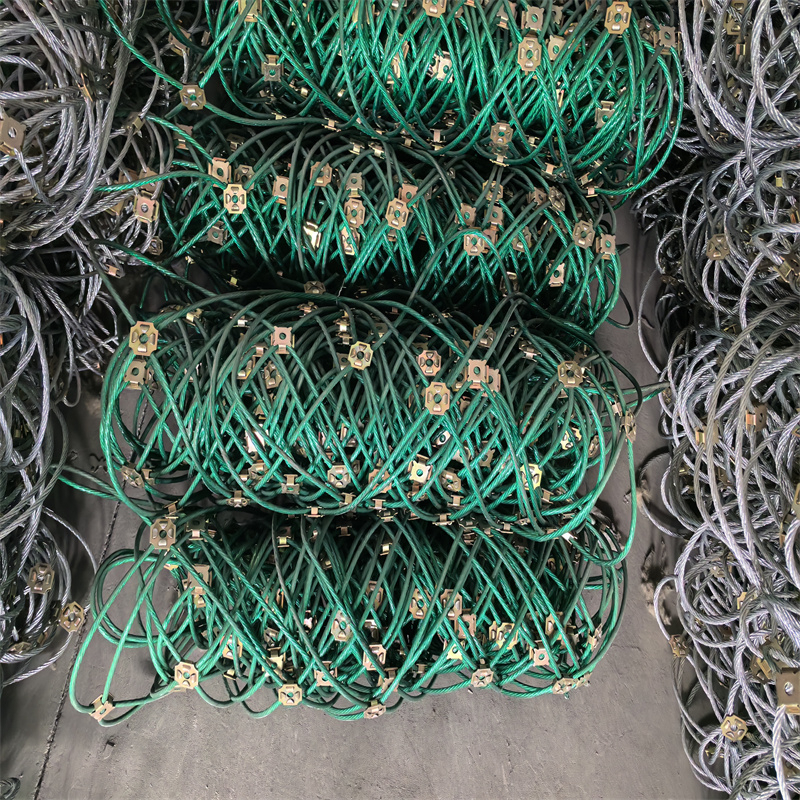
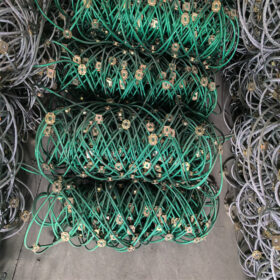


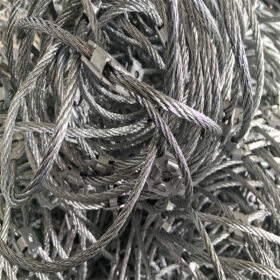

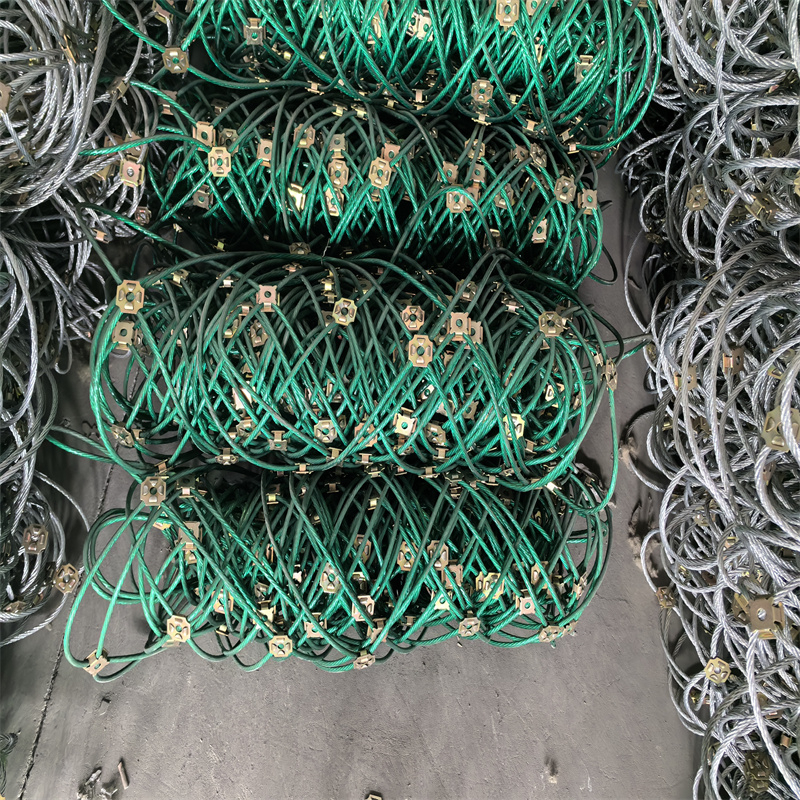
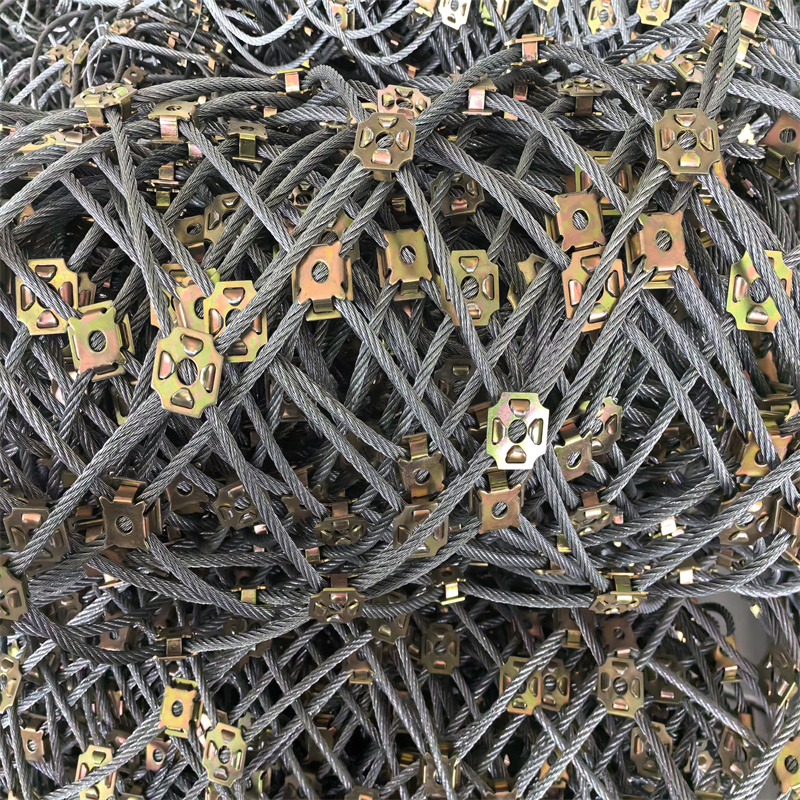
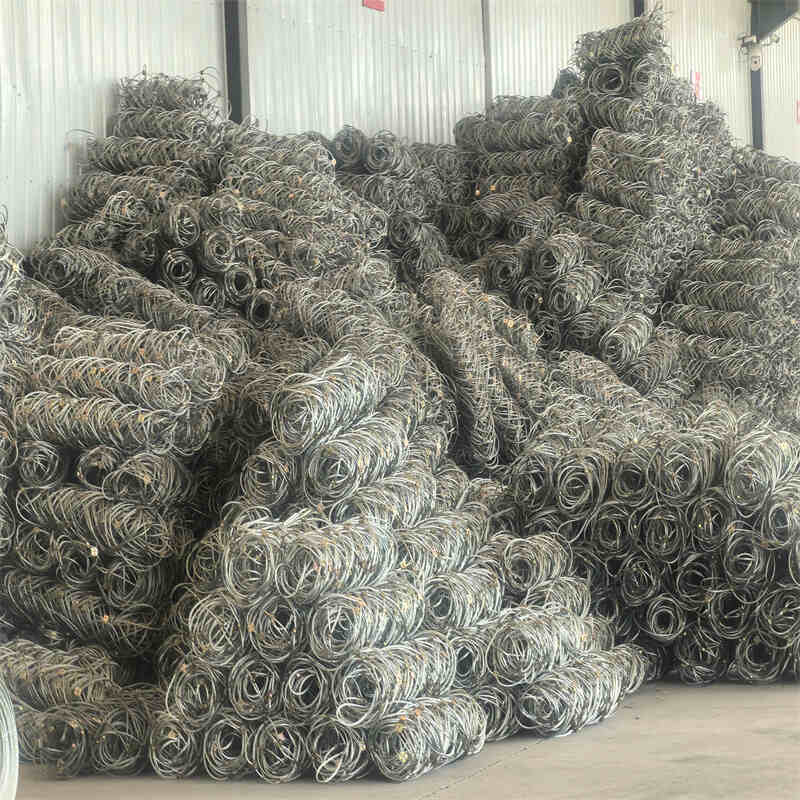
Steel wire rope net is one of the most widely used rockfall protection and slope stabilization systems. It is typically made from high-tensile galvanized or PVC coated steel wire ropes that are intersected and fixed with clips to form a strong, flexible net. Compared with ordinary steel wire meshes, steel wire rope net offers much higher tensile strength and impact resistance, and it can be used both as an active system on the slope surface or as a passive barrier in front of the slope.
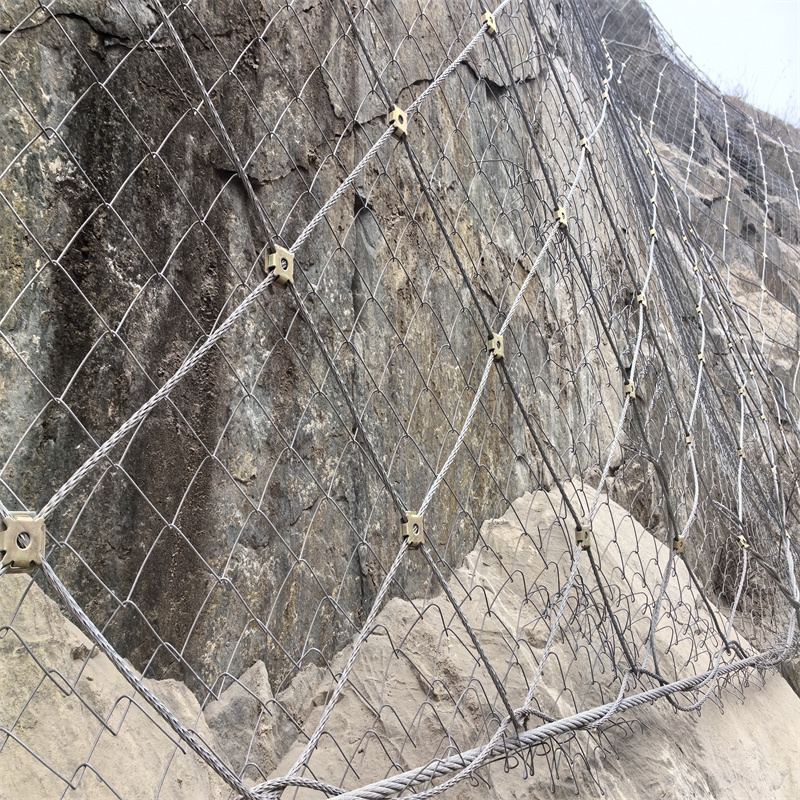
In many projects, steel wire rope net is used together with chain link fence or hexagonal wire mesh. The steel wire rope net intercepts and carries the load of large rock blocks, while the chain link or hexagonal mesh retains smaller stones and fragments, creating a complete rockfall protection solution for mountains, road cut slopes, railways and other critical infrastructure areas.
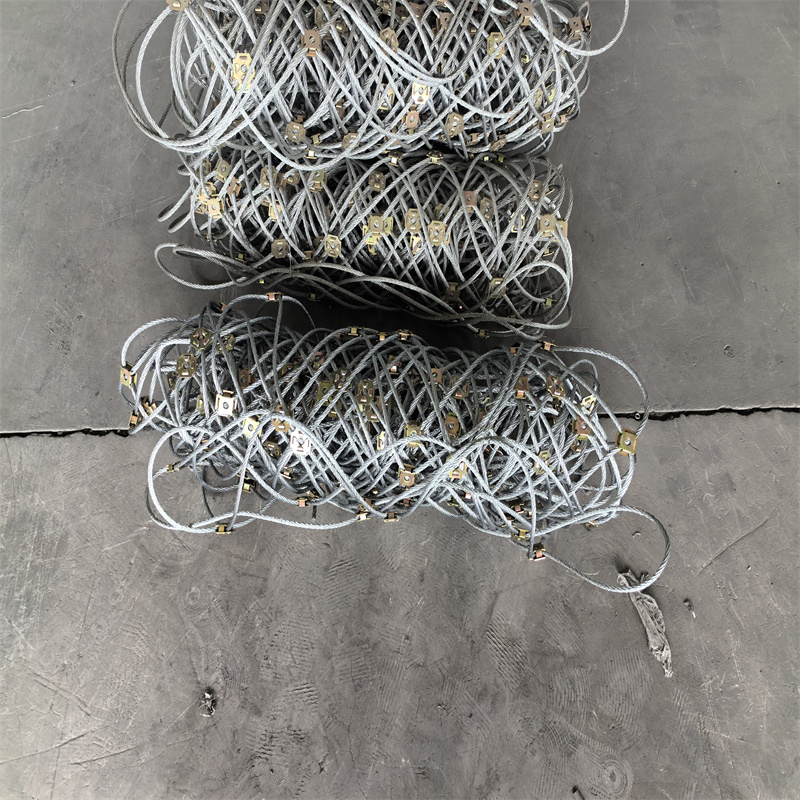
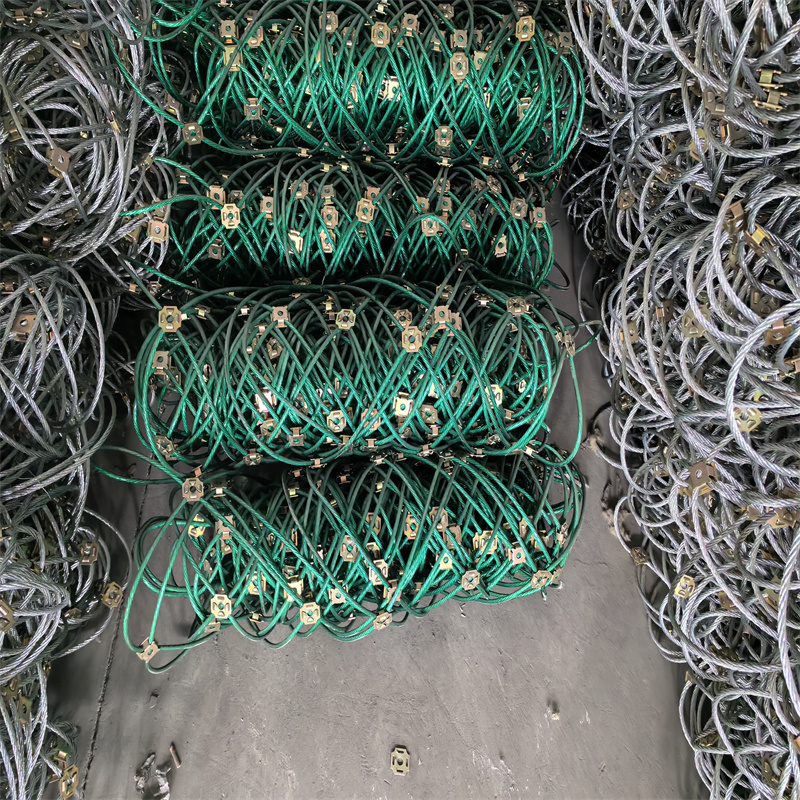
Galvanized Steel Wire Rope Net
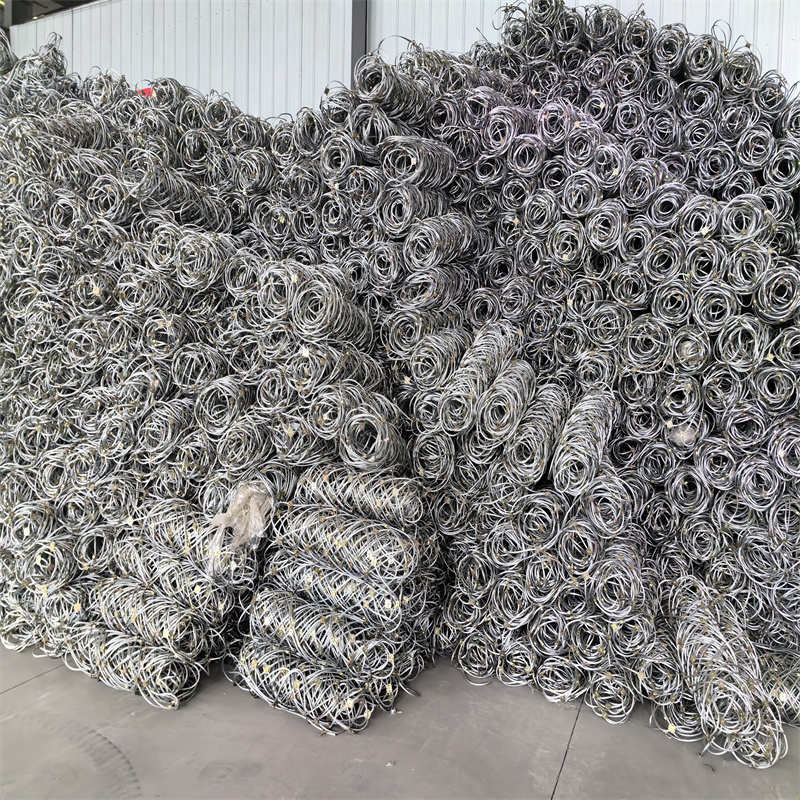
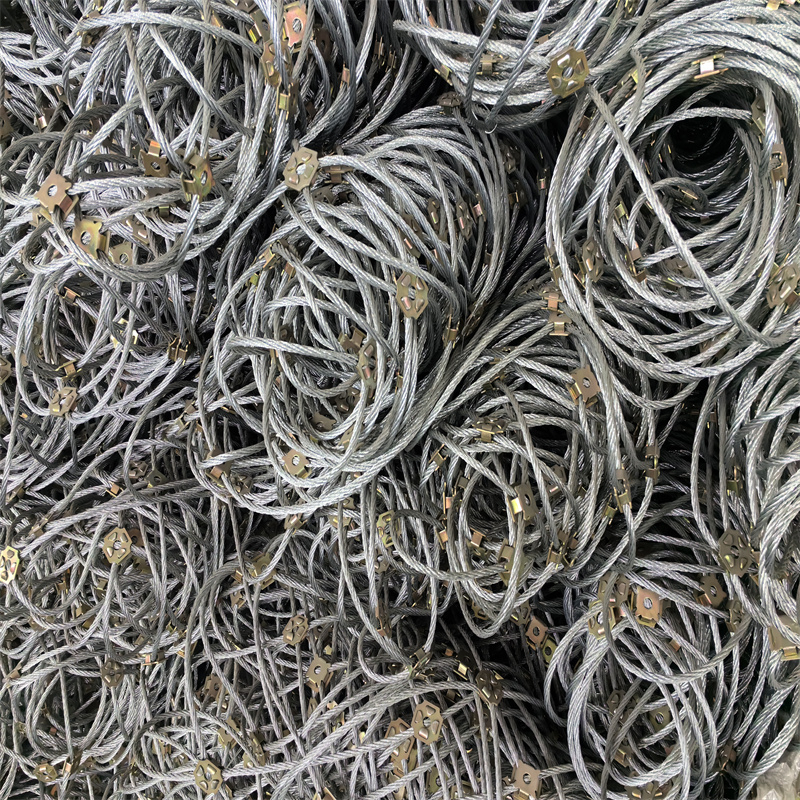
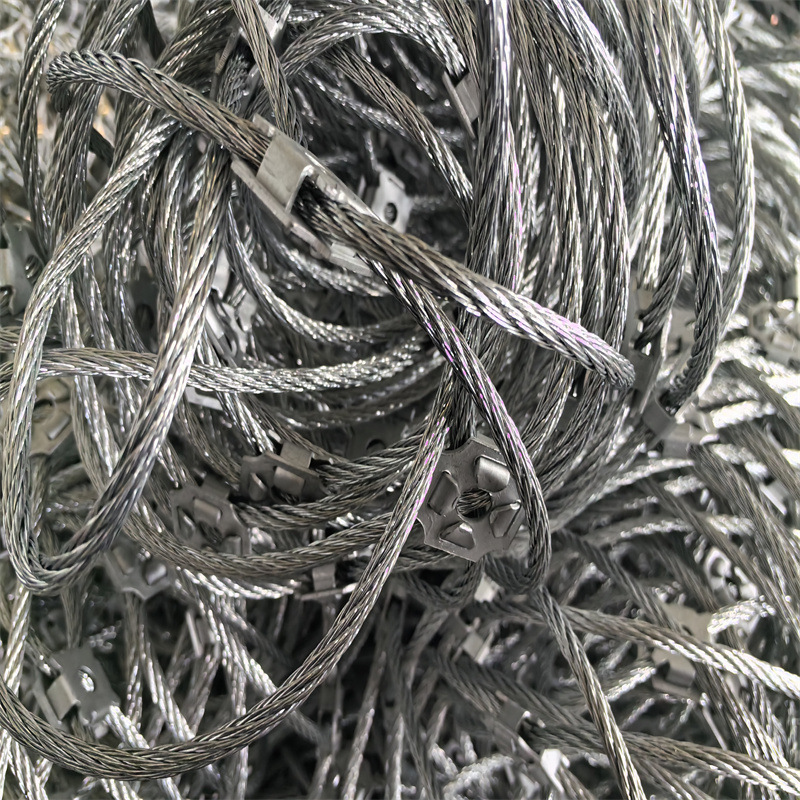
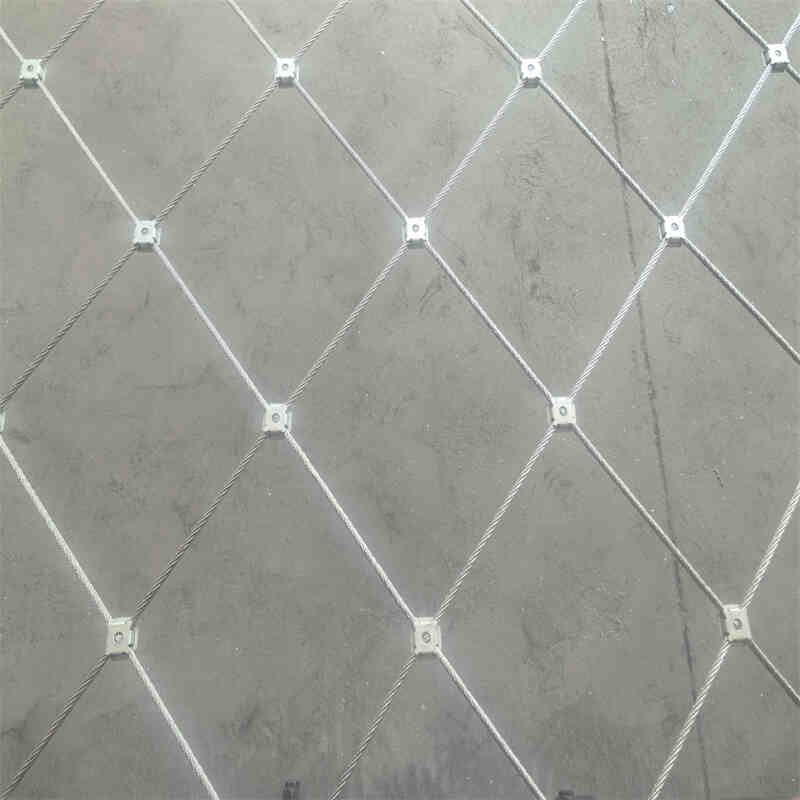
Galvanized steel wire rope net is the most common type of steel wire rope net for rockfall protection. It is woven from hot-dip galvanized steel wire ropes, usually with 8 mm diameter ropes forming diamond-shaped meshes such as 300 mm × 300 mm. The ropes are intersected and locked with clips, providing high tensile strength and load capacity.
Galvanized steel wire rope net can be used alone to block large rock blocks in areas with high impact energy, or combined with chain link fence or hexagonal wire mesh when there are many smaller loose stones on the slope. In the combined system, the backing mesh blocks small stones and debris, while the steel wire rope net carries the main impact loads of larger blocks. For higher energy zones or areas with very large blocks, it can also be used together with GPS O ring nets, where the ring nets provide additional energy absorption and the galvanized steel wire rope net offers continuous surface coverage and slope stabilization.
Components of Steel Wire Rope Net Rockfall System
- Galvanized steel wire rope net The main component of the steel wire rope net rockfall barrier system, typically made of 8 mm wire rope woven into diamond-shaped meshes such as 300 mm × 300 mm, providing high tensile strength and load capacity.
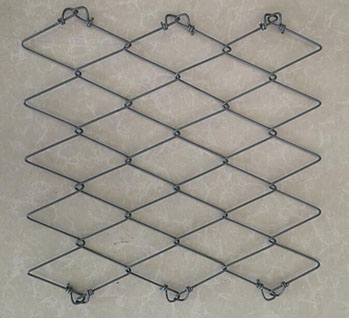
- Chain link fence Used as a backing mesh with the steel wire rope net, placed behind or inside the rope net to block smaller stones and loose debris. It is usually made of hot-dip galvanized steel wire with mesh size such as 50 mm × 50 mm.
- Wire rope anchor Made of steel wire rope or steel bar, used to fasten the steel wire rope net and chain link mesh firmly onto the slope. Wire rope anchors provide high tensile strength and better flexibility than traditional concrete anchors.
- Supporting rope Supporting rope runs along the steel wire rope net (horizontally and vertically) to share the load and pressure. It is commonly made of 12 mm or 16 mm steel wire rope to enhance the system’s overall capacity.
- Sewing rope Sewing rope connects neighbouring steel wire rope net panels and forms a continuous protection layer for the entire slope. It is usually made of 8 mm steel wire rope to ensure high load capacity at the panel joints.
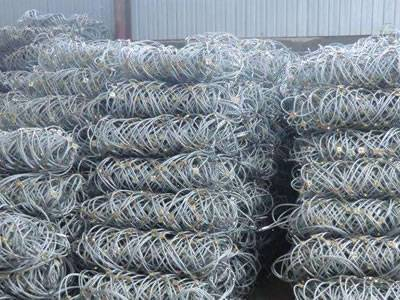 GWRN-02: Galvanized steel wire rope net. | 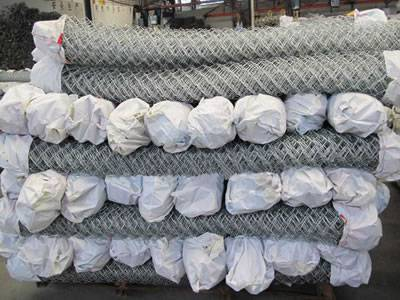 GWRN-03: Chain link meshes as backing mesh. |
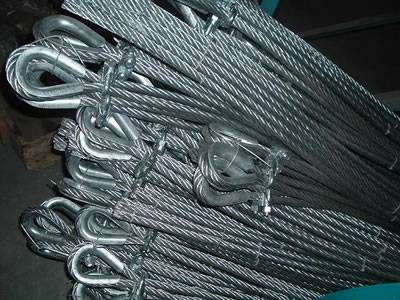 GWRN-04: Wire rope anchor. | 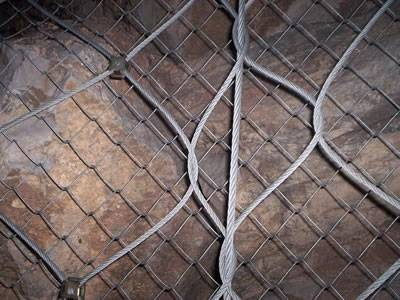 GWRN-05: Sewing rope for panel connection. |
Standard Specifications of Steel Wire Rope Net
- Material High carbon steel or stainless steel wire rope, hot-dip galvanized or PVC coated.
- Wire rope diameter 8–20 mm.
- Wire rope mesh size 20 × 20 mm – 360 × 360 mm; typical rockfall mesh 300 × 300 mm or 330 × 330 mm.
- Typical panel size 4.0 m × 4.0 m, 4.5 m × 4.5 m or customized.
- Supporting rope diameter 12 mm or 16 mm.
- Sewing rope diameter 8 mm (same material and specification as mesh rope if required).
| Wire rope diameter | Ø8–20 mm |
| Rope construction | 7 strands × 19 wires (7×19) |
| Zinc galvanized | ≥ 200 g/m² |
| Tensile strength | ≥ 1770 MPa (high-tensile steel wire rope) |
| Standard mesh size | 300 × 300 mm (GB); 330 × 330 mm (non-standard) |
| Standard panel size | 4000 × 4000 mm (4.0 m × 4.0 m) |
| Suture (sewing) rope | Material and specification same as mesh wire rope |
| Support rope options | 1. Horizontal and vertical rope diameter 16 mm. 2. Horizontal rope diameter 16 mm, vertical rope diameter 12 mm. |

Features of Steel Wire Rope Net
- High tensile strength Steel wire rope net has much higher tensile strength than conventional steel wire mesh, providing excellent rockfall resistance.
- High load capacity The rope net and supporting ropes share and distribute impact forces, ensuring safe performance under heavy loads.
- Active and passive protection Steel wire rope net can be used in both active slope stabilization systems and passive rockfall barrier systems at the slope toe.
- Excellent substitute for shotcrete It can replace conventional shotcrete protection, reducing concrete use and improving drainage and aesthetics.
- Environmental and green Open mesh structure allows vegetation growth, helping the slope integrate into the natural environment.
- Corrosion and rust resistance Hot-dip galvanized or PVC coated surfaces provide long-term corrosion resistance in harsh environments.
- Durable and long service life High-tensile steel and protective coatings ensure long service life even under frequent rockfall impacts.
- Simple installation and easy repair Modular panels and rope components make installation and local repairs straightforward.


Applications of Steel Wire Rope Net
Steel wire rope net is designed for protection, stabilization and strengthening of slopes against erosion and rockfall. It can be used to reinforce soils and rock masses in a wide range of projects, including:
- Rockfall protection Preventing rocks and debris from falling onto highways, railways, tunnels and buildings.
- Slope and embankment stabilization Stabilizing cut slopes, embankments and steep soil or rock faces.
- Landslide and debris flow control Reducing the risk of landslides, debris flow and shallow failures.
- Bank and river slope reinforcement Protecting slopes of water banks, reservoirs and drainage channels.
- Landscape and ecological restoration Supporting vegetation recovery and landscape restoration on disturbed slopes.
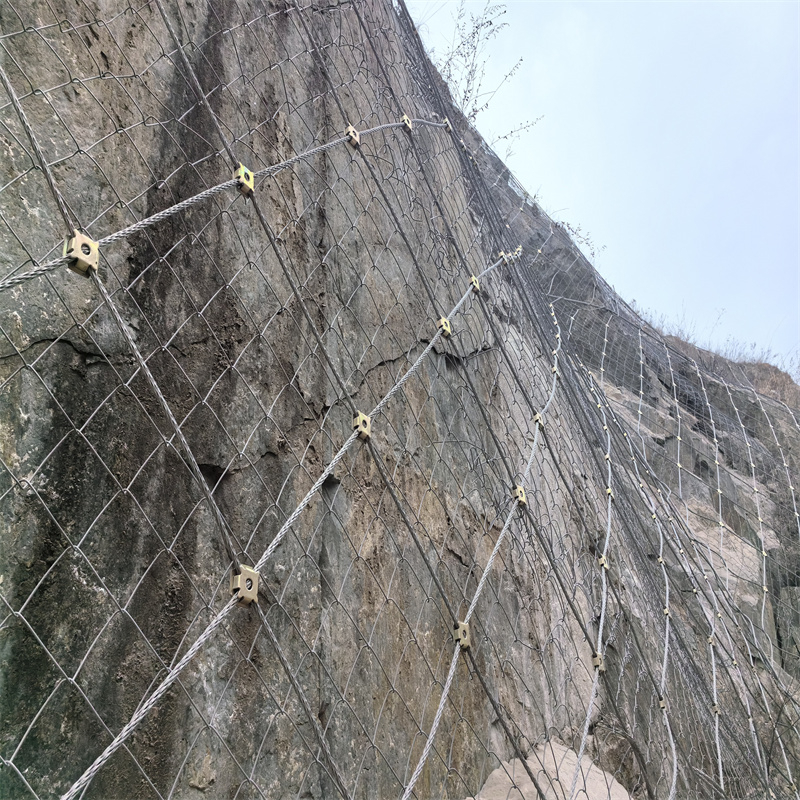
- Active rockfall barrier systems Used directly on the slope surface to secure unstable rock masses.
- Passive rockfall barrier systems Used as a key component in rockfall catch fences and barrier structures at the slope toe.
 GWRN-06: Active steel wire rope net system. | 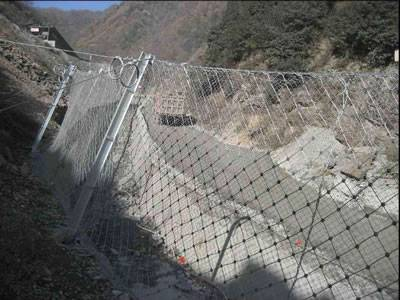 GWRN-07: Passive steel wire rope net system. |
Steel Wire Rope Net – Frequently Asked Questions
What is steel wire rope net?
Steel wire rope net is a high-tensile rockfall protection and slope stabilization mesh made from stranded steel wire ropes clipped together to form a flexible net. It is designed to intercept falling rocks, stabilize loose blocks on slopes and protect roads, railways and infrastructure below from rockfall and debris.
Is steel wire rope net used for active or passive rockfall protection?
Steel wire rope net can be used in both active and passive systems. In active rockfall protection, the net is anchored directly onto the rock face to stabilize the slope surface. In passive systems, it is mounted on posts as part of a rockfall fence or barrier at the toe of the slope to catch falling rocks before they reach the protected area.
What materials and surface treatments are used for steel wire rope net?
Most steel wire rope nets are made from high-carbon steel wire ropes with high tensile strength, typically hot-dip galvanized for corrosion resistance. In harsher environments, Zn–Al alloy coatings or PVC coated wire ropes are used to improve durability and extend service life.
What wire rope diameters and mesh sizes are common?
Typical steel wire rope diameters range from 8 mm to 20 mm, with the most common rockfall mesh using 8 mm ropes. Standard mesh apertures for rockfall protection are around 300 × 300 mm or 330 × 330 mm, while other mesh sizes can be customized according to project design and energy requirements.
Where is steel wire rope net usually applied?
Steel wire rope net is widely used on highway and railway cut slopes, quarry and mine benches, hydropower and dam project slopes, riverbanks and reservoirs, as well as around industrial plants and scenic mountain roads. It is especially suitable for steep rock slopes with joints, fractures and potential rockfall hazards.
How is steel wire rope net installed on a slope?
For active systems, steel wire rope net panels are anchored to the slope using rock bolts or soil nails with anchor plates, combined with horizontal and vertical support ropes. Sewing ropes or clips connect neighbouring panels to form a continuous protection layer. For passive systems, the nets are fixed to steel posts and bearing ropes as part of a rockfall fence or barrier.
Can steel wire rope net be used together with other meshes?
Yes, steel wire rope net is often combined with chain link mesh, hexagonal wire mesh or high-tensile meshes such as Tecco mesh. The steel wire rope net carries the main impact of large rock blocks, while the backing mesh retains smaller stones and debris, providing more complete rockfall containment.
How long does steel wire rope net last and what maintenance is required?
With proper galvanizing and correct installation, steel wire rope net can usually provide 10–20 years or more of service life, depending on climate and environmental conditions. Routine visual inspections should be carried out to check for damaged net sections, loose anchors or support ropes, and local repairs or panel replacements should be done after major impact events.
What information is needed to design or quote a steel wire rope net system?
To design or quote a steel wire rope net system, key information includes slope height and angle, rock type and joint conditions, expected rock block size and energy, required protection width, whether the system is active or passive, preferred mesh size and rope diameter, coating type and any local design standards that must be followed.
Design Considerations for Steel Wire Rope Net Systems
When selecting a steel wire rope net system, engineers normally start from the expected rock block size and impact energy. Higher block mass and drop height require larger rope diameters, stronger support ropes and denser anchor spacing. Slope geometry is equally important: very steep or irregular rock faces may need additional sewing ropes and boundary ropes to avoid gaps and maintain full surface coverage. Environmental factors such as coastal salt spray, industrial pollution or high humidity also influence the choice of coating, for example switching from standard galvanizing to Zn–Al alloy or PVC coated ropes for extended durability.
Comparison with Other Rockfall Protection Solutions
Steel wire rope net offers a lighter and more flexible alternative to massive concrete retaining walls or full-surface shotcrete. While rigid structures tend to crack when the ground moves, rope nets accommodate deformations without losing overall integrity. Compared with simple chain link or hexagonal mesh alone, rope nets provide much higher energy absorption and tear resistance, which is critical when dealing with medium to large rock blocks. In many modern projects, designers prefer a hybrid approach: steel wire rope net as the main energy-bearing element, backed by finer mesh and, in very high-risk zones, combined with ring nets or GPS O ring nets for additional robustness.
Typical Installation Workflow
A typical installation begins with site investigation and marking of the anchor grid on the rock face. Drilling equipment is then used to install rock bolts or soil nails, which are grouted and fitted with anchor plates. Horizontal and vertical support ropes are tensioned between anchor points, creating a load-bearing framework. Steel wire rope net panels are lifted into place, attached to the support ropes and connected to each other using sewing ropes or clips. Finally, all connections are checked, any backing mesh is tied in, and a visual inspection is carried out before the slope is handed over for service.
Quality Control and Testing
Reliable performance depends on strict quality control. Wire ropes are normally tested for tensile strength, elongation and zinc coating mass before being woven into nets. Finished panels can be inspected for correct mesh aperture, rope alignment and clipping quality. For critical projects, third-party laboratories may perform pull-out tests on anchors and full-scale impact tests on sample net sections to verify energy capacity. Consistent documentation of material certificates, test results and production batches helps owners and contractors trace components throughout the life of the structure.
How to Specify a Steel Wire Rope Net in Your Inquiry
To obtain an accurate quotation and technical proposal, it is helpful to include several key points in your inquiry:
Required rope diameter and mesh size (or at least desired energy level / rock block size).
Approximate slope height and width and total protection area.
Whether the system will be active on the slope surface, passive at the toe, or a combination of both.
Need for backing mesh (chain link, hexagonal or high-tensile mesh) and any preference for coatings.
Site conditions, such as coastal / industrial environment, access limitations or special aesthetic requirements.