Your One-Stop Wire Mesh Fence Supplier | POLYMETAL
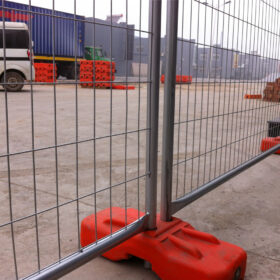
temporary fencing for sale sydney is often bought under pressure—tight timelines, fast site setup, and constant movement of panels. That’s exactly why “looks identical” fencing can fail fast: a slightly thinner frame, lighter wire, poor galvanizing, or weak welds can trigger rattles, panel sag, wind blowdowns, and forced replacement when the site is already running hot. The real cost is rarely the panel price—it’s the downtime, rework labor, and safety risk when the perimeter doesn’t hold.
Brand Overview: POLYMETAL
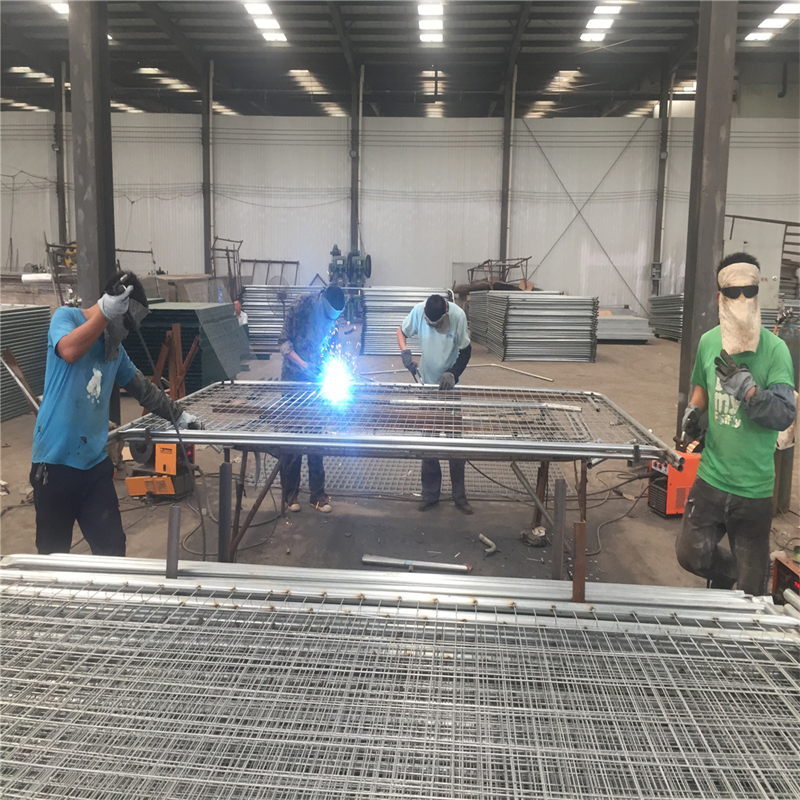
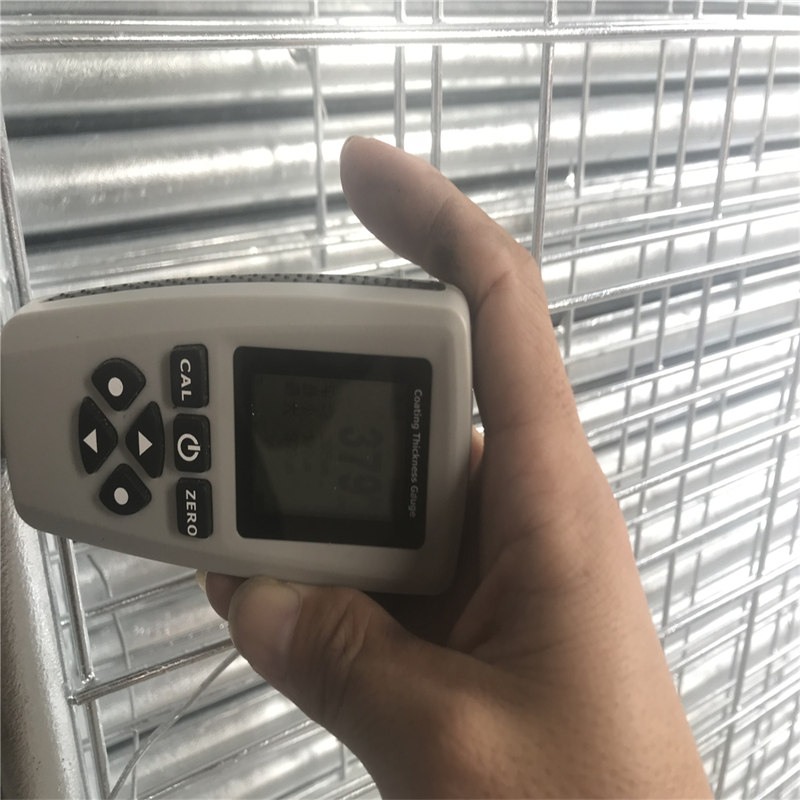
POLYMETAL supplies temporary fencing as a controlled system rather than random panels: consistent panel geometry, defined tube OD and thickness options, matched infill wire, verified finish thickness, and packing that protects panels from rubbing damage before installation. This system-first approach helps buyers avoid the most common Sydney jobsite failure pattern: panels that “fit” but don’t stay straight, don’t stay quiet, and don’t stay stable in wind or repeated handling—similar to how a complete panel-and-finish package is specified for aluminum tubular picket fence panels when appearance and durability must hold up on-site.
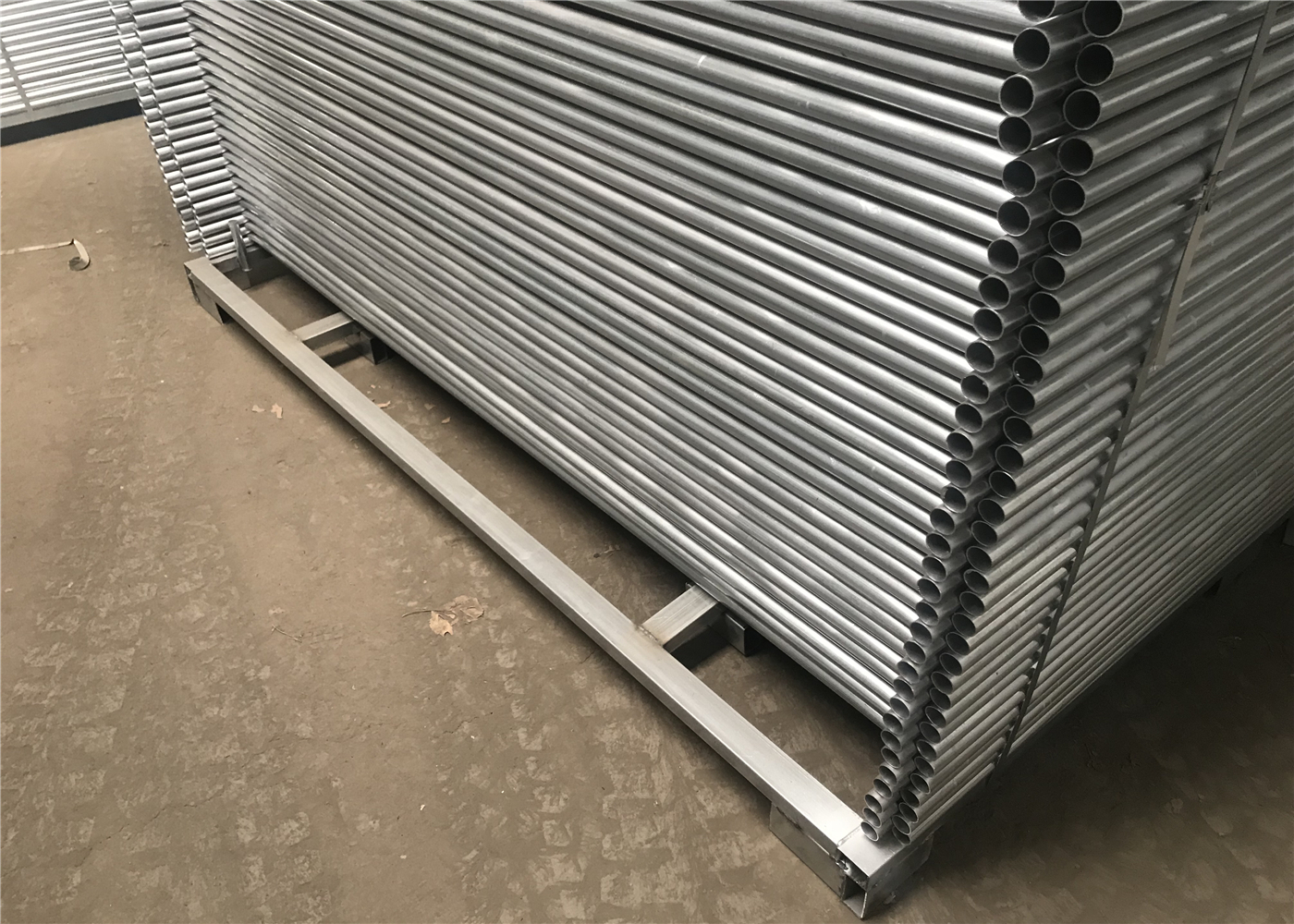
Product Description: POLYMETAL Temporary Fencing Panels for Sydney Projects
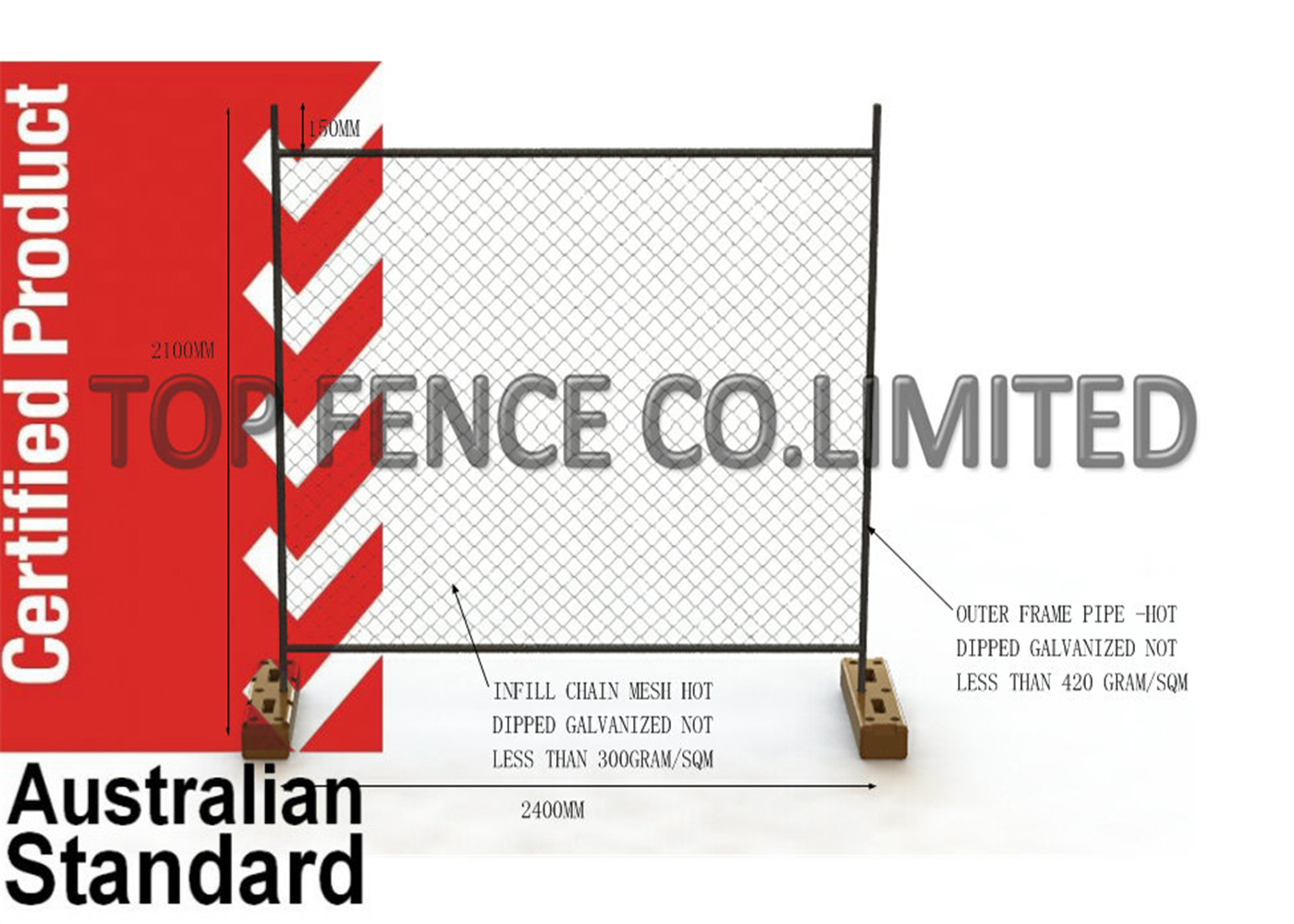
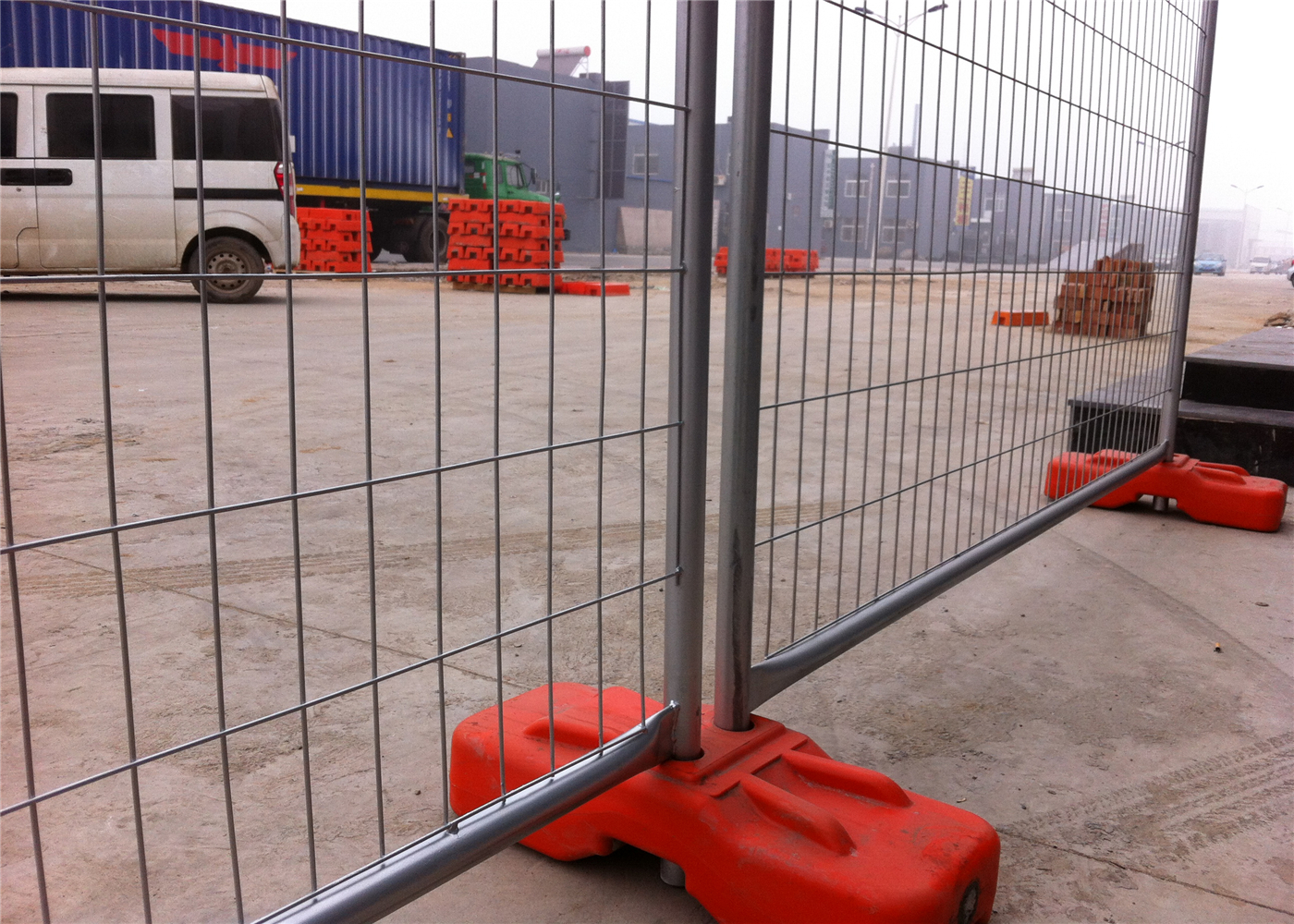
POLYMETAL temporary fence panels are built for fast-deploy construction perimeters, site logistics zones, and event boundaries where crews need repeatable installation and predictable stability. Standard panel height is 2100mm, with common widths of 2400mm for general use and extended widths of 3300mm and 3500mm supplied with a middle rail (mid-stay) to reduce flex. Frame tube options include OD32mm, OD38mm, OD40mm, and OD41mm, with frame wall thickness choices from 1.0mm up to 2.0mm depending on the handling abuse level and wind exposure.
The infill mesh is commonly 60mm × 150mm, with wire diameter options of 2.70mm, 3.00mm, or 4.00mm. Finish options cover practical site budgets: 14-micron galvanized for short-term use, 42-micron hot-dipped galvanized as the common “workhorse” choice, and 100-micron hot-dipped galvanized for higher corrosion exposure and longer service expectations. Typical wire count sets used in production planning are 12 vertical wires with 38 horizontal wires for 2.1m × 2.4m panels, 12 vertical wires with 53 horizontal wires for 2.1m × 3.3m panels, and 12 vertical wires with 56 horizontal wires for 2.1m × 3.5m panels—and when buyers want to understand why frame strength and weld stability start with steel chemistry and forming behavior, this quick reference on Q235 steel fits naturally into the same “spec-first” decision process.
For buyers comparing local supply to import options, the market reality is that many “Australian” temporary fence listings are still imported supply chains. If you’ve checked local marketplace pricing, you’ll often see per-set costs (panel + clamp + block) that can be surprisingly high compared with factory-direct procurement—especially when you need volume for multiple Sydney jobs or long-term hire fleets.
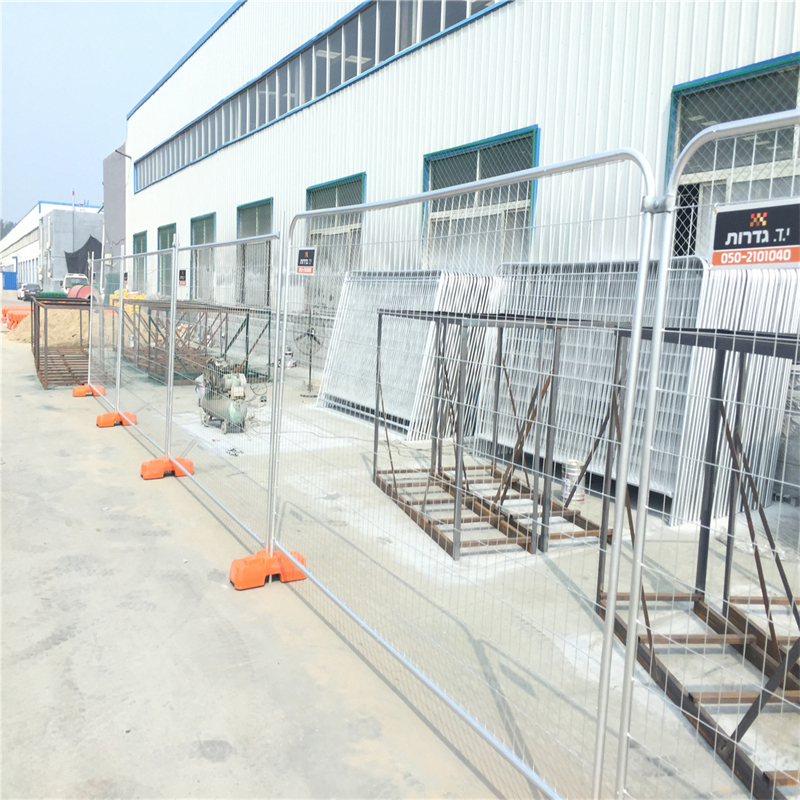
Visual Reference: POLYMETAL temporary fencing for sale sydney
| Photo | Caption |
|---|---|
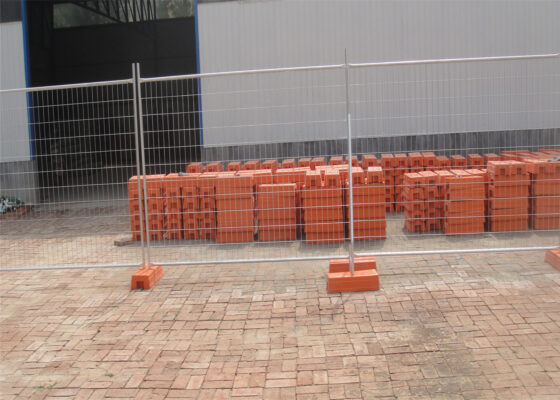
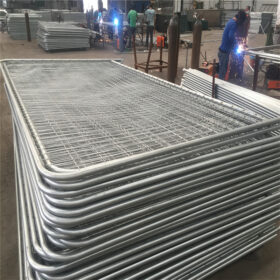
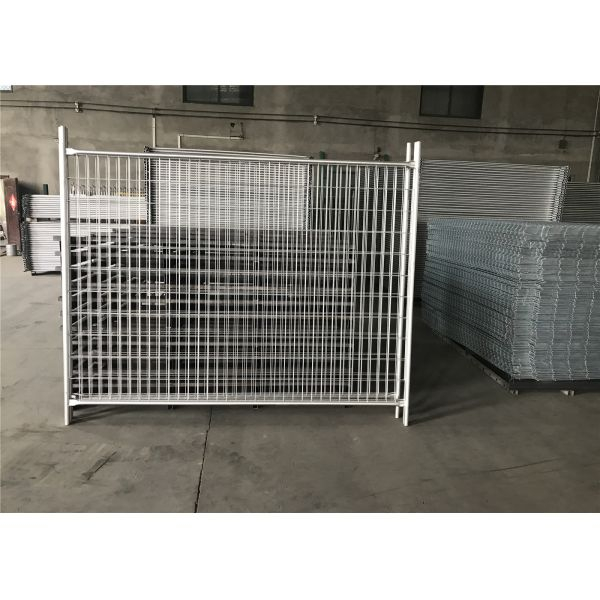
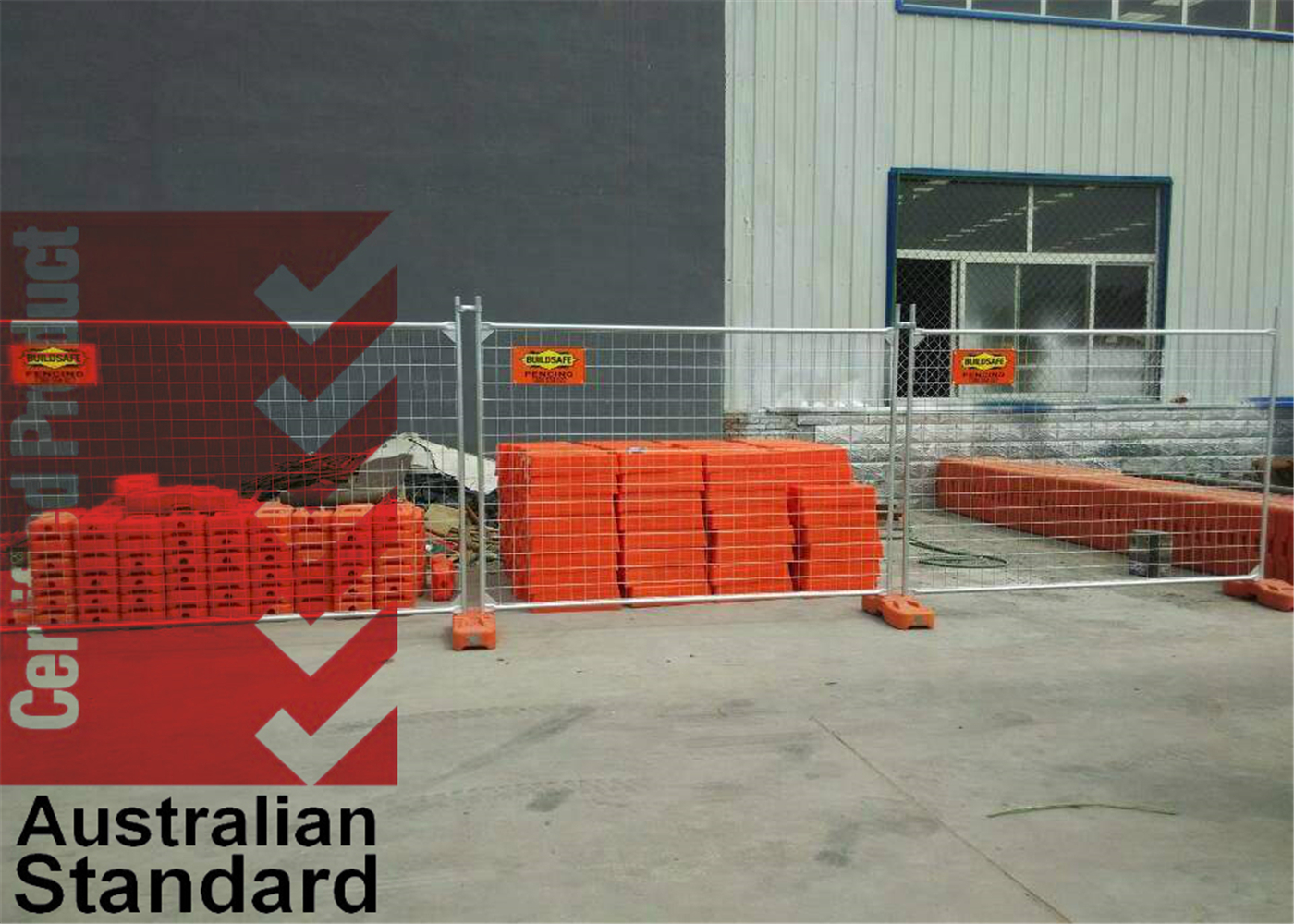
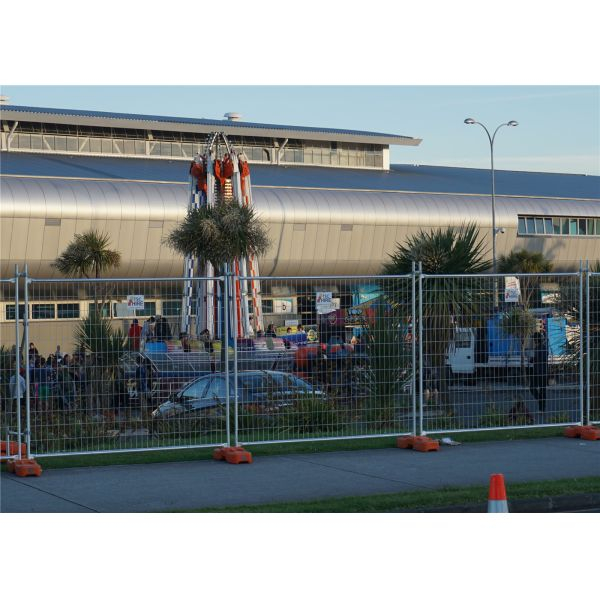 | Temporary fence panel example: common site panel format used for construction perimeters and logistics zones. |
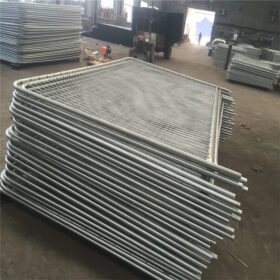
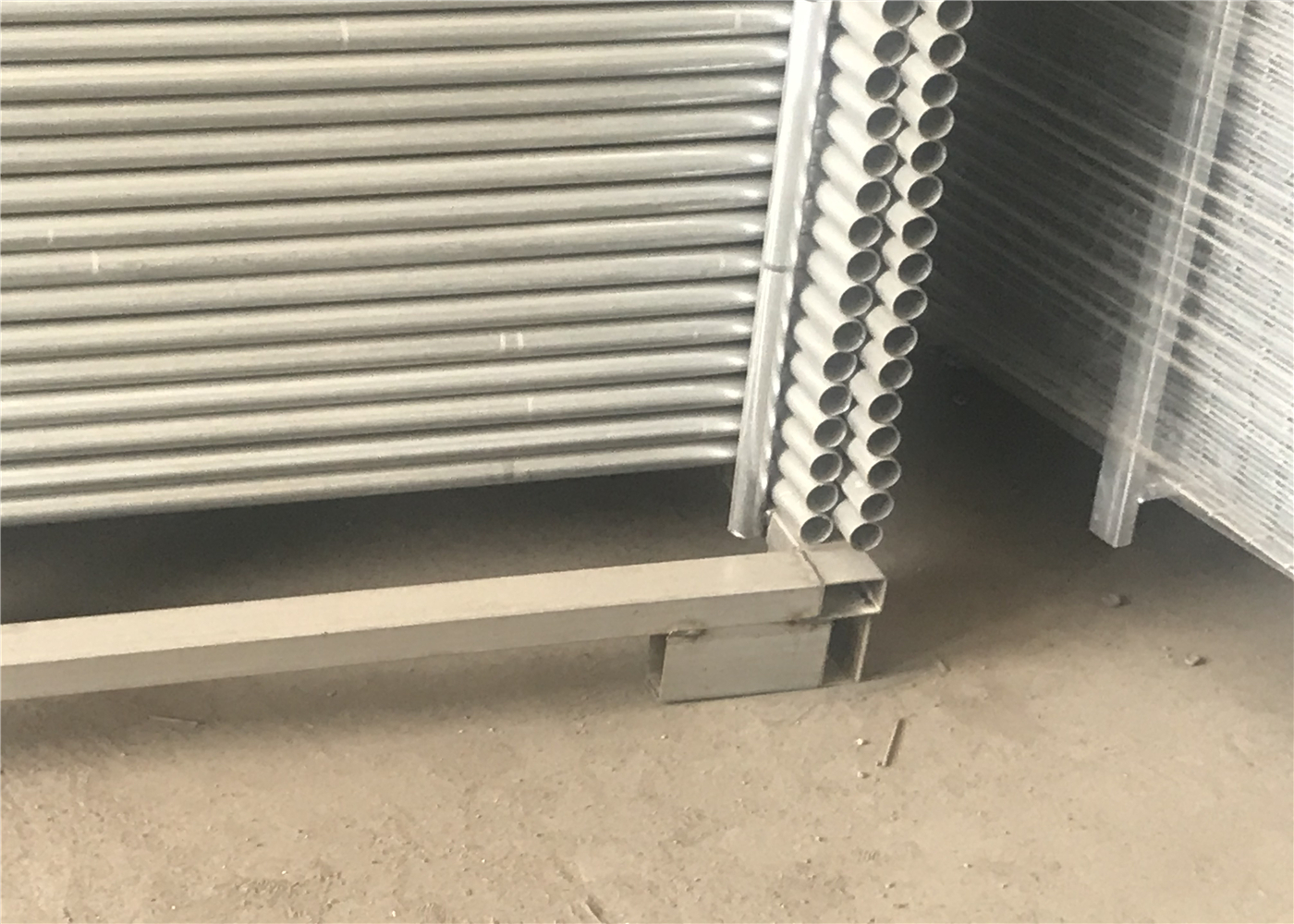
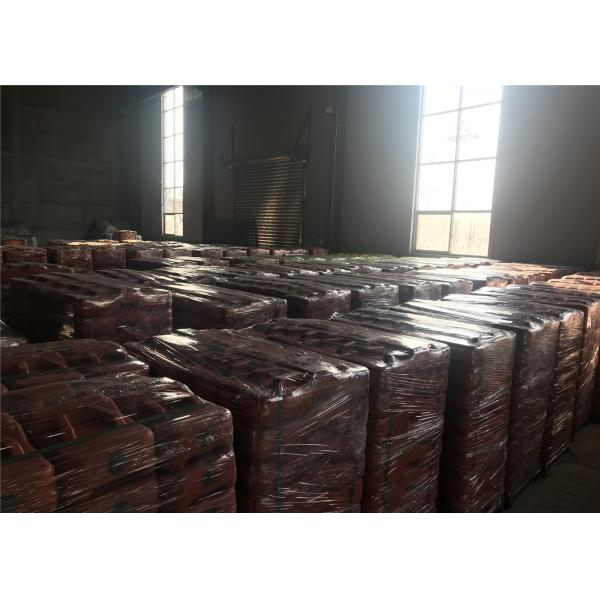
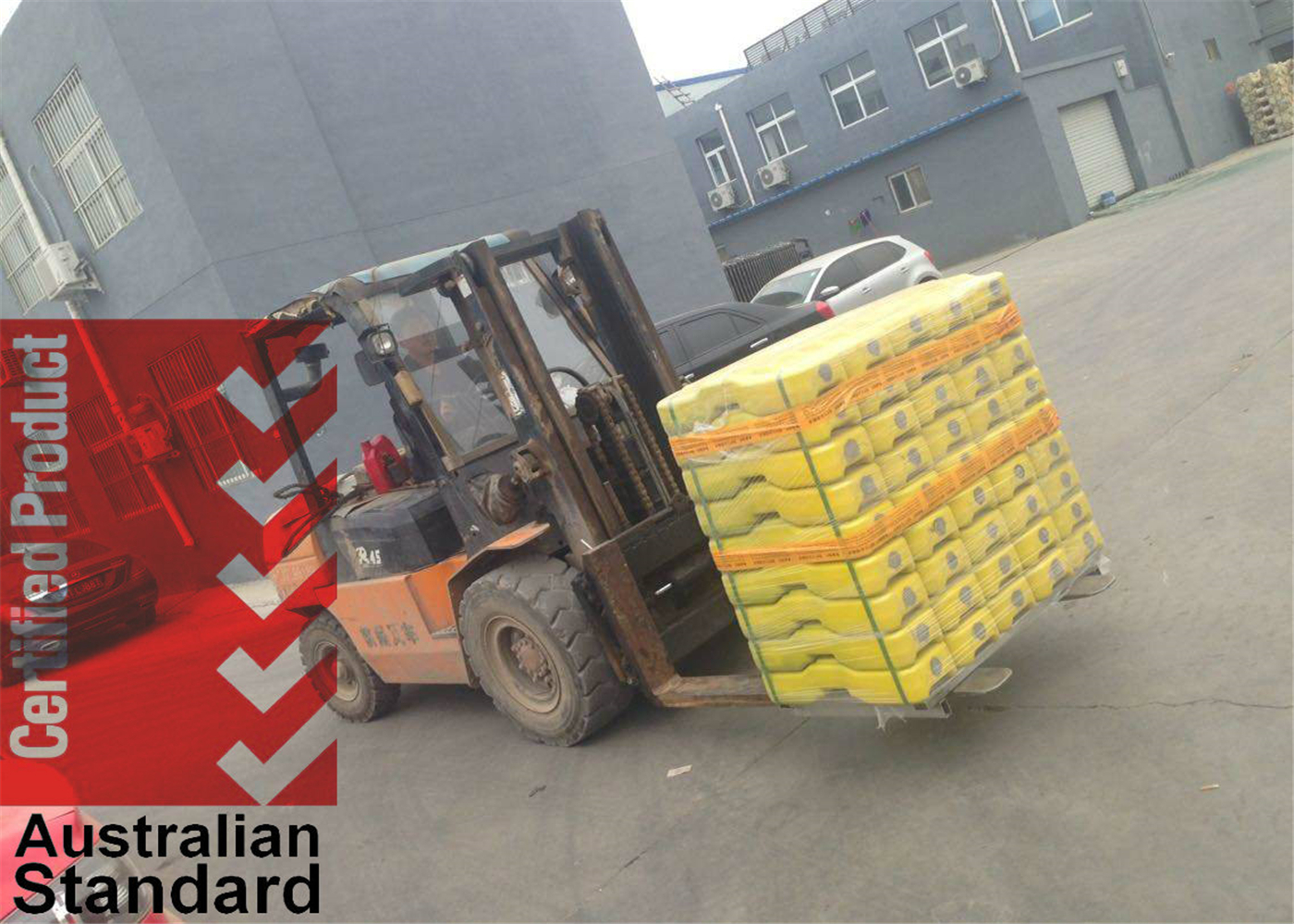
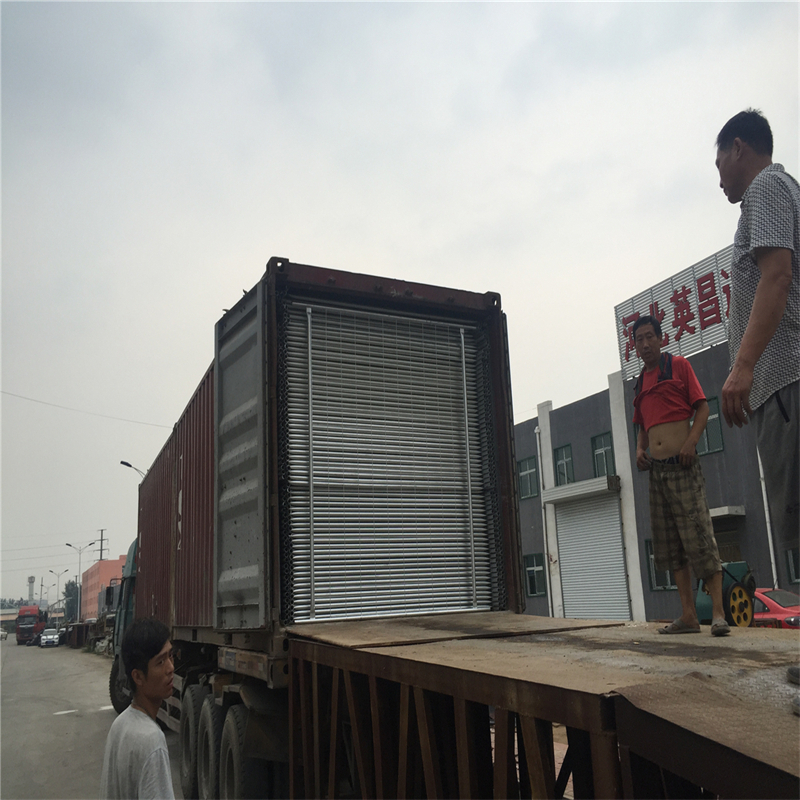
 | Handling/stacking reference: stable geometry and protected finish matter because panels get dragged, leaned, and re-stacked repeatedly. |
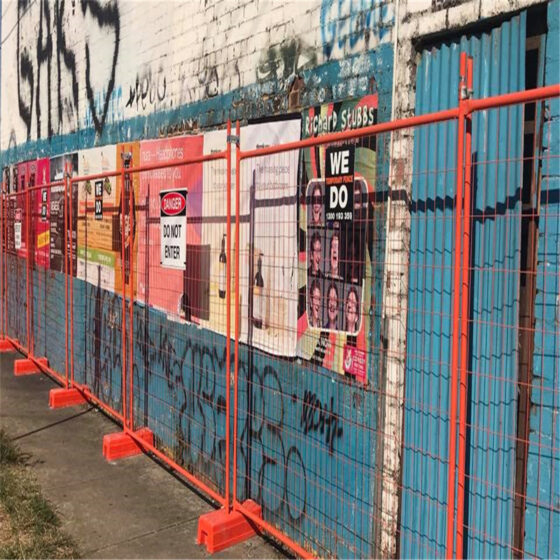
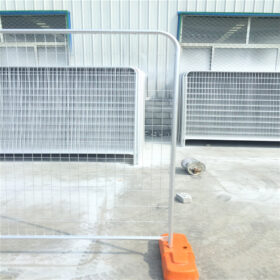
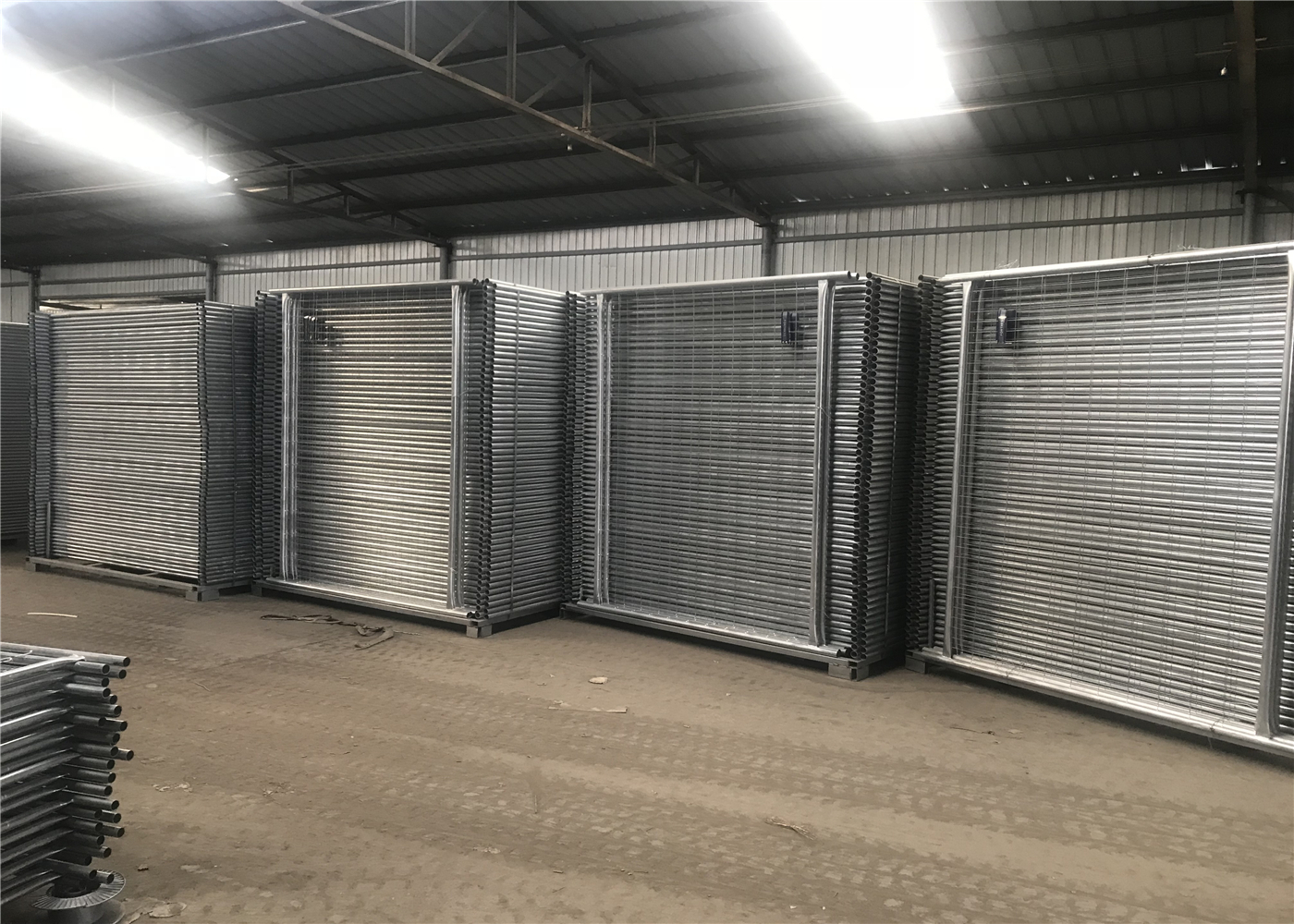
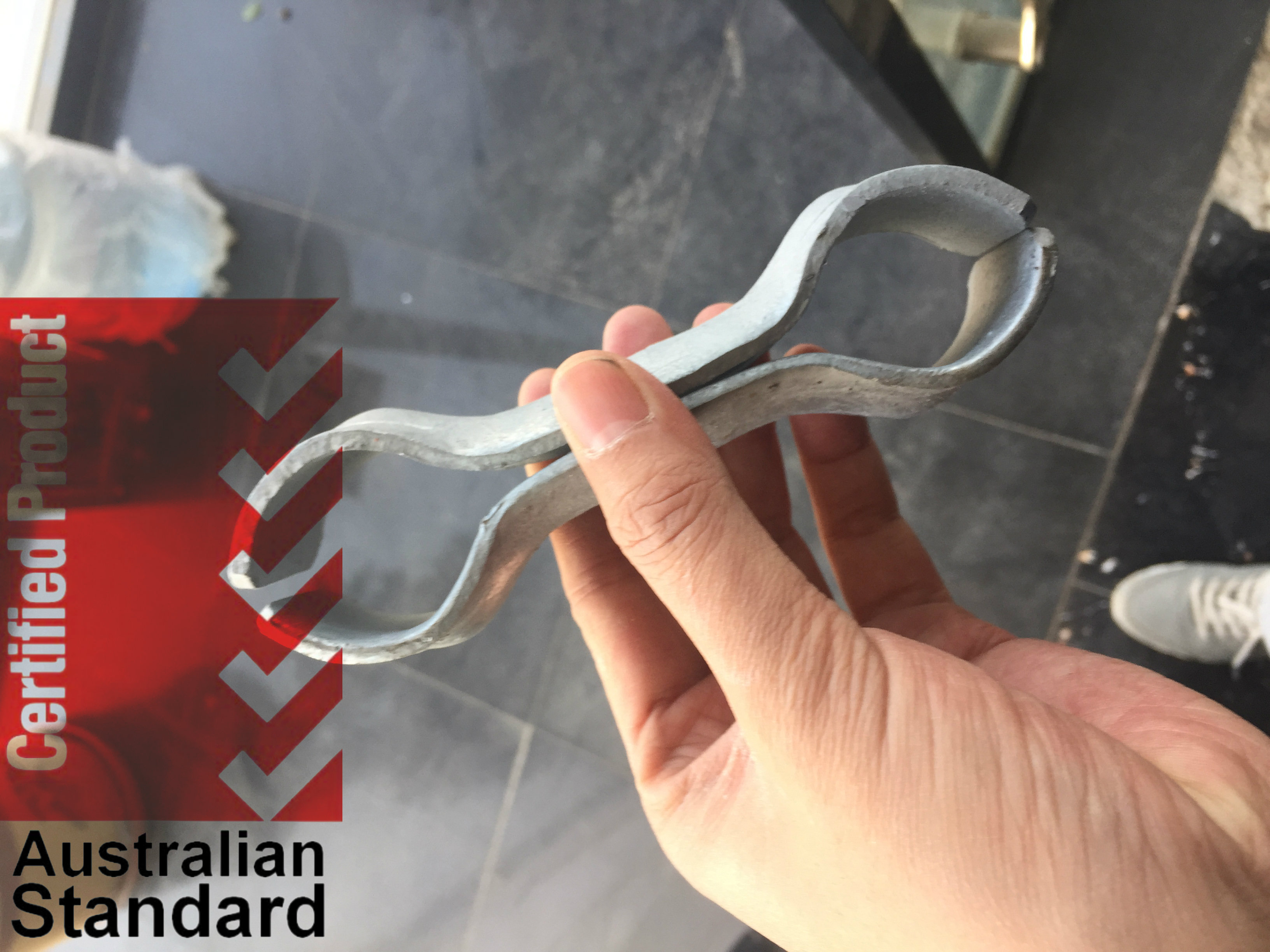
 | Site deployment reference: correct clamps, blocks, and mid-rails help prevent panel movement and wind-driven failures. |
Specifications: temporary fencing for sale sydney
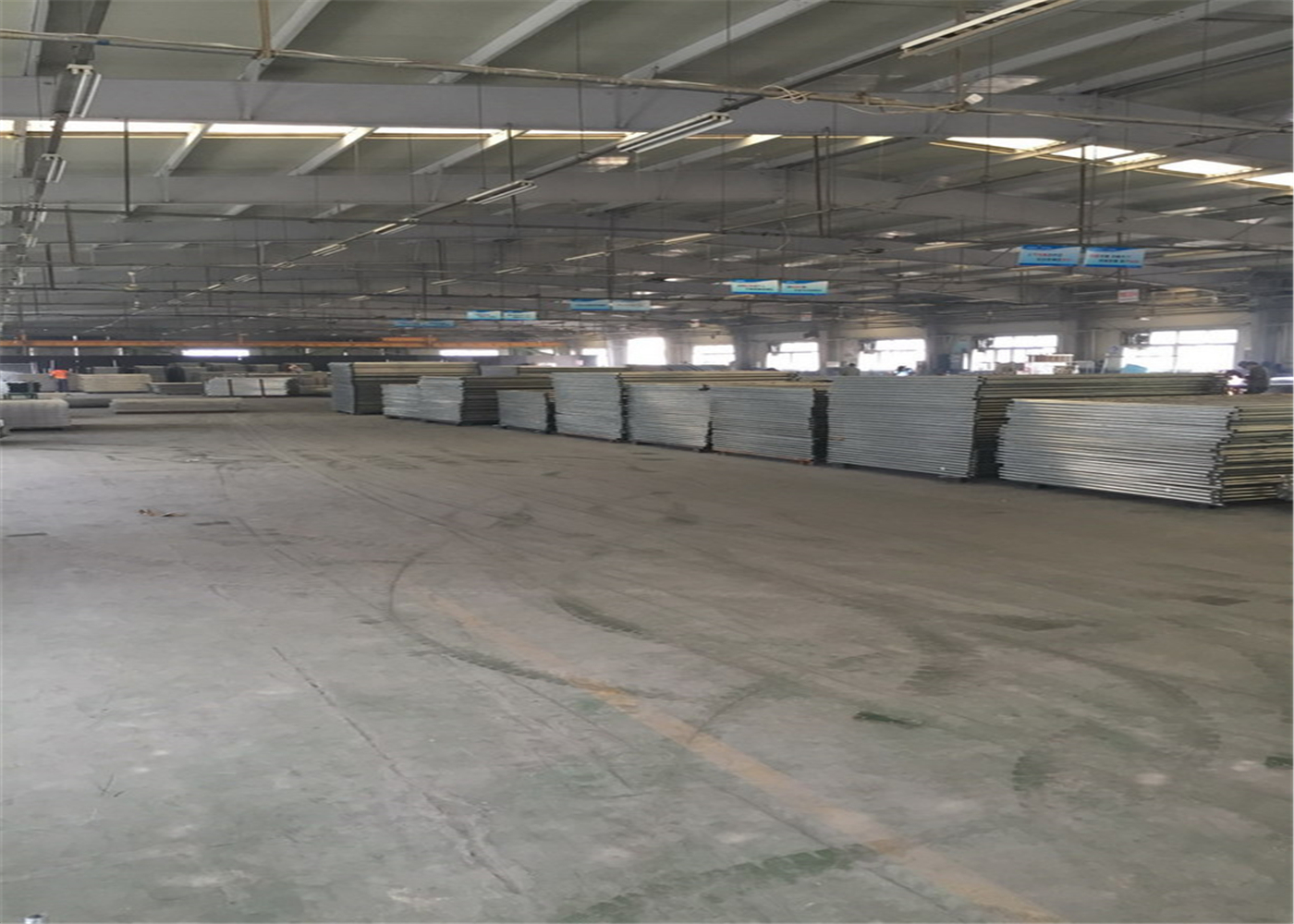
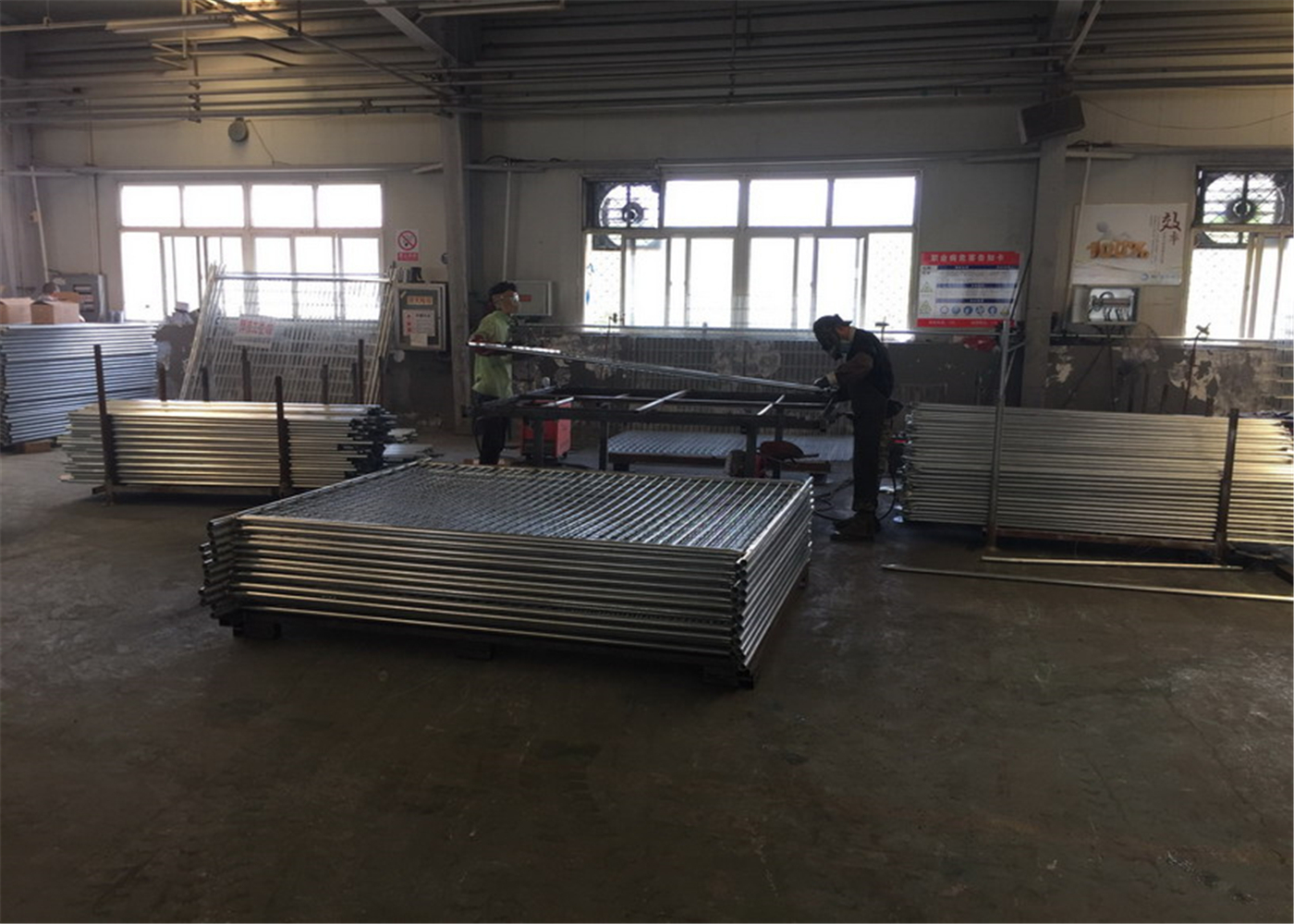
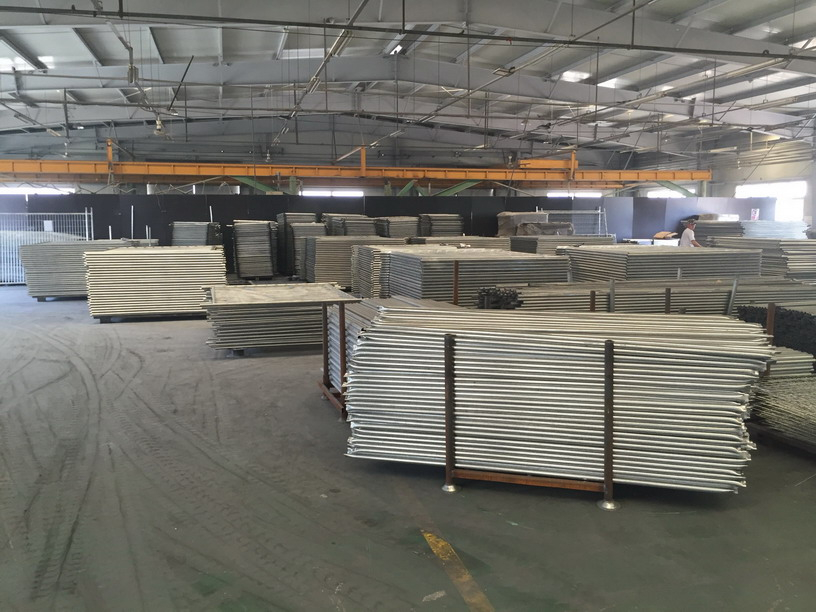
Table 1: 2.1m × 2.4m temporary fencing for sale sydney
| Panel Size (H×W) | Frame Tube OD | Frame Thickness | Middle Rail | Mesh Opening | Wire Dia. | Vertical Wires | Horizontal Wires | Finish (Zinc µm) | AS4687-2022 Target |
|---|---|---|---|---|---|---|---|---|---|
| 2100×2400mm | OD32mm | 1.0mm | No | 60×150mm | 2.70mm | 12 pcs | 38 pcs | 14µm | Compliant build option |
| 2100×2400mm | OD32mm | 1.2mm | No | 60×150mm | 3.00mm | 12 pcs | 38 pcs | 14µm | Compliant build option |
| 2100×2400mm | OD38mm | 1.2mm | No | 60×150mm | 3.00mm | 12 pcs | 38 pcs | 42µm | Compliant build option |
| 2100×2400mm | OD38mm | 1.4mm | No | 60×150mm | 4.00mm | 12 pcs | 38 pcs | 42µm | Compliant build option |
| 2100×2400mm | OD40mm | 1.2mm | No | 60×150mm | 2.70mm | 12 pcs | 38 pcs | 42µm | Compliant build option |
| 2100×2400mm | OD40mm | 1.5mm | No | 60×150mm | 3.00mm | 12 pcs | 38 pcs | 42µm | Compliant build option |
| 2100×2400mm | OD41mm | 1.4mm | No | 60×150mm | 3.00mm | 12 pcs | 38 pcs | 42µm | Compliant build option |
| 2100×2400mm | OD41mm | 1.5mm | No | 60×150mm | 4.00mm | 12 pcs | 38 pcs | 42µm | Compliant build option |
| 2100×2400mm | OD38mm | 2.0mm | No | 60×150mm | 4.00mm | 12 pcs | 38 pcs | 100µm | Compliant build option |
| 2100×2400mm | OD40mm | 2.0mm | No | 60×150mm | 4.00mm | 12 pcs | 38 pcs | 100µm | Compliant build option |
Table 2: 2.1m × 3.3m temporary fencing for sale sydney
| Panel Size (H×W) | Frame Tube OD | Frame Thickness | Middle Rail | Mesh Opening | Wire Dia. | Vertical Wires | Horizontal Wires | Finish (Zinc µm) | AS4687-2022 Target |
|---|---|---|---|---|---|---|---|---|---|
| 2100×3300mm | OD32mm | 1.2mm | Yes | 60×150mm | 2.70mm | 12 pcs | 53 pcs | 14µm | Compliant build option |
| 2100×3300mm | OD38mm | 1.2mm | Yes | 60×150mm | 3.00mm | 12 pcs | 53 pcs | 14µm | Compliant build option |
| 2100×3300mm | OD38mm | 1.4mm | Yes | 60×150mm | 3.00mm | 12 pcs | 53 pcs | 42µm | Compliant build option |
| 2100×3300mm | OD40mm | 1.4mm | Yes | 60×150mm | 4.00mm | 12 pcs | 53 pcs | 42µm | Compliant build option |
| 2100×3300mm | OD40mm | 1.5mm | Yes | 60×150mm | 3.00mm | 12 pcs | 53 pcs | 42µm | Compliant build option |
| 2100×3300mm | OD41mm | 1.4mm | Yes | 60×150mm | 3.00mm | 12 pcs | 53 pcs | 42µm | Compliant build option |
| 2100×3300mm | OD41mm | 1.5mm | Yes | 60×150mm | 4.00mm | 12 pcs | 53 pcs | 42µm | Compliant build option |
| 2100×3300mm | OD38mm | 2.0mm | Yes | 60×150mm | 4.00mm | 12 pcs | 53 pcs | 42µm | Compliant build option |
| 2100×3300mm | OD40mm | 2.0mm | Yes | 60×150mm | 4.00mm | 12 pcs | 53 pcs | 100µm | Compliant build option |
| 2100×3300mm | OD41mm | 2.0mm | Yes | 60×150mm | 4.00mm | 12 pcs | 53 pcs | 100µm | Compliant build option |
Table 3: 2.1m × 3.5m temporary fencing for sale sydney
| Panel Size (H×W) | Frame Tube OD | Frame Thickness | Middle Rail | Mesh Opening | Wire Dia. | Vertical Wires | Horizontal Wires | Finish (Zinc µm) | AS4687-2022 Target |
|---|---|---|---|---|---|---|---|---|---|
| 2100×3500mm | OD32mm | 1.2mm | Yes | 60×150mm | 2.70mm | 12 pcs | 56 pcs | 14µm | Compliant build option |
| 2100×3500mm | OD38mm | 1.2mm | Yes | 60×150mm | 3.00mm | 12 pcs | 56 pcs | 14µm | Compliant build option |
| 2100×3500mm | OD38mm | 1.4mm | Yes | 60×150mm | 3.00mm | 12 pcs | 56 pcs | 42µm | Compliant build option |
| 2100×3500mm | OD40mm | 1.4mm | Yes | 60×150mm | 4.00mm | 12 pcs | 56 pcs | 42µm | Compliant build option |
| 2100×3500mm | OD40mm | 1.5mm | Yes | 60×150mm | 3.00mm | 12 pcs | 56 pcs | 42µm | Compliant build option |
| 2100×3500mm | OD41mm | 1.4mm | Yes | 60×150mm | 3.00mm | 12 pcs | 56 pcs | 42µm | Compliant build option |
| 2100×3500mm | OD41mm | 1.5mm | Yes | 60×150mm | 4.00mm | 12 pcs | 56 pcs | 42µm | Compliant build option |
| 2100×3500mm | OD38mm | 2.0mm | Yes | 60×150mm | 4.00mm | 12 pcs | 56 pcs | 42µm | Compliant build option |
| 2100×3500mm | OD40mm | 2.0mm | Yes | 60×150mm | 4.00mm | 12 pcs | 56 pcs | 100µm | Compliant build option |
| 2100×3500mm | OD41mm | 2.0mm | Yes | 60×150mm | 4.00mm | 12 pcs | 56 pcs | 100µm | Compliant build option |
Table 4: Galvanized Finish Options temporary fencing for sale sydney
| Finish Option | Zinc Thickness | Typical Positioning | Where It Fails First | Recommended For | Panel Size | Frame OD | Frame Thick | Wire Dia. | Risk Level |
|---|---|---|---|---|---|---|---|---|---|
| Economy HDG | 14µm | Lowest upfront cost | Weld zones, rub points | Short projects | 2.1×2.4m | OD32 | 1.0 | 2.7 | High |
| Economy HDG | 14µm | Budget hire fleets | Bottom edges | Low exposure | 2.1×2.4m | OD38 | 1.2 | 3.0 | High |
| Standard HDG | 42µm | Cost-performance | Clamp friction points | Most Sydney sites | 2.1×2.4m | OD38 | 1.4 | 3.0 | Medium |
| Standard HDG | 42µm | Common AU market | Stacking wear | Construction runs | 2.1×3.3m | OD40 | 1.4 | 4.0 | Medium |
| Standard HDG | 42µm | Balanced protection | Forklift scratches | Frequent moves | 2.1×3.5m | OD41 | 1.5 | 4.0 | Medium |
| Heavy HDG | 100µm | Maximum durability | Deep impact dents | Coastal / harsh sites | 2.1×2.4m | OD40 | 2.0 | 4.0 | Low |
| Heavy HDG | 100µm | Long service targets | Severe abrasion | Long-term fleets | 2.1×3.3m | OD41 | 2.0 | 4.0 | Low |
| Heavy HDG | 100µm | Premium positioning | Extreme handling | High-traffic sites | 2.1×3.5m | OD40 | 2.0 | 4.0 | Low |
| Standard HDG | 42µm | Most common choice | Clamp edges | General use | 2.1×3.3m | OD38 | 1.4 | 3.0 | Medium |
| Economy HDG | 14µm | Looks fine on day 1 | Rust “blooms” fast | Very short terms | 2.1×3.5m | OD32 | 1.2 | 2.7 | High |
Table 5: Packing + Logistics Specs temporary fencing for sale sydney
| Panel Size | Finish | Packing Method | Pallet Type | Clamp Type | Block Type | Container Load (Guide) | Ocean Time to AU (Guide) | Documents After Shipping | Project Risk Controlled |
|---|---|---|---|---|---|---|---|---|---|
| 2.1×2.4m | 14µm | Bundled + film | Steel pallet | Standard | Concrete/Plastic | High qty | 25–35 days | PL+CI+BL (telex) | Rub marks |
| 2.1×2.4m | 42µm | Bundled + film | Steel pallet | Covered clamp | Concrete | Up to 560 sets | 25–35 days | PL+CI+BL (telex) | Scratches |
| 2.1×2.4m | 100µm | Corner-protected | Steel pallet | Heavy clamp | Concrete | Lower qty | 25–35 days | PL+CI+BL (telex) | Corrosion |
| 2.1×3.3m | 14µm | Bundled + film | Steel pallet | Standard | Plastic | Project-based | 25–35 days | PL+CI+BL (telex) | Bending |
| 2.1×3.3m | 42µm | Mid-rail protected | Steel pallet | Covered clamp | Concrete | Project-based | 25–35 days | PL+CI+BL (telex) | Panel flex |
| 2.1×3.3m | 100µm | Mid-rail protected | Steel pallet | Heavy clamp | Concrete | Project-based | 25–35 days | PL+CI+BL (telex) | Rust at welds |
| 2.1×3.5m | 14µm | Bundled + film | Steel pallet | Standard | Plastic | Project-based | 25–35 days | PL+CI+BL (telex) | Wave lines |
| 2.1×3.5m | 42µm | Corner-protected | Steel pallet | Covered clamp | Concrete | Project-based | 25–35 days | PL+CI+BL (telex) | Site complaints |
| 2.1×3.5m | 100µm | Corner-protected | Steel pallet | Heavy clamp | Concrete | Project-based | 25–35 days | PL+CI+BL (telex) | Long-life target |
| All sizes | Any | Accessory carton | — | Matched sets | Matched sets | — | — | AU: PKD + COO | Missing parts |
Applications: temporary fencing for sale sydney
Temporary fencing is used across Sydney for construction site security, residential builds, civil works, infrastructure corridors, demolition zones, logistics staging areas, and controlled access boundaries. It is also widely used for crowd management around public events, sports venues, concerts, festivals, and temporary hazard exclusion zones where fast deployment matters more than permanent foundations.
Benefits: What a Correct System Delivers
A correctly specified temporary fencing system reduces the “hidden losses” that hit projects hardest: faster setup, fewer blowdowns, fewer replacements, fewer customer complaints, and better perimeter discipline. Heavier frame thickness reduces panel flex, 42µm (or higher) galvanizing improves corrosion resistance, and mid-rails on long panels reduce the wavy, rattling look that makes sites appear unmanaged.
Packing: Why Finish Protection Saves Real Money
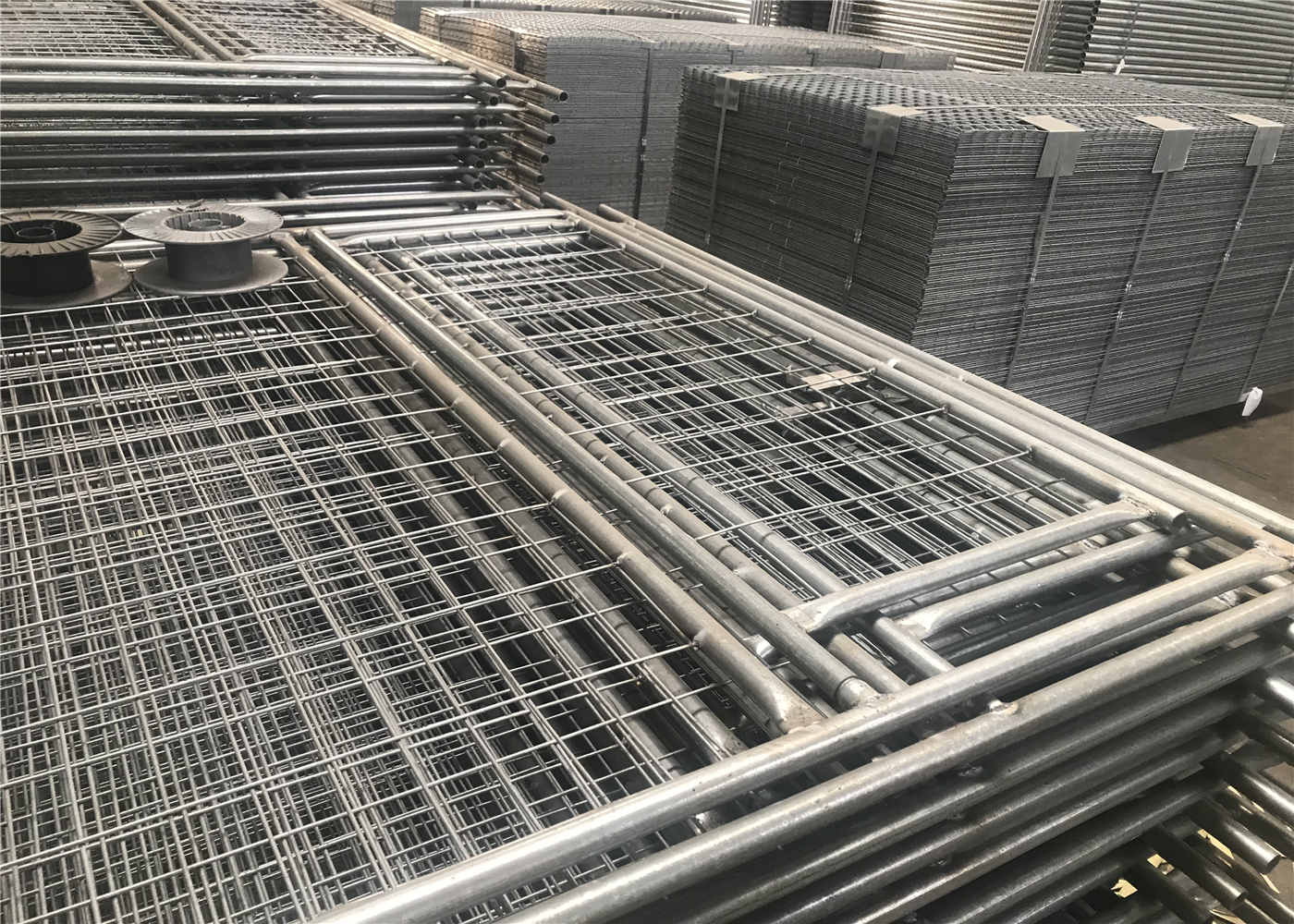
Packing is not cosmetic. Temporary fencing is dragged, stacked, clamped, and moved repeatedly, so transport rubbing becomes rust blooms and “looks old” complaints fast. POLYMETAL packing commonly uses bundled panels with protective film on steel pallets, corner protection for high-finish batches, protected accessory cartons, and set-packed clamps/blocks to prevent missing-part improvisation on site.
Standard: AS4687-2022 Compliance Mindset temporary fencing for sale sydney
For Sydney projects, buyers often reference AS4687-2022 because the real jobsite risk is not “panel price”—it’s what happens after install: wind, repeated movement, uneven ground, and inspection cycles. A compliance mindset means your RFQ locks the measurable build elements (tube OD, wall thickness, mesh, weld quality, zinc coating target, and correct accessories) so panels arrive as a predictable system rather than a gamble.
Top 28 Fear-Style Buyer Notes for temporary fencing for sale sydney (Especially #21)
TRAPS
TRAP #1: Buying by photo only and ignoring frame tube OD and wall thickness.
TRAP #2: Choosing OD32 with thin wall for high-movement hire fleets.
TRAP #3: Paying for “HDG” without locking zinc thickness (14µm vs 42µm is not a small change).
TRAP #4: Under-specifying wire diameter and getting mesh that deforms when panels are dragged.
TRAP #5: Skipping middle rails on 3.3m/3.5m panels and inviting flex + wave lines.
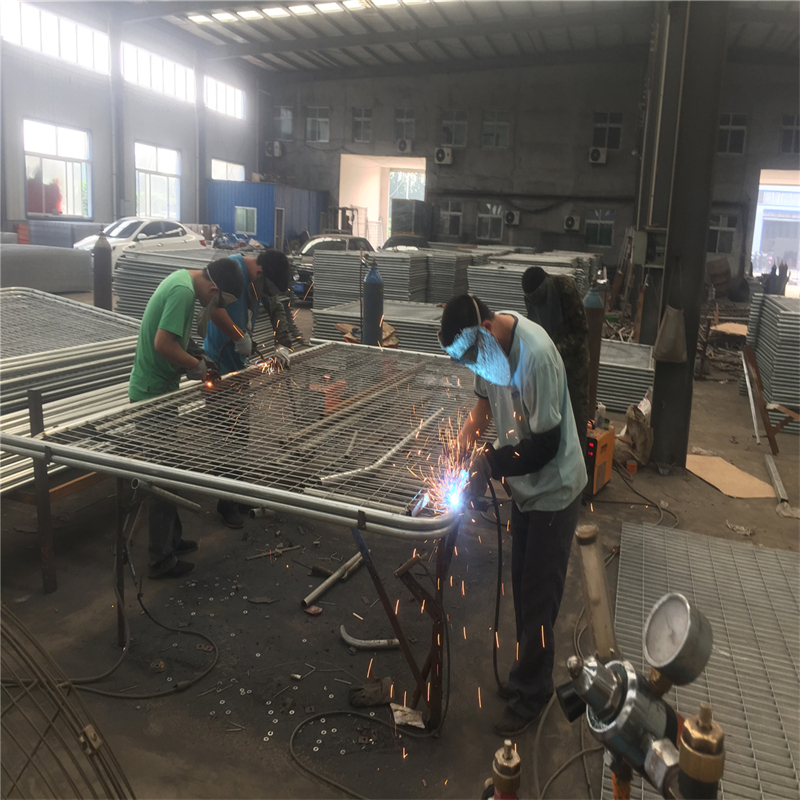
TRAP #6: Weak welds that look fine on delivery but crack after repeated stacking impacts.
TRAP #7: Using cheap clamps that slip—panels drift and gaps open.
TRAP #8: Using lightweight blocks that “walk” under wind load and foot traffic.
TRAP #9: Mixing panel widths without a set-out plan—your line becomes uneven and unstable.
TRAP #10: Ignoring packaging—rub marks become early rust points.
TRAP #11: Choosing 14µm for long projects—what you save upfront can multiply into replacement cost.
TRAP #12: No spare clamps: one missing part becomes a stop-work moment.
TRAP #13: Not defining mesh opening; “similar” mesh can change stiffness and fit.
TRAP #14: Not matching accessories (clamps/blocks) to the panel weight and wind zone.
TRAP #15: Overloading pallets; bent frames arrive and never sit straight again.
TRAP #16: Assuming “galvanized wire” equals “galvanized frame”—both must be protected.
TRAP #17: Cutting corners on corners—turns and ends are where wind failures start.
TRAP #18: Ignoring high-traffic touch zones—panels get slammed by vehicles and trolleys.
TRAP #19: No mid-rail on long panels—your fence line starts to look unmanaged.
TRAP #20: Buying “cheap sets” with weak clamps—movement becomes the new normal.
TRAP #21 (The Budget Killer): The fence “stands” on day one, then a wind event or repeated handling exposes weak tubes, thin zinc, and slipping clamps—panels drop, the site gets shut down, replacements arrive late, and you pay twice in labor, schedule damage, and reputation loss.
TRAP #22: Not building to an AS4687-2022 mindset—your procurement becomes an accident waiting to happen.
TRAP #23: Under-specifying for coastal or harsh exposure—rust shows up fast.
TRAP #24: Not controlling tolerances—panels don’t line up and crews waste hours “forcing fit.”
TRAP #25: Forgetting gates and access points—your weakest spot becomes the most visible.
TRAP #26: Not planning for uneven ground—gaps and rocking panels become complaints.
TRAP #27: Buying panels only—without matched clamps/blocks you don’t have a real system.
TRAP #28: Chasing the lowest quote and paying the highest cost-per-week in rework and downtime.
FAQs: temporary fencing for sale sydney
What panel size is most common?
2100mm height with 2400mm width is the standard workhorse size. 3300mm and 3500mm widths are used when faster coverage matters, typically with a middle rail for stiffness.
What mesh and wire are typical?
60mm × 150mm mesh is common, with wire diameter options of 2.70mm, 3.00mm, and 4.00mm depending on abuse level and stiffness expectation.
Which galvanizing option is the safest “default” buy?
42-micron hot-dipped galvanized is widely chosen as the practical cost-performance option for repeated jobsite handling, while 14-micron is short-term economy and 100-micron is heavy-duty durability.
Why do long panels need a middle rail?
A mid-rail reduces flex and helps panels stay straight and quiet, especially in 3.3m and 3.5m widths where unsupported frames can twist and “wave” under movement.
What documents can be supplied after shipping?
Common export documents include packing list, commercial invoice, bill of lading copy/draft (including telex release workflow), plus AU/NZ declarations when required such as PKD (Packing Declaration 2016) and Certificate of Origin.