Your One-Stop Wire Mesh Fence Supplier | POLYMETAL
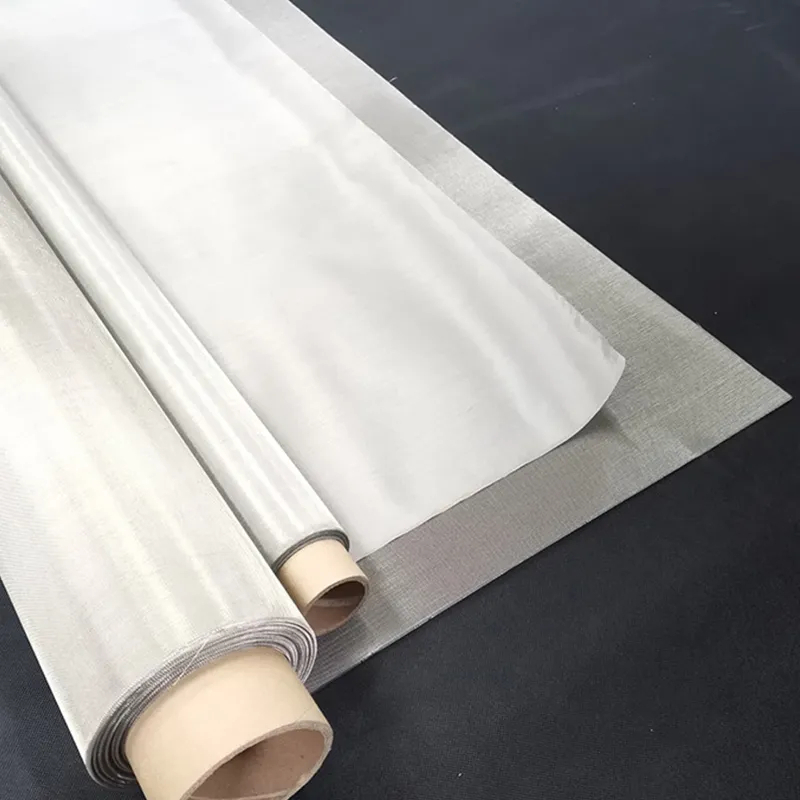

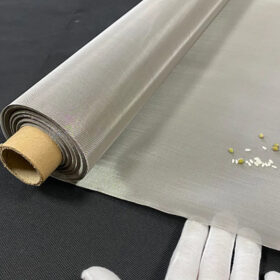
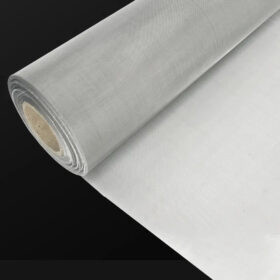
304 316 Stainless Steel Wire Mesh is a precision-woven filtration and screening fabric made from austenitic stainless wires. Grade 304 is the general-purpose workhorse; 316 adds molybdenum for stronger resistance to chlorides and many process chemicals. Both deliver tight weaving accuracy, compact structure, high filtration precision, excellent wear and compression performance, and reliable service at elevated temperatures.
Wire materials available: 304, 304L, 316, 316L (primary); optional 201, 321, 347, 431 for special duties.
Weave styles: Plain weave (most common), Twill weave, plus Plain-Dutch and Twill-Dutch for fine micron retention.
Hole style: Square (standard screening cloth).

Applications 304 316 Stainless Steel Wire Mesh
- Liquid filtration: water, oil, fuel, solvents—precision pressure filters, vacuum filters, and polishing stages.
- Process industries: aerospace, petroleum, chemical & chemical fiber, rubber and tire plants, metallurgy.
- Hygienic uses: medicine and food processing where stainless cleanliness and washdown resistance are essential.
- Structural screens: machine guards, protecting mesh, insect/vent screens, and architectural infill.
- Sintered laminates: woven cloth used as the base layer for sintered filter media (when specified).

Benefits
- High corrosion resistance: 304 for general service; 316/316L preferred in chloride/brine or aggressive media.
- Filtration accuracy: tight weaving tolerances deliver stable openings and repeatable cut points.
- Mechanical robustness: abrasion-resistant with good compressive strength; resists deformation under pressure.
- Thermal stability: suitable for high-temperature filtration (verify by duty).
- Cleanability & longevity: smooth stainless surfaces resist fouling and are easy to regenerate.
- Fabrication friendly: can be cut, framed, rolled, deep-formed, welded, or sintered to multilayer packs.
Standard 304 316 Stainless Steel Wire Mesh
Materials: 304/304L, 316/316L stainless steel wire.
Weave & ranges
Mesh count: 1×1–635×635 mesh/inch
Plain weave can be woven up to 500 mesh
Twill weave can be woven from 30 to 635 mesh
Dimensional ranges
Thread (wire) diameter: 0.008–0.08 in (≈0.0203–2.03 mm)
Mesh opening: 0.0008–0.92 in (≈0.0203–23.37 mm)
Standard roll length: 30 m (other lengths on request)
Typical spec items to put on your PO
Alloy (304/304L or 316/316L), mesh count, wire diameter, weave type, opening or open-area, roll/sheet size, tolerances, inspection requirement, and any request for sintered laminates.
Representative Plain Weave Data (inches)
| Mesh/inch | Wire Dia. (in) | Aperture (in) | Open Area (%) | Weight (lb/100 sq ft) |
|---|---|---|---|---|
| 10 × 10 | 0.0200 | 0.0800 | 64.0 | 26.1 |
| 20 × 20 | 0.0200 | 0.0300 | 36.0 | 55.2 |
| 30 × 30 | 0.0130 | 0.0203 | 37.1 | 34.8 |
| 50 × 50 | 0.0090 | 0.0110 | 30.3 | 28.4 |
| 60 × 60 | 0.0075 | 0.0092 | 30.5 | 23.7 |
| 70 × 70 | 0.0065 | 0.0078 | 29.8 | 20.8 |
| 80 × 80 | 0.0065 | 0.0060 | 23.0 | 23.2 |
| 100 × 100 | 0.0035 | 0.0065 | 42.3 | 8.3 |
| 200 × 200 | 0.0021 | 0.0029 | 33.6 | 6.2 |
| 300 × 300 | 0.0015 | 0.0018 | 29.7 | 3.04 |
| 400 × 400 | 0.0010 | 0.0015 | 36.0 | 3.3 |
| 500 × 500 | 0.0010 | 0.0010 | 25.0 | 3.8 |
Other sizes can be customized.
Dutch Weave Stainless Steel Wire Mesh
| Type | Mesh Range (warp × weft) | Wire Diameter (in) | Absolute Filtration (µm) | Nominal Filtration (µm) |
|---|---|---|---|---|
| Plain Dutch Weave | 8 × 85 – 80 × 400 | 0.014 × 0.0126 → 0.0049 × 0.0028 | 318–340 → 43–48 | 250–255 → 35–40 |
| Twill Dutch Weave | 20 × 250 – 500 × 3200 | 0.0098 × 0.0079 → 0.0015 × 0.0010 | 110–120 → 8–9 | 98–105 → 2–3 |
Choose Dutch weaves when you need fine cut sizes with higher differential-pressure capability.
 |  |
 |  |
304 / 304L / 316 / 316L Stainless Steel — Chemical & Physical Data
1) Chemical composition (mass %, typical ASTM ranges)
| Grade | C (max) | Mn (max) | P (max) | S (max) | Si (max) | Cr | Ni | Mo | N (max) | Fe |
|---|---|---|---|---|---|---|---|---|---|---|
| 304 | 0.08 | 2.00 | 0.045 | 0.030 | 1.00 | 18.0–20.0 | 8.0–10.5 | — | 0.10 | Balance |
| 304L | 0.03 | 2.00 | 0.045 | 0.030 | 1.00 | 18.0–20.0 | 8.0–12.0 | — | 0.10 | Balance |
| 316 | 0.08 | 2.00 | 0.045 | 0.030 | 1.00 | 16.0–18.0 | 10.0–14.0 | 2.00–3.00 | 0.10 | Balance |
| 316L | 0.03 | 2.00 | 0.045 | 0.030 | 1.00 | 16.0–18.0 | 10.0–14.0 | 2.00–3.00 | 0.10 | Balance |
Notes
• “L” = low carbon for improved weldability and reduced sensitization.
• Actual mill heats sit within these ranges; request MTC/EN 10204 3.1 for exact chemistry.
2) Physical properties (room temperature, typical)
| Property | 304 / 304L | 316 / 316L | Units |
|---|---|---|---|
| Density | ~7.93 | ~7.98 | g/cm³ |
| Elastic modulus (E) | ~193 | ~193 | GPa |
| Poisson’s ratio (ν) | ~0.29 | ~0.29 | — |
| Thermal conductivity @ 20–25 °C | ~16.2 | ~14.6 | W·m⁻¹·K⁻¹ |
| Coeff. of thermal expansion (20–100 °C) | ~17.2 | ~16.0–16.5 | µm·m⁻¹·K⁻¹ |
| Electrical resistivity @ 20 °C | ~0.72 | ~0.74 | µΩ·m |
| Specific heat @ 20 °C | ~500 | ~500 | J·kg⁻¹·K⁻¹ |
| Melting range | ~1390–1440 | ~1375–1400 | °C |
| Magnetic response | Non-magnetic in annealed condition (can become slightly magnetic after cold work) | Non-magnetic in annealed condition | — |
3) Mechanical (annealed, typical minimums for sheet/plate)
| Grade | Tensile Strength (min) | Yield 0.2% (min) | Elongation (min) |
|---|---|---|---|
| 304 | ~515 MPa (75 ksi) | ~205 MPa (30 ksi) | ~40% |
| 304L | ~485 MPa (70 ksi) | ~170 MPa (25 ksi) | ~40% |
| 316 | ~515 MPa (75 ksi) | ~205 MPa (30 ksi) | ~40% |
| 316L | ~485 MPa (70 ksi) | ~170 MPa (25 ksi) | ~40% |
Practical tips
• Choose 316/316L over 304/304L where chlorides (salt, brine, some chemicals) drive pitting/crevice corrosion.
• Use L-grades for heavy welding or thick sections to minimize carbide precipitation.
• For critical designs, verify batch-specific properties on the mill certificate and applicable product standard.

Fine Woven Wire Mesh
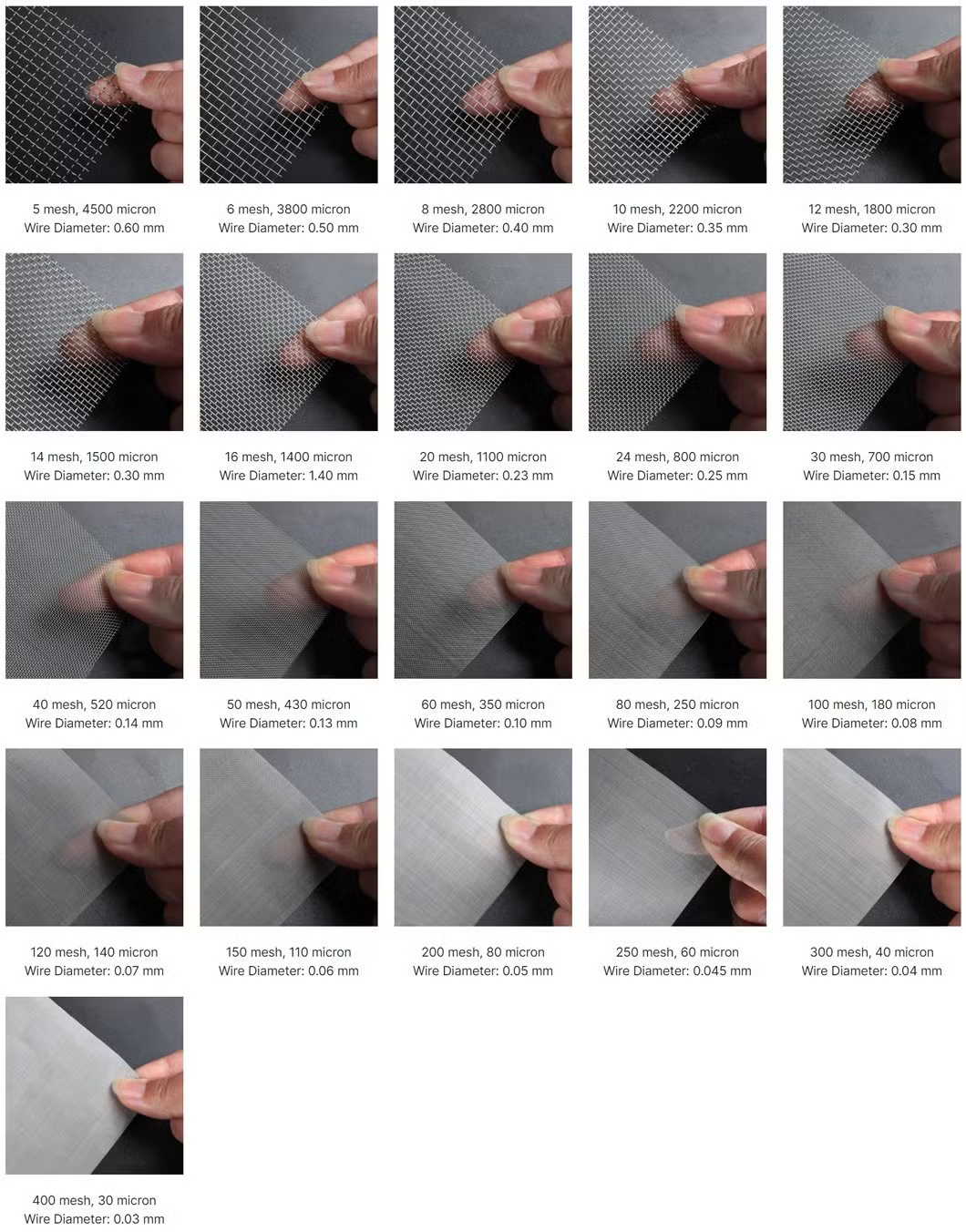
Are you looking for fine wire mesh? Woven wire mesh with smaller and more holes is usually called fine wire mesh.
We can manufacture this and classify it into two types, fine and ultra-fine. They are often used in some demanding filtration applications.

Mesh Analysis
We implement strict quality control and inspection processes to ensure that our products meet our customers’ requirements and standards.

Packing & Delivery 304 316 Stainless Steel Wire Mesh
Packaging: inner kraft wrap, outer plastic cloth, then wooden pallet or wooden case to prevent deformation and moisture ingress.
Labeling: alloy, mesh × wire, weave, opening/area, roll/sheet size, lot/heat number, and PO reference.
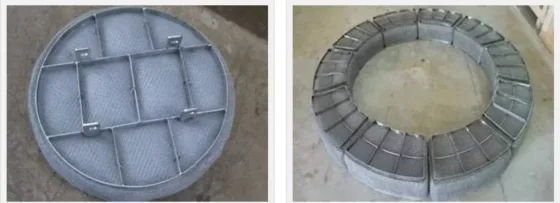
Formats: rolls (standard 30 m) or sheets/panels; custom-cut discs, rings, and multi-layer packs on request.
Conclusion
304 316 Stainless Steel Wire Mesh offers the ideal balance of precision, durability, and hygiene for liquid and gas filtration, screening, and structural guarding. Select 304/304L for general duty and 316/316L when chlorides or aggressive media demand superior pitting/crevice resistance. Define mesh × wire, weave, opening/open area, dimensions, and packing on your order—and you’ll receive a stable, clean, and long-service mesh ready for pressure filters, vacuum units, process sieves, and sintered laminates across aerospace, petroleum, chemical, metallurgy, medicine, and food applications.