Your One-Stop Wire Mesh Fence Supplier | POLYMETAL
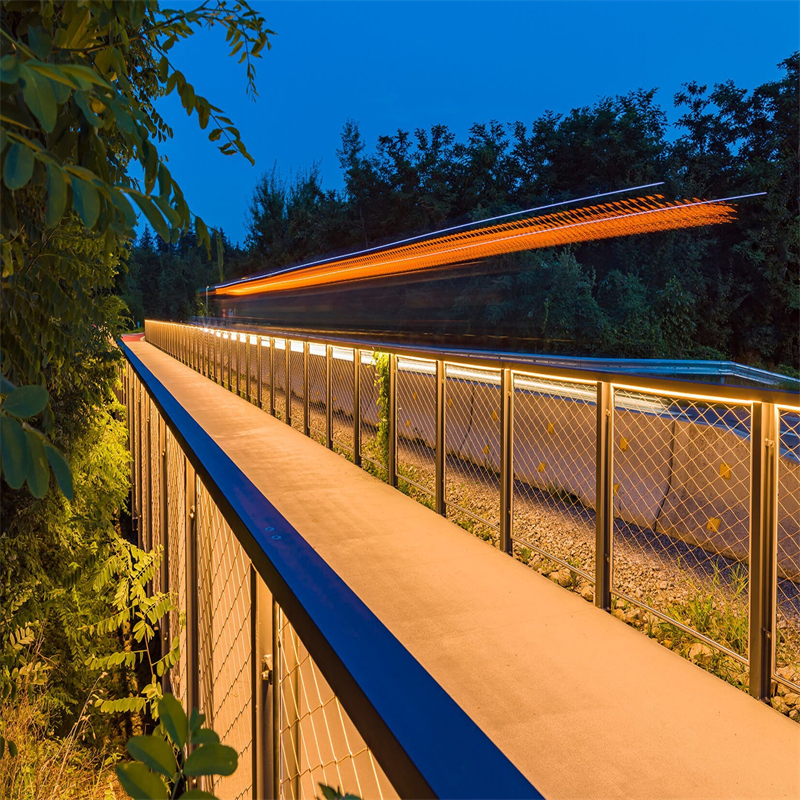
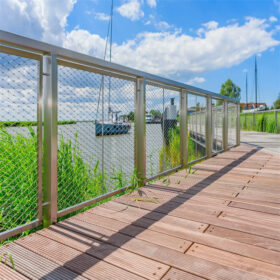
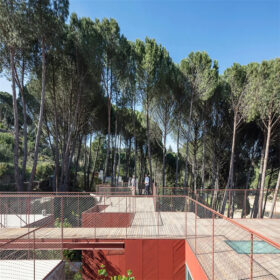
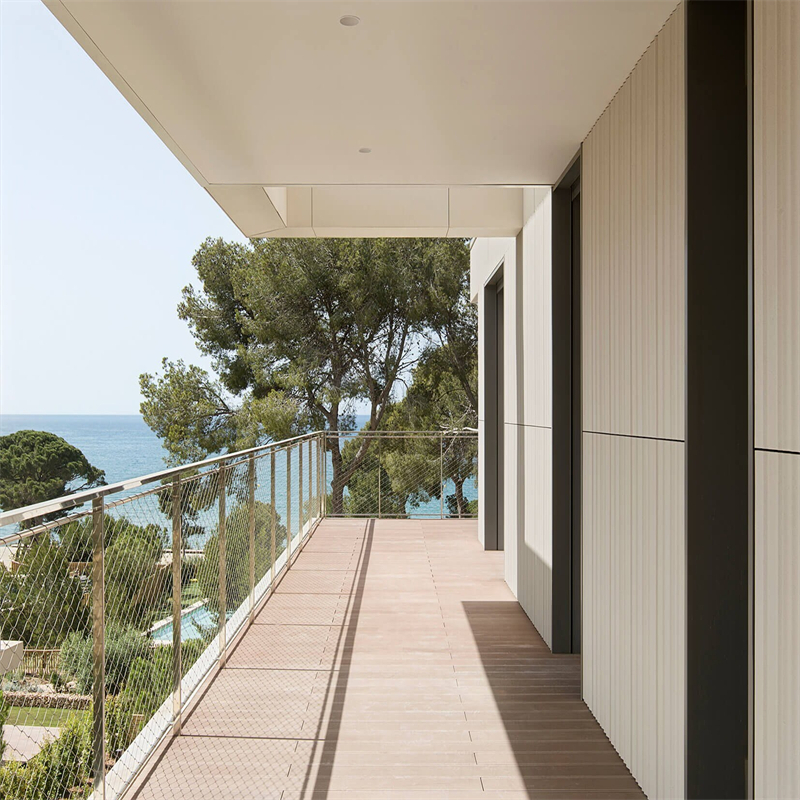
Balustrade rope mesh fencing hides 9 critical details you probably overlook—skip #8 and you’re gambling with accidents, lawsuits, costly repairs. Balustrade rope mesh fencing is a modern guard and barrier system that replaces heavy bars or solid panels with flexible stainless steel cable mesh. The mesh is tensioned between posts, frames or handrails so it behaves like a continuous safety net: strong enough to stop falls and impacts, yet visually open enough to preserve views, daylight and a sense of space around balconies, stairs, terraces and walkways.
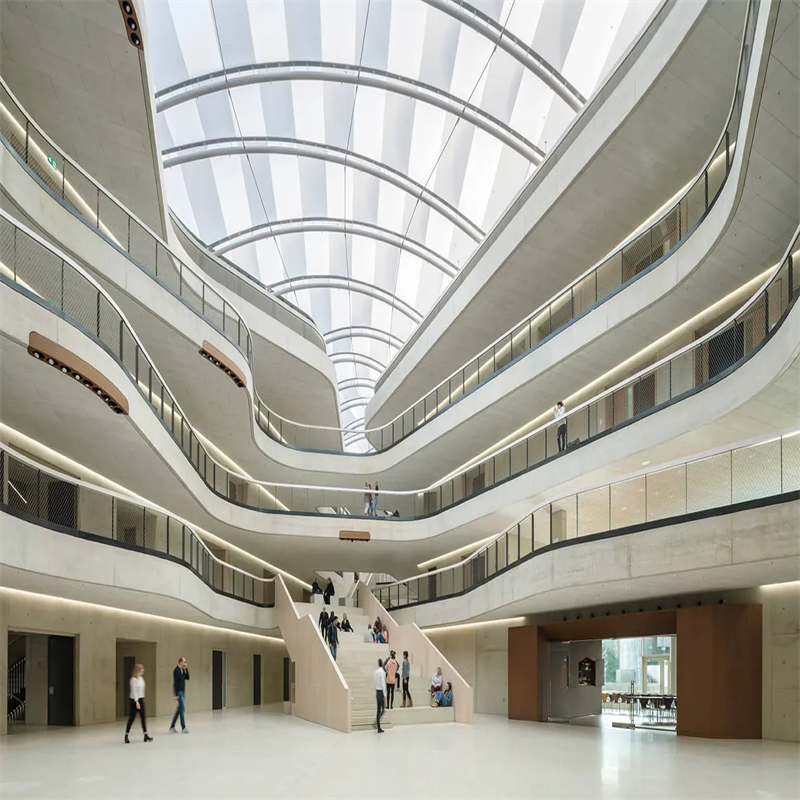
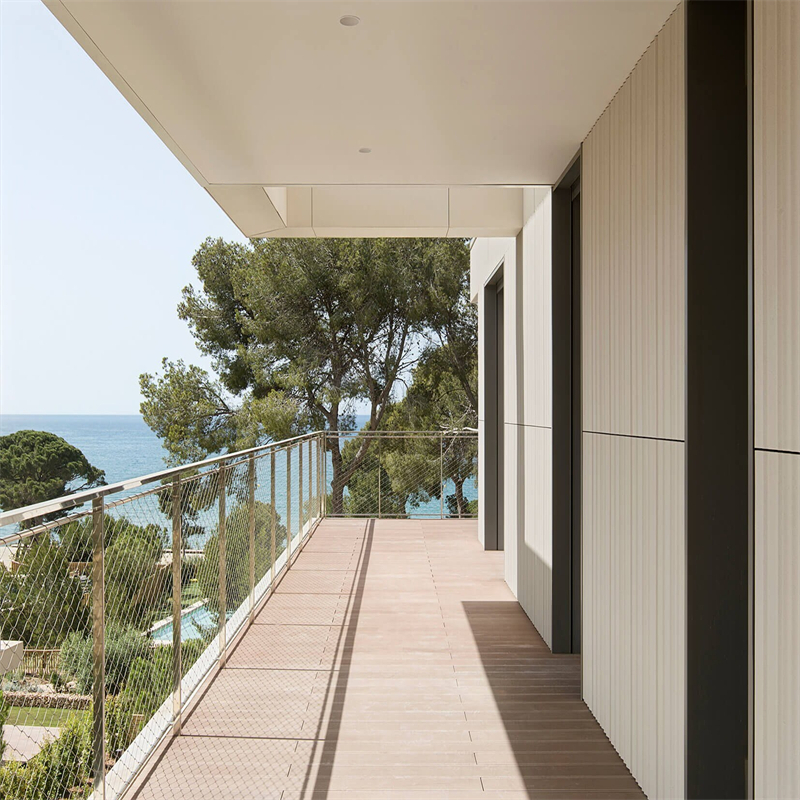
Unlike conventional infill made from vertical bars, perforated metal or solid glass, balustrade rope mesh fencing has very low visual density. From most viewing angles the cables almost disappear, so the eye reads the architecture and landscape rather than the barrier, which is why this system is now common in airports, museums, bridges, hotels and high-end residential projects.
Secret 1 – The “Invisible Net” Effect That Hides Real Safety Capacity
Many decision-makers underestimate balustrade rope mesh fencing because it looks almost invisible, but this is precisely where its first secret advantage lies: when correctly tensioned, the apparently delicate cable net behaves like a continuous safety blanket that can absorb and spread impact loads far better than a row of individual bars, meaning you get discreet aesthetics without secretly downgrading safety.
1. What Is Balustrade Rope Mesh Fencing?
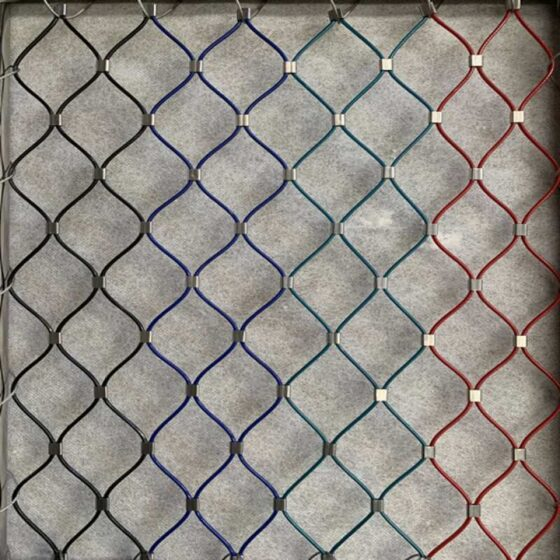
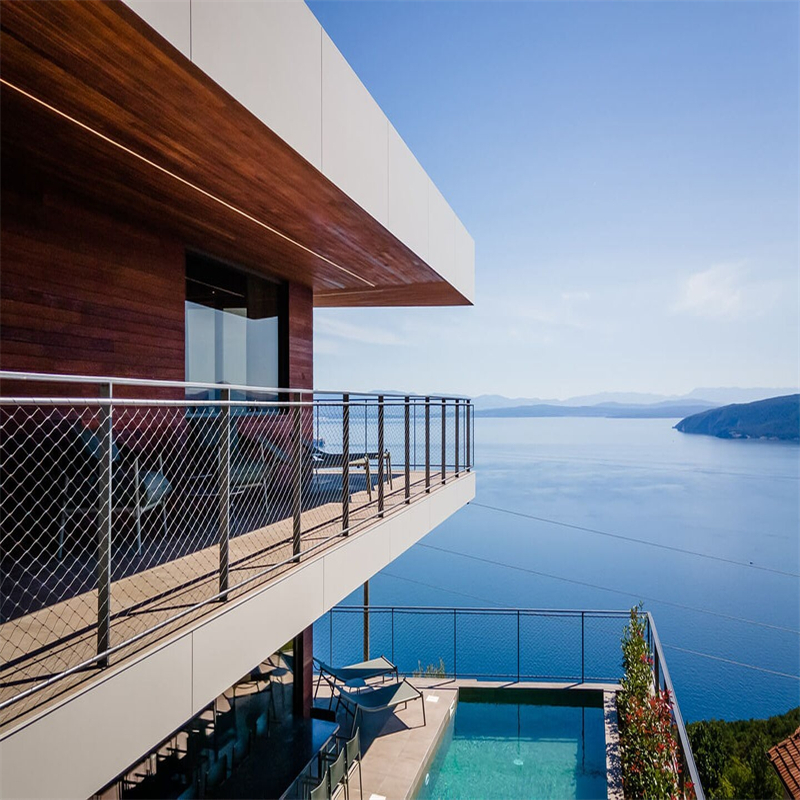
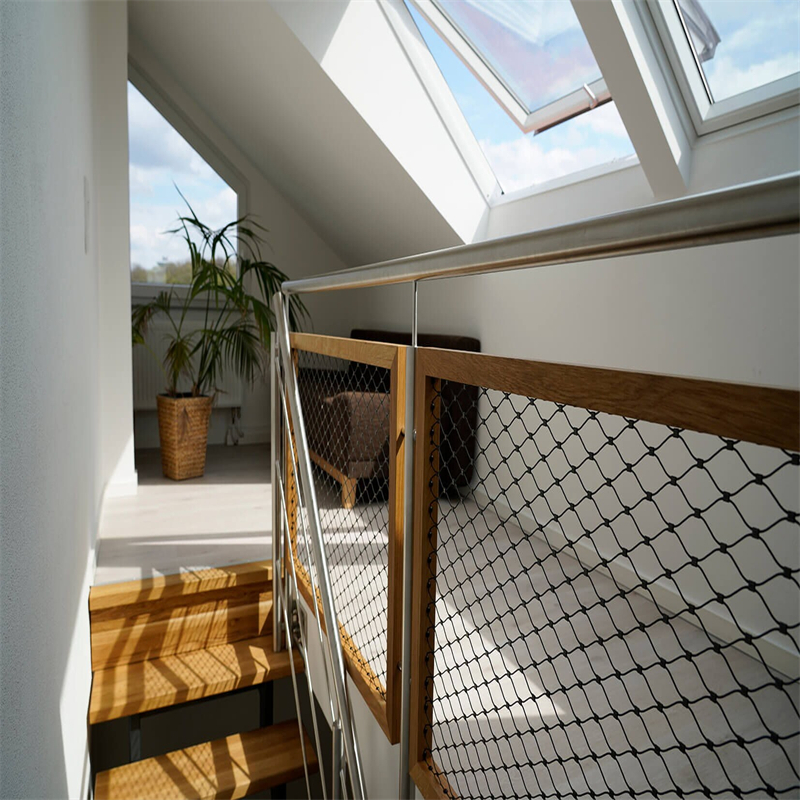
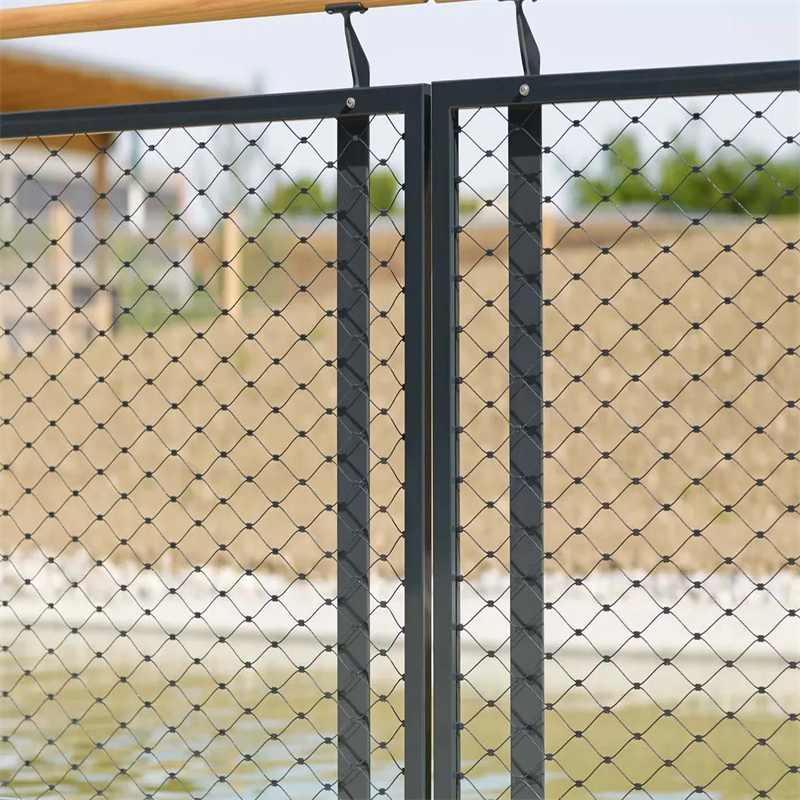
Balustrade rope mesh fencing uses multi-strand stainless steel wire ropes that are woven or ferrule-pressed to form a flexible net. This net is fixed to a rigid perimeter frame, usually made from stainless steel, carbon steel or aluminium posts and rails. The mesh is pulled into tension so the diamond-shaped openings become regular and the panel works as a structural membrane, carrying loads back into the supporting frame.
Typical systems use 7×7 or 7×19 stainless steel cables in diameters from about 1.5 mm to 4.0 mm. The cables intersect at fixed nodes where they are clamped by stainless steel ferrules or interwoven, producing a stable geometry that cannot unravel in service. By changing cable diameter and mesh aperture the same basic product can be tuned for fine internal balustrades, robust public barriers or long-span bridge and stadium applications.
Balustrade rope mesh fencing is usually manufactured from AISI 304 or AISI 316 stainless steel. AISI 304 suits normal dry interior environments, while AISI 316 is preferred for outdoor, coastal, poolside and industrial locations where salt, chlorides or high humidity would quickly attack lesser materials.
Secret 2 – Choosing the Wrong Steel Grade Quietly Destroys Your Investment
If you use AISI 304 where AISI 316 is really needed, balustrade rope mesh fencing can start to tea-stain or corrode years earlier than expected, forcing expensive cleaning, partial replacement or even full system change-out; matching the material grade to the true environment is the hidden decision that decides whether your “maintenance-free” fence actually stays that way.
Table 1 – Balustrade Rope Mesh for Indoor Residential & Light Commercial Balustrades
| Model | Cable Ø (mm) | Construction | Mesh Aperture (W×H mm) | Material Grade | Panel Orientation | Typical Application |
|---|---|---|---|---|---|---|
| BRF-R01 | 1.5 | 7×7 | 40 × 70 | AISI 304L | Vertical | Internal townhouse balustrades |
| BRF-R02 | 1.5 | 7×7 | 50 × 80 | AISI 304L | Vertical | Loft and mezzanine guards |
| BRF-R03 | 1.6 | 7×7 | 50 × 90 | AISI 304L | Vertical | Duplex apartment internal balustrades |
| BRF-R04 | 1.6 | 7×19 | 60 × 100 | AISI 304L | Raked | Internal stair string balustrades |
| BRF-R05 | 1.6 | 7×19 | 60 × 120 | AISI 316 | Vertical | Residential balustrades near large windows |
| BRF-R06 | 2.0 | 7×7 | 60 × 100 | AISI 316 | Raked | Office stair balustrade infill |
| BRF-R07 | 2.0 | 7×7 | 60 × 120 | AISI 316 | Vertical | Atrium gallery balustrades, short spans |
| BRF-R08 | 2.0 | 7×19 | 70 × 120 | AISI 316 | Curved | Feature stair balustrades in showrooms |
| BRF-R09 | 2.0 | 7×19 | 70 × 140 | AISI 316 | Vertical | Open void and atrium balustrade guards |
| BRF-R10 | 2.0 | 7×19 | 80 × 140 | AISI 316 | Raked | Minimalist stair balustrades, long runs |
| BRF-R11 | 2.5 | 7×7 | 80 × 160 | AISI 316 | Vertical | Multi-storey residential atrium balustrades |
| BRF-R12 | 2.5 | 7×7 | 90 × 160 | AISI 316 | Vertical | Hotel corridor and lobby balustrades |
| BRF-R13 | 2.5 | 7×19 | 90 × 180 | AISI 316 | Vertical | Museum and gallery balcony guards |
| BRF-R14 | 2.5 | 7×19 | 100 × 180 | AISI 316 | Raked | Large internal stair balustrades |
| BRF-R15 | 2.5 | 7×19 | 100 × 200 | AISI 316 | Vertical | Balustrades combined with glass or mid-rails |
Secret 3 – “Residential” Models Can Still Fail Child-Safety Tests
Even within this indoor range, not every model automatically passes local child-safety rules; if you select a balustrade rope mesh fencing type with an aperture that opens beyond 100 mm under load, a small child may still squeeze through, so checking effective opening under service loads—not just the nominal size in the table—is a crucial hidden step.
Table 2 – Balustrade Rope Mesh Fencing for Outdoor & Public Areas
| Model | Cable Ø (mm) | Construction | Mesh Aperture (W×H mm) | Material Grade | Panel Height (mm) | Typical Application |
|---|---|---|---|---|---|---|
| BRF-P01 | 3.0 | 7×7 | 80 × 160 | AISI 316 | 1100 | Shopping mall balcony balustrades |
| BRF-P02 | 3.0 | 7×7 | 90 × 180 | AISI 316 | 1200 | Airport concourse balustrade fencing |
| BRF-P03 | 3.0 | 7×19 | 100 × 180 | AISI 316 | 1200 | Outdoor shopping centre edges |
| BRF-P04 | 3.0 | 7×19 | 100 × 200 | AISI 316 | 1300 | Public viewing platforms and decks |
| BRF-P05 | 3.0 | 7×19 | 120 × 200 | AISI 316 | 1300 | Long balcony runs in large atria |
| BRF-P06 | 3.5 | 7×19 | 120 × 220 | AISI 316 | 1400 | Stadium concourse balustrade fencing |
| BRF-P07 | 3.5 | 7×19 | 130 × 230 | AISI 316 | 1400 | Outdoor public stair balustrades |
| BRF-P08 | 3.5 | 7×19 | 150 × 260 | AISI 316 | 1500 | Bridge approach and ramp fencing |
| BRF-P09 | 4.0 | 7×19 | 150 × 260 | AISI 316 | 1500 | Coastal promenade balustrades |
| BRF-P10 | 4.0 | 7×19 | 160 × 280 | AISI 316 | 1600 | Outdoor amphitheatre upper tiers |
| BRF-P11 | 4.0 | 7×19 | 180 × 300 | AISI 316 | 1600 | Large public terrace edges |
| BRF-P12 | 4.0 | 7×19 | 180 × 320 | AISI 316 | 1700 | Multi-storey atrium public balustrades |
| BRF-P13 | 4.0 | 7×19 | 200 × 345 | AISI 316 | 1700 | High railings with additional top rails |
| BRF-P14 | 4.0 | 7×19 | 220 × 380 | AISI 316 | 1800 | Tall exterior balustrade fencing |
| BRF-P15 | 4.0 | 7×19 | 250 × 400 | AISI 316 | 1800 | Very large terrace or void edges with secondary barriers |
Secret 4 – Public-Sector Loads Are Much Higher Than You Think
Many designs copy residential details into malls, airports or stadiums, but public-area codes often demand far higher line loads and stricter deflection limits; if your balustrade rope mesh fencing model is under-sized, one busy weekend crowd can expose you to immediate non-compliance and urgent retrofit costs.
Table 3 – Balustrade Rope Mesh Fencing for Bridges, Stadiums & High-Security Zones
| Model | Cable Ø (mm) | Construction | Mesh Aperture (W×H mm) | Material Grade | System Type | Typical Application |
|---|---|---|---|---|---|---|
| BRF-H01 | 3.0 | 7×19 | 60 × 100 | AISI 316 | High-security | Low-level anti-climb bridge balustrades |
| BRF-H02 | 3.5 | 7×19 | 70 × 120 | AISI 316 | High-security | Railway overpass fall-protection fencing |
| BRF-H03 | 3.5 | 7×19 | 80 × 140 | AISI 316 | Anti-throw | Road bridge anti-throw screens |
| BRF-H04 | 4.0 | 7×19 | 80 × 160 | AISI 316 | Anti-throw | Urban flyover edge protection |
| BRF-H05 | 4.0 | 7×19 | 90 × 180 | AISI 316 | High barrier | Stadium upper tier perimeter fencing |
| BRF-H06 | 4.0 | 7×19 | 100 × 200 | AISI 316 | High barrier | Concert venue crowd-control balustrades |
| BRF-H07 | 4.0 | 7×19 | 120 × 200 | AISI 316 | Anti-climb | Perimeter fencing for transport hubs |
| BRF-H08 | 4.0 | 7×19 | 120 × 220 | AISI 316 | Anti-climb | Perimeter fencing around public infrastructure |
| BRF-H09 | 4.0 | 7×19 | 130 × 230 | AISI 316 | Crash deck | Below-bridge maintenance platforms |
| BRF-H10 | 4.0 | 7×19 | 150 × 260 | AISI 316 | High barrier | Cliff-edge viewing platform fencing |
| BRF-H11 | 4.0 | 7×19 | 160 × 280 | AISI 316 | Wind-exposed | High-level pedestrian bridge balustrades |
| BRF-H12 | 4.0 | 7×19 | 180 × 300 | AISI 316 | Wind-exposed | Observation decks in coastal locations |
| BRF-H13 | 4.0 | 7×19 | 180 × 320 | AISI 316 | High barrier | Tall security balustrades on infrastructure roofs |
| BRF-H14 | 4.0 | 7×19 | 200 × 345 | AISI 316 | Anti-fall | Industrial plant platforms and walkways |
| BRF-H15 | 4.0 | 7×19 | 220 × 380 | AISI 316 | Anti-fall | Large-span bridge balustrade rope mesh fencing |
2. How Balustrade Rope Mesh Fencing Works Structurally
Rope mesh behaves very differently from rigid bar or plate systems. Instead of carrying load by bending in a single element, balustrade rope mesh fencing carries load by tension in many interconnected cables. When someone leans on the fence or falls against it, the force is shared across the mesh and transferred to the perimeter frame at multiple points. This membrane action is extremely efficient and allows the system to remain light while still meeting demanding line and point load requirements in building codes.
Because the cables are flexible, the mesh deforms slightly under load and then returns to its original shape when the load is removed, provided that the cables are correctly tensioned and the frame is sufficiently stiff. This controlled deflection is part of how the system absorbs impact without permanent damage.
Secret 5 – If the Frame Is Too Flexible, the Mesh Can’t Save You
A common but dangerous misconception is that strong mesh automatically means a safe barrier; in reality, if the posts or edge beams are under-sized, balustrade rope mesh fencing will simply pull the frame inwards, creating excessive deflection and visible cracking at fixings, so structural design of the support system is just as critical as the mesh itself.

3. Key Advantages of Balustrade Rope Mesh Fencing
Balustrade rope mesh fencing offers a combination of performance and aesthetics that is difficult to achieve with traditional systems.
Safety and code performance. Aperture size, orientation and cable diameter can be selected so that a standard test sphere, often 100 mm, cannot pass through, while correct tension and frame stiffness allow the system to meet required horizontal and vertical line loads as well as concentrated loads from people leaning or impacting the guard.
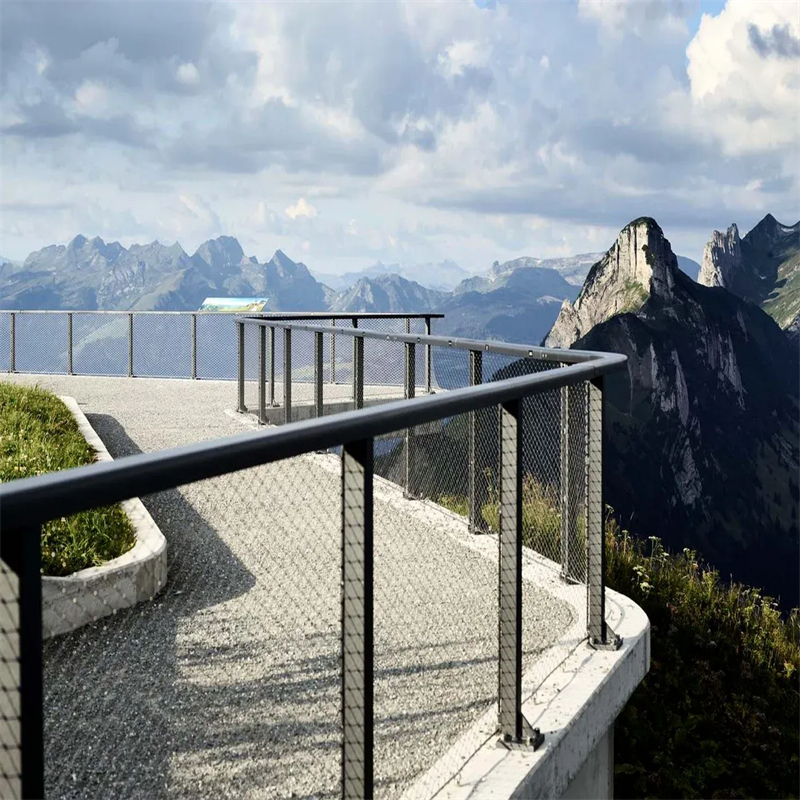
Visual openness. The cable diameters are small and the surface is highly transparent, so the fence barely interrupts views. This is especially valuable along scenic terraces, bridge edges, waterfronts and internal atria where designers want protection without a visual barrier.
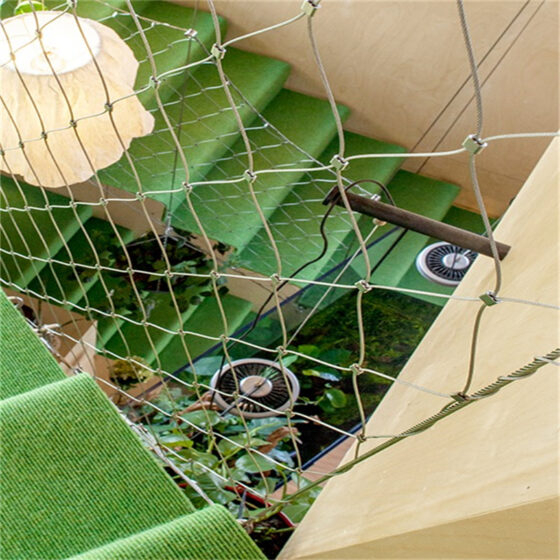
Architectural flexibility. Because the mesh is flexible before being tensioned, it can follow curved, helical and complex geometries without segmented panels or excessive framing. One continuous sheet of balustrade rope mesh fencing can wrap a spiral stair, follow a sweeping balcony edge or span several storeys in a stair or lift shaft.
Durability and corrosion resistance. In stainless steel, the stainless steel rope mesh is resistant to rust, UV and most common cleaning chemicals. There is no paint layer to chip or peel and no timber to crack or distort, so long-term appearance depends mainly on simple cleaning and periodic inspection of fixings.
Lightweight structure. The self-weight of balustrade rope mesh fencing is low compared with glass or thick steel plates. This reduces loads on slabs and supporting structure, which is particularly useful in refurbishment projects where existing concrete or steel elements have limited spare capacity.
Anti-climb and security potential. With smaller apertures and careful detailing around edges and junctions, rope mesh can act as an effective anti-climb barrier. It is difficult to get a foothold or handhold, making it suitable for schools, transport hubs and secure facilities.
Sustainability and life-cycle value. Stainless steel is fully recyclable and has a long service life. The openness of the mesh helps daylight penetrate deep into circulation spaces, reducing reliance on artificial lighting and supporting energy-efficient designs. Lower maintenance and long replacement intervals can make the life-cycle cost substantially lower than cheaper but shorter-lived alternatives.
Secret 6 – Chasing Low Price Can Kill Long-Term Value
Choosing the thinnest cable and largest aperture just to win on upfront cost often destroys the main advantages of balustrade rope mesh fencing: you lose stiffness, anti-climb performance and perceived quality, and end up paying more later in retrofits, complaints and premature replacement.
4. Typical Specifications for Balustrade Rope Mesh Fencing
Exact values vary by project, but most balustrade rope mesh fencing falls within a familiar range.
Cable diameter is commonly between 1.5 mm and 4.0 mm. Smaller diameters around 1.5–2.0 mm are often used for internal residential and light commercial balustrades where loads are moderate and a fine visual appearance is desired. Larger diameters around 3.0–4.0 mm are used for public, outdoor and bridge applications where higher forces, vandalism or accidental impacts must be considered.
Mesh aperture, usually given as the short and long diagonal of the diamond, typically ranges from about 40 × 70 mm up to 200 × 400 mm and beyond. Small apertures are chosen where child safety, anti-climb performance or falling-object protection is critical. Larger apertures may be acceptable where additional rails, glass or solid upstands are present or where the guard is primarily psychological rather than physical.
Material grade is normally AISI 304 for internal dry conditions and AISI 316 for any exterior, poolside, marine or industrial setting. Structural engineers and specifiers should always check that the selected product meets local building code requirements for guard height, maximum opening size and load resistance.
Secret 7 – “Standard” Sizes Rarely Match Your Actual Risk Profile
Many projects simply copy a standard cable diameter and mesh aperture from a brochure, but the real risk profile depends on height above ground, user type, fall consequences and exposure; tuning balustrade rope mesh fencing specs to those real risks is the difference between just passing inspection and having a barrier you are genuinely confident to sign off.
5. Design and Safety Considerations
Good design starts with a clear understanding of how the balustrade rope mesh fencing will be used. In residential balconies the main concerns are fall prevention and child safety. Apertures must be small enough that a child cannot slip through or easily climb the fence, and the railing height must meet code. In public or crowd-loaded areas such as stadiums and transport hubs, line and point load requirements are higher and deflection limits are stricter, so cable diameters, mesh geometry and frame stiffness must be selected accordingly.
Deflection control is critical. Even if the mesh is strong enough, excessive movement under normal leaning loads can make users feel unsafe. Designers should ensure that the perimeter frame and posts are stiff, that spans between posts are appropriate and that the mesh can be tensioned to a level that keeps movement within acceptable limits.
Edge detailing also has a strong influence on both safety and aesthetics. Continuous clamp bars or closely spaced clips distribute forces evenly and prevent local overstressing. Corners and junctions should be carefully closed so that small objects cannot become trapped and so that no sharp cable ends are exposed where people can touch the fence.
Where wind loads are significant, such as on high-rise balconies or bridge walkways, designers should assess wind pressure on the mesh surface and verify that both the mesh and support structure can resist these loads without excessive movement or noise.
Secret 8 – Ignore Detailing and Maintenance Design, Invite Accidents and Claims
Here is the critical secret you cannot afford to skip: most catastrophic failures are not caused by the mesh itself but by bad edge detailing and neglected maintenance access. If balustrade rope mesh fencing is installed with sharp cut ends, poorly anchored clamp bars or posts that you cannot reach later for inspection, small issues like loose bolts, hidden corrosion or trapped debris can grow unnoticed until a section suddenly gives way under load—at that moment you are facing injuries, emergency shutdowns, insurance investigations, expert reports and potentially years of legal and reputational damage. Designing details for safety and future access is your real protection against accidents, lawsuits and ruinous repair bills.
6. Common Applications of Balustrade Rope Mesh Fencing
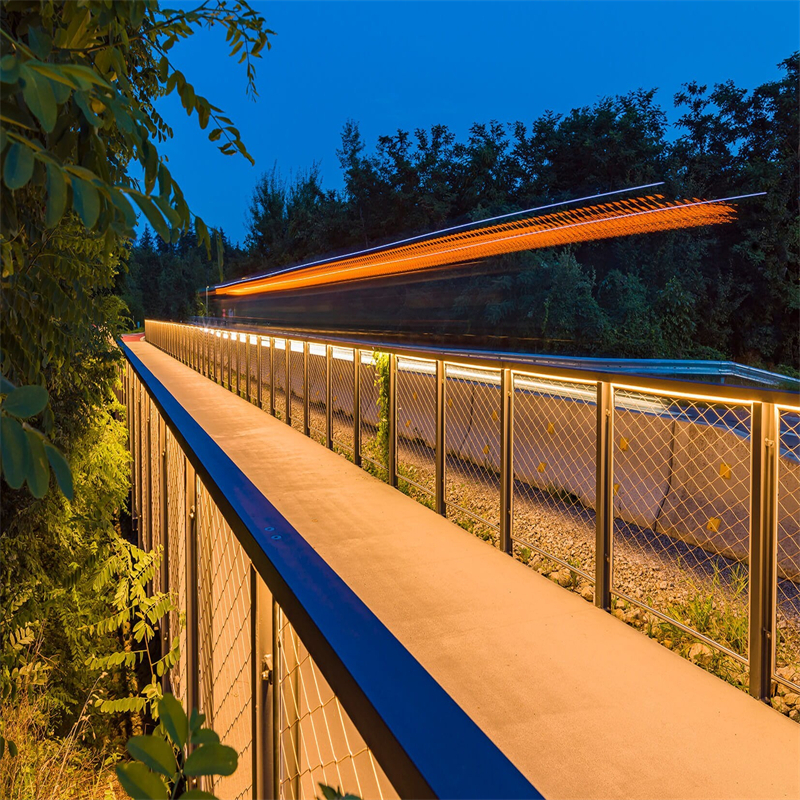
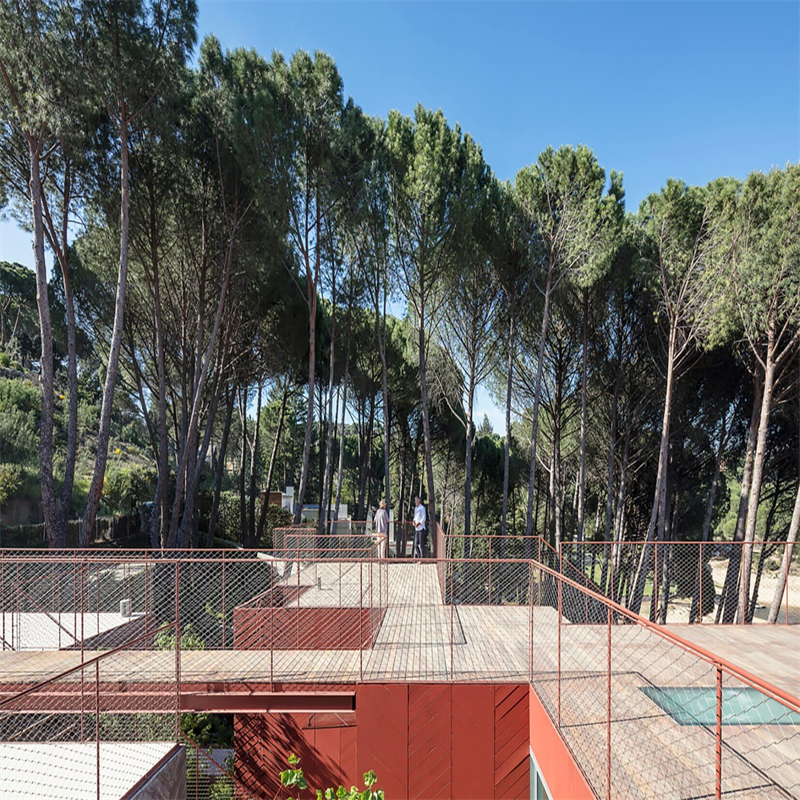
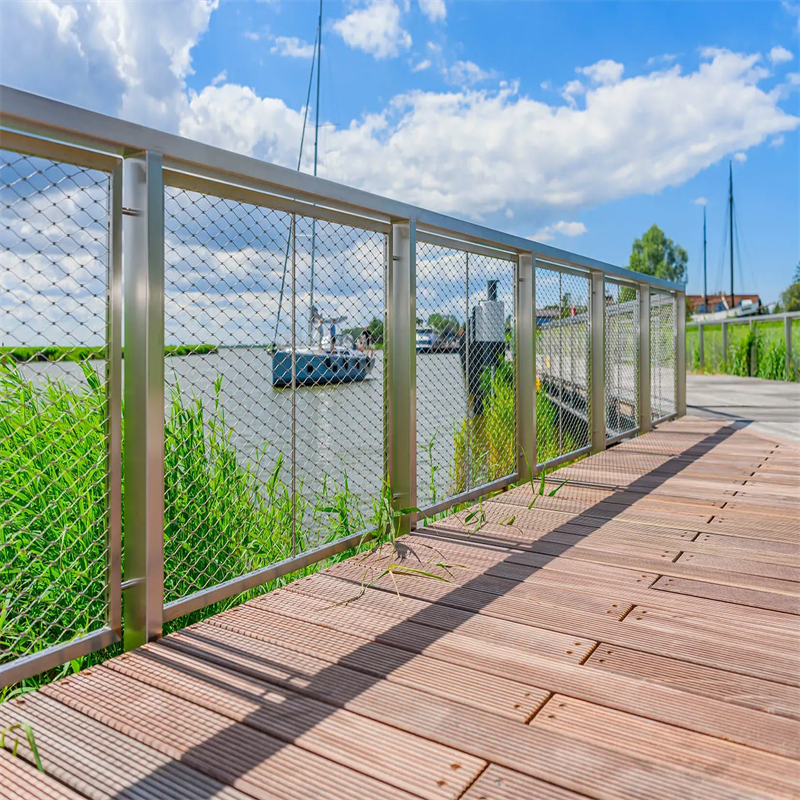
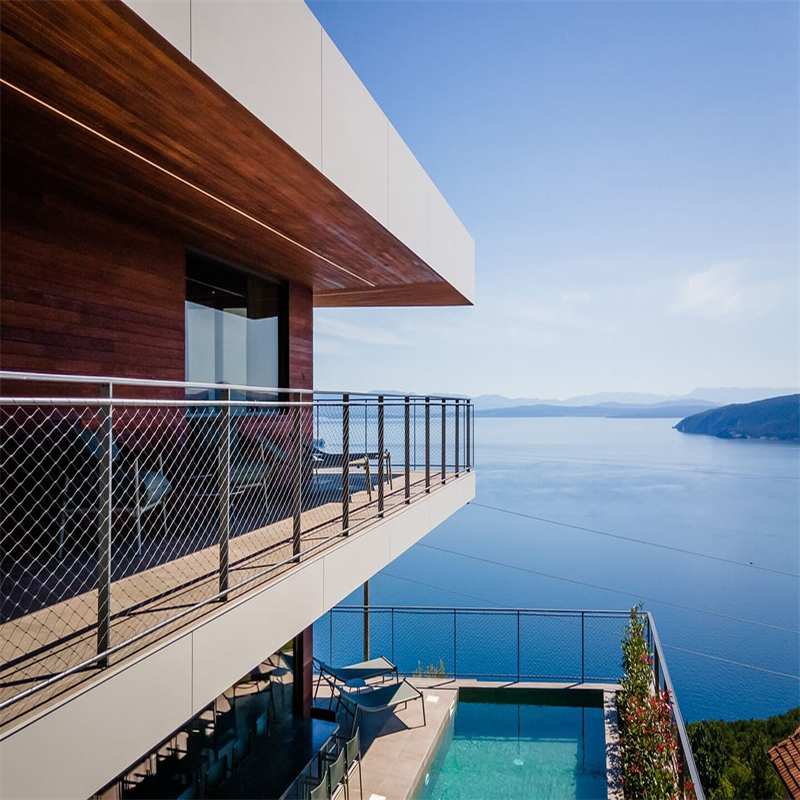
Because of its mix of safety, transparency and flexibility, balustrade rope mesh fencing appears in varied settings. Internally it is used for stair and atrium balustrades in residential buildings, offices, hotels, galleries, showrooms and educational facilities. Externally it often appears on balconies and terraces, rooftop gardens, viewing platforms and pedestrian bridges, where preserving views is as important as preventing falls.
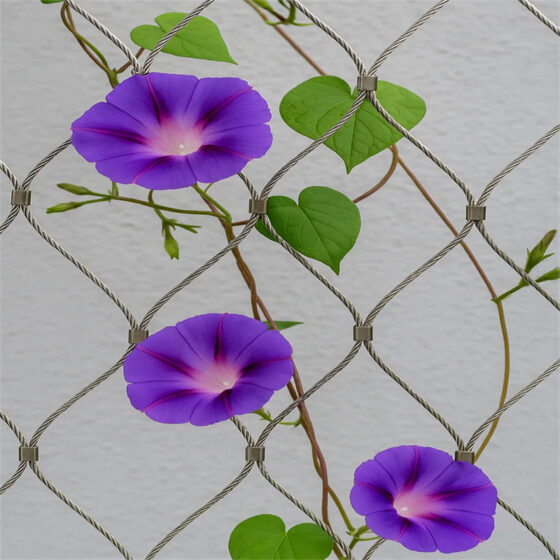
Infrastructure projects use the same system along ramps, overpasses and platforms to create safe, durable barriers that withstand heavy public use. In landscape architecture rope mesh can form unobtrusive perimeters around playgrounds, swimming pools and cliff edges or can act as a discreet support for climbing plants, turning a safety fence into a green wall.
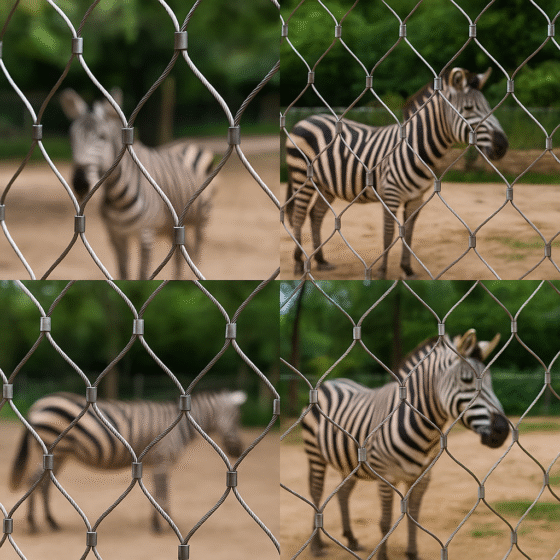
The same technology is also used for animal enclosures, zoo exhibits and aviaries, where the combination of strength and openness means animals are safely contained while visitors enjoy clear views with minimal visual obstruction.
Secret 9 – Copying a “Nice Reference Project” Can Put You in the Wrong Risk Category
It is tempting to copy a beautiful reference image from a hotel, bridge or zoo, but every site has different fall heights, user behaviour and environmental exposure; applying a balustrade rope mesh fencing layout from a low-risk project to a high-risk site can quietly move you out of your legal duty of care, so each new application must be checked on its own merits, not just on how it looks in photos.
7. Installation Basics for Balustrade Rope Mesh Fencing
Successful installation starts with a robust and accurately set-out support structure. Posts, handrails, base plates and any secondary framing should be installed, aligned and fully fixed before any mesh is unpacked. Tensioning devices such as turnbuckles should be positioned at accessible points for both initial adjustment and future maintenance.
Installers usually begin by identifying the orientation of each mesh panel and attaching one edge firmly to the boundary using clamp bars or lacing. The opposite edge is then tensioned gradually so that the diamond pattern becomes regular and the mesh forms a smooth surface. Once the primary tension is correct, the remaining edges and corners are fixed. Excess cable is trimmed and any exposed ends are capped or tucked away.
Care must be taken not to over-tension a local area, which can cause distortion, and not to rely on flexible frames that bend inwards instead of tightening the mesh. At completion the entire fence should be tested by applying push loads at several points to confirm that deflection, clearance and visual quality meet the design intent and relevant codes.

8. Maintenance and Cleaning
One of the advantages of balustrade rope mesh fencing is its simple maintenance. Because the mesh is bare stainless steel there is no paint layer to chip or peel. Routine care usually consists of rinsing with clean water to remove dust and deposits and occasionally using a mild neutral detergent for more stubborn marks, followed by thorough rinsing.
Abrasive pads, carbon steel brushes and strong acids should be avoided, as they can damage the passive layer that protects stainless steel from corrosion. In coastal and industrial environments more frequent washing is recommended to remove salt and airborne pollutants that might otherwise cause tea staining, particularly on horizontal surfaces.
Periodic visual inspection should include all clamps, turnbuckles, anchor bolts and boundary frames to ensure nothing has loosened or deformed. If any area of the mesh becomes noticeably slack due to impact or long-term creep, it can normally be re-tensioned without replacing the panel, which extends the working life of the installation.
9. How to Specify Balustrade Rope Mesh Fencing to Your Supplier
To obtain accurate quotations and technically sound proposals, it helps to prepare a concise but clear brief. Start by describing the project type and exposure: residential balcony, public bridge, internal stair, coastal terrace and so on. State whether the fence is indoors or outdoors, the expected traffic level and any special risks such as children, vandalism or crowd loading.
Provide basic geometry, including panel dimensions, railing heights, spans between posts and any curves or changes in height. Indicate the preferred cable diameter range and mesh aperture if you have one, or describe your priorities such as child safety, anti-climb performance or maximum transparency so that the supplier can recommend suitable models.
Include the required material grade, typically AISI 304 or AISI 316, and share any known code requirements for maximum opening, minimum height and design loads. Finally, clarify whether you need supply only or supply and installation, and whether shop drawings, structural calculations or test reports are required for approvals.
10. Conclusion
Balustrade rope mesh fencing has moved from a niche detail to a mainstream solution in modern architecture because it offers a rare combination of safety, transparency, durability and design freedom. By understanding how the mesh works, selecting appropriate specifications and paying attention to frame stiffness, detailing and installation, designers can create barriers that quietly do their job while keeping spaces open, bright and visually connected.
Whether the project is a compact internal stair, a high-rise balcony, a public bridge or a major stadium concourse, well-designed balustrade rope mesh fencing provides long-lasting protection with minimal visual weight and modest maintenance, making it an increasingly attractive choice for contemporary guards and perimeters.