Your One-Stop Wire Mesh Fence Supplier | POLYMETAL
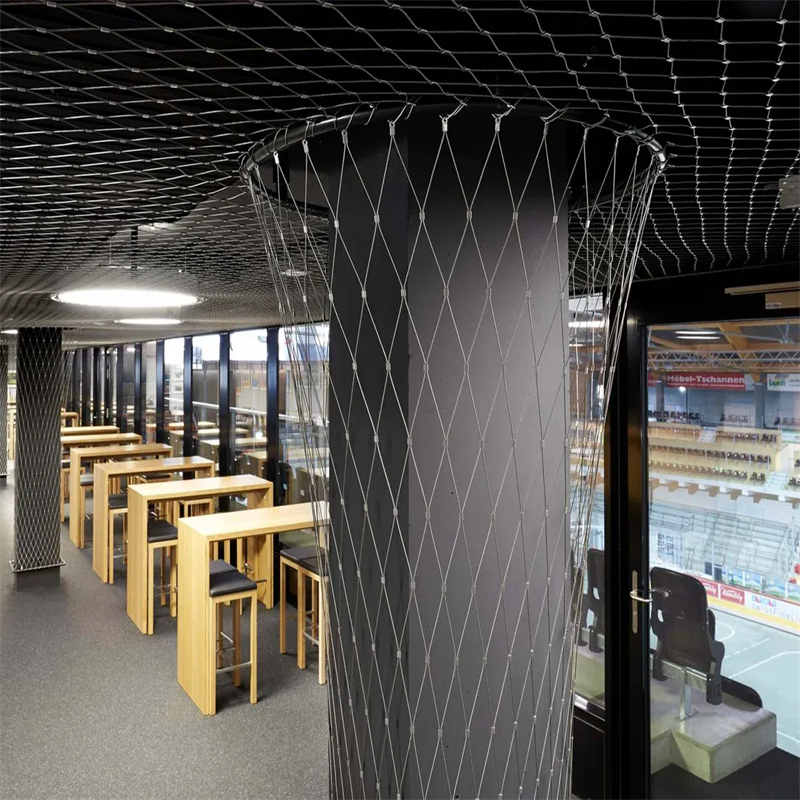
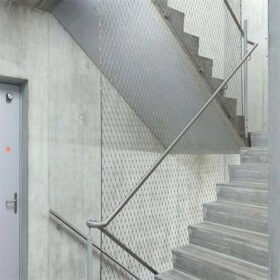
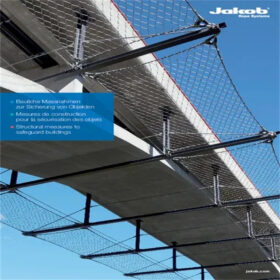
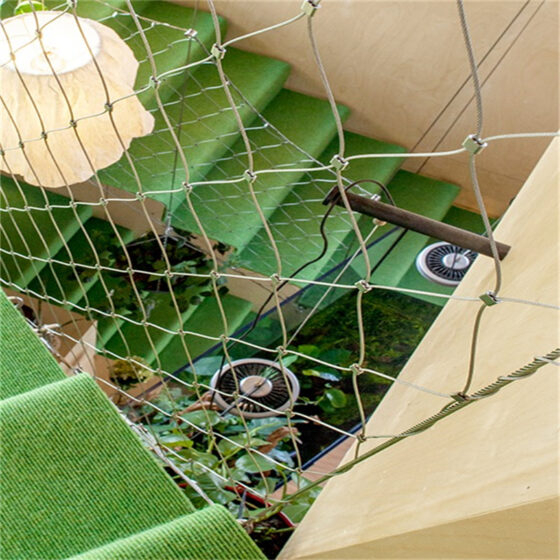
Stainless steel rope mesh stair railing has become a signature element in modern architecture, replacing bulky balusters and solid infill panels with a light, transparent cable net stretched between posts and handrails, so the guard feels almost invisible yet remains safe, code-compliant, light and visually open. In compact homes this type of railing makes stair cores feel larger, brighter and less cramped, while in commercial and public buildings it preserves long views through atria and circulation spaces, allowing daylight and sightlines to pass freely without sacrificing safety or durability. This guide explains what stainless steel rope mesh stair railing is and sets out 7 ultimate reasons to choose it for your project – especially Reason 5, which shows how ignoring a safety upgrade can turn into direct financial loss.
1. What Is Stainless Steel Rope Mesh Stair Railing?
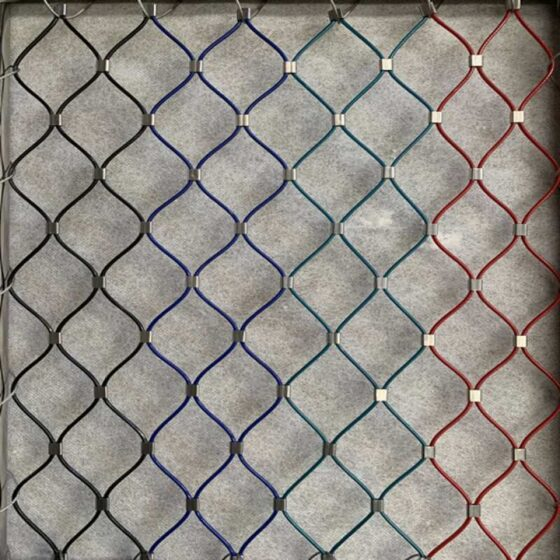
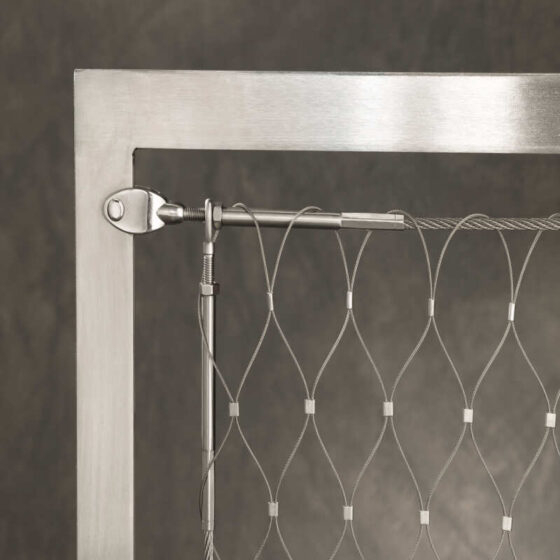
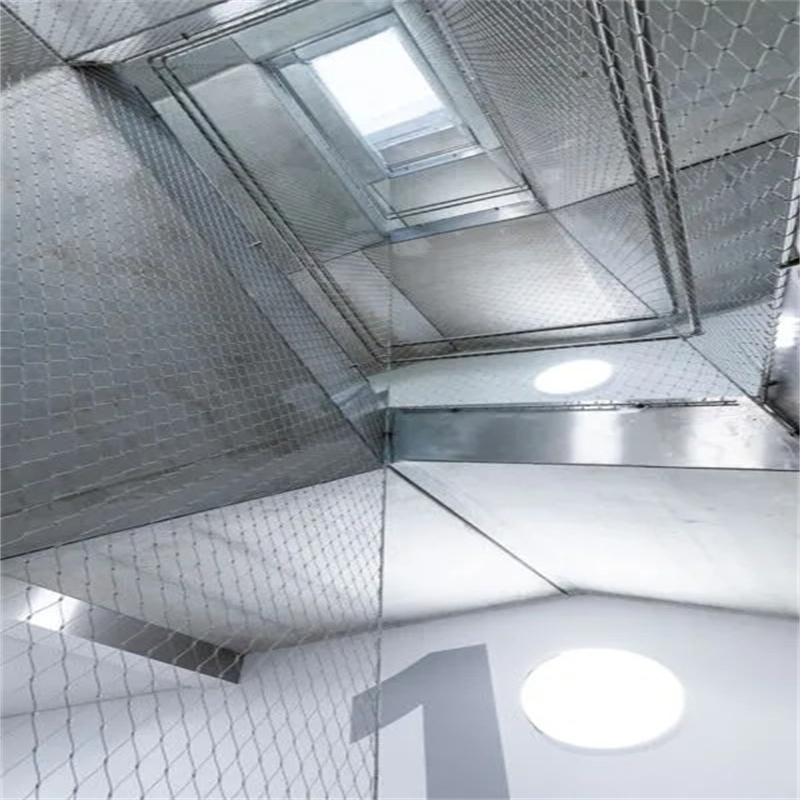
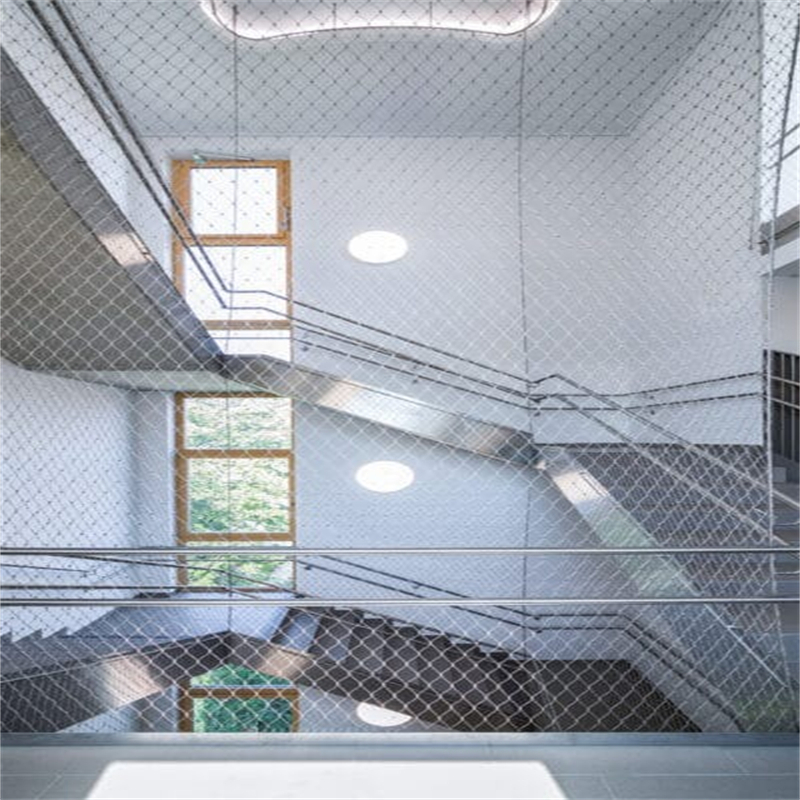
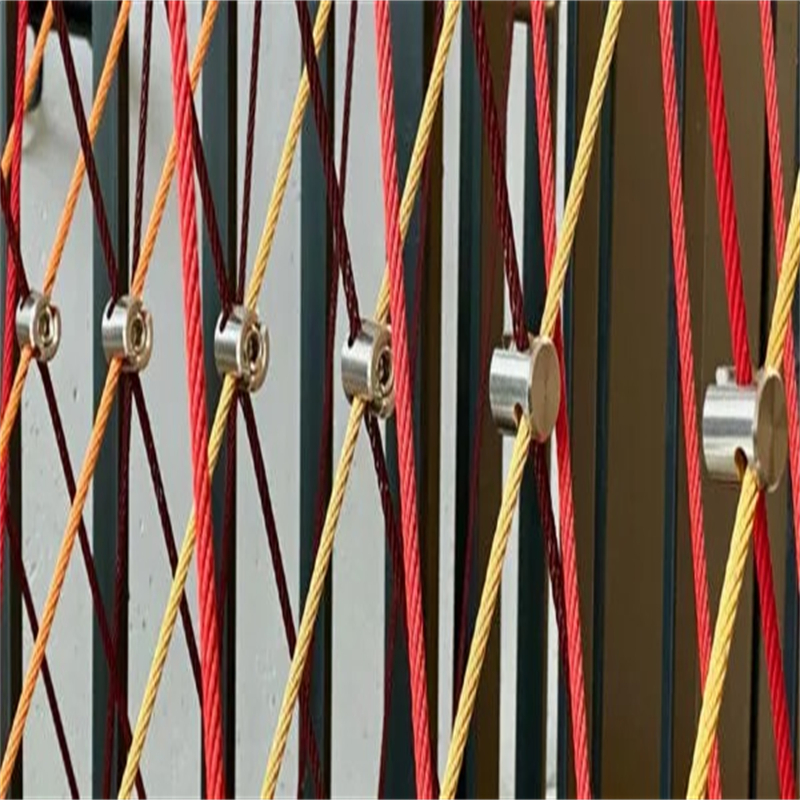
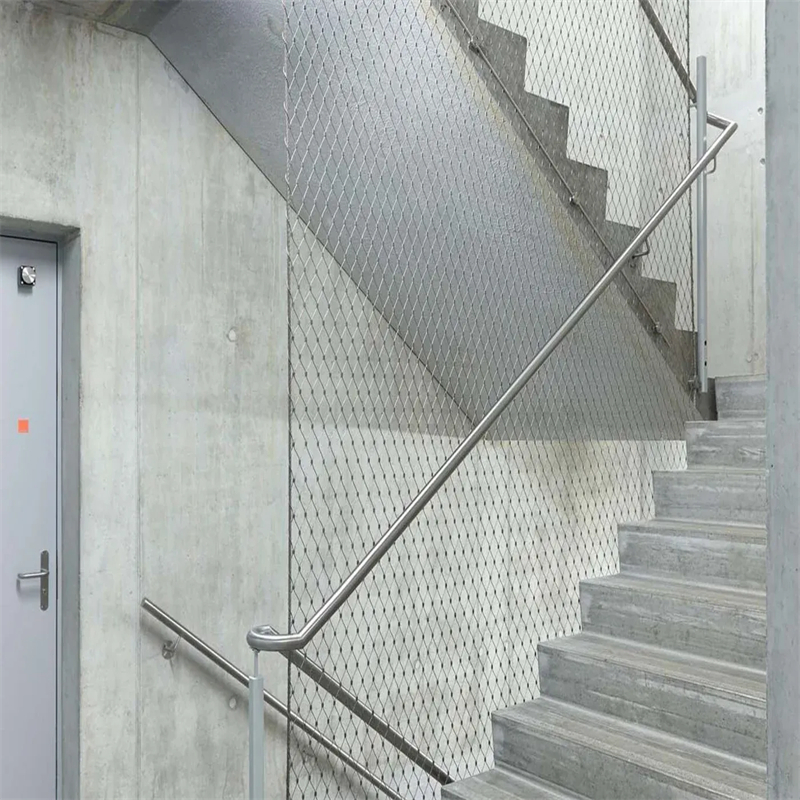
A stainless steel rope mesh stair railing uses a woven or ferrule-pressed cable net made from multi-strand stainless steel wire ropes as the infill between the handrail, the posts and the edges of the stair or landing, so the mesh acts as a continuous tensile membrane that carries loads back into the supporting frame. The mesh is usually fabricated from 7×7 or 7×19 stainless steel cables with diameters in the range of 1.5–4.0 mm, arranged to form diamond-shaped openings that can be tightened, elongated or compressed as the mesh is tensioned; by choosing the cable diameter and aperture and then fixing the edges to boundary flat bars or boundary cables, the designer can create panels that are either fine and delicate or bold and highly expressive. The most common material grades are AISI 304L for standard indoor environments and AISI 316 for outdoor, coastal, poolside or high-humidity locations, with AISI 316 providing enhanced resistance to corrosion and tea staining in aggressive atmospheres where salt spray or chlorinated water may be present. Because the mesh works almost entirely in tension and has very low visual density, it offers a rare combination: a guard system that is strong enough to prevent falls and withstand daily impact, yet open enough to preserve views, daylight and a sense of spaciousness around the stair.
2. Why Choose Stainless Steel Rope Mesh for Stairs?
2.1 Safety and Code Compliance
When correctly specified and installed, Stainless steel rope mesh stair railing satisfies the same safety objectives as more traditional balustrade systems, as aperture size, mesh orientation, cable diameter, tension and post spacing can all be tuned to meet local regulations on maximum opening sizes, minimum guard heights and required line and point loads on the infill and the handrail. Under impact the mesh does not fail at a single bar; instead, the load is spread through the cable network and into the perimeter frame, which is particularly valuable in public projects and high-traffic stair cores where people lean, push or occasionally collide with the railing, and where designers must consider crowd loading and robust detailing. With appropriately small diamonds and careful edge design, stainless steel rope mesh can also serve as an anti-climb barrier where children are present or where unauthorised climbing would create safety or security risks.
Reason 1 – Proven Safety Under Real Impact
Stainless steel rope mesh stair railing provides proven, repeatable safety performance under real impact because the load is not taken by a single bar or brittle panel but distributed through the entire cable network and into the perimeter frame, so even when someone stumbles, leans hard or collides with the guard, the system behaves like a continuous safety net instead of a fragile line of individual members.
2.2 Architectural and Visual Qualities
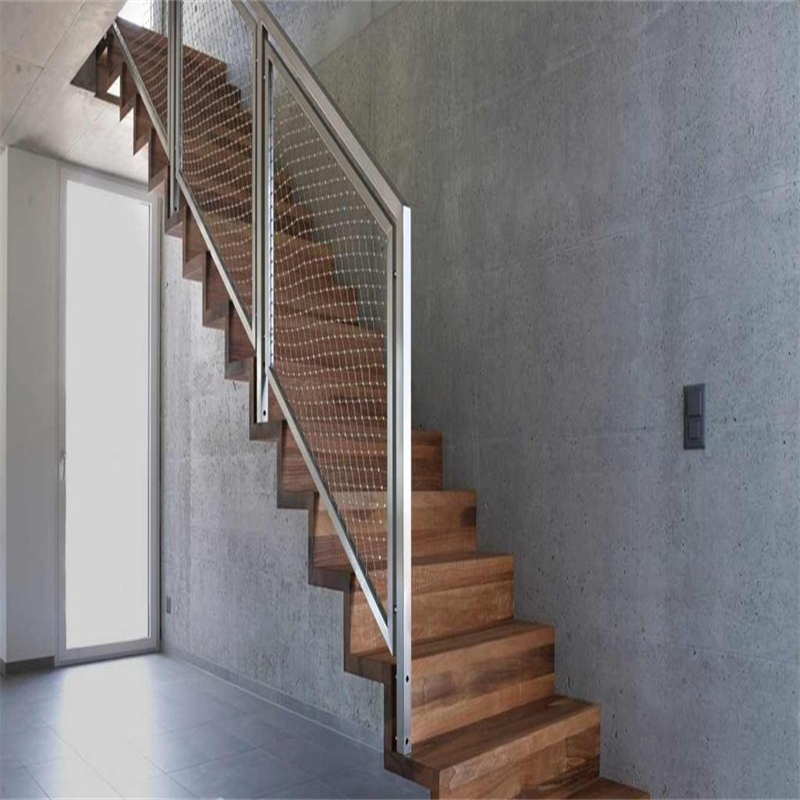
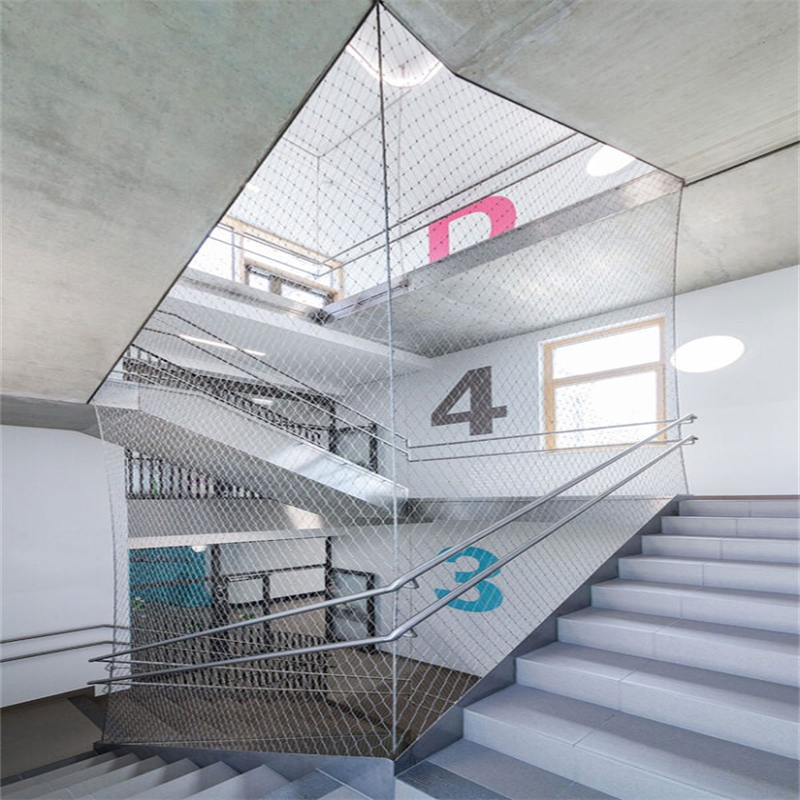
The strongest reason architects choose rope mesh is its visual character; from most viewpoints the mesh is almost transparent, so the eye reads the overall stair form, the volumes, the materials and the light, rather than a dense thicket of balusters or heavy solid panels. Because the mesh is flexible, it can follow complex plan and section geometry without complicated cutting or heavy framing, which makes it ideal for helical stairs, curved galleries, split-level spaces and multi-storey stair towers where conventional flat sheet infill would require many joints or awkward transitions. The stainless steel surface feels precise and modern but can be warmed and balanced by timber handrails, stone treads or soft interior finishes, while in minimalist interiors the mesh can almost disappear, acting as a discreet safety layer in front of glass, concrete or steel.
Reason 2 – A Modern Look That Does Not Date
Unlike bulky balusters and heavy infill sheets that quickly look old-fashioned, stainless steel rope mesh stair railing delivers a minimal, transparent aesthetic that works with glass, timber, concrete and exposed steel, which means your stair, atrium or gallery can stay visually relevant for many years without cosmetic overhauls or complete balustrade replacement just to keep up with design trends.
2.3 Durability, Corrosion Resistance and Fire Performance
Stainless steel is inherently durable, and in AISI 316 the rope mesh is well suited to outdoor and coastal locations, pool decks, transport hubs and other demanding environments where humidity, occasional splashing or airborne chlorides are expected, provided that a sensible cleaning routine is adopted to wash off contaminants before they accumulate. Unlike painted steel bars or timber balusters, rope mesh does not need repainting, does not flake or peel, and does not warp or crack, so maintenance primarily involves periodic washing and inspection of fixings, which can significantly reduce life-cycle costs in comparison with systems that rely on coatings or sealants. The mesh is also non-combustible and does not contribute fuel in a fire, which makes it compatible with fire-rated stair enclosures, escape stairs and performance-based fire designs that require strict control of combustible materials in circulation routes.
Reason 3 – Durability in Harsh Real-World Conditions
With AISI 304 for interiors and AISI 316 for outdoor, coastal and poolside environments, stainless steel rope mesh stair railing resists humidity, splashing, pollution and UV exposure far better than painted mild steel or timber, so you avoid repeated sanding, repainting and replacement cycles and keep the guard looking clean and professional with only basic washing and simple periodic inspections.
2.4 Lightweight but Strong
Although the cable diameters are small, multi-strand stainless steel rope has excellent tensile strength, and when arranged as a diamond mesh and tensioned around a rigid boundary, it behaves as a very efficient structural membrane, providing high resistance to in-plane loads with minimal added mass. This high strength-to-weight ratio allows designers to reduce post numbers, use smaller section sizes and avoid heavy solid panels, which in turn can simplify the supporting structure, especially in refurbishment projects where existing slabs and stair strings have limited spare capacity for additional loads.
Reason 4 – Lightweight Structure with High Structural Performance
Because the mesh in a stainless steel rope mesh stair railing works almost entirely in tension, it offers a very high strength-to-weight ratio, allowing designers to use fewer posts, slimmer profiles and less heavy steelwork while still achieving the required line and point loads, which simplifies installation, reduces dead load on existing slabs and can make complex stair geometries much easier and cheaper to detail and build.
2.5 Sustainability and Life-Cycle Performance
From a sustainability perspective, Stainless steel rope mesh stair railing is attractive because it has a long service life, requires little ongoing maintenance, and is fully recyclable at the end of its life, so materials can be reintroduced into the production cycle instead of becoming waste. The visual openness of the mesh also supports sustainable design goals by allowing daylight to penetrate deep into stair cores and adjacent spaces, which can reduce reliance on artificial lighting and make circulation areas feel safer and more inviting without additional energy use.
Reason 7 – Long-Term Value for Owners and Users
When you combine long service life, low maintenance, strong safety performance and a timeless visual character, stainless steel rope mesh stair railing delivers long-term value to building owners and users because the stair remains safe, attractive and fully functional for decades without frequent replacement cycles, which preserves investment value and supports a better experience for residents, guests, staff and visitors.
3. Stainless Steel Rope Mesh Specifications for Stair Railings
The following tables summarise typical Stainless steel rope mesh stair railing configurations for stair and balustrade infill; they are intended as reference models for preliminary design and specification, and final selection should always be checked against the project’s structural calculations and local building codes.
3.1 Rope Mesh for Internal Residential and Light Commercial Stairs
For indoor residential and light commercial applications, designers often choose relatively small cable diameters and moderate apertures to create mesh that is visually refined, pleasant to touch and sufficiently stiff for everyday use in houses, apartments, boutique offices and small public spaces.
| Model | Mesh Type | Cable Ø (mm) | Construction | Mesh Aperture (W×H mm) | Grade | Typical Use |
|---|---|---|---|---|---|---|
| SSR-R01 | Stainless Steel Rope Mesh | 1.5 | 7×7 | 40 × 70 | 304 | Internal townhouse stair rails |
| SSR-R02 | Stainless Steel Rope Mesh | 1.5 | 7×7 | 50 × 80 | 304 | Loft and mezzanine guards |
| SSR-R03 | Stainless Steel Rope Mesh | 1.6 | 7×7 | 50 × 90 | 304 | Duplex apartments, light spans |
| SSR-R04 | Stainless Steel Rope Mesh | 1.6 | 7×19 | 60 × 100 | 304 | Spiral stair cores, light loads |
| SSR-R05 | Stainless Steel Rope Mesh | 1.6 | 7×19 | 60 × 120 | 316 | Residential stairs near large windows |
| SSR-R06 | Stainless Steel Rope Mesh | 2.0 | 7×7 | 60 × 100 | 316 | Light commercial stairs in offices |
| SSR-R07 | Stainless Steel Rope Mesh | 2.0 | 7×7 | 60 × 120 | 316 | Atrium gallery guards, short spans |
| SSR-R08 | Stainless Steel Rope Mesh | 2.0 | 7×19 | 70 × 120 | 316 | Curved feature stairs, moderate traffic |
| SSR-R09 | Stainless Steel Rope Mesh | 2.0 | 7×19 | 70 × 140 | 316 | Open stair voids with tension mesh |
| SSR-R10 | Stainless Steel Rope Mesh | 2.0 | 7×19 | 80 × 140 | 316 | Minimalist railings, longer spans |
| SSR-R11 | Stainless Steel Rope Mesh | 2.5 | 7×7 | 80 × 160 | 316 | Multi-storey residential stair cores |
| SSR-R12 | Stainless Steel Rope Mesh | 2.5 | 7×7 | 90 × 160 | 316 | Hotel stairs, decorative and safe |
| SSR-R13 | Stainless Steel Rope Mesh | 2.5 | 7×19 | 90 × 180 | 316 | Museum and gallery open staircases |
| SSR-R14 | Stainless Steel Rope Mesh | 2.5 | 7×19 | 100 × 180 | 316 | Large internal staircases, controlled access |
| SSR-R15 | Stainless Steel Rope Mesh | 2.5 | 7×19 | 100 × 200 | 316 | Railings combined with glass or mid-rails |
In family homes or locations where children are present, models with smaller apertures such as SSR-R01 to SSR-R05 are often preferred to limit climbing opportunities and comply with rules that restrict openings to approximately a 100 mm sphere.
3.2 Stainless steel rope mesh stair railing for Public, Outdoor and Heavy-Duty Stair Railings
Public buildings, infrastructure and outdoor stairs require more robust mesh configurations, so greater cable diameters and larger panel sizes are usually combined with AISI 316 to provide the required strength, stiffness and long-term resistance to weathering, pollution, wind and crowd loading.
| Model | Mesh Type | Cable Ø (mm) | Construction | Mesh Aperture (W×H mm) | Grade | Typical Use |
|---|---|---|---|---|---|---|
| SSR-R16 | Stainless Steel Rope Mesh | 3.0 | 7×7 | 80 × 160 | 316 | Public stair cores in malls |
| SSR-R17 | Stainless Steel Rope Mesh | 3.0 | 7×7 | 90 × 180 | 316 | Airport stair railings, heavy flow |
| SSR-R18 | Stainless Steel Rope Mesh | 3.0 | 7×19 | 100 × 180 | 316 | Outdoor shopping centre stairs |
| SSR-R19 | Stainless Steel Rope Mesh | 3.0 | 7×19 | 100 × 200 | 316 | Public viewing stairs, tall balustrades |
| SSR-R20 | Stainless Steel Rope Mesh | 3.0 | 7×19 | 120 × 200 | 316 | Long open stair edges in large atria |
| SSR-R21 | Stainless Steel Rope Mesh | 3.5 | 7×19 | 120 × 220 | 316 | Stadium stair railings, crowd loads |
| SSR-R22 | Stainless Steel Rope Mesh | 3.5 | 7×19 | 130 × 230 | 316 | Outdoor public stairs, wind and rain |
| SSR-R23 | Stainless Steel Rope Mesh | 3.5 | 7×19 | 150 × 260 | 316 | Bridge and elevated walkway stair rails |
| SSR-R24 | Stainless Steel Rope Mesh | 4.0 | 7×19 | 150 × 260 | 316 | Coastal stairs and waterfront promenades |
| SSR-R25 | Stainless Steel Rope Mesh | 4.0 | 7×19 | 160 × 280 | 316 | Outdoor amphitheatre stairs |
| SSR-R26 | Stainless Steel Rope Mesh | 4.0 | 7×19 | 180 × 300 | 316 | Monumental staircases, large openings |
| SSR-R27 | Stainless Steel Rope Mesh | 4.0 | 7×19 | 180 × 320 | 316 | Multi-storey atria, public buildings |
| SSR-R28 | Stainless Steel Rope Mesh | 4.0 | 7×19 | 200 × 345 | 316 | High railings with additional bar systems |
| SSR-R29 | Stainless Steel Rope Mesh | 4.0 | 7×19 | 220 × 380 | 316 | Tall exterior stair guardrails |
| SSR-R30 | Stainless Steel Rope Mesh | 4.0 | 7×19 | 250 × 400 | 316 | Very large stair voids with secondary barriers |
In tall public balustrades or bridge stairs these meshes are often combined with solid upstands, additional rails or glass panels so that the overall system satisfies crowd load and deflection criteria while still appearing visually light.
4. Key Design and Safety Notes Stainless steel rope mesh stair railing
Most building codes limit the clear opening in a guard so that a small sphere, commonly around 100 mm in diameter, cannot pass through, which means the effective opening of a rope mesh under service loads must be checked rather than relying only on the nominal aperture dimensions given in the table; in children’s areas many designers reduce the aperture further and avoid horizontal elements that could encourage climbing. Deflection is just as important as strength, because a guard that moves too much when someone leans on it feels unsafe even if the calculated stresses are within limits; good practice is to ensure sufficiently stiff boundary frames, appropriate post spacing and adequate mesh tension so that the guard has a firm, reassuring feel while still providing some controlled elasticity under impact. Edge detailing has a major influence on durability, comfort and appearance; continuous clamp bars or closely spaced clips distribute mesh forces evenly into the frame, tidy corner detailing removes small gaps where objects might become trapped, and trimming or capping cut cable ends avoids sharp points that could snag clothing or injure users.
4.1 Reason 6 – Easier Compliance with Evolving Codes
Building codes and safety standards are constantly evolving, especially for public and high-traffic spaces, and stainless steel rope mesh stair railing makes it easier to meet or exceed new requirements for maximum opening size, guard height, child safety and impact performance, so you are far less likely to face expensive retrofits, remedial works or usage restrictions when regulations tighten in the future.
5. Installation Basics
Successful rope mesh installations always start with a rigid and well-aligned support structure, so posts, handrails, base plates and boundary bars or cables must be completely fixed and checked before the mesh is unpacked, and any turnbuckles or tensioning devices should be positioned where they can be accessed for both initial adjustment and future re-tensioning. The typical sequence begins by identifying the orientation of each mesh panel, then attaching one edge firmly to the boundary using clamps or lacing, after which the opposite edge is gradually tensioned so that the diamonds become regular and the mesh lies in a smooth surface; once the main tension is correct the remaining edges and corners are fixed, excess cable is trimmed or secured, and the entire panel is tested by pushing on it to confirm that clearances, deflection and visual quality meet the design intent. Common installation mistakes include using boundary frames that are too flexible so they bend inwards during tensioning, tensioning one point too much and creating local distortion instead of a uniform surface, leaving small gaps at corners where a child’s foot or small object could lodge, and failing to protect or conceal cut cable ends; all of these can be avoided when the mesh supplier, installer, architect and engineer coordinate details early in the design phase.
6. Maintenance and Cleaning
Maintenance is straightforward, because the mesh has no coating or paint layer that can flake or peel; routine care usually consists of rinsing with clean water to remove dust and surface deposits, occasionally using a mild neutral detergent for more stubborn marks, and then rinsing thoroughly so that no residues remain that might attract further dirt or interfere with the passive layer of the stainless steel. Avoiding abrasive pads, carbon steel brushes and strong acids helps preserve the surface finish, and in outdoor or coastal locations it is good practice to schedule more frequent washing to remove salt and airborne pollutants before they accumulate and cause tea staining, especially on horizontal elements where water might sit. Periodic inspections should also include a quick check of turnbuckles, clamps, anchor bolts and boundary bars to confirm that nothing has loosened, deformed or corroded; if any sections of mesh become noticeably slack after an impact or after many years of service, they can generally be re-tensioned rather than replaced, which helps to extend the overall life of the system.
7. What to Tell Your Stainless Steel Rope Mesh Supplier
To obtain accurate quotations and a technically sound proposal, it is helpful to prepare a short brief describing the project type and environment, such as whether it is residential, commercial, public or industrial, whether the stairs are indoors, outdoors, poolside or coastal, and what level of traffic and potential vandalism or misuse is expected. You can then specify the mesh type as “Stainless Steel Rope Mesh”, indicate any preferred model codes such as SSR-R08 for a refined internal feature stair or SSR-R23 for a bridge stair, confirm whether AISI 304 or AISI 316 is required, and provide basic stair geometry including flight lengths, number of risers, landing sizes, railing heights and notes on whether the layout is straight, curved, helical or multi-storey. If you know the applicable building code requirements for maximum opening size, minimum guard height and line and point loads, including any special rules for children’s play areas or crowd-loaded public spaces, share these with the supplier so they can confirm that the mesh model, cable diameter and aperture you have chosen will meet or exceed those requirements without over-specifying and adding unnecessary cost. Finally, indicate whether you require supply only or a full supply-and-install service, provide architectural and structural drawings in PDF or CAD format if available, and mention any coordination issues such as nearby lighting, signage, fire sprinklers or services that could influence fixing positions and panel layout.
8. Typical Applications and Design Ideas
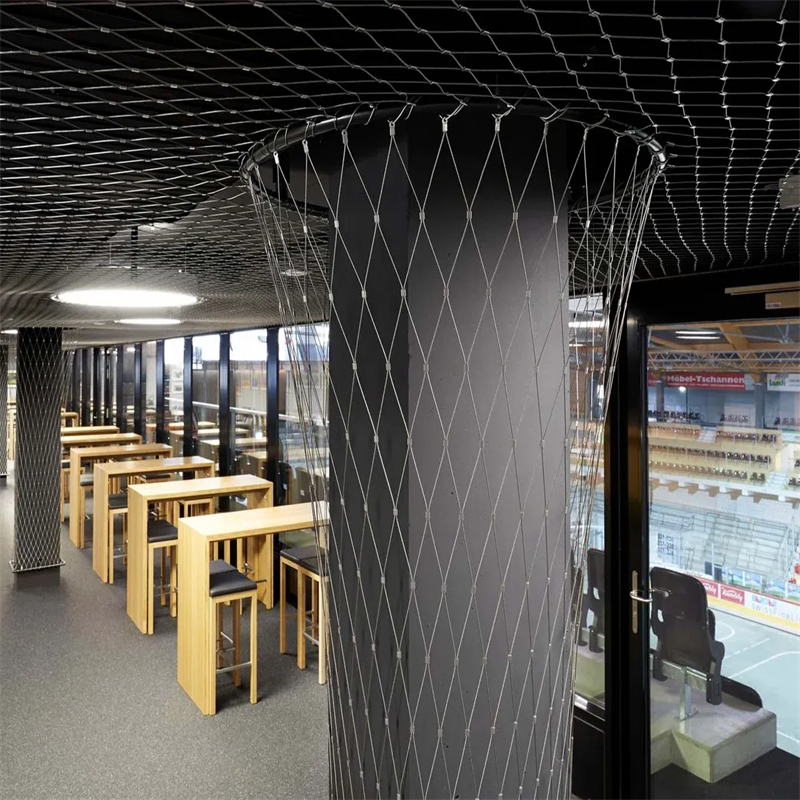
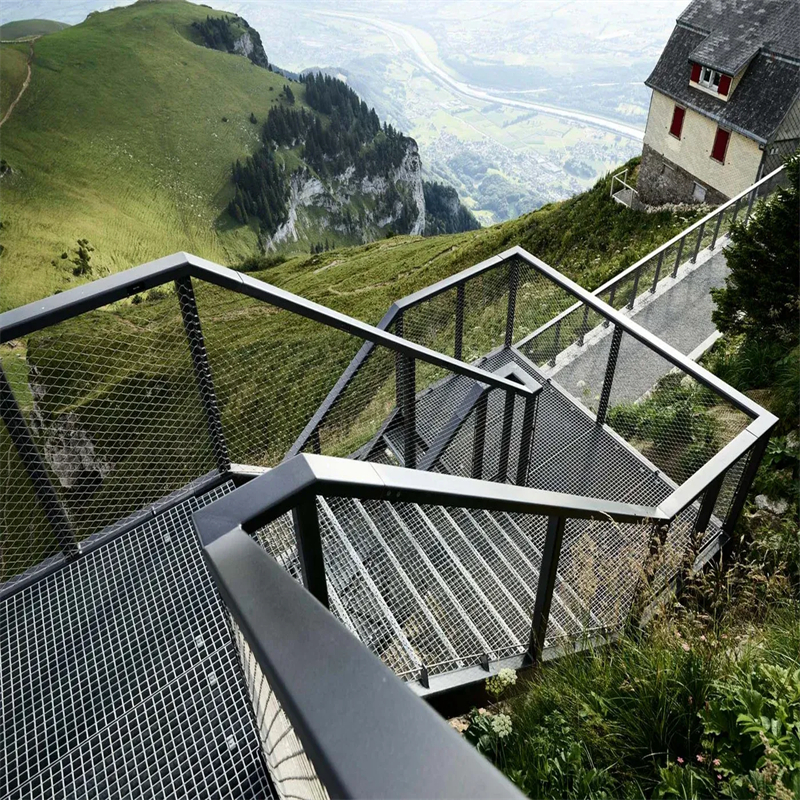
Stainless steel rope mesh stair railings appear in a wide variety of projects, from internal stairs in townhouses, lofts and duplex apartments, to open galleries in hotels, showrooms, co-working spaces and shopping centres, and through to long-span stairways in museums, libraries, universities, pedestrian bridges, stadiums and transport interchanges where transparency and robustness are equally important. Designers sometimes combine the mesh with warm timber handrails to create a comfortable and tactile interface, or place it in front of glass to provide an additional safety layer that is almost invisible from a distance; concealed LED strip lighting or carefully aimed spotlights can be used to graze the mesh and reveal its texture at night, while in outdoor settings climbing plants or planters nearby can soften the stainless steel and integrate the railing with landscape and planting designs.
9. Frequently Asked Questions
Is stainless steel rope mesh safe for children? It is safe when the aperture, height and detailing are chosen with children in mind, typically by using smaller diamonds, controlling the maximum clear opening in accordance with local regulations and avoiding intermediate members that function as ladder rungs. Will the mesh rust or discolour? In normal indoor environments AISI 304 stainless steel performs very well with minimal maintenance, while in outdoor, coastal or poolside locations AISI 316 is recommended for additional corrosion resistance, and regular rinsing to remove salt and contaminants further reduces the risk of tea staining or local discolouration. Can rope mesh be retrofitted to an existing stair? In many cases retrofitting is possible, provided that the existing structure can safely carry the mesh tension and any additional impact loads; sometimes new posts, boundary frames or anchor points must be added, so an engineer should review the existing stair before the design is finalised. Does the mesh move or make noise? A properly tensioned system is stable and quiet in normal use, and although all tensile systems allow some controlled movement under load, appropriate mesh selection, boundary stiffness and tensioning practice ensure that deflections are small and do not cause rattling or distracting vibration.
10. Summary
With careful specification and competent installation, stainless steel rope mesh stair railings offer a rare balance of safety, visual lightness and durability, protecting users from falls while keeping stair cores open, bright and connected to the surrounding architecture. From compact internal stairs to major public circulation routes, these systems provide a long-lasting, low-maintenance and highly adaptable solution that works equally well in understated residential interiors and in bold contemporary public spaces, making stainless steel rope mesh an increasingly popular choice for modern stair and balustrade design.
10.1 Reason 5 – Ignoring This One Can Cost You Money, Claims and Rebuilds
This is the reason you cannot afford to skip: keeping outdated, climbable or corroding stair guards instead of upgrading to a stainless steel rope mesh stair railing exposes you to hidden financial risks because a single fall caused by a wide opening, loose bar or failed fixing can lead to hospital bills, insurance claims, legal action, forced closure of the stair and an urgent, unplanned rebuild at premium prices, so choosing a code-compliant stainless steel rope mesh stair railing from the start is not just a safety upgrade but direct protection against expensive accidents, claims and reputation damage.