Your One-Stop Wire Mesh Fence Supplier | POLYMETAL
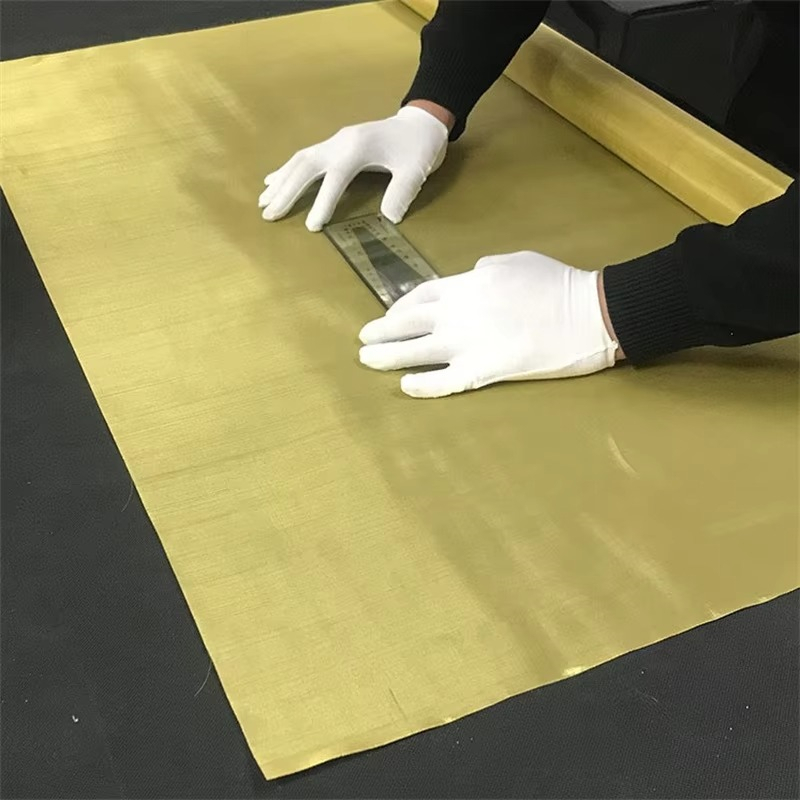

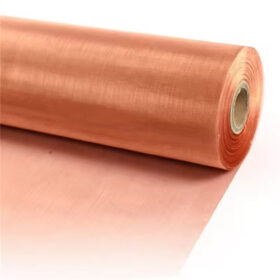
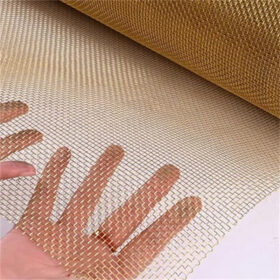
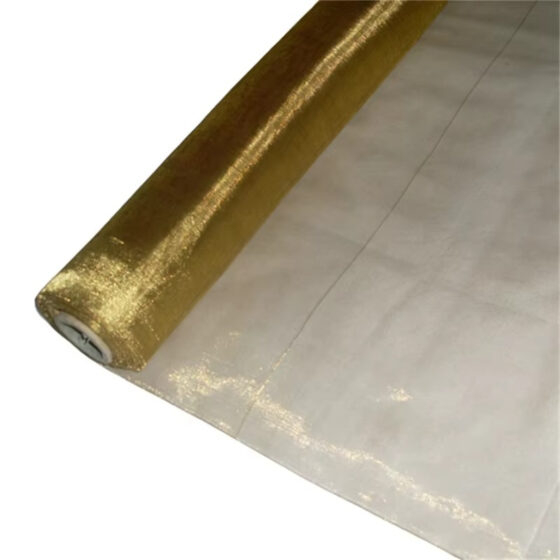
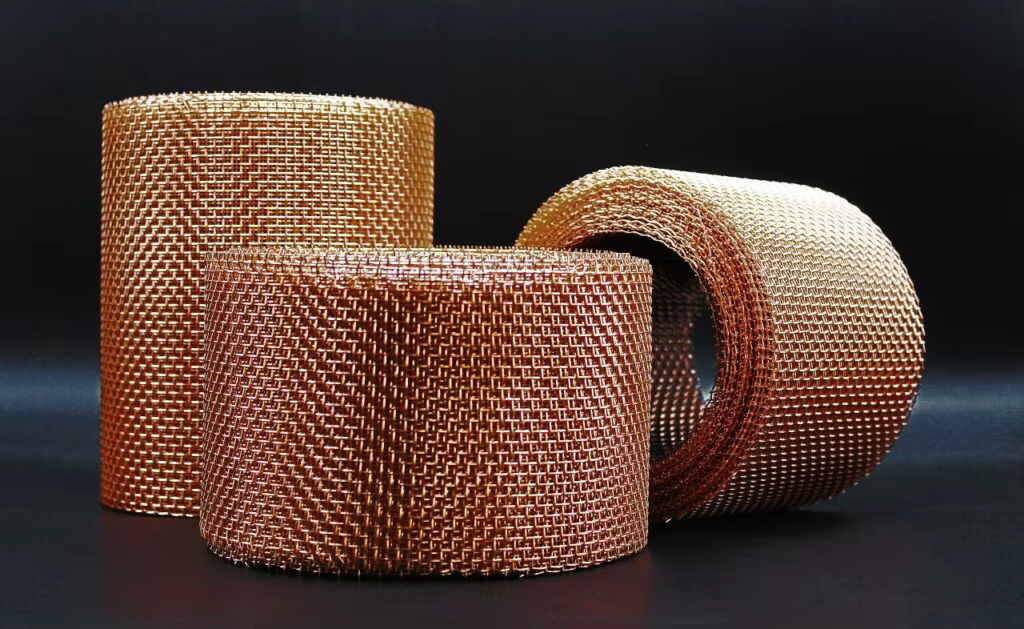
Bronze wire mesh is a metallic fabric woven from bronze alloy wires. It combines the warm metallic color and conductivity of copper with improved mechanical strength and corrosion resistance derived from alloying elements such as zinc or tin.
Typically, bronze wire mesh refers to a Cu-Zn (copper-zinc) alloy, while phosphor bronze (Cu-Sn-P) is used for finer meshes or higher performance requirements. The mesh can range from coarse (with large openings) to very fine (with microscopic apertures), depending on its intended application.
Because of its durability, non-rusting characteristics, and elegant bronze color, this mesh is used in industrial filtration, EMI shielding, insect screening, and architectural decoration.
2. Material Composition and Properties
Typical Alloy Composition
Standard Bronze Mesh: 90% Copper (Cu), 10% Zinc (Zn)
Phosphor Bronze Mesh: 85–90% Copper (Cu), 5–15% Tin (Sn), 0.03–0.35% Phosphorus (P)
Physical and Mechanical Properties
- Density: ~8.8 g/cm³
- Melting Point: 950–1050 °C
- Tensile Strength: 350–600 MPa
- Elongation: 20–40%
- Electrical Conductivity: 15–20% IACS
- Non-magnetic and non-sparking
- Excellent corrosion and fatigue resistance
- Distinctive bronze-gold color with aesthetic appeal
Weave Types
Plain Weave: Over-one, under-one pattern; most common.
Twill Weave: For higher strength and finer apertures.
Crimped or Lock-Crimp Weave: For rigidity and stability in architectural or heavy-duty screens.
3. Applications Bronze wire mesh
Industrial Uses
Filtration and Separation:
Used in sieving, filtering liquids, gases, and fine powders in chemical, petroleum, and food industries.EMI / RFI Shielding:
Serves in Faraday cages and shielding enclosures due to conductivity and stability.Acoustic Barriers:
Used in anti-noise panels and soundproofing screens.
Architectural and Decorative Uses
Façades, Ceilings, and Partitions:
Offers both strength and aesthetic metallic appearance.Lighting and Artistic Elements:
Used in lampshades, sculptures, and ornamental grids.Insect and Fire-Resistant Screens:
Provides non-rusting protection suitable for coastal or bushfire-prone regions.
Other Technical Uses
Precision sieving and screening instruments
Electronic and aerospace shielding
Anti-static or conductive flooring screens
4. Specifications and Technical Data Bronze wire mesh
4.1 Standard Bronze Wire Mesh Specifications
| Mesh Count (openings per inch) | Wire Diameter (inches) | Approx. Opening Width (inches) | Weave Type | Alloy / Notes |
|---|---|---|---|---|
| 2 × 2 | 0.120 | 0.380 | Plain | Bronze C22000 |
| 2 | 0.105 | 0.395 | Plain | Bronze C22000 |
| 2 | 0.092 | 0.408 | Plain | Bronze C22000 |
| 3 | 0.105 | 0.228 | Plain | Bronze C22000 |
| 4 | 0.105 | 0.145 | Plain | Bronze C22000 |
| 6 | 0.063 | 0.104 | Plain | Bronze C22000 |
| 10 | 0.018 | 0.082 | Plain | Bronze C22000 |
| 14 | 0.020 | 0.0514 | Plain | Bronze C22000 |
| 18 | 0.020 | 0.0356 | Plain | Bronze C22000 |
| 20 | 0.020 | 0.0300 | Plain | Bronze C22000 |
| 30 | 0.012 | 0.0213 | Plain | Bronze C22000 |
| Phosphor Bronze Examples | ||||
| 14 mesh | 0.019 | 0.0524 | Plain | Phosphor-Bronze C51000 |
| 36 | 0.012 | 0.0158 | Plain | Phosphor-Bronze |
| 50 | 0.009 | 0.011 | Plain | Phosphor-Bronze |
| 70 | 0.006 | 0.008 | Plain | Phosphor-Bronze |
| 80 | 0.0055 | 0.007 | Plain | Phosphor-Bronze |
| 100 | 0.0045 | 0.0055 | Plain | Phosphor-Bronze |
4.2 Extended Metric Range (Phosphor Copper / Tin Bronze Mesh Fabric)
| Mesh/inch | Wire Dia. (mm) | Aperture (mm) | Mesh/inch | Wire Dia. (mm) | Aperture (mm) | Mesh/inch | Wire Dia. (mm) | Aperture (mm) |
|---|---|---|---|---|---|---|---|---|
| 2 | 1.6 | 11.10 | 20 | 0.25 | 1.02 | 110 | 0.09 | 0.141 |
| 4 | 0.91 | 5.44 | 30 | 0.21 | 0.64 | 120 | 0.09 | 0.122 |
| 6 | 0.71 | 3.52 | 40 | 0.19 | 0.45 | 130 | 0.07 | 0.125 |
| 8 | 0.50 | 2.67 | 50 | 0.15 | 0.36 | 140 | 0.07 | 0.111 |
| 10 | 0.50 | 2.04 | 60 | 0.15 | 0.27 | 150 | 0.06 | 0.109 |
| 12 | 0.45 | 1.66 | 70 | 0.13 | 0.232 | 160 | 0.06 | 0.098 |
| 14 | 0.40 | 1.41 | 80 | 0.12 | 0.197 | 180 | 0.053 | 0.088 |
| 16 | 0.30 | 1.28 | 90 | 0.11 | 0.172 | 200 | 0.053 | 0.074 |
| 18 | 0.25 | 1.16 | 100 | 0.10 | 0.154 | 220 | 0.05 | 0.065 |
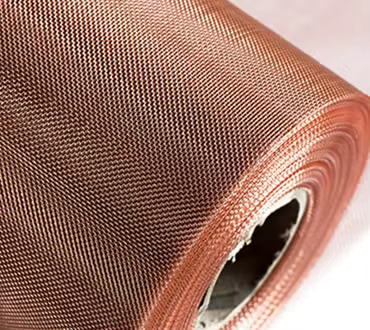
Standard Widths: 0.6 m – 1.8 m
Roll Length: 10 m – 30 m (standard)
Weave Type: Plain weave by default; twill or Dutch weave available upon request
 |  |
5. Packaging and Handling Bronze wire mesh
Packaging Forms:
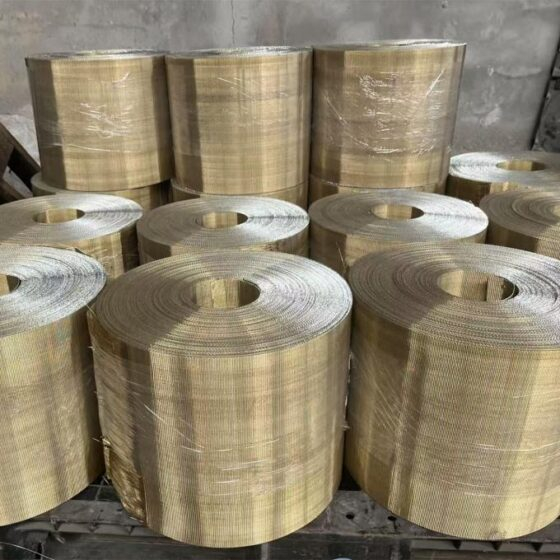
Rolls wrapped in moisture-proof paper and plastic cloth
Sheets protected with padding and packed in wooden crates
Labels showing mesh count, wire diameter, alloy type, and batch number
Delivery Methods:
Courier for small quantities
Sea or air freight for bulk orders
Tracking numbers provided after dispatch
Storage Guidelines:
Store in a dry, clean environment to prevent oxidation
Avoid direct contact with steel or aluminum to prevent galvanic corrosion
Handle gently to avoid bending or damaging mesh edges
6. Advantages of Bronze Wire Mesh
Excellent corrosion resistance in humid and marine environments
Non-magnetic and conductive, ideal for electronic applications
Elegant bronze appearance for architectural decoration
Durable and resistant to wear and fatigue
Good balance of strength, flexibility, and formability
Can be easily cut, shaped, or fabricated for installation
7. Standards and Quality Control
Applicable Standards:
ASTM B159 – Phosphor Bronze Wire
ASTM E2016 – Woven Wire Cloth
ISO 9044 – Industrial Woven Wire Mesh Specifications
ASTM E11 – Test Sieve Specification
GB/T 5330 – Chinese National Standard for Copper and Bronze Mesh
Quality Checks Include:
Wire diameter tolerance
Mesh count accuracy
Aperture uniformity
Weave consistency and strength testing
Bronze Wire Mesh — FAQs
1) What is bronze wire mesh?
A woven wire cloth made from bronze alloys (typically copper-zinc “commercial bronze”) or tin-bearing phosphor bronze, supplied as rolls or panels in many mesh counts and weave styles.
2) How is bronze different from phosphor bronze?
Bronze (Cu-Zn): great appearance, good corrosion resistance, easy to form—common for décor and general screening.
Phosphor bronze (Cu-Sn-P): higher strength, fatigue resistance, and solderability—preferred for fine filtration, precision screens, and EMI/RFI work.
3) What mesh ranges are available?
Commonly from about 2 to 400 mesh (openings per linear inch). Coarser meshes are stronger and more open; finer meshes capture smaller particles.
4) Which weave types are standard?
Plain weave is most common. Twill, Dutch (plain/twill), and crimped/lock-crimp are used when extra rigidity, finer retention, or specific flow characteristics are needed.
5) How do I pick mesh size and wire diameter?
Match the opening (aperture) to the particle you need to stop, then choose a wire diameter that balances strength and flow.
Quick formulas for square mesh (same units):
Opening a=1mesh−da = \frac{1}{\text{mesh}} – d
Pitch p=a+dp = a + d
Open area %≈(a/p)2×100\% \approx (a/p)^2 \times 100
6) Is bronze mesh good for corrosion resistance?
Yes—bronze resists atmospheric and many waterborne environments better than plain steel and is generally tougher than pure copper. Phosphor bronze adds extra fatigue and wear resistance.
7) Does bronze wire mesh develop patina?
Yes. Expect natural darkening/bronzing over time, especially outdoors. Many architects want this look; otherwise, specify clear coats, lacquers, or periodic cleaning.
8) Is bronze wire mesh magnetic?
No. Bronze and phosphor bronze are non-ferrous and non-magnetic.
9) Can it be used for EMI/RFI shielding or Faraday cages?
Yes. The conductive, continuous grid can provide useful attenuation when properly framed and grounded. Phosphor bronze is often chosen for fine, stable shielding cloth.
10) Typical widths and roll lengths?
Copper Wire Mesh Common widths are 0.6–1.2 m (some lines up to ~1.5–3.0 m). Standard roll lengths are 10–30 m for woven mesh; architectural products may be supplied as cut panels.
11) What tolerances should I expect?
Industrial woven cloth follows wire and mesh-count tolerances defined in widely used standards. Expect tighter tolerances on fine meshes and specialty grades.
12) Which standards are relevant?
Frequently referenced: ASTM E2016 (woven wire cloth terminology/tolerances), ASTM E11 (test sieves), ASTM B159 (phosphor bronze wire), and ISO 9044 (industrial woven wire cloth).
13) Can bronze mesh be soldered or brazed?
Yes. Bronze and phosphor bronze solder well with appropriate fluxes; silver brazing is common for frames and edges. Spot welding is possible but trickier on fine mesh.
14) What about cutting and edge finishing?
Use shears/guillotines for thicker wires; fine meshes can be cut with a sharp blade and straightedge. Finish edges with hems, solder/braze, U-channel frames, or specify selvage edges to reduce fray.
15) How strong is bronze mesh?
Strength increases with wire diameter and decreases with higher open area. Phosphor bronze offers higher fatigue and spring properties; for heavy duty, consider crimped weaves or thicker wires.
16) Temperature limits in service?
Safe for typical ambient and moderately elevated temperatures. For sustained service above ~200 °C or for thermal cycling, confirm the alloy and weave with the supplier.
17) Is it food-contact safe?
Phosphor bronze and commercial bronze can be used in some food and beverage processes, but compliance depends on composition, cleanliness, and local regulations—always verify for your application.
18) Architectural uses?
Cabinet and wine-locker infill, partitions, ceilings, façades, rail infills, lighting, signage, and sculpture—chosen for its warm metallic tone and dimensional stability.
19) Industrial uses?
Filtration of liquids/gases, powder screening, precision sieves, battery/electronics process screens, and protective EMI/RFI panels.
20) How is bronze mesh packaged?
Rolls: inner moisture-barrier paper, outer protective wrap, strapped to pallets.
Panels: padded and crated.
Labels typically list mesh, wire diameter, alloy, width/length, and batch.
21) Storage and handling tips?
Keep dry and clean. Avoid hard knocks that kink wires. Isolate from dissimilar metals (steel/aluminum) with non-conductive gaskets/tapes to reduce galvanic staining.
22) Maintenance and cleaning?
Use mild, non-abrasive cleaners and soft cloths. Avoid strong acids/alkalis unless approved. For architectural finishes, consider wax or clear coat to slow patina.
23) Can I get custom sizes or colors?
Yes. Suppliers can slit to width, cut to size, frame edges, and apply patina or clear finish. Some offer tinted or coated looks while preserving mesh definition.
24) What information should I provide for a quote?
Mesh count and wire diameter (or desired opening)
Alloy (bronze vs phosphor bronze) and weave type
Width, length/roll length, and edge finish
Application notes (corrosive media, outdoor use, shielding)
Any standards or inspection requirements
25) Quick selection checklist?
Target particle/opening → 2) Mesh & wire diameter → 3) Alloy & weave → 4) Open area vs strength → 5) Width/length & edges → 6) Finish/patina plan → 7) Standards/compliance.
8. Conclusion
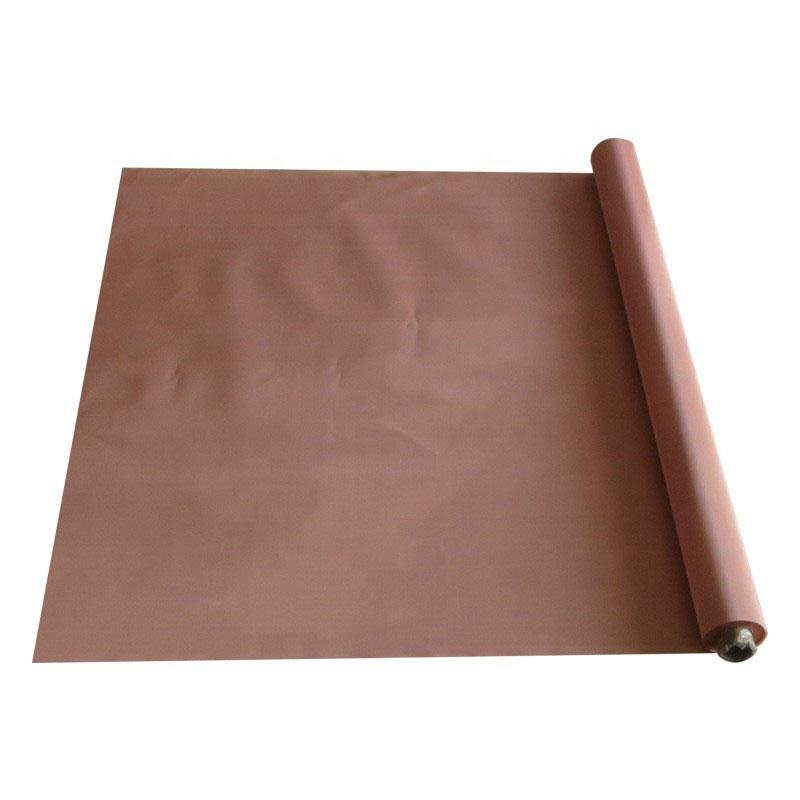
Bronze wire mesh is a superior material that combines mechanical strength, electrical conductivity, and an appealing metallic finish. It performs exceptionally in filtration, shielding, and architectural applications while offering long-term resistance to corrosion and wear.
Available in a wide range of mesh counts (from 2 to 400), bronze mesh is adaptable for both industrial and decorative purposes. When properly specified, packaged, and handled, it ensures durability, reliability, and visual sophistication across diverse engineering and design fields.