Your One-Stop Wire Mesh Fence Supplier | POLYMETAL
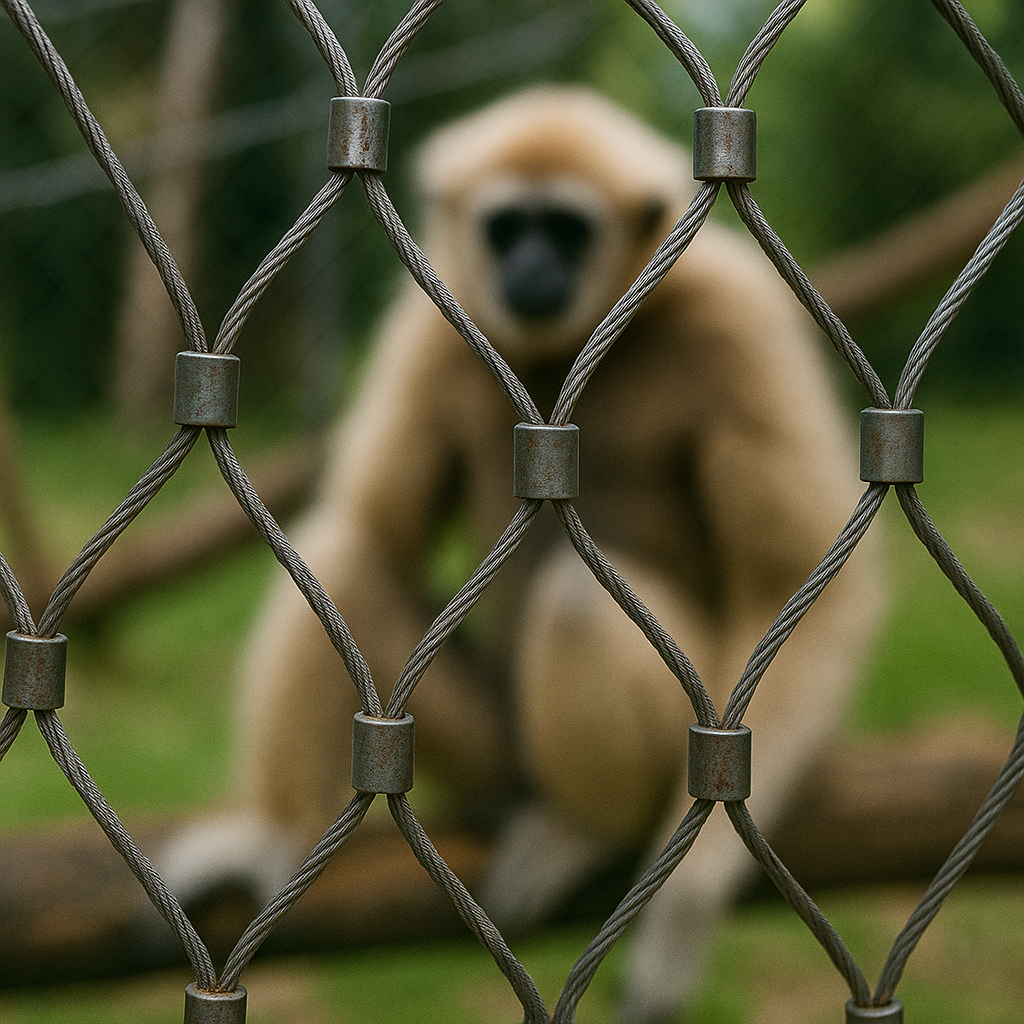
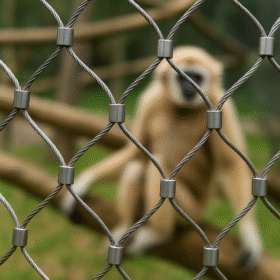
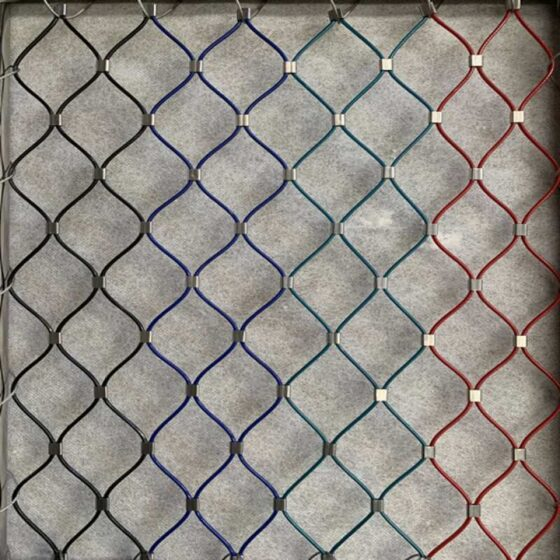
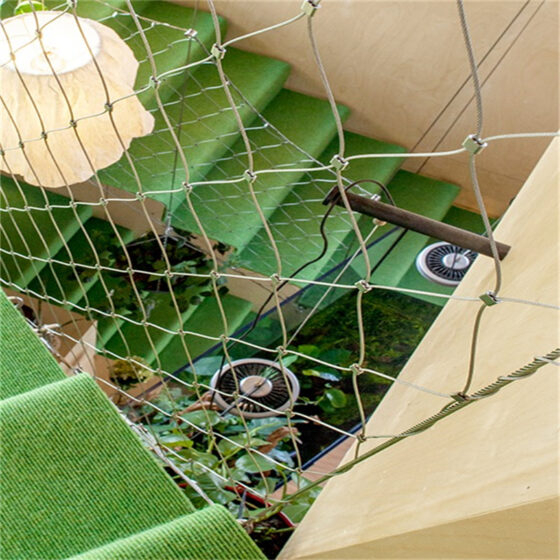
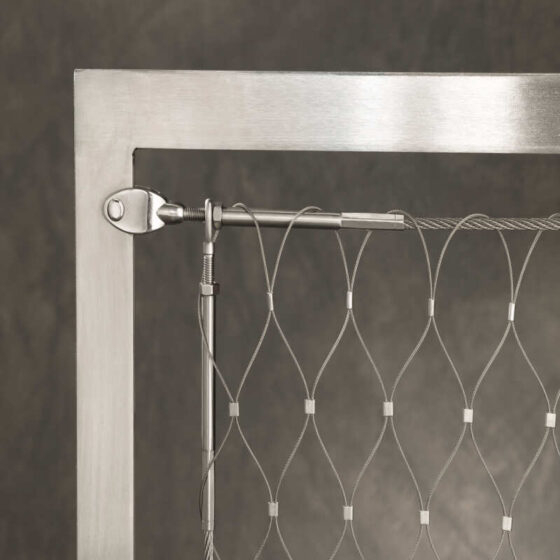
 GIE-01: Ferrules stainless steel wire rope mesh is sturdy and neat. |  GIE-02: Knotted stainless steel wire rope mesh has a flat, comfortable surface. |
Materials – what to use and why
- Stainless-steel wire rope (rope / cable mesh) – hand-woven or ferrule-assembledstainless steel rope mesh combines high tensile strength, flexibility and a smooth surface that reduces abrasion or limb injury. Typical constructions use multi-strand cable (for example 7×19) with ferrule crimps at the intersections for long-term durability.
- Stainless grades – AISI 304 and 304L are common for inland exhibits, while 316 and 316L stainless are preferred in coastal or chemically aggressive environments for superior corrosion resistance.
- Alternative / secondary materials – galvanised or PVC-coated chain-link can be used in back-of-house areas, but it is less suitable for public-facing or overhead structures because it is more rigid, visually heavier and can be harsher on limbs.
Specifications of gibbon enclosure mesh:
- Materials: stainless steel 304, 304L, 316, 316L.
- Wire diameter: 2.4–3.2 mm.
- Hole size: 50–80 mm (diamond opening).
- Wire rope structure: 7×19 or 7×7.
| Product ID | Wire Diameter (inch) | Wire Diameter (mm) | Mesh Hole Size (inch) | Mesh Hole Size (mm) | Weight (kg/m²) |
|---|---|---|---|---|---|
| GIB3280 | 1/8 | 3.18 | 3.15 × 3.15 | 80 × 80 | 1.3 |
| GIB3276 | 1/8 | 3.18 | 3 × 3 | 76 × 76 | 1.40 |
| GIB3260 | 1/8 | 3.18 | 2.36 × 2.36 | 60 × 60 | 1.65 |
| GIB3250 | 1/8 | 3.18 | 2 × 2 | 51 × 51 | 2.10 |
| GIB3080 | 3/25 | 3.0 | 3.15 × 3.15 | 80 × 80 | 1.14 |
| GIB3076 | 3/25 | 3.0 | 3 × 3 | 76 × 76 | 1.23 |
| GIB3060 | 3/25 | 3.0 | 2.36 × 2.36 | 60 × 60 | 1.45 |
| GIB3050 | 3/25 | 3.0 | 2 × 2 | 51 × 51 | 1.85 |
| GIB2476 | 3/32 | 2.38 | 3 × 3 | 76 × 76 | 0.72 |
| GIB2460 | 3/32 | 2.38 | 2.36 × 2.36 | 60 × 60 | 0.87 |
| GIB2450 | 3/32 | 2.38 | 2 × 2 | 51 × 51 | 1.07 |
Design considerations specific to gibbons
- Vertical and overhead focus:
gibbon exhibits should prioritise vertical volume – tall roofs, overhead nets, suspended
ropes and connector tunnels that allow natural brachiation. Mesh used for roofs or tunnels
must be correctly tensioned and supported so it will not sag under repeated dynamic loads. - Smooth contact surfaces:
all nodes, ferrules and terminations should be finished without burrs or sharp edges to
prevent skin abrasions and grooming injuries. - Visual permeability and enrichment:
stainless rope mesh provides higher transparency than heavy fencing, allowing social visual
contact and good visitor viewing while integrating climbing branches, platforms and
enrichment devices.
Gibbon enclosure mesh features:
- Large load-carrying capacity to withstand climbing, swinging and impacts.
- Excellent resistance to harsh outdoor conditions and corrosion.
- Durable, flexible structure that maintains shape for many years.
Gibbon enclosure mesh applications:
- Provide gibbons with a space close to nature in zoos and wildlife parks.
- Build complete gibbon cages, aviary-style domes and overhead passageways.
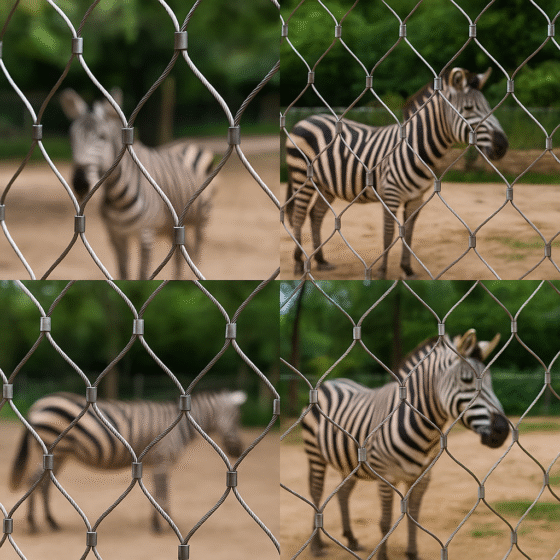
 GIE-03: Gibbon rope mesh fencing resists damage even under frequent climbing. |  GIE-04: Gibbon enclosure mesh creates an environment that feels close to nature. |
 GIE-05: Wire rope mesh can be designed into gibbon passageways and overhead tunnels. |  GIE-06: Ferrules-type gibbon enclosure mesh is strong, safe and visually attractive. |
Safety & welfare rules to follow
- Prevent entrapment:
choose opening sizes and knot spacing that prevent fingers, hands, feet, tails or collarsfrom becoming trapped. Use smaller-mesh panels near interactive or keeper zones. - No sharp metal elements:
all metal components must be rust-proof and burr-free to reduce injury risk and long-term corrosion problems. - Escape & separation:
include double-barrier areas such as antechambers, lockable gates and transfer chutes so gibbons can be safely separated for veterinary care, transfers and emergencies.
Installation and maintenance
- Proper tensioning & support:
rope mesh should be anchored to a strong frame or perimeter cable and tensioned according to
manufacturer guidelines so the openings do not enlarge under load. Posts and frames need to
be engineered and set in concrete to resist dynamic forces from swinging gibbons and wind. - Routine inspections:
regularly check knots or ferrules, end terminations, tension and connectors; repair or
replace any damaged sections immediately to avoid progressive failures. - Cleaning & corrosion checks:
although stainless steel is low-maintenance, periodic washing and inspection – especially in
coastal or industrial environments – will maximise service life.
Pros and cons
- Pros: high strength-to-weight ratio, excellent durability, smooth surface for
animal safety, outstanding visual transparency and easy adaptation to complex shapes such as
roofs and tunnels. - Cons: higher initial cost than basic chain-link, requires experienced
installers and engineered support structures, and custom shapes may need bespoke fabrication.
Practical buying checklist
- Confirm species-specific requirements (adult vs. juvenile gibbons, group size, behaviour).
- Specify cable diameter, cable construction and aperture size; request test data and minimum breaking loads.
- Select the appropriate stainless grade (304/304L or 316/316L) for your climate and exposure.
- Require smooth ferrule finishes, quality control records and a written inspection / maintenance schedule.
- Involve a structural engineer and the zoo’s veterinarian or curator to review the final design before construction.
Designed and installed correctly, gibbon enclosure mesh delivers a safe, durable and visually open environment that supports natural behaviour, simplifies husbandry and gives visitors clear, memorable views of these agile primates.