Your One-Stop Wire Mesh Fence Supplier | POLYMETAL
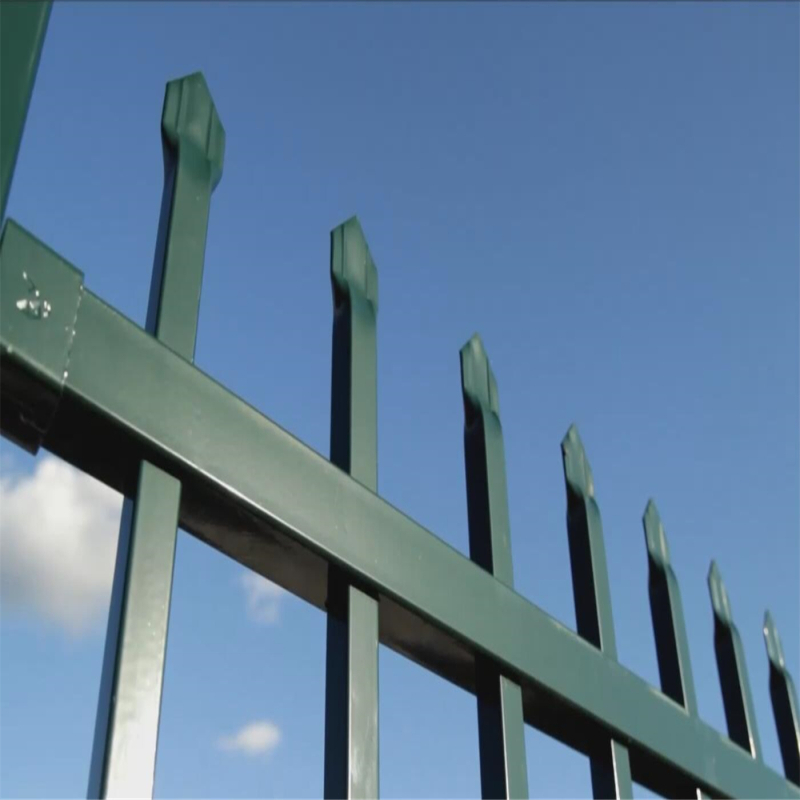
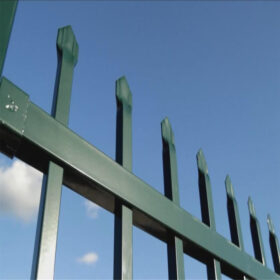

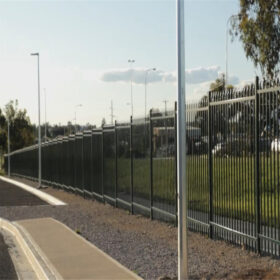
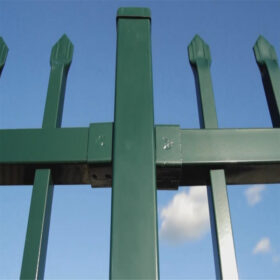
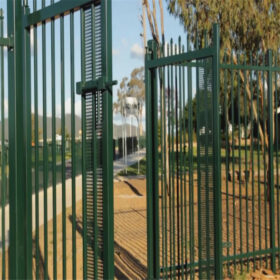
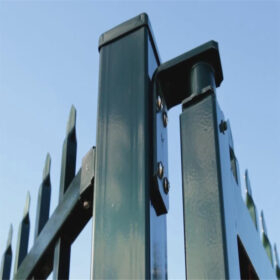
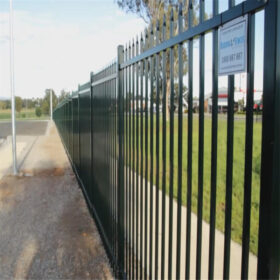
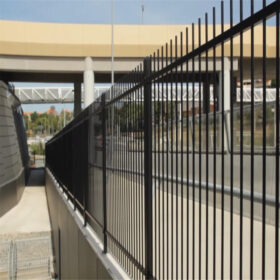
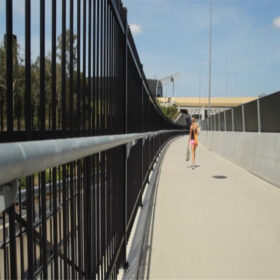
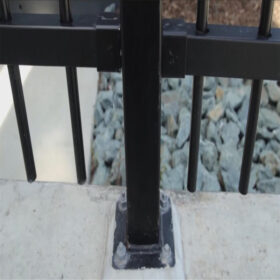
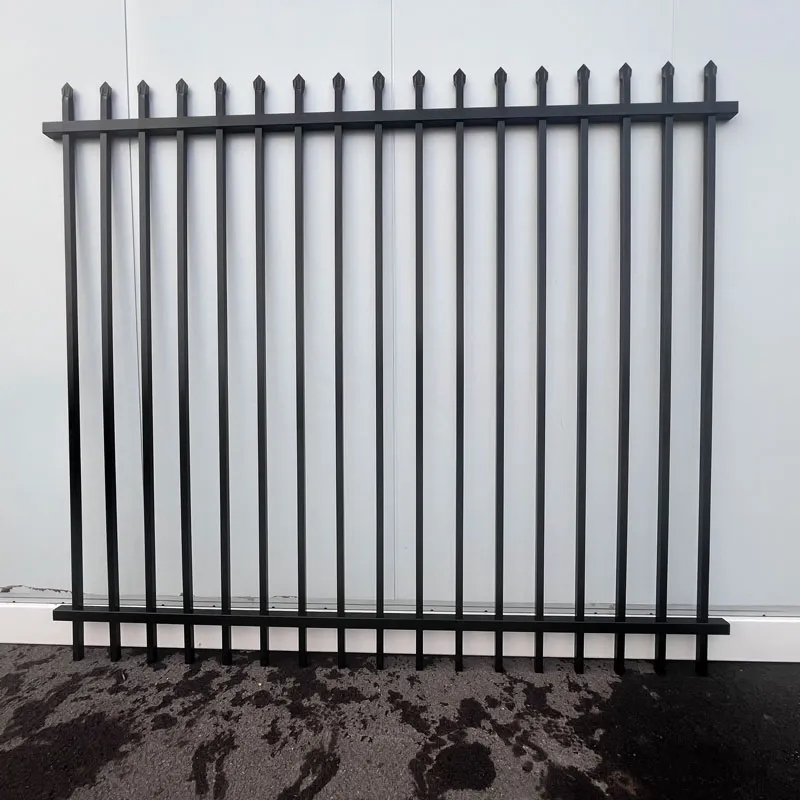
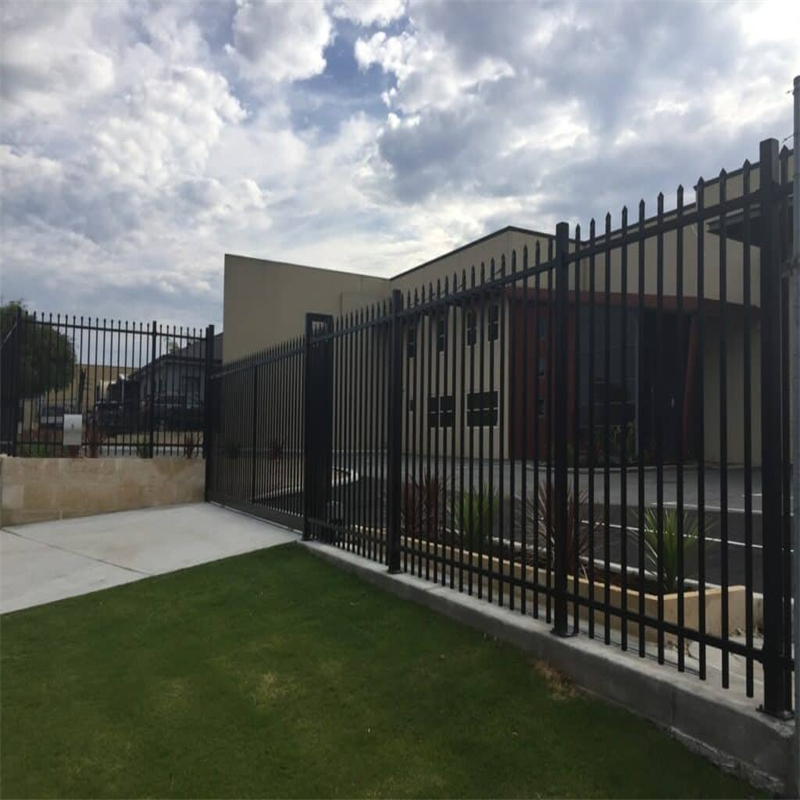
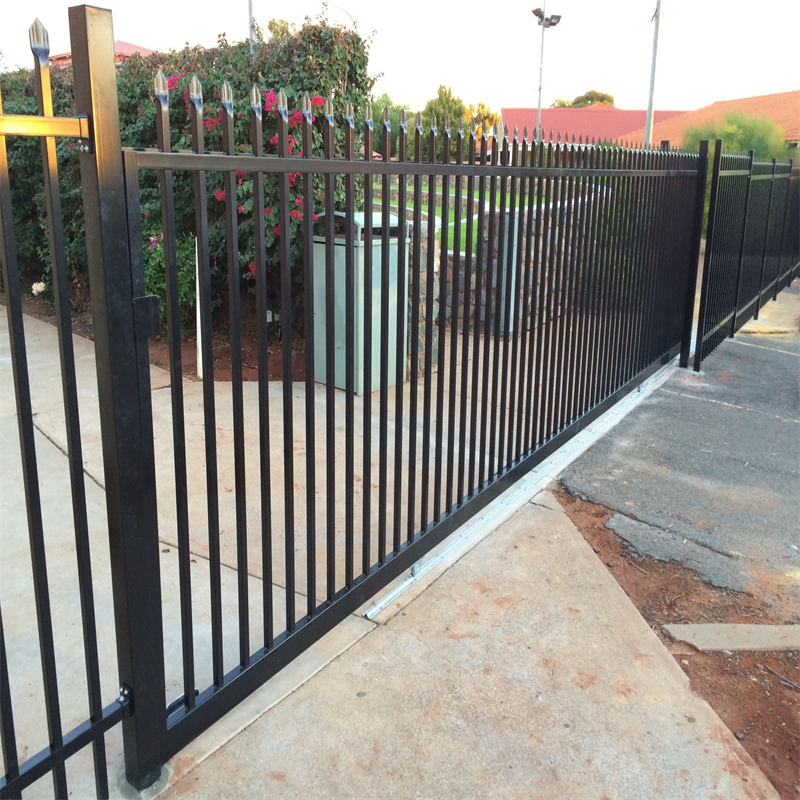
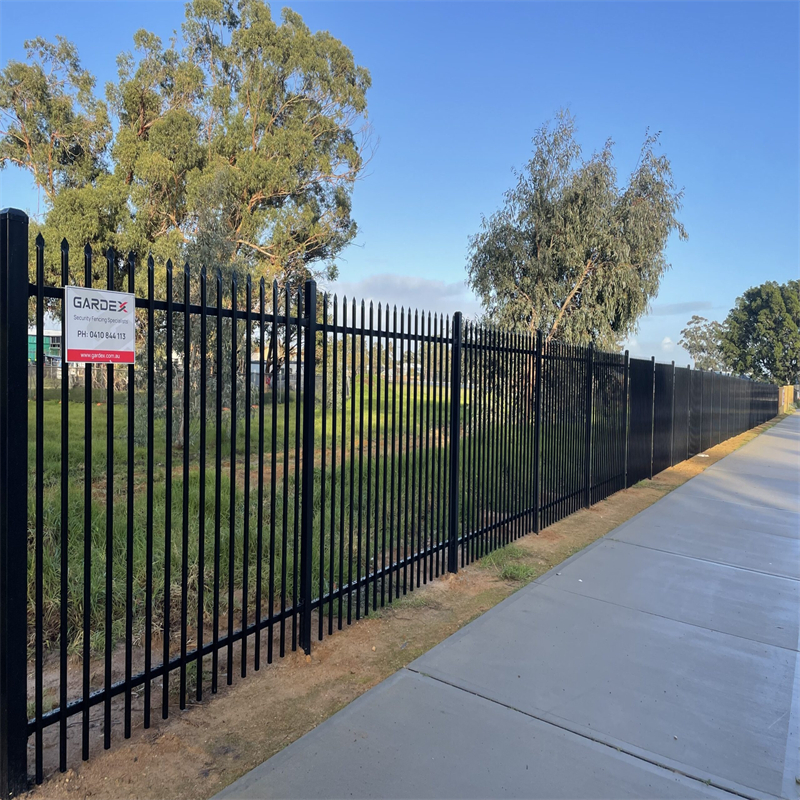
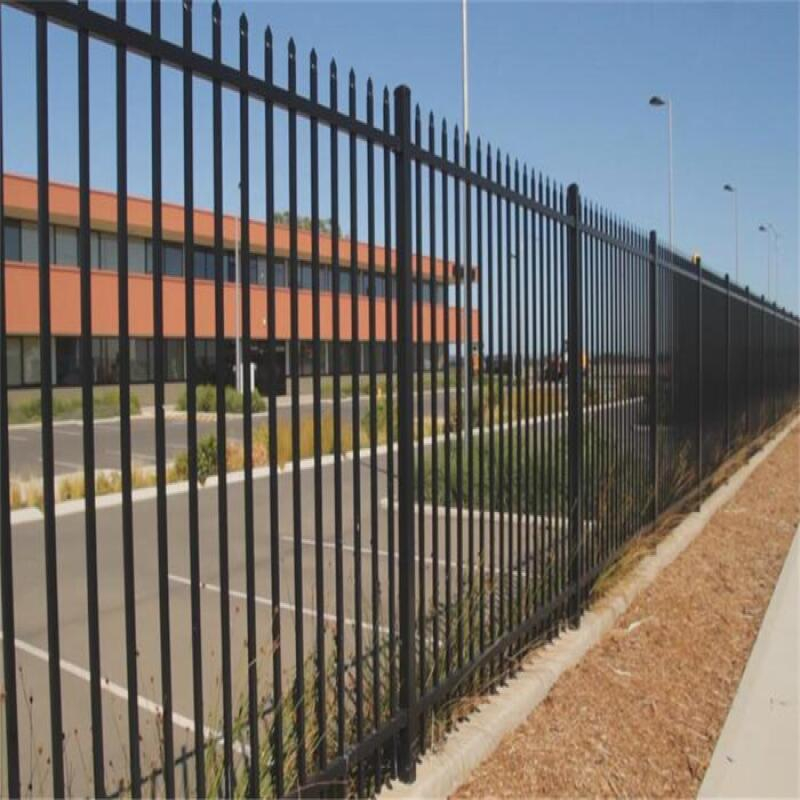
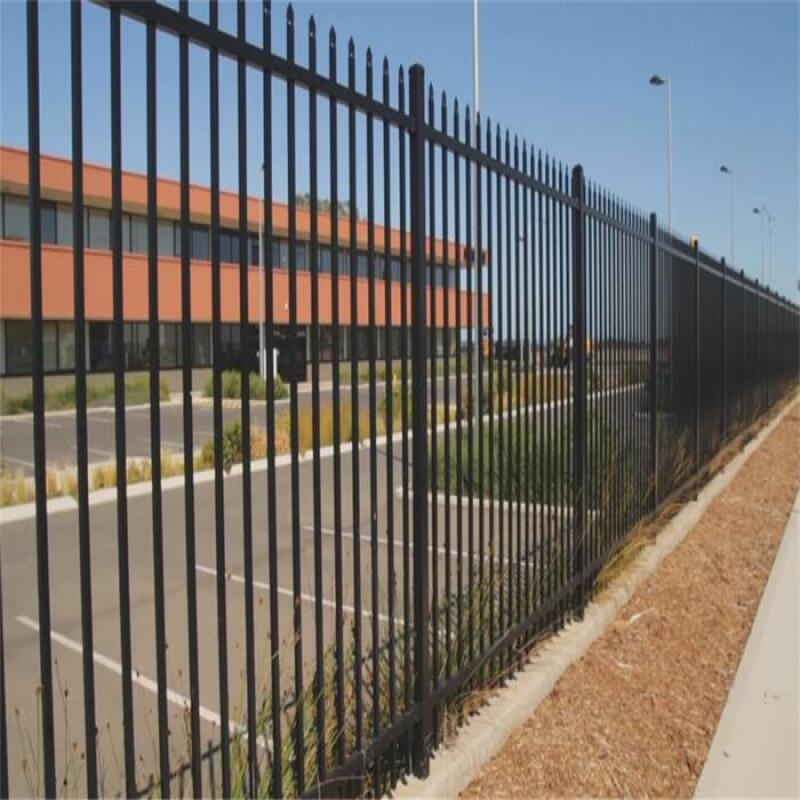
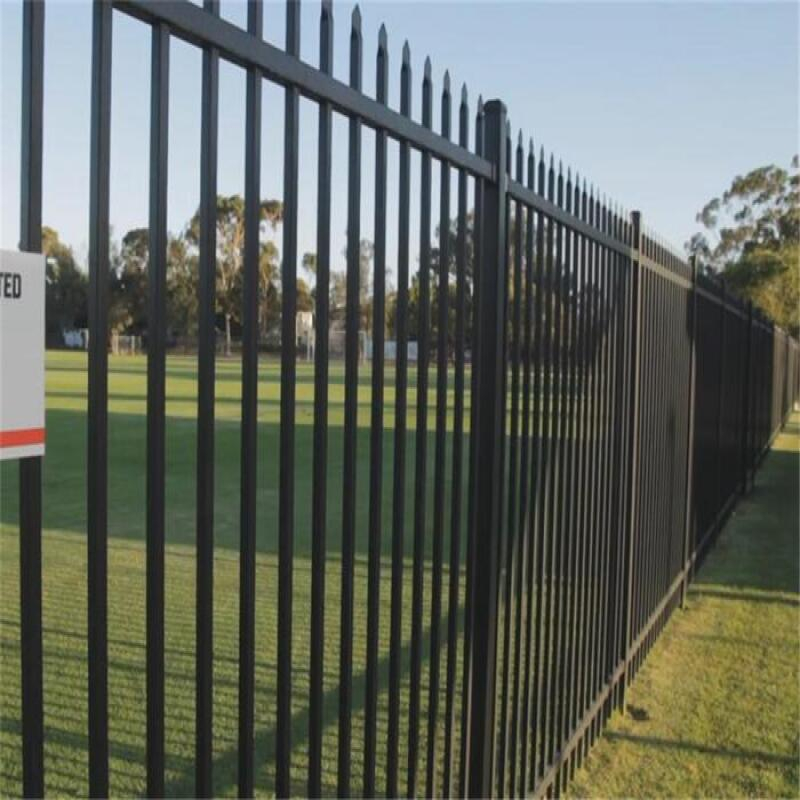
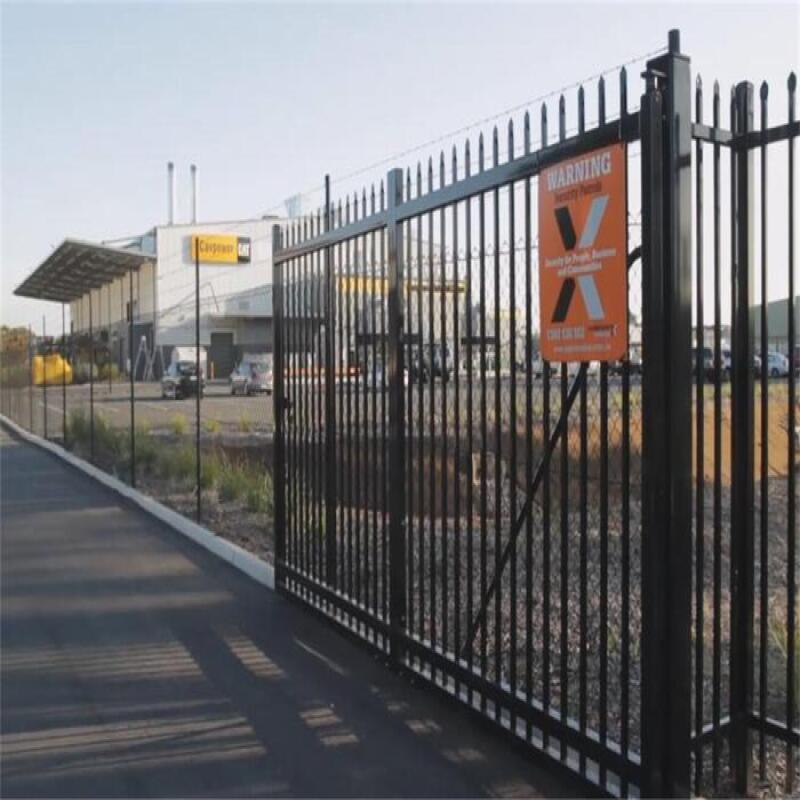
Press Point Steel Spear Fence is chosen when buyers want a “wrought-iron look” without the weakness of decorative-only fencing. The press-point build method locks vertical pickets into rails for a clean line, fast production, and repeatable panel geometry—ideal for commercial perimeters where security matters more than domestic-style aesthetics.
On real sites, the fence is judged by one thing: whether the line stays straight after transport, installation, wind exposure, and day-to-day pressure at gates and corners.
POLYMETAL manufactures Press Point Steel Spear Fence as controlled modules so rail frame size, upright size, picket spacing, post selection, and finish protection remain consistent across the run. That consistency prevents the classic jobsite nightmare: panels that “look fine” on arrival but twist during handling, wobble after fixing, or show early corrosion at cut points and stressed joints.
Why Buyers Choose Press Point Steel Spear Fence (Privacy, Security, Appearance)
Privacy
If privacy is the main goal, slats or tighter infill styles will block sight lines better than spear-top pickets. Press point spear fencing is typically selected when you want visibility for supervision and site control, not full screening.
Security
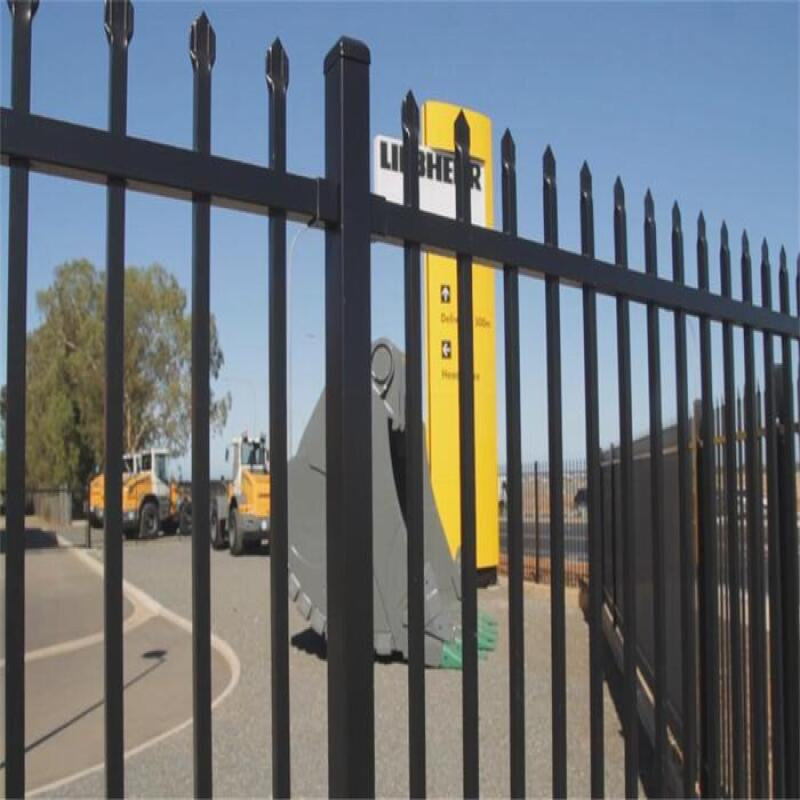
For many commercial applications, security is the main driver. Higher fence heights are harder to breach, but height alone is not security. Post strength, rail stiffness, picket spacing, and anti-climb spear geometry determine whether the fence resists pushing, prying, and opportunistic entry.
Appearance
Industrial sites may rank appearance low, but corporate frontages, schools, and other public-facing assets often require a strong security look that still presents well. Powder-coated galvanized steel delivers the clean “wrought-iron style” line with practical strength and low maintenance—without the fragility of purely decorative styles, and it helps decision-makers sanity-check budgets by comparing the real-world cost of garrison fence systems used on similar commercial perimeters.
A key warning: many domestic-market fences are built for looks first. For commercial perimeters, that approach is a liability. Your fence can be attractive, but it must repel intrusion and survive real duty cycles.

Top 10 High-Risk Traps for Press Point Steel Spear Fence Orders
Each item below looks minor on a purchase order—but becomes expensive once posts are set and the fence line must stay straight. Pay special attention to #7, because that is where many buyers suffer the biggest loss.
Trap #1: Buying “press point” without locking the rail frame size
Press point fences are not equal just because the pickets look similar. If you don’t lock the rail frame option (40×40 vs 45×45 vs 50×50), you can receive a lighter rail that flexes under wind load and gate vibration. That flex turns into visible wave-lines across long runs—and you only notice it after panels are already installed.
Trap #2: Choosing rail thickness for price instead of stiffness
Rails are the spine. Typical rail thickness options include 1.60mm, 2.00mm, 2.50mm, and up to 3.00mm for heavy duty. Thin rails can “oil-can” under pressure, loosen fixings over time, and exaggerate movement at joins. A fence that rattles is a fence that looks weak—and a fence that looks weak gets tested.
Trap #3: Ignoring upright (picket) size and thickness, then watching pickets bend
Common upright size options include 16×16mm, 25×25mm, and 30×30mm. Thickness options often run 0.80mm, 1.00mm, 1.20mm, and up to 2.00mm for high-abuse zones. Light uprights deform during transport stacking and on-site knocks. Once pickets bend, the fence instantly looks “repaired,” even if the posts are perfect.
Trap #4: Treating picket spacing as “close enough”
Upright spacing drives both security and stiffness. Typical patterns include 16 pickets per panel (about 115mm spacing), 17 pickets per panel (about 108mm spacing), and 18 pickets per panel (about 100mm spacing). If you don’t lock picket count and spacing, you can end up with a fence that is easier to climb, easier to reach through, or visually inconsistent panel-to-panel.
Trap #5: Ordering panel height without matching post height and embed rules
If your post is not tall enough above and below ground, the entire fence becomes a lever. A practical rule for many site conditions is Fence Post Height = Fence Panel Height + 600mm. That extra length supports embed depth and foundation stability so the fence doesn’t “walk” over time.
Trap #6: Choosing post size by appearance instead of load
Post options commonly include 60×60, 65×65, 75×75, 80×80, and 100×100mm, with wall thickness choices such as 1.6mm, 2.0mm, and 2.5mm. If a high fence is paired with undersized posts, the fence may look fine on day one—and then lean after the first wind event, vehicle vibration, or gate cycling.
Trap #7: Cutting corners on corrosion protection—then rust starts where stress is highest
This is the biggest loss point. Many buyers focus on powder coat colour and forget what happens underneath. If galvanizing discipline is weak, corrosion begins at cut points, drill points, and stressed joints, then spreads under the coating. That turns “good looking” panels into replacement stock—fast.
A Press Point Steel Spear Fence should be built on galvanized steel for longevity, then powder coated for appearance. When the base protection is wrong, the fence fails from the inside out, and the cost of rework is multiplied because posts are already set.
Trap #8: Specifying a “standard” black fence without locking the exact stock build
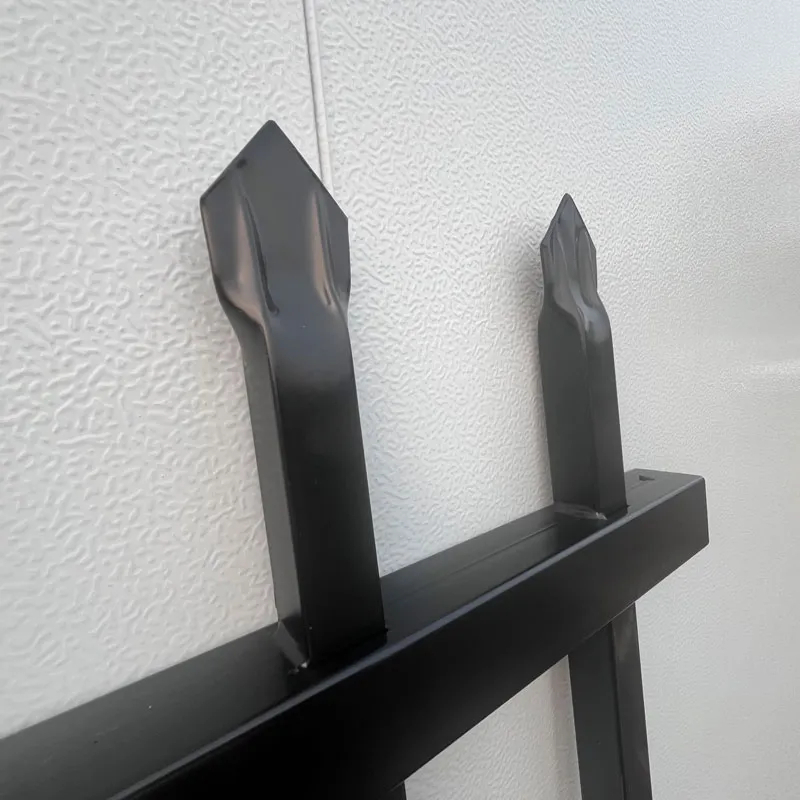
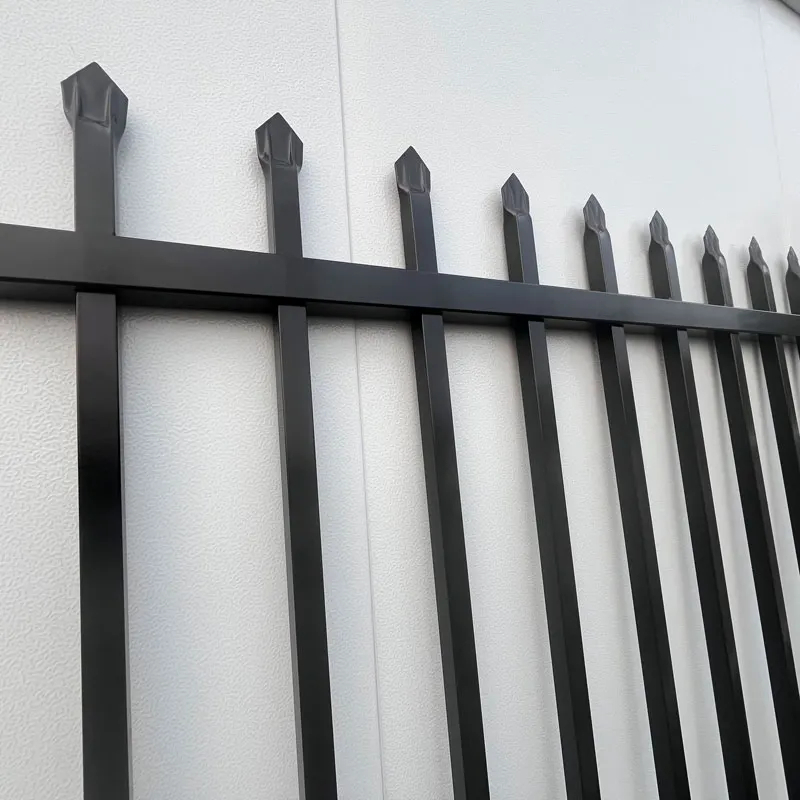
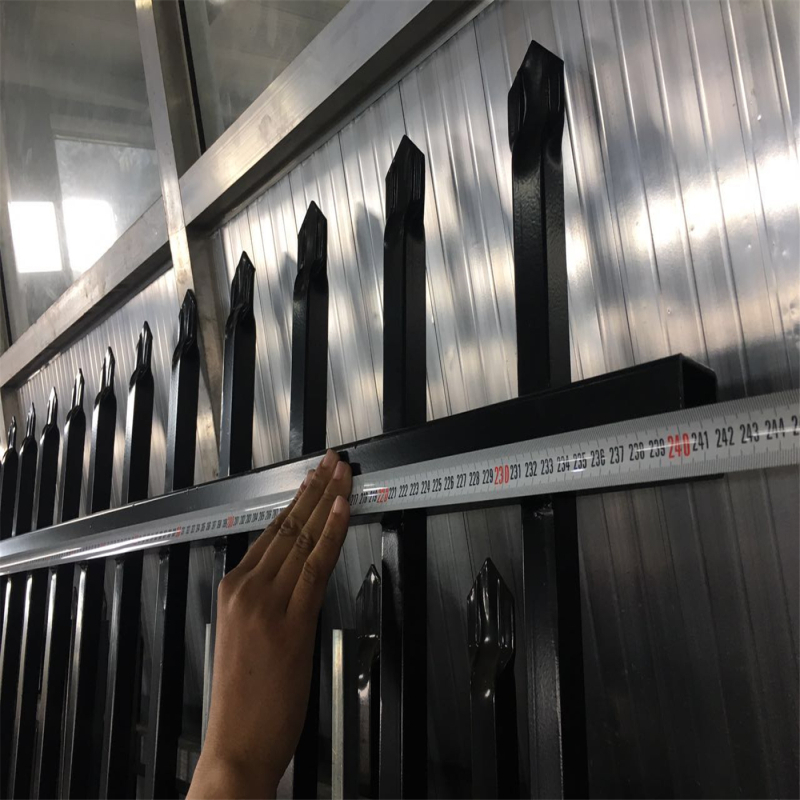
A common heavy-duty stock format is width 2400mm × height 2100mm in black finish, with top rail 40×40×1.6mm, uprights 25×25×1.2mm, 17 vertical pickets with press/diamond crimp detail, an approximate 110mm picket gap, and posts 60×60×2.0mm with a common length of 2900mm for deeper set conditions. If your order doesn’t lock the exact build, suppliers may substitute thinner rails, lighter pickets, or shorter posts to reduce cost—and the fence becomes a liability.
Trap #9: Forgetting that gates and corners need a stronger specification
Most failures appear at gates and corners first: twisting, dragging, rattling, and post movement. If you use the same post size everywhere, you can end up with perfect mid-run panels but weak gate performance. Gate posts and corner posts usually need a heavier post option to resist repeated load.
Trap #10: Underestimating packing and handling—then panels arrive pre-bent
A press point fence can be mechanically strong but still arrive damaged if packing is sloppy. Mixed bundles, no separation, and poor banding create rub marks, dents, and bent pickets before installation. Once the coating is scratched at contact points, corrosion accelerates—and the fence looks aged early.
Product Description: POLYMETAL Press Point Steel Spear Fence
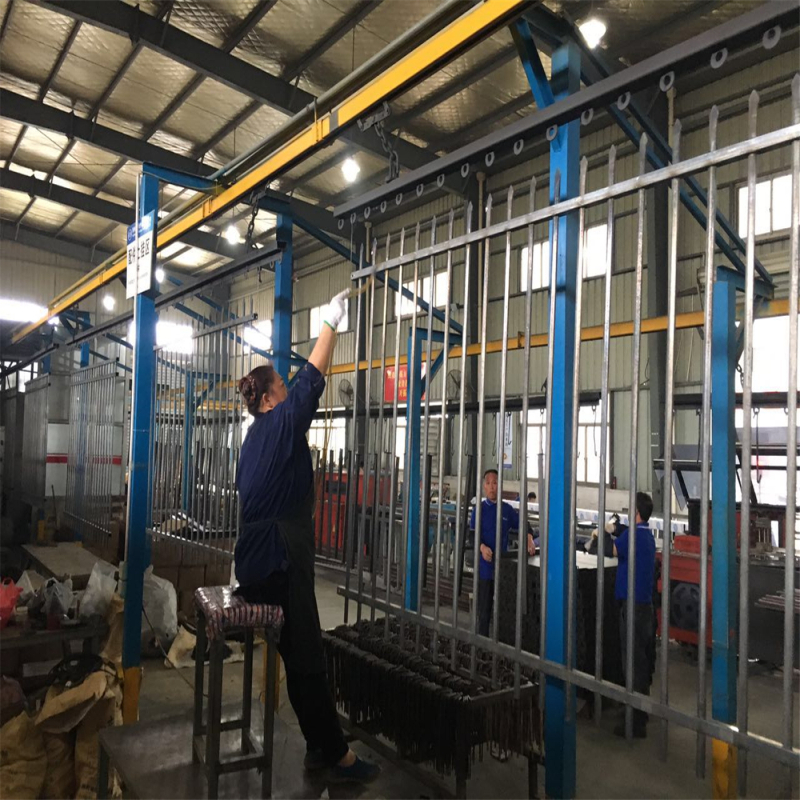
POLYMETAL Press Point Steel Spear Fence panels are built for commercial and public-facing perimeters where straightness, security presence, and repeatable installation matter. The press point method secures uprights through rigid rails to produce consistent picket alignment, clean sight lines, and faster site deployment compared with stick-built fencing.
Panels can be supplied in common widths of 2400mm and 2450mm with fence heights ranging from 1200mm up to 2400mm to match security level, location risk, and architectural requirements.
Rail frame options of 40×40mm, 45×45mm, and 50×50mm allow buyers to control stiffness and impact tolerance, while upright size options of 16×16mm, 25×25mm, and 30×30mm provide the right balance between anti-bend performance and visual density.
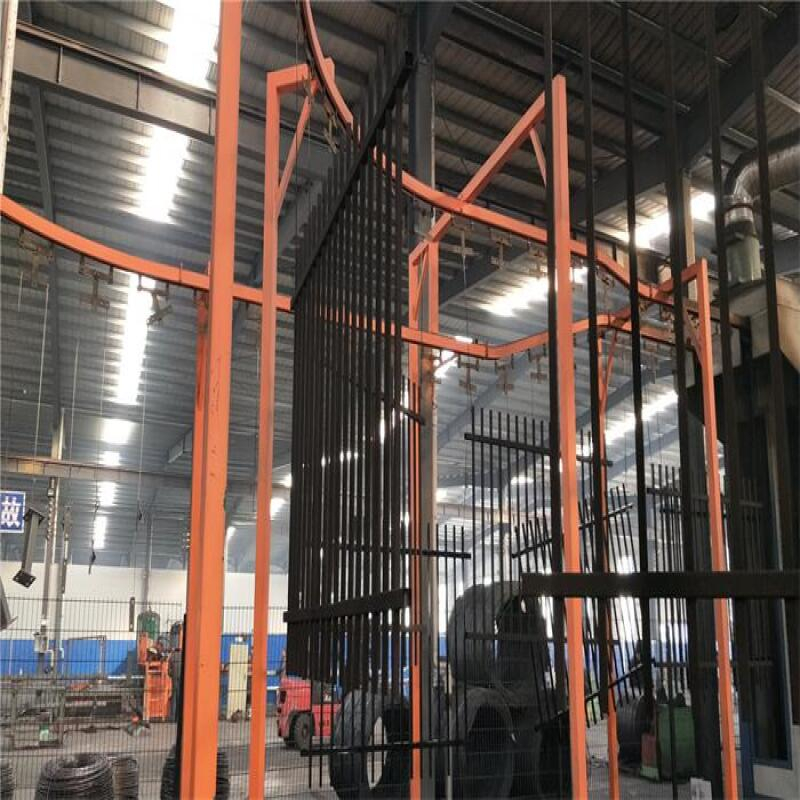
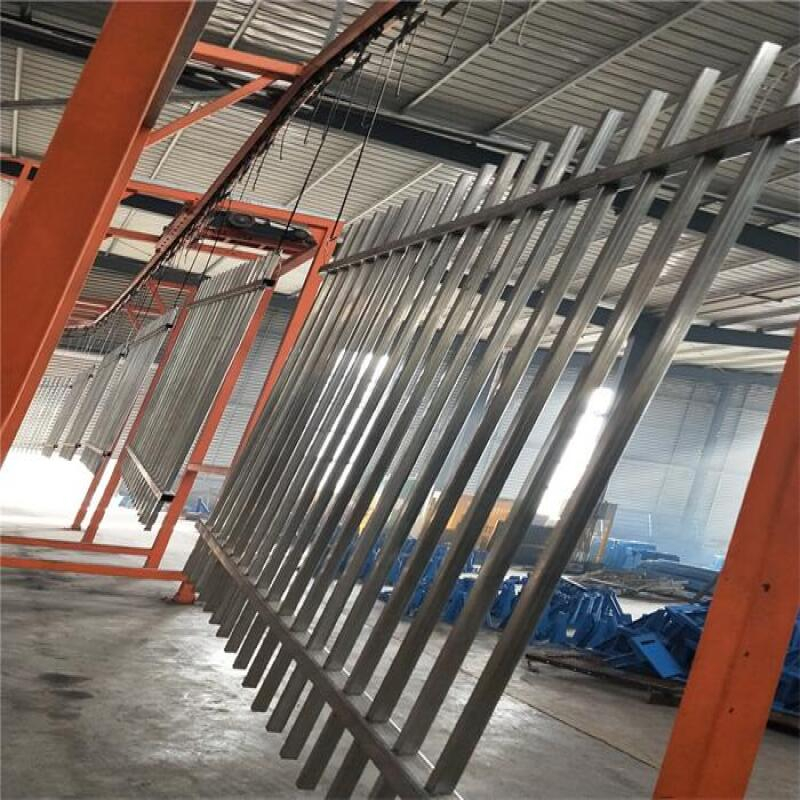
For professional finishing and long service life, galvanized steel combined with powder coating delivers the “wrought-iron look” with practical corrosion resistance and low maintenance.
Specifications (3 Tables, 10+ Configurations Each)
Notes used in the tables: fence widths are 2400mm and 2450mm; upright spacing reference is 100mm (18 pickets) / 108mm (17 pickets) / 115mm (16 pickets); post height rule is Post Height = Fence Height + 600mm; post options include 60×60, 65×65, 75×75, 80×80, 100×100 (wall 1.6 / 2.0 / 2.5mm); rail thickness options include 1.6 / 2.0 / 2.5 / 3.0mm; upright thickness options include 0.8 / 1.0 / 1.2 / 2.0mm.
Table 1: Standard Commercial Duty (Balanced Cost + Clean Line)
| Model | Fence Height (mm) | Fence Width (mm) | Rail Frame | Rail Thick. | Upright | Upright Thick. | Upright Count / Spacing | Post Option (Size × Wall) | Post Height (mm) | Finish |
|---|---|---|---|---|---|---|---|---|---|---|
| PM-PPSSF-S01 | 1200 | 2400 | 40×40 | 1.6 | 16×16 | 0.8 | 18 pcs / 100mm | 60×60×1.6 | 1800 | Galv + Powder Coat |
| PM-PPSSF-S02 | 1200 | 2450 | 40×40 | 1.6 | 25×25 | 1.0 | 17 pcs / 108mm | 60×60×1.6 | 1800 | Galv + Powder Coat |
| PM-PPSSF-S03 | 1500 | 2400 | 40×40 | 1.6 | 25×25 | 1.0 | 17 pcs / 108mm | 60×60×2.0 | 2100 | Galv + Powder Coat |
| PM-PPSSF-S04 | 1500 | 2450 | 45×45 | 2.0 | 25×25 | 1.0 | 18 pcs / 100mm | 65×65×2.0 | 2100 | Galv + Powder Coat |
| PM-PPSSF-S05 | 1800 | 2400 | 45×45 | 2.0 | 25×25 | 1.2 | 17 pcs / 108mm | 65×65×2.0 | 2400 | Galv + Powder Coat |
| PM-PPSSF-S06 | 1800 | 2450 | 45×45 | 2.0 | 30×30 | 1.2 | 18 pcs / 100mm | 75×75×2.0 | 2400 | Galv + Powder Coat |
| PM-PPSSF-S07 | 2100 | 2400 | 40×40 | 1.6 | 25×25 | 1.2 | 17 pcs / 108mm | 60×60×2.0 | 2700 | Galv + Powder Coat (Black) |
| PM-PPSSF-S08 | 2100 | 2450 | 45×45 | 2.0 | 25×25 | 1.2 | 18 pcs / 100mm | 65×65×2.0 | 2700 | Galv + Powder Coat (Black) |
| PM-PPSSF-S09 | 2400 | 2400 | 45×45 | 2.0 | 30×30 | 1.2 | 18 pcs / 100mm | 75×75×2.0 | 3000 | Galv + Powder Coat |
| PM-PPSSF-S10 | 2400 | 2450 | 50×50 | 2.0 | 30×30 | 1.2 | 17 pcs / 108mm | 80×80×2.0 | 3000 | Galv + Powder Coat |
Table 2: Heavy Duty Hire / High Handling Cycles (Thicker Rails + Stronger Posts)
| Model | Fence Height (mm) | Fence Width (mm) | Rail Frame | Rail Thick. | Upright | Upright Thick. | Upright Count / Spacing | Post Option (Size × Wall) | Post Height (mm) | Finish |
|---|---|---|---|---|---|---|---|---|---|---|
| PM-PPSSF-H01 | 1200 | 2400 | 45×45 | 2.0 | 25×25 | 1.2 | 18 pcs / 100mm | 65×65×2.0 | 1800 | Galv + Powder Coat |
| PM-PPSSF-H02 | 1500 | 2400 | 45×45 | 2.0 | 25×25 | 1.2 | 17 pcs / 108mm | 65×65×2.0 | 2100 | Galv + Powder Coat |
| PM-PPSSF-H03 | 1500 | 2450 | 45×45 | 2.5 | 30×30 | 1.2 | 18 pcs / 100mm | 75×75×2.0 | 2100 | Galv + Powder Coat |
| PM-PPSSF-H04 | 1800 | 2400 | 50×50 | 2.0 | 25×25 | 1.2 | 18 pcs / 100mm | 75×75×2.0 | 2400 | Galv + Powder Coat |
| PM-PPSSF-H05 | 1800 | 2450 | 50×50 | 2.5 | 30×30 | 1.2 | 17 pcs / 108mm | 80×80×2.0 | 2400 | Galv + Powder Coat |
| PM-PPSSF-H06 | 2100 | 2400 | 40×40 | 1.6 | 25×25 | 1.2 | 17 pcs / 108mm | 60×60×2.0 | 2700 | Galv + Powder Coat (Black) |
| PM-PPSSF-H07 | 2100 | 2400 | 45×45 | 2.5 | 25×25 | 1.2 | 18 pcs / 100mm | 75×75×2.0 | 2700 | Galv + Powder Coat (Black) |
| PM-PPSSF-H08 | 2100 | 2450 | 50×50 | 2.5 | 30×30 | 1.2 | 18 pcs / 100mm | 80×80×2.5 | 2700 | Galv + Powder Coat |
| PM-PPSSF-H09 | 2400 | 2400 | 50×50 | 2.5 | 30×30 | 1.2 | 18 pcs / 100mm | 80×80×2.5 | 3000 | Galv + Powder Coat |
| PM-PPSSF-H10 | 2400 | 2450 | 50×50 | 3.0 | 30×30 | 2.0 | 18 pcs / 100mm | 100×100×2.5 | 3000 | Galv + Powder Coat |
Table 3: Maximum Security / High Wind / Gate & Corner Reinforcement (Strongest Options)
| Model | Fence Height (mm) | Fence Width (mm) | Rail Frame | Rail Thick. | Upright | Upright Thick. | Upright Count / Spacing | Post Option (Size × Wall) | Post Height (mm) | Finish |
|---|---|---|---|---|---|---|---|---|---|---|
| PM-PPSSF-X01 | 1500 | 2400 | 50×50 | 2.5 | 30×30 | 2.0 | 18 pcs / 100mm | 80×80×2.5 | 2100 | Galv + Powder Coat |
| PM-PPSSF-X02 | 1800 | 2400 | 50×50 | 2.5 | 30×30 | 2.0 | 18 pcs / 100mm | 80×80×2.5 | 2400 | Galv + Powder Coat |
| PM-PPSSF-X03 | 1800 | 2450 | 50×50 | 3.0 | 30×30 | 2.0 | 18 pcs / 100mm | 100×100×2.5 | 2400 | Galv + Powder Coat |
| PM-PPSSF-X04 | 2100 | 2400 | 45×45 | 2.5 | 30×30 | 2.0 | 18 pcs / 100mm | 80×80×2.5 | 2700 | Galv + Powder Coat |
| PM-PPSSF-X05 | 2100 | 2450 | 50×50 | 3.0 | 30×30 | 2.0 | 18 pcs / 100mm | 100×100×2.5 | 2700 | Galv + Powder Coat |
| PM-PPSSF-X06 | 2400 | 2400 | 50×50 | 3.0 | 30×30 | 2.0 | 18 pcs / 100mm | 100×100×2.5 | 3000 | Galv + Powder Coat |
| PM-PPSSF-X07 | 1200 | 2400 | 45×45 | 2.5 | 25×25 | 1.2 | 18 pcs / 100mm | 75×75×2.5 | 1800 | Galv + Powder Coat |
| PM-PPSSF-X08 | 1500 | 2450 | 50×50 | 2.5 | 25×25 | 1.2 | 18 pcs / 100mm | 80×80×2.5 | 2100 | Galv + Powder Coat |
| PM-PPSSF-X09 | 2100 | 2400 | 40×40 | 1.6 | 25×25 | 1.2 | 17 pcs / 108mm | 60×60×2.0 | 2900 | Galv + Powder Coat (Deep Set Post) |
| PM-PPSSF-X10 | 2400 | 2450 | 50×50 | 3.0 | 30×30 | 2.0 | 16 pcs / 115mm | 100×100×2.5 | 3000 | Galv + Powder Coat |
Applications
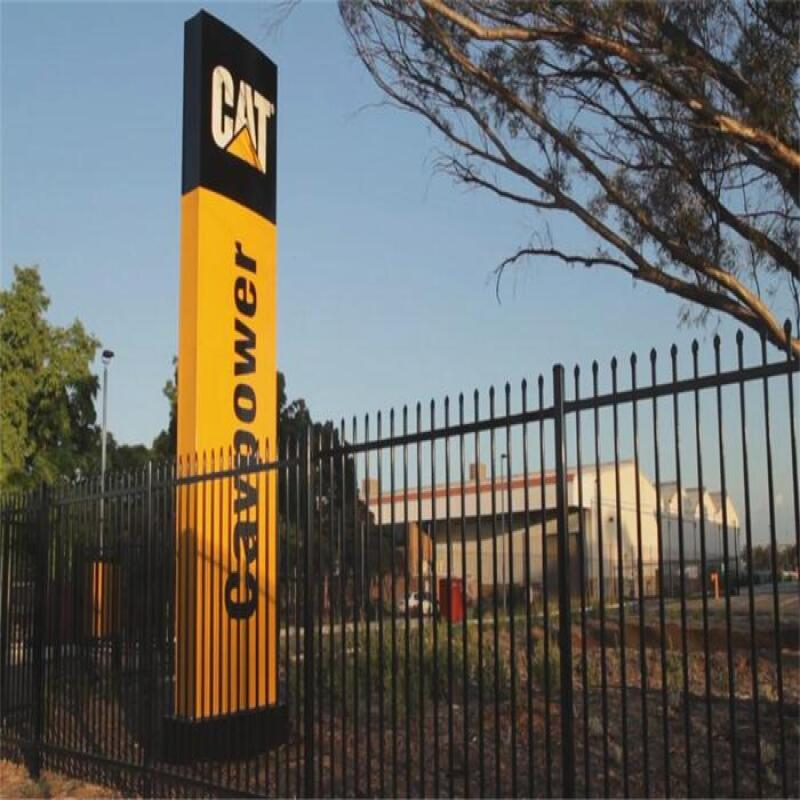
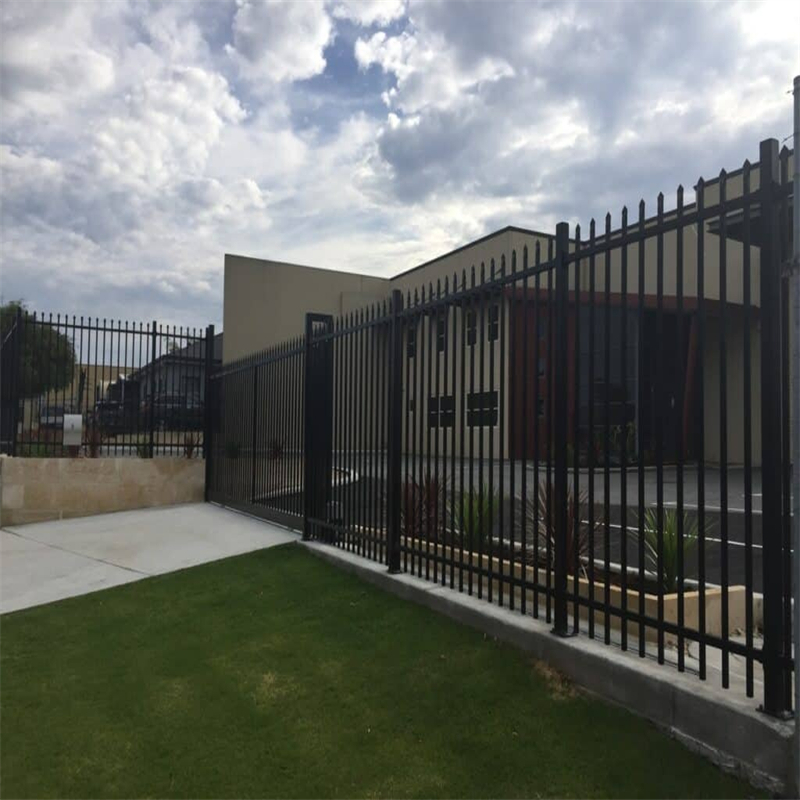
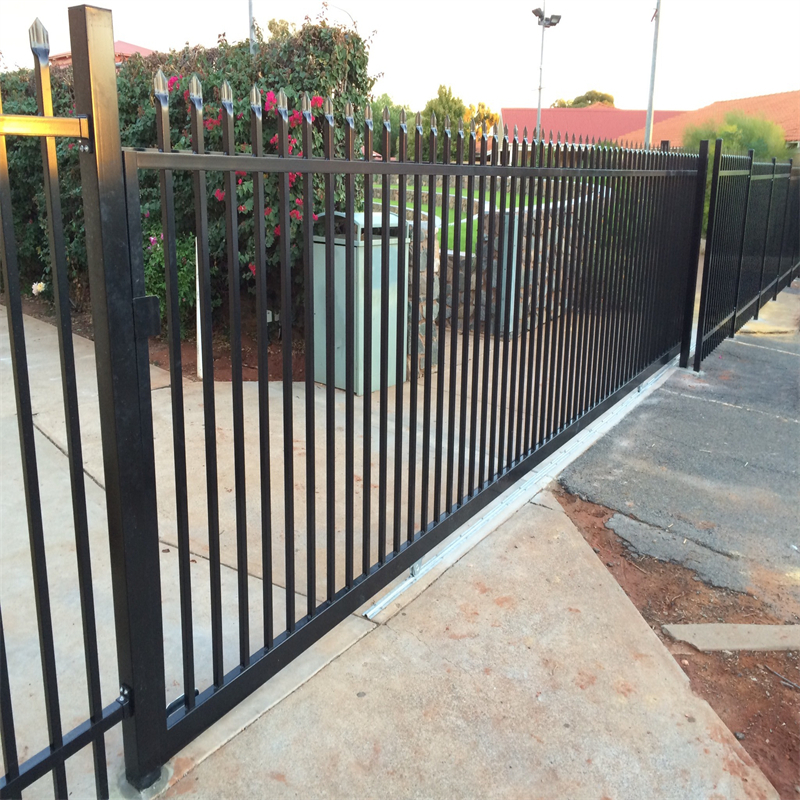
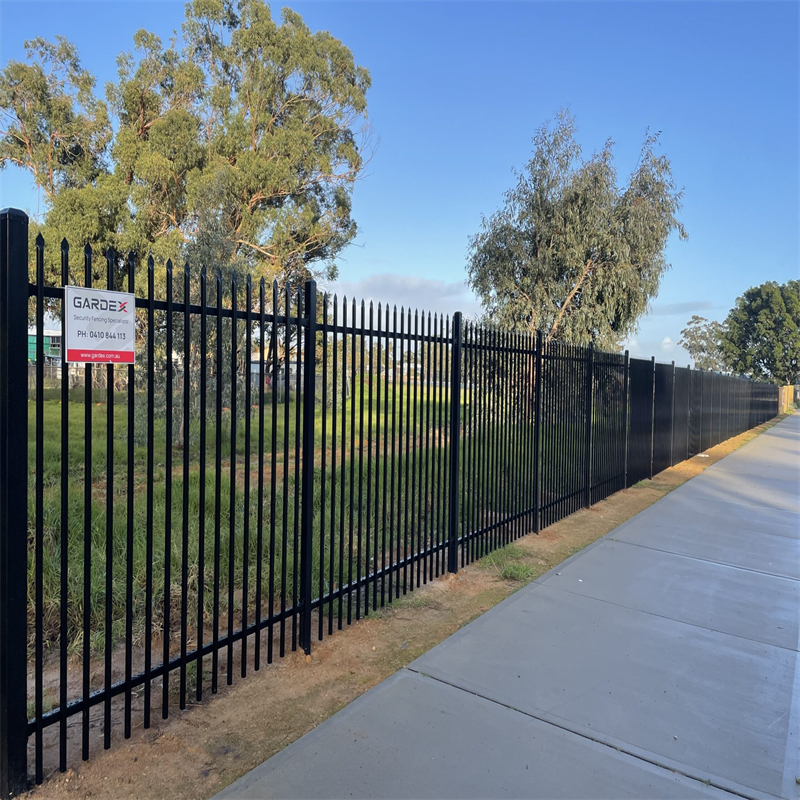
Press Point Steel Spear Fence is widely used for schools, warehouses, storage yards, factories, commercial frontage, rail corridors, utilities, public works, car parks, government facilities, and controlled-access zones where a strong security appearance and clear sight lines reduce risk and improve perimeter control.
Benefits
Straight-line security presence
Press point construction keeps pickets aligned and rails rigid so the fence line looks controlled, not improvised.
Stronger resistance to bending and racking
Correct rail frames, upright thickness, and post selection prevent the fence from leaning, twisting, or waving across long runs.
Fast, repeatable installation
Panelized formats reduce on-site measuring errors, speed up alignment, and simplify future repairs by swapping damaged panels.
Low maintenance finish performance
Galvanized steel with powder coating reduces long-term corrosion exposure and preserves a clean architectural appearance.
Packing
POLYMETAL typically packs Press Point Steel Spear Fence panels in counted bundles with separation protection to reduce rub marks and coating scuffs. Bundles are banded for forklift handling, labeled by height group, width group (2400/2450), rail frame option (40×40 / 45×45 / 50×50), upright size and picket count, and matched to post bundles (60×60 up to 100×100) to prevent installation mix-ups. Accessories, caps, brackets, and fixings are packed as counted cartons so installers can verify components immediately on arrival.

Standards and FAQs
Standards
A professional press point spear fence purchase specification should lock: fence height and width, rail frame size and thickness, upright size and thickness, picket count and spacing, post size and wall thickness, post height rule (panel height + 600mm), and corrosion protection system (galvanized base + powder coat). For site stability planning and safer setup decisions, it also helps to understand the base options used on active worksites—see 3 types of temporary fence feet as a quick reference when comparing how different support styles behave under handling and wind exposure.
FAQs
Q: What is the most common “looks perfect in photos” mistake?
A: Underspecifying rails and posts. A fence can look identical visually but behave completely differently under wind and gate loads when rail thickness and post size are downgraded.
Q: Which picket spacing is the most security-focused?
A: 18 pickets per panel with 100mm spacing delivers the tightest pattern listed and a stronger security feel.
Q: Which rail frame should I choose?
A: 40×40 suits many standard programs; 45×45 and 50×50 increase stiffness and are preferred for high wind zones, long straight runs, and higher fence heights.
Q: Why must the post be taller than the fence panel?
A: Embed depth controls stability. Post height greater than panel height by 600mm supports foundation performance so the fence line stays upright and aligned.
Final Buying Reminder
If you want Press Point Steel Spear Fence to stay straight, install cleanly, and resist long-term damage, don’t buy by appearance alone. Buy a matched POLYMETAL system: lock rail frames and thickness, lock upright size and spacing, select posts that match height and load, enforce the post height rule, and demand packing that prevents pre-bending. That is how you avoid the #7 loss—early corrosion and replacement—after your posts are already set and your schedule is locked.