Your One-Stop Wire Mesh Fence Supplier | POLYMETAL
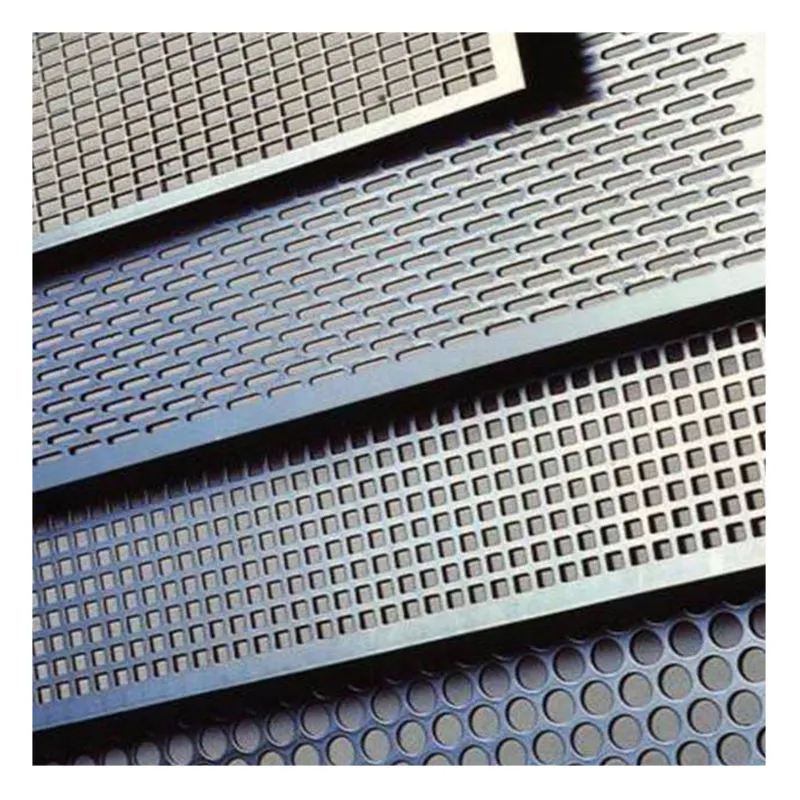
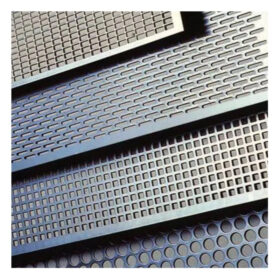

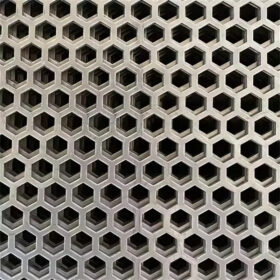
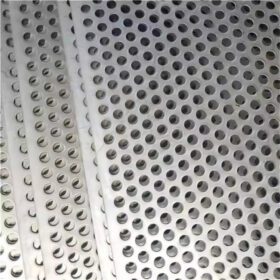
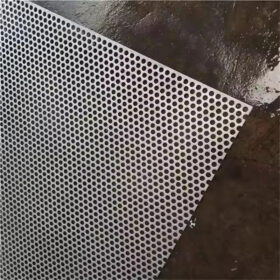
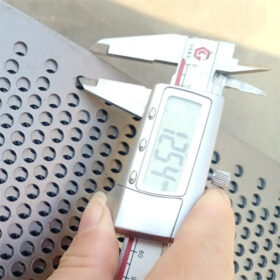
Punching stainless steel plate (also called perforated stainless steel plate or punching mesh) is a flat or formed sheet made by using a mechanical press or CNC punching machine to create a regular pattern of holes, slots or decorative shapes in stainless steel plate, giving the material a unique combination of strength, open area, airflow, sound absorption and visual effect.
Because punching stainless steel plate can be produced with many different grades, thicknesses, hole sizes and patterns, it is widely used as an acoustic noise barrier along highways, railways and subways, as sound absorbing panels in buildings and plant rooms, as filtration and screening media in industrial processes and as decorative and protective cladding for stairs, balconies, ceilings and machinery.
 |  |
 |  |
Materials, Hole Types and Size Range
Punching stainless steel plate is most commonly made from austenitic grades such as AISI 304 and 316 for general corrosion resistance, with 316L preferred in coastal or chemically aggressive environments; other grades (201, 321, 430, etc.) as well as carbon steel, galvanized steel, aluminum and copper alloys are also available when cost, weight or conductivity are more important than maximum corrosion resistance.
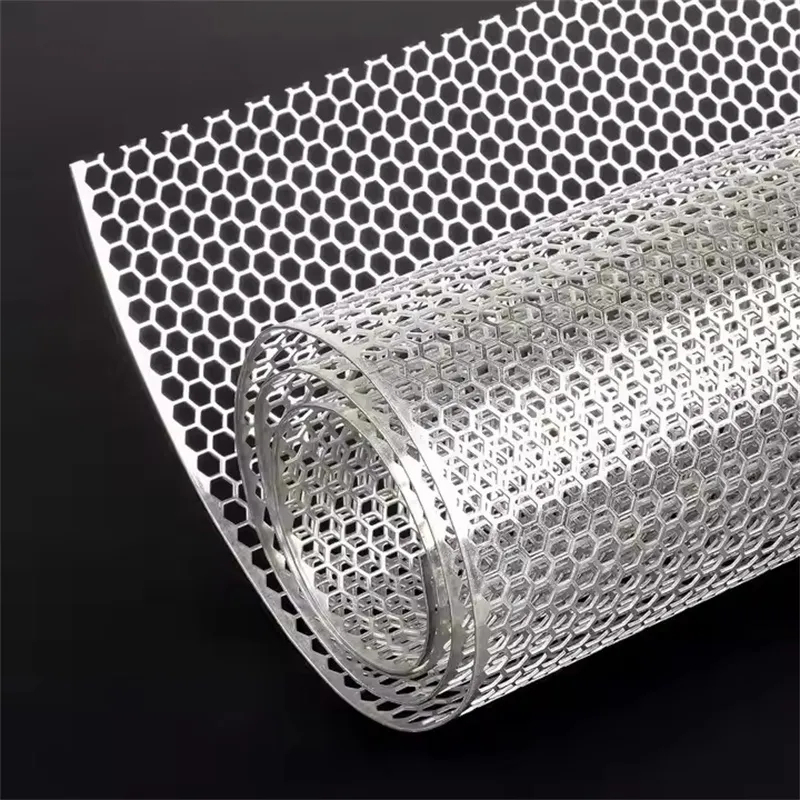
Holes are normally produced in a staggered or straight pattern and can be round, square, rectangular, hexagonal, slotted, decorative “plum blossom” or scale shapes to match structural, acoustic or aesthetic requirements; typical thickness ranges from about 0.3–10 mm for stainless steel sheets and plates, while custom heavy plates can be made thicker when necessary.
Aperture sizes for punching stainless steel plate cover everything from micro-perforations around 0.5–1.0 mm for acoustic and fine filtration applications up to large openings of 50–200 mm for coarse screening, with pitch carefully selected to give an open area from approximately 10–70% so that strength and transparency can be balanced according to use.
Typical Technical Specification Range
| Material Options | Stainless steel 201, 304, 304L, 316, 316L, 321, 430, etc.; carbon steel, galvanized steel, aluminum, copper alloys. |
|---|---|
| Sheet / Plate Thickness | Approx. 0.3–10 mm for stainless steel punching plates (heavier gauges on request). |
| Aperture (Hole Diameter) | Approx. 0.5–200 mm depending on pattern and application. |
| Pitch (Hole Centers) | Approx. 1–200 mm in straight or staggered layout to control open area and strength. |
| Open Area | Approx. 10–70% according to hole size and spacing. |
| Standard Sheet Sizes | 1.0 × 2.0 m, 1.2 × 2.4 m, 1.22 × 2.44 m, 1.5 × 3.0 m and customized sizes. |
| Common Hole Patterns | Round staggered pattern for general use, square or rectangular patterns for structural and decorative use, special decorative shapes on request. |
| Surface Finish | Mill 2B, brushed, polished, anodized (for aluminum), powder coated or PVDF coated for enhanced appearance and corrosion resistance. |
Round Hole one

ROUND HOLES STAGGERED PATTERN | |||
HOLE | CENTERS | GAUGE / PLATETHICK. | OPEN AREA |
.020″ RD | .045″ Stag | 26 | 18% |
1/32″ RD | 1/16″ Stag | 22 | 23% |
3/64″ RD | 5/64″ Stag | 24 | 33% |
3/64″ RD | 3/32″ Stag | 22 thru 18 | 23% |
1/16″ RD | 3/32″Stag | 22 thru 16 | 40% |
1/16″ RD | 7/64″ Stag | 20 thru 16 | 30% |
1/16″ RD | 1/8″ Stag | 26 thru 16 | 23% |
5/64″ RD | 1/8″ Stag | 22 thru 14 | 35% |
3/32″ RD | 5/32″ Stag | 24 thru 14 | 33% |
3/32″ RD | 3/16″ Stag | 24 | 23% |
.117 RD | 5/32″ Stag | 18 | 51% |
1/8″ RD | 3/16″ Stag | 24 thru 11 | 40% |
1/8″ RD | 7/32″ Stag | 14 thru 12 | 30% |
1/8″ RD | 1/4″ Stag | 14, 13 | 23% |
9/64″ RD | 3/16″ Stag | 18 | 51% |
5/32″ RD | 3/16″ Stag | 22 thru 16 | 63% |
5/32″ RD | 1/4″ Stag | 20 thru 10 | 35% |
3/16″ RD | 7/32″ Stag | 22 thru 16 | 67% |
3/16″ RD | 1/4″ Stag | 24 thru 12 | 51% |
3/16″ RD | 5/16″ Stag | 10, 3/16″ | 33% |
3/16″ RD | 3/8″ Stag | 14 thru 10 | 23% |
1/4″ RD | 5/16″ Stag | 20 thru 16 | 58% |
1/4″ RD | 3/8″ Stag | 26 thru 1/4″ | 40% |
17/64″ RD | 5/16″ Stag | 20 | 66% |
5/16″RD | 7/16″ Stag | 20 thru 1/4″ | 46% |
3/8″ RD | 9/16″ Stag | 20 thru 1/4″ | 40% |
1/2″ RD | 11/16″ Stag | 20 thru 1/4″ | 48% |
1/2″ RD | 3/4″ Stag | 16 | 40% |
5/8″ RD | 7/8″ Stag | 10 thru 1/4″ | 46% |
3/4″ RD | 1″ Stag | 16 thru 1/4″ | 51% |
1″ RD | 1-3/8″ Stag | 10 thru 1/4″ | 48% |
1-1/4″ RD | 1-5/8″ Stag | 1/4″ | 54% |
1-1/2″ RD | 2″ Stag | 1/4″ | 51% |
2″ RD | 2-1/2″ Stag | 1/4″ | 58% |
2-1/2″ RD | 3″ Stag | 3/16″ | 63% |
3″ RD | 3-1/2″ Stag | 3/16″ | 67% |
4″ RD | 4-1/2″ Stag | 10 | 72% |
Square Hole
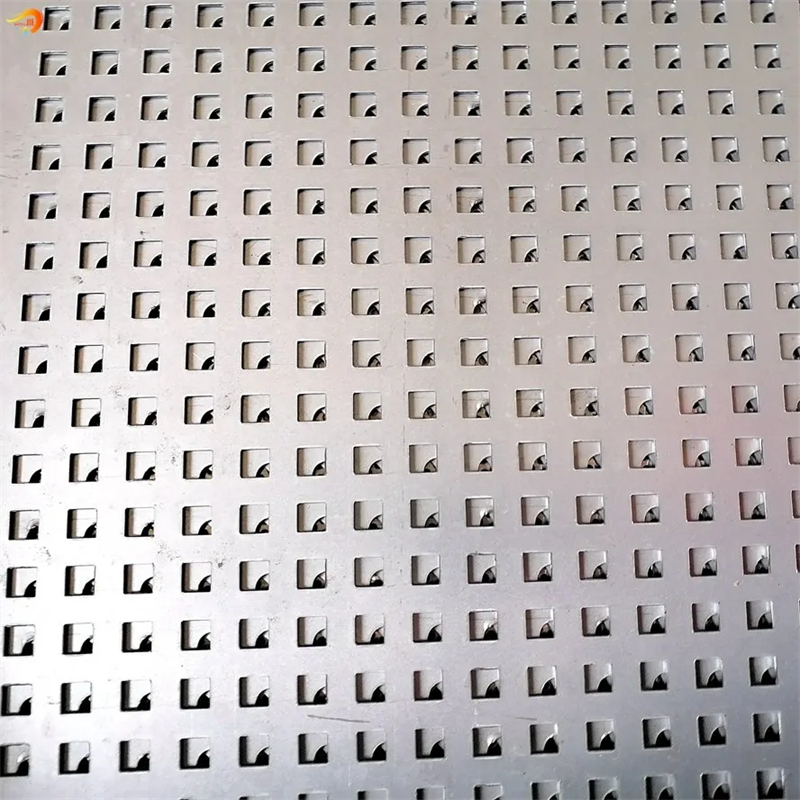

| Hole size w (mm) | Pitch p (mm) | Approx. open area (%) | Typical thickness range (mm) | Typical use |
|---|---|---|---|---|
| 3.15 | 6.3 | ≈ 25% | 0.8–1.5 | Fine protective guards, small particle screening. |
| 4 | 7.1 | ≈ 32% | 0.8–2.0 | Light screening, ventilation panels. |
| 4 | 8 | ≈ 25% | 1.0–2.5 | Machine guards, safety covers. |
| 5 | 9 | ≈ 31% | 1.0–3.0 | General-purpose screening and guards. |
| 5 | 10 | ≈ 25% | 1.5–3.0 | Structural protective panels. |
| 6.3 | 10 | ≈ 40% | 1.5–3.0 | Screening, ventilation on equipment housings. |
| 6.3 | 11.2 | ≈ 32% | 2.0–4.0 | Heavy-duty guards, platforms. |
| 8 | 11.2 | ≈ 51% | 1.5–3.0 | High airflow panels, acoustic screens. |
| 8 | 12.5 | ≈ 41% | 2.0–4.0 | Façade panels, sunshades. |
| 10 | 14 | ≈ 51% | 2.0–4.0 | Balcony infill, stair balustrades. |
| 10 | 16 | ≈ 39% | 2.0–5.0 | Stronger architectural panels and guards. |
| 12.5 | 16 | ≈ 61% | 2.0–4.0 | Decorative façades, acoustic ceilings. |
| 16 | 20 | ≈ 64% | 3.0–5.0 | High-transparency architectural cladding. |
| 16 | 25 | ≈ 41% | 3.0–6.0 | Heavy-duty guards, platforms, walkways. |
| 20 | 25 | ≈ 64% | 3.0–6.0 | Large-area ventilation, decorative walls. |
| 20 | 31.5 | ≈ 40% | 4.0–8.0 | Structural screens, quarry / mining protection panels. |
Typical Slotted / Oblong Hole
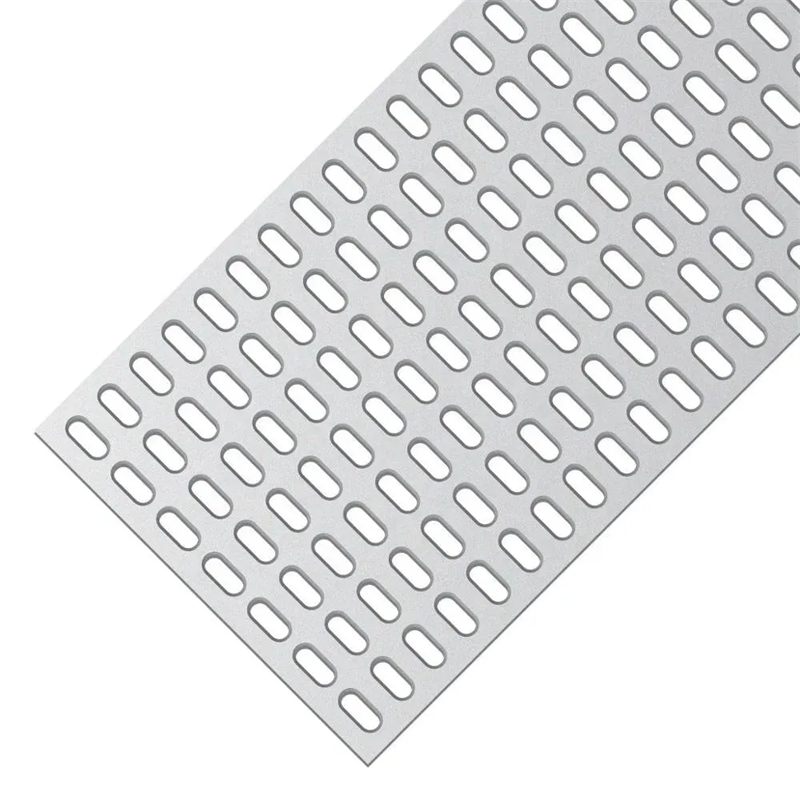

| Typical Slotted / Oblong Hole Perforated Sheet Patterns (Metric) | ||||
|---|---|---|---|---|
| Slot size W×L (mm) | Pattern / pitch | Approx. open area | Typical thickness (mm) | Pattern type |
| 1.2 × 5 | DC 7 × 7.5 mm (approx. pitch 7 mm × 7.5 mm) | ≈ 20–30% | 0.5–1.0 | Straight, fine slot |
| 2 × 14 | DC 14 × 21 mm | ≈ 25–35% | 0.8–2.0 | Straight slot |
| 2.5 × 20 | DC 14 × 25 mm | ≈ 30–40% | 1.0–2.5 | Straight slot |
| 5 × 20 | DC 16 × 44 mm | ≈ 30–45% | 1.5–3.0 | Straight slot |
| 8 × 20 | DC 25 × 46 mm | ≈ 35–45% | 2.0–4.0 | Straight slot |
| 3.175 × 25.4 | 6.35 mm centers, side staggered | ≈ 43% open (given by manufacturer) | ≈ 0.8 mm (22 gauge) | Side-staggered slot |
| 6.35 × 38.1 | Mixed bridges (every third bridge wider), sheet gauges 16–20 | ≈ 67% open (given) | ≈ 1.0–1.5 mm (16–20 ga) | High-open-area slot |
| 3.175 × 19.05 (1/8″ × 3/4″) | Standard slotted sheet pattern | ≈ 41% open | 0.8–2.0 | Straight slot |
| 3.175 × 25.4 (1/8″ × 1″) | Standard slotted sheet pattern | ≈ 43% open | 1.0–2.5 | Straight slot |
Key Features and Performance Advantages
Punching stainless steel plate provides a stiff, self-supporting sheet with high mechanical strength and good impact resistance, allowing it to be used as both a functional screen and a structural panel in railings, barriers and equipment guards.
Stainless steel grades offer excellent resistance to corrosion, humidity and many chemicals so the perforated plates can operate for long periods outdoors beside highways, railways or coastal infrastructures and in demanding environments such as chemical plants and food processing factories.
The precise CNC punching process maintains very tight tolerances on hole diameter and pitch which is essential for accurate filtration, screening and acoustic performance, and enables designers to specify exact open area and pattern without sacrificing dimensional stability of the plate.
Multiple surface treatments such as powder coating or PVDF coating add further corrosion protection, enhance reflectivity or color and help the plates blend into architectural designs, while polished stainless steel surfaces offer a clean, modern appearance for interior ceilings, wall panels, balustrades and high-end façades.
Compared with solid sheet, punching stainless steel plate has significantly less weight for a given panel size, improving handling and reducing loads on supporting structures while still providing sufficient rigidity, and the open area in the pattern allows airflow, drainage and sound transmission control where required.
Main Product Types
Flat punching stainless steel plates and sheets are supplied in standard stock sizes or custom dimensions and are widely used for general screening, cladding, partitions and acoustic panels.
Perforated stainless steel pipes and tubes are produced by rolling and welding punched sheet into cylindrical forms to create filter cartridges, exhaust silencers, fluid distribution pipes and protective sleeves for sensors and cables.
Pressed and formed perforated ceiling and wall cassettes use punching stainless steel plate as the visible face of acoustic systems, combining a durable metal shell with sound-absorbing backing material to control reverberation in demanding environments such as airports, factories, sports arenas and stations.
Custom punching stainless steel plate screens and trays are used in chemical machinery, pharmaceutical equipment, food and beverage machines, tobacco production equipment, harvesters, washing and dry-cleaning machinery and hydraulic and filtration systems where they function as sieves, strainers, support screens or safety guards.
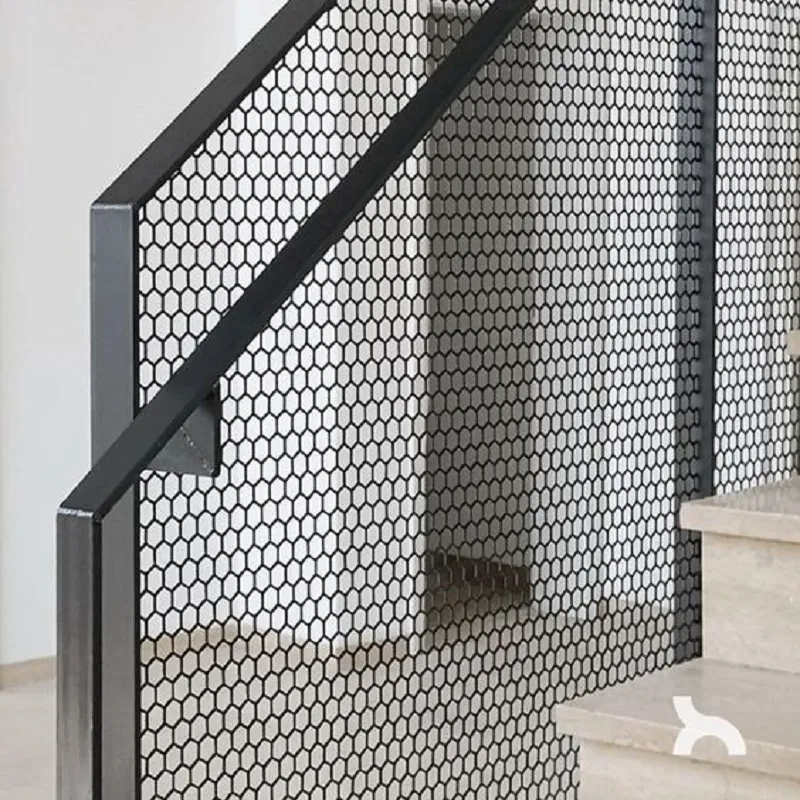
Decorative punching stainless steel plate products such as balcony infill panels, stair risers, façade sunscreens, bar counters, furniture panels, speaker grilles and exhibition shelving make use of special decorative hole patterns to create a strong visual identity while still retaining the functional benefits of such as a 316 Stainless Steel Perforated Sheet .
Typical Applications of Punching Stainless Steel Plate
Municipal and Traffic Noise Control
As perforated acoustic panels backed with sound-absorbing material, punching stainless steel plate is used to build noise barriers along highways, urban roads, railways and subways, where the outer perforated skin protects the absorber while allowing sound energy to enter the panel; it is also installed on bridges, around flyovers, on the roofs of industrial buildings and in airport or station areas to reduce traffic and equipment noise.
Building Acoustics and Interior Fit-Out
In commercial and industrial buildings, punching stainless steel plate is used for sound-absorbing ceilings and wall panels in generator rooms, boiler rooms, plant rooms, factories, workshops, theatres and studios, providing both impact-resistant protection and a visually clean, modern appearance while improving the acoustic comfort of the space.
Filtration, Sieving and Process Screening
Fine and medium perforated plates serve as filter and support screens in liquid and gas filtration systems for chemical plants, water treatment equipment, food and beverage machinery and air intake systems, while heavier gauges with larger openings are used for grain screening, feed sieving, mining and quarry screening, slag removal, dewatering and drying processes in metallurgy and aggregate production.
Safety Guards and Mechanical Protection
Punching stainless steel plate is widely used as machine guards, fan and blower covers, protective cages, elevator and escalator panels, HVAC grilles and radiator shields because the plate offers good impact resistance, excellent ventilation and a predictable opening size that meets safety regulations.
Architectural Decoration and Furniture
Architects and designers specify punching stainless steel plate for balcony and staircase rail infill, façade cladding, sunscreens, shopfitting systems, mall shelving, display stands, office partitions, furniture panels and green tables and chairs because the punched pattern adds depth and texture while allowing light and air to pass through.
Household and Catering Products
In kitchens and catering environments punching stainless steel plate is fabricated into fruit baskets, food covers, trays, grills, barbecue plates, utensil racks and ventilation panels where hygiene, ease of cleaning and corrosion resistance are essential.
Design and Selection Considerations
When selecting punching stainless steel plate for a noise barrier or acoustic ceiling, designers generally choose small round staggered holes and an open area of 15–35% combined with appropriate backing material to maximize sound absorption while limiting direct sound transmission through the panel.
For filtration and screening uses, the key parameters are aperture size, pitch and open area, which must match the particle size distribution of the material being filtered; open area is usually kept high to minimise pressure drop while ensuring the plate maintains adequate strength and rigidity under flow or mechanical loading.
In load-bearing or safety applications such as stair treads, platforms and machine guards, thicker plates with relatively smaller openings are chosen so that the plate can withstand pedestrian or equipment loads and still offer sufficient transparency for visibility and ventilation.
Material grade and surface treatment are selected according to the environment: 304 stainless steel suits most indoor and mild outdoor conditions, 316/316L resists chloride-rich marine or chemical atmospheres, while powder coating or PVDF coating adds further corrosion protection and allows the plate to be produced in any desired color for branding or camouflage.
Packing and Delivery
Punching stainless steel plates are usually packed on strong wooden or steel pallets, separated by plastic film, kraft paper or non-woven fabric, and securely strapped to prevent movement and edge damage during transport; for higher value architectural panels and precision filters, custom wooden cases or crates can be supplied to ensure that the punched surfaces arrive clean, flat and ready for installation.
With its combination of durability, corrosion resistance, acoustic and filtration performance and design flexibility, punching stainless steel plate is an ideal choice for engineers, architects and fabricators looking for a high-performance perforated metal solution across municipal, industrial and architectural projects.