Your One-Stop Wire Mesh Fence Supplier | POLYMETAL

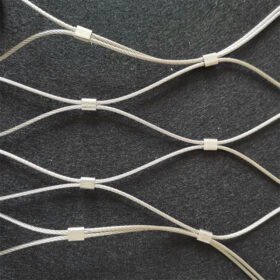
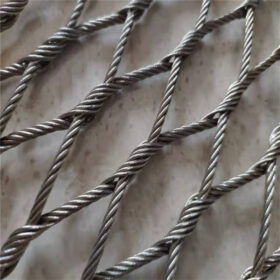
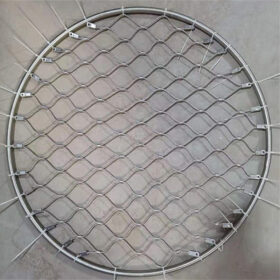
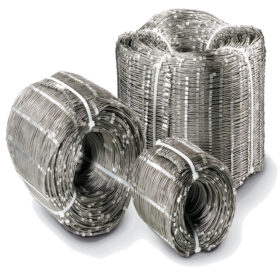
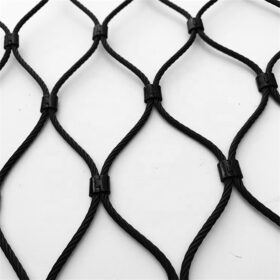
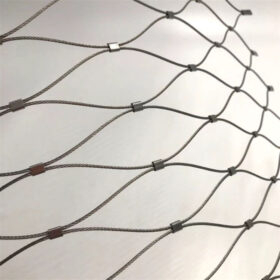
Rope wire mesh (also called stainless steel rope mesh or cable netting) is a flexible tensile mesh made from multi-strand stainless steel wire ropes. The ropes are either woven or joined with ferrules into diamond-shaped openings and then tensioned between posts, frames or edge cables.
When it is correctly engineered and pre-tensioned, rope wire mesh acts like an almost invisible safety net: very high strength, long service life, low maintenance requirements and minimal visual impact on architecture and landscape.
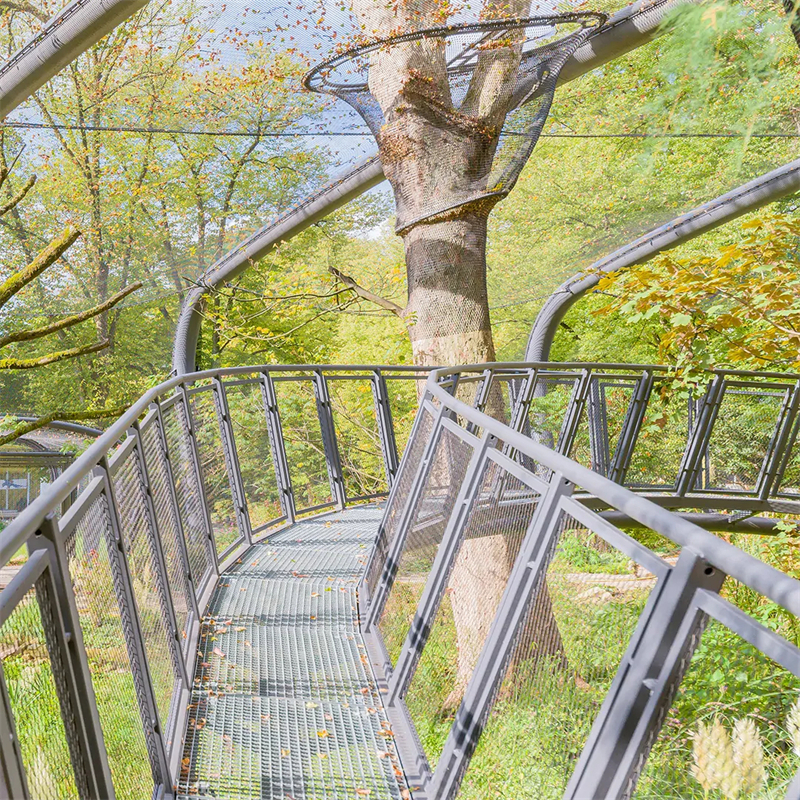
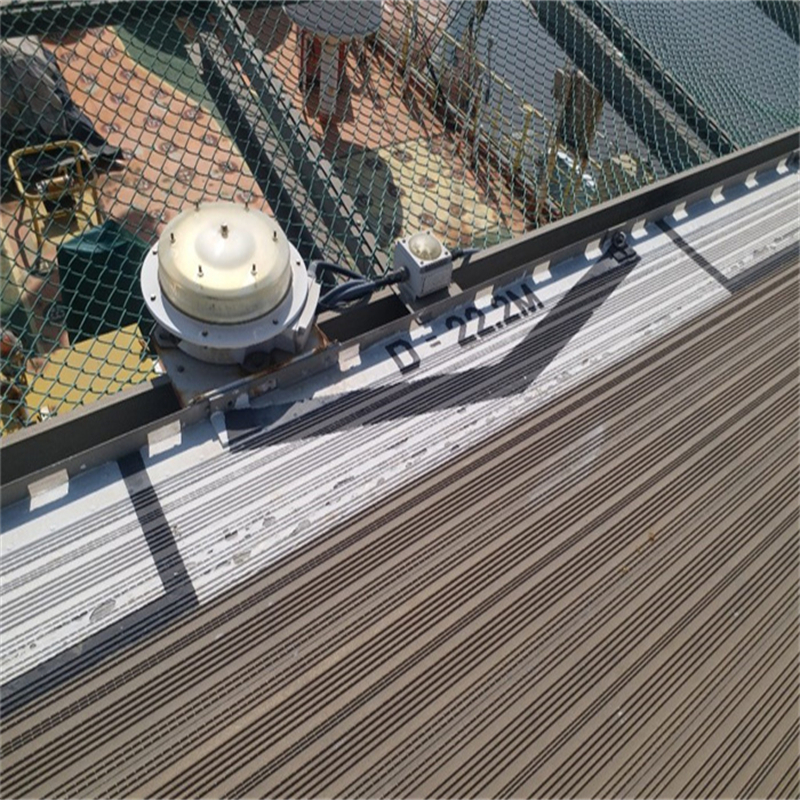
You will see rope wire mesh systems in airports, zoos, bridges, stadiums, hotels and high-end residential projects because they combine safety, durability, transparency and modern aesthetics in a single solution.

Rope Wire Mesh Construction Types
Inter-woven (Knotted) Rope Wire Mesh
Rope wire mesh is commonly supplied as
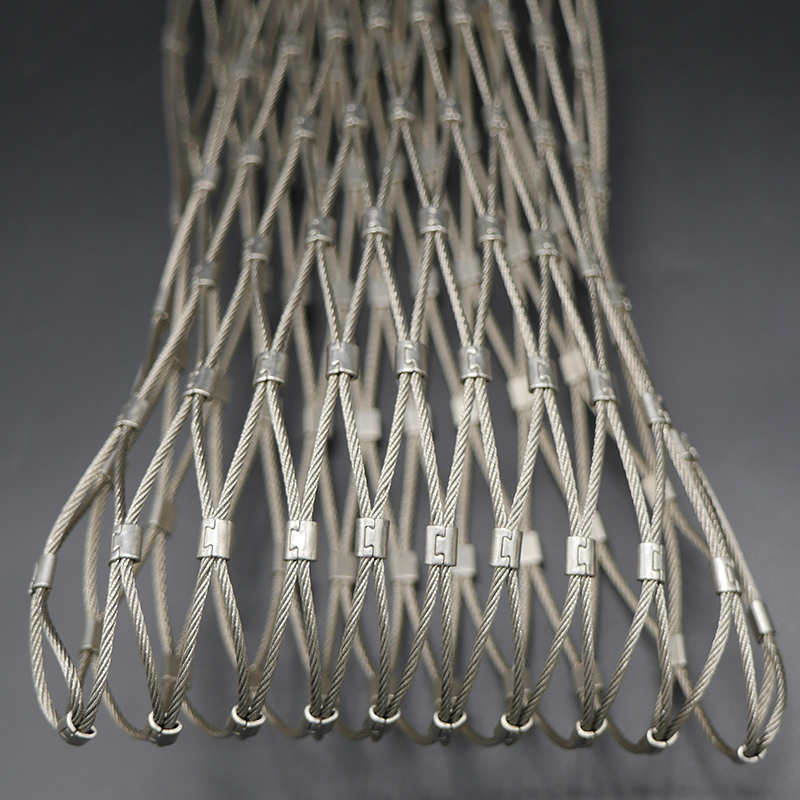
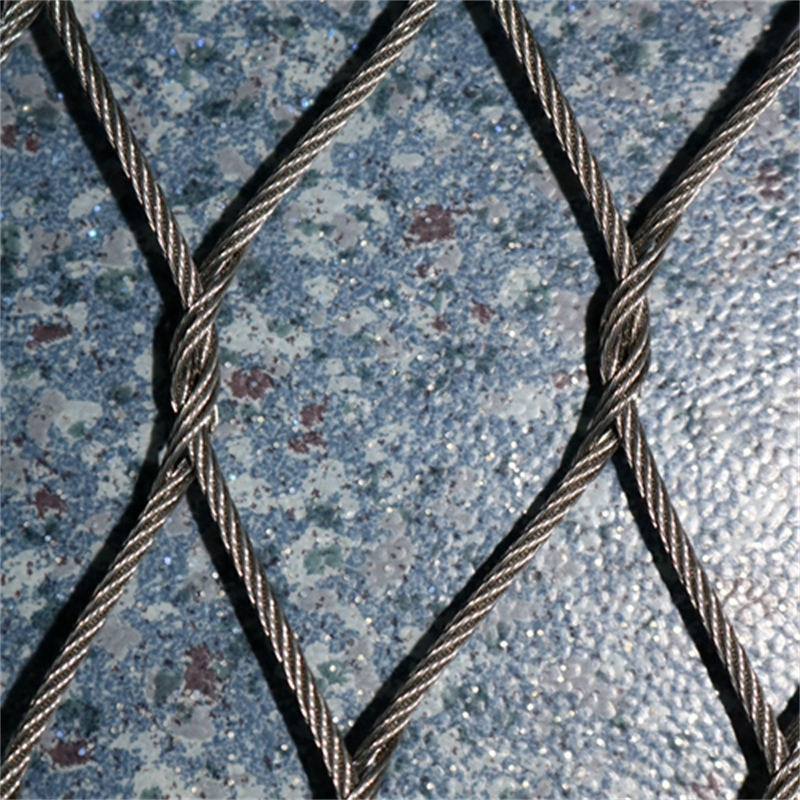
inter-woven (knotted) panels. Here, multi-strand cables are manually woven over and under each other, and every crossover locks the next one. There are no metal sleeves at the intersections, so the result is a very clean, uniform diamond pattern.
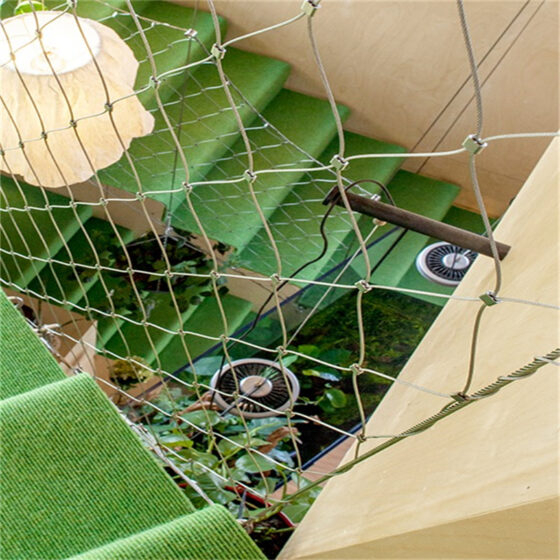
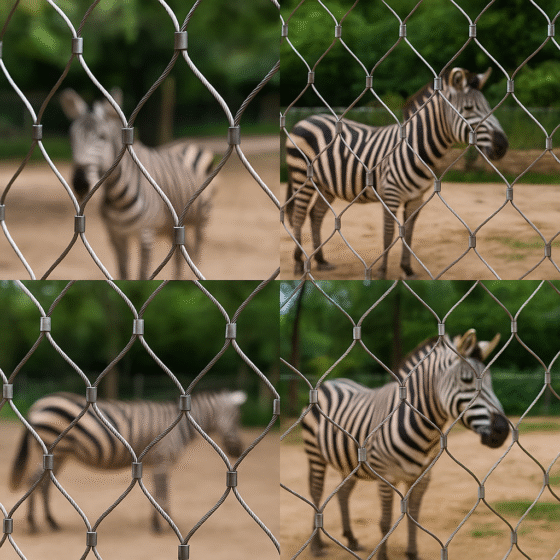
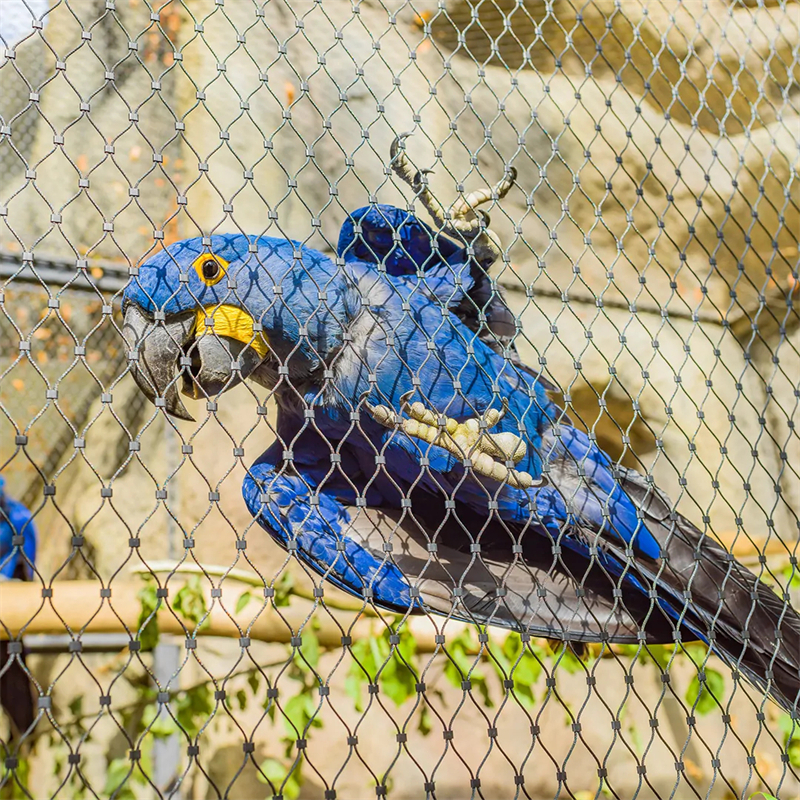
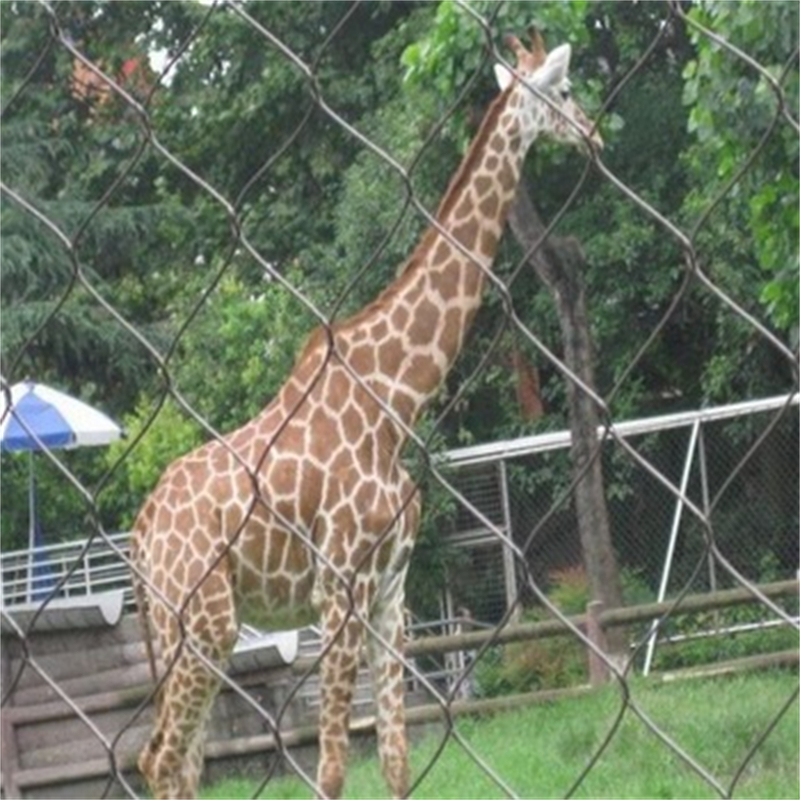
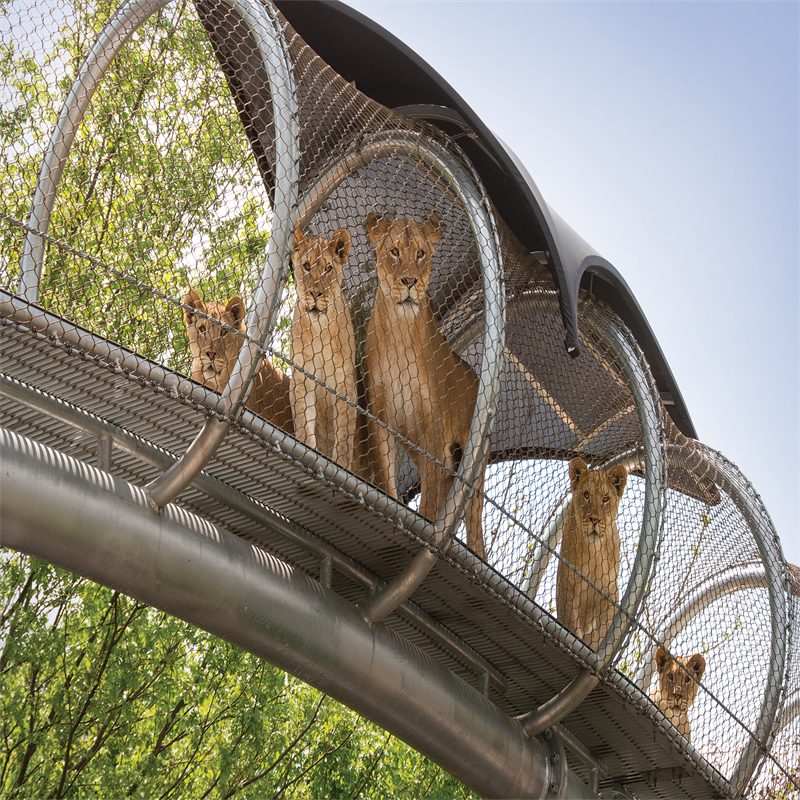
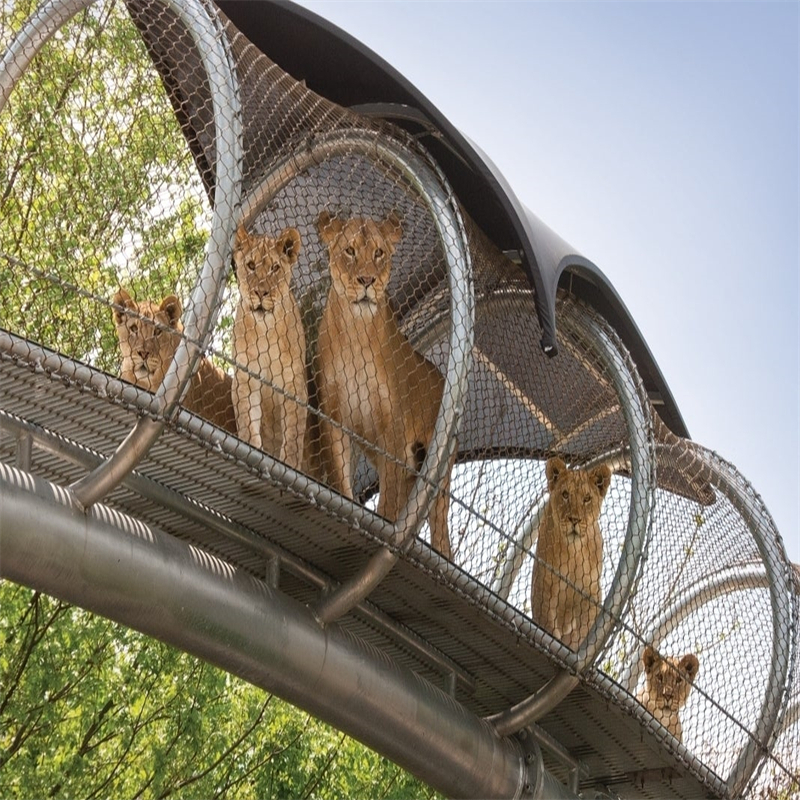
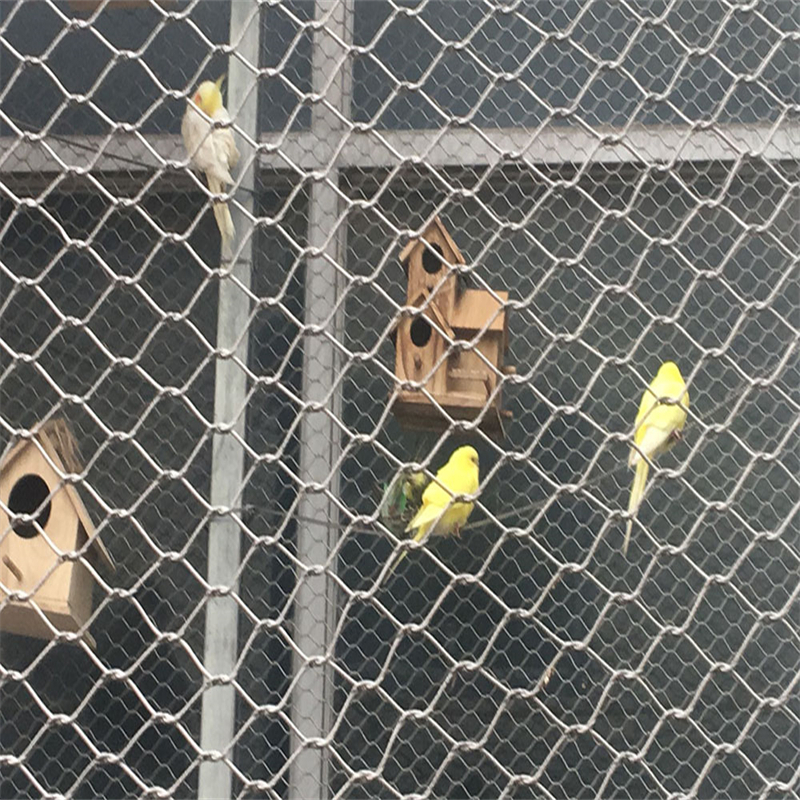
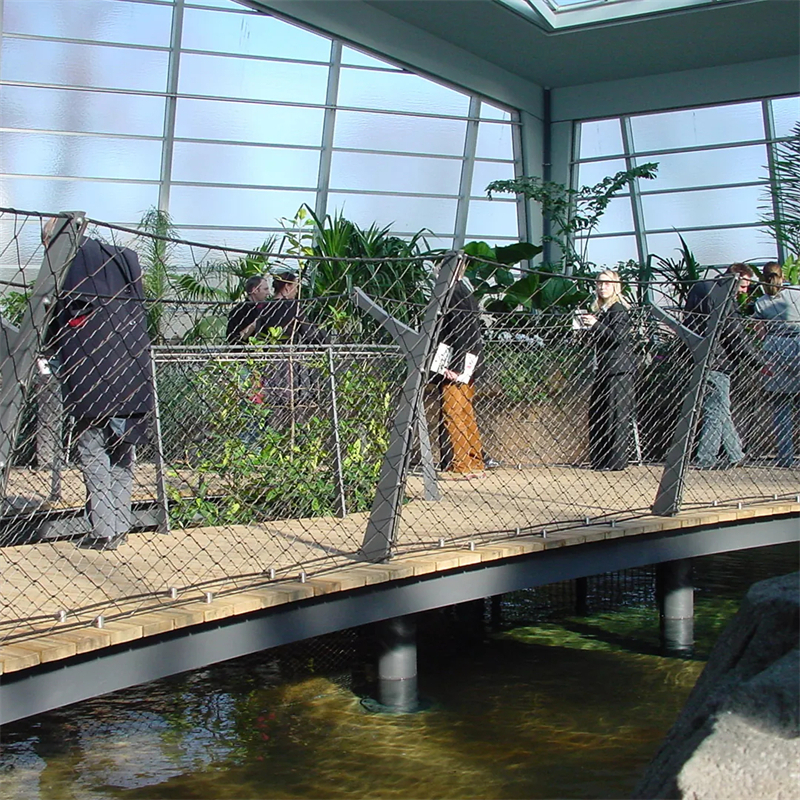
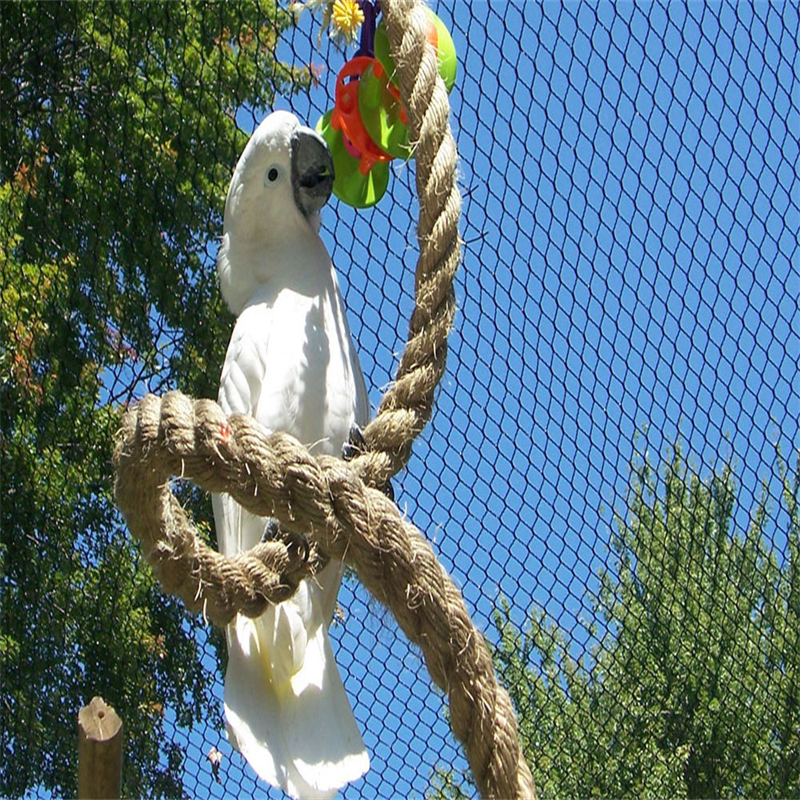
This “soft but strong” mesh offers excellent flexibility, smooth surfaces and maximum transparency. It is ideal where people or animals touch the mesh regularly, such as in zoo enclosures, aviaries, balustrades, play areas and green walls.
Ferrule Type Rope Wire Mesh
The second main construction is
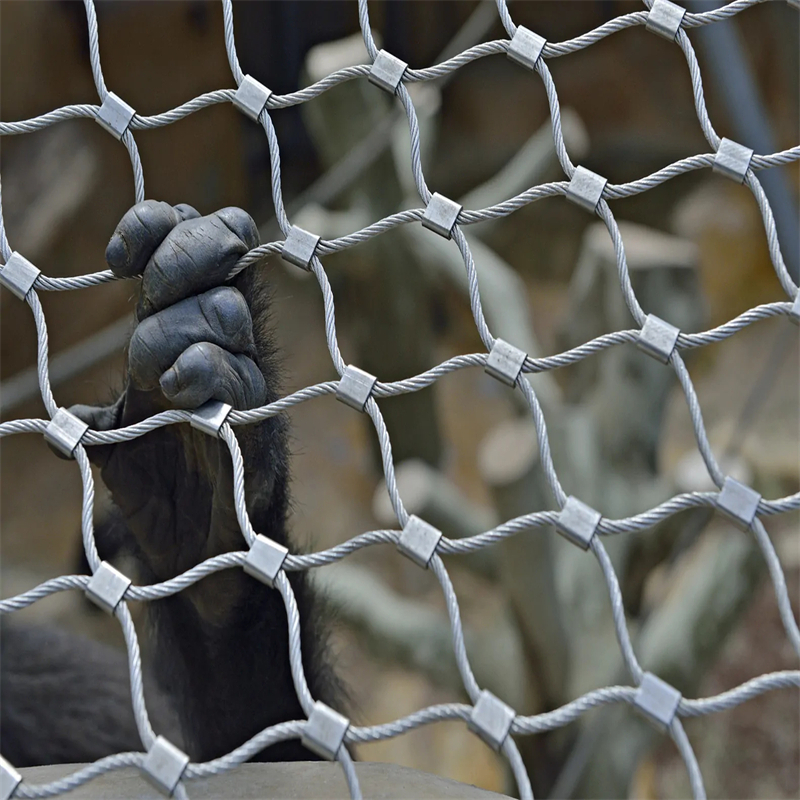
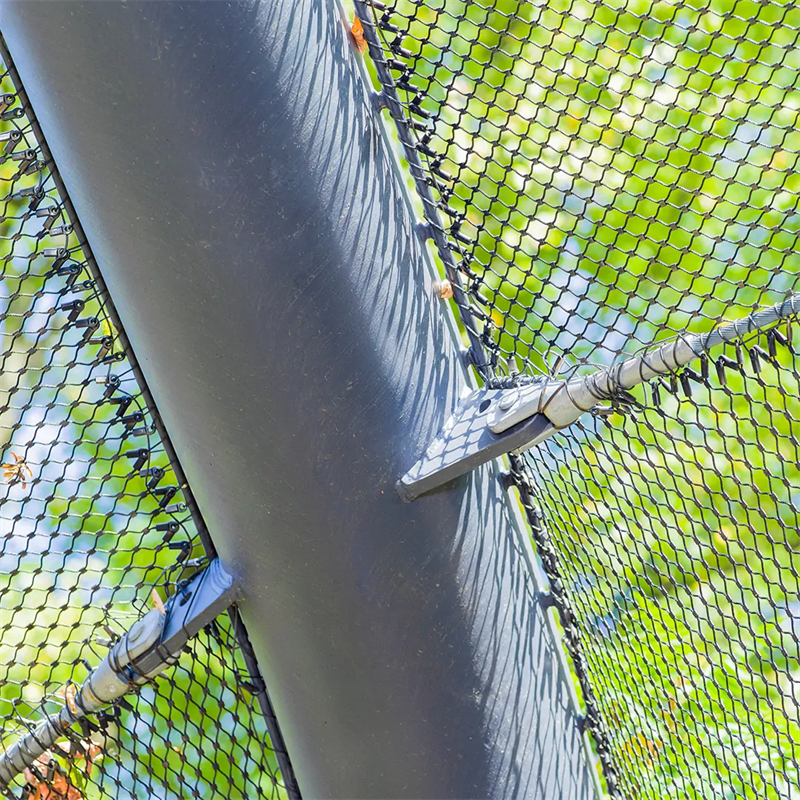
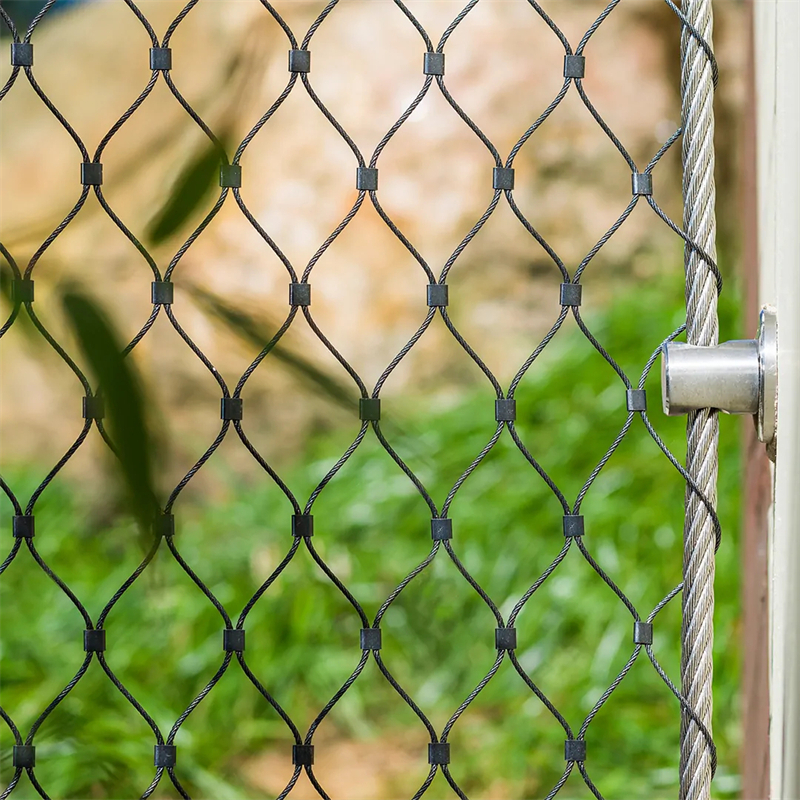
ferrule type rope mesh. Short metal sleeves (ferrules) clamp crossing cables together and fix the diamond geometry. This method is well suited to factory prefabrication, tight tolerances and customised panel sizes.
Ferrule mesh is slightly more visible than inter-woven mesh but delivers very accurate dimensions, neat edges and easy on-site panel adjustment. It is widely used for façades, bridge safety nets, stadium fall protection and architectural safety applications where repeatable quality and simple installation matter.
Surface Treatments and Finishes for Rope Wire Mesh
Black Oxide Stainless Steel Rope Mesh
Beyond bare stainless steel, rope wire mesh can be given several surface treatments to match project appearance and durability requirements.
Black oxide chemically converts the outer surface of stainless steel, producing a deep, low-glare black finish. This helps the mesh visually disappear against dark backdrops, which is particularly useful in zoos, theatres or architectural projects that require very discreet fall protection.
PVD Colour Coatings
PVD (Physical Vapour Deposition) coatings deposit an extremely thin but very hard coloured layer onto the stainless steel surface. Colours such as gold, bronze or champagne are popular for upscale façades, hotel interiors and retail projects that need long-term colour stability and scratch resistance.
PVDF Coatings for Frames and Fittings
PVDF coatings are thicker fluoropolymer paints often applied to the supporting frames, tensioning components or fittings around the mesh. They provide outstanding UV resistance, gloss retention and colour stability in aggressive climates, including coastal and high-sun regions.
Vinyl-Coated Rope Wire Mesh (PVC / PU)
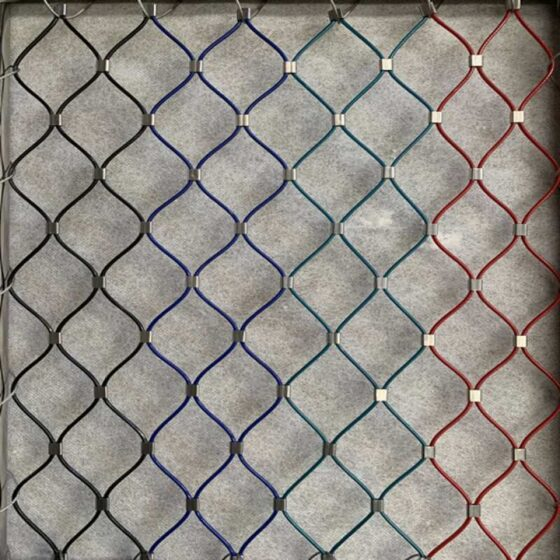
Vinyl-coated (PVC- or PU-coated) rope wire mesh encapsulates each stainless steel cable in a coloured plastic jacket. This softens the surface, improves grip and adds an extra corrosion barrier. Vinyl-coated mesh is frequently chosen for playgrounds, sports facilities, schools and areas with frequent touch or potential impact.
By combining the right construction type (inter-woven or ferruled) with a suitable surface treatment, you can balance appearance, corrosion resistance, touch comfort and overall project budget for any rope wire mesh installation.
Basic Parameters and Structural Behaviour of Rope Wire Mesh
Typical Technical Parameters
Rope wire mesh – also known as stainless steel rope mesh or cable netting – usually falls within these ranges:
- Wire rope diameter: approx. 1.2–4.0 mm
- Mesh aperture (short diagonal W): approx. 20 × 20 mm to 250 × 400 mm
- Angle degrees: 60° is the standard diamond; 90° can be supplied as a square layout
- Wire rope structures: 7×7 and 7×19 are most common
- Stainless steel grades: AISI 304 / 304L / 316 / 316L
How Rope Wire Mesh Carries Load
Once the mesh panels are fixed to a rigid boundary (frames, posts or edge cables) and tensioned, the system works entirely in tension:
- Loads are distributed across multiple cables and nodes.
- Forces are transmitted back into posts, beams or boundary cables.
- The whole assembly behaves like a tensile membrane, not a rigid railing or bar panel.
Secret 1 – The “Invisible” Look Can Hide Dangerously Weak Rope Wire Mesh
A rope mesh fence can look perfectly flat and “invisible” yet fail deflection tests if cable strength, ferrule quality, frame stiffness and pre-tension are not correctly matched. Always design and test the complete system, not just the mesh panel.
Material Grades and Real Exposure Conditions
Secret 2 – Mixed Grades Quietly Plant Rust Streaks in Rope Wire Mesh Systems
Using 316 cables with cheaper 304 ferrules or fittings may appear “all stainless” in drawings, but on site the lower-grade components will corrode first, leaving rust stains on concrete, stone and glass. Consistent grade selection is essential for visible projects.
Recommended Stainless Steel Grades
Typical grade selection for rope wire mesh includes:
- 304 / 304L: clean, dry interiors with low levels of chlorides and pollution.
- 316 / 316L: exterior, coastal, poolside, zoo, industrial or roadside environments where chlorides, de-icing salts or pollutants are present.
A serious rope wire mesh supplier will always ask questions such as:
- Is the mesh installed in an interior, semi-exposed or fully exterior environment?
- How close is the site to the sea, pools, cooling towers or busy highways?
- What cleaning chemicals or de-icing salts will be used nearby?
- What is the targeted service life (10 / 20 / 30+ years) and maintenance strategy?
Secret 3 – “Indoor-Looking” Areas Can Attack Rope Wire Mesh Like Marine Exteriors
Car parks, seafront atria, airport terminals and pool buildings often behave like harsh exterior environments, with high humidity and chlorides. In these locations, 304 mesh can develop tea-staining and pitting long before the owner expects, so 316 / 316L is usually the safer choice.
Diamonds, Angle Degrees and Frame Stiffness
Several key parameters control the stiffness and perceived safety of rope wire mesh:
- Wire rope diameter: thicker wire produces a stiffer mesh and higher load capacity but increases weight and cost.
- Mesh aperture: smaller openings make the mesh stiffer, improve containment and reduce openness.
- Angle degrees: 60° diamonds are standard; switching to 90° square changes load paths and deflection behaviour.
- Frame / post stiffness: flexible frames will move under load even when cables are very strong; this movement directly affects deflection results.
Secret 4 – Strong Rope on a Weak Frame Still Fails the Rope Wire Mesh Test
Specifying, for example, 3.2 mm 7×19 cable on lightweight posts may still fail deflection requirements. Inspectors judge the entire system – cables, clamps, posts, anchors and foundations – not just the cable breaking load on a datasheet.
Secret 5 – Wrong Angle Degrees Can Make Rope Wire Mesh Much Softer Than on Paper
If the engineering is based on a 60° diamond mesh but the contractor installs the panels as a 90° square layout without recalculation, the fence can deflect far more than expected. Angle degrees directly influence the stiffness and must be locked in for both design and installation.
Secret 15 – Wind Load on Large Rope Wire Mesh Façades Is Easily Underestimated
Because rope wire mesh is visually open, it is easy to underestimate wind loads on tall buildings and bridges. In reality, the total wind force on a large mesh façade can be enormous. Under-designed supports, anchors and foundations are a hidden risk that can lead to dangerous movement or structural failure.
Rope Wire Mesh Specifications by Application
Rope Wire Mesh for Balustrades & Perimeter Fencing
| Model | Wire rope diameter (mm) | Mesh aperture (mm) | Angle degrees | Light transmittance (%) | Material | Nominal breaking load (lbs) | Wire rope structure |
|---|---|---|---|---|---|---|---|
| RWM-P01 | 1.5 | 40 × 60 | 60° | 58 | AISI 304 | 480 | 7×7 |
| RWM-P02 | 1.5 | 50 × 80 | 60° | 62 | AISI 304 | 480 | 7×7 |
| RWM-P03 | 1.6 | 50 × 90 | 60° | 64 | AISI 304 | 520 | 7×7 |
| RWM-P04 | 1.6 | 60 × 100 | 60° | 66 | AISI 316 | 520 | 7×19 |
| RWM-P05 | 1.6 | 60 × 120 | 60° | 68 | AISI 316 | 520 | 7×19 |
| RWM-P06 | 2.0 | 50 × 80 | 60° | 60 | AISI 316 | 676 | 7×7 |
| RWM-P07 | 2.0 | 60 × 100 | 60° | 63 | AISI 316 | 676 | 7×7 |
| RWM-P08 | 2.0 | 70 × 120 | 60° | 66 | AISI 316 | 676 | 7×19 |
| RWM-P09 | 2.0 | 80 × 140 | 60° | 69 | AISI 316 | 676 | 7×19 |
| RWM-P10 | 2.5 | 80 × 160 | 60° | 72 | AISI 316 | 980 | 7×7 |
| RWM-P11 | 2.5 | 90 × 160 | 60° | 74 | AISI 316 | 980 | 7×7 |
| RWM-P12 | 2.5 | 90 × 180 | 60° | 76 | AISI 316 | 980 | 7×19 |
| RWM-P13 | 2.5 | 100 × 180 | 60° | 78 | AISI 316 | 980 | 7×19 |
| RWM-P14 | 2.5 | 100 × 200 | 60° | 80 | AISI 316 | 980 | 7×19 |
| RWM-P15 | 3.0 | 100 × 200 | 90° | 78 | AISI 316 | 1600 | 7×19 |
Secret 6 – Over-Open Rope Wire Mesh Feels Unsafe Even If It Passes the Code
Very high light transmittance can make users feel exposed, especially on balconies and footbridges. Even when the mesh satisfies the structural code, complaints and retrofits (adding extra rails or glass) may cost more than selecting a slightly denser mesh from the start.
Rope Wire Mesh for Zoos & Animal Enclosures
| Model | Wire rope diameter (mm) | Mesh aperture (mm) | Angle degrees | Light transmittance (%) | Material | Nominal breaking load (lbs) | Wire rope structure |
|---|---|---|---|---|---|---|---|
| RWM-Z01 | 1.2 | 25 × 25 | 60° | 43 | AISI 316 | 270 | 7×7 |
| RWM-Z02 | 1.2 | 30 × 30 | 60° | 46 | AISI 316 | 270 | 7×7 |
| RWM-Z03 | 1.5 | 30 × 30 | 60° | 44 | AISI 316 | 480 | 7×7 |
| RWM-Z04 | 1.5 | 30 × 50 | 60° | 48 | AISI 316 | 480 | 7×7 |
| RWM-Z05 | 1.6 | 38 × 38 | 60° | 50 | AISI 316 | 520 | 7×7 |
| RWM-Z06 | 1.6 | 40 × 40 | 60° | 52 | AISI 316 | 520 | 7×7 |
| RWM-Z07 | 2.0 | 40 × 60 | 60° | 55 | AISI 316 | 676 | 7×19 |
| RWM-Z08 | 2.0 | 50 × 50 | 60° | 58 | AISI 316 | 676 | 7×19 |
| RWM-Z09 | 2.0 | 50 × 70 | 60° | 61 | AISI 316 | 676 | 7×19 |
| RWM-Z10 | 2.4 | 60 × 80 | 60° | 65 | AISI 316 | 920 | 7×19 |
| RWM-Z11 | 2.4 | 60 × 100 | 60° | 67 | AISI 316 | 920 | 7×19 |
| RWM-Z12 | 3.0 | 76 × 76 | 60° | 69 | AISI 316 | 1600 | 7×19 |
| RWM-Z13 | 3.0 | 80 × 120 | 60° | 72 | AISI 316 | 1600 | 7×19 |
| RWM-Z14 | 3.2 | 100 × 100 | 60° | 74 | AISI 316 | 1800 | 7×19 |
| RWM-Z15 | 3.2 | 102 × 152 | 60° | 76 | AISI 316 | 1800 | 7×19 |
Secret 7 – Choosing Rope Wire Mesh Only by Aperture Ignores Bite, Claw and Jump Loads
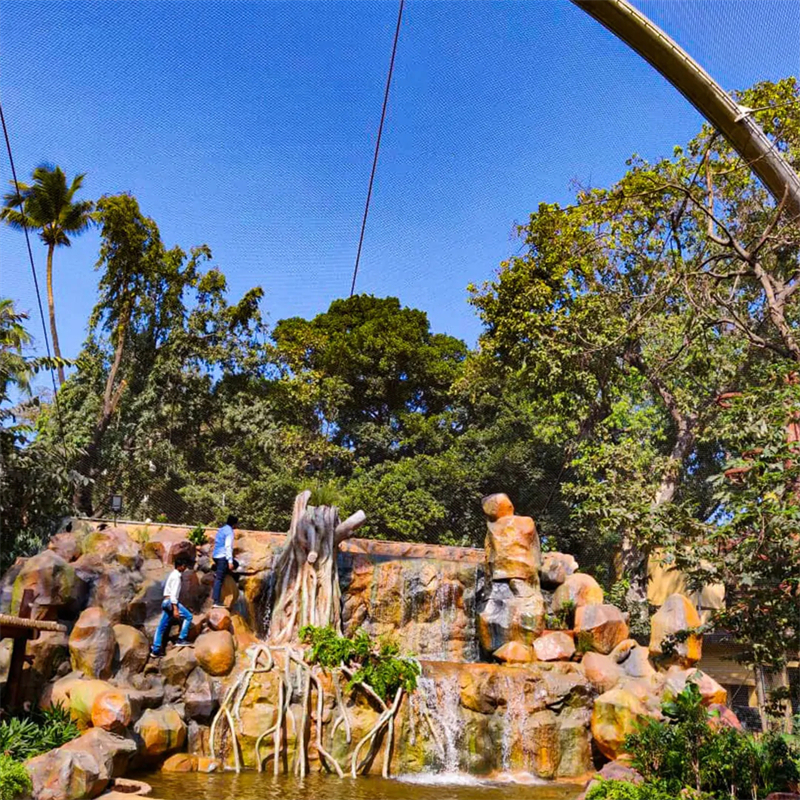
Mesh aperture might prevent escape, but if the wire diameter and rope structure are too light, the mesh will not survive years of chewing, clawing and jumping from strong animals. Zoo and wildlife enclosures must be designed for animal behaviour, not just opening size.
Rope Wire Mesh for Green Walls & Façade Safety
| Model | Wire rope diameter (mm) | Mesh aperture (mm) | Angle degrees | Light transmittance (%) | Material | Nominal breaking load (lbs) | Wire rope structure |
|---|---|---|---|---|---|---|---|
| RWM-GW01 | 1.2 | 40 × 40 | 60° | 58 | AISI 316 | 270 | 7×7 |
| RWM-GW02 | 1.2 | 50 × 50 | 60° | 62 | AISI 304 | 270 | 7×7 |
| RWM-GW03 | 1.5 | 50 × 80 | 60° | 66 | AISI 316 | 480 | 7×7 |
| RWM-GW04 | 1.5 | 60 × 60 | 60° | 65 | AISI 316 | 480 | 7×7 |
| RWM-GW05 | 1.6 | 60 × 80 | 60° | 68 | AISI 316 | 520 | 7×7 |
| RWM-GW06 | 1.6 | 80 × 80 | 60° | 70 | AISI 316 | 520 | 7×7 |
| RWM-GW07 | 2.0 | 80 × 100 | 60° | 72 | AISI 316 | 676 | 7×19 |
| RWM-GW08 | 2.0 | 100 × 100 | 60° | 74 | AISI 316 | 676 | 7×19 |
| RWM-GW09 | 2.0 | 100 × 150 | 60° | 77 | AISI 316 | 676 | 7×19 |
| RWM-GW10 | 2.4 | 120 × 150 | 60° | 79 | AISI 316 | 920 | 7×19 |
| RWM-GW11 | 2.4 | 150 × 200 | 60° | 82 | AISI 316 | 920 | 7×19 |
| RWM-GW12 | 3.0 | 150 × 260 | 60° | 84 | AISI 316 | 1600 | 7×19 |
| RWM-GW13 | 3.0 | 180 × 260 | 60° | 85 | AISI 316 | 1600 | 7×19 |
| RWM-GW14 | 3.0 | 200 × 300 | 60° | 86 | AISI 316 | 1600 | 7×19 |
| RWM-GW15 | 3.2 | 250 × 400 | 60° | 88 | AISI 316 | 1800 | 7×19 |
Secret 8 – Too Much Transparency Can Burn Plants and Overheat Façades
Ultra-open mesh can create glare, cause localised hot spots and stress plants on green walls. A slightly denser rope wire mesh often performs better, protecting vegetation, improving comfort and still keeping good transparency.
Rope Wire Mesh for Bridges & High-Security Zones
| Model | Wire rope diameter (mm) | Mesh aperture (mm) | Angle degrees | Light transmittance (%) | Material | Nominal breaking load (lbs) | Wire rope structure |
|---|---|---|---|---|---|---|---|
| RWM-H01 | 3.0 | 60 × 100 | 60° | 60 | AISI 316 | 1600 | 7×19 |
| RWM-H02 | 3.0 | 70 × 120 | 60° | 63 | AISI 316 | 1600 | 7×19 |
| RWM-H03 | 3.0 | 80 × 160 | 60° | 66 | AISI 316 | 1600 | 7×19 |
| RWM-H04 | 3.5 | 80 × 160 | 60° | 68 | AISI 316 | 1900 | 7×19 |
| RWM-H05 | 3.5 | 90 × 180 | 60° | 70 | AISI 316 | 1900 | 7×19 |
| RWM-H06 | 3.5 | 100 × 200 | 60° | 72 | AISI 316 | 1900 | 7×19 |
| RWM-H07 | 4.0 | 100 × 200 | 60° | 74 | AISI 316 | 2400 | 7×19 |
| RWM-H08 | 4.0 | 120 × 220 | 60° | 76 | AISI 316 | 2400 | 7×19 |
| RWM-H09 | 4.0 | 150 × 260 | 60° | 80 | AISI 316 | 2400 | 7×19 |
| RWM-H10 | 4.0 | 160 × 280 | 60° | 81 | AISI 316 | 2400 | 7×19 |
| RWM-H11 | 4.0 | 180 × 300 | 60° | 82 | AISI 316 | 2400 | 7×19 |
| RWM-H12 | 4.0 | 180 × 320 | 60° | 83 | AISI 316 | 2400 | 7×19 |
| RWM-H13 | 4.0 | 200 × 345 | 60° | 84 | AISI 316 | 2400 | 7×19 |
| RWM-H14 | 4.0 | 220 × 380 | 60° | 85 | AISI 316 | 2400 | 7×19 |
| RWM-H15 | 4.0 | 250 × 400 | 60° | 86 | AISI 316 | 2400 | 7×19 |
Secret 9 – Public-Area Load Rules for Rope Wire Mesh Are Much Tougher than Private Sites
Bridges, stadiums and transport hubs must satisfy strict line loads, crowd loads and deflection limits. Copying a residential rope mesh specification into these public projects is a fast way to fail testing and incur costly penalties or redesigns.
Main Advantages and Typical Applications of Rope Wire Mesh
Key Advantages
- Soft but firm: absorbs impact without breaking, while maintaining a safe barrier.
- Highly adaptable: easily follows curves, slopes and complex geometries.
- Excellent transparency: preserves views and CCTV sight lines.
- Environmentally friendly: fully recyclable stainless steel, with no toxic coatings required.
- Modern aesthetic: clean, minimalist and “high-tech” appearance.
- Corrosion resistance: especially high when using 316 / 316L grades in harsh environments.
Secret 10 – “Maintenance-Free Rope Wire Mesh” Is a Dangerous Promise
Even the best stainless steel mesh needs basic care. Anchors, clamps, boundary cables and tensioners require periodic inspections and occasional adjustment. Ignoring minor issues can lead to serious problems under storm loads or crowd events.
Typical Applications
- Residential and commercial perimeter fences
- Balcony and stair balustrades
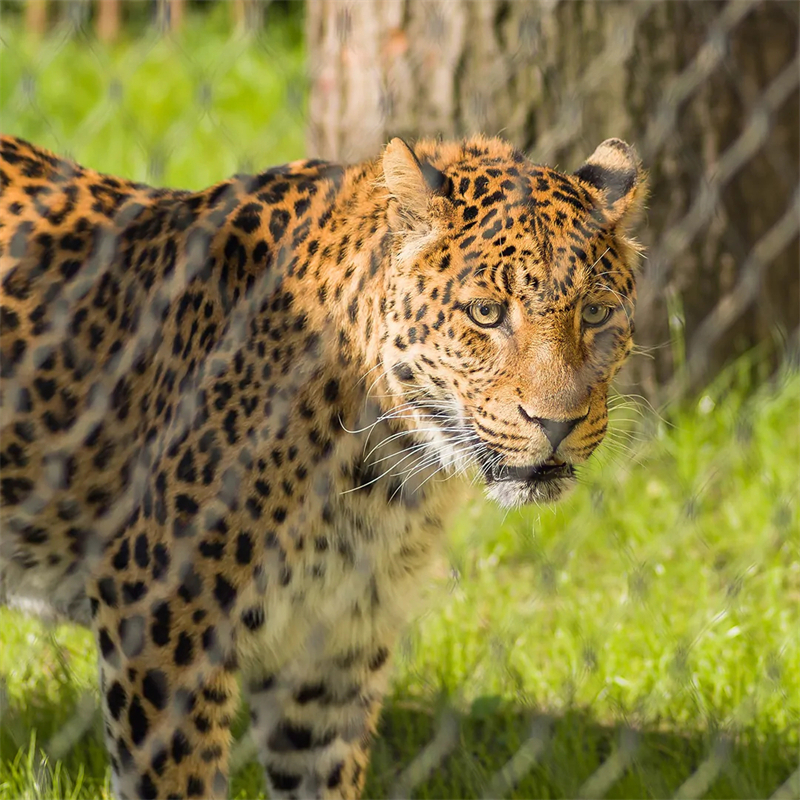
- Zoo, safari park and wildlife enclosures
- Aviaries and bird exhibits
- Pedestrian bridges and overpasses
- Stadium fall-protection and anti-throw screens
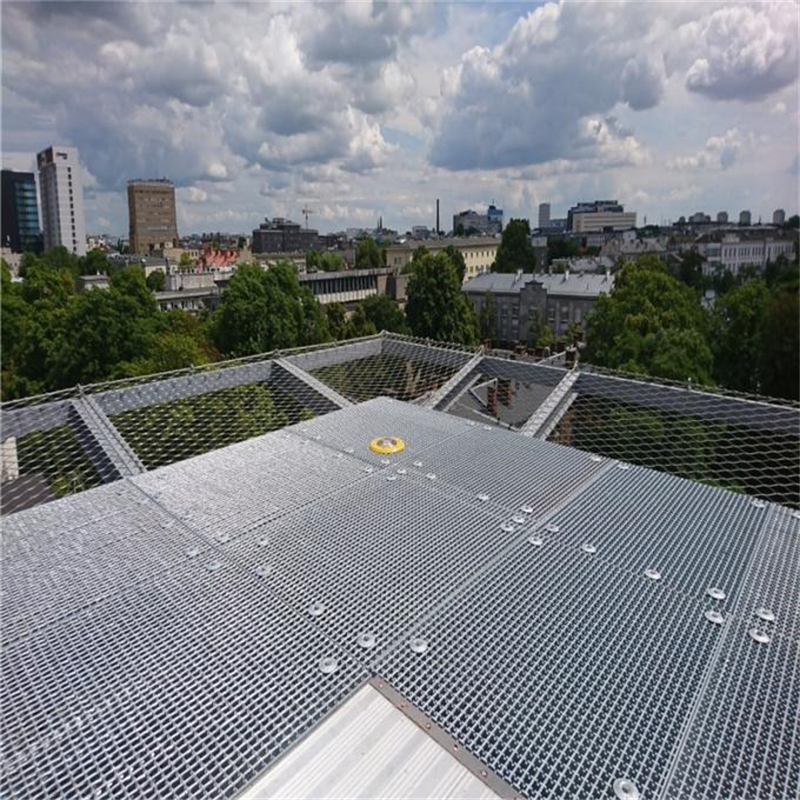
- Façade safety nets and green wall support systems
- Security fences where climbing must be discouraged
Secret 11 – Ignoring Climbability Can Turn Rope Wire Mesh into a Ladder
Certain apertures, angles and frame details create convenient footholds and handholds. To discourage climbing, you must consider climb routes, not just mesh strength and fence height.
Installation, Tensioning & Maintenance of Rope Wire Mesh
Installation and Tensioning Guidelines
- Use stiff, well-anchored frames and posts capable of resisting pre-tension and in-service loads.
- Position boundary cables, terminals and turnbuckles correctly to allow uniform tensioning.
- Fix one edge securely, then tension gradually from the opposite side.
- Keep diamond shapes regular; visible distortion is a sign of uneven load distribution.
- Finish cut ends safely with caps or recessed terminations to avoid injuries.
Cleaning and Periodic Checks
- Rinse with clean water; use only mild, neutral detergents when necessary.
- Avoid carbon steel brushes and abrasive tools that can deposit rust or scratch the surface.
- Increase cleaning frequency in coastal or industrial zones with high contamination.
- Re-check and adjust cable tension periodically to maintain design performance.
Secret 12 – Bad Tensioning Can Ruin a Perfect Rope Wire Mesh Design in One Day
Under-tensioned panels sag and look unsafe; over-tensioned panels overload anchors, posts and concrete edges. Installation quality is as critical as design calculations for long-term safety and appearance.
Trade Details: HS Code, Price, MOQ, Lead Time and Guarantee
Typical commercial details for rope wire mesh include:
- HS code: usually classified as stainless steel wire cloth or netting (exact code must be confirmed with your customs broker).
- Price: normally quoted per m² or per panel, depending on wire diameter, mesh aperture, angle degrees and material grade.
- MOQ (Minimum Order Quantity): often 50–100 m² per specification; smaller trial lots are possible but with higher unit costs.
- Production time: typically about 10–25 days after deposit and approval of shop drawings.
- Payment terms: usually T/T with 30% deposit and 70% before shipment; L/C at sight can be used for large projects.
- Packing: rolls or flat panels wrapped in plastic film, edge-protected and packed in cartons or wooden cases with clear labels.
- Guarantee: commonly 5–10 years against corrosion and manufacturing defects, provided the correct grade is chosen for the environment.
Secret 13 – Wrong HS Code or Poor Packing Can Eat Your Rope Wire Mesh Profit
Incorrect customs codes, documentation problems and inadequate packing can cause delays, fines and damage in transit. Re-fabrication and airfreight replacements can cost more than your entire margin on the job.
How to Choose a Rope Wire Mesh Supplier
When selecting a supplier, look beyond the lowest unit price and check:
- Do they ask about environment, loads, angle degrees and applicable codes?
- Can they provide detailed drawings, physical samples and similar reference projects?
- Do they offer both ferruled and knotted types with clear technical specifications?
- Can they supply mill certificates, QC records and independent test reports?
- Will they support you with installation guidance, pre-assembly and mock-ups?
Secret 14 – Treating Rope Wire Mesh as a Commodity Dumps All Long-Term Risk on You
If you buy purely on price without technical support or documentation, any corrosion, failure or safety claim will usually fall on the buyer and installer – not the cheapest factory. A technical partner is often far cheaper than a future claim.
Secret 16 – Cheap Accessories Quietly Become the Weakest Link
Low-grade clamps, turnbuckles, boundary cables or bolts will often fail long before the mesh itself. The rope wire mesh system is only as strong as its weakest accessory component.
Secret 17 – Skipping Mock-Ups Means You Discover Problems When It’s Most Expensive
A small on-site mock-up can reveal issues with visibility, angle degrees, climbability, hand-feel and comfort. If you skip this step, you only discover problems after full installation – when corrections are slow and costly.
Conclusion
Rope wire mesh can be a long-term asset for any project: almost invisible safety, durable stainless steel, and clean, contemporary architecture. That performance is only achieved when you control the 17 hidden details above – especially material grade matching, frame stiffness, mesh aperture and angle, accessory quality, public-area load rules and export handling.
If these factors are ignored, the same rope wire mesh that looks perfect in renderings can quickly turn into corrosion stains, failed inspections, redesign bills, schedule penalties and serious safety claims. Careful design, specification, supply and installation turn rope wire mesh into a reliable, high-performance solution instead of a long-term risk.