Your One-Stop Wire Mesh Fence Supplier | POLYMETAL
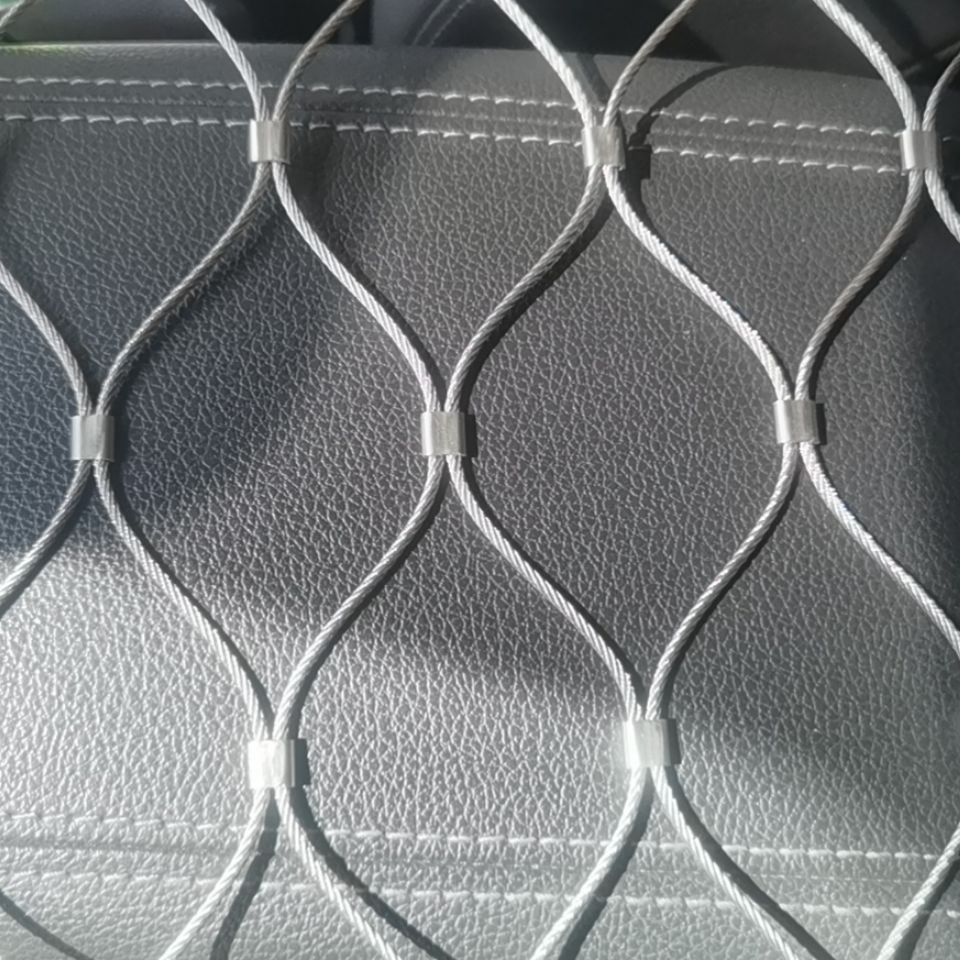
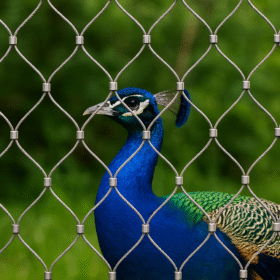
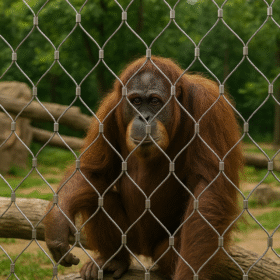
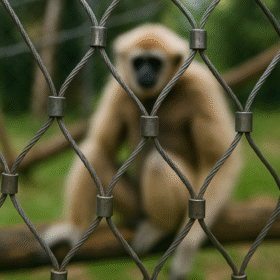
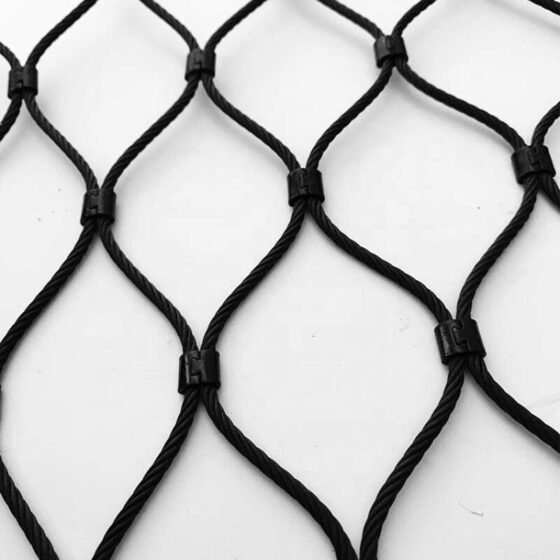
POLYMETAL stainless steel ferrule rope mesh – flexible, safe and durable cable mesh for animals and people.
When we compare knotted rope mesh with stainless steel ferrule rope mesh, knotted mesh has several disadvantages:
More expensive and slower to make
Knotted mesh is usually hand-woven. This takes more time and more labour, especially for small mesh openings or thick cables. Because of this, knotted rope mesh is often more expensive than stainless steel ferrule rope mesh for the same size panel.Harder to keep the mesh size and shape
In knotted mesh, the ropes cross over and under each other. Under tension or impact, the knots can move slightly and the diamond openings can change shape more easily.
In stainless steel ferrule rope mesh, each crossing is fixed with a metal ferrule, so the mesh aperture stays more stable and is easier to control.Less neat, modern appearance
Knotted rope mesh shows the rope crossings more clearly and can look “busier” or less flat. For modern zoo projects and architectural facades, designers often prefer ferrule mesh because the small ferrules create a cleaner, more regular and more “architectural” look.More difficult to cut and adjust on site
If you cut a knotted mesh panel, the weave can loosen and you may need to re-weave or re-knot the ropes. This makes on-site adjustment more difficult.
With stainless steel ferrule rope mesh, the panel can be trimmed and then re-finished at the edges with new ferrules or edge cables more easily.Higher skill required for installation and repair
To install or repair knotted mesh correctly, workers need to know how to weave and tighten the knots properly. If it is done badly, the mesh can deform or lose tension.
Ferrule rope mesh is simpler: most of the work is already done in the factory, and installers mainly need to fix and tension the finished panels.
Types of Ferrules for Stainless Steel Rope Mesh
When we talk about ferrules for stainless steel rope mesh, we mean the metal sleeves that are pressed around the wire ropes to connect them at the mesh intersections or at the rope ends. They are critical for the strength, safety and appearance of stainless steel ferrule rope mesh.
1. Material – What the Ferrules Are Made Of
Most ferrules for stainless steel ferrule rope mesh are made of stainless steel.
They use AISI 304, 304L, 316 or 316L, which do not rust easily and look the same as the rope.
They last a long time outside, even in wet or coastal areas.
For POLYMETAL rope mesh, stainless steel ferrules are the normal and recommended choice.
Aluminum ferrules are sometimes used on normal wire ropes, but they are not good for serious zoo or building safety use. They rust faster and do not look as good as stainless steel.
 stainless steel ferrule |  Aluminum ferrules |
2. Shape – How the Ferrules Look
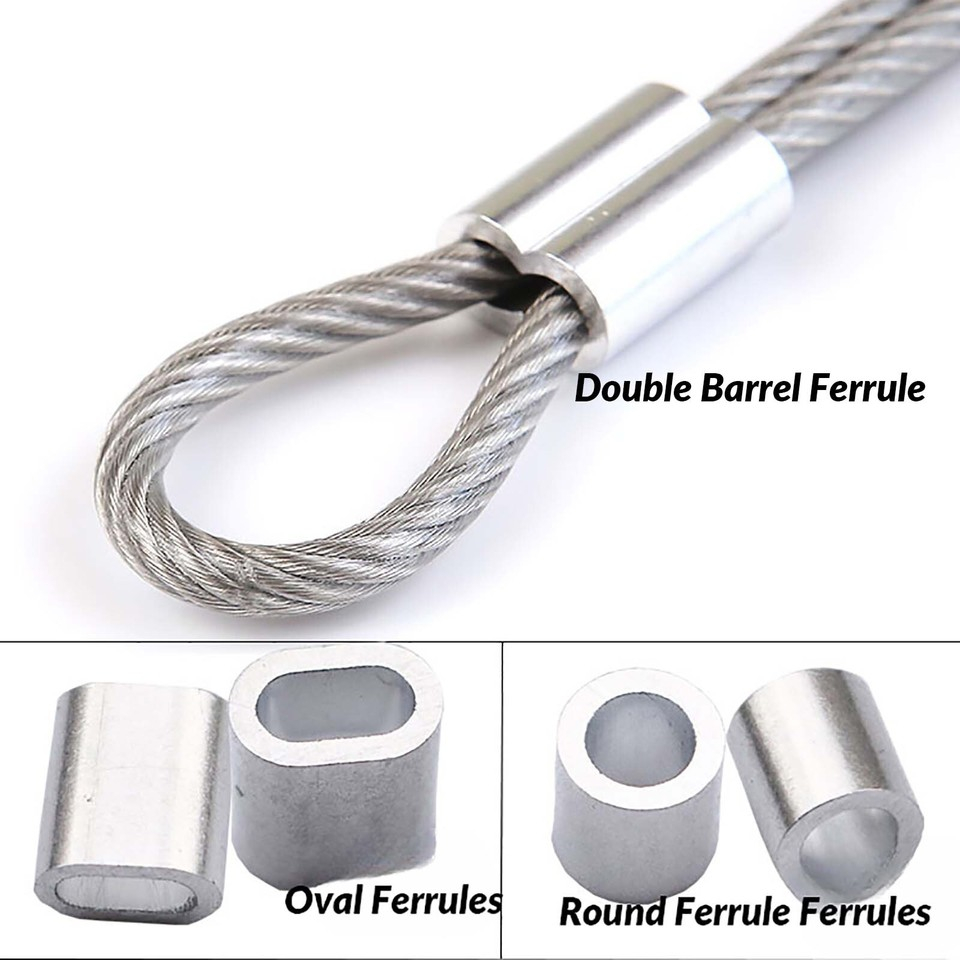
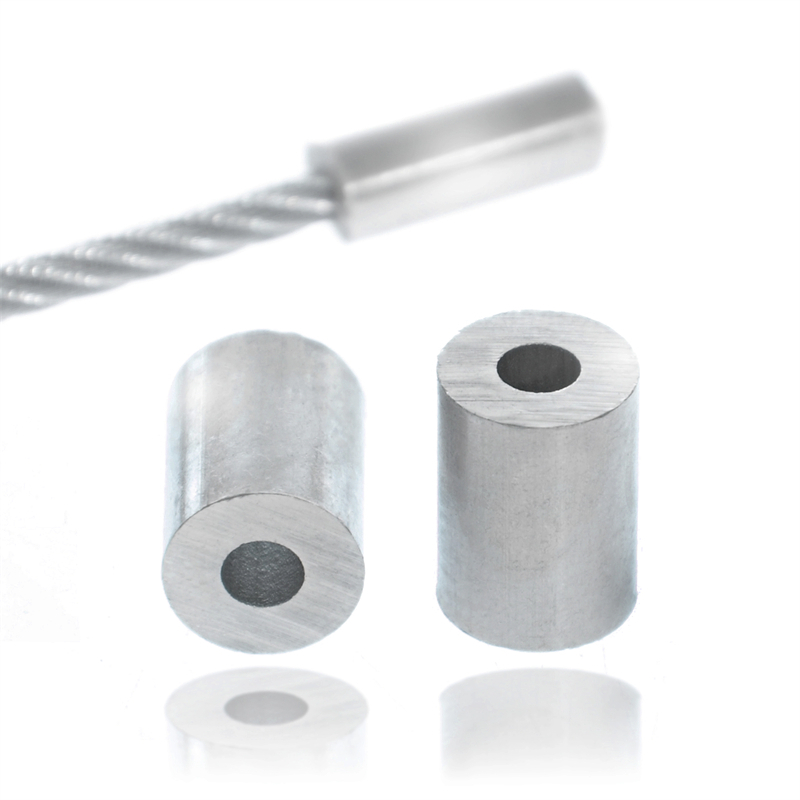
Round or cylindrical ferrules look like small tubes. After pressing, they are a little flat but still neat and compact. This is the most common type for zoo and architectural stainless steel ferrule rope mesh.
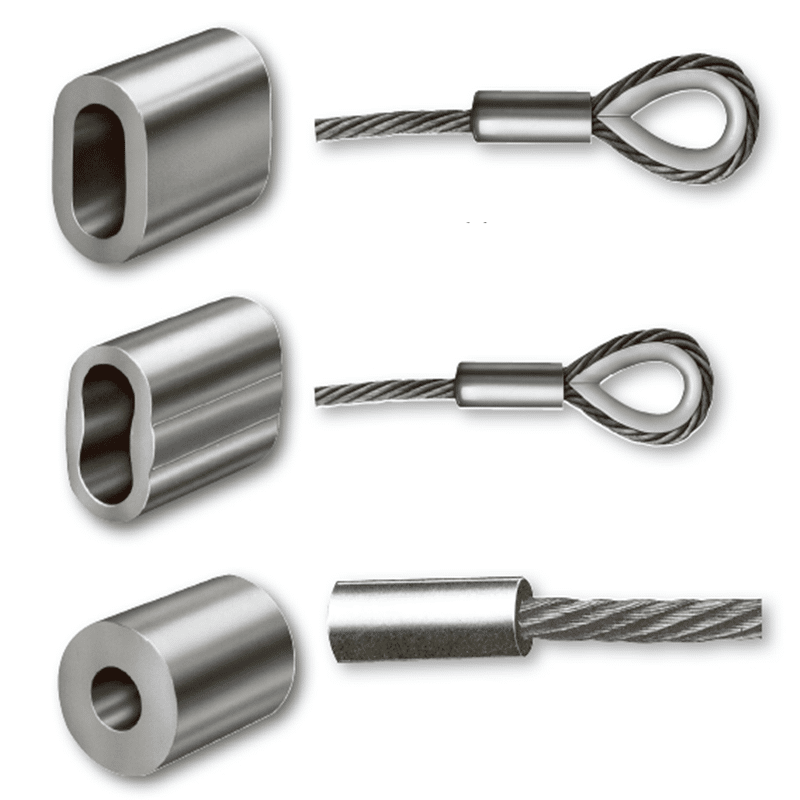 |  |
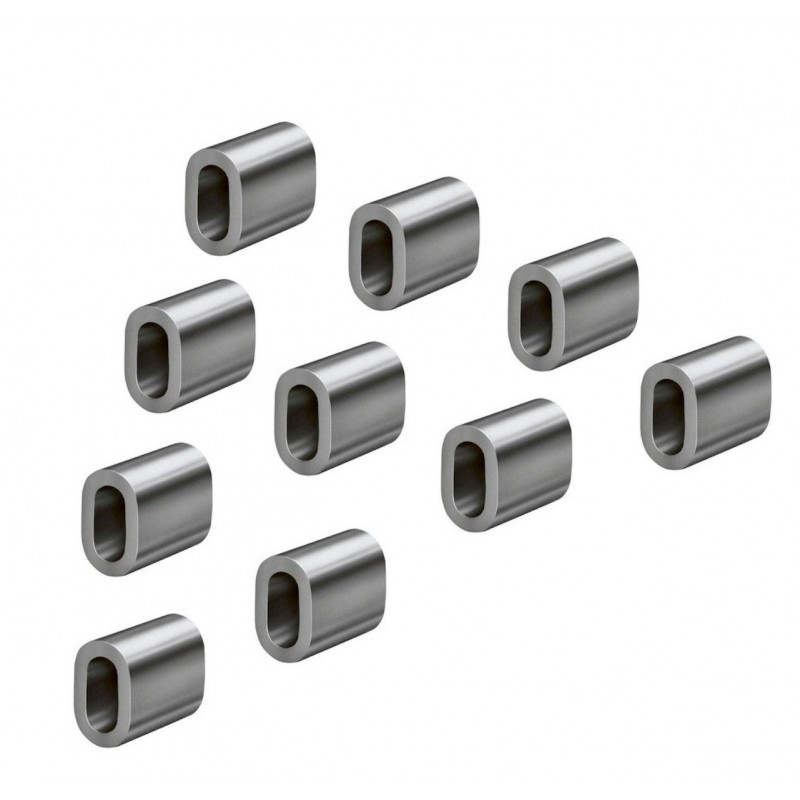
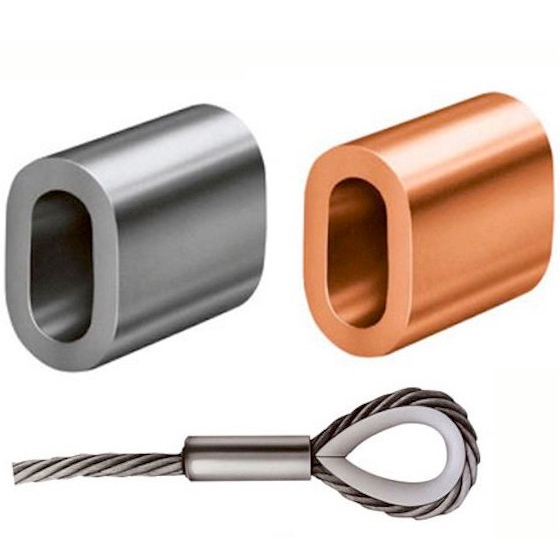
Oval ferrules are a little oval in shape. They hold two ropes more tightly and are used when extra grip or a special look is needed.
 |  |
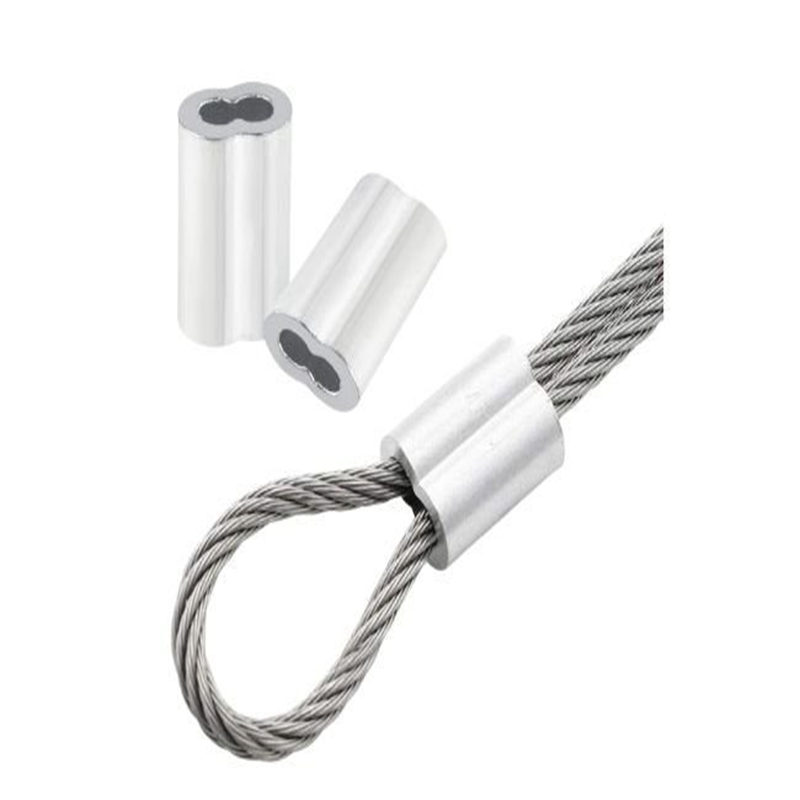
Flat or hexagonal ferrules are pressed so that the outside looks flat or multi-sided. They are used when the designer wants a stronger “technical” or special appearance.
|  |
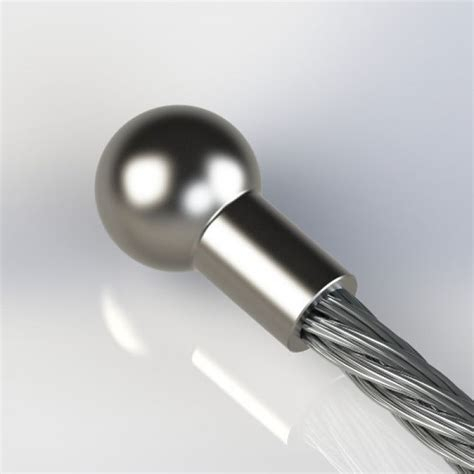
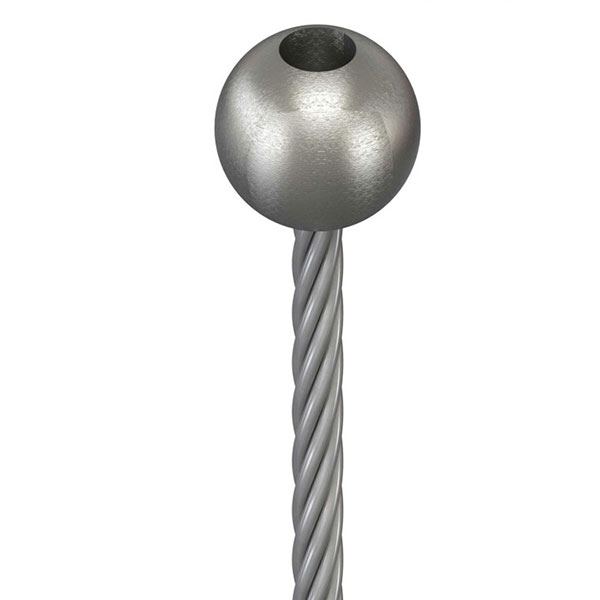
Ball or end ferrules are like small balls or rounded caps at the rope ends. They protect the rope ends, remove sharp points and make the mesh look cleaner on the edges.
 |  |
3. Function – Where the Ferrules Are Used in the Mesh
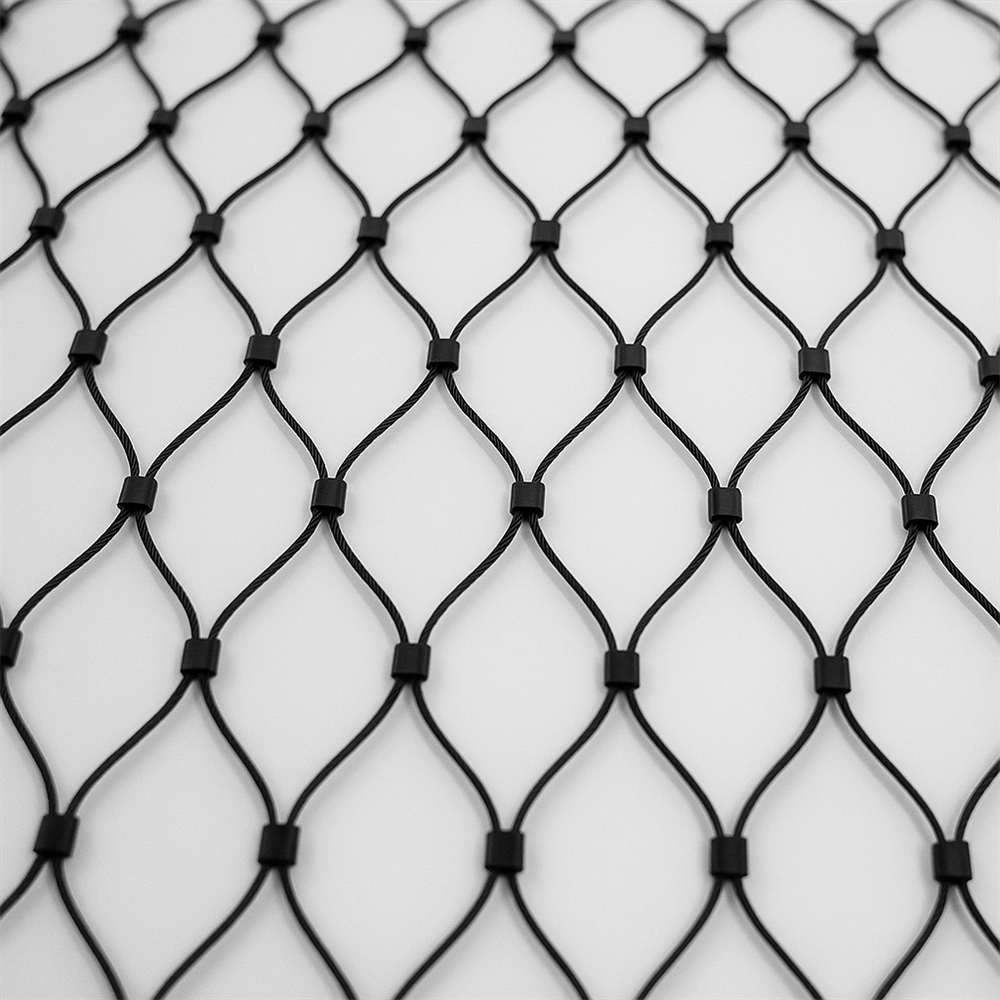
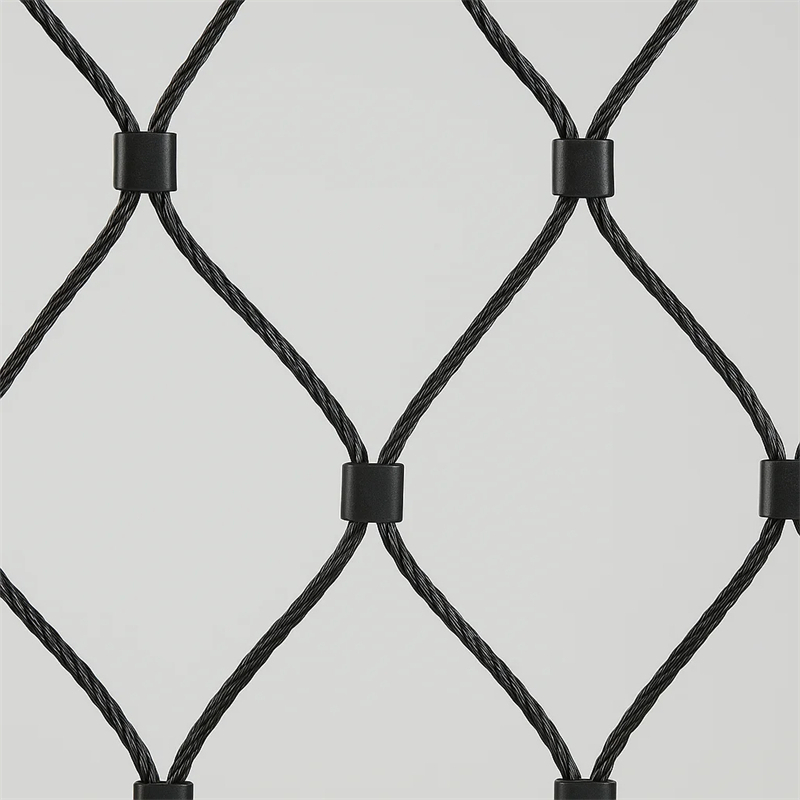
Mesh node ferrules are used where two ropes cross. They fix the crossing and make the diamond opening. They are the main connection in the stainless steel ferrule rope mesh.
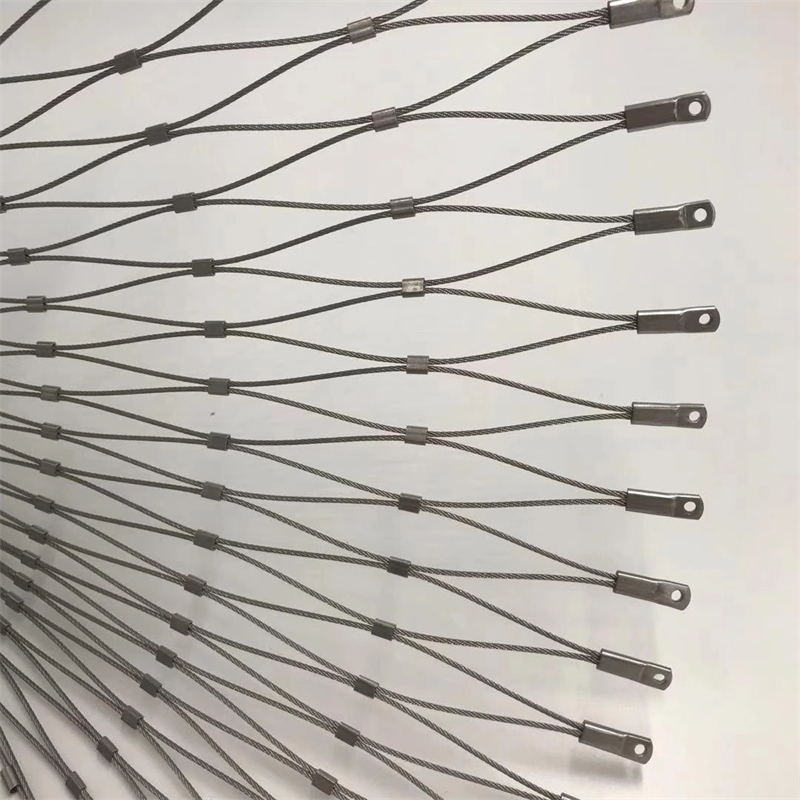
Edge ferrules are used along the border of the mesh panel. They hold the edge ropes and help connect the mesh to frames or support cables. They make the edges stronger and stop the mesh from loosening.
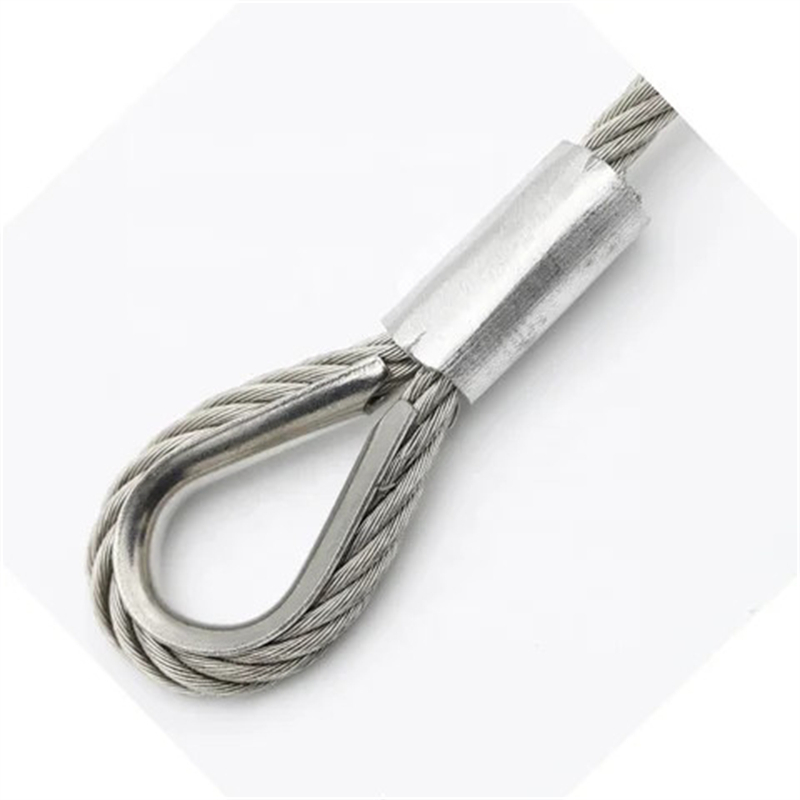
End ferrules (terminal ferrules) are used at the rope ends. They allow the rope to be fixed to eye bolts, turnbuckles, brackets or other hardware around the structure.
|  |  |
4. Installation – How the Ferrules Are Pressed
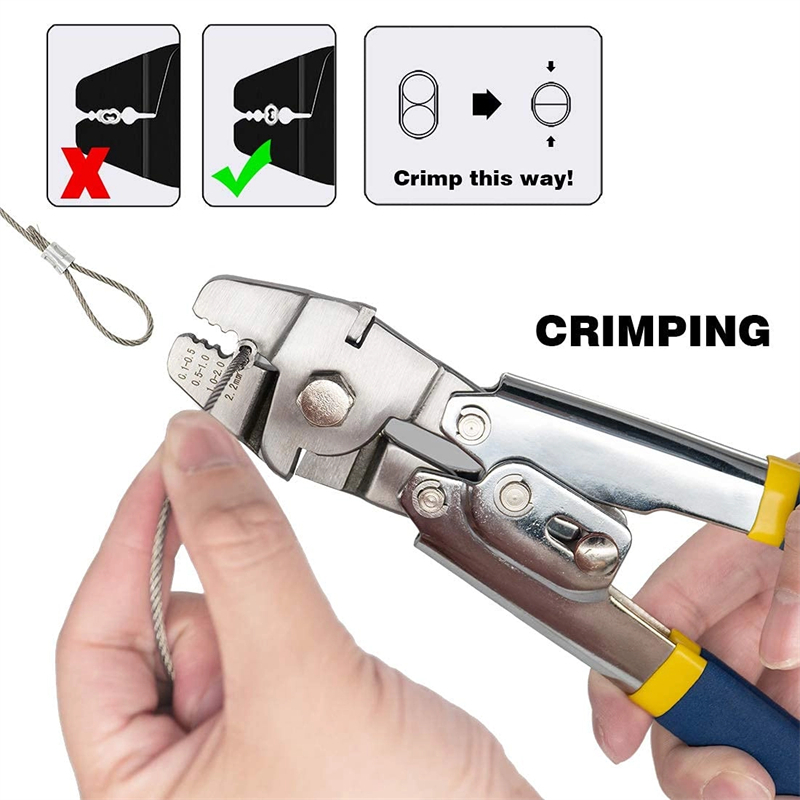
Factory swaged ferrules are pressed in the factory by hydraulic machines. This makes every ferrule the same size and shape, and the strength is tested and reliable. This is the standard method for POLYMETAL stainless steel ferrule rope mesh.
On-site swaged ferrules are pressed on the project site with hand or portable tools. They are used for small repairs, adjustments or special joints. They must be installed by experienced workers so the rope is not damaged and the ferrule is tight enough.
 |  |
Product Introduction
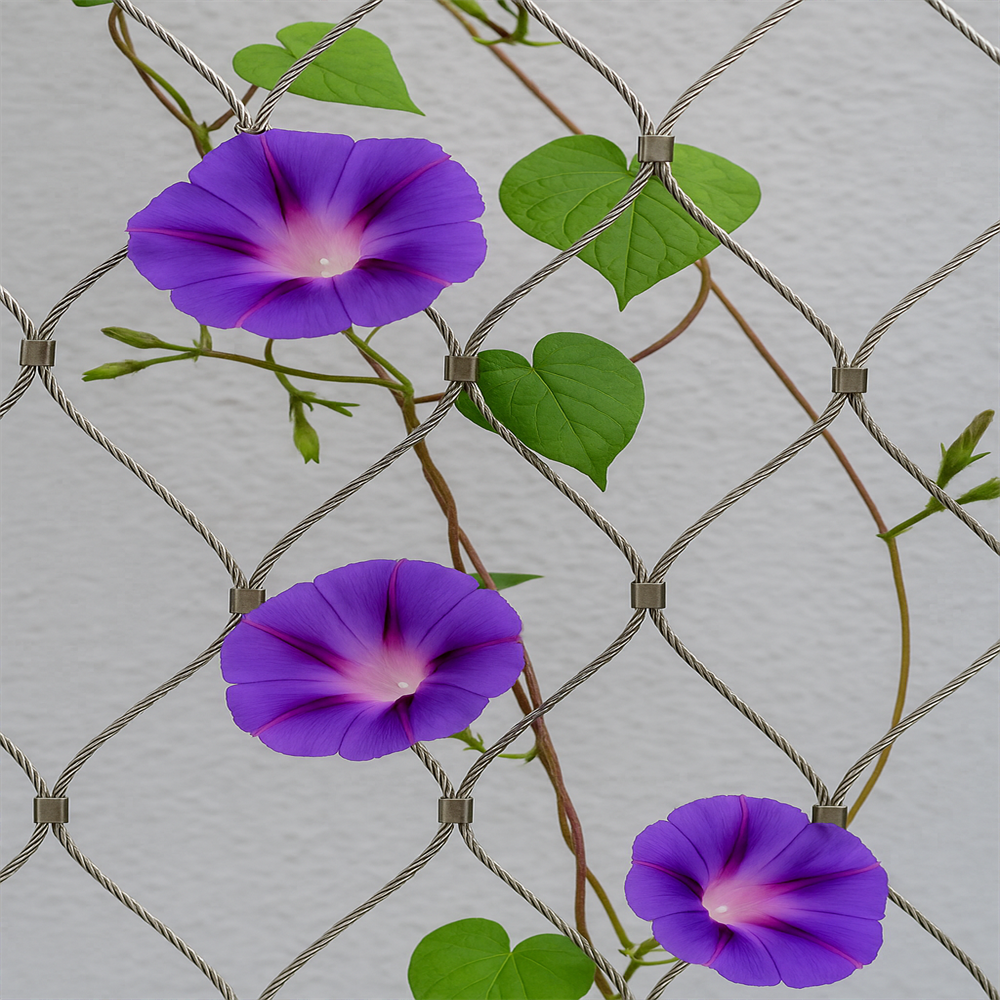
Stainless steel ferrule rope mesh is a flexible, high-tensile cable mesh made from parallel stainless steel wire ropes connected by stainless steel ferrules. The mesh forms a diamond pattern with a standard angle of about 60°, providing high transparency and safety at the same time.POLYMETAL stainless steel ferrule rope mesh is manufactured from AISI 304, 304L, 316 or 316L stainless steel cable in 7×7 or 7×19 constructions. Common rope diameters are 1.2 mm, 1.6 mm, 2.0 mm, 2.4 mm, 3.2 mm, 4.0 mm, and mesh apertures can be customized to suit different animals or architectural designs.
Basic Specifications
| Item | Details |
|---|---|
| Product Name | Stainless steel ferrule rope mesh |
| Brand | POLYMETAL |
| Material Grade | Stainless steel 304, 304L, 316, 316L |
| Mesh Type | Ferruled mesh / Inter-woven (knotted) mesh |
| Cable Structure | 7×7, 7×19 |
| Wire Diameter | 1.2–4.0 mm (customized) |
| Mesh Opening | 25×25 mm to 120×120 mm (customized diamond openings) |
| Surface | Bright polished or PVC coated |
| Typical Uses | Zoo enclosure mesh, aviary mesh, safety mesh, handrail / balustrade infill, facade mesh |
304 / 316 and 304L / 316L Options
For stainless steel ferrule rope mesh, POLYMETAL offers:
- 304 / 316: Standard carbon content (~0.08%), suitable for most indoor and outdoor use.
- 304L / 316L: Low carbon content (~0.03%), improved resistance to high temperature
and intergranular corrosion, recommended for marine and coastal environments.
Standard Stainless Steel Ferrule Rope Mesh Parameters
| POLYMETAL Stainless Steel Ferrule Rope Mesh | |||||
|---|---|---|---|---|---|
| Item | Rope Dia. (inch) | Rope Dia. (mm) | Mesh Aperture (inch) | Mesh Aperture (mm) | Normal Break (lbs) |
| POLYMETAL-3212F | 1/8 | 3.2 | 4.75 × 4.75 | 120 × 120 | 1600 |
| POLYMETAL-3210F | 1/8 | 3.2 | 4 × 4 | 102 × 102 | 1600 |
| POLYMETAL-3290F | 1/8 | 3.2 | 3.55 × 3.55 | 90 × 90 | 1600 |
| POLYMETAL-3276F | 1/8 | 3.2 | 3 × 3 | 76 × 76 | 1600 |
| POLYMETAL-3250F | 3/32 | 2.4 | 2 × 2 | 51 × 51 | 1600 |
| POLYMETAL-2410F | 3/32 | 2.4 | 4 × 4 | 102 × 102 | 920 |
| POLYMETAL-2490F | 3/32 | 2.4 | 3.55 × 3.55 | 90 × 90 | 920 |
| POLYMETAL-2476F | 3/32 | 2.4 | 3 × 3 | 76 × 76 | 920 |
| POLYMETAL-2460F | 3/32 | 2.4 | 2.4 × 2.4 | 60 × 60 | 920 |
| POLYMETAL-2450F | 3/32 | 2.4 | 2 × 2 | 51 × 51 | 920 |
| POLYMETAL-2076F | 5/64 | 2.0 | 3 × 3 | 76 × 76 | 676 |
| POLYMETAL-2060F | 5/64 | 2.0 | 2.4 × 2.4 | 60 × 60 | 676 |
| POLYMETAL-2050F | 5/64 | 2.0 | 2 × 2 | 51 × 51 | 676 |
| POLYMETAL-2038F | 5/64 | 2.0 | 1.5 × 1.5 | 38 × 38 | 676 |
| POLYMETAL-1676F | 1/16 | 1.6 | 3 × 3 | 76 × 76 | 480 |
| POLYMETAL-1650F | 1/16 | 1.6 | 2 × 2 | 51 × 51 | 480 |
| POLYMETAL-1638F | 1/16 | 1.6 | 1.5 × 1.5 | 38 × 38 | 480 |
| POLYMETAL-1630F | 1/16 | 1.6 | 1.2 × 1.2 | 30 × 30 | 480 |
| POLYMETAL-1625F | 1/16 | 1.6 | 1 × 1 | 25.4 × 25.4 | 480 |
| POLYMETAL-1238F | 3/64 | 1.2 | 1.5 × 1.5 | 38 × 38 | 270 |
| POLYMETAL-1230F | 3/64 | 1.2 | 1.2 × 1.2 | 30 × 30 | 270 |
| POLYMETAL-1225F | 3/64 | 1.2 | 1 × 1 | 25.4 × 25.4 | 270 |
Other stainless steel ferrule rope mesh sizes and breaking loads can be customized on request.
Main Applications
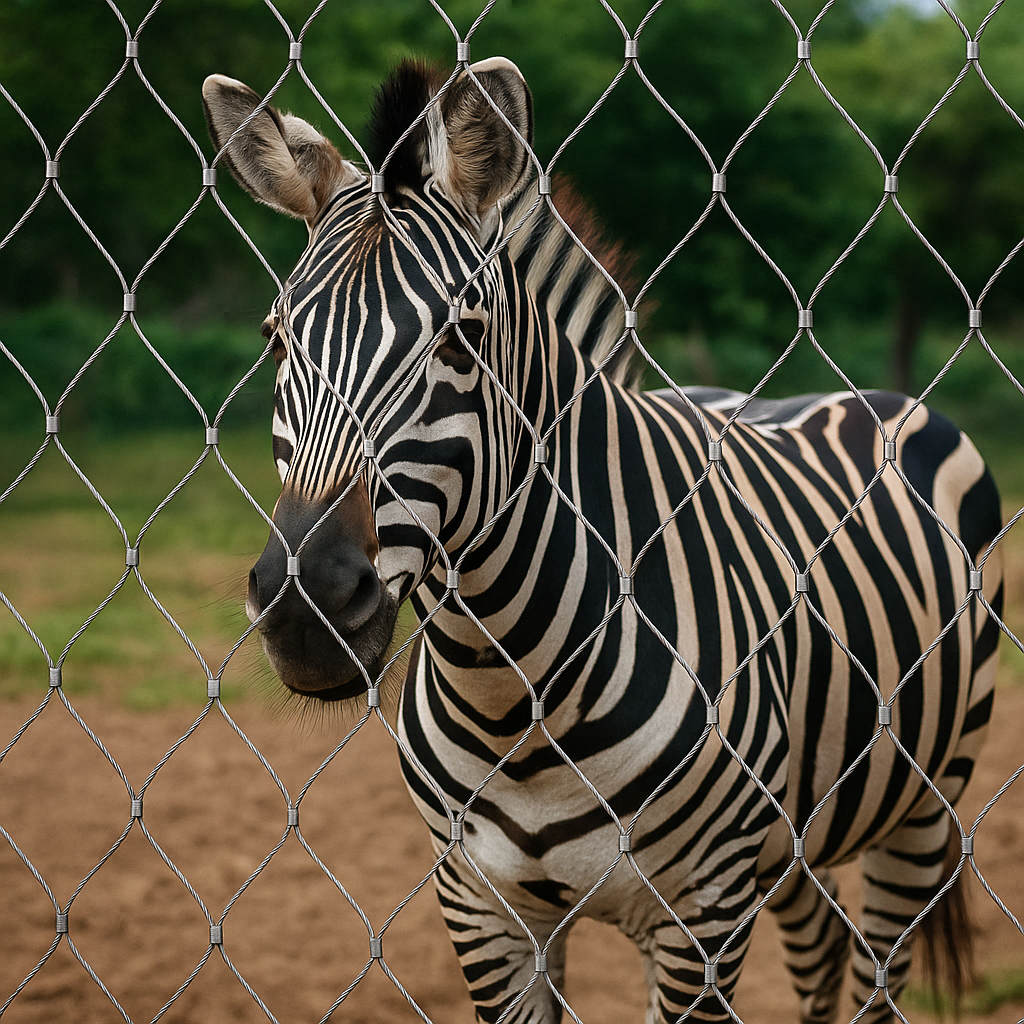
Zoo & Animal Enclosure Mesh
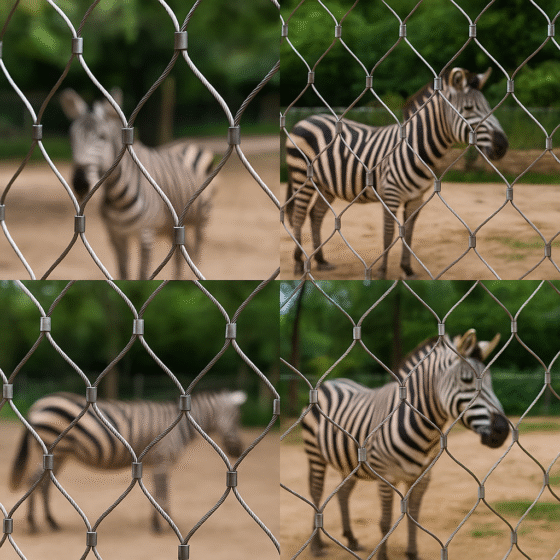
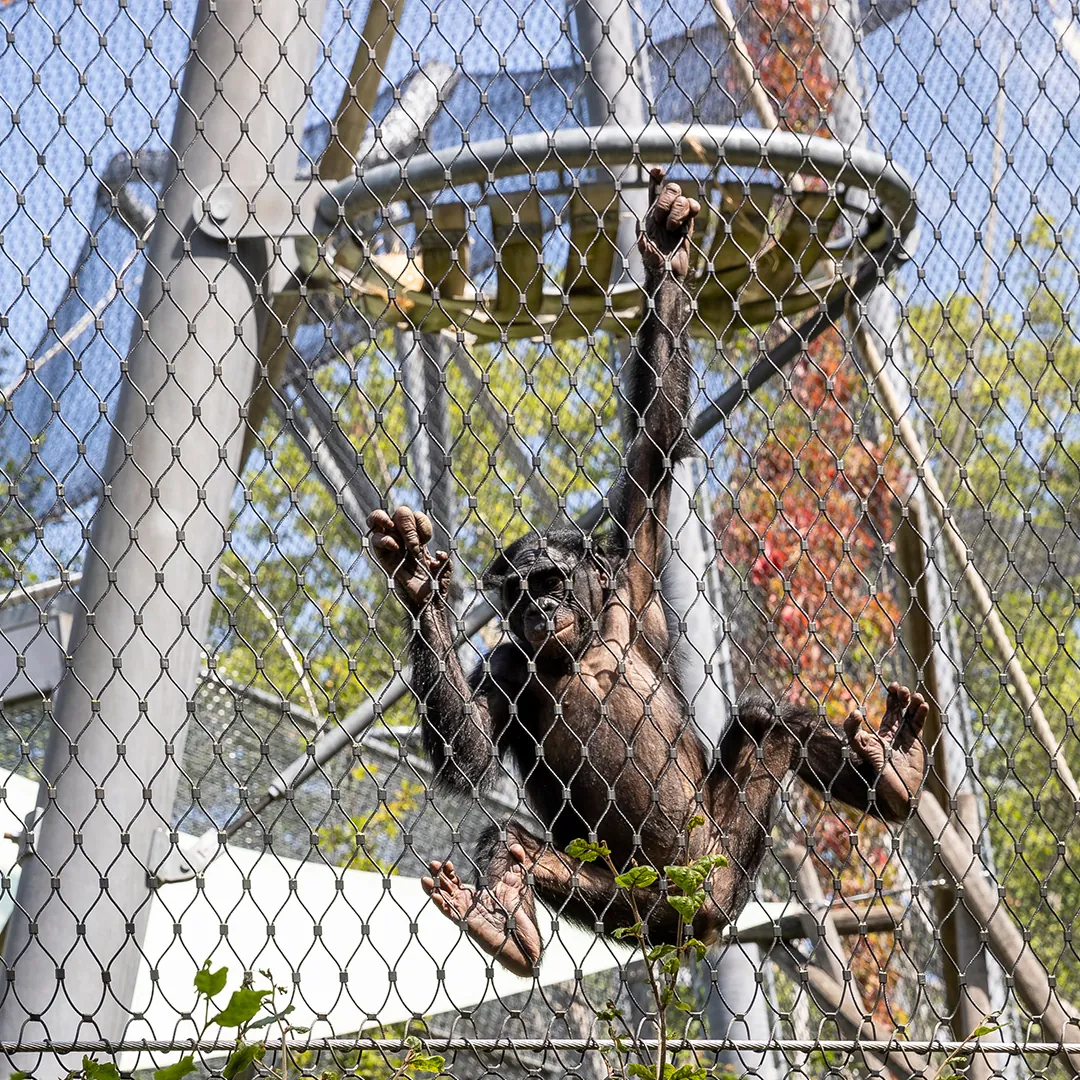
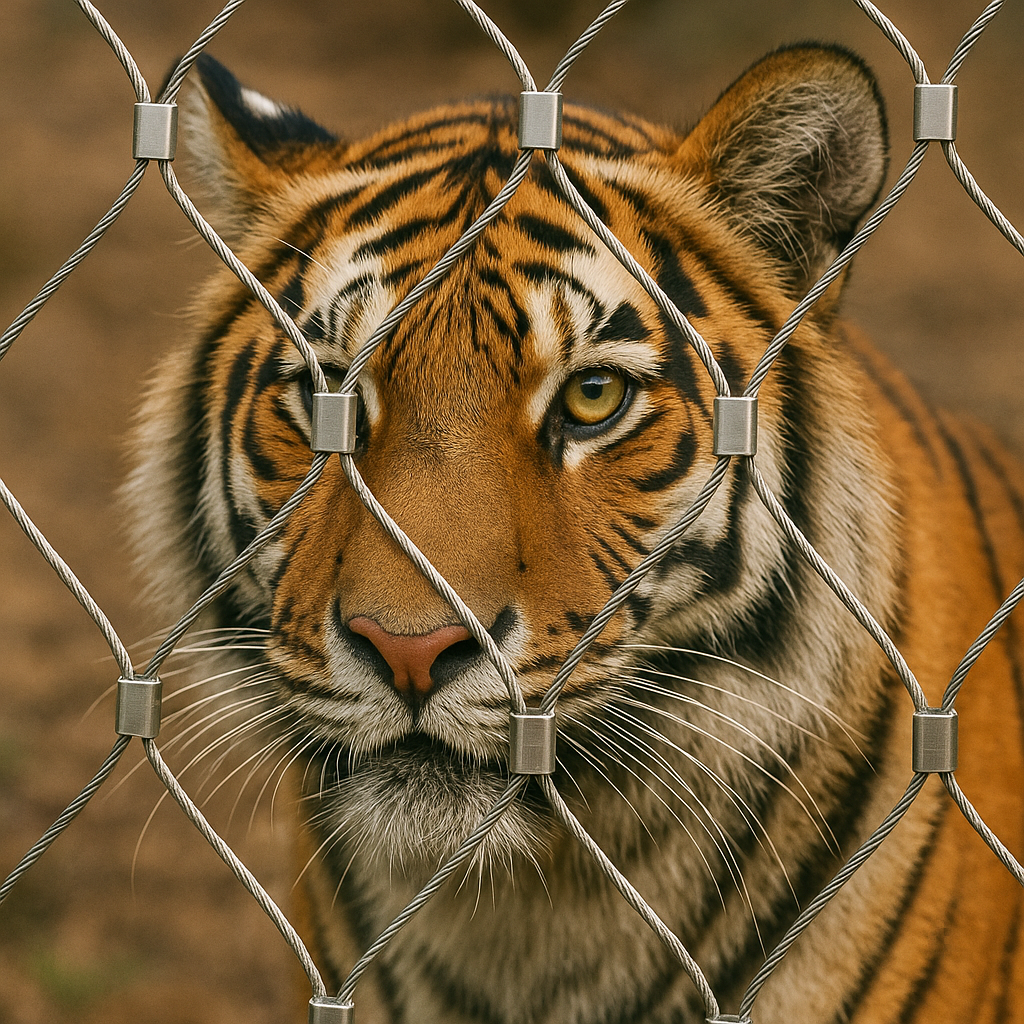
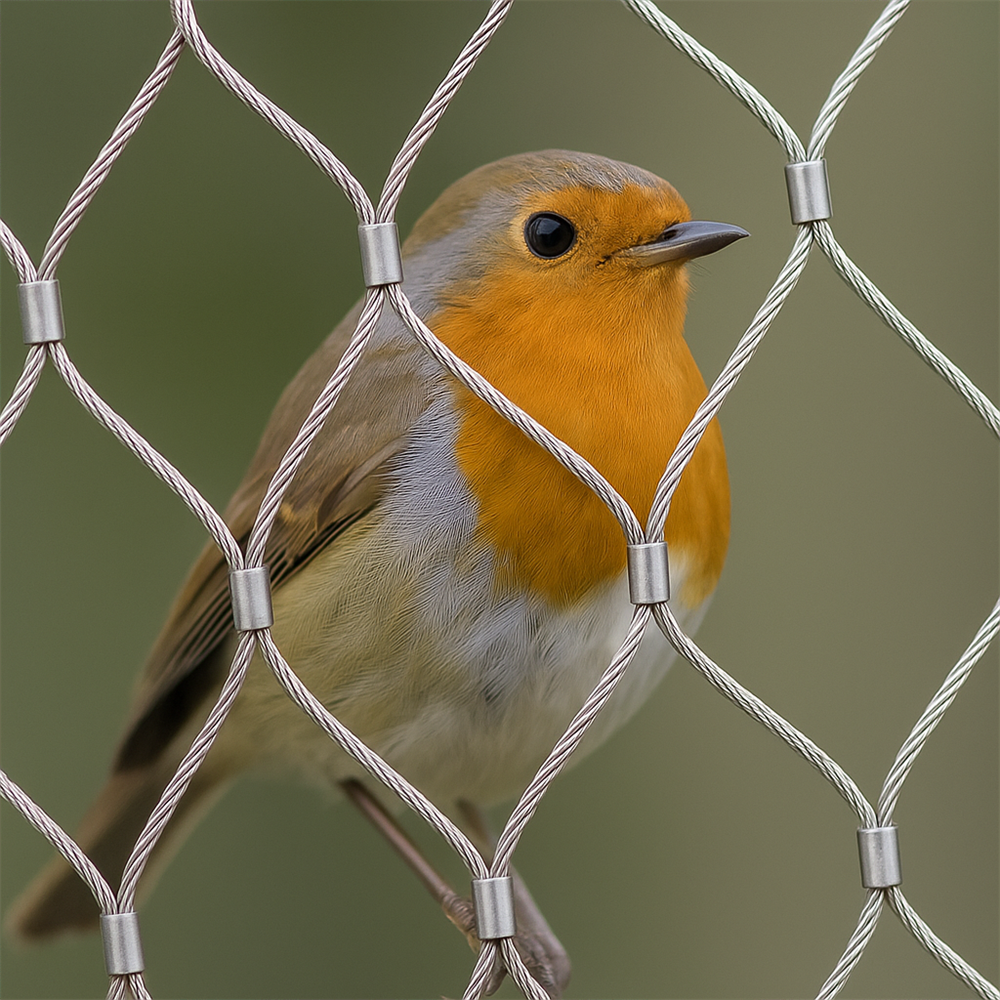
POLYMETAL stainless steel ferrule rope mesh is widely used as zoo enclosure mesh and aviary mesh.
The cable mesh combines high strength with elasticity, making it ideal for:
- Big cat enclosures (tigers, lions, leopards)
- Primate enclosures (monkeys, gibbons, gorillas)
- Aviary and birdcage mesh
- Walk-through animal tunnels and overhead passages
Architectural & Safety Mesh
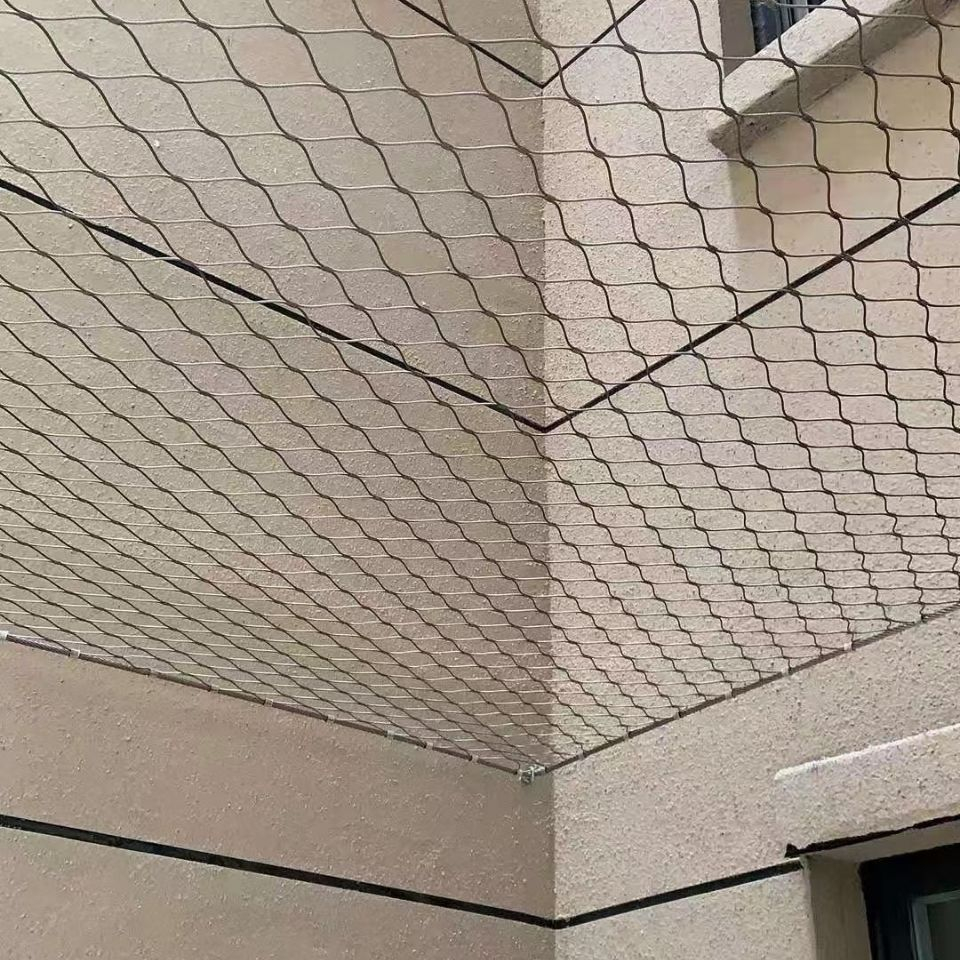
As an architectural element, stainless steel ferrule rope mesh is maintenance-free, corrosion-resistant and
lightweight. It is commonly used as:
- Balustrade and handrail infill mesh
- Staircase and balcony fall-prevention mesh
- Facade and green wall support mesh
- Bridge and walkway safety mesh
Packing & Shipping
- Mesh panels or rolls are packed in plastic film and strong cartons or wooden cases.
- Outer woven bags help protect stainless steel ferrule rope mesh from moisture during transport.
- Delivery options include express, air freight or sea freight according to order quantity.
About POLYMETAL
POLYMETAL is a professional manufacturer and exporter of stainless steel ferrule rope mesh and related cable mesh products. We focus on zoo enclosure mesh, aviary bird mesh, safety mesh and architectural rope mesh solutions.
With years of experience in stainless steel wire rope processing, POLYMETAL provides:
- Factory-direct pricing and stable quality control
- Customized stainless steel ferrule rope mesh panel sizes and mesh openings
- Technical support for design and installation
- Fast response and reliable after-sales service
Contact POLYMETAL
For your next zoo enclosure, aviary, balustrade or facade project, contact POLYMETAL for detailed stainless steel ferrule rope mesh solutions. Send your required height, width, mesh opening and wire diameter, and we will recommend the suitable specification and quotation.