Your One-Stop Wire Mesh Fence Supplier | POLYMETAL
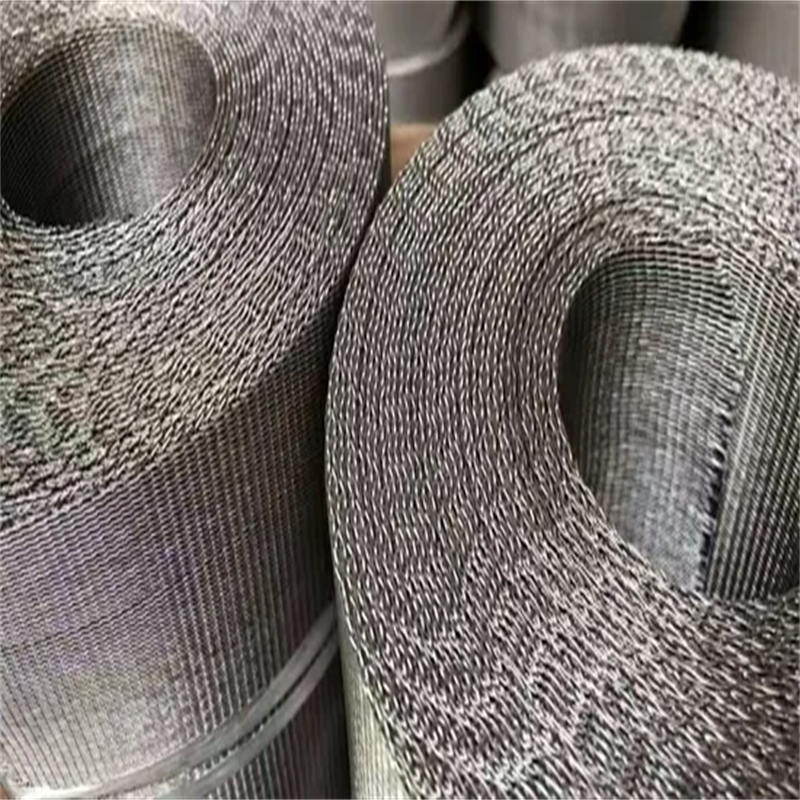
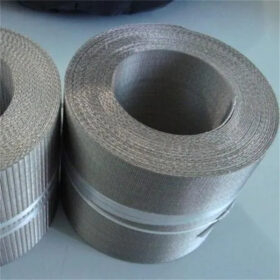
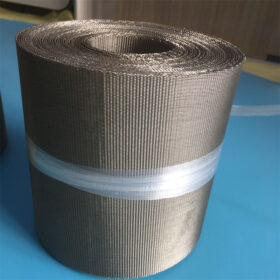

Stainless Steel Reverse Twill Dutch Weave Wire Mesh (RDTW) is a precision filtration cloth woven in a 2/2 twill pattern with many fine warp wires and comparatively thicker weft (shute) wires. This geometry produces a tight, stable pore field with high compressive strength and excellent resistance to deformation—ideal for high-pressure, high-temperature, and back-flushable processes.
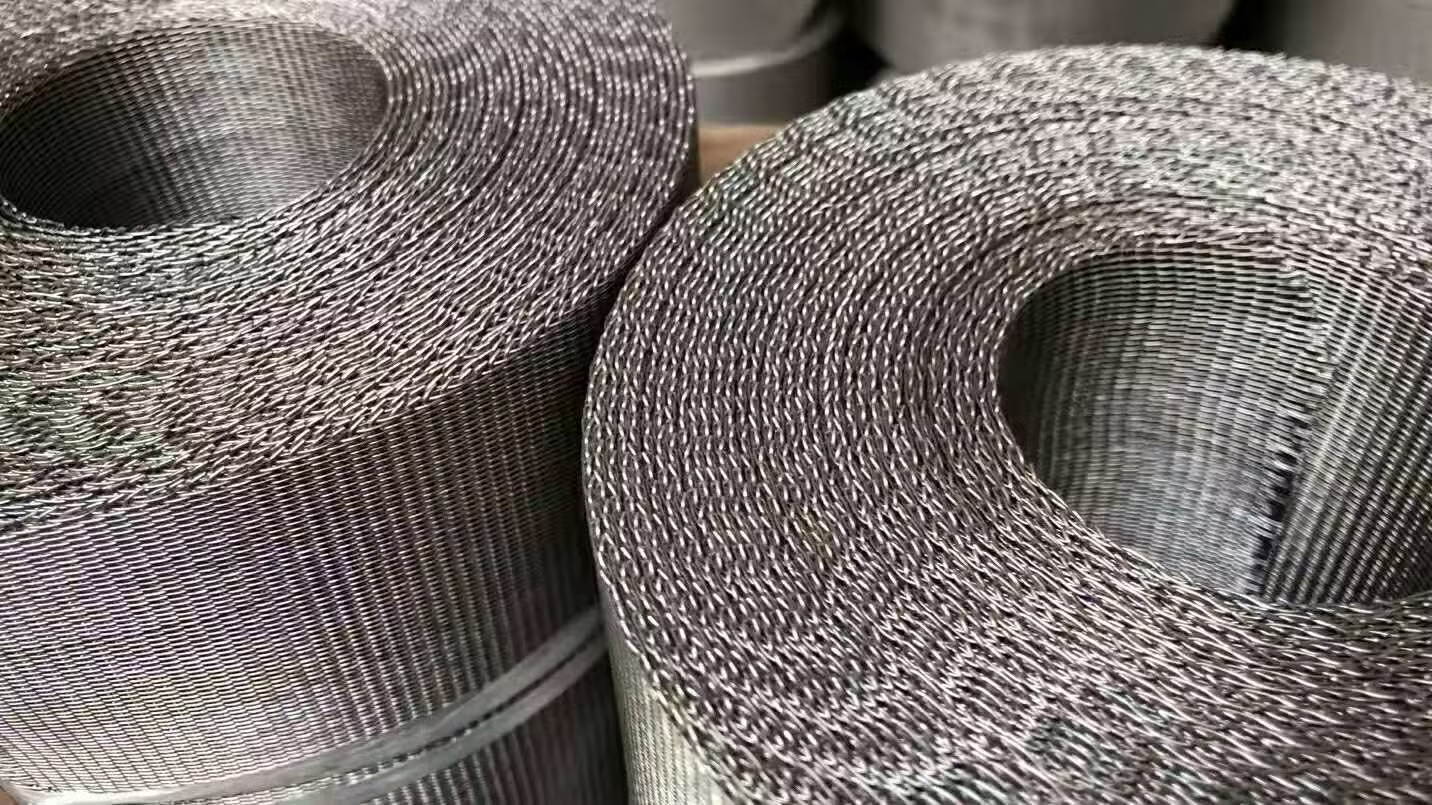
What makes Stainless Steel Reverse Twill Dutch Weave Wire Mesh special
Stable micron control: Compact structure maintains cut-point under load and thermal cycling.
High strength: Twill interlacing reduces wire deformation; handles pressure and abrasive streams.
Flow vs. retention balance: Optimized porosity delivers competitive ΔP at fine ratings.
Cleanable & reusable: Supports back-flush, ultrasonic, solvent and thermal cleaning (media-dependent).
Heat & corrosion resistance: Continuous service typically ~200–600 °C (grade & weave dependent); stainless resists many chemicals.
Materials & Supply Envelope Stainless Steel Reverse Twill Dutch Weave Wire Mesh
Wire grades: SS201, SS304/304L, SS316/316L (preferred for chlorides/chemicals), 321 on request.
Widths: 0.5–4.0 m (custom cuts available).
Roll length: 30.5 m standard or per request.
Wire diameter range: 0.02–2.00 mm (by weave).
Forms: Roll goods, cut parts (discs, rings, gaskets), cylindrical sleeves, and sintered laminates.
Finishes: Degreased, passivated; electropolished for low Ra and enhanced cleanability.
Representative RDTW Specifications
(Keep this block intact for quoting and QC reference.)
| Mesh (warp × weft) | Wire Ø warp (in) | Wire Ø weft (in) | Weave | Nominal retention (μm) | Thickness (in) | Porosity (%) | Weight (lb/ft²) | Absolute retention (μm) |
|---|---|---|---|---|---|---|---|---|
| 400 × 120 | 0.0026 | 0.0039 | RDTW | 60 | 0.010 | 61 | 0.15 | 60–70 |
| 325 × 39 | 0.0059 | 0.0118 | RDTW | 55 | 0.028 | 43 | 0.56 | 45–75 |
| 260 × 40 | 0.0059 | 0.0087 | RDTW | 125 | 0.024 | 53 | 0.41 | 80–95 |
| 228 × 36 | 0.0075 | 0.0110 | RDTW | 100 | 0.026 | 47 | 0.56 | 95–130 |
| 160 × 25 | 0.0124 | 0.0157 | RDTW | 145 | 0.043 | 39 | 1.02 | 90–125 |
| 160 × 24 | 0.0120 | 0.0157 | RDTW | 150 | 0.043 | 42 | 0.96 | 95–135 |
| 160 × 16.5 | 0.0120 | 0.0140 | RDTW | 125 | 0.041 | 44 | 0.87 | 110–150 |
| 152 × 24 | 0.0124 | 0.0140 | RDTW | 165 | 0.047 | 42 | 0.93 | 115–130 |
| 132 × 18 | 0.0140 | 0.0179 | RDTW | 200 | 0.052 | 57 | 0.95 | 180–220 |
| 132 × 16 | 0.0139 | 0.0180 | RDTW | 250 | 0.049 | 58 | 1.00 | 210–260 |
| 132 × 16 | 0.0140 | 0.0220 | RDTW | 350 | 0.049 | 45 | 1.11 | 300–350 |
| 72 × 15 | 0.0177 | 0.0177 | RDTW | 400 | 0.069 | 58 | 0.91 | 400–450 |
Notes:
Nominal vs. absolute: nominal is typical in service; absolute relates to bubble-point or calibrated challenge testing.
Porosity & thickness: higher values increase strength and dirt capacity but raise initial ΔP; size to your flow and cleaning regime.
Where Stainless Steel Reverse Twill Dutch Weave Wire Mesh is used
Water, oil, and fuel precision filtration (leaf, candle, cartridge, pleated).
Polymer & chemical fiber melt filtration (control layers and laminate faces).
Petroleum & chemical processing; high-temp flue-gas and vent protection.
Rubber & tire manufacturing; metallurgy slurries; vacuum filters.
Pharmaceutical & food fine screening with robust, cleanable media.
Base layer for sintered stainless laminates and porous metal elements.
Integration & Conversions
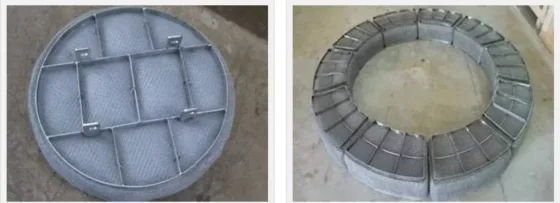
Cut parts: Discs/rings for screen packs, precision gaskets, custom contours (stamped, laser, water-jet).
Cartridge builds: Wrap to cylindrical sleeves or bond to perforated supports for high-ΔP and back-washable cartridges.
Sintered laminates: Diffusion-bond RDTW to support and drainage layers to achieve absolute ratings and exceptional rigidity.


Selection Guide Stainless Steel Reverse Twill Dutch Weave Wire Mesh
Chemistry & temperature: Choose 316/316L for chlorides/chemicals; 304/304L for general duty.
Micron target: Use the table above to select nominal/absolute cut-points; verify with sample/bubble-point data.
ΔP & flow: Match porosity/thickness to your flow curve and allowable pressure drop.
Cleaning method: If frequent back-flush or ultrasonic is planned, consider sintered laminates for shape retention.
Form factor: Roll goods for OEM fabrication, or order pre-cut parts/cylinders to speed installation.
QA, Tolerances & Documentation
Mesh count and wire diameter per industrial wire-cloth tolerances.
Optional inspections: bubble-point, permeability/ΔP curves, visual & dimensional reports.
Material traceability (heat numbers); passivation/electropolish certificates on request.
Packing & Logistics
Moisture-proof wrap → shock-protected wooden boxes (export-ready).
Rolls labeled with grade · weave · width · length · lot/date; cut parts bagged and batch-labeled.
Courier for samples/small lots; air/sea freight for bulk; can ship to your China forwarder.
RFQ Checklist (send these for a fast quote)
What is Stainless Steel Reverse Twill Dutch Weave Wire Mesh?
It’s a reverse-dutch filter cloth woven in a 2/2 twill pattern: many fine warp wires combined with thicker weft (shute) wires. The twill interlacing reduces wire deformation and stabilizes pore geometry under pressure and heat.
How is Reverse Twill Dutch different from Reverse Plain Dutch?
Both are “reverse dutch” (thin warp, thick weft). The twill version interlaces over-two/under-two, which distributes stress more evenly, improving compressive strength, durability, and retention stability at a given micron.
What micron range does Reverse Twill Dutch typically cover?
Common engineering ranges are ~75–400 μm nominal depending on mesh and wire sizes. Absolute ratings are higher than nominal and must be verified by bubble-point or calibrated challenge tests.
What is the difference between nominal and absolute ratings?
Nominal is the typical in-service cut-point (statistical). Absolute is the tightest guaranteed cut-point under standardized testing (e.g., bubble-point); it is always equal to or larger than the nominal rating for the same cloth.
Which stainless grades are most common?
304/304L and 316/316L are standard; 316/316L is preferred in chloride-bearing or aggressive chemistries. 201 and 321 can be supplied on request for specific cost or temperature needs.
Where is Stainless Steel Reverse Twill Dutch Weave Wire Mesh used?
Polymer and chemical-fiber melt filtration, pressure/leaf filters, centrifuges, vacuum filters, high-temperature gas protection, and liquid polishing across petroleum, chemical, rubber/tire, metallurgy, pharmaceutical, and food sectors.
How does Reverse Twill Dutch balance flow and retention?
Reverse dutch geometries produce precisely defined pores with comparatively high porosity for the grade. The twill path helps preserve that pore field under load, delivering competitive pressure drop at fine ratings.
Does standard spec data exist for selection?
Yes—engineers commonly select from tables listing mesh counts, warp/weft wire diameters, nominal/absolute retention, porosity, thickness, and areal weight to match a target micron and pressure-drop window.
What porosity should I expect?
Representative Reverse Twill Dutch grades show porosity roughly in the 39–61% range. Higher porosity generally lowers initial ΔP but also reduces wall mass and mechanical margin; sizing must consider both.
How do I estimate pressure drop (ΔP)?
Start from supplier porosity/thickness and flow-versus-ΔP curves for the chosen grade. If ΔP is too high, consider a coarser grade, reduce thickness, increase filtration area, or add a reinforced support to allow higher flow.
Can the cloth be cleaned and reused?
Yes. It supports back-flush, ultrasonic cleaning, and compatible chemical/solvent washes. Cleaning chemistry should match the process media and the alloy; many users also employ thermal bake-out where appropriate.
Can I get sub-50 μm performance?
For sub-50 μm, consider plain/twilled dutch micronic meshes or sintered stainless laminates that use Reverse Twill Dutch as one layer to achieve finer absolute ratings with better rigidity.
What formats are available—rolls or parts?
Both. Standard roll widths are typically 0.5–4.0 m with common roll lengths around 30.5 m. The cloth can be supplied as cut-to-size discs, rings, gaskets, sleeves, or cylinders.
Can it be combined with supports?
Yes. It’s often laminated or backed with perforated stainless plate or welded-wire cores to improve stiffness, resist collapse at high ΔP, and enhance backwash durability.
Are belt or continuous formats available?
Reverse dutch and reverse twill dutch meshes can be slit and supplied as belts with treated edges for continuous filtration lines that require stable tracking and high tensile strength.
What tolerances and QA should I expect?
Mesh count and wire diameter follow industrial wire-cloth tolerances. Optional QA includes dimensional checks, visual inspection, permeability/ΔP characterization, and bubble-point testing. Material heat-number traceability is commonly available.
Which weave should I pick for abrasive or cyclic service?
Reverse Twill Dutch is a strong choice thanks to its twill interlacing. For very high cyclic loads or aggressive backwash schedules, consider sintered laminates that immobilize the weave and raise yield strength.
How does temperature affect performance?
Stainless Reverse Twill Dutch typically handles continuous service from about 200 °C up to 600 °C depending on grade and design. Higher temperatures reduce yield strength—use thicker sections, supports, or laminates as needed.
What about corrosion beyond 316L?
For very aggressive media, Reverse Twill Dutch meshes can be woven in nickel-based alloys (e.g., Monel, Inconel, Hastelloy) if the required wire diameters are available. For harsh marine exposure where strength and chloride resistance matter, consider duplex stainless (e.g., 2205) or even titanium. For outdoor exclusion uses—such as bird wire mesh around intakes, vents, or structures—316/316L is usually sufficient; upgrade to duplex or nickel alloys in coastal splash zones or chemical atmospheres.
How do I specify for quotation?
Provide material grade, weave (Reverse Twill Dutch), target nominal/absolute micron, width and roll length or cut-part sizes, expected flow and ΔP, cleaning method, quantity, surface finish (passivated/electropolished), and packing/shipping terms.
Summary:
Stainless Steel Reverse Twill Dutch Weave Wire Mesh delivers a rare combination of tight, stable retention, high compressive strength, and cleanable, reusable service. From polymer melts and petroleum to water and food processes, RDTW lets you tune porosity, thickness, and strength precisely to your operating window.