Your One-Stop Wire Mesh Fence Supplier | POLYMETAL
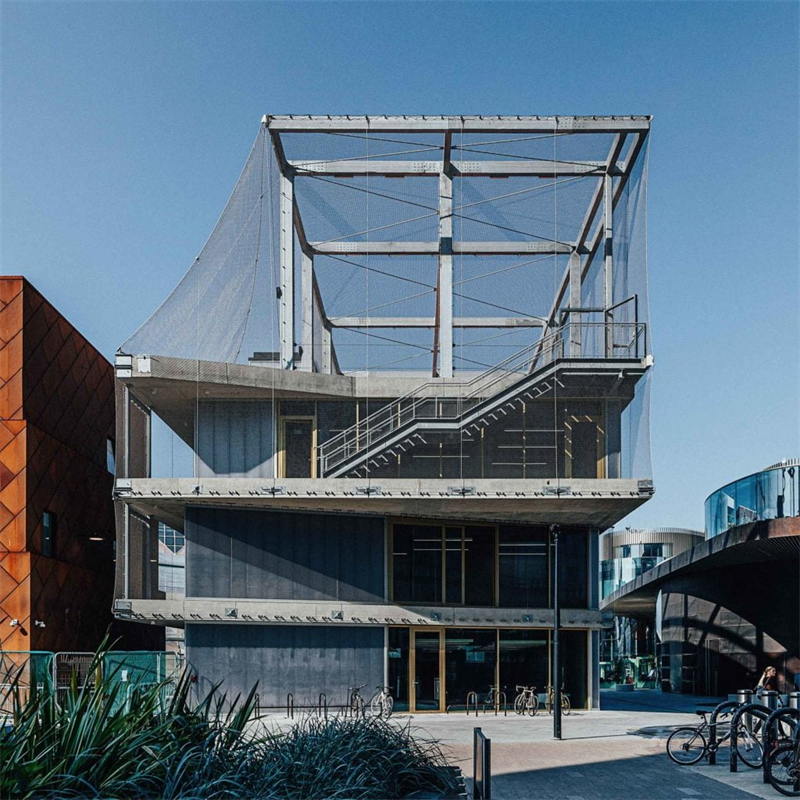
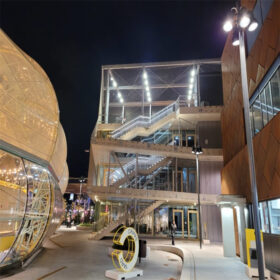

Stainless steel wire rope net is a flexible, high-tensile mesh system made from multi-strand stainless steel cables connected at their intersections by knots, ferrules or clamps. When properly tensioned, it becomes a stable yet elastic surface that can be used vertically, horizontally or at an angle for safety, enclosure and decorative applications in modern architecture and engineering.
1. What Is Stainless Steel Wire Rope Net?
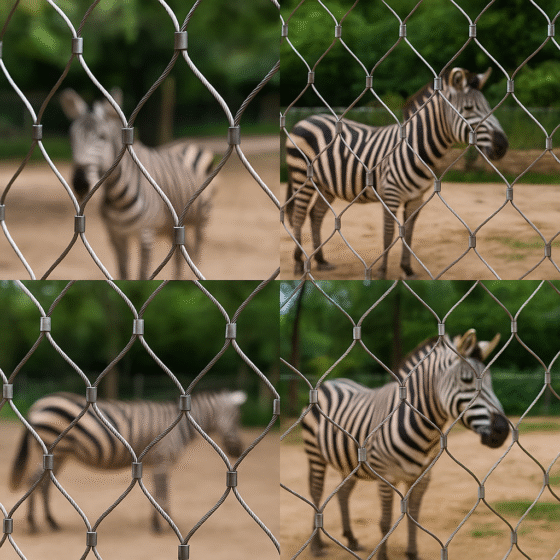
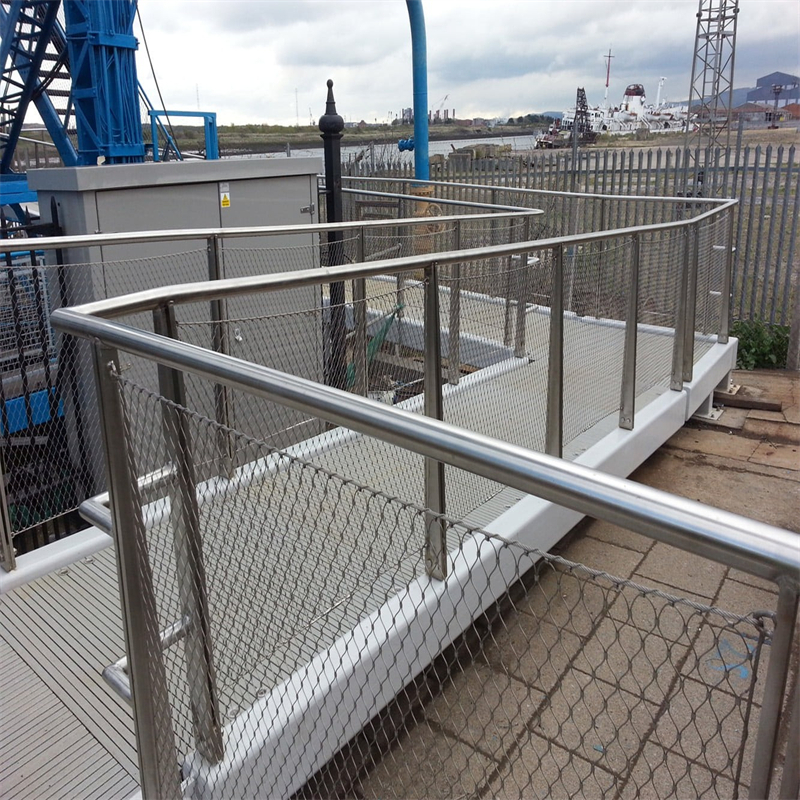
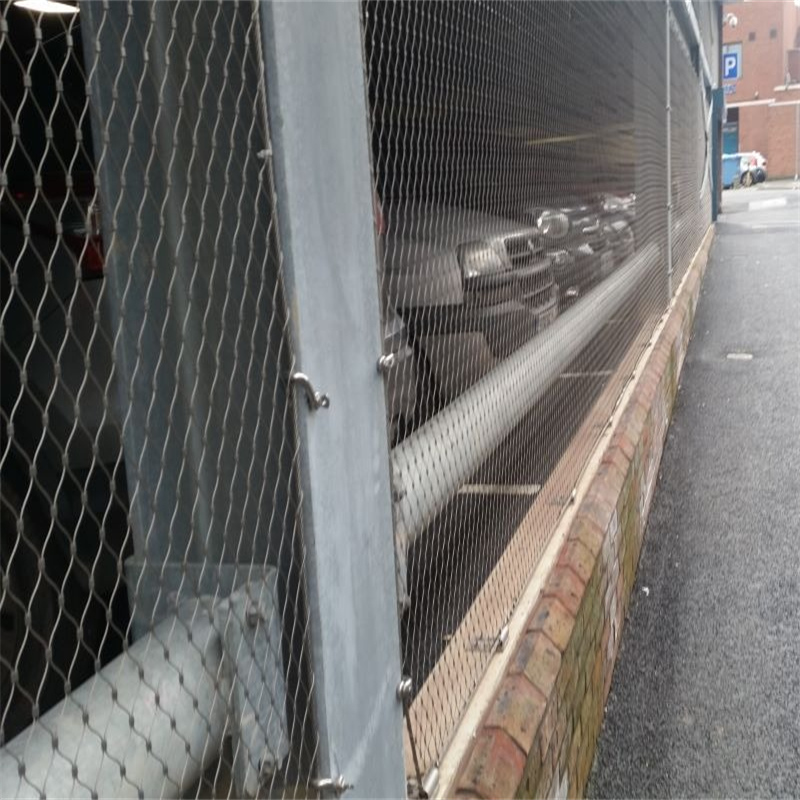
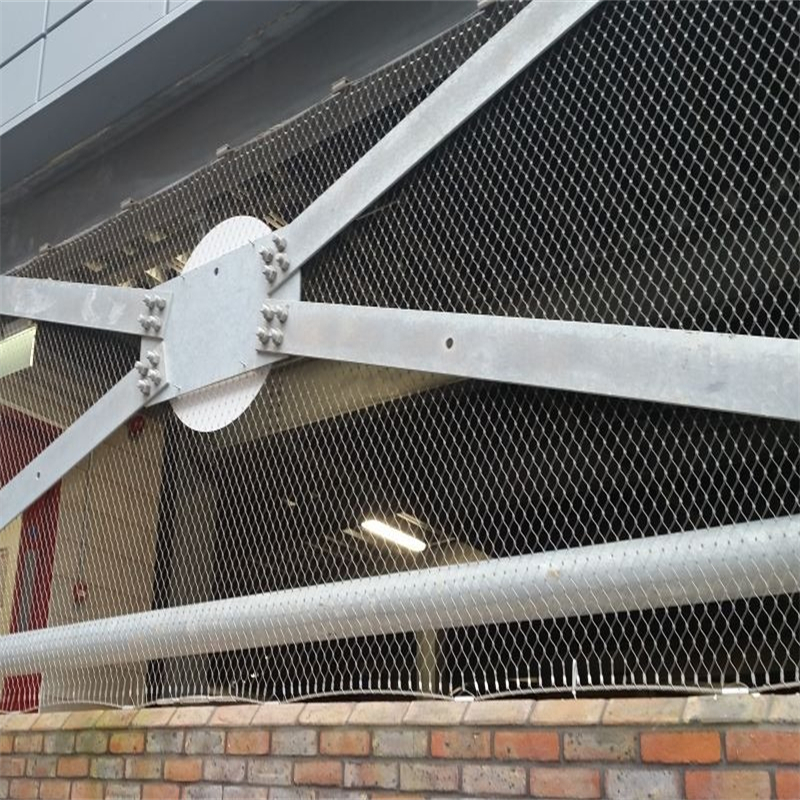
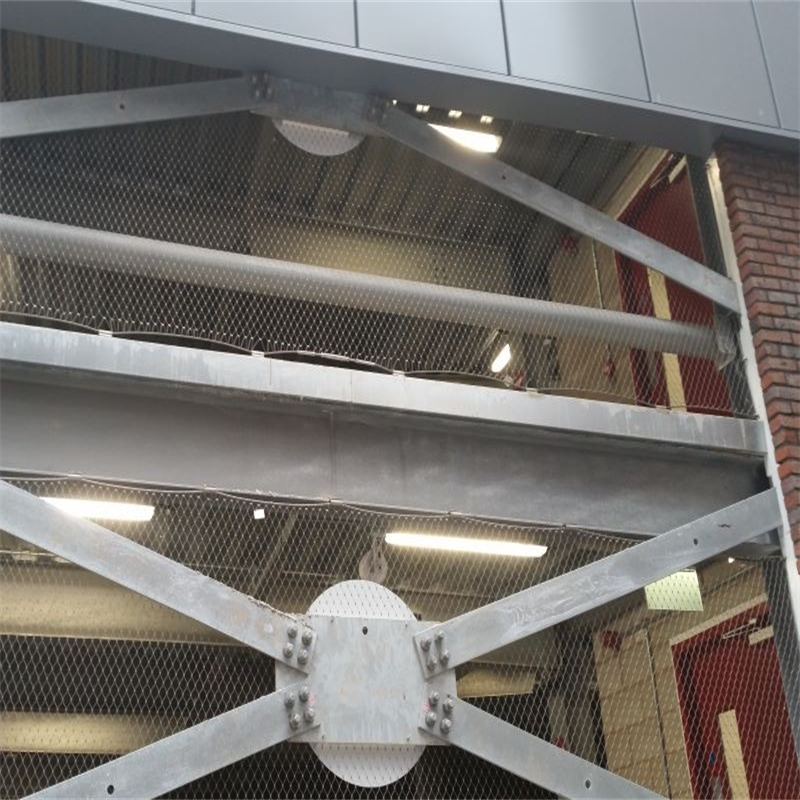
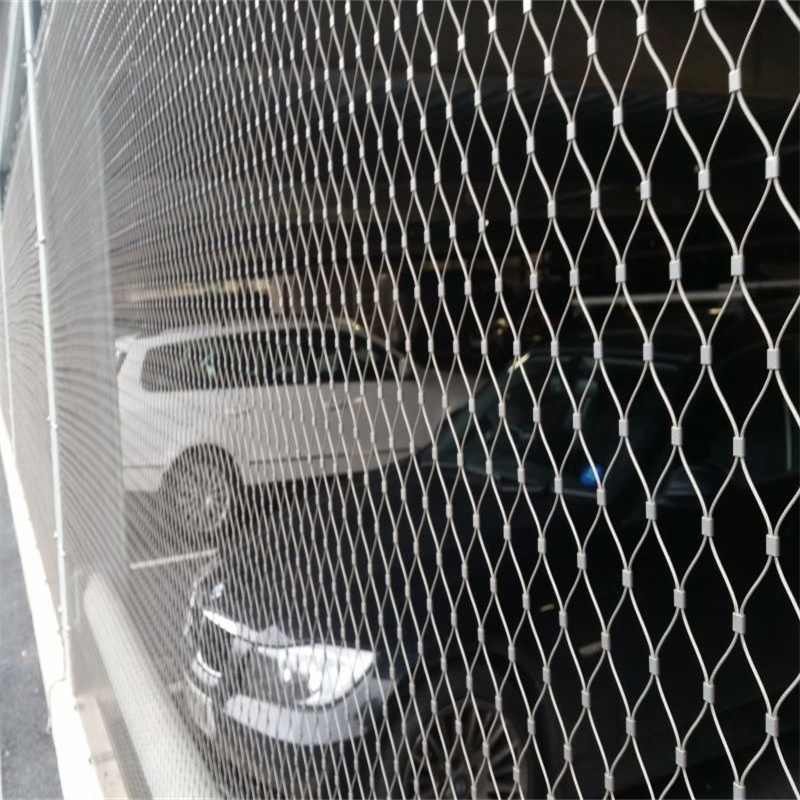
Stainless steel wire rope net (also called stainless steel cable mesh, rope mesh netting or stainless steel zoo mesh) is constructed from stainless steel wire ropes arranged in a diamond or square pattern. The individual cables are connected at each crossing point, forming a continuous, load-bearing mesh. Because the cables are slim and the openings are relatively large, the net appears very transparent and lightweight while still offering high strength, fall protection and containment performance. It is widely used for zoo enclosures, bird aviaries, stair and balcony infill, facade screens, green walls, safety barriers, sports fences and industrial protection.
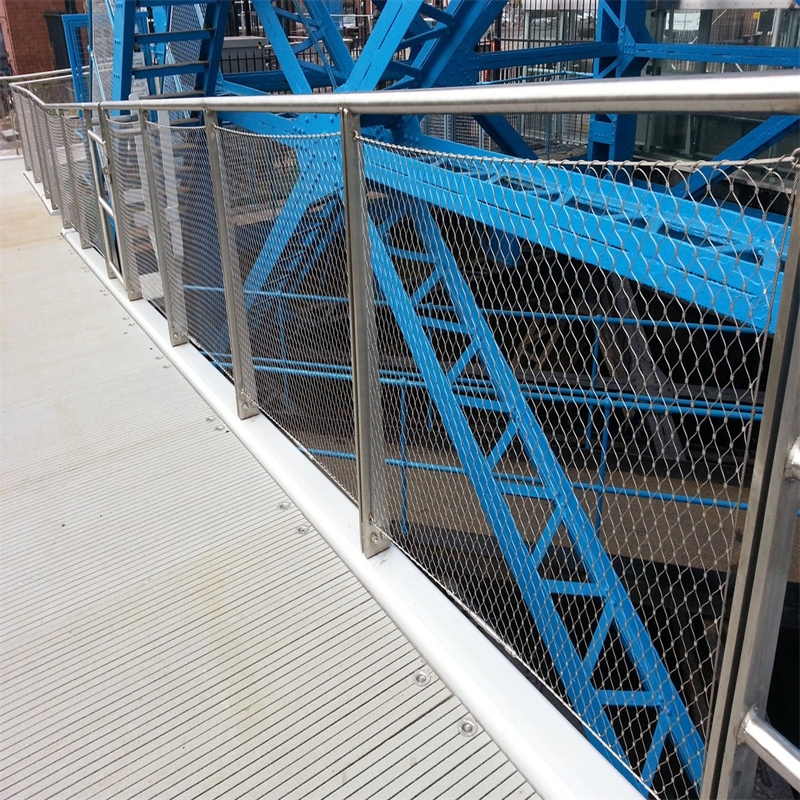
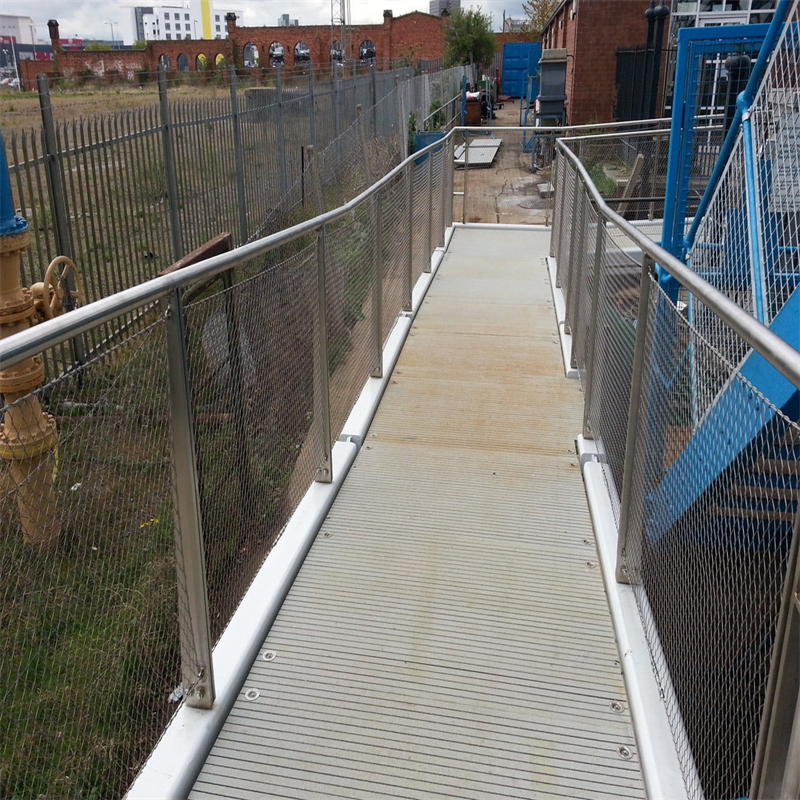
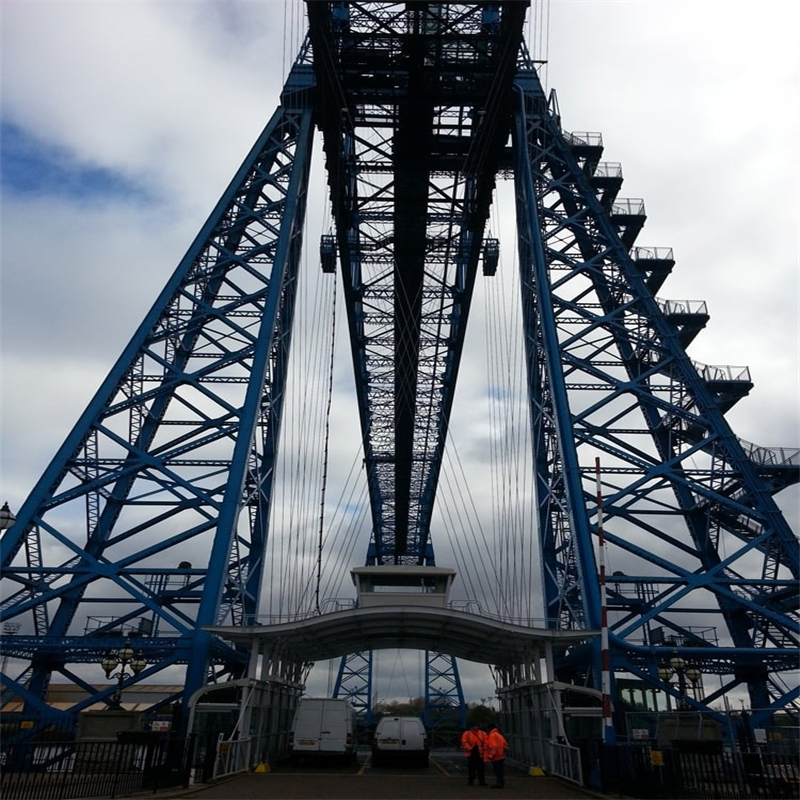
2. Materials and Rope Construction
Most stainless steel wire rope nets use austenitic stainless steel for long service life and corrosion resistance. Common grades include: AISI 304 / 304L – suitable for interior applications and general outdoor environments with moderate corrosion exposure; AISI 316 / 316L – marine grade stainless steel recommended for coastal areas, swimming pools, industrial atmospheres and projects requiring maximum durability. The rope itself is a multi-strand construction that balances strength and flexibility. Typical wire rope constructions are: 7×7 – 7 strands with 7 wires in each strand, flexible and strong, widely used in 1.2–3.2 mm diameters; 7×19 – 7 strands with 19 finer wires, very flexible, used in 3.2 mm and above where tight curvatures or long spans are needed; 1×19 – 19 wires in a single bundle, stiffer and straighter, used where very clean, linear cables are required (for trellis systems or straight cable grids). Cable diameters usually range from 1.2 mm for fine interior applications up to 4.0 mm or more for heavy-duty safety and zoo projects.
3. Mesh Types and Connection Styles
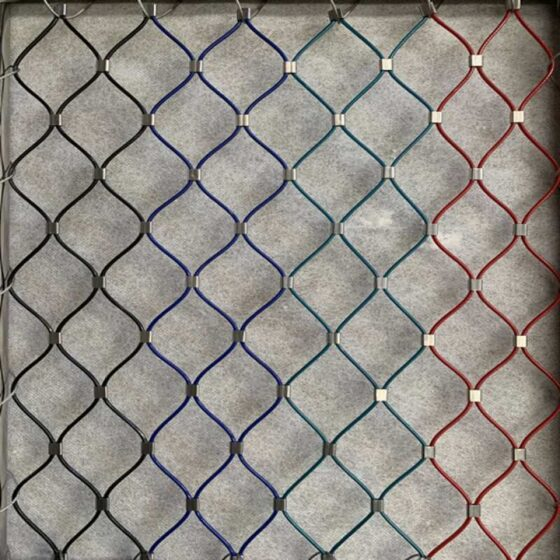
Stainless steel wire rope net can be produced in several structural styles, each with its own visual and mechanical characteristics: Ferruled rope mesh – cables cross at an angle (usually forming diamonds) and are connected with pressed stainless steel ferrules; this is often called X-TEND type mesh and offers clean, uniform openings and a very architectural look; Knotted rope mesh – cables are interwoven and twisted together at each intersection to form a flexible, woven pattern with a slightly softer, textile-like appearance; Square rope mesh with cross clamps – vertical and horizontal cables are fixed with cruciform clamps, producing a square grid with a technical, modern aesthetic; Woven or custom patterns – special weave geometries can be developed for feature projects, art installations or shading structures. All types can be customized in cable diameter, opening size and orientation (diamond or square) to meet project design and safety requirements.
4. Typical Specification Ranges
Exact specifications are tailored to each project, but stainless steel wire rope net usually falls within these ranges: Cable diameters: approximately 1.2 / 1.5 / 1.6 / 2.0 / 2.4 / 3.0 / 3.2 / 4.0 mm; Mesh apertures (opening size): common diamond openings include 25 × 44 mm, 30 × 52 mm, 40 × 69 mm, 50 × 87–90 mm, 60 × 104 mm, 70 × 121 mm, 80 × 139 mm, 90 × 156 mm, 100 × 173 mm and larger; Wire rope constructions: 7×7 and 7×19 for most nets, 1×19 for linear cables and more rigid decorative grids; Panel formats: custom-made panels to match stair inclines, balcony spans, facade grids and zoo enclosure frames; large panels are possible due to the low weight of the mesh. Designers choose combinations of cable diameter and mesh aperture based on load requirements, safety regulations, animal or user type and desired transparency.


Stainless Steel Wire Rope Net – Typical Specification Table
| No. | Model | Wire rope diameter (mm) | Wire structure | Mesh aperture OW × OH (mm) | Open area / Open degree (% approx.) | Weight (kg/m²) | Light transmittance 透光率 (% approx.) |
|---|---|---|---|---|---|---|---|
| 1 | SWRN-01 | 1.5 | 7×7 | 40 × 69 | 94.2 % | 0.88 | 92.7 % |
| 2 | SWRN-02 | 1.5 | 7×7 | 50 × 90 | 95.4 % | 0.65 | 93.9 % |
| 3 | SWRN-03 | 2.0 | 7×7 | 50 × 90 | 93.9 % | 1.12 | 92.4 % |
| 4 | SWRN-04 | 1.5 | 7×7 | 60 × 104 | 96.1 % | 0.52 | 94.6 % |
| 5 | SWRN-05 | 2.0 | 7×7 | 60 × 104 | 94.8 % | 0.90 | 93.3 % |
| 6 | SWRN-06 | 1.5 | 7×7 | 70 × 121 | 96.6 % | 0.42 | 95.1 % |
| 7 | SWRN-07 | 2.0 | 7×7 | 70 × 121 | 95.5 % | 0.73 | 94.0 % |
| 8 | SWRN-08 | 1.5 | 7×7 | 80 × 139 | 97.1 % | 0.36 | 95.6 % |
| 9 | SWRN-09 | 2.0 | 7×7 | 80 × 139 | 96.1 % | 0.62 | 94.6 % |
| 10 | SWRN-10 | 1.5 | 7×7 | 100 × 173 | 97.6 % | 0.28 | 96.1 % |
| 11 | SWRN-11 | 2.0 | 7×7 | 100 × 173 | 96.9 % | 0.49 | 95.4 % |
| 12 | SWRN-12 | 2.0 | 7×7 | 120 × 242 | 97.5 % | 0.41 | 96.0 % |
| 13 | SWRN-13 | 2.0 | 7×7 | 160 × 277 | 98.0 % | 0.30 | 96.5 % |
| 14 | SWRN-14 | 2.0 | 7×7 | 180 × 312 | 98.3 % | 0.26 | 96.8 % |
| 15 | SWRN-15 | 2.0 | 7×7 | 200 × 346 | 98.4 % | 0.22 | 96.9 % |
| 16 | SWRN-16 | 3.0 | 7×19 | 50 × 90 | 90.9 % | 2.82 | 89.4 % |
| 17 | SWRN-17 | 3.0 | 7×19 | 60 × 104 | 92.3 % | 2.24 | 90.8 % |
| 18 | SWRN-18 | 3.0 | 7×19 | 70 × 121 | 93.3 % | 1.80 | 91.8 % |
5. Key Performance Features and Advantages
Stainless steel wire rope net offers a unique combination of mechanical performance and visual quality. High tensile strength and impact resistance – multi-strand stainless steel cables provide excellent load capacity and can absorb impact from people, animals, balls or falling objects when correctly tensioned; Flexibility and 3D adaptability – the net can follow curved, inclined and irregular geometries, wrap around corners and form cylinders, cones or free-form shapes without losing structural continuity; Corrosion resistance and long life – stainless steel, particularly AISI 316, withstands rain, sun, UV, temperature changes and most urban or marine environments without cracking, embrittling or requiring repainting; High transparency and lightness – slim cables and open mesh create an almost invisible barrier from a distance, preserving views, daylight and ventilation, which is essential for zoos, balconies and facades; Safety and environmental performance – stainless steel wire rope net is non-toxic, non-flammable and fully recyclable, with smooth surfaces that are gentle to animals and people and compliant with many fire and safety requirements; Low maintenance and life-cycle economy – after installation, only basic inspection and occasional cleaning are normally required, making the system economical over long service periods compared with coated or rigid alternatives.
6. Main Applications of Stainless Steel Wire Rope Net
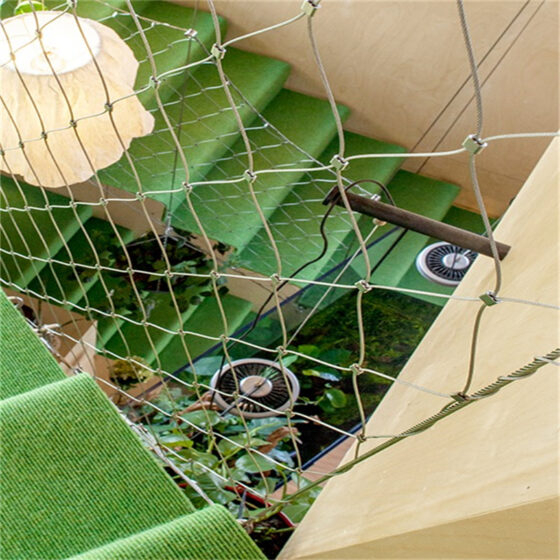
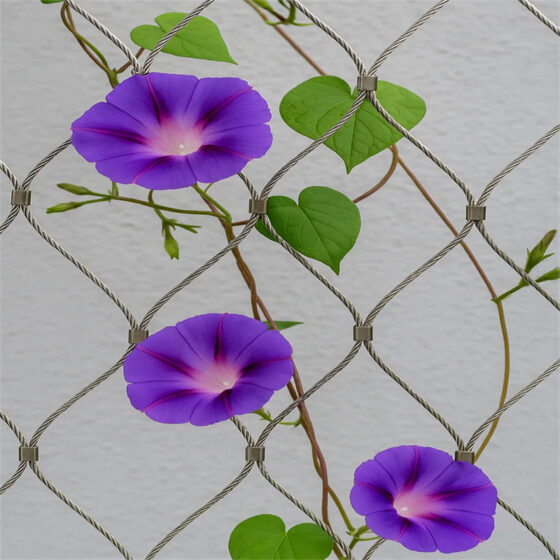
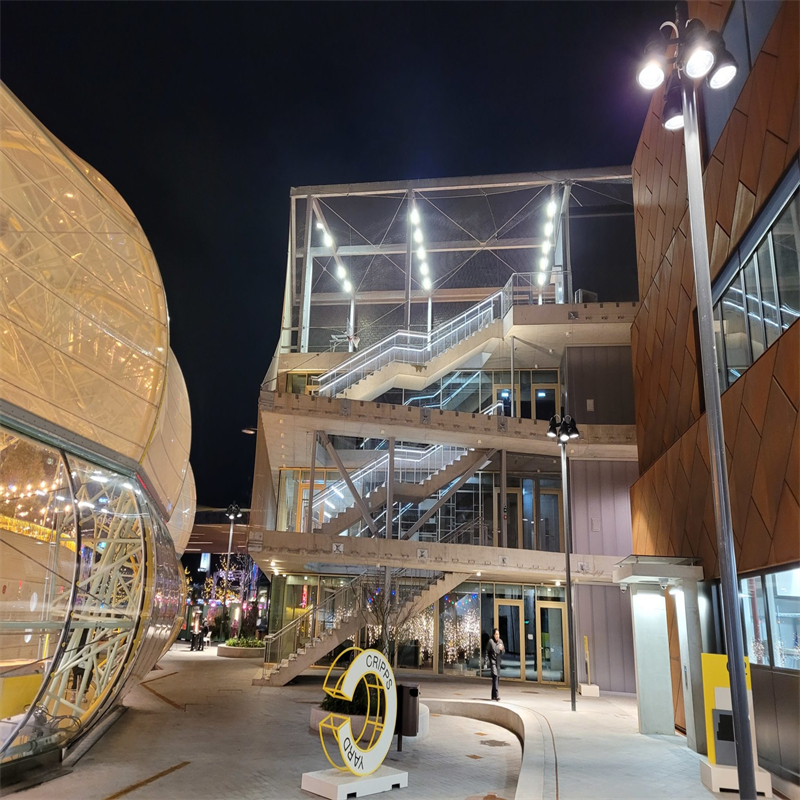
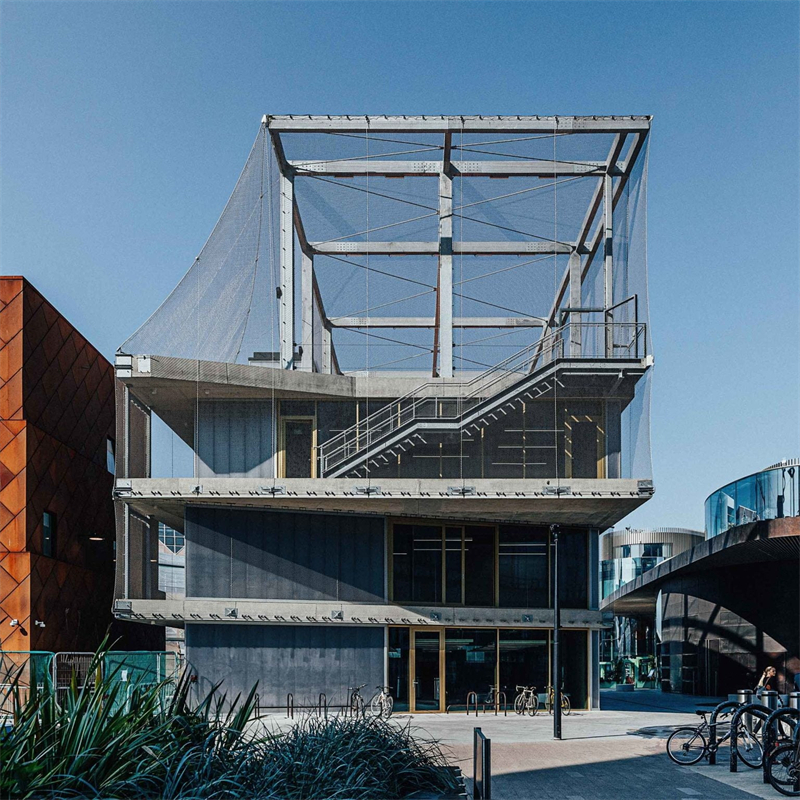
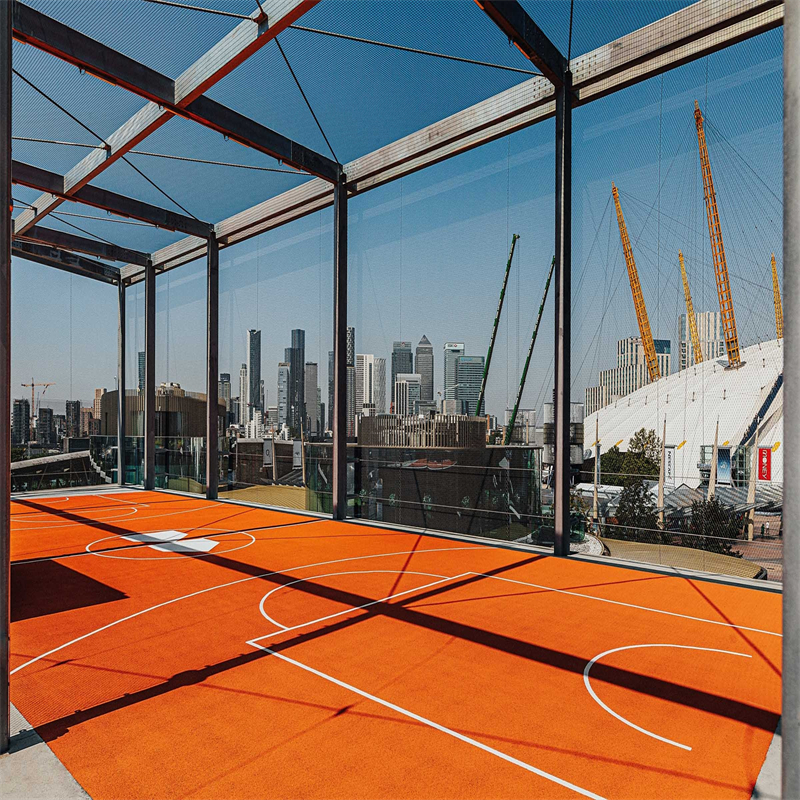
Because of its strength, flexibility and transparency, stainless steel wire rope net is used in many sectors. Zoo cages and wildlife enclosures – ideal for big cats, primates, monkeys, pumas, leopards wire mesh, small mammals and various bird species; the mesh provides secure containment while allowing animals to see out and visitors to enjoy clear views; Bird aviaries and bird parks – used for overhead roofs and side walls, preventing escape and protecting birds from predators or external hazards while minimizing risk of bird strikes; Staircases, balconies and balustrades – used as infill panels on interior and exterior stairs, galleries and balconies, combining fall protection with a light, contemporary appearance; Building facades and second skins – applied as external mesh screens for shading, visual filtering and safety, sometimes combined with glass or perforated panels for complex facade designs; Green walls and trellis systems – stainless steel wire rope net acts as a durable framework for climbing plants on facades, courtyards and atriums, creating living green screens; Bridges, walkways and viewing platforms – used as protective barriers along pedestrian bridges, skywalks, platforms and observation decks to provide safety with minimal visual obstruction; Sports facilities and safety fences – installed as ball-stop fencing, perimeter mesh and overhead safety netting in stadiums, sports halls and playgrounds; Industrial and infrastructure safety – used as protective fencing around machinery, elevated platforms, railway lines, highways and public spaces where robust, low-maintenance barriers are needed.
7. Design Considerations
When planning a stainless steel wire rope net system, engineers and architects should consider: Function – determine whether the mesh is for containment, fall protection, animal safety, decoration or a combination; this influences cable diameter, aperture size and support design; Safety standards and codes – local building codes may specify maximum opening sizes for balustrades, minimum heights for railings and required loads for impact or crowd pressure; Environment – inland, urban, coastal, chemical or high-humidity conditions affect the choice between 304 and 316 stainless steel and whether additional surface treatments are needed; Span and support structure – longer spans, higher loads and dynamic impacts require thicker cables, stiffer frames, edge cables and properly designed anchorage; Aesthetic goals – decide on mesh orientation (diamond vs. square), pattern density, surface finish (bright, brushed, black, PVD-colored) and integration with other materials; Integration of accessories – design in turnbuckles, eye bolts, clamps, edge profiles and tension cables so that connections are both structurally sound and visually neat. Early coordination between architect, structural engineer and mesh supplier ensures the stainless steel wire rope net fulfils both performance and aesthetic requirements.
8. Installation Overview
Although each project is unique, installation of stainless steel wire rope net usually follows these steps: Survey and measurement – confirm exact dimensions, fixing points and mesh orientation on site; Structural preparation – install posts, frames, edge profiles or perimeter cables capable of carrying mesh tension and service loads; Panel fabrication – manufacture mesh panels to the required size, including ferrules or knots, border cables and any special edge details; Fixing the mesh – position panels and attach them to the frame or edge cables using clamps, shackles, lacing wire or custom brackets as specified; Tensioning – apply pretension using turnbuckles or integrated tension devices until the mesh is uniformly taut and the openings are even; Final inspection – check that all connections are secure, edges are smooth, deflection is within limits and any building code requirements are satisfied. Thanks to the low weight and flexibility of stainless steel wire rope net, installation is often faster and easier than for rigid welded panels or heavy glass balustrades.
9. Maintenance and Cleaning
Stainless steel wire rope net is designed to be low-maintenance. Regular visual inspections are recommended to check for loose fittings, damaged ferrules, broken wires or frame distortion, especially after extreme weather or impact; Occasional cleaning with water or mild detergent helps remove dust, pollutants or salt deposits and keeps the stainless steel bright; Retensioning may be needed over time if the structure moves slightly or loading conditions change; Damaged local sections can usually be repaired or replaced without dismantling the entire system. With the right material grade and proper detailing, stainless steel wire rope net installations can remain attractive and functional for decades.
10. Conclusion
Stainless steel wire rope net is a modern, versatile and durable solution for safety, enclosure and decorative applications in architecture, landscape and industry. By combining high-tensile stainless steel cables, flexible mesh geometry and carefully engineered support structures, it delivers secure containment, fall protection and visual lightness in one system. Whether used as zoo mesh, bird aviary netting, stair and balcony infill, green wall support or facade screen, stainless steel wire rope net provides long service life, low maintenance and a clean, contemporary appearance that continues to be favored by architects, engineers and owners worldwide.