Your One-Stop Wire Mesh Fence Supplier | POLYMETAL
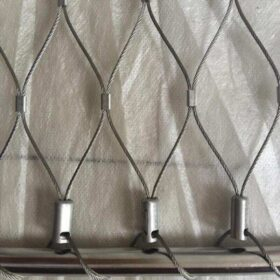
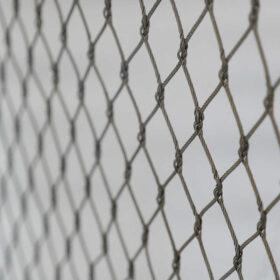
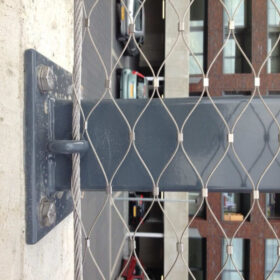
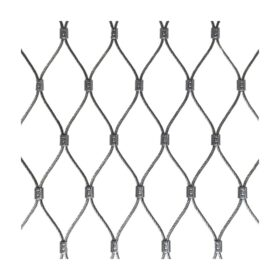
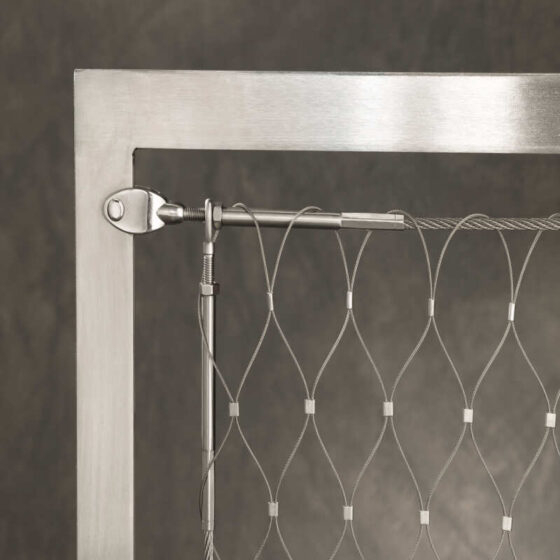
POLYMETAL stainless steel wire rope woven mesh is the characteristic leading product of our company. We have obtained CE and SGS certificates to guarantee stable quality and reliable performance. Stainless steel wire rope woven mesh, also called stainless steel cable mesh, is made from high-quality stainless steel wire rope. With extremely strong anti-corrosion properties and excellent resistance to UV rays, it offers a long service life even in harsh outdoor environments.
Product Description – Stainless Steel Wire Rope Woven Mesh
Stainless steel wire rope woven mesh is a flexible, high-strength net made from multi-strand stainless steel cables. The cables are interlaced and secured at each intersection to form diamond-shaped openings. This unique structure combines the strength of structural cables with the openness of a net, giving architects, designers and engineers a way to protect people, animals and structures without blocking light, air or views.
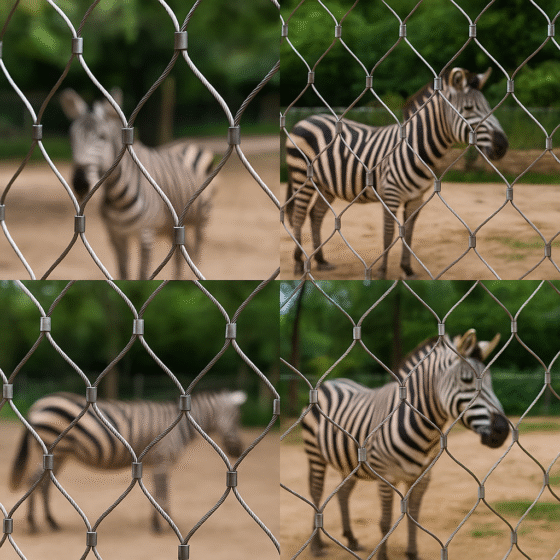
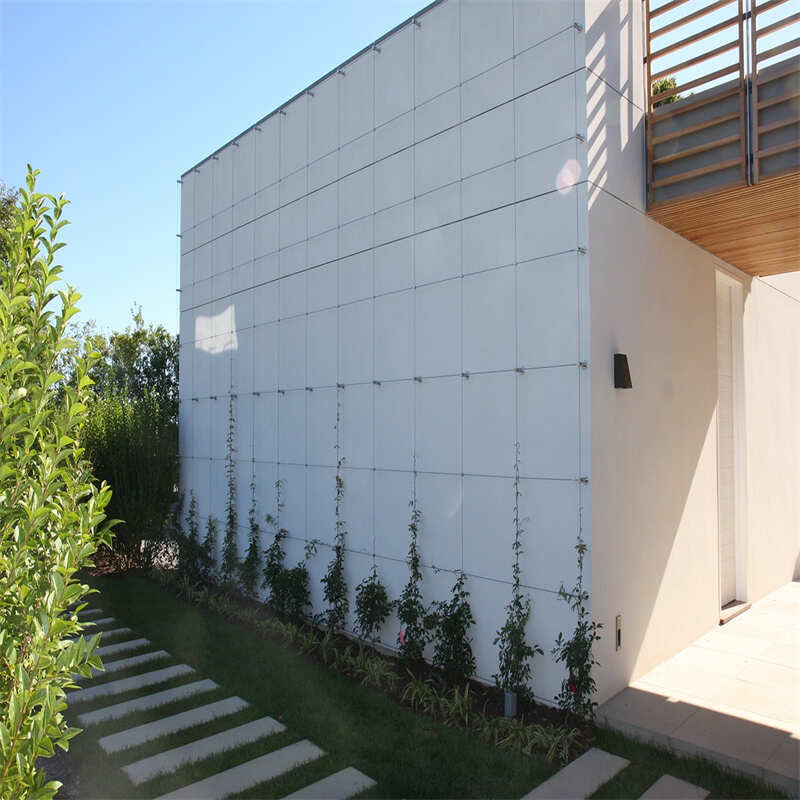
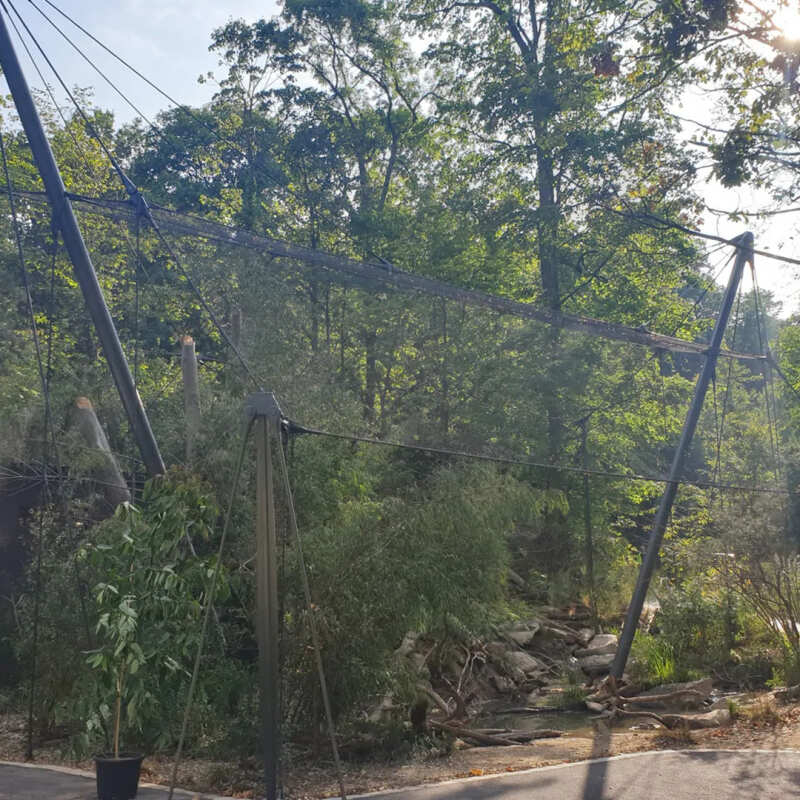
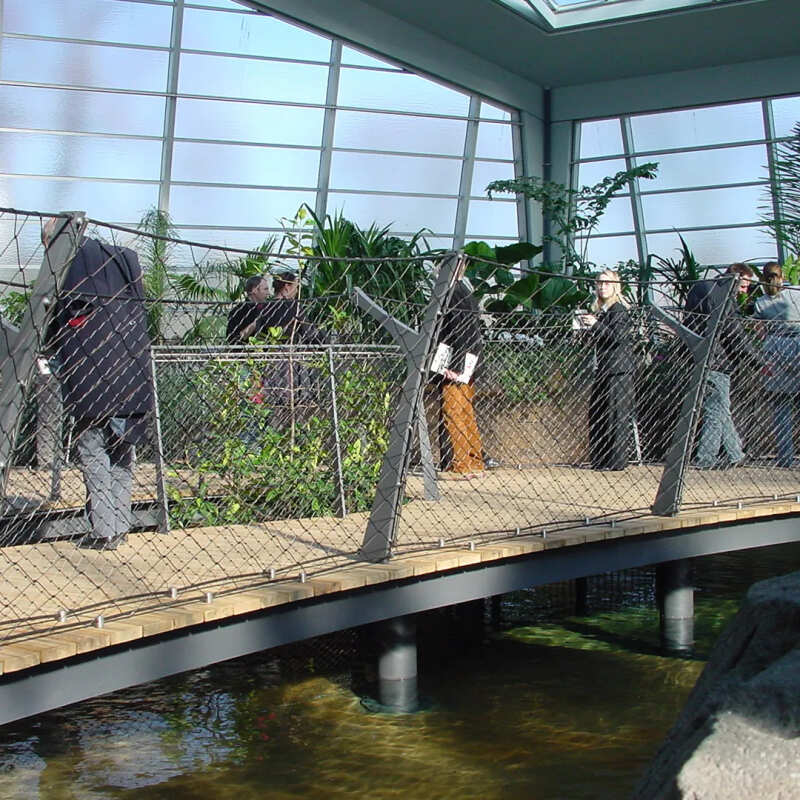
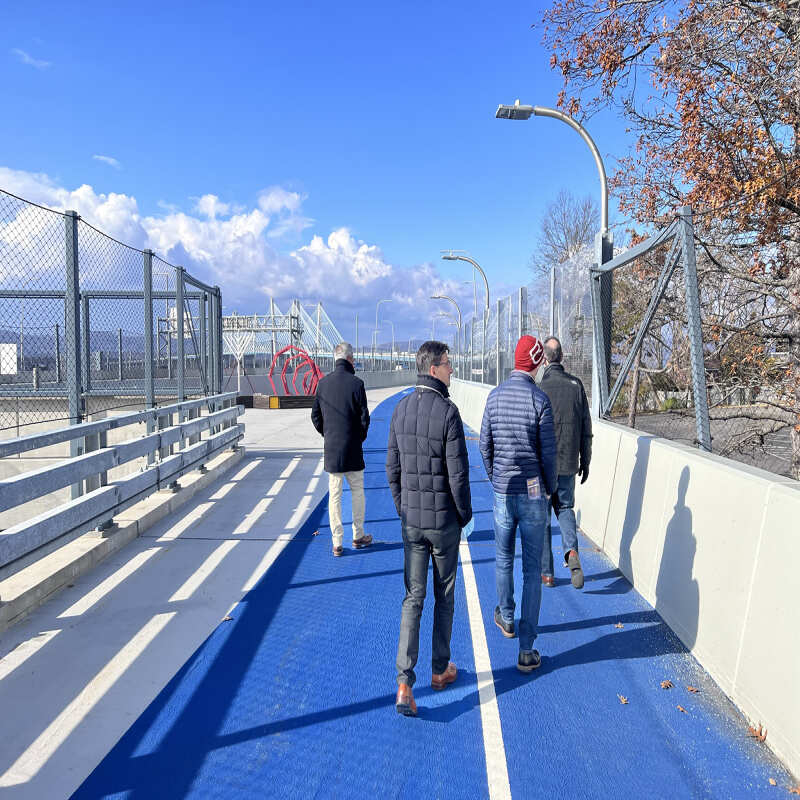
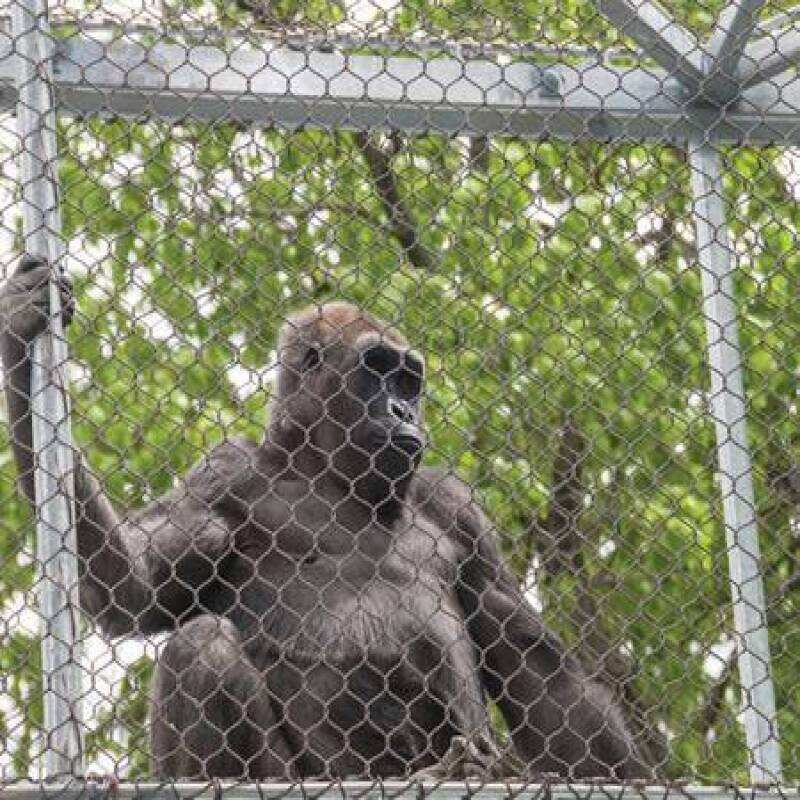
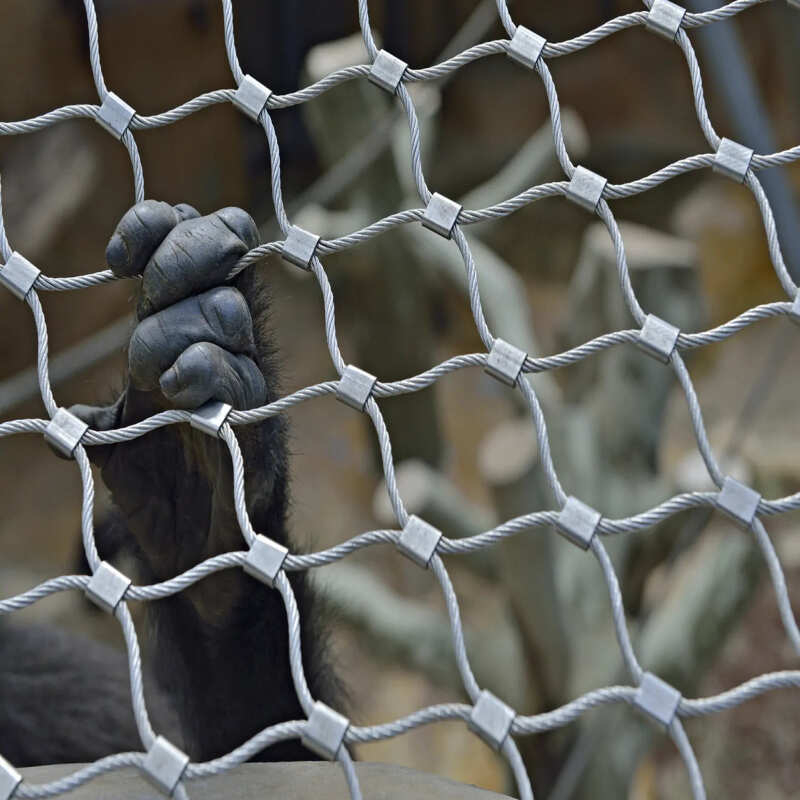
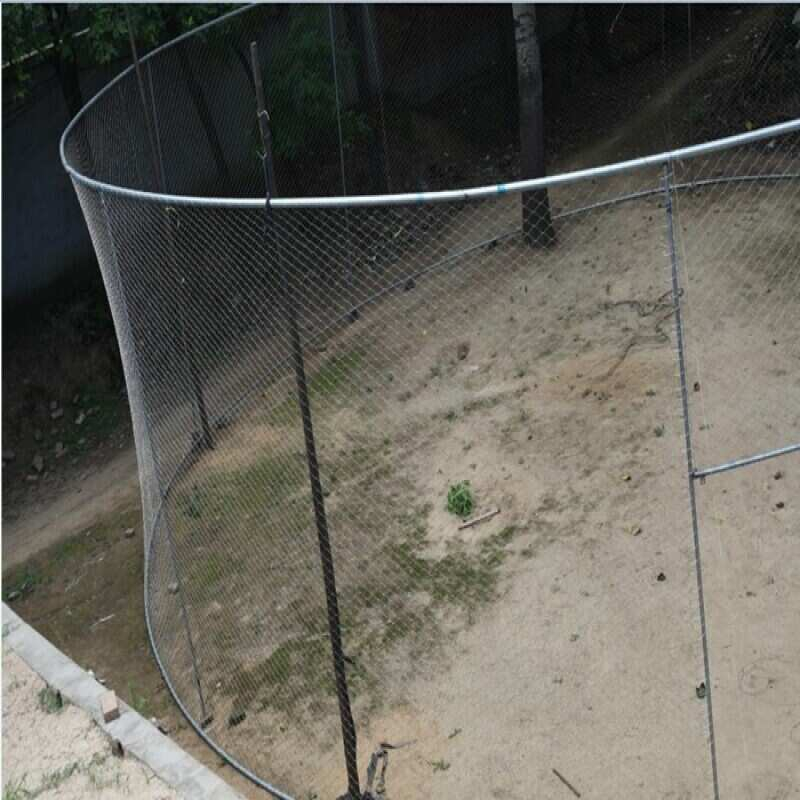
Because of its corrosion resistance, weather resistance and excellent durability, POLYMETAL stainless steel wire rope woven mesh is widely used for zoo enclosures, aviary mesh, plant climbing support, balustrade infill, bridge protection, façade cladding and many other safety and decorative applications.
9 Essential Facts about POLYMETAL Stainless Steel Wire Rope Woven Mesh
Fact 1 – Certified stainless steel quality protects you from early failure
POLYMETAL stainless steel wire rope woven mesh is manufactured from high-quality austenitic stainless steel, typically AISI 304, 304L, 316 or 316L. Together with CE and SGS certificates, this ensures stable mechanical performance, reliable corrosion resistance and traceable quality control. Using certified stainless steel wire rope mesh significantly reduces the risk of hidden material defects that can later cause cracking, rusting or sudden loss of load-bearing capacity.
Fact 2 – Cable diameter and mesh aperture decide real safety in use
The combination of wire rope diameter and mesh aperture directly determines how much load the mesh can carry and what can pass through it. POLYMETAL provides detailed specifications for small, medium and large apertures (see the three tables below). Choosing too thin a cable or too large an aperture may look fine on drawings, but under real impact the mesh can deflect excessively, allow children or animals to squeeze through or fail to stop falling objects. Correctly matching cable diameter and aperture to your application is one of the most critical safety decisions you make.
Fact 3 – Open area and light transmittance affect both visibility and risk
Each mesh type in the specification tables includes open area (%) and light transmittance (%). These values show how transparent the system is and how much wind and light can pass through. High transparency improves visibility and user comfort, but if you ignore open area when sizing your support structure, wind loads and dynamic forces can be underestimated. POLYMETAL’s data helps you balance safety, view, ventilation and structural design instead of guessing.
Fact 4 – Different aperture ranges are designed for different risk levels
POLYMETAL divides stainless steel wire rope woven mesh into three aperture categories: small (≈25–50 mm), medium (≈50–210 mm) and large (≈160–345 mm). Small apertures are suited to child safety, small birds and small-object fall protection; medium apertures are typical for balustrades, public areas and mixed-use enclosures; large apertures serve façades, green walls and situations where visibility is more important than containment of tiny objects. Using a façade-size aperture on a high-risk balcony or animal enclosure can be dangerous and may expose you to accidents and claims.
Fact 5 – Wrong specification or cheap substitutes can lead directly to accidents and claims
This is the reality you cannot afford to ignore. If you replace certified POLYMETAL stainless steel wire rope woven mesh with lower-grade or untested products, or if you ignore the recommended aperture and cable diameter for your application, you increase the chance of people falling, animals escaping or objects dropping from height. Such failures often result in injuries, shutdowns and expensive legal claims. The 9 safety facts on this page—especially Fact 5—exist to prevent you from paying for a single bad decision with years of losses.
Fact 6 – Wire rope constructions and mesh types define mechanical behaviour
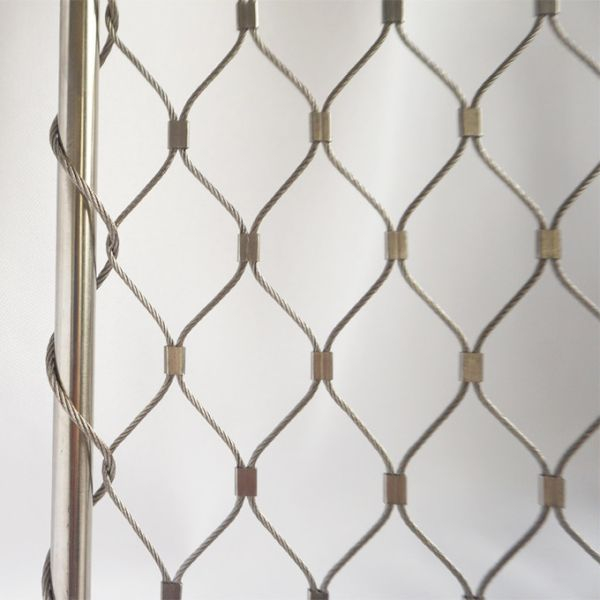
POLYMETAL stainless steel wire rope woven mesh uses proven wire rope constructions such as 7×7 and 7×19, and two main mesh types: woven (knotted) and ferruled. 7×7 offers a balanced stiffness and flexibility suited to balustrades and façades, while 7×19 provides extra flexibility for large spans and curved zoo enclosures. Woven mesh locks cables together in knots without additional fittings, while ferruled mesh uses pressed stainless ferrules for a clean architectural look. Understanding these constructions helps you choose a mesh that behaves predictably under tension, impact and long-term use.
Fact 7 – Installation quality is as important as the mesh itself
Even the best stainless steel wire rope woven mesh can fail if it is poorly installed. Under-designed frames that twist under tension, uneven tightening of boundary cables, unprotected cut ends and incorrect anchorage can all weaken the system. POLYMETAL recommends robust steel or stainless support structures, smooth contact surfaces, carefully planned anchor layouts and step-by-step tensioning with turnbuckles or tensioners to achieve regular, stable diamonds. Skipping these steps can turn a certified mesh panel into an unsafe barrier.
Fact 8 – Regular inspection and cleaning prevent invisible safety problems
Stainless steel wire rope woven mesh is low maintenance, but not zero maintenance. Annual or periodic inspections are vital to spot broken wires, damaged ferrules, loose anchors or corrosion at interfaces with dissimilar metals. For animal enclosures or high-traffic areas, high-contact zones should be checked more often. Cleaning with fresh water and mild detergent removes dirt, salt and pollutants that can slowly attack the steel. Ignoring inspection and cleaning lets small, cheap-to-fix issues grow into serious hazards.
Fact 9 – Life-cycle cost is usually lower than cheaper alternatives
Although POLYMETAL stainless steel wire rope woven mesh may cost more than basic galvanized mesh or plastic nets at the time of purchase, it usually wins over the life of the project. It does not need repainting or recoating, suffers less damage in harsh climates, maintains a high-end appearance and can be fully recycled at end of life. When you add up repainting, replacement, access costs and the risk of failure from cheaper products, high-quality stainless cable mesh is often the most economical and safest choice.
Specification of Stainless Steel Wire Rope Woven Mesh
Table 1 – Small mesh apertures (≈25–50 mm)
| Product No. | Mesh aperture W × H (mm) | Wire rope diameter (mm) | Open area (%) | Light transmittance (%) |
|---|---|---|---|---|
| WRM-001 | 25 × 40 | 1.0 | 93.6 | 93.6 |
| WRM-002 | 25 × 40 | 1.6 | 89.9 | 89.9 |
| WRM-003 | 30 × 50 | 1.0 | 94.7 | 94.7 |
| WRM-004 | 30 × 50 | 1.6 | 91.6 | 91.6 |
| WRM-005 | 35 × 60 | 1.0 | 95.5 | 95.5 |
| WRM-006 | 35 × 60 | 1.6 | 92.9 | 92.9 |
| WRM-007 | 35 × 60 | 2.0 | 91.1 | 91.1 |
| WRM-008 | 40 × 70 | 1.0 | 96.1 | 96.1 |
| WRM-009 | 40 × 70 | 1.6 | 93.8 | 93.8 |
| WRM-010 | 40 × 70 | 2.0 | 92.3 | 92.3 |
| WRM-011 | 50 × 88 | 1.0 | 96.9 | 96.9 |
| WRM-012 | 50 × 88 | 1.6 | 95.0 | 95.0 |
| WRM-013 | 50 × 88 | 2.0 | 93.8 | 93.8 |
Table 2 – Medium mesh apertures (≈50–210 mm)
| Product No. | Mesh aperture W × H (mm) | Wire rope diameter (mm) | Open area (%) | Light transmittance (%) |
|---|---|---|---|---|
| WRM-014 | 50 × 88 | 3.0 | 90.8 | 90.8 |
| WRM-015 | 50 × 88 | 4.0 | 87.8 | 87.8 |
| WRM-016 | 60 × 105 | 1.0 | 97.4 | 97.4 |
| WRM-017 | 60 × 105 | 1.6 | 95.9 | 95.9 |
| WRM-018 | 60 × 105 | 2.0 | 94.8 | 94.8 |
| WRM-019 | 60 × 105 | 3.0 | 92.3 | 92.3 |
| WRM-020 | 60 × 105 | 4.0 | 89.8 | 89.8 |
| WRM-021 | 60 × 105 | 5.0 | 87.3 | 87.3 |
| WRM-022 | 70 × 120 | 1.0 | 97.8 | 97.8 |
| WRM-023 | 70 × 120 | 1.6 | 96.4 | 96.4 |
| WRM-024 | 120 × 210 | 4.0 | 94.8 | 94.8 |
| WRM-025 | 120 × 210 | 5.0 | 93.6 | 93.6 |
Table 3 – Large mesh apertures (≈160–345 mm)
| Product No. | Mesh aperture W × H (mm) | Wire rope diameter (mm) | Open area (%) | Light transmittance (%) |
|---|---|---|---|---|
| WRM-026 | 160 × 275 | 1.0 | 99.0 | 99.0 |
| WRM-027 | 160 × 275 | 1.6 | 98.4 | 98.4 |
| WRM-028 | 160 × 275 | 2.0 | 98.0 | 98.0 |
| WRM-029 | 160 × 275 | 3.0 | 97.1 | 97.1 |
| WRM-030 | 160 × 275 | 4.0 | 96.1 | 96.1 |
| WRM-031 | 160 × 275 | 5.0 | 95.1 | 95.1 |
| WRM-032 | 180 × 310 | 2.0 | 98.3 | 98.3 |
| WRM-033 | 180 × 310 | 3.0 | 97.4 | 97.4 |
| WRM-034 | 180 × 310 | 4.0 | 96.5 | 96.5 |
| WRM-035 | 200 × 345 | 2.0 | 98.4 | 98.4 |
| WRM-036 | 200 × 345 | 3.0 | 97.6 | 97.6 |
| WRM-037 | 200 × 345 | 4.0 | 96.9 | 96.9 |
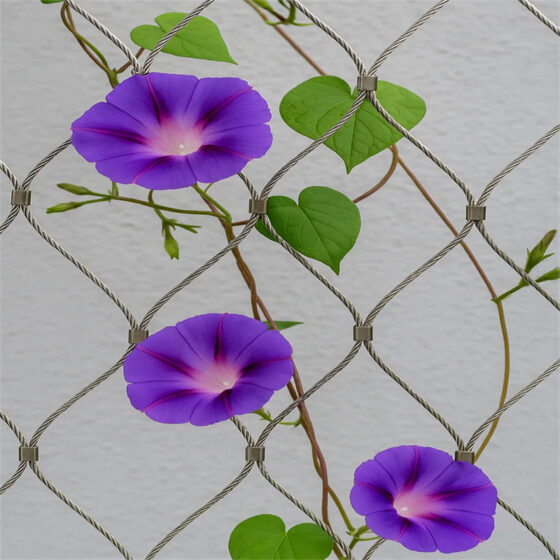
Application – Advantages for Plant Climbing Net Support
POLYMETAL stainless steel wire rope woven mesh is an excellent choice for plant climbing net support and many other applications, offering the following advantages:
- The metal mesh plant climbing net is corrosion-resistant, non-rusting, has high tensile strength, resists wind, frost, rain and snow, and requires virtually no maintenance.
- The wire rope plant climbing net has good softness, excellent visibility, is flame retardant, tear-resistant and pull-resistant, and has a long service life.
- The metal wire mesh is beautiful and high-end in appearance, improving the user experience and the overall grade of the place where it is installed.
- It is green and environmentally friendly, without any chemical treatment, and can be reused.
- Complete specifications and customised sizes are available to match different projects.
Types of Stainless Steel Cable Mesh
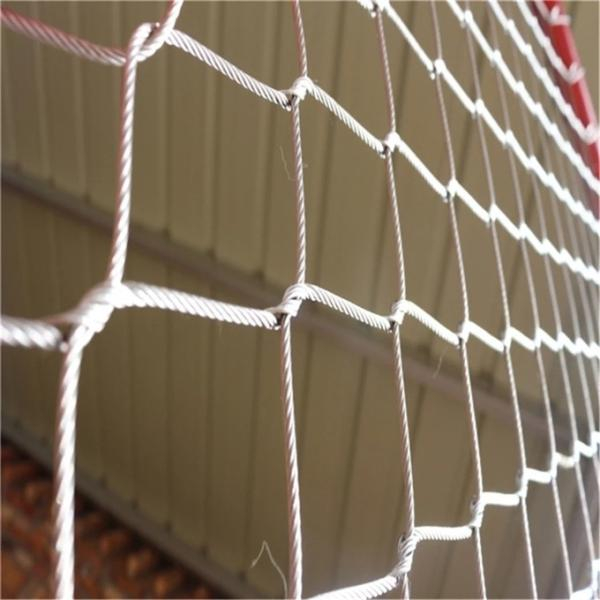
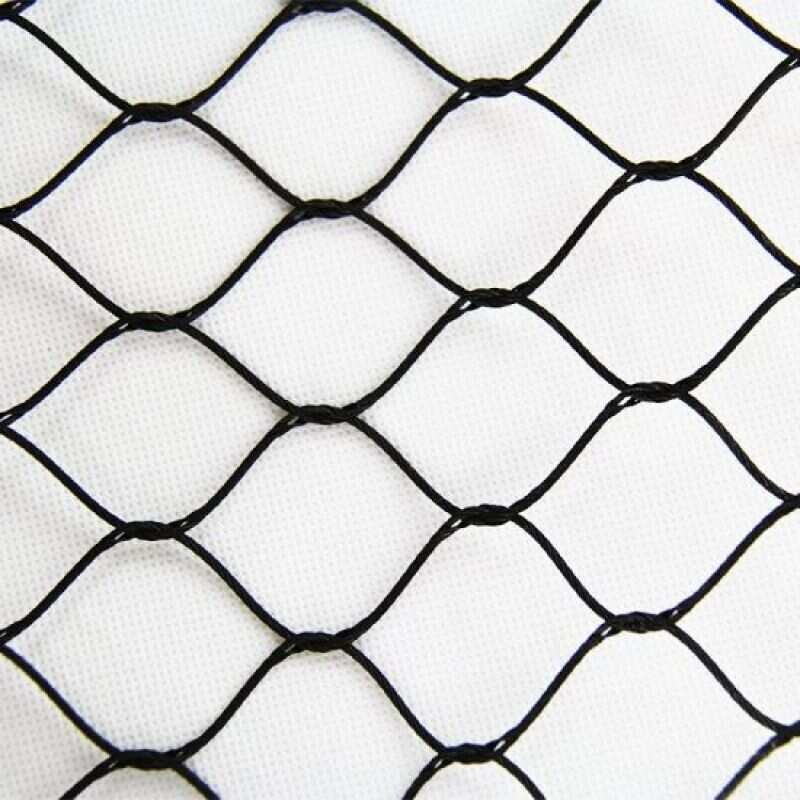
| Woven Rope Mesh | Woven rope mesh is a kind of plain weave. Each warp wire rope crosses alternately above and below each weft wire rope. Warp and weft wire ropes generally have the same diameter. |
| |
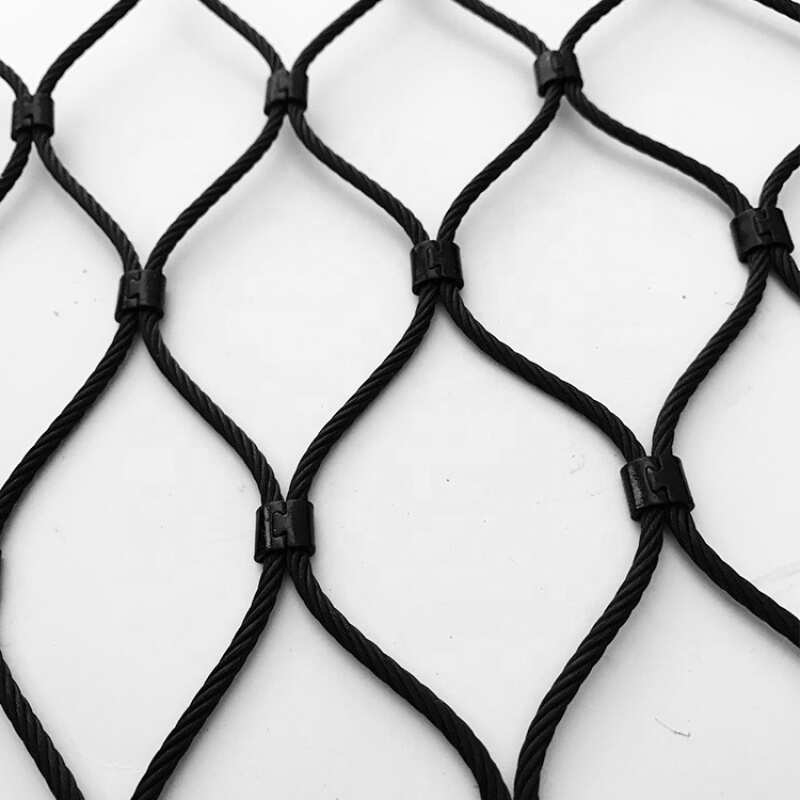
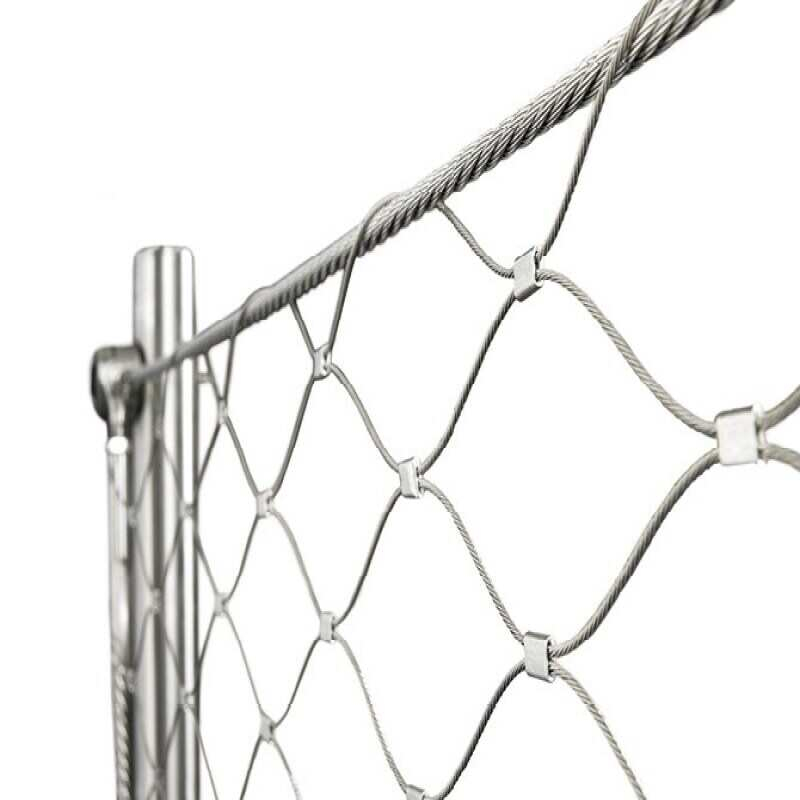
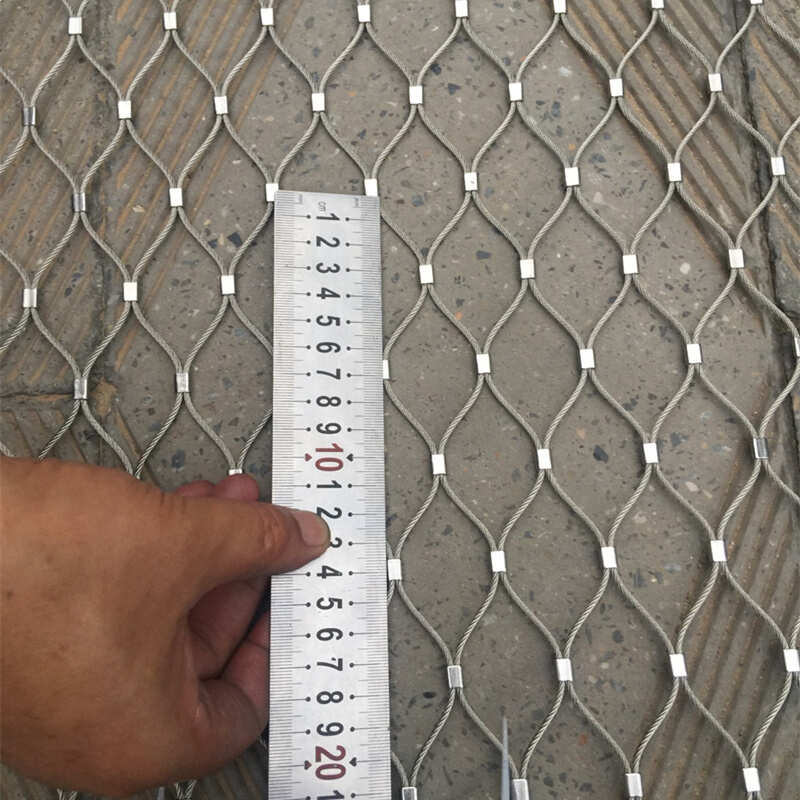
| Ferruled Rope Mesh | Ferruled rope mesh has the same physical properties as knotted mesh. The only difference is in the combination style. The stainless wire rope is combined by ferrules, which are made of the same grade stainless steel. |
|
Stainless Steel Wire Rope Woven Mesh – A Complete Guide
Stainless steel wire rope woven mesh (often called wire rope mesh, cable mesh, zoo mesh or aviary mesh) is one of the most versatile modern safety and enclosure materials. It combines the strength of structural cables with the openness of a net, giving architects, engineers and installers a way to protect people, animals and structures without heavy visual obstruction.
This article walks through what it is, how it works, where it’s used, and what you need to know to specify, buy and install it correctly.
1. What Is Stainless Steel Wire Rope Woven Mesh?
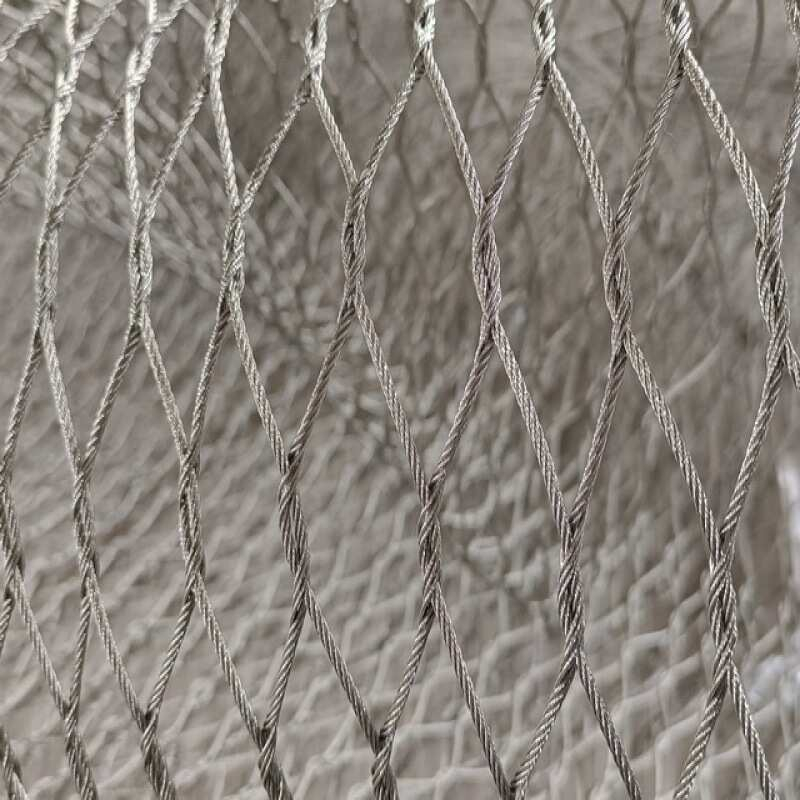
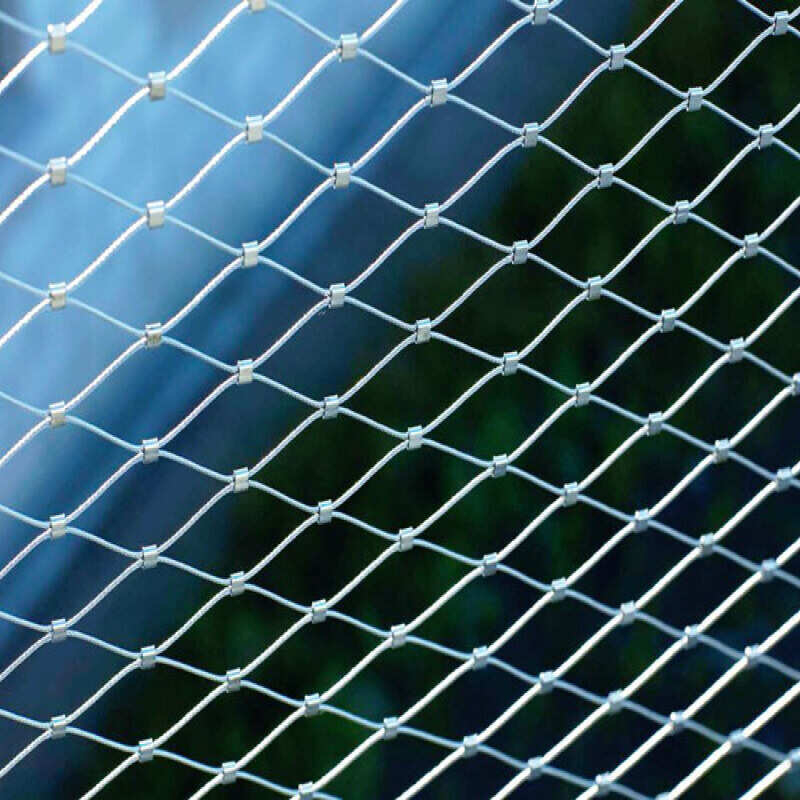
Wire rope woven mesh is a flexible net made from multi-strand stainless steel cables that are interlaced and secured at each intersection to form a pattern of diamond-shaped openings.
Key features:
- Material: austenitic stainless steel (usually AISI 304, 304L, 316 or 316L).
- Construction: cables made from fine wires twisted into strands (commonly 7×7 or 7×19).
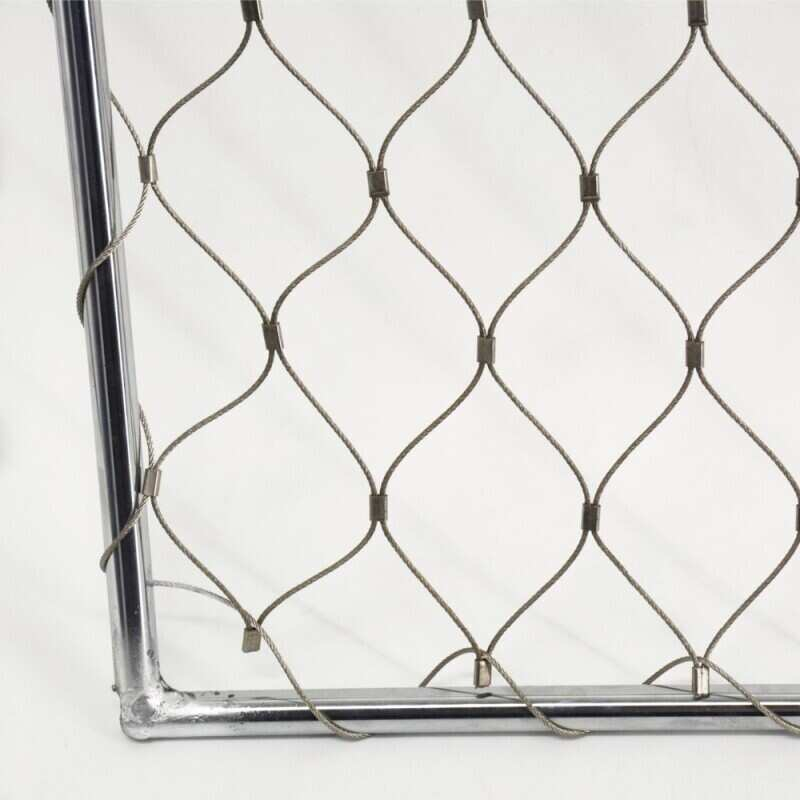
- Connections: intersections are either hand-woven into knots or joined with stainless steel sleeves (ferrules).
- Pattern: mesh openings are usually diamonds, with the “mesh width” (MW) and “mesh height” (MH) defining the aperture.
Because the cables are flexible and the mesh behaves like a tensioned membrane, panels can span long distances, follow curves and wrap around irregular shapes.
2. Main Components and Styles
2.1 Wire rope constructions
Most wire rope mesh uses:
- 7×7 construction
- 7 strands, each with 7 wires.
- Balanced between flexibility and stiffness.
- Common for balustrades, façades, green walls.
- 7×19 construction
- 7 strands, each with 19 wires.
- More flexible, better for large spans and curved shapes.
- Often used for zoo enclosures and big aviaries.
Typical cable diameters range from 1.0 mm to 4.0 mm:
- 1.0–1.5 mm: light-duty, small spans, decorative or small bird enclosures.
- 2.0–3.0 mm: standard for balustrades, public areas, zoo mesh.
- 4.0 mm+: heavy-duty, high loads, large spans or impact-resistant barriers.
2.2 Knotted vs ferruled mesh
- Cables are woven and twisted around each other at every crossover to form a fixed knot.
- Very uniform, smooth surface with no extra fittings.
- Excellent flexibility; can be pulled into double-curved surfaces.
- Often chosen for animal enclosures where claws or beaks might interact with the mesh.
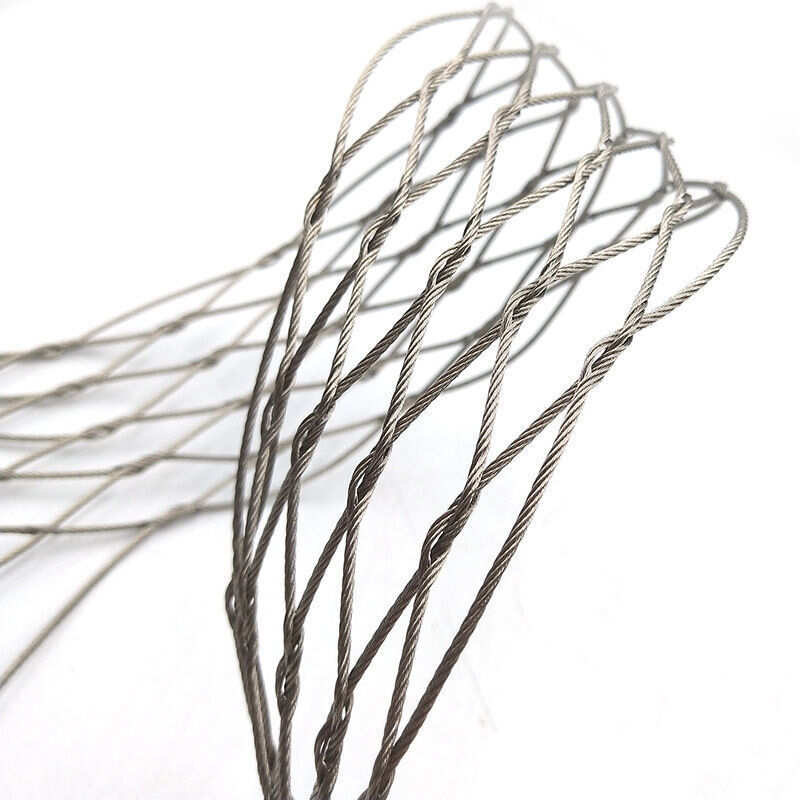
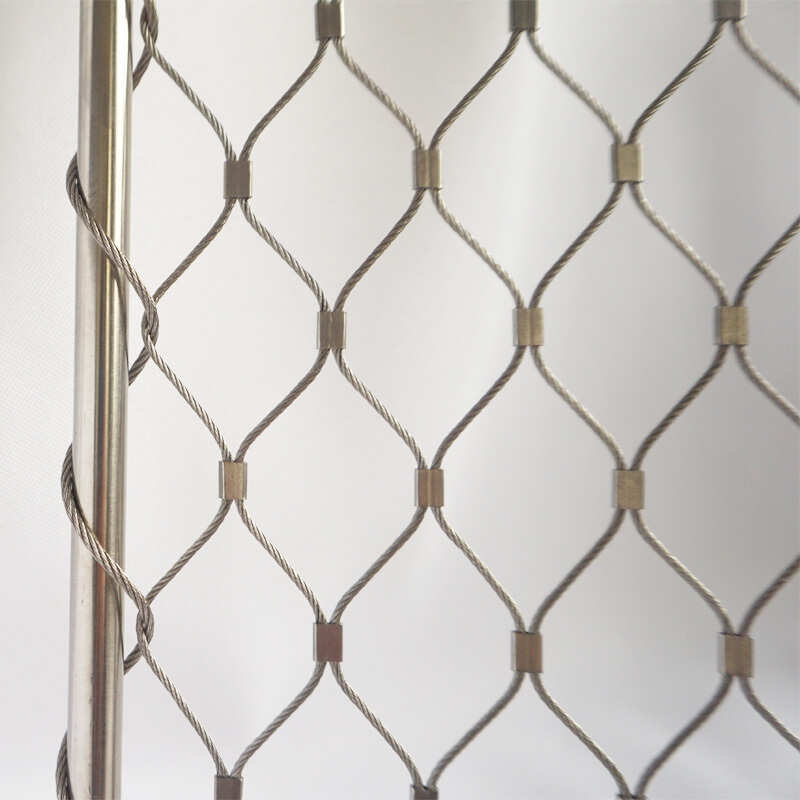
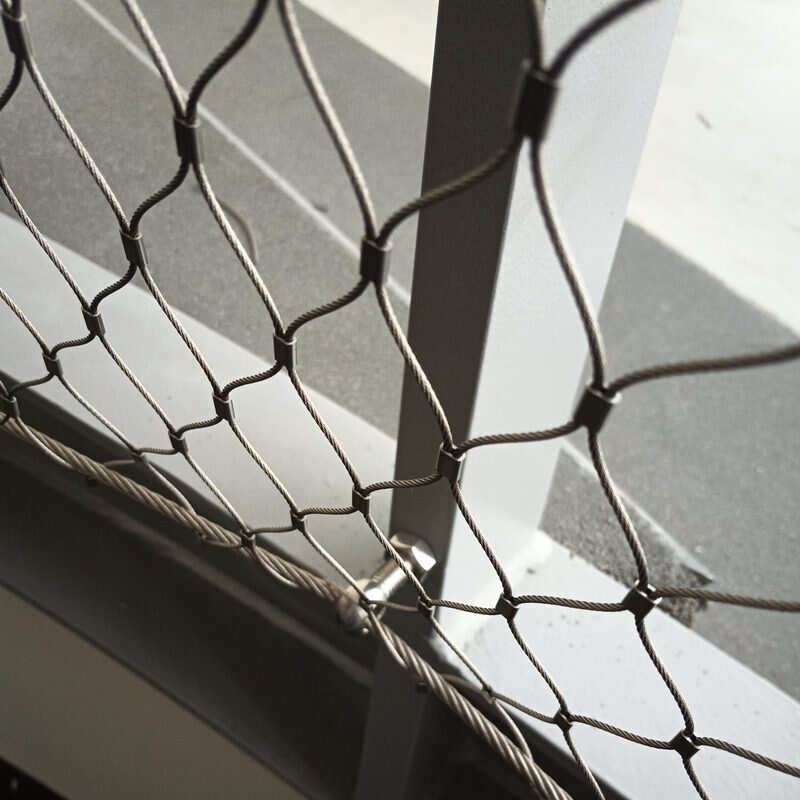
- Cables intersect and are clamped with pressed stainless steel ferrules (oval sleeves).
- Clean, modern look with visible “nodes”.
- Factory-produced panels allow very precise dimensions.
- Slightly stiffer in appearance; widely used in balustrades, façades and public bridges.
Both types have similar load capacity when properly designed and made from the same cables and materials. The choice is often aesthetic and practical: ferruled for crisp architectural lines, knotted for maximum flexibility and smoothness.
2.3 Mesh aperture and orientation
Mesh openings are defined by:
- Mesh width (MW): horizontal or short diagonal distance between cable centres.
- Mesh height (MH): vertical or long diagonal distance.
Typical apertures:
- 20–40 mm: small birds, children’s safety barriers, anti-fall nets for small objects.
- 40–80 mm: stair and balcony infill, medium animals, general fall protection.
- 80–200+ mm: façades, green walls, anti-throw nets where high transparency is needed.
Orientation options:
- Diamond “standing” (tall diamonds) – visually dynamic, good for vertical balustrades.
- Diamond “lying” (wider diamonds) – sometimes preferred for façades or where horizontal emphasis fits the architecture.
Changing aperture and orientation has a huge effect on both appearance and performance (deflection, climbability, what can pass through).
3. Why Stainless Steel Wire Rope Mesh?
3.1 Mechanical performance
- High strength with low weight – thin cables resist large tensile loads. A correctly tensioned panel acts like a structural membrane, distributing impact across many connections.
- Controlled deflection – by adjusting cable diameter, aperture and pre-tension, designers can limit how far the mesh moves when people lean or fall against it.
- Impact resistance – the flexible structure absorbs energy instead of cracking or breaking like glass or rigid panels.
3.2 Durability and corrosion resistance
Using 304/304L or 316/316L stainless steel gives:
- Excellent resistance to rust and staining.
- Longevity in outdoor and humid conditions.
- With 316/316L, improved resistance to chlorides – ideal for coastal, poolside or industrial atmospheres.
Because there is no coating to chip or peel, life expectancy is often measured in decades with minimal maintenance.
3.3 Aesthetics and transparency
- Very high open area (often 80–95%), keeping views, light and airflow almost unobstructed.
- Thin, clean lines suit modern architecture and pair well with glass, timber and exposed steel.
- Mesh can be tensioned to flowing curves or tight planes, allowing creative 3D forms.
3.4 Safety and hygiene
- Non-combustible stainless steel (important for fire performance).
- Smooth surfaces that are easy to clean for public areas, food courts, animal enclosures.
- No toxic coatings or splinters.
4. Key Design Parameters
When you specify or purchase stainless steel wire rope woven mesh, you’re really making decisions about a set of linked parameters:
- Cable diameter (d) – thicker cable means higher strength and stiffness, but also more visible and heavier.
- Mesh aperture (MW × MH) – smaller apertures improve containment (children, animals, objects) but require more cable and tension. Larger apertures are more transparent but more flexible.
- Mesh style
- Knotted or ferruled
- Diamond orientation
- 7×7 vs 7×19 cable construction
- Panel size and shape
- Standard rectangles are cheapest.
- Irregular shapes or curves need precise measurement and often factory pre-fabrication.
- Material grade
- 304 / 304L for general interior and non-aggressive exteriors.
- 316 / 316L for marine, pool, industrial or heavily polluted environments.
- Open area and visual density – a function of cable diameter and aperture; affects transparency, wind loading and solar shading.
- Loads and deflection limits – the supporting structure and tension hardware must be designed for:
- Crowd loads and fall loads (building codes).
- Wind loads on façades and large screens.
- Impact from thrown objects, sports balls, animals etc.
Proper engineering is essential. The mesh alone cannot compensate for weak frames or inadequate anchorage.
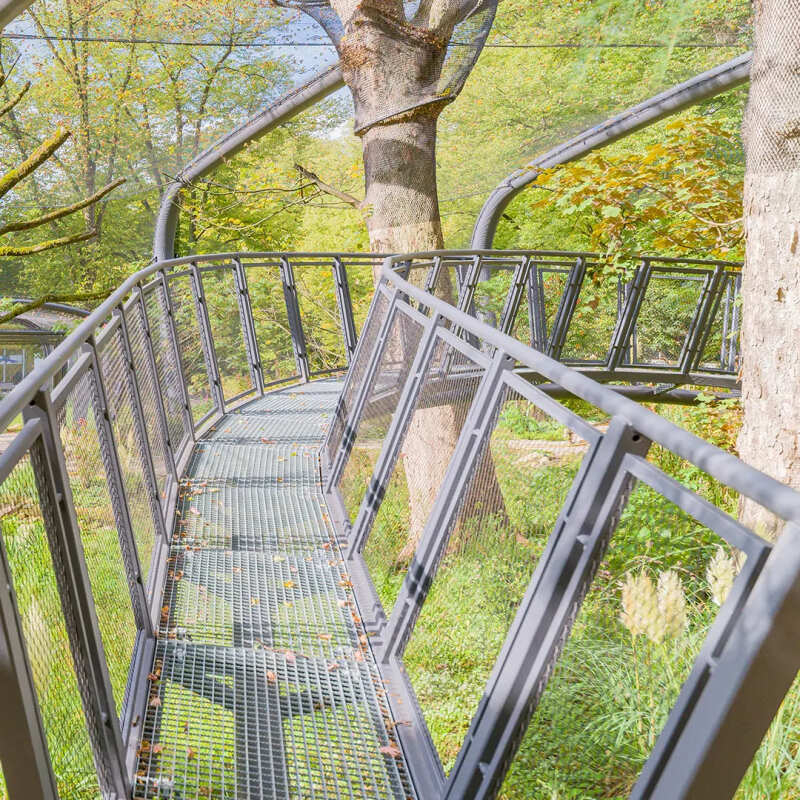
5. Typical Applications
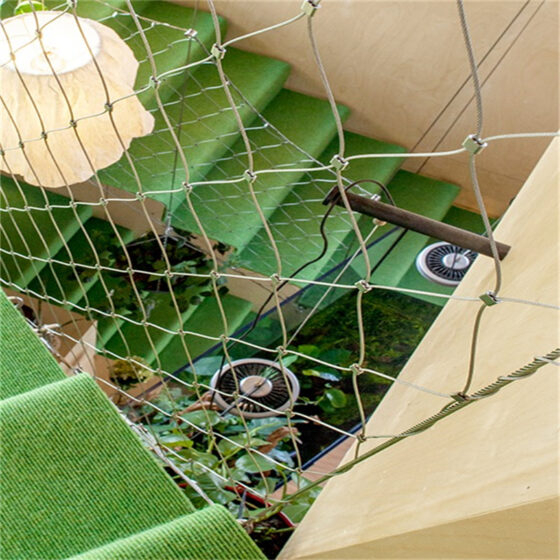
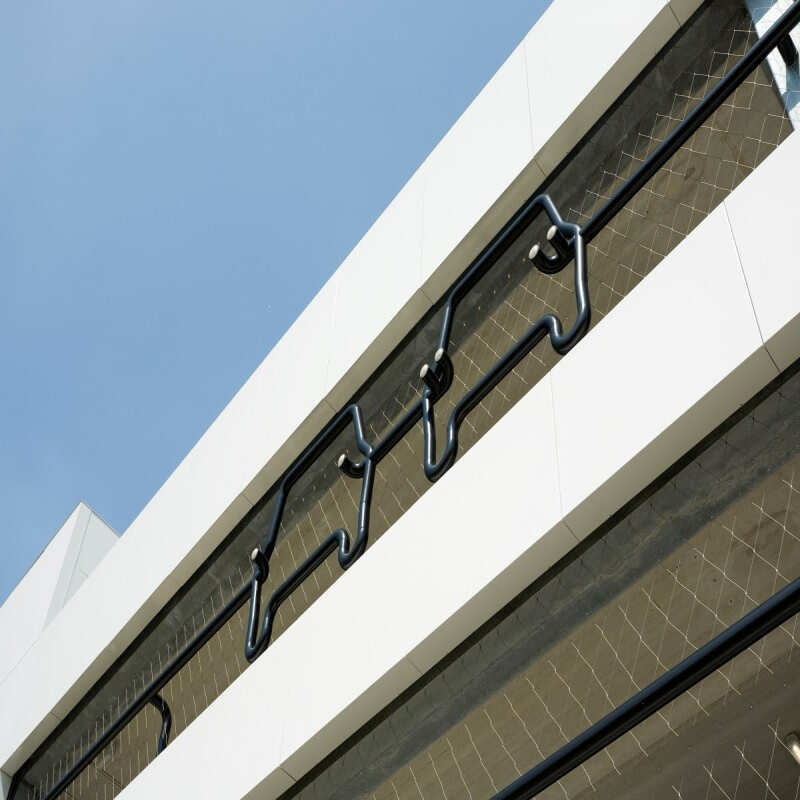
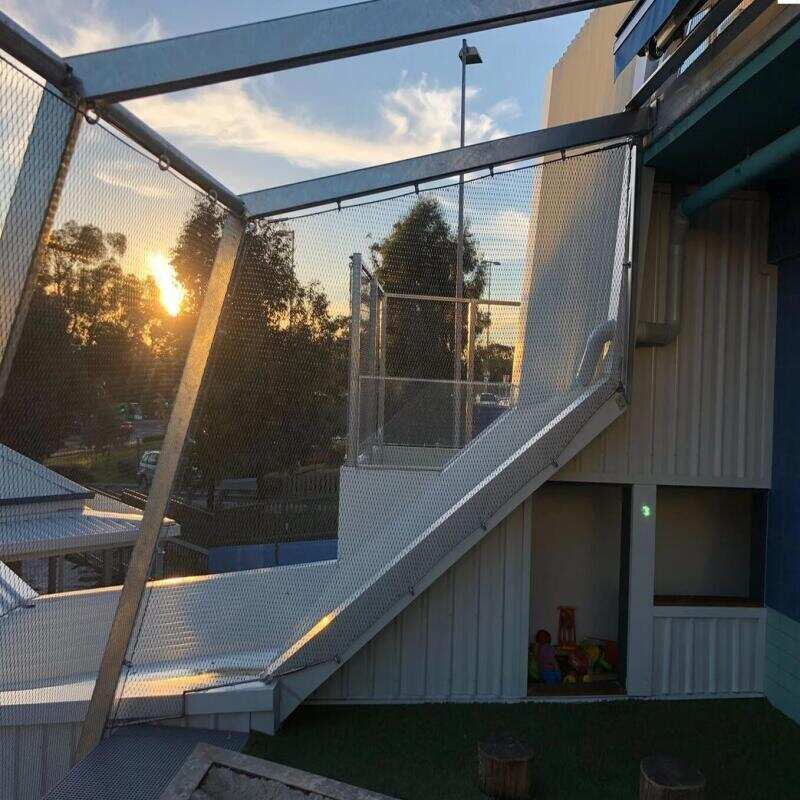
5.1 Balustrades and stair infill
- Mesh panels installed between handrails and floor edges.
- Prevent falls while preserving views through atriums, galleries and stairwells.
- Slim tension frames avoid bulky solid infill panels.
Design focus: child safety (aperture often ≤ 40–50 mm), climbability, handrail integration, smooth edges.
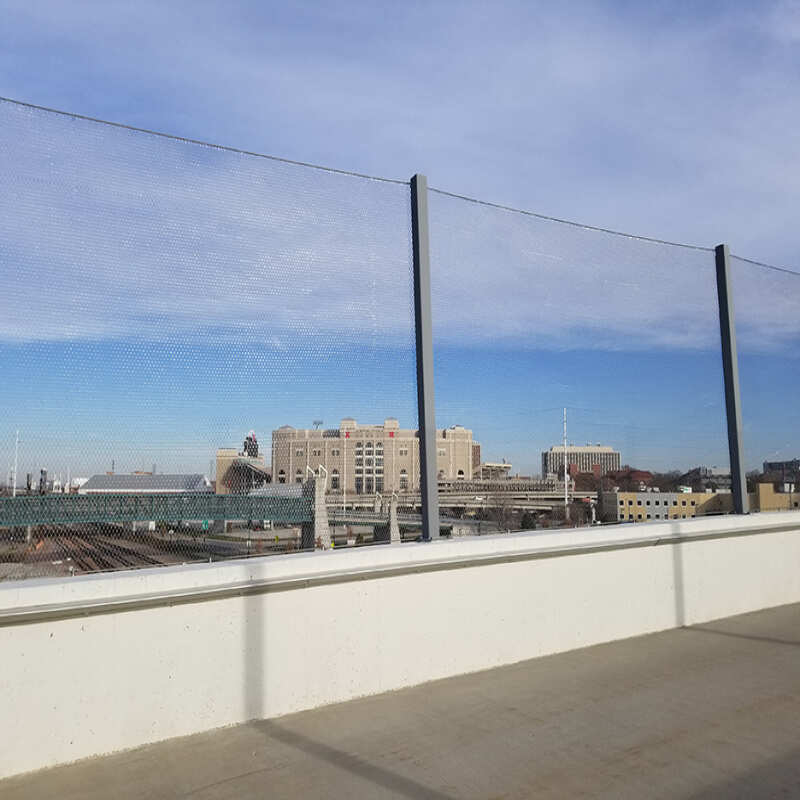
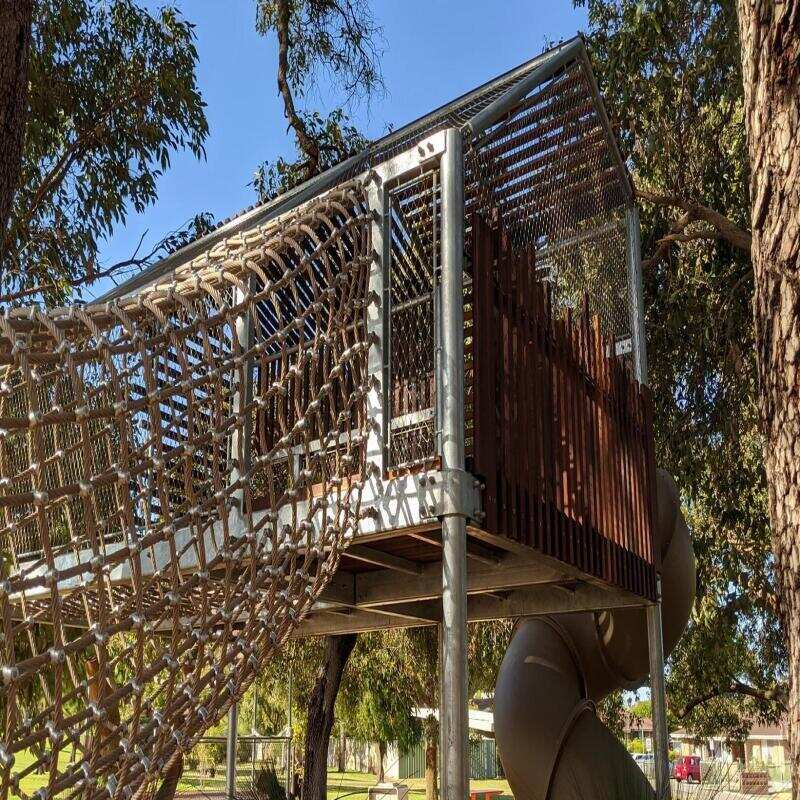
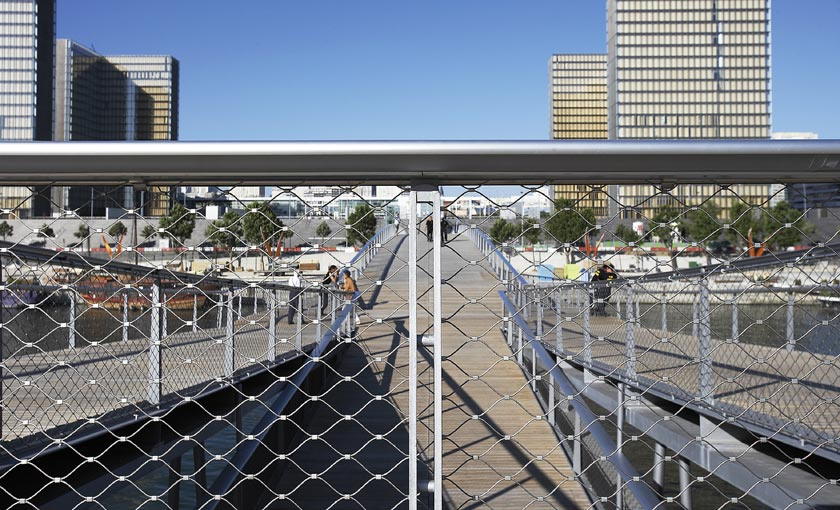
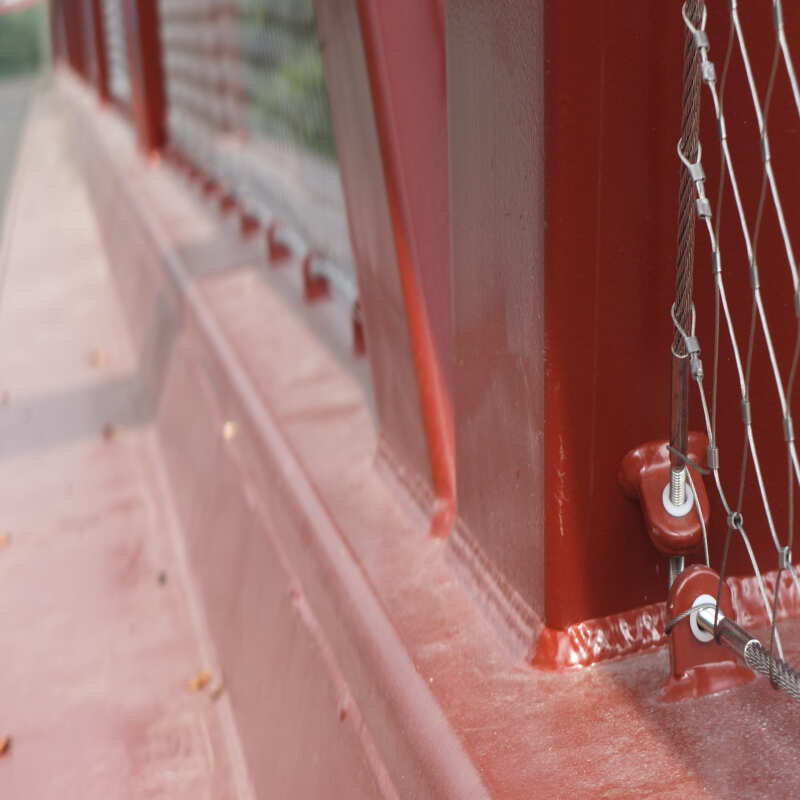
5.2 Bridges and elevated walkways
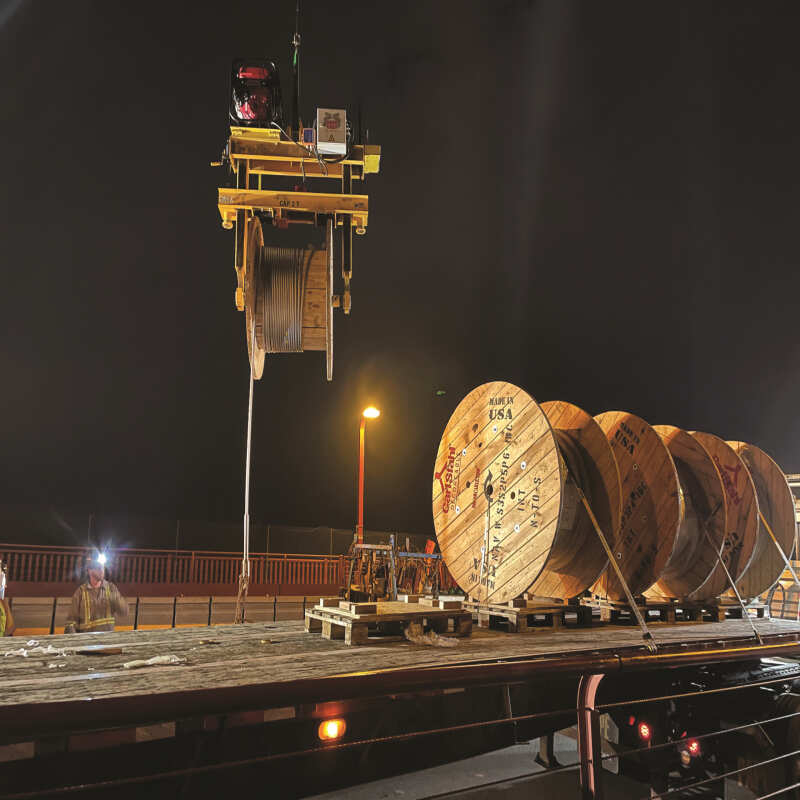
- Side protection on pedestrian and cycle bridges, skywalks, viewing platforms.
- Anti-throw barriers on overpasses (stopping objects from being thrown onto roads or rail).
Design focus: high impact resistance, anti-climb detailing, corrosion resistance in exposed locations.
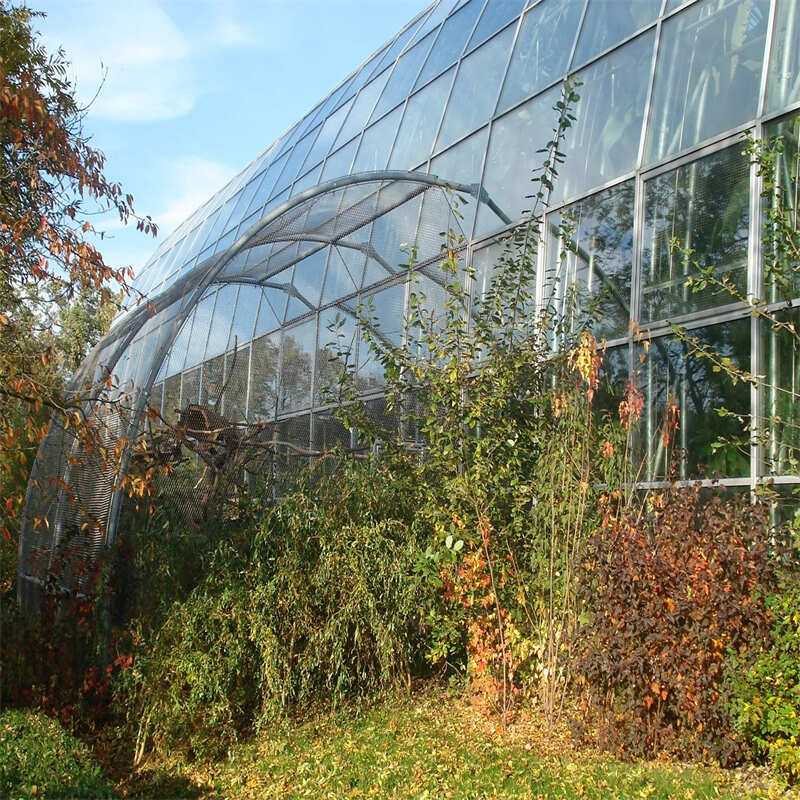
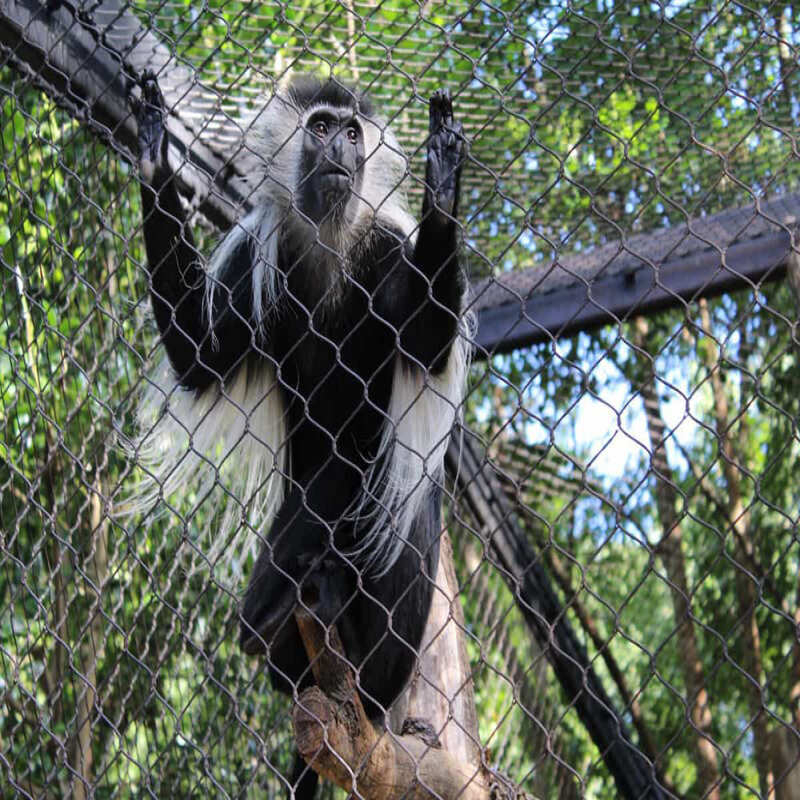
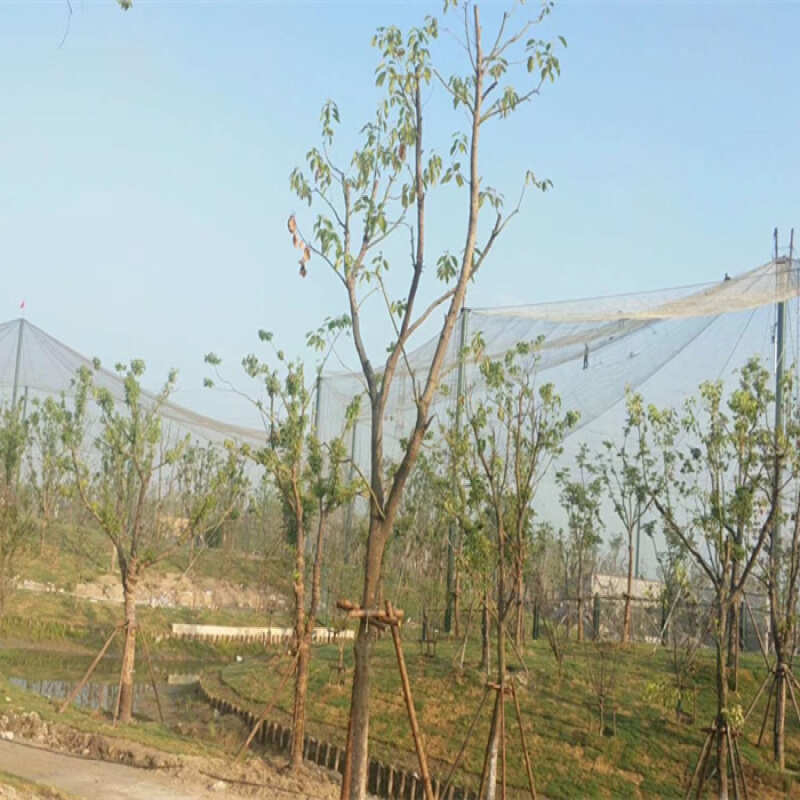
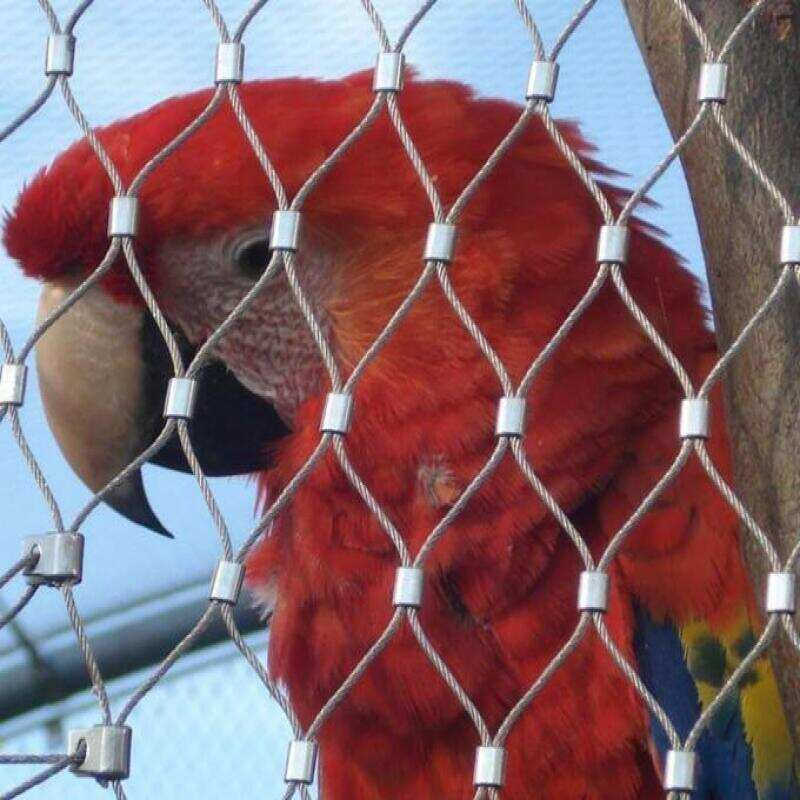
5.3 Zoo enclosures and aviaries
- Large spans over bird aviaries, primate islands, big cat enclosures, mixed-species habitats.
- Flexible mesh allows naturalistic enclosures with minimal visible structure.
Design focus: species-specific aperture and strength, safe interaction for claws and beaks, curved shapes, integration with doors and keeper accesses.
5.4 Façades and green walls
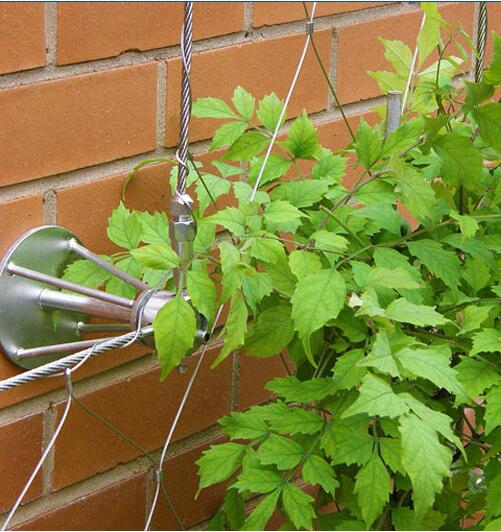
- Second “skin” around buildings for fall protection, shading or purely decorative use.
- Trellis mesh to support climbing plants in green façades.
Design focus: wind loads, plant weight, drainage and irrigation, connection to the primary façade, visual pattern and orientation.
5.5 Industrial and safety nets
- Edge protection on platforms, roofs and maintenance areas.
- Suspended nets under work zones to catch tools or debris.
- Barriers around machines, fans and service equipment.
Design focus: load rating, temperature and chemical exposure, ease of inspection and maintenance, integration with walkways and handrails.
6. How to Specify Wire Rope Mesh Correctly
When you talk to a manufacturer or supplier, you should be ready with at least the following information:
- Application and environment
- Where will the mesh be installed? Indoor, outdoor, coastal, pool, industrial?
- What is the primary purpose: fall protection, animal containment, décor, plant support?
- Required material
- 304 or 316 (316/316L recommended for harsh environments).
- Matching grade for ferrules and boundary cables to avoid galvanic corrosion.
- Mesh style and parameters
- Knotted or ferruled.
- Cable diameter (for example 2.0 mm).
- Mesh aperture (e.g. 60 × 105 mm diamond).
- Diamond orientation (standing or lying).
- Panel sizes and quantity
- Clear width and height of each panel (allowing for tension).
- Whether panels are identical or all different.
- Framing and edge details
- Are there boundary cables or rigid frames?
- How will the mesh attach: lacing, clamping plates, eye bolts, custom profiles?
- Load and safety requirements
- Applicable building codes or project specifications.
- Maximum allowable deflection or gap under load.
The more complete your brief, the better a supplier like POLYMETAL can design an economical, safe stainless steel wire rope woven mesh system for your project.
7. Installation Principles
7.1 Preparing the support structure
- Design for tension: mesh exerts forces on posts, beams and boundary cables. These members must be sized for both permanent tension and dynamic loads.
- Smooth surfaces: avoid sharp edges or weld spatter where mesh might rub.
- Anchor layout: position eye bolts, plates or rails to match the mesh panel pattern.
7.2 Installing the mesh panels
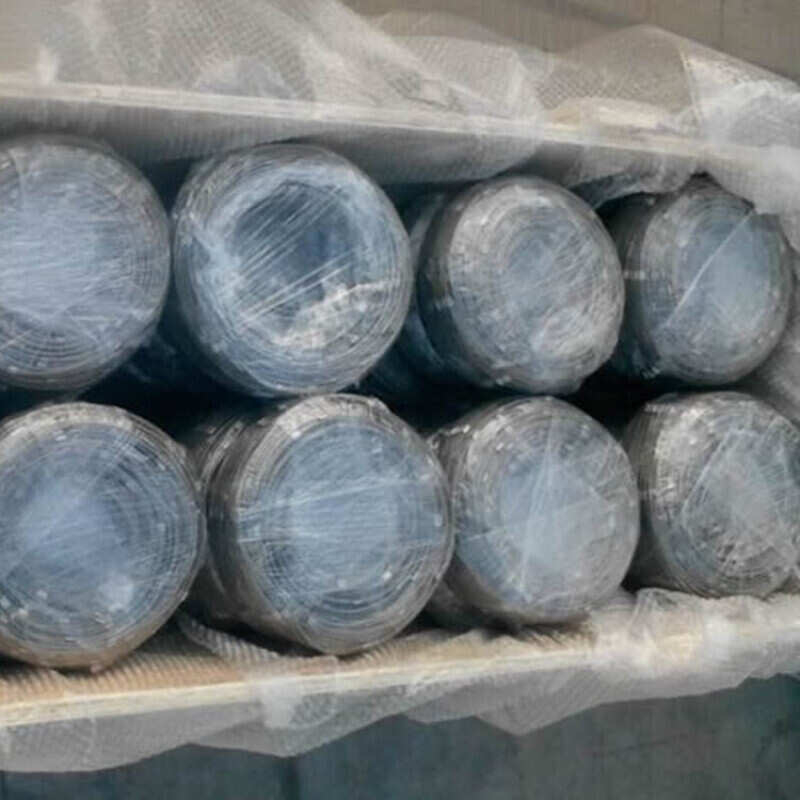
- Unpacking and orientation
- Keep panels labelled; note which edge is top and which is bottom.
- Avoid kinking cables when unrolling.
- Temporary fixing
- Attach one edge loosely to the frame using clamps or lacing.
- Check that the diamond pattern is correctly oriented and symmetrical.
- Tensioning
- Use turnbuckles, tensioners or boundary cables to gradually pull the mesh into shape.
- Work from the centre outwards to distribute tension evenly.
- Aim for clean, regular diamonds without wrinkles or overly tight corners.
- Trimming and final fixing
- If panels are oversized, trim cautiously with appropriate cutters.
- Secure with stainless steel clamps, ferrules or continuous flat bars.
- Ensure any cut cable ends are covered or turned away from accessible areas.
- Final checks
- Confirm that openings remain within the design aperture under manual load.
- Check that there are no snagging points or loose wires.
7.3 Common installation mistakes
- Under-designed frames that bend or twist when mesh is tensioned.
- Uneven tension, leading to sagging in the middle and overstressed edges.
- Cutting panels on site without re-pressing ferrules or protecting ends.
- Mixing stainless steel with mild-steel fixings, causing staining or galvanic corrosion.
8. Inspection and Maintenance
One of the main reasons to choose stainless steel wire rope mesh is low life-cycle cost, but “low maintenance” still means some maintenance.
8.1 Routine inspections
Intervals depend on exposure and criticality, but at least annually you should:
- Visually check for broken wires, damaged ferrules or distorted panels.
- Confirm that anchor bolts, clamps and turnbuckles remain tight.
- Look for signs of corrosion, especially in crevices or where dissimilar metals meet.
- For animal enclosures, check areas of frequent contact or climbing.
Any damage that affects safety (cut cables, loose anchors) should be repaired immediately, usually by replacing the affected panel.
8.2 Cleaning
- Rinse with fresh water to remove dirt, salts and pollutants.
- For stubborn deposits, use mild detergent and a soft brush or cloth.
- Avoid chloride-rich cleaners, strong acids or steel wool that could leave rust stains.
In most environments, occasional cleaning is enough to keep stainless mesh attractive for many years.
9. Advantages in Life-Cycle Cost
Although stainless steel wire rope woven mesh has a higher upfront price than basic galvanized mesh or plastic nets, it typically wins in long-term performance:
- Long service life without repainting or recoating.
- Minimal downtime for maintenance – particularly important in transport hubs, stadiums and zoos.
- Stable appearance – it keeps a crisp, high-quality look even after many years.
- Sustainability – stainless steel is fully recyclable and offers durability that reduces replacement waste.
When you factor in access costs, repainting, replacement of failed panels and aesthetic degradation, stainless cable mesh often proves the economical choice over the life of a building or enclosure.
10. Quick FAQ
Q1: Is wire rope mesh child-safe for balconies and stairs?
Yes, provided the aperture is small enough (often ≤ 35–50 mm depending on local code) and the mesh is correctly tensioned and anchored so children cannot force large openings or climb through.
Q2: Can animals damage or chew through it?
For most species, properly selected stainless cable mesh is extremely resistant. Choosing the right cable diameter and aperture for the animal (for example, heavier cables for big cats or primates) is crucial.
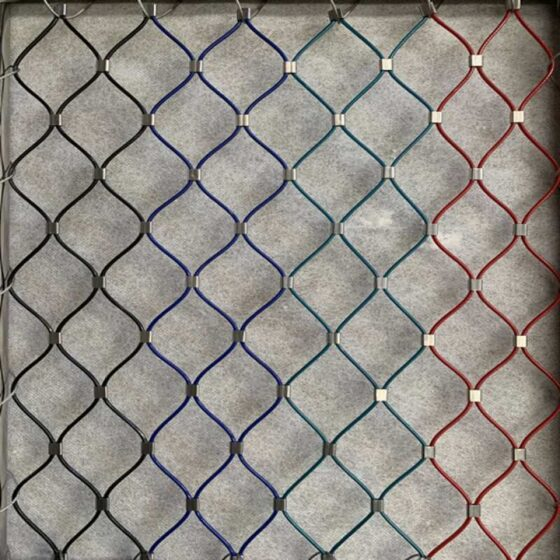
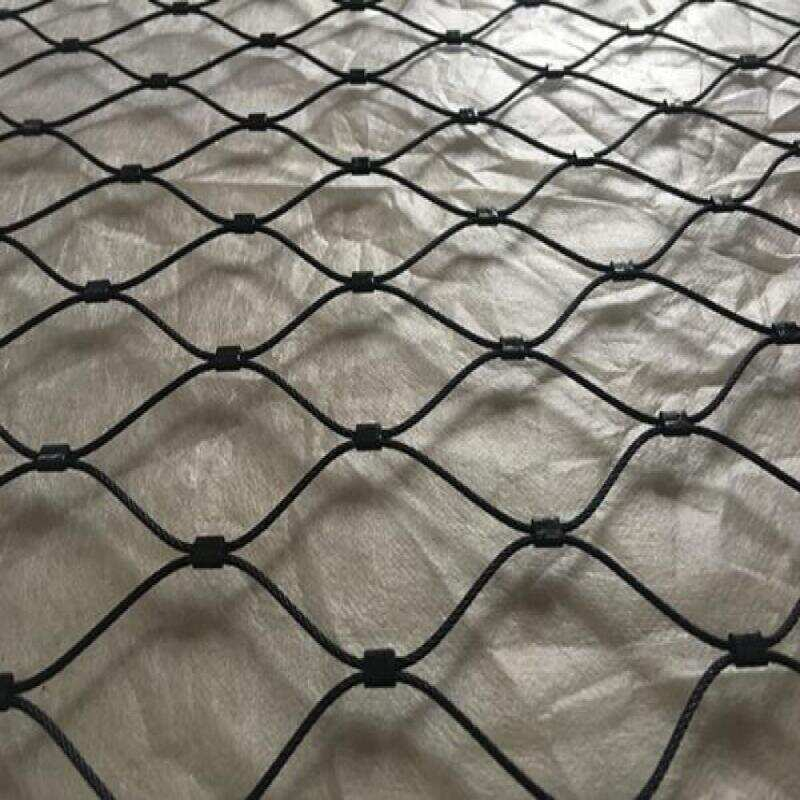
Q3: Can the mesh be coloured?
Stainless mesh is typically left with a natural metallic finish, but it can be coated or painted in some systems, or combined with coloured backdrops or lighting to change the visual effect.
Q4: How wide can a panel span?
Spans of several metres are common, and 10 m or more is possible with appropriate cable size, tension and supporting structure. Large spans require careful engineering to control deflection.
Q5: Can wire rope mesh be repaired?
Minor damage can sometimes be repaired locally, but for safety-critical areas, replacing the full panel is usually recommended so the structural behaviour remains predictable.
11. Conclusion
Stainless steel wire rope woven mesh is far more than a decorative net. It is a high-performance structural system that, when correctly designed, specified and installed, can prevent falls and contain people, animals and objects, deliver sleek and transparent architecture, and survive harsh environments with very low maintenance.
By understanding cable sizes, mesh apertures, materials, installation methods and real-world loads, you can turn this flexible product into a reliable, long-lasting safety solution for balustrades, bridges, zoos, façades and industrial sites. POLYMETAL is ready to support you with CE- and SGS-certified stainless steel wire rope woven mesh tailored to your project requirements.