Your One-Stop Wire Mesh Fence Supplier | POLYMETAL
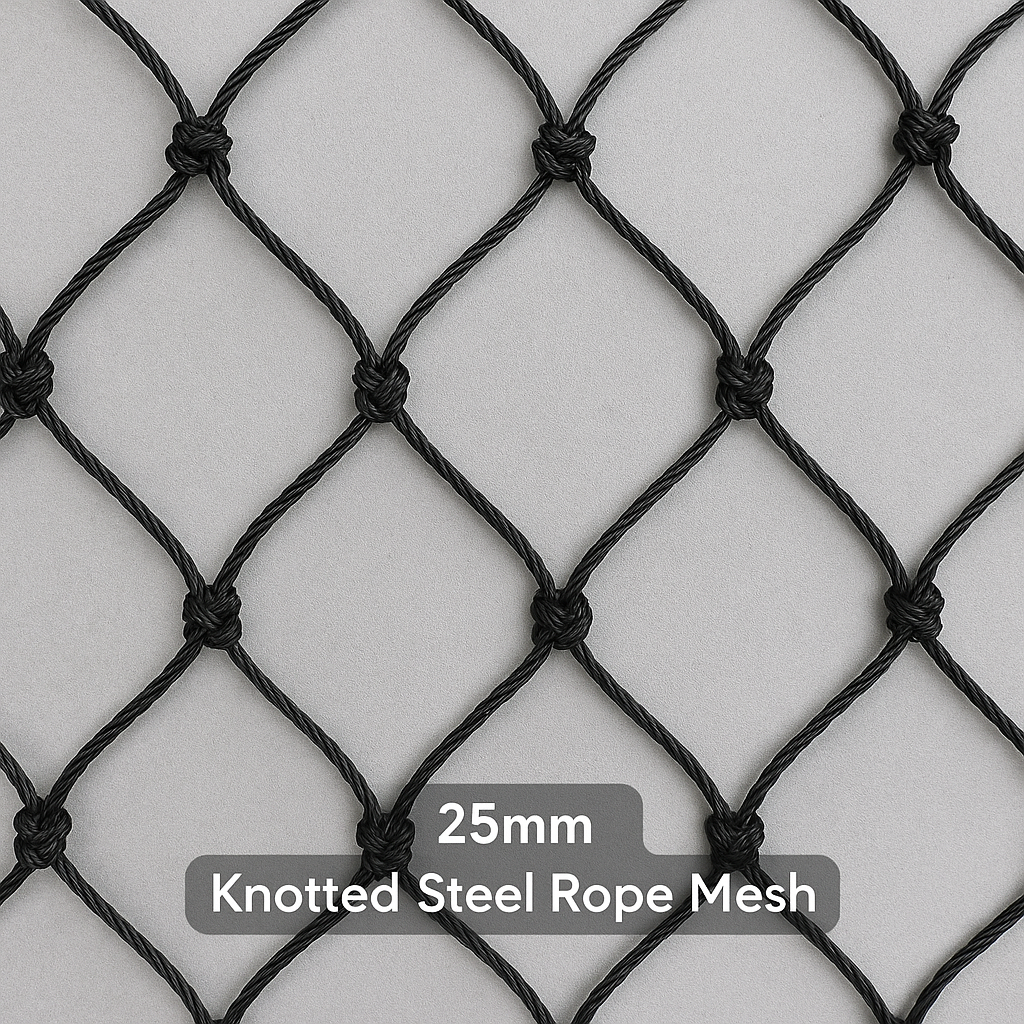

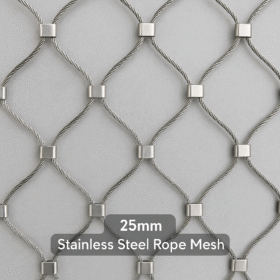
25mm rope mesh is a fine-aperture stainless steel cable net, typically with a 25 × 25 mm opening, used where you need close control of birds or small animals, child-safe edges or very secure infill—without blocking views. The mesh is tensioned between frames, posts or edge cables so it behaves like a continuous safety net: strong enough to resist everyday impacts, yet open enough to preserve daylight, ventilation and design intent around façades, balustrades, aviaries and plant-support walls.
Because 25mm rope mesh has very low visual density, from most viewing angles the cables almost disappear and the eye sees the architecture, foliage or landscape rather than the barrier. That’s why this small-aperture system is now common in zoos, airports, hotels, villas, stadiums and premium residential projects.
Secret 1 – The “small hole = always safe” myth can quietly put you out of code
Many people assume that as long as the mesh aperture is 25 × 25 mm, it will automatically meet every child-safety, animal-containment or anti-fall rule. In reality, standards also care about deflection under load, climbability, frame stiffness and installation details. A 25mm rope mesh that looks perfect on paper can still fail a real site test if those hidden factors are ignored.


1. What Exactly Is 25mm Rope Mesh?
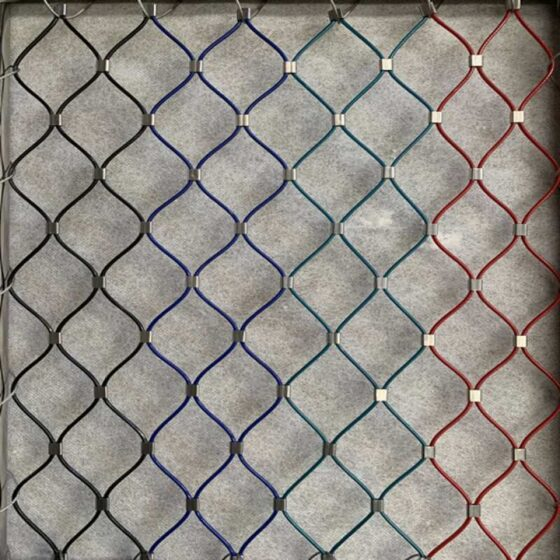
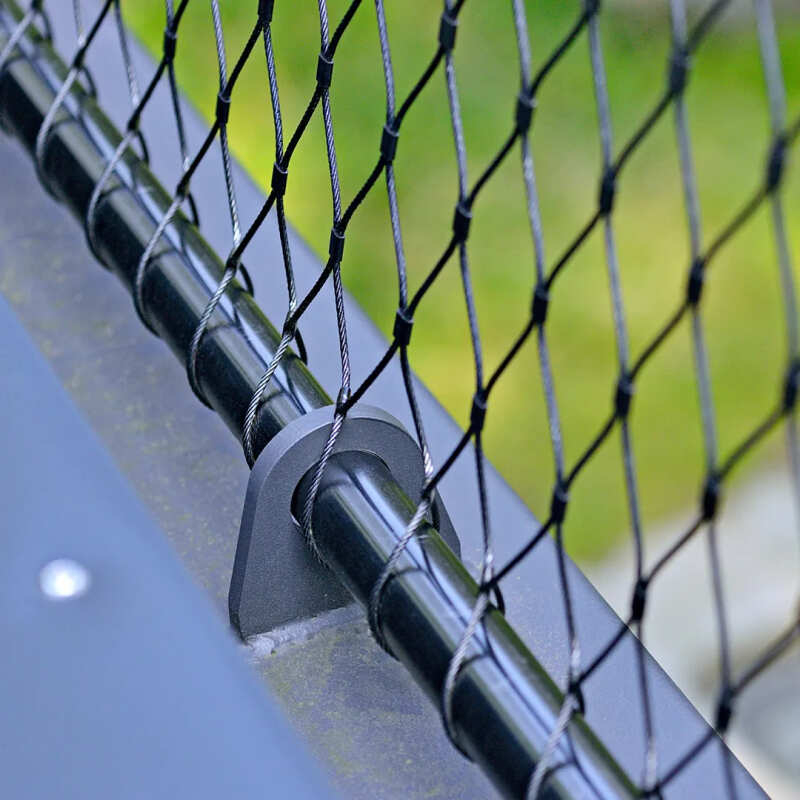
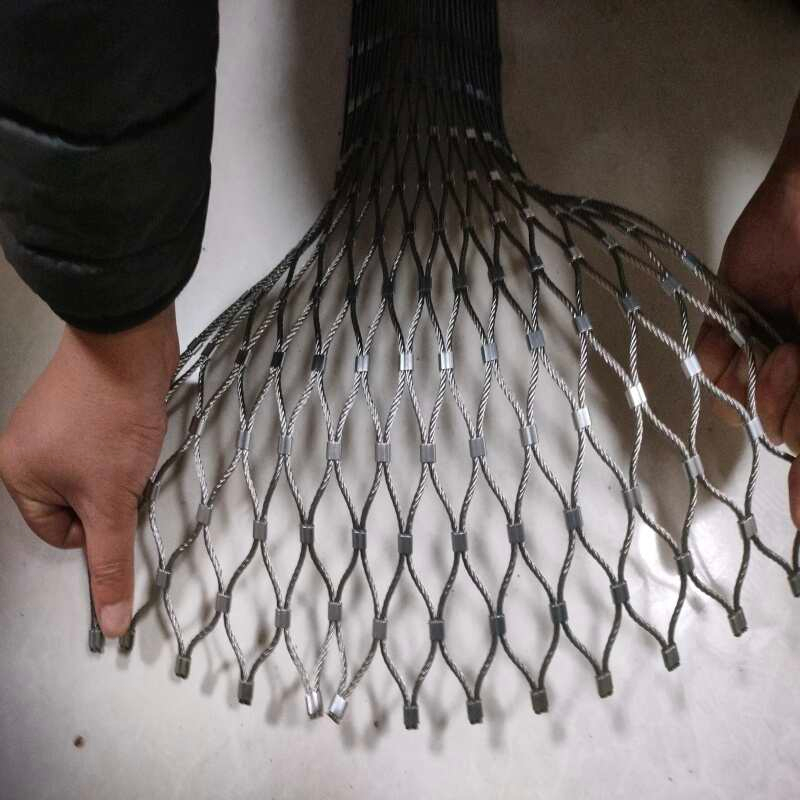
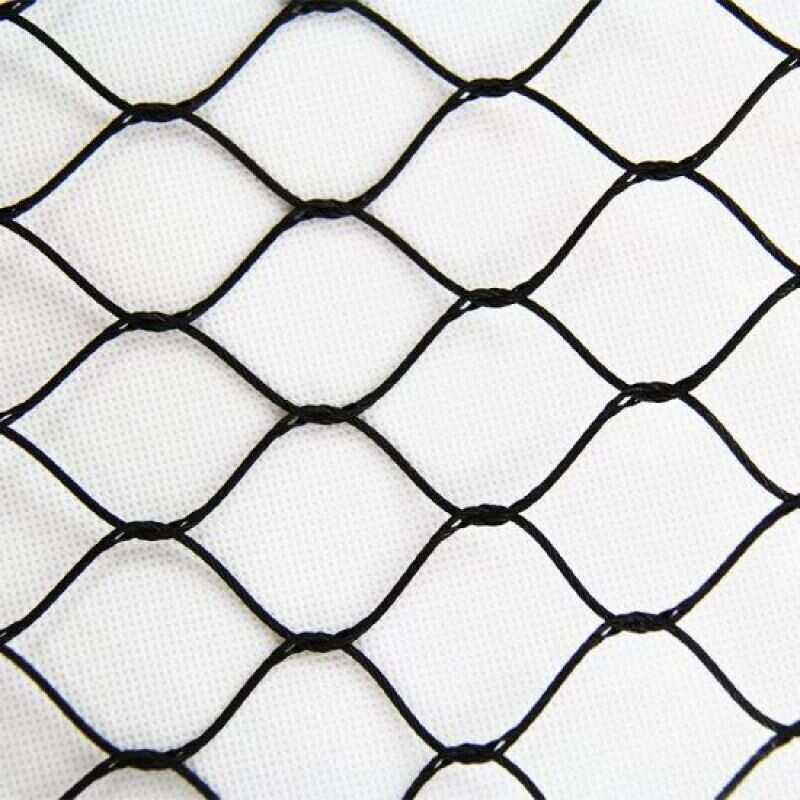
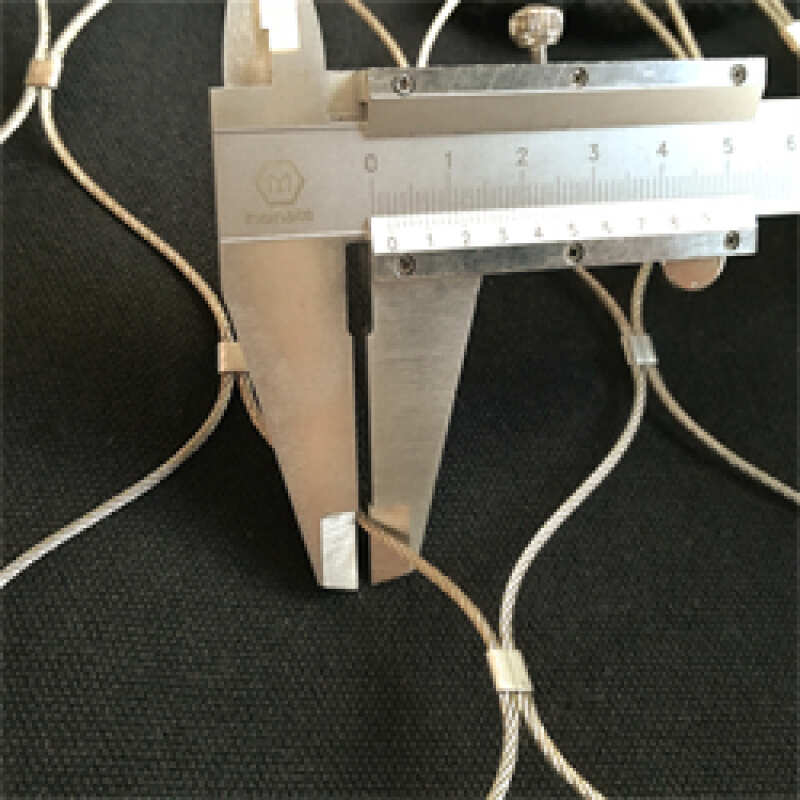
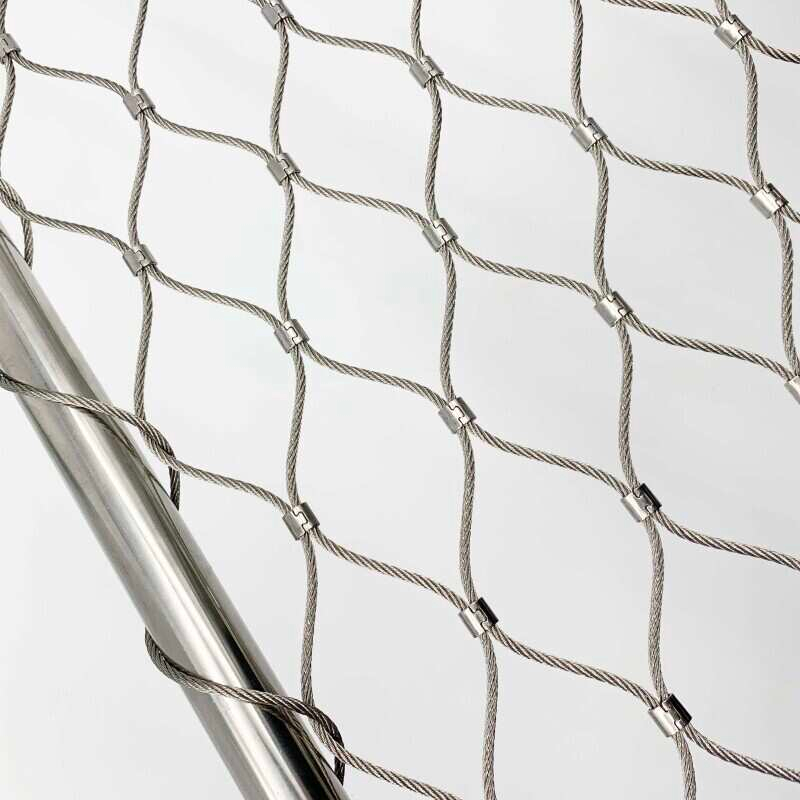
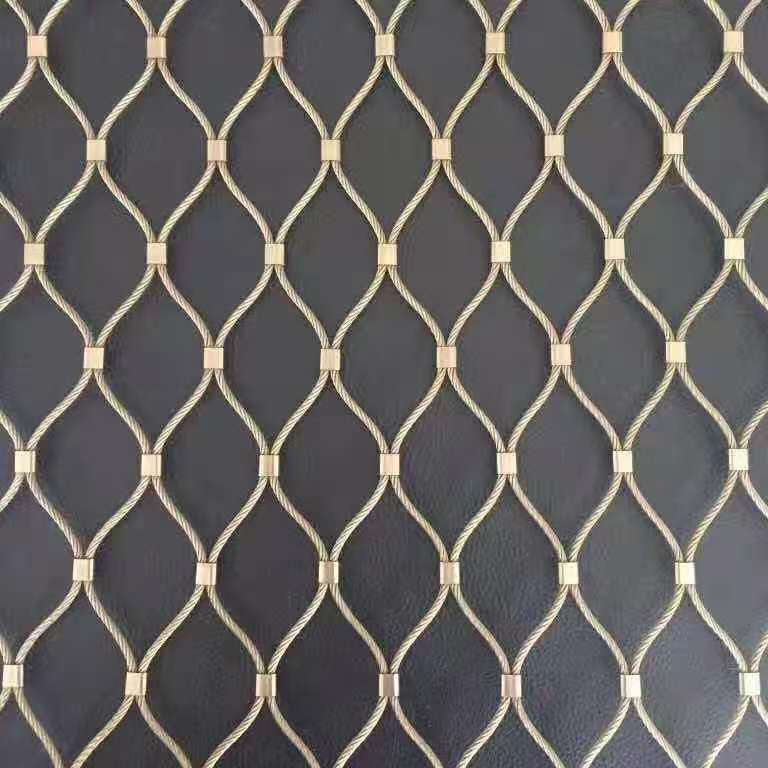
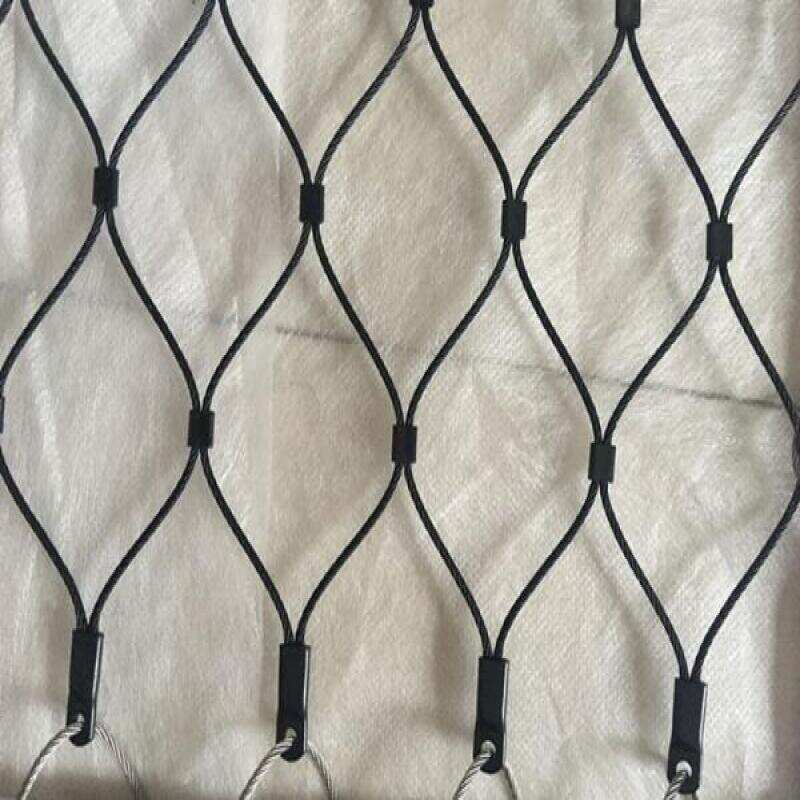
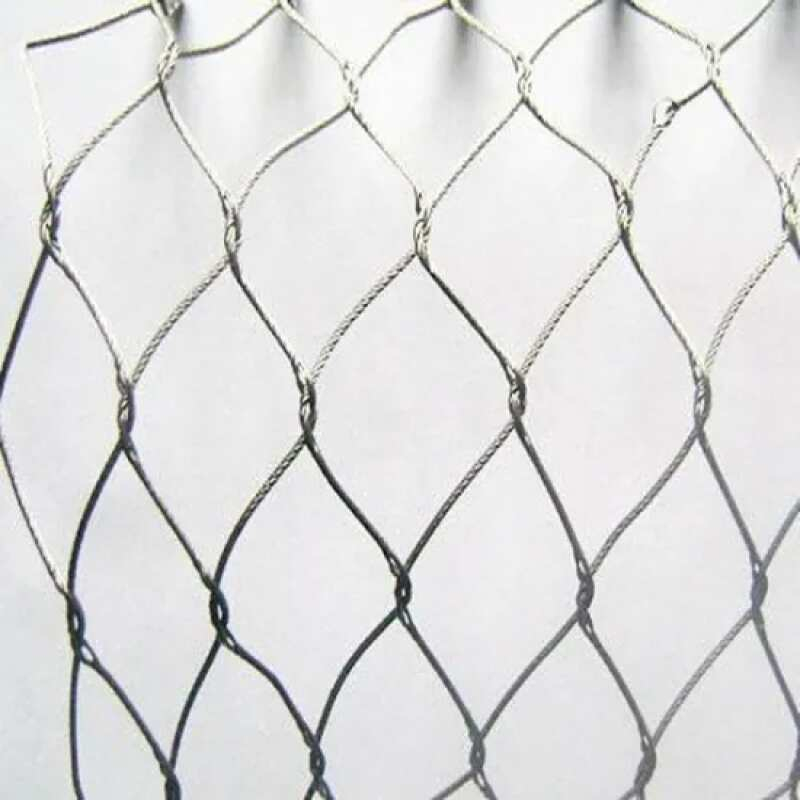
25mm rope mesh (often called 25mm stainless steel rope mesh, 25mm zoo mesh or 25mm cable netting) is made from multi-strand stainless steel wire rope, usually in 7×7 or 7×19 constructions. The cables are arranged to form diamond-shaped openings; for a “25mm rope mesh” these are typically 25 × 25 mm or have a short diagonal close to 25 mm.
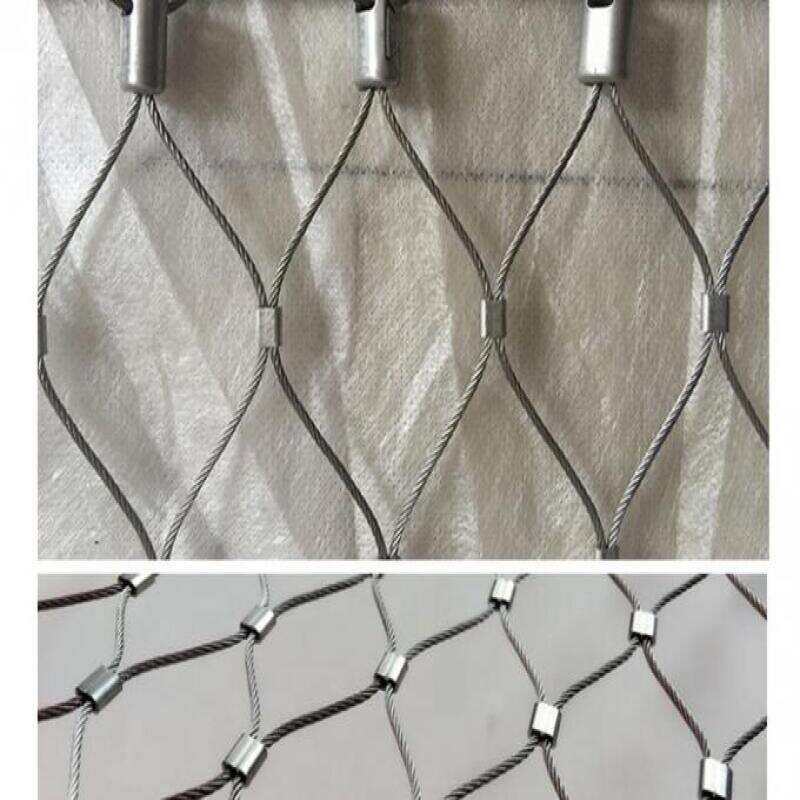
Nodes are formed either by hand-woven interlacing or by stainless steel ferrules that clamp the crossing cables. Once the panel is fixed to a rigid perimeter and tensioned, the mesh behaves as a structural membrane: loads are carried by tension across many ropes and nodes, not by bending in a single bar.
Typical design ranges for 25mm rope mesh include:
* Wire rope diameter: about 1.0–2.0 mm
* Mesh aperture: mainly 25 × 25 mm (sometimes 25 × 30 or 25 × 40 mm)
* Wire rope structure: 7×7 for fine diameters, 7×19 when extra flexibility is needed
* Material grade: AISI 304 / 304L for interior; AISI 316 / 316L for exterior, coastal and poolside
Secret 2 – Confusing “25mm rope mesh” with 30 or 40 mm options can break design intent
On drawings, 25, 30 and 40 mm apertures look almost identical, but on site the difference is obvious: birds escape, fingers fit through gaps, or small objects can fall. Some factories quietly “optimize” your order to a bigger opening to save cable. If you don’t lock the exact 25 × 25 mm aperture in both drawings and contract, you may get a mesh that looks similar but fails your real purpose.
2. Material Grade, Corrosion And Real Exposure
Most 25mm rope mesh systems are supplied in the following stainless steel grades:
* **AISI 304 / 304L** – suitable for dry interior or low-pollution spaces.
* **AISI 316 / 316L** – preferred for outdoor, coastal, pool, zoo and industrial locations where salt, chlorides, cleaning chemicals or pollution are present.
A professional manufacturer will ask where your 25mm rope mesh will be used:
* Interior, semi-exposed or fully exterior?
* Near the sea, a pool, cooling towers or busy roads?
* Will you use aggressive cleaners or de-icing salts?
* What’s the expected service life and maintenance frequency?
Secret 3 – Using interior-grade 25mm rope mesh outdoors plants slow, visible damage
Ordering AISI 304 for an exterior aviary or seaside balcony just because the photos “look indoor” is a classic cost trap. Tea staining, pitting and ugly rust streaks may appear within a few years, right where the client sees them first—handrails, glass and white stone. Upgrading to 316 at the start is cheaper than arguing about warranty and re-polishing an entire project later.

3. Structural Behaviour: Why 25mm Rope Mesh Needs A Strong Frame
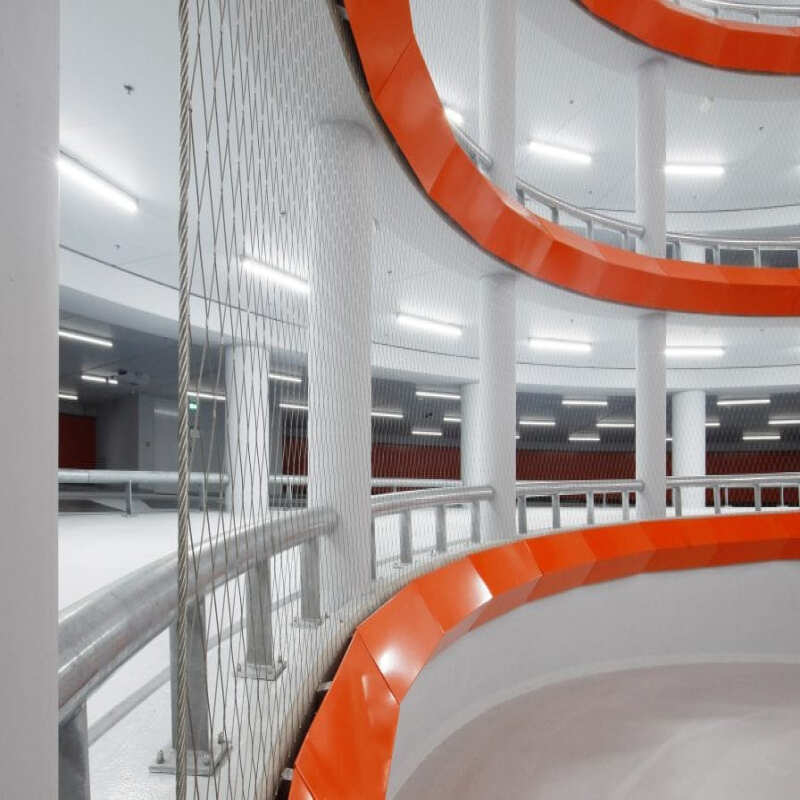
25mm rope mesh behaves as a tensioned membrane, not as a rigid bar panel:
* Under load, the diamond openings deform slightly and the cables take tension.
* Loads are shared by many cables and nodes and then transferred into the perimeter frame.
* With correct pretension and a stiff frame, deflection is controlled and the barrier feels solid.
* With weak posts or edge beams, the mesh simply pulls the frame inwards.
Secret 4 – Overspec cable on a weak frame is wasted money and still fails tests
Some projects specify a very strong 25mm rope mesh cable (for example, 1.6 mm 7×7 or 2.0 mm 7×19) but mount it on thin posts or light brackets. In load tests, the mesh doesn’t break—but the whole guard or aviary frame deflects so much that it fails code. The result: expensive structural retrofits even though the mesh itself is “over-designed”.
4. Typical Applications Of 25mm Rope Mesh
Because of its fine aperture and high transparency, 25mm rope mesh is ideal for:
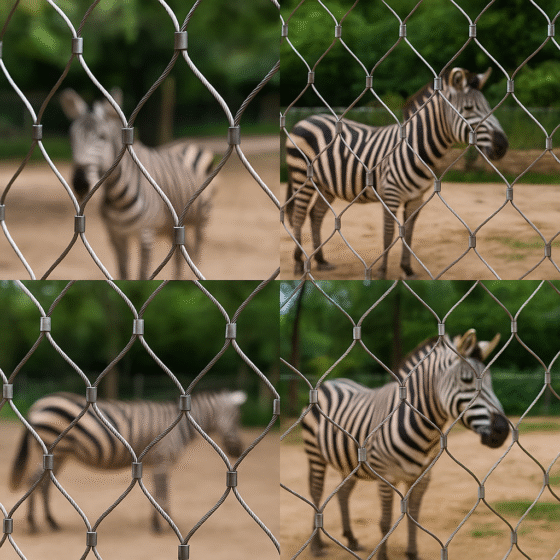
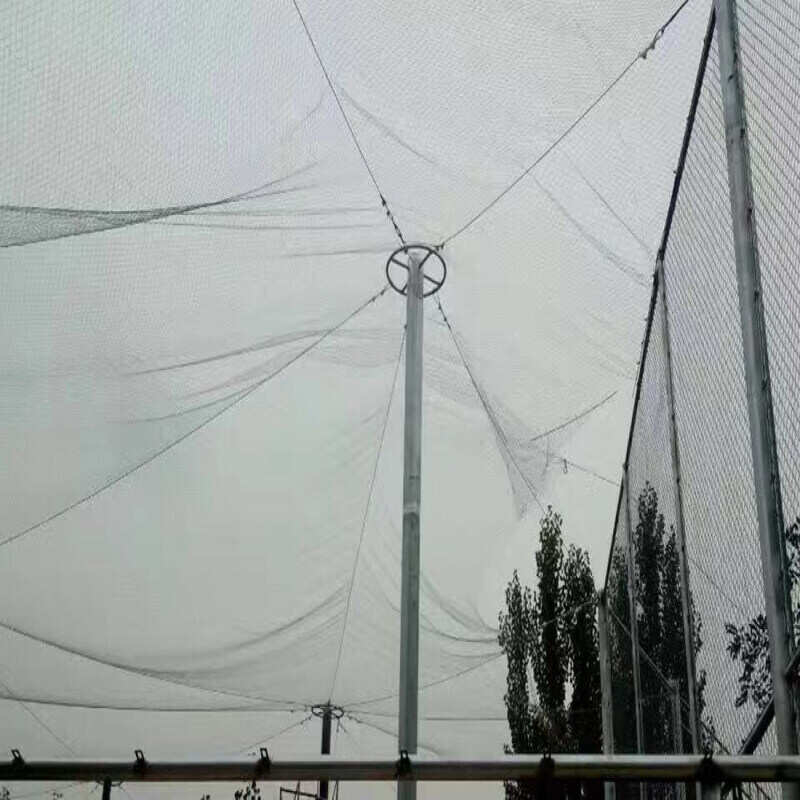
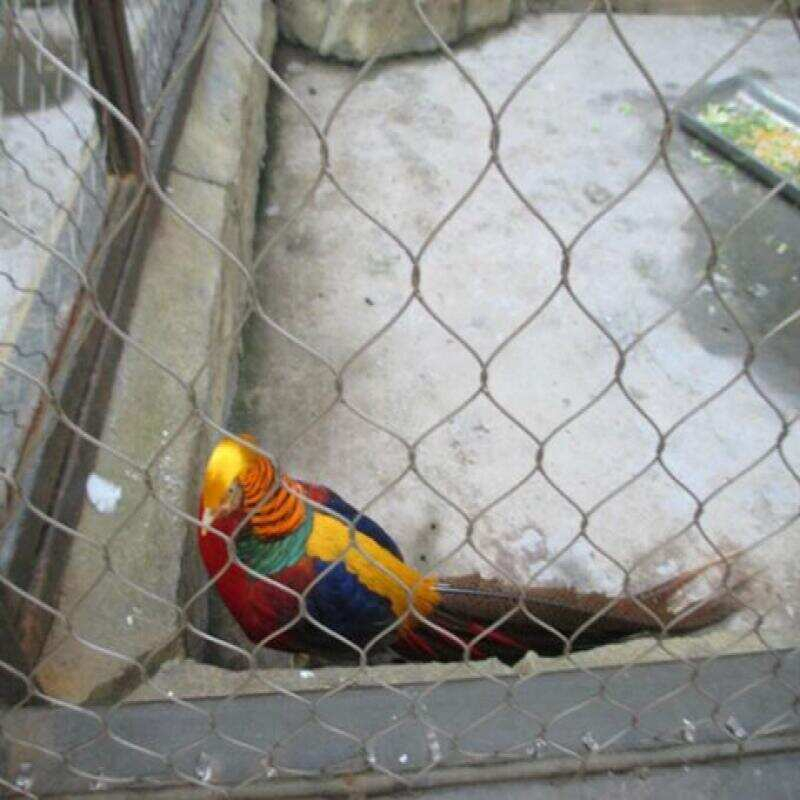
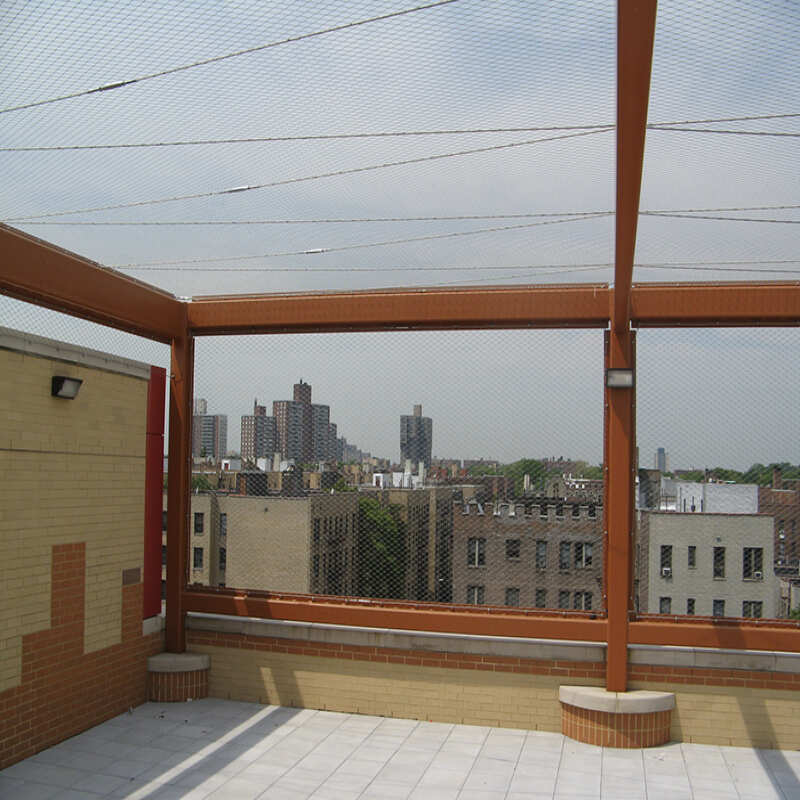
* **Bird aviaries and small bird exhibits** – preventing escape while keeping excellent visibility.
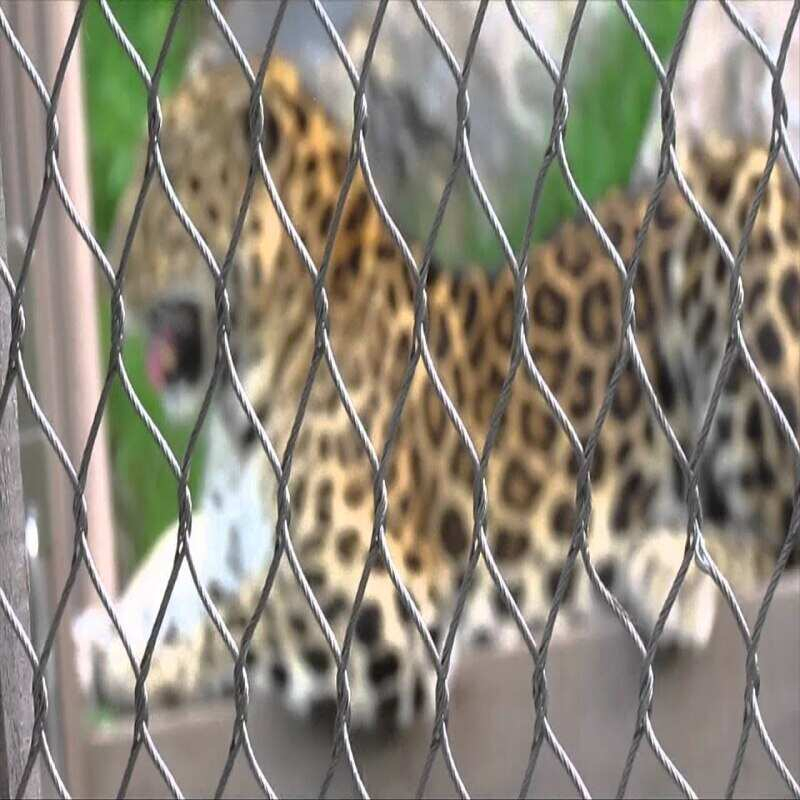
* **Zoo enclosures for smaller species** – lemurs, small monkeys, raccoons and similar animals.
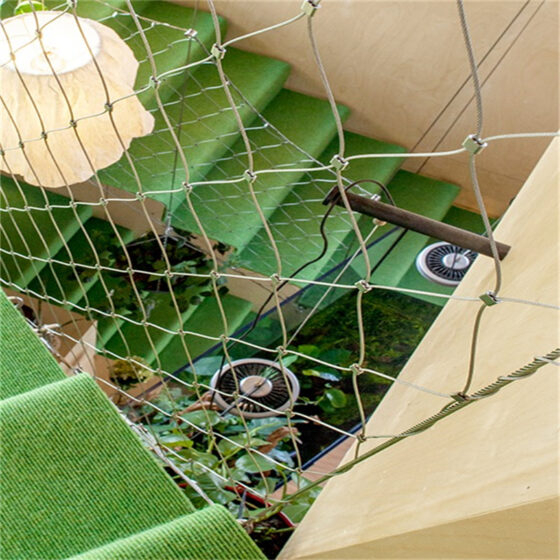
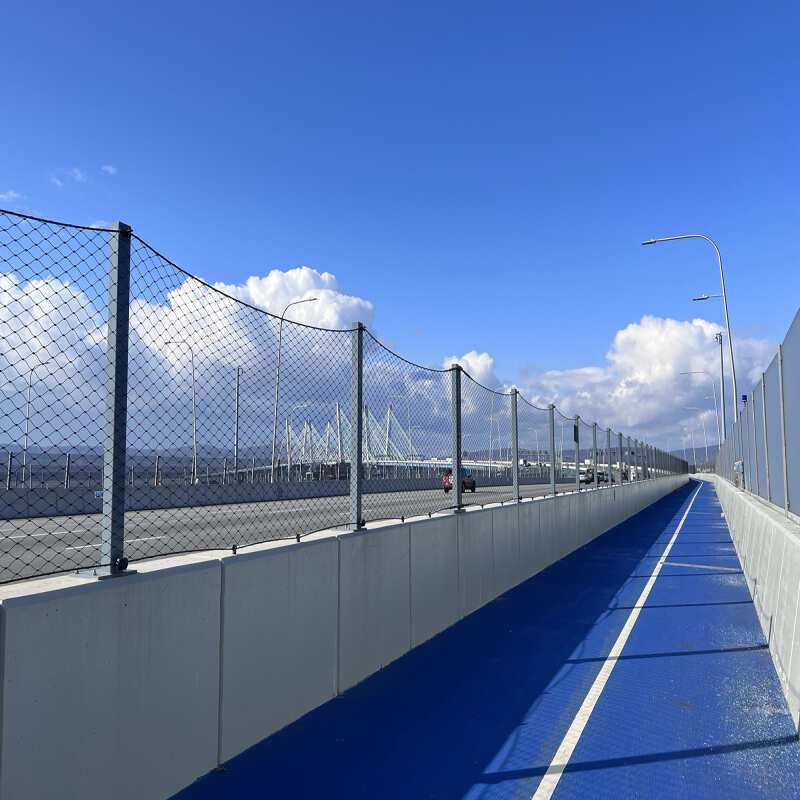
* **Child-safe balustrades** – where fingers and small objects must not pass through.
* **High-end residential balconies** – especially where owners want an “invisible” barrier.
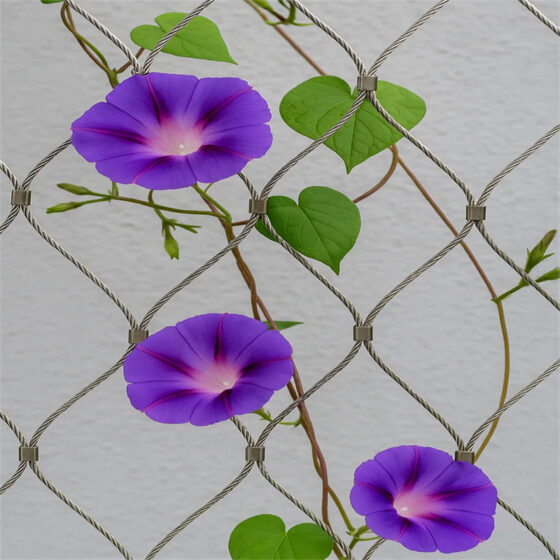
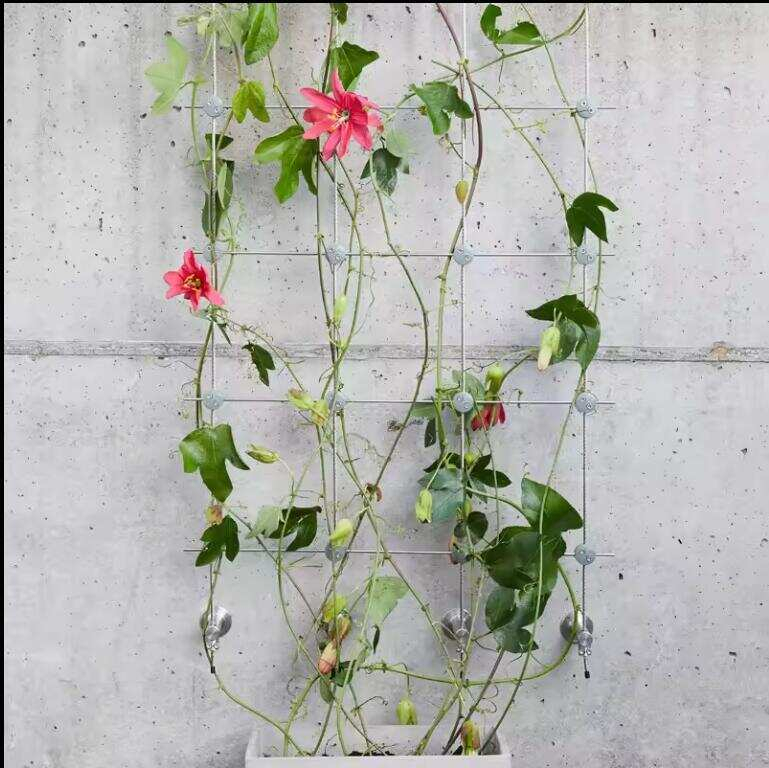
* **Plant-support walls** – tight support grid for climbing plants and living walls.
Secret 5 – A “cute” 25mm rope mesh can still feel unsafe if open degree is too high
Two 25mm rope meshes can share the same aperture but different wire diameters and open degree. Very thin cable with ultra-high openness can make residents feel like they’re standing at the edge with almost nothing in front of them, even if it passes the code test. The right design balances openness with a feeling of safety and comfort.
5. 25mm Rope Mesh Specifications
Exact values depend on each project, but most 25mm rope mesh falls into predictable ranges of wire diameter, aperture, open degree and breaking load. The tables below show typical configurations for different uses (aviaries, façades/green walls and balustrades). All data is indicative and should be checked against local standards and structural design.
5.1 Table 1 – 25mm Rope Mesh For Aviaries And Small Animal Enclosures
| Model | Wire rope diameter (mm) | Mesh aperture (mm) | Open degree (%) | Light transmittance (%) | Material | Nominal breaking load (lbs) | Wire rope structure |
|---|---|---|---|---|---|---|---|
| RM-AV01 | 1.0 | 25 × 25 | 42 | 40 | AISI 316 | 200 | 7×7 |
| RM-AV02 | 1.2 | 25 × 25 | 45 | 43 | AISI 316 | 270 | 7×7 |
| RM-AV03 | 1.2 | 25 × 30 | 47 | 45 | AISI 316 | 270 | 7×7 |
| RM-AV04 | 1.2 | 25 × 35 | 49 | 47 | AISI 316 | 270 | 7×7 |
| RM-AV05 | 1.5 | 25 × 25 | 44 | 42 | AISI 316 | 480 | 7×7 |
| RM-AV06 | 1.5 | 25 × 30 | 46 | 44 | AISI 316 | 480 | 7×7 |
| RM-AV07 | 1.5 | 25 × 40 | 50 | 48 | AISI 316 | 480 | 7×7 |
| RM-AV08 | 1.6 | 25 × 25 | 43 | 41 | AISI 316 | 520 | 7×7 |
| RM-AV09 | 1.6 | 25 × 35 | 48 | 46 | AISI 316 | 520 | 7×7 |
| RM-AV10 | 1.6 | 25 × 40 | 50 | 48 | AISI 316 | 520 | 7×19 |
| RM-AV11 | 1.6 | 25 × 50 | 54 | 52 | AISI 316 | 520 | 7×19 |
| RM-AV12 | 2.0 | 25 × 25 | 40 | 38 | AISI 316 | 676 | 7×7 |
| RM-AV13 | 2.0 | 25 × 35 | 46 | 44 | AISI 316 | 676 | 7×7 |
| RM-AV14 | 2.0 | 25 × 40 | 48 | 46 | AISI 316 | 676 | 7×19 |
| RM-AV15 | 2.0 | 25 × 50 | 52 | 50 | AISI 316 | 676 | 7×19 |
Secret 6 – Choosing 25mm rope mesh only by aperture ignores bite, claw and impact loads
A 25 × 25 mm opening might stop birds escaping, but that doesn’t mean the mesh will survive years of chewing, jumping and climbing. If you don’t match wire diameter and structure to species behaviour, your “perfect” 25mm rope mesh aviary can stretch, deform or even tear in high-stress zones.
5.2 Table 2 – 25mm Rope Mesh For Façades And Green Walls
| Model | Wire rope diameter (mm) | Mesh aperture (mm) | Open degree (%) | Light transmittance (%) | Material | Nominal breaking load (lbs) | Wire rope structure |
|---|---|---|---|---|---|---|---|
| RM-GW01 | 1.2 | 25 × 25 | 45 | 43 | AISI 316 | 270 | 7×7 |
| RM-GW02 | 1.2 | 25 × 30 | 47 | 45 | AISI 304 | 270 | 7×7 |
| RM-GW03 | 1.5 | 25 × 25 | 44 | 42 | AISI 316 | 480 | 7×7 |
| RM-GW04 | 1.5 | 25 × 35 | 48 | 46 | AISI 316 | 480 | 7×7 |
| RM-GW05 | 1.5 | 25 × 40 | 50 | 48 | AISI 316 | 480 | 7×7 |
| RM-GW06 | 1.6 | 25 × 35 | 47 | 45 | AISI 316 | 520 | 7×7 |
| RM-GW07 | 1.6 | 25 × 40 | 49 | 47 | AISI 316 | 520 | 7×7 |
| RM-GW08 | 1.6 | 25 × 50 | 53 | 51 | AISI 316 | 520 | 7×19 |
| RM-GW09 | 2.0 | 25 × 30 | 44 | 42 | AISI 316 | 676 | 7×7 |
| RM-GW10 | 2.0 | 25 × 35 | 46 | 44 | AISI 316 | 676 | 7×7 |
| RM-GW11 | 2.0 | 25 × 40 | 48 | 46 | AISI 316 | 676 | 7×19 |
| RM-GW12 | 2.0 | 25 × 50 | 52 | 50 | AISI 316 | 676 | 7×19 |
| RM-GW13 | 2.0 | 25 × 60 | 55 | 53 | AISI 316 | 676 | 7×19 |
| RM-GW14 | 2.0 | 25 × 75 | 59 | 57 | AISI 316 | 676 | 7×19 |
| RM-GW15 | 2.0 | 25 × 100 | 63 | 61 | AISI 316 | 676 | 7×19 |
Secret 7 – Over-transparent 25mm rope mesh can cause glare, heat and dead plants
Façade designers sometimes push open degree and light transmittance as high as possible to make the mesh “disappear”. On real buildings, this can increase glare through glazing, create hot spots on south-facing walls and starve shaded parts of the green wall. A slightly “less open” 25mm rope mesh can actually deliver better comfort and plant health.
5.3 Table 3 – 25mm Rope Mesh For Balustrades And Safety Barriers
| Model | Wire rope diameter (mm) | Mesh aperture (mm) | Open degree (%) | Light transmittance (%) | Material | Nominal breaking load (lbs) | Wire rope structure |
|---|---|---|---|---|---|---|---|
| RM-SB01 | 1.5 | 25 × 25 | 42 | 40 | AISI 304 | 480 | 7×7 |
| RM-SB02 | 1.5 | 25 × 30 | 44 | 42 | AISI 304 | 480 | 7×7 |
| RM-SB03 | 1.6 | 25 × 25 | 41 | 39 | AISI 316 | 520 | 7×7 |
| RM-SB04 | 1.6 | 25 × 35 | 46 | 44 | AISI 316 | 520 | 7×7 |
| RM-SB05 | 1.6 | 25 × 40 | 48 | 46 | AISI 316 | 520 | 7×19 |
| RM-SB06 | 2.0 | 25 × 25 | 38 | 36 | AISI 316 | 676 | 7×7 |
| RM-SB07 | 2.0 | 25 × 30 | 41 | 39 | AISI 316 | 676 | 7×7 |
| RM-SB08 | 2.0 | 25 × 35 | 43 | 41 | AISI 316 | 676 | 7×7 |
| RM-SB09 | 2.0 | 25 × 40 | 45 | 43 | AISI 316 | 676 | 7×19 |
| RM-SB10 | 2.0 | 25 × 50 | 49 | 47 | AISI 316 | 676 | 7×19 |
| RM-SB11 | 2.0 | 25 × 60 | 52 | 50 | AISI 316 | 676 | 7×19 |
| RM-SB12 | 2.0 | 25 × 75 | 56 | 54 | AISI 316 | 676 | 7×19 |
| RM-SB13 | 2.0 | 25 × 90 | 59 | 57 | AISI 316 | 676 | 7×19 |
| RM-SB14 | 2.0 | 25 × 100 | 61 | 59 | AISI 316 | 676 | 7×19 |
| RM-SB15 | 2.0 | 25 × 120 | 64 | 62 | AISI 316 | 676 | 7×19 |
Secret 8 – Reusing “balcony” 25mm rope mesh on public stairs can fail crowd-load tests
A configuration that works for a private villa balcony may not pass the stricter line loads and deflection limits required in malls, stadiums or airports. If you scale up a residential 25mm rope mesh detail into a public area without recalculation, you are betting your schedule and reputation on a guess.
6. Quality Control, Testing And Documentation
A reliable 25mm rope mesh manufacturer should be able to provide:
* Mill certificates for wire rope and ferrules
* Internal QC records on mesh aperture, diagonals and ferrule pressing
* Load test reports or third-party certifications when required
* Batch numbers linked to each panel and shipment
* Clear panel labels matching your shop drawings
Secret 9 – Perfect-looking 25mm rope mesh can still fail handover if paperwork is weak
Inspectors and insurers judge your system not only by how it looks, but by traceable documentation. If test reports, material certificates or declarations are incomplete or inconsistent, they can legally stop completion or insurance cover—leaving you with a finished project that nobody is allowed to open.
7. Installation, Maintenance And Service Life
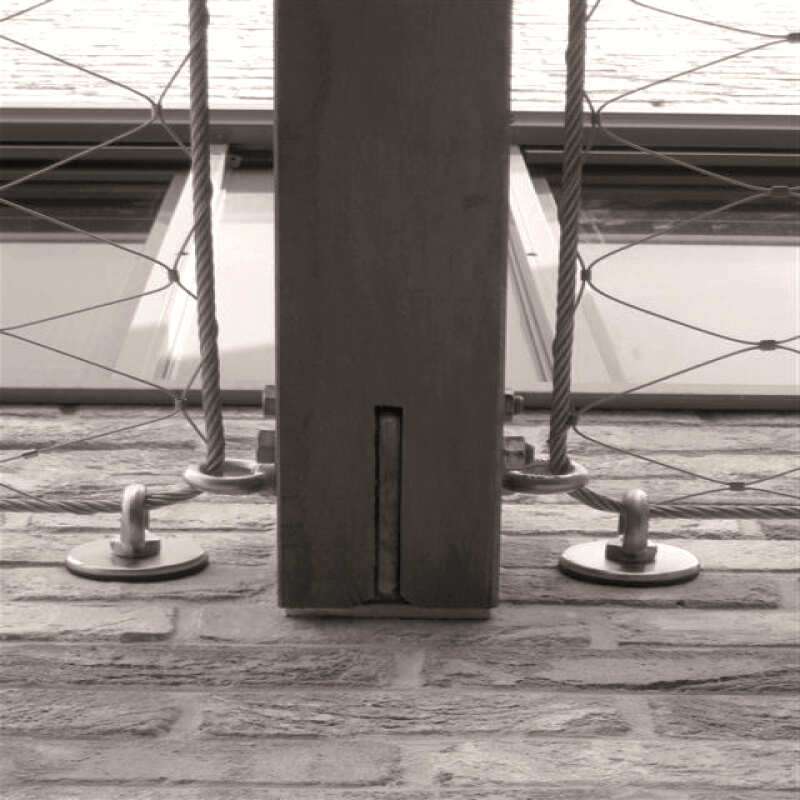
Good performance of 25mm rope mesh depends heavily on correct installation:
* Frames, posts and edge beams must be stiff and accurately set out before mesh unpacking.
* Turnbuckles or tension devices should be accessible for initial tensioning and future adjustment.
* One edge is fixed first; the opposite edge is then gradually tensioned while checking that the 25mm cells remain regular.
* Corners and junctions must be fully closed and cut wire ends capped or hidden to avoid injury.
Maintenance is straightforward:
* Rinse with clean water; use mild neutral detergent for stubborn dirt.
* Avoid abrasive pads, carbon steel brushes and strong acids that damage the passive stainless layer.
* In coastal or industrial zones, wash more frequently to remove salt and pollutants.
* Inspect clamps, ferrules, turnbuckles and anchors periodically; many slack areas can be fixed just by re-tensioning.
Secret 10 – “25mm rope mesh is maintenance-free” is a sales line, not engineering reality
Stainless steel mesh is low-maintenance, not zero-maintenance. Ignoring inspections on a highly loaded 25mm rope mesh, especially in harsh environments, can let a small issue (loose anchor, damaged ferrule, hidden corrosion) grow into a local failure at exactly the wrong moment—during a storm or a crowd event.
8. Trade Basics: HS Code, Price, MOQ, Lead Time, Packing
In international trade, 25mm rope mesh is usually treated as stainless steel wire netting or cable mesh:
* HS code (typical): under stainless steel wire cloth/netting categories such as **7314.41** (exact code must be confirmed with your customs broker).
* Price: typically quoted **per m²** or **per panel**, depending on wire diameter, aperture, grade and quantity. Fine 25mm rope mesh is usually more expensive than larger-aperture mesh.
* MOQ: often **50–100 m²**, with smaller trial orders available at slightly higher unit price.
* Standard production time: around **10–25 days** after deposit and drawing approval, depending on complexity and volume.
* Common payment terms: T/T 30% deposit, 70% balance before shipment; L/C at sight for larger projects.
* Packing: panels or rolls wrapped in plastic film, protected by edge boards and packed on pallets or in wooden crates; labels show project name, model, aperture (25 × 25 mm), size and panel ID.
* Guarantee: typically **5–10 years** against corrosion and manufacturing defects when the correct grade is selected and standard maintenance is followed.
Secret 11 – One wrong HS code or poor packing can wipe out your 25mm rope mesh profit
If the supplier declares the goods under the wrong customs code or under-values your shipment, you risk delays, extra inspections and fines. If they pack 25mm rope mesh badly, you may open the crate to find kinked cables and crushed ferrules—and suddenly your profit disappears into emergency re-fabrication and airfreight.
9. Conclusion: Turn 25mm Rope Mesh From Risk Into Long-Term Asset
25mm rope mesh is a powerful tool: it can deliver nearly invisible safety, fine containment and elegant façades in one system. In some high-end projects it is even combined with copper wire mesh as a warm-coloured accent layer, so the stainless steel rope mesh provides the real strength while the copper brings architectural character. But that performance is not automatic. It depends on material grade, frame stiffness, correct aperture, realistic loading, careful installation and proper documentation.
By understanding and acting on the 11 secrets scattered through this article—especially around grade selection, structural support, open degree, species behaviour, public load rules and trade handling—you can use 25mm rope mesh (and any decorative copper wire mesh around it) to create safe, durable, visually light enclosures and guards.
Ignore those hidden details, and the same 25mm rope mesh that looked beautiful in renderings can quickly turn into the reason for corrosion stains, failed inspections, redesign bills, schedule penalties and, in the worst case, serious safety claims.