Your One-Stop Wire Mesh Fence Supplier | POLYMETAL
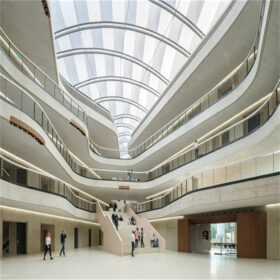
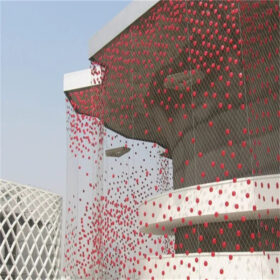
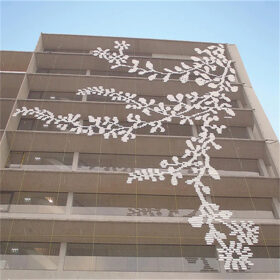
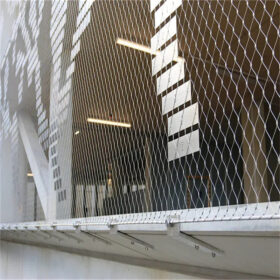
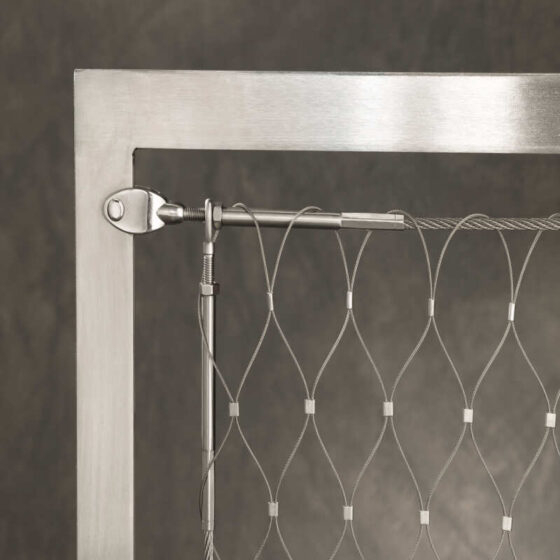
Decoration stainless steel rope mesh is a mesh panel made from multi-strand stainless steel wire ropes connected at their intersections by knots, ferrules or clamps. When tensioned, the mesh becomes a stable, elastic surface that can be used vertically, horizontally or at an angle.
Because the cables are thin and the openings are relatively large, the mesh appears almost weightless and transparent. This makes it ideal for decorative use where designers want to define space, provide safety or support plants without blocking light or views.
Typical decoration uses include:
- Stair and balcony infill panels
- Interior partitions and room dividers
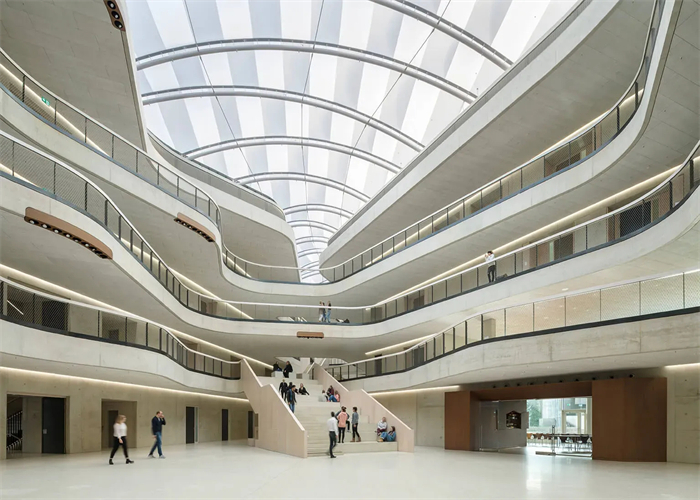
- Feature walls and backdrops
- Ceiling nets and suspended elements
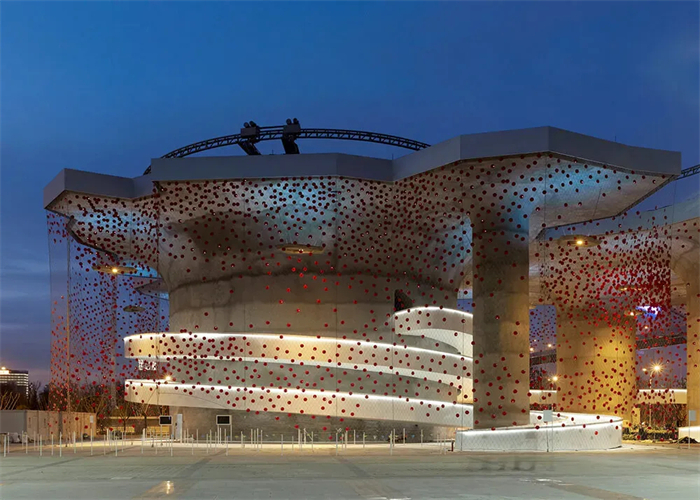
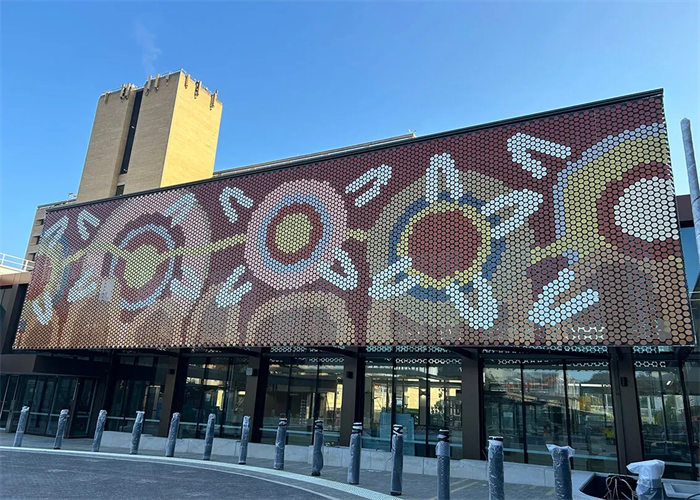
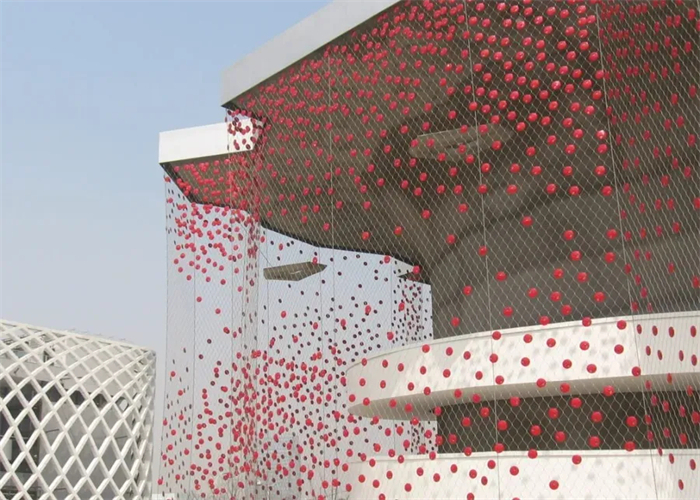
- Facade screens and green wall supports
- Exhibition stands and shopfitting displays
2. Materials and Cable Construction
Most decoration stainless steel rope mesh is made from austenitic stainless steel to ensure long life and good corrosion resistance:
- AISI 304 / 304L – suitable for interiors and general outdoor areas not directly exposed to marine or heavy industrial conditions.
- AISI 316 / 316L – marine grade stainless steel recommended for coastal, poolside, high-humidity or polluted urban environments where corrosion resistance must be maximized.
The mesh uses multi-strand wire ropes in standard constructions such as:
- 7×7 – 7 strands with 7 wires in each; flexible and widely used in 1.2–3.0 mm diameters.
- 7×19 – 7 strands with 19 fine wires; very flexible, used in 3.2 mm and above for long spans and curved shapes.
- 1×19 – 19 wires in one bundle; stiffer look, used when straight, clean lines are important for facade decoration or linear trellis systems.
Common cable diameters for decorative applications:
- 1.2–1.6 mm – fine, delicate appearance for interior partitions, small balustrades and furniture.
- 2.0–2.4 mm – a good balance of strength and transparency for stair railings, balcony infill and feature walls.
- 3.0–3.2 mm – for large spans, exterior facades and heavier decorative loads (plants, signage, lighting).
3. Mesh Styles for Decorative Use
Decoration stainless steel rope mesh can be supplied in several structural styles, each with its own visual character:
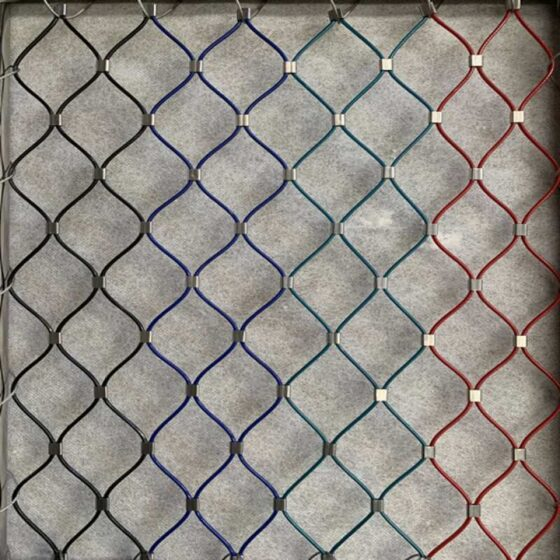
Ferruled rope mesh (X-TEND type)
Cables cross at an angle and are connected by pressed stainless steel ferrules.
Creates very clean, regular diamond openings.
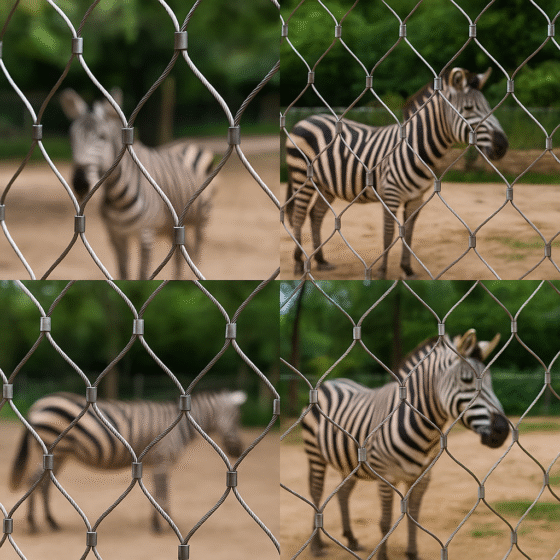
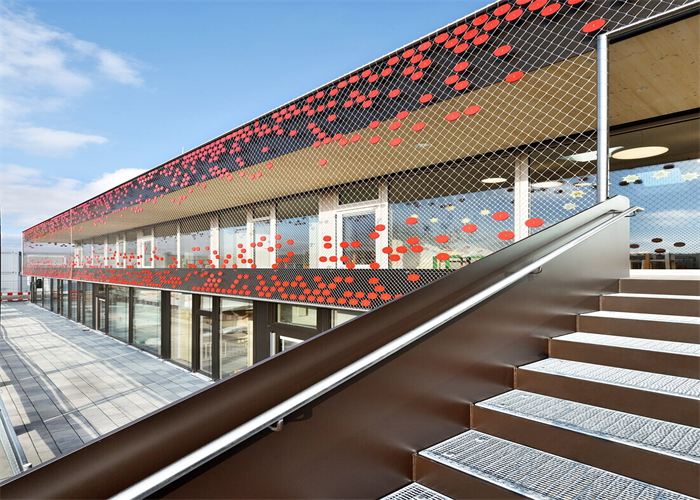
Widely used for stairs, balconies, façade screens and zoo mesh with a modern appearance.
Knotted rope mesh (woven)
Cables are interwoven and twisted together at each crossing.
Gives a softer, textile-like texture with a hand-woven look.
Suitable for decorative partitions, artistic installations and enclosures with a more organic feel.
Square rope mesh with cross clamps
Cables arranged vertically and horizontally; intersections fixed by cruciform clamps.
Produces a technical, grid-like appearance, ideal for contemporary interiors and exhibition design.
Each style can be adapted in cable diameter, opening size and orientation (vertical, horizontal, diagonal) to match the architectural concept.
4. Surface Treatments and Color Options
For decoration, the visual finish is as important as the structure. Decoration stainless steel rope mesh can be provided with different surface treatments:
- Natural (bright) stainless steel – clean, metallic, slightly reflective; standard finish for most projects.
- Brushed or satin finish – reduced gloss to minimize reflections in interiors or near glass.
- Black oxide / blackened stainless steel – deep matte black effect that works well with industrial or minimal designs.
- PVD coloring – physical vapor deposition coatings in tones such as black, gold, champagne or bronze for luxury interiors and facades.
- Optional protective clear coatings – used in aggressive environments or where additional surface protection is desired.
These finishes allow the mesh to blend with or contrast against other materials like glass, timber, concrete and painted steel.
5. Typical Specification Range
Decoration stainless steel rope mesh is highly customizable, but most products fall within the following ranges:
- Cable diameters: 1.2 / 1.5 / 1.6 / 2.0 / 2.4 / 3.0 / 3.2 mm.
- Mesh aperture (diamond size): approx. 40 × 70 mm, 50 × 87 mm, 60 × 104 mm, 70 × 121 mm, 80 × 139 mm, 100 × 173 mm, etc.
- Wire rope construction: 7×7 or 7×19 (interior/exterior decorative mesh), 1×19 for linear decorative cables and trellis systems.
- Panel sizes: custom-made according to stair pitch, balcony span, window bay or façade grid; often up to several metres in one piece.
Example specification line for a stair balustrade:
Decoration stainless steel rope mesh, ferruled type rope mesh, 1.5 mm, 7×7 AISI 316, aperture 60 × 104 mm, installed with top and bottom tension cables and side flat bars.
Optional
| No. | Model | Cable diameter (mm) | Wire rope construction | Mesh aperture (W × H, mm) | Material (cable / ferrule) | Approx. min. breaking load per cable (kN) | Typical application |
|---|---|---|---|---|---|---|---|
| 1 | DSRM-01 | 1.2 | 7×7 | 40 × 70 | AISI 304 / 304 | ≈ 1.2 | Interior stair infill, small partitions |
| 2 | DSRM-02 | 1.5 | 7×7 | 50 × 87 | AISI 304 / 304 | ≈ 1.6 | Interior balustrades, railing infill |
| 3 | DSRM-03 | 1.6 | 7×7 | 60 × 104 | AISI 316 / 316 | ≈ 2.0 | Staircases, galleries, office partitions |
| 4 | DSRM-04 | 2.0 | 7×7 | 60 × 104 | AISI 316 / 316 | ≈ 3.0 | Balcony infill, indoor atrium safety |
| 5 | DSRM-05 | 2.0 | 7×7 | 80 × 139 | AISI 316 / 316 | ≈ 3.0 | Decorative façades, light green walls |
| 6 | DSRM-06 | 2.0 | 7×7 | 100 × 173 | AISI 316 / 316 | ≈ 3.0 | Large partitions, feature walls |
| 7 | DSRM-07 | 2.4 | 7×7 | 80 × 139 | AISI 316 / 316L | ≈ 4.2 | Exterior balustrades, terrace guards |
| 8 | DSRM-08 | 2.4 | 7×7 | 100 × 173 | AISI 316 / 316L | ≈ 4.2 | Decorative façade screens, mesh ceilings |
| 9 | DSRM-09 | 3.0 | 7×19 | 100 × 173 | AISI 316 / 316L | ≈ 6.0–6.5 | Exterior decoration + safety (higher loads) |
| 10 | DSRM-10 | 3.0 | 7×19 | 120 × 200 | AISI 316 / 316L | ≈ 6.0–6.5 | Large-span decorative panels, facades |
| 11 | DSRM-11 | 3.2 | 7×19 | 120 × 208 | AISI 316 / 316L | ≈ 7.0–7.5 | Combined decoration + fall protection |
| 12 | DSRM-12 | 3.2 | 1×19 | 150 × 250 | AISI 316 / 316L | ≈ 7.5–8.0 | Very straight, linear decorative cable grids |
6. Interior Decorative Applications
6.1 Staircases and Balustrades
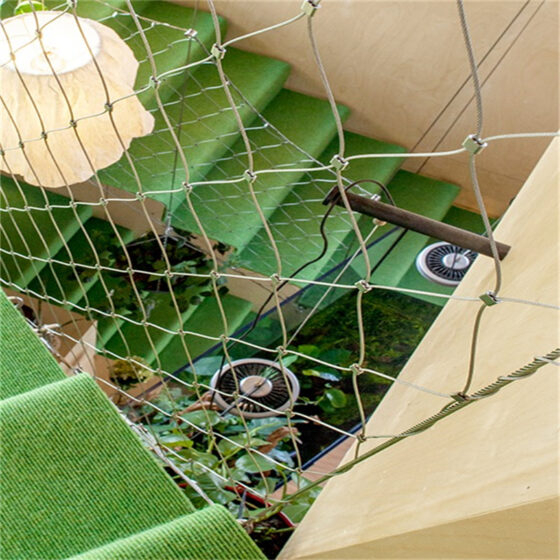
Decoration stainless steel rope mesh is widely used as infill between handrails and floor edges on stairs, galleries and mezzanines. It provides a safe barrier against falls while keeping the space visually open. Because the mesh is flexible, it follows the stair angle smoothly and can be tensioned neatly between posts or frames.
6.2 Room Dividers and Partitions
In offices, restaurants, hotels and shopping malls, rope mesh can be used as a semi-transparent partition. It defines zones without creating solid walls, allowing light and sight lines to pass through. Designers often combine decoration stainless steel rope mesh with lighting, plants or signage for decorative effect.
6.3 Ceiling Nets and Suspended Features
Mesh panels can be suspended from the ceiling to create decorative canopies, safety nets or support structures for lighting and greenery. The pattern adds texture to the ceiling plane while remaining light and unobtrusive.
6.4 Furniture and Display Systems
Small-scale panels of stainless steel rope mesh can be integrated into furniture (cabinet doors, shelving, counters) and retail displays. The mesh provides a technical, contemporary look and can also act as a support for hanging products or decorations.
7. Exterior Decorative Applications
7.1 Facade Screens and Second Skins
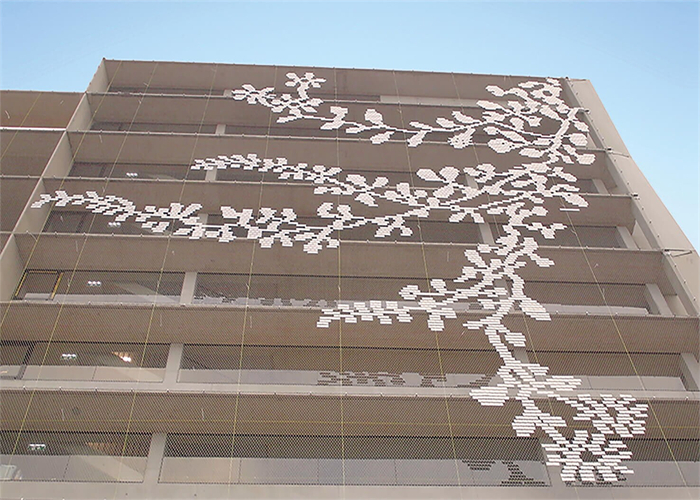
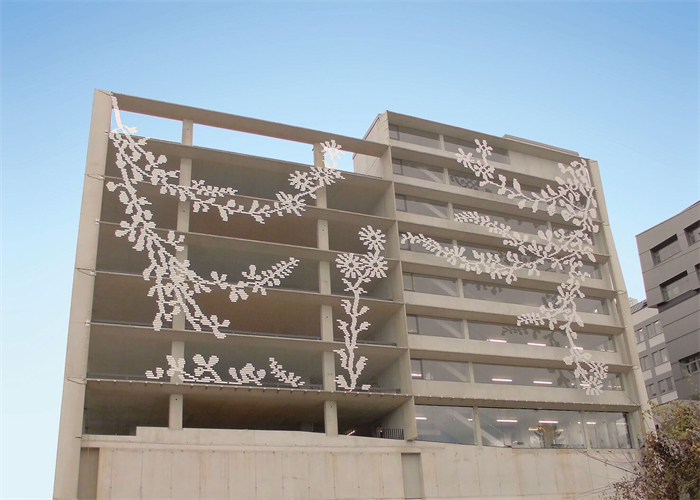
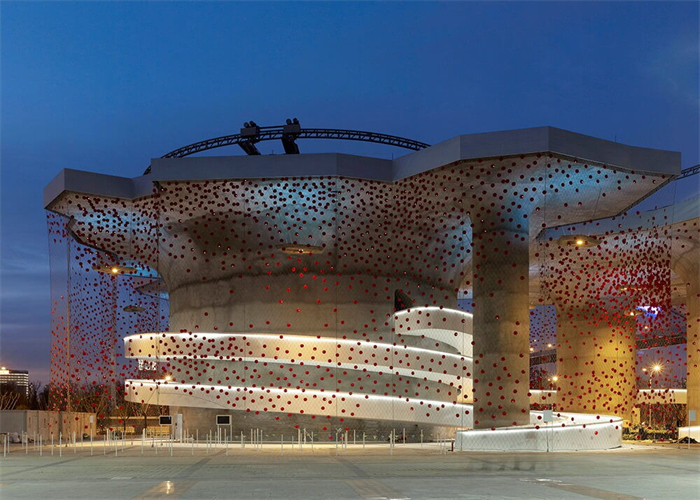
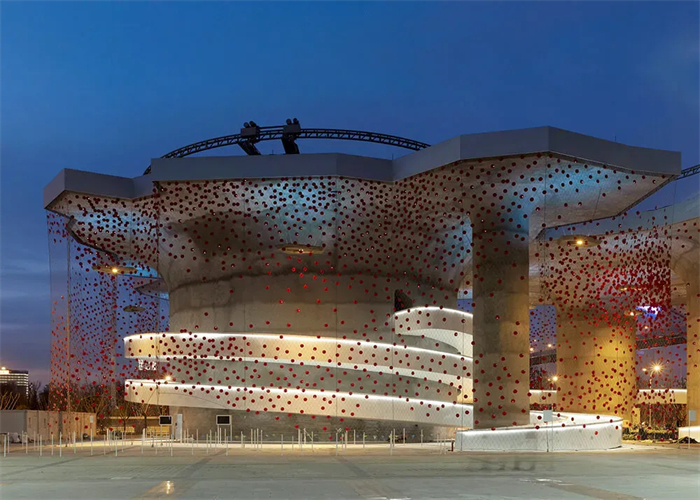
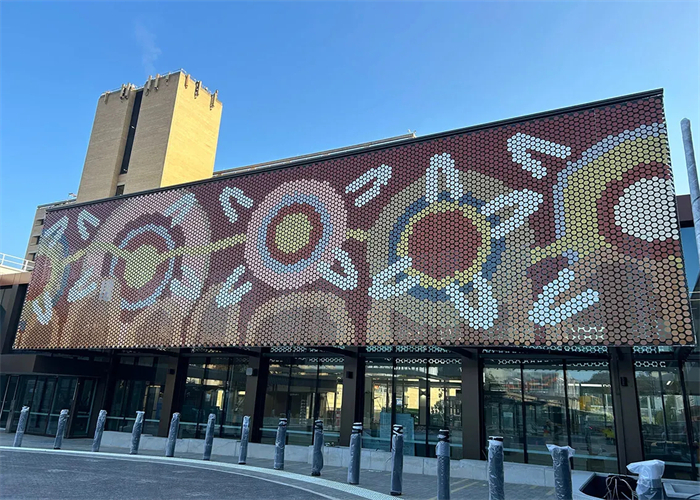
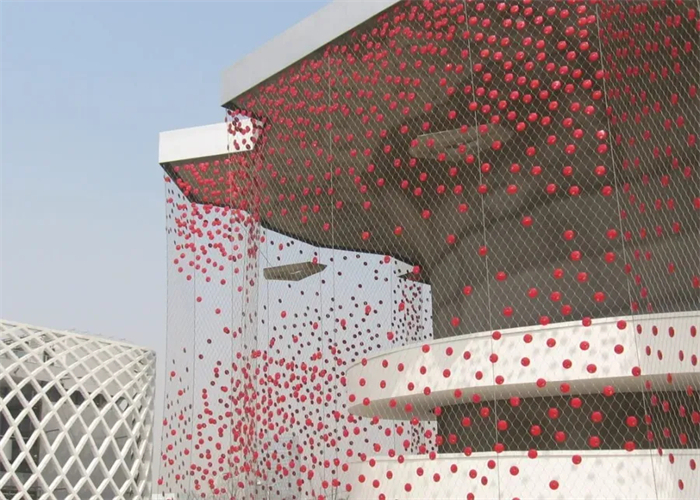
Decoration stainless steel rope mesh can be installed in front of a façade as a second skin. It softens the appearance of glass or concrete, reduces glare and can support climbing plants. The result is a dynamic façade that changes with light, weather and seasons.
7.2 Green Walls and Vertical Gardens
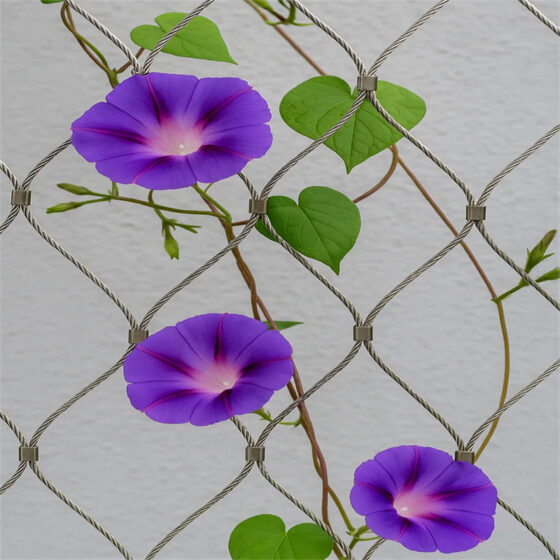
When combined with climbing plants, the mesh becomes a green wall support system. Cables provide grip and support for vines to climb, creating living curtains of green that improve microclimate, shading and sound absorption.
7.3 Bridges, Walkways and Viewing Platforms
On pedestrian bridges and elevated walkways, decorative rope mesh acts as a safety barrier with a very open feel. Visitors enjoy wide views while being safely protected from falls, and the structure maintains a light, elegant silhouette.
8. Design Considerations
When designing with decoration stainless steel rope mesh, consider the following factors:
- Function: Is the mesh mainly decorative, mainly for safety, or for both? This influences cable diameter and aperture.
- Location: Interior vs. exterior, altitude, exposure to salt or pollution; these guide the choice of AISI 304 vs. AISI 316.
- Safety and standards: For balustrades and fall protection, building codes may specify maximum opening sizes and load requirements.
- Aesthetic intent: Desired transparency, pattern orientation (vertical diamond vs. horizontal), color finish, and interaction with light.
- Support structure: Posts, frames or tension cables must be designed to carry the pretension and any additional loads (e.g. plants, people leaning, wind).
Early coordination between architect, engineer and mesh supplier helps optimize both performance and appearance.
9. Installation Overview
A typical installation of decoration stainless steel rope mesh follows these steps:
- Measurement and design: Confirm exact panel sizes, angles, fixing positions and tension requirements.
- Fabrication: Mesh panels are made in the factory with specified cable diameter, aperture, ferrules or knots, and any border cables or edge fittings.
- Structure preparation: Posts, frames, flat bars or tension cables are installed on site and checked for alignment and strength.
- Mesh fixing: Panels are attached using clamps, lacing, shackles or custom brackets.
- Tensioning: Turnbuckles or tensioning devices are adjusted until the mesh is taut and evenly shaped.
- Final inspection: Check for correct alignment, adequate tension, smooth edges and compliance with safety requirements.
Because the mesh is lightweight and flexible, installation is usually straightforward and often faster than rigid welded infill panels.
10. Maintenance and Service Life
Decoration stainless steel rope mesh is low-maintenance:
Occasional cleaning with water or mild detergent to remove dust, pollution or salt.
Periodic checks of tension, connections and anchor points.
No repainting or recoating is required; stainless steel naturally forms a protective passive layer.
With proper material selection (especially AISI 316 in harsh environments) and correct installation, decoration stainless steel rope mesh can remain attractive and functional for decades, making it a sustainable decorative solution.
11. Conclusion
Decoration stainless steel rope mesh offers designers a versatile tool to create light, transparent and safe architectural elements both indoors and outdoors. By combining slender stainless steel cables, flexible mesh geometry and a variety of finishes, it can serve as stair infill, partition, facade skin, green wall support or artistic feature while maintaining high strength and durability. For projects that demand modern aesthetics, long life and low maintenance, decoration stainless steel rope mesh is a practical and elegant choice.