Your One-Stop Wire Mesh Fence Supplier | POLYMETAL
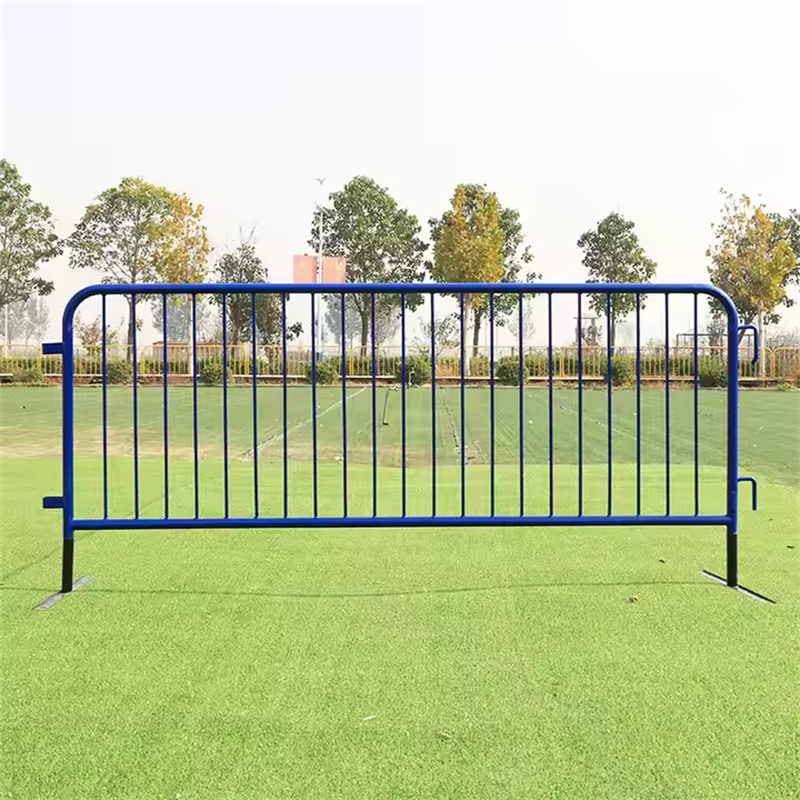
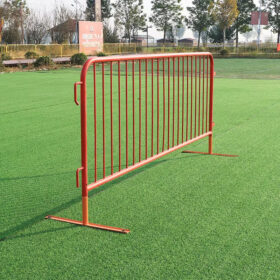
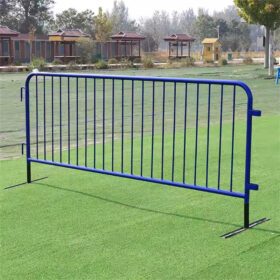
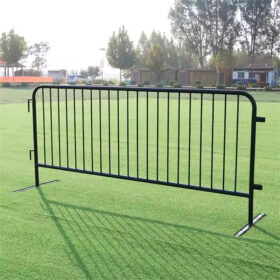
Pedestrian safety barriers are critical for separating people from vehicles, machinery and hazardous zones in factories, warehouses, car parks, public spaces and transport terminals. A well-designed barrier system made from steel tube gives a clear visual signal, a physical safety edge and an essential layer of protection against accidental impact or unsafe behaviour. When engineered properly, POLYMETAL pedestrian safety barriers turn a potential risk zone into a controlled route with safe pedestrian flow and clear traffic patterns.
Under the POLYMETAL brand, pedestrian safety barriers are manufactured from galvanized tubular steel frames with vertical uprights at controlled spacing. Barrier heights, bay widths, frame tube diameters and upright tube thicknesses are matched to the site conditions, so the final layout is not just a random collection of rails but a deliberate safety system. Bridge feet and flat steel feet are used according to floor construction and fixing requirements, creating a stable base that transfers impact loads back into the structure instead of allowing dangerous movement.
Because these pedestrian safety barriers form part of the visible safety profile of a site, they also influence brand image and public trust. A clean, well-aligned barrier line with the right colour scheme and consistent detailing sends a positive sign to staff, visitors and inspectors. However, the wrong design choices, hidden weaknesses or specification gaps can turn this protection into an illusion. The following sections expose high-risk dangers, traps and flaws you must avoid before ordering any system labelled as pedestrian safety barriers.
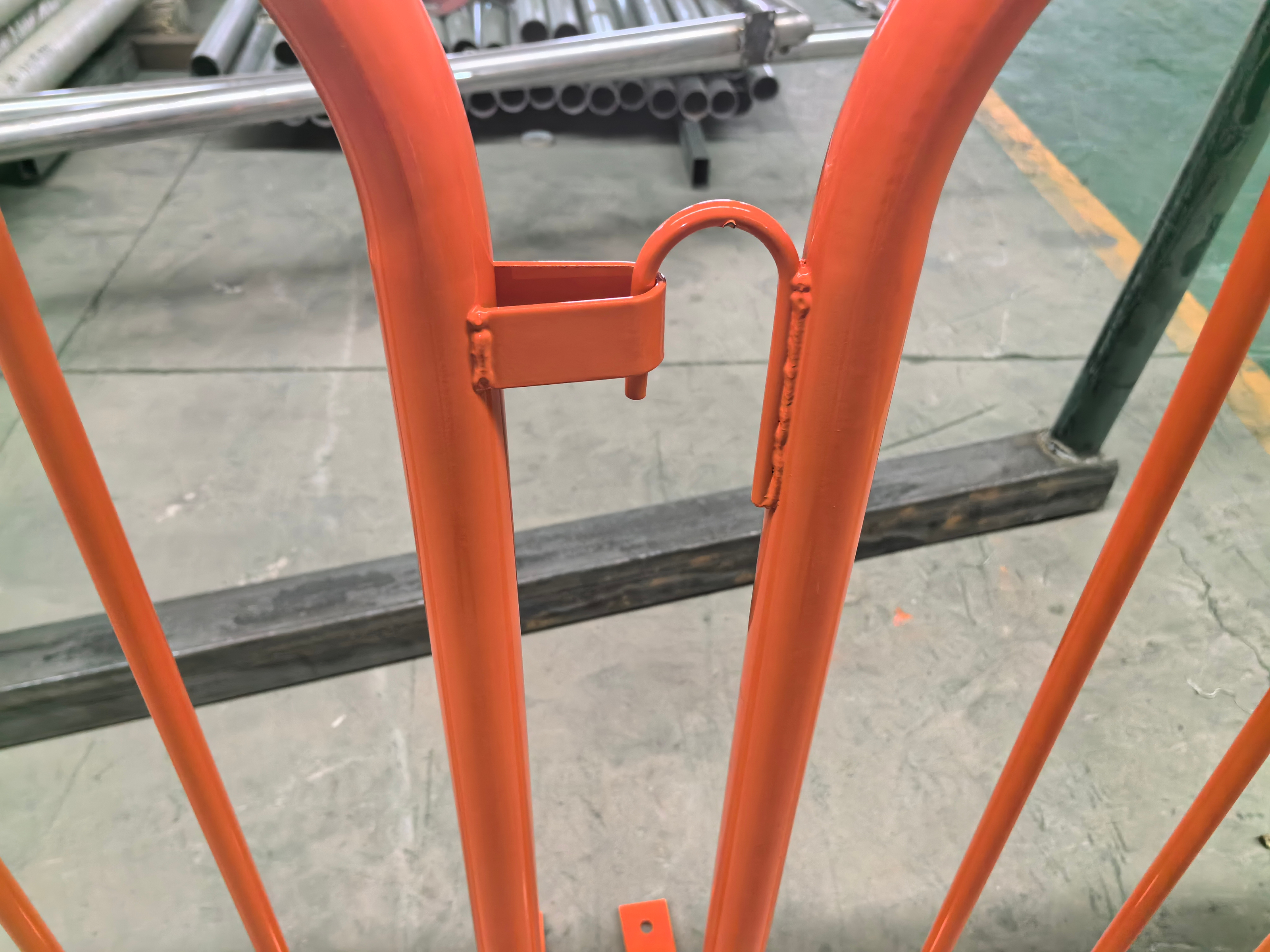
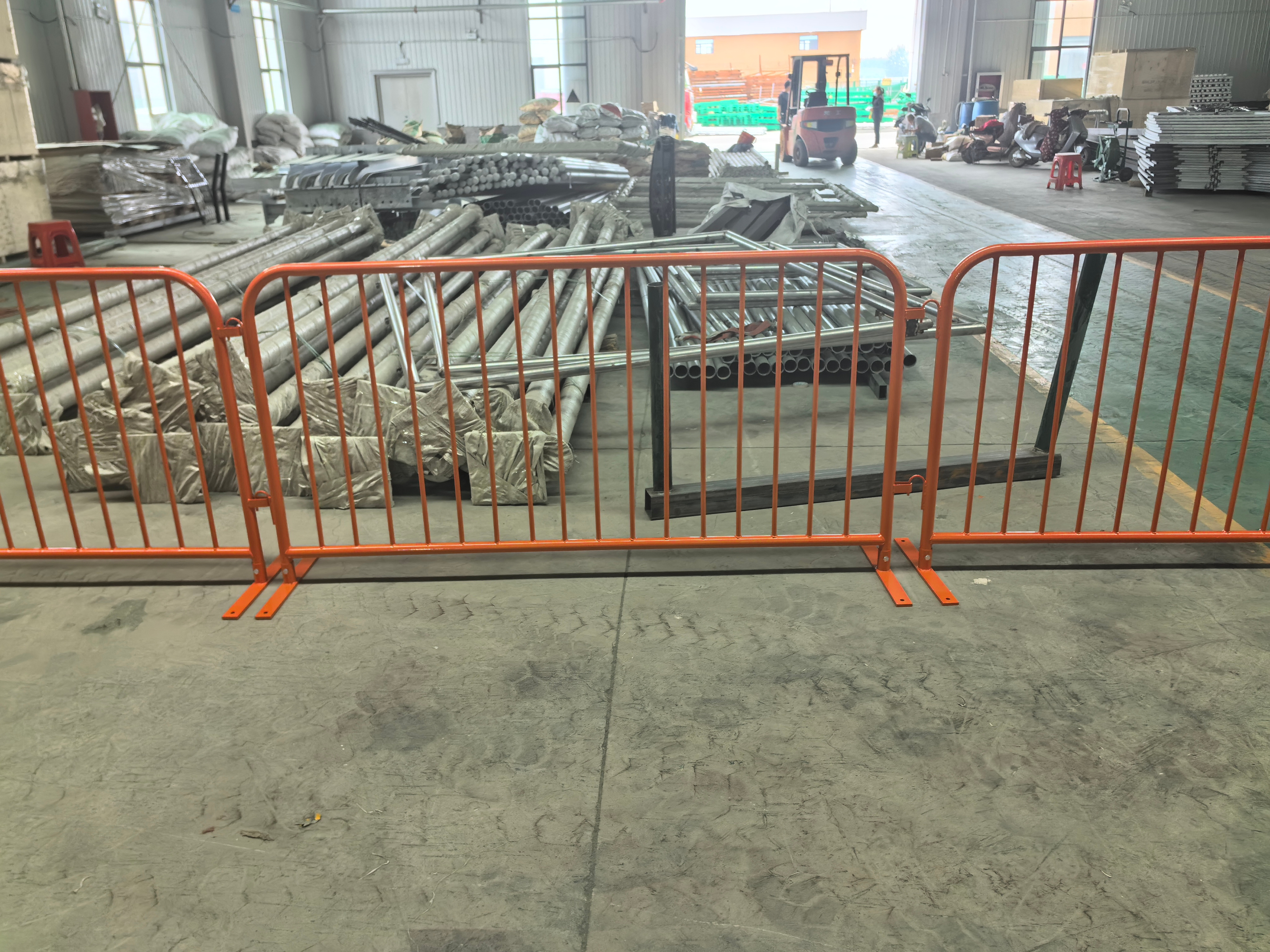
11 critical risks, traps and defects in pedestrian safety barriers
Danger 1 – The hidden truth about barrier height
One dangerous oversight is assuming any barrier height will work as long as it “looks about right”. This illusion ignores the fact that pedestrian safety barriers must be tall enough to guide the human body and clearly mark the safe side of a route. If the height data is wrong, people can lean over or step through openings, turning a safety device into a weakness. POLYMETAL designs typical barrier heights such as 900 mm, 1000 mm and 1200 mm with clear reference to movement patterns, giving a more reliable protection angle instead of a guess based on appearance.
Trap 2 – Ignoring bay width and spacing details
A serious trap is focusing only on how many metres of barrier are needed while ignoring the key detail of bay width and upright spacing. If bays are too wide, rails can flex excessively; if spacing is too large, children and smaller adults may find gaps that invite unsafe behaviour. POLYMETAL uses spacing patterns such as 90 mm, 100 mm, 150 mm and 200 mm between uprights, with bay widths carefully chosen so that deflection is controlled. This transforms a simple line of tube into a barrier profile that behaves as planned under load.
Hazard 3 – Under-sized frame tube and wall thickness
Another hazard is using frame tubes that look solid but hide a thin wall, creating an unseen defect in impact resistance. When a pallet jack, trolley or light vehicle touches a barrier built on the wrong tube pattern, it can bend, crack or fail at the worst possible moment. POLYMETAL specifies frame tubes in 25 mm, 32 mm, 35 mm and 38 mm diameters with wall thicknesses of 1.5 mm, 1.6 mm or 2.0 mm according to application, turning structural data into real-world strength instead of fantasy values in a catalogue.
Flaw 4 – Weak upright tube selection and misleading info
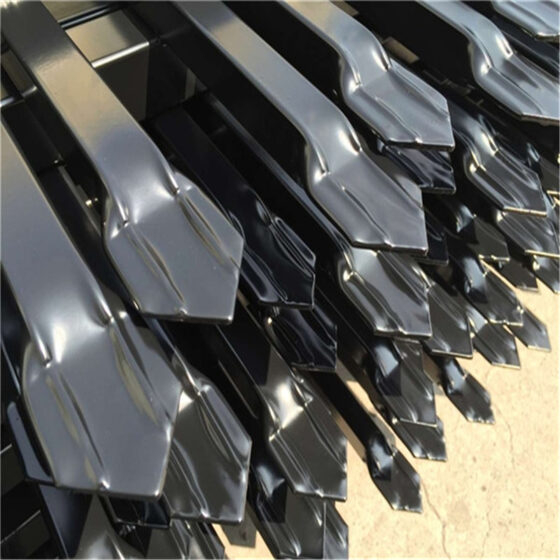
The vertical upright tube is a critical element, yet many low-end products use 12 mm or 16 mm tubes with extremely thin walls that only look strong from a distance. This misbelief creates a fatal flaw: when hit, uprights buckle or deform, leaving the barrier line compromised. POLYMETAL uses upright tubes in 12 mm, 16 mm and 19 mm outer diameters with controlled thicknesses such as 0.7 mm, 0.8 mm, 1.0 mm and 1.2 mm, clearly linking upright profile and thickness to the required safety function instead of hiding this data.
Pitfall 5 – Wrong spacing pattern for the environment
Spacing between uprights is not just a visual feature; it is a design principle that changes how people interact with a barrier. A careless spacing choice can create unsafe footholds, awkward gaps for prams or wheelchairs and confusing patterns for visually impaired pedestrians. POLYMETAL offers spacing options at 90 mm, 100 mm, 150 mm and 200 mm so that the barrier outline can be matched to industrial walkways, school corridors, car park footpaths or public squares, turning pattern selection into a deliberate safety decision rather than a random habit.
Oversight 6 – Feet types that do not match the floor
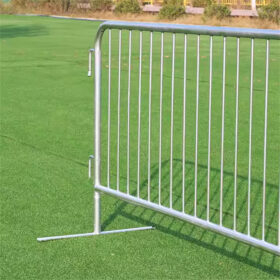
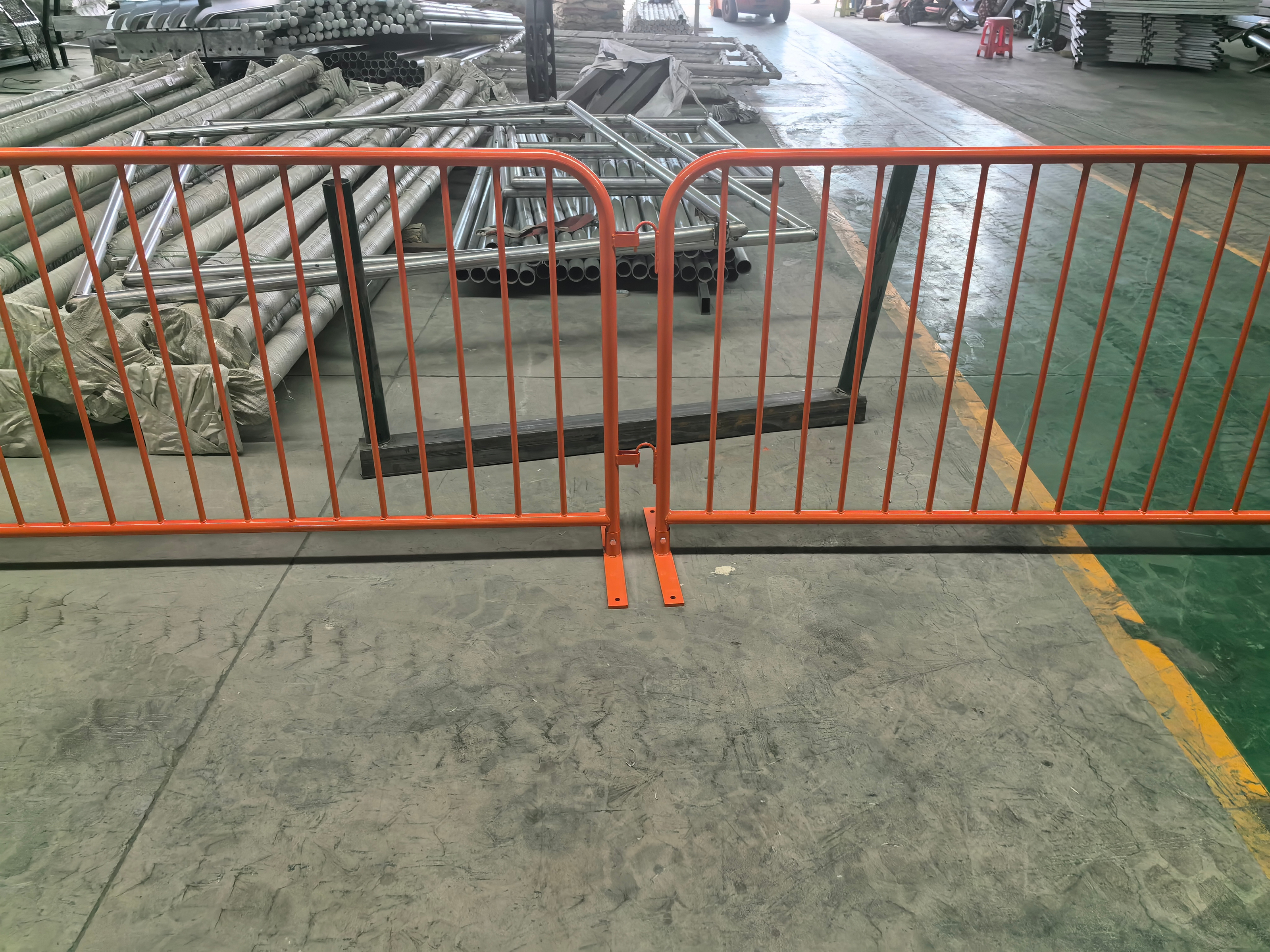
A frequent misstep is selecting the wrong feet type for the concrete slab or paving. Bridge feet and flat steel feet behave differently under load and use different fixing patterns. Choosing the wrong option can create a dangerous gap between theoretical performance and real-world behaviour. POLYMETAL offers bridge feet for adjustable positioning and flat steel feet for low-profile installations, providing a clear guide on where each type fits the site design so that this critical point is not left to guesswork.
Mistake 7 – Treating impact performance as a vague idea
Some buyers rely on marketing phrases such as “heavy duty” without demanding real impact data or design insight. This mistake is costly: when a barrier is struck by a trolley or slow-moving vehicle, the resulting damage and loss can be far greater than the original price difference between systems. POLYMETAL treats impact resistance as a measurable aspect of design, using tube sizes, wall thickness, spacing and post anchoring rules that form a coherent engineering manual rather than a loose outline of intentions.
Defect 8 – Poor coatings that hide corrosion patterns
Coating quality is another critical side of the safety story. A glossy colour can hide thin galvanizing, pinholes or incomplete coverage, leading to corrosion that starts out of view. Over time, rust becomes a visible sign and a functional threat as tube walls thin and welds weaken. POLYMETAL pedestrian safety barriers are produced in galvanized steel with the option of additional powder coating, combining barrier protection and colour in a way that resists damage, waste and coating failure rather than simply looking fresh for a short period.
Warning 9 – Incomplete systems and missing components
A dangerous gap appears when barriers arrive on site with missing fixings, mismatched feet or incorrect angles, forcing installers to improvise. Every improvised joint, extra hole or altered fixing pattern becomes a potential fault in future. POLYMETAL assembles complete kits with the correct number of panels, posts, bridge feet or flat steel feet and matching fasteners, turning the barrier order into a reliable checklist rather than a loose collection of parts that invites misfit and error.
Threat 10 – Non-compliance with safety standards and rules
Many people assume that any steel barrier automatically complies with workplace safety standards and access rules, but this bias can be costly. Industrial safety codes, traffic management guides and building regulations may all place conditions on barrier height, clearance, distance from edges and opening sizes. POLYMETAL designs pedestrian safety barriers with these rules in mind, so the finished system fits into a clear compliance overview instead of becoming a hidden legal threat or insurance problem.
Lesson 11 – Underestimating life-cycle cost and human impact
The final lesson is that barrier quality is not just a technical issue; it is a long-term pattern of how people move, how equipment behaves and how often repairs are needed. A cheaper product with frequent damage and replacement becomes a quiet crisis of ongoing cost and safety downtime. By using reliable tube sections, proven spacing, appropriate feet and controlled coatings, POLYMETAL turns pedestrian safety barriers into a long-term benefit that delivers a clear payoff in reduced accidents, fewer failures and a stronger safety culture.
Product description – POLYMETAL pedestrian safety barriers
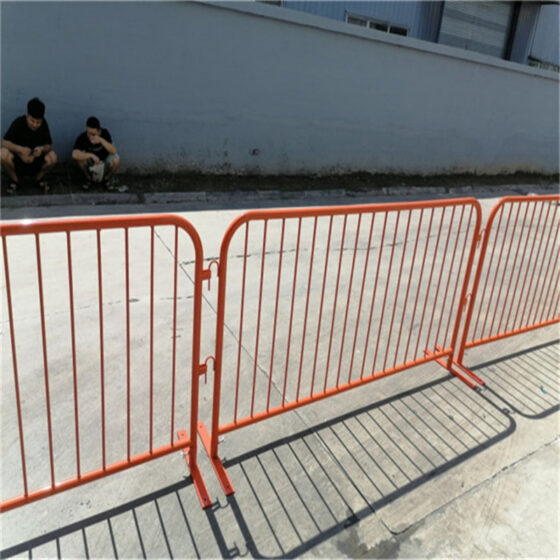
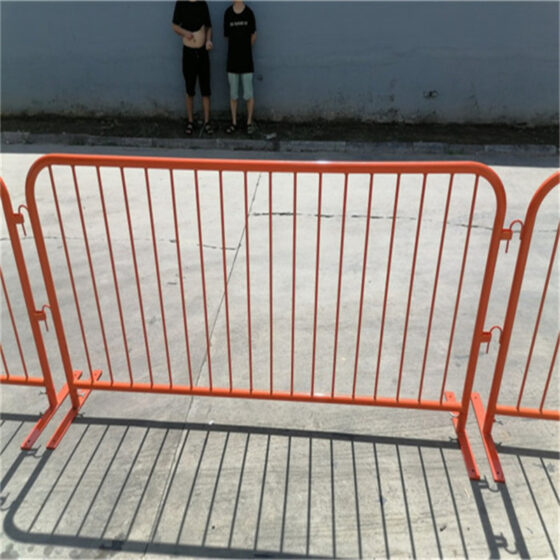
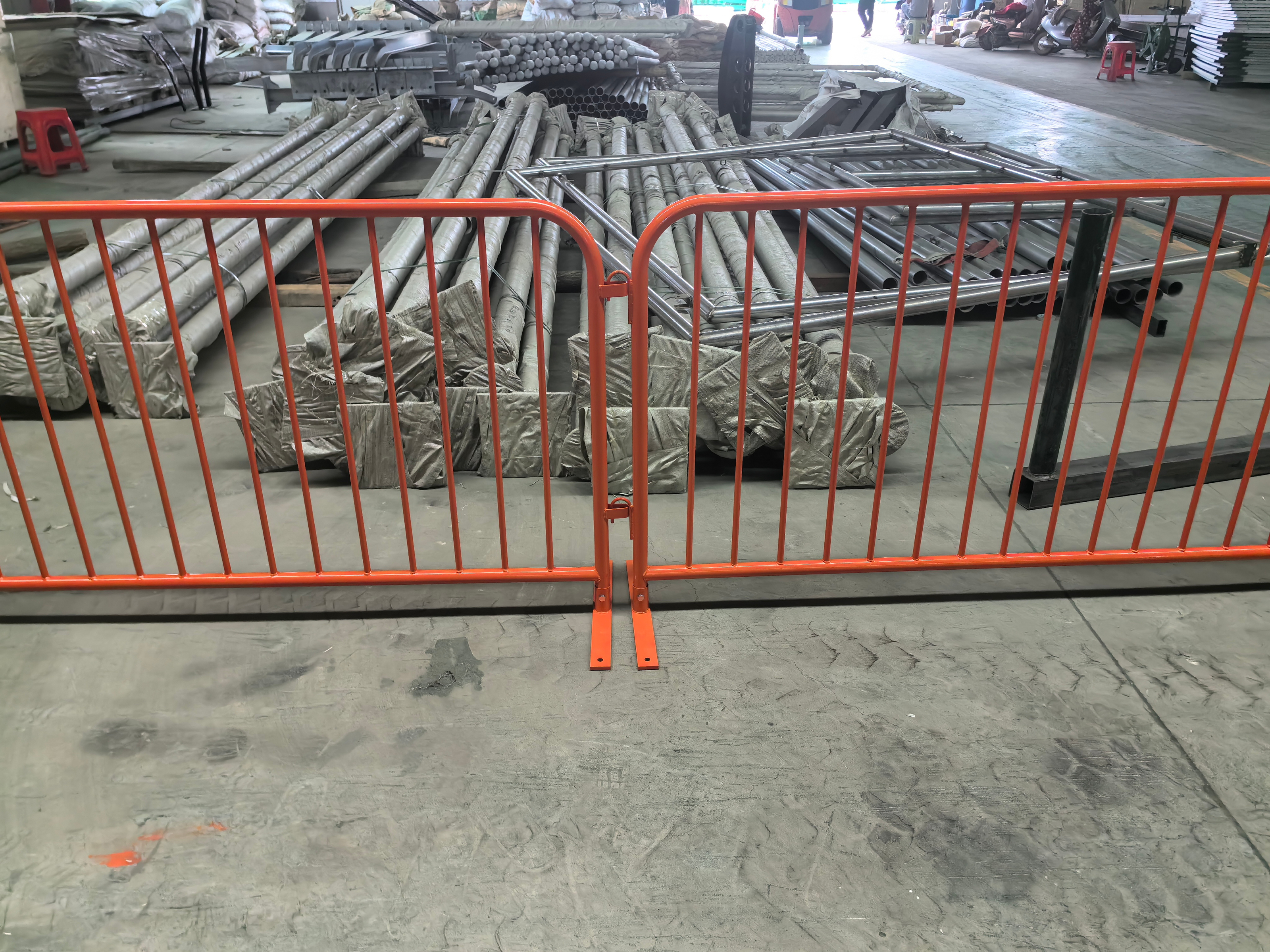
POLYMETAL pedestrian safety barriers are engineered as modular steel systems that separate people from hazards while maintaining efficient movement through industrial and public environments. Each barrier line is built from rectangular or curved panels formed in galvanized tubular steel, with frame tubes in diameters of 25 mm, 32 mm, 35 mm or 38 mm and wall thickness options of 1.5 mm, 1.6 mm or 2.0 mm. The frames support upright tubes in 12 mm, 16 mm or 19 mm outer diameter, with wall thickness options from 0.7 mm up to 1.2 mm, so that the resistance of each panel can be matched to the expected traffic and impact levels.
Upright spacing can be configured to approximately 90 mm, 100 mm, 150 mm or 200 mm, allowing designers to choose a barrier view that balances visibility, ventilation and anti-climb performance. Bridge feet are used where adjustable positioning, raised clearance or bolting around floor joints is required, while flat steel feet create a low-profile base plate where trip risk must be minimised. Panels can be finished in pure galvanizing or in a duplex system of galvanizing plus polyester powder coating in safety yellow, black, grey or custom colours, making it possible to highlight pedestrian routes, loading zones and danger areas according to the overall safety guide of the site.
The POLYMETAL pedestrian safety barrier system is designed as a coherent outline, not as separate pieces. Straight panels, corner panels and gate sections can be combined to form continuous runs with access points where required. The result is a barrier profile that delivers both mechanical protection and clear visual information, reinforcing pedestrian rules and traffic patterns while supporting the site’s safety branding and operational checklist. For sites that also rely on temporary solutions, understanding the specific temporary fencing mitre 10 risk warnings helps safety managers compare permanent pedestrian safety barriers with short-term fence options and avoid hidden hazards.
Specifications – pedestrian safety barriers (Table 1: standard bridge-foot barriers)
| Barrier height (mm) | Barrier width (mm) | Frame tube (mm) | Frame wall thickness (mm) | Upright tube (mm OD) | Upright wall thickness (mm) | Upright spacing (mm) | Feet type |
|---|---|---|---|---|---|---|---|
| 900 | 1000 | 25 | 1.5 | 12 | 0.7 | 200 | Bridge |
| 900 | 1500 | 25 | 1.5 | 16 | 0.8 | 150 | Bridge |
| 1000 | 1500 | 25 | 1.6 | 16 | 0.8 | 100 | Bridge |
| 1000 | 2000 | 32 | 1.5 | 16 | 1.0 | 150 | Bridge |
| 1000 | 2400 | 32 | 1.6 | 19 | 1.0 | 150 | Bridge |
| 1100 | 1500 | 32 | 1.6 | 19 | 1.2 | 100 | Bridge |
| 1100 | 2000 | 32 | 2.0 | 16 | 1.0 | 90 | Bridge |
| 1200 | 1500 | 35 | 1.6 | 19 | 1.0 | 100 | Bridge |
| 1200 | 2000 | 35 | 1.6 | 19 | 1.2 | 150 | Bridge |
| 1200 | 2400 | 35 | 2.0 | 16 | 1.2 | 200 | Bridge |
Specifications – pedestrian safety barriers (Table 2: flat-steel-foot industrial barriers)
| Barrier height (mm) | Barrier width (mm) | Frame tube (mm) | Frame wall thickness (mm) | Upright tube (mm OD) | Upright wall thickness (mm) | Upright spacing (mm) | Feet type |
|---|---|---|---|---|---|---|---|
| 900 | 1000 | 32 | 1.6 | 16 | 0.8 | 200 | Flat steel |
| 1000 | 1500 | 32 | 2.0 | 19 | 1.0 | 150 | Flat steel |
| 1000 | 2000 | 35 | 1.6 | 19 | 1.2 | 150 | Flat steel |
| 1100 | 2000 | 35 | 2.0 | 16 | 1.0 | 100 | Flat steel |
| 1100 | 2400 | 35 | 2.0 | 19 | 1.2 | 100 | Flat steel |
| 1200 | 1500 | 38 | 1.6 | 16 | 1.0 | 90 | Flat steel |
| 1200 | 2000 | 38 | 1.6 | 19 | 1.2 | 100 | Flat steel |
| 1200 | 2400 | 38 | 2.0 | 19 | 1.2 | 150 | Flat steel |
| 1300 | 2000 | 38 | 2.0 | 16 | 1.0 | 150 | Flat steel |
| 1300 | 2400 | 38 | 2.0 | 19 | 1.2 | 200 | Flat steel |
Specifications – pedestrian safety barriers (Table 3: mixed-spacing crowd-control barriers)
| Barrier height (mm) | Barrier width (mm) | Frame tube (mm) | Frame wall thickness (mm) | Upright tube (mm OD) | Upright wall thickness (mm) | Upright spacing (mm) | Feet type |
|---|---|---|---|---|---|---|---|
| 900 | 2000 | 25 | 1.5 | 12 | 0.8 | 90 | Bridge |
| 900 | 2400 | 25 | 1.6 | 12 | 1.0 | 100 | Bridge |
| 1000 | 2000 | 32 | 1.5 | 16 | 0.8 | 90 | Flat steel |
| 1000 | 2400 | 32 | 1.6 | 16 | 1.0 | 100 | Flat steel |
| 1100 | 2000 | 35 | 1.6 | 19 | 1.0 | 150 | Bridge |
| 1100 | 2400 | 35 | 2.0 | 19 | 1.2 | 150 | Bridge |
| 1200 | 2000 | 38 | 1.6 | 16 | 1.0 | 150 | Flat steel |
| 1200 | 2400 | 38 | 2.0 | 16 | 1.2 | 200 | Flat steel |
| 1300 | 2000 | 38 | 2.0 | 19 | 1.0 | 100 | Bridge |
| 1300 | 2400 | 38 | 2.0 | 19 | 1.2 | 150 | Flat steel |
Packing
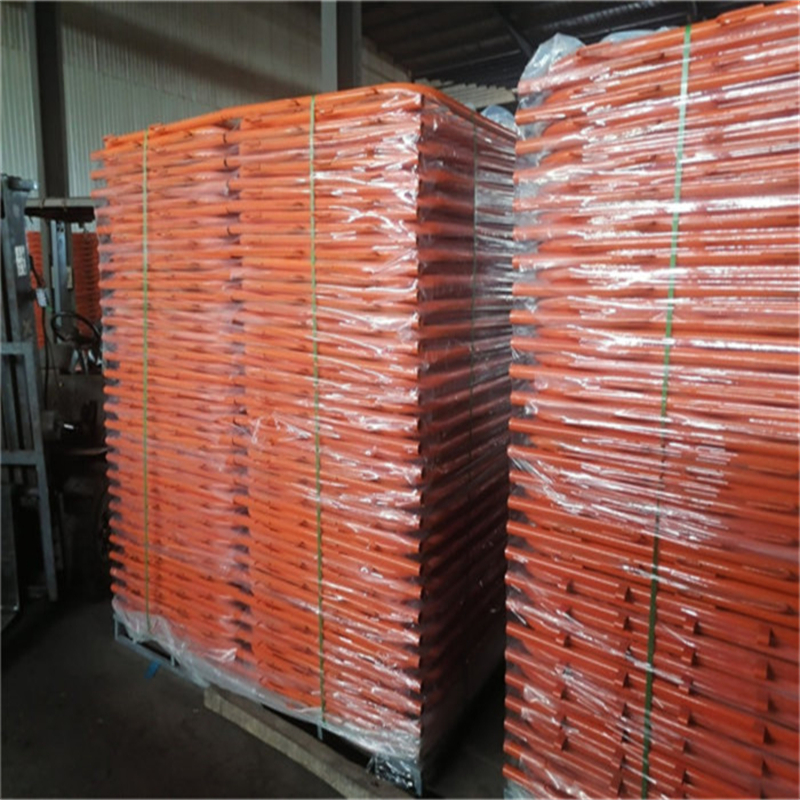
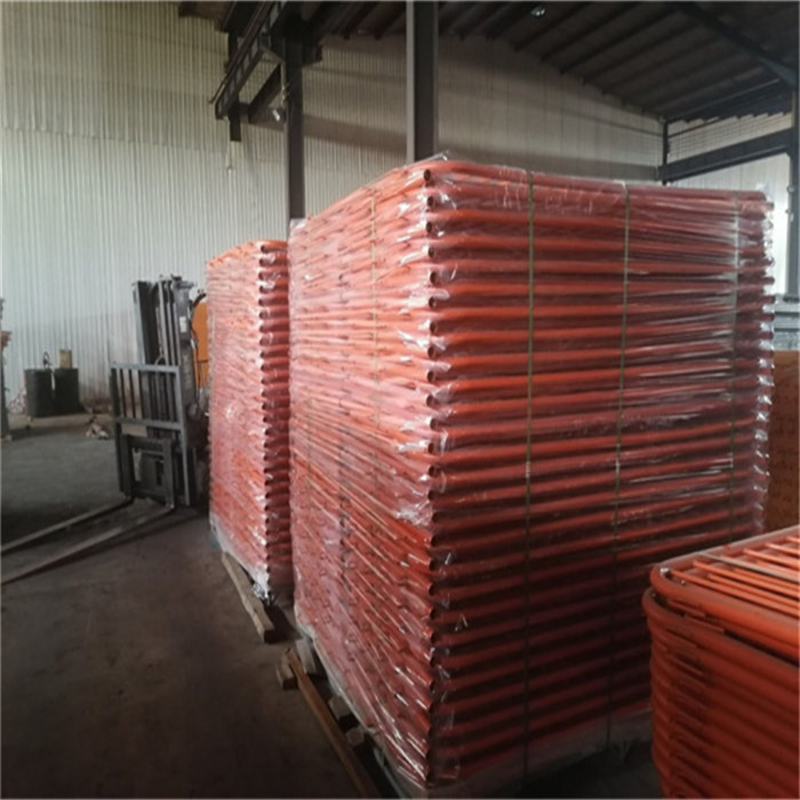
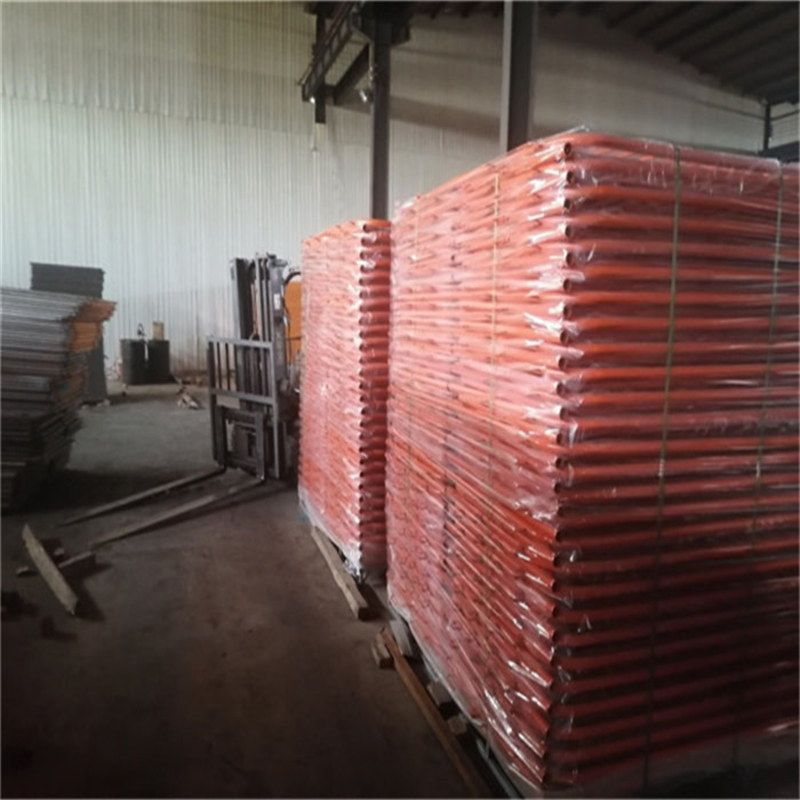
POLYMETAL pedestrian safety barriers are packed to protect every frame tube, upright and foot assembly during transport and on-site handling. Panels are stacked in consistent layers with plastic or cardboard separators that prevent steel-to-steel contact and protect galvanized or powder-coated surfaces. The ends of frame tubes and upright tops are shielded with additional edge protection so that they do not mark adjacent panels or create hidden damage.
Bridge feet and flat steel feet are packed together with the corresponding panels or in separate clearly labelled cartons according to order configuration. Fasteners, anchor bolts and any joining sleeves are bagged and boxed with clear labels linked to barrier height and type, turning unloading and installation into a controlled process instead of a confusing search. All bundles are strapped with steel or heavy-duty plastic banding and, where required, placed on pallets or steel stillages to allow safe forklift handling and to reduce the risk of accidental drops, impact or waste during loading and unloading.
Production process
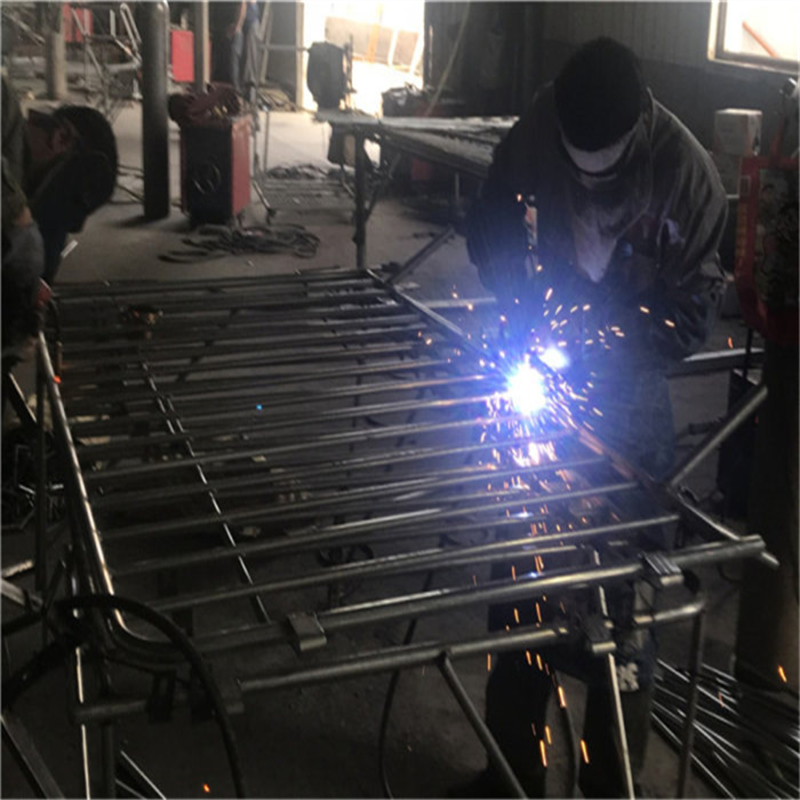
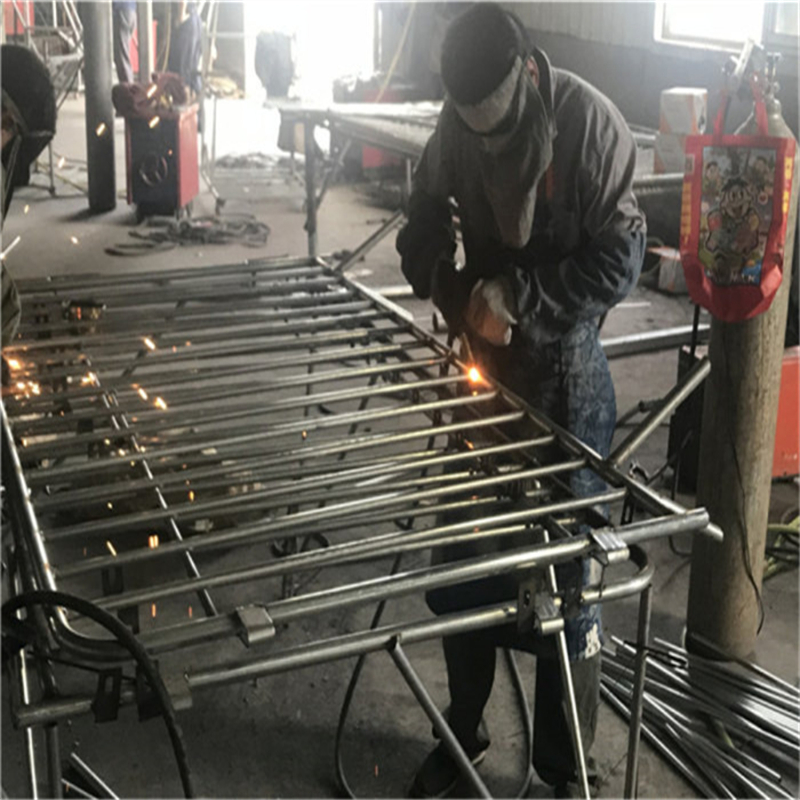
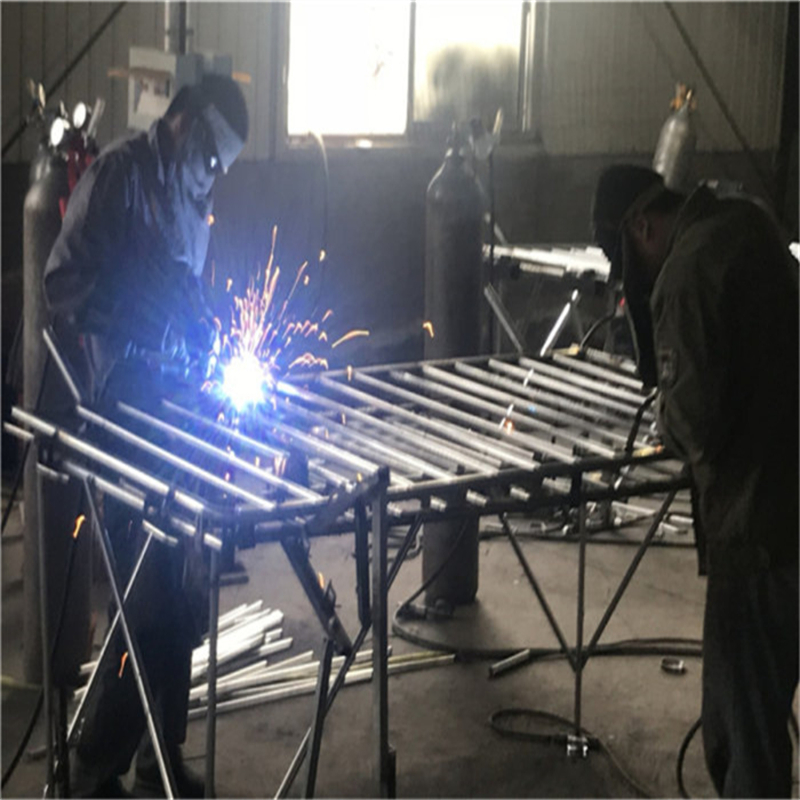
The production process for POLYMETAL pedestrian safety barriers starts with selecting structural-grade steel tubes in the required diameters and wall thicknesses for frames and uprights. Tubes are cut to length with automated saws according to detailed cutting data, then jigged in frames that guarantee consistent geometry from panel to panel. Uprights in 12 mm, 16 mm or 19 mm diameter are positioned at the specified spacing and welded to the frame tubes using controlled weld length, ensuring that each joint behaves as a reliable structural element and not as a random spot weld.
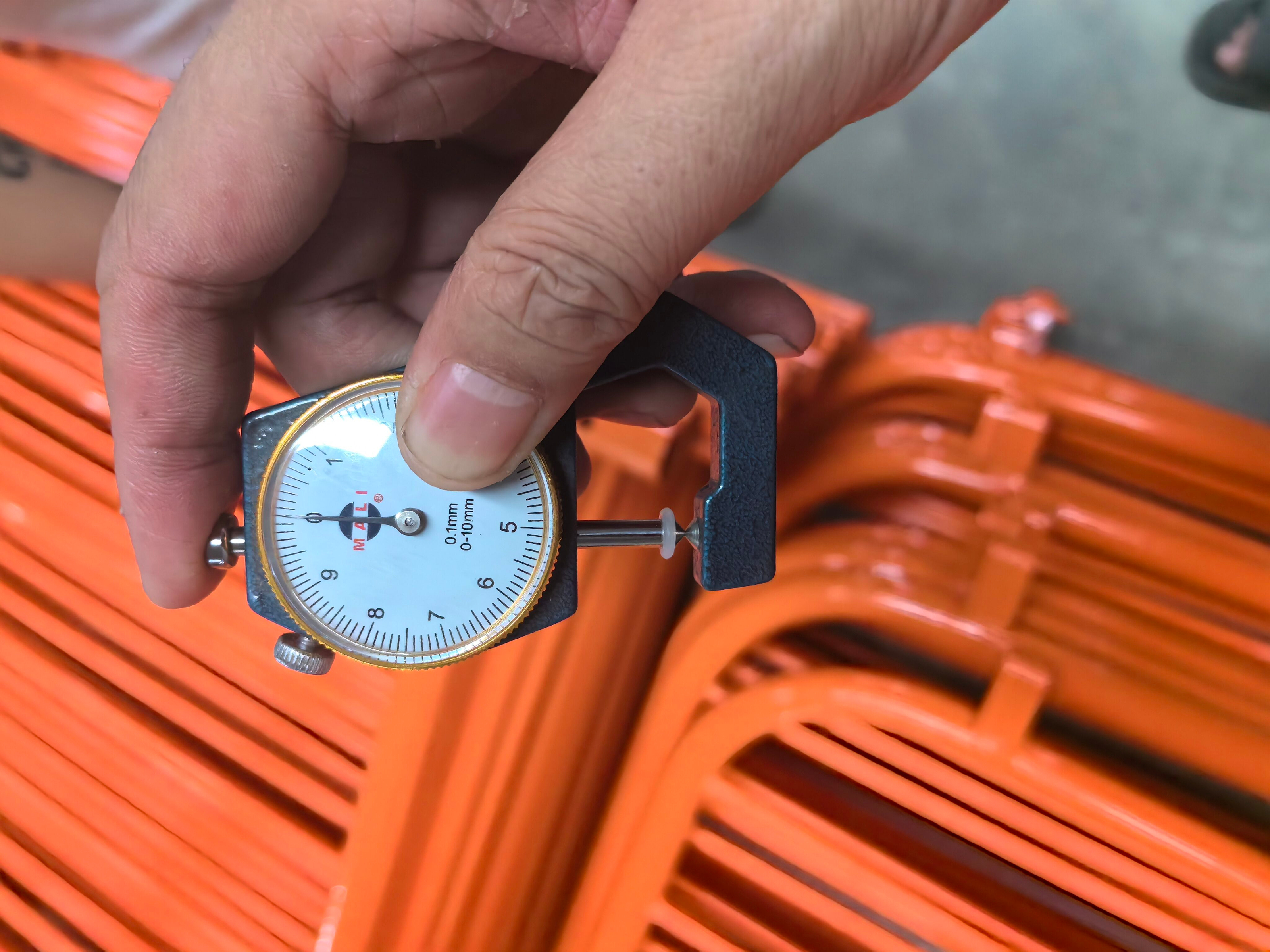
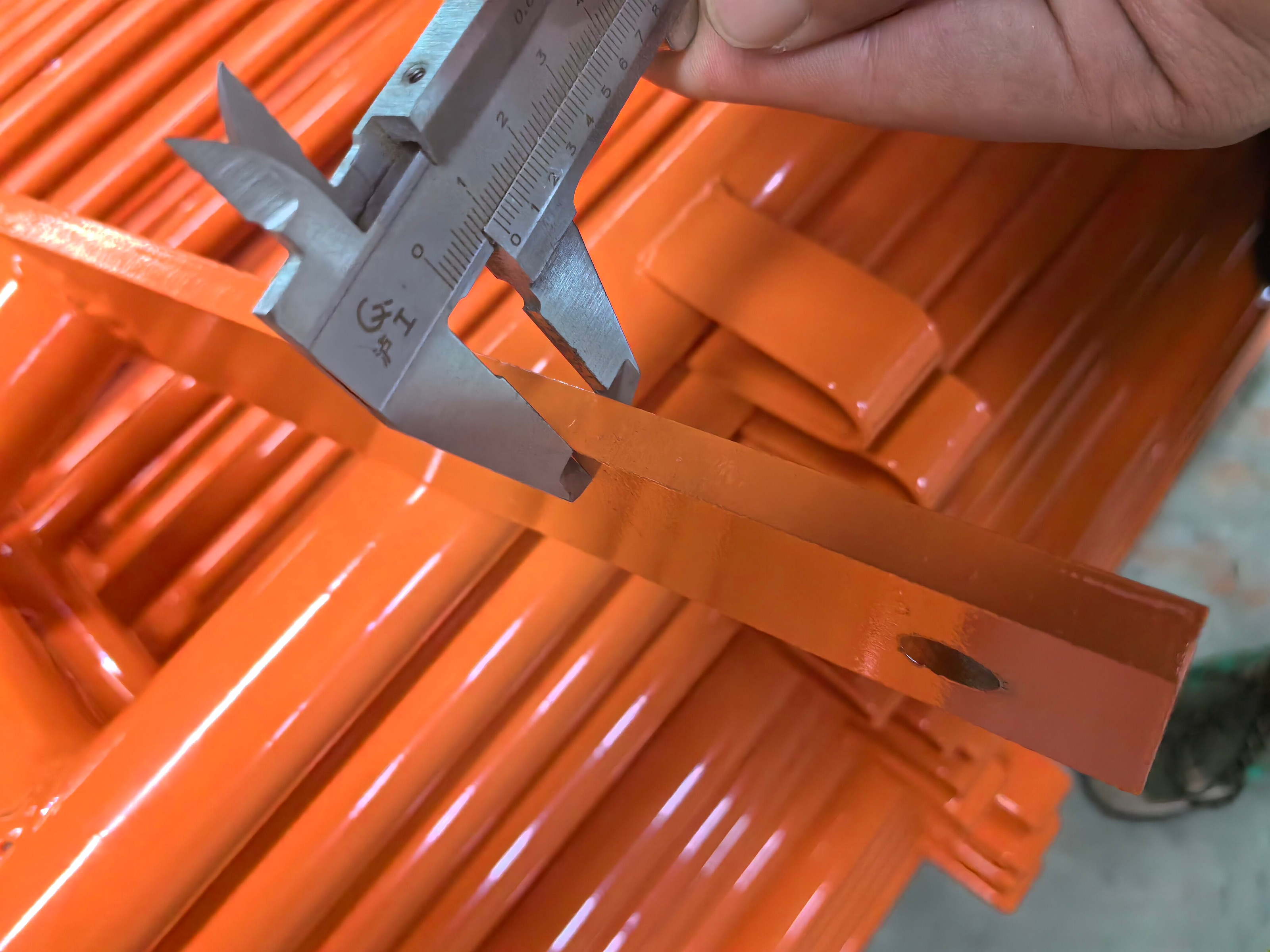
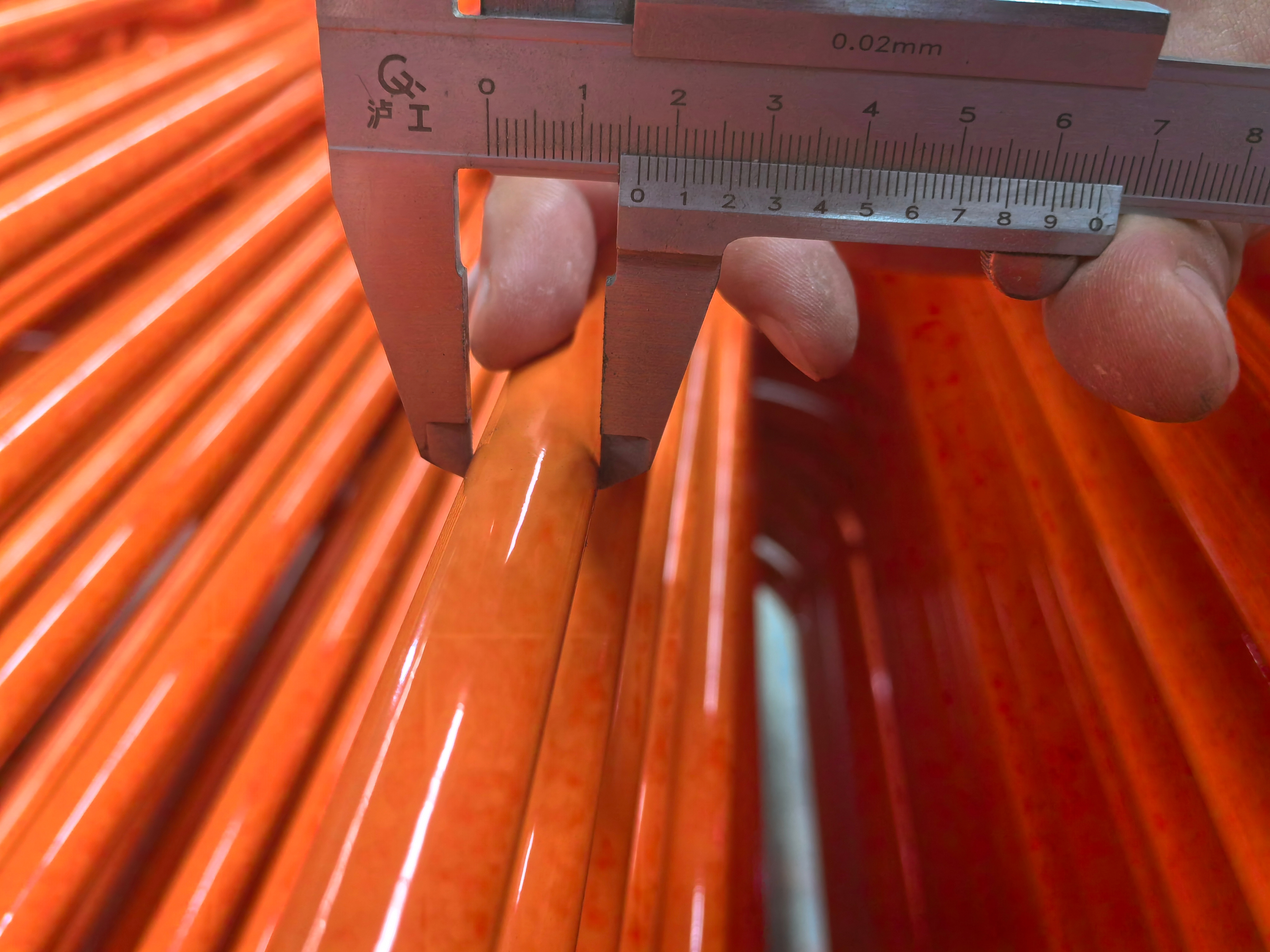
After welding, panels and feet are cleaned to remove oil, scale and welding residues and then pass through surface-preparation stages for galvanizing or pre-galvanized tube touch-up. Where powder coating is specified, panels move through a conversion-coating or phosphate tunnel, then into a powder booth where polyester powder is applied to controlled film thickness. Components are cured in an oven at defined time and temperature, creating a continuous coating layer that resists impact and weather. Finished panels, posts and feet are inspected for alignment, upright spacing, coating coverage and overall appearance, creating a clear quality checklist before packing.
Standards and compliance
POLYMETAL pedestrian safety barriers are designed to align with generally accepted industrial safety principles, workplace traffic management guidelines and building-code expectations for separating pedestrians from vehicles and hazards. Typical barrier heights from 900 mm to 1300 mm, controlled upright spacing and consistent foot design allow the system to be configured to support local rules on safe walkways, guardrails, loading-dock edges and machinery exclusion zones. By using verified tube sizes, documented spacing patterns and proven coating systems, POLYMETAL provides a barrier solution that fits into safety audits, site manuals and risk assessments as a dependable control measure rather than an uncertain visual gesture. For buyers who also need to import crowd control barriers china, this approach to specification and compliance offers a clear reference point for comparing products and suppliers.
The result is a POLYMETAL pedestrian safety barrier system whose profile, outline and performance give site owners a measurable safety advantage, delivering real protection, reduced incidents and a long-term boost to both operational efficiency and safety reputation.