Your One-Stop Wire Mesh Fence Supplier | POLYMETAL


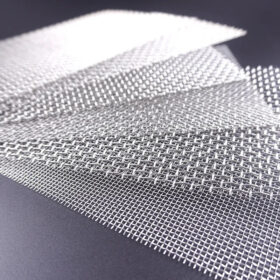


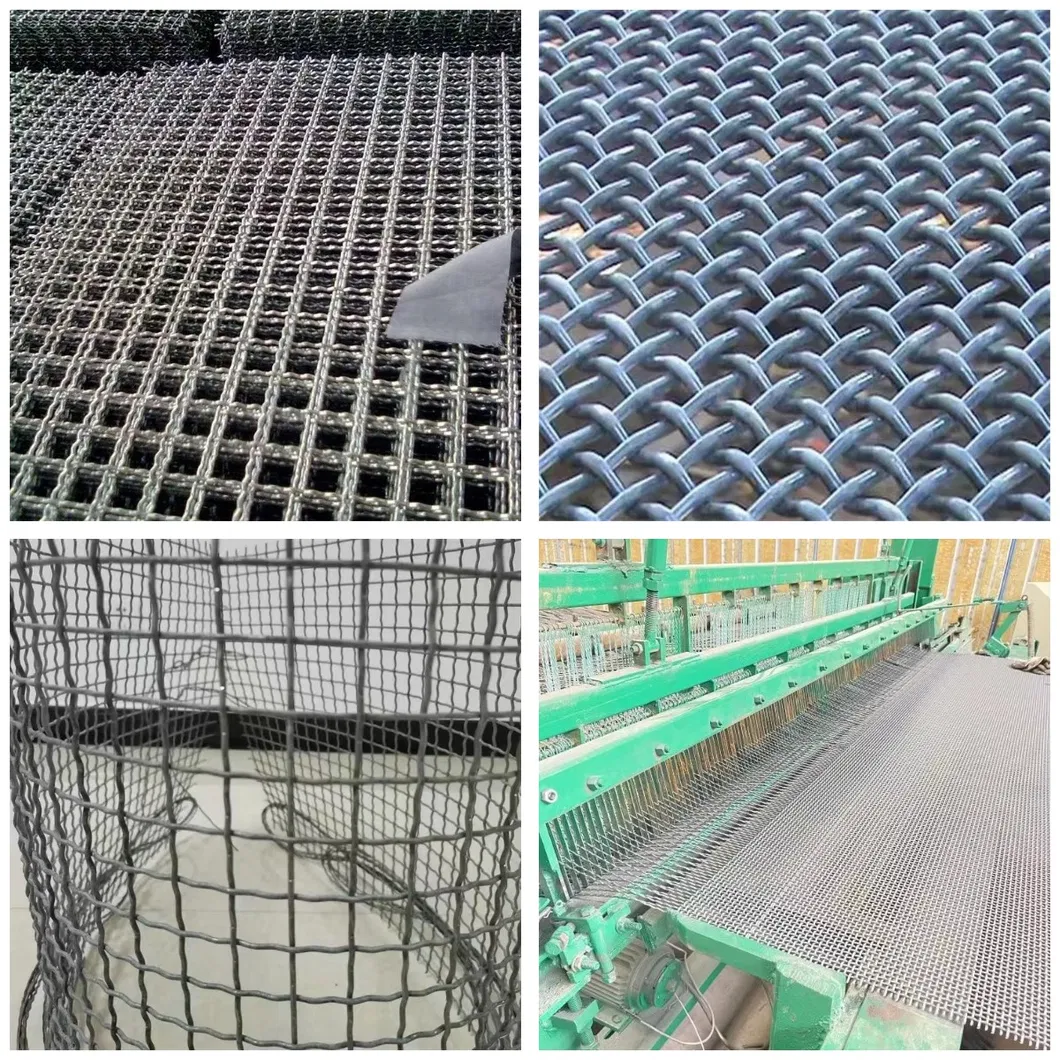
Stainless steel crimped wire mesh is a heavy-duty woven mesh made from pre-crimped metal wires.Before weaving, the wires are pressed by a mold into a regular wavy shape. This pre-crimping process locks
the warp and weft wires into the correct positions in both directions, ensuring uniform mesh size,stable structure and excellent durability.Thanks to its high strength, accurate openings and attractive appearance, stainless steel crimped wire mesh is widely used for screening, filtration, protection, barbecue grilling, structural support and decorative panels in many industries, such as mining, coal, petroleum, chemical, construction, food, machinery and packaging.
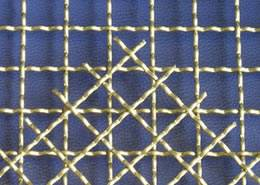 | 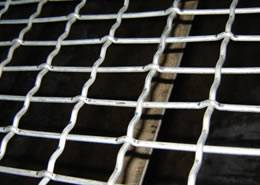 |
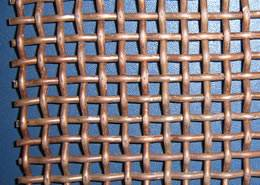 | 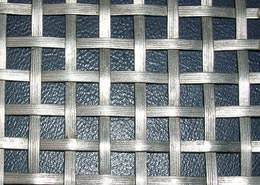 |
1. What Is Crimped Wire Mesh?
Crimped wire mesh is a kind of woven wire cloth in which both warp and weft wires are pre-crimped into a wavy pattern before weaving. During weaving, the peaks and valleys of each wire fit together, so the intersections are locked firmly. This design offers:
- Accurate, consistent opening size because wires stay in position.
- High rigidity and load-bearing capacity even with relatively large apertures.
- Excellent vibration resistance, making it ideal for vibrating screens and heavy-duty sieves.
- Long service life due to the strong three-dimensional structure.
Crimped wire mesh can be manufactured in different metals (stainless steel, galvanized steel, carbon steel, etc.) and in many weaving styles to suit different working conditions.
2. Materials & Surface Options
Although it is often called “stainless steel crimped wire mesh”, the product can be woven from several types of metal wire. Stainless steel is the most popular choice for corrosion resistance and hygiene, but other options
are also available:
- Stainless steel (304, 304L, 316, 316L, etc.) – best overall corrosion resistance, suitable for
food-processing, chemical, marine and outdoor applications. - Galvanized steel – good corrosion resistance with a zinc coating, used for general fencing,
mine screens and protective mesh. - Low carbon steel / black steel – high strength and economical, often used where corrosion
protection is less critical. - Other alloys – on request, such as heat-resistant or special alloy steels for high-temperature
or unique environments.
According to the application, the mesh can be supplied in plain (uncoated) stainless steel or with additional surface treatment (e.g. galvanizing, painting or powder coating for non-stainless meshes) to improve corrosion and wear resistance.

3. Weaving Types of Crimped Wire Mesh
To meet different structural and screening requirements, stainless steel crimped wire mesh can be woven in several crimp styles. The main weaving methods include:
- Plain Crimped Weave
- Intermediate Crimped Weave
- Lock Crimped Weave
- Flat Top Crimped Weave
- Off Count Crimped Weave
- Selvage Edge vs Raw Edge (edge finishing)
3.1 Plain Crimped Weave Stainless Steel Crimped Wire Mesh

Plain Crimped Weave means “over one and under one.” Almost all plain crimped weave is double crimped, which means both the warp and the shute wires are crimped and locked into position in both directions. This
standard weave provides a stable structure and uniform apertures and is widely used for general screening and protective mesh.
3.2 Intermediate Crimped Weave

Intermediate Crimped Weave uses pre-crimped warp wires (running the length of the roll) and shute wires (running the width of the roll). Additional crimps are placed between the intersections. This style is employed in
coarser meshes to obtain large openings with relatively light wires, while the extra crimps provide the stability needed to prevent wire movement.
3.3 Lock Crimped Weave Stainless Steel Crimped Wire Mesh

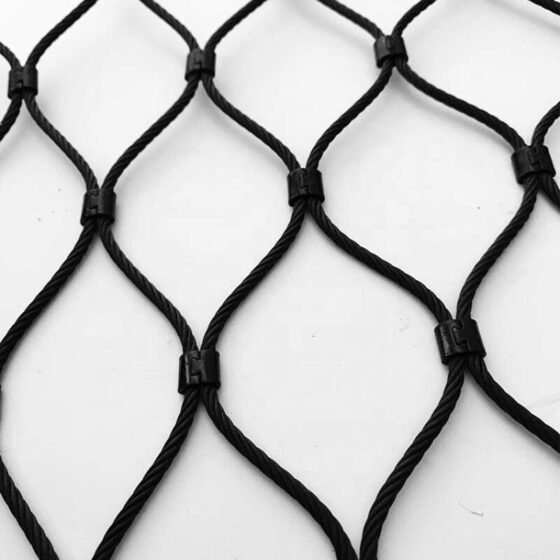
Lock Crimped Weave is also made from pre-crimped wire. What makes Lock Crimp popular is that each wire is stabilized by a notch or “bump” at the intersections. This “lock” design firmly fixes the aperture size and prevents slipping, even under high tension and heavy impact. It is ideal for vibrating screens and high-precision sizing.
3.4 Flat Top Crimped Weave
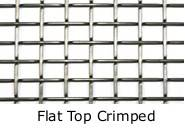
Flat Top Crimped Weave is offset to one side, producing a wire cloth with all wire surfaces in a single plane on the top. This even surface offers a smooth working face, allowing stones, coal, sand or food products to flow easily across the mesh. It reduces wear on the working surface and improves screening efficiency.
3.5 Off Count Crimped Weave & Edge Types
Off Count Crimped Weave uses a special crimp sequence or spacing to achieve particular opening sizes or decorative effects, often used when the design requires non-standard apertures or visual patterns.
For the edges, there are two main options:
- Selvage Edge: The edge is formed during weaving and is stronger and neater, suitable for
vibrating screens and structural uses. - Raw Edge: The mesh is simply cut and can later be framed, welded or fastened into a structure.
4. Features & Advantages of Stainless Steel Crimped Wire Mesh
- High strength and rigidity: Pre-crimped and locked intersections create a strong, 3D mesh
structure capable of carrying heavy loads and withstanding vibration. - Uniform openings: The crimping process fixes each wire in place, ensuring consistent aperture
size and accurate screening or filtering. - Excellent wear and impact resistance: Suitable for hard, abrasive materials like stone, ore,
coal and gravel. - Corrosion resistance (stainless steel type): Stainless steel meshes work reliably in wet,
humid or mildly corrosive environments with low maintenance. - High temperature resistance: Stainless steel crimped mesh can be used in high-temperature
processes such as roasting, drying and hot screening. - Good appearance: The neat, regular wavy pattern and metallic finish also allow crimped mesh
to be used as decorative and protective panels in architecture. - Customizable: Mesh count, wire diameter, aperture, sheet size, edge type and material can all
be customized according to drawings or samples.
5. Uses & Applications
Crimped wire mesh is widely used in many fields, including:
- Mining & Mine Sieving: As vibrating screen mesh and quarry screens for grading and separating ores, stone, gravel, coal and sand.
- Coal Factory: Used for coal classification, dewatering screens and protective guards around machinery.
- Petroleum & Chemical: As support mesh, filter screens, protective covers and structural reinforcement in process equipment.
- Construction: For safety barriers, wall reinforcement, stair and walkway guards, and façade cladding.
- Protective Mesh & Security: Machine guards, window and door protection, perimeter fencing and animal cages.
- Packaging Nets & Industrial Baskets: Metal mesh trays and baskets for parts washing, storage and transport.
- Barbecue Grill Netting & Cooking Mesh: Stainless steel and galvanized crimped meshes are used to roast flour food and meat, because they are strong, easy to clean and resistant to heat.
- Vibrating Sieve & Food Machinery: Screening and grading of food ingredients, seeds, grains, powders and granules.
6. Technical Specification – Stainless Steel Crimped Wire Mesh
The following table lists typical specifications of crimped wire mesh, including wire gauge, wire diameter,
mesh per inch, aperture (opening size) and weight per square meter. These parameters help you select the mesh
that matches your load, throughput and accuracy requirements.
Crimped Wire Mesh | ||||
Wire Gauge SWG | Wire Diameter mm | Mesh/Inch | Aperture mm | Weight Kgs/m2 |
6 | 4.80 | 1 | 20.60 | 13.00 |
8 | 4.05 | 2 | 9.00 | 18.50 |
10 | 3.20 | 2 | 10.00 | 11.25 |
12 | 2.60 | 3 | 5.90 | 11.15 |
14 | 2.00 | 3 | 6.50 | 6.60 |
16 | 1.60 | 4 | 5.00 | 5.63 |
17 | 1.40 | 5 | 5.10 | 5.39 |
18 | 1.20 | 5 | 4.00 | 3.96 |
19 | 1.00 | 6 | 3.20 | 3.30 |
21 | 0.81 | 7 | 2.80 | 2.52 |
22 | 0.71 | 8 | 2.50 | 2.20 |
22 | 0.71 | 12 | 1.40 | 3.20 |
23 | 0.61 | 14 | 1.20 | 2.85 |
25 | 0.50 | 14 | 1.30 | 1.92 |
25 | 0.50 | 16 | 1.09 | 2.20 |
25 | 0.50 | 18 | 0.90 | 2.47 |
25 | 0.50 | 20 | 0.77 | 2.75 |
7. Ordering & Customization Tips
When you send an inquiry for stainless steel crimped wire mesh, it is helpful to provide:
- Material (e.g. stainless steel grade, galvanized steel, etc.).
- Wire diameter and mesh per inch (or required aperture size).
- Weaving type (plain, intermediate, lock crimp, flat top, etc.).
- Panel or roll size (width, length) and whether you need selvage edge or raw edge.
- Quantity and application (mining screen, barbecue grill net, protective mesh, etc.).
With clear technical requirements, we can recommend the most economical and suitable crimped wire mesh for your project, ensuring strong, accurate and long-lasting performance in your working environment.