Your One-Stop Wire Mesh Fence Supplier | POLYMETAL


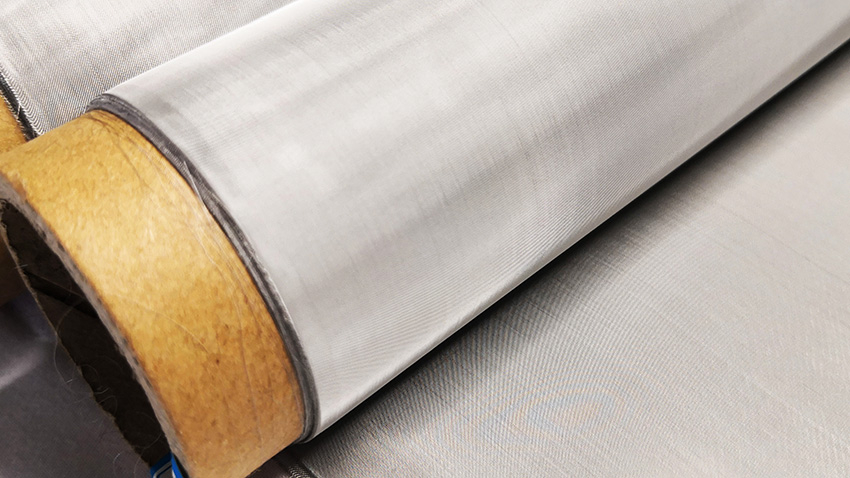
Stainless steel printing wire mesh (also known as stainless steel wire cloth for screen printing) is a high-precision woven mesh designed for demanding industrial printing applications. It is widely used in
medical devices, electronic components and packaging, liquid crystal and flat panel displays, SMD/SMT processes, solar cells, automotive panels, decorative glass, ceramics, and many other fields where accuracy and durability are critical.
Made from special high-tensile stainless steel wire, this mesh combines tensile strength of 1000–1100 N/mm² with a yield strength of 600–800 N/mm². Together with very uniform wire diameter and mesh thickness, it provides excellent dimensional stability, consistent ink transfer, and long service life in high-precision screen printing processes.
By using carefully selected stainless steel alloy grades and advanced weaving and calendaring technology,the mesh structure becomes exceptionally compact. Thickness and opening tolerances are tightly controlled,
mesh elongation is minimized, and high tension can be maintained for a long time. These characteristics make stainless steel printing wire mesh particularly suitable for high-density, fine-line, and multi-color overprint
applications.

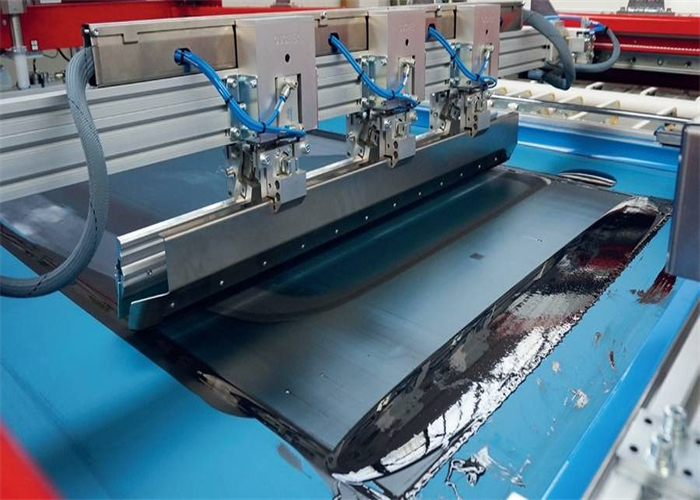


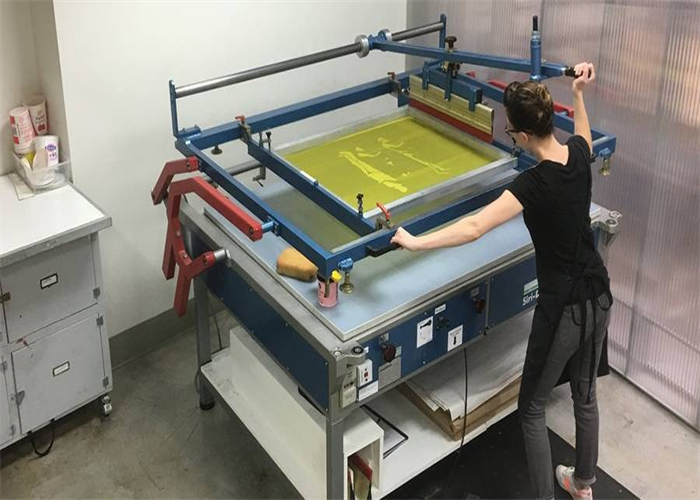

1. Structure and Weave Types of Stainless Steel Printing Wire Mesh
Stainless steel printing wire mesh is generally considered an ultra-fine screen.It is a special technical fabric used as the stencil carrier in the screen printing industry. The mesh is typically woven in:
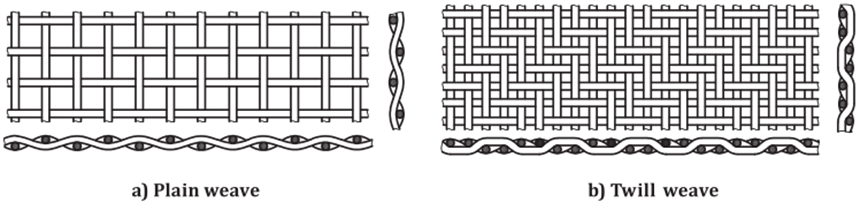
- Plain weave – warp and weft wires cross alternately, offering high stability and uniform openings.
- Twill weave – each wire passes over and under two or more wires, providing finer mesh at similar wire diameters and better flexibility for high mesh counts.
During screen making, the stainless steel printing wire mesh is uniformly tensioned and fixed to a frame.A stencil is then created on the mesh using hand-cut film or photo-chemical (photosensitive) plate-making
processes. In the final stencil:
- Mesh openings in the image area remain open, allowing ink or paste to pass.
- Mesh openings in the non-image area are blocked by the stencil layer so ink cannot penetrate.
To ensure printing accuracy, stainless steel printing wire mesh requires:
- Square mesh openings and a 90° angle between warp and weft.
- Flat, joint-free mesh surface without dents or creases.
- Uniform, reproducible mesh count and opening size.
- High friction strength and small elastic recovery to maintain registration.
- Excellent resistance to acids, alkalis, solvents, and UV radiation without loss of strength.
Advanced weaving technology and high-precision looms ensure the mesh surface is extremely smooth and compact,with tight control over thickness and opening tolerances. This is the basis for reliable and repeatable
high-precision printing.
2. Raw Materials for Stainless Steel Printing Wire Mesh
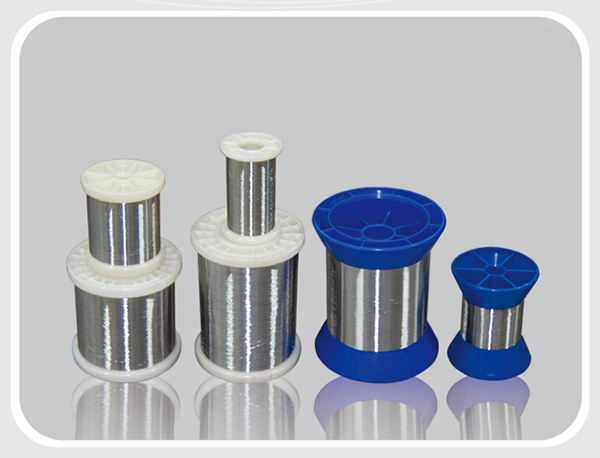
The performance of stainless steel printing wire mesh depends heavily on the quality of the wire used. In the market, wire quality is commonly divided into:
- Domestic standard stainless steel micro-wires
- Imported high-grade stainless steel micro-wires
Typical stainless steel grades used for printing wire mesh include:
- 304 / 304L – general-purpose stainless steel with excellent overall performance and corrosion resistance, especially suitable for low to medium mesh counts where good strength and anti-fatigue properties are required.
- 316 / 316L – molybdenum-bearing stainless steel offering better corrosion resistance and plasticity. It is more suitable for higher mesh counts and applications requiring very fine wire diameters and high braiding quality.
- 304N, 304HP, 304HPS – nitrogen- or high-performance-enhanced grades, providing higher strength and tension stability, ideal for high-tension stainless steel printing wire mesh.
High-quality stainless steel wire for printing mesh must have:
- High dimensional precision and tight tolerance on wire diameter
- High tensile strength and yield strength
- Excellent toughness and plasticity
- Stable mechanical and metallurgical properties
- Low breakage rate during weaving and stretching
3. Principle of Screen Printing with Stainless Steel Wire Mesh
A screen printing system is composed of five basic elements: screen mesh, squeegee (doctor blade), ink or paste, printing table, and substrate.The fundamental principle is that the open mesh areas in the stencil allow ink to pass through,while blocked areas prevent ink transfer.
During printing:
- Ink or paste is deposited at one end of the stainless steel printing wire mesh.
- The squeegee applies a specified pressure and moves across the mesh.
- Under squeegee pressure, the mesh locally contacts the substrate along a moving line.
- Ink is pushed through the open mesh areas in the image zones onto the substrate.
- The mesh behind the squeegee immediately separates from the substrate due to its tension and elasticity, avoiding smearing.
The tension of the stainless steel printing wire mesh creates an elastic “rebound force” that ensures:
- Contact occurs only at the squeegee line, not across the whole image area.
- The printed pattern maintains dimensional accuracy and sharp edges.
- The substrate surface remains clean, without ink smudging or double images.
4. Key Features of Stainless Steel Printing Wire Mesh
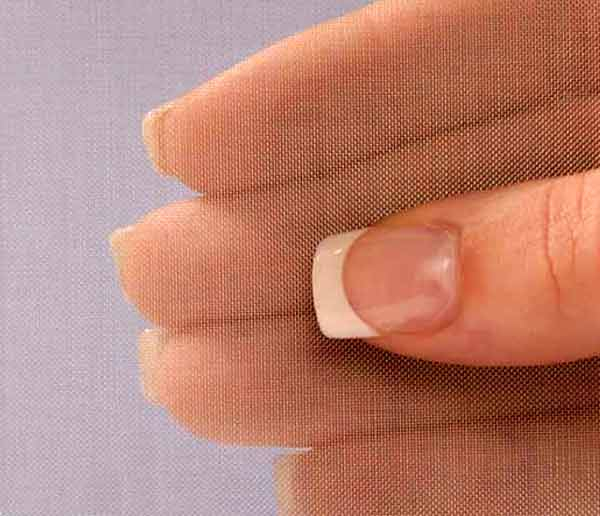
Compared with polyester and nylon screen fabrics, stainless steel printing wire mesh offers a unique combination of mechanical, chemical, and thermal properties:
- High Tension and Stability – Stainless steel has an elongation of less than 1%, significantly lower than synthetic fibers (often >5%). It can be tensioned at very high levels without permanently deforming the mesh openings, ensuring stable registration and consistent print quality.
- Ultra-High Precision – Uniform wire diameter and controlled weave result in highly consistent mesh openings. The error rate is extremely low, which is crucial for fine-line and halftone printing, especially on PCBs and microelectronics.
- Low Elongation – Under high tension, stainless steel printing wire mesh shows very small extension. This minimizes image distortion and improves repeatability during long production runs.
- High Yield Point and Flexibility – Even under extremely high tension, the mesh does not lose elasticity due to plastic deformation. This maintains screen geometry and extends screen life.
- High Abrasion Resistance – Stainless steel wire has outstanding wear resistance, far superior to fiber mesh. This is particularly important when printing abrasive pastes, metallic inks, or when using high squeegee pressure.
- Excellent Corrosion and Solvent Resistance – Stainless steel offers superior resistance to inks, solvents, cleaning agents, acids, and alkalis. The mesh retains its strength and surface finish even after repeated cleaning cycles.
- Heat Resistance – Stainless steel printing wire mesh is suitable for hot-melt inks and high-temperature curing processes where synthetic meshes would deform or lose strength.
- Non-Electrostatic – Stainless steel does not accumulate static charges as easily as synthetic fibers, reducing dust attraction and static-related defects, and improving process safety.
Thick Ink Layer and Strong Coverage
One major advantage of stainless steel printing wire mesh is its ability to deposit a thicker ink layer compared to offset, gravure, or flexographic printing:
- Offset and letterpress: ink layer thickness only a few microns
- Gravure: about 12 µm
- Flexographic: about 10 µm
- Stainless steel screen printing: typically 30–100 µm, and for special PCB applications, up to 1000 µm
With foaming inks, the final layer thickness (e.g., for Braille dots) can reach approximately
300 µm. This strong covering ability allows:
- Pure white printing on black substrates
- High build for functional layers (solder mask, conductive paste, insulation)
- Excellent tactile and three-dimensional effects
Wide Ink and Paste Compatibility
Stainless steel printing wire mesh is compatible with almost any type of ink, paste, or coating that can physically pass through its openings, including:
- Solvent-based and water-based inks
- Synthetic resin inks and UV-curable inks
- High-viscosity pastes (e.g., solder pastes, conductive silver pastes)
- Adhesives and thick coatings
- Powder or slurry systems
Because of this, screen printing materials are often referred to collectively as
printing materials rather than just inks.
Soft Layout and Low Printing Pressure
Although stainless steel itself is a rigid metal, the mesh structure combined with the elastomer squeegee forms a relatively soft and flexible printing layout. Only modest printing pressure is required to transfer ink, enabling printing on:
- Soft materials – paper, textiles, films
- Hard materials – glass, metals, ceramics, rigid plastics
- Three-dimensional and molded objects
Excellent Light and Weather Resistance
Stainless steel printing wire mesh allows the use of pigments with large particle size, lightfast pigments,and fluorescent pigments. Printed graphics maintain their gloss and color stability even under prolonged exposure to sunlight and high temperatures, making them ideal for outdoor signage, automotive panels, and architectural glass.
5. Further Processing: Calendered Stainless Steel Printing Wire Mesh
After weaving, stainless steel printing wire mesh can undergo additional processing to further improve its performance. The most important post-treatment for high-end printing screens is calendering.
Calendering involves passing the woven mesh between precision rollers to:
- Achieve a specified, thinner mesh thickness that cannot be obtained by weaving alone
- Flatten the wire “knuckles” and create a smooth, even surface
- Enhance thickness uniformity over the entire mesh
- Reduce mesh deformation, creases, and unevenness
- Minimize wire movement during printing and improve print repeatability
As a result, calendered stainless steel printing wire mesh offers:
- More uniform film thickness of the printed layer
- Reduced printing thickness where required
- Sharper edge definition
- Higher dimensional accuracy and registration stability

6. Typical Applications of Stainless Steel Printing Wire Mesh
Stainless steel printing wire mesh has become the preferred screen material in many high-precision and high-volume printing sectors, especially in the electronics industry. Typical applications include:
- Printed Circuit Boards (PCB) – printing conductive tracks, pads, solder mask, and solder paste in SMT and through-hole technology.
- Microelectronics – resistors, capacitors, inductors, chip components, and hybrid circuits.
- Flat Panel Displays – LCD, VFD, PDP, OLED and other display technologies requiring precise line width and spacing.
- Solar Cells – printing fine-line silver and aluminum pastes on solar wafers to achieve high efficiency and consistent cell performance.
- Membrane Switches and Touch Panels – printing conductive circuits and graphic overlays for control panels and keyboards.
- Instrument and Automotive Panels – dials, dashboards, and control panels with high clarity and durability.
- Glass and Ceramics – decorative glass, ceramic tiles, porcelain, and high-value ceramic fittings.
- Textiles and High-End Fabrics – intricate patterns and multi-color printing for fashion and industrial textiles.
- Packaging, Advertising, and Decoration – posters, labels, outdoor signage, and premium packaging requiring thick, opaque, and durable prints.
7. Standard Specifications of Stainless Steel Printing Wire Mesh
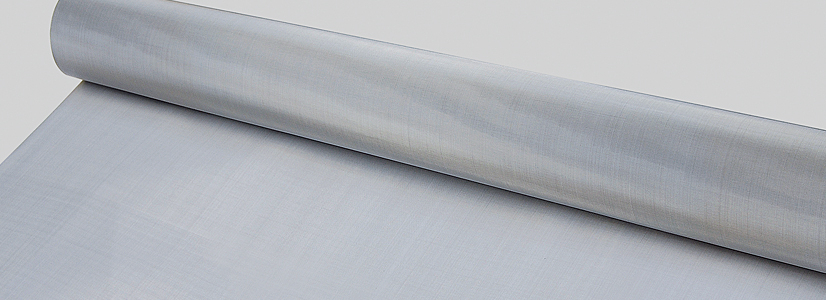
Stainless steel printing wire mesh is available in many mesh counts, wire diameters, and opening sizes to match different ink types, film thickness requirements, and printing resolutions. Below is a typical specification
table in millimeter units, including theoretical ink volume:
| Specification | Mesh/inch | Wire Diameter (mm) | Aperture (mm) | Thickness (mm) | Calendered Thickness (mm) | Theoretical Ink (cm3/m2) |
|---|---|---|---|---|---|---|
| 80*80*0.05 | 80 | 0.05 | 0.268 | 0.110-0.115 | 0.088-0.090 | 78.0 |
| 80*80*0.09 | 80 | 0.09 | 0.228 | 0.198-0.207 | 0.168-0.170 | 103.0 |
| 80*80*0.12 | 80 | 0.12 | 0.198 | 0.276-0.288 | 0.228-0.230 | 92.9 |
| 100*100*0.1 | 100 | 0.1 | 0.154 | 0.230-0.240 | 0.188-0.190 | 77.2 |
| 120*120*0.08 | 120 | 0.08 | 0.132 | 0.184-0.192 | 0.148-0.150 | 65.8 |
| 150*150*0.06 | 150 | 0.06 | 0.109 | 0.138-0.144 | 0.138-0.142 | 50.0 |
| 165*165*0.035 | 165 | 0.035 | 0.119 | 0.108-0.110 | 0.077-0.081 | 48.0 |
| 165*165*0.045 | 165 | 0.045 | 0.109 | 0.095-0.104 | 0.078-0.080 | 45.1 |
| 165*165*0.05 | 165 | 0.05 | 0.104 | 0.110-0.115 | 0.088-0.090 | 45.6 |
| 180*180*0.045 | 180 | 0.045 | 0.096 | 0.099-0.104 | 0.078-0.080 | 41.5 |
| 180*180*0.05 | 180 | 0.05 | 0.091 | 0.115-0.120 | 0.088-0.090 | 41.7 |
| 200*200*0.04 | 200 | 0.04 | 0.087 | 0.081-0.082 | 0.068-0.070 | 43.0 |
| 200*200*0.05 | 200 | 0.05 | 0.077 | 0.115-0.120 | 0.088-0.090 | 42.0 |
| 230*230*0.035 | 230 | 0.035 | 0.075 | 0.072-0.076 | 0.050-0.067 | 37.0 |
| 250*250*0.03 | 250 | 0.03 | 0.072 | 0.063-0.064 | 0.048-0.049 | 30.0 |
| 250*250*0.035 | 250 | 0.035 | 0.067 | 0.076-0.078 | 0.059-0.061 | 32.0 |
| 250*250*0.04 | 250 | 0.04 | 0.062 | 0.082-0.086 | 0.050-0.080 | 34.0 |
| 270*270*0.035 | 270 | 0.035 | 0.059 | 0.076-0.080 | 0.058-0.070 | 30.0 |
| 290*290*0.02 | 290 | 0.02 | 0.068 | 0.043-0.044 | 0.029-0.030 | 18.4 |
| 300*300*0.03 | 300 | 0.03 | 0.055 | 0.066-0.068 | 0.040-0.059 | 28.0 |
| 325*325*0.023 | 325 | 0.023 | 0.055 | 0.049-0.053 | 0.038-0.039 | 25.4 |
| 325*325*0.028 | 325 | 0.028 | 0.050 | 0.063-0.064 | 0.050-0.051 | 26.4 |
| 350*350*0.025 | 350 | 0.025 | 0.048 | 0.052-0.054 | 0.041-0.050 | 18.7 |
| 400*400*0.018 | 400 | 0.018 | 0.046 | 0.036-0.040 | 0.028-0.030 | 20.0 |
| 400*400*0.023 | 400 | 0.023 | 0.041 | 0.050-0.054 | 0.035-0.048 | 19.0 |
8. High-Tensile “Super” Stainless Steel Printing Wire Mesh
For the most demanding applications such as chip components, high-efficiency solar cells, flat panel displays (FPD),
LCD/PDP, and ultra-fine circuitry, super high-tensile stainless steel printing wire mesh is used.
This type of mesh often uses imported ultra-high-strength wire with:
- Tensile strength roughly twice that of standard wire
- Extremely low elongation (approx. 3–5%)
- Excellent dimensional stability even at very high tensions
Such super meshes achieve exceptionally fine openings and thin, uniform thickness, providing outstanding performance
where pattern accuracy, line width control, and layer thickness uniformity are critical.

9. Advantages of Stainless Steel Printing Wire Mesh in Production
Although stainless steel printing wire mesh has a higher initial cost than polyester or nylon mesh, it offers significant long-term economic and technical benefits:
- Higher Productivity – Thicker ink layers and optimized mesh designs enable single-pass printing for many applications, reducing the number of printing cycles.
- Reduced Ink and Paste Consumption – Fine wire diameters and precise openings provide accurate control of layer thickness, especially valuable when using expensive materials such as conductive silver pastes.
- Longer Screen Life – Superior mechanical and chemical resistance greatly extend screen lifetime and reduce downtime.
- Better Print Quality and Yield – Improved registration, edge sharpness, and thickness uniformity result in fewer defects and higher first-pass yield.
- Stable Performance in Harsh Conditions – Stainless steel printing wire mesh is ideal for high-temperature, chemically aggressive, or high-wear environments.
10. Conclusion
Stainless steel printing wire mesh is a critical material for modern high-precision screen printing technology. Its combination of high tensile strength, low elongation, excellent corrosion and heat resistance, ultra-precise mesh structure, and outstanding durability make it the preferred choice in advanced industries such as electronics, photovoltaics, automotive, medical devices, and functional glass and ceramics. By selecting the correct stainless steel grade, mesh count, wire diameter, and calendered thickness, and by applying proper stretching and plate-making techniques, users can achieve stable, repeatable, and highly accurate printing results that fully meet today’s demanding production and quality standards.