Your One-Stop Wire Mesh Fence Supplier | POLYMETAL
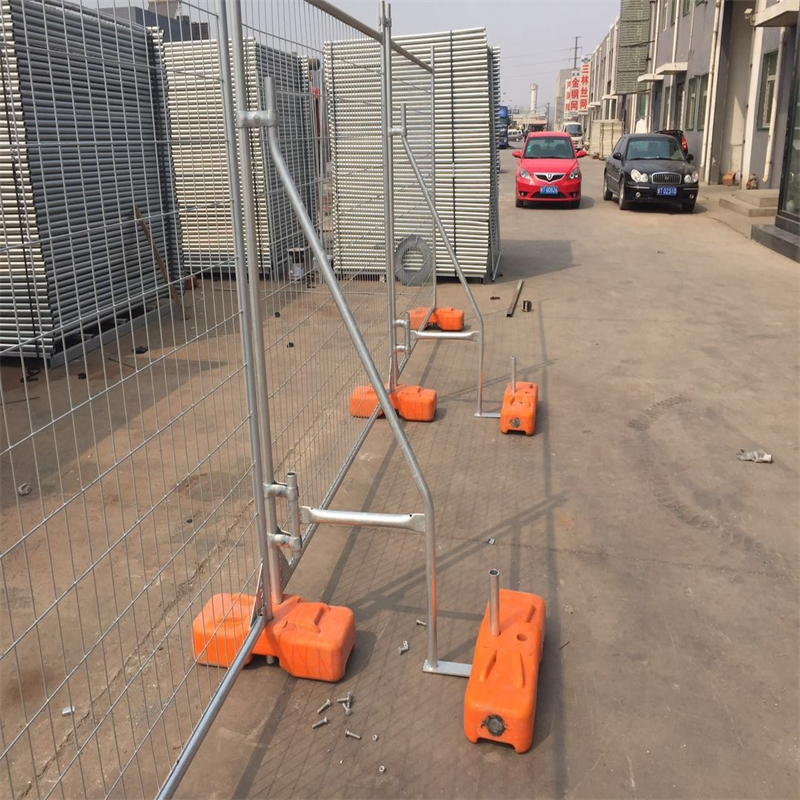
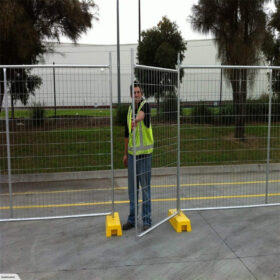
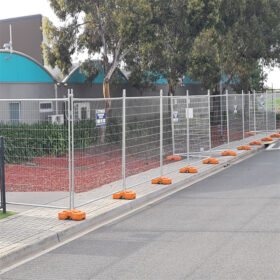
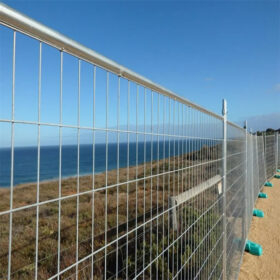
When you search for temp fence for sale, most listings look the same: silver panels, square frames, some mesh, a low price and a few vague promises. Behind that simple picture, however, are real structural flaws, coating dangers and layout traps that can turn a “good deal” into a steady stream of loss, damage and wasted money.
POLYMETAL offers temp fence for sale as serious safety equipment, not decorative frames. Panels are designed for repeated hire cycles, harsh weather and rough handling on construction sites, industrial yards, public events and crowd-control projects. The brand focus is on predictable performance: strong frames, controlled mesh, documented galvanizing and consistent quality rules.
This guide exposes nine risks and facts hiding inside ordinary temp fence for sale and then outlines how POLYMETAL panels are engineered to avoid those problems.
Risk 1 – Frame Tube Weakness Behind a Strong Outline
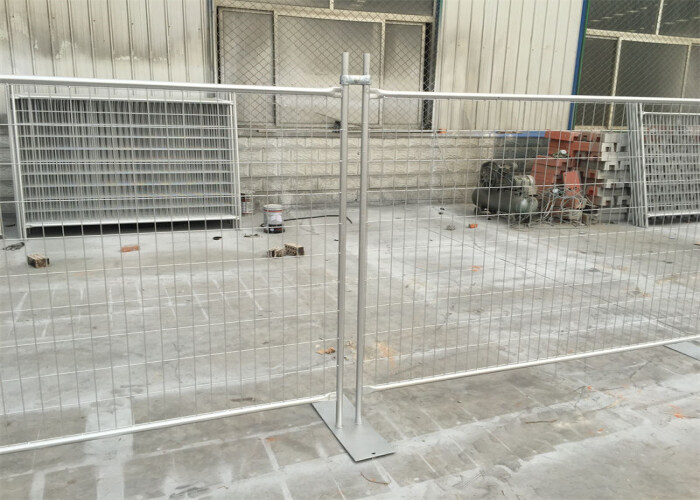
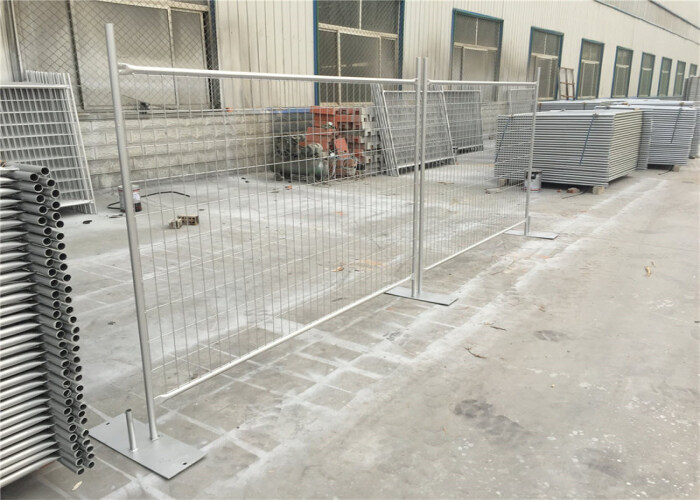
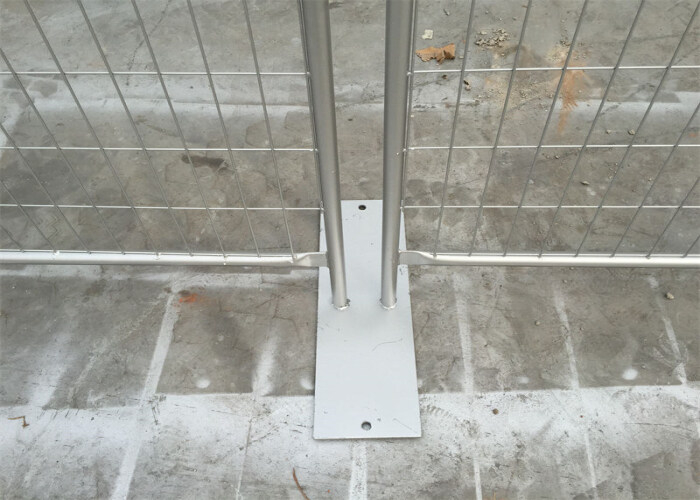
The first risk in temp fence for sale lies in the frame tube itself. Many panels use large outer diameters to look strong in photos, while hiding thin wall thicknesses that twist, dent and crack under normal site loads. When this kind of weak frame is combined with undersized bases or poor-quality temporary fence feet, the whole fence line can start to rock, lean and eventually fail under wind or crowd pressure. A 32–41 mm outer tube with walls below 1.0–1.2 mm behaves more like a soft shell than a structural frame.
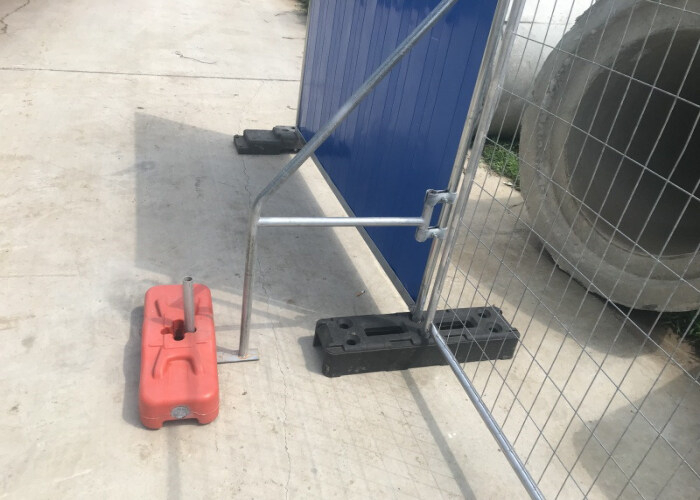
POLYMETAL temporary fence panels are built around properly selected frame tube diameters and thicknesses. Typical production combines 32 mm, 38 mm, 40 mm or 41 mm outer diameter tubes with 1.0 mm, 1.2 mm, 1.4 mm, 1.5 mm or 2.0 mm wall thicknesses, tuned to the duty level of each series. This combination delivers a stiff rectangular profile that resists bending and keeps mesh tension stable over time, especially when paired with correctly sized and weighted temporary fence feet.
Fact 2 – Panel Size and Mesh Layout Decide Real Protection
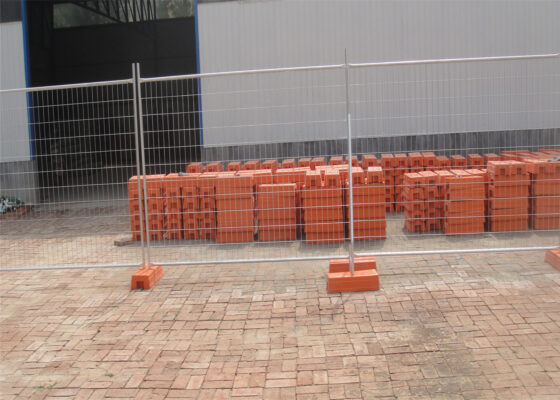
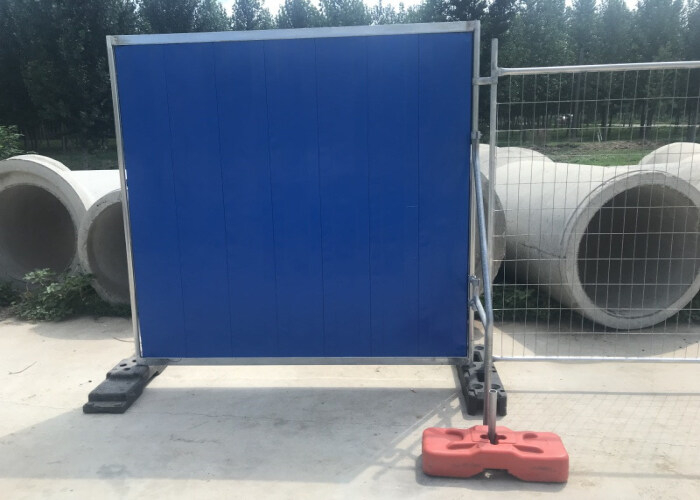
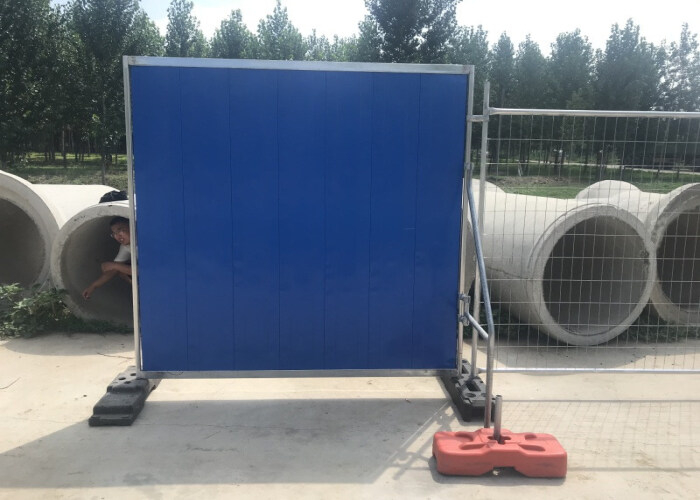
The second fact about temp fence for sale is that true panel size and mesh layout quietly decide whether people and debris can pass through. The POLYMETAL standard format uses panels approximately 2100 mm high and 2400 mm wide to create continuous lines with fewer joints and fewer opportunities for forced access.
Mesh is configured around a 60 mm × 150 mm opening pattern. This rectangular aperture is small enough to deter climbing and stops most debris while still allowing clear visibility into and through the fenced zone. When combined with a steel wire diameter of 2.70 mm, 3.00 mm or 4.00 mm, the mesh behaves as a stiff protective surface rather than a loose fabric.
Risk 3 – Galvanizing Thickness as a Hidden Time Bomb
The third risk in many temp fence for sale listings is the galvanizing thickness. Coatings that only reach light pre-galvanized levels start to rust quickly at welds, cuts and exposed edges. Rust is not just a cosmetic fault; it is a structural danger and a direct signal that metal cross-section is being lost.
POLYMETAL temp fence panels are available in three controlled hot-dip galvanizing ranges. Entry-level systems use approximately 14 microns of zinc, mid-duty systems step up to around 42 microns, and premium heavy-duty systems target about 100 microns of hot-dipped galvanized protection. These coating levels are chosen to match different climates, site durations and hire cycles, turning vague “galvanizing” into real data and leverage for asset life.
Fact 4 – Mesh Wire Diameter as a Structural Element
The fourth fact is that wire diameter is not just a number on a drawing; it is a structural element. Mesh wires below about 2.70 mm on temp fence for sale panels bend easily when pushed by crowds, blown by wind loads or hit by materials and equipment. Bent mesh distorts lines, creates flapping edges and can allow small objects to pass through.
POLYMETAL mesh is typically produced in 2.70 mm, 3.00 mm and 4.00 mm wire diameters. Lighter wires support basic boundary marking, while heavier wires are used for high-risk or high-impact zones. The result is a defined pattern of strength levels, not a random mix of mesh qualities.
Risk 5 – Weld Quality as a Silent Failure Point
The fifth risk is weld quality, which is often invisible until the fence fails. Mesh-to-frame joints and wire-to-wire welds that are underheated, porous or poorly aligned become cracks waiting for the first serious load. When these welds open, whole strips of mesh can detach, leaving access gaps that defeat the fence line.
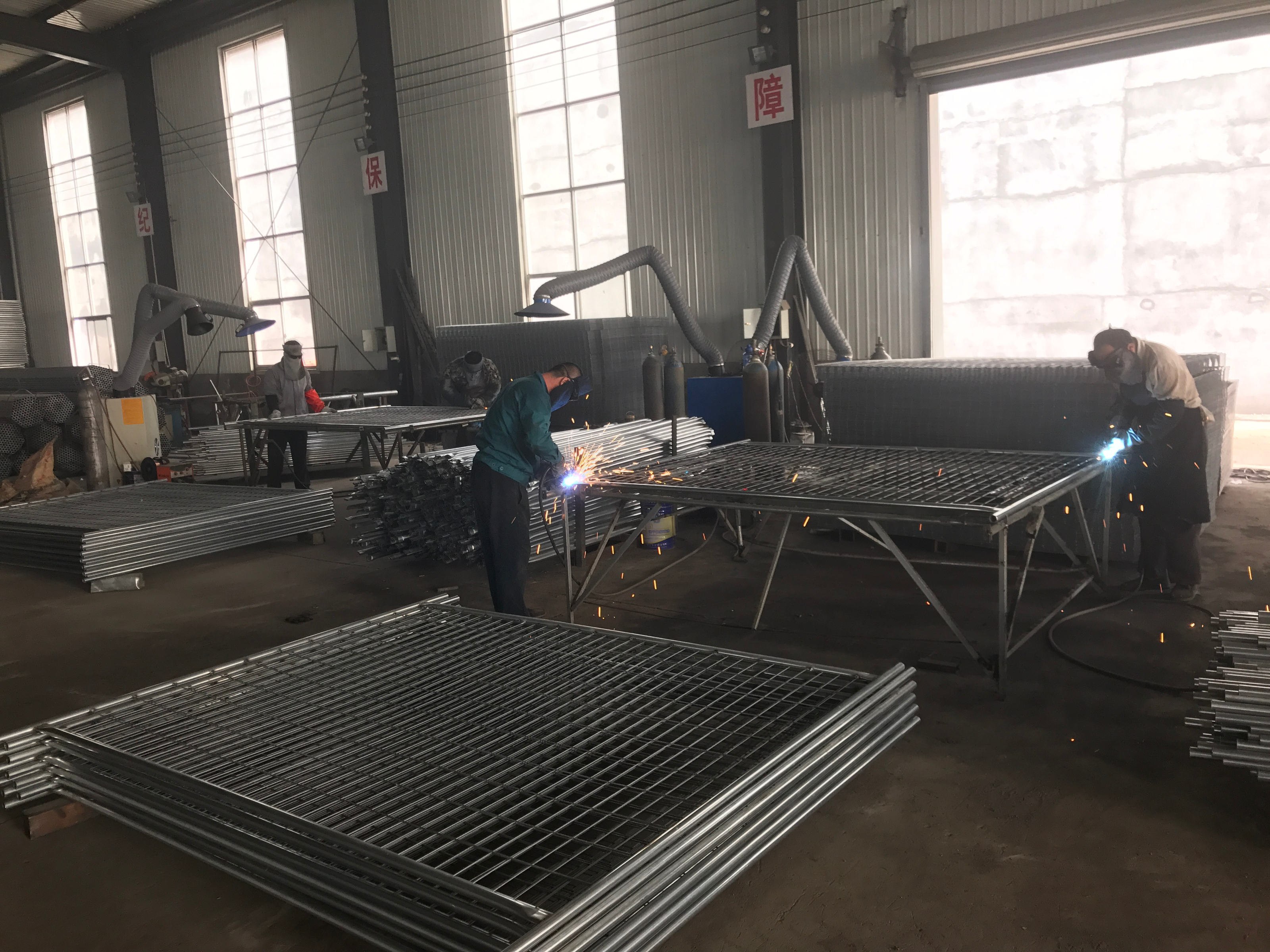
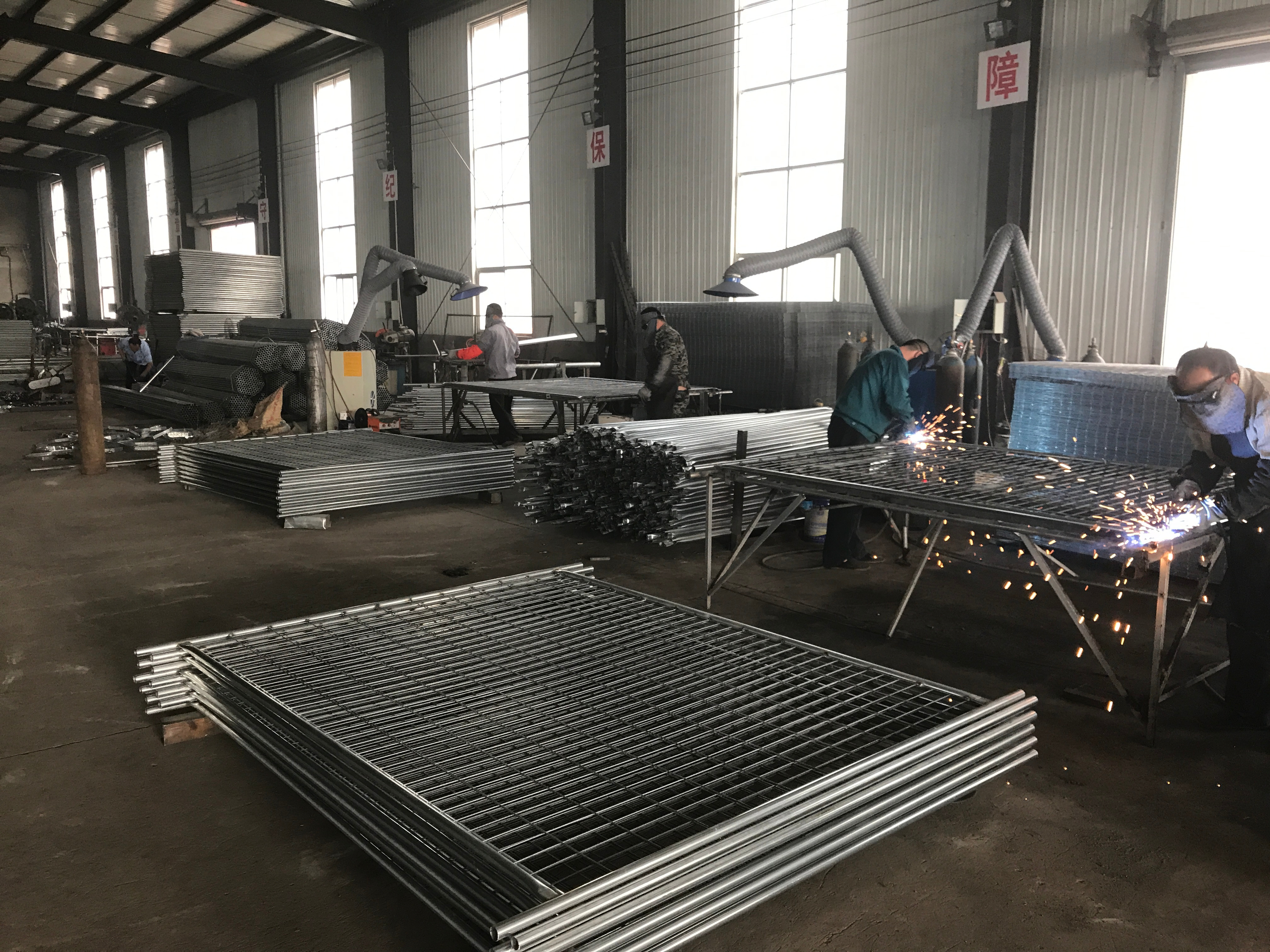
POLYMETAL temp fence for sale is produced on controlled welding lines. Frames are set in jigs to maintain corner squareness, while mesh panels are welded with parameters tuned for penetration, not just speed. Weld samples are checked, and panel straightness is verified so the final product behaves like a connected structural system, not a loose assembly of random points.
Danger 6 – Temporary Base Design Creating Trip and Collapse Hazards
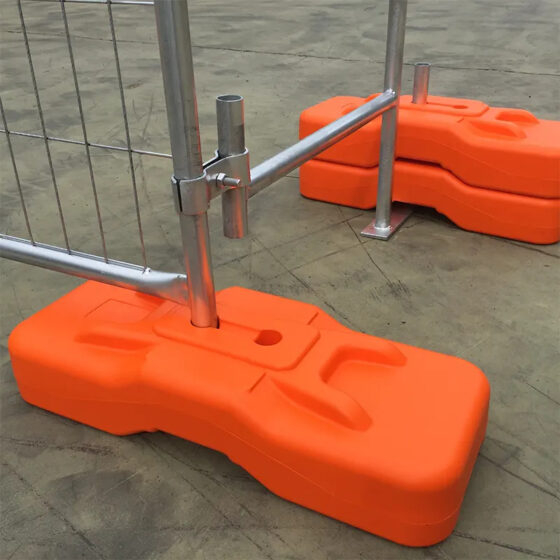
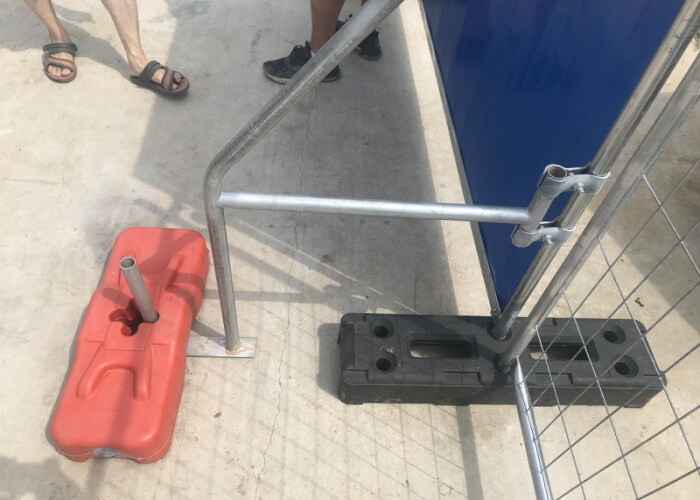
The sixth danger is the base system. Many low-cost temp fence for sale setups rely on concrete or plastic bases that are too light, too narrow or too brittle. Under wind pressure or crowd movement, weak bases twist, crack or fall over, turning the fence line into a chain of hazards.
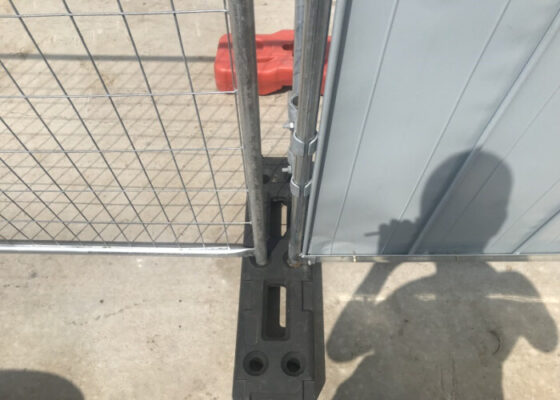
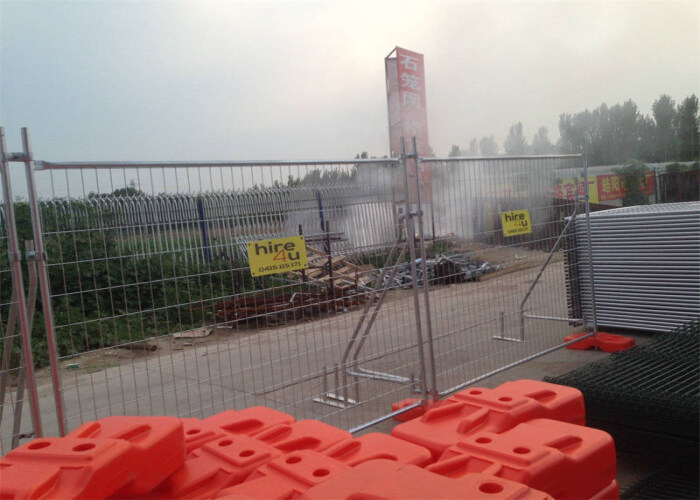
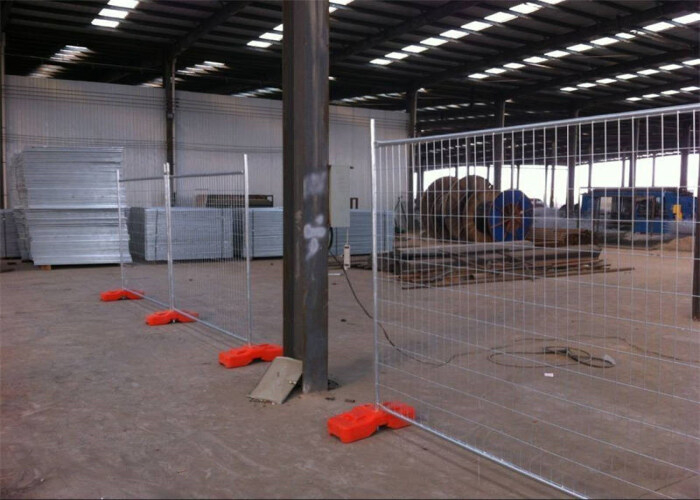
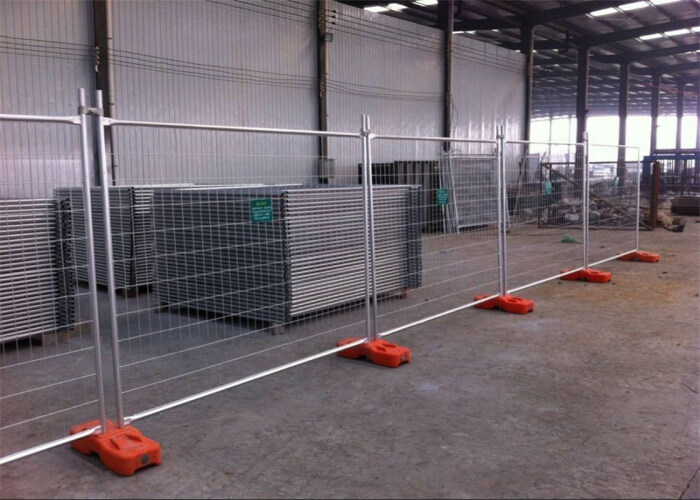
POLYMETAL systems are designed around robust base options. Panels slot securely into high-density bases with controlled dimensions, giving enough footprint to resist tipping while leaving walking and vehicle paths clear. The interface between frame tube and base slot is sized to reduce wobble and prevent metal edges from eating into the base over time.
Risk 7 – Layout Pattern Turning Safety into Trap and Loss
The seventh risk is not about materials at all; it is about layout. Even well-built temp fence for sale panels can form dangerous funnels, blind corners and dead-end pockets if placed without a clear circulation strategy. These patterns increase crush risk, encourage climbing, and create points where people or vehicles try to force entry.
POLYMETAL focuses on planning as much as product. The 2100 mm × 2400 mm format is chosen so planners can generate neat, repeating layouts around site edges, access gates, loading zones and public footpaths. This produces predictable lines, clear gate positions and safe escape routes, turning fence layout from a random snapshot into a controlled manual for movement.
Risk 8 – Documentation Gaps Creating Legal and Financial Threats
The eighth risk is documentation. Many temp fence for sale suppliers cannot provide real data on steel grade, mesh aperture, wire diameter, galvanizing thickness or weld method. In a serious incident, this lack of profile turns into an immediate legal and insurance weakness.
POLYMETAL maintains an internal documentation profile for each series. Steel specifications, tube dimensions, mesh patterns, galvanizing results and inspection info form a complete checklist of performance data. This documentation gives owners an advantage in audits, approvals and post-incident reviews, transforming a potential crisis into a manageable process.
Risk 9 – Hidden Lifecycle Cost That Quietly Destroys Profit
The ninth and most expensive risk in temp fence for sale is lifecycle cost. Cheap panels often appear profitable for the first hire or two, then start to fail: bending frames, broken welds, peeling zinc, rusted mesh, broken bases and distorted lines that upset clients. Every repair, repaint and emergency replacement is a direct cost and a lost hire opportunity.
POLYMETAL panels are specified from the beginning to protect long-term profit. Defined frame tubes, consistent mesh, three controlled galvanizing levels and documented production rules create a predictable pattern of performance. Panels remain straight, mesh stays connected, and coatings hold up under weather and washing. Over a full hire cycle, this stable behaviour turns into a measurable benefit, advantage and payoff for fleet owners and contractors.
Product Overview – POLYMETAL Temp Fence for Sale
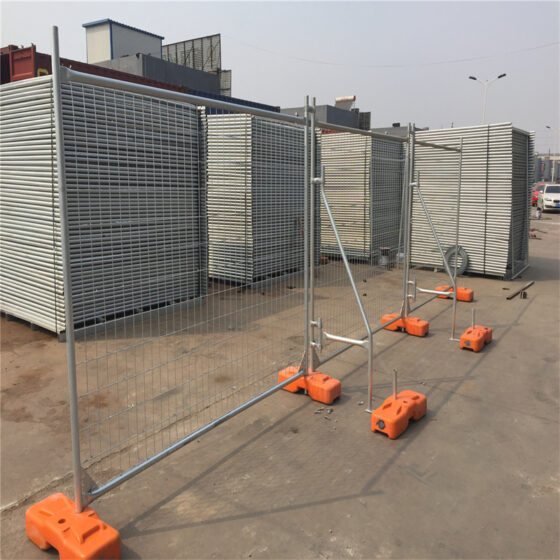
POLYMETAL temp fence for sale is built around a robust rectangular panel format. Each panel typically measures about 2100 mm in height and 2400 mm in width, forming a strong visual and physical boundary line for construction sites, event perimeters, road projects and industrial yards.
The frame uses circular steel tube with outer diameters of 32 mm, 38 mm, 40 mm or 41 mm. Wall thicknesses are selected according to duty level, commonly ranging from 1.0 mm for lighter applications to 2.0 mm for heavy-duty and high-risk areas. Inside the frame, a welded steel mesh with a 60 mm × 150 mm opening pattern is produced from 2.70 mm, 3.00 mm or 4.00 mm wire, depending on the series.
Panels pass through controlled hot-dip galvanizing lines to deliver three defined finish levels: approximately 14 microns of zinc for short-term and low-corrosion environments, around 42 microns for mid-term outdoor use, and about 100 microns for long-term deployment or aggressive coastal and industrial conditions. This range allows buyers to match fence type to project duration, climate and budget without guessing.
Brand identification, signage and safety messages can be added using printed mesh, rigid plates or clip-on tags, turning the fence line into both a security boundary and a communication surface. All systems are sold under the POLYMETAL brand, with consistent marking and traceable model codes.
Specifications – POLYMETAL Temp Fence for Sale
Table 1 – Light-Duty POLYMETAL Temp Fence Panels
| Model Code | Height (mm) | Width (mm) | Frame Tube OD (mm) | Frame Tube Thickness (mm) | Mesh Opening (mm) | Wire Diameter (mm) | Finish |
|---|---|---|---|---|---|---|---|
| PTF-LD-2100-01 | 2100 | 2400 | 32 | 1.0 | 60 × 150 | 2.70 | 14 µm HDG |
| PTF-LD-2100-02 | 2100 | 2400 | 32 | 1.2 | 60 × 150 | 2.70 | 14 µm HDG |
| PTF-LD-2100-03 | 2100 | 2400 | 32 | 1.0 | 60 × 150 | 3.00 | 14 µm HDG |
| PTF-LD-2100-04 | 2100 | 2400 | 32 | 1.2 | 60 × 150 | 3.00 | 14 µm HDG |
| PTF-LD-2100-05 | 2100 | 2400 | 38 | 1.0 | 60 × 150 | 2.70 | 14 µm HDG |
| PTF-LD-2100-06 | 2100 | 2400 | 38 | 1.2 | 60 × 150 | 2.70 | 14 µm HDG |
| PTF-LD-2100-07 | 2100 | 2400 | 38 | 1.0 | 60 × 150 | 3.00 | 14 µm HDG |
| PTF-LD-2100-08 | 2100 | 2400 | 38 | 1.2 | 60 × 150 | 3.00 | 14 µm HDG |
| PTF-LD-2100-09 | 2100 | 2400 | 40 | 1.0 | 60 × 150 | 2.70 | 14 µm HDG |
| PTF-LD-2100-10 | 2100 | 2400 | 40 | 1.2 | 60 × 150 | 2.70 | 14 µm HDG |
Table 2 – Standard-Duty POLYMETAL Temp Fence Panels
| Model Code | Height (mm) | Width (mm) | Frame Tube OD (mm) | Frame Tube Thickness (mm) | Mesh Opening (mm) | Wire Diameter (mm) | Finish |
|---|---|---|---|---|---|---|---|
| PTF-SD-2100-01 | 2100 | 2400 | 32 | 1.4 | 60 × 150 | 3.00 | 42 µm HDG |
| PTF-SD-2100-02 | 2100 | 2400 | 32 | 1.5 | 60 × 150 | 3.00 | 42 µm HDG |
| PTF-SD-2100-03 | 2100 | 2400 | 38 | 1.4 | 60 × 150 | 3.00 | 42 µm HDG |
| PTF-SD-2100-04 | 2100 | 2400 | 38 | 1.5 | 60 × 150 | 3.00 | 42 µm HDG |
| PTF-SD-2100-05 | 2100 | 2400 | 40 | 1.4 | 60 × 150 | 3.00 | 42 µm HDG |
| PTF-SD-2100-06 | 2100 | 2400 | 40 | 1.5 | 60 × 150 | 3.00 | 42 µm HDG |
| PTF-SD-2100-07 | 2100 | 2400 | 41 | 1.4 | 60 × 150 | 3.00 | 42 µm HDG |
| PTF-SD-2100-08 | 2100 | 2400 | 41 | 1.5 | 60 × 150 | 3.00 | 42 µm HDG |
| PTF-SD-2100-09 | 2100 | 2400 | 38 | 1.2 | 60 × 150 | 4.00 | 42 µm HDG |
| PTF-SD-2100-10 | 2100 | 2400 | 40 | 1.2 | 60 × 150 | 4.00 | 42 µm HDG |
Table 3 – Heavy-Duty POLYMETAL Temp Fence Panels
| Model Code | Height (mm) | Width (mm) | Frame Tube OD (mm) | Frame Tube Thickness (mm) | Mesh Opening (mm) | Wire Diameter (mm) | Finish |
|---|---|---|---|---|---|---|---|
| PTF-HD-2100-01 | 2100 | 2400 | 32 | 2.0 | 60 × 150 | 4.00 | 100 µm HDG |
| PTF-HD-2100-02 | 2100 | 2400 | 38 | 1.8 | 60 × 150 | 4.00 | 100 µm HDG |
| PTF-HD-2100-03 | 2100 | 2400 | 38 | 2.0 | 60 × 150 | 4.00 | 100 µm HDG |
| PTF-HD-2100-04 | 2100 | 2400 | 40 | 1.8 | 60 × 150 | 4.00 | 100 µm HDG |
| PTF-HD-2100-05 | 2100 | 2400 | 40 | 2.0 | 60 × 150 | 4.00 | 100 µm HDG |
| PTF-HD-2100-06 | 2100 | 2400 | 41 | 1.8 | 60 × 150 | 4.00 | 100 µm HDG |
| PTF-HD-2100-07 | 2100 | 2400 | 41 | 2.0 | 60 × 150 | 4.00 | 100 µm HDG |
| PTF-HD-2100-08 | 2100 | 2400 | 38 | 1.5 | 60 × 150 | 3.00 | 100 µm HDG |
| PTF-HD-2100-09 | 2100 | 2400 | 40 | 1.5 | 60 × 150 | 3.00 | 100 µm HDG |
| PTF-HD-2100-10 | 2100 | 2400 | 41 | 1.5 | 60 × 150 | 3.00 | 100 µm HDG |
Table 4 – Premium Coated POLYMETAL Temp Fence Panels
| Model Code | Height (mm) | Width (mm) | Frame Tube OD (mm) | Frame Tube Thickness (mm) | Mesh Opening (mm) | Wire Diameter (mm) | Finish |
|---|---|---|---|---|---|---|---|
| PTF-PC-2100-01 | 2100 | 2400 | 32 | 1.4 | 60 × 150 | 3.00 | 42 µm HDG + colour coat |
| PTF-PC-2100-02 | 2100 | 2400 | 38 | 1.4 | 60 × 150 | 3.00 | 42 µm HDG + colour coat |
| PTF-PC-2100-03 | 2100 | 2400 | 38 | 1.6 | 60 × 150 | 3.00 | 42 µm HDG + colour coat |
| PTF-PC-2100-04 | 2100 | 2400 | 40 | 1.4 | 60 × 150 | 3.00 | 42 µm HDG + colour coat |
| PTF-PC-2100-05 | 2100 | 2400 | 40 | 1.6 | 60 × 150 | 3.00 | 42 µm HDG + colour coat |
| PTF-PC-2100-06 | 2100 | 2400 | 41 | 1.4 | 60 × 150 | 3.00 | 42 µm HDG + colour coat |
| PTF-PC-2100-07 | 2100 | 2400 | 41 | 1.6 | 60 × 150 | 3.00 | 42 µm HDG + colour coat |
| PTF-PC-2100-08 | 2100 | 2400 | 38 | 2.0 | 60 × 150 | 4.00 | 100 µm HDG + colour coat |
| PTF-PC-2100-09 | 2100 | 2400 | 40 | 2.0 | 60 × 150 | 4.00 | 100 µm HDG + colour coat |
| PTF-PC-2100-10 | 2100 | 2400 | 41 | 2.0 | 60 × 150 | 4.00 | 100 µm HDG + colour coat |
Packing of POLYMETAL Temp Fence Panels
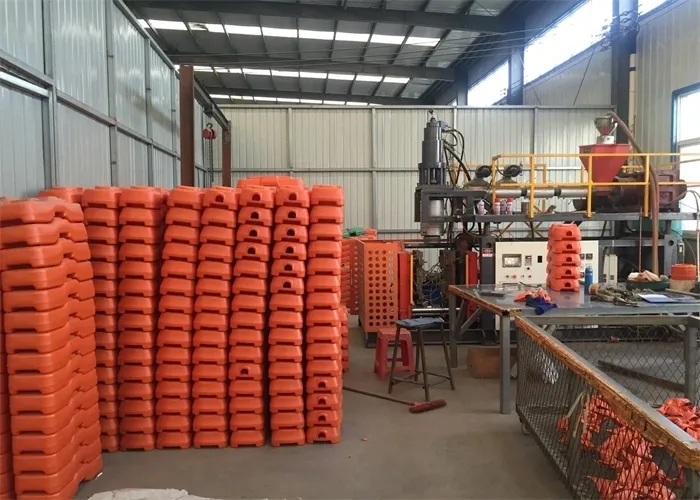
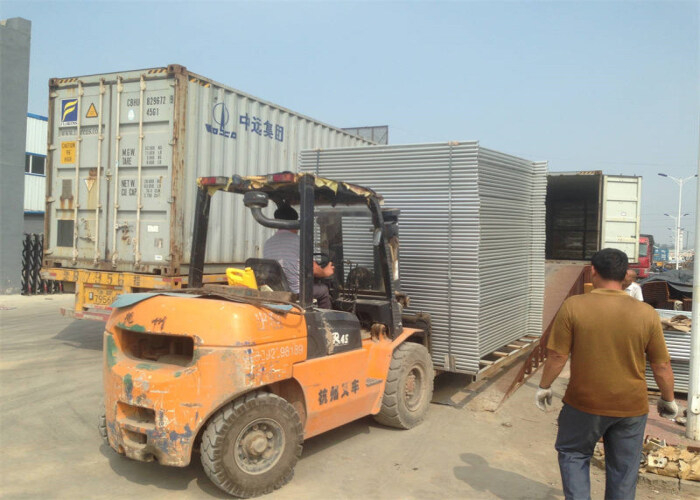
POLYMETAL temp fence for sale is packed using a controlled pattern that protects frame structure, mesh alignment and galvanized surfaces. Panels are stacked in aligned bundles on heavy-duty wooden or steel pallets, with weight carried through the outer frame tubes instead of the mesh. This packing principle prevents bending of wires, reduces stress at welds and keeps the panel rectangle in its original profile.
Between each layer, spacers are placed to separate the zinc-coated surfaces and limit abrasion during transport. Bundles are strapped tightly and can be wrapped in stretch film where longer transport routes or open storage are expected. Fence bases, clamps and accessories are grouped by type and size in clearly labelled cartons or crates, helping installers pick the right components quickly on site.
Optional transport stillages or storage racks are supplied ready to receive stacked panels. This approach turns loading, transport and unloading into a controlled pattern instead of an improvised process, reducing the risk of damage, waste and handling errors.
Production Process of POLYMETAL Temp Fence Panels
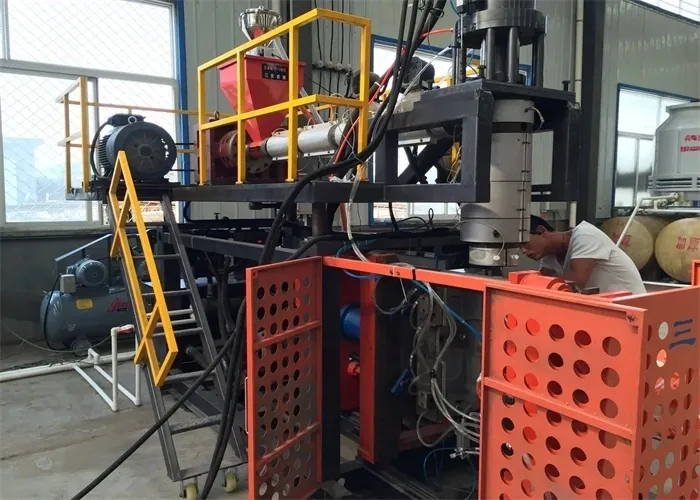
The production process for POLYMETAL temp fence for sale begins with the selection of low-carbon steel tube suitable for hot-dip galvanizing. Frame tubes are ordered in controlled outer diameters of 32 mm, 38 mm, 40 mm or 41 mm with defined wall thicknesses between 1.0 mm and 2.0 mm. Mesh wire in 2.70 mm, 3.00 mm or 4.00 mm diameters is drawn and straightened before welding.
Frames are cut to the 2100 mm × 2400 mm panel outline and assembled in jigs that lock corners square and ensure each panel has the same dimensions. Mesh is welded to create a 60 mm × 150 mm opening matrix, then attached to the frames using controlled welding parameters. Welds are checked visually and panel straightness is measured to remove pieces that do not meet the POLYMETAL pattern.
Panels then pass through surface cleaning stages before entering the hot-dip galvanizing bath. Zinc coatings are built up to three target levels: about 14 microns for basic protection, around 42 microns for standard duty, and approximately 100 microns for heavy-duty and premium ranges. Coating thickness is measured as production data, and panels that fail to reach their specified level are rejected or reprocessed.
For premium colour-coated models, panels move on to a powder-coating line where polyester powder is applied and cured over the galvanized base. Final inspection checks dimensions, coating condition, mesh aperture, weld integrity and frame alignment. Only panels that match the POLYMETAL outline and data profile are released for packing.
Standards and Compliance for POLYMETAL Temp Fence for Sale
POLYMETAL temp fence for sale is designed in line with commonly accepted principles in construction safety, temporary works guidance and event perimeter management. Panel height, width, frame tube diameter, frame thickness, mesh opening, wire diameter and base configuration are selected to create a stable, non-climbable and clearly visible boundary line. In higher-risk zones, configurations such as the OD40mm temp fence provide extra stiffness and more obvious visual warning, helping to keep people away from dangerous areas.
Internally, the brand maintains a documentation profile for each product series, covering material certificates, cutting lists, welding procedures, galvanizing data, coating info, inspection records and packing instructions. This information forms a clear outline of product performance and manufacturing discipline that can be presented during project approvals, audits and incident reviews.
For hire companies, contractors and asset owners, POLYMETAL temp fence for sale offers more than a physical product. It provides an integrated mix of structural data, coating control and layout guidance that reduces risk, avoids expensive missteps and protects long-term investment in temporary fencing infrastructure.