Your One-Stop Wire Mesh Fence Supplier | POLYMETAL
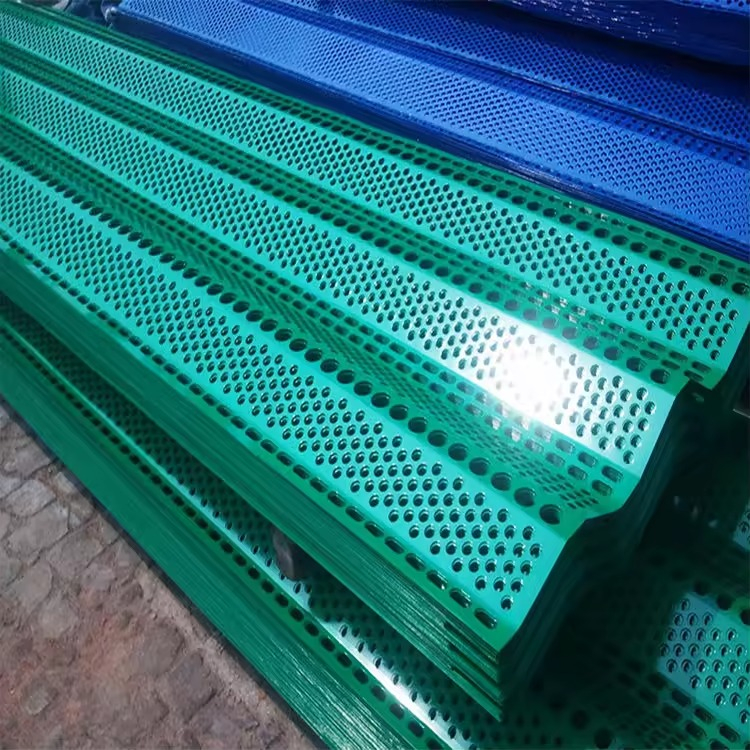
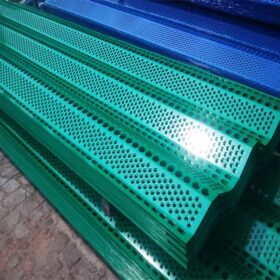
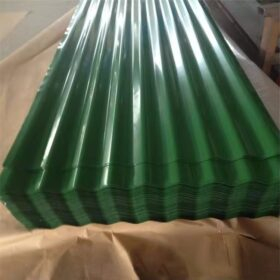

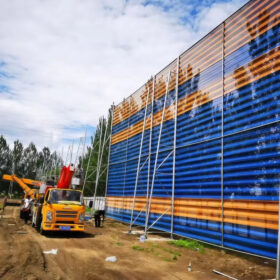
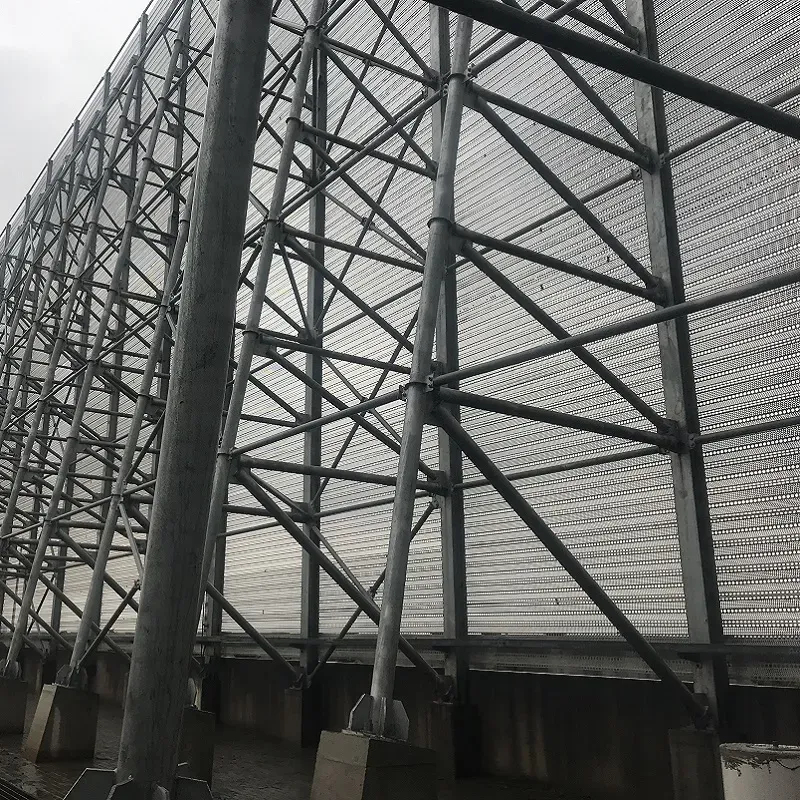
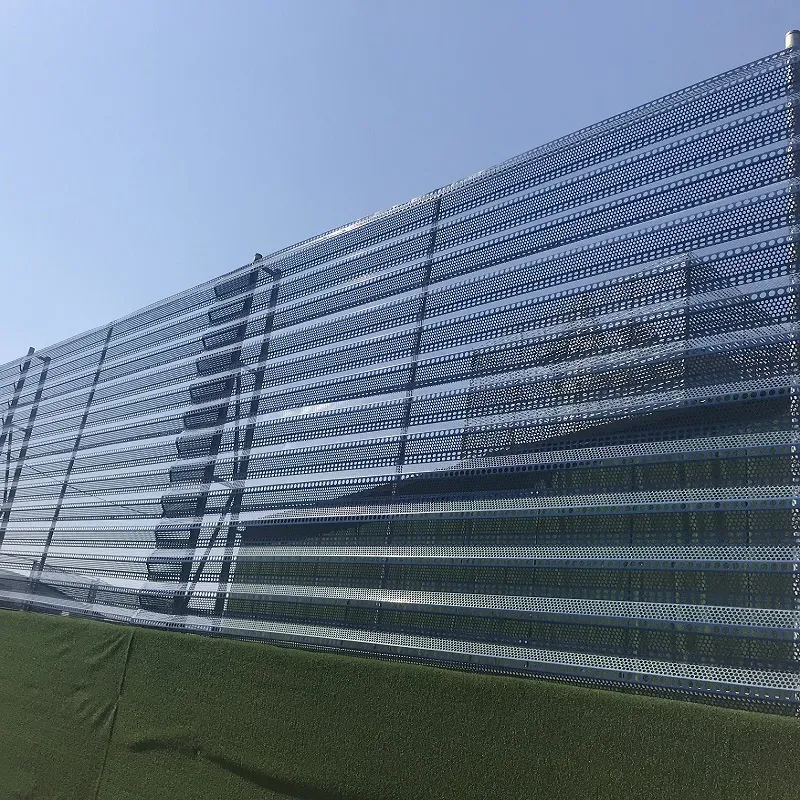
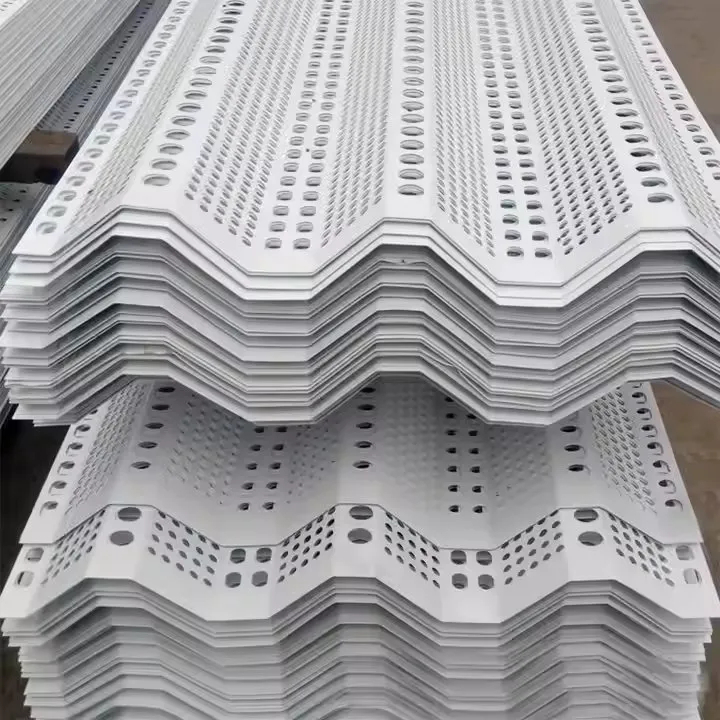
Wind barriers—also known as windbreak panels or anti-wind and dust panels—are innovative solutions designed for high and low temperature resistance, anti-aging, high strength, rust-resistance, and long service life, with a powder coating surface treatment. These panels effectively control dust and wind in various industrial environments such as coal yards, power plants, and ports.
| Image 1 | Image 2 |
|---|---|
 | 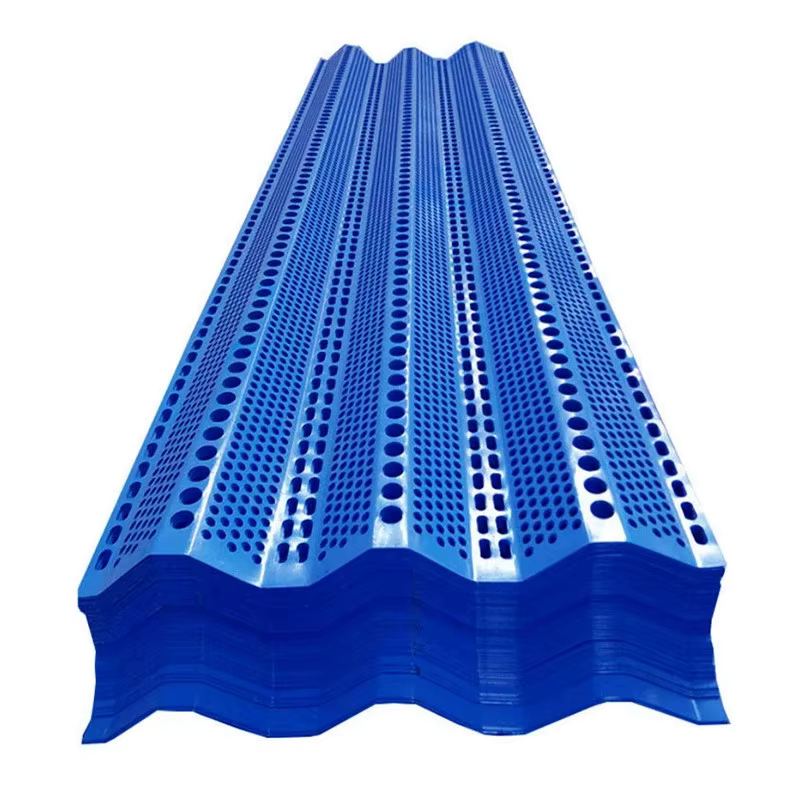 |
What Are Wind Barriers?
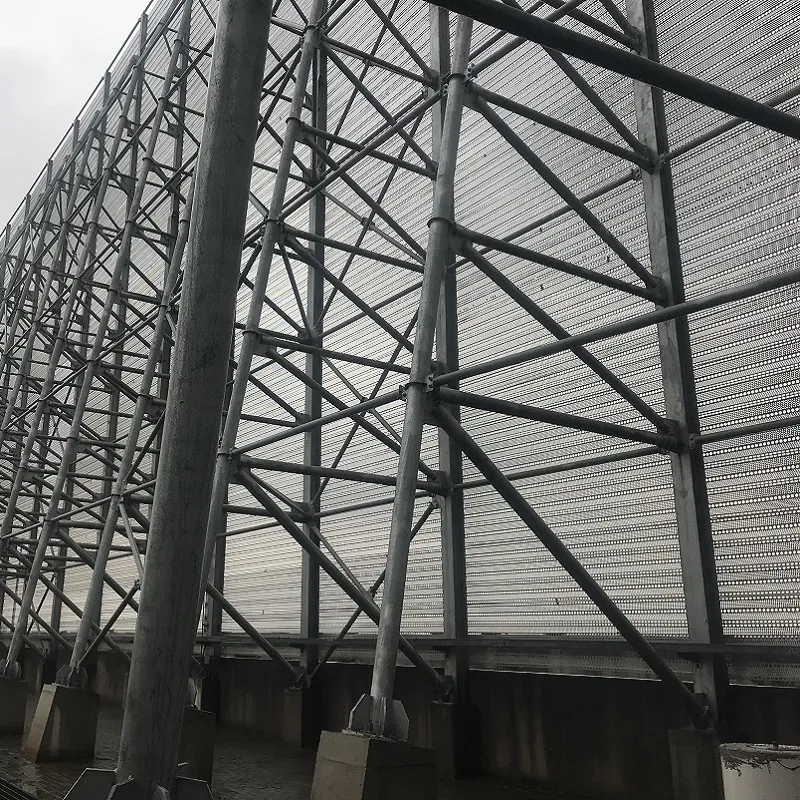
Wind barriers (or wind and dust panels) are typically installed as part of a wind and dust wall. These walls reduce wind speed and dust pollution significantly—achieving an anti-wind and dust efficiency rate of 65% to 85%. They are a sustainable, low-maintenance solution to environmental dust control.
Made by precision mechanical punching, molding, electrostatic powder coating, and testing, these metal panels are anti-static, meaning they resist dust adhesion. Rainfall naturally cleans the panels, reducing maintenance needs.
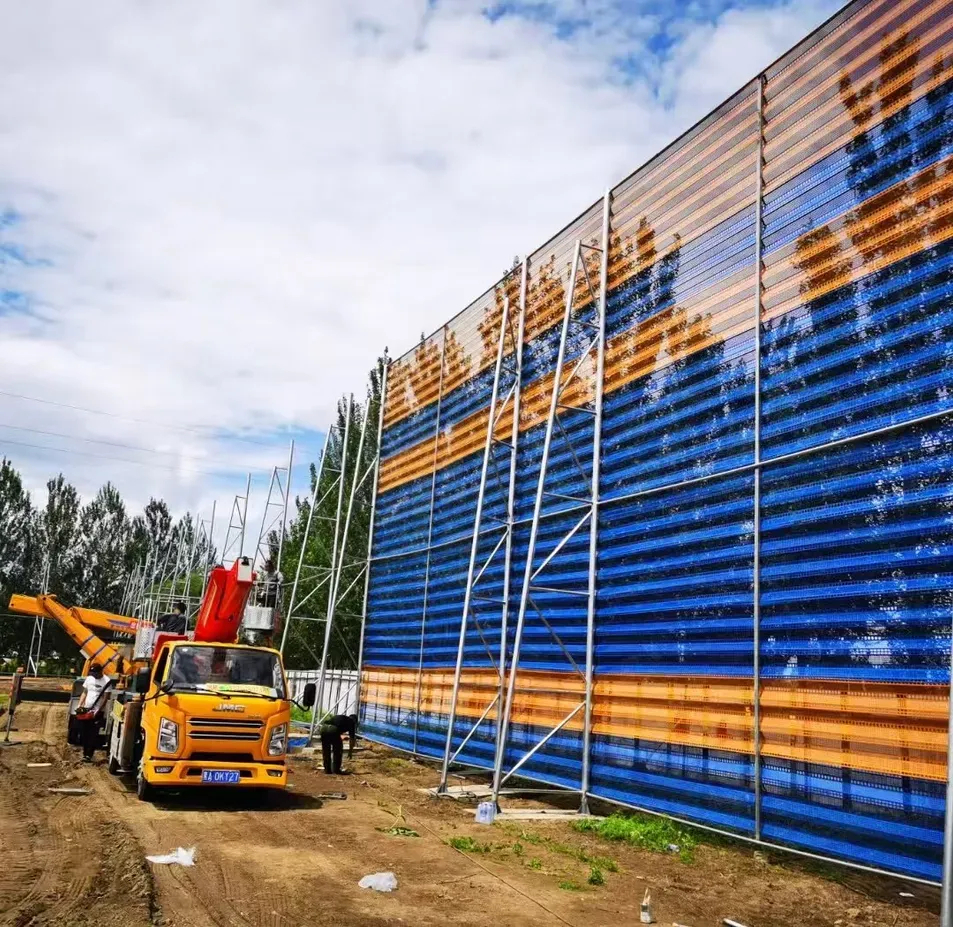
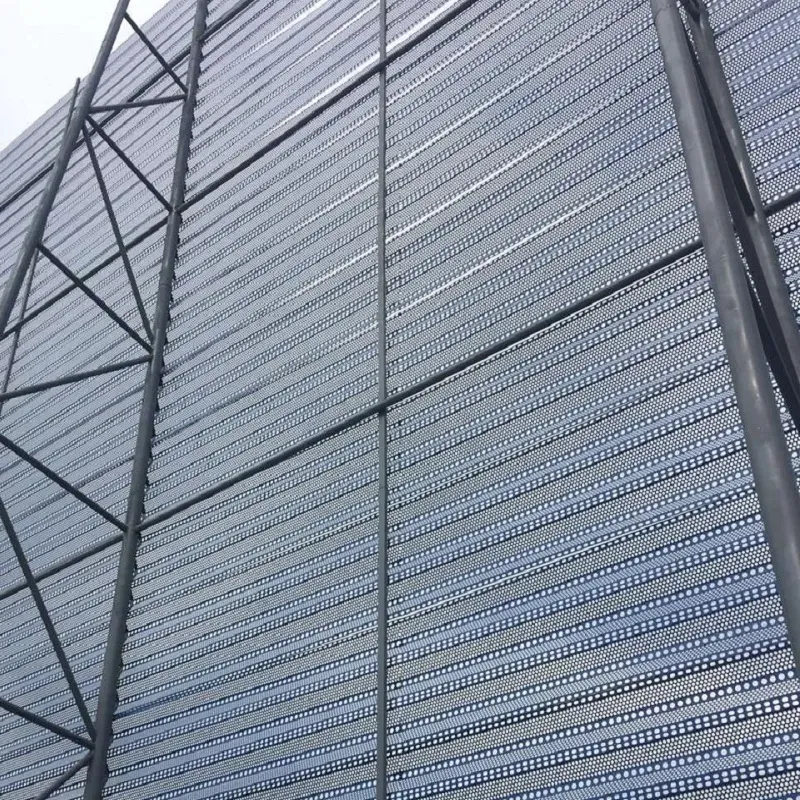
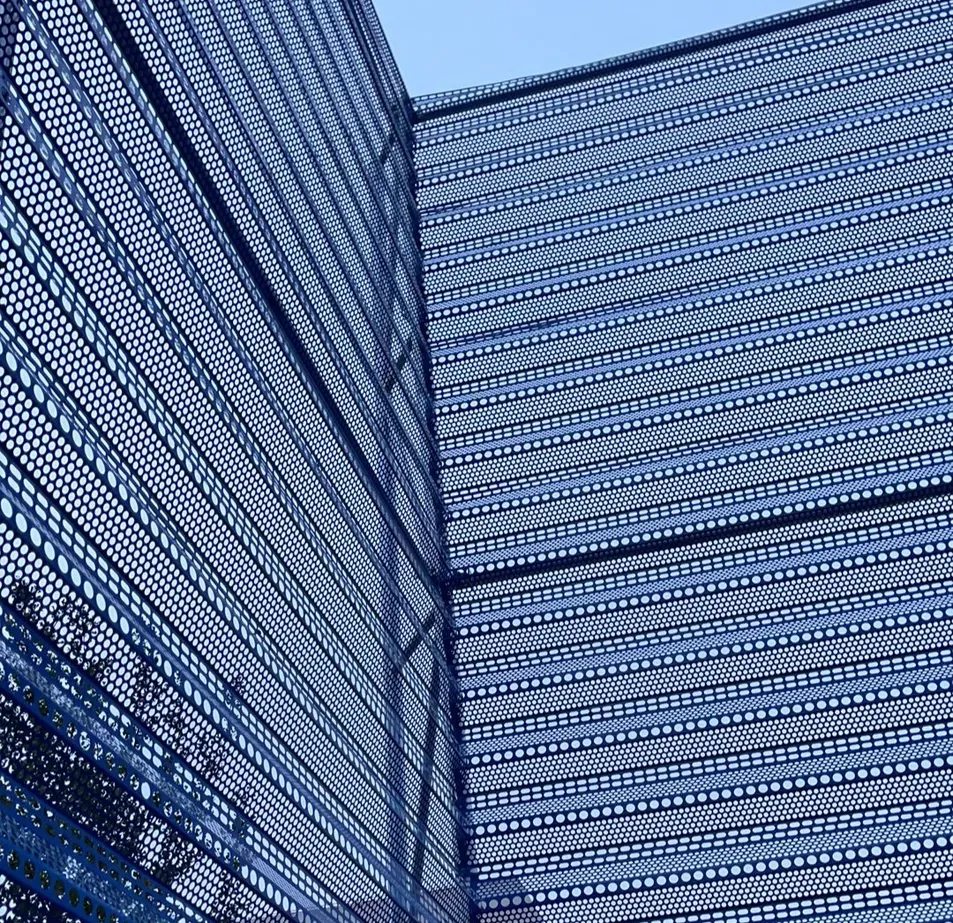
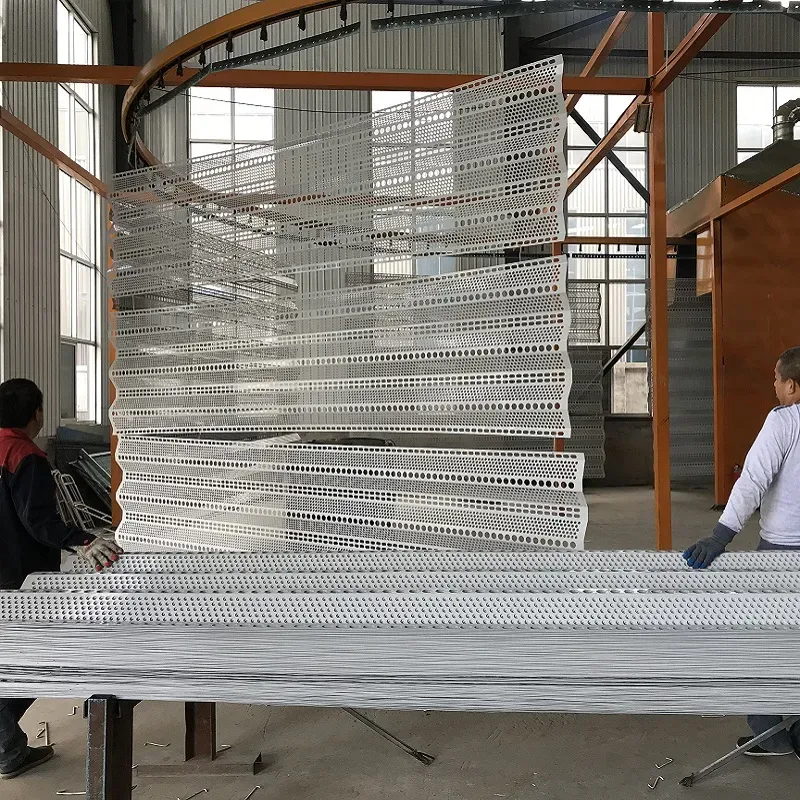
Features of Windbreak Panels
- High strength and toughness with resistance to bending.
- Anti-aging, corrosion-resistant, rustproof, and resistant to high temperatures and acids.
- Fire retardant and electrically insulated.
- Smooth, flat surface available in various colors.
- Simple structure, easy installation, and maintenance-free.
- Durability up to 10 years or more.
Wind Barrier Panel Materials and Treatment
- Materials: Steel plate, galvanized sheet, color-coated sheet, aluminum-magnesium alloy, or stainless steel.
- Surface Treatment: Electrostatic powder coating.
- Customization: Color and length can be tailored per customer requirements.
- Packaging: Wooden cases or steel frames for export protection.
Types of Wind Barriers
1. Single peak windbreak Barriers
| Image | Width | Peak Height | Plate Thickness | Length |
|---|---|---|---|---|
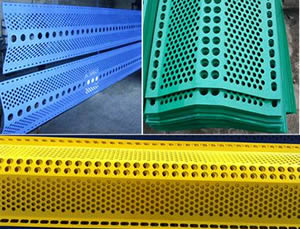 Single peak windbreak panels with round and oval holes Hole Shapes: Round, oval, rectangle Hole Rows per Peak: One or two Colors: Blue, yellow, orange, green, red | 250–300mm | 50–80mm | 0.6–1.5mm | 0.5–8m |
| 300–450mm | 70–90mm | |||
| 450–500mm | 90–100mm |
2. Twin Peaks Wind Barrier Panel
| Image | Width | Peak Height | Plate Thickness | Length |
|---|---|---|---|---|
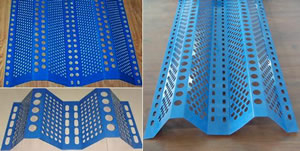 Twin peaks windbreak panels with round and oval holes Hole Shapes: Round, oval, rectangle Hole Rows per Peak: One or two Colors: Blue, yellow, orange, green, red | 400–600mm | 50–100mm | 0.5–1.5mm | 0.5–8m |
| 700–900mm | 90–100mm |
3. Three Peaks Wind Barrier Panel (Most Popular)
| Image | Width | Peak Height | Plate Thickness | Length |
|---|---|---|---|---|
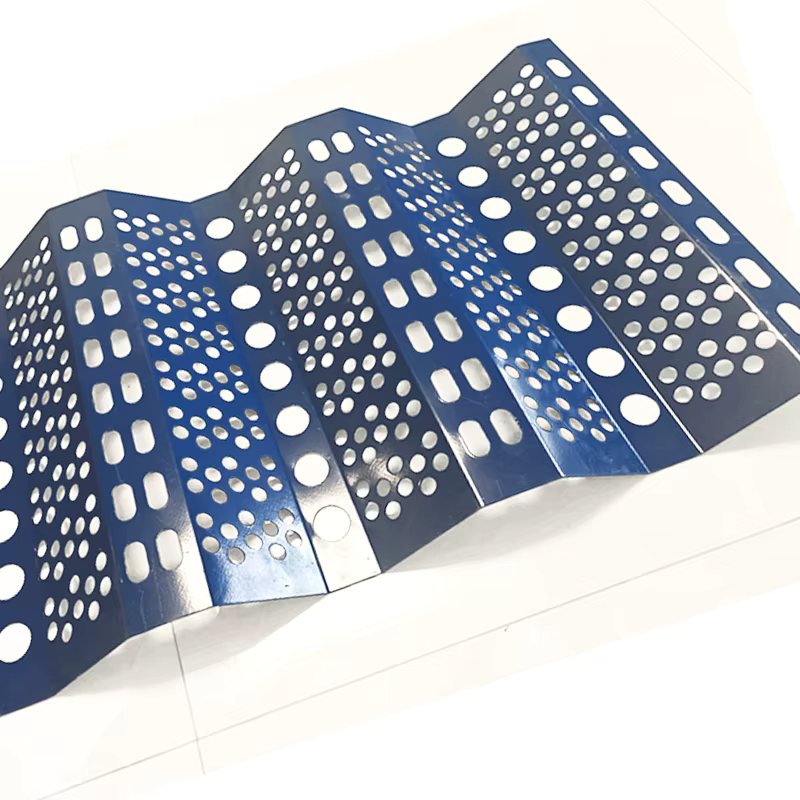
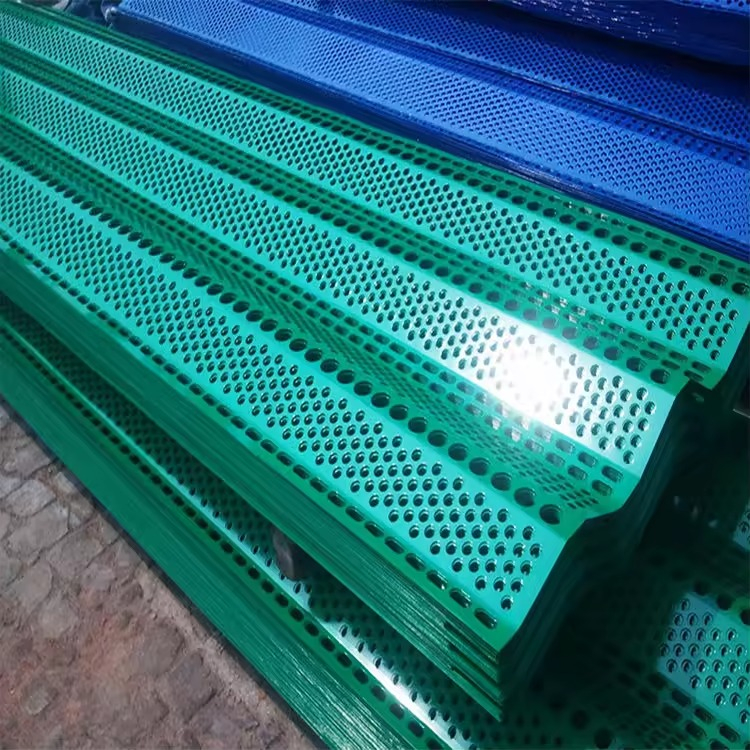
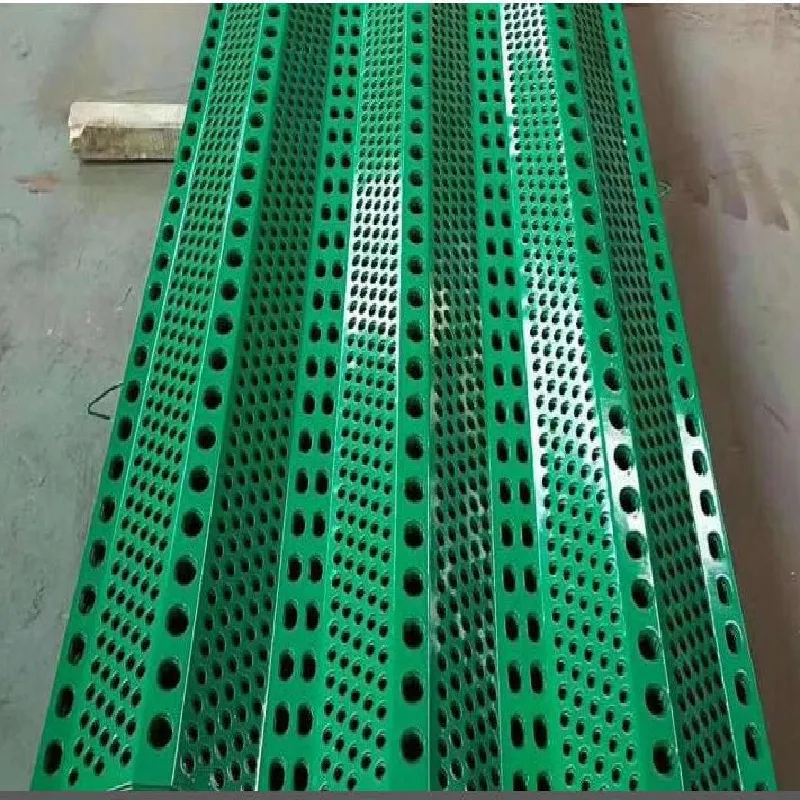
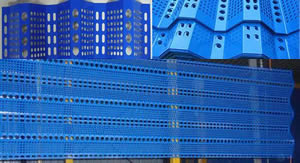 Three peak windbreak panels Hole Shapes: Round, oval, rectangle Hole Rows: One or two Colors: Blue, yellow, orange, green, red | 810mm–940mm | 70mm | 0.4–1.5mm | 0.5–8m |
Advantages: Simple installation, fast construction, strong wind resistance, and cost-effective. Excellent wall stability and durability.
4. Five Peaks Wind Barrier Panel
| Image | Specification | Width | Peak Height | Substrate Thickness | Length |
|---|---|---|---|---|---|
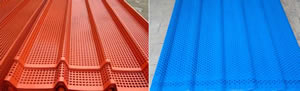 Five peaks wind and dust panels Hole Shapes: Round, rectangle Colors: Blue, yellow, orange, green, red | Type A | 940mm | 15mm | 0.6–1.5mm | 0.5–8m |
| Type B | 940mm | 20mm |
This type has largely been replaced by the more efficient three-peak wind barrier design.
Applications of Anti-Wind and Dust Perforated Mesh
- Power plants, coal mines, coking and coal washing plants for dust control.
- Ports, terminals, and open-air coal storage yards.
- Iron, steel, cement, and construction material yards.
- Coal storage stations along railways and highways.
- Construction sites, road projects, and highways.
- Agricultural and desert regions for crop windproofing and dust suppression.
Physical Mechanism of Wind Barriers
Large-scale, high-strength vortices in front of the wind barrier are transformed into small, weak vortices after contact. This results in significant wind energy attenuation and reduced dust dispersion. The air that passes through the barrier loses kinetic energy, forming a controlled low-speed airflow behind the wall.
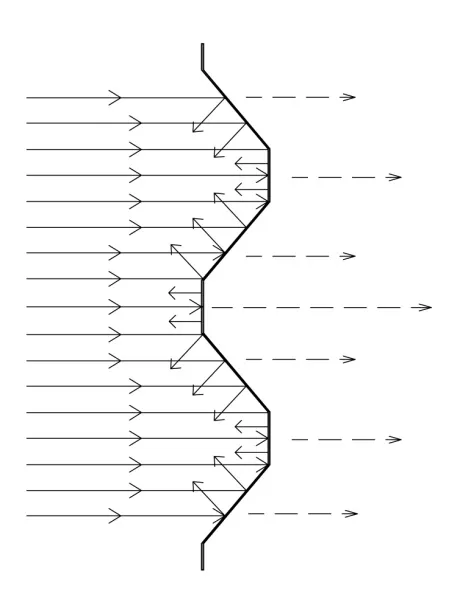
Windbreak Fence Panels — Materials, Processing, Packaging & Advantages
Normal Materials
Windbreak fence panels are made from high-strength, corrosion-resistant metals that ensure durability in harsh industrial and environmental conditions. Commonly used materials include:
- ① Carbon Steel: High strength and toughness, ideal for heavy-duty installations.
- ② Galvanized Steel: Zinc-coated to resist corrosion and rust for long-term outdoor use.
- ③ Stainless Steel 304 / 316 / 316L: Excellent corrosion resistance, suitable for coastal and chemical environments.
- ④ Aluminum: Lightweight, anti-rust, and easy to install, ideal for aesthetic applications.
- ⑤ Aluminum-Zinc Steel (Alu-Zinc): Combines the strength of steel with superior corrosion and heat resistance.
Processing Technology
Each panel is produced through a series of precision mechanical operations to ensure smooth surface, uniform perforation, and structural stability:
- Mold Punching: Shapes the perforated pattern for effective air dispersion and dust reduction.
- Cutting: Ensures uniform panel dimensions and clean edges.
- Edge Trimming: Smooths and refines edges to prevent sharp burrs.
- Leveling: Ensures the panel surface remains flat and true for easy installation.
- Cleaning: Removes oil, dust, and residues before surface coating or painting.
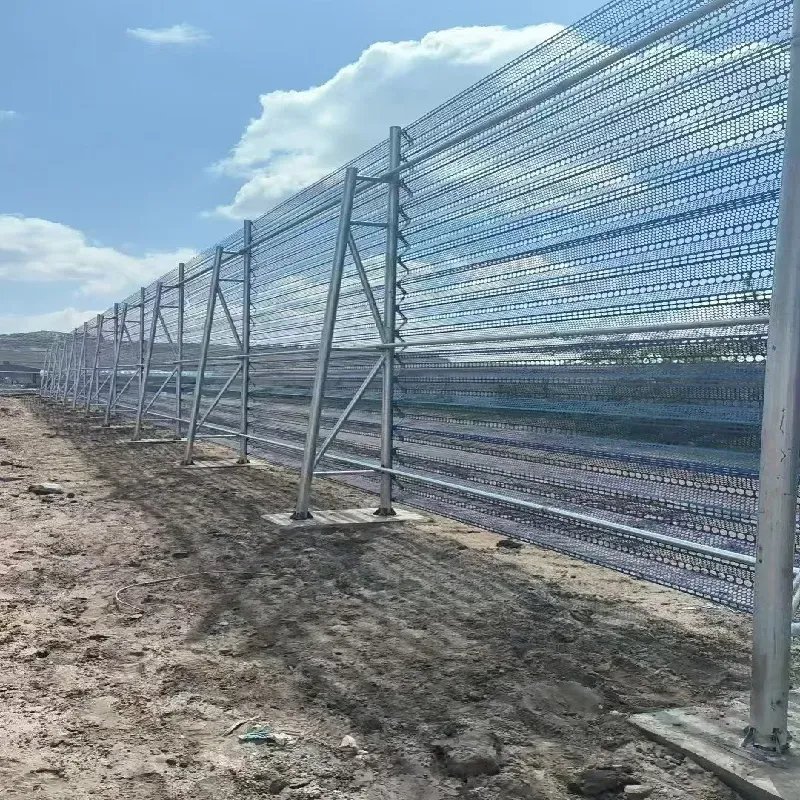
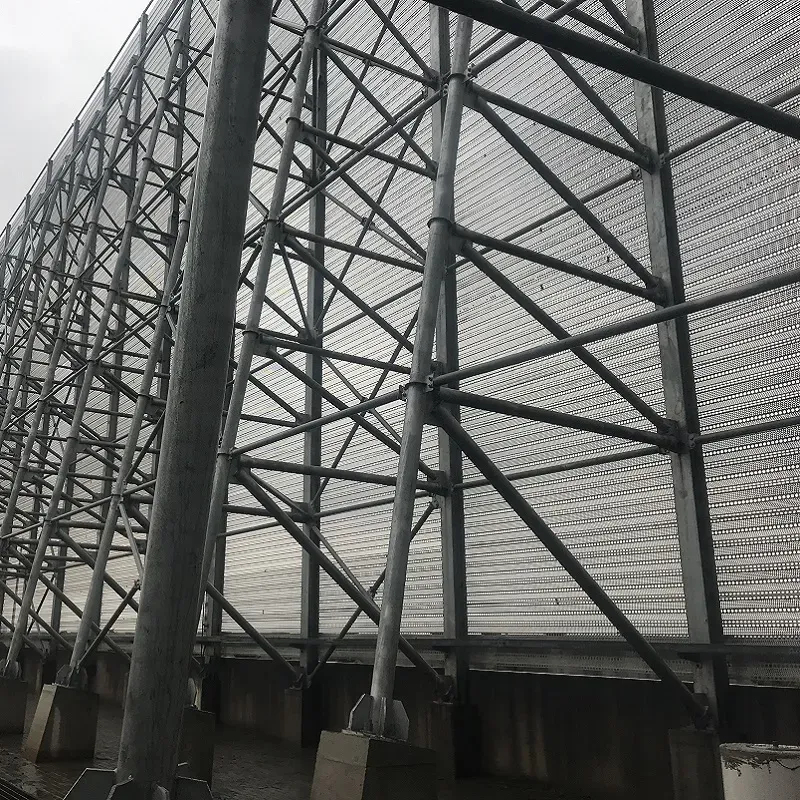
Packing Method
Windbreak fence panels are securely packaged to prevent deformation and surface damage during transportation:
- 200 pieces per wooden box
- 150 pieces per pallet
- Customized packaging available according to client requirements
Outstanding Advantages
Windbreak fence panels provide excellent environmental protection and structural benefits:
- Wind Direction Control: Alters airflow patterns to reduce the impact of strong winds.
- Wind Power Reduction: Decreases wind speed, minimizing dust spread and structural stress.
- Dust Suppression: Effectively reduces dust emissions from coal yards, construction sites, and ports.
- Noise Control: Acts as a physical barrier to absorb and deflect industrial noise.
- Long Service Life: High durability under varying temperatures, weather, and chemical exposure.
- Aesthetic Appearance: Smooth surfaces and colorful coatings make the structure both functional and visually appealing.
With these properties, windbreak fence panels are widely used in power plants, mining areas, cement factories, ports, and highway projects — providing a combination of strength, beauty, and environmental protection.
Conclusion
Wind barriers play an essential role in modern industrial dust and wind suppression systems. With their combination of structural strength, corrosion resistance, and aesthetic flexibility, they provide a durable, cost-effective, and eco-friendly solution for dust control in open-air environments.