 Your One-Stop Wire Mesh Fence Supplier | POLYMETAL
Stainless steel 316 and 316L
Stainless steel 316 and 316L are molybdenum-bearing, austenitic (300-series) stainless steels. Adding 2–3% Mo to the 18Cr-10Ni base improves resistance to chloride pitting and crevice corrosion and boosts performance versus 304 in marine, chemical, and wash-down environments. The “L” grade has low carbon (≤0.03%) for superior weldability and resistance to weld-decay (intergranular corrosion).
Names & Specifications
UNS: 316 = S31600; 316L = S31603
EN/DIN: 316 = 1.4401; 316L = 1.4404
Common product standards: plate/sheet ASTM A240; bar ASTM A276; pipe/tube ASTM A312; wire ASTM A580 (or regional equivalents)
Composition (typical ranges, wt.%)
| Grade | C (max) | Cr | Ni | Mo | N (max) | Fe |
|---|---|---|---|---|---|---|
| 316 | 0.08 | 16–18 | 10–14 | 2.0–3.0 | 0.10 | Balance |
| 316L | 0.03 | 16–18 | 10–14 | 2.0–3.0 | 0.10 | Balance |
What changes: The lower carbon in 316L minimizes chromium-carbide precipitation during welding, protecting corrosion resistance in the heat-affected zone.
316 vs 316L — Practical Differences
Welding: Choose 316L for heavy welds or thick sections; it reduces the risk of intergranular attack.
High-temperature strength: Standard 316 has a slight edge; for sustained high temps, some projects specify 316H (higher carbon).
Supply: Many mills dual-certify products as 316/316L when chemistry and properties meet both.
Corrosion Behavior
Why they beat 304: Molybdenum significantly raises resistance to chloride-induced pitting/crevice corrosion, making 316/316L a common upgrade for coastal, marine, and chemical service.
Limits: Warm, concentrated chlorides or stagnant crevices can still cause attack—consider duplex or super-austenitic alloys in such cases.
Rule of thumb: Keep surfaces clean, avoid chloride contamination, and design out tight crevices where possible.
Properties (room temperature, typical)
Tensile / Yield (min, sheet/plate): ~515 MPa / ~205 MPa; Elongation ~40%
Density: ~7.98 g/cm³
Thermal conductivity: ~14–16 W·m⁻¹·K⁻¹
Magnetism: Essentially non-magnetic when annealed (can become slightly magnetic after cold work)
Common Forms & Finishes Stainless steel 316
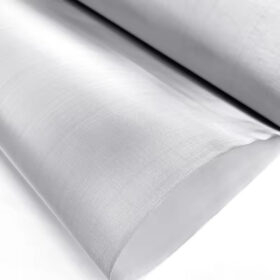
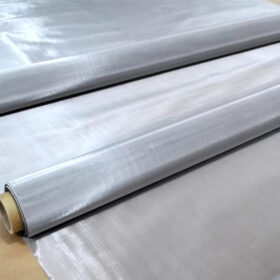
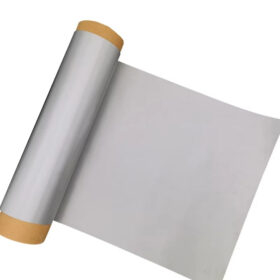
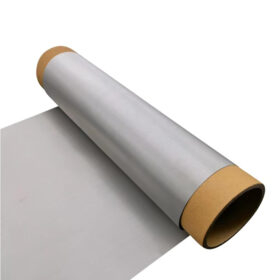
Coil, sheet/plate, strip, bar, pipe/tube, wire, and woven or welded wire mesh. Finishes include 2B, pickled, polished, and electropolished for hygienic or ultra-clean service.
Typical Applications Stainless steel 316
Marine & coastal: architectural fixings, fasteners, splash-zone fabrications
Process & chemical: heat exchangers, evaporators, pumps/valves, tanks
Food & pharma: wash-down equipment, tubing, trays, wire cloth/mesh
Energy & HVAC: flue-gas components, high-temp fixtures (verify temp limits)
Fabrication Tips Stainless steel 316
Prefer 316L filler (e.g., ER316L) for welded fabrications.
Clean, pickle, and passivate welds to restore the passive film.
Avoid chloride cross-contamination during fabrication; rinse and dry after exposure.
Quick Selector
General duty with chlorides present: 316 or 316L
Heavy welding / thick sections: 316L
Higher-temperature service: consider 316H
Hot, concentrated chlorides: evaluate duplex or super-austenitic grades
FAQs: Stainless steel 316 vs 316L (no links)
1) What’s the main difference between 316 and 316L?
Carbon content. 316 has a maximum of 0.08% C; 316L has a maximum of 0.03% C, which cuts the risk of weld sensitization.
2) Which grade is better for welding?
316L. The lower carbon helps protect the heat-affected zone from intergranular corrosion, especially on thick or multi-pass welds.
3) Is corrosion resistance different between 316 and 316L?
In most environments, general corrosion resistance is similar; 316L mainly excels in welded conditions.
4) Which is better for marine or coastal use?
Both 316 and 316L are common “marine-grade” choices thanks to molybdenum. They resist chloride attack better than 304 but are not immune in stagnant, warm, or highly concentrated chlorides.
5) What are the typical compositions?
Both grades: 16–18% Cr, 10–14% Ni, 2.0–3.0% Mo. The primary difference is carbon (316 ≤0.08%, 316L ≤0.03%).
6) Are 316/316L magnetic?
Essentially non-magnetic when annealed; slight magnetism can appear after cold work.
7) Can 316/316L be hardened by heat treatment?
No. They are austenitic grades and can only be strengthened by cold working.
8) What are typical mechanical properties (sheet/plate minimums)?
316: tensile ~515 MPa, yield ~205 MPa, elongation ~40%.
316L: tensile ~485 MPa, yield ~170 MPa, elongation ~40%.
9) What temperature limits apply?
Good high-temperature oxidation resistance; for sustained higher-temperature strength some specifications use 316H (higher carbon).
10) Can 316L replace 316?
Often yes. Many products are dual-certified 316/316L. Check high-temperature strength requirements before substituting.
11) How do 316/316L compare to 304?
They add 2–3% molybdenum, improving resistance to chloride pitting and crevice corrosion versus 304.
12) Are they suitable for drinking water systems?
Generally yes, provided chloride levels are controlled and good design/maintenance practices are followed.
13) What filler metal should I use for welding?
Use 316L filler (e.g., ER316L) to reduce sensitization risk.
14) What are the common standards and designations?
UNS S31600 (316), UNS S31603 (316L); EN 1.4401 (316), EN 1.4404 (316L). Typical product standards include ASTM A240 (plate/sheet), A276 (bar), A312 (pipe/tube), A580 (wire).
15) When should I consider something beyond 316/316L?
For hot, concentrated chlorides or tight crevices, look at duplex or super-austenitic grades with higher pitting resistance.
Bottom Line
316/316L are the go-to “step up” from 304L when chloride resistance, hygiene, and reliability matter. Choose 316L for welded structures, specify the product form standard, and confirm the service environment to ensure long, trouble-free performance.