 Your One-Stop Wire Mesh Fence Supplier | POLYMETAL
Temp Fence Blocks: 7 Powerful Tips to Prevent Dangerous
Why temporary fence block weight matters (more than most teams expect)
Temporary fence block weight affects three things immediately: (1) how much the base resists sliding on smooth surfaces, (2) how much it resists rocking on uneven ground, and (3) how quickly couplers loosen under repeated micro-movement. On Melbourne job sites, wind shifts quickly and surfaces change from concrete/asphalt to soil/crushed rock—so a base that “feels fine” in one zone can become unstable in another unless weight, footprint, fill discipline, and bracing are planned together. For high-exposure corridors and gusty sites, it helps to pair the right base weight with a clear wind strategy—see our wind-resistant temporary fencing guide for practical bracing and anchoring habits that reduce progressive movement.
- Weight consistency beats raw weight: A run with random fill levels behaves like independent points that flex differently, which accelerates loosening.
- Footprint + weight: A heavier base with a small footprint can still rock on rubble; a wider footprint can outperform “heavier but narrow” options on uneven ground.
- Bracing is the wind solution: For open corridors, temporary fence block weight helps, but bracing/anchoring stops progressive movement.
Temporary fence block weight: quick comparison table
| Block type | Typical size (mm) | Temporary fence block weight | How the weight is achieved | Best fit on site |
|---|---|---|---|---|
| HDPE blow molded (standard) | 600×228×150 | 27–29kg (filled) | Filled ballast (usually water/sand depending on design) | Fast standardized runs, moderate exposure |
| HDPE blow molded (90/100 clamp option) | 620×230×130 | 27–28kg (filled) | Filled ballast + wider stance | Sites standardized to 90mm or 100mm couplers |
| HDPE blow molded (80 clamp) | 600×228×150 | 29kg (filled) | Filled ballast + tight clamp geometry | Disciplined projects with fixed clamp standard |
| HDPE blow molded (low profile) | 615×230×100 | 27kg (filled) | Filled ballast in lower body | Tight-access partitions; needs leveling on rubble |
| HDPE blow molded (alternate footprint) | 600×220×150 | 29kg (filled) | Filled ballast + stable profile | Long straight runs, presentation + safety uniformity |
| Water-fill HDPE block | 600×220×130 | 26kg (water filled) | Ship empty; fill on site with water | Frequent transport between jobs |
| Recycled rubber foot | 767×192×126 | 19kg (no fill) | Solid rubber mass + high grip | High-traffic pedestrian zones, “drop-and-go” |
How to choose the right temporary fence block weight in 60 seconds
- Step 1 (don’t skip): standardize clamp centers (80mm vs 90mm vs 100mm). Mixing clamp standards creates misalignment and loosening.
- Step 2: match weight + footprint to the surface. Smooth concrete/asphalt benefits from higher friction bases (rubber or well-filled HDPE); rubble needs leveling + a stable footprint.
- Step 3: upgrade bracing for open/windy zones. Weight helps, but bracing/anchoring stops progressive movement.
7 temp fence blocks (temporary fence block weight, pros/cons, specs & photos)
Type 1: Blow Molded HDPE Temp Fence Blocks 600 × 228 × 150mm (100mm Clamp) — temporary fence block weight: 27–29kg (filled)
This is the classic blow-molded HDPE base for everyday site control. It supports fast alignment and repeatable coupler spacing. The temporary fence block weight (after filling) is typically 27–29kg, which is adequate for most internal site boundaries and moderate exposure when the line is built consistently.
Pros: Standard footprint; high-visibility colors; stackable; consistent 100mm clamp centers for clean runs.
Cons: Needs upgraded bracing/anchoring in wind corridors; performance drops if fill discipline is poor.
| Specifications & Photo | |
|---|---|
| Material | HDPE (Blow molding) |
| Size | 600 × 228 × 150mm |
| Finish / UV | UV3–UV5 |
| Colors | Orange, Green, Yellow, etc. |
| Temporary fence block weight | After filled: 27–29kg |
| Clamp | 100mm center-to-center |
| Suits pipes | OD 32mm / OD 38mm / OD 40mm / OD 42mm / OD 48mm |
| Photo |  |
Type 2: Blow Molded HDPE Temp Fence Blocks 620 × 230 × 130mm (Clamp Options: 90mm or 100mm) — temporary fence block weight: 27–28kg (filled)
This is a popular “upgrade footprint” option when you want a slightly wider stance plus a choice of clamp centers. The key is to pick one clamp option and keep it consistent across the project. The temporary fence block weight is typically 27–28kg after filling.
Pros: Flexible clamp-center options; clean, consistent appearance; balanced footprint and filled weight.
Cons: Mixing 90mm and 100mm bases causes connection rhythm issues; still needs bracing in high-wind zones.
| Specifications & Photo — Blow Molded HDPE Base (620 × 230 × 130mm) | |
|---|---|
| Material | HDPE (Blow molding) |
| Size | 620 × 230 × 130mm |
| Finish / UV | UV3–UV5 |
| Colors | Orange, Green, Yellow, etc. |
| Temporary fence block weight | After filled: 27–28kg |
| Clamp options | 90mm center-to-center; 100mm center-to-center |
| Suits pipes | OD 32mm / OD 38mm / OD 40mm / OD 42mm / OD 48mm |
| Photo (90mm clamp) | 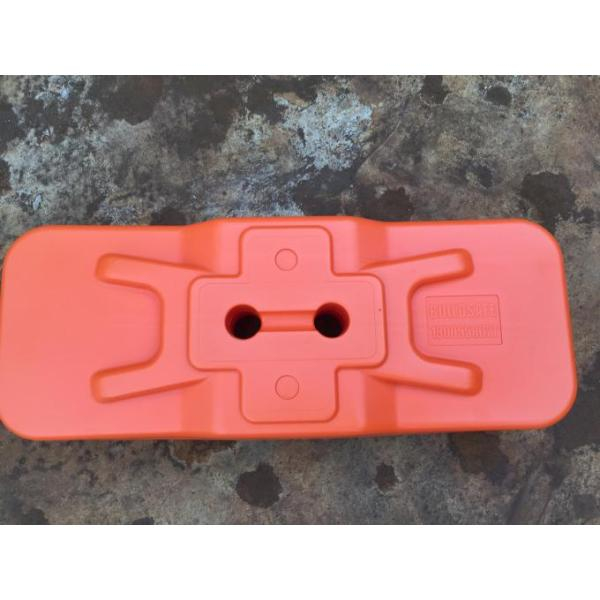 |
Type 3: Blow Molded HDPE Temp Fence Blocks 600 × 228 × 150mm (80mm Clamp) — temporary fence block weight: 29kg (filled)
When a site needs tighter connection geometry, the 80mm clamp version keeps couplers aligned to a consistent layout. Its temporary fence block weight is commonly 29kg after filling, providing strong ballast when clamp standards are kept uniform.
Pros: Tight clamp spacing for disciplined coupler layouts; strong filled weight.
Cons: Less universal; clamp mismatch slows installation and creates stress points.
| Specifications & Photo | |
|---|---|
| Material | HDPE (Blow molding) |
| Size | 600 × 228 × 150mm |
| Finish / UV | UV3–UV5 |
| Colors | Orange, Green, Yellow, etc. |
| Temporary fence block weight | After filled: 29kg |
| Clamp | 80mm |
| Suits pipes | OD 32mm / OD 38mm / OD 40mm / OD 42mm / OD 48mm |
| Photo | 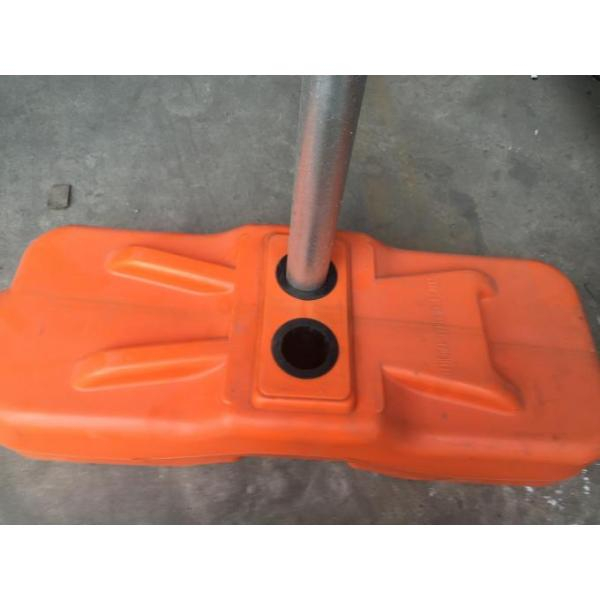 |
Type 4: Blow Molded HDPE Temp Fence Blocks 615 × 230 × 100mm (100mm Clamp) — temporary fence block weight: 27kg (filled)
This low-profile base reduces bulk on compact sites while keeping a standard 100mm clamp center. The temporary fence block weight is typically 27kg after filling. Because it is lower, correct leveling on rubble matters more to prevent rocking.
Pros: Slim profile; quick handling; standard clamp spacing for fast runs.
Cons: Lower profile can rock on uneven ground if not leveled.
| Specifications & Photo | |
|---|---|
| Material | HDPE (Blow molding) |
| Size | 615 × 230 × 100mm |
| Finish / UV | UV3–UV5 |
| Colors | Orange, Green, Yellow, etc. |
| Temporary fence block weight | After filled: 27kg |
| Clamp | 100mm center-to-center |
| Suits pipes | OD 32mm / OD 38mm / OD 40mm / OD 42mm / OD 48mm |
| Photo | 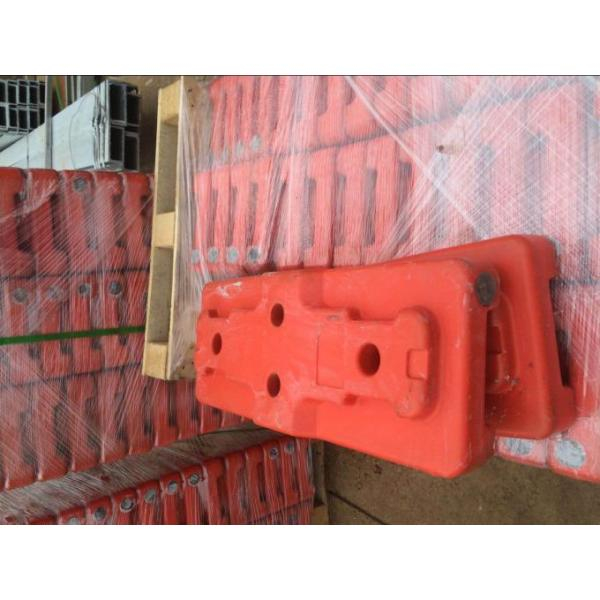 |
Type 5: Blow Molded HDPE Temp Fence Blocks 600 × 220 × 150mm (100mm Clamp) — temporary fence block weight: 29kg (filled)
This footprint is common for longer straight runs that need consistent appearance and strong ballast. The temporary fence block weight is typically 29kg after filling, making it a robust HDPE option when fill discipline is controlled.
Pros: Strong filled weight; stable footprint; standard clamp center for quick alignment.
Cons: Still depends on consistent filling and even coupler tightening along the run.
| Specifications & Photo | |
|---|---|
| Material | HDPE (Blow molding) |
| Size | 600 × 220 × 150mm |
| Finish / UV | UV3–UV5 |
| Colors | Orange, Green, Yellow, etc. |
| Temporary fence block weight | After filled: 29kg |
| Clamp | 100mm |
| Suits pipes | OD 32mm / OD 38mm / OD 40mm / OD 42mm / OD 48mm |
| Photo | 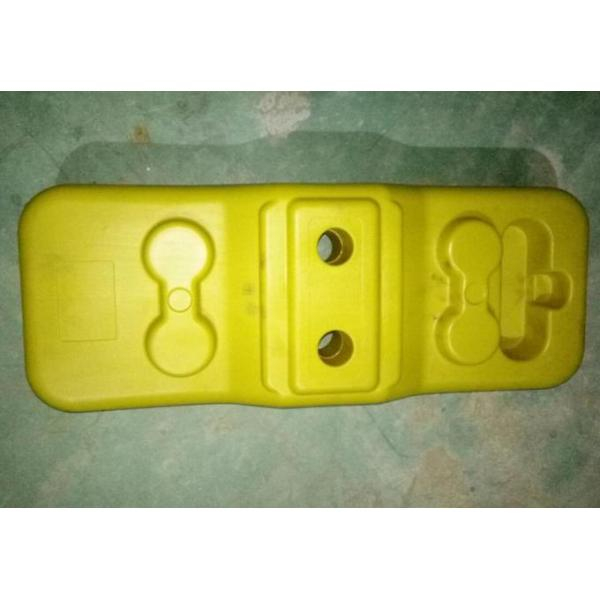 |
Type 6: Water-Fill HDPE Temp Fence Blocks (600 × 220 × 130mm) — temporary fence block weight: 26kg (water filled)
Water-fill blocks are chosen for logistics: transport them empty, then fill on site. The temporary fence block weight reaches about 26kg when filled with water. The big risk is partial fill—air pockets create a moving mass that increases rocking.
Pros: Easier shipping; stable once filled; clean stacking and pallet handling.
Cons: Requires a fill process; partial fill reduces stability quickly; not ideal where freezing/temperature cycling is a concern.
| Specifications & Photo | |
|---|---|
| Material | High-density poly-ethylene (HDPE) |
| Size of foot | 600 × 220 × 130mm |
| Color | Green, Yellow, Black |
| Temporary fence block weight | 26kg after filled (water) |
| Treatment | UV3 / UV4 / UV5 |
| Packing | Stacking together as pallet; metal pallet |
| Suits pipes | OD 32mm / OD 38mm / OD 40mm / OD 42mm / OD 48mm |
| Photo | 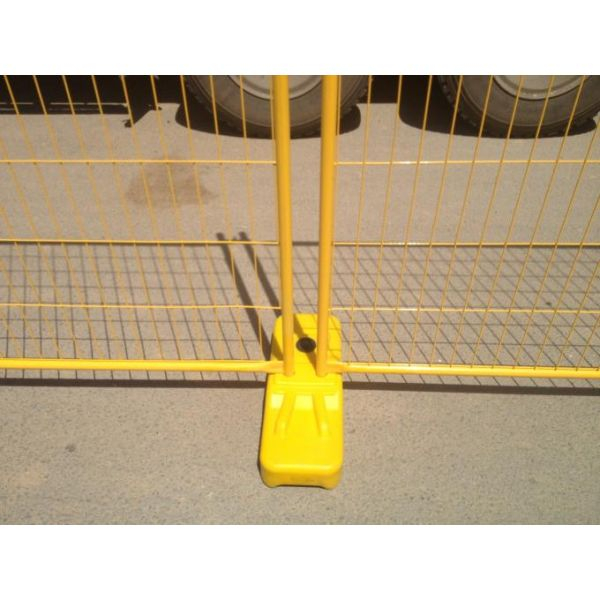 |
Type 7: Recycled Rubber Temp Fence Blocks (767 × 192 × 126mm) — temporary fence block weight: 19kg (no filling)
Rubber feet are the “drop-and-go” option. While the temporary fence block weight is often 19kg (lighter than many filled HDPE options), rubber’s big advantage is grip—reducing sliding in pedestrian corridors and busy zones without any fill step. (Related reading: three safe dog kennel types for modular enclosure setups.)
Pros: No filling; strong ground grip; durable in high-traffic areas; less vibration than hard plastics.
Cons: Heavier handling in bulk; often higher upfront cost; can mark sensitive finishes if dragged.
| Specifications & Photo | |
|---|---|
| Material | Recycled rubber foot |
| Size of foot | 767 × 192 × 126mm |
| Color | Green, Yellow, Black |
| Temporary fence block weight | 19kg |
| Treatment | Oil painted |
| Packing | Stacking together as pallet; metal pallet |
| Suits pipes | OD 32mm / OD 38mm / OD 40mm / OD 42mm / OD 48mm |
| Photo | 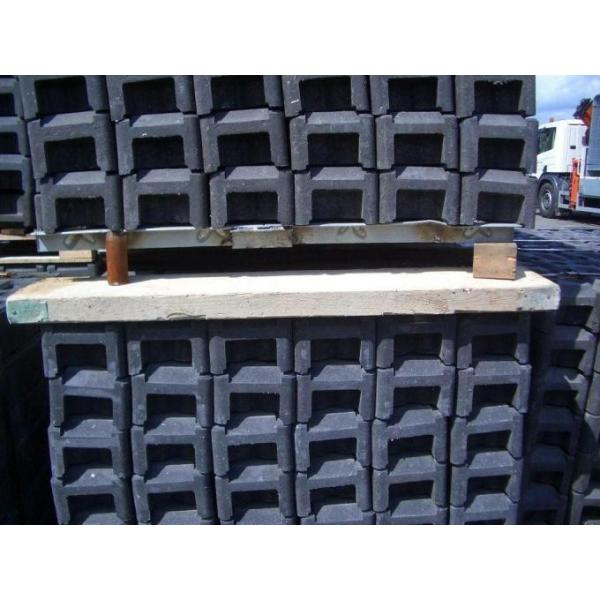 |
Installation habits that make any temporary fence block weight perform better
- Keep clamp spacing consistent: One clamp standard across the project = faster installs + tighter joins + less loosening.
- Fill discipline (HDPE/water-fill): Fill every base to the same level—mixed fill levels create twisting and progressive leaning.
- Level the base on rubble: A rocking base turns into coupler loosening at the top. Level first, then tighten evenly.
- Brace exposed runs: Weight helps; bracing/anchoring prevents wind-driven progressive movement.
FAQ: temporary fence block weight (quick answers)
- How much does a temporary fence block weigh? Common filled HDPE bases are typically 27–29kg; water-filled blocks are around 26kg; recycled rubber feet are often 19kg with no filling required.
- Is heavier always safer? No. A heavier base with poor leveling or inconsistent fill can still rock and loosen couplers. Bracing and consistency matter.
- What causes leaning after a few hours? Mixed base weights, micro-rocking on uneven ground, uneven coupler tightening, and wind cycles all contribute.
- Which is best for busy pedestrian areas? Rubber feet often grip better and reduce sliding without filling, but avoid dragging them on sensitive finishes.
- What is the #1 mistake? Mixing clamp standards (80/90/100mm) or mixing fill levels across the same run.