 Your One-Stop Wire Mesh Fence Supplier | POLYMETAL
Types of steel plate – 5 proven choices for quality design
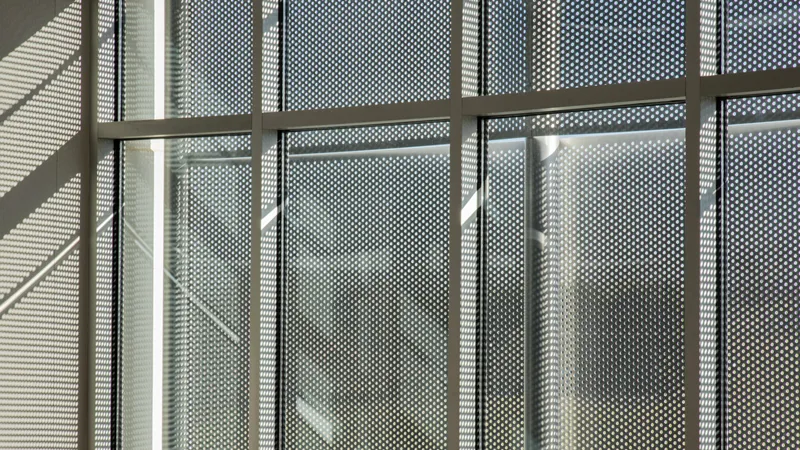
1. Base On types of steel plate Materials for Perforated Metal Mesh
Perforated mesh can be produced from many metals, but in construction and industry the most common are:
- Low carbon steel plate (mild steel)
- Galvanized steel plate ( Q195 or Q235 etc)
- Stainless steel plate
- Aluminium plate
- Other alloys such as copper, brass, tinplate, nickel alloys, titanium, Inconel, etc.
Your original specification can be summarized as:
- Material options: low carbon steel, stainless steel, aluminium, alloy plate, galvanized steel plate, tinplate, Inconel, titanium, nickel, copper and others.
- Typical hole shapes: round, square, diamond, rectangular, hexagonal, plum blossom (flower), octagonal, Grecian and other custom patterns.
These materials correspond to the broader steel plate categories commonly recognized in the steel industry and are typical examples within practical types of steel plate used for perforated products.
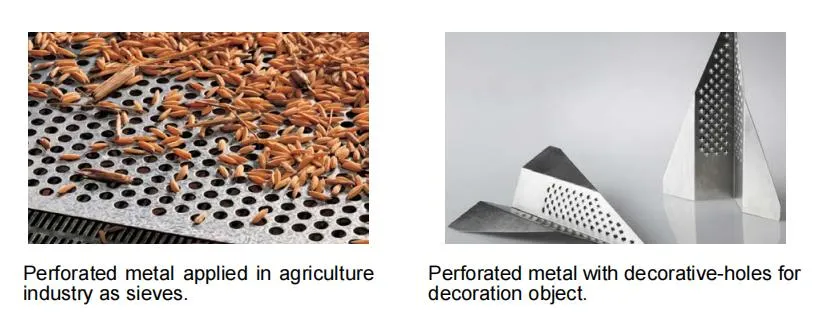
2. Main Types of Steel Plate
2.1 Carbon & Mild Steel Plates
Low carbon steel plate (mild steel) is the most economical base for perforated metal. It has low carbon content, good weldability and formability and is easy to punch and cut.
- Typical use grades: general structural carbon steels (e.g. A36, Q235, S235-type grades).
- Advantages: low cost, easy fabrication, suitable for interior screens, machinery guards, workshop partitions.
- Limitations: requires painting, galvanizing or coating for corrosion protection.
2.2 Structural Steel Plates
Structural steel plates are designed for load-bearing structures such as buildings, bridges and heavy equipment.
- Used as thicker perforated plates for platforms, stair treads, walkways, façades and safety guards where both load capacity and appearance matter.
- Supplied with guaranteed yield and tensile strength, good weldability and toughness.
2.3 High-Strength Low-Alloy (HSLA) Plates
HSLA plates use micro-alloying (niobium, vanadium, titanium, etc.) to achieve higher strength and better toughness than mild steel while keeping good weldability.
- Used when perforated panels must be lighter but strong, for example in transport equipment, cranes, building frames or large acoustic barriers.
- Typical grades are high-strength structural plates similar to Q345 / S355 / A572 types.
2.4 Weathering Steel Plates (Corten-Type)
Weathering steel forms a stable rust patina that protects the steel against further atmospheric corrosion.
- Popular for perforated façade panels, screens and landscape features where a rustic brown appearance is desired without regular painting.
- Also used in bridges and architectural structures exposed to the weather.
2.5 Pressure Vessel & Boiler Plates
Pressure vessel plates are designed for boilers, storage tanks and pressure vessels operating at elevated pressure and temperature.
- When perforated, these plates can be used in heat exchangers, boiler internals or high-pressure filters.
- More commonly used as solid plate for shells and heads.
2.6 Abrasion-Resistant (AR) / Wear Plates
Wear-resistant plates (often called AR400, AR450, AR500, etc.) are hardened to resist sliding and impact wear in mining, quarrying and bulk handling.
- Perforated wear plates are used as screens, liners or sieves in mining and aggregate processing, where long service life under abrasion is critical.
2.7 Shipbuilding & Marine Plates
Shipbuilding plates have excellent toughness and weldability for marine structures.
- Perforated versions are used for marine ventilation grilles, acoustic panels, drainage and decorative elements inside ships or offshore platforms.
2.8 Stainless Steel Plates
Stainless steel plate (304, 316, 316L, 430, duplex grades etc.) is the most important material for corrosion-resistant perforated mesh, especially in food, chemical, architectural and outdoor environments.
- 304 / 304L: general corrosion resistance, ideal for indoor decoration, food equipment and standard filters.
- 316 / 316L: better resistance to chlorides and chemicals; preferred for coastal façades, chemical plants and high-end architectural meshes.
- Surface finishes: 2B, brushed, polished, bead-blasted or coated to achieve different decorative effects.
2.9 Aluminium and Non-Ferrous Plates
Although not steel, aluminium plate is widely used for perforated meshes where light weight, good formability and high corrosion resistance are required (ceilings, façades, sunshades).
Copper, brass, nickel alloys, titanium and Inconel plates are used for special decorative, high-temperature or highly corrosive environments.
3. Perforated Metal Mesh – Specification Framework
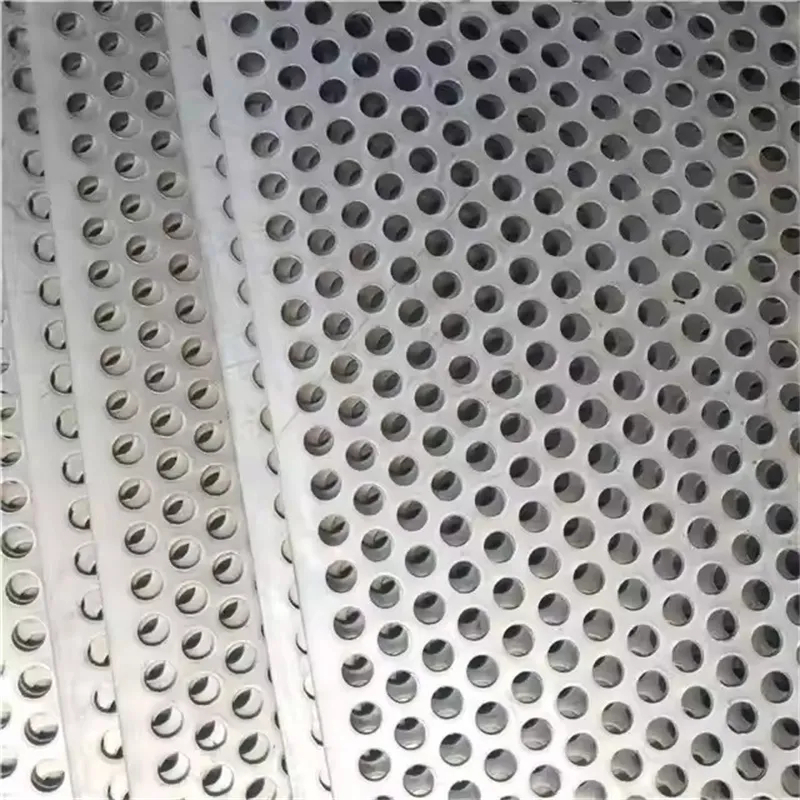
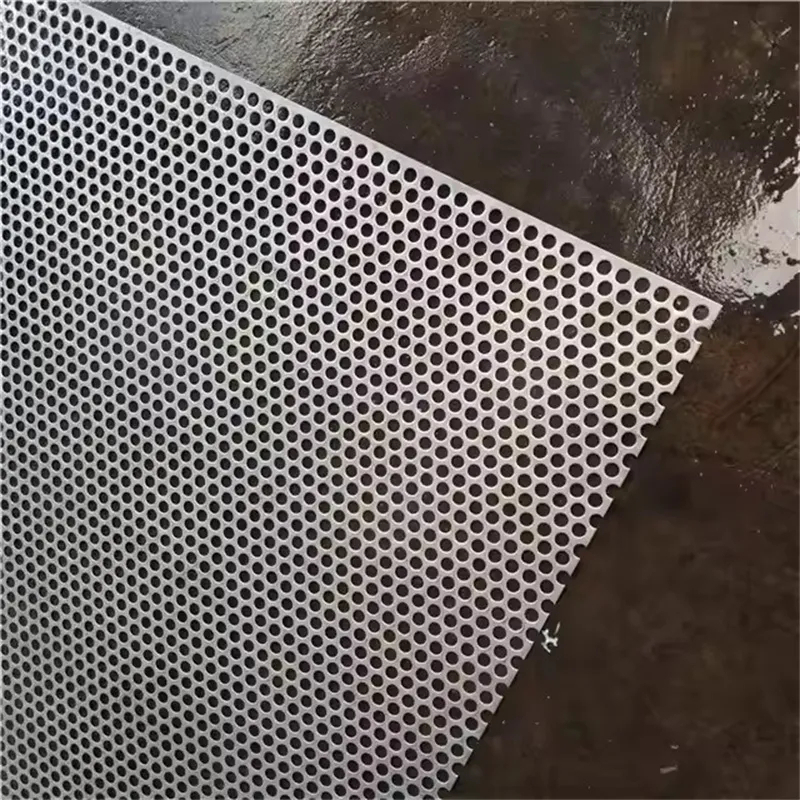
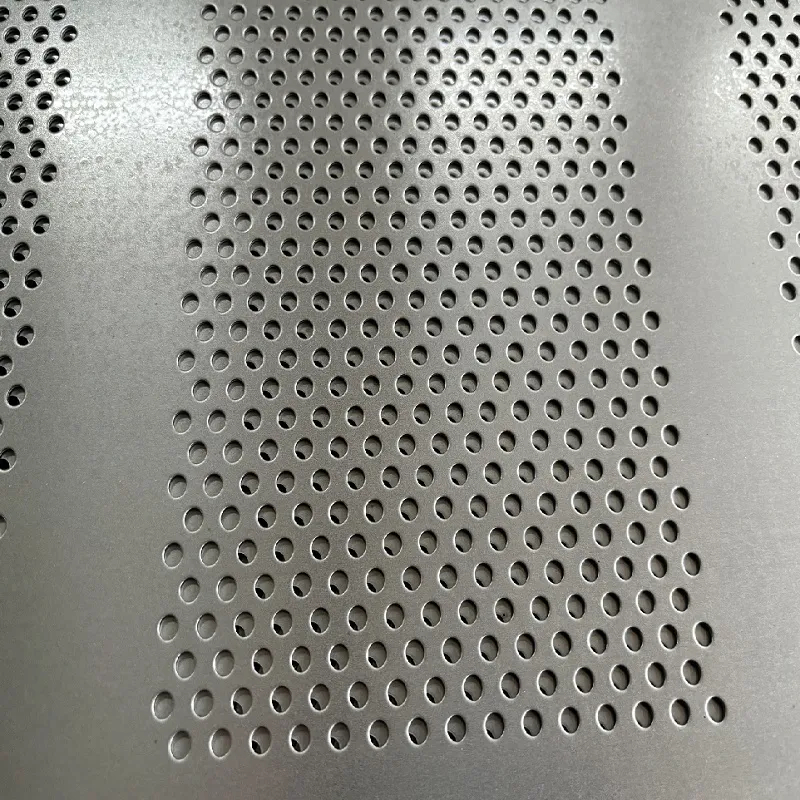
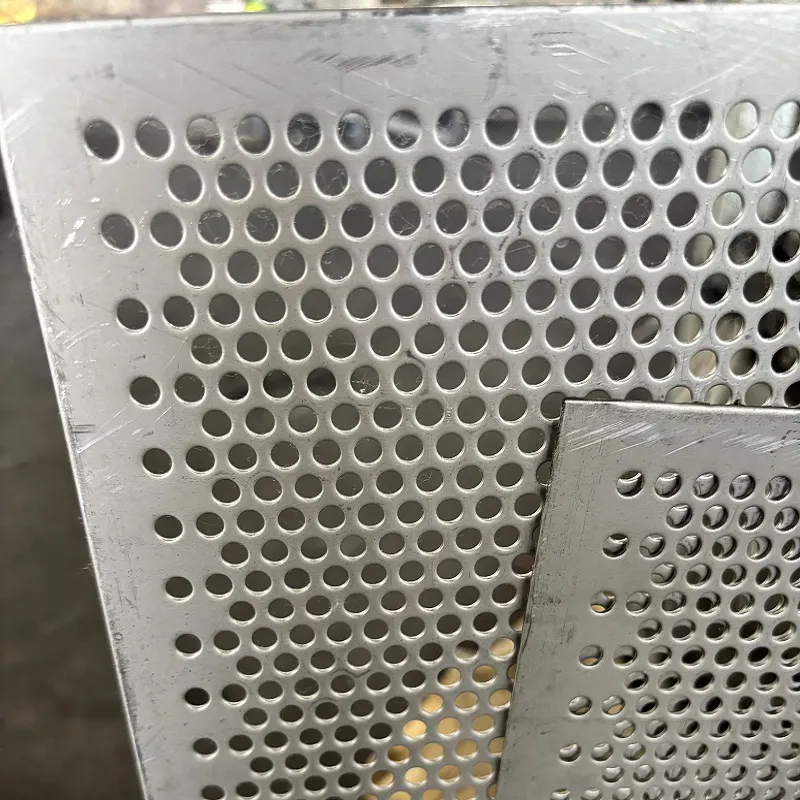
Perforated metal mesh, produced from different types of steel plate and other metals, is usually specified by:
Material & grade
e.g. low carbon steel (A36 / Q235), galvanized steel, stainless 304 / 316, aluminium 1100 / 3003 / 5052, copper, etc.
Thickness (t)
Typically 0.2–3.0 mm for light decorative and filter meshes, and up to 10–15 mm for heavy-duty industrial plates.
Hole shape
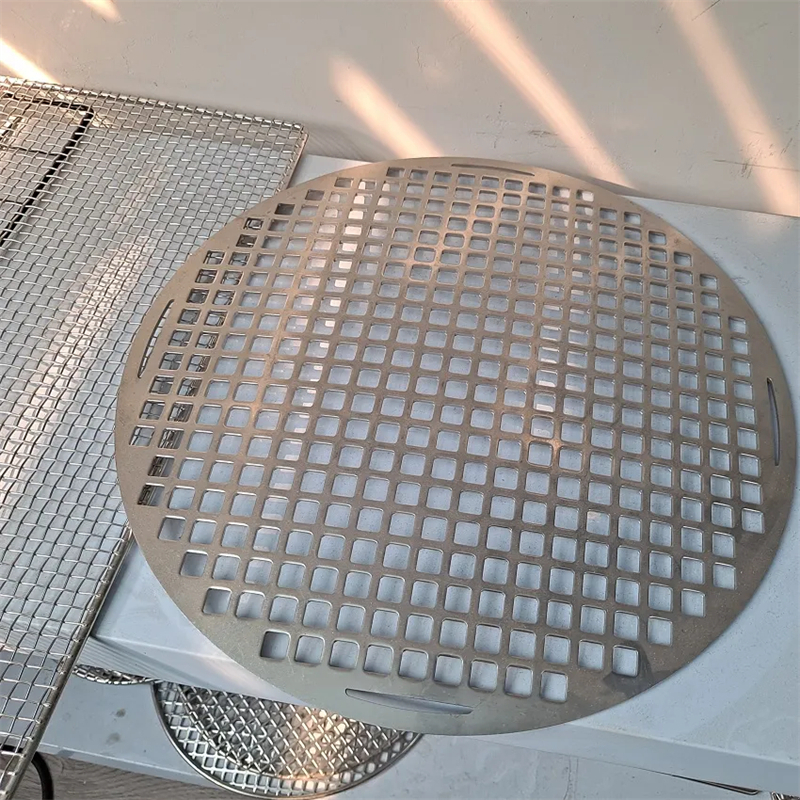
Round, square, slotted, hexagonal, diamond, plum blossom, and other decorative patterns.
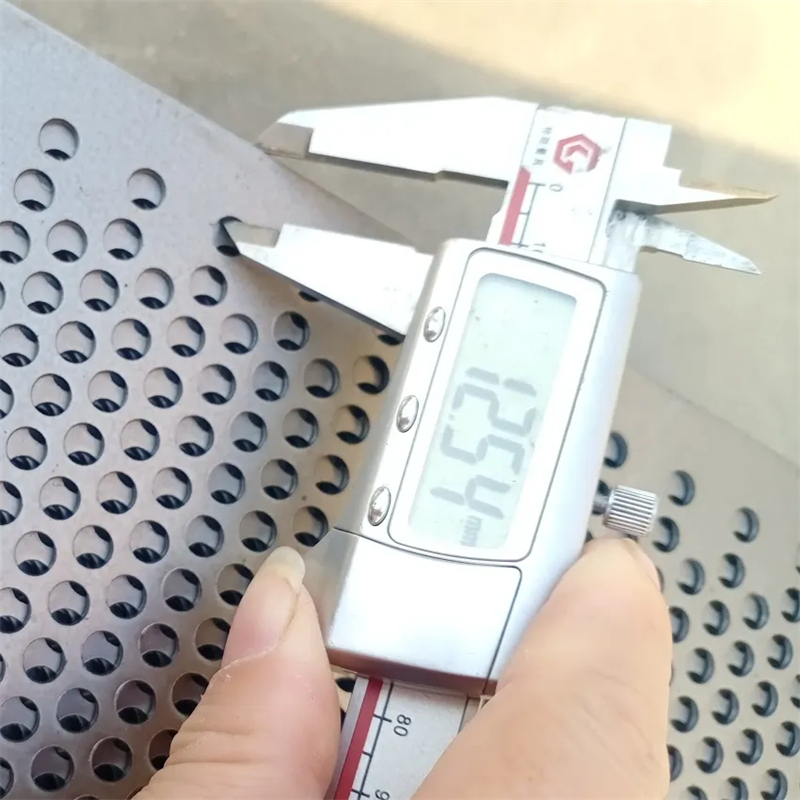
Hole diameter / size (d or W×L)
For round holes, common ranges are 1–10 mm for fine ventilation and filters, larger for screens and architectural effects.
For slotted and decorative holes, the width and length are both specified.
Pitch / centre spacing (p)
Distance from hole centre to hole centre; determines open area and strength.
Open area / punching rate (%)
Ratio of hole area to sheet area, important for airflow, sound absorption and filtration.
Width & length
For example: 1.0 × 2.0 m, 1.2 × 2.4 m, 1.22 × 2.44 m, or coils for roll-formed products.
Form
Flat plate or roll (coil).
Surface treatment
Galvanizing, powder coating, anodizing (for aluminium), polishing, painting, etc.
Your own data already include thickness, hole diameter, pitch, punching rate and weight. Below is a professional presentation of those representative specifications for different types of steel plate and aluminium base materials.
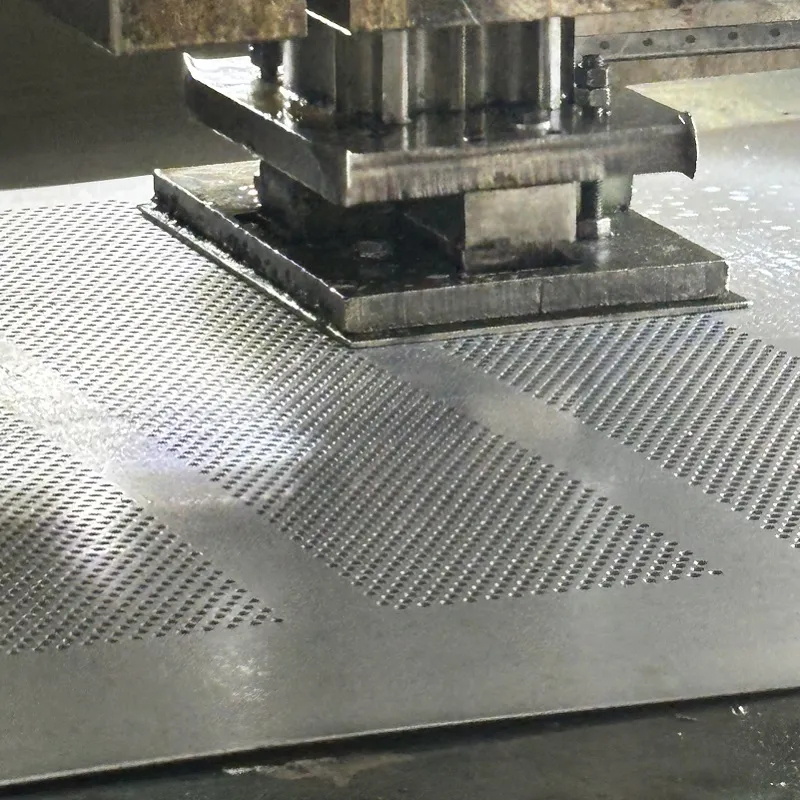
Perforated metal sheet making process:

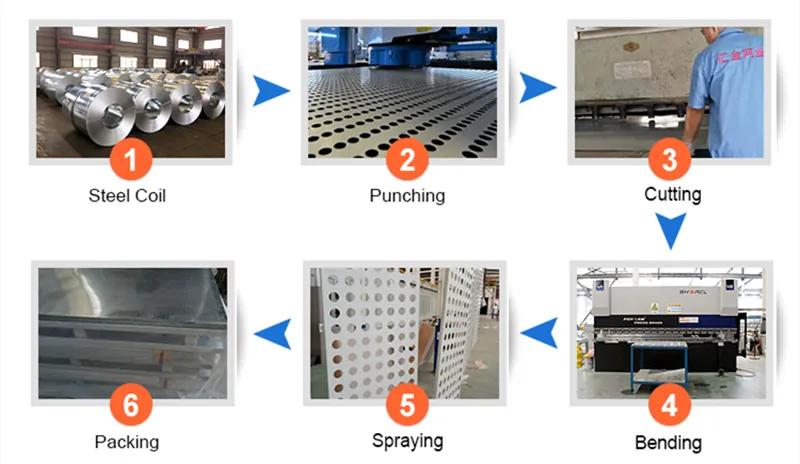
4. Representative Perforated Plate Specifications
4.1 Roll Plate – Carbon / Low-Carbon Steel
| Type | Thickness (mm) | Hole Dia. (mm) | Pitch (mm) | Width (m) | Length (m) | Punching Rate (%) | Approx. Weight (kg/m²) |
|---|---|---|---|---|---|---|---|
| Roll plate | 0.20 | 6 | 2 | 1 | 20 | 44 | 0.88 |
| Roll plate | 0.35 | 5 | 4 | 1 | 20 | 24 | 2.00 |
| Roll plate | 0.45 | 6 | 3 | 1 | 20 | 35 | 2.50 |
| Roll plate | 0.80 | 3 | 3 | 1 | 20 | 19.6 | 3.00 |
Roll plates are typically supplied in coils for continuous processing, with long lengths (e.g. 20 m) and relatively thin gauges.
4.2 Flat Plate – Low Carbon Steel
| Type | Thickness (mm) | Hole Dia. (mm) | Pitch (mm) | Width (m) | Length (m) | Punching Rate (%) | Approx. Weight (kg/m²) |
|---|---|---|---|---|---|---|---|
| Flat plate | 0.50 | 1.0 | 1.0 | 1 | 2 | 19.6 | 3.10 |
| Flat plate | 0.55 | 1.1 | 2.2 | 1 | 2 | 22.7 | 3.40 |
| Flat plate | 0.55 | 1.5 | 2.8 | 1 | 2 | 26.0 | 3.30 |
| Flat plate | 0.80 | 1.5 | 1.5 | 1 | 2 | 19.6 | 5.00 |
| Flat plate | 0.80 | 2.0 | 3.4 | 1 | 2 | 30.8 | 4.50 |
| Flat plate | 1.50 | 2.0 | 2.0 | 1 | 2 | 19.6 | 9.40 |
| Flat plate | 1.50 | 5.0 | 8.0 | 1 | 2 | 35.4 | 7.80 |
| Flat plate | 3.00 | 5.0 | 16.0 | 1 | 2 | 19.6 | 18.80 |
These options show how you can tune thickness and hole pattern to balance strength, open area and weight for different types of steel plate.
4.3 Stainless Steel Perforated Plate – A Key Category in Types of Steel Plate
| Type | Thickness (mm) | Hole Dia. (mm) | Pitch (mm) | Width (m) | Length (m) | Punching Rate (%) | Approx. Weight (kg/m²) |
|---|---|---|---|---|---|---|---|
| Stainless steel plate | 0.50 | 1.0 | 1.0 | 1 | 2 | 19.6 | 3.14 |
| Stainless steel plate | 0.80 | 1.5 | 1.5 | 1 | 2 | 19.6 | 5.00 |
| Stainless steel plate | 1.00 | 2.0 | 2.0 | 1 | 2 | 19.6 | 6.28 |
| Stainless steel plate | 2.00 | 5.0 | 16.0 | 1 | 2 | 19.6 | 6.28 |
These are typical 304 / 316 perforated sheets used in food, pharmaceutical, petrochemical and architectural fields, representing one of the most important types of steel plate for high-end perforated products.
4.4 Aluminium Perforated Plate
| Type | Thickness (mm) | Hole Dia. (mm) | Pitch (mm) | Width (m) | Length (m) | Punching Rate (%) | Approx. Weight (kg/m²) |
|---|---|---|---|---|---|---|---|
| Aluminium plate | 0.50 | 1.0 | 1.0 | 1 | 2 | 19.6 | 1.08 |
| Aluminium plate | 0.80 | 3.0 | 3.0 | 1 | 2 | 19.6 | 1.72 |
| Aluminium plate | 1.60 | 2.0 | 2.0 | 1 | 2 | 19.6 | 3.24 |
| Aluminium plate | 3.00 | 4.0 | 16.0 | 1 | 2 | 19.6 | 4.23 |
Aluminium perforated plate offers low weight, good corrosion resistance and excellent formability, ideal for ceilings, sunshades and decorative green facades.
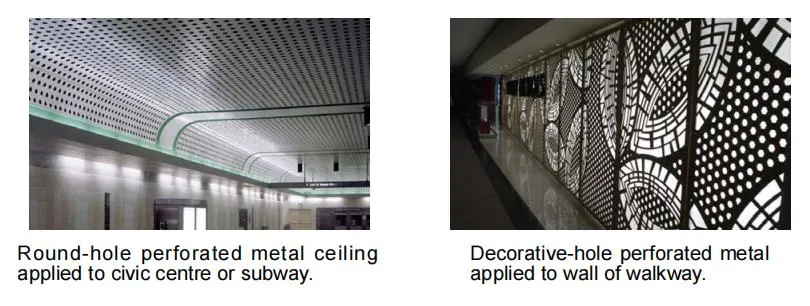
5. Applications of Perforated Steel Plates by Material
- Low carbon / structural steel perforated plates
Workshop partitions, machinery guards, ventilation grilles, stair treads, industrial walkways, shelving and basic acoustic panels. - Galvanized steel perforated plates
Exterior fences, balcony and stair guards, protective screens for HVAC and equipment, basic noise barriers where both cost and corrosion resistance matter. - Stainless steel perforated plates
Food and beverage machinery, pharmaceutical equipment, chemical filters, decorative ceilings and walls, indoor and outdoor acoustic panels, high-end railings and façade cladding. - Weathering steel perforated plates
Architectural feature walls, landscape screens, outdoor art, building façades where a natural rust patina is part of the design. - Wear-resistant perforated plates
Mining and quarry screens, chute and hopper liners, heavy-duty sieves for stone, coal and ore handling. - Aluminium perforated plates
Lightweight ceilings, sunshades, curtain walls, acoustic baffles, exhibition and display systems, interior decoration.


6. How to Select the Right types of steel plate for Perforated Mesh
When you design or sell perforated metal mesh, you can guide customers by asking:
- Service environment
Indoor or outdoor? Marine or chemical environment? High temperature or normal atmosphere? - Function
Is the main purpose decoration, ventilation, sound absorption, filtration, privacy, or bearing load (platform / guard)? - Required open area
Higher open area improves airflow and acoustic absorption but reduces strength and privacy; lower open area is stronger and more opaque. - Budget and life cycle
Decide whether standard carbon steel with coating is enough, or whether long-life materials like stainless steel or weathering steel are justified. - Standards and certifications
Structural codes, pressure vessel rules, food-grade requirements, marine classifications, fire and acoustic performance targets, etc.
By combining a clear understanding of steel plate types and key types of steel plate used in perforated products with detailed perforated mesh specifications (thickness, hole, pitch, open area and weight), you can offer customers a professional, engineering-grade solution for everything from industrial filtration and screening to high-end architectural decoration.