Your One-Stop Wire Mesh Fence Supplier | POLYMETAL
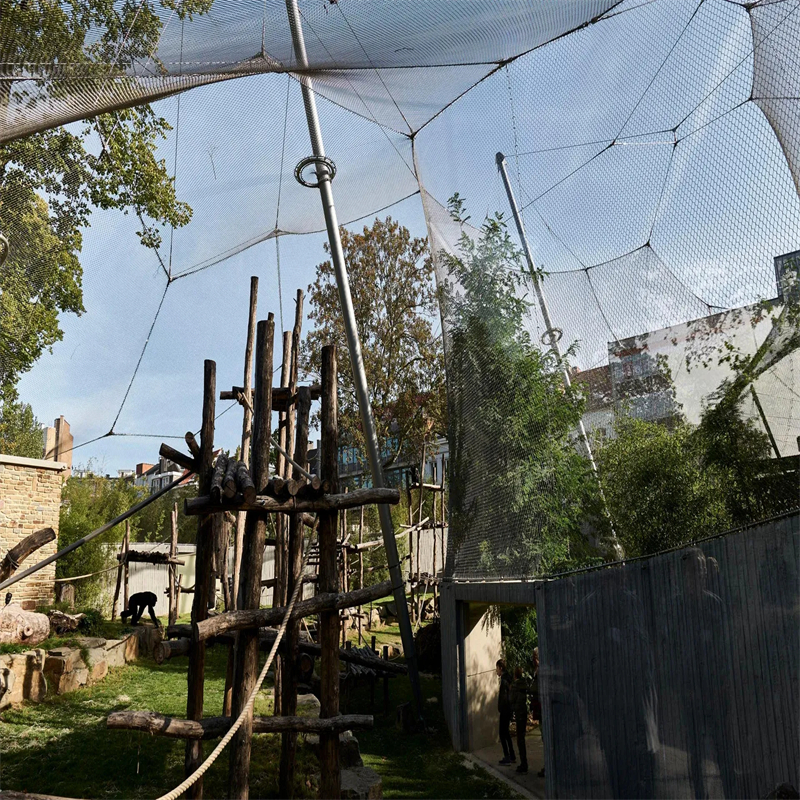
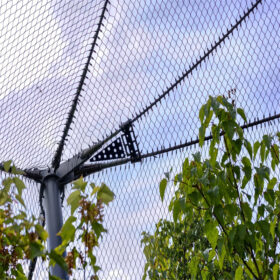
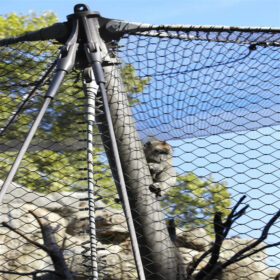
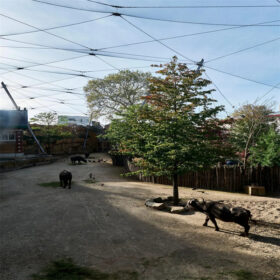
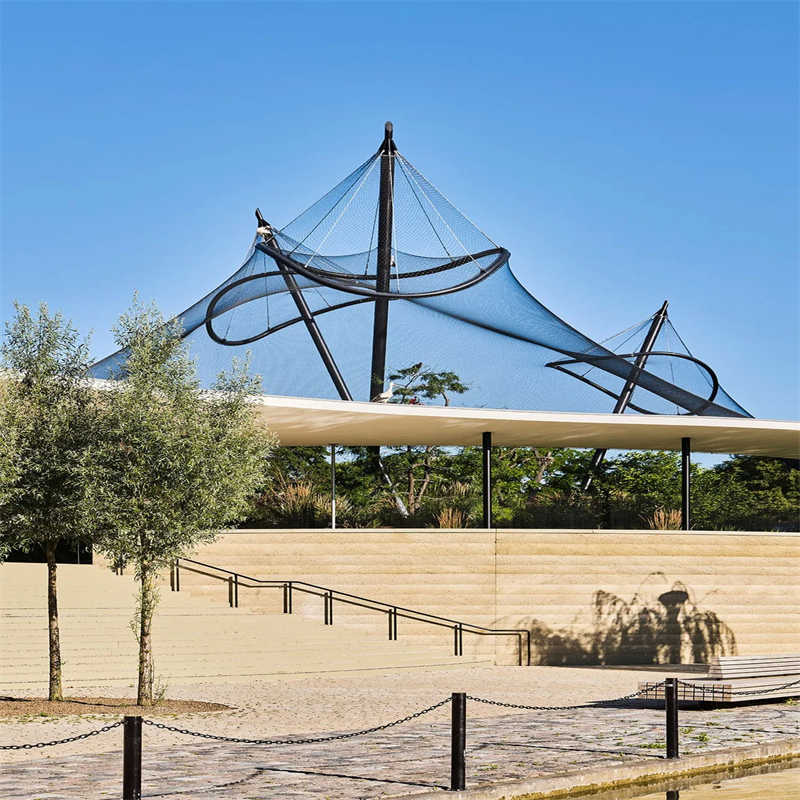
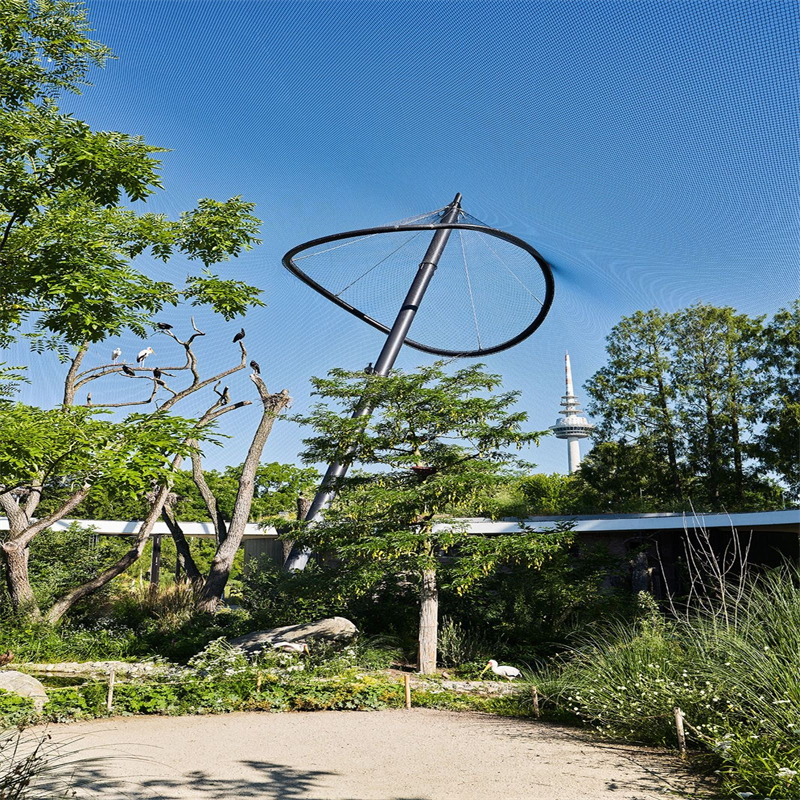
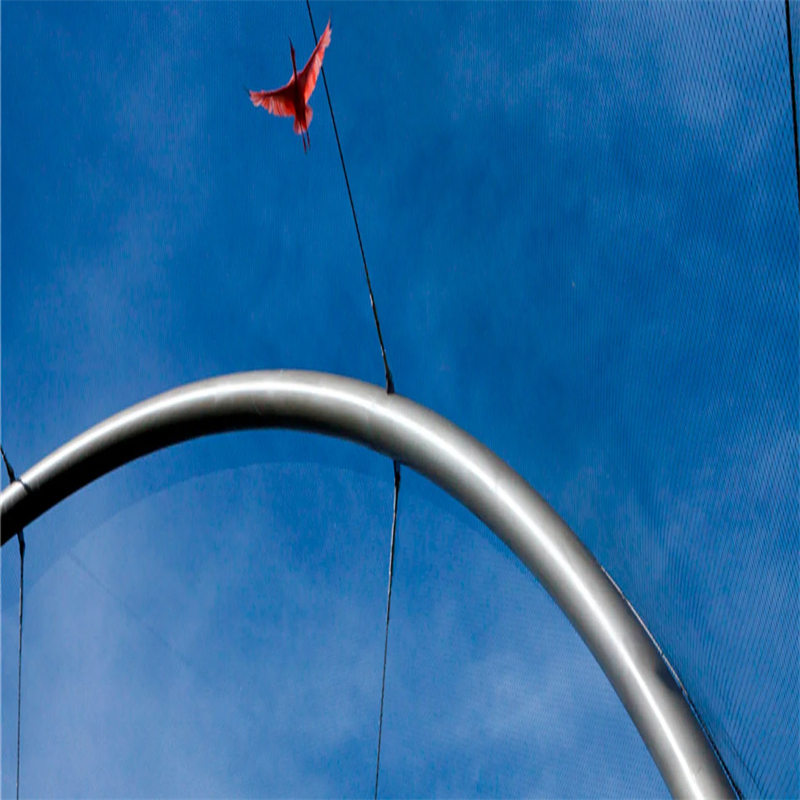
Stainless Steel Aviary Mesh Netting has replaced heavy bars and rust-prone wire in many modern bird enclosures. Using flexible stainless steel cable mesh, it creates light, open, escape-proof spaces where birds can really fly instead of just sitting on a perch. The mesh is strong enough for safety, but visually light enough that visitors feel immersed in a natural environment.
This guide explains what stainless steel aviary mesh netting is, the main benefits, typical specifications, design points, installation basics and what information you should prepare before talking to a manufacturer or exporter.
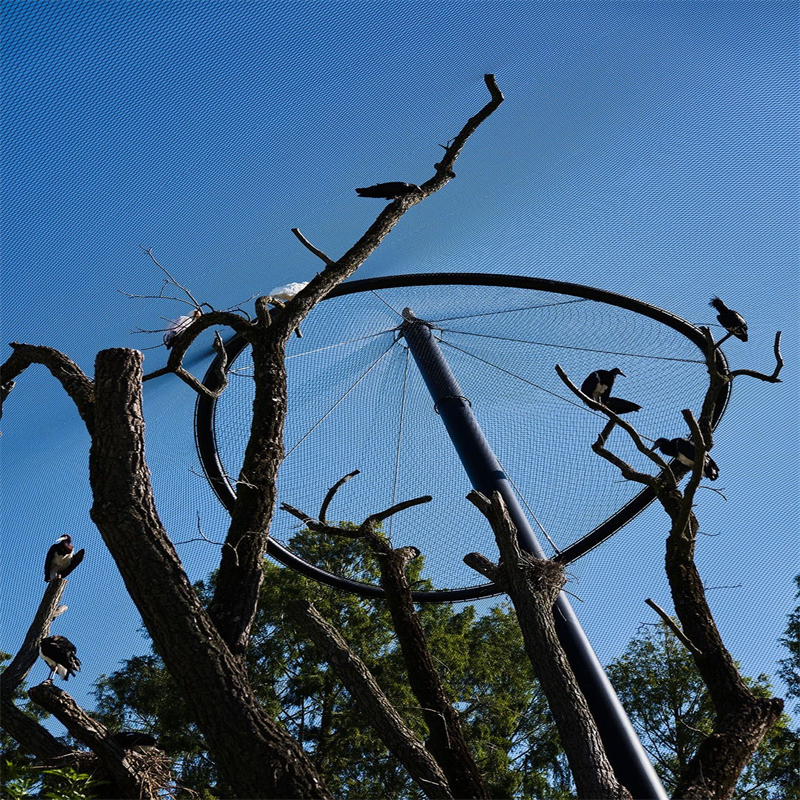
1. What Is Stainless Steel Aviary Mesh Netting?
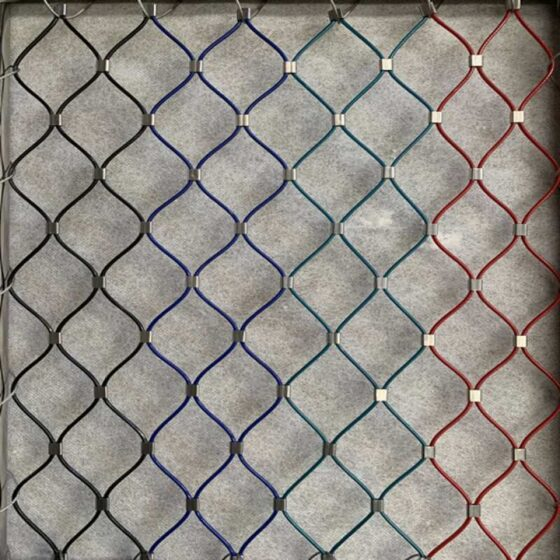
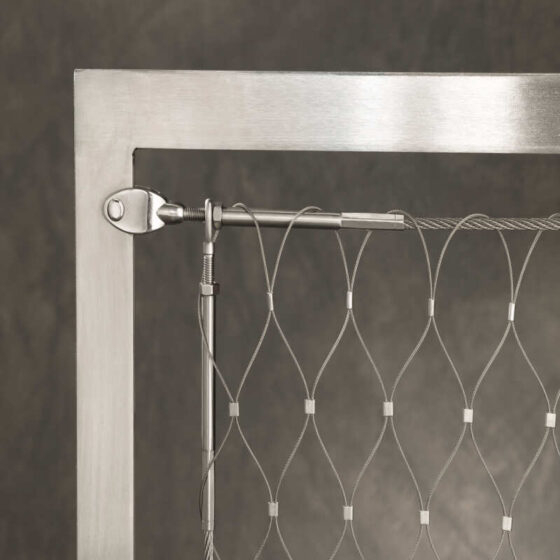
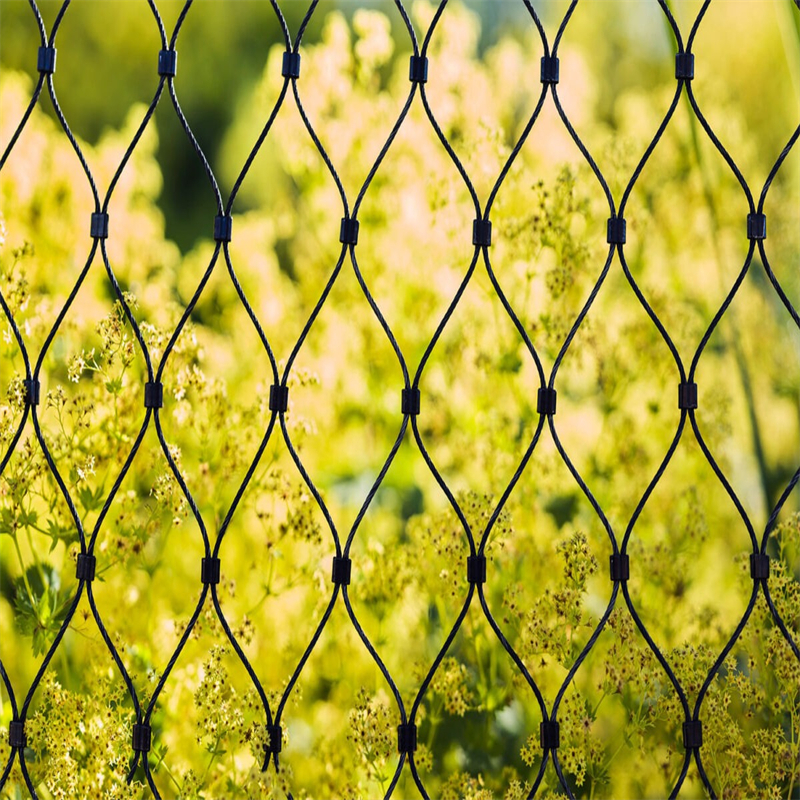
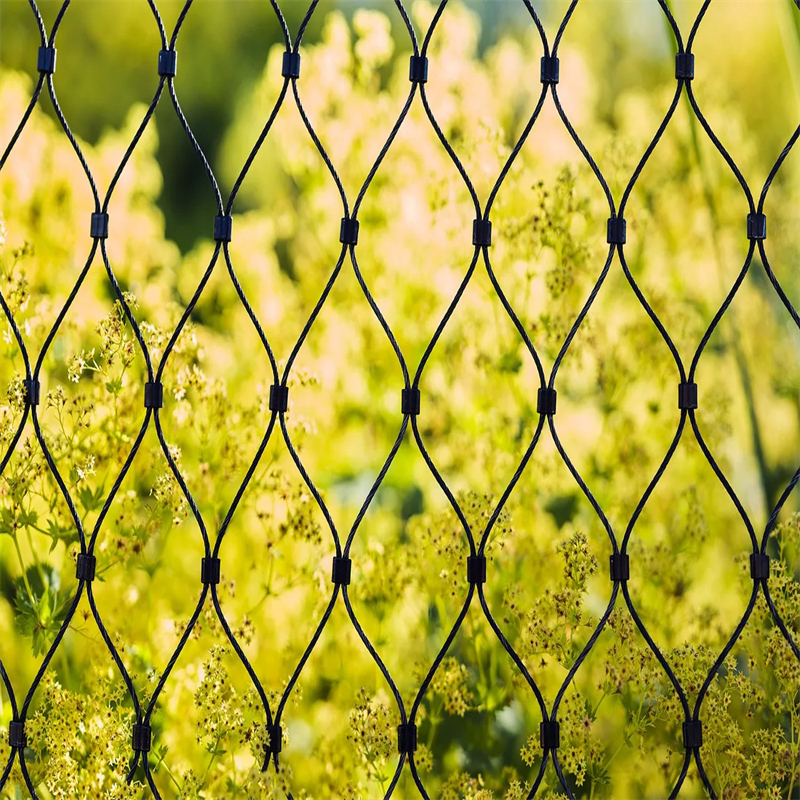
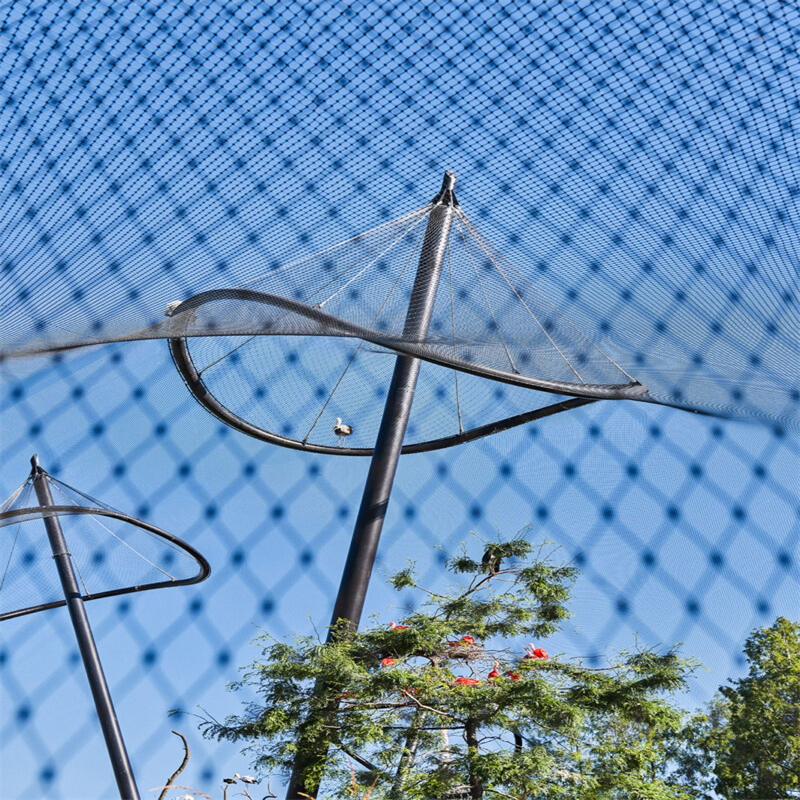
Stainless Steel Aviary Mesh Netting is a flexible woven or ferrule-pressed mesh made from multi-strand stainless steel wire ropes:
- Cables are usually 7×7 or 7×19 construction.
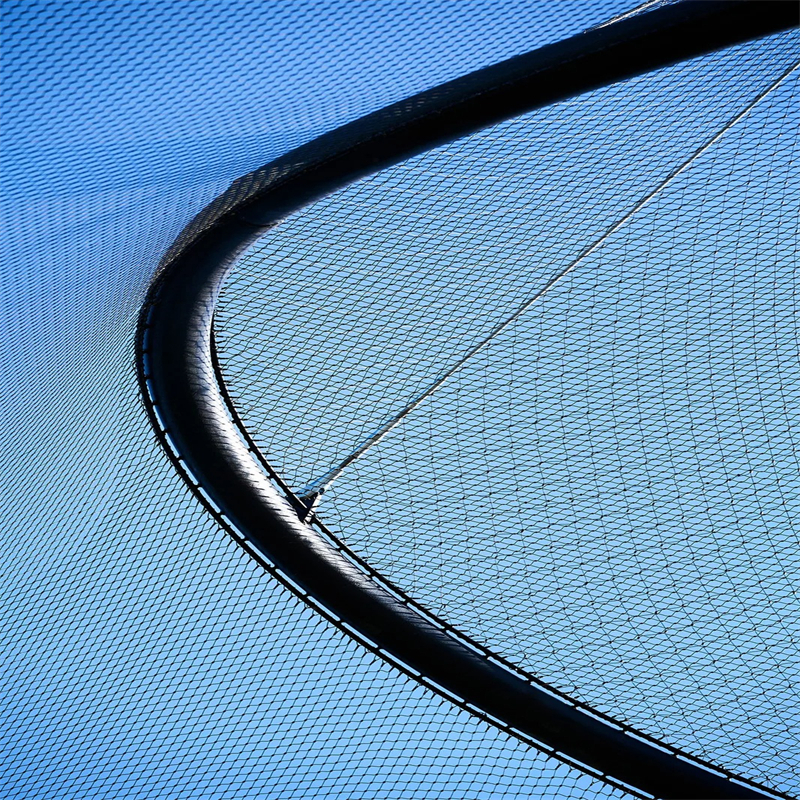
- Ropes are interwoven or joined with ferrules to form diamond-shaped openings.
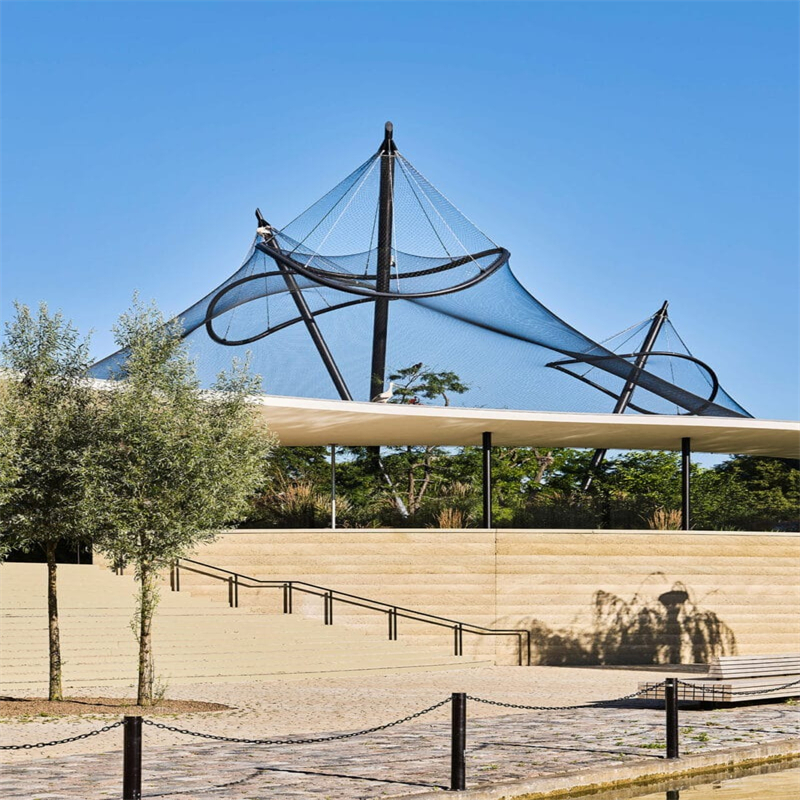
- Mesh panels are tensioned to frames or boundary cables to form aviary walls and roofs.
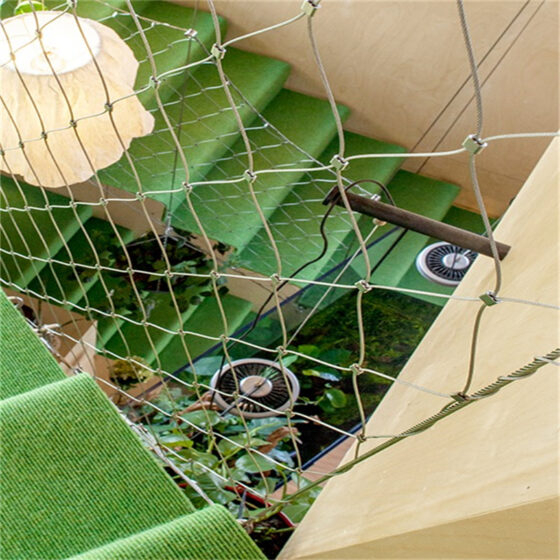
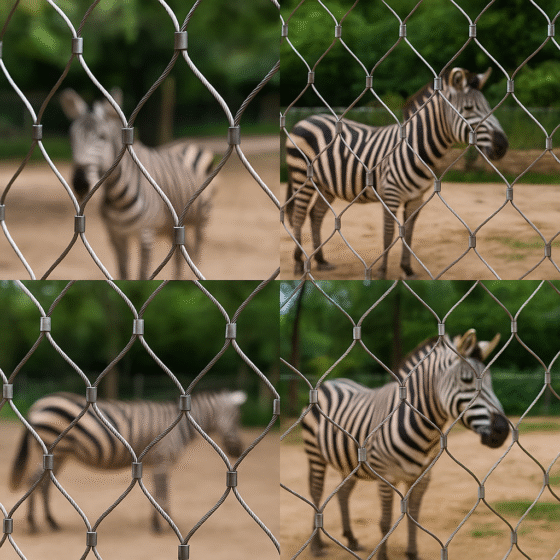
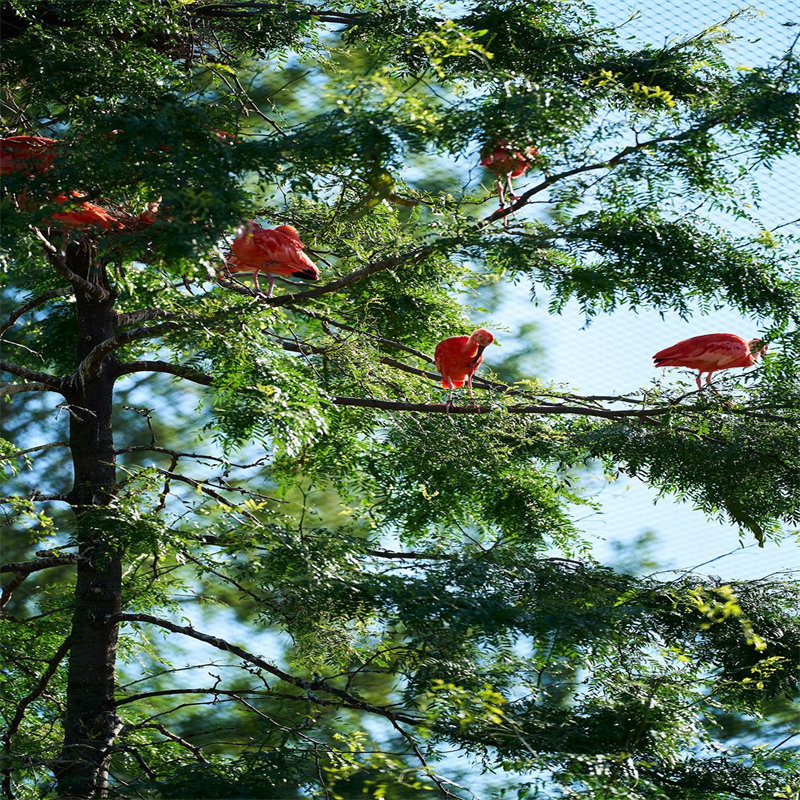
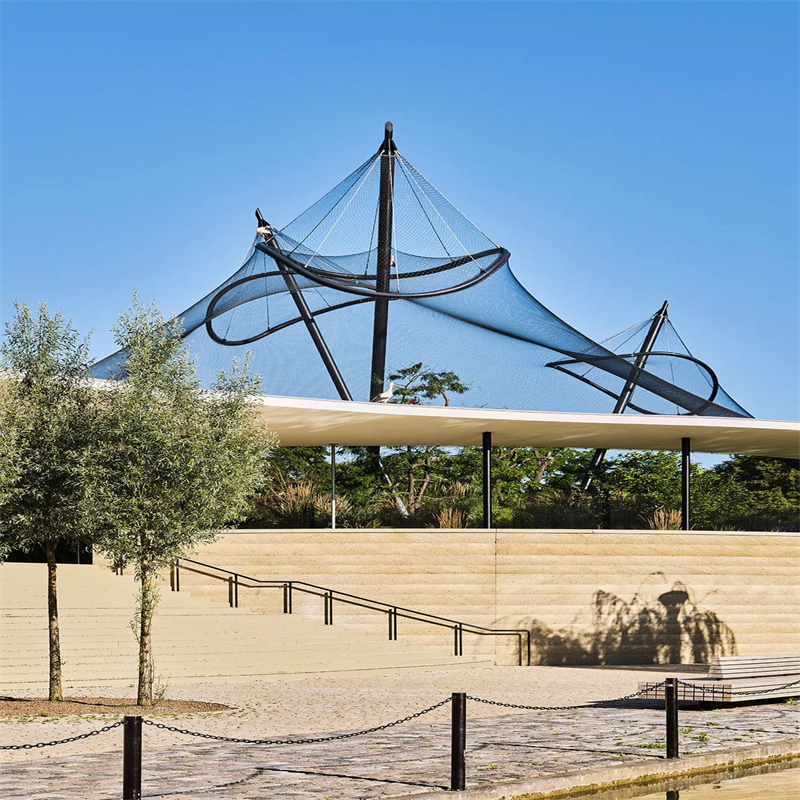
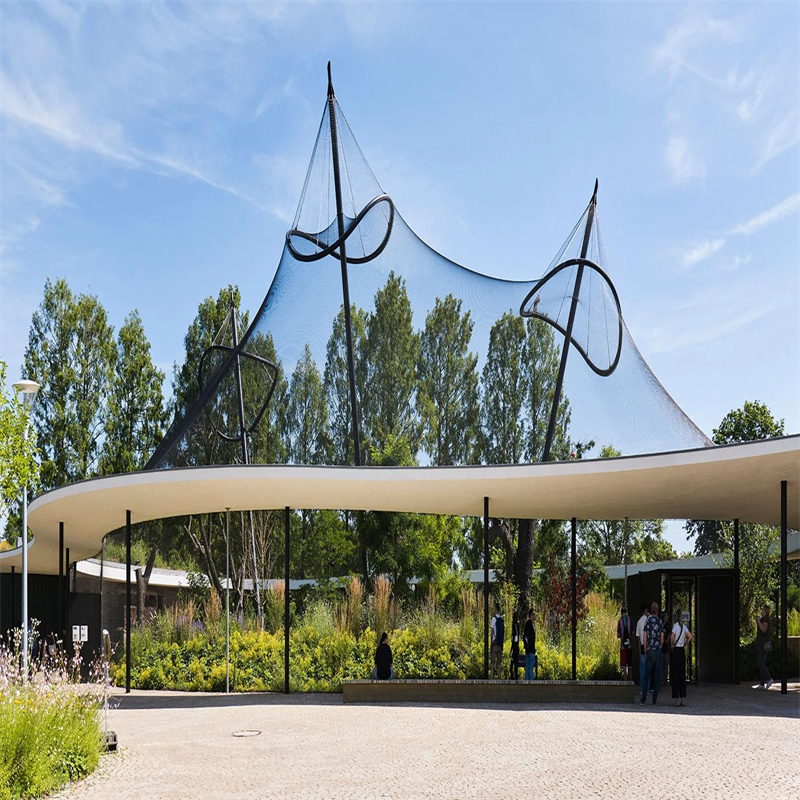
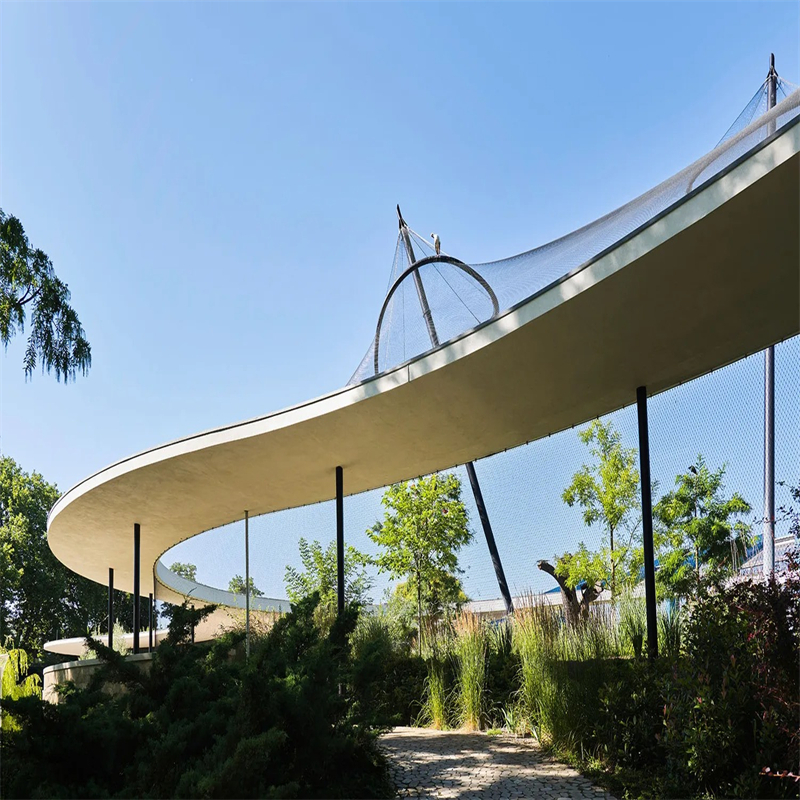
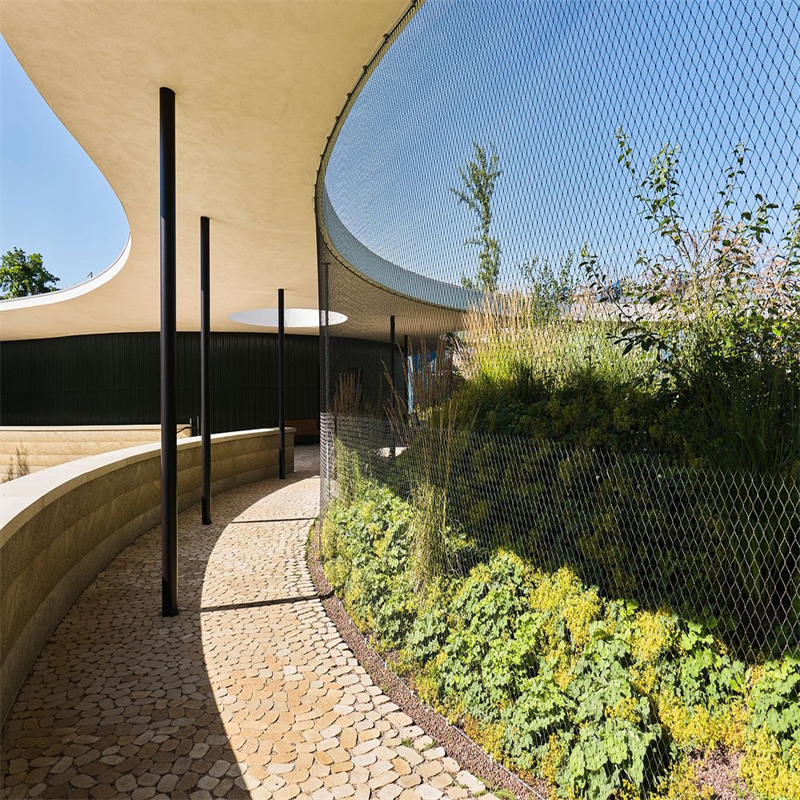
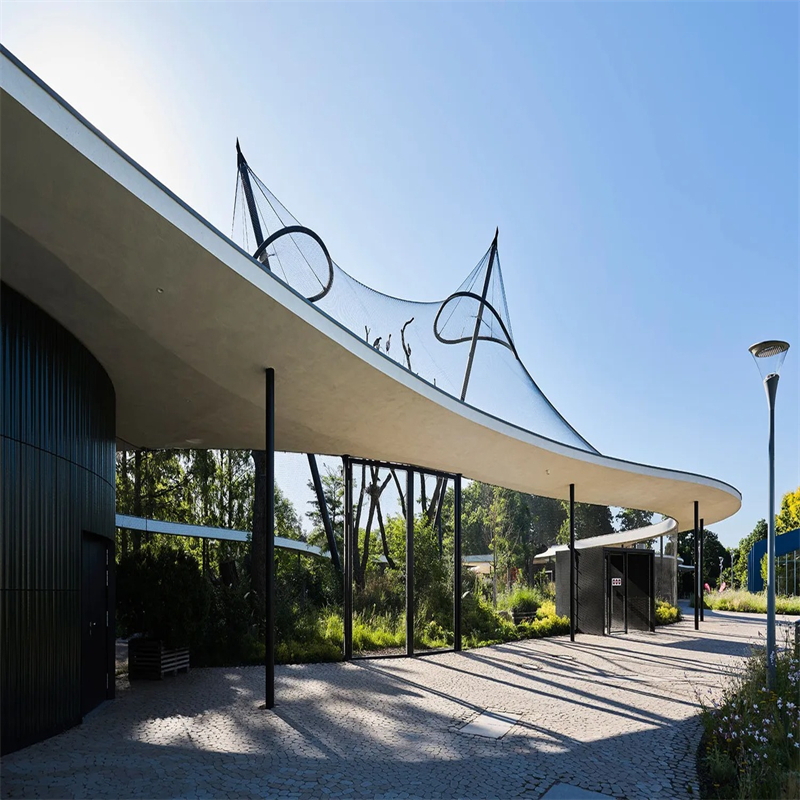
Because the mesh is flexible, one continuous sheet can wrap over curved roofs, follow organic shapes and cover large spans with minimal structural steel. From inside the enclosure, birds see mostly sky and trees instead of feeling “caged”.
Typical basic parameters:
- Cable diameter: approx. 1.2–4.0 mm (depending on bird species, span and loads).
- Mesh aperture: approx. 20–200 mm (depending on bird size and predator risk).
- Material grade: AISI 304 / 304L for normal environments, AISI 316 / 316L for coastal or highly corrosive environments.
Secret #1 – “Any stainless mesh” is NOT automatically safe aviary mesh.
Many projects quietly fail because buyers assume any stainless steel mesh will work for birds. Using rigid welded panels or the wrong cable construction instead of true flexible aviary mesh can cause feather damage, injuries and unexpected structural loads – and replacing installed panels after birds arrive is far more expensive than specifying the right Stainless Steel Aviary Mesh Netting from the start.
2. Why Choose Stainless Steel for Aviary Netting?
2.1 Corrosion resistance and outdoor durability
- Stainless steel resists rain, snow, UV, droppings and cleaning chemicals much better than mild steel or plated wire.
- No flaking paint, no sharp rusted wires, no orange stains running down support structures.
- Ideal for coastal zoos, wildlife parks and rooftop aviaries exposed to salt spray or pollution.
2.2 High strength and safety
- Multi-strand cables have very high tensile strength, allowing long spans without excessive sagging.
- The netting absorbs impacts from birds in flight and occasional climbing from keepers or small mammals.
- When correctly tensioned, Stainless Steel Aviary Mesh Netting acts as a continuous safety membrane, reducing risk of escape and protecting visitors.
2.3 Animal welfare and visitor experience
- High open area means more light, air and visibility; birds see open sky rather than bars.
- Visitors enjoy cleaner sightlines, better photography and more natural-feeling exhibits.
- Smooth cable surfaces reduce the risk of feather wear and injury compared with rough, rusty wire.
2.4 Long service life and low whole-life cost
- Stainless steel systems can operate for decades with simple washing and occasional inspection.
- No repainting schedule, no frequent replacement of broken wires or rotted ropes.
- Although initial cost is higher than cheap netting, whole-life cost is usually lower because replacement and labour costs are reduced.
Secret #2 – Choosing the wrong stainless grade quietly destroys your budget.
On drawings, 304 and 316 look almost the same – but in real coastal or polluted environments, using 304 where 316 is needed can mean staining, pitting and early replacement. The net still “looks stainless” at first, but corrosion around clips and anchors forces costly cleaning and premature change-out that can wipe out any savings from the cheaper grade.
3. Typical Specification Ranges for Stainless Steel Aviary Mesh Netting
3.1 Mesh aperture vs. bird size
Choosing the right mesh opening size is critical for safety and comfort:
- Small finches / songbirds: 20–25 mm aperture.
- Parrots & medium birds: 30–40 mm aperture.
- Large raptors, cranes, pelicans: 50–80 mm aperture.
- Mixed-species walk-through aviaries: select based on the smallest species to be contained.
The design goal is:
- Openings small enough to prevent birds passing through or getting trapped.
- Openings large enough to keep the mesh light, transparent and easy to clean.
3.2 Cable diameter and construction
- 1.2–1.6 mm: light-duty, short spans, small birds and indoor aviaries.
- 2.0 mm: common for many zoo and park aviaries, medium spans and mixed-bird exhibits.
- 3.0–4.0 mm: heavy-duty roofs, large raptor domes, high public safety loads or combined bird + fall-protection applications.
Common cable constructions:
- 7×7: slightly stiffer, good for small diameters and neat geometrical meshes.
- 7×19: more flexible, ideal for curved surfaces and long spans.
3.3 Detailed specification tables by wire group
To make selection easier, Stainless Steel Aviary Mesh Netting can be grouped into four practical ranges: extra-fine, small, medium and heavy wire. The following tables give typical model codes, dimensions and suggested applications. You can adapt them to your own catalogue or use them as a starting point for project design.
3.3.1 Table 1 – Extra-Fine Wire Stainless Steel Aviary Mesh Netting (0.9–1.2 mm)
| Model | Cable Ø (mm) | Construction | Mesh Aperture (W×H mm) | Material | Recommended Use / Bird Size |
|---|---|---|---|---|---|
| SAMN-E01 | 0.9 | 7×7 | 15 × 15 | SS304 | Very small finches, micro display cages |
| SAMN-E02 | 0.9 | 7×7 | 15 × 20 | SS304 | Finches, waxbills, low-load indoor aviaries |
| SAMN-E03 | 1.0 | 7×7 | 18 × 18 | SS304 | Canaries and small songbirds, showroom cages |
| SAMN-E04 | 1.0 | 7×7 | 18 × 22 | SS304 | Softbill finches, compact indoor aviaries |
| SAMN-E05 | 1.0 | 7×7 | 20 × 20 | SS316 | Small birds in coastal / humid environments |
| SAMN-E06 | 1.1 | 7×7 | 20 × 25 | SS316 | Finches, canaries, mild outdoor exposure |
| SAMN-E07 | 1.1 | 7×7 | 22 × 22 | SS304 | Mixed tiny birds, breeder cages |
| SAMN-E08 | 1.1 | 7×19 | 22 × 28 | SS316 | Curved indoor roofs for very small birds |
| SAMN-E09 | 1.2 | 7×7 | 25 × 25 | SS304 | Finches, canaries, small tropical birds |
| SAMN-E10 | 1.2 | 7×7 | 25 × 30 | SS304 | Songbird rooms, light-duty indoor aviaries |
| SAMN-E11 | 1.2 | 7×7 | 25 × 35 | SS316 | Small birds, semi-outdoor verandas |
| SAMN-E12 | 1.2 | 7×7 | 25 × 38 | SS316 | Small aviaries in coastal / high humidity zones |
| SAMN-E13 | 1.2 | 7×19 | 28 × 28 | SS316 | Decorative fine mesh, curved façade aviaries |
| SAMN-E14 | 1.2 | 7×19 | 28 × 32 | SS316 | Small bird tunnels, narrow corridors |
| SAMN-E15 | 1.2 | 7×19 | 30 × 30 | SS304 | Compact indoor exhibits, museum displays |
| SAMN-E16 | 1.2 | 7×19 | 30 × 35 | SS316 | Fine protection nets for sensitive species |
3.3.2 Table 2 – Small Wire Stainless Steel Aviary Mesh Netting (1.5–1.6 mm)
| Model | Cable Ø (mm) | Construction | Mesh Aperture (W×H mm) | Material | Recommended Use / Bird Size |
|---|---|---|---|---|---|
| SAMN-S01 | 1.5 | 7×7 | 30 × 30 | SS304 | Budgies, lovebirds, small parrot species |
| SAMN-S02 | 1.5 | 7×7 | 30 × 40 | SS304 | Mixed finches & small parrots, indoor |
| SAMN-S03 | 1.5 | 7×7 | 30 × 52 | SS316 | Outdoor small-bird aviaries, mild climates |
| SAMN-S04 | 1.5 | 7×7 | 32 × 45 | SS316 | Walk-through small bird exhibits, light load |
| SAMN-S05 | 1.5 | 7×7 | 35 × 35 | SS304 | Songbirds and small doves, courtyard aviaries |
| SAMN-S06 | 1.5 | 7×19 | 35 × 45 | SS316 | Curved roofs for small parrots, indoor/outdoor |
| SAMN-S07 | 1.5 | 7×19 | 38 × 38 | SS316 | Small parrots, lorikeets, display aviaries |
| SAMN-S08 | 1.5 | 7×19 | 38 × 50 | SS316 | Outdoor small-bird aviaries, light snow / wind |
| SAMN-S09 | 1.6 | 7×7 | 38 × 50 | SS316 | Mixed small birds, garden aviaries |
| SAMN-S10 | 1.6 | 7×7 | 40 × 40 | SS304 | Cockatiels, conures, small doves |
| SAMN-S11 | 1.6 | 7×7 | 40 × 60 | SS316 | Outdoor small parrots, mild predator risk |
| SAMN-S12 | 1.6 | 7×19 | 45 × 45 | SS316 | Curved small-bird roofs, flexible layout |
| SAMN-S13 | 1.6 | 7×19 | 45 × 55 | SS316 | Walk-through small bird tunnels |
| SAMN-S14 | 1.6 | 7×19 | 50 × 50 | SS316 | Songbird gardens, decorative netting |
| SAMN-S15 | 1.6 | 7×19 | 50 × 60 | SS316 | Zoo small-bird walk-through aviaries |
| SAMN-S16 | 1.6 | 7×19 | 55 × 65 | SS316 | Medium-size small-bird domes, light load |
3.3.3 Table 3 – Medium Wire Stainless Steel Aviary Mesh Netting (2.0–2.5 mm)
| Model | Cable Ø (mm) | Construction | Mesh Aperture (W×H mm) | Material | Recommended Use / Bird Size |
|---|---|---|---|---|---|
| SAMN-M01 | 2.0 | 7×7 | 40 × 70 | SS304 | Parakeets, pigeons, medium indoor aviaries |
| SAMN-M02 | 2.0 | 7×7 | 50 × 50 | SS304 | Medium songbirds, toucans, turacos |
| SAMN-M03 | 2.0 | 7×7 | 50 × 70 | SS316 | Outdoor mixed birds, moderate wind load |
| SAMN-M04 | 2.0 | 7×7 | 50 × 90 | SS316 | Coastal medium-bird exhibits, salt exposure |
| SAMN-M05 | 2.0 | 7×19 | 60 × 60 | SS316 | Curved roofs for parrots and corvids |
| SAMN-M06 | 2.0 | 7×19 | 60 × 105 | SS316 | Walk-through aviaries, mixed medium birds |
| SAMN-M07 | 2.0 | 7×19 | 70 × 120 | SS316 | Cranes, ibis, waterbirds in mid-size aviaries |
| SAMN-M08 | 2.0 | 7×19 | 80 × 80 | SS316 | Medium raptors, owl exhibits, zoo aviaries |
| SAMN-M09 | 2.5 | 7×7 | 60 × 90 | SS304 | Medium parrots, amazons, cockatoos (light duty) |
| SAMN-M10 | 2.5 | 7×7 | 70 × 100 | SS316 | Outdoor parrot islands, predator-safe |
| SAMN-M11 | 2.5 | 7×7 | 80 × 120 | SS316 | Large mixed aviaries with guest walkways |
| SAMN-M12 | 2.5 | 7×19 | 80 × 140 | SS316 | Fascia and roof netting for medium birds |
| SAMN-M13 | 2.5 | 7×19 | 90 × 160 | SS316 | Large pheasants, ground birds, mixed exhibits |
| SAMN-M14 | 2.5 | 7×19 | 100 × 100 | SS316 | Roof nets over ponds and flamingo lakes |
| SAMN-M15 | 2.5 | 7×19 | 100 × 175 | SS316 | Free-flight aviaries with cranes & storks |
| SAMN-M16 | 2.5 | 7×19 | 110 × 180 | SS316 | General-purpose zoo bird netting, medium spans |
3.3.4 Table 4 – Heavy Wire Stainless Steel Aviary Mesh Netting (3.0–4.0 mm)
| Model | Cable Ø (mm) | Construction | Mesh Aperture (W×H mm) | Material | Recommended Use / Bird Size |
|---|---|---|---|---|---|
| SAMN-H01 | 3.0 | 7×7 | 80 × 140 | SS316 | Large raptors, eagle and vulture aviaries |
| SAMN-H02 | 3.0 | 7×7 | 90 × 160 | SS316 | Snowy owls, hawks, high-impact areas |
| SAMN-H03 | 3.0 | 7×19 | 100 × 175 | SS316 | Free-flight raptor domes, large spans |
| SAMN-H04 | 3.0 | 7×19 | 120 × 200 | SS316 | Cranes, pelicans, herons in open lagoons |
| SAMN-H05 | 3.0 | 7×19 | 120 × 210 | SS316 | Large walk-through aviaries, zoo main exhibits |
| SAMN-H06 | 3.0 | 7×19 | 130 × 230 | SS316 | High roofs over mixed waterbirds & flamingos |
| SAMN-H07 | 3.0 | 7×19 | 150 × 260 | SS316 | Large-span aviary roofs, strong wind zones |
| SAMN-H08 | 3.5 | 7×19 | 150 × 260 | SS316 | Heavy-duty raptor enclosures, predator-prone sites |
| SAMN-H09 | 3.5 | 7×19 | 160 × 280 | SS316 | Combined bird + small-mammal safety barriers |
| SAMN-H10 | 3.5 | 7×19 | 180 × 300 | SS316 | Long-span structural nets, strong snow load |
| SAMN-H11 | 4.0 | 7×19 | 180 × 310 | SS316 | Very large aviary domes, coastal storms |
| SAMN-H12 | 4.0 | 7×19 | 200 × 345 | SS316 | Open-top style roofs over wetlands & lakes |
| SAMN-H13 | 4.0 | 7×19 | 220 × 380 | SS316 | Decorative big-span bird screens, low escape risk |
| SAMN-H14 | 4.0 | 7×19 | 250 × 400 | SS316 | Hybrid bird + fall-protection netting, high roofs |
| SAMN-H15 | 4.0 | 7×19 | 280 × 450 | SS316 | Showpiece aviary façades, landmark structures |
| SAMN-H16 | 4.0 | 7×19 | 300 × 500 | SS316 | Extreme large-span domes, main zoo icons |
3.4 Example mesh combinations
- 1.2 mm, 25 × 25 mm, 7×7, AISI 304 – small indoor finch aviaries.
- 1.6 mm, 30 × 52 mm, 7×7, AISI 304 – small parrots, songbird gardens.
- 2.0 mm, 40 × 70 mm, 7×7, AISI 316 – mixed-species outdoor aviaries in coastal climates.
- 2.0 mm, 50 × 90 mm, 7×19, AISI 316 – walk-through aviaries, cranes and ibis.
- 3.0 mm, 80 × 140 mm, 7×19, AISI 316 – large raptor exhibits and high-security public enclosures.
You don’t have to use exactly these values, but they give a useful starting point.
Secret #3 – Picking mesh aperture only by price or “what looks nice” is a silent escape risk.
Oversized openings might pass early visual checks, but once the smallest species explores the aviary, heads and wings can slip through. That means injuries, escapes and emergency retrofits with extra mesh layers – all far more costly than choosing the correct aperture from the specification tables the first time.
4. Design Considerations for Stainless Steel Aviary Mesh Netting
4.1 Overall layout and panel strategy
- Decide whether the aviary will use one large draped panel over the roof or a series of smaller panels.
- Plan where seams, doors, service hatches and ridge cables will be located.
- Consider future maintenance – smaller panels are easier to replace individually.
4.2 Structural support and boundary cables
- Columns, arches and roof beams must be designed for wind, snow and cable tension.
- Use stainless or galvanized boundary cables or flat bars around all mesh edges.
- Include turnbuckles or tensioners so that the mesh can be re-tensioned over time.
4.3 Doors, access and escape prevention
- Doors should close against a rigid frame or overlapping mesh to prevent gaps.
- Walk-through aviaries often use double-door “airlock” entries to prevent birds escaping when visitors enter or leave.
- Avoid complex corners and junctions where small openings might remain after tensioning.
4.4 Integration with other materials
- Connect mesh to concrete, masonry or steel with clamp bars or custom brackets.
- Around glass or polycarbonate roofs, ensure fixings do not create stress points or leaks.
- For predator-proofing (cats, foxes, raptors), design a continuous envelope with no “soft spots”.
Secret #4 – Treating the mesh as “just decoration” can bend your structure and your budget.
If the supporting steel and boundary cables are not engineered for wind, snow and mesh tension, frames twist, doors stop closing and joints open up. Correcting an under-designed support structure after construction often means shutdowns, reinforcement works and budget overruns that could have been avoided with proper structural design at the beginning.
5. Installation Basics
Every project is unique, but good practice for installing Stainless Steel Aviary Mesh Netting includes:
- Prepare the support structure
- Check that posts, beams and anchor points are correctly aligned and secure.
- Remove or grind off sharp edges that could damage cables.
- Install boundary cables and hardware
- Fix perimeter cables, eye bolts and tensioners according to design drawings.
- Pre-tension boundary cables to the specified load.
- Hang and fix the mesh
- Start from one corner, fixing one mesh edge securely.
- Gradually tension the opposite edge using turnbuckles, keeping diamonds even.
- Work around the panel until all sides are fixed with regular mesh geometry.
- Check for gaps and hazards
- Inspect all joints, corners and door frames for any gaps large enough for the smallest bird to squeeze through.
- Cover or remove any remaining sharp points and excess cable tails.
Secret #5 – A “cheap” installation without a clear method can become the most expensive mistake.
When installers guess the tension sequence, improvise fixings or skip final gap checks, problems often appear only after birds move in: sagging panels, sharp tails, escape points and emergency call-backs. Re-tensioning or re-hanging Stainless Steel Aviary Mesh Netting once platforms are removed is slow and costly – making a vague installation plan one of the fastest ways to lose serious money on an otherwise good system.
6. Maintenance and Inspection
Stainless steel systems are low maintenance, but not completely maintenance-free. A simple routine keeps enclosures safe and attractive:
- Annual inspection
- Check cables, ferrules and fixings for damage, vandalism or unusual movement.
- Retension mesh if necessary, especially after storms or snow loads.
- Cleaning
- Rinse mesh with fresh water to remove dust, droppings and pollution residues.
- Use mild neutral detergents only; avoid abrasive tools and aggressive chemicals.
- Vegetation management
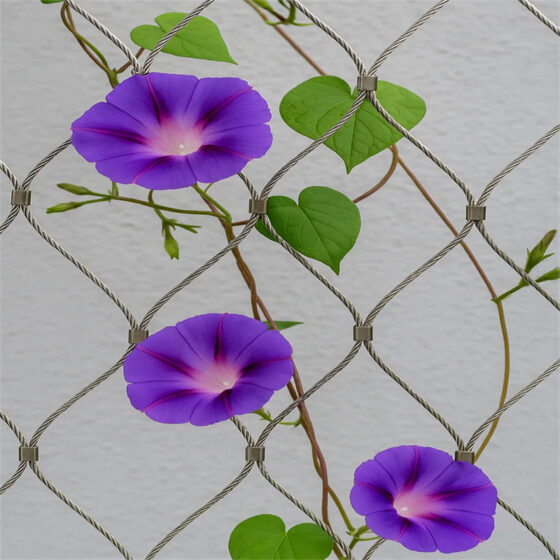
- If you allow plants to grow on or near the aviary, make sure they do not add excessive weight or hide damage to the mesh.
7. Typical Applications of Stainless Steel Aviary Mesh Netting
- Zoo and wildlife park aviaries – large free-flight spaces for parrots, hornbills, cranes, flamingos and raptors.
- Walk-through aviaries – immersive indoor or outdoor experiences where visitors share the same space with birds.
- Rehabilitation and rescue centres – strong, safe flight cages for injured or recovering birds.
- Botanical gardens, hotels and resorts – decorative aviaries integrated into courtyards, lobbies or gardens.
- Private collections and breeders – durable, attractive enclosures that increase property value and reduce long-term costs.
- Roof gardens and balconies – fall-protection combined with safe containment for pet birds or small free-flight flocks.
- Multi-animal enclosures – with adjusted specs, the same mesh can help contain small mammals or provide safety barriers.
8. What to Tell Your Stainless Steel Aviary Mesh Netting Supplier
The more precise your information, the faster you can get an accurate quotation and a safe design. Before contacting a manufacturer or exporter, prepare:
- Project type – zoo exhibit, private aviary, rooftop garden, rehabilitation centre, etc.
- Location and environment – indoor / outdoor, inland / coastal, typical climate and wind/snow conditions.
- Bird species – including the smallest species and any special behaviour (strong chewers, climbers, jumpers).
- Required mesh aperture and cable diameter – or ask the supplier for advice based on species and spans.
- Preferred stainless steel grade – usually 304 for standard, 316 for coastal or harsh environments.
- Approximate panel sizes and total area – width, height and any special shapes or cut-outs.
- Special requirements – walk-through design, “predator roof”, blackened mesh finish, integrated doors, service corridors, etc.
Secret #6 – Vague enquiries produce vague quotes, hidden extras and painful change-orders.
If you simply ask for “Stainless Steel Aviary Mesh Netting, 2 mm, best price”, suppliers must guess spans, loads, bird size and environment. That almost guarantees under-specification, missing accessories and later claims. A clear, detailed enquiry using the checklist above protects you from sudden cost increases and ensures you can compare offers on a truly like-for-like basis.
With clear input data, a logical specification using the tables above, and a basic understanding of how Stainless Steel Aviary Mesh Netting works, you can cooperate more effectively with your supplier, avoid costly mistakes and build bird enclosures that are safe, durable and a pleasure to use for both animals and visitors.