Your One-Stop Wire Mesh Fence Supplier | POLYMETAL
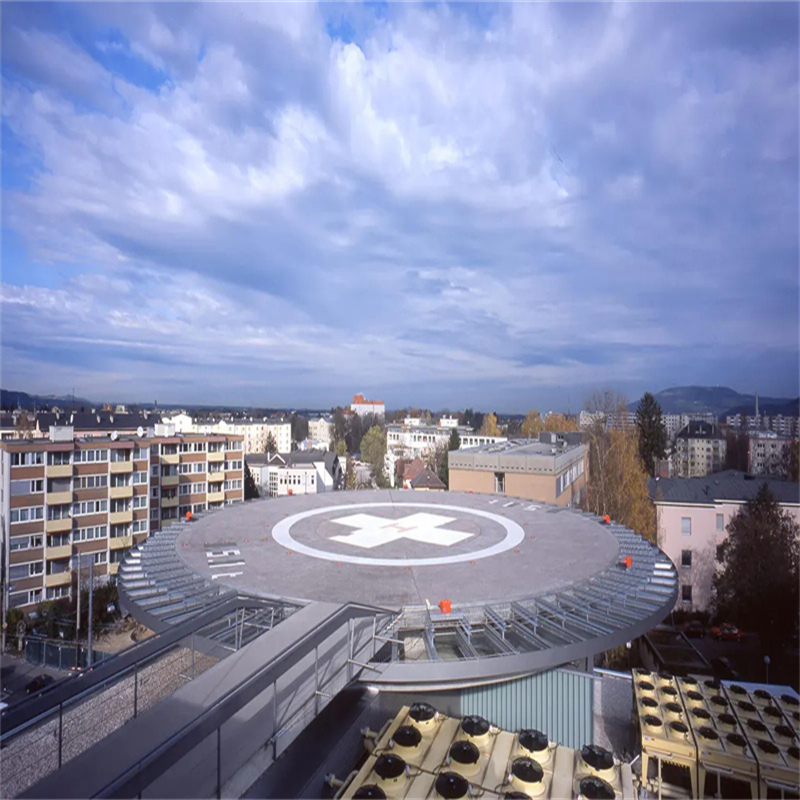
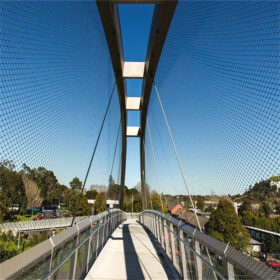

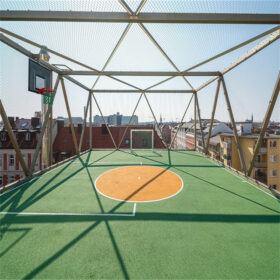
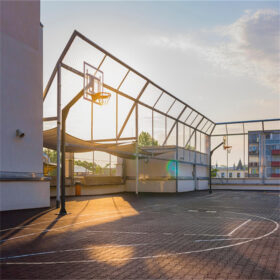
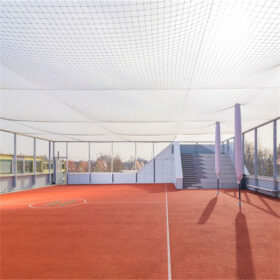
A stainless steel rooftop safety cable net is a flexible, high-strength wire rope mesh system used to prevent falls from roofs, roof edges and rooftop openings while keeping views and airflow as open as possible. It is increasingly used on residential and commercial roofs, helipads, rooftop playgrounds, solar roofs and high-rise buildings as a long-life alternative to temporary nets or heavy solid barriers.
Availability stainless steel rooftop safety cable net
Available in Stainless Steel 316 304 erc
Typical Applications
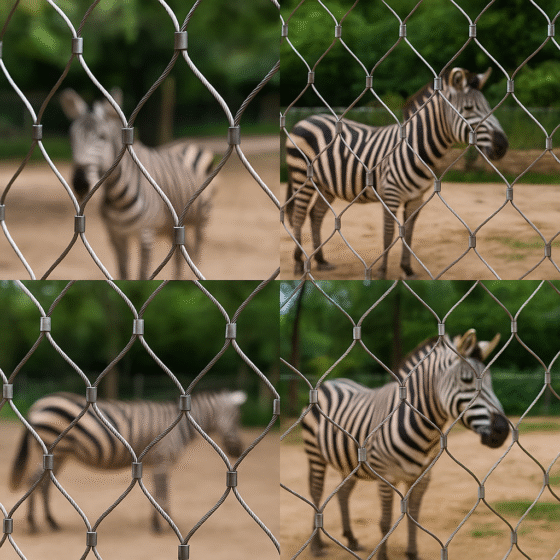
Bird screening, animal enclosures, protective netting, balustrading and tension façades.
We are architectural wire mesh products certified to BS EN ISO 9001:2015 and Achilles “Building Confidence” Level 4.
With comprehensive in house 3D design facilities we are able to offer a complete package from development of the architectural wire mesh specification through design, fabrication, supply and installation of the finished screens.
Standard Specification Codes
| Opening (mm) OW×OH | Specification Codes / Weight per m² by Cable Diameter (d) | |||||||||
| 1 mm | 1.5 mm | 2 mm | 3 mm | 4 mm | ||||||
| Code | Weight | Code | Weight | Code | Weight | Code | Weight | Code | Weight | |
| 25 × 43 | 0125 | 0.64kg | 1525 | 1.59kg | ||||||
| 30 × 52 | 1030 | 0.53kg | 1530 | 1.30kg | ||||||
| 35 × 61 | 1035 | 0.42kg | 1535 | 1.01kg | 2035 | 1.74kg | ||||
| 40 × 69 | 1040 | 0.36kg | 1540 | 0.88kg | 2040 | 1.51kg | ||||
| 50 × 90 | 1050 | 0.27kg | 1550 | 0.65kg | 2050 | 1.12kg | 3050 | 2.82kg | 4050 | 5.09kg |
| 60 × 104 | 1060 | 0.22kg | 1560 | 0.52kg | 2060 | 0.90kg | 3060 | 2.24kg | 4060 | 4.04kg |
| 70 × 121 | 1070 | 0.18kg | 1570 | 0.42kg | 2070 | 0.73kg | 3070 | 1.80kg | 4070 | 3.25kg |
| 80 × 139 | 1080 | 0.15kg | 1580 | 0.36kg | 2080 | 0.62kg | 3080 | 1.51kg | 4080 | 2.72kg |
| 100 × 173 | 10100 | 0.12kg | 15100 | 0.28kg | 20100 | 0.49kg | 30100 | 1.19kg | 40100 | 2.14kg |
| 120 × 242 | 10120 | 0.10kg | 15120 | 0.23kg | 20120 | 0.41kg | 30120 | 0.97kg | 40120 | 1.74kg |
| 160 × 277 | 10160 | 0.07kg | 15160 | 0.17kg | 20160 | 0.30kg | 30160 | 0.70kg | 40160 | 1.26kg |
| 180 × 312 | 10180 | 0.06kg | 15180 | 0.15kg | 20180 | 0.26kg | 30180 | 0.60kg | 40180 | 1.08kg |
| 200 × 346 | 10200 | 0.05kg | 15200 | 0.12kg | 20200 | 0.22kg | 30200 | 0.52kg | 40200 | 0.92kg |
Stainless Steel Rooftop Safety Cable Net – Product Specifications
| No. | Model | Recommended application | Wire rope (construction / Ø) | Mesh aperture (mm) | Material (wire / ferrule) | Approx. min. breaking load* |
|---|---|---|---|---|---|---|
| 1 | RSN-01 | Roof edge guard / balcony infill | 7×7, 1.5 mm | 40 × 70 | AISI 316 / 316L | ≈ 1.6 kN per cable |
| 2 | RSN-02 | Skylight / atrium opening protection | 7×7, 1.5 mm | 60 × 104 | AISI 316 / 316L | ≈ 1.6 kN per cable |
| 3 | RSN-03 | Rooftop playground, low-height guard | 7×7, 2.0 mm | 60 × 104 | AISI 316 / 316L | ≈ 2.9 kN per cable |
| 4 | RSN-04 | Rooftop sports deck ball-stop + fall protection | 7×7, 2.0 mm | 80 × 139 | AISI 316 / 316L | ≈ 2.9 kN per cable |
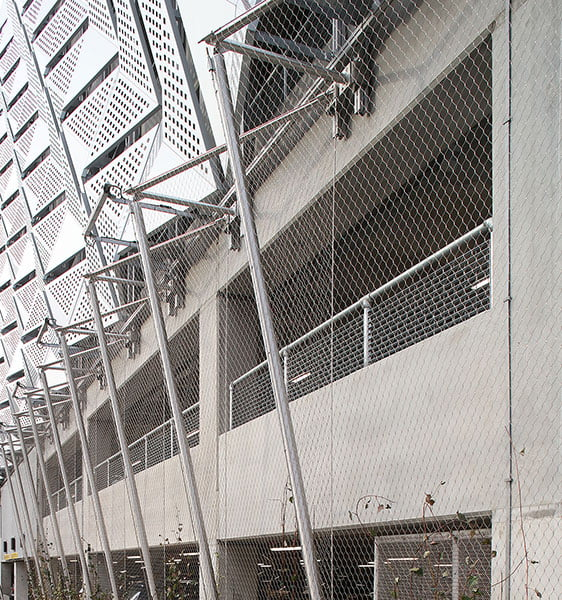
| 5 | RSN-05 | Stadium / roof façade safety & anti-throw | 7×7, 2.0 mm | 100 × 173 | AISI 316 / 316L | ≈ 2.9 kN per cable |
| 6 | RSN-06 | High parapet / climb-resistant rooftop barrier | 7×7, 2.4 mm | 60 × 104 | AISI 316 / 316L | ≈ 3.5–3.8 kN per cable |
| 7 | RSN-07 | Rooftop sports deck, ball-stop + fall protection | 7×7, 2.4 mm | 80 × 139 | AISI 316 / 316L | ≈ 3.5–3.8 kN per cable |
| 8 | RSN-08 | Helipad / helideck perimeter safety mesh | 7×7, 2.4 mm | 100 × 200 | AISI 316 / 316L | ≈ 3.5–3.8 kN per cable |
| 9 | RSN-09 | Helipad / offshore platform heavy perimeter | 7×19, 3.0 mm | 100 × 200 | AISI 316 / 316L | ≈ 5–6 kN per cable |
| 10 | RSN-10 | Roof edge + anti-throw (stadium / arena) | 7×7, 3.0 mm | 120 × 200 | AISI 316 / 316L | ≈ 6.3 kN per cable |
| 11 | RSN-11 | High-rise atrium / façade fall-protection | 7×7, 2.5 mm | 80 × 150 | AISI 316 / 316L | ≈ 3.8 kN per cable |
| 12 | RSN-12 | Heavy-duty rooftop access / maintenance zone | 7×19, 3.2 mm | 90 × 156 | AISI 316 / 316L | ≈ 5.5–6.0 kN per cable |
*Breaking load = typical minimum breaking load of the cable itself. For real projects, you still need to apply safety factors according to local design codes.
Mesh Measurement and Geometry
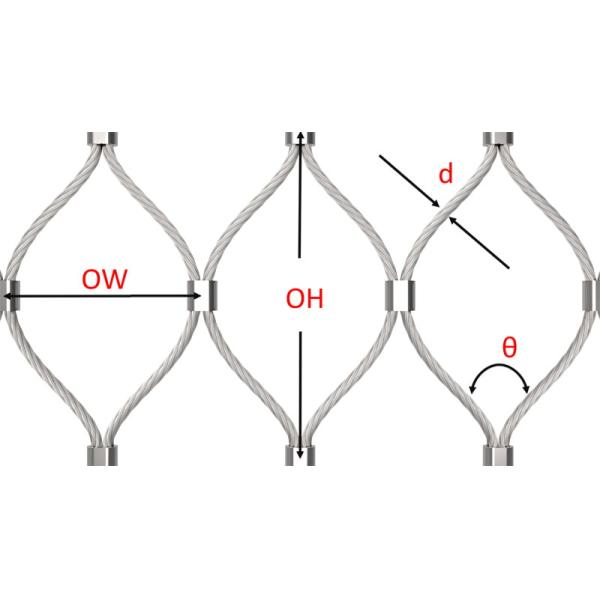 |
| For measuring purposes the ferruled mesh is assumed to be stretched to create a 60° angle at the top and bottom of the diamond. OW = Opening Width, OH = Opening Height, d = Cable Diameter, θ = 60° Angle. |
Edging Options
Rope diamond ferruled mesh is delivered as standard with spare ferrules, lashing wire and a specialist fixing tool. It can optionally be edged to order, ready for immediate installation:
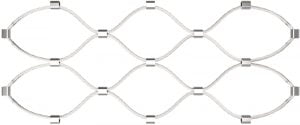
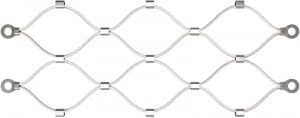
| Loose Ferrules
Loose edging ferrules enable easy attachment of the mesh to a frame. | Eyelets
The ferruled mesh can be edged with a combination of loose ferrules and eyelets for fixing to a solid surface. |
Orientation Options
| Horizontal
| Vertical
|
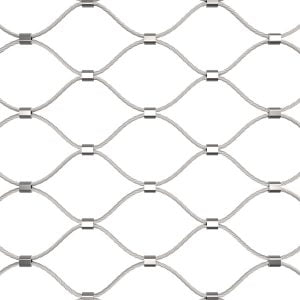
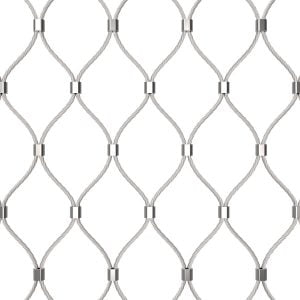
Rope diamond ferruled wire mesh can be installed horizontally or vertically depending on the results required. Its flexibility means it can be stretched, bunched and twisted to fit the underlying structure and create interesting effects, without compromising either strength or security.
 |  |
1. What Is a Stainless Steel Rooftop Safety Cable Net?
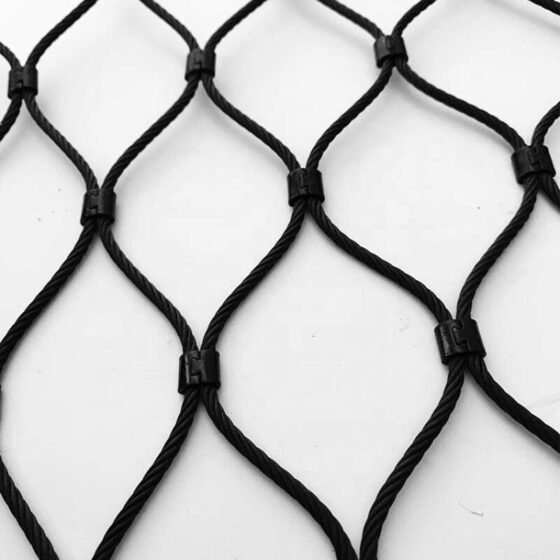
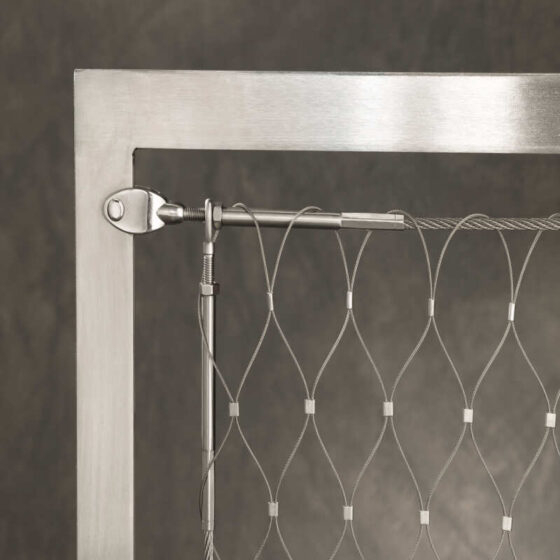
A stainless steel rooftop safety cable net (also called stainless steel roof fall-protection cable mesh or stainless steel rooftop safety net) is a net made from tensioned stainless steel wire ropes arranged in a diamond pattern. The ropes are connected at their intersections by knots or pressed ferrules, creating a flexible but very strong mesh surface.
On roofs, this mesh is typically used in three main ways:
- Around roof edges and parapets as a vertical or inclined safety screen to prevent people, tools or balls from falling off the roof.
- Over openings such as skylights, atriums and service shafts, acting as a catch net so that anyone stepping or slipping onto the opening is safely arrested.
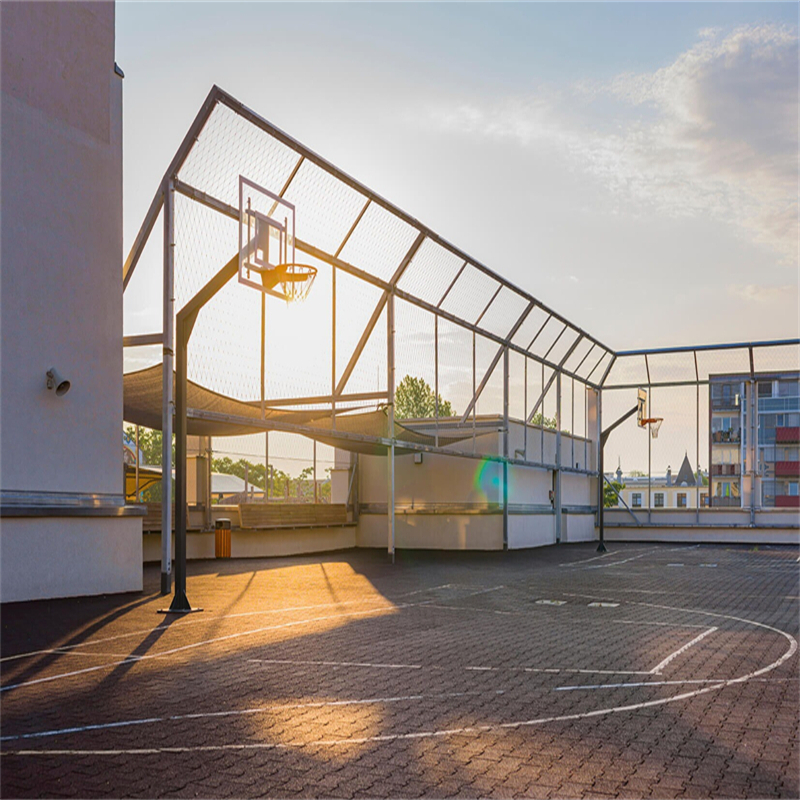
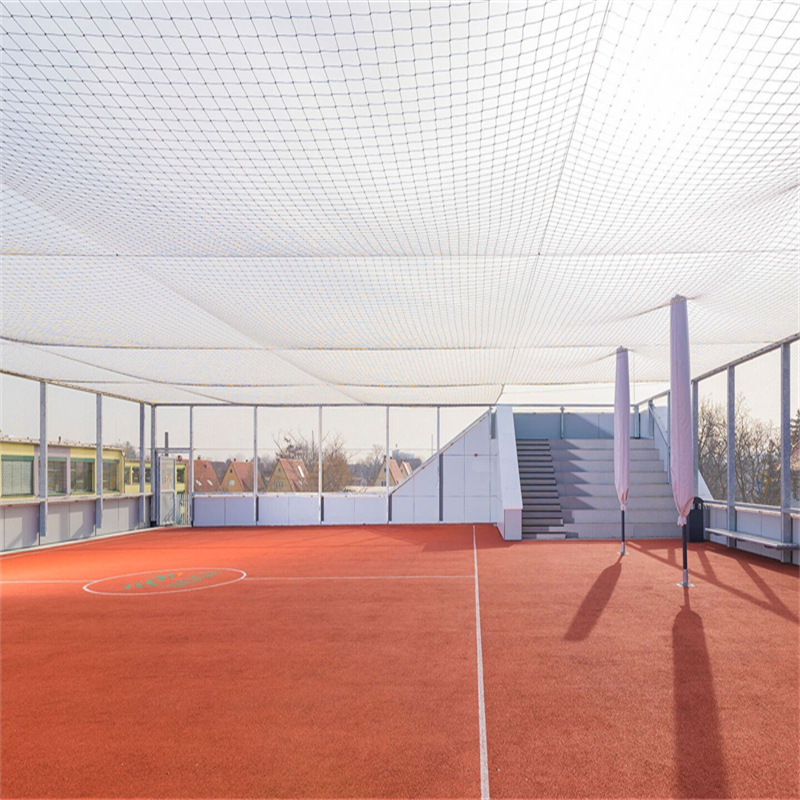
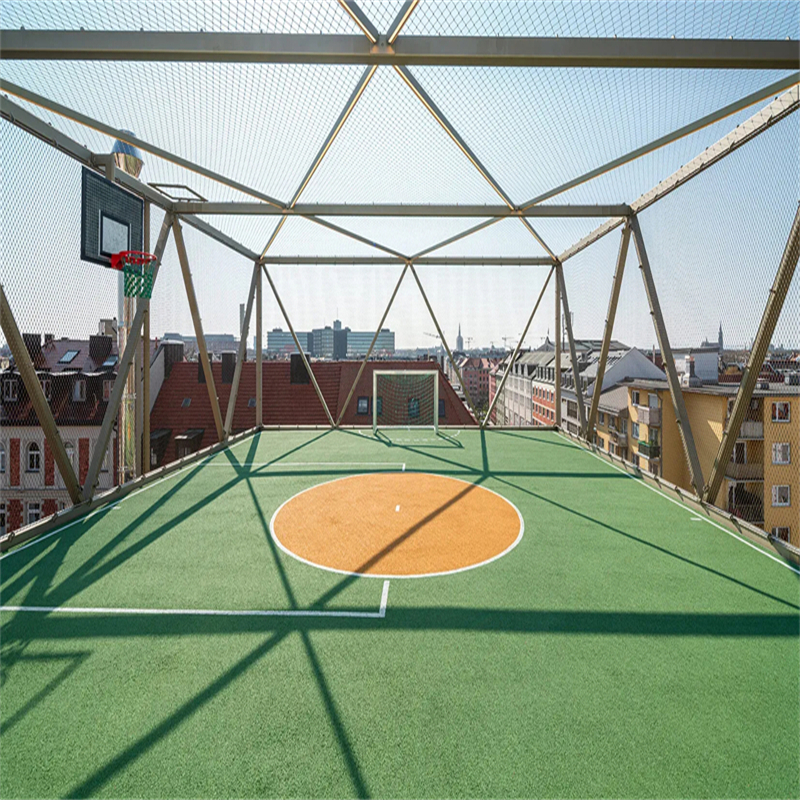
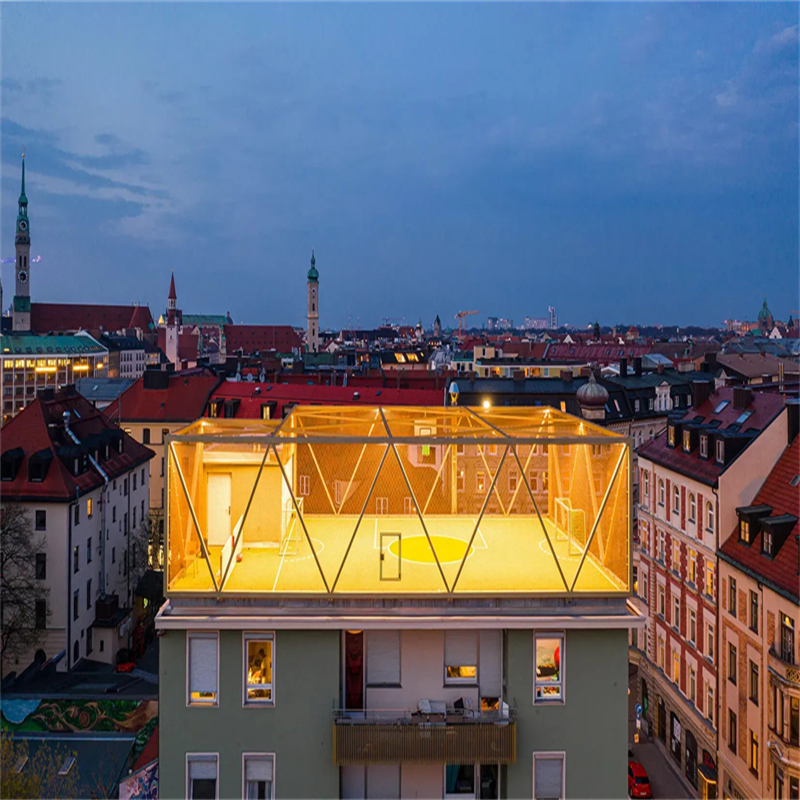
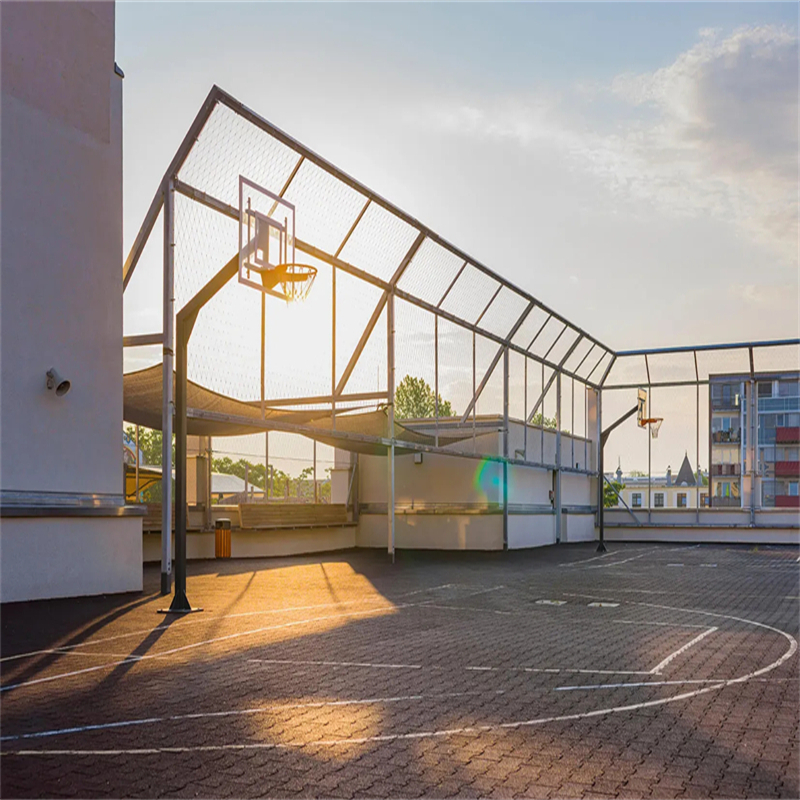
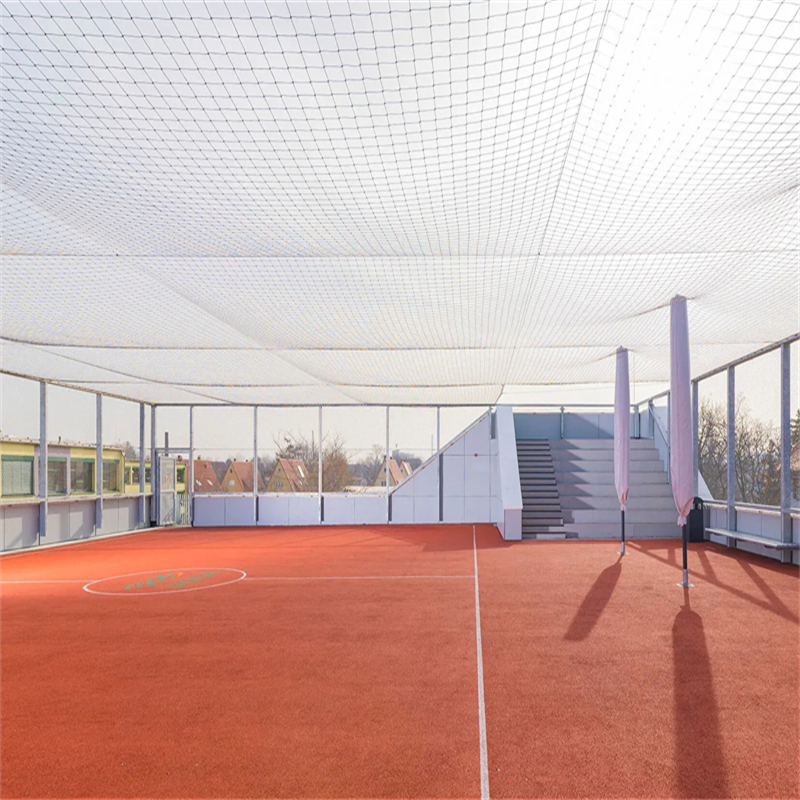
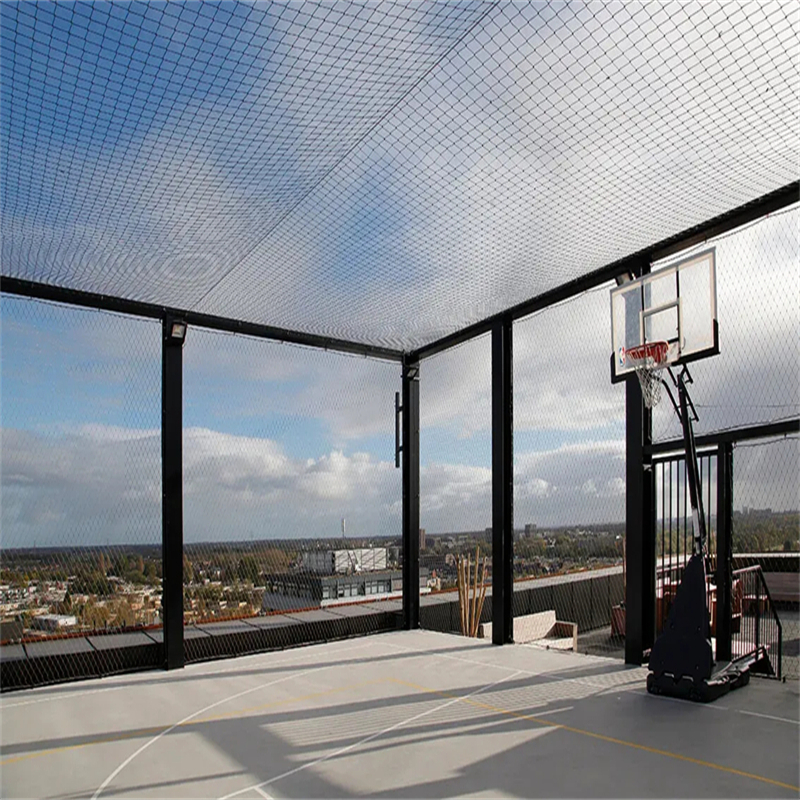
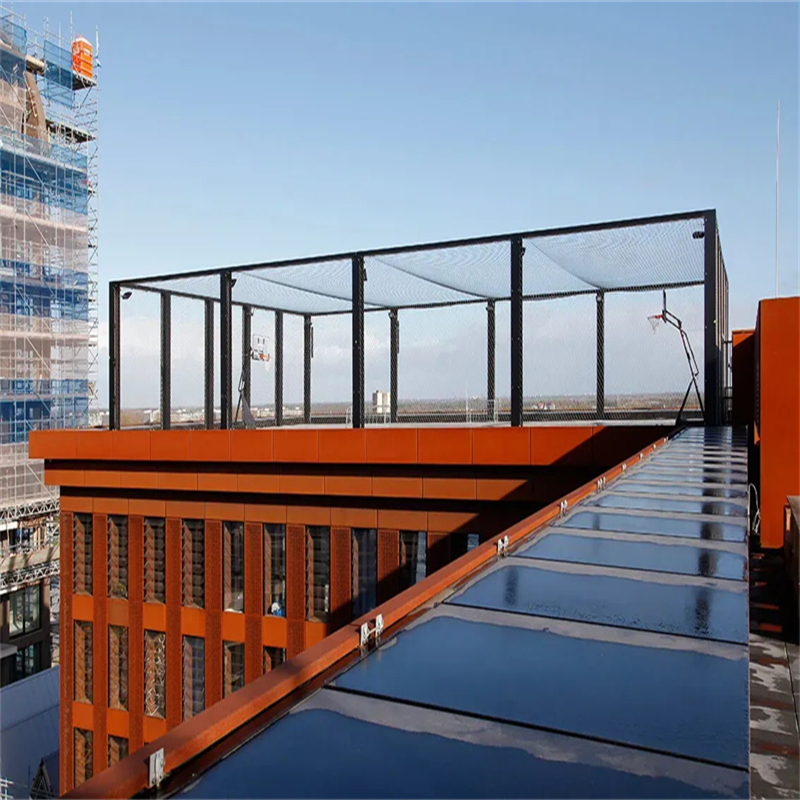
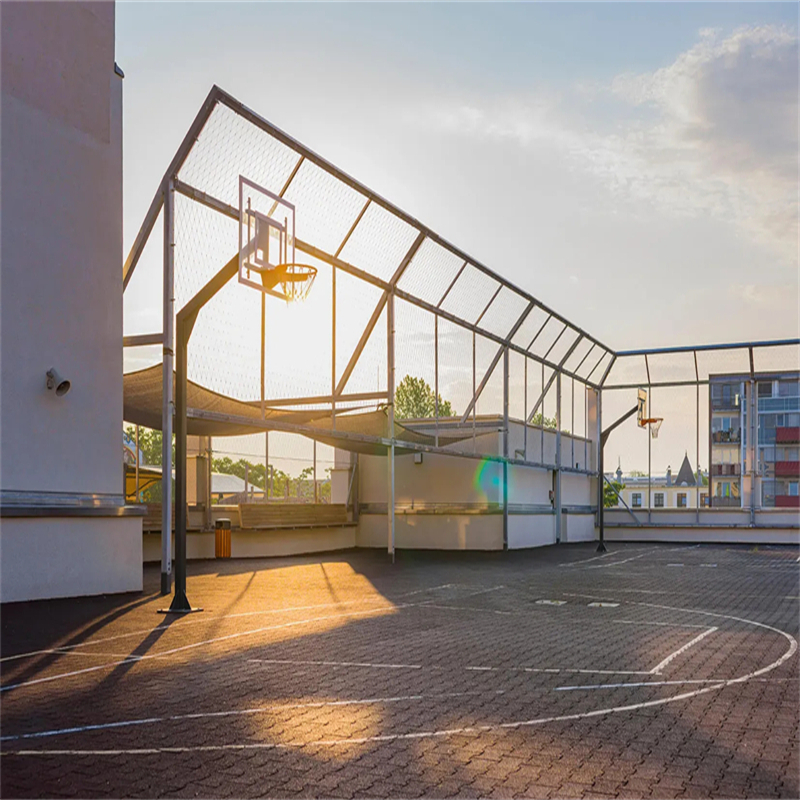
- Around rooftop playgrounds, sports decks and helipads, functioning as a transparent perimeter enclosing the area.
Unlike temporary construction nets, stainless steel rooftop cable nets are usually permanent architectural elements, designed to last for decades with minimal maintenance.
2. Materials and Cable Construction stainless steel rooftop safety cable net
2.1 Stainless steel grades
Most rooftop safety cable nets use austenitic stainless steel, typically:
- AISI 304 / 304L for indoor or mild outdoor environments.
- AISI 316 / 316L (marine grade) for coastal, industrial and highly exposed rooftops where better corrosion resistance is required.
Some simple roof safety meshes are made from galvanised steel, but for architectural roof edges, helipads and long-term fall protection, stainless steel is preferred for its durability and clean appearance.
2.2 Wire rope structure
The mesh is formed from multi-strand wire ropes, commonly in:
- 7×7 construction – 7 strands of 7 wires; flexible and widely used in 1.5–2.4 mm diameters for fall-protection and façade meshes.
- 7×19 construction – very flexible, used in 3.2 mm and larger diameters for heavy-duty or long-span rooftop nets.
Rope diameters for rooftop safety cable nets generally range from about 1.5 to 4.0 mm, with heavier rope available where very high loads must be carried.
2.3 Mesh geometry: knotted vs ferrule type
Two main stainless steel cable mesh styles are used:
- Knotted mesh – the cables are interwoven and twisted at each crossing, giving a flexible woven texture.
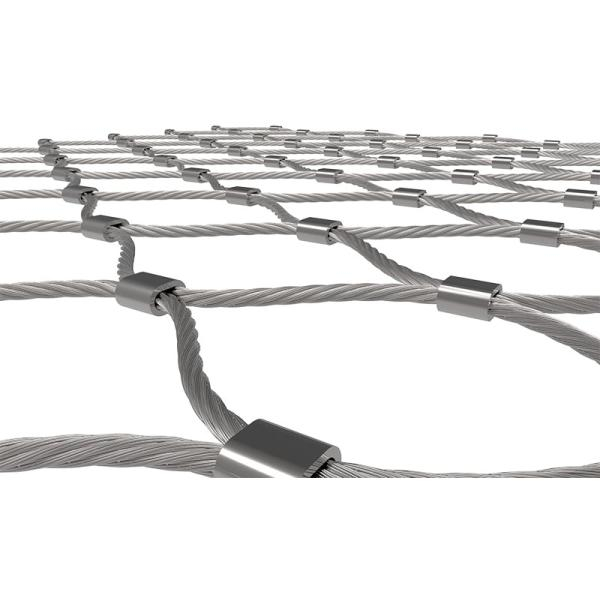
- Ferrule (X-TEND type) mesh – cables run in two directions and are joined at intersections by pressed stainless steel ferrules, creating clean, regular diamond openings with a crisp architectural appearance.
For rooftop edges and helipads, ferrule-type mesh is especially popular because it looks neat, is easy to detail at edges and can be engineered precisely for fall protection.
3. Technical Characteristics stainless steel rooftop safety cable net
Exact values are designed separately for each project, but stainless steel rooftop safety cable nets usually fall in these ranges:
- Cable diameters: approximately 1.5–4.0 mm. Smaller diameters are used for typical fall protection and façades; larger diameters are used for high loads or long spans.
- Mesh aperture (opening size): typically 40 × 70 mm up to 120 × 200 mm, chosen to prevent falls while keeping high transparency. Smaller apertures are used where people could climb or push through.
- Breaking strength: from around 1 kN per cable for thin rope to many kilonewtons for heavier rope. Common rooftop meshes with 2.0–3.2 mm cable provide several kilonewtons of breaking load per cable.
- Open area / transparency: stainless cable mesh usually offers high open area, often more than 70–80%, giving a near-transparent appearance while still functioning as a robust safety barrier.
Traditional roof safety mesh under metal sheeting is usually weld-mesh laid horizontally to catch workers. Stainless steel rooftop cable nets, by contrast, are often installed vertically or at an angle along edges and openings and follow the design principles of architectural fall-protection systems.
4. Key Features and Advantages stainless steel rooftop safety cable net
4.1 Fall protection and safety performance
Rooftop cable nets are designed to prevent people and objects from falling from the roof edge or through openings. When someone or something impacts the mesh, the cables deform elastically and absorb energy, distributing forces through the mesh into the support structure. The net either arrests the fall or prevents objects from leaving the roof.
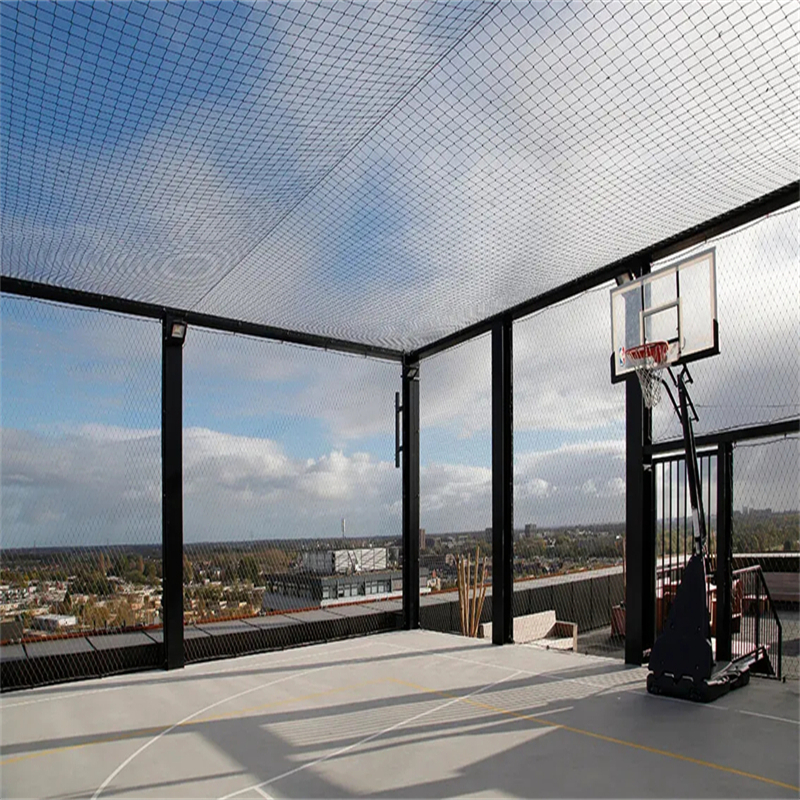
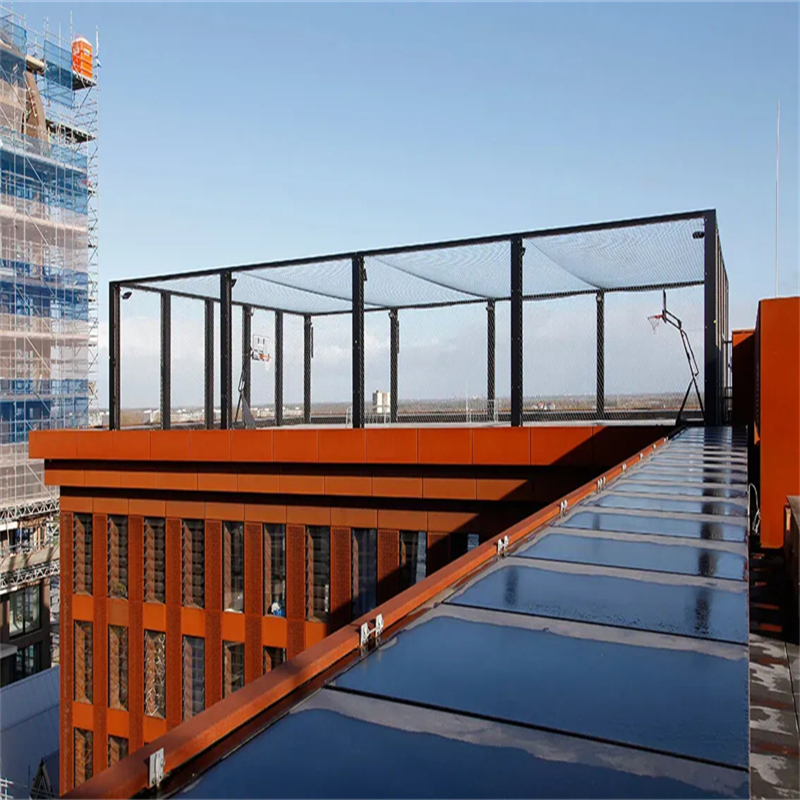
When properly engineered, stainless steel cable mesh can combine fall protection, ball-catch and anti-throw functions in one system, especially around rooftop sports areas and helipads.
4.2 High transparency and light weight
Because the cables are thin and the mesh openings relatively large, stainless cable nets are almost invisible at a distance, preserving views from the roof and from neighbouring buildings, and are very light compared with solid balustrades or welded panels, reducing the loads on parapets and roof structures. This makes them ideal for architectural rooftops where appearance and openness are as important as safety.
4.3 Corrosion resistance and durability stainless steel rooftop safety cable net
Stainless steel cable mesh is weather-resistant and corrosion-resistant, especially when made from AISI 316 or 316L in coastal or industrial environments. It does not suffer from UV ageing or colour fading like plastic nets. In practice, rooftop stainless steel cable nets are often designed as permanent elements with a long service life, usually needing only basic cleaning.
4.4 Architectural flexibility
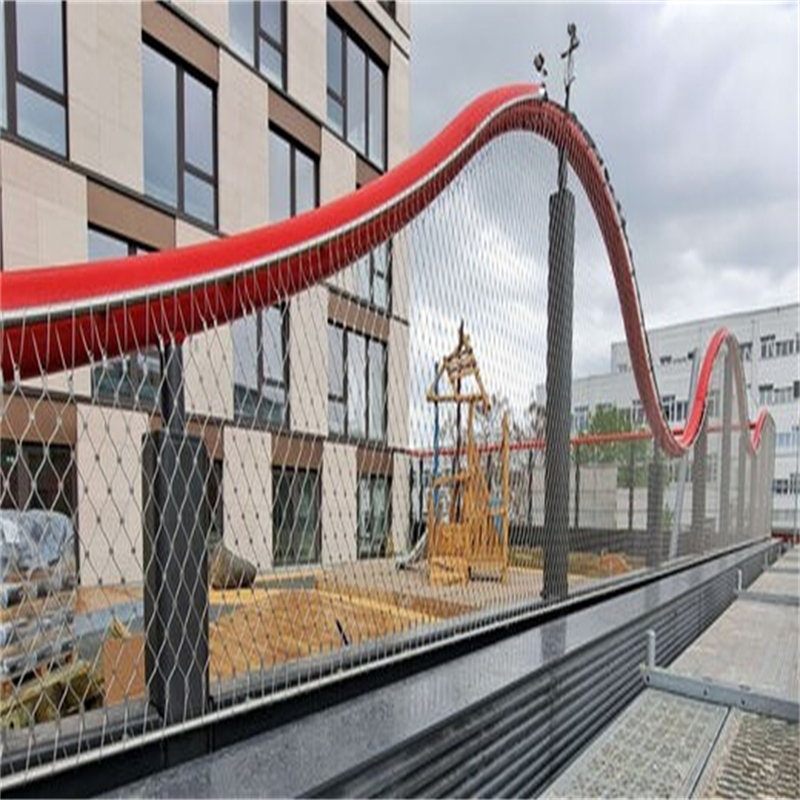
Cable nets can wrap around curves and corners, follow complex roof geometries or sloped pitches, integrate with green façades or climbing plants, and be combined with glass, metal panels or timber to create distinctive rooftop designs. Because of this flexibility, the safety system can be treated as part of the architecture instead of a visually heavy add-on.
5. Main Rooftop Applications
5.1 Roof edges and parapets
Around the perimeter of flat roofs and low parapets, stainless steel cable nets form a continuous safety screen that prevents people from falling over the edge, stops tools and debris from leaving the roof and maintains open views and ventilation.
5.2 Skylight and roof-opening protection
Skylights and roof lights are known fall hazards. Stainless steel safety nets can be installed directly over individual skylights or as continuous nets spanning a series of openings. If anyone steps or slips onto the opening, they are supported by the net rather than falling through.
5.3 Rooftop sports decks and playgrounds
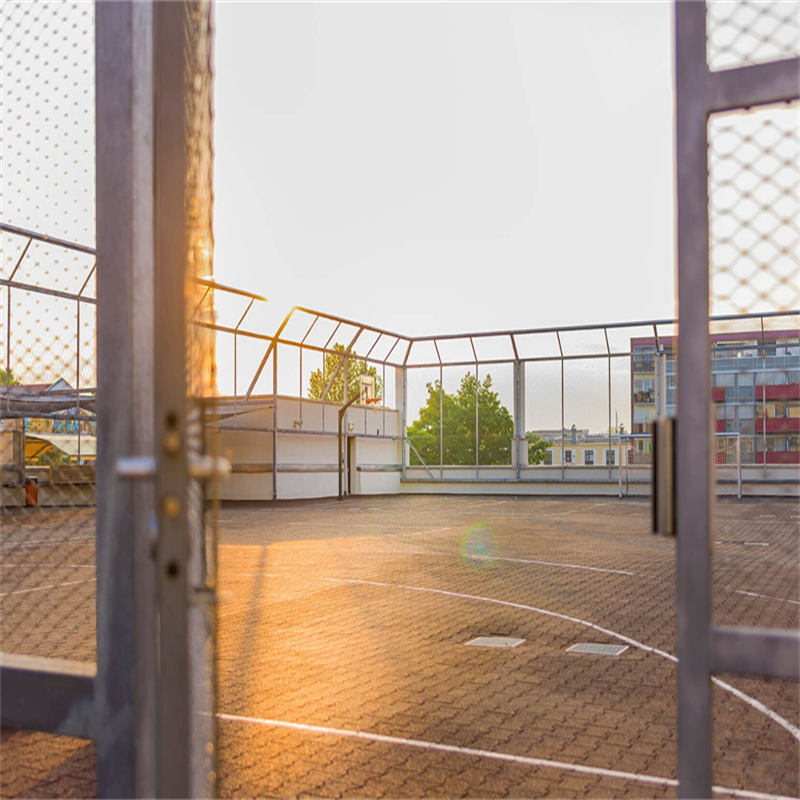
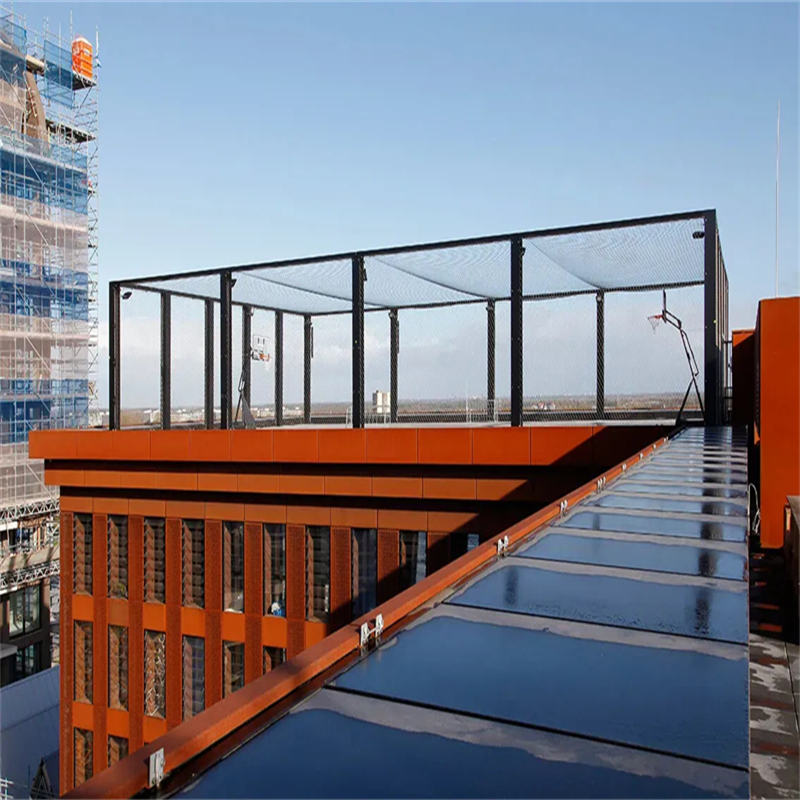
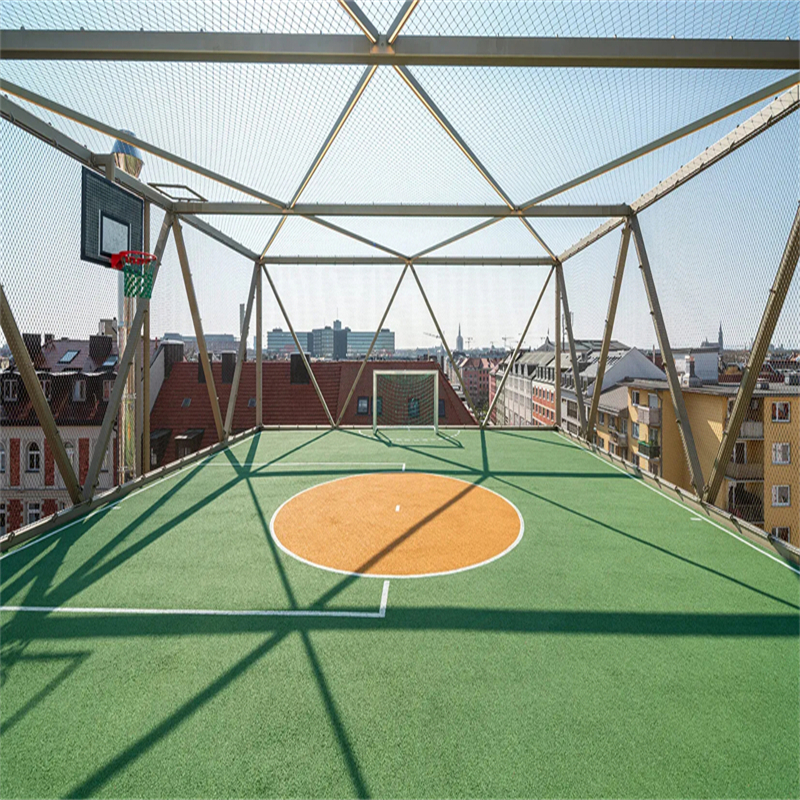
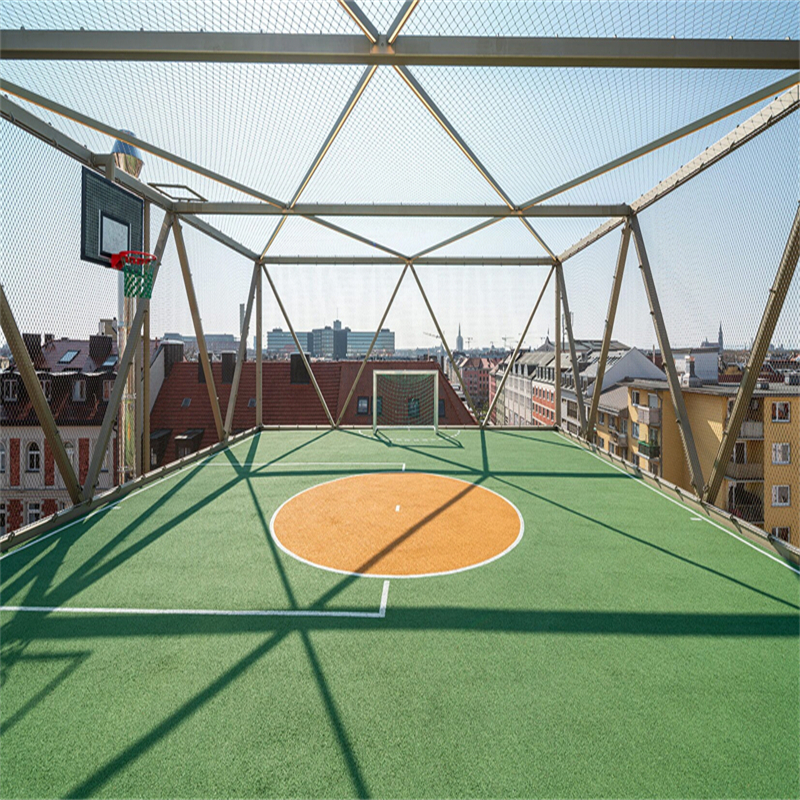
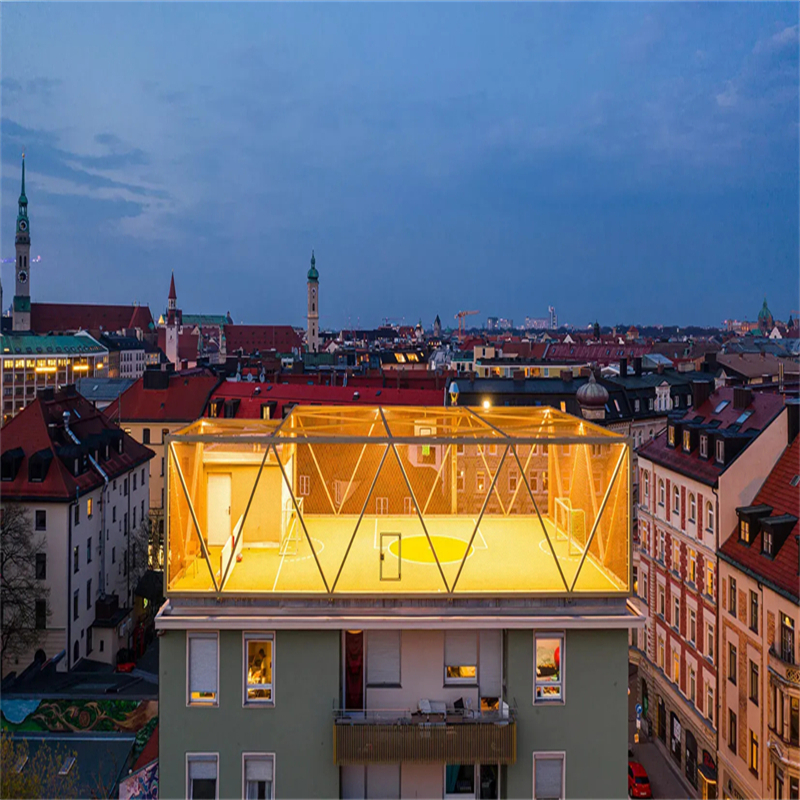
On rooftop basketball courts, multi-use games areas and playgrounds, stainless cable mesh acts as a transparent enclosure, keeping balls and people safely within the playing zone while allowing light, air and views.
5.4 Helipads and rooftop access zones
Helipads, plant decks and service roofs often require perimeter protection that does not create large wind loads. Lightweight stainless cable nets are well suited for this: they are wind-permeable, robust and compatible with aviation and maintenance access requirements.
5.5 High-rise balconies, atriums and facades
The same safety cable nets are widely used for high-rise balcony fall protection, atrium infill and near-transparent anti-throw screens on facades and bridges, meaning a single product family can cover both façade and rooftop safety.
6. Design Considerations
When designing a stainless steel rooftop safety cable net, engineers typically consider the purpose and load cases (whether the mesh is used only to prevent access or must arrest a fall, and whether it also needs to catch balls or objects), the applicable standards (roof safety, guardrail and fall-protection requirements in the relevant building codes), the mesh opening size (small enough to prevent people or objects from passing through, and sometimes limited to reduce climbing ability), the cable diameter and strength (chosen according to span, support spacing and required safety factors), and the support structure (posts, parapet rails, beams or cable frames must be designed to withstand both the mesh tension and expected impact loads). Most projects use custom-made panels, with mesh fabricated to the exact width, height and shape required.
7. Installation and Maintenance
7.1 Installation
Typical installation steps include surveying the roof and defining mesh panel sizes, aperture, cable diameter and fixing points, factory fabrication of mesh panels complete with ferrules or knots and any border cables or loops, installation of the support structure with parapet posts, frames or edge cables fixed to the roof, mounting and tensioning of the mesh panels using clamps, lacing or shackles and turnbuckles or tension devices to achieve the designed stiffness, and final inspection to confirm that the system meets the design and safety requirements.
7.2 Maintenance
Stainless steel rooftop safety cable nets are designed to be low-maintenance. Regular visual inspections are usually enough to verify that cables, ferrules and fixings are intact. Where dust, salt or pollution accumulates, the mesh can be cleaned with water or mild detergent. After any significant impact or major storm, the system should be checked and, if necessary, retensioned or repaired. No repainting or recoating is normally required.
Conclusion stainless steel rooftop safety cable net
A stainless steel rooftop safety cable net is a modern, durable and visually light solution for roof-edge protection, skylight safety and rooftop sports or helipad perimeters. By combining high-grade stainless steel wire ropes, flexible diamond-pattern mesh and carefully engineered support structures, it delivers reliable fall protection, high transparency, low weight and excellent corrosion resistance.
For architects, engineers, contractors and building owners, stainless steel rooftop safety cable nets provide a way to make roofs, terraces and rooftop playgrounds safe and code-compliant without sacrificing openness, light or design quality.