Your One-Stop Wire Mesh Fence Supplier | POLYMETAL
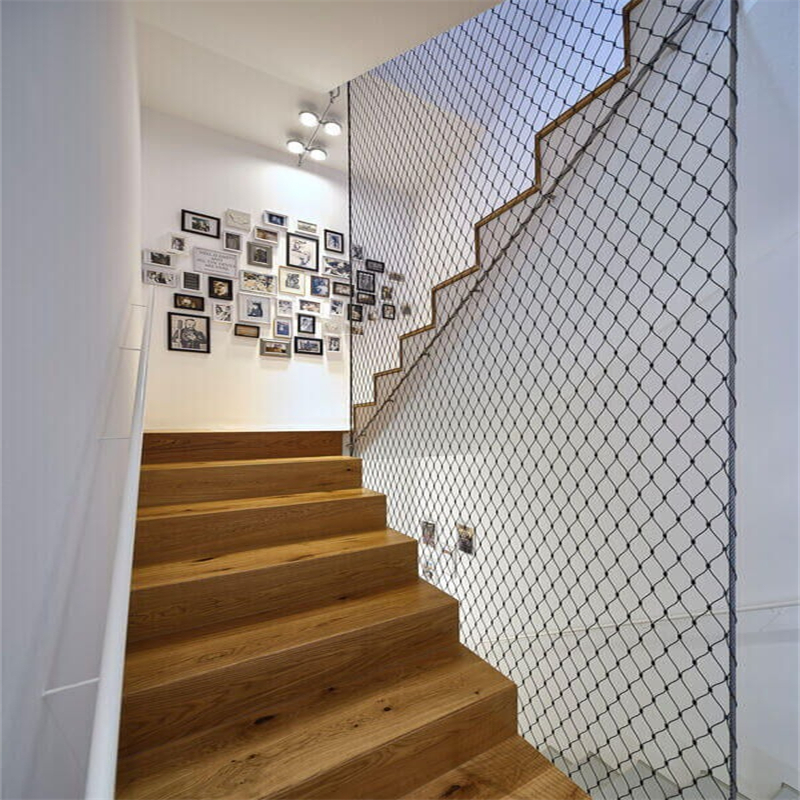
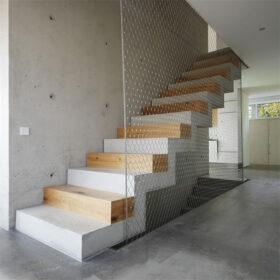
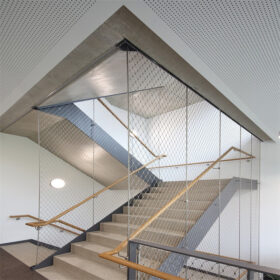
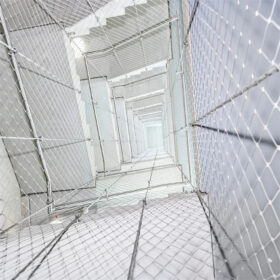
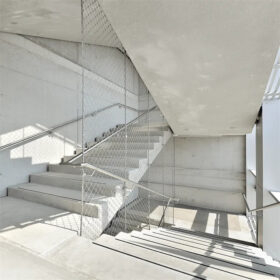
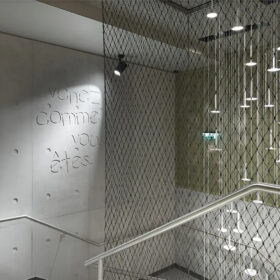
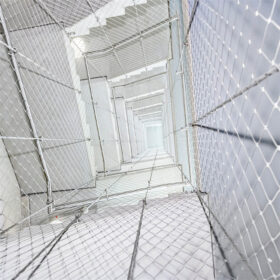
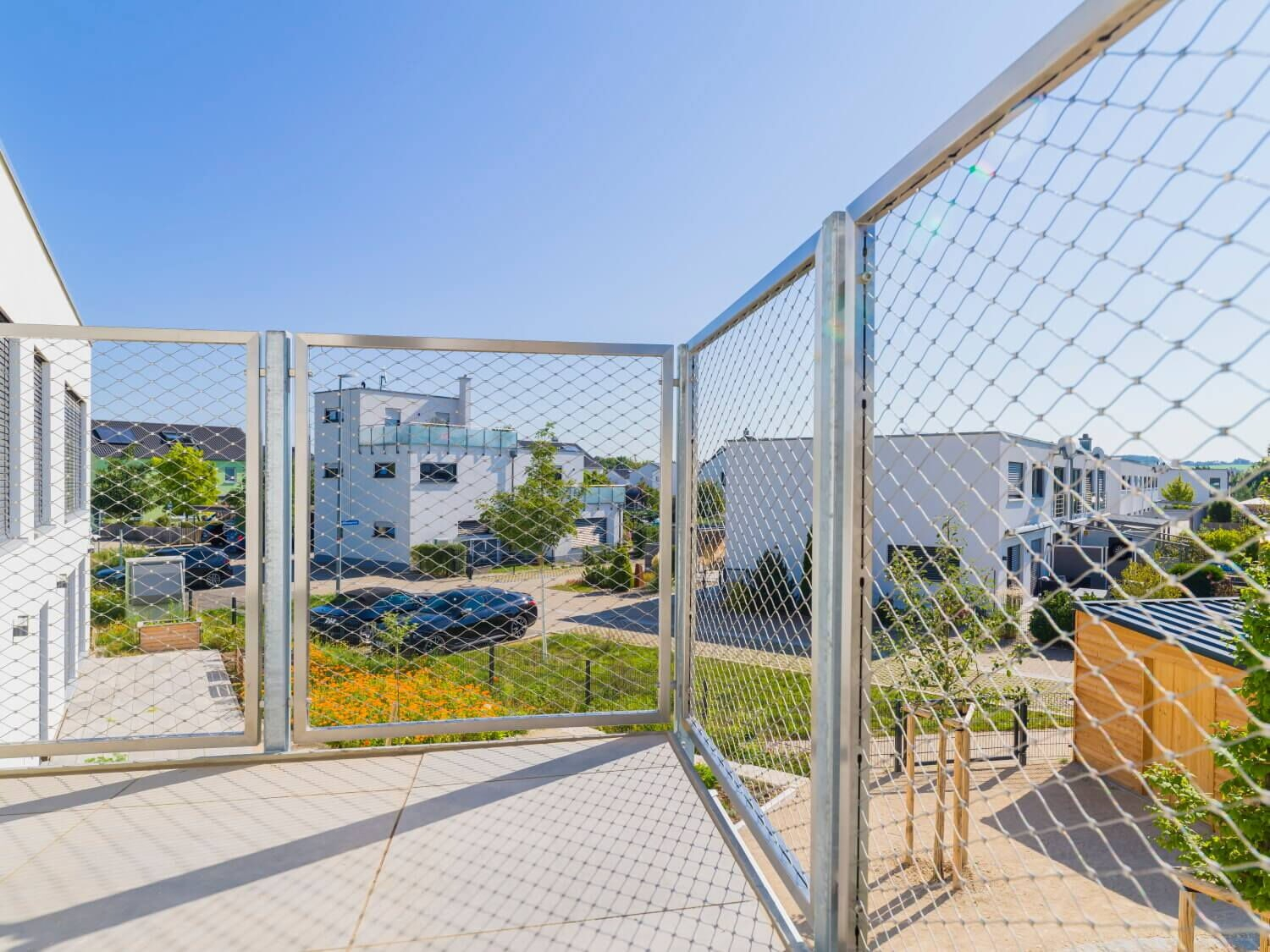
What Is Stair Safety Wire Mesh?
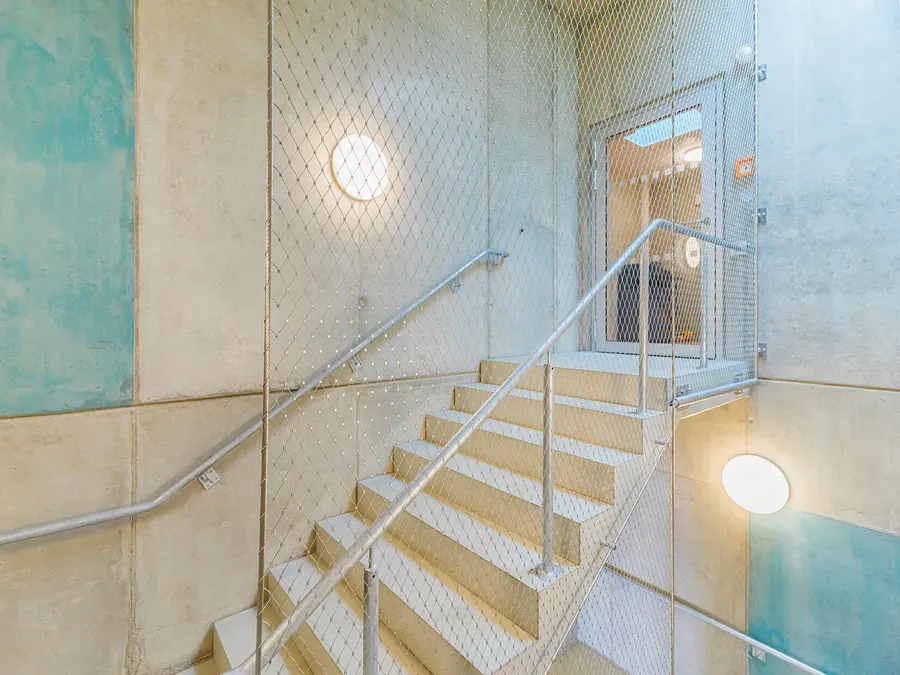
Typically manufactured from stainless steel or galvanized steel, stair safety wire mesh is framed and fixed between handrails, posts and stringers to create a continuous safety barrier along the open side of a stair or landing. It is widely used in homes, commercial buildings, schools, hospitals, industrial plants and public spaces.
Types of Stair Safety Wire Mesh
Stainless Steel Wire Rope Mesh (Cable Mesh)
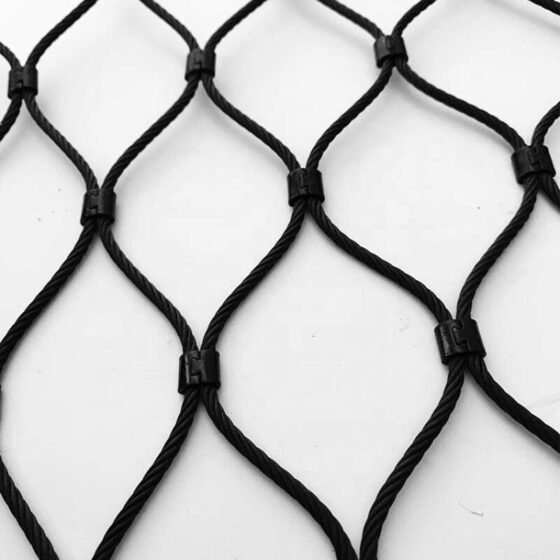
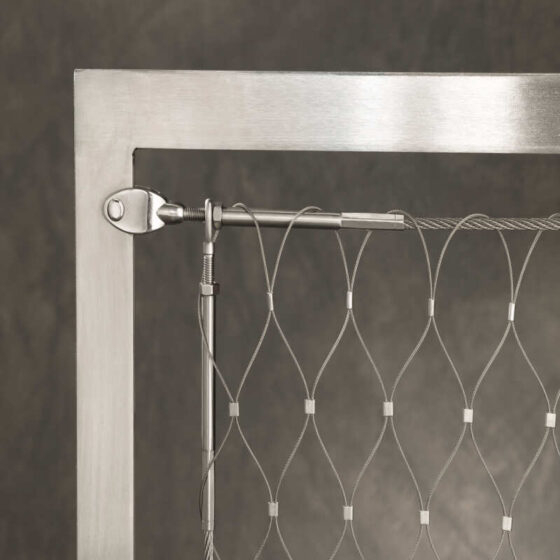
Flexible, diamond-shaped mesh made from stainless steel wire ropes connected with ferrules or knots. This is the most popular form of stair safety wire mesh for modern architecture.
- Very high strength-to-weight ratio
- Excellent flexibility – follows curved or sloped stair runs
- Premium appearance for high-end architectural projects
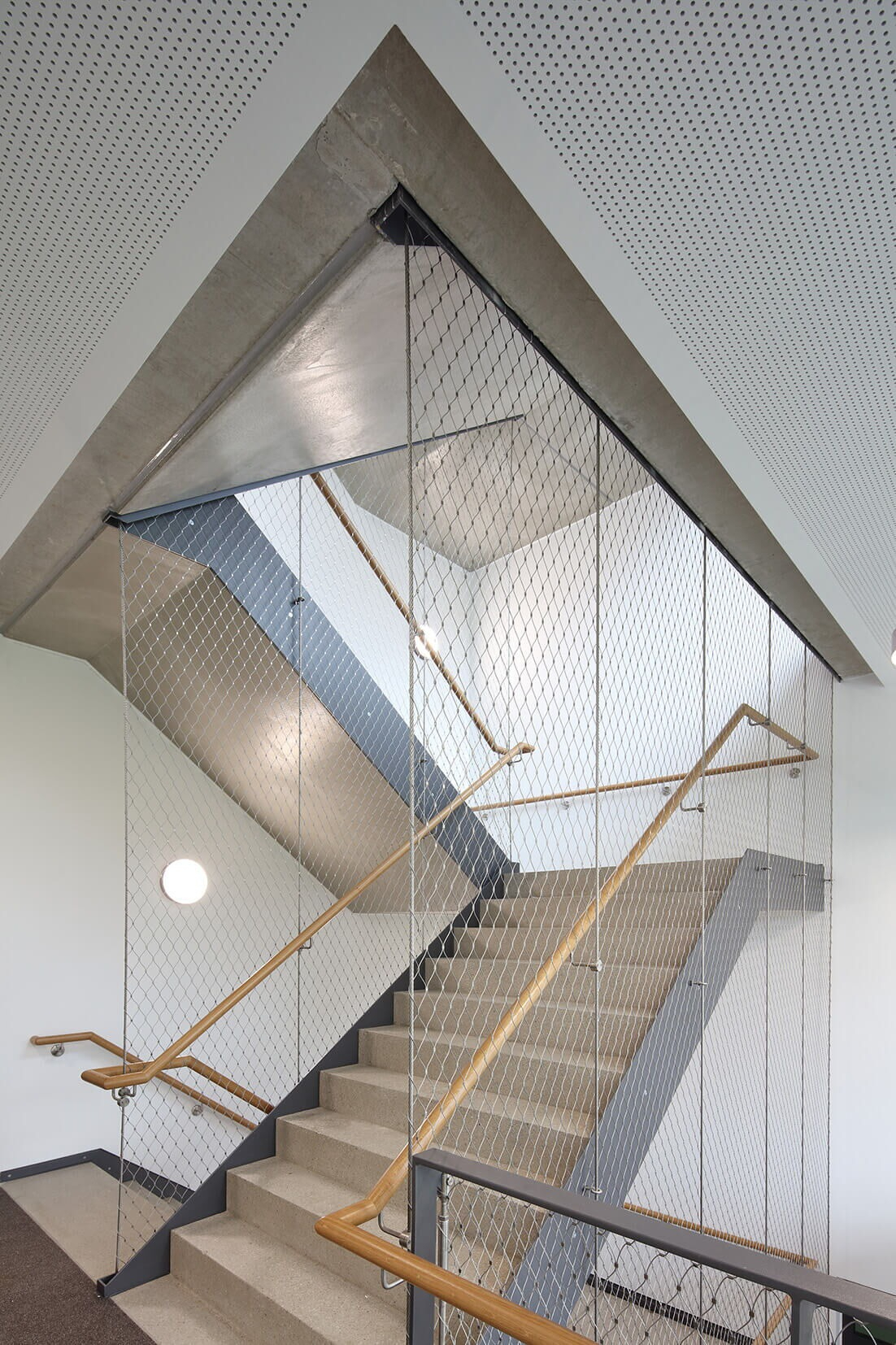
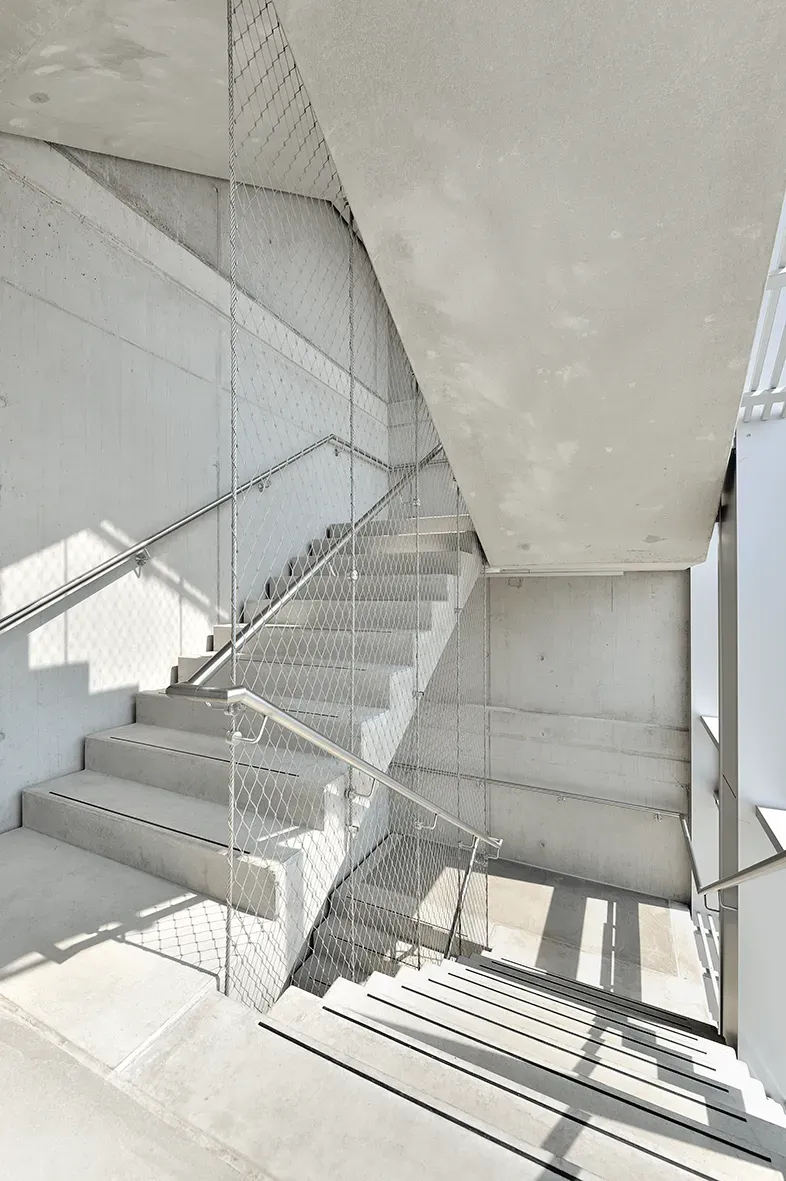
Technical Specifications – Stair Safety Wire Mesh (Cable Mesh)
The following tables show typical specification combinations used for stair safety wire mesh balustrades, based on stainless steel cable mesh with a 60° mesh angle.
① 1.0 mm Stair Safety Wire Mesh
| Part No. | Type | Rope Ø (mm) | Mesh W (mm) | Mesh H (mm) | Construction |
|---|---|---|---|---|---|
| 0100-020 | Webnet A (rope) | 1.0 | 20 | 38.2 | 6×7 + WC |
| 0100-030 | Webnet A (rope) | 1.0 | 30 | 53.0 | 6×7 + WC |
| 0100-040 | Webnet A (rope) | 1.0 | 40 | 70.5 | 6×7 + WC |
| 0100-041 | Webnet B (strand) | 1.0 | 40 | 70.5 | 1×19 |
| 0100-050 | Webnet A (rope) | 1.0 | 50 | 87.2 | 6×7 + WC |
| 0100-051 | Webnet B (strand) | 1.0 | 50 | 87.2 | 1×19 |
| 0100-060 | Webnet A (rope) | 1.0 | 60 | 105.0 | 6×7 + WC |
| 0100-061 | Webnet B (strand) | 1.0 | 60 | 105.0 | 1×19 |
| 0100-070 | Webnet A (rope) | 1.0 | 70 | 122.0 | 6×7 + WC |
| 0100-071 | Webnet B (strand) | 1.0 | 70 | 122.0 | 1×19 |
| 0100-080 | Webnet A (rope) | 1.0 | 80 | 139.0 | 6×7 + WC |
| 0100-081 | Webnet B (strand) | 1.0 | 80 | 139.0 | 1×19 |
② 1.5 mm Stair Safety Wire Mesh
| Part No. | Type | Rope Ø (mm) | Mesh W (mm) | Mesh H (mm) | Construction |
|---|---|---|---|---|---|
| 0150-025 | Webnet A (rope) | 1.5 | 25 | 55.9 | 6×7 + WC |
| 0150-030 | Webnet A (rope) | 1.5 | 30 | 61.6 | 6×7 + WC |
| 0150-040 | Webnet A (rope) | 1.5 | 40 | 75.0 | 6×7 + WC |
| 0150-041 | Webnet B (strand) | 1.5 | 40 | 75.0 | 1×19 |
| 0150-050 | Webnet A (rope) | 1.5 | 50 | 90.0 | 6×7 + WC |
| 0150-051 | Webnet B (strand) | 1.5 | 50 | 90.0 | 1×19 |
| 0150-060 | Webnet A (rope) | 1.5 | 60 | 106.0 | 6×7 + WC |
| 0150-061 | Webnet B (strand) | 1.5 | 60 | 106.0 | 1×19 |
| 0150-070 | Webnet A (rope) | 1.5 | 70 | 124.2 | 6×7 + WC |
| 0150-071 | Webnet B (strand) | 1.5 | 70 | 124.2 | 1×19 |
| 0150-080 | Webnet A (rope) | 1.5 | 80 | 141.0 | 6×7 + WC |
| 0150-081 | Webnet B (strand) | 1.5 | 80 | 141.0 | 1×19 |
| 0150-100 | Webnet A (rope) | 1.5 | 100 | 175.0 | 6×7 + WC |
| 0150-101 | Webnet B (strand) | 1.5 | 100 | 175.0 | 1×19 |
| 0150-120 | Webnet A (rope) | 1.5 | 120 | 209.0 | 6×7 + WC |
| 0150-121 | Webnet B (strand) | 1.5 | 120 | 209.0 | 1×19 |
| 0150-140 | Webnet A (rope) | 1.5 | 140 | 244.0 | 6×7 + WC |
| 0150-141 | Webnet B (strand) | 1.5 | 140 | 244.0 | 1×19 |
| 0150-160 | Webnet A (rope) | 1.5 | 160 | 279.0 | 6×7 + WC |
| 0150-161 | Webnet B (strand) | 1.5 | 160 | 279.0 | 1×19 |
| 0150-180 | Webnet A (rope) | 1.5 | 180 | 313.0 | 6×7 + WC |
| 0150-181 | Webnet B (strand) | 1.5 | 180 | 313.0 | 1×19 |
③ 2.0 mm Stair Safety Wire Mesh
| Part No. | Type | Rope Ø (mm) | Mesh W (mm) | Mesh H (mm) | Construction |
|---|---|---|---|---|---|
| 0200-025 | Webnet A (rope) | 2.0 | 25 | 55.9 | 6×7 + WC |
| 0200-030 | Webnet A (rope) | 2.0 | 30 | 61.6 | 6×7 + WC |
| 0200-040 | Webnet A (rope) | 2.0 | 40 | 75.1 | 6×7 + WC |
| 0200-041 | Webnet B (strand) | 2.0 | 40 | 75.1 | 1×19 |
| 0200-050 | Webnet A (rope) | 2.0 | 50 | 90.5 | 6×7 + WC |
| 0200-051 | Webnet B (strand) | 2.0 | 50 | 90.5 | 1×19 |
| 0200-060 | Webnet A (rope) | 2.0 | 60 | 106.0 | 6×7 + WC |
| 0200-061 | Webnet B (strand) | 2.0 | 60 | 106.0 | 1×19 |
| 0200-070 | Webnet A (rope) | 2.0 | 70 | 124.0 | 6×7 + WC |
| 0200-071 | Webnet B (strand) | 2.0 | 70 | 124.0 | 1×19 |
| 0200-080 | Webnet A (rope) | 2.0 | 80 | 141.0 | 6×7 + WC |
| 0200-081 | Webnet B (strand) | 2.0 | 80 | 141.0 | 1×19 |
| 0200-100 | Webnet A (rope) | 2.0 | 100 | 175.0 | 6×7 + WC |
| 0200-101 | Webnet B (strand) | 2.0 | 100 | 175.0 | 1×19 |
| 0200-120 | Webnet A (rope) | 2.0 | 120 | 209.0 | 6×7 + WC |
| 0200-121 | Webnet B (strand) | 2.0 | 120 | 209.0 | 1×19 |
| 0200-140 | Webnet A (rope) | 2.0 | 140 | 244.0 | 6×7 + WC |
| 0200-141 | Webnet B (strand) | 2.0 | 140 | 244.0 | 1×19 |
| 0200-160 | Webnet A (rope) | 2.0 | 160 | 279.0 | 6×7 + WC |
| 0200-161 | Webnet B (strand) | 2.0 | 160 | 279.0 | 1×19 |
| 0200-180 | Webnet A (rope) | 2.0 | 180 | 313.0 | 6×7 + WC |
| 0200-181 | Webnet B (strand) | 2.0 | 180 | 313.0 | 1×19 |
④ 3.0 mm Stair Safety Wire Mesh
| Part No. | Type | Rope Ø (mm) | Mesh W (mm) | Mesh H (mm) | Construction |
|---|---|---|---|---|---|
| 0300-030 | Webnet A (rope) | 3.0 | 30 | 61.6 | 6×19 + WC |
| 0300-040 | Webnet A (rope) | 3.0 | 40 | 74.8 | 6×19 + WC |
| 0300-041 | Webnet B (strand) | 3.0 | 40 | 74.8 | 1×19 |
| 0300-050 | Webnet A (rope) | 3.0 | 50 | 90.5 | 6×19 + WC |
| 0300-051 | Webnet B (strand) | 3.0 | 50 | 90.5 | 1×19 |
| 0300-060 | Webnet A (rope) | 3.0 | 60 | 106.0 | 6×19 + WC |
| 0300-070 | Webnet A (rope) | 3.0 | 70 | 124.0 | 6×19 + WC |
| 0300-071 | Webnet B (strand) | 3.0 | 70 | 124.0 | 1×19 |
| 0300-080 | Webnet A (rope) | 3.0 | 80 | 141.0 | 6×19 + WC |
| 0300-081 | Webnet B (strand) | 3.0 | 80 | 141.0 | 1×19 |
| 0300-100 | Webnet A (rope) | 3.0 | 100 | 175.0 | 6×19 + WC |
| 0300-101 | Webnet B (strand) | 3.0 | 100 | 175.0 | 1×19 |
| 0300-120 | Webnet A (rope) | 3.0 | 120 | 209.0 | 6×19 + WC |
| 0300-121 | Webnet B (strand) | 3.0 | 120 | 209.0 | 1×19 |
| 0300-140 | Webnet A (rope) | 3.0 | 140 | 244.0 | 6×19 + WC |
| 0300-141 | Webnet B (strand) | 3.0 | 140 | 244.0 | 1×19 |
| 0300-160 | Webnet A (rope) | 3.0 | 160 | 279.0 | 6×19 + WC |
| 0300-161 | Webnet B (strand) | 3.0 | 160 | 279.0 | 1×19 |
| 0300-180 | Webnet A (rope) | 3.0 | 180 | 313.0 | 6×19 + WC |
| 0300-181 | Webnet B (strand) | 3.0 | 180 | 313.0 | 1×19 |
Key Benefits of Stair Safety Wire Mesh
- Fall protection: Creates a secure barrier to prevent falls from stair edges, landings and mezzanines.
- Child & pet safety: Small mesh apertures stop children or pets slipping through or getting stuck between balusters.
- Anti-climb function: Properly selected mesh opening can deter climbing on stair balustrades, improving safety.
- High visibility & light transmission: Open mesh design lets light and air pass through, keeping stairwells bright and airy.
- Modern architectural look: Stainless steel mesh provides a contemporary, minimalist appearance that suits modern interiors and exteriors.
- Durability & corrosion resistance: Stainless steel AISI 304 / 316 or galvanized steel ensures long service life indoors and outdoors.
- Easy maintenance: Smooth metallic surfaces are easy to wipe down and keep clean.
- Design flexibility: Mesh can be used on straight or curved stairs, between posts or in continuous framed panels.
Typical Applications
- Residential staircases and gallery landings
- Commercial office stairwells and atriums
- Shopping mall and hotel staircases
- School, university and hospital stairs
- Industrial plants and warehouse mezzanines
- Public buildings, museums and theatres
- Outdoor steps, bridges and viewing platforms
Typical Technical Range (Summary)
Material & Finish
- Material: Stainless steel AISI 304 / 304L / 316 / 316L, or hot-dip galvanized steel
- Surface: Mill finish, brushed, powder coated or painted (for carbon steel)
Wire Rope Mesh (Flexible Type)
- Rope diameter: 1.5 – 4.0 mm
- Mesh aperture: approx. 20 × 20 mm to 100 × 100 mm (diamond-shaped)
- Rope construction: e.g. 7×7, 7×19 or similar
- Mesh orientation: Installed vertically or horizontally
- Panel size: Custom-made to stair bay dimensions
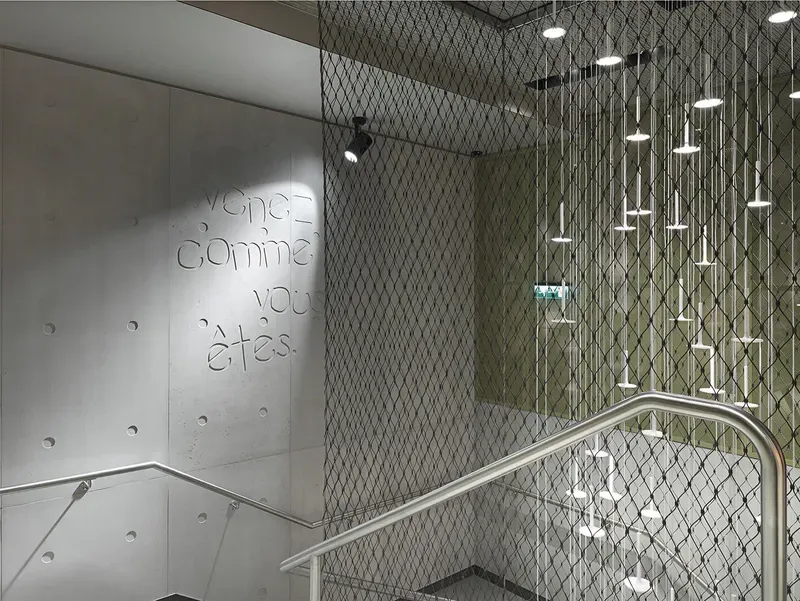
Installation Overview
- Survey & measurement: Measure stair runs, risers, landings and post spacing to define panel dimensions.
- Frame preparation: For rigid mesh, panels are framed; for rope mesh, tensioning and edge terminations are designed.
- Fixing to structure: Mesh panels or rope mesh edges are fixed to posts, rails or stringers using clamps, angle brackets, tensioners or mounting plates.
- Tensioning: Mesh is tensioned so it is firm, without excessive deflection under load.
- Inspection: Check all fixings, tension and clearances; ensure no large gaps exist at edges or corners.
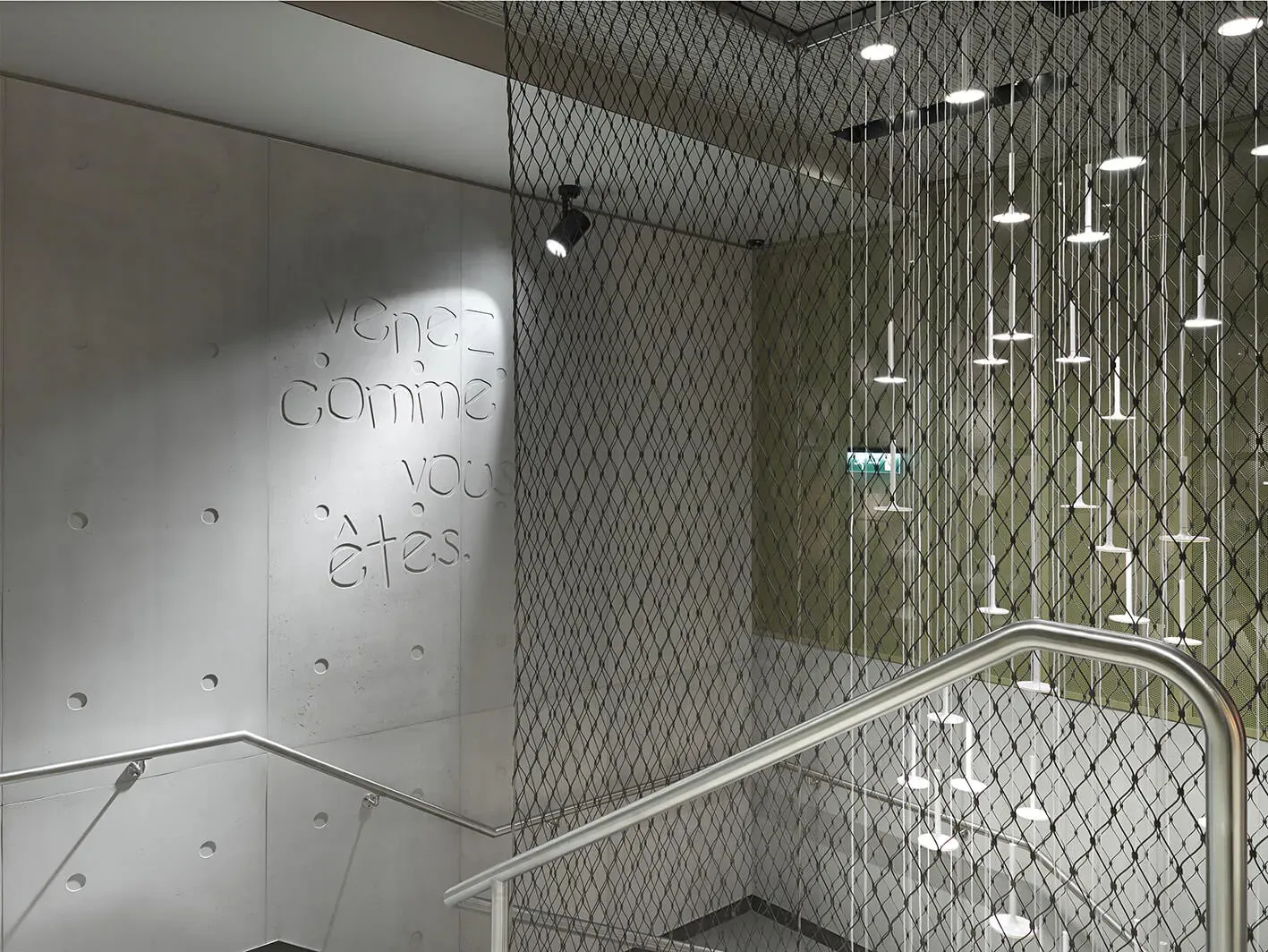
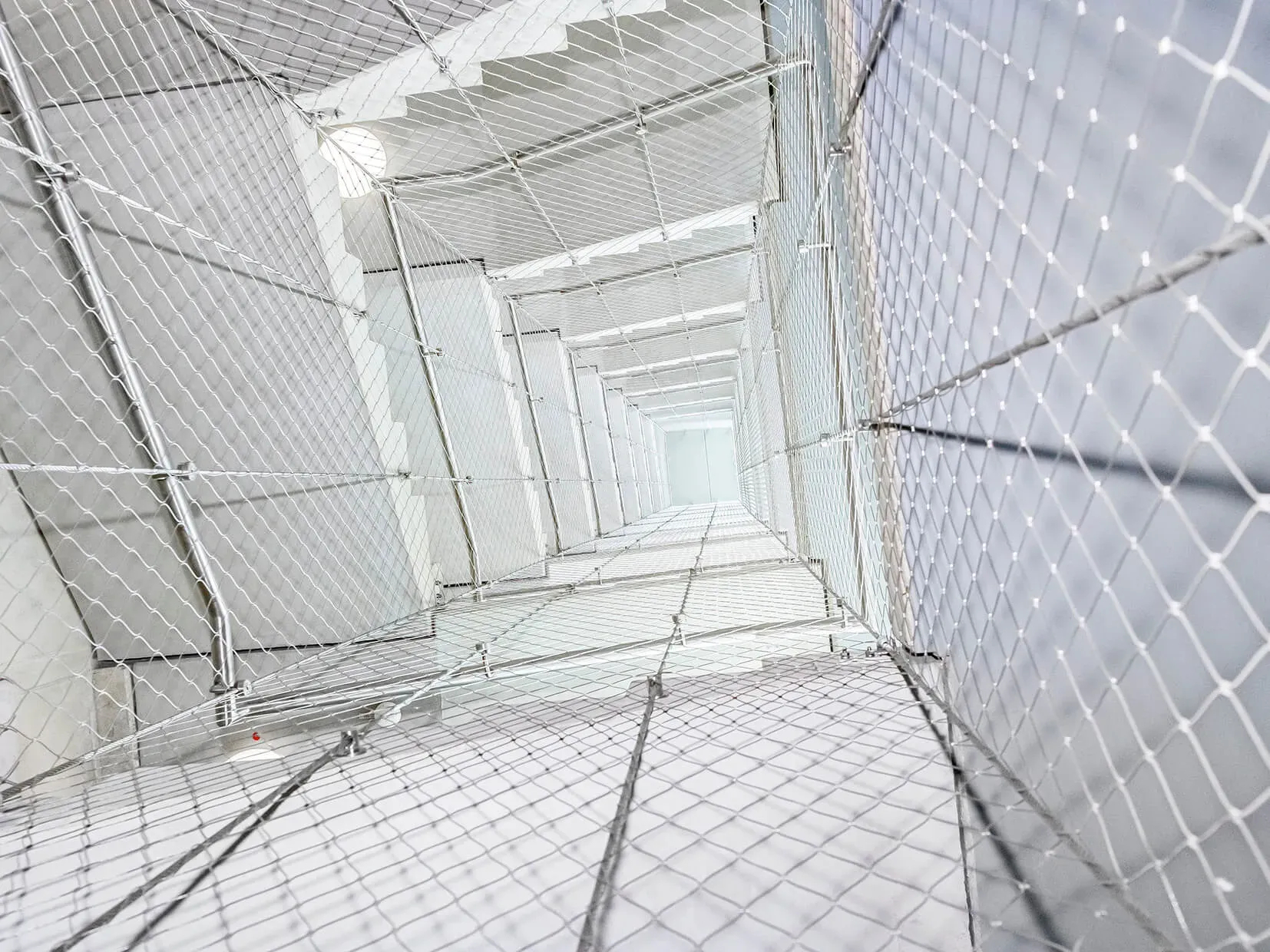
Design Tips for Stair Safety Wire Mesh
- Use smaller apertures (e.g. 30–50 mm) where children or pets will be present.
- Choose AISI 316 stainless steel for coastal or outdoor applications to improve corrosion resistance.
- Coordinate mesh panel layout with post spacing to avoid small, awkward pieces.
- Align the mesh pattern with stair slope and handrail lines for a clean visual effect.
- Ensure the top edge of the mesh meets local code requirements for balustrade height.
FAQ – Stair Safety Wire Mesh
Q: Is stair safety wire mesh compliant with building codes?
A: When designed correctly—using appropriate mesh aperture, balustrade height and load resistance—stair safety wire mesh can meet or exceed typical building code requirements. Always check against local regulations.
Q: Will children be able to climb on wire mesh?
A: Smaller openings, careful alignment and thoughtful handrail design can reduce climbability. Where anti-climb performance is important, tighter mesh apertures and additional design measures should be used.
Q: Can stair safety wire mesh be used outdoors?
A: Yes. Stainless steel or properly galvanized and coated steel mesh is suitable for outdoor staircases, bridges and platforms. For harsh coastal or industrial environments, AISI 316 stainless steel is usually recommended.
Q: How is mesh cleaned and maintained?
A: Most stair safety wire meshes only require periodic cleaning with mild detergent and water. Inspections should be done regularly to ensure fixings remain tight and that there is no damage or deformation.
Stair Safety Wire Mesh Photos
| Photo | Description |
|---|---|
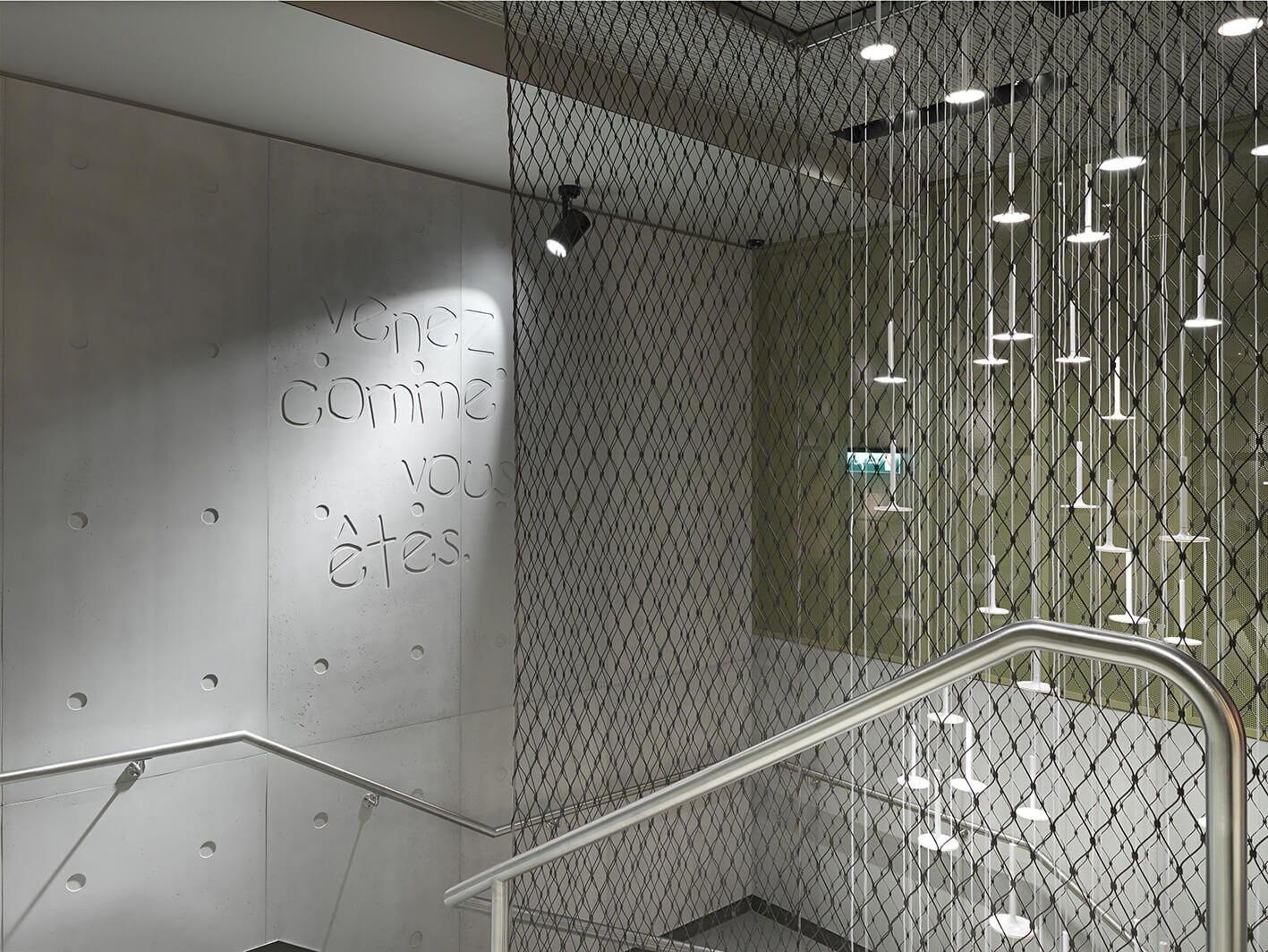
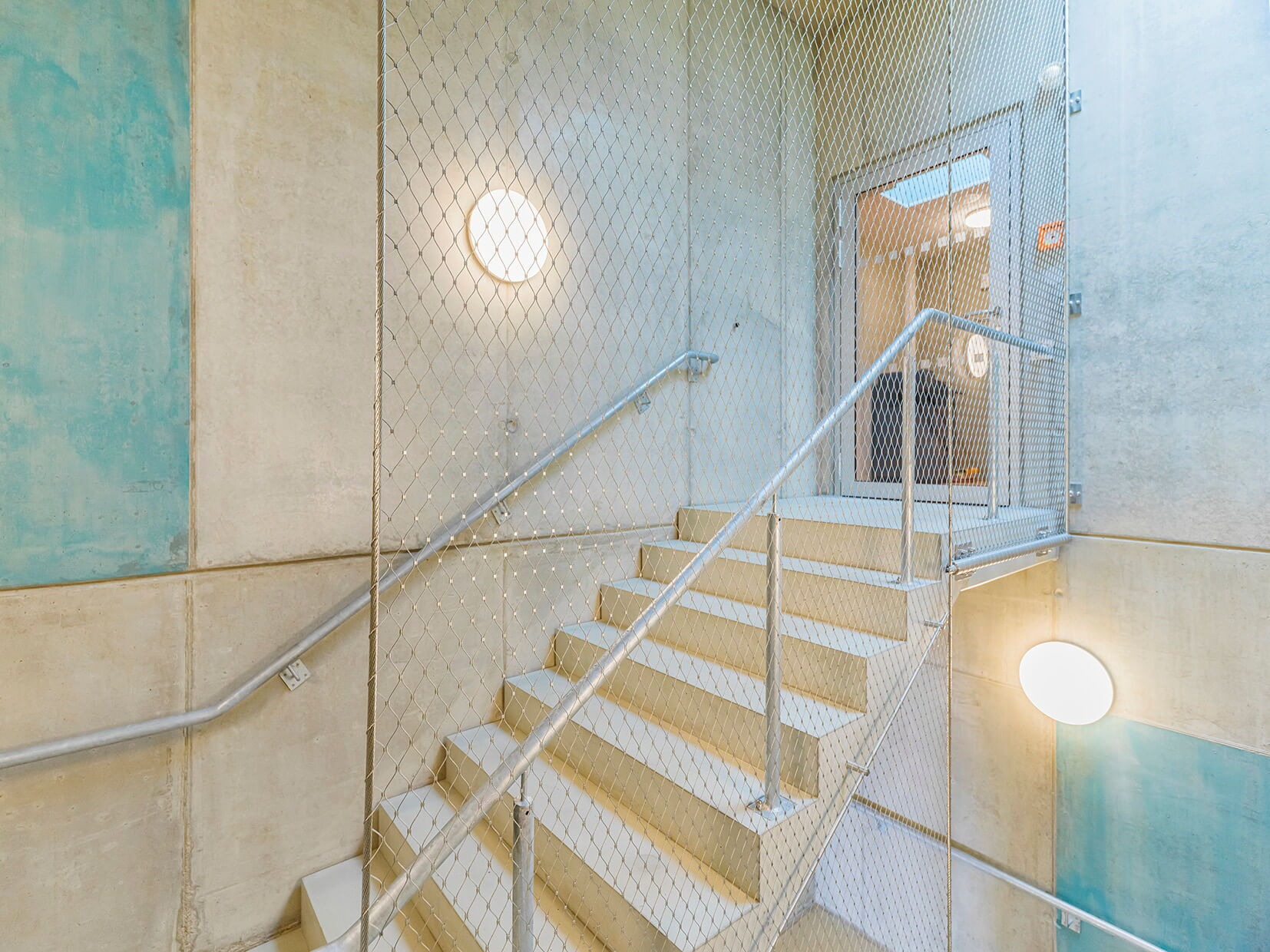
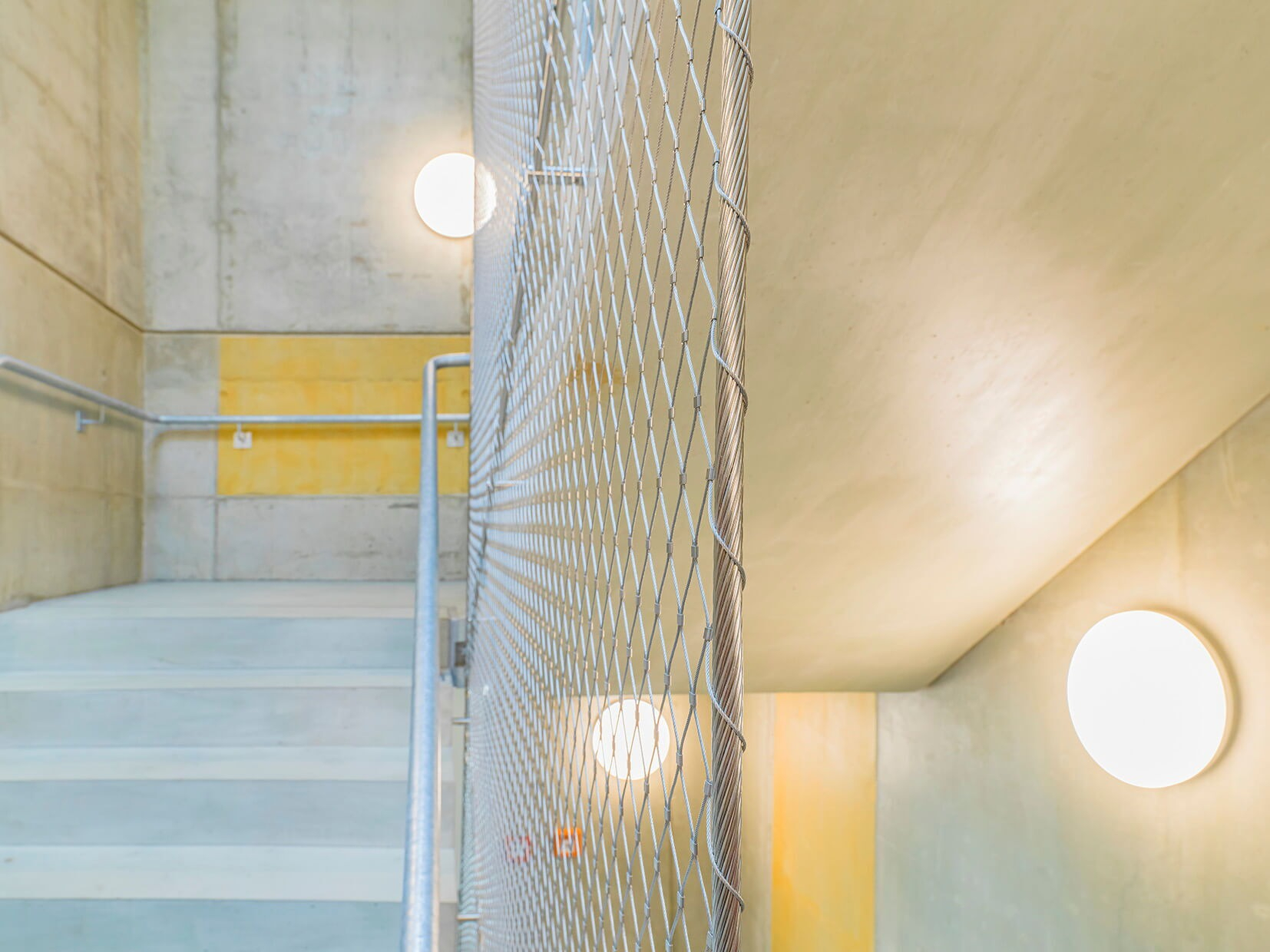
 | Stainless steel stair safety wire mesh used as balustrade infill on a modern staircase. |
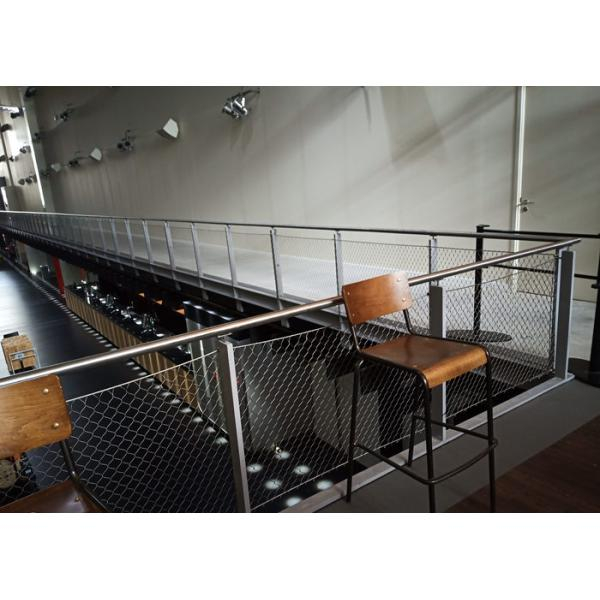 | Stair safety wire mesh balustrade showing flexible stainless steel cable mesh panels. |
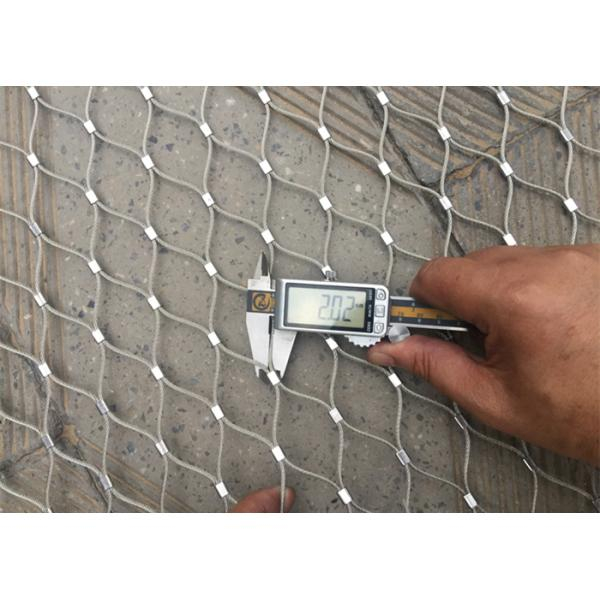
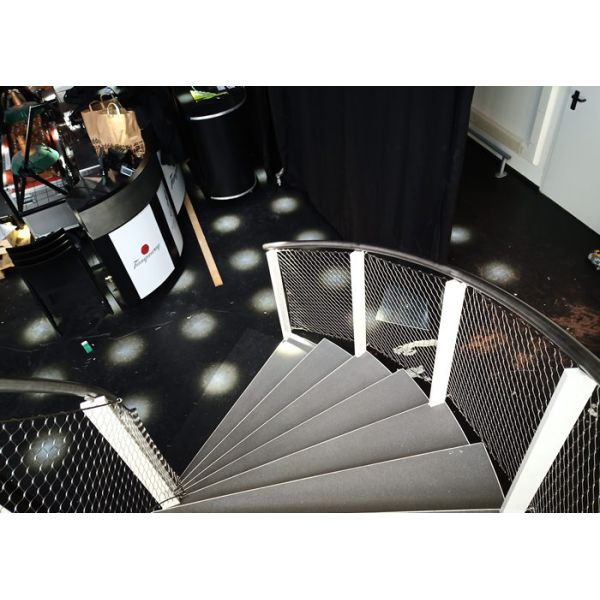 | Close-up of stainless steel ferrule cable mesh used as stair safety wire mesh infill. |
Balustrade Infill Stainless Steel Cable Mesh Features
- Unique X-tend style mesh design with beautiful appearance.
- Flexible, elegant, multifunctional – can form flat surfaces or three-dimensional shapes.
- Corrosion resistant, impact resistant and allows strong airflow.
- Environmentally friendly, close to nature, green and recyclable.
- Easy installation with a variety of compatible stainless steel fittings.
- Maintenance-free and easy to clean.
- Long service life – typically more than 50 years.
Stainless Steel Ferrule Mesh Applications
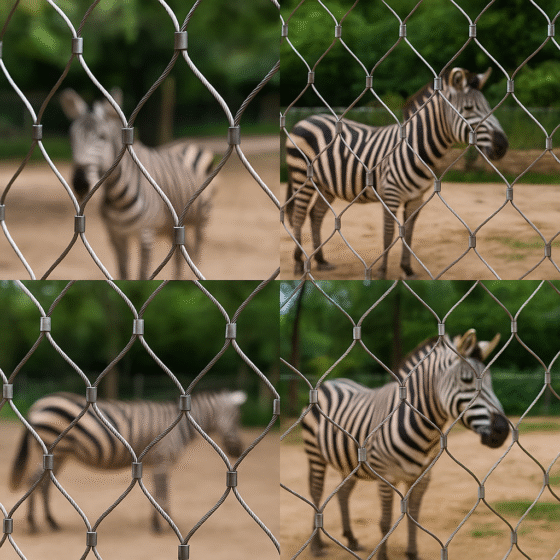
Stainless steel rope mesh has multiple applications including balustrades, stair safety wire mesh, safety netting, zoological enclosures, tensile facades and art installations.
Conclusion
Stair safety wire mesh provides a safe, strong and visually light solution for protecting staircases, landings and mezzanines in modern architecture. Whether you choose flexible stainless steel wire Ferrule rope mesh, knotted cable mesh, or rigid welded mesh panels, the system offers excellent fall protection, high transparency, long-term durability and a contemporary appearance. With adaptable specifications and custom sizing, stair safety wire mesh can be tailored to almost any stair geometry or design concept.