 Your One-Stop Wire Mesh Fence Supplier | POLYMETAL
Stainless steel mesh railing 5 essential advantages for Safe
Stainless Steel Mesh Railing – Modern, Safe, and Transparent
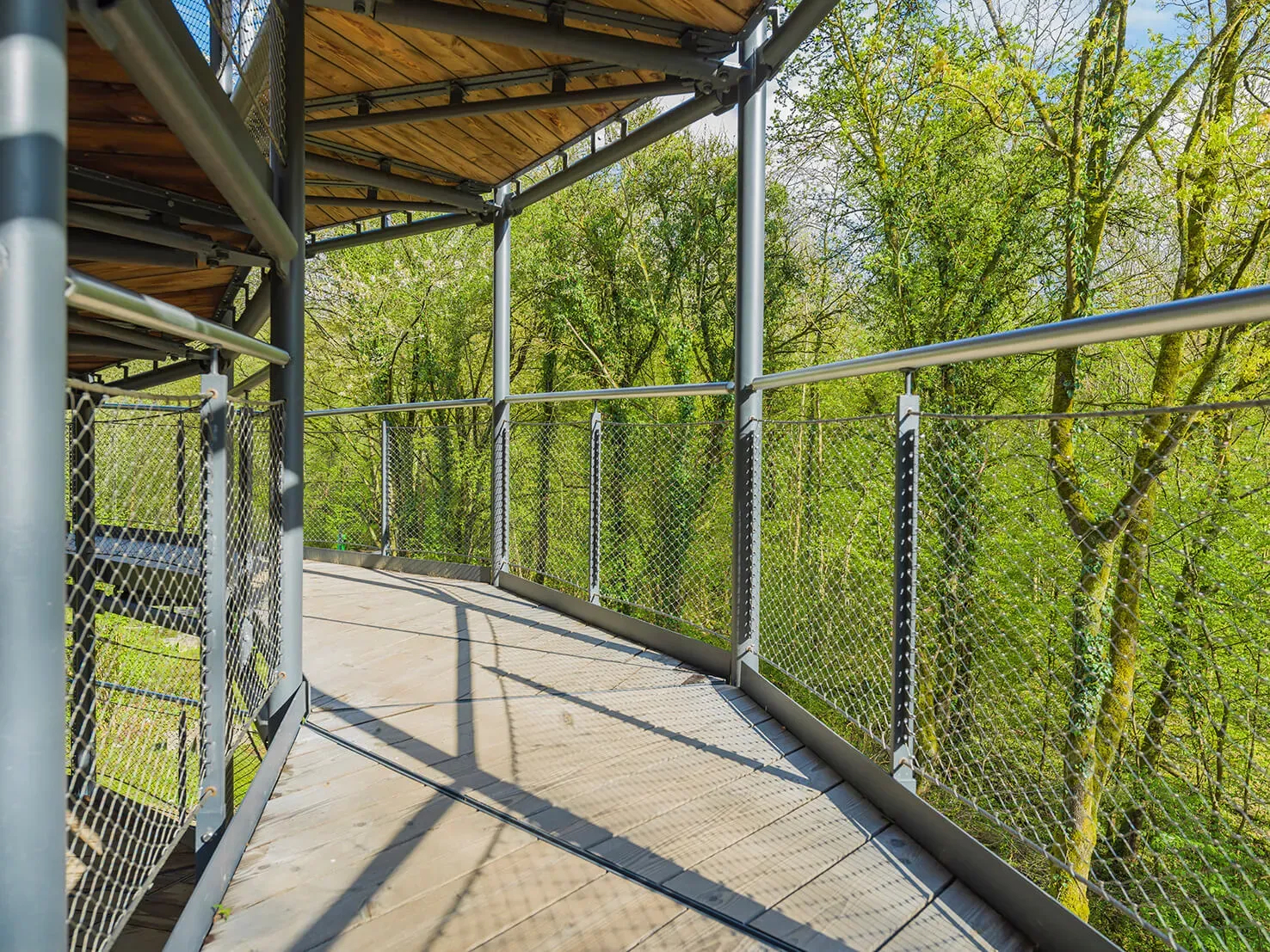
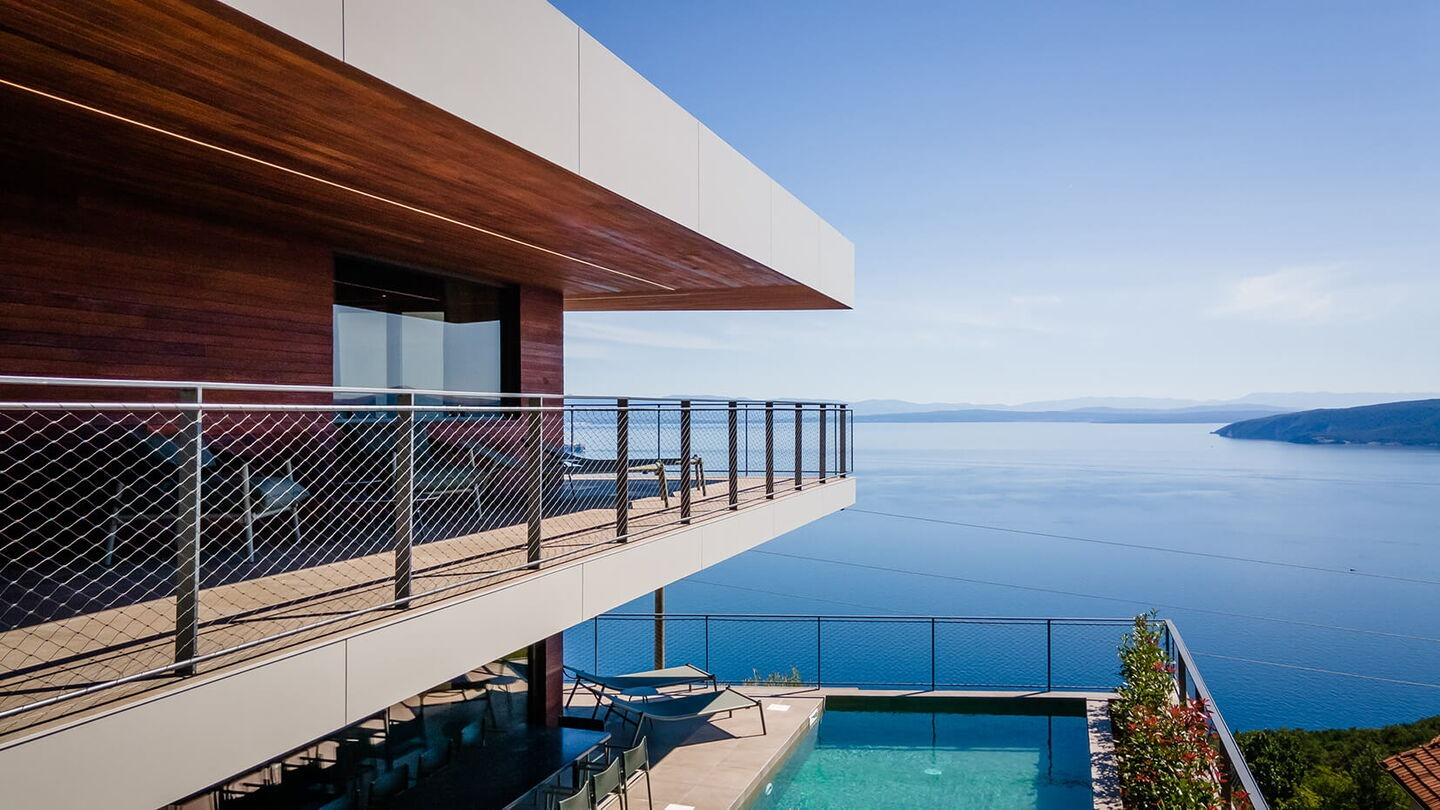
Stainless steel mesh railing is a new-generation railing system made from high-tensile stainless steel wire rope woven or ferrule-clamped into a flexible diamond mesh. It combines the corrosion resistance of 304/316 stainless steel with the flexibility of cable structures, creating an infill that is strong, lightweight and visually very open. It’s increasingly used on stairs, balconies, bridges, atriums and viewing platforms where designers want maximum safety with minimum visual obstruction.


1. What Is Stainless Steel Mesh Railing?
A typical stainless steel mesh railing system consists of:
- Mesh infill (cable mesh / webnet)
- Material: AISI 304, 304L, 316, 316L stainless steel
- Wire rope construction: 7×7 or 7×19 strands for flexibility and strength
- Rope diameter range: usually 1–4 mm for balustrades (e.g. 1.2, 1.5, 2.0, 3.0 mm)
- Mesh openings: typically 25–100 mm for railing and safety use; up to 300 mm for special facades
- Mesh form: diamond (60°) or square (90°) pattern
- Connection types
- Ferruled mesh: cables joined with pressed sleeves (ferrules) – very clean, geometric look
- Knotted mesh: cables inter-woven and knotted at each intersection – extremely flexible, more “textile” appearance
- Support structure
- Posts, edge flats or frames in stainless steel, galvanized steel or aluminium
- Mesh panels laced or clipped to the structure and then tensioned
When stretched at around 60°, the mesh forms a regular diamond pattern which can follow straight, curved or even complex forms without losing strength.
2. Key Benefits of Stainless Steel Mesh Railing
2.1 High safety and impact performance
- Stainless steel cable mesh has very high tensile strength but remains lightweight, so it can span large areas without intermediate infill bars.
- The mesh behaves like a tensioned net: it absorbs impact and distributes loads, reducing risk of brittle failure compared with some rigid materials.
- It is widely used for fall protection in balconies, bridges and high-level walkways.
2.2 Excellent transparency and airflow
- Thin stainless steel cables and open mesh apertures provide very high visual transparency, often described as “barely there”.
- Natural light and air pass through almost uninterrupted, which improves comfort on balconies and terraces compared with solid infill panels.
2.3 Superior corrosion resistance and long service life
- Using 316 or 316L marine-grade stainless steel, mesh railings resist rust, salt spray, acid rain and pollution even in coastal or industrial locations.
- Good design and installation can deliver service lives of 25–30+ years with very little performance loss over time.
2.4 Low maintenance
- No paint to peel and no timber to rot – the mesh is essentially maintenance free, usually needing only occasional washing with water or mild detergent.
- Unlike glass infill, cable mesh does not easily show fingerprints, water spots or dust.
2.5 Lightweight and easy to handle
- Cable mesh is much lighter than glass or solid metal panels, reducing structural loads and simplifying installation and retrofits.
- Large panels can be rolled for shipping, then unfolded and tensioned on site.
2.6 Flexible, adaptable design
- The “fabric-like” structure allows the mesh to wrap around curves, ramps and irregular openings, giving architects a lot of freedom.
- Aperture, rope diameter, orientation (vertical or horizontal), and finish (natural, coated, blackened) can all be customised to match the project.
2.7 Environmentally friendly
- Stainless steel is 100% recyclable and long-lasting, reducing replacement frequency and waste.
- No toxic coatings are required, and the open structure supports natural ventilation and daylight.
3. Design and Selection Guidelines
3.1 Choosing rope diameter
A simple rule of thumb:
- 1.2–1.6 mm – indoor railings, residential stairs, low-load decorative applications
- 1.5–2.0 mm – typical balconies and public balustrades
- 2.4–3.2 mm – high-traffic zones, bridges, stadiums or where additional robustness is desired
Larger diameters increase strength and impact resistance, but appear visually heavier.
3.2 Choosing mesh opening size
Common opening choices for railings:
- 25–40 mm – where child safety, anti-climb or animal containment is critical
- 50–80 mm – standard balcony and stair balustrades (good balance of safety and openness)
- 100 mm and above – high or large-scale barriers and facades where maximum transparency is required
Local building codes may also limit opening sizes for balustrades and fall protection – always check applicable standards.
3.3 Material and finish
- 304 stainless steel: suitable for most indoor and mild outdoor conditions
- 316 / 316L stainless steel: recommended for coastal, high-humidity or polluted environments due to better pitting and crevice corrosion resistance
- Finishes: natural stainless, black oxide or PVC-coated versions are commonly available where darker or coloured mesh is preferred.
3.4 Mesh type – ferruled vs knotted
- Ferruled mesh
- Very clean, uniform geometry with visible ferrules at each intersection
- Popular for high-end architectural balustrades and bridge railings
- Knotted (inter-woven) mesh
- No metal ferrules; the rope itself forms each node
- Even more flexible and “soft” in appearance; often used in zoo and enclosure projects
4. Typical Applications
Because it combines safety, transparency and durability, stainless steel mesh railing is widely used in:
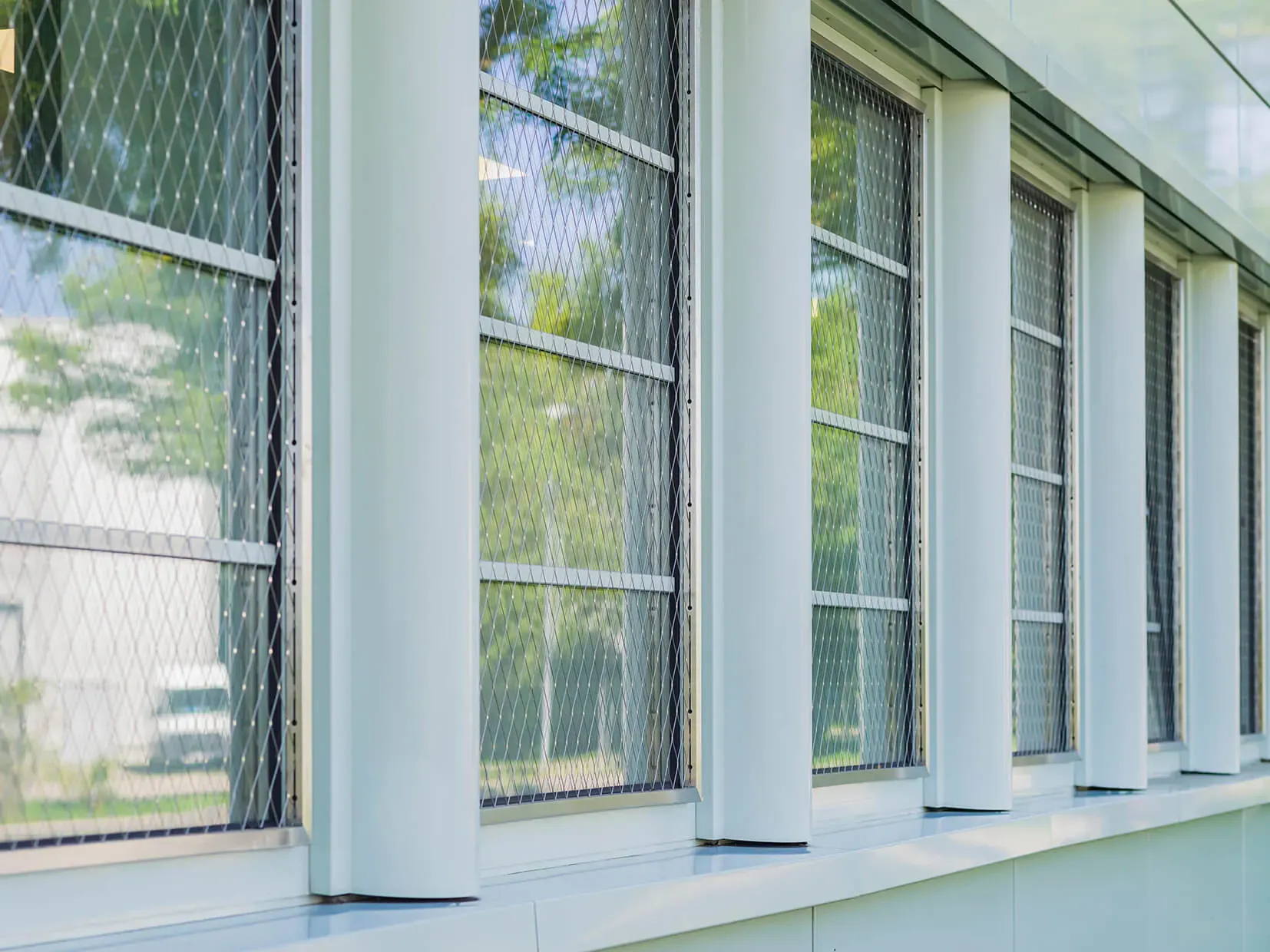
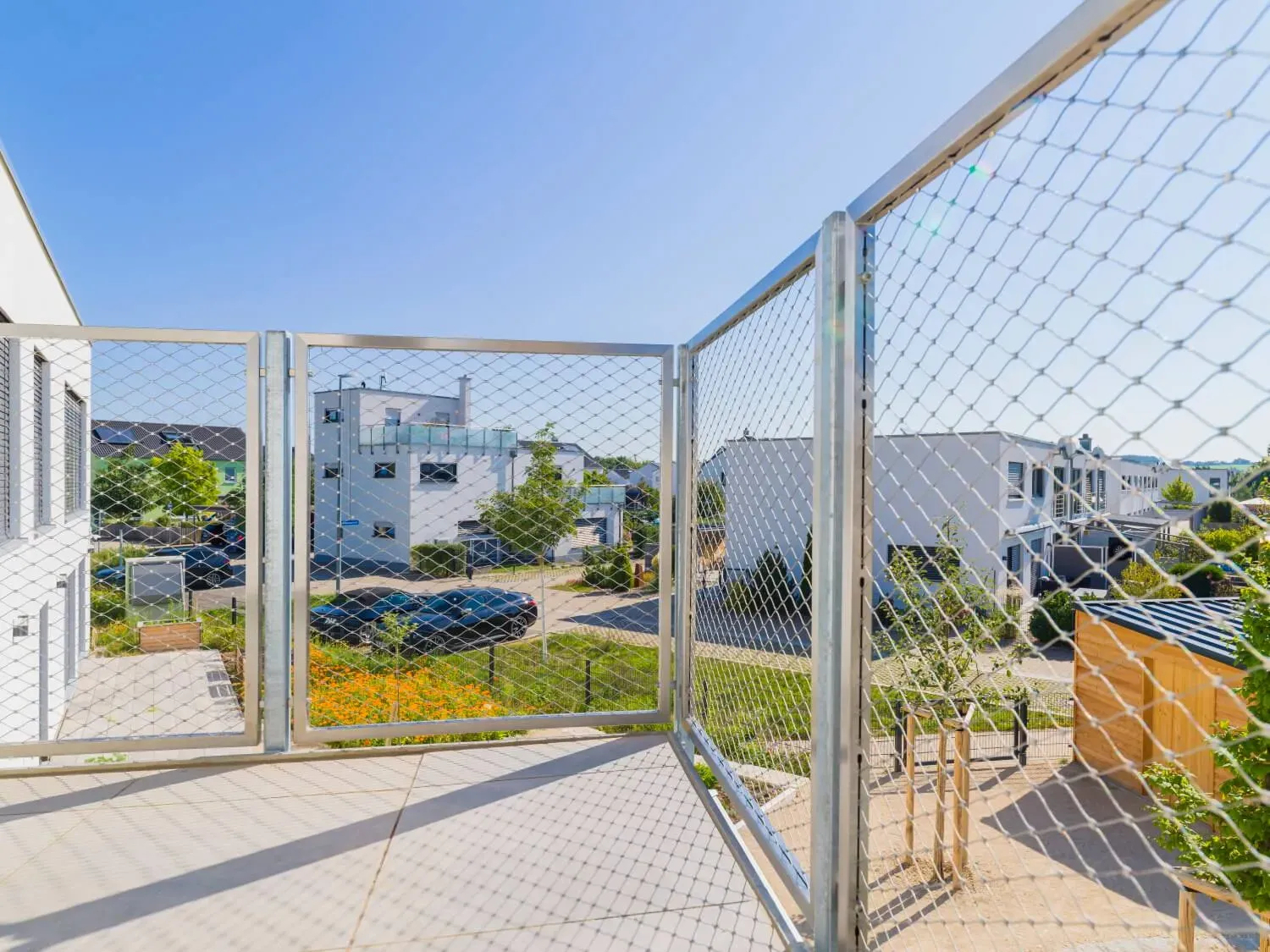
- Residential & multi-unit buildings – balcony guards, internal stair balustrades, atrium infills
- Public and commercial buildings – shopping centres, airports, stations, museums, office atria
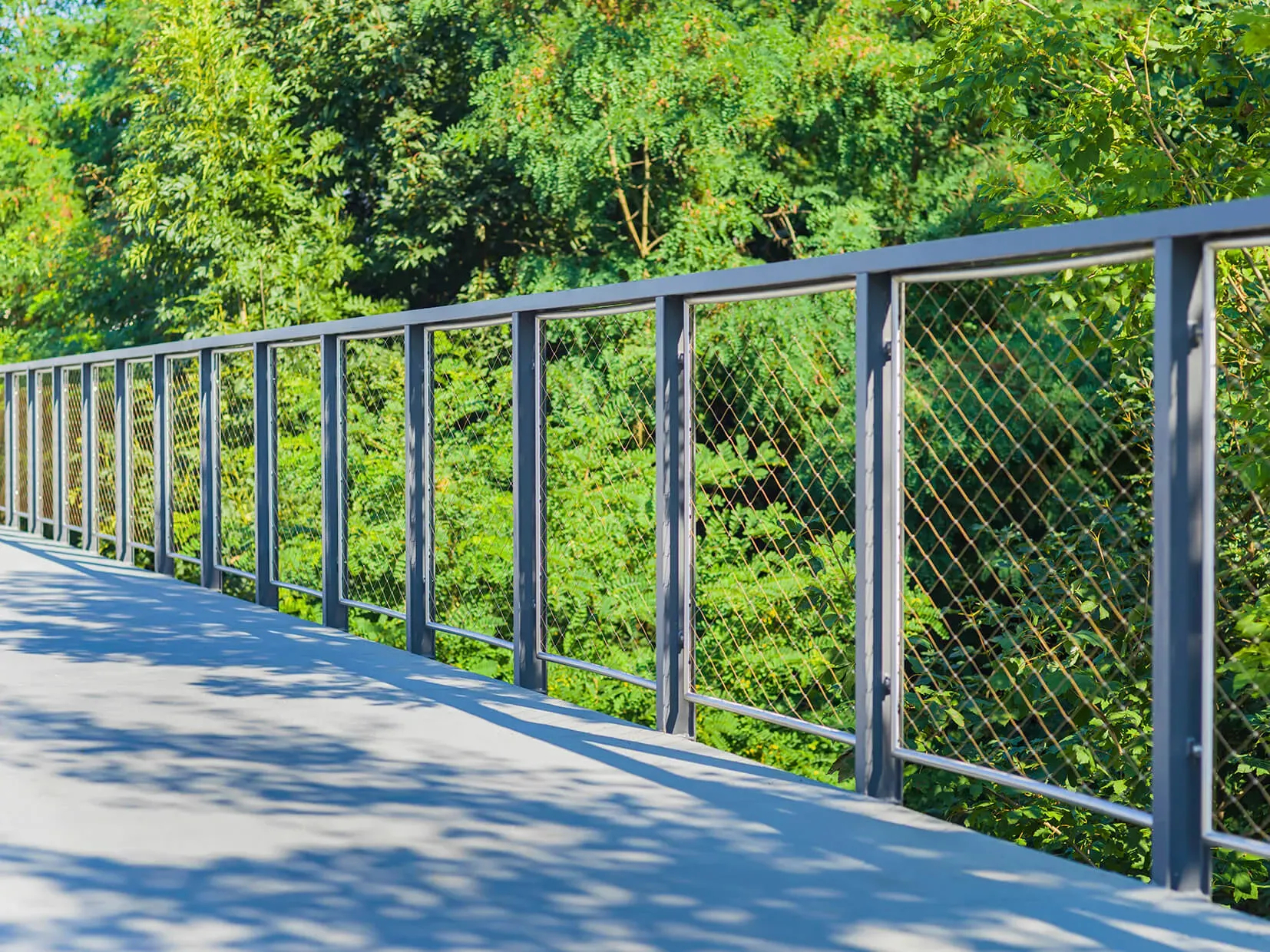
- Bridges & infrastructure – pedestrian bridge railings, riverwalks, viewing decks, walkways
- Zoos & wildlife parks – visitor-side railings and enclosure fronts with safe viewing
- Green facades & trellis railings – railing infill that doubles as plant support for vertical gardens
- Sports & playgrounds – stadium concourse barriers, stair cores, ball-stop fencing

5. Installation Overview
While the detailed design is project-specific, most stainless steel mesh railing installations follow these steps:
- Prepare support structure
- Install posts, edge flats or frames to the required spacing and height.
- Ensure anchoring to the primary structure is strong enough for fall-protection loads.
- Prefabricated mesh panels
- Mesh is custom-made in the factory to the required size and shape, with boundary cables and ferrules already in place.
- Panels are labelled to match the layout drawings.
- Fixing and tensioning
- Attach boundary cables or edge ferrules to the frame using clamps, eye bolts or lacing rods.
- Tension the mesh evenly (often via turnbuckles or tension bolts) so that the diamond apertures become regular and the surface is flat and secure.
- Detailing and checking
- Verify there are no sharp edges or loose fittings in areas people can touch.
- Check that the mesh cannot be pushed open enough to create unsafe gaps, in line with local regulations.
6. Stainless Steel Mesh vs Traditional Railings (Quick Comparison)
| Aspect | Stainless Steel Mesh Railing | Glass / Solid Bar Railing |
|---|---|---|
| Visual transparency | Very high, almost invisible at distance | Glass transparent but reflective; bars visually heavy |
| Weight | Very light | Glass and solid panels significantly heavier |
| Impact behaviour | Flexible, energy-absorbing mesh | Glass may crack; rigid bars transmit impact sharply |
| Corrosion resistance | Excellent with 316/316L stainless | Painted steel needs maintenance; glass hardware can rust |
| Maintenance | Minimal; occasional cleaning | Glass frequently needs cleaning; painted steel needs repainting |
| Shape adaptability | Follows curves, slopes, irregular openings easily | Flat panels and bars harder to adapt |
7. Ordering & Customisation Checklist
When you request a quote or place an order for a stainless steel mesh railing system, it helps to provide:
- Project name and location (indoor / outdoor, coastal or not)
- Railing height and span lengths
- Desired rope diameter (e.g. 1.5 / 2.0 / 3.0 mm) and mesh opening (e.g. 50×50, 60×60, 80×80 mm)
- Mesh orientation (vertical / horizontal) and pattern (diamond or square)
- Mesh type (ferruled or knotted), ferrule material (stainless / alloy)
- Finish (natural stainless, blackened, or coloured coated)
- Whether you need matching fittings and tension hardware, plus any installation guidance or drawings
With these details, manufacturers can supply a stainless steel mesh railing system that delivers high safety, long life and a clean architectural aesthetic tailored exactly to your project.